Stay Updated Subscribe today for the latest research + reporting about environmental news. Subscribe Now

Stay Updated Subscribe today for the latest research + reporting about environmental news.

Subscribe Now

Dac Collins

Dac Collins

Dac Collins

About Dac Collins

This author has not yet filled in any details.
So far Dac Collins has created 71 blog entries.

Yakama Nation and Columbia Riverkeeper Demand Government Cleanup at Bradford Island

By Dac Collins. June 27, 2019. There was a time when we didn’t have to think twice about eating a fish that was caught from the Columbia River. But thanks to decades of unchecked pollution at the Bonneville Dam Complex, some of the Columbia’s resident fish are now considered too toxic to eat.

Studies have shown that the fish living between Bradford Island and Ruckel Creek contain some of the highest levels of cancer-causing PCB’s in the Northwest, and the Oregon Health Authority currently recommends that no one eat resident fish caught from this stretch of river.
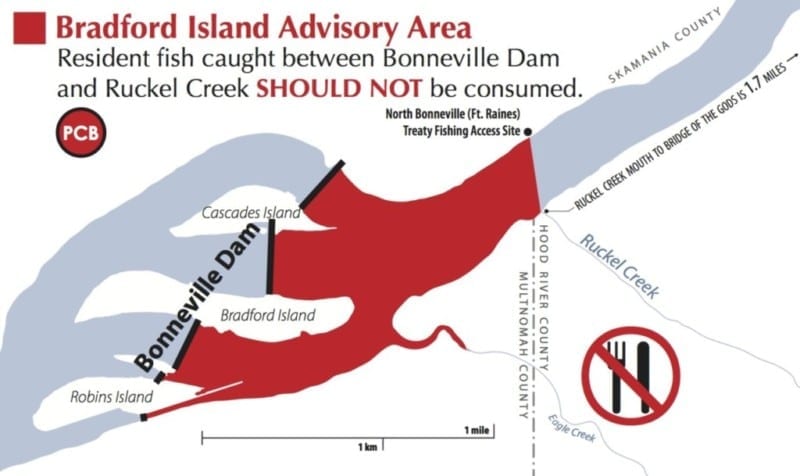
Map by CRITFC

According to the OHA: “When fishing between Bradford Island and Ruckel Creek eat only salmon, steelhead, shad and lamprey. Due to chemical contamination, all other fish living in this area are not safe to eat.”

“Health effects of eating contaminated fish can include lifelong learning problems and cancer,” the OHA’s advisory reads.

Instead of looking for another place to cast our lines, however, Yakama Nation Fisheries and Columbia Riverkeeper want people to know there is another option. They can demand that the U.S. government clean up after itself and take actions to restore the health of one of the most popular recreational fishing sites in the mid-Columbia region.

“In our view, telling people that they can’t eat what should be healthy, locally caught fish is not a long-term solution,” says Lauren Goldberg, Columbia Riverkeeper’s Legal and Program Director.

[perfectpullquote align=”full” bordertop=”false” cite=”” link=”” color=”” class=”” size=””]“It’s not about creating zones throughout the Columbia River where it’s too toxic to eat locally caught fish.”[/perfectpullquote]

Seeking a more appropriate and thorough solution, Goldberg says that Riverkeeper will continue to stand in solidarity with the Yakama Nation in order to push for government cleanup on and around Bradford Island. She explains that Yakama Nation Fisheries has led and will continue to lead this effort, but that Riverkeeper is now doing its part to raise awareness about the issues surrounding the island.

Looking back

Located in the middle of the Bonneville Dam Complex (and within Multnomah County), Bradford Island became a literal dumping ground during the construction of the dam in the 1930’s. For decades, the U.S. Army Corps of Engineers utilized the upland, northeast portion of the island (upstream of the dam) as a landfill, burying electrical equipment and other materials such as scrap metal, paint, oil, mercury lightbulbs, wires and insulators.
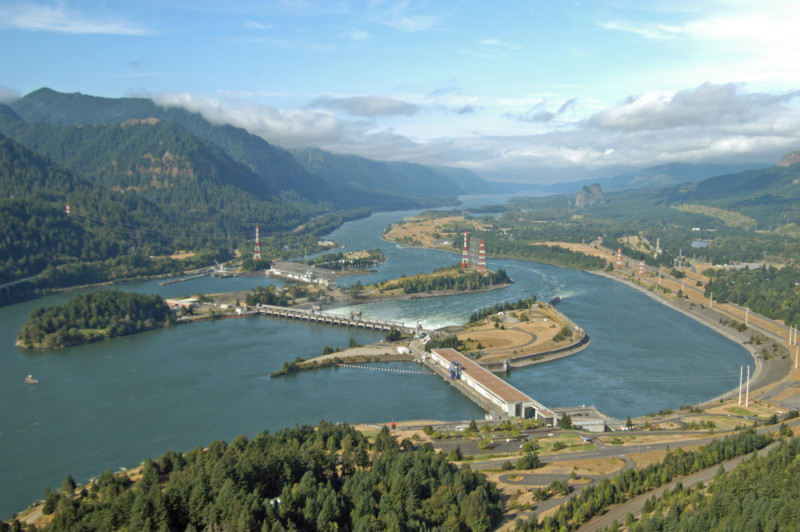
The landfill area is located on the northeast (far left) end of the island. Photo courtesy of Flickr 

Laura Shira is an environmental engineer who works with Yakama Nation Fisheries on a number of cleanup operations throughout the mid-Columbia region. She explains that in some instances, this equipment was dumped straight into the river.

“When they sent divers down to look at some of these hotspot areas,” Shira says, “they realized that there were actually capacitors that had been dumped directly into the river.”

Many of these capacitors, she explains, were full of dense oils laden with polychlorinated biphenyls (PCB’s) — oils that have now leaked out and settled into the bedrock and sediments at the bottom of the river.

Shira says the diving crew also studied some of the crayfish living on that bedrock, and found that “after the crayfish tissue results came in, the contaminant concentrations were so elevated that they wondered if the contaminant concentrations only came from the crayfish tissue or if the crayfish were also coated with the PCB-laden oils.”

And keeping in mind that crayfish are a major food source for resident species like smallmouth bass, which generally stay within a one- to two-mile stretch of river for their entire lives, it’s plain to see why health authorities on both sides of the river have raised public health concerns.

Members of the Yakama Nation Tribal Council have shared these same concerns for decades now, Shira says, but it wasn’t until after they filed a lawsuit against the Army Corps of Engineers back in 2014 that they felt like their concerns were actually being heard. That lawsuit resulted in a declaratory judgment, which confirmed that: 1) the Yakama Nation should have some input as to how the cleanup moves forward and 2) the tribe should be reimbursed by the Corps for the cleanup costs they have incurred over the years.

“Since then,” Shira says, “we feel that there’s been a big difference in how the Corps is interacting with Yakama Nation.”

“I think our first step with this lawsuit was to get meaningful engagement. And now that the Corps is, in some capacity, listening to us, we need to do a better job at engaging the public.”

Fortunately for the Yakama Nation, Columbia Riverkeeper has been more than willing to lend a helping hand on that front, with Community Organizer Ubaldo Hernandez leading the outreach and education efforts.

Moving forward

“A lot of the outreach is actually going there and talking to fishermen about what is going on,” says Hernandez.

Hernandez has also brought attention to these issues through Conoce tu Columbia, a bilingual podcast produced by Riverkeeper, and by hosting community forums throughout the Gorge. He says that by making people more aware of what’s at stake, “they will be more willing to participate and support real cleanup of the site.”

But when it comes to implementing “real cleanup”, Hernandez, Goldberg and Shira all point to an overall lack of initiative on the part of the Army Corps of Engineers. They say that 2007 was the last time that the Corps took significant actions to clean up the island.

According to the Corps website, the agency “removed the electrical equipment from the river bottom” in 2002, and in 2007 they “dredged sediment from approximately one acre of river bottom to remove PCB contamination from the environment.”

But a subsequent Remedial Investigation Report released in 2012 shows that “contaminant levels were not reduced by the dredging project.”

For Hernandez, these explanations fall somewhere between insufficient and insulting.

“To say, ‘we tried it but it didn’t work.’ Well that’s not enough,” Hernandez says. “Tell that to the people that bring fish home to their families, to their kids and their elders.”
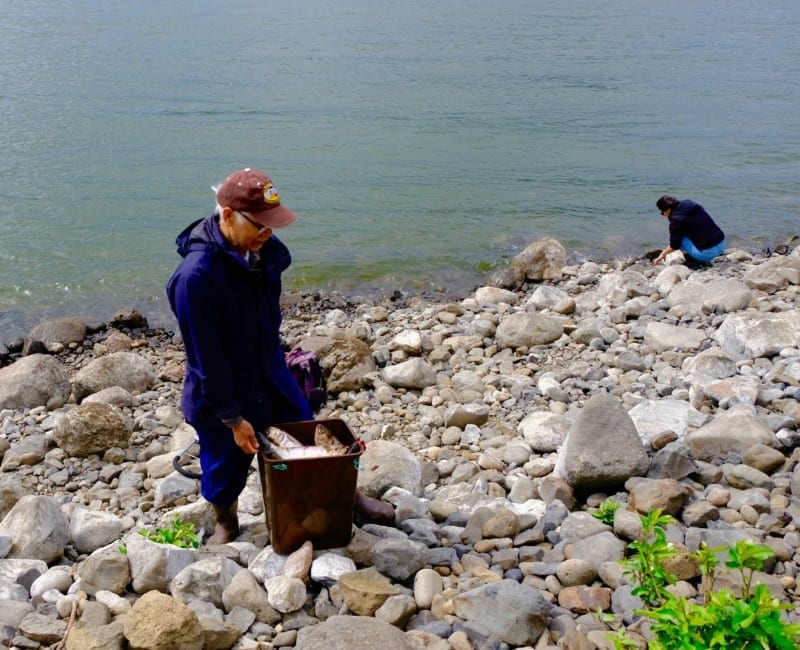
A fisherman prepares to leave Bradford Island with a load of American Shad, which are considered an invasive species in the Columbia River. Because they are also a migratory species, shad harvested around Bradford Island are considered safe to eat by health authorities in Oregon and Washington. Photo by Dac Collins

As it stands now, Corps spokesperson Sarah Bennett says their top priority is reducing contaminant loads in the upland (landfill) portion of the island. She explains that the agency still has a voluntary cleanup agreement with the Oregon Dept. of Environmental Quality, pointing to a Final Feasibility Study that was released by the agency in 2017.

The study lists five potential alternatives for cleaning up the landfill area. The most thorough alternative would be “complete landfill excavation and backfill”, which, according to the agency’s estimates, would cost over $2 million. More moderate (and less expensive) alternatives include shallow excavation and the capping of contaminated soils.

“Since 2007”, Bennett says, “we have been working diligently alongside our technical advisory group, including area tribes, the Environmental Protection Agency, the states of Oregon and Washington, and the U.S. Fish and Wildlife Service, to monitor and study the conditions on and around Bradford Island to inform our decision-making about the best course of remedial action going forward.”

And regarding the public’s ability to weigh in on the upland portion of the cleanup, she says, “We anticipate a public comment period this fall.”

Until that public comment period opens up, however, Shira reminds people that they can always get engaged by writing a letter to the Corps and voicing their concerns.

“You don’t have to be technically savvy to be heard,” she says, “and I think that the more people that can speak up about this area, and bring whatever meaning they can to it, the better.”

For those interested in learning more about Bradford Island and the current state of the cleanup, Riverkeeper will host a Bradford Island Community Forum on Aug. 6 at the Gorge Pavilion in Cascade Locks. RSVP here
By |2019-08-27T08:15:19-07:0006/27/2019|Natural Resources, News, Water, Wildlife|1 Comment

Hyping Renewable Hydrogen: A Conversation with Ken Dragoon

By Dac Collins. June 13, 2019. “What’s happened is we’ve had a revolution,” he tells me from across the table. His voice packed with enthusiasm, a smile breaks out, causing him to squint.

Behind him, idle chatter from another table mixes with the harsh whirring of a coffee grinder. But his cheek-wrinkling grin is practically audible over the background noise as he continues:

“That revolution is the cost of wind and solar, which is now lower than the cost of other ways of producing electricity in much of the country and around the world. Now the question is: How do we make the best use of it?”

It’s a good question, and Ken Dragoon, the man grinning at me from across the table, is here to explain one potential answer to it. One of our planet’s most ubiquitous elements, it accounts for 10 percent of our mass as humans and is the primary ingredient found in water.

And according to Dragoon, it could be our best shot at making the transition to a renewable, carbon-free energy economy.

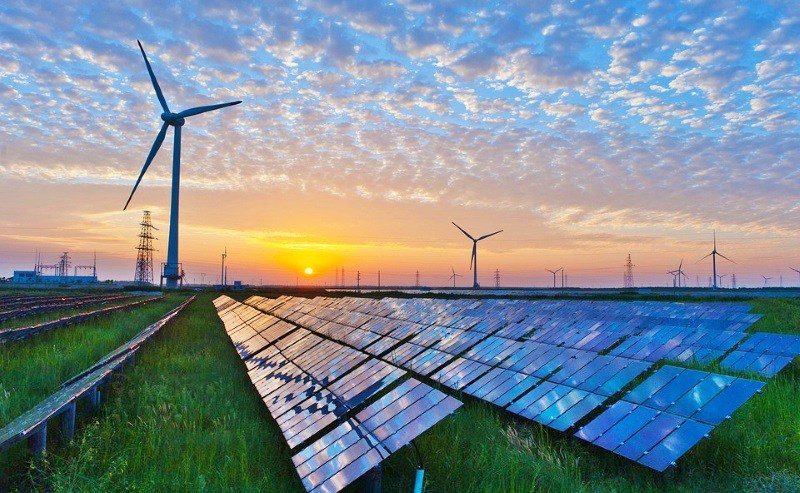
As more solar panels and wind turbines come online, the ability to store renewable energy becomes increasingly important. Photo courtesy of Wikimedia Commons

Over the course of the last two years, Dragoon has become a hype man of sorts, advocating for renewable hydrogen development in the Northwest as the executive director of the Renewable Hydrogen Alliance. A good chunk of his time is spent educating others (like myself) on the benefits of storing low cost, zero-carbon electricity as hydrogen.

“It’s wind and solar that are key,” he says.

[perfectpullquote align=”full” bordertop=”false” cite=”” link=”” color=”” class=”” size=””]“Hydrogen is just the missing puzzle piece that can spread that low-cost, low-carbon energy to the rest of the economy.”[/perfectpullquote]

A native Oregonian, Dragoon has spent his entire career (over 35 years) in the electric power industry, working as a planner, engineer and manager for PacifiCorp, Bonneville Power Administration and Renewable Northwest, among others. One of his primary focuses during that time has been figuring out how to harness and optimize the power that comes from sustainable but inherently variable sources like wind and solar.

“When we talk about wind and solar,” he explains, “most people talk about the problem of ‘what if it’s not sunny or not windy.’ But, arguably, the more interesting and challenging problem is the opposite: What happens when there’s more than what we need?”

Using the development of the Northwest’s hydroelectric infrastructure as an analogy, Dragoon explains that after building the first few dams on the Columbia, engineers realized that they weren’t capturing all of the available energy — especially during the springtime when the river would swell. This problem was addressed by a massive building effort to develop the large reservoirs in Canada in Montana, which can store this potential energy for months at a time and allow for a continuous but manageable supply of it to flow through the turbines.

Our energy grid faces a similar opportunity today, as a growing number of wind turbines and solar panels create a surplus of cheap electricity during certain times of the year. Without the ability to properly store it, however, this surplus loses value and goes to waste. And even though we are working to build better batteries while we simultaneously develop other methods such as compressed air and pumped hydro, Dragoon says these methods all have one problem in common: they fill up. And he points to the overwhelming cost of these systems, particularly batteries, as another limiting factor.

If the entire Northwest (Oregon, Washington and Idaho) were to run on 100% renewable energy, Dragoon explains, we would need to replace 13,000 average megawatts of fossil power plants with renewable energy. Of course that energy must be readily available, even during times when wind and sun may be entirely absent.

“But the cost of the batteries that would be needed to achieve this would be about a trillion dollars,” Dragoon says. “Which is about 25 times more than the cost of the renewables (wind turbines and solar panels) you’d put in to create the 100% renewable grid. Ain’t happening.”

The RHA’s solution to this storage dilemma is to take the surplus electricity and turn it into hydrogen. And as it turns out, we already have the technology needed to accomplish this.

Known as electrolysis, the process of using electricity to split water molecules (H20) into hydrogen (H2) and oxygen (O2) has been around for over 200 years. All that’s needed is an electrolyzer, which, “at its heart”, Dragoon explains, “is two wires and a bucket of water.”

The renewable energy industry is only now beginning to recognize the critical importance of using modern electrolyzers to convert electrical energy into storable hydrogen gas (and other climate-neutral fuels), which can either be used as a fuel on its own or turned back into electricity when necessary. This recognition led to a huge increase in the number of devices being built in Europe, and caused the cost of electrolyzers to drop rapidly.

Explaining how he became such a big proponent of renewable hydrogen, Dragoon says he was hired by NW Natural in 2017 to write a report on using electricity to make gas.

“I wasn’t expecting to learn anything new,” he says, “but what I discovered was that they were building these electrolyzers over in Europe. And as a consequence of that, the manufacturers were able to drop their prices.”

He says the reports he was reading from several years prior showed that the cost of operating an electrolyzer was approximately $2,000 per kilowatt. More recent articles, though, showed the costs dropping closer to $1,000 per kilowatt.

“I happened to be traveling to Europe that fall,” he continues, “and I got in to interview the CEO of Nel Hydrogen. And they said, ‘Well, our target is $200 a kilowatt, which can be achieved purely through economies of scale in production.’”

That’s when he “discovered what seemed to be inevitable”: that although the cost of electrolyzers is a barrier to large-scale implementation, “it’s one that’s being overcome by the economy of scale.”

“And I recognized that, having been in the renewable industry for 35+ years, none of my peers knew this any better than I did. So after I finished the report, I thought ‘we need advocacy around this.’”

The Renewable Hydrogen Alliance was formed four months later.

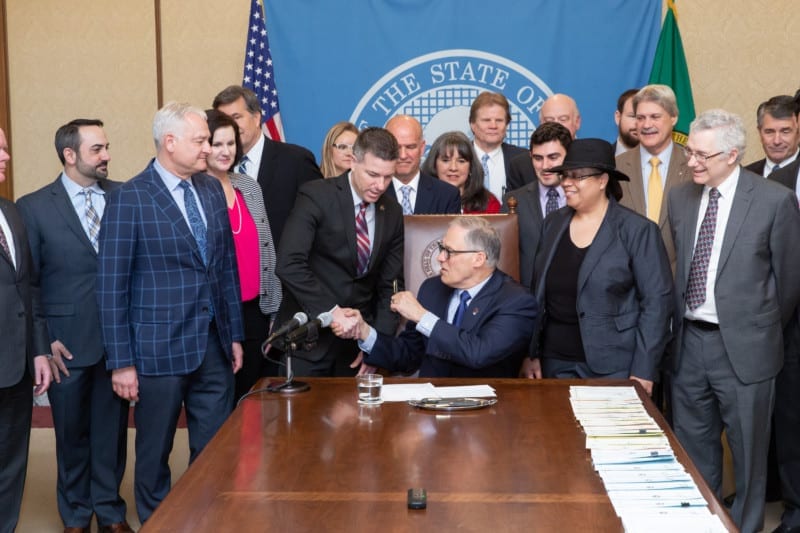
Now a full year into his advocacy work, Dragoon is just getting started. He meets regularly with policy makers throughout the region to promote hydrogen-friendly legislation, and he says the RHA was influential in the recent passage of Washington’s SB5588, which allows public utility districts to produce, distribute and sell renewable hydrogen . 

“That bill,” he says, “was proposed by a Republican, Senator Brad Hawkins from east Wenatchee. It was signed into law by a Democratic presidential candidate, Jay Inslee, and it passed both houses of the legislature unanimously.”

Wearing a grey suit and glasses, Dragoon (far right) smiles on as Gov. Inslee signs Senate Bill 5588, giving public utility districts the authority to produce, distribute and sell renewable hydrogen. Photo courtesy of the RHA

One of the main reasons this bill garnered bipartisan support, he says, is that renewable hydrogen makes sense, both from an economic and an environmental perspective. And for public utilities, industrial manufacturers and natural gas distributors, it opens up a world of possibilities.

“Hydrogen can be used for a number of different things and made into a number of products, basically without limit. We can use it for industrial processes, and for transportation,” he explains, pointing to some of the progress that has been made across the pond in recent years.

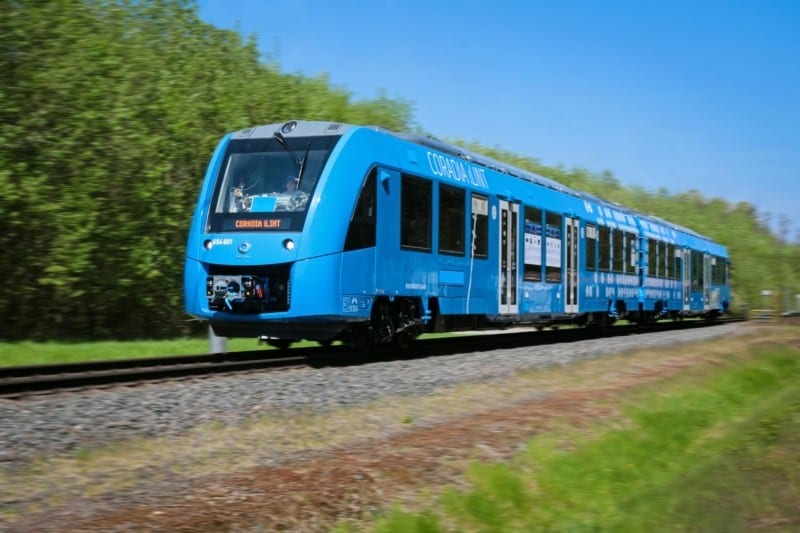
Germany, for example, already has more than 60 hydrogen fueling stations located across the country, and they launched the world’s first hydrogen-powered train in September of last year. Meanwhile, research from the UK shows that “renewable hydrogen is already cost competitive in niche applications,” and could replace industrial-scale alternatives within the next ten years.

Manufactured in Salzgitter, Germany, two hydrogen-powered Coradia iLint trains have already replaced diesel-powered trains on a 62 mile route in Northern Germany. Photo courtesy of Alstom.

Unfortunately — and Dragoon knows this better than anyone — the United States is lagging behind most European countries in this arena, simply because “they are more enthusiastic about doing something about climate change,” he says.

“Even though Oregon and Washington have a better solar resource than Germany, they have more solar power than we do. In the Northwest, we’re at about 8% wind and solar. Then you look at Denmark’s electrical grid, which is already at 47% percent wind power.”

Dragoon says that if the US wants to come anywhere close to this number, we need to invest in more electrolyzer projects.*

“I would like to see at least 500 megawatts of electrolyzers go in in the next 5 years…but frankly, we have to do more than that.”

“I feel like the climate’s not waiting,” Dragoon says. “So neither am I.”

*This is the first in a series of articles about renewable hydrogen in the Northwest. In the next article, we will take a deeper look at what Oregon and Washington’s public utility districts and transportation sectors are doing in terms of renewable hydrogen development.

By |2019-06-13T12:24:53-07:0006/13/2019|Energy, Features, Renewable Energy|1 Comment

Interactive “Solar Dashboard” Shows the Growth of Oregon’s Solar Infrastructure Over Time

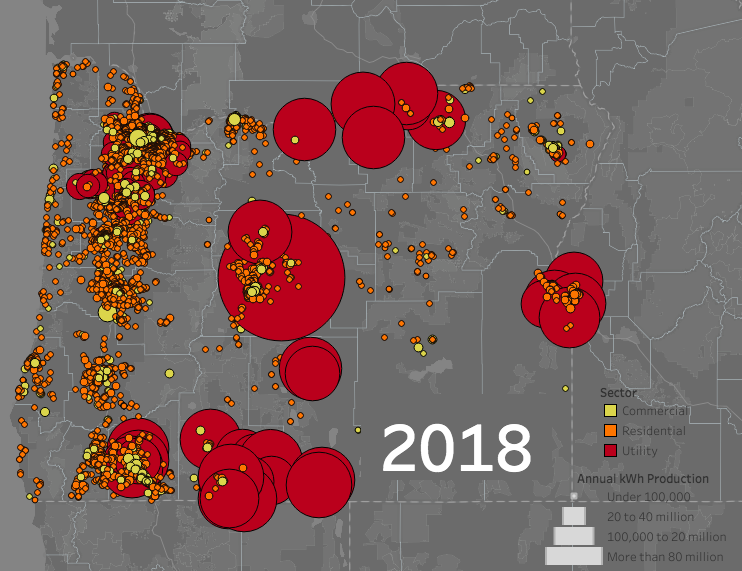
Ctrl + click on the above photo to visit the ODOE’s interactive solar dashboard and learn more about the growth of solar energy in Oregon.

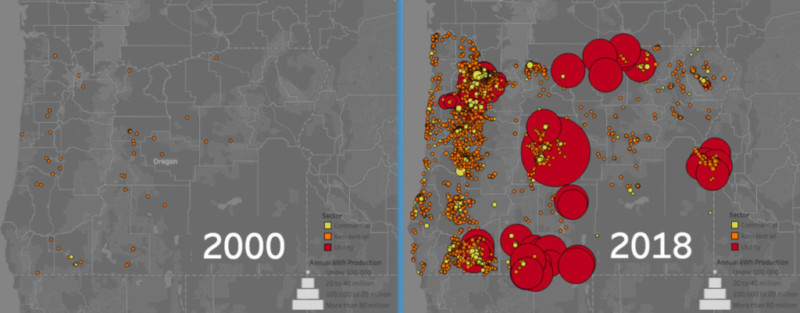
By Dac Collins. June 13, 2019. A picture is worth a thousand words, and these snapshots from the Oregon Department of Energy’s Solar Dashboard speak volumes about the growth of Oregon’s solar industry over the past two decades.

Launched in April of this year, the Oregon Solar Dashboard is a wealth of information regarding the state’s solar energy capabilities. It shows the rapid expansion of solar facilities that has occurred in recent years, not only in terms of large-scale utilities, but also the prevalence of smaller-scale residential and commercial systems.

The Dashboard also shows the dramatic decrease in the cost per watt of solar electricity since 1999 a reduction of approximately 75 percent.

The Oregon Dept. of Energy developed the dashboard “as part of a larger effort to quantify trends in the energy sector and make data available to stakeholders in user-friendly formats.” The dashboard is still a work in progress, and the ODOE will continue to update the site over time.


By |2019-06-13T13:00:16-07:0006/13/2019|Energy, News, Renewable Energy|0 Comments

Tormenta de Nieve en el Valle de Yakima: Anomalía o indicador de cambio climático?

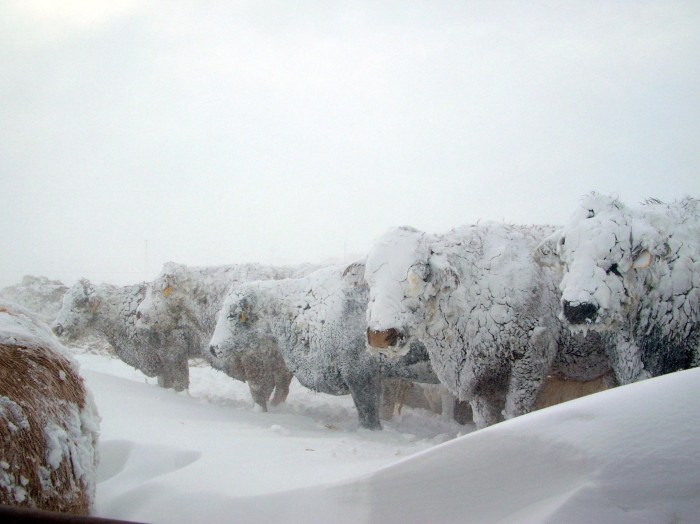
Por Dac Collins. Marzo 7, 2019. Más de 1,800 vacas murieron el mes pasado cuando una tormenta, de proporción sin precedentes, golpeó el Valle de Yakima. Y con un número de granjeros locales afirmando nunca haber experimentado una tormenta invernal tan fuerte, algunas personas se están preguntando si esto fue simplemente una ocurrencia anormal o si de alguna manera tiene relación con la volatilidad de un clima cambiante.

La parte baje del Valle recibió el embate de la tormenta, la cual cayó en la noche del 8 de Febrero. La tarde siguiente la Alcaldesa de Yakima Kathy Coffey declaró un estado de emergencia, y pare el fin de semana, 14 granjas de vacas lecheras han reportado perdidas de ganado.

“En todos mis años, nunca he sido parte de una tormenta como esta”, Jason Sheehan, propietario de J and K Diary, dijo a la revisión del portavoz.

“Si hubieramos tenido la nieve sin viento, hubieramos estado bien”, continuó Sheehan. “Aún si tuvieramos viento sin la nieve, hubieramos podido figurar algo. Pero cuando pones a los dos juntos, es como nada que yo haya visto alguna vez.”

Sheehan y otros operadores lecheros estaban totalmente desprevenidos para una tormenta de esta magnitud. Debido al clima seco del desierto en el Valle de Yakima, muchas de las vacas son dejadas, ya sea a afuera durante los meses de invierno, o se mantienen en refugios de lados abiertos.

Y con ráfagas de viento de 80 mph, las acumulaciones de nieve hasta 2 pies y temperaturas cayendo a 20 bajo cero, algunas de esas vacas se congelaron hasta morir antes que los granjeros pudieran moverlas en establos y en refugios improvisados.

Cientos más de los animales fueron pisoteados entre si, así como trataban de escapar del viento apiñándose en las esquinas de los corrales.

Todo dicho, representantes de la industria lechera de Washington reportó que 1,830 vacas (un estimado de $4 millones en productos lácteos) fueron asesinadas en la tormenta. Y mientras que no compensa por estas pérdidas, el Estado ya ha proporcionado $100,000 para ayudar a remover algunas de las vacas muertas.

Dave Bennett es el Gerente de Comunicaciones para el programa de tratamiento de desperdicio sólido del departamento de Ecología de Washington, el cual fue asignado en la tarea de coordinar el apropiado desecho de los cadáveres de los animales. Él dijo que terminaron con esa operación hace dos semanas.

“La mayoría de los cadáveres fueron manejados apropiadamente por los granjeros mismos,” dice Bennett. Él explica que solo cerca de 500 de ellos tuvieron que ser llevados a un vertedero en Oregón. El resto fue disuelto o usado como abono por los granjeros, lo que significa que los cadáveres tuvieron algún uso beneficioso asociado con ellos.

Bennett se refiere a la operación de eliminación, y a la ventisca en sí, como “sin precedentes y muy inusual”.

“Esto no es algo a lo que esperemos ver… o por lo que nos preparemos. Es algo a lo que respondemos,” dice. “Esto no fue fácil para nadie”.

Sin embargo, hay otro componente más teóricamente desafiante de esta tormenta: la idea de que estos eventos climáticos devastadores podrían volverse más comunes si el clima continúa calentándose a su ritmo actual.

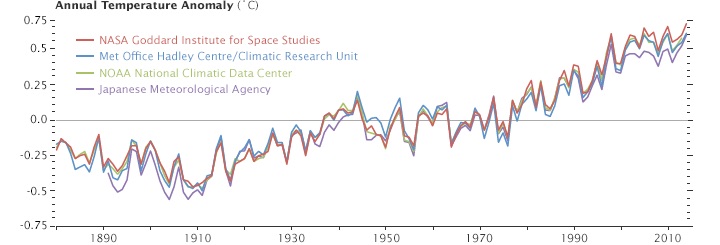
Este gráfico muestra el aumento en la temperatura global promedio entre 1880 y 2014. Cortesía del Observatorio de la Tierra de la NASA.

Los climatólogos todavía están lidiando con esta idea, y muchos considerarían que es un esfuerzo tratar de establecer correlaciones directas entre una tormenta de invierno inusualmente severa y el cambio climático. Pero eso no ha impedido que algunos de ellos lo intenten. Un estudio de 2018 busca explicar cómo un calentamiento del Ártico podría ser responsable de parte del clima brutalmente frío que presenciamos en el noreste de los Estados Unidos.

Karin Bumbaco, Climatóloga Estatal Asistente de la Universidad de Washington, se encuentra entre los dos campos cuando responde a la pregunta adherente (y cada vez más politizada) de si las tormentas de invierno más duras podrían ser el resultado de un clima más cálido o no.

“No diría que un evento de frío o nieve se vincularía con el cambio climático. Simplemente no creo que haya suficiente evidencia allí “, dice Bumbaco. “Pero es un área de investigación que ha aumentado en los últimos años, y parece que hay evidencia de ambos lados”.

Ella dice que aunque el 9 de febrero fue la primera vez que el Servicio Meteorológico Nacional emitió una advertencia de ventisca para el Valle de Yakima, “Yo no usaría esta [tormenta] como un visible ejemplo para el cambio climático”.

“Pero por otro lado”, continúa Bumbaco, “nuestro clima en el estado de Washington se ha estado calentando. Nuestras temperaturas están subiendo en todas las estaciones. Y ya sea que lo veas por temporadas, de forma anual o como una tendencia a largo plazo, este tipo de eventos se han vuelto más habituales”.

Bumbaco señala estudios que se centran específicamente en los efectos del cambio climático en la industria agrícola.

El Informe sobre el estado del conocimiento de 2013 de la Universidad de Washington tiene una sección completa dedicada a la agricultura. En esta sección, las mayores preocupaciones de los investigadores están relacionadas con las temperaturas más cálidas del verano y las reducciones en los torrentes combinados con una creciente demanda de agua de riego.

“En la cuenca de Yakima, por ejemplo, se proyecta que los años de escasez de agua aumentarán desde el 14% de los años históricamente (1979-1999) hasta el 43% y el 68% de los años para la década de 2080”, según el informe.

Y si bien no menciona ventiscas (ni siquiera copos de nieve), el informe proyecta un aumento en el clima extremo en el futuro, incluso en escenarios de gases de efecto invernadero bajos y medios.

La Evaluación Nacional del Clima más reciente y completa llega a conclusiones similares con respecto a los fenómenos meteorológicos extremos en el noroeste.

“Se prevé que los eventos extremos, como las fuertes lluvias asociadas con los ríos atmosféricos, se produzcan con mayor frecuencia”, según la Evaluación, que igualmente revela que: “también se prevé que las tormentas severas de invierno ocurran con mayor frecuencia, como ocurrió en 2015 durante uno de Los eventos más fuertes de El Niño que se tenga registrado”.

En resumen, es científicamente discutible vincular un evento climático aislado con el clima, ya que son fenómenos separados. Pero a medida que nuestro clima continúa calentándose, parece que estamos sintiendo los efectos.

By |2019-05-30T16:50:23-07:0005/30/2019|Agriculture, Spanish translations|0 Comments

Oregon Dept. of Agriculture Restricts Use of EPA-Approved Herbicide

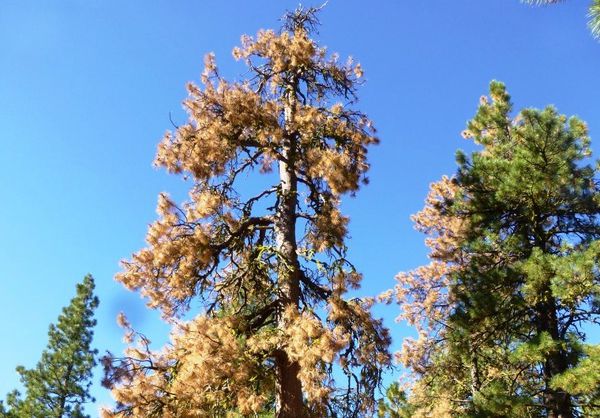
By Dac Collins. May 23, 2019. Last year, a stand of poisoned ponderosa pines in the Deschutes National Forest drew attention to the risks of using chemical weed control methods. Now the Oregon Department of Agriculture has moved to restrict the use of the herbicide that state investigators blame for the die-off. The chemical known as ACP (aminocyclopyrachlor) is still approved at the federal level, however, and it remains to be seen whether or not the Environmental Protection Agency will change how it regulates the chemical.

One of over 1,000 pines that died after coming in contact with ACP. Photo courtesy of ODA

The ODA’s ruling, which went into effect on May 9, makes Oregon the first state in the country to seriously restrict the use of ACP. It prohibits the application of the herbicide on rights of way, natural areas, restoration areas and anywhere near a water source. It includes a number of exceptions, however, such as limiting the application of ACP to once every 365 days and using it only on state- or county-listed noxious weeds.

Originally manufactured by DuPont, Bayer CropScience acquired the chemical in 2014. It is still being marketed as a weed-killer, but according to the group Beyond Pesticides, which works to improve protections from pesticides and promote alternative pest management strategies: “ACP is a tree-killing pesticide masquerading as a broadleaf herbicide.” The group contends that the ODA should take its restriction one step further and ban ACP outright.

Drew Toher, Community Resource and Policy Director for Beyond Pesticides, says that “while Beyond Pesticides supports OAR603 as an important first step in the protection of Oregon’s natural areas, the legal, scientific and regulatory history surrounding aminocyclopyrachlor warrants the complete elimination of all allowed uses of this chemical by the ODA.”

Looking back on the chemical’s checkered history, it caught the attention of the Environmental Protection Agency soon after it was registered conditionally under the product name Imprelis. The EPA issued a Stop Sale, Use or Removal Order for Imprelis in August of 2011, after professional landscapers in the Midwest started noticing an unusual amount of dead conifers in areas where they sprayed the product.

DuPont eventually withdrew Imprelis from the market and paid nearly $2 million in civil fines to the EPA. But the chemical manufacturer continued to use ACP as the active ingredient in other herbicidal products, including one packaged and distributed under the name Perspective.

So between 2013 and 2015, when the Oregon Department of Transportation, the U.S. Forest Service and the Jefferson County Public Works Department repeatedly used Perspective to remove weeds on a scenic stretch of Highway 20, they were unaware of the deadly side-effects the product was having on nearby trees.

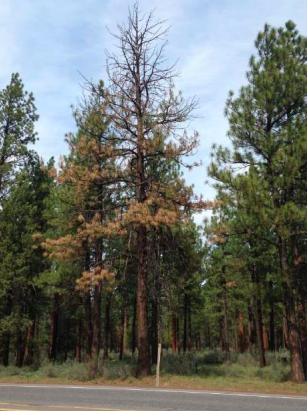
It wasn’t until later that they connected the dots, and a statewide investigation launched in January confirmed that ACP was to blame for the die-off. By that point, more than 1,000 ponderosa pines alongside the highway were either dead or dying.

“We just collectively dropped the ball on that, and it’s unfortunate,” Ian Reid, Sisters District Ranger for the Deschutes National Forest, told the Bend Bulletin last June.

During a public comment period that preceded the Forest Service’s decision to remove the dead trees, a number of citizens blamed the federal agency (along with ODOT and Jefferson County Public Works) for failing to heed the important precautions that are listed on the product label, which include:

“Injury or loss of desirable trees or vegetation may result if Perspective Herbicide is applied on or dear desirable trees or vegetation…”

“Certain species may, in particular, be sensitive to low levels of Perspective Herbicide but not limited to, conifers (such as Douglas fir, Norway spruce, ponderosa pine and white pine), deciduous trees…and ornamental shrubs.”

But regardless of what its label recommends, Toher believes that the product should never have been approved by the EPA in the first place. He says the whole situation is “indicative of of a broader flaw in the EPA registration process,” and explains that the agency “often approves the use of a chemical without all of the necessary data required to fully register the chemical, and will assign it a ‘conditional’ registration.”

“Time and time again, this process has shown to be dangerous,” Toher says.

“That is why we are very pleased to see that ODA did take action on this chemical, in a way acknowledging that the EPA did not do their due diligence in their initial permission to put this product on the market.”

The EPA has not made any indication that it will change the way it regulates ACP, but an EPA spokesperson says the agency “takes incidents of unintended plant damage very seriously, and will evaluate all available information, including incident data for Perspective, as part of the consideration(s) for any change to existing pesticide regulations.”

By |2019-07-11T12:02:08-07:0005/23/2019|Agriculture, Uncategorized|1 Comment

Being Heard Is Half the Battle

Tribes Speak up for Ecosystem Needs During Columbia River Treaty Negotiations

This is part two of a series of articles about the Columbia River Treaty. For more background on the Treaty, read A New Columbia River Treaty: A balancing act spanning two countries and a diversity of interests

By Dac Collins. May 9, 2019. The federal government of Canada announced on April 26 that it is inviting three First Nations to participate as observers in the ongoing Columbia River Treaty negotiations between Canada and the United States. And while 15 tribes in the U.S. are still feeling excluded from the negotiating table, they see this development as a step in the right direction.

That’s because tribes on both sides of the border share a common goal: to integrate ecosystem-based function into the modernized treaty. This would require a more holistic approach to managing the four Treaty dams, which means taking into account fish, wildlife, habitat, water quality and the overall health of the river while still meeting the needs of hydropower and flood control.

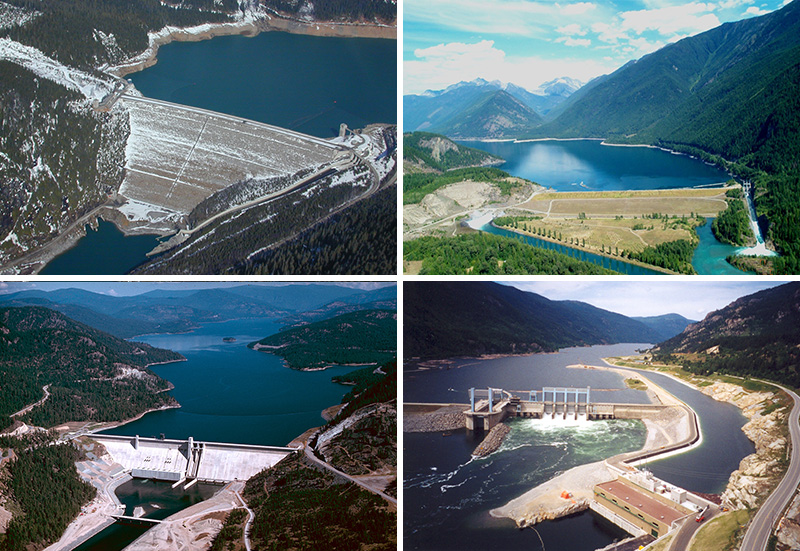
Arranged sequentially (clockwise from top-left), the four Treaty dams — the Mica, Duncan and Keenleyside Dams on the Canadian side and the Libby Dam on the U.S. side — are located in the upper reaches of the Columbia River Basin. Photos courtesy of Wikimedia Commons

The inclusion of the Ktunaxa, Okanagan and Secwepemc Nations comes nearly a year after the Treaty negotiations began last May. Indigenous leaders and representatives say they look forward to working with U.S. and Canadian Entities to modernize the transboundary agreement before it expires in 2024…but they say the invitation is long overdue.

“The original Columbia River Treaty in 1964 excluded our Nations, and wreaked decades of havoc on our communities and the Basin,” said Grand Chief Stewart Phillip of the Okanagan Nation Alliance.

“Canada’s unprecedented decision to include us directly in the U.S.-Canada CRT negotiations is courageous but overdue, and necessary to overcome the decades of denial and disregard. We welcome the government’s bold decision here and look forward to helping to ensure any new Treaty addresses the mistakes of the past.”

Phillip’s welcoming of the government’s decision is a step toward reconciliation, as he and other First Nations leaders were outraged when they learned that Indigenous peoples were not invited to participate when the negotiations first began. He called the exclusion of those voices a “total slap in the face”, while Chief Wayne Christian, representing the Secwepemc Nation, referred to the snub as “business as usual”.

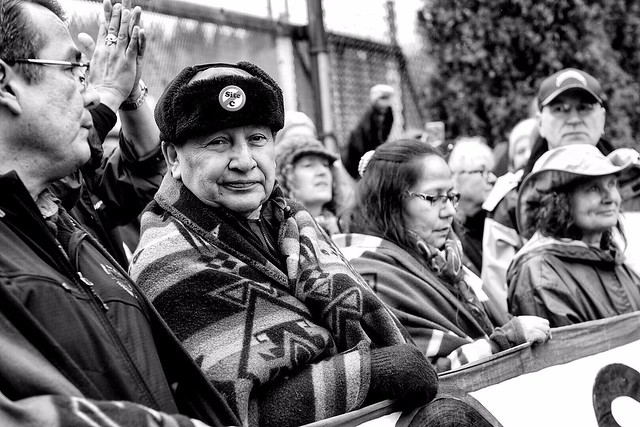
Grand Chief Stewart Phillip of the Okanagan (Syilx) Nation is the current President of the Union of BC Indian Chiefs. Photo by Josh Berson, Protect the Inlet

But Phillip and Christian aren’t the only ones who have felt slighted during the negotiation process. There are 15 tribes scattered throughout the Columbia Basin on the U.S. side of the border — none of which have been offered a seat at the negotiating table.

The State Department, which is heading up the U.S. negotiating team, says it “values the Tribes’ expertise and experience, and is consulting with the Tribes throughout the negotiating process.”

And responding to the news from our northerly neighbors, a State Dept. spokesperson for Western Hemisphere Affairs says: “We will continue to engage the Tribes on a regular basis as negotiations proceed,” but “we have no plans to change the general composition of the team.”

As the Director of Government Affairs and Planning for the Confederated Tribes of Warm Springs, Louie Pitt says this is disheartening.

“We Warm Springers gave 10 million acres to the United States. We gave real land, real water, real resources…a lot of real things,” Pitt says. “Shouldn’t that count for something?”

Like Christian, Pitt sees the disconnect between federal and tribal governments as a systemic problem — one that dates back to long before the Columbia River Treaty was ratified in 1964. At the root of this problem, Pitt says, is the fact that when it comes to managing the Columbia, U.S. interests have never aligned with those of the tribes.

“I was broken-hearted when I grew up and found out that Grand Coulee Dam just said ‘hell no’ to fish passage,” Pitt says. “All that beautiful habitat up there, and these great scientists and engineers couldn’t think of a way to get fish past that? Give me a break. It just wasn’t important to them.”

Fortunately for Pitt and the other tribal leaders in the Basin, they have staff working for them on this issue. Intergovernmental organizations such as the Columbia River Inter-Tribal Fish Commission (CRITFC), the Upper Columbia United Tribes (UCUT) and the Upper Snake River Tribes Foundation (USRT) are helping ensure that the tribes’ concerns are heard and acknowledged.

Jim Heffernan works for CRITFC as a policy analyst for the Columbia River Treaty. Providing policy support for the Yakama, Warm Springs, Umatilla and Nez Perce, he explains that the four tribes initiated a process to create a larger Tribal Coalition, which serves to consolidate the concerns of the 15 sovereign nations into one united and cogent voice.

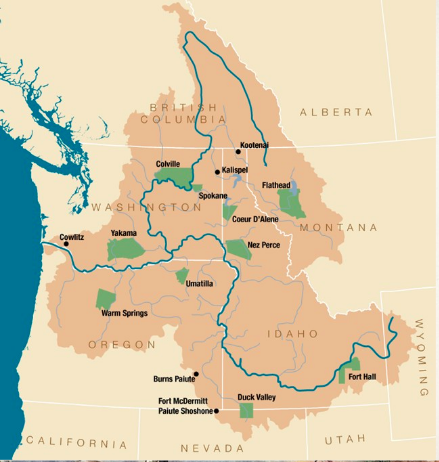
This map shows the 15 tribes on the U.S. side of the border that are affected by the Columbia River Treaty. Click here for a more detailed map of the Columbia River Basin that shows the location of tribal lands on both sides of the border. Maps created and provided by CRITFC

“The thing that the tribes are pushing for hardest is integrating ecosystem-based function in a modernized treaty,” Heffernan says, emphasizing that there are a number of ways that Canada and the U.S. could accomplish this goal. One example would be “changing the operations of the reservoirs so we can get more water into the system in low to moderate water years.”

More specifically, he explains, this would mean restoring at least 3-5 million acre feet of flow in the spring and early summer in those low to moderate water years, when juvenile salmon (headed downriver) are most vulnerable to the impacts of dams.

Adjusting the flow regime of the Treaty dams to restore this “spring freshet” would be a major change to the current Treaty provisions, which were implemented in ’64 to serve two explicit purposes: to coordinate flood risk management to protect downriver communities, and to operate the reservoirs in a way that optimizes hydropower production. And for some utility companies, dam operators and ratepayers along the Columbia River, sacrificing this much water (and potential electricity) to benefit migrating fish is a hard sell. Mainly because they’ve grown accustomed to the idea that the water is theirs to manage.

But from the perspective of the tribes, who honored and relied on the Columbia’s natural resources for thousands of years before the United States and Canada came into existence, this way of thinking is not only insulting and narrow-minded…it speaks to the greatest injustice in their history of the River.

So when stakeholders tell them that integrating ecosystem-based function is going to “cost them too much” in lost hydropower potential, Heffernan says, all tribal leaders can do is “look at them stone-faced and tell them: ‘You’re using our shared resource, and in a manner that is impacting our other resources. You didn’t consult with us when you implemented the original Treaty, and the way you’re managing it now detrimentally impacts our resources to the point that there are now several listed stocks.’

[perfectpullquote align=”full” bordertop=”false” cite=”” link=”” color=”” class=”” size=””]‘You’ve over-utilized the water and you’re assuming that you own it. But you don’t own the river.’”[/perfectpullquote]

Members of the Confederated Tribes of the Colville Reservation are reminded of this inequity by the presence of Grand Coulee Dam. One of the largest concrete structures in the world, it inundated Kettle Falls. And along with Chief Joseph Dam, which also lacks fish ladders, it represents the end of the road for migratory fish in the Columbia.

Completed in 1942, Grand Coulee Dam became a permanent barrier to salmon, steelhead and other migratory species such as sturgeon and lamprey. It cut off some of the best spawning habitat in the Basin, effectively stripping the upriver tribes of their primary food source and their identity.

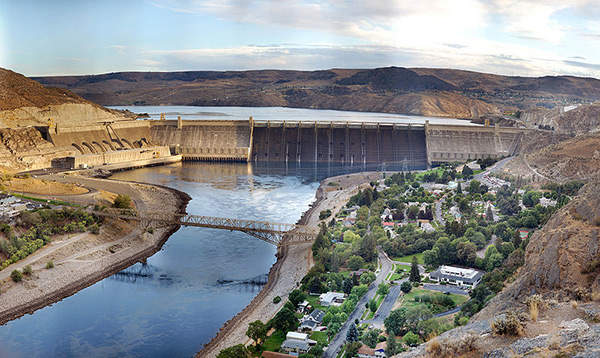
Forming Lake Roosevelt in Central Washington, the Grand Coulee Dam produces more hydroelectric power than any other dam in the Columbia River Basin. Built in 1942 without fish ladders, it is also the most significant barrier to migrating fish in the Basin.

“We were all salmon people,” says Rodney Cawston, Chairman of the Colville Tribal Business Council. “Our culture, our religion, our way of life. Everything revolved around having salmon come up the river.”

So when Cawston talks about the changes he would like to see in a modernized version of the Columbia River Treaty, restoring fish passage over Chief Joseph and Grand Coulee Dams tops the list.

“If there’s one thing that could have a huge impact on the tribes — the Colville Confederated Tribes and all the tribes that are north of us on the Columbia — it would be to see fish passage,” Cawston says.

And according to Heffernan, this is something that both countries should at least be thinking about. He explains that “both the U.S. and Canada agreed to block passage above Grand Coulee. And through the Treaty, they collaborated in turning the river into an organic machine that mainly runs for the sake of power production and the consequential benefits of coordinated flood risk management.”

All the tribes are asking for in the current treaty negotiations, Heffernan says, is for the two governments to “redial the system so that ecosystem function is built in.”

“And fish passage above Chief Joe and Grand Coulee is something the parties should be studying,” he says.

Heffernan points to the U.S. Entity’s Regional Recommendation for the Future of the Columbia River Treaty after 2024. The product of a multi-year collaborative effort between federal agencies, state governments, tribes and additional stakeholders, it recommends that: “The United States should pursue a joint program with Canada, with shared costs, to investigate and, if warranted, implement restored fish passage and reintroduction of anadromous fish on the main stem Columbia River to Canadian spawning grounds.”

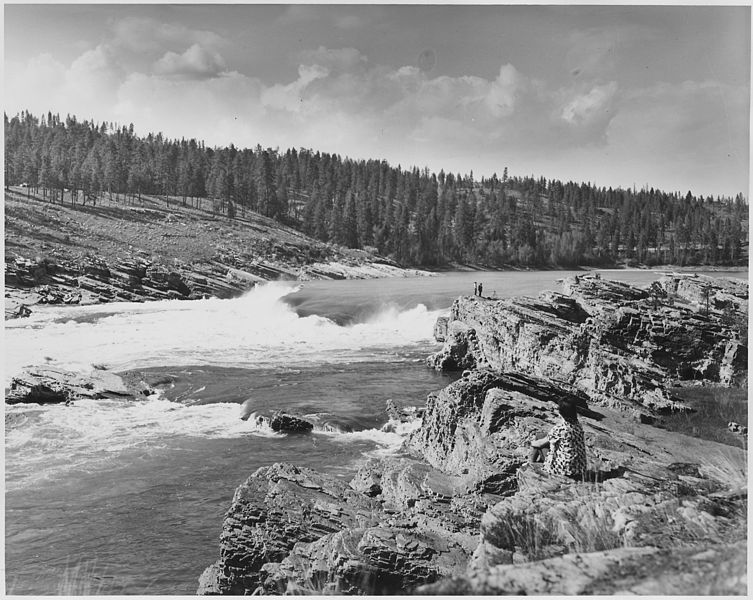
Now buried beneath Roosevelt Lake, Kettle Falls (pictured here in 1939) was once one of the most important fishing and gathering places for Native Americans in the Northwest. Photo courtesy of Wikimedia Commons

Restoring a population that has been absent for over 80 years is an ambitious goal, however, and the inclusion of the Ktunaxa, Okanagan and Secwepemc Nations in the current Treaty negotiations does not guarantee that it will happen. But it does mean that the ecosystem of the Columbia River will have a stronger voice at the negotiating table. And for Pitt, Cawston, Phillip, Christian and the other tribal leaders of the Basin, being heard is half the battle.

“Everything that we have as a native people is entwined with that resource. And any consideration that we’ve gotten today, we had to fight for it in court,” Cawston says.

“And we will continue to fight for it if we have to.”


So far, six rounds of negotiations have taken place between the U.S. and Canada. According to the State Dept. website, the next round of negotiations will take place in Washington D.C. on June 19 and 20.

The negotiations will continue for the foreseeable future. Town hall meetings soliciting input are expected to continue, and these meetings are open to the public.

To receive regular updates regarding the Columbia River Treaty and upcoming town hall meetings, email: ColumbiaRiverTreaty@state.gov

© Copyright 2013-2025 Columbia Insight. All Rights Reserved.

As a 501(c)3 nonprofit organization, all donations to Columbia Insight are tax deductible to the full extent of the law. Our nonprofit federal tax-exempt number is 82-4504894.