Stay Updated Subscribe today for the latest research + reporting about environmental news. Subscribe Now

Stay Updated Subscribe today for the latest research + reporting about environmental news.

Subscribe Now

Chuck Thompson

Chuck Thompson

Chuck Thompson

About Chuck Thompson

Chuck Thompson is editor of Columbia Insight.

It’s now or never if the Nation is going to stop Northwest salmon extinction

Leaders of the Columbia River treaty fishing tribes call for unity of purpose in Snake River dams decision
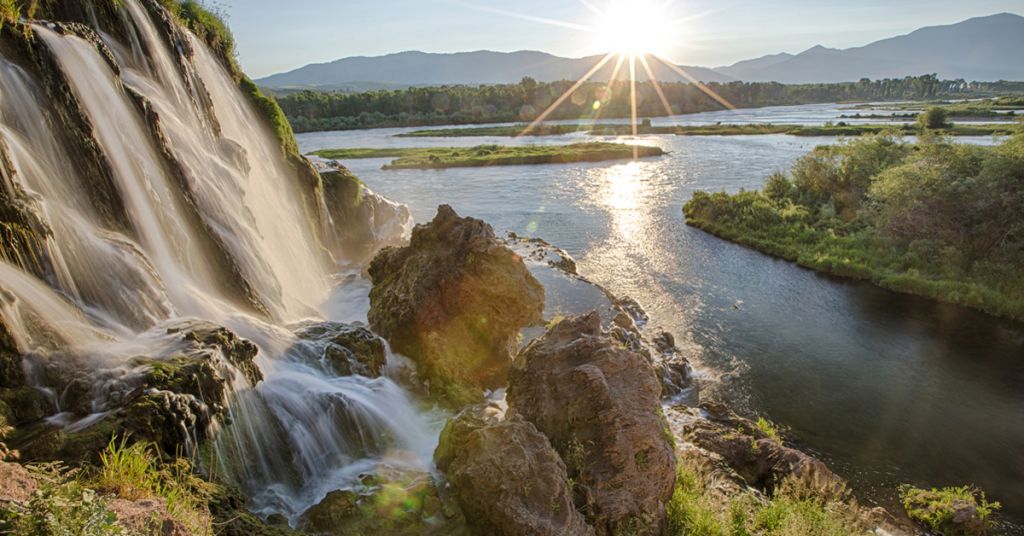
Snake River

Snake River: Still beautiful; less bountiful. Photo: BLM

This editorial written by Jonathan Smith, Confederated Tribes of the Warm Springs; Delano Saluskin, Yakama Nation; Kat Brigham, Confederated Tribes of the Umatilla; and Samuel Penney, the Nez Perce, previously appeared in Spilyay Tymoo of Warm Springs and the Seattle Times.

August 25, 2022. Native peoples in the Northwest have known since time immemorial that the wealth of this region is in our rivers and fish, and the vast ecosystems they support. Their health is the region’s wealth.

But while that’s been clear forever that does not mean it will continue forever. Columbia Basin salmon are headed toward extinction—unless we, our elected officials and all stakeholders take immediate, bold action.

Our Tribes—the Yakama Nation, the Confederated Tribes of the Umatilla Indian Reservation, the Confederated Tribes of the Warm Springs Reservation of Oregon and the Nez Perce Tribe—are First Foods people. Our food, and especially the salmon, is essential to our culture, health, religion, economy, our stewardship of land and water, our history.

And our future.

When our ancestors signed treaties with the United States government in the 1850s, one of our most critical guarantees was the right to fish forever. At that time, the Columbia River basin teemed with over 17 million fish each year.

Now the returns are nearly gone.

Over the last 5 years, fewer than 8,000 wild spring chinook salmon have returned to the Snake River on average. Forty-two percent of the spring chinook populations in the Snake River basin, a vast mountainous area with the best habitat remaining in the Columbia Basin, have had fewer than 50 fish on the spawning grounds for four consecutive years, a threshold level of functional extinction. And with climate change, there are even more challenges and fewer fish. As with the salmon, the Orca that rely on them for food are also in crisis. There are fewer than 75 southern resident Orca left.

[perfectpullquote align=”full” bordertop=”false” cite=”” link=”” color=”” class=”” size=””]”We cannot continue doing business as usual.”[/perfectpullquote]

This is also the history of a national-level environmental/tribal injustice. The Columbia Basin federal dams for 90 years have been built and operated on the homelands, waters and fisheries of Northwest tribes.

That is not merely an unjust “past.” It is occurring today and every day. The system has been to the enormous benefit of the 14 million people who now call the Northwest home, but has come at a terrible, disproportionate cost for our people, our cultures and our treaty-reserved resources, including the salmon.

Northwest leaders have already taken steps to aid salmon recovery.

Idaho Rep. Mike Simpson’s Columbia Basin Salmon Recovery Initiative has set the framework for a comprehensive approach: by restoring the Lower Snake River corridor, reintroducing salmon in the Upper Columbia and Upper Snake basins and making a significant new investment in fish and wildlife actions implemented by tribal and state managers; while intensively investing in all sectors that rely on the services of the dams. Wash. Sen. Maria Cantwell included $2.8 billion in the infrastructure bill for ecosystem restoration and improved fish passage throughout the region.

We applaud and thank Senator Cantwell for her leadership in taking those steps. To restore healthy salmon runs, however, we’ll need to do more, and other leaders are joining Sen. Cantwell to address the urgent plight of Columbia Basin salmon, steelhead and the Orca they support.

Sen. Patty Murray and Gov. Jay Inslee have issued a report that analyzes the feasibility of replacing the services of the lower Snake River dams: keeping power rates affordable and supporting our agricultural, energy, transportation sectors as well local economies.

This is an important departure from the all-or-nothing debate between pro- and anti-dam interests over the past 20 years.
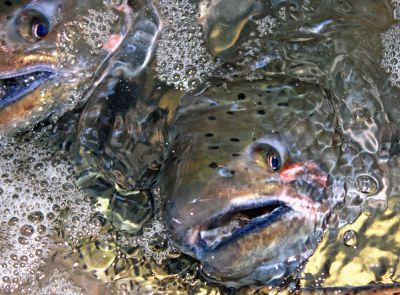
salmon

Salmon at Lower Granite Dam on the Snake River. Photo: NOAA

The Murray-Inslee process can create a path that both recovers salmon and enhances our agricultural, transportation, energy and local economies. Tribes are part of those economies too. For example, some of our tribes have tribal farm enterprises that export wheat alongside non-tribal farmers.

Our tribes are committed to options that keep our economy whole, from agriculture to transportation, tourism, recreation and affordable power prices.

With respect to the energy produced by the Lower Snake River dams, there is now ample and growing evidence that the Northwest can replace that service with other clean energy technologies. That’s important for communities that rely on the energy.

They’ll also benefit from the jobs that ramping up new energy sources will bring. And because any new sources will be clean, they’ll also help our region mitigate the effects of climate change.

It is also clear that trucks and rail can replace barges by transporting grain to the large ocean ports or alternatively to the Tri-Cities area where the product could then be placed on barges, for the remainder of the trip below the Lower Snake River dams. This action would simultaneously create many good paying jobs in the Tri-Cities.  

As stewards of Northwest land and water, we see a great opportunity before the region. The federal government appears committed to finding a solution. As senior officials for the White House Council on Environmental Quality, and the Departments of the Interior, Energy, Army and Commerce recently jointly stated, “We cannot continue doing business as usual.

Doing the right thing for salmon, Tribal nations and communities can bring us together. It is time for effective, creative solutions.”

We urge our Northwest elected officials to keep an open mind to the options identified in the Murray-Inslee process and to working with all of the Columbia Basin stakeholders on creative solutions. While breach of the Lower Snake River dams is an essential component, any Basin-wide recovery plan must also examine flows, habitat and other issues and must be comprehensive enough to ensure the salmon survive for those generations yet unborn.

The debate over dams has persisted for decades. However, we believe this is a singular opportunity to find lasting solutions that fulfill the treaty obligations while providing benefits for everyone in the region.

This is a moment of historical urgency and importance. The Columbia Basin Tribes, who are recognized fish and wildlife co-managers in the Basin, are prepared to meet with all stakeholders and sectors to ensure a long-term, win-win situation so that abundant salmon are here for the next seven generations.

Jonathan Smith, Confederated Tribes of the Warm Springs; Delano Saluskin, Yakama Nation; Kat Brigham, Confederated tribes of the Umatilla; and Samual Penney, the Nez Perce.

RELATED: 140 Miles: Snake River stranglehold

READ MORE INDIGENOUS ISSUES STORIES.

The Collins Foundation logo

The Collins Foundation is a supporter of Columbia Insight’s Indigenous Issues series.
By |2025-12-03T14:51:58-08:0008/25/2022|Indigenous Issues, Opinion|0 Comments

Oregon poachers sentenced for slaughtering elk. Did they get enough?

Earlier this year the state promised to get tougher on wildlife poachers. In Harney County that promise just got put to the test

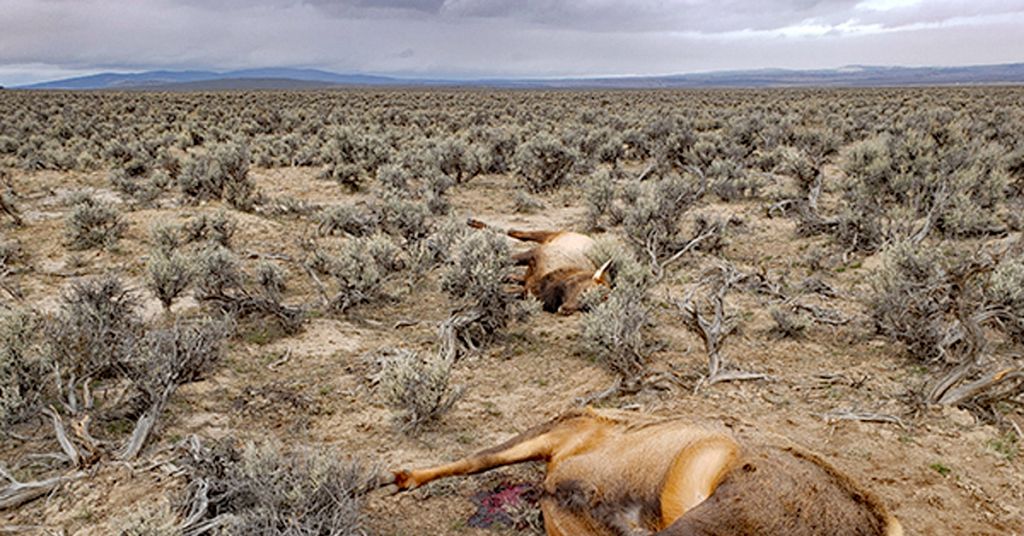
Elk poaching Harney County

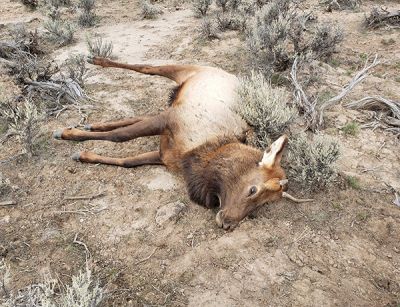
Crime scene: Two of the elk illegally killed in May in eastern Oregon. Photo: ODFW

By Bill Weiler, July 22, 2022. In late May, two Hines, Oregon, residents were sentenced for their involvement in killing a minimum of seven elk while shooting into the fleeing herd in December 2021.

“The crime left two calves, two cows and a spike bull rotting in high-country sagebrush,” according to the Oregon Department of Fish and Wildlife. “Chris Lardy and his wife, Stephanie, were convicted of multiple wildlife offenses on May 20.”

This poaching case made headlines because of the cruelty involved, but perhaps also because of the following unique aspects:

  • Someone turned them in
  • They were caught
  • They went to court
  • They were sentenced

The case also raised interest because earlier this year the Oregon Department of Fish and Wildlife made headlines by promising to crack down on poachers who engage in so-called “thrill kills.” The state’s Department of Justice hired a special anti-poaching prosecutor, Jay Hall, to make the point.

When it comes to crimes against wildlife, poaching is at the top of the list regarding public disgust. It is a cowardly act to use a high-powered gun to shoot a defenseless animal.

Many times, the animal killed is not harvested for meat. The animals usually poached are on the endangered species list or are big game animals.

A 2017 poaching case involving residents of Skamania County, Washington, occurred when investigators documented the unlawful slaughter of more than 100 animals including black bears, cougars, bobcats, deer and elk.

“This ranks at the top,” said Capt. Jeff Wickersham, who patrols southwest Washington’s District 5 for the Washington Department of Fish and Wildlife. “There’s been other violations across the state where you have a small group of people that unlawfully take and poach a number of animals. But we’ve never seen anything like this.”

WDFW ultimately arrested 20 individuals. Some of the suspects had prior unlawful hunting convictions and faced Class C felonies that carry a penalty of up to five years in jail and a $10,000 fine.

One of the 20 people arrested in the case was sentenced and pleaded guilty to second-degree illegal hunting of big game in Skamania County Court. He was sentenced to 14 days community service and a $500 fine.

The primary suspect in the Washington case was sentenced to only one year in prison; another major poacher served just 23 days in home confinement.

Something is wrong with the criminal justice system and wildlife cases.

Sentence structure

In the recent Harney County elk poaching case, the main perpetrator was required to write and publish an apology letter in the Burns Times-Herald as part of his sentence, which also included six days in jail, 18 months of bench probation and a three-year prohibition from hunting activities, including as an observer or mentor.

In addition, the pair must take hunter education courses to regain hunting rights following their three-year suspensions.

And they will pay a combined $2,500 in fines and restitution.

“The plea offer proposed went through a number of revisions,” prosecutor Jim Carpenter told Columbia Insight via email. “Initially I had asked for a substantially higher sanctions.

Jay Hall Oregon Dept Justice

Poaching prosecutor: Jay Hall assisted with the conviction. Photo: Oregon DOJ

“When proposed to the Oregon State Police, per their request, I reworked my offer in consideration of their views prior to sending it to defense counsel. The court followed my recommendation with the exception of the jail time. I had not recommended jail time.”

Carpenter, the district attorney for Grant County, was designated as a special deputy district attorney for Harney County for the case. Though he was the sole prosecutor for the case, he was assisted by the DOJ’s special anti-poaching prosecutor Jay Hall.

“Mr. Hall was instrumental in assisting with this case, particularly in the area of fines being recovered by the department of wildlife, similar to restitution,” said Carpenter. “Mr. Hall also provided much of the charging language in the charging document, tailored specifically to this case.”

How does the sentence compare with previous sentences for poachers?

“The sentence is within local customary norms, with the exception of the jail time,” said Carpenter. “Jail time had not been imposed in a game case in the 24th Judicial District for as long as I can remember.”

If you’re a wildlife advocate, you might be upset with the lax penalty, yet at least penalties were handed down.

When the media displays poaching crimes on front pages, momentum can be created, and perhaps, hopefully, we are starting to see some movement toward taking wildlife poaching seriously.

For decades, wildlife crimes were stuffed to the bottom of the judicial system barrel. As Columbia Insight reported in May, at least in Oregon, with new legislation to increase fines and incentives to report wildlife crimes, we can hope poachers may be the ones in peril.

Wildlife appreciation

The results of a new national poll from the Data for Progress mimics similar polls from around the country, demonstrating overwhelming support for wildlife and habitat conservation and the bipartisan Recovering America’s Wildlife Act.

The RAWA legislation has passed the U.S. House of Representatives and is pending in the Senate.

The bill will provide substantial new funds ($1.93 billion) for state and tribal fish and wildlife conservation efforts.

In a 2021 poll of more than 1,100 likely voters, 91% said it was important to save-at-risk wildlife, fish and plants for future generations.

Wildlife poaching

What cost? Convictions and costly sentences for poachers remain rare. Photo: ODFW

The poll also found that more than two-thirds of voters (67%) prefer local collaboration to restore habitats.

Majorities of Democrats, Republicans and independents preferred this approach.

This is progress. Consider that we are in the first wave of additional funding for more legal staff to fight poaching in Oregon, and an increasing amount of public appreciation for wildlife, as well as the potential for the largest infusion of federal wildlife management dollars in history through RAWA.

Despite these noble efforts we will still have to deal with poachers.

Additional solutions to lessen poaching involve children spending greater time outdoors, interacting with wildlife at their earliest possible ages, before they’re mesmerized by violent video games.

State wildlife agency enforcement departments need a significant increase of new staff in order to reduce their massive jurisdictional territories.  

Poaching penalties must be substantially stiffer regarding monetary cost and jail time to help deter would-be poachers from carrying out their heinous activities, while increasing awards for turning in poachers should be increased.

Ultimately, judges must elevate wildlife poaching cases as a priority, handing down tough sentences that become the headlines for all to see.

Bill Weiler is a fish and wildlife biologist and environmental educator.

The views expressed in this article belong solely to its author and do not reflect the opinions of anyone else associated with Columbia Insight.

To report a case of wildlife poaching in Oregon contact the Turn In Poachers (TIP) line: 800-452-7888 or TIP@osp.oregon.gov.

RELATED: Amid spike in thrill kills, wolf poisonings, Oregon strengthens anti-poaching efforts

RELATED: Group says state wildlife agency values hunters over conservation, aims for reforms

By |2022-07-26T12:40:26-07:0007/21/2022|Opinion, Wildlife|2 Comments

Video: Enviros await decision on status of Cascade red fox

Found only in Washington, the elusive carnivore is on the state’s radar thanks to the work of wildlife biologist Jocelyn Akins

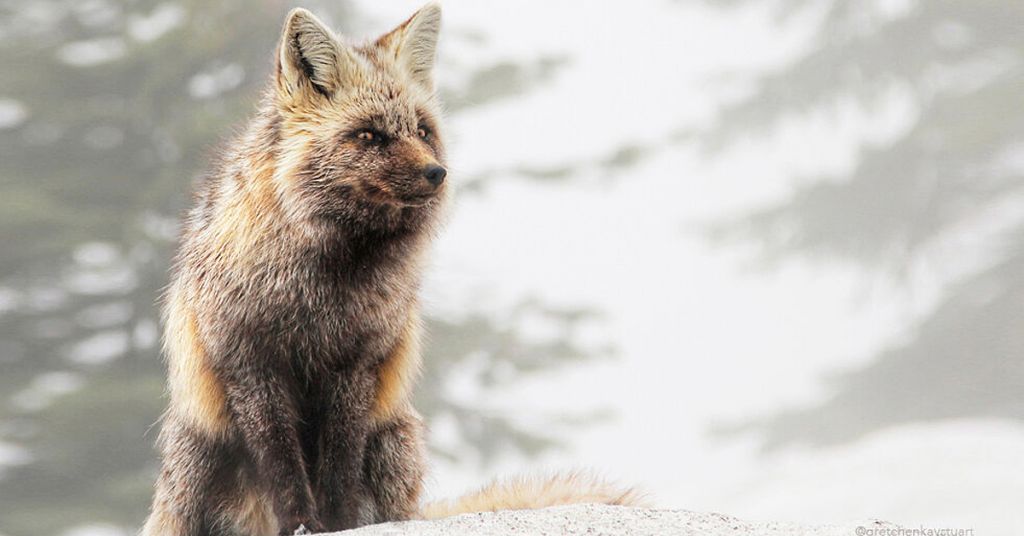
Photo: Gretchen Kay Stuart/Cascades Carnivore Project

By Chuck Thompson, July 7, 2022. The Cascade red fox is in the news this week.

As The Seattle Times reported on Tuesday, the Washington Department of Fish and Wildlife is considering listing the rare fox as a threatened or endangered subspecies.

“The Cascade red fox is among 70 or so Washington species, including birds, fish and insects, currently under consideration for endangered, threatened or sensitive status,” reported the Times.

WDFW commissioners will review the Cascade red fox’s status in September. The decision follows a February draft report issued by WDFW that recommended listing Cascade red foxes as threatened.

“Threats to the species could include climate change decreasing their habitat, visitors feeding the foxes in national parks or an invasion of other non-native red foxes into their region,” the report said.

The report was co-authored by wildlife biologist and Cascades Carnivore Project Founder Jocelyn Akins. Akins is also renowned for her wolverine research.

MORE: Wolverines break through … finally!

So, what exactly is a Cascade red fox and why is it important?

In an October 2020 webinar, Columbia Insight asked those questions to Akins and got fascinating answers—and amazing photos.

This week’s news makes it a good time to revisit Akins’ presentation in the condensed video above.

Chuck Thompson is editor of Columbia Insight.

By |2022-07-07T09:02:52-07:0007/07/2022|Wildlife|0 Comments

Can we laugh about climate change?

A comedy troupe wants to change minds about climate change by making jokes about it

Katie Hannigan

Sick burn? Katie Hannigan is one of nine members of the new Climate Comedy Cohort. Photo: Katie Hannigan

By Katelyn Weisbrod, Inside Climate News. July 5, 2022. Gallows humor has a long and probably necessary history. 

But can we laugh about something as dire as climate change?

The creators of a new comedy venture think so. In fact, comedian Esteban Gast believes humor is a way to reach people who haven’t thought much about climate change.

“Research shows that comedy is a great way to break down defenses. Comedy is a great way to have people listen to truths that they might otherwise not. Comedy opens your mind,” Gast says. “We also know that humor and hope motivate people to change and motivate action.”

Gast is a comedian-in-residence at clean energy nonprofit Generation180 and a member of the creative team for the Climate Comedy Cohort, a group of nine comedians from around the United States who will spend the next few months learning from climate experts and collaborating to pitch jokes for future performances and videos.

The goal is to create climate communication with comedy baked in, says comedian Kenice Mobley, the comedy projects coordinator at the Center for Media and Social Impact (based at American University’s School of Communication in Wash., D.C.) and a creative team member for the comedy cohort.

The group will work to find a balance between informing their audience about climate change without diving into a narrative of death and destruction. Rather, the cohort’s creators hope the audience will be learning, laughing and leaving feeling inspired.

“I’m so excited to see the projects that these [comedians] come up with,” Mobley says, “because it has just been doom and gloom mostly in the past.”

The cohort concludes with a live comedy show tour in select states this October. No word yet on locations, but what kind of joke would it be if they skipped the Pacific Northwest? 

Columbia Insight is publishing this story in collaboration with Inside Climate News, a nonprofit, independent news organization that covers climate, energy and the environment. You can subscribe to the ICN newsletter here.

By |2022-07-05T18:57:15-07:0007/05/2022|Climate Change|0 Comments

Government exploiting fire fears to back old growth logging, say conservationists

Coalition sues Forest Service for sticking with Trump-era rollback of old growth protections in Oregon and Washington

Old growth logging

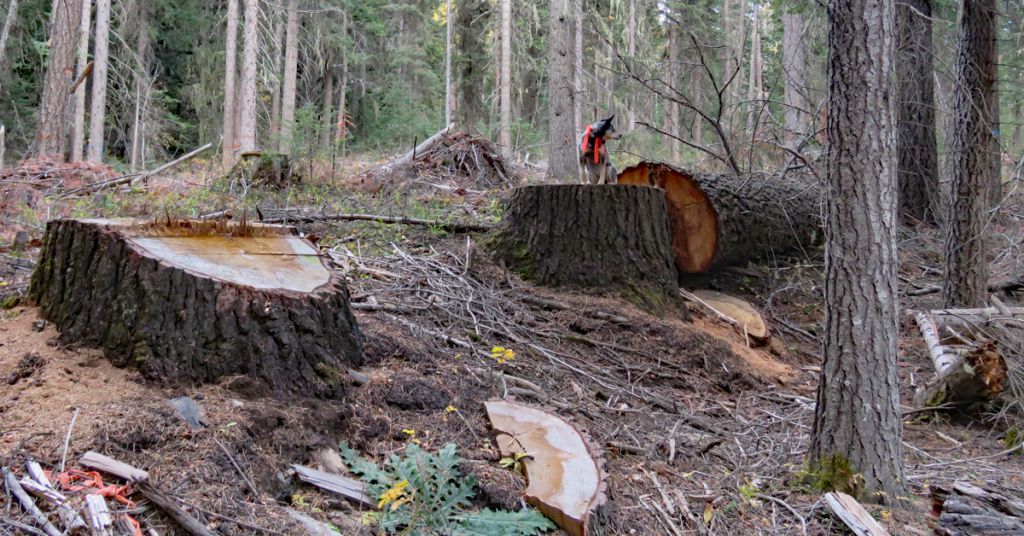
Logging the Lostine: Remnants of a 2021 “public safety” thinning project along Oregon’s Lostine Wild and Scenic River Corridor. Photo: Oregon Wild

By Jordan Rane, June 21, 2022. One of the largest and most controversial rollbacks of old growth forest protection in the Columbia River Basin was enacted nearly a year and a half ago when, according to critics, much of the country was looking elsewhere.

Now a lawsuit against the U.S. Forest Service is bringing over 7 million acres of public forestland in eastern Oregon and southeast Washington back into the foreground.

On January 15, 2021, during the final days of the Trump administration, the USFS announced a rollback of the “Eastside Screens”—a 25-year-old land management regulation prohibiting the harvesting of any live tree with a trunk exceeding a 21-inch diameter at breast height throughout several public forests east of the Cascade Range.

MORE: Forest Service wants to eliminate protections on large trees

The USFS justified the amended protection as “a reassessment in light of current forest conditions.”

The ruling sparked protests from conservation organizations and vows of litigation if the policy reversals weren’t addressed by the incoming Biden administration.

Old growth

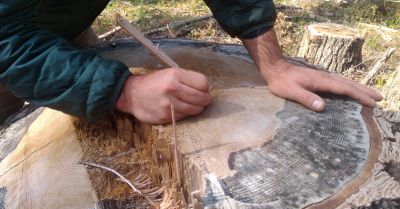
Counting rings: Grand fir trees over 200 years old are being logged along the Lostine River in eastern Oregon. Photo: Greater Hells Canyon Council

Those promises have now been kept.  

On June 14, a Notice of Intent was filed in federal court in Pendleton, Ore., by a coalition of six conservation organizations. The group is suing Biden administration officials for allowing discretionary logging of old growth forest in the Pacific Northwest.

The claim states the initial decision was politically motivated and that several federal laws have been broken—including violations of the National Environmental Protection Act and National Forest Management Act. The lawsuit also includes an intent to enforce Endangered Species Act protections for fish and wildlife dependent on old growth forest.

“We’re filing this lawsuit now because the threats are no longer an abstraction,” says Rob Klavins, northeast Oregon field coordinator for Oregon Wild. “We’re seeing the Forest Service continuing to develop projects that target these carbon giants across the region and abusing the discretion of the Trump screens.”

As an example, Klavins cites the Morgan Nesbitt Project, which has included proposals for near clear cuts in virgin forests extending from the edge of the Eagle Cap Wilderness in eastern Oregon into the Hells Canyon National Recreation Area. 

More logging, less fire?

One of the Forest Service’s primary explanations for amending its own old growth protections has been that doing so will make forests less prone to fire.

“We’re looking to create landscapes that withstand and recover more quickly from wildfire, drought and other disturbances,” Ochoco National Forest Supervisor Shane Jeffries told Oregon Public Broadcasting in early 2021. “We’re not looking to take every grand fir and white fir out of the forests.”

MORE: The secret power of old growth

Plaintiffs in the lawsuit—Sierra Club, Oregon Wild, Central Oregon LandWatch, Greater Hells Canyon Council, Great Old Broads for Wilderness, WildEarth Guardians—point to scientific research disputing claims that logging large trees diminishes wildfire resilience.

“Cynically, the agency and industry has used our fear of fire to log these biggest, oldest and most fire resistant trees in the forest—trees that are also our best hope in slowing the climate crisis,” says Klavins. “The Biden Administration clearly needs to reign them in.”

The U.S. Forest Service has said it doesn’t comment on pending or active lawsuits. 

Columbia Insight contributing editor Jordan Rane is an award-winning journalist whose work has appeared in CNN.com, OutsideMen’s Journal and the Los Angeles Times.

By |2022-06-21T07:16:09-07:0006/20/2022|Natural Resources|0 Comments

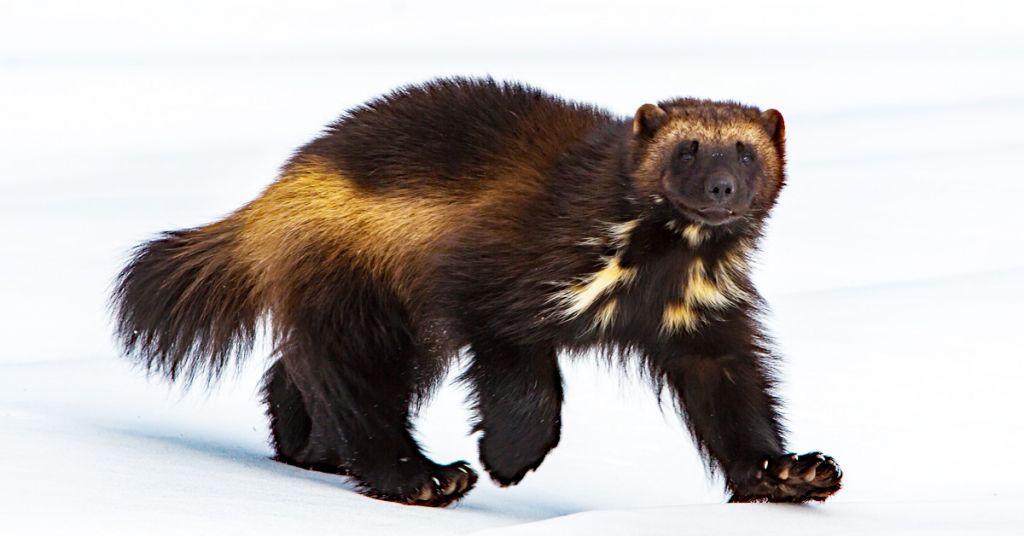
Wolverines win in latest court decision

Thought wolverines were “endangered”? Officially, they aren’t. That status may change

wolverine Cascades

Waiting on a friend: This juvenile male wolverine in Washington’s South Cascades could use some protection. Photo: Kayla Shively

By Jordan Rane, June 13, 2022. So sparse these days they’re about as mythical as the Marvel Comics creature, American wolverines received rare federal support with a recent court order telling the U.S. Fish and Wildlife Service it must reevaluate the animal’s status for inclusion under the Endangered Species Act.

It’s not the first time ESA protection has been considered for the elusive, weasel-related mustelid—a snow-dependent species with legendary grit that once thrived across the Columbia River Basin before being nearly wiped out by pelt hunters and residual habitat loss.

A decade ago, Fish and Wildlife planned to list wolverines as “threatened.” It reversed that decision in 2020.

The reversal led to a lawsuit from the Center for Biological Diversity, Idaho Conservation League and other conservation groups. Late last month, Montana U.S. District Court Judge Donald W. Molloy ordered the agency to submit a new final decision regarding wolverine protection within 18 months.

“We’re very happy about this decision—and hopeful,” says Jocelyn Akins, founder of the Cascades Carnivore Project, who has written about her extensive fieldwork with wolverines in a previous Columbia Insight article. “The science is about as strong as it gets that they’re in need of listing and protection.”

MORE: Wolverines break through … finally!

What’s kept wolverines off the ESA list to date—and, instead, on what conservationists have described as a “roller coaster of litigation” with federal wildlife authorities?

“I don’t know how to answer that because it really has nothing to do with the actual findings of scientists and wolverine experts—and everything to do with strange politics and lobbying groups that know nothing about wolverine conservation but have weighed in heavily on these decisions nonetheless,” says Akins. “At this point, it’s really a matter of the high-ups at the Fish and Wildlife Service doing the right thing.”

“Farm bureaus, snowmobile associations and the American Petroleum Institute, the main oil industry lobbying group, have … argued against listing wolverines as threatened or endangered,” according to a 2020 New York Times article.

How many wolverines?

“Wolverines are clearly threatened,” says Akins. “We’re talking incredibly low numbers here.”

An estimated 300 wolverines remain in the Pacific Northwestern states outside of Alaska—most of them in the mountains of northern Idaho and Montana.

There are currently about 50 wolverines in Washington.

Maybe closer to 40, says Akins.

Or 39.

“A wolverine was shot in Centerville, Wash., a couple weeks ago—in a chicken coop,” says Akins. “It was roaming into the shrub-steppe and got in trouble.”

MORE: Second family of wolverines documented at Mount Rainier National Park

Dependent on snow for reproduction and nesting, as well as physiologically (to prevent overheating), wolverines are facing additional stress and habitat loss due to lighter snowpacks and warmer climates.

While females have smaller territorial ranges, studies have shown that lone males can routinely cover 600 square miles or more—and provide states that once had healthy wolverine populations with just a single hardy resident with little hope of growth.

“There’s one wolverine in California, one in Oregon, one in Colorado and one in Utah,” says Akins, adding that each has a name.

Oregon’s lone wolverine resident is Stormy. He’s been in the state since 2011.

California is home to Buddy.

“Although the last time Buddy’s name came up was a couple of years ago,” says Akins.

Regarding the latest court decision, Akins says, “Another kick at the can gives us all renewed hope.”

For now, wolverines are listed as a candidate species—which receive no statutory protection under the ESA according to a U.S. Fish and Wildlife Service explanation of this interim status.

“The FWS encourages cooperative conservation efforts for these species because they are, by definition, species that may warrant future protection under the ESA,” says the agency.

Columbia Insight contributing editor Jordan Rane is an award-winning journalist whose work has appeared in CNN.com, OutsideMen’s Journal and the Los Angeles Times.

Appreciate this story? Support environmental journalism. Click here

By |2022-11-15T18:24:42-08:0006/13/2022|Uncategorized, Wildlife|0 Comments

© Copyright 2013-2025 Columbia Insight. All Rights Reserved.

As a 501(c)3 nonprofit organization, all donations to Columbia Insight are tax deductible to the full extent of the law. Our nonprofit federal tax-exempt number is 82-4504894.