
Validating local botanists’ concerns, rare PNW plants have experienced steep declines since removal of federal protections
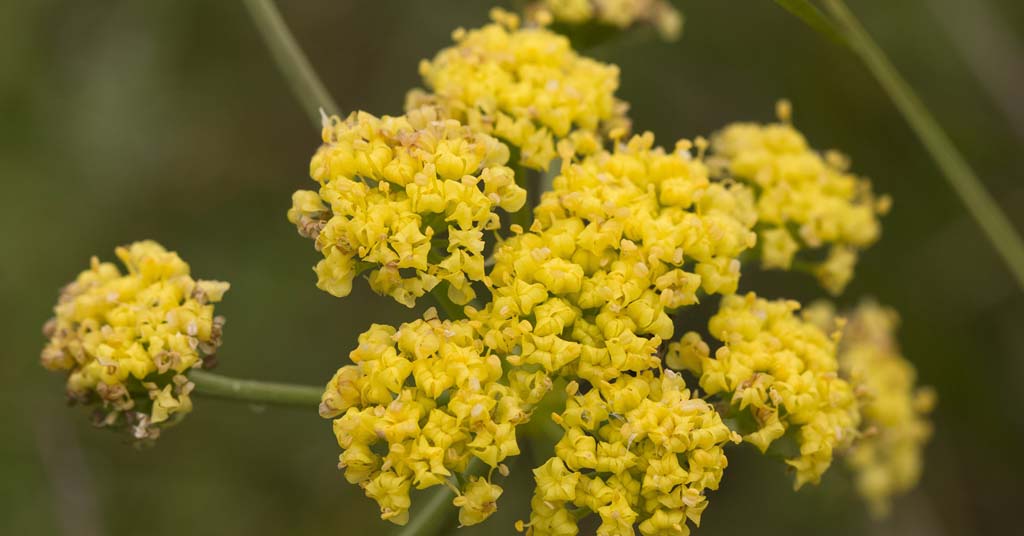
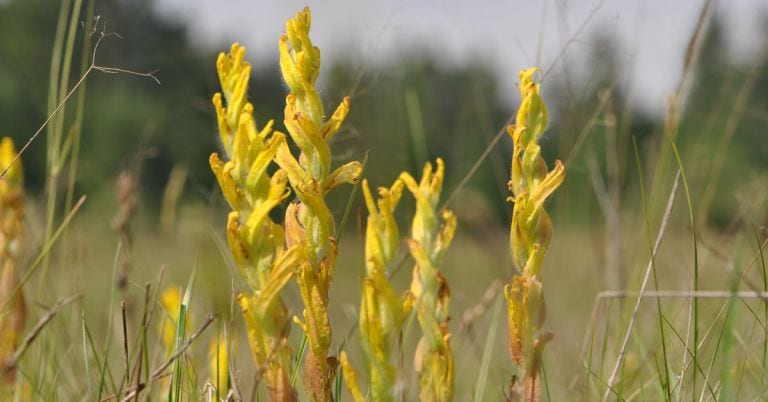
Survivalist: Bradshaw’s lomatium, also called Bradshaw’s desert parsley, is in decline. Photo: Peter Pearsall/USFWS
By Nathan Gilles. February 12, 2026. In 2021, the U.S. Fish and Wildlife Service made an exciting announcement.
The federal agency that oversees the implementation of the Endangered Species Act (ESA) announced it was removing Bradshaw’s lomatium (Lomatium bradshawii), a perennial herb with a distinctive yellow flower, from the federal endangered species list because the plant’s conservation recovery effort had been a success.
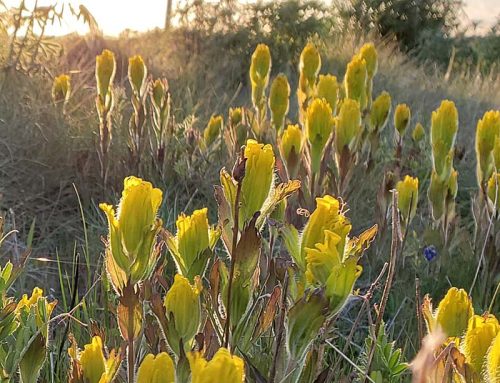
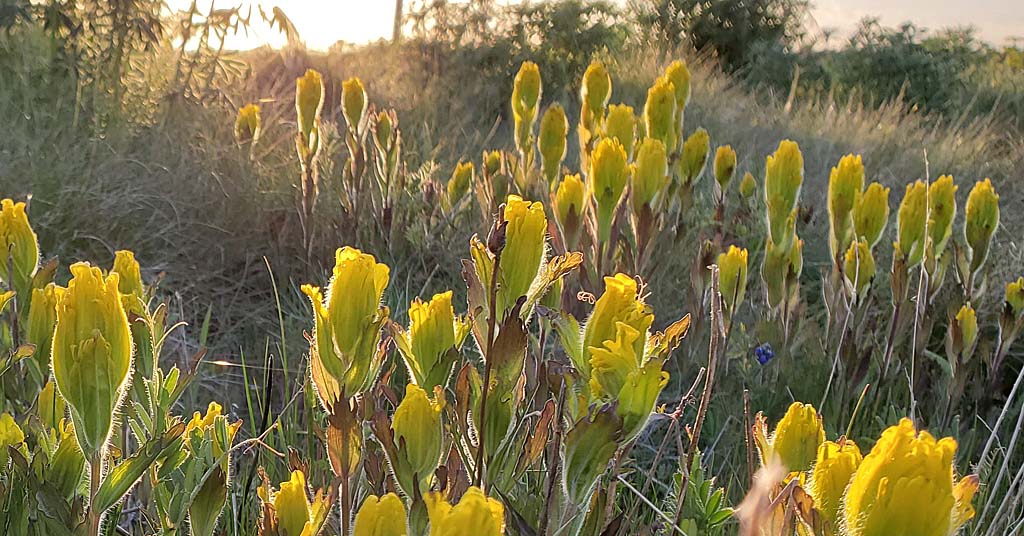
In 2023, in the lead up to the 50th anniversary of the ESA , the USFWS would go on to delist the golden paintbrush (Castilleja levisecta) for the same reason. The plant with bright yellow bracts and green flowers was the “latest ESA success story in Washington and Oregon,” according to an agency press release.
From 2021 to 2023, the USFWS removed two other rare regional plants from the federal endangered species list—Nelson’s checker-mallow (Sidalcea nelsoniana) and water howellia (Howellia aquatilis).
All four species benefitted from long-term recovery efforts that helped bring their population numbers back from the dismally low numbers that qualified them for ESA protections decades earlier.
The USFWS cited these recovery efforts in its decisions to delist the species and to celebrate what it characterized as a broader conservation success story.
Now, however, for two of the four species that decision is looking premature.
And scientists in the Pacific Northwest, many of whom opposed the delisting in the first place, aren’t surprised.
Counts down
Since being delisted, the golden paintbrush and Bradshaw’s lomatium have experienced steep population declines, raising questions about the decision to delist the plants, as well as concerns about their long-term survival without federal protections and federal dollars to aid in their recovery. All four plants remain listed as either threatened or endangered in Washington and Oregon.
A pair of former State of Washington botanists is among those sounding the alarm about the health of rare plant species.
Jesse Miller, former lead state botanist for Washington’s Natural Heritage Program, which oversees the state’s own list of rare and endangered species, says the USFWS needs to bring back federal protections for the golden paintbrush and Bradshaw’s lomatium.
“Unless we see strong positive population trends in the years following delisting, which we’re not seeing for these plants, I think they should be [federally relisted]. I just don’t think their future is secure at this point without that,” says Miller, a faculty member at the Evergreen State College in Olympia.
Miller left Washington’s Department of Natural Resources last summer.
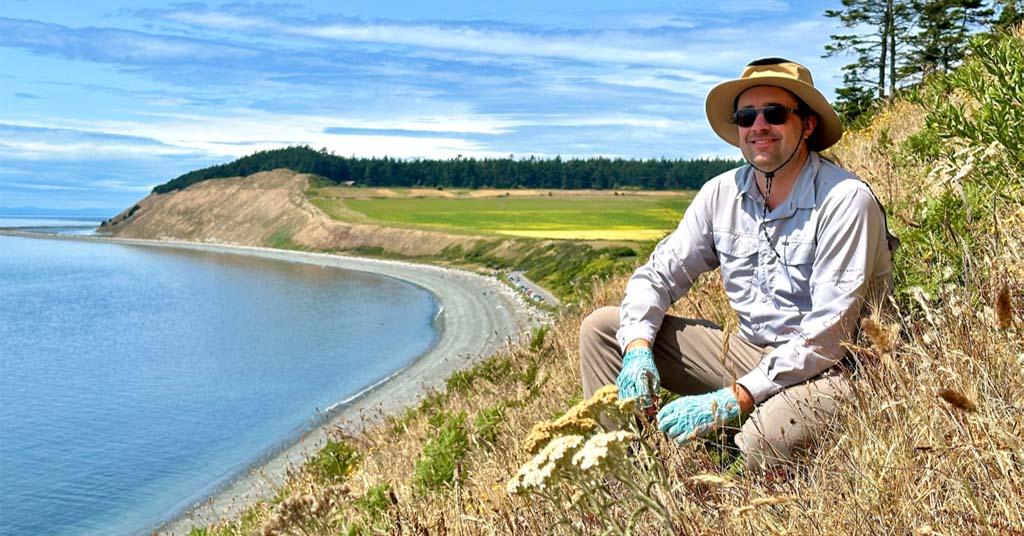
Jesse Miller with golden paintbrush on Whidbey Island in Washington. Photo: Adam Martin
In spring 2025, while at DNR, Miller conducted surveys of Bradshaw’s lomatium and golden paintbrush populations in Washington. Both experienced population declines since being delisted, according to his data.
In 2025, Washington’s total population of Bradshaw’s lomatium was down by nearly 67%, according to Miller’s data.
In 2025, Miller estimates Washington’s total golden paintbrush population was just under 241,380 plants, a 43% decline from a high of just over 423,100 plants in 2022.
In 2025, Oregon’s total estimated golden paintbrush population was roughly 68,300 plants, a 66% decrease from 2023, and 79% decrease since 2019, according to a November 2025 report submitted to the USFWS by the Institute for Applied Ecology in Corvallis.
IAE compiled the data for Oregon state agencies and the USFWS as part of the golden paintbrush’s post-delisting monitoring plan.
All four delisted species are currently in a post-delisting monitoring phase overseen by USFWS.
If monitoring identifies a significant risk to a delisted species, the species can qualify to be relisted.
Andrew LaValle, public affairs officer at the USFWS Pacific Region Office in Lacey, Wash., declined Columbia Insight’s request for an interview, but did provide a statement via email.
“Species are delisted based on the best available science, and post-delisting monitoring plans provide data to evaluate the ongoing status of the species after federal Endangered Species Act protections are removed,” LaValle wrote. “If monitoring shows a significant decline or new threats, the Service can act to prevent the species from needing federal protection again. We are working with partners to monitor these four species and, where needed, help manage habitat and augment populations through this process.”
LaValle also provided Columbia Insight with IAE’s recent golden paintbrush report as well as PowerPoint presentations showing data for two of the other three delisted species.
“Some of these populations that don’t receive any attention could slowly wink out because no one’s watching.” —Walter Fertig, WSU School of Biological Science
Miller presented his 2025 Washington survey data at a Jan. 12 meeting of the Washington Native Plant Society held in Olympia. DNR has yet to publish his data in a report.
In an emailed statement to Columbia Insight, Ryan Rodruck, a DNR state lands communications manager, wrote that DNR’s Natural Heritage program still considers all four delisted species to be of “conservation concern.”
“We focus on monitoring these species to inform conservation and management that keep them viable into the future,” wrote Rodruck.
In an emailed statement to Columbia Insight, Jordan Brown, program lead conservation biologist at the Oregon Department of Agriculture’s Native Plant Conservation program, wrote, “Oregon’s continued listing of the four recent federally delisted plants reflects the uncertainty of their ability to persist and remain stable now and in the future.”
In his email, Brown stated that it was too soon to tell how the plants were doing since being delisted but added “the data that we have reviewed demonstrates a concerning decline in many populations.”
The Oregon Department of Agriculture is currently participating in post-delisting monitoring for Bradshaw’s lomatium.
Plowing plants
Though Bradshaw’s lomatium and golden paintbrush have seen population declines since being delisted, the cause of the decline is only clearly known for Bradshaw’s lomatium. The plants were plowed.
In fall 2024, a privately owned field in Camas, Wash., containing roughly 3.69 million Bradshaw’s lomatium plants, or roughly 90% of the species’ entire worldwide population, was “disced” over at the request of the land’s owner.
Miller, who was at DNR at the time, had to wait until spring 2025 to assess the damage.
During his survey of the site, he found that two-thirds of the site’s Bradshaw’s lomatium plants, roughly 2.46 million individuals, had been lost to discing.
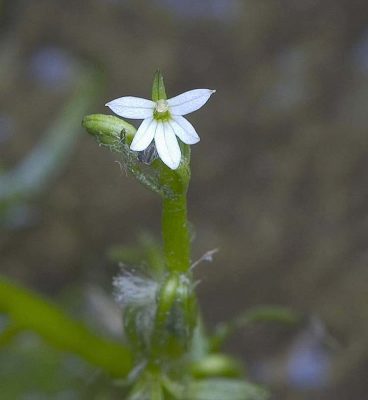
Water howellia flower. Photo: USFS
Because the site, known as Camas Meadows, contained the vast majority of the species’ total population, plowing of just the one site led to a species-wide decline of 60%.
“It’s basically a situation of putting all your eggs in one basket,” says Miller. “The more concentrated the plants are into a small number of sites, the greater intrinsic risk there is. If something happens at that site, it could be disastrous for the global population.”
Miller says the high concentration of plants at one site should have kept Bradshaw’s lomatium from being delisted.
As it happened, the USFWS knew Camas Meadows’s private ownership and high population posed a risk.
However, in its 2019 proposal to delist Bradshaw’s lomatium, the USFWS dismissed concerns about the “limited distribution of the species” and downplayed the possibility that the site’s private ownership posed a risk, writing, “we have no information to indicate that it is likely the site would be developed or that habitat management will change in any way that would substantially impact Bradshaw’s lomatium.”
In its 2021 decision to delist Bradshaw’s lomatium, the USFWS addressed concerns about the Camas Meadows site by not including it in its decision, stating only that DNR was “actively working toward the conservation” of the site.
“To ensure our evaluation of this species’ status in 2021 was not unduly influenced by this single extremely large population, the Service considered the abundance and distribution of Bradshaw’s lomatium without including Camas Meadows,” LaValle wrote Columbia Insight in an email.
The Camas Meadows site isn’t the only site to have experienced recent population declines.
Of the remaining 30 Bradshaw’s lomatium sites, two-thirds had smaller populations in recent years compared to population surveys taken before the plant was delisted, according to USFWS monitoring data provided to Columbia Insight in a PowerPoint.
Golden paintbrush controversy
As Columbia Insight reported in 2024, delisting the golden paintbrush was unanimously opposed by members of the plant’s technical advisory team.
This group of independent scientists, many of whom worked on the plant’s recovery effort, was enlisted by the USFWS to advise the agency on whether it should delist the golden paintbrush.
The group sent the agency a resounding “no.”
In 2021, in a series of letters to the USFWS posted to the federal registry, members of the technical advisory team detailed why delisting the golden paintbrush was premature.
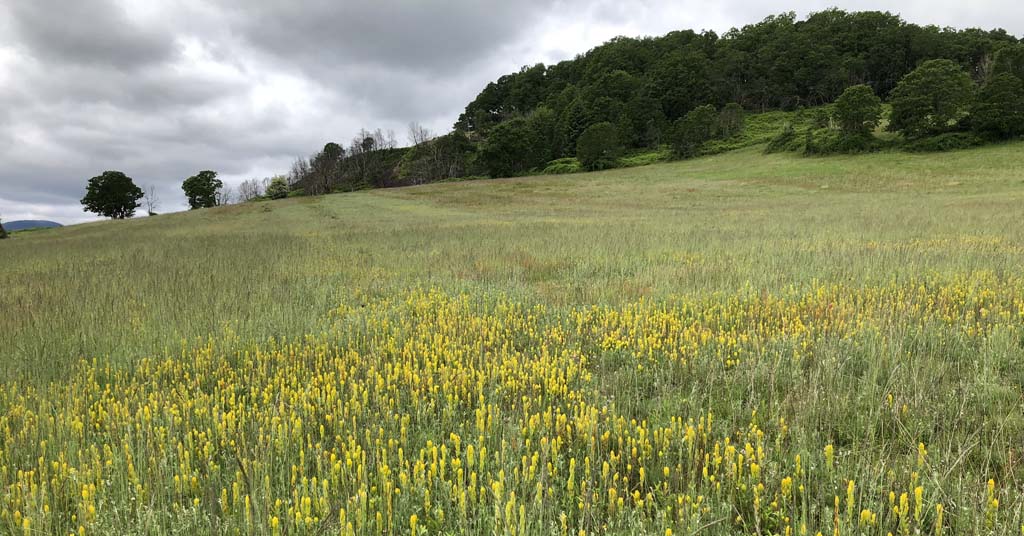
Field day: Golden paintbrush can carpet landscapes in unique and beautiful patterns. Photo: Tom Kaye
In its 2021 proposal to delist the golden paintbrush, the USFWS argued the species should be delisted because it had high population numbers that resulted from a concerted recovery effort that included multiple sites in Oregon and Washington being seeded with golden paintbrush seeds as well as planted with live plants.
In their letters to the USFWS, the advisory team members argued that the agency hadn’t waited long enough to see if the golden paintbrush’s recovery effort—the one highlighted by the agency as the reason to delist—had been a success.
They argued because individual plants can live anywhere from one to 12 years—the average lifespan is three to four years—it wasn’t known if the high population counts represented self-sustaining populations that could thrive and reproduce without human intervention, or if the high numbers represented plants that had been seeded or planted by people and that simply hadn’t died yet.
In 2023, despite these concerns, the USFWS chose to delist.
“It’s like we were in the seventh inning of a baseball game,” says former Washington state botanist and technical advisory team member Walter Fertig. “We were losing four to three, but we declared victory and we just stopped the game, saying ‘Oh, we won!’ And it’s like, ‘No, we still need to finish the game!’”
Like Miller, since leaving DNR in August 2022, Fertig has become a critic of the USFWS’s delisting decisions, blogging about the region’s rare plants and critiquing the agency’s interpretation of the ESA for the Washington Native Plant Society.
Fertig is currently the Collections Manager at the Marion Ownbey Herbarium in the School of Biological Sciences at Washington State University in Pullman.
Fertig opposes delisting of the golden paintbrush. He says the recent population data from Oregon and Washington indicates the advisory team’s concerns were justified.
This is also the opinion of fellow golden paintbrush technical advisory team member Tom Kaye, chief scientist at the Institute for Applied Ecology, which did the most recent survey of the species in Oregon for the USFWS.
“I see population crashes of this scope and scale as a cause for concern. I’m more convinced than ever that threats to this species remain and that this species is not secured,” says Kaye.
Slow death
In 2025, only 13% of golden paintbrush sites in Oregon saw population growth. The other 87% experienced declines, according to IAE data.
Washington’s golden paintbrush population experienced a similar trend, according to Miller’s data.
Only two golden paintbrush sites in Washington saw population growth. Both were still being actively managed. The population growth at one of the two sites likely benefitted from a controlled burned. The other site was recently seeded with golden paintbrush seeds, likely skewing the population numbers.
That growth occurred only at the two managed sites points to another reason the golden paintbrush should never have been removed from endangered species list, says Miller.
The golden paintbrush is a “management-dependent species,” a species that needs frequent human help in the form of controlled burns, application of herbicides and other interventions to thrive.
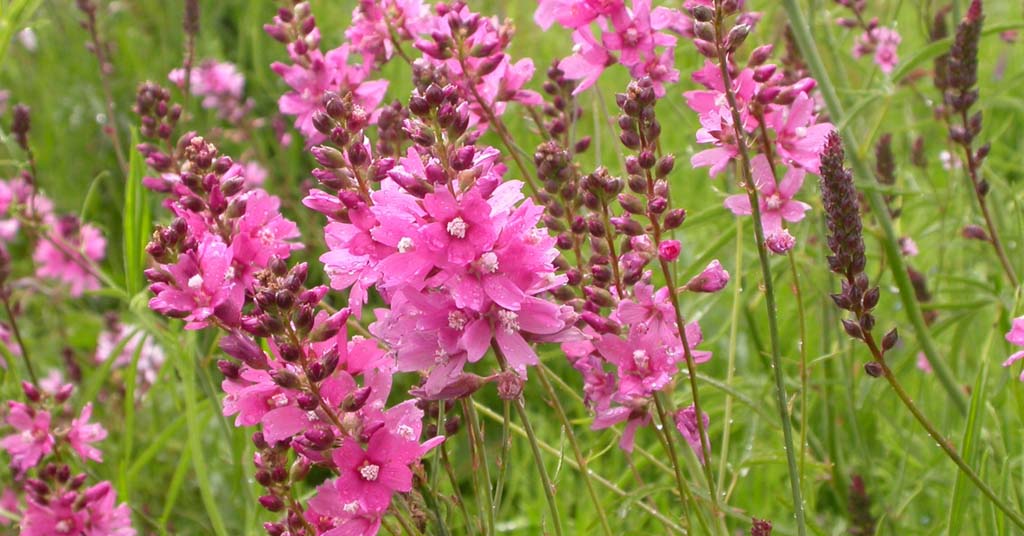
Local color: Nelson’s Checker-mallow is a tall, perennial herb known for its striking lavender to deep pink flowers. It’s found across Oregon’s Willamette Valley and Coast Range, and southwestern Washington. Photo: J. Dillon/USFWS
The other three recently delisted species, Bradshaw’s lomatium, Nelson’s checker-mallow and water howellia are also management-dependent species.
Fertig says the fact that all four species are management dependent makes the USFWS’s decision to remove ESA protections questionable.
“Pretty much these are species that are going to be long-term wards of the state, if you will,” says Fertig. “These species need active management. And what’s another word for active management? Money. This costs money.”
Fertig says being federally listed provides species not only with the legal protection of the ESA, but it also frees up money from the USFWS and other agencies to do active management and monitoring.
“I think, unfortunately, some of these populations that don’t receive any attention anymore could slowly wink out because no one’s watching because they’re not listed anymore. They’re just out of sight, out of mind,” says Fertig.
DNR hasn’t conducted a comprehensive survey of Nelson’s checker-mallow populations planted in Washington as part of the plant’s recovery effort since 2019.
The agency hasn’t conducted surveys of the state’s two wild populations of the plant since 2014 and 2018, according to DNR reports.
The USFWS PowerPoint on Nelson’s checker-mallow provided by LaValle included only a portion of the population sites being monitored by the agency.
During the post-delisting monitoring phase, individual sites aren’t surveyed every year but are periodically surveyed across a period of five or more years.
“Overall, this plant [Nelson’s checker-mallow] appears to be doing well; we are not seeing population crashes and some variability among populations is expected,” LaValle wrote in an email, noting that survey data for the plant still needed to be “consolidated, analyzed and summarized.”
LaValle did not provide USFWS data for Water howellia, writing in an email that, “Reports from pre-delisting monitoring (1978–2021) suggest that the outlook for the species is positive.”
The plant is considered extremely rare in Oregon and is not currently being monitored by the state of Oregon.
Washington’s Water howellia population was down by more than 50% but was likely “stable in the long-term,” according to a 2025 DNR report co-written by Miller.






It would be a tragedy to lose any of these species. Agencies need to be conservative with delisting decisions. When one sees these plants blooming it takes your breath away. These plants have a right to live and thrive.