
Longer harvest rotations are also becoming less feasible, meaning trees may have to be logged before their optimal age
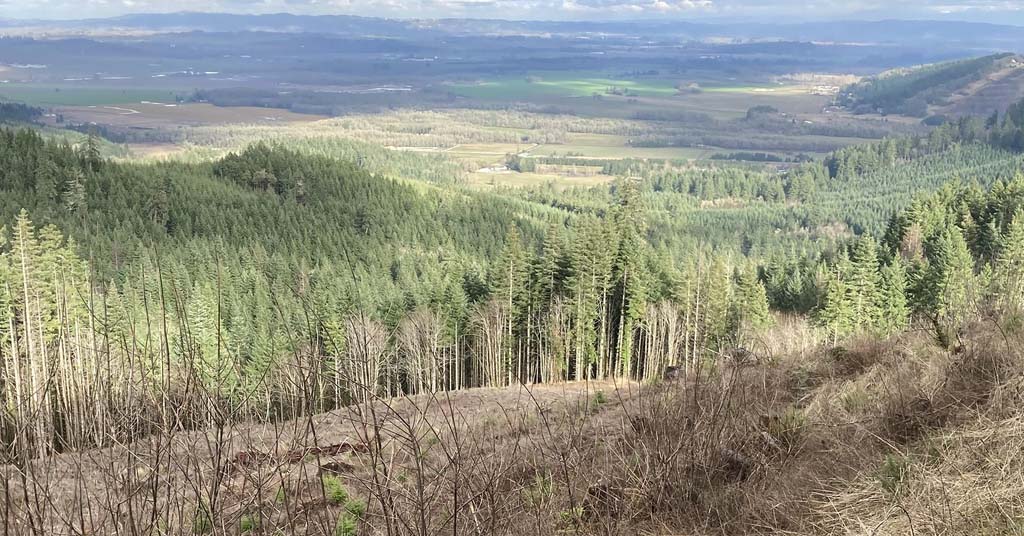
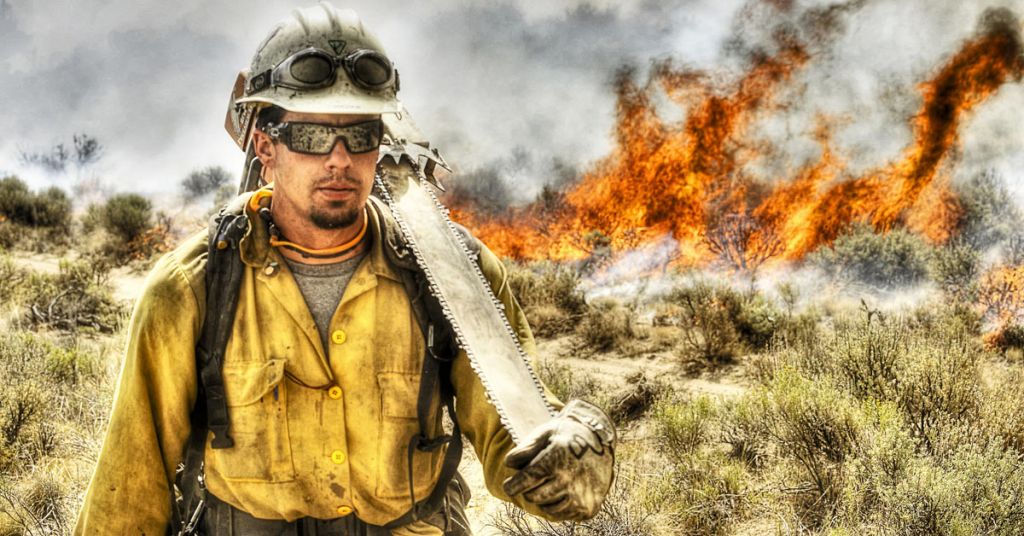
Burn notice: Rising wildfire risk and volatile timber pricing may lower forestland values by as much as 50%. Photo: Steve Lundeberg/OSU
November 11, 2025. By Steve Lundeberg/Oregon State University. Rising wildfire risk in the Pacific Northwest combined with notoriously volatile timber pricing may lower forestland values by as much as 50% and persuade plantation owners to harvest trees much earlier than planned, a new analysis of Douglas-fir forests shows.
Under the worst-case scenarios, modeling by researchers at Oregon State University suggests harvesting trees at 24 years would make the most economic sense.
Absent wildfire risk, the optimal age would be 65 years.
Generally, private landowners harvest between those two ages, but it’s not a surprise for the optimal rotation age to go down in these scenarios, the scientists say.
“Basically, under high wildfire risk that rises with stand age, every year you wait to harvest you’re rolling the dice,” said Mindy Crandall, an associate professor in the OSU College of Forestry.
Earlier harvesting reduces both long-term timber revenue and carbon storage potential, as well as impacting wood quality, adds study co-author Andres Susaeta.
“Our research highlights that traditional forest valuation methods, often based on fixed timber prices, fail to capture the financial uncertainty caused by fluctuating markets and growing wildfire danger,” said Susaeta, an assistant professor in the College of Forestry. “By integrating both wildfire risk and timber price volatility into forest management models, policymakers can design smarter tax systems, insurance programs and carbon market incentives that adapt to the changing conditions we are seeing and that are expected to worsen.”
Adapting to change
Forests cover nearly half of Oregon’s 96,000 square miles, and Douglas-fir accounts for roughly 65% of the state’s timber stock.
It’s the backbone of an $18 billion timber industry, and Douglas-fir forests also provide a range of ecosystem services including wildlife habitat and carbon sequestration, a key factor in mitigating climate change.
Susaeta, Crandall and doctoral student Hsu Kyaw, who led the project under Susaeta and Crandall’s supervision, say their findings point to several strategies for strengthening forest resilience and economic returns.
Fuel reduction programs such as thinning and prescribed burns, they note, can lower fire risk and help landowners extend harvest cycles, capturing higher returns from mature timber.
“Improved salvage logging operations and wildfire-adjusted insurance programs could also help recover postfire losses and stabilize landowner income,” Susaeta said. “It’s important to note that our study shows that higher carbon prices can encourage longer rotations and boost land values—but these benefits diminish under high wildfire risk.
“Expanding carbon offset programs to include wildfire mitigation and salvage credits could better align climate goals with economic incentives.”
The researchers say that reducing fire exposure while maintaining forest productivity requires a mix of adaptive zoning, cooperative fuel management and diversified forest composition.
Adaptive zoning refers to the flexible, dynamic allocation of management zones within a forest landscape based on changing environmental or socioeconomic conditions, and cooperative fuel management is a collaborative approach among multiple stakeholders to reduce fire risk by managing forest fuels across property boundaries.
Forests have a diversified composition when they feature a variety of tree species, age classes and structural features.
The diversity enhances their economic value as well as their resilience and ecological function, Susaeta said.
In addition, longer rotations improve the odds of having valuable material to salvage.
However, the way financial risk is usually considered has an even bigger impact on landowners’ decisions than potential salvage value, he said. This is particularly important for landowners who are cautious about risk.
“Overall, our work underscores that managing forests under climate uncertainty requires integrating economic and ecological risks,” Susaeta said. “By balancing wildfire resilience with market adaptation, forest policies can better protect both the environment and rural livelihoods.”
Findings were published in Forest Policy and Economics.
This story was provided by Oregon State University.








It’s unfortunate that—apparently—the authors of this study did not address the implications of shorter timber harvest rotations on stream flows that are essential to aquatic species and overall water availability. This is a known cost that logging activities place on people and species that depend on water.
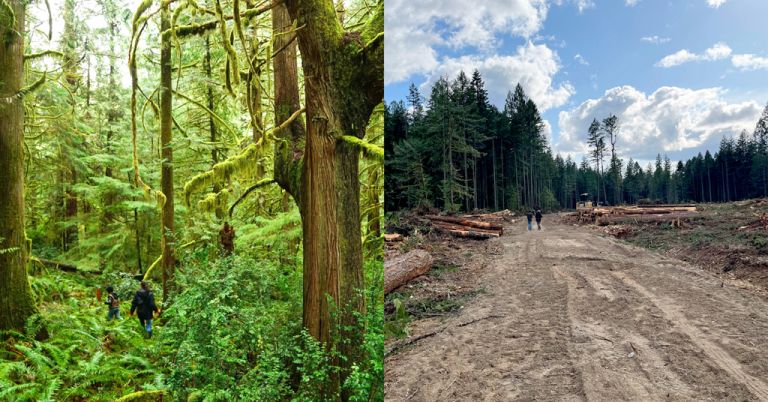
Studies done (in Oregon, by OSU professors no less) on this issue in the last two decades have shown, for example, that “young vigorously growing forests can transpire over three times more water than old forests,” resulting in lower streamflows in summer and fall (because more soil moisture is lost to air). The typical logging rotation on commercial forests is 40 years, which is already decreasing the likelihood of salmon recovery, according to the U.S. EPA, based on these studies.
That costs might drive an even shorter logging rotation, as suggested by this study, is very bad news and one that needs to be regulated against for the greater public good.