A novel study will shed light on aquatic life in the state’s major freshwater drainages
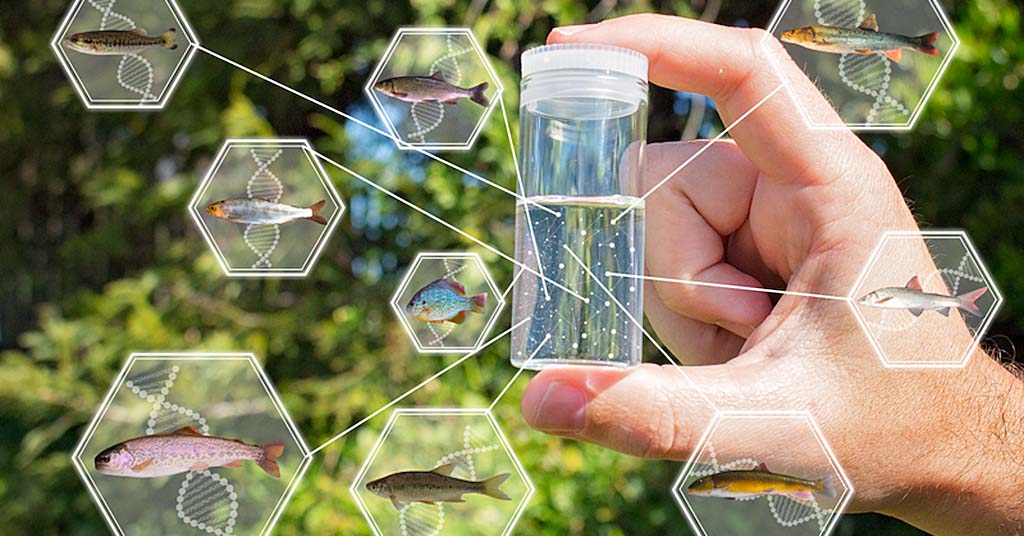
What’s happening in there? eDNA analysis can determine species present at the time a water sample is collected based on DNA shed into the environment. Image: FISHBIO
By Kendra Chamberlain. January 19, 2026. The state of Washington has embarked on a wide-ranging study to catalogue all native, freshwater aquatic species found in every river and major drainage in the state.
The Aquatic Biodiversity Study is the first of its kind in the Pacific Northwest, and possibly the nation, according to the Washington Department of Fish and Wildlife.
Researchers with WDFW will use environmental DNA technology to detect and identify tiny bits of genetic material floating in sources of freshwater.
Nearly every living thing sheds genetic material into its environment, leaving microscopic “footprints” behind.
With advances in genetic sequencing, the use of environmental DNA, or “eDNA,” to catalogue and monitor species within a specific environment has become an important area of genetics research.
Study of eDNA has widespread applications across fields, from food safety to forensic research, according to WDFW’s native, freshwater fish and shellfish specialist, Marie Winkowski, who is involved the study. It can also be used to help monitor for invasive species.
In aquatic settings, eDNA is carried by current.
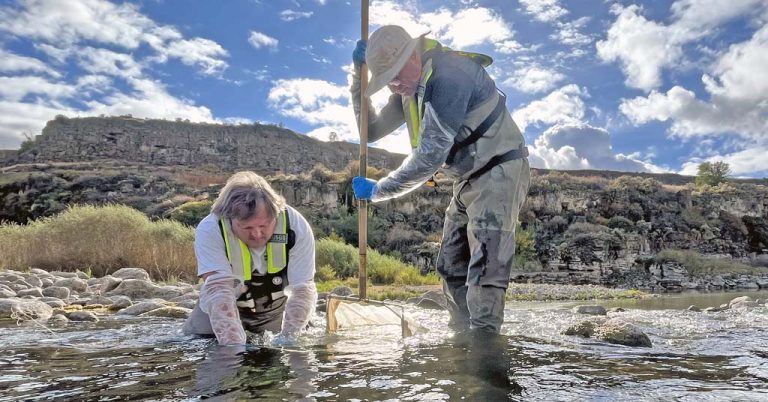
WDFW researchers are visiting the state’s larger sources of freshwater, placing a special filter into the water and collecting as much eDNA as they can as water runs by.
“We are using environmental DNA, specifically, metabarcoding, which allows us to sample for multiple species at once,” Winkowski told Columbia Insight in an email. “This means it is more cost effective than other sampling methods that would be required to track all those species, and we can also cover a larger area.”
Once samples are collected, isolated and amplified—meaning DNA sections are replicated to create a larger specimen to work with—researchers will try to match the DNA segments with existing sequences in a global reference database.
There are two advantages to this approach: first, the technology allows for collecting a lot of information from a single sample of water, which is more cost-effective than other surveying methods.
Second, the technique can detect the presence of species without disturbing them, or even seeing them.
And while the survey will focus on freshwater fish and shellfish, the technology might also be able to detect the presence of birds, beavers and other animals that interact with the water.
Study limitations
There’s one caveat. Researchers will only be able to match eDNA fragments with species whose genetics are already in the database.
“If a species is not in the database, we may only be able to identify it to a broader group (like genus or family), or not at all,” wrote Winkowski. ”More studied fish species like salmon have significantly more genetic sequence information available than lesser studied species like sculpins.”
WDFW is using the National Institute of Health’s GenBank database, a collection of all publicly available DNA sequences from around the world.
According to Winkowski, it’s considered the world’s most up to date and comprehensive DNA sequence repository.
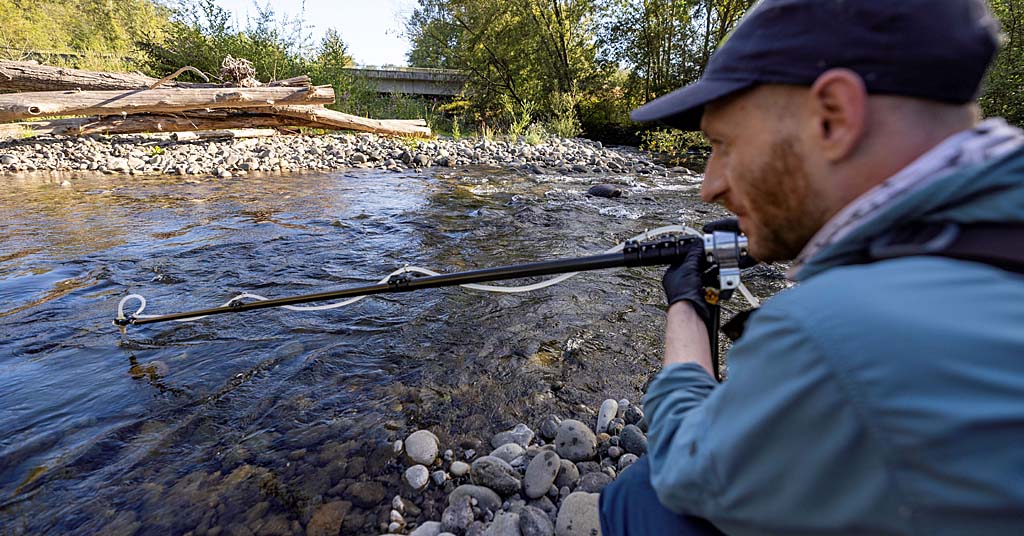
Water shed: WDFW’s Aquatic Biodiversity Study co-lead Vince Butitta conducts eDNA sampling on the Dungeness River in 2025. Photo: WDFW
“This study will help increase the amount of genetic information available of more species, in more river systems across the state,” said Winkowski.
The survey is funded through a larger pot of money allocated by the Washington State Legislature to protect and restore biodiversity.
“This funding revitalized WDFW’s capacities across programs to protect and recover at-risk species and their habitats, develop efforts to evaluate and manage other Species of Greatest Conservation Need (SGCN), and more,” according to Winkowski. “Projects like this study will enable us to understand and track ongoing changes in aquatic biodiversity across the state.”
WDFW has already surveyed the Dungeness, Elwha, Yakima, Naches, Wenatchee, Willapa and Skokomish river systems in Washington. Researchers hope to have all state waterways surveyed over a seven-year period.