
Wildlife, fish and pets are put at risk even though alternative rat poison and rodent-control solutions are available
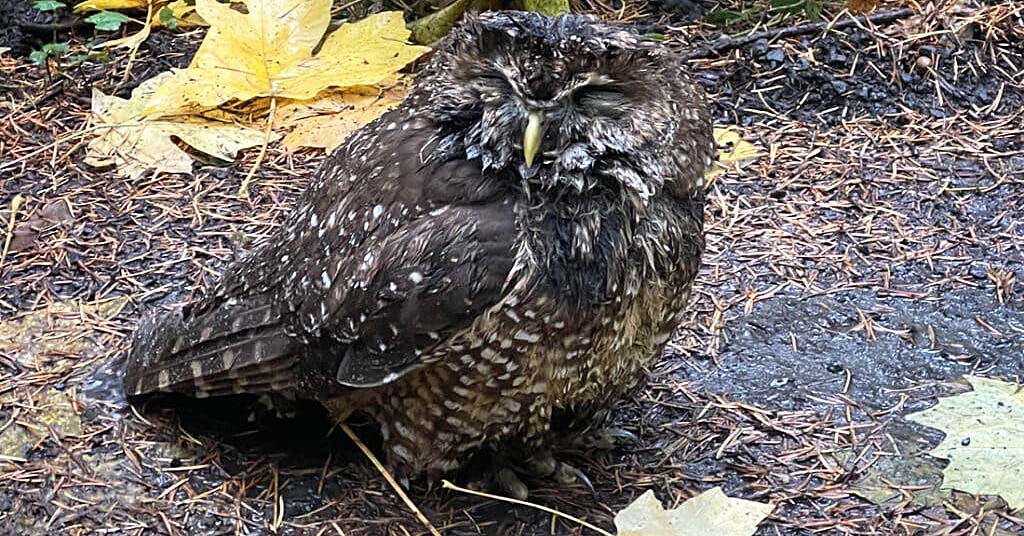
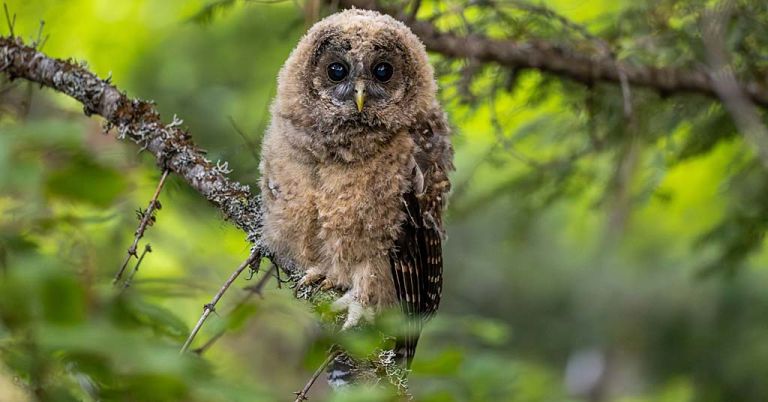
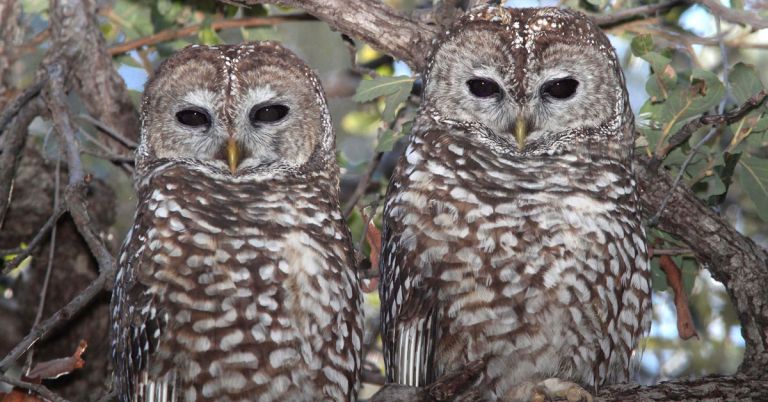
Casualty: In November 2023, this distressed northern spotted owl was found on the ground at Mt. Tabor Park in Portland. Despite efforts of wildlife medical professionals, the bird passed away. Testing showed the bird was suffering from secondary rodenticide poisoning. Photo: Tara Lemezis/Bird Alliance of Oregon
By Melodie Meyer. September 11, 2025. On a November afternoon in 2023, a Portland Parks & Recreation staffer found an injured northern spotted owl in Mount Tabor Park.
Rescuers rushed the bird to the Bird Alliance of Oregon Wildlife Care Center for treatment. Despite rescue attempts by wildlife rehabilitators, the owl died just hours later.
The U.S. Fish & Wildlife Service determined the cause of death: secondary rodenticide poisoning.
The owl had eaten prey that had itself consumed rat poison.
The use and sale of rodenticides (or rat poison) have been significantly restricted in California, but in Oregon—where the owl was found—there are significantly fewer restrictions.
The tragedy underscores a policy gap.
California has imposed a moratorium on most second-generation anticoagulant rodenticides (SGARs) and, more recently, restricted certain first-generation (FGAR) uses after widespread contamination of wildlife.
Oregon and Washington have far fewer limits.
This disparity matters in the Pacific Northwest, where wildlife—and pets—move freely across neighborhoods and state lines.
Wide-ranging species such as gray wolves and California condors traverse large territories; when poisons are available in one jurisdiction, their effects don’t stop at the border.
Despite their recent reintroduction, studies are already showing that California condors have been found to be contaminated by rat poison.
Killing chemicals
Rodenticides harm animals in two ways: primary poisoning (direct consumption of bait) and secondary poisoning (predators or scavengers eat contaminated prey).
Anticoagulant rodenticides cause internal bleeding and can turn minor injuries fatal; they also depress immune function, increasing susceptibility to parasites and disease.
SGARs (e.g., brodifacoum, bromadiolone, difenacoum, difethialone) are especially dangerous because they are more potent and longer-lived in tissues than older FGARs (e.g., chlorophacinone, diphacinone, warfarin).
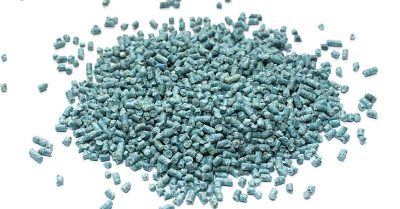
Variety: Rat poisons come in a range of colors from green and blue to tan and red. Photo: Pet Poison Helpline
SGARs are so dangerous that the Environmental Protection Agency pulled them from consumer shelves in 2014.
However, professional applicators may still use SGARs to control rodents within 100 feet of buildings and other structures; or in and near agricultural buildings and man-made agricultural structures.
The ecological toll is well documented across the West: eagles, hawks, northern spotted owls, barred owls, bobcats, mountain lions and San Joaquin kit foxes have tested positive for anticoagulant rodenticide exposure.
A recent study collecting data from raptors in Oregon showed that 51% of common ravens and 86% of turkey vultures contain rodenticide residues, which strongly suggests species such as California condor would also be affected by scavenging animals that ingested the poisons.
Raptors play an outsized role in natural rodent control—an adult owl can consume several mice in a night—so poisoning them can actually worsen rodent problems, prompting still more poison in a harmful feedback loop.
And the environmental impacts of rodenticides don’t stop there; they have also been found to enter into waterways and harm other species, including freshwater fish.
Rat poison rules
Regulators—both state and national—are paying attention.
The EPA recently banned consumer grade rodenticide in pellet form.
In September 2023, California’s moratorium on second-generation anticoagulant rodenticides (AR) was expanded to also prohibit the use of diphacinone, a FGAR that has been found in the systems of non-target species such as bobcats and mountain lions.
Under the existing moratorium, the use of SGARs is prohibited until the California Department of Pesticide Regulation develops mitigations for the harm they cause to non-target animals and the environment.
There is no moratorium or ban on rodenticides in Oregon or Washington.
However, Oregon has recently stopped allowing above-ground use of zinc phosphide, a non-anticoagulant rodenticide (non-AR), due to poisoning of geese.
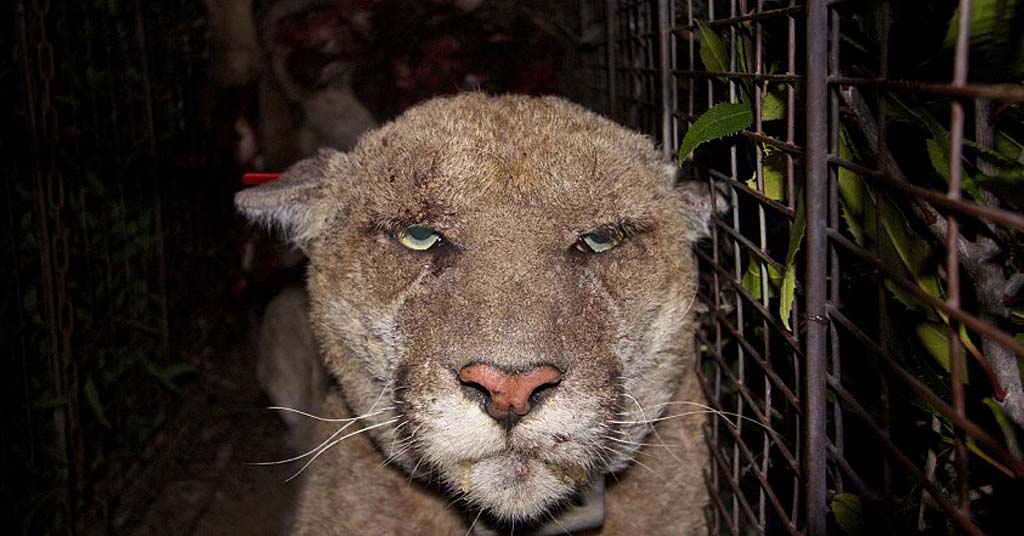
Collateral damage: This mountain lion was captured in 2014 in California’s Griffith Park and treated for mange, a parasitic disease of the hair and skin, following exposure to rat poison. Photo: National Park Service
Oregon and Washington rely on the EPA labeling and manufacturing regulations for rodenticides, with Washington providing additional regulations to protect pets, children and wildlife.
However, both states still allow use of SGARs by professional pesticide applicators and the agricultural industry, which pose a risk to wildlife in particular through secondary poisoning.
In November 2022, EPA issued proposed interim decisions (PIDs) for 11 rodenticides undergoing registration review.
The EPA is proposing mitigation measures to protect human health and mitigate ecological risk to non-target organisms, including potential effects on federally listed endangered and threatened species.
The PIDs cover three FGARs (chlorophacinone, diphacinone, warfarin), four SGARs (brodifacoum, bromadiolone, difenacoum, difethialone) and four non-ARs (bromethalin, cholecalciferol, strychnine, zinc phosphide).
The amended proposed interim decision for the rodenticides is planned for 2026.
Why wait?
But the Pacific Northwest does not need to wait.
A regional moratorium on the most hazardous rodenticides, paired with investment in proven integrated pest management alternatives, would protect wildlife, pets and people, while preserving nature’s best rodent control: healthy predators.
Predators and scavengers range across cities, farms and forests.
A single poisoned prey animal can carry secondary exposure far beyond where bait was placed, imperiling sensitive species like northern spotted owls, condors and river-linked wildlife—and the pets and children who share these landscapes.
“Professional-use only” rules and distance-to-structure limits leave gaping holes: products persist in tissues, bait stations are breached by non-targets and enforcement is impractical across thousands of applications.
A regional ban would close cross-border loopholes, simplify compliance and steer governments, businesses and homeowners toward integrated pest management—sanitation, exclusion, habitat modification and targeted trapping—that actually reduces rodent pressure without seeding the food web with toxicants.
In short: a ban best protects both sensitive species and families—and restores nature’s own rodent control.
Remedies
Raptors Are the Solution (RATS) is an invaluable resource for anti-rodenticide advocacy and has been a leader in the recent successful campaigns for California’s newly expanded rodenticide moratoriums.
Here are takeaways that anyone can implement:
• Contact state legislators for statewide and regional bans on all rodenticides and the U.S. Congressional Subcommittee on Conservation, Climate, Forestry and Natural Resources for a national ban on all rodenticides.
• If you have a rat problem in your home, work or farm, use alternative solutions to rodenticides, including sprinkling cayenne pepper on rat trails and/or placing dry ice in rat burrows to drive them out. As a last resort, you can also use electric zappers or snap traps in locations inaccessible to pets or children.
• Of course, it’s always best to prevent rats from moving in and becoming a problem in the first place. Preventative measures include keeping your home, office and yard clean, and checking regularly for and remedying holes where rats could squeeze through. Clearing away yard debris and getting rid of ivy that rats love to make their homes is also helpful.
In extreme cases, if you do choose to hire a pest control company, remember to check that they won’t use rodenticides.
The views expressed in this article belong solely to its author and do not necessarily reflect the opinions of anyone else associated with Columbia Insight.










Several years ago, my wife and I were surprised to see a Great Horned Owl in our yard a few weeks before Thanksgiving. It hung around mostly on the branch of a birch tree, ignoring the crows and even hummingbirds who were alarmed by its presence. Less than a week later, our neighbor found the owl dead in her backyard. It looked like it had been eaten out from the inside. We took it to the (now) Bird Alliance. The autopsy concluded that it had eaten a poison rat. As often as we’ve told that story, we have been unable to persuade any of our neighbors to stop using rat poison.