
A first-of-its-kind survey will improve management of beavers and riparian ecosystems in Oregon’s Blue Mountains
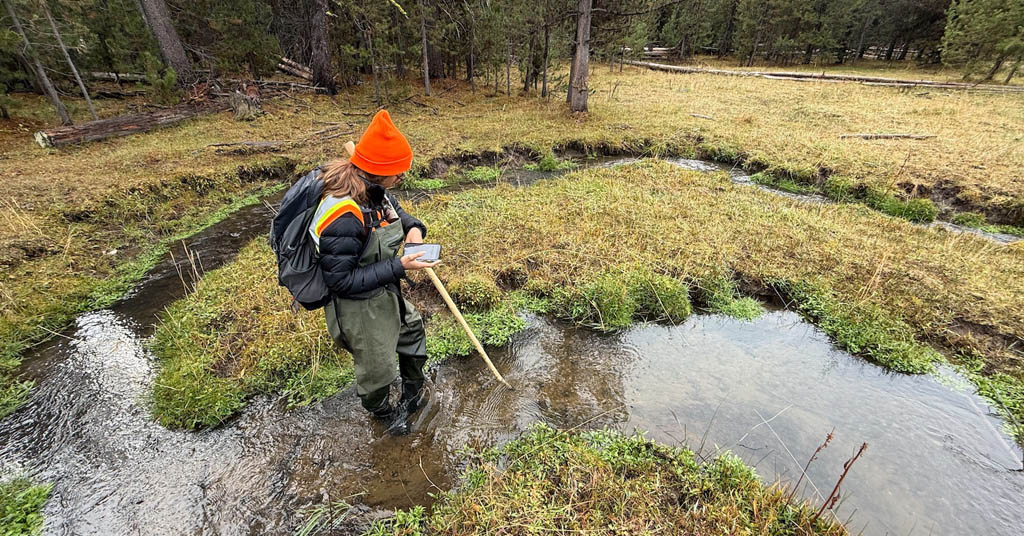
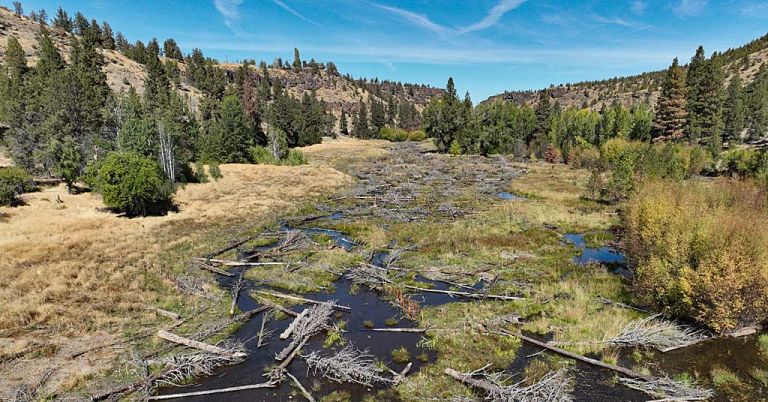
Beaver believers: The Community-Engaged Beaver Research and Monitoring Project documented habitat use across 57 streams spanning an area larger than Rhode Island. Photo: Think Wild
By Kendra Chamberlain. December 18, 2025. While politicians in Washington, D.C., staged the longest federal government shutdown in history, a horde of volunteers combed through the riparian areas of the Malheur National Forest in eastern Oregon’s Blue Mountains, scouring the landscape for signs of the illustrious beaver.
The volunteers were part of the Community-Engaged Beaver Research and Monitoring Project, a collaboration of the conservation nonprofit Think Wild, the U.S. Forest Service and the Oregon Department of Forestry.
Over six weeks this fall, volunteers and state and federal staff trudged through more than 1,500 square miles of national forest land to document any and every sign of beaver activity, from teeth marks on bark to full-on beaver lodges.
The group put in more than 900 field hours.
Dr. Maureen Thompson, who serves as program manager for Think Wild’s Beaver Works Oregon, said the survey, which used a beaver monitoring protocol developed by Oregon State University researchers, is the first of its kind for beaver monitoring.
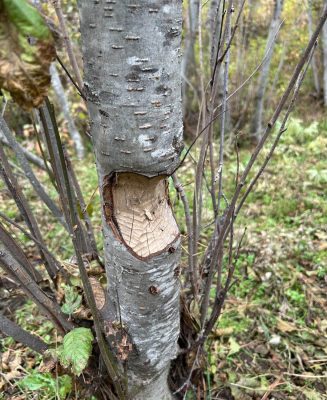
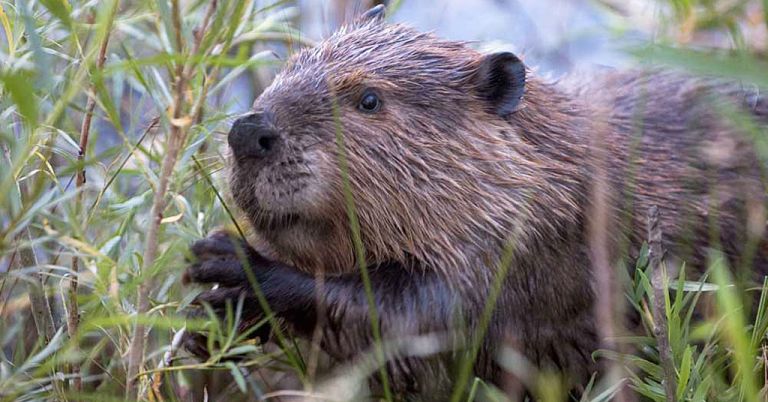
Mega bites: Survey data will be used in the adjacent Ochoco National Forest, where beaver trapping has been forbidden since 1986. Photo: Think Wild
“We are the first community-science entity that is using this protocol and collaborating to expand the potential to other forests,” Thompson told Columbia Insight. “That’s so important, especially this year because we were the only ones who did it—because there was a government shutdown during the whole survey period.”
The project is an example of the blossoming relationship between the public and conservation science on public lands. Such projects help fill data gaps that would otherwise persist in an era of tight budgets at state and federal levels.
“It’s often the only way to gather data at the scale needed to inform meaningful conservation,” said Thompson.
Beavers are a keystone species that provide essential hydrologic engineering to ecosystems across the United States.
In Oregon, beavers were considered a nuisance animal until 2023, when the state legislature voted to reclassify them as native wildlife worthy of coexistence with humans on public and private lands.
The surveys begin to paint a more detailed picture of how and where beavers are using habitat, and will help officials identify and prioritize areas for restoration and conservation.
“By understanding where beavers are active and where they could return, we can better plan for watershed restoration, habitat connectivity and long-term ecosystem health,” according to a Beaver Works Oregon press release.
“This is just the beginning of having any kind of baseline understanding of beaver habitat use [and] the extent of their populations across their potential habitat,” said Thompson. “I just love that we were able to set up this project in a way that the data is actually directly going through a pipeline of the land managers.”
Think Wild and its partners plan to conduct more surveys across the Malheur, Ochoco and other national forests in eastern Oregon in order to refine habitat models and support evidence-based policy and management decisions.








l love the idea that beavers “provide essential hydrologic engineering.”