
Environmental groups are concerned that 70% of WDFW wolf killings are being carried out on behalf of a single landowner
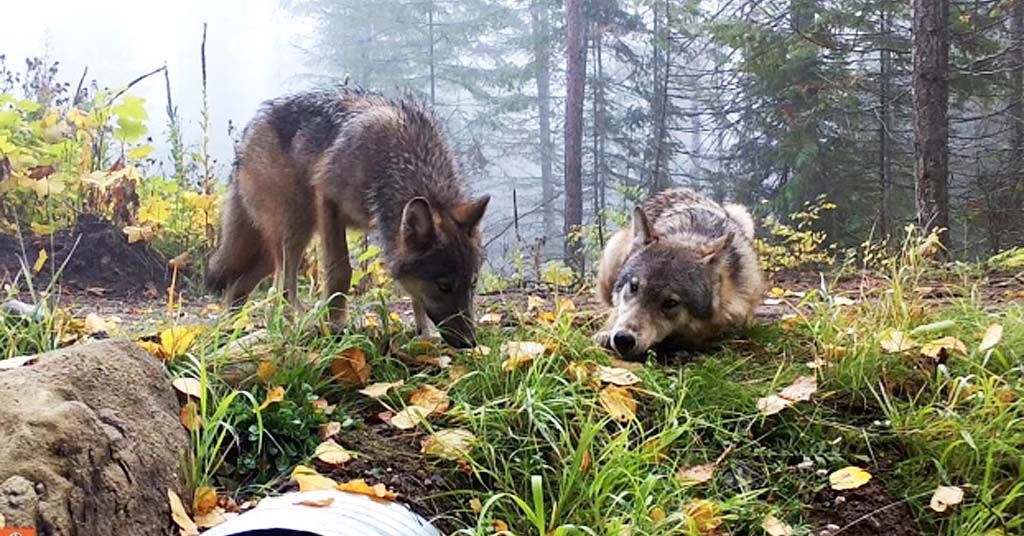
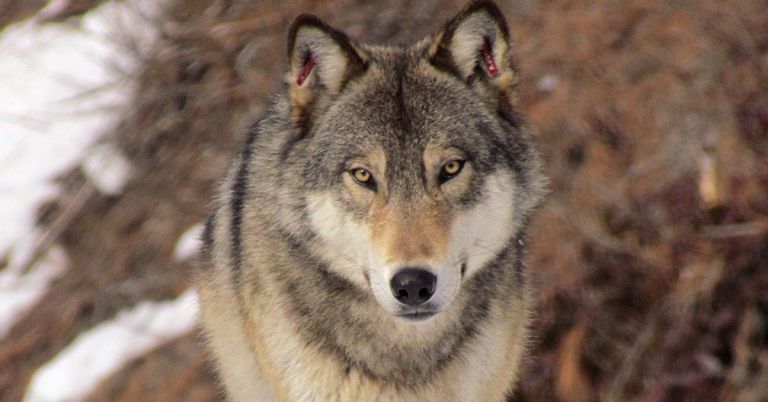
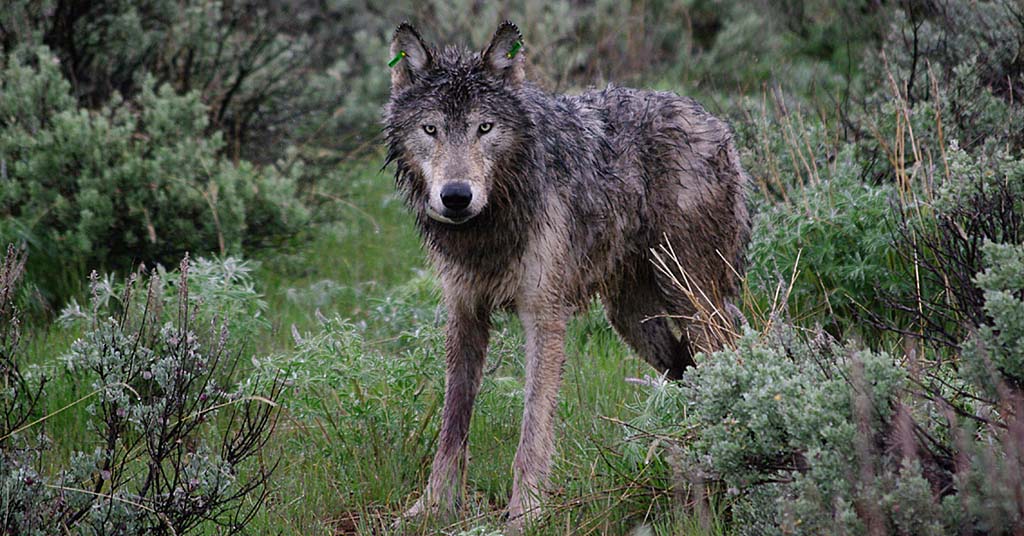
Who’s responsible? Washington’s wolf recovery activities allow the state to work with livestock producers to minimize conflicts with wolves. Critics wonder if everyone is acting in good faith. Photo: WDFW
By Nick Engelfried. October 23, 2025. At the start of this year, northeast Washington’s Sherman wolf pack had five adult wolves. Today that number is down to two females, caring for up to six pups.
Of those surviving adults, one could soon be killed by the Washington Department of Fish and Wildlife.
WDFW says the pack is responsible for a string of depredations on calves, making a lethal removal necessary. In an Oct. 9 announcement, the agency stated it would authorize taking out one of the remaining females.
Some wildlife groups have blasted what amounts to a kill order for a wolf pack clinging to survival.
“If the Sherman pack loses another adult, it will be virtually impossible for the mother who is left to provide for her pups,” says Dr. Francisco Santiago-Ávila, science and advocacy director for Washington Wildlife First.
On Oct. 14, King County Commissioner Mark Hillman granted a temporary restraining order requested by Santiago-Ávila’s organization, preventing WDFW from acting on its fatal removal authorization before a court hearing this Tuesday.
“We are gratified the Commissioner stopped WDFW from executing this unethical, inhumane and unscientific order,” says Santiago-Ávila.
All livestock killed or injured by the Sherman pack belong to a single owner: Diamond M Ranch near Laurier.
In fact, of all wolves WDFW has killed in the state since 2012, 70% were removed at the behest of Diamond M, whose owners are outspoken about their antipathy toward wolves.
With the fate of another wolf and perhaps a whole pack in the balance, groups such as Washington Wildlife First question why one private business should have such an outsized impact on Washington’s wolves.
“WDFW seems willing to reward irresponsible husbandry by repeatedly authorizing wolf killings on behalf of this single producer,” says Santiago-Ávila. “It’s concerning.”
Pack on the edge
If WDFW removes another Sherman wolf, it will likely spell the end of a pack already beset by losses.
In May, a private individual shot and killed a Sherman wolf that was reportedly chasing cattle.
In parts of Washington where wolves aren’t protected under the federal Endangered Species Act, domestic animal owners may kill up to one wolf if it is caught hunting livestock.
In August, multiple depredations on calves ascribed to the Sherman pack led WDFW to lethally remove another of its members. A third was found dead that same month.
On Sept. 28 and Oct. 1, two more Sherman wolf-related calf injuries were reported to WDFW, leading to the latest lethal removal authorization.
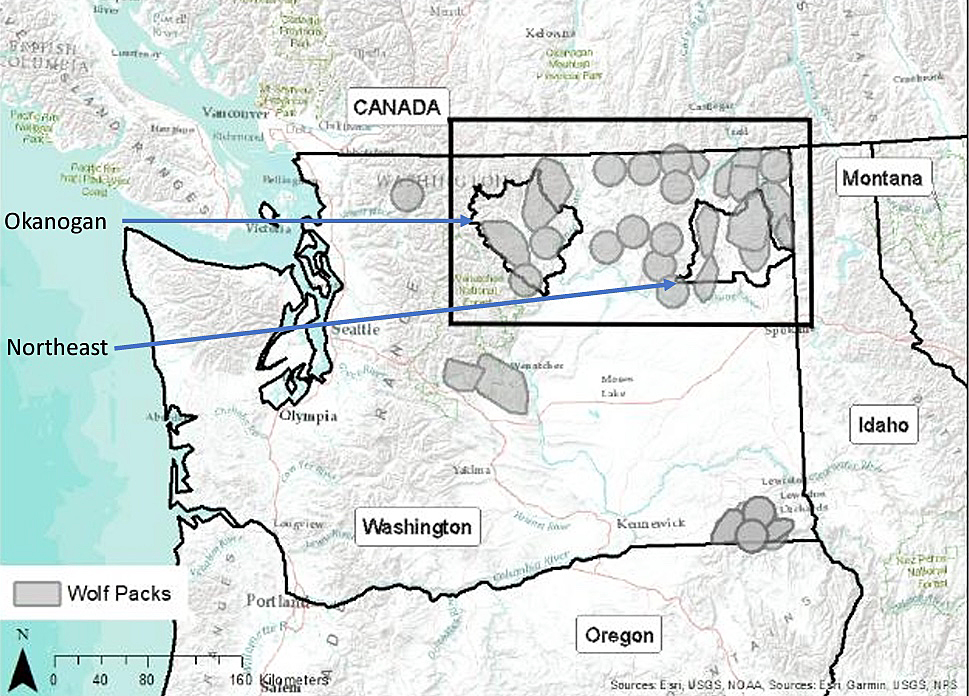
Where the wolves are: Wolf study area in Washington. Map: UW School of Environmental and Forest Sciences
Not all environmental groups oppose the move.
Some believe killing wolves that prey on livestock is necessary for people and the wild canines to coexist.
“Washington has the best policies and outcomes for wolf recovery,” says Mitch Friedman, director of Conservation Northwest. “Actions that obstruct those policies will ultimately hurt wolves. If it doesn’t work for people, it won’t work for wolves.”
The Sherman pack likely won’t survive losing one of its last two adults, even though WDFW plans to target the female without pups. Mother wolves rely on other pack members to help feed and care for offspring.
WDFW declined to comment for this story because of the pending court case, but the agency has said the Sherman pack’s demise won’t significantly impact wolf recovery in Washington.
WDFW emails show tension over landowner
Bill McIrvin of Diamond M Ranch is open with his views about wolves.
“I don’t feel that we have room for wolves in Washington,” he told the Los Angeles Times in 2019.
McIrvin’s family has been ranching in Washington for generations, and has grazing allotments in Colville National Forest. They are involved in a disproportionate number of wolf killings authorized by WDFW, including those affecting the Sherman pack.
“WDFW has killed 51 wolves since 2012, and 36 of those killings were on behalf of this single operation,” says Santiago-Ávila.

Shoot first: Diamond M Ranch owner Bill McIrvin sat with a Los Angeles Times photographer for a portrait in 2019. Photo: Richard Read
In its Oct. 9 announcement, WDFW said Diamond M used nonlethal deterrents that cattle producers are supposed to employ before the state resorts to killing a wolf.
However, the agency noted “concerns about inconsistencies in carcass sanitation.”
Carcass sanitation means removing dead cattle from areas frequented by wolves, so the remains don’t attract more predators.
Internal WDFW documents, filed by Washington Wildlife First with the court, show agency staff disagreeing about whether Diamond M made adequate use of deterrents and if a lethal removal was justified.
An Oct. 7 email from the WDFW Wolf Team tasked with reviewing the Sherman case stated they “could not come to a consensus” about removing another wolf. Instead, the email listed arguments for and against the decision.
On Oct. 8, Mike Kuttel, Jr., eastern regional director for WDFW, recommended to agency leadership that they authorize lethal removal.
Deputy Director Amy Windrope initially declined to follow Kuttel’s recommendation, but said after “another in-depth review of the staff analysis” she had changed her mind.
On Tuesday, a King County Superior Court judge will decide whether to extend the restraining order protecting the Sherman wolves until the case is decided on its merits.
If not, the latest lethal removal on behalf of Diamond M Ranch will likely go ahead.
Columbia Insight reached out to Diamond M via phone. A male voice answered, then hung up when told the call pertained to a story about the Sherman wolf pack.










More information about the wolf packs that were eliminated by WDFW because of the Diamond M Ranch would add more important details. Every pack that has tried to use the good wolf habitats found across the wide area where the Diamond M has grazing leases on USFS land, BLM land, and private land, the pack has been eliminated. The Diamond M is not interested in living with wolves. This history that includes many packs would tell more of the story and why this lawsuit is important.
One such pack was the famous Profanity Peak Pack, one of the first in the allotments involved in this lawsuit. This pack had pups when all members were killed by WDFW except one yearling Female and three pups. She was able to keep the remaining pups alive for quite a while as they kept trying to kill her too. Finally WDFW quit trying, and the producer had fits over this. The pups did not survive until spring. This one female was illegally killed the following November and her body was found.
WDFW records show that the Diamond M was doing little to remove dead and sick cows and calves, mend fences, etc. the year before the death of the Profanity Peak Pack. WDFW employees reported chaos on these allotments. This continued into 2016 when this pack was slaughtered. Dead and injured calves were not found until someone used clusters of data from the wolf collars to find them. This is not how range riding is supposed to work. The Diamond does not know, and cannot know, where all of the hundreds of cows and calves are after they are turned loose at the beginning of summer. This is also the case when they are supposed to have them removed at the end of the grazing seasons. All cattle were to be gone from one allotment by the end of Sept and the other by October 15th. They may not be found by Novemeber or December. One year some were not found until they had died when in snowstorms. And this was blamed on the wolves and counted on their record of attacks.
Also, more information was needed in this story about how most of the problems have been on our public lands, USFS mostly and some BLM. Wildlife like wolves should be able to live on these lands. The Colville NF admits that many of its grazing allotments are on land that is unsuitable for grazing livestock because of the amount of forested land, the rugged terrain, and remoteness of some allotments. Most Washingtonians would prefer to hear a wolf howl when enjoying our public lands than what we have now, walking through cow poop and downed fences that aren’t keeping the cows where they should be.
The big losers include not only wolves, but also the public and the mismanagement of our public lands, AND the cows and calves who are trucked to these rugged, forested allotments in June and left to survive however they can with little protection. By most people’s standards, this lack of care of domestic animals would be called cruel and inhumane. But for the Diamond M, this is business as usual. This is cruel and unethical.
Good addition of information not presented in the article.
Conflict is a clear indication that this is no longer “good wolf habitat” and the more the disconnected elites push a non-lethal agenda on the rest of us, the more we will use our own lethal controls.
Wolves are a critical keystone species in a healthy ecosystem. By regulating prey populations, wolves enable many other species of plants and animals to flourish. In this regard wolves initiate a domino effect. Without predators such as wolves, thé system fails to support a natural level of biodiversity. That the WDFW is killing wolves in order to placate an individual rancher who in turn is exercising poor management skills all thé while being allowed to lease both state and federal land for grazing at à very low price, is out and out bribery. As a WA ST resident for over 80 years, with the same rights and privileges as any rancher, I must insist that the killing of these vitally important animals to the ecosystem be terminated. Cattle are not a keystone species and contribute little if anything to the biodiversity of this state. Further, is not bribery of a state entity against the law?
Require and monitor the ranch outfit to put into place all protections for their cattle except killing the wolves themselves. Prosecute killing the wolves, or fine these operators on public lands for not using or properly maintaining all forms of protection known to deter wolves.
Exterminate Wolves from Wa,Ore and Idaho!!!! Period
Columbia Insight welcomes comment and opinion on all stories posted on our website and social media platforms, including those that respectfully disagree or take issue with the facts or points of view presented in stories. We reserve the right to delete any comments that include profanity; are intended to induce rancor or violence; are dishonest; or insult other members of our community. Comments on this story or posted as part of this thread have been removed because they do not align with these standards. —Editor
I suggest that an article be done about how so many ranchers are living with wolves and having very few losses to wolves, or other wildlife. The Diamond M Ranch in NE WA is the exception. Maybe this wasn’t stressed enough in the article and needs to be. There are many wolf packs in WA State who are living in areas with cattle and sheep ranchers. Only a few have animals killed or injured by wolves. Most can correct the problem with the help of range riders and wildlife agency staff. No other rancher has needed pack after pack killed because of wolves. And the facts are always the same: all of the cows/calves are not monitored regularly. This is partly because of the grazing allotments on USFS land that the Diamond M Ranch uses. It is cheap, but as the USFS has said itself, a lot of it is not suitable for livestock grazing. This is because it is heavily forested, some areas are rugged and some distance from any roads. When hundreds of cow/calves are dumped in each of these allotments for summer/fall grazing, they don’t stay together, and they often cannot be found easily. They certainly are not protected. When injured or killed, they often are not found for days or even weeks. Leaving dead and injured animals on allotments attracts wolves; this becomes wolf baiting. Since wolves first moved into the area with these allotments, the same problems occur; no one really knows where all of the cows/calves are, they receive little or no protection, and when injured or sick or killed for any reason they may not found for days or weeks. This is not typical. Most wolf packs do not find themselves in this kind of setting. Most cattle and sheep are being protected. This is why the unique problems on the Diamond M Ranch allotments must be addressed. Killing another wolf or wolf pack is never going to be the answer. Yet, our state wildlife agency keeps doing the same thing; they claim that killing a wolf or two will change pack behavior. This has not worked on the the Diamond M Ranch allotments.
Killing wolves to change pack behavior hasn’t worked that well in many places. This idea is based on some very old science with many serious flaws which were highlighted when it was peer-reviewed. Why a state agency still basis its wolf/livestock management on this one very old and flawed study must be questioned. Efforts to get this state agency to update its science have been unsuccessful. What is left besides lawsuits?
Maybe the cheap grazing on unsuitable federal grazing allotments is really the problem; the fee is $1.35 a month for a cow and any number of her calves. Anyone who has tried to feed a horse or cow or sheep knows how ridiculous this is. Ranchers trying to raise cattle on other lands cannot easily compete with families who have access to the cheap federal allotments. Fees do not even come close to covering the management of these allotments. These costs are left for us to pay, the tax payers.
The Diamond M Ranch has benefitted from the cheap grazing on these allotments for years. Who is paying the costs? The public, you and me, the totally innocent cows and their new calves who are trucked into wolf territories each summer where they will have little or no protection, the wolves who have a family to feed, and the ranchers who are trying to compete with producers who have the cheap leases on our government land. This is a broken system. There is only one winner. Who is going to fix it and how?
This Nick Engelfried/Columbia Insight story from 2024 titled “As private interests turn profits on public lands, wildlife and taxpayers pay the price” might be of tangential interest to those on this thread. https://columbiainsight.org/as-private-interests-turn-profits-on-public-lands-wildlife-and-taxpayers-pay-the-price/ —Editor
I agree with Martha Hall, she said and I quote,
“Maybe the cheap grazing on unsuitable federal grazing allotments is really the problem; the fee is $1.35 a month for a cow and any number of her calves. Anyone who has tried to feed a horse or cow or sheep knows how ridiculous this is. Ranchers trying to raise cattle on other lands cannot easily compete with families who have access to the cheap federal allotments. Fees do not even come close to covering the management of these allotments. These costs are left for us to pay, the tax payers.”
The USFS and BLM Grazing allotments are and have been very cheap for ranchers, at pennies a day for each cow/calf pair on public land, it is a steal for the ranchers. As well as the poor cows & calves out there left to their own devices. That seems to me iresponsible stock management. Todays stock ranchers are going for volume not quality, as most public land is not suitable for stock grazing. Wolves are as we know part of the natural ecosystem, cattle are not. If Ranchers want cattle to be protected from predators why put them out where predators naturally live, then insist that the predators be killed when attracted to a dead cow or calf carcass that has died from exposure or other means. What about mountain lions are they next or are they already being shot?
I am familiar with cattle allotments as I previously worked for the Forest Service and was involved in overseeing a couple of cattle allotments. I saw quite a bit of mismanagement on the part of the ranchers keeping the cattle within the prescribed boundaries, maintaining fences etc. I have been since then, a proponent of not allowing cattle on public land because I see it as giving the allotment ranching community a distinct advantage over ranchers who graze their cattle on thier own lands. We the public pay for the management of cattle allotments
I know there is are big political lobbiests in DC gunning for the cattle industry. This is really central to this issue.
What can we do?