
After destroying millions of trees in the Midwest and East Coast, the emerald ash borer appears poised to cross the Columbia River
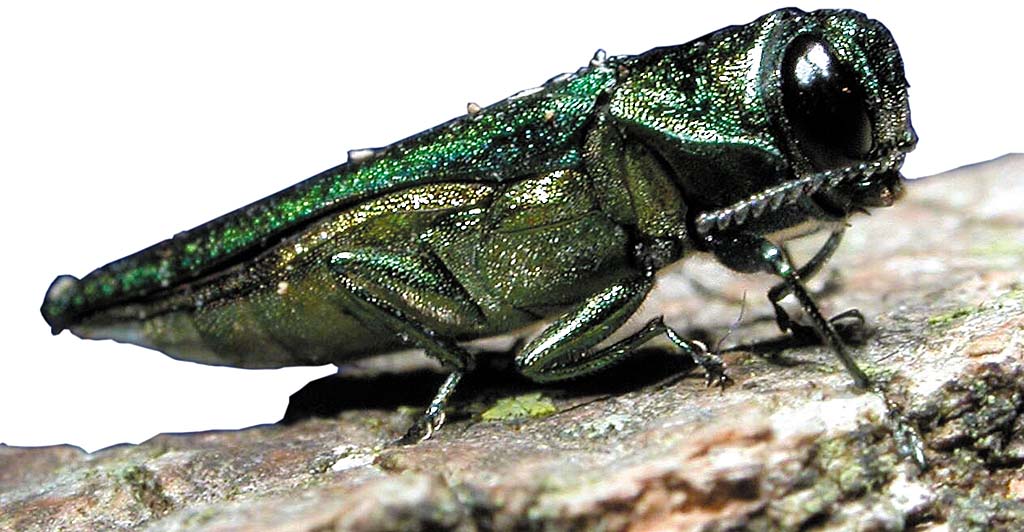
Long game: Emerald ash borer beetles can kill an ash tree within three years of initial infestation. Photo: NPS
By Ian Rose. October 9, 2025. In summer 2022, forest managers in Oregon got the news they’d been dreading for years. Emerald ash borers, an invasive wood-boring beetle from Asia responsible for the death and decline of tens of millions of ash trees in North America, had been found in Forest Grove, just west of Portland.
This year, on Sept. 10, the Oregon Department of Forestry confirmed that the destructive insects had arrived in Portland.
Now, researchers are sounding the alarm about the beetles’ arrival in Washington.
Gengping Zhu, assistant professor in the Department of Entomology at Washington State University, studies invasive insects. In 2019, he studied the arrival of Asian giant hornets, sometimes known as “murder hornets,” in Washington.
Zhu is the lead author of a new study that uses computer models to predict the spread of emerald ash borers (EAB). He calls the Pacific Northwest one of the continent’s “hotspots” for invasive species in general.
“Many invasive species tend to come here because the climate is mild,” says Zhu. “It’s not extremely hot or cold. It’s comfortable for the insects.”
Along with colleagues from the Oregon departments of Agriculture and Forestry, and the Grants Pass, Ore., office of the U.S. Bureau of Land Management, Zhu used tree cover and climate data, plus records from previous invasions in the East Coast and Midwest, to understand how quickly EAB might spread across the Pacific Northwest.
The models show that the beetles could cross the Columbia River into Washington in as little as two years, spread across all of western Oregon in 15 years and into California within five years of that.
“I don’t think that the Columbia River will be a geographical barrier,” Zhu tells Columbia Insight.
The study doesn’t surprise Zeima Kassahun, urban and community forestry specialist with the Washington Department of Natural Resources.
“It aligns with our estimates,” says Kassahun. “Anywhere from tomorrow to three years.”
Research suggests that female emerald ash borers can fly for distances up to four miles, depending on wind speed and direction.
But even if they aren’t able to cross the river themselves, humans are likely to give them a ride. The insects are spread in transported wood and forest products from infected trees.
Washington is facing invasion from two sides. Last year, EAB were also discovered in British Columbia to the north.
Stopping spread ‘unrealistic’
Washington officials admit that, even with mitigation efforts, the beetles are probably on their way.
In a report published in 2023, Washington State University and Washington Department of Natural Resources staff wrote that, “Stopping the spread of EAB may be unrealistic.”
Instead, the state is using a policy called SLAM, or Slow Ash Mortality, to slow the spread and give Washington communities more seasons to prepare for the beetles’ arrival.

Departure point: Exit holes left by grown emerald ash borders in Oregon ash trees are fairly small. Photo: OSU Extension Service
Oregon ash grows mostly in the southwest corner of Washington.
In addition to thriving in forest and riparian areas, it’s a popular urban tree.
According to a Washington State University Extension Service report, ash trees make up 2% or more of city trees in Seattle, Tacoma, Bellevue and Vancouver. In Olympia and Walla Walla, more than 5% of surveyed trees are ash trees.
“100% killed”
The emerald ash borer is a small beetle native to northeast Asia, where natural predators and thousands of years of evolved resistance in its host trees make it a mild pest.
After arriving in Michigan in 2002, they found stands of ash trees with none of those natural controls.
Their population exploded, spreading to 37 states and devastating native forests, becoming, in the words of a recent study, “the most destructive exotic forest insect in North American history.”
According to the New York-based Cary Institute of Ecosystem Studies, the beetle “attacks all 16 species of ash trees in North America [and] has killed hundreds of millions of ash trees so far.”
The adults don’t directly damage the trees, but their young are a different story. They dig into the inner bark layer of the trees, affecting their ability to move water, killing younger trees before they’re old enough to produce seeds.

Graphic: Reforest Richmond
One example of their devastating power comes from a 2022 National Park Service report on the impact of the insects in the National Capital Region.
“Emerald ash borer … has killed the majority of the 300,000 ash trees once present in the region’s parks,” according to the NPS. “The invasive beetle targets all ash tree species … Nearly 100% of ash trees infested with EAB have been killed” in parks in and around the Washington, DC, area.
After the first report of EAB in Oregon’s Washington County in 2022, the beetles were found in Clackamas, Marion and Yamhill Counties in 2024.
In Clackamas County, researchers discovered hundreds of infected trees along a section of Butte Creek.
With the discovery of EAB in Northeast Portland, Multnomah County became Oregon’s fifth infected county.
The same announcement included new sites in already infected counties, confirming that the ash borer is spreading.
Streams and salmon at risk
The Oregon ash is the only ash species native to the Pacific Northwest. Oregon ash serves a vital role in regional ecosystems.
Loss of the trees would mean trouble for more than just forests. They’re especially important around the banks of streams and rivers.

Dangerous curves: “S”-shaped galleries under the bark are characteristic signs of emerald ash borer larvae feeding. Photo: Art Wagner/Bugwood.org/OSU Extension Service
“There are other trees that can grow in riparian areas, but they tend to do only part of what Oregon ash does,” says Anya Moucha, who helps to lead EAB control efforts in Portland as forest pests and pathogens coordinator for Portland Urban Forestry. “Oregon ash just does such a great job at filling a lot of needs in our particular ecosystem.”
One of the things that Oregon ash does especially well is grow in wet, frequently flooded soils that can drown other large trees.
A recent study showed that losing Oregon ash trees along salmon and steelhead rivers could lead to a significant loss of shade and higher water temperatures.
EAB can kill large stands of trees in a few years, much faster than anything can grow to replace them, leading to the sudden loss of river shade and higher river temperatures.
Many of the endangered fish populations in these rivers are already stressed by warm water, dams and pollutants.
There is evidence that EAB infestation can hurt human health. A 2013 paper in the American Journal of Preventive Medicine showed an increase of about 1,000 deaths per year from respiratory and cardiovascular causes across counties infected by EAB.
Mitigation efforts
In the Pacific Northwest, forest managers and scientists began efforts to combat the threat of EAB even before the 2022 arrival in Oregon.
“I think the good news, if there is good news, is that it was found in Michigan in 2002 and it was 2022 when it was found in Oregon,” says Moucha. “We had two decades of research and lessons learned from across the Midwest and East Coast, that we could apply and be prepared.”
Portland and other municipalities stopped ash trees from being planted in their cities before the ash borer arrived, in any effort to decrease the percentage of urban tree cover made up of ash. But there are still over 90,000 ash trees in Portland, according to Moucha.
The affected Oregon counties have set up a quarantine to prevent infected wood from moving into neighboring areas. After the Portland EAB announcement, Multnomah County was immediately added to the quarantine.
Chemical treatments can protect uninfected trees, and genetic studies of the trees that do survive may lead to new treatments or resistant varieties.
What to do
Once EAB shows up in an area, they’re almost impossible to eradicate, because they stay hidden, quietly damaging their host trees, for most of their life cycle. This means that they may be in an area for years before they’re detected.
“It spends three quarters of its life underneath bark,” says Kat Bethea, emerald ash borer support specialist at the Oregon Department of Forestry. “We are coming up on two years post-detection, but really in the infestation curve, we’re probably closer to year seven to eight.”
Even if the worse case scenario comes to pass and ash trees are all but wiped out in the Pacific Northwest, volunteers have been collecting ash seeds to replant and replenish the species in the future.
For now, says Moucha, landowners and the public can help monitor and control the emerald ash borer’s spread.
Recommendations for slowing the spread of EAB include burning firewood in the area that it grew, since transporting firewood can often move insects with it; using this guide from the OSU Extension Service to recognize ash trees and the distinctive signs of ash borer damage; and reporting sightings of ash borers or damaged trees to invasive species hotlines in Oregon and Washington.

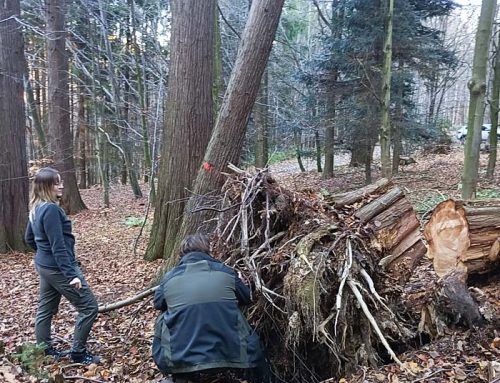
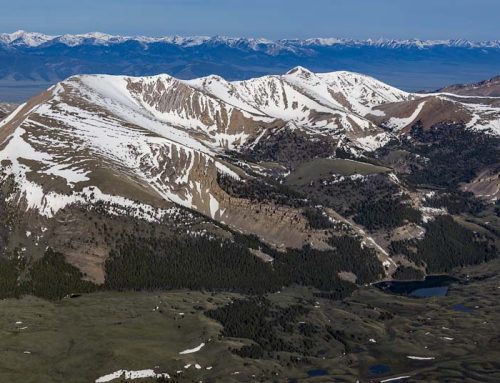
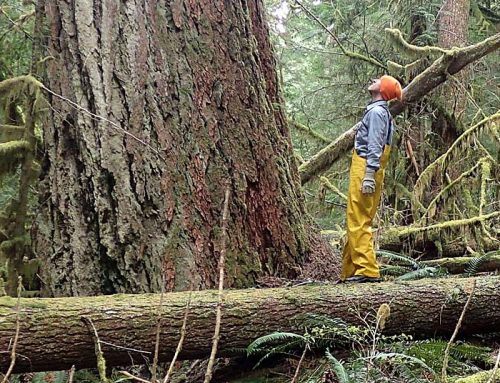





Oregon departments of Forestry and Agriculture have teamed up to create a website dedicated to the latest EAB news, map, management and training opportunities in Oregon. See the current map of EAB (in Oregon) and learn how to identify and manage for EAB. http://www.OregonEAB.com