
A pair of rare northern spotted owl fledglings have been sighted in Washington’s Okanogan-Wenatchee National Forest
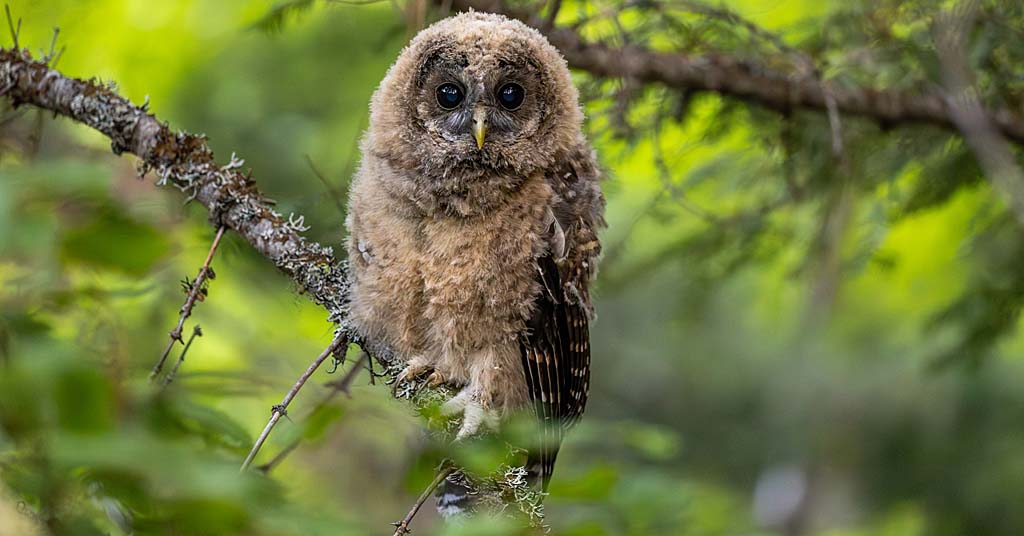
Baby, baby: One of two young northern spotted owls seen last month in north-central Washington. Photo: Anour Esa/WDFW
By Kendra Chamberlain. August 13, 2025. Anour Esa, biodiversity communications specialist at the Washington Department of Fish and Wildlife (WDFW), caught glimpse of something extraordinary last month in the Okanogan-Wenatchee National Forest.
It was a family of northern spotted owls, including two fledglings, a sight so rare that it brought tears to the eyes of the biologist that he was with.
Northern spotted owls have been listed as endangered in Washington since 1988 and have been federally listed as endangered since 1990. There has been no meaningful progress made in recovering the species, and researchers believe the species has only a decade or so left before they’re gone for good.
“It was my first time seeing a spotted owl ever, and it was something I never thought I’d be able to experience in my lifetime because they’re going extinct in Washington,” Esa told Columbia Insight.
On July 17, Esa tagged along with a team of state and federal biologists looking for northern spotted owls in north-central Washington’s Okanogan-Wenatchee National Forest, hoping to photograph at least one of the few remaining owls in the area.
After a day that began at 3:30 a.m., Esa had his one and only sighting at about 6:30 p.m.
“The male fluttered into view, sat on a branch about 30 feet in the air, and just looked down at us,” said Esa. “I get a little emotional when I think about it, because it was one of the most peaceful and serene encounters I’ve ever had with wildlife—and with a species that is rapidly disappearing everywhere.”
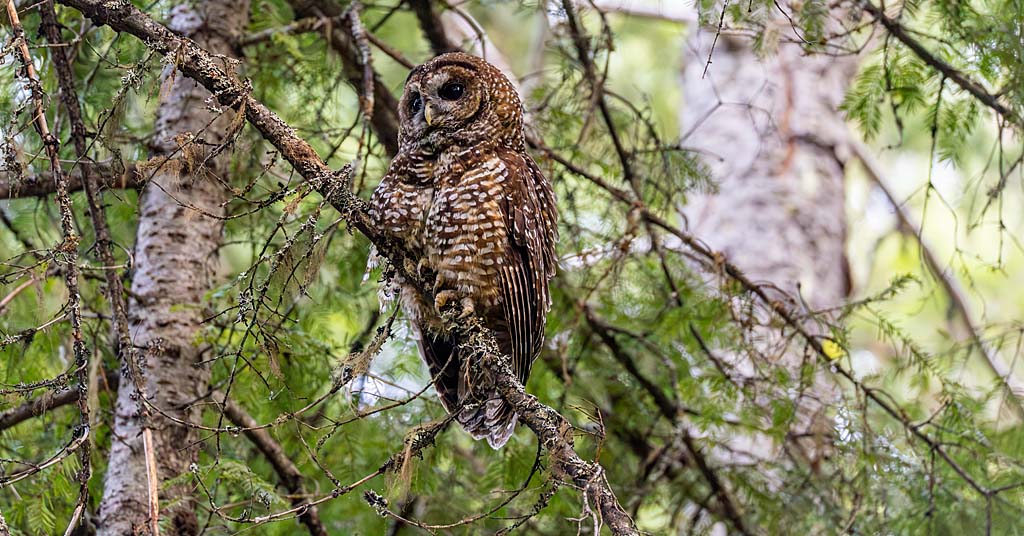
Productive: The male half of a northern spotted owl pair that has produced 10 offspring. Photo: Anour Esa/WDFW
Esa was able to photograph one of the babies, which he described as a “big ball of fluff,” and the team could hear a second juvenile nearby. They eventually caught sight of the female, too.
“We had a really wonderful experience with them just sitting there. And after about 45 minutes, we packed up and headed back down the hill,” he said.
The mating pair is one of the last known pairs of northern spotted owls in Washington.
The two are well known because they’re such an anomaly. The duo has been together since 2015 and has produced 10 chicks over the last decade, against the odds. Their marriage has lasted longer than many in the United States, Esa quipped.
Long odds for survival
But this isn’t a rainbow and butterflies story.
“These two fledgling spotted owls have a really, really steep uphill battle to come just to survive the next six months,” said Esa.
Spotted owl fledglings have only a 25% survival rate.
“There’s a really good chance that these fluffy, cute owls are going to be dead by January,” he said.
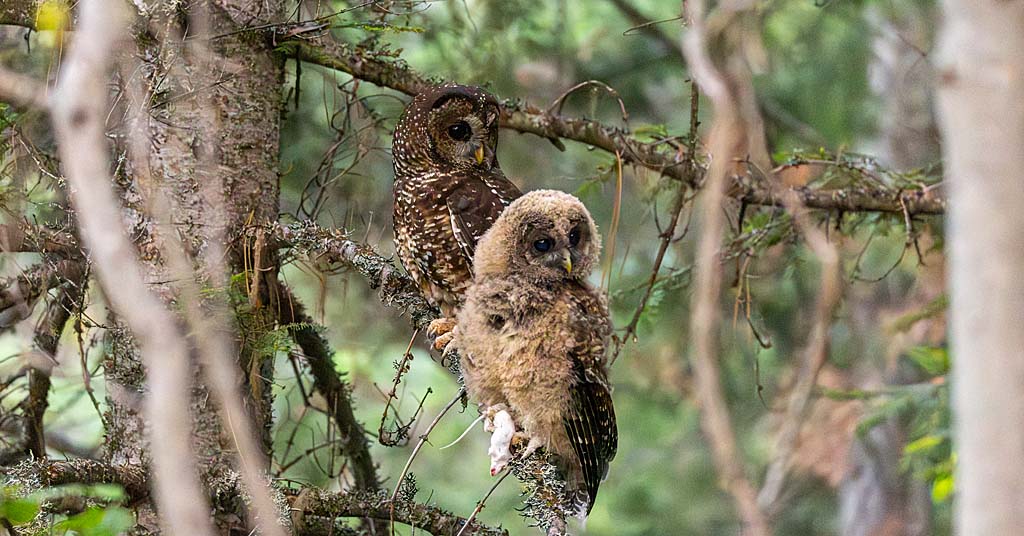
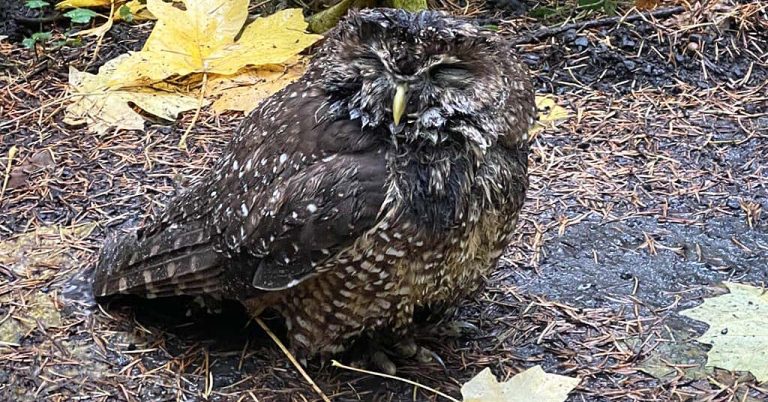
Two more: It’s rare to see a single spotted owl, much less the family of four that Washington state wildlife staff found in July. Photo: Anour Esa/WDFW
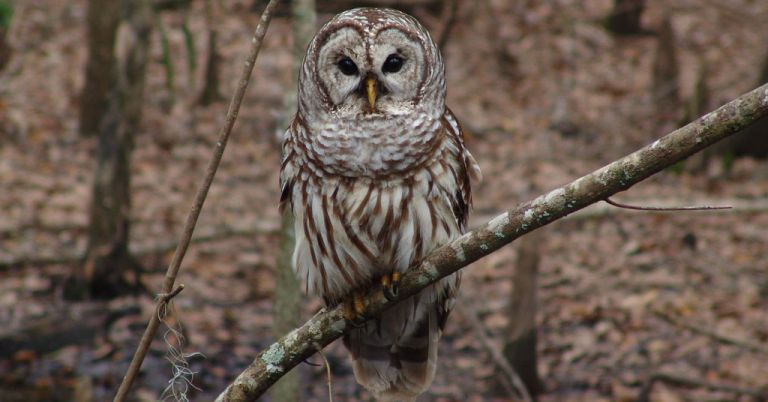
Being a baby spotted owl in Washington is tough enough, thanks to things like harsh winters and loss of habitat. But their future is made even more perilous with the arrival of the infamous barred owls, invaders that pillage and plunder forests that northern spotted owls call home.
Researchers believe barred owls are one of the chief drivers of northern spotted owl declines.
When barred owls move into spotted owl territory, they eat all the food and take over habitat. They bully adult northern spotted owls out of their territories and sometimes even eat the fledglings.
The barred owls are so aggressive that spotted owls will stop calling for mates when barred owls are around. Their presence is pushing spotted owl populations to the brink of extinction.
WDFW doesn’t know exactly how many spotted owls are left in the state. The numbers are so low that the state has paused its monitoring program.
“It’s getting harder and harder to find owls in the first place, and it’s taking longer and longer to find nesting pairs, to find juveniles,” said Esa.
Federal and state wildlife departments across the Pacific Northwest are tackling the barred owl invasion head on. The proposed solution: kill as many barred owls as possible in spotted owl territories.
It sounds harsh, but the science is clear. When barred owls are removed from spotted owl habitat, the spotted owl populations rebound quickly.
“It’s a hard choice, but we have to make it,” said Esa. “If we don’t take action now, we know that it’s very likely that northern spotted owls will go extinct in Washington within 10 years. That is the humbling, sad truth.”








We are working on defeating a threat to northern spotted owls in the Okanogan-Wenatchee National Forest. This is big news, but it would be really helpful to know exactly where this nesting pair is located.