After pushback, Utah Sen. Mike Lee has revised his proposal requiring the sale of Forest Service land to apply solely to BLM holdings
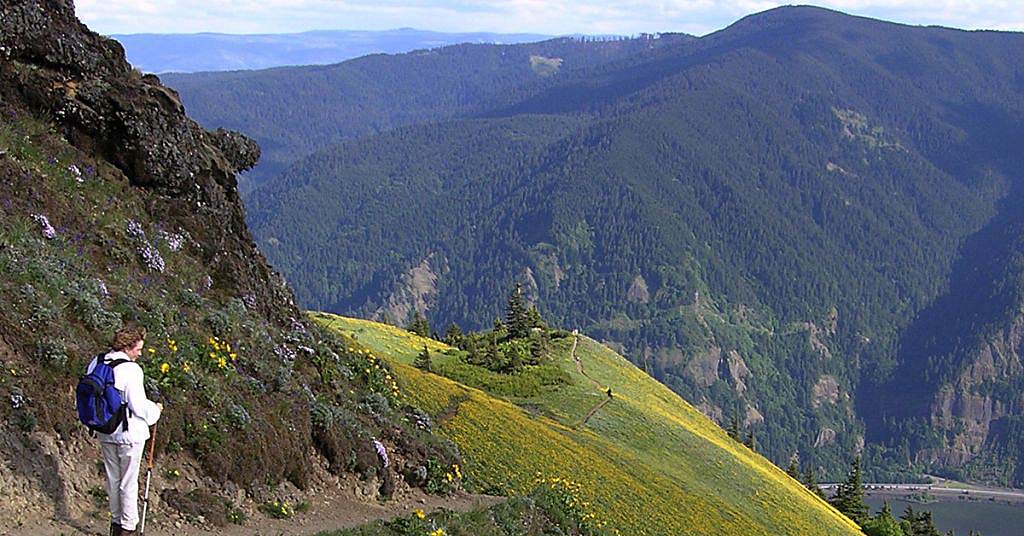
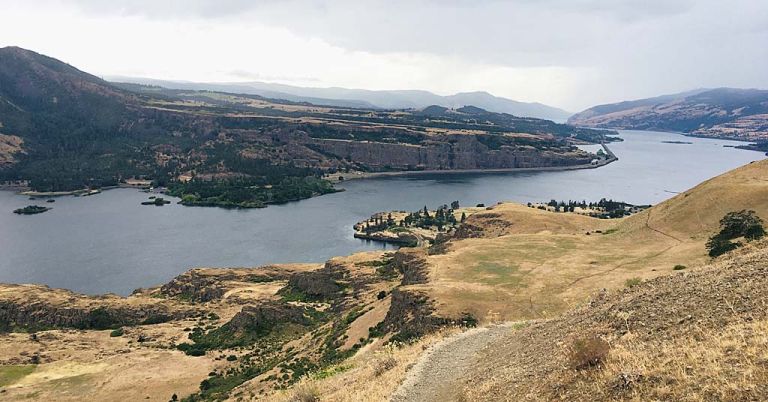
Uncertain path: Dog Mountain, one of the more popular hikes in the Columbia River Gorge, might have been sold under a recently vanquished Senate proposal. Photo: Jurgen Hess
By Andrew Engelson. June 26, 2025. A plan proposed by U.S. Senator Mike Lee (R-Utah) that would have required selling off between two and three million acres of U.S.Forest Service and Bureau of Land Management lands in 11 western states has been revised after the Senate parliamentarian ruled on Tuesday that the proposal violated the Senate’s budget reconciliation procedures.
That technicality, plus huge public outcry from environmental groups, hikers, hunters and other recreational users, prompted Lee to walk back his proposal and post on X that he would exclude all U.S. Forest Service land from future sell-off plans.
The setback, however, isn’t stopping Lee from pushing for the sale of public lands.
A copy of Lee’s latest plan, obtained this week by Columbia Insight, mandates that the BLM identify and sell off between .25 to .5 percent of its lands—or up to 1.2 million acres.
It would also establish something Lee calls “freedom zones” to “ensure these lands benefit American families.”
“I’m doing everything I can to support President Trump and move this forward,” Lee posted.
Lee’s original plan, according to an analysis by the Wilderness Society, would have made 250 million acres of Forest Service and BLM land eligible for sale to private interests. This included 21 million acres in Oregon, 21 million acres in Idaho and 5 million acres in Washington.

Rough landing: Despite blowback, Utah Sen. Mike Lee, here at a 2020 “Liberty for Trump” event in Tempe, Ariz., is determined to diminish public property holdings. Photo: Gage Skidmore/Flickr
The auction and potential closure of millions of acres of wildland stirred a firestorm of opposition.
For instance, a call to action issued by Friends of the Columbia Gorge generated more than 3,300 comments in opposition sent to Congressional delegations, mostly in Washington and Oregon, according to Tim Dobyns, the organization’s communications director.
“The Senate parliamentarian’s ruling is a huge relief—it means iconic places like Eagle Creek, Dog Mountain, Memaloose Hills, Catherine Creek and Dry Creek Falls are safe from being sold off. For now,” said Renée Tkach, conservation director for Friends of the Columbia Gorge. “Together, we helped stop what would have been the largest sell-off of public lands in U.S. history.”
The Washington Trails Association, also opposed, said that the proposal would have put more than 77,000 miles of trails at risk.
“It is great news that the mandate to sell millions of acres of Bureau of Land Management and U.S. Forest Service lands has been removed from the reconciliation bill,” said Michael DeCramer, policy and planning manager for the Washington Trails Association. “We should be investing in our public lands, not selling them off.”
Various senators from the Columbia River Basin expressed their opposition.
“Republicans seem hell-bent on trying to sell public lands. Members need to stand up and stop this giveaway of our natural heritage. The latest Lee proposal is just one more attempt to see if Congress blinks,” said Senator Maria Cantwell (D-Wash.) in a press release.
“The Republican plan to auction off public lands to pay for more tax cuts for billionaires is one of the biggest boondoggles I’ve seen during my time in the Senate,” said Senator Ron Wyden (D-Ore). “The only winners in this scheme will be billionaires looking to build yet another luxury getaway in the woods, while Oregon’s hunters, fishers, hikers and bikers lose access to some of their most treasured outdoor spaces.”
Even the two Republican members of the Senate delegation from Idaho, Sen. Mike Crapo and Sen. James Risch (R-ID) rejected the sell-off.
“After a careful and thorough review of the legislative text in the Senate Energy and Natural Resources Committee reconciliation title, Senator Crapo does not support the proposed language to sell public lands,” said a spokesperson for Crapo.
“After reviewing the Senate Energy and Natural Resources reconciliation language, I do not support the proposed provision to sell public lands,” said Sen. Risch, through a spokesperson.
Lee still pushing to sell BLM land
Friends of the Columbia Gorge said that Lee’s original bill, while exempting national parks and national monuments from the sale, did not exempt National Scenic Areas. This meant that 22,000 acres of the Columbia River Gorge National Scenic Area were at risk of being sold.
The list of popular trails and ecologically important sites that could have gone on the auction block includes Dog Mountain, Eagle Creek, Memaloose Hills, Catherine Creek, Mt. Defiance and Larch Mountain.
“Eagle Creek is on the chopping block. That’s insane,” Tkach said, adding that Eagle Creek was one of the first developed campgrounds on U.S. Forest Service land.
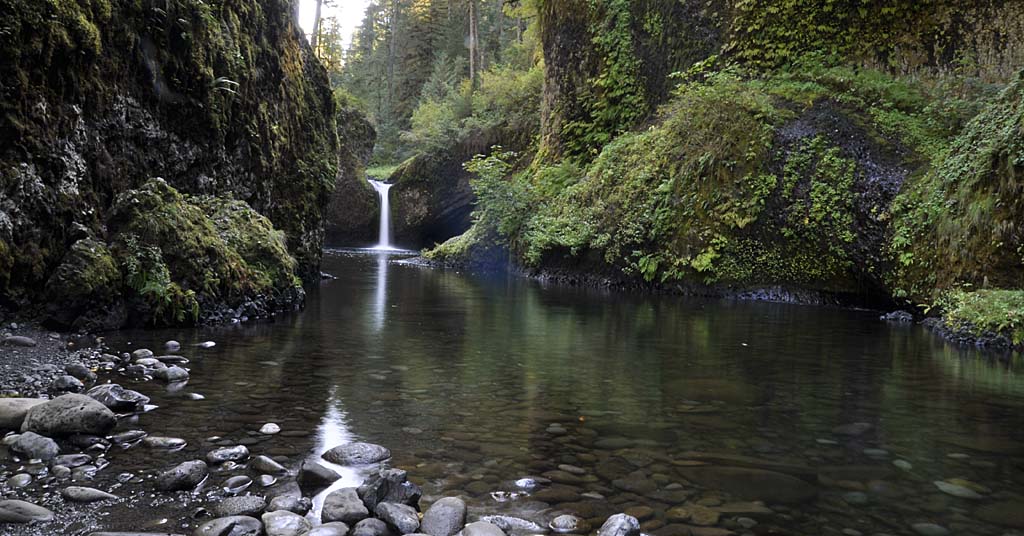
Let the eagle soar? According to opponents, Sen. Lee’s initial plan could have put Eagle Creek on the Oregon side of the Columbia River Gorge up for sale. Photo: Jurgen Hess
Lee’s original proposed legislation stated that the mandated land sales were intended for “housing, increased timber sales, geothermal leasing and compensation of states and localities for the cost of wind and solar projects on federal land.”
But Ryan Ruggiero, land trust director for Friends of the Columbia Gorge, said the stated goal of affordable housing is a distraction.
“[This] really opens the floodgates to all kinds of potential public land sell offs in the future, justified by all kinds of dubious arguments,” said Ruggiero. “This is not a budget balancing move. This is a politically motivated culture war.”
Lee’s revised proposal, however, still calls for the “mandatory disposal of Bureau of Land Management land for housing”—including land in Idaho, Oregon and Washington—at what appears to be the sole discretion of the Secretary of the Interior.
“As soon as practicable after the date of enactment of this Act, the Secretary shall select for disposal not less than 0.25 percent and not more than 0.50 percent of Bureau of Land Management land, and shall dispose of all right, title, and interest of the United States in and to those tracts selected for disposal under this section,” reads Sen. Lee’s latest proposal.
The BLM does not manage any land within the Columbia River Gorge National Scenic Area.
Ruggiero said opposition, even from such a solidly red state as Idaho, indicates there’s a disconnect between the administration and people in the West who care about the outdoors.
“If this administration goes so hard and ruthlessly at these types of issues, I think they fail to recognize that they’re alienating portions of their own constituency in the process,” said Ruggiero.
Ruggiero noted that the original bill required agencies to identify lands for sale within 60 days and to complete the sale within five years. He said that the already checkerboard, fractured nature of public lands would only increase with Lee’s plan, and that current efforts to prevent wildfires would be set back.
“Over time, each incremental step toward privatization is a little chink in the armor of the landscape’s integrity, its ability to function, to recover from wildfire,” he said. “All that stuff becomes so much more difficult to manage at scale.”
Evading environmental assessments
Sarah McMillan, an attorney with Western Environmental Law Center, said that any of land sales in the proposed plan should be subject to environmental review.
“I would think that ESA consultation, tribal consultation and NEPA should be required,” McMillan said, adding that because things are in flux it’s hard to know what potential legal challenges might exist.
“At this stage, without knowing the actual agency process for this proposed auctioning of public lands, it is hard to know how we would challenge this,” she said.
McMillan said the original proposed legislation also includes provisions that attempt to evade the usual environmental assessment process.
“An opt-in provision allows an entity proposing a project to pay 125% of the [National Environmental Policy Act] document preparation cost to fast track the process and then evade judicial review,” she said.
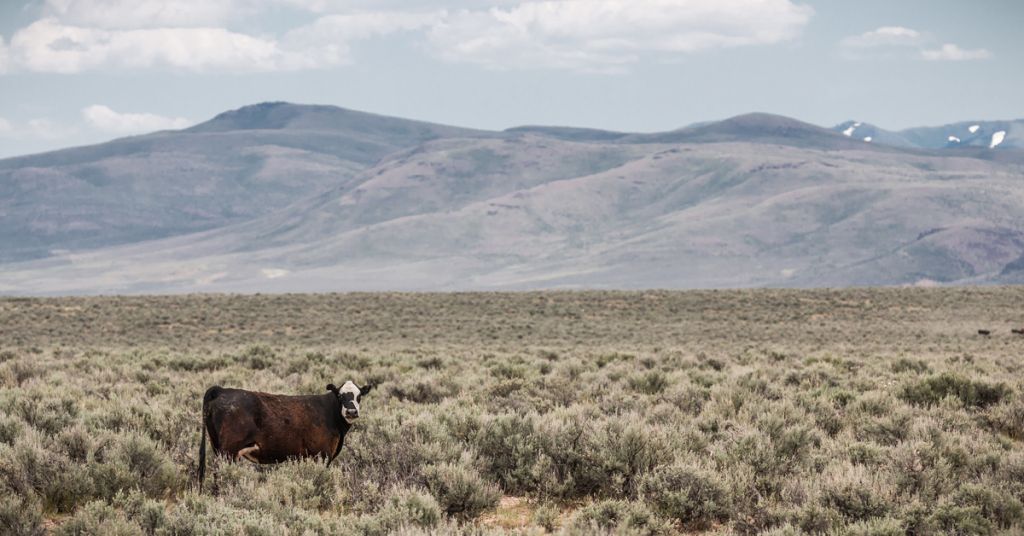
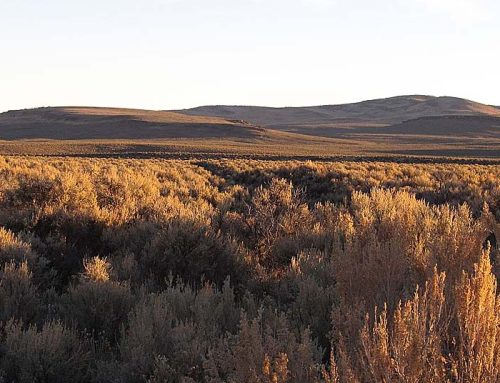
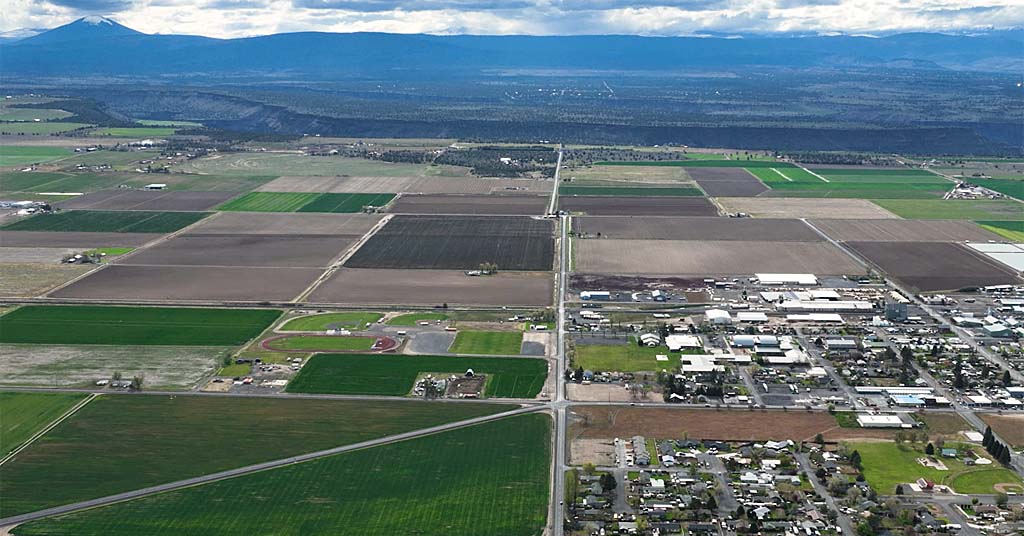
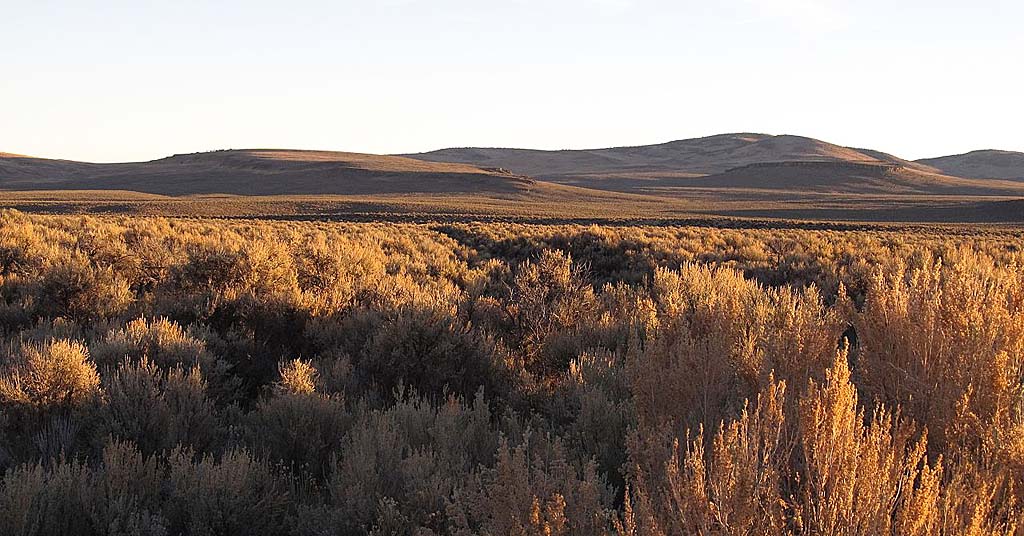
This land is your land: The BLM is responsible for administering nearly 14 million acres of rangelands in Oregon and Washington. Photo: Greg Shine/BLM
The proposed sell-off comes after a flood of attempts to eviscerate funding for public lands across the West, including thousands of layoffs of Forest Service and BLM staff, and a proposed redirecting of $387 million in the Land and Water Conservation Fund (LWCF) away from land acquisition to deferred maintenance.
“There’s been this perfect storm with the selling off of the public lands, and what we saw coming before this in the president’s budget bill was also zeroing out the Land and Water Conservation Fund,” said Tkach of Friends of the Columbia Gorge, adding that $328 million in LWCF funds have protected thousand of acres of Oregon land in the past 50 years, including much of the Columbia River Gorge National Scenic Area.
Tkach, who lives in Skamania County, Wash., said that the National Scenic Area has been critical to the economy and environmental health of the Gorge, and any attempt to sell off those lands would be a disaster.
“I remember when certain towns like Mosier and Bingen and White Salmon couldn’t keep a restaurant open year-round. And now look at what we have out here,” she said. “We have thriving economies because of the tourism and people coming to live here, too.”