
Ruling says ODFW violated public notice requirements when it redefined fish passages to include trap-and-haul methods
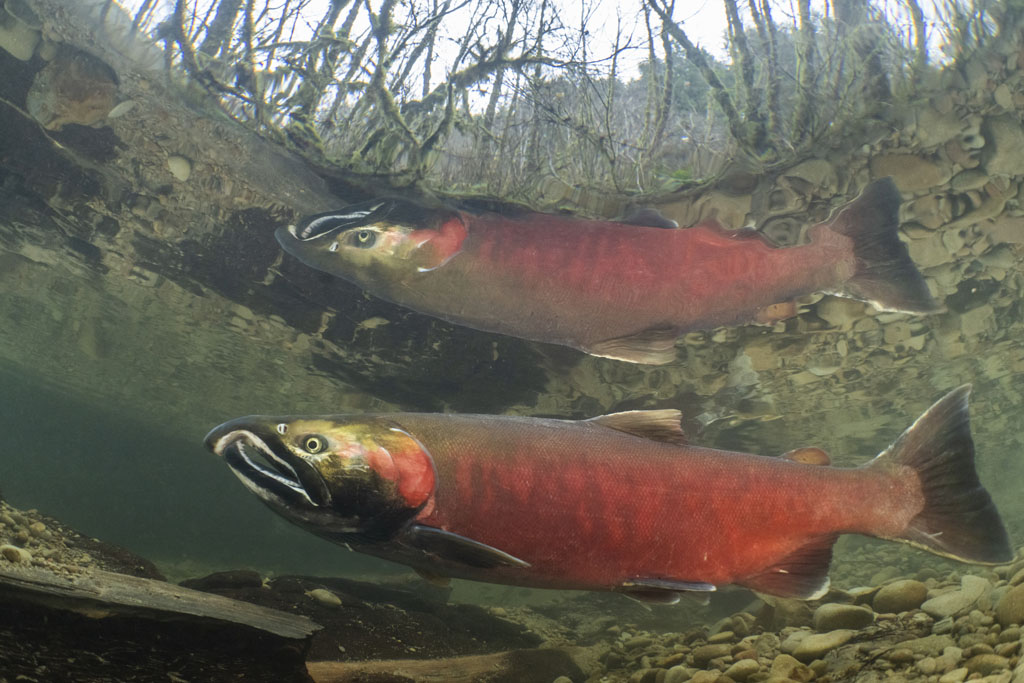
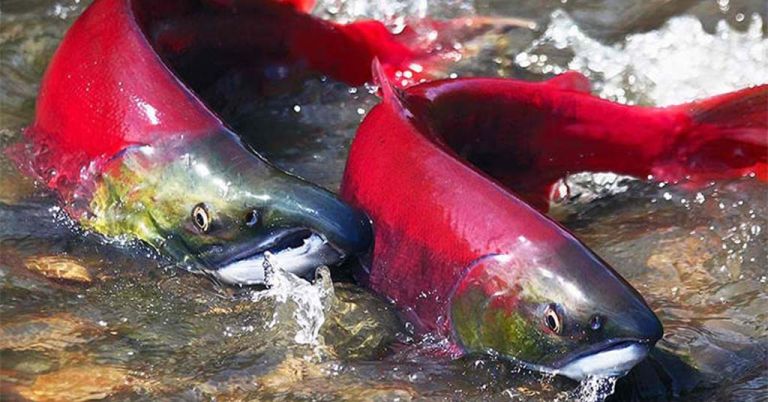
Streaming service: A recent court ruling addresses the definition of safe passage for coho salmon and other fish. Photo: David Herasimtschuk
By Nathan Gilles. December 8, 2025. On the eve of this year’s Thanksgiving holiday, the Oregon Court of Appeals ruled in favor of Tribes and conservation groups that sued the State of Oregon in 2023, claiming the state’s Department of Fish and Wildlife had in secret made a series of detrimental revisions to state rules intended to help legally protected salmon and steelhead populations.
The November ruling provides support for these claims, finding that ODFW violated Oregon law by not adequately informing the public of its revisions. As a consequence of violating the law, the court has thrown out the agency’s unpopular revisions, declaring them invalid.
The ruling provides closure to a September 2023 lawsuit brought by the Nez Perce Tribe and seven regional environmental nonprofits against the state agency, as well as a separate lawsuit brought by the Confederated Tribes of the Umatilla Indian Reservation.
ODFW spokesperson Michelle Dennehy declined requests for interviews from Columbia Insight, writing in an email that her agency was “reviewing the ruling and options with our attorneys and are unable to comment at this time.”
Redefining “fish passage”
The revisions in question relate to fish passages.
Fish passages are engineering structures, including fish ladders, that allow migrating fish to voluntarily swim past dams and other obstructions on their way to and from the Pacific Ocean. Or that’s how ODFW rules previously defined fish passages.
As Columbia Insight reported, in November 2022, ODFW staff, with the Oregon Department of Justice acting as the agency’s legal counsel, made several revisions to its fish passage rules that changed the legal definition of “fish passage” to include trap-and-haul procedures.
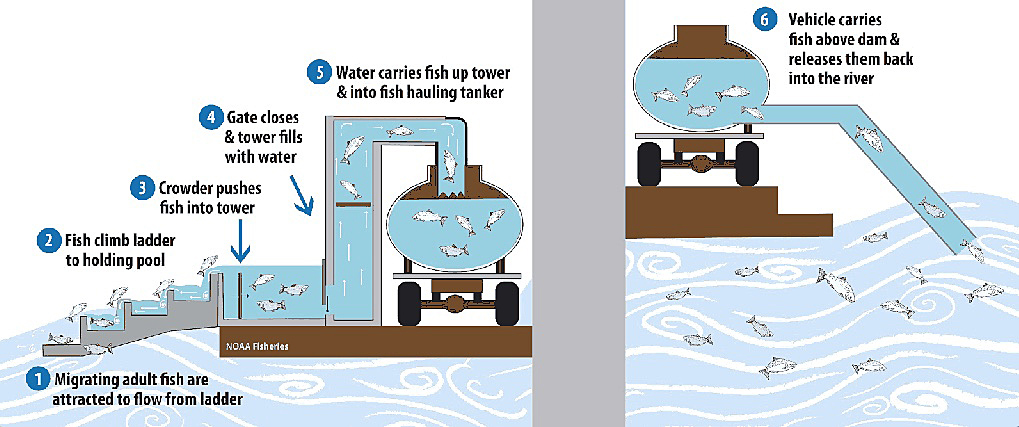
Trap-and-haul infographic: NOAA
Trap-and-haul involves people catching fish and moving them, often by tanker truck, to waters above or below an obstruction.
ODFW’s revisions were made to agency rules created to implement a 2001 Oregon law intended to help migrating fish.
Volitional fish passages are widely considered to be superior to non-volitional trap-and-haul because they’re less likely to harm migrating fish.
ODFW has not made public emails and other documents related to revisions it made in consultation with the DOJ, claiming the communications are protected by attorney-client privilege.
ODFW’s revisions were approved by the Oregon Fish and Wildlife Commission in late December 2022. The revisions went into effect on Jan. 1, 2023.
Backlash from Tribes, enviros
As Columbia Insight reported in February 2023, ODFW’s revisions were unpopular among salmon advocates, including numerous local environmental groups, the Nez Perce Tribe and the Confederated Tribes of the Umatilla Indian Reservation.
In a series of scathing letters sent to state officials in winter 2023, these groups claimed that ODFW staff made a fundamental change to Oregon’s fish passage rules that made the legal definition of volitional fish passage indistinguishable from trap-and-haul.
The revisions, fish advocates said, would set back efforts to restore the state’s protected fish populations because it would make it easier for dam owners to avoid costly fish passage retrofits by doing trap-and-haul instead.
“Common sense dictates that the public cannot provide feedback when it is not notified what to provide feedback about.”
Miles Johnson, legal director for the Oregon-based environmental nonprofit Columbia Riverkeeper, which joined the 2023 lawsuit, said the ruling was a win for Oregon’s threatened and endangered salmon and steelhead populations, and the Tribes and other communities that rely on them.
“Fish should be able to swim up and down streams unimpeded as much as possible and we are glad that the Oregon Court of Appeals understands and took steps to protect the rules that protect Oregon’s fish,” said Johnson.
Neither the Nez Perce Tribe nor the Confederated Tribes of the Umatilla Indian Reservation have yet been available for comment on the court ruling.
“Last-minute” revisions
The fall 2022 revisions made by ODFW weren’t just unpopular, they caught many stakeholders by surprise.
The same 2023 letters expressing concerns about the revisions also stated that the agency had made the revisions at the “last minute” and in secret without proper public notice. This claim would become a major basis for the lawsuits brought against the state.
The lawsuits had to prove two things: that the revisions made by ODFW were significant enough to trigger additional public notice, and that the agency did not provide sufficient public notice of the revisions it had made.
The November Oregon Court of Appeals ruling determined both were the case.
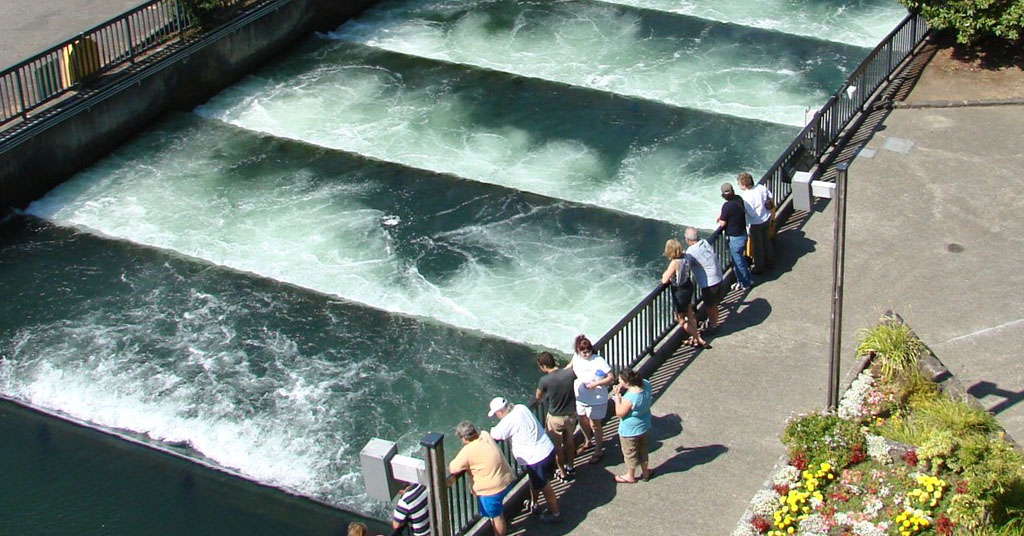
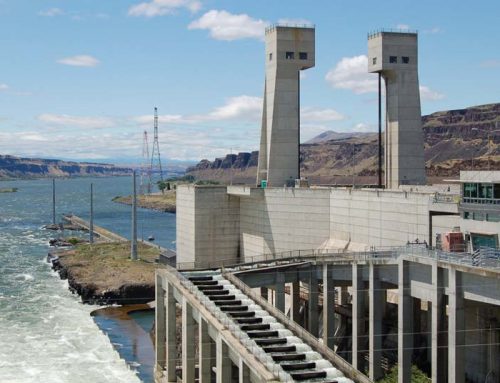
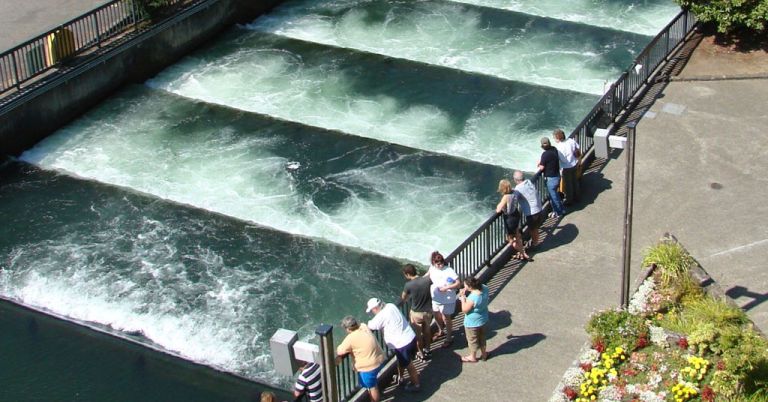
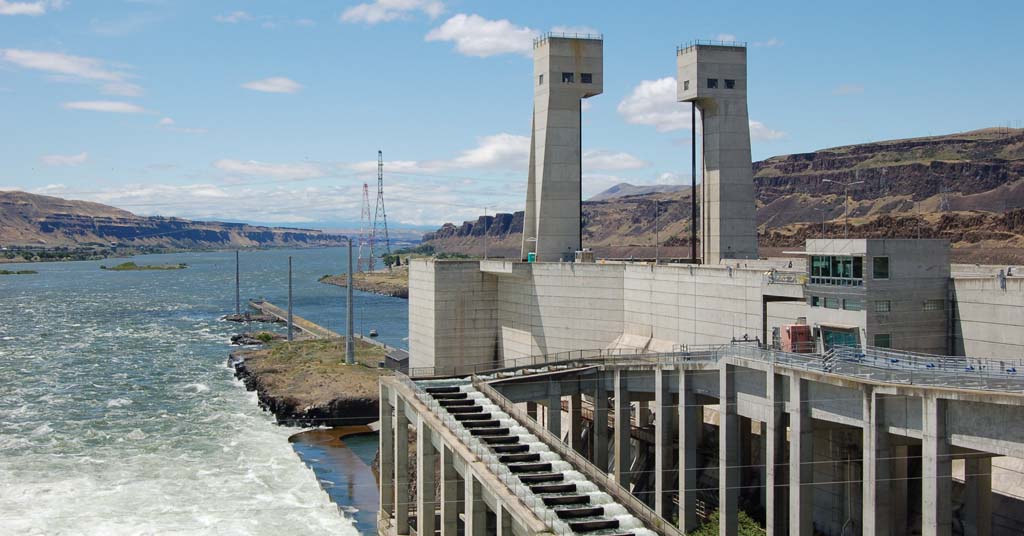
Truck stop: This fish ladder at Bonneville Dam on the Columbia River helps aid fish passage. A court order says tanker trucks don’t meet the definition. Photo: Don Graham/Flickr
Siding with fish advocates, the ruling found that the agency had “made significant and substantive changes to the proposed rules that fundamentally altered the purpose of the rules themselves.” Due to these substantive changes, the ruling continues, ODFW should have notified the public of the changes. It did not do this, according to the ruling.
In fact, the revisions made by ODFW came on the heels of two years of public input intended to improve the implementation of Oregon’s fish passage rules.
Although groups that participated in the process favored many of the changes made during this period, some of them would later join the suit against the agency regarding its redefined fish-passage rules.
In October 2022, ODFW issued a public notice asking for comment on changes made in consultation with these groups over the previous two years.
Following this, in either late November or early December—the date is unclear, according to the ruling—ODFW provided a public notice asking participants to again weigh in on revisions to its fish passage rules prior to an Oregon Fish and Wildlife Commission vote on the changes in late December.
By this time, however, the agency had already made its unpopular revisions. According to the ruling, this second notice “contained no indication” of the extent of the changes the agency had made.
The result was that many in the public believed the revisions the Oregon Fish and Wildlife Commission was going to vote on were revisions made during the previous two years of public input, and not the revisions made by the agency with the DOJ acting as its lawyer in November 2022.
“Common sense dictates,” the ruling reads, “that the public cannot provide feedback, data, and arguments when it is not notified what to provide feedback, data, and arguments about.”
With the ODFW’s revision thrown out by the court, the state’s fish passage rules revert to previous rules implemented by the agency in 2006.








I wonder if USACE and the BPA had cleaned up Bradford Island and all the PCBs in that water, our salmon and steelhead runs might not be so low today. But after 50 years of neglect, here we are.