The company behind “seafood without the sea” says its cultivated salmon is good for the environment and consumers

Wild idea: This coho salmon fillet wasn’t raised in a hatchery or caught in the wild. The San Francisco company Wildtype produced it. Photo: Wildtype
By Kendra Chamberlain. July 1, 2025. At the Portland, Ore., Haitian restaurant Kann, diners are able to sample a world’s first: commercial salmon grown in a lab.
The fish is produced by San Francisco food-technology startup Wildtype. In June, the company received approval from the United States Food and Drug Administration to sell the product.
Although “lab-grown” may be a bit of a misnomer.
“It’s not as weird as it might sound,” Justin Kolbeck, co-founder and CEO of Wildtype, told Columbia Insight.
There are two steps to the process of producing the cultivated fish fillets.
First, salmon cells are grown in large, stainless steel tanks, similar to the kind used in breweries. In fact, the company’s only facility is located in a former brewery in San Francisco.
Then, the fish cells are combined with other plant-based ingredients to create the final product, a saku cut (a block cut of skinless, boneless seafood) of salmon that can be eaten raw as sushi or sashimi.
“[The last step] we do is in a very standard commercial kitchen. It looks like any commercial kitchen you’d see, stainless steel, tables, mixers, ovens, things like that,” said Kolbeck.
So no lab is actually involved.
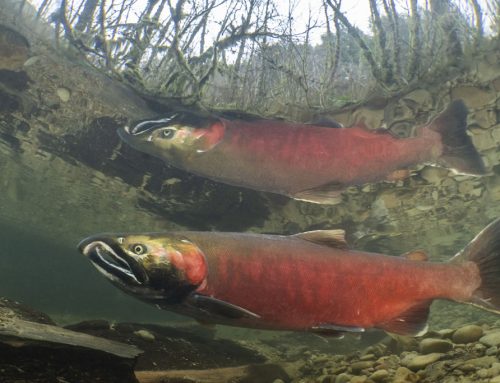
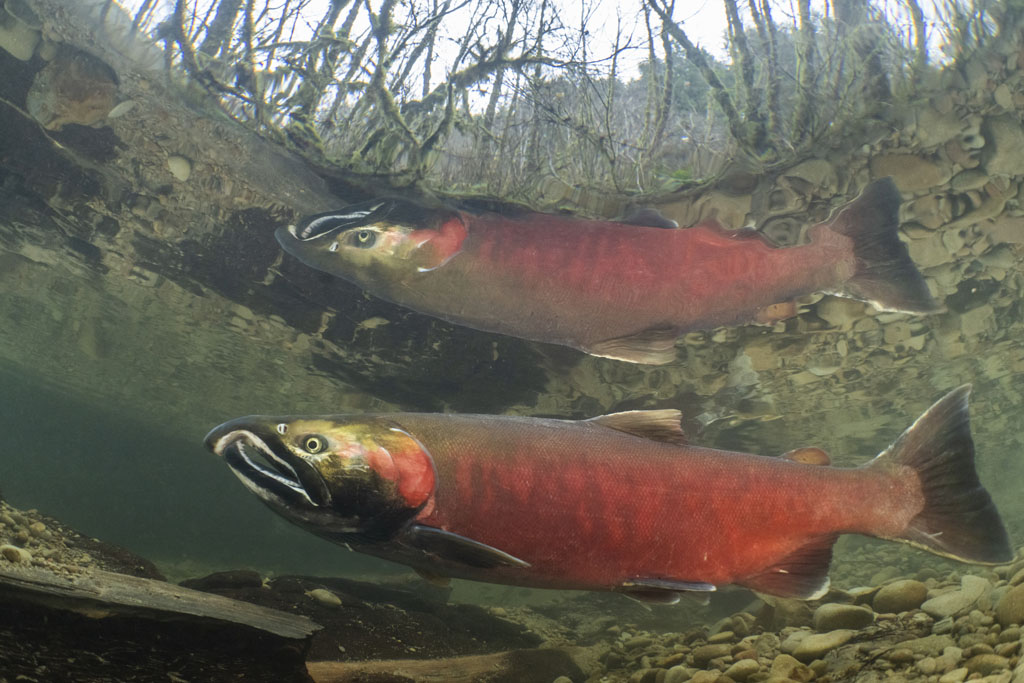
Wildtype is producing just one species: coho salmon, populations of which are listed as threatened in the Columbia River Basin under the Endangered Species Act.
All of Wildtype’s fillets are cultivated from a single sample of cells collected from a juvenile coho. According to the company’s website, the cells were extracted “several years ago. We provide these cells with nutrients similar to those they would get inside a fish—amino acids, sugars, fats, and minerals—and coax them to continue growing and replicating.”
“We wanted to work on the species that are native to this part of the world,” said Kolbeck.
Expansion, conservation
The company’s website provides few details about its founders, saying only that the two old friends “were deeply influenced by their years of service in medicine and international relations” and “inspired by breakthroughs in stem cell research, and witnessing firsthand the impact of global food insecurity in places such as Pakistan and Afghanistan.”
The company plans to expand its production to other species of salmon, and hopes to eventually make cultivated fish available to the public at price points lower than the high-end sushi market delivers.
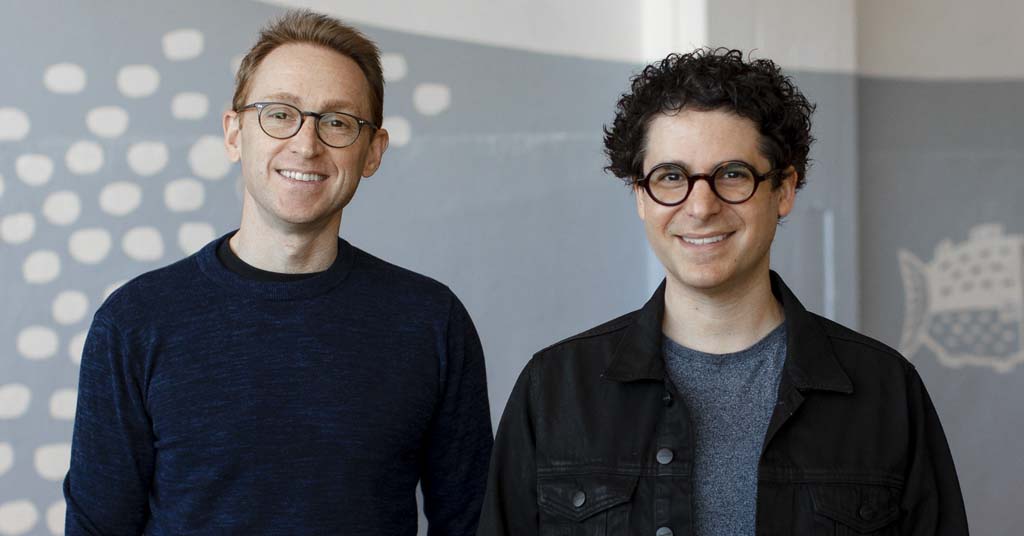
Wildtype co-founders Justin Kolbek (L) and Arye Elfenbein. Photo: Wildtype
Wildtype says it has partnered with The Conservation Fund in a handful of projects aimed at protecting salmon habitat, including a recent project along the White Salmon River in south-central Washington.
The company argues its cultivated salmon is good both for the environment and for consumers. For one thing, Kolbeck says, its manufactured salmon is free from any of the heavy metals, toxins and microplastics that plague waterways and oceans.
And nothing is actually being fished out of the water.
“I think we all agree that it would be amazing if there was another source of salmon that didn’t require us to farm it or to wild catch it, right?” said Kolbeck. “The salmon returns have been shrinking over the years, and so anything we can do to help alleviate some of that pressure is a good thing.”