
Massive project is a top priority for Washington and integral to cleaning up the nuclear reserve
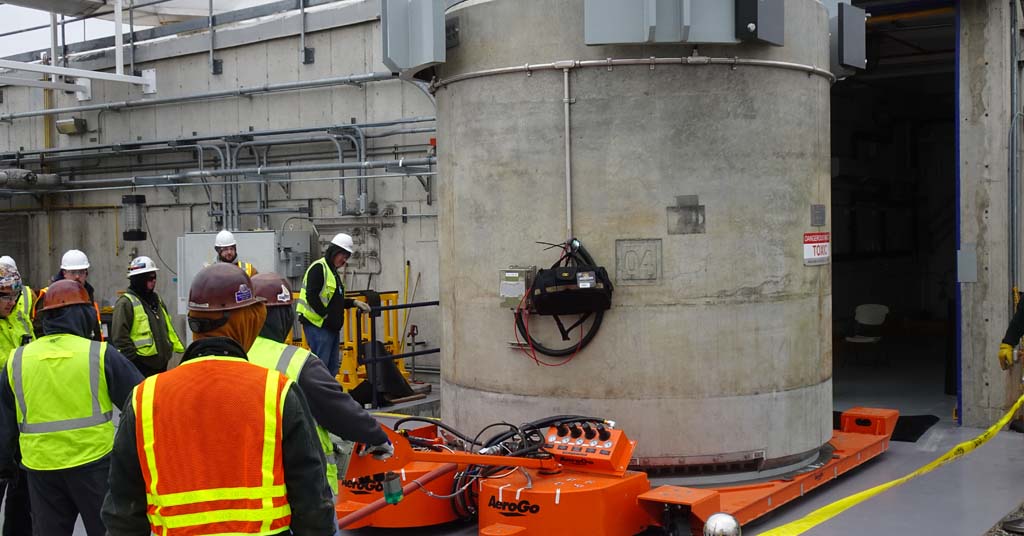
Slow going: Workers pull a concrete cask filled with cesium capsules out of the Waste Encapsulation and Storage Facility at the Hanford Site. Photo: WA DOE
By John Stang. February 3, 2026. After many years on a back burner, the first step of work has begun on one of the Hanford nuclear reservation’s most radioactive sites.
Two weeks ago, Hanford finished loading its first cask with capsules of extremely radioactive strontium and cesium from 13-foot-deep water pools into a larger cask to be stored in a dry area. One cask holds 121 capsules.
While water blocks radiation, there’s a risk of the pools leaking radioactive water into the ground.
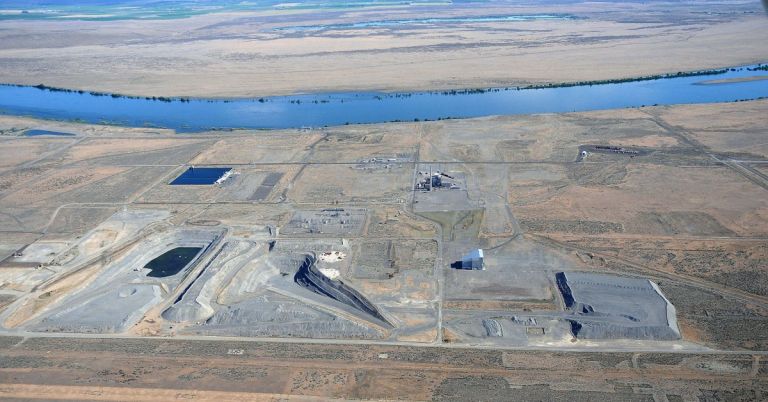
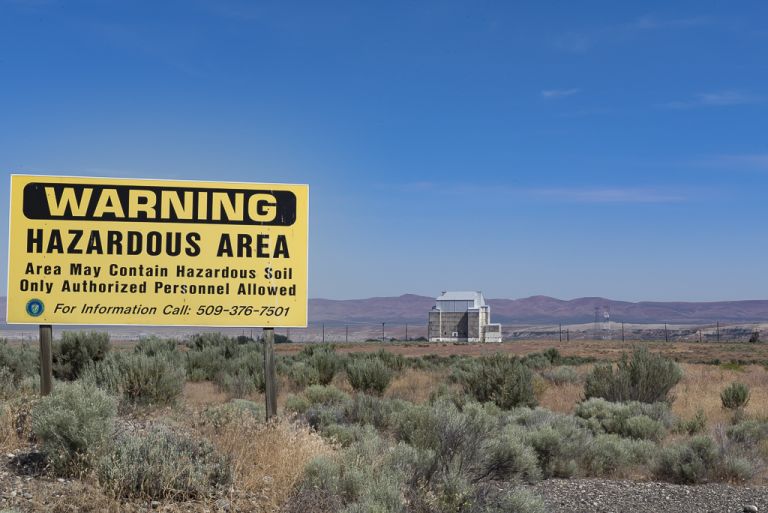
The facility—dubbed the Waste Encapsulation Storage Facility or “WESF”—is in the central portion of the 586-square-mile reservation where all the defunct plutonium processing plants and 177 leak-prone underground radioactive waste storage tanks are located.
The underground tanks are considered Hanford’s worst cleanup problem, while also being the most radioactive spot in the Western Hemisphere.
Hanford started converting the underground tank wastes into glass in October.
Deadline approaching
The WESF facility contains one-third of Hanford’s total radioactivity.
The highly radioactive cesium and strontium were removed from the 177 underground storage tanks in the 1970s.
The WESF capsules hold 80 million curies of radioactivity. By comparison, the Chernobyl disaster unleashed 50 million to 200 million curies.
“Transferring these capsules to safe, dry storage is a top priority for the state and is integral to the goal of cleaning up Hanford and protecting the environment and surrounding communities,” said Stephanie Schleif, nuclear waste program manager for the Washington Department of Ecology (DOE) in news release.
“This is a significant step forward for safety at Hanford,” said Wash. Gov. Bob Ferguson in the same release. “Transferring these capsules of waste to safer, long-term storage will help protect workers, communities and the environment for generations to come.”
All of the 1,936 capsules are expected to be in storage in 18 casks by 2028 or 2029.
It’s expected to take roughly two months to fill a single cask with 121 capsules, according to DOE.
Almost all the work is done by remote control. After the capsules are put in a cask, it’s welded shut and filled with helium, which keeps the capsules cool. A single, filled-up cask weighs 92.5 tons.
Hanford’s cleanup is controlled by a massive and complicated 37-year-old contract among the state ecology department, the U.S. Department of Energy and the U.S. Environmental Protection Agency.
Originally, the contract called for all of the capsules to be in dry storage by 2025. However, the Energy Department determined in 2021 that the COVID pandemic and supply chain issues made the deadline unobtainable. Consequently, the new legal deadline is Sept. 30, 2029.








Short but excellent article. Great that those extremely radioactive wastes are being stored safely. There was always a concern they would leak into soil and aquifer. It’s taking DOE forever but glad they are making significant progress.
Jurgen Hess, former member of Oregon Hanford Cleanup Board.