Herds are dwindling as a bacterial pneumonia ravages sheep populations east of the Cascades
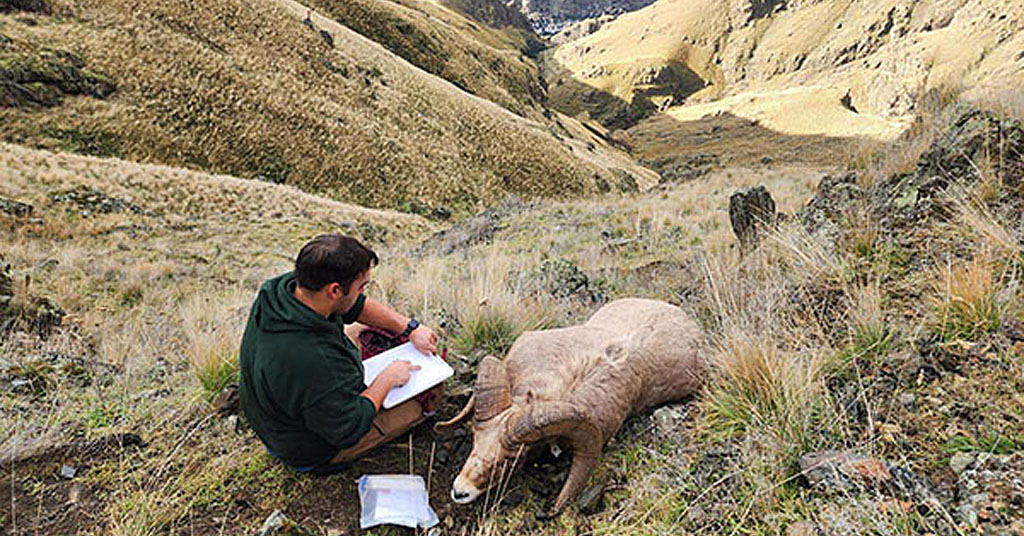
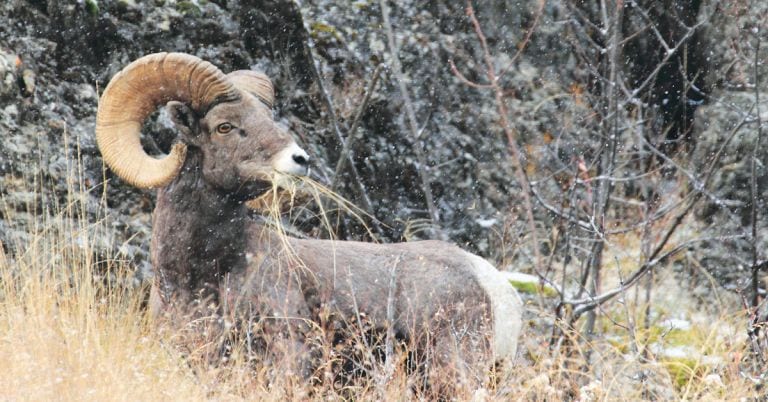
Steep decline: A pneumonia outbreak was detected in bighorn sheep in northern Hells Canyon in mid-December. State game managers from Idaho, Washington and Oregon are working to find infected sheep. Photo: Idaho Department of Fish and Game
By Kendra Chamberlain. August 20, 2025. In the Burnt River Canyon of eastern Oregon, a small herd of bighorn sheep are struggling for survival. The herd hasn’t seen any lambs make it to adulthood since 2020, when the population suffered an outbreak of bacterial pneumonia.
Roughly half of the small herd died as the bacteria moved through the group. There are only about 40 bighorn sheep left.
The nearby Lookout Mountain Unit herd, a much larger herd located just on the other side of I-84 in Baker County, Ore., suffered the same outbreak at the same time.
Five years later, lambs from both herds struggle to survive.
The sheep were infected with Mycoplasma ovipneumoniae, commonly referred to as M. ovi.
The bacteria causes a deadly pneumonia that has plagued bighorn herds across the West for decades. It’s considered one of the biggest obstacles to bighorn populations rebounding across the region.
It’s the same bacteria behind the more recent die-off of the Hells Canyon herd of bighorn sheep along the Snake River on the Oregon-Idaho border.
But the specific strain of M. ovi present in the Baker County herds is unique and has never before been detected in Oregon, as reported in the Baker City Herald.
It’s unclear if the new strain was brought into the area from a traveling bighorn sheep, or if a domestic sheep introduced the strain to the herds. M. ovi is considered ubiquitous in domestic sheep flocks.
Tracking the infected
The two herds’ adult bighorn sheep don’t seem to be dying from the infections anymore, indicating they’ve developed a form of immunity.
But the herd’s vulnerable lambs continue to die year after year. That means some members of the herd are still carrying and spreading the bacteria, according to Oregon Department of Fish and Wildlife’s Brian Ratliff, district wildlife biologist for the department’s Baker City office.
Without intervention, these two herds are at risk of dying out all together.
ODFW has been working over the past five years to stamp out the infection.
The department is using a “test and remove” strategy: capture a sheep, test for infection, then kill animals that test positive.
The culprits are likely ewes that have developed a chronic infection from the bacteria and are spreading it to their young. Ratliff said the department is successfully removing infected sheep when they find them.
But the illness persists.
“We have individuals in the population that clearly are maintaining the Mycoplasma ovipneumoniae in the population,” he told Columbia Insight.
The department has shifted its strategy in hopes of being more effective at removing infected animals that are spreading illness to the lambs.
“We started targeting specifically the subgroups that don’t have any lambs left,” said Ratliff.
Game managers are also targeting ewes that don’t have any lambs with them during summer capture events, which Ratliff said is a sign the ewe is spreading the bacteria herself or has had contact with a sheep that is shedding the bacteria.
If enough of the animals that are actively spreading the bacteria can be removed, the herds may be able to rebound as more lambs survive each year.
It’s also possible the bacteria could continue to circulate within the herds for years to come.
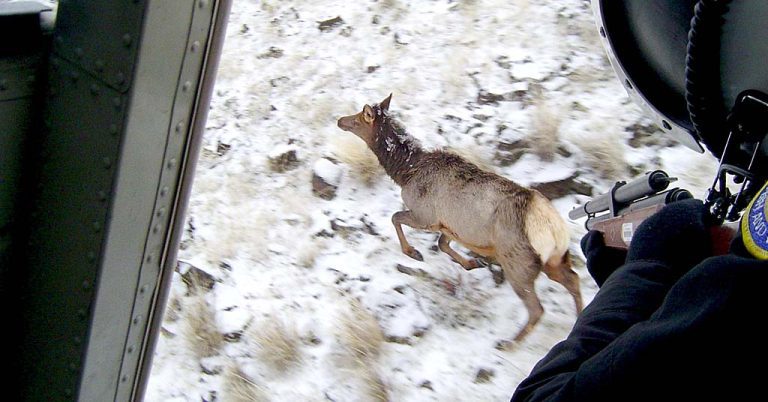
Tracking and catching the infected sheep is easier said than done.
“It’s catching wild animals out on the landscape,” said Ratliff. “The sheep tend to scatter when you jump out of the helicopter. They don’t line up.”