
Columbia County native Jon Hakim’s audacious reptile and amphibian count has landed in an academic journal
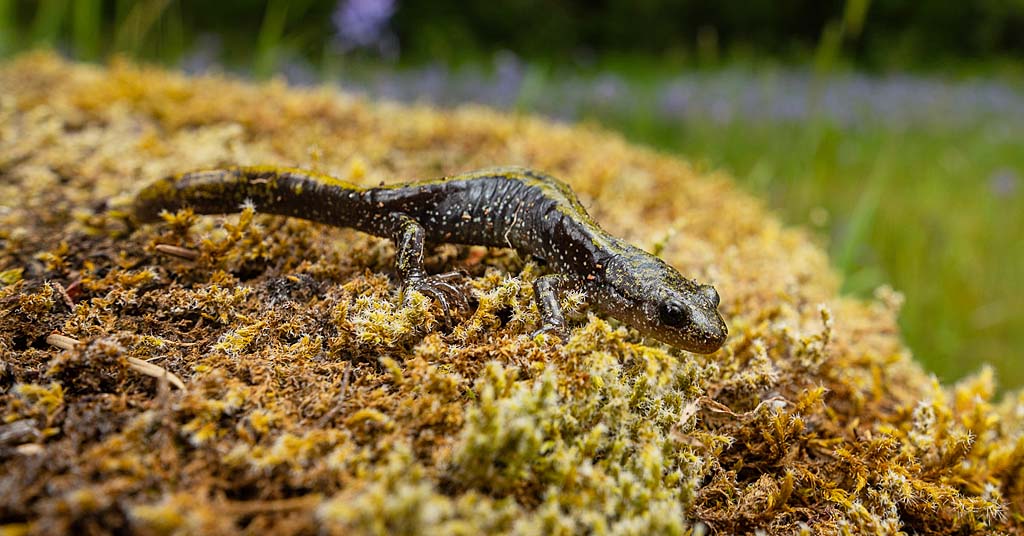
Down for a count: This long-toed salamander is just one species identified as part of an unprecedented cataloging effort in Oregon’s Columbia County. Photo: Lucas Green
By Steve Lundeberg. December 4, 2025. With the sure grip of a coiled boa constrictor, herpetology held Jon Hakim even before he’d drawn his first breath.
“My dad was a zookeeper, and his specialty is reptiles,” says Hakim, who grew up in Columbia County, Ore., just northwest of Portland. “We had lots of animals at our place over the years, and it was free for me to go to the zoo. Sometimes I’d go to work with him and spend the day with him behind the scenes.”
Now a well-traveled 45-year-old living in the rural South, Hakim is celebrating a homecoming of sorts with his release of the most comprehensive reptile and amphibian survey ever undertaken in heavily forested, and intensively utilized, Columbia County.
Published in September in Northwestern Naturalist, a peer-reviewed journal of the Society for Northwestern Vertebrate Biology, the survey paints an ecological picture that’s hopeful and alarming, wondrous and worrisome.
The research, which involved several thousand hours of field work and related logistics, uncovered 27 different species of reptiles and amphibians in the county.
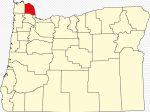
Columbia County, Ore. Map: Wikipedia
Six had never before been reported: the Columbia torrent salamander, Cope’s giant salamander, coastal tailed frog and gopher snake, plus the non-native common snapping turtle and the green frog, another invasive species and one that had never been found in Oregon.
However, the study also suggests that several vulnerable native species, including the western skink, have had their ranges reduced by human activity in recent decades.
And the researchers saw no western pond turtles, once common throughout the Pacific Northwest.
Other species known to have lived in the county, including the bark-dwelling clouded salamander, went undetected as well.
“When combined with ecoregion mapping, previous published research and historic observations, we’re showing that species have been impacted by clear-cutting, road construction, changes to aquatic biomes and urban development,” says Hakim. “There are a lot of places I grew up with that I have an emotional attachment to, and we’re seeing how they’ve changed, what’s happened to the environment.
“But there were also new places to discover that growing up I never found, and some of these species are here in the county, in numbers. I didn’t know there were still places in Columbia County that could sustain these things.”
From India to Columbia County
Raised in St. Helens, the county seat, Hakim spent much of his childhood searching for snakes, frogs and the like—for fun but also, even then, through the lens of an ecologist and conservationist.
After high school, he left Oregon for Claremont, Calif., to study biophysics at Harvey Mudd College. Hakim had planned on being a researcher but was moved instead to become a science teacher in Los Angeles.
That work was followed by a decade as an educator in Thailand and India, “reaching people who are in need.” Now he’s teaching in Americus, Ga.
“I just do what feels like the absolute best thing for me to do at the time,” says Hakim. “I learn and grow and realize what I don’t know, and the best thing keeps changing.”
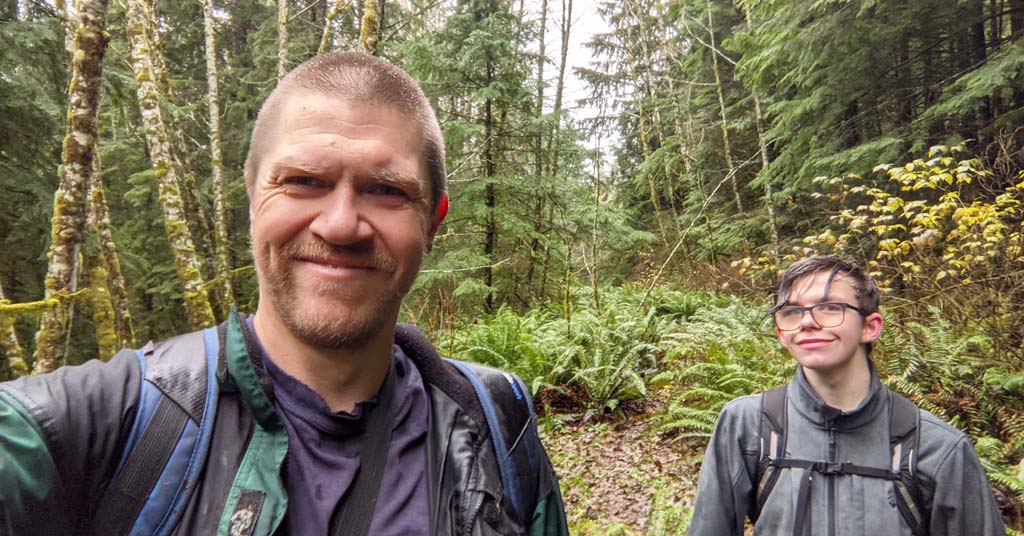
Wet work: Jon Hakim (L) and Lucas Green surveying near Big Spring near Mist, Ore. Photo: Jon Hakim
He was in his mid-20s when he began getting involved with different herpetological groups working on various conservation issues, first as a citizen scientist doing data collection, and then in ways that tied back to his academic background in research.
He orchestrated a herpetological assessment of Lawachara National Park in Bangladesh that reported 18 new species in the park—including 11 that were new to the entire nation.
Then came a similar project in India that turned up seven species categorized as vulnerable or worse in a biodiversity-rich urban forest slated for the development of tourist attractions.
In 2019, Hakim decided to focus his passion and experience on Columbia County, then the least-surveyed county for wildlife in western Oregon.
From India he began planning the project, including contacting childhood friend Matt D’Agrosa, a former stevedore and AmeriCorps trail builder who now works full-time as a wildlife surveyor.
“There were a lot of land use issues going on in Columbia County, and the ecological knowledge informing them was limited,” says Hakim. “Matt and I decided we could partner in this and make it happen, and we just sort of roped other people into it.”
One of those people, Aleta Quinn, an associate professor at the University of Idaho, was sufficiently lassoed that she ended up joining Hakim and D’Agrosa as a co-author on the Northwestern Naturalist article.
Quinn had enrolled at the University of Maryland intending to be a biologist but collected a degree in philosophy, as well, and decided her future was the latter. While studying for her Ph.D. in the history and philosophy of science at the University of Pittsburgh she became involved with herpetology, earning a fellowship at the Smithsonian Institution’s Museum of Natural History.
Fellowships at Notre Dame and Caltech followed. She’s been at Idaho since 2017.
“I heard about the Columbia County project through the ‘herping’ community,” says Quinn. “I met Jon online and traveled out there to learn more about it. The more I learned, the more interested I got and the more I wanted to help.”
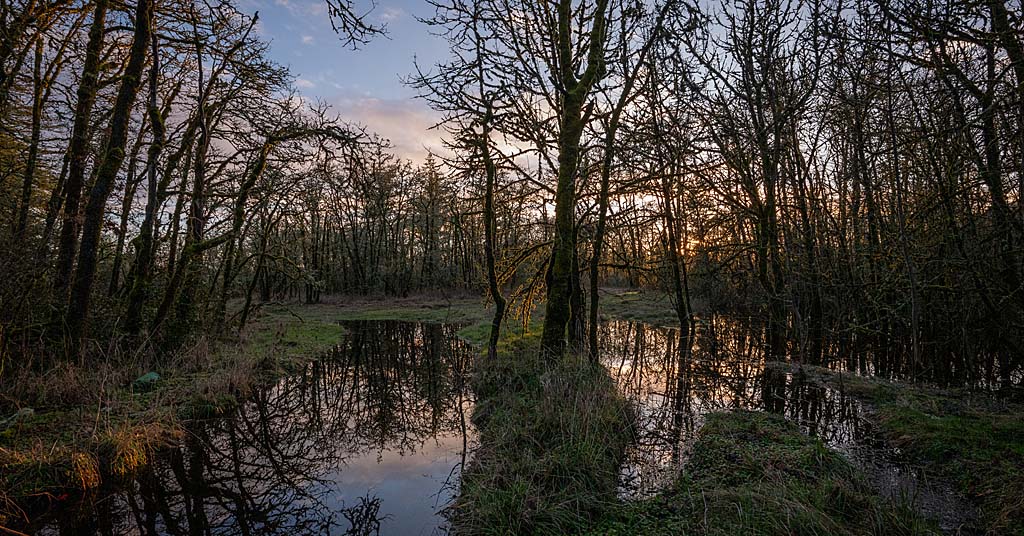
Serenity now: Milton Creek Woodland Reserve provided fertile ground for identifying amphibians. Photo: Lucas Green
Hakim also enlisted the services of Luke Green, the “son of a friend of a friend” and since January 2025 a member of the St. Helens Parks & Trails Commission.
Green, a photography enthusiast, had become hooked on herpetology during the pandemic when, wanting to get outside more, he stumbled upon a salamander.
“I didn’t know anything about it, so I started learning about it, and that got me digging more and eventually I came into contact with Jon,” says the 20-year-old Green, a 2023 graduate of St. Helens High School and a student at Portland Community College. “I found out he was from St. Helens and I was able to join him on a couple surveys.”
Methodology
The scientists divided the county’s 657 square miles of land, 88% of which are forested and 94% of which are privately owned, into 100 sectors of close to equal size.
They compiled a list of all reptile and amphibian species known to the county, added some from neighboring counties that wouldn’t have been surprising to find in Columbia County, and included others they could realistically imagine finding.
“There were 30’ish different species on the full list,” says Hakim, who worked full-time on the project for the 15 months he spent in St. Helens on sabbatical. “We categorized habitats and which habitats would potentially be available for each season, and then we figured out how we could seasonally hit every possible habitat area. Our goal was to find every one of those species on the list in every sector.”
With help from citizen scientists and other volunteers, the researchers compiled more than 5,000 observations of frogs, salamanders, snakes, lizards and turtles, including the aforementioned six species never before documented in the county.
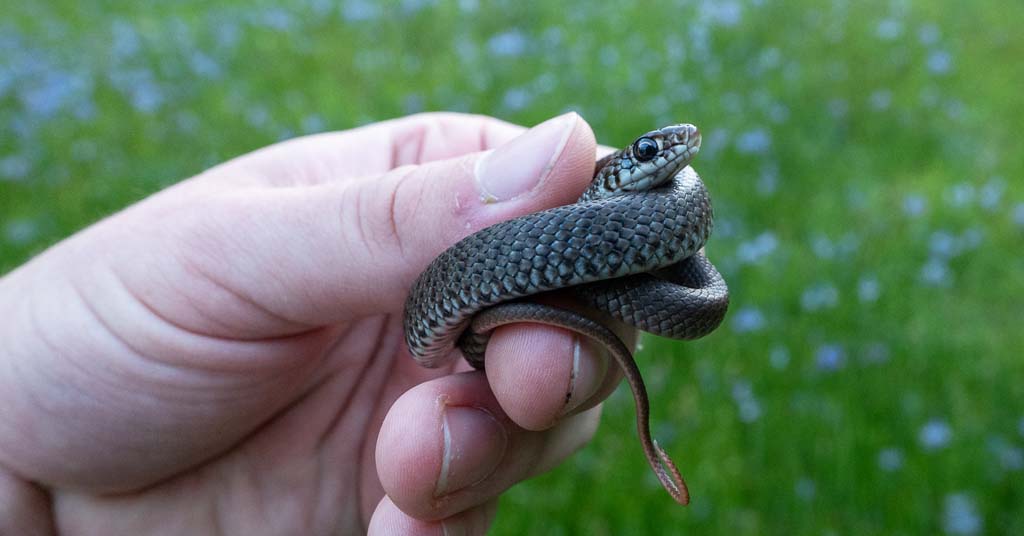
Not so fast: Western yellow-bellied racer found in Columbia County. Photo: Lucas Green
The most significant finding, Hakim says, isn’t the number of species identified but rather the changes to the species’ distribution that occur as their habitat becomes degraded.
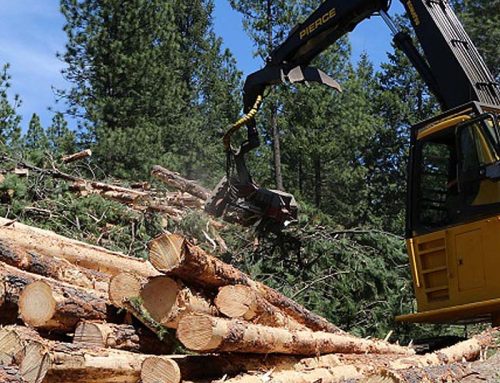
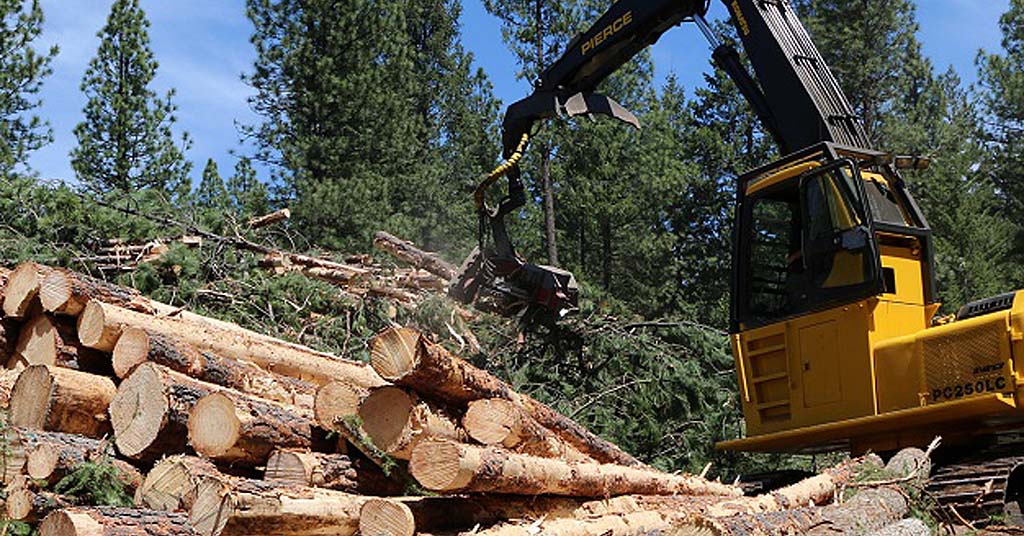
Clear-cut logging appears to have harmed sensitive, stream-dwelling amphibians like coastal tailed frogs, Cope’s giant salamanders and Columbia torrent salamanders, he says. Those species are now found only in basalt-based streams in the county’s interior.
Reptiles that make their home in meadows, including the western skink and gopher snake, have been squeezed by development and mining and are now limited to a few sites in the southeast corner of the county.
“We found some places that are uniquely pristine compared to everything else around, little places, islands of habitat that are amazing and beautiful, that have been able to hold on to the natural environment,” says Hakim. “In general, the county is so heavily degraded, so heavily utilized, that you would not expect these places, but they’re there, and if we lose them, they won’t be around.”
Quinn hopes the study helps people conceptualize the idea that nature is something that humans participate in, that it’s resilient and an ongoing story.
“The U.S. in general tends to think of nature in terms of large and set-aside pristine places, where you have an experience, a tourist endeavor,” she says. “But there are really some amazing places that are kind of tucked in and surrounded by human uses. In a county where essentially all the land has been logged or used for development, you have these pieces left, these organisms, these ecosystems that have adapted amid this history of human use.
“Somebody cared about the really pristine places, and the ones that are kind of beat up are valuable too; these snippets of land are still harboring a lot of biodiversity.”
In addition to the publication of a scholarly paper, the project features an education component that includes community events, school programs and online talks as well as the creation of a Wild Columbia County website.
“The website has become a rallying point for outdoor enthusiasts of broadly varying backgrounds and political affiliations, from conservative county commissioners to liberal city council members to almost every nature club and activist in the region,” says Hakim. “They’re rallying around the hope that Columbia County’s wild places can finally be recognized as a true asset in their natural state and not just as sites for resource extraction.”











This story gives hope for how adaptive nature is in highly altered landscapes. Thank you to the people doing the studies. The photos are excellent. County leaders could see economic value in restoring the environment…nature trails, interpretive trails will bring tourists spending dollars in places like Mist.