In rural Oregon, residents are pushing back against a garbage giant’s plan to expand a controversial landfill
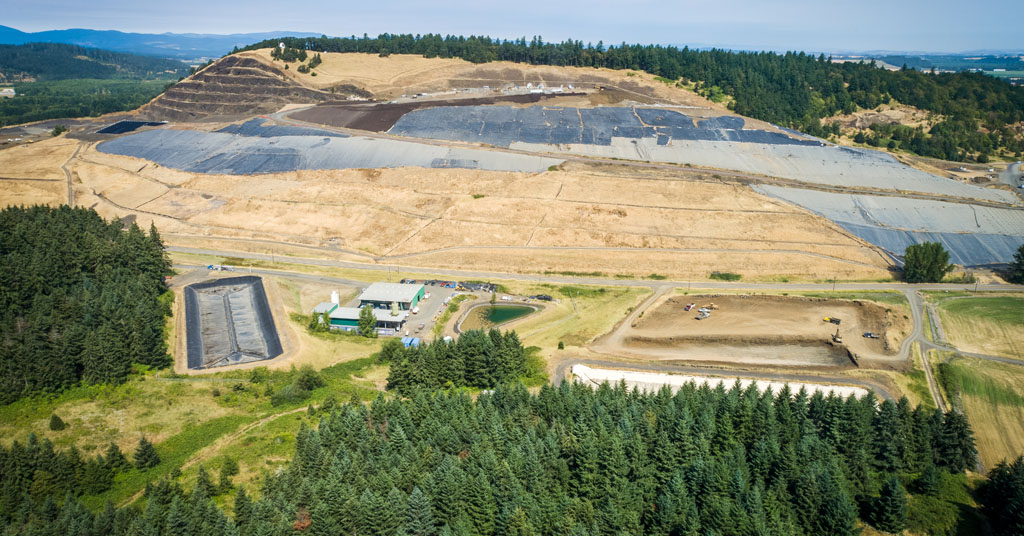
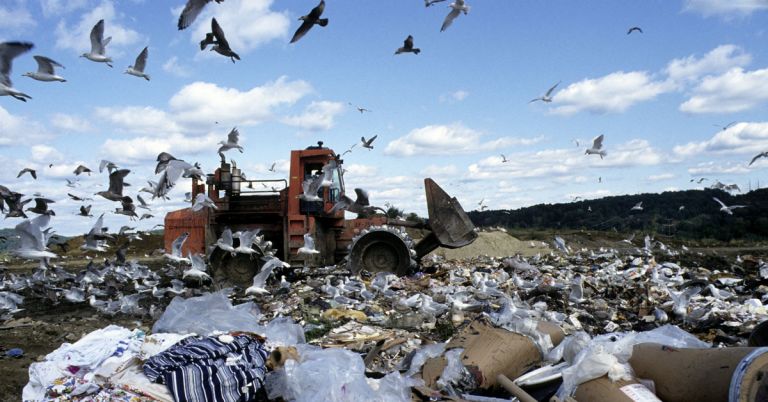
Piling on: The operators of Coffin Butte Landfill say the facility needs to expand in order to continue accommodating more garbage. Photo: E.J. Harris
UPDATE: On Nov. 4, 2025, the Benton County Board of Commissioners voted 2-1 in favor of expansion of the Coffin Butte Landfill.
By Eliza Murphy. June 19, 2025. A trail of trash along Highway 99 north of Corvallis, Ore., marks the steady flow of garbage trucks bound for Coffin Butte Landfill. Plastic sheets, folds of carpet, particleboard and empty food packaging mingles with crumpled gloves and plastic shards.
Seven miles out of town, the dump appears—a tower of waste poking up from the valley floor.
Weeds sprout from plastic tarps split at the seams. Dark stains stream out of holes where ooze escapes on rainy days. In places, the landfill hisses like a punctured bike tire. Around it all lingers a distinctive stench.
This blight looms over an otherwise lovely area.
Soap Creek Valley sits below forested Tampico Ridge, a rugged finger of Oregon’s Coast Range. Cattle graze on verdant pastures. The E.E. Wilson Wildlife Area stretches eastward into the Willamette Valley. Wildflowers provide bursts of color.
Homes are scattered across the landscape. A historic schoolhouse floats in a sea of grass.
Like thousands of landfills across the United States, Coffin Butte Landfill churns out vast quantities of substances generated by rotting and degrading garbage known to be hazardous to our health and ecosystems.
The landfill is called an “accidental dump” by locals, because it was sited here by default not design. The growing heap of trash emerged from a dump used by the U.S. Army in the 1940s to dispose of waste generated by Camp Adair, a military training base.
The landfill’s operator, Republic Services—an Arizona-based waste management giant—has applied for a permit from Benton County to expand the dump—again.
In 2021, Republic Services asked the county for a permit to expand the landfill.
“At that point, the company was importing more than 1 million tons of trash to Coffin Butte each year—close to Benton County’s 1.1-million-ton cap on waste deposited there annually,” according to Canary Media.
Area residents galvanized to prevent Corvallis from becoming “Trash Town.”
Benton County denied the expansion request.

Trashy side: The route to Coffin Butte Landfill is easy to follow. Photo: Eliza Murphy
In July 2024, Republic Services once again applied for a permit with the Benton County Planning Commission to expand the landfill.
According to the Lincoln Chronicle, Republic Services says the landfill is rapidly nearing maximum capacity and needs to expand in order to allow the facility about 13 more years of service. Canary Media say the expansion would buy just six more years of operation.
Republic Services pays Benton County $2 million per year to house the landfill.
The proposal ignited a firestorm of opposition from locals weary of mounting environmental concerns that have become a routine part of their lives.
Burdened by what opponents claim is Republic Services’ flagrant disregard of its existing permits, the local movement to oppose expansion of the landfill appears to be growing.
Favoring Goliath
During the years-long fight against landfill expansion, community members have complained that county officials have been less than welcoming of public input.
Some have accused the Benton County Board of Commissioners and county staff of giving preferential treatment to Republic Services.
In May, the Benton County Planning Commission held four public hearings to discuss the landfill expansion permits.
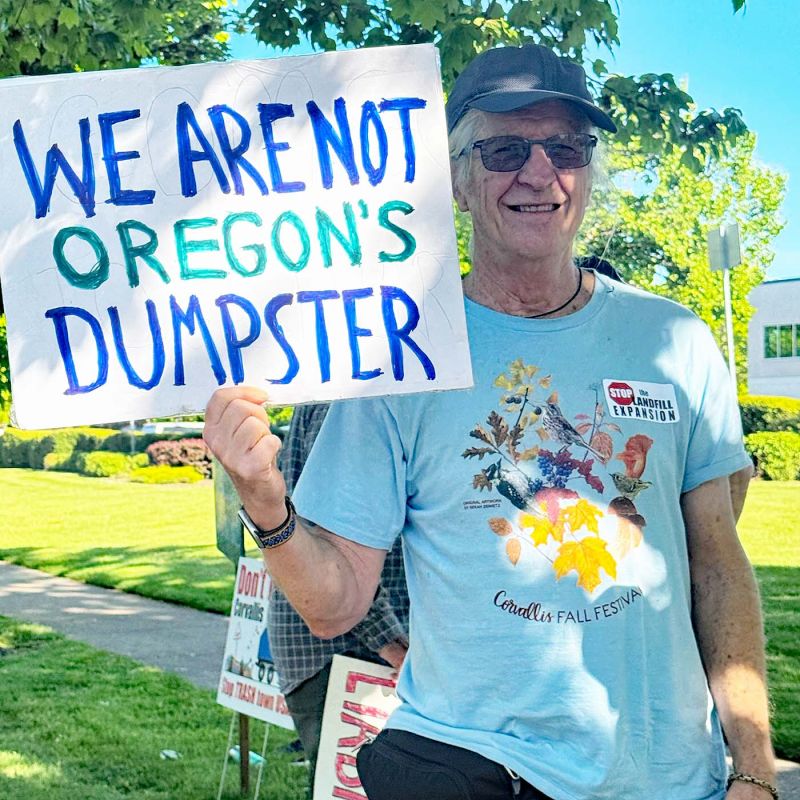
Big, getting bigger: In Benton County, Ore., opposition to expansion of the Coffin Butte Landfill is growing. Photo: Eliza Murphy
Shortly before a May 6 hearing, county staff threw expansion opponents a curveball. Locals learned that, unlike Republic Services and its hired experts, they would not be allowed to distribute packets of data that supported their oral testimony.
Ken Eklund, a member of Valley Neighbors for Environmental Quality and Safety (VNEQS) and former chair of the Benton County Disposal Site Advisory Committee, saw a systemic problem.
“I’ve certainly heard people talk about the inherent inequities of the land use procedure. I think it just really escalates the inherent inequities when you’re up against a $34 billion company,” Eklund said after learning of the procedural change.
VNEQS member Mark Yaeger, an environmental engineer with experience working on solid waste issues as a volunteer on county committees, summed up a pattern during his oral testimony.
“The county has cultivated a monopoly for Republic Services while systematically disenfranchising residents who dare to question the wisdom and safety of becoming one of the largest trash dumps in western Oregon,” he said.
According to published reports, Coffin Butte Landfill accepts waste from nearly two-thirds of Oregon’s 36 counties.
Health concerns
Opponents describe a history of having their health and environmental concerns minimized by county staff and commissioners.
“Dump days” are how residents from as far as seven miles away refer to days when the odor from the landfill is so overpowering they opt to remain indoors.
Benton County’s Community Development Department has recommended denial of the permit based on ongoing, unresolved odor and noise complaints from the public.
Republic Services downplays odor complaints.
The company’s permit requires trash to be covered with soil—or, until recently, with incinerator ash—which helps contain odors and prevent methane leaks.
“We apply daily cover to all waste placed in the landfill, conduct daily odor patrols and work quickly to address community concerns,” Republic Services spokesperson Melissa Quillard wrote in an email response to questions about this story.
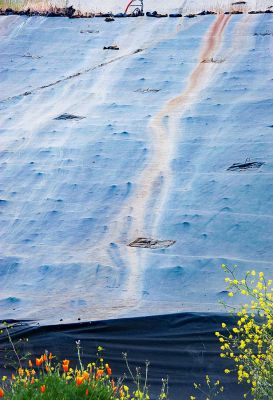
Sore spot: Discolored tarp at Coffin Butte Landfill in 2025. Photo: Nancy Hill
Mason Leavitt, a spatial data analyzer for the Eugene-based nonprofit Beyond Toxics, contradicts this statement with aerial photos of the dump that show large areas of uncovered garbage.
According to locals who have filed odor and noise complaints, neither Benton County nor the Oregon Department of Environmental Quality (DEQ) has enforced existing permits that regulate odor and air quality at the landfill.
“No one at the county inspects the landfill,” says Eklund. “No one has a job that receives complaints or does follow-up to those complaints.”
Dylan Darling, DEQ public affairs specialist, says the agency has a complaint intake system for odor complaints, but that DEQ has not had enforcement cases due to odor.
“When it comes to gas collection and regulation that treats 70-75% of the gas, with 25% emitted, even with the system in place, there will be odors,” he says.
Air quality is a significant problem at municipal landfills around the country. The EPA has reported that landfills are the country’s third largest source of methane, after the fossil fuel and agricultural industries.
Landfills contribute the equivalent of greenhouse gas emissions from over 24 million gas-powered vehicles each year.
Inspections conducted by the EPA at Coffin Butte Landfill in 2022 and 2024 found amounts of methane emissions that surpass state and federal regulations, which the company failed to report. The federal limit for methane concentrations is 500 parts per million. In 2022, the EPA reported more than 20 readings at Coffin Butte Landfill that exceeded 10,000 parts per million, earning it “super-emitter” status.
EPA inspectors discovered places where “the tarp was visibly inflated with gas” and a plume of methane flowed unstaunched from an uncapped gas well.
In January 2025, the EPA served Republic Services with a formal request for information under the Clean Air Act Section 114, requiring the company to provide details about its operations at the landfill. Consequences, including possible jail time, were attached to the request.
“Coffin Butte has not received any EPA violations,” says Republic Service’s Quillard.
State regulations require landfill operators to walk parts of the landfill surface, using handheld devices to measure surface methane emissions. Oregon DEQ requires Republic Services to report its findings.
That measuring method is about to change. This month, Oregon lawmakers passed Senate Bill 726, requiring Republic Services to deploy advanced technology to conduct more thorough methane measurements at Coffin Butte and submit more detailed reports.
Assuming Gov. Tina Kotek signs the bill, the rules will apply only to the Coffin Butte Landfill, exempting others in the state.
Toxic overflow
Landfills release toxins into the air and as leachate, a liquid that collects heavy metals and chemicals into an unknown cocktail of toxicity.
The Coffin Butte Landfill produced 30 million gallons of leachate in 2023, according to Republic Services.
That leachate flows into pipes to holding ponds, where it festers until being pumped into tanker trucks and hauled to wastewater treatment plants in Corvallis and Salem.
Neither facility in those locations is engineered to handle most of the manmade chemicals used to manufacture consumer goods, including those associated with PFAS, or “forever chemicals.”
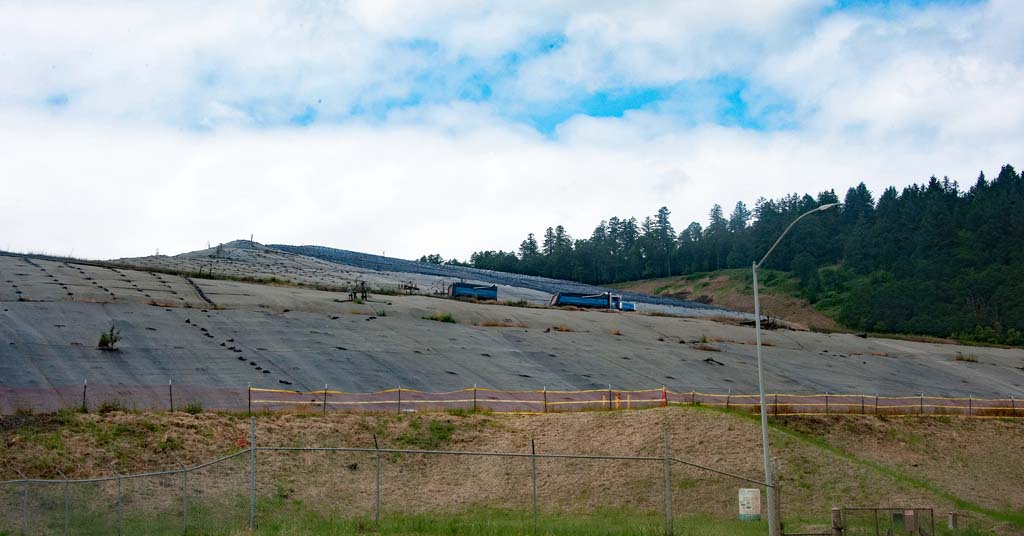
Burial mound: Since at least 1992, Coffin Butte has been a regional landfill, defined as accepting 75,000 tons of waste per year year from outside its immediate area. Photo: Nancy Hill
During a November 2024 tour of the Corvallis Waste Water Plant, Operations Supervisor Max Hildebrand explained how the facility treats municipal sewage and leachate from the landfill. Despite the best efforts of staff to address problems, the plant was not engineered to treat pollutants of emerging concern, including PFAS.
During the elaborate treatment process, harmful substances such as e. coli are removed from the water before it’s disgorged into the Willamette River. Several communities downstream draw drinking water from the river.
The treatment process also filters out solids to make sludge, or biosolids. Sludge is often applied to agricultural fields to amend soil.
Mounting evidence shows that sludge from wastewater treatment plants is contaminated with hazardous substances, including PFAS, posing a risk to human health, as the chemicals taint the food we eat.
Opposition outweighs support
Approval of the application to expand the Coffin Butte Landfill would eliminate the 1.1-million-ton cap on how much trash Republic Services can import into Soap Creek Valley. This would bring potentially unlimited amounts of unwelcome hazards to the doorsteps and backyards of Benton County citizens.
Opposition to expansion far outweighs support, and it crosses party lines.
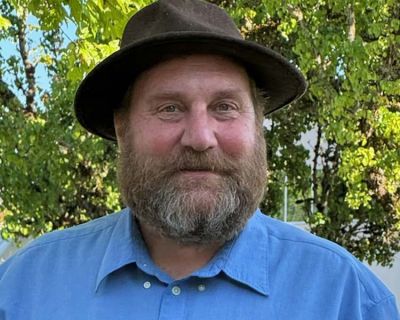
Hydrogeologist Joel Geier. Photo: Eliza Murphy
Of 1,032 public testimonials submitted around the issue, only 14 favor expansion, with one being neutral, according to Benton County Solid Waste Coordinator Bailey Payne. Payne also confirmed that Benton County Democratic, Green and Republican parties have urged the county to deny the application.
Benton County’s Environmental and Natural Resources Advisory Committee submitted written testimony recommending denial of the application. The Mid-Willamette Bird Alliance, Oregon Chapter of the Sierra Club and League of Women Voters of Corvallis have also recommend denial.
Republic Services has shown no interest in being a good neighbor. Residents who live near Coffin Butte Landfill received notice on May 28 to prepare for powerful blasts from the quarry that abuts the dump, an area not part of the current expansion application.
It’s unclear whether the county granted a permit for this action. Hydrogeologist and VNEQS member Joel Geier says no Benton County staff or official has produced documentation showing that a permit was granted allowing Republic Services to dump garbage in the quarry.
The public has made its position clear. Will Benton County officials listen to the voices that rely on them to protect citizens and the local environment from harm?
Public hearings regarding the application resume July 8.
The views expressed in this article belong solely to its author and do not necessarily reflect the opinions of anyone else associated with Columbia Insight.