Stay Updated Subscribe today for the latest research + reporting about environmental news. Subscribe Now

Stay Updated Subscribe today for the latest research + reporting about environmental news.

Subscribe Now

Susan Hess

Susan Hess

About Valerie Brown

Valerie Brown, lives near Portland, Oregon. She specializes in science and environment writing, particularly environmental health and climate change, including the health effects of chemical and radiation exposures, carbon sequestration, and climate change’s effects on forests and oceans.

The Humming in the Flowerbeds

240,000 species of known flowering plants exist on planet Earth. Of these, 180,000 (75%) must form a partnership with pollinators to complete their reproduction. Alfalfa, clover, hay. Apples, cherries, plums. Lavender, sage, almond. Celery, cucumber, squash–pretty much every plant we like to eat needs to be pollinated.[1].

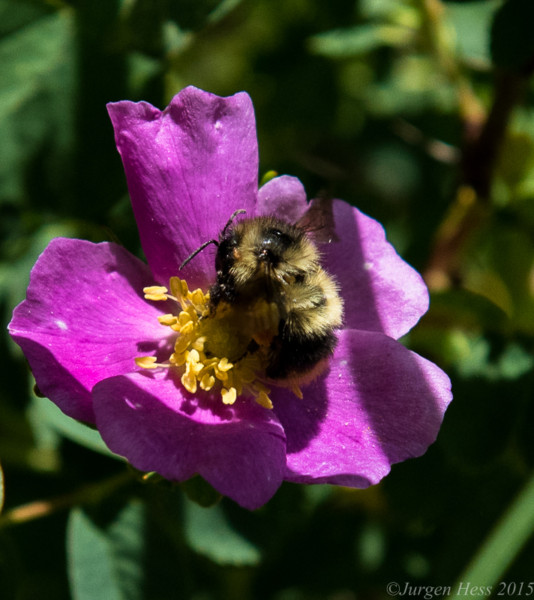
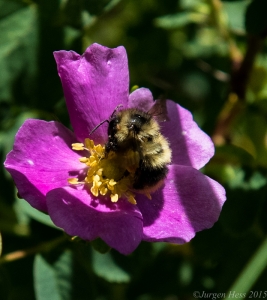
[media-credit name=”Jurgen Hess” align=”alignright” width=”267″]Pollinator[/media-credit]
In other words, without pollinators, we and our livestock would starve. Our agricultural economy would collapse, sending ripple effects through every other sector. Right now this economy is a house of cards, dependent as it is on one species of pollinator – Apis mellifera, or the European honeybee, introduced in North America in about 1620?[2].

In 2006 we woke up to the prospect of a world without this pivotal aide when colony collapse disorder swept the country, killing millions of adult honeybees. Winter bee deaths in commercial colonies reached 33 percent in 2011–double the previous historical rate [3]. Since then we’ve learned that colony collapse disorder is probably the result of several different influences on honeybee health. Parasites, fungi, viruses, pesticides and the stress of being moved from site to site during pollination season are all likely contributors to honeybee declines. Today fewer bees are expected to work more: In 1947 the U.S. had about 6 million honeybee colonies, compared to about 2.5 million today.

Moreover, says OSU entomology professor Andy Moldenke, modern commercial beekeepers breed their queens with very few males, rather than the many available to wild bee queens, which radically reduces the genetic diversity of the commercial bees’ offspring. This in turn limits the ways they can adapt to changing conditions and handle stress. Moldenke feels that this narrowing of genetic possibilities is at least as important to bee declines as pesticides.

Honey, Bumble, Sweat and Leafcutter

And it’s not just honeybees under stress.

Native bee species have also declined drastically since Europeans arrived in North America. For example, the Willamette Valley, before Europeans arrived, had one of the densest concentrations of pollinating bees anywhere on the planet–some 350 species, according to Moldenke. He estimates there may be only 50 and 75 species left. “All the meadows were plowed up and turned into agricultural fields,” he says. “If you lose the habitat, you lose the species.”

For places like the Columbia River Gorge and the Oregon coast, Moldenke says, there were always fewer species of pollinators because the climatic conditions, high winds and fog in particular, are difficult for bees to handle. The most important pollinator for these areas was the western white-tailed (or ‘white-bottomed’) bumblebee considered extinct since the 1990s, but was sighted in the Seattle area in 2012 and 2013 [4]. The cause of its disappearance is thought to be a Nosema fungus introduced with imported European bumblebees. For this reason, in 2012 the Oregon Department of Agriculture formally banned importation of exotic bumblebees.

[media-credit name=”Jurgen Hess” align=”alignleft” width=”345″]Pollinator[/media-credit]
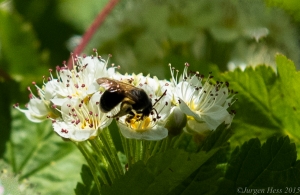
We still don’t know exactly what is happening to honey bee colonies. But, the crisis has triggered a general reappraisal of our dependence on pollinators and a re-examination of some other types of bees that could ease the situation. For example, Moldenke says, honeybees are terrible at pollinating blueberries, so some farmers are growing blackberries along the edges of their blueberry fields to attract bumblebees, which will pollinate the blueberries. Other insects – moths, ants, wasps, beetles, and butterflies  – as well as birds, lizards and mammals pollinate. A species of wasp pollinates figs. Bats pollinate balsa and other related trees. Hummingbirds pollinate many flowers and shrubs.

Not all large bees are bumblebees, says Moldenke. “Most of the other large bees are no-nonsense bees,” Moldenke says. “They fly like hummingbirds or special helicopters, whereas bumblebees sort of bumble along.” Bees that might be mistaken for bumblebees include sweat bees (so called because they like to lick the sweat from human skin) and carpenter bees (which people fret may damage wood structures).

Pesticides

The issue of bees and pesticides is a vexed one, particularly after the widely-publicized bee deaths from neonicotinoid insecticides in Oregon. Last summer Portland experienced at least three mass bumblebee die-offs [5]. In 2013 some 50,000 bumblebees died in Wilsonville after linden trees in a store parking lot were sprayed for aphids. The spray, called Safari, has a neonicotinoid principal ingredient. Structurally similar to nicotine, neonicotinoids are thought to be a major influence in bee deaths around the world. They are neurotoxins, so they destroy insects’ nervous systems; they’re water soluble so they are taken up by plant tissues including nectar and pollen; and they are persistent in the environment.

Steve Castagnoli, OSU Extension Horticulturist for Hood River County, works with fruit growers in the Hood River Valley. He encourages the application of integrated pest management principles to “minimize the use of pesticides.” He says that most orchardists are “cognizant that caution needs to be used whenever there are bees around.” Local pear growers, for example, don’t use neonicotinoids for this reason, he adds.

Still, “Acute and sublethal effects of pesticides on honey bees have been increasingly documented, and are a primary concern,” wrote the U.S. Department of Agriculture in 2012. Bees are hammered by multiple chemicals – 161 different pesticides have been found in honeybee colonies [6]. We can assume that any native pollinators that frequent agricultural areas are subject to the same devastating threats. Even if pesticides don’t kill bees outright, they stress bees’ immune systems, making them less able to defend against pathogens like fungi and viruses.

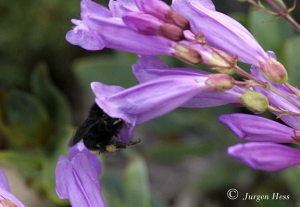
[media-credit name=”Jurgen Hess” align=”aligncenter” width=”436″]Pollinator[/media-credit]
What’s Being Done?

As usual with environmental matters, it is not clear whether human society can change fast enough to avert disaster. But some steps are being taken. In response to the bumblebee die-offs, Oregon Governor Kate Brown proclaimed August 15, 2015 Oregon Native Bees Conservation Awareness Day [7]. In February 2014, the City of Eugene banned neonicotenoids on city property – the first city in the nation to do so. Last spring Portland did the same, bringing the total to eight cities in the U.S. to take this step. The U.S. Fish and Wildlife Service will stop using the chemicals in national wildlife refuges by January 2016 [8].

Lisa Arkin, executive director of Beyond Toxics, an activist group based in Eugene, says people have misconceptions about bees that hamper their understanding and appreciation of them. Beyond Toxics has partnered with the Xerces Society, which is dedicated to stopping the headlong rush to extinction of all kinds of invertebrates, to recruit people to host beehives in their yards.

“When we first started this campaign and wanted Eugene to ban neonicotinoids in city parks, the response we got from [city] staff was, ‘We can’t help bees because people are afraid of bees.’”

But, Arkin stresses, “Bumblebees and honeybees rarely sting. It’s wasps and hornets that sting.” Once people understood that, she says, resistance to bee protection and the pesticide ban evaporated.

What You Can Do

“The easiest and most straightforward way to manage for bee diversity is to maintain or augment flowering plant species diversity. [9] ” The Bees of the Columbia Basin, V.J. Tepedino & T.L. Griswold

Fortunately there are things you can do to help bees. There are two native plant nurseries in the Columbia Gorge; Humble Roots Nursery [10] in Mosier, OR and Milestone Nursery in Lyle, WA, that stock pollinator friendly plants. If you think you might like to host someone else’s honeybees in your yard and maybe get a bit of honey out of it, here’s Gorge Grown’s list of bee resources [11]. If you have an unwanted swarm, contact Grow Organic to arrange a pickup by the Gorge Beekeeper’s Club [12].

Another thing you can do is create nesting sites for bumblebees, mason bees, and any other native pollinator. This guide from Iowa State University is helpful [13], with a couple of caveats: 1) PVC piping is not a good idea, as it very likely contains bisphenol A and some type of organotin compound. Both of these widely used industrial chemicals are endocrine disruptors; 2) plastic pipes and straws, while they protect against moisture and other environmental insults, also raise humidity and encourage mold growth and mite infestation. A better guide is the Xerces Society one [14]. Here’s how to build a bumblebee nest [15]. Bumblebees like to nest in ‘disorderly’ areas full of loose soil and leaf litter, so maybe you don’t have to rake your flowerbeds to within an inch of their lives.

The Cowslip’s Bell

The pollinator crisis is one of those environmental issues that seems so urgent that immediate action at every scale is required. Even if you hate bees or they terrify you or yo’re allergic, you still can’t live without them. Unless we all want to be out in the fields and the greenhouses every day from February to October with a Q-Tip and a bag of pollen, it would behoove us to make bees’ lives easier as soon as possible.

Bees matter, and not just for their pollination services. They are symbols of industriousness, joy, and the wonderful peace of summer afternoons when the loudest sound is their humming in the flowerbeds.

Shakespeare understood this perfectly well:

“Where the bee sucks, there suck I:
In a cowslip’s bell I lie;
There I couch when owls do cry.
On the bat’s back I do fly
After summer merrily.
Merrily, merrily shall I live now
Under the blossom that hangs on the bough.”


Footnotes and further bumblebee resources:

[1] Status of Pollinators in North America

[2] History of Bee Keeping, USA

[3] Honey Bee Health

[4] Mysterious Reappearance of White-bottomed bee

[5] Mass bee die-offs in Portland, OR

[6] Pesticides found in bee colonies

[7] Oregon Gov. Brown, Bees Proclamation

[8] U.S. Fish and Wildlife stop pesticide use by 2016

[9] http://www.icbemp.gov/science/tepedino.pdf

[10]?Humble Roots Nursery

[11]?Gorge Grown

[12]?Grow Organic’s Bees

[13]?Build Your Own Solitary Bee Nest

[14] Tunnel Nest Management, Xerces Society

[15]?Bumblebee Conservation- Build Your Own Bumblebee Nest

[16] http://www.icbemp.gov/science/tepedino.pdf

[17] Bumblebee Conservation

[18] Plants in the Intermountain West

[16]?Bumblebee Conservation Trust

[17] Guide to landscaping for bumblebees

[18]?Guide to plants for pollinators in the Intermountain West[/fusion_builder_column][/fusion_builder_row][/fusion_builder_container]
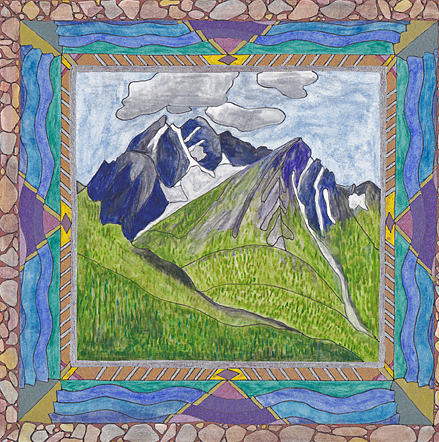
The Sawtooth Mountains

[media-credit id=7 align=”alignleft” width=”298″][/media-credit]

My dad parked the car on the shoulder of the washboard gravel road. We walked onto the wooden bridge over Redfish Lake Creek in the Sawtooth Mountains of central Idaho. We looked into a creek crammed with spawning redfish. The redfish–a type of sockeye salmon–had migrated 900 miles down the Columbia River system to the Pacific Ocean and back again, traveling more than 6,500 feet in elevation to do so, reaching the high lakes of the Salmon River watershed to spawn and die. The mountains that held the creek were carved from granite by the last Ice Age.

I witnessed this redfish migration many decades ago. In 1991 these fish were declared endangered. The next year only one male sockeye returned to Redfish Lake. Hearing of this, I despaired.

Sometimes it seems to me there are two kinds of people in the world: those for whom ‘the wild’ or simply other, non-human life forms are spiritually or emotionally necessary, and those for whom they are not. Well, maybe three – there is a group in between for whom non-human life forms are ‘resources’ whose main value is to sustain and enhance human life and economic activities. I am in the first category.

My parents were not environmentalists, nor were they rampaging exploiters. Nearly every summer vacation we took was in Idaho’s high mountain country. Both my parents had camped there as children – and they were of the World War II generation. What I learned from them in these places was to watch and enjoy, not to conquer or harvest. I learned to be quiet, to freeze when some animal – a lowly ‘fool hen’ or a deer or a snake – was nearby. My father often repeated two things: “The most dangerous animal in the forest is another human being,” and “the animals are more afraid of you than you are of them.”

When I grew up, I moved away, and I haven’t spent much time in the Idaho high country since, but it has remained my anchor – to use a cloying and tired cliché, my ‘happy place.’ When urban life, politics, career issues, health problems – whatever – became too much, I could always take my memory of that country out, hold it in my palm like a Faberge egg and be comforted by its beauty, saying to myself that as long as it was there, everything else would be alright. Not only for me, but for the planet. As long as there were places where trees and bears and badgers and salmon and bluebirds still existed, my world could be balanced.

In 2000 I wrote an article about the first federal report to predict the effects of climate change region by region in the United States. That report said the alpine ecosystems of the west, including the Sawtooths, would disappear, probably to be replaced by lower-elevation plants and animals adapted to the very dry conditions typical of the Northwest’s sagebrush deserts. Another blow.

For a long time news about the environmental has been dire, so my mental safety net has been fraying. It’s the price I pay for putting all my spiritual eggs in that one net, I guess. Yet I remain certain that any environmental salvation for the human species must also save our fellow creatures. I take comfort in the news that the redfish are being restored to the high Sawtooth lakes by a captive breeding program and the removal of small dams here and there, even if the efforts are slow and uncertain. And I know we can’t recapture the past. We can’t make things like they were before the human juggernaut grew big enough to affect global systems like climate. But we must do what we can. There may be billions of people for whom the loss of whole ecosystems matters only if supplies of their daily consumables are threatened.

But I am not one of them.

And as sad as I am to witness the passing of the post-glacial landscape that was the world when I was born, experiencing wild mountains and the creatures they sustain was a great gift, both from my parents and from the planet.

By |2020-09-30T19:54:14-07:0010/09/2015|Essays, Features, More, Old Articles|0 Comments

Mary Sparks: The Queen of Spunk

Just east of the dense forests and flowing rivers of the Cascades lies the Columbia River Plateau, a land of heat, dry grasses, rattlesnakes, and vultures. This essay explores the history of Eastern Oregon through the scope of a writers family and the story of the elusive Mary Sparks.

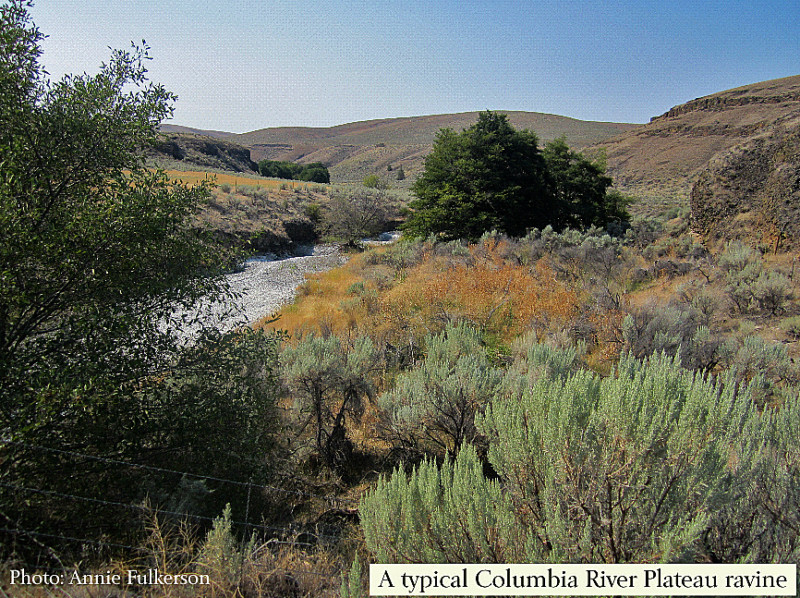
The glories of the Columbia River Plateau may escape the notice of travelers passing through the region. It’s probably impossible for most people to imagine wanting to move to some modest dale between two rolling ridges of black rock dusted with anemic topsoil and sagebrush. There’s almost always a stiff wind except sometimes down in the ravines, where the dominant sound in the summer is the placeless metallic drone of cicadas. There are grasshoppers and lizards, ticks and rattlesnakes.

typical_columbia_river_plateau_ravine_edited-1 final contrast adjusted

However, some people are susceptible to the call of these austere uplands. Several different branches of my family chose to settle the Plateau, leaving the verdant, generous lands of Kentucky, Missouri and western Oregon to put down roots in Yakima, Boise, Blowout (a now-lost town in Idaho), Buhl (a tiny extant burg in Idaho), and Condon. What were they thinking?

I don’t know very much about my forebears as individuals. One reason is that my father’s family comprises a long string of taciturn, Asperger’s-spectrum people with ramrod straight spines and a grinding devotion to duty over just about any other pursuit. While I did hear stories of the various characters, it was difficult to get anyone in my father’s generation to provide much detail.

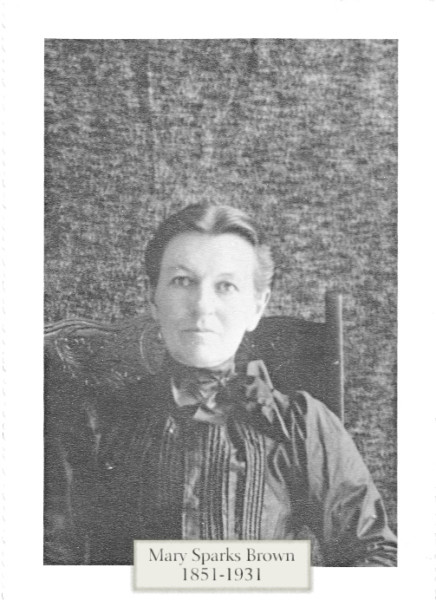
There was one woman on my father’s side whose mention inevitably brought a terse, yet laden with meaning, response. Her name was Mary Sparks. We had several Marys in our family so she had to be distinguished by her last name. During a conversation at our usual three-family Thanksgiving dinner, my father or his sister could just say ‘Mary Sparks’ and all the adults present would nod or sigh or purse their lips. It wasn’t that her story was tragic or scandalous, just that her name seemed perfused with all the information anybody should need to know about her.

Mary Sparks. Doesn’t she sound like a spunky nineteenth century heroine, a girl in a steampunk novel riding the struts of a dirigible during a battle, or Philip Pullman’s Sally Lockhart? A girl raising the alarm at the Triangle Shirtwaist Factory and getting all the other girls out by unlocking that fateful door? A frontier woman building a schoolhouse on the family ranch near Condon, so the local kids wouldn?t have to walk too far from home to learn to read? Yes! She does.mary_sparks_photo

Even more romantically, the Sparks family has compiled an extensive and detailed genealogy. The first Sparks to settle in America was one William Sparks, who was born in the late 1600s in England. I suspect he may have emigrated owing to the exhausting and brutal religious wars of the Protestant Reformation. The name Sparks has been shortened from ‘Sparrowhawk.’ Wow! The nickname of the wizard Ged in Ursula LeGuin’s wonderful Earthsea novels. Romantic as hell, the name Sparks.

A Classic Pioneer Saga

So how did Mary Sparks get to Condon? In 1852 Mary’s young parents, along with other of her maternal relatives, set off on a wagon train to Oregon with their year-old toddler. Like many a pioneer, Mary’s father contracted cholera and died almost immediately along the Platte River somewhere in Nebraska. Mary and her mother persevered. When they reached The Dalles they had to leave much of their property in ‘storage,’ which they learned later meant they would never see their belongings again. I don’t know what they left behind, but if they were anything like other immigrants on the Oregon Trail, this probably included furniture and items–difficult to carry in the canoes they rode down the undammed Columbia River to its confluence with the Willamette. When the Sparks family group finally reached the Willamette Valley, they split up. The women settled in Albany for the winter. To earn money the men went to Puget Sound and fished. At the end of the season they reunited and moved to Lane County.

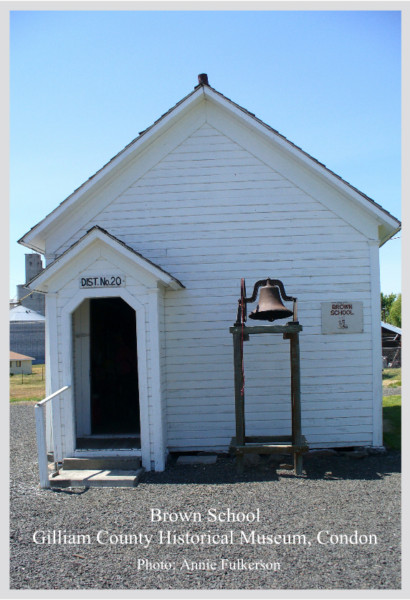
brown_family_schoolhouse Sometime during Mary’s wonder years she met John Joseph Brown, whose family had arrived in Lane County by wagon train in 1851 when he was three. ‘Sparks’ may have flown; in any case Mary and John Joseph were married in 1870. She traded in her adventuresome name for an incredibly common one with a pedestrian meaning, thereafter remaining Mary Sparks only within the extended family.

Mary and John Joseph stayed in the lush valley and forested Cascade foothills for four years, but packed up and moved to Gilliam County in 1874. (Actually, it wasn’t called Gilliam County then – it was still part of Wasco County until 1885). According to family legend, Mary Sparks drove the wagon herself – with her one-year-old and two-year-old sons, Ben and my grandfather Frank across the roadless expanse from Bend to what would become Condon.

In speculating as to why anybody would want to move from Lane County to Gilliam County, it had crossed my mind that Mary Sparks might have wanted to put some distance between her in-laws, or her parents, and herself. But she and John Joseph actually followed her mother, who had moved to the area with her second husband in 1870, and John Joseph’s parents followed the young couple in 1879. So either that wasn’t the motivation or the plan didn’t work.

I think the real reason was their collective clannish orneriness, or maybe the Willamette Valley was a little too thick with Methodists – and they probably succumbed to the lure of Columbia Plateau boosters. Here, is one of the finest examples of settler-attracting marketing:

A blessed land is that which suffers neither the extremes of winter’s cold nor summer heat. Such a land is found in Eastern Oregon. Winter is little more than a name in this favored section while the summer is free from sultry weather and the nights are always cool and refreshing.

The soil is a heavy loam, with just enough sand to make it warm and responsive. It is very fertile and the peculiarity of the soil is the fact that the longer it is cultivated the better crops it raises. The land is free from stone or gravel and the soil on top of the highest hills is deep and fully as productive as in the valleys. Good water is found in plenty in all parts of the county. A mild climate, plenty of good pasturage, pure water and good shipping facilities combine to make it an ideal stock country.

The atmosphere is pure and bracing with plenty of bright sunshine and no malaria. The healthfulness of Gilliam County is unexcelled.

-A. Shaver in collaboration with Arthur P. Rose, R.F. Steele, and A.F. Adams, compilers. An Illustrated History of Central Oregon: embracing Wasco, Sherman, Gilliam, Wheeler, Crook, Lake, and Klamath counties, state of Oregon. Spokane, Wash.: Western Historical Publishing Co., 1905.

[Emphasis added.]

Anybody who’s so much as picnicked in that part of Oregon knows it’s sheer fantasy, except for the pure water, rich soil and lack of malaria (which was endemic in the Willamette Valley until after World War Two). But this kind of blather was used in many places around the West at the time.

The family established a sheep operation and eventually owned 1,200 acres. Mary’s oldest son, Ben, died at age eleven from an unknown cause, leaving my grandfather as the eldest. Mary bore five more children at the Gilliam County homestead. They seemed to have achieved the dream when John Joseph died leaving Mary a widow at thirty-nine with her five surviving sons and one daughter ranging in age from three to seventeen. Drawing on her reserve of spunk, she changed the family business name to Mary Brown & Sons and kept going with the sheep as long as she could. I have yet to discover how long the family business endured. The sheep business in Eastern Oregon was focused on the wool market in Shaniko at the turn of the 20th century, but the town was elbowed out by Bend and Madras when the rail line was built from there to the Gorge.

I know that my grandfather visited Boise periodically he may have also been marketing hogs and hay, because he met Emma Campbell, my grandmother, in Boise very much a woman in the same mold as Mary Sparks. By 1908 Frank and Emma were married and living outside Boise. We have several letters from Frank to Mary Sparks, some written on the backs of the racing forms from the 1911 Idaho Inter-Mountain fair at Boise indicating he still had some sheep in Idaho. But back in Condon, after the railroad was finished along the Columbia River most of the land was turned over to wheat.

In 1927, on Mary’s 76th birthday, her family held a surprise party in Condon covered by a reporter from the Condon Globe Times. The reporter wrote:

Mrs. Brown has lived on Rock Creek a total of 35 years, alternating in the last number of years between there and her home in Condon which was built in 1902. Although the city called, Mrs. Brown would not answer and stuck tightly to the farm always saying that the city was no place for her with five sons.

One of our most poignant family documents is a letter from my grandfather Frank to his mother in January 1928. By then Frank and Emma were farming near Boise. He reports to his mother that his crops, mainly hay, had fetched good prices. “One more year as good and things will begin to look normal,” he wrote.

Farmers must, of necessity, be optimistic about the future, but this accumulating prosperity wasn’t to last. Just when Frank and Emma finally built their dream house in Caldwell, the market crashed in October 1929. They’d put their money in six different banks to hedge against economic stresses, but every single bank failed. Emma responded by developing a fundamentalist vision of the looming apocalypse and forcing vagrants who came to her door to hear a Bible reading before she fed them.mary_sparks_timeline

Nor could it have been easy on Mary Sparks. She died in 1931 just as the Great Depression was ballooning into a long-term disaster.

Condon declined as well. The county had reached its peak population (so far) of 3,960 in about 1921. Today about 2,000 people live in Gilliam County. The main crop seems to be wind towers. There is still plenty of dryland wheat but few sheep. Condon has small-Western-town charm; you can get an ice cream cone and eat it on a shaded bench in front of the general store while watching the pickup trucks roll by. The Hotel Condon across the street has been refurbished in authentic retro style.

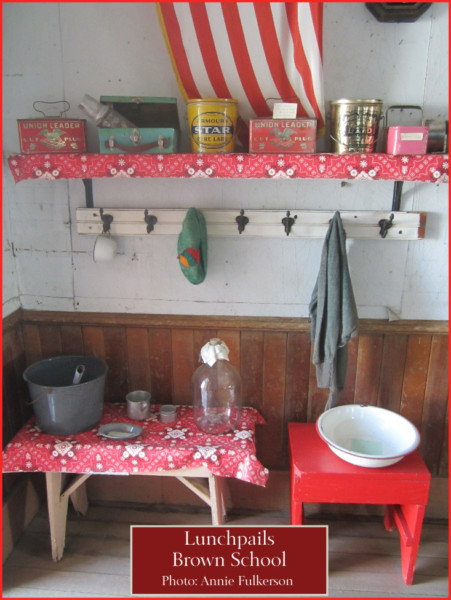
lunchboxes_brown_family_schoolhouseOne of the enduring marks Mary Sparks and the Browns left on the Gilliam County landscape now sits on the grounds of the Gilliam County Historical Museum in Condon. In line with their civic ambitions, the Gilliam County pioneers had resolved to build schoolhouses in locations ensuring that no kid would have to make more than a seven-mile one-way trip to school each day on foot or horseback. The Brown family built one that fell down in a windstorm; their second attempt is open to tourists at the Museum, furnished with all manner of period textbooks, lunchpails, helpful posters, heavily initialed desks, and so on. There’s a fantastic bell that visitors are allowed to ring.

My family was so tight-lipped about our past that I didn’t even realize Mary Sparks was my great-grandmother for many years. Sometime in my young adulthood my dad let slip that we had forebears buried around Condon somewhere. He had never bothered to mention it before or even visit the place himself. It took me and my sister about three decades of desultory research to finally locate and visit the place. It is utterly typical of the area and utterly bewitching to those of us with the gene for sagebrush and lizard appreciation.

Retroactive Regret

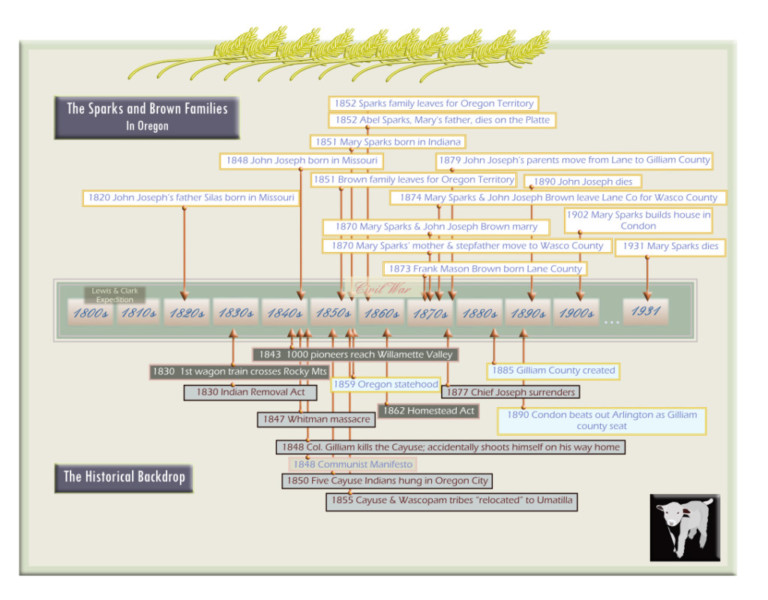
Even as my breast swells with pride in my brave, hardworking pioneer ancestors, I know the story looks very different from other angles. Particularly the Native American ones. Condon was built on the site of a spring used by generations of Indians following their food sources through the seasons. White settlers’ treatment of the original residents of the Columbia Plateau was as shameful as anywhere else in North America. As far as I know my family never actually pulled the trigger or handed out smallpox blankets, but they certainly took advantage of Colonel Gilliam’s revenge on the Cayuse for the Whitman Massacre. The timeline graphic clearly shows them moving into the area right after the Indians were moved out. I’m sure they approved fully of the forced ‘relocation’ of the various indigenous tribes to the Umatilla, Yakama and Warm Springs reservations.

And of course there is no better way to destroy native rangeland than to scatter sheep all over it.

So the Sparkses and Browns exemplified the eternal paradox of settlers: narcissistic entitlement blinds us to our destructiveness until it’s too late – until after we’ve fallen in love with what we have vanquished. We dismantle the paradises we occupy. I hope I can retain the honesty, the courage and the commitment of my forebears and use these gifts in ways that mitigate the damage they inflicted on both the original residents and the land. Given the challenges facing all of us – especially climate change and the legacy of unregulated chemicals and nuclear waste – the way we did things over the last two centuries will not get us through the next two.

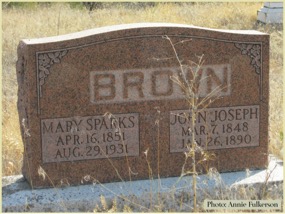
Out on the Columbia uplands, the wind never stops, the grasses rustle, the sky is huge and empty. I have an impulse to put a tiny house in the flat part near the creek. Except that the property belongs to somebody else now.Gravestone

By |2020-09-30T19:54:15-07:0007/29/2015|Essays, More, Old Articles|1 Comment

A Fluid Resource: Wind

untitled-1152

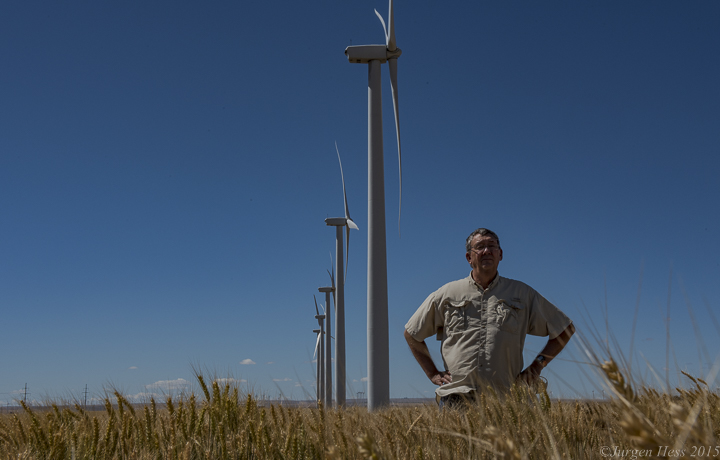
Ormand Hilderbrand stands in front of PáTu’s six wind turbines.

Sometimes it feels like acceptance and dispersal of renewable energy technologies has taken a lifetime. Because it has. In the hippie-flavored 1970s, thousands of people tinkered with hundreds of potential technologies like this umbrella-powered truck. From the confusion emerged a very few that could be scaled up enough to make a dent in the fossil fuel juggernaut (more…)

By |2019-04-11T11:15:11-07:0006/25/2015|Energy, News, Old Articles, Renewable Energy|2 Comments

The Grid You Thought You Knew

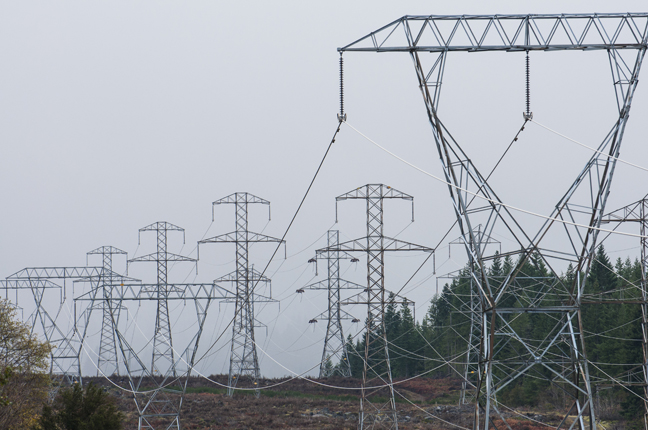
untitled-0058 smallIt’s the reassuring hum of the refrigerator late at night, the random tumble of laundry in the dryer. It pushes the second hand and the turbine. We call it ‘power’ for good reason, because without it we’d be choppingand pumping and flicking the whip at beasts of burden (more…)

Impervious. Part III. The Rules, The Actions

What Are the Rules?

Parking lot bioswale

Parking lot bioswale

Rivers and lakes suffer many insults from human activities, but the Clean Water Act sets limits on how much sediment and chemicals they can receive. (more…)

By |2018-10-15T19:16:29-07:0003/11/2015|Energy, News, Old Articles|0 Comments

© Copyright 2013-2025 Columbia Insight. All Rights Reserved.

As a 501(c)3 nonprofit organization, all donations to Columbia Insight are tax deductible to the full extent of the law. Our nonprofit federal tax-exempt number is 82-4504894.