Stay Updated Subscribe today for the latest research + reporting about environmental news. Subscribe Now

Stay Updated Subscribe today for the latest research + reporting about environmental news.

Subscribe Now

Susan Hess

Susan Hess

About Valerie Brown

Valerie Brown, lives near Portland, Oregon. She specializes in science and environment writing, particularly environmental health and climate change, including the health effects of chemical and radiation exposures, carbon sequestration, and climate change’s effects on forests and oceans.

You May Be Eating Your Clothes

More microplastics are washing up on the Oregon coast every day, and this beach near Manzanita is no exception. Photo courtesy of the Ocean Blue Project

Emerging science shows microplastics have spread across the planet. We know they are in ocean waters in the Pacific Northwest, but most inland waters, including most of the Columbia River Basin, have simply not been surveyed. Do microplastics threaten ecosystem and human health? There’s plenty of reason for precaution.

By Valerie Brown. April 25, 2019. We’ve heard a lot about the planet’s overdose on plastics recently: sea turtles choking on plastic bags, a whale with kilograms of plastic in its stomach, vast gyres of multi-colored, multi-textured plastic slowly winding around the Pacific Ocean like Jupiter’s Great Red Spot. But this visible pollution represents only a fraction of all the plastic in the ocean. The majority is the size of sand grains or smaller — between approximately 10 nanometers and 5 millimeters — that were either reduced from bigger pieces by the elements or manufactured at that size originally. This is the scourge known as microplastics.

It would beggar belief to claim that microplastics pose no threat. Awareness of the problem is relatively high, but compared to the catastrophic effects of macroplastics, current knowledge of microplastics rests on incomplete science. However, the last 15 years have seen an “explosion” of research on plastics in the marine environment, writes Chelsea Rochman in the April issue of Science.

“Several hundred scientific publications now show that microplastics contaminate the world’s oceans, including marine species, at every level of the food chain. Yet scientists have only just begun to document and study microplastics in freshwater and terrestrial systems,” Rochman adds. And it seems that governments and activist groups in the Northwest are even farther behind.

A Global Perspective

Most microplastics in the ocean come from land, where they are washed down by rivers. A 2017 study showed that 67 percent of ocean plastics come from only 20 rivers, 15 of which are in Asia. China’s Yangtze and Pearl River deltas receive more than 20,000 metric tons per year, owing in large part to China’s position as the global leader in plastics manufacturing and its lack of waste capture and treatment infrastructure. Although the United States does have such infrastructure, we are second to China in generating plastic waste that is discarded rather than captured and/or recycled.
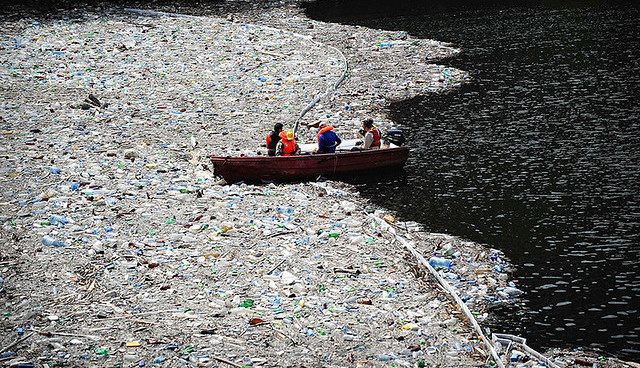
In Bulgaria, volunteers attempt to clean up a portion of Vacha Reservoir that is literally covered in plastic. Photo courtesy of Plastic Pollution Coalition

The supply of plastics is unlikely to taper off any time soon. Annual production of plastics in 2018 was about 550 million tons, up from 275 million tons in 2014. The World Economic Forum estimates that by 2050, marine plastics will equal the weight of all the fish in the oceans.

Not surprisingly given those production figures, plastic is found everywhere anyone looks: in the Arctic and Antarctic; in lakes and mountain streams, in sediments, in treated municipal wastewater, in glaciers. In bottled water. In sea salt. In deep ocean trenches. And inside most organisms, including humans. Microplastics are so ubiquitous now that they have been detected in our drinking water — even when it comes from relatively pristine sources — and our food, including fish, beer, sugar and honey.

Even in beautiful Columbia River Country?

The available scientific data about the Pacific Northwest suggests that the region is a minor player in microplastic marine pollution compared to the rest of the U.S. Along the entire west coast, no river dumps more than 200 tons of plastic waste a year into the ocean.

But that doesn’t mean we’re not part of the problem.

In 2017, a Spokane high school student found microplastics in two thirds of the river whitefish he sampled near the city’s wastewater treatment plant. Last October, Kirsten Kapp and Ellen Yeatman of Central Wyoming College and the University of Wyoming, respectively, published a survey of suspended and surface microplastics in grabbed and netted samples from 26 sites — from near the headwaters of the Snake River in Wyoming to the Snake’s confluence with the Columbia River, and from there to the mouth of the Columbia. They found microplastics in the vast majority of samples. The highest levels of microplastics were in areas of low population and high agricultural activity.

Microplastics are frequently consumed by fish living in rivers and, in the case of this rainbow runner, oceans like the North Pacific. Photo courtesy of 5 Gyres Institute

Risk vs. hazard

We know humans are not exempt from microplastic exposure. A Korean study of plastic content in sea salt estimated that adults may take in about 32,000 microplastic particles a year via inhalation and ingestion. But what’s the risk?

Some argue that microplastics must not be very harmful because some have been observed passing all the way through the human digestive tract. This might be true for single-exposure events. But chronic exposure to plastics can be hazardous. Bisphenol A is an endocrine disrupter, as are phthalates. Vinyl chloride and styrene, used as feedstock for plastics manufacture, are known carcinogens. Some plastics include lead and cadmium as colorants. Adding insult to injury, it’s likely that microplastics bioaccumulate so that, like mercury and PCBs, top predators end up with the highest exposures. And just to make things creepier, bacteria colonize the particles easily. A 2014 study of Chicago wastewater found pathogens common in human waste living on microplastics in the treated effluent.

Allen Burton, a University of Michigan aquatic toxicologist, does not believe that microplastics pose a threat…yet.

Burton, a panelist at a recent Water Research Foundation webcast, reminded participants that “the dose makes the poison,” and that marine and freshwater invertebrates are not exposed to the very high levels of microplastics used in laboratory studies that find harmful effects. In fact, Burton said, “Macro plastics are the source of the problem.” In addition, he said, most studies rely on visual identification of microplastics, which is notoriously difficult and probably inaccurate.

This tiny piece of plastic, found in Long Beach, Wash., may be more hazardous than the larger pieces of plastic you might notice elsewhere on the beach. Photo courtesy of Ocean Blue Project

However, we can’t assume that hazards of macro scale plastics predict those at micro scale. Size matters.

Microplastics may be more hazardous than larger pieces because the smaller a piece of matter is, the higher the ratio of its surface area to its mass. This means that a small object has more chances to react chemically with its environment than a large object made of the same material. Also, the more surface area, the more various other toxics in the environment stick to the particles. This property might be exploited for toxic cleanups, but it also means that an ingested plastic particle that may be toxic in itself can also lead to additional exposures to, say, PCB’s and organochlorine pesticides. Plus pathogens.

Fiber (in)security

The majority of plastic is manufactured for packaging, which the forces of nature reduce to tiny pellets, but it’s actually fibers that may pose the greatest risk. These include polyester, acrylic, nylon, and other oil-based materials. Economic forecasters predict synthetic fiber production will increase by 3.7 percent annually and will comprise 98 percent of total fiber production at least until 2025. In the Snake-Columbia sampling study, fibers comprised between 48 and 58 percent of the particles collected.

Most synthetic fiber pollution comes from clothing. A 2016 study found that a 13-pound load of laundry would shed more than 700,000 fibers. Polyester fleece, which has been “napped” to create its typical soft feel, sheds much more than basic knitted polyester fabric. Shedding is higher in a top-loading washer than a front-loading one, and filters in washing machines don’t capture the micro-scale fibers.

[robo-gallery id=”11069″]

The extreme surface area of microfibers makes them much more likely to form twisted clumps and get stuck in an organism’s guts. Many invertebrates and small vertebrates starve as their innards fill up with these blobs, which prevent digestion of nutrients. Interestingly, while natural fibers are also found in the guts of various creatures, they are at much lower concentrations, and researchers suspect this is partly because they are both more digestible and more likely to break down harmlessly in the environment.

Municipal waste treatment captures most of America’s wash water, and panelists at the Water Research Foundation webcast noted that these systems in the U.S. are doing an excellent job of capturing 95 to 99 percent of synthetic fibers. But the remaining small percentage that isn’t captured is contaminating the global food web. Furthermore, while wastewater treatment does remove microplastics from water, it concentrates most of the them in biosolids and sludges, which are often spread on agricultural fields. This may not prevent microplastics’ eventual journey to the sea – not to mention the potential harm they can do to terrestrial ecosystems. Ironically, even some organic biosolids contain microplastics.

Wait…industry is ahead of the curve?

The plastics industry has begun to acknowledge its responsibility to manage plastics throughout their life cycle. The Coca-Cola company claims to be working towards a circular economy with its plastic bottles. Keith Christman, managing director of plastic markets for the American Chemistry Council (“Chemistry: The Science Behind Sustainability”) says the industry began to acknowledge that plastics pollution is unacceptable about a decade ago. Citing the recently-launched Alliance to End Plastic Waste, a $1.5 billion project sponsored by numerous companies all along the supply chain, Christman says the industry is now committed to stopping plastics from reaching the oceans. The Alliance aims to improve the sustainability of plastics manufacture and use at the primary sources by helping factories with wastewater treatment and capture of raw materials before they escape into waterways. The ACC itself wants its members to “reuse, recycle and recover all plastic packaging in the U.S. by 2040,” Christman said.

This mural, entitled “Choke-a-Cola”, calls attention to the suffocating effects that single-use plastic bottles have on marine life. Photo by Craig Sheppard

This worthy goal depends on buy-in from political stakeholders, including Asian nations. It may be possible, and according to the World Economic Forum, China is the most progressive country in terms of reducing plastics pollution.

This is one environmental issue where industry appears to be ahead of government. In Oregon, the Department of Environmental Quality is aware of the microplastics issue, including in treated wastewater biosolids. And according to DEQ public affairs spokesperson Susan Mills, Oregon will likely not move to regulate microplastics until or unless the U.S. Environmental Protection Agency decides how serious the threat is. At this point, the EPA views microplastics as “an emerging contaminant of concern,” Mills says, and she knows of no EPA timetable for that decision.

Overall, the U.S. government is not supporting much research on either the problem or potential solutions, according to Burton. Fortunately, he says, the European Union is spending “a crazy amount of money” on microplastics research — and actually regulating plastic waste. Last October the EU banned single-use plastics like bags, straws and cutlery altogether. The U.S. Congress banned microbeads (only from “rinse-off cosmetics”) in 2015, but no further federal action has been taken. Six U.S. cities, six counties and seven states have banned or restricted plastic bags. In an act of especially unhelpful legislation, Arizona now “prevents a city, town or county from regulating the sale, use or disposition of plastic bags.” Similar restrictions have passed in Idaho, Missouri, and North Carolina.

The greatest tragedy is that once plastic is ground down to micro-scale and gets into the ocean, there is no getting it out. Only the lightest forms remain at the surface, and more dense particles fall to the ocean floor, where they remain in the sediment for the foreseeable future unless they are taken up the food chain and bioaccumulate in organisms. The same is likely true of freshwater environments like stillwater behind dams. While there is evidence that one type of bacteria can digest single-use bottles, we are nowhere near being able to exploit them. Ultimately, only complete life cycle management of plastics will enable us to keep using them at all. But some improvement is better than none, and by acknowledging the problem we are one step closer to finding a solution.

What you can do right now to minimize the microplastic problem:
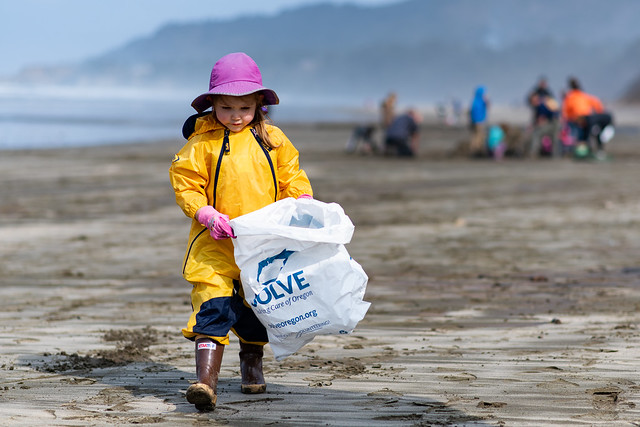
Part of the solution, a young girl hunts for plastic treasure on the Oregon Coast. Photo by Charles Mitchell, courtesy of Surfrider Foundation Oregon

1. Capture fibers in your washing machine with a Guppyfriend or a Cora ball.

2. Buy natural fibers, if you can afford it, or at least natural/synthetic blends. (Synthetic fibers such as polyester and acrylic are always less expensive, placing an economic disincentive on doing the right thing.)

3. Even if they are still legal in your area, stop using plastic bags. Eliminate plastic cutlery, straws and stir-sticks from your life. Say no to plastic utensils and cups. And if you are flushing Q-Tips and contact lenses down the toilet, stop it!

4. Apply pressure on your elected representatives to implement meaningful policies and regulations regarding both packaging and fibers.

5. Participate in beach, lake and river cleanups.
By |2020-04-07T12:45:55-07:0004/25/2019|Energy, Features, Waste Management|5 Comments

Quercus garryana: East Meets West in the Columbia River Gorge

Editor’s Note: Our native Quercus garryana, the Oregon white oak, is also the focus of the newly formed East Cascade Oaks Partnership. Scientists, government agencies, conservation groups, and tribes have joined together to plan how to conserve and restore remaining areas of oak woodlands and prairies. Valerie Brown wrote about this iconic oak in a Dec 2014 Envirogorge article. We thought it was time to reprint it with updated information. SEH

Quercus garryana, the Oregon White Oak

By Valerie Brown. June 7, 2018. Tradition has it that east and west can never meet. Turns out that’s not true. In the Columbia River Gorge east and west meet in a fascinating blend of ecological features, and there is one adaptable tree that thrives in both wet and dry Gorge habitats: The Oregon white oak, Quercus garryana.

Not only does the Oregon white oak take good care of itself wherever it gains a foothold, but it also provides a rich array of benefits for everything ranging from jays and squirrels to turkeys and truffles. The species’ modern range extends from Vancouver, British Columbia to northern California on the west side of the Cascades and from central Oregon to central Washington on the eastern slopes of the Cascades. Oaks occur along the Columbia River from the Pacific Ocean to about Goldendale, Washington, providing the only link between east and west Oregon white oak systems in the nation.

Oaks east and west
In the Pacific Northwest, Oregon white oak is far better known west of the Cascades, especially in the Willamette Valley, large swaths of which were formerly covered with oak savanna. Today these areas are much reduced but can still be seen in parts of the valley, particularly around Salem amid rolling hills, fields and vineyards. In Salem, Bush’s Pasture Park maintains an elegant stand of the oaks, which also shelter native camas along the park’s eastern border. Before Europeans arrived, the Kalapuya Indians managed the oak stands and camas using controlled burns.

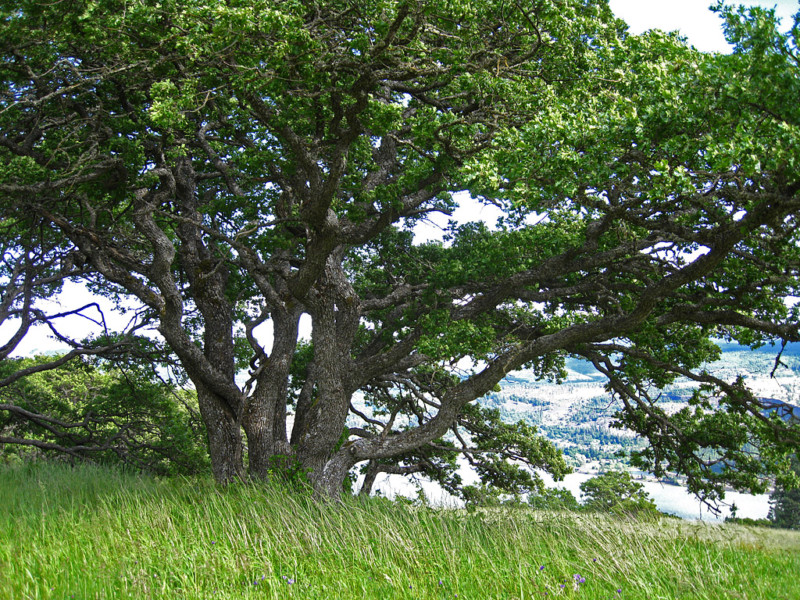
But if you go looking in the Gorge for oaks like the ones in Salem, you might not find them. Q. garryana is something of a shape-shifter. Where it is grouped together with others of its kind, it grows tall and develops a canopy reminiscent of a champagne flute. Where it is sparser, growing in more open areas of scrub and grassland, it takes on a mushroom shape. And in the Gorge’s more severe habitats like cliff-faces and ridgetops, it becomes gnarled and low-growing.

The Columbia Land Trust’s oak restoration project on the lower Klickitat River in Washington is a good place to see oaks in their various shapes, says Lindsay Cornelius, the Trust’s Natural Area Manager. Along Dillacort Creek there is a short hiking trail (although with a lot of poison oak, she cautions) and plenty of places on State Road 142 to pull over and survey the landscape.

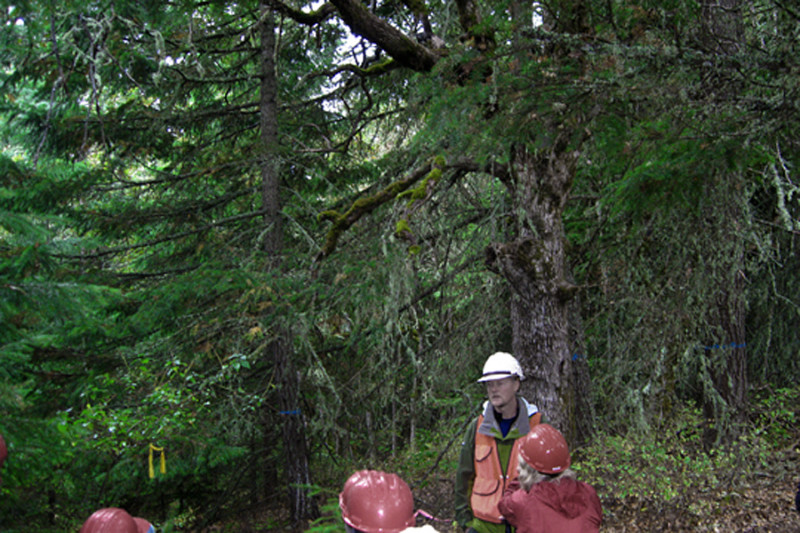
Roland Rose, U. S. Forest Service, leads a team to review a Burdoin Mountain (WA) site where it plans to remove conifers to enhance oak habitat. The oak behind Rose is obscured by surrounding conifers.

Oregon white oaks have historically been something of a poor relation to trees considered more valuable. Douglas fir is probably the richest relation, being much more desirable for timber. On the east side of the Cascades, oaks have at times been specifically removed to grow conifers for this purpose. Since fire has been suppressed, many oaks in natural mixed stands with Douglas fir have been stunted or killed because the latter grows much faster and cuts off the light. The difference in perceived value between the two species may have led people to discount the loss of the oaks.

Agriculture and development have also contributed to the oaks’ decline throughout much of their range. Overly intensive grazing, timber harvest and other ground-disturbing activities have contributed to shifting oaks’ associated plant communities to a growing prevalence of invasive annual grasses. Annual grasses provide poor nutrition to grazers; they out-compete flowering plants and native grasses; and they alter fire behavior. Along the Columbia, oaks were burned to produce steam for sternwheelers in their heyday, says Cornelius, and people still burn Oregon white oak in wood stoves. The wood is also sometimes used for flooring and furniture.

But these days the virtues of Q. garryana are starting to be better understood. While west-side groups have been working to restore oak habitat for many years, it’s a relatively new idea for Gorge and east-side conservationists.

“A number of individuals and agencies are starting to have a general conversation, a growing interest and appreciation of white oaks,” says Dan Richardson, watershed resource technician for Washington’s Underwood Conservation District. Oregon white oaks are “just about our most important wildlife tree,” Richardson adds. “Insects, birds, even large mammals like bobcats will find places to den because oaks tend to lose a limb from time to time and open up a hollow. There is a lot of cavity nesting.”

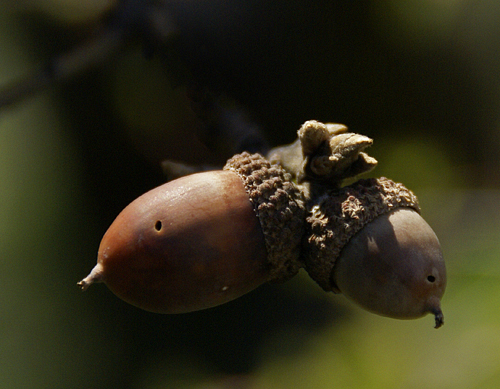
Acorns provide food for insects, birds, squirrels, and deer.


Q. garryana
may also be hollow inside, says Cornelius, which means that in addition to providing all the benefits of a living tree—leaves, acorns, mycorrhizal fungi to support the roots, and insects—it also functions as a snag would function in the way Richardson describes. And speaking of fungi, the white oak is often host to numerous species including truffles, a favorite food of the threatened western gray squirrel, which prefers Oregon white oak habitat, especially in the Gorge. Some 200 vertebrate species have been associated with oak ecosystems and the list, should someone actually go looking, is likely to be much longer. Balch Lake, located in a mixed oak and pine savanna east of White Salmon, is critical habitat for one of two natural western pond turtle populations in Washington.

Mature trees that have room to spread out are particularly good for birds, including acorn woodpeckers, downy woodpeckers and scrub jays. Lichens and bryophytes on older trees host insects and other invertebrates favored by wrens, vireos and nuthatches.

East side oaks in changing climate
Oaks’ adaptability and hardiness bode well for their capacity to adjust to future disruptions, of which climate change is a major concern. Most model results, Cornelius says, is that oak range is expected to expand east, while conifer range will shrink, possibly creating better conditions for oaks. Oaks’ deep taproots allow them to find groundwater other trees may not be able to reach.

They also tolerate fire well, another advantage in a hotter climate regime.

“If an oak is burned intensely and the whole top of the tree is killed, it will sprout back from the base quite profusely,” says Andrew Bower, a geneticist with the U.S. Forest Service. Bower is studying the genetic differences between oak populations on either side of the Cascades. “A fire may kill all the leaves from this year,” he adds, “but a lot of times they’ll resprout from the trunk or branches next year.” This trait poses a challenge for groups like the Oaks Partnership.

Thirteen years ago Columbia Land Trust thinned dense stands of spindly oaks hoping that would allow the remaining trees to mature into large trees producing more acorns and nesting cavities and more resident to fire. Now they’re evaluating. “We have more questions than answers,” Cornelius says. Are those spindly trees capable of changing into the spreading canopy shape? “Then the oaks we cut down, re-sprouted, even when we sprayed and painted the cuts.”

While projects to encourage white oaks in the Gorge may not actually be returning the landscape to a pre-European configuration, there is little disagreement that fostering healthy white oak habitat is a good idea. The multiple ways Oregon white oaks provide food and habitat for many different species suggest that they can probably help stabilize ecosystems at risk from the stresses of climate change and further development.

“What I often ask,” says Cornelius, “is whether it’s important to go back to what it was, or is it [more] important [to know] what’s resilient, what’s likely to survive in the face of looming changes?”

If past evidence is any guide, Q. garryana will be able to blend the best of both worlds, east and west, wet and dry, to flourish in a future Gorge landscape.

Q&A: Get to know the candidates for Oregon’s 2nd Congressional District

By Valerie Brown. April 26, 2018. In light of the upcoming May 15 elections, EnviroGorge sought to learn more about the candidates running for Oregon’s 2nd Congressional District. We contacted 11 of the 12 candidates who met the March 6 filing deadline in order to ask them questions about some of the most pressing environmental issues facing the district. (The 12th candidate, Decker Cleveland, did not provide the Secretary of State with contact information, but you can read about his environmental views on his website.)

Of the 11 candidates we contacted, six responded. Incumbent Greg Walden (R-Hood River), who has held the seat since 1998, did not respond, but he has built up a substantial voting record in his 20 years as a congressman. This publicly available information gives voters a general idea of his stances on certain issues. 

Other non-responders included: Tim White (D-Bend), Eric Burnette (D-Parkdale), Mark Roberts (I-White City), Raz Mason (D-The Dalles), and Paul Romero Jr. (R-Prineville).

The responses we received have been edited for clarity, brevity and punctuation. More information on the candidates is available at the Oregon Secretary of State Elections Division.


What is your position on the reality of climate change, including whether it consists primarily of warming and is caused by humans, and what policies do you support regarding climate change mitigation and adaptation, as well as carbon sequestration?

Michael Byrne: Climate Change is real and inexorable….We must quit burning coal. Invest in solar power. Leave forests intact as carbon sequesters, return to the Paris Accord and increase fuel standards for trucks and automobiles. How we deal with this will define our future, both as a people and a nation.

Jim Crary: Climate change is real, it’s man-made and my biggest concern is that we are already too late to keep the temperature rise under 2 degrees Celsius. I have pledged to be a co-sponsor of HR 3671, a bill to transition us away from fossil fuels to clean energy (e.g., energy efficiency, energy conservation, and renewable energy)…..I would subsidize and encourage the following with federal tax credits:

  • renewable energy production, research and installation
  • carbon sequestration
  • the purchase of electric/high mpg (i.e. >55 mpg) motor vehicles

I would also be in favor of either a carbon tax or a cap and trade approach to wean us off of fossil fuels as quickly as possible.

Jamie McLeod-Skinner: Climate change is real. It consists primarily of warming, it’s caused by humans, and it puts humanity in more peril than we’ve been in since the end of World War II. I support carbon sequestration measures as well as a carbon tax. I also support government-sponsored rewards for innovators who create new batteries, engines, and vehicles that can store energy from renewable sources and move people around without burning fossil fuels….Furthermore, federal money should be available to cities seeking to improve their mass transit systems and connect to one another via high-speed rail..

Jenni Neahring MD: As a scientist, I clearly understand the data that makes clear that climate change is happening; it is causing a rise in global temperatures with subsequent loss of polar ice/rising sea levels, and it is primarily driven by human-caused greenhouse gas production.

Randy Pollock: The unpredictable output of our “G2 Variable” class Sun is the overwhelming driver of our temperature….a moderate rise in CO2 levels (under 500 ppm total) will be beneficial to cultivated crops and global biomass….The greenhouse gas with the strongest effect on our temperature is impossible to alter or regulate: dihydrogen monoxide (water vapor). CO2 has much less impact on the Earth’s heat retention. Artificial sequestration is completely unnecessary.


What is your position on the use of the Columbia River corridor, including rail lines and shipping, for export of coal, oil, petroleum products and liquefied natural gas? What are your concerns about the environmental impacts of such uses, including whether we ought to be adding to greenhouse gas emissions by other countries? 

Michael Byrne: We shouldn’t be exporting any fossil fuels. Anywhere. By any means.

Jim Crary: I want to get us off of fossil fuels as quickly as possible. Coal, oil and LNG are all fossil fuels so I would oppose continuing to use the Columbia River corridor to ship those products overseas because by doing so we add to greenhouse gas emissions in other countries….We cannot let the promise of a few jobs allow us to make unsustainable decisions. I stand with the people and groups who oppose the use of any part of the Columbia River corridor to export fossil fuels.

Jamie McLeod-Skinner: We should not be investing in, nor supporting, the use of fossil fuels by the United States or any other country… I do not support our state being used as a conduit for fossil fuels — whether it’s through the Columbia Gorge or southern Oregon. It puts our water and natural resources in these areas at risk from spills, fires, and contamination — in short, it endangers our home, which we love so much. We should be investing in partnerships and technologies that help to reduce greenhouse gas emissions instead.

Jenni Neahring MD: The derailment of a train carrying oil in Mosier shows us the high risk of transporting these products by land or water. While demands for these products still exist in our country, we need to push for the most rapid adoption of clean energy we can accomplish. We need to play our part in helping other countries to reduce their greenhouse gas emissions; the export of petroleum products and LNG should be included in any cap and trade or cap and invest agreements of the future.

Randy Pollock: Fossil fuels remain a reality until alternatives are commercially viable. Methane is the cleanest of those & the heavier hydrocarbons should shift more toward their use as chemical feedstocks. Again, I believe CO2 is an essential part of the Earth’s carbon cycle.


Recent research has increased public health experts’ concerns about the effects of air pollution on human health, particularly from diesel combustion.  If elected, what policies will you support to minimize such pollution?

Michael Byrne: Clean air and water are essential rights of every human being. This is a question of greed. Controls exist at every level to neutralize air pollution and the best available control technology must be utilized at every step, including diesel trucks and tractors. The available science is alarming on the effects of fine particulates, especially on children and the elderly.

Jim Crary: I would support legislation requiring, by 2027, that 80% of train rail lines and train engines must be electrified. I would also support legislation requiring, by 2035, that

  • 100% of vehicle sales from manufacturers must be zero-emission vehicles, and 100% of train rail lines and train engines must be electrified.
  • We establish a car allowance rebate system within the Department of Transportation to provide economic incentives for consumers to purchase new, clean energy vehicles (e.g. “Cash for clunkers”).
  • We stop issuing federal permits for new major fossil fuel projects after 2019.
  • We amend the Internal Revenue Code to terminate fossil fuel production subsidies.
  • We establish a Community Assistance Fund for industrial and energy efficiency programs.
  • We permanently reauthorize the Weatherization Assistance Program, which provides energy efficiency retrofits of low-income homes.
  • We prohibit exports of domestically produced crude oil and natural gas, including liquefied natural gas.

Jamie McLeod-SkinnerIn the case of diesel, the most promising solution in which government has a role is the promotion of biodiesel, which is made from vegetable oil or animal products. Recent studies have shown that biodiesel emits significantly lower levels of pollution (carbon monoxide emissions went down 83% in one study). I would support a national diesel standard, with possible exceptions for Alaska and Hawaii due to their remoteness from biodiesel production centers, that would mandate 20% of all diesel sold in the United States be biodiesel by a reasonable date to be determined by Congress.

Jenni Neahring MD: We need to develop strict controls on emissions, rapid phase-out of old engines or retrofitting to reduce emissions, and conversion to clean fuels in transportation and other diesel-powered industries.

Randy Pollock: Electric heavy trucks are a wonderful development to sharply reduce those emissions.


What is your position regarding the ecosystem and human health effects of pesticides, including Roundup, dicamba, chlorpyrifos, and neonicotinoids? What would you do to ensure protection of humans and ecosystems from the risks of exposure to pesticides, including workers, households, fish, insects and wildlife?

Michael Byrne: The greed factor is overwhelming at every level. My position is that the EPA is failing us at every level and the use of pesticides exists solely for the profit of the chemical & poison industry. I have worked in agriculture for much of my life and understand the other side of the argument. There are controls much more environmentally friendly than the organophosphates on the market. Glyphosate, the same.

At the very least, enforceable buffer zones must be created around schools and neighborhoods and again, best available control technology employed. It is outrageous to me that our children suffer unacceptable risks daily.

Jim Crary: I understand that farmers want effective herbicides and insecticides to maximize their crop yields, but I also understand that what were once thought to be wonder insecticides can have horrible unintended consequences (e.g. DDT). I know that there are people who believe Roundup, dicamba, chlorpyrifos, and all neonicotinoids should be banned. I am leaning that way but I am not yet there…I would fund independent studies regarding the efficacy and adverse impacts of [these chemicals] so that I could then make an informed decision on whether to ban them, restrict them or allow their continued use.

Jamie McLeod-Skinner: The current administration has made a joke of the EPA by installing an anti-EPA radical as its chief. People like Scott Pruitt should be nowhere near environmental policy, as it is clear that their priorities lie in lining the pockets of polluters versus protecting our environment and citizenry from the effects of pollution. The protections for agricultural workers that the agency gutted last year must be restored and enshrined in statute, so that they’re not susceptible to this kind of bad-faith manipulation from future right-wing administrators. As a legislator, I would support the bill introduced by Senators Udall and Blumenthal which would ban chlorpyrifos, and push to have it extend to other toxic chemicals that have been shown to be harmful to children, workers, and wildlife.

Jenni Neahring MD: The increasing use of toxic pesticides mirrors the risks posed by using stronger antibiotics on resistant bacteria in medicine. While these pesticides may meet an immediate need, we do not fully understand their scope and impact on our land and community. All parties, including farmers, need to come to the table to establish regulations for pesticide use. These regulations must prioritize prevention of unintended dispersion into the environment and include ongoing evaluation. This evaluation will require regular review of the risks and benefits to avoid unintended consequences. We must also promote and incentivize research of methods for growing crops that mitigate the need for pesticides.

Randy Pollock: I support more control of all those classes of pesticides & would include the BT toxins present in genetically-modified plants. These toxins do not belong in animal feed, or anywhere in the food chain. We should investigate alternative pest controls that don’t result in such high levels of these toxins in our food & the environment.


What is your position regarding salmon recovery efforts statewide, including dam removal?

Michael Byrne: The question of salmon is the heart of any discussion we have on our environment. The dam question has as much to do with impounding huge bodies of water that heat up behind dams as the fish ladders (which have been proven to be effective.) The Snake River dams need to go. Irrigators will use water more efficiently and solar will replace hydro power.

My overarching theme is this: regulation creates innovation.The future requires it.

Jim Crary: Dam removal would certainly facilitate [recovery] but I am much more concerned about stopping global warming which means getting off of fossil fuels as quick as possible. Besides hydropower, dams are used for flood control, irrigation and recreation. Also, all dams on all rivers are not the same. Removing dams on the Klamath River is not the same as removing dams on the Columbia. If the Columbia dams come out what happens to all of the power being generated and all of the shipping on the Columbia?

Salmon recovery is a goal that I would like to see achieved but I see my place in this as a facilitator for the discussion. In that capacity, it is important that I encourage stakeholders and decision makers to be informed by science…and then, when they reach a consensus I will do everything I can to get their consensus implemented. That’s not something we’re getting from our current congressman.

Jamie McLeod-Skinner: Salmon recovery is critical to the overall health of our ecosystem, and dam removal is an important part of that effort. That said, dam removal needs to be considered on a case-by-case basis. The four small dams in southern Oregon, which were the basis of Greg Walden’s lack of support for the Klamath Basin Restoration Agreement, should be removed. They provide minimal hydropower and come with major environmental costs….Major dams along the Columbia River are currently an important resource for: 1) stabilizing fluctuations in our energy grid); 2) water storage; and 3) transportation of goods for export…. These three are all critical to our livelihood in eastern and central Oregon. When our technology, storage capacity, and transportation systems evolve to the point where we have viable options, then we can discuss major dam removal. As all engineered systems have a design-life, we will eventually be forced to have this discussion anyway. My commitment is to invest in and create incentives for the private sector to invest in, the solutions to address these pending challenges.

Jenni Neahring MD: We need to continue efforts to restore native habitats to support salmon and lamprey survival and recovery. While this may include dam removal on the smaller rivers, hydropower from the Columbia River dams is also an essential part of our work to move to renewable energy. We will need solutions that include preserving the dams in this area, as well as stakeholder engagement in any discussions about plans for dam removal.

Randy Pollock: I support this. There were many dams constructed without regard to salmon migration (for example, Savage Rapids Dam). But the water impoundment system in Klamath County should be improved, rather than demolished, to aid salmon spawning.

By |2019-02-27T14:43:29-08:0004/26/2018|More, News, Old Articles|3 Comments

The amazing ancient lamprey

These intriguing and unsettling fish are more important than you might think

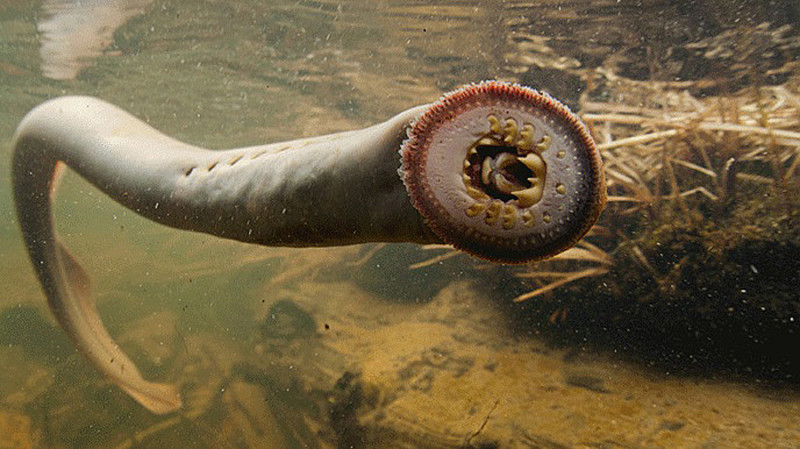
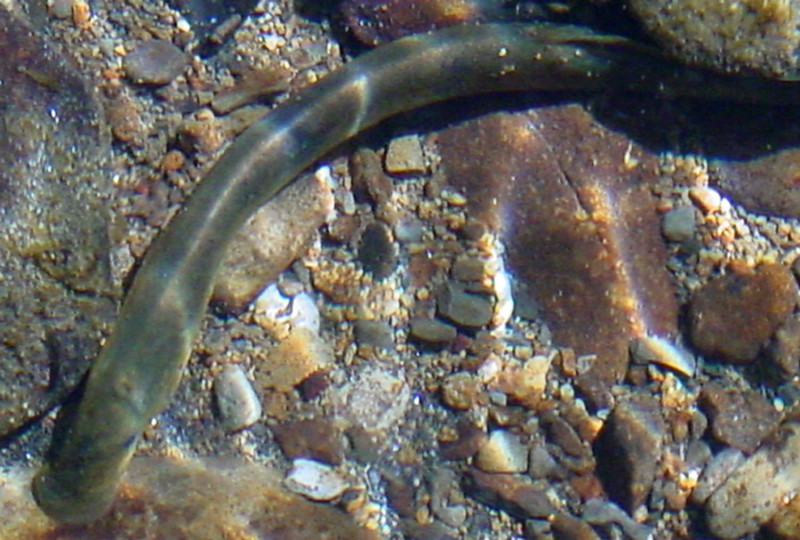
Pacific lamprey. Photo: U.S. National Park Service

Written by longtime contributor Valerie Brown, this story was originally published in February 2018 and has remained a favorite of Columbia Insight staff and readers. It’s presented here as part of our Classic Insight series. —Editor

By Valerie Brown, July 14, 2022. Imagine this: You develop from an egg into a larva in fine stream sediment. Over the next three to seven years you live there, eyeless and sexless, eating diatoms and algae.

Then you metamorphose into a male or female fish with a two-lobed dorsal fin, two eyes, no bones and a round mouth with teeth made of keratin (the same thing as fingernails).

Something tells you that you must go down to the sea, where you affix your mouth to the side of a bigger fish and suck its fluids out for your own benefit.

After a few years doing this, you get the call to return home, so you swim upstream, leapfrogging your way through rapids by glomming your mouth onto rock above rock above rock, until you reach your original stream. Or something quite like it.

You never eat again. You spawn and die. Congratulations! You are a lamprey.

The lamprey is clearly not an example of “charismatic megafauna,” like bears and wolves, but it’s nevertheless a vital member of the Pacific Northwest ecosystem and an icon for Native Americans, who prize the fish for food, medicine and ceremony.

Sadly, Pacific lamprey and their cousins, river lamprey, have all but disappeared from Northwest rivers and streams. Like the Pacific salmon that migrate up the very same rivers to spawn in fall and winter, they’ve felt the devastating effects of habitat loss, dams, chemical pollution and dredging.

What’s their problem?

Compared with salmon, lamprey have 20% more protein and eight times their fat content.

This makes them popular with predators but also results in accumulations of heavy metals like mercury and persistent fat-loving chemicals such as certain pesticides and PCBs.

Lamprey larvae are also heavily exposed to pollutants during their long residence in stream sediments.

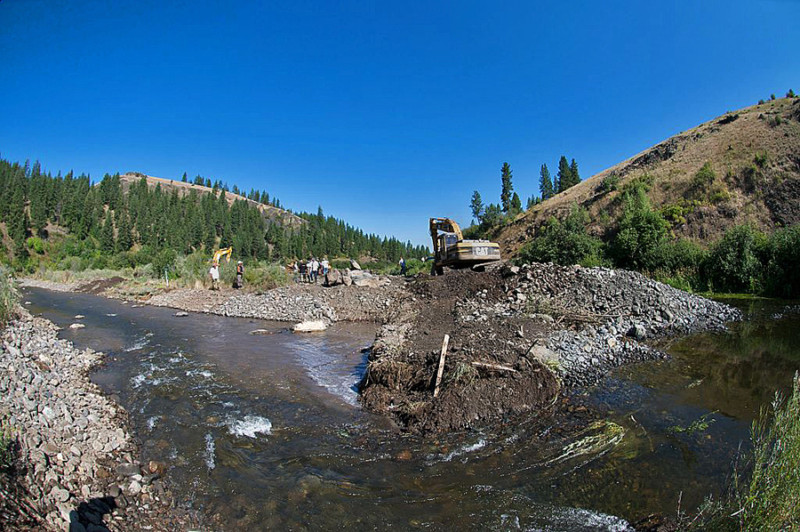
Remediating dredge spoils on the Middle Fork of the John Day River. Photo: Sam Beebe/Ecotrust/CC 

Dredging has been a problem for lamprey because dredges scrape up the stream bed and deposit it chaotically, mobilizing mercury deposits as well as throwing lamprey larvae—called ammocoetes—out of the water and destroying their habitats.

Dams, however, appear to be the biggest thing lampreys can’t adapt to. Lamprey don’t do well with the accommodations aimed at salmon because they’re weaker swimmers, and need round surfaces, rather than right angles, in order to lock their lips on something to climb.

About half of them simply give up after repeated tries at fish ladders.

Many ammocoetes also find themselves marooned in farmers’ fields and ditches because the meshes inserted into irrigation outflows, designed for salmon, are too big to keep lamprey out.

Recovery

There are some 39 species of lamprey around the world, about half of which are parasitic. In the Northwest, Pacific and river lampreys are parasitic, while brook lampreys are not. The first two are also anadromous, meaning they migrate between freshwater and saltwater.

In the Northwest, lamprey have historically been regarded by European Americans as trash fish that damage sport fish, and in the past, they were sometimes poisoned or harvested for fish meal.

According to Sara Thompson of the Columbia Intertribal Fish Commission, the only place in Oregon where tribal members can currently harvest lamprey in any quantity is at Willamette Falls near Oregon City—historically one of the largest sources of lamprey in the Columbia Basin, although tribal memory recalls vastly more at Celilo Falls on the Columbia before construction of The Dalles Dam.

But in the Columbia River Basin there is now a concerted effort to restore the lamprey for both cultural and ecological reasons.

There is some good news regarding this effort. In 2008, the Army Corps of Engineers embarked on a $50 million search for better lamprey passage designs, especially at the Bonneville Dam, a 200-foot wall of concrete that creates one of the most daunting obstacles for lamprey along the entire Columbia River.

Likewise, three lamprey summits since 2004 led to a commitment by the U.S. Fish & Wildlife Service to work toward lamprey recovery with the tribes, state and local agencies, and other stakeholders. In 2012, these groups signed a conservation agreement to restore Pacific lamprey to their historical range and to preserve the tribes’ cultural uses of lamprey.

Lamprey pre-date dinosaurs. They’ve survived for 300 to 400 million years. Photo: U.S. Fish & Wildlife Service

The Yakama Nation’s goal “is to bring back the lamprey in abundance, so they’re there in the stream and in sustainable numbers that allows the tribal members to harvest them,” says Ralph Lampman, lamprey research biologist for Yakama Nation Fisheries.

To that end, the tribe has established a lamprey hatchery to study the fish’s life history, genetics, and survival challenges. The Nez Perce Tribe has also established a hatchery in an attempt to return lamprey to the Snake River Basin, which has been almost completely inaccessible to the fish since dam construction.

The Confederated Tribes of the Umatilla Indian Reservation have begun an ambitious program of research, translocation and hatchery propagation of lamprey (along with habitat restoration) on the Umatilla, Walla Walla and Grande Ronde Rivers.

The Confederated Tribes of Warm Springs are also working on lamprey recovery in the Deschutes River and other waterways that originate on their land. In 2016, they completed rehabilitation of the heavily dredged Oxbow area on the Middle Fork of the John Day River.

In the Gorge, the removal in 2010 of the Powerdale Dam in Oregon’s Hood River and the Condit Dam in Washington’s White Salmon River has allowed Pacific lamprey to return to these rivers all on their own.

Acquired taste

Those who study these strange, unattractive fish—often called eels—tend to become admirers.

Margaret Docker, who is one of the world’s leading lamprey experts and a biology professor at the University of Manitoba, began her life’s work in graduate school studying the Great Lakes’ invasive Atlantic sea lampreys.

“My research was focused on how to kill them, but within about six months, I had started to develop a grudging respect,” Docker says. “No matter what we tried to do to control them they were one step ahead of us. Within a number of years I was an apologist.”

She is fascinated by the lamprey’s sexual differentiation and behavior, especially because relatively little of their lives is actually lived as one sex or the other.

Lampreys’ very survival suggests that they’re more malleable, perhaps even wilier, than we give them credit for.

“The key to them having survived for 300 to 400 million years [is] that instead of becoming specialists, they’re generalists: freshwater resident/anadromous; parasitic/not parasitic; this stream/that stream,” Docker says. “Lamprey have only rudimentary vertebrae, but in terms of brain development and a lot of other things they have characteristic hallmarks of vertebrate evolution, a development of brain and sense organs that you don’t see in invertebrates.”

Lampreys’ intriguing evolutionary pedigree has inspired other scientists to use them as lab animals to examine their development and compare it with “higher” vertebrates. Neuroscientists are studying how lampreys use the neurotransmitter serotonin, as well as other brain chemicals they share in common with humans.

This is currently a bit difficult, given that lamprey spend three to seven years as larvae and their life cycles are far more complex than those of experimental subjects such as mice.

To many people, the thought of eating a lamprey is, well, icky. But these fish have been prized around the world for millennia.

Native Americans view the lamprey as a First Food, a creature that gave up its life to humans in exchange for human environmental stewardship.

Northwest tribes cook lamprey on a stick over a fire, smoke them and use the oil for medicines, including dried lamprey tail as a pain reliever for teething babies, Lampman says.

Lampman developed his taste for lamprey in Japan, where they’re eaten as sashimi and in stir fries.

“They can be chewy,” he says, but slow cooking takes care of that. “In the Northwest, lamprey are often grilled and eaten on a hot dog bun.”

In Europe, the lamprey has remained popular, especially in Portugal, where one sea lamprey can fetch upward of $60. Medieval England even incorporated lamprey into royal politics, resulting in the City of Gloucester owing the sovereign a lamprey pie every year, and at least one British family coat of arms stylized lampreys.

Wayback machine

Because lampreys are primitive cousins of creatures like our own deep ancestors, evolutionary biologists and molecular geneticists are very interested in them.

These fish have survived at least two major mass extinctions and dozens of minor ones without significant alterations in their anatomy or lifestyle.

Classified as vertebrates, lamprey departed ways with our own lineage when other fish started developing jaws, bones and fins.

Molecular clock analysis suggests this happened “on the order of 500 million years ago—but it may go much deeper,” says Michael Coates, a research associate in geology at the Field Museum of Natural History in Chicago.

Coates, who is hunting for the common ancestor of lampreys and other bony fish, was on a 2006 research team that discovered a lovely impression of a lamprey about 1.6 inches long in 360-million-year-old South African rocks.

“What amazed me was to find a lamprey that was so close to modern lampreys anatomically,” Coates says.

R-E-S-P-E-C-T

The lampreys’ most important feature is their role in ecosystems, a crucial role that has been ignored for far too long.

Lamprey enhance the surroundings at both ends of their life cycle— cleaning up stream bed sediment, recycling nutrients, serving as food for other fish as larvae and adults and transporting minerals from the sea up into the tributary systems of the Columbia drainage when they die.

They also form a protective buffer for salmon because they’re easier for predators to catch. So no matter how gross they might seem, there are many reasons to honor the lamprey and encourage their recovery.

“It’s so reassuring to see such interest in lampreys these days,” says Docker. “For the last 20 years of my career I had people telling me, ‘Margaret, you can’t make a career out of lampreys.’ They’ve finally come into their own.”

Valerie Brown specializes in science and environment writing, particularly environmental health and climate change, including the health effects of chemical and radiation exposures, carbon sequestration and climate change’s effects on forests and oceans.

By |2022-07-14T08:27:43-07:0002/08/2018|Old Articles, Wildlife|7 Comments

Pesticides: Like Onions, They Haunt You

By Valerie Brown. Pesticides, like onions, can come back to haunt you. This recently happened in some Hood River basin waters. The Environmental Protection Agency (EPA) proposed, this year, to list five creeks as ‘impaired waters’ under the Clean Water Act.  

Water quality testing by Hood River Soil and Water Conservation District staff in Hood River County creeks. Photo credit: Hood River Soil and Water Conservation District

But experts who monitor pesticides in the basin’s waters stress that the EPA based its proposal on measurements only up to 2014. Recent rounds of sampling show declines in certain pesticides in certain streams, the decline due, in large part, to community efforts. Even though this is good news, the pesticides regulated by the EPA in the Hood River basin represent only a subset of the pesticides being used in the region. And pesticides are only a subset of all the chemicals present in the waters, which, among other harmful substances, includes: pharmaceuticals, flame retardants, industrial chemicals and ammonia.

Something Old, Something New, Something Toxic

The Clean Water Act regulates pollution in the nation’s waterways: rivers, lakes, creeks, wetlands, as well as drinking water.  The law’s Section 303(d) requires states to submit a list of impaired waters. That’s where agriculture comes in, because ag uses a range of pesticides to kill off insects that harm crops. Many of these chemicals get into the waters through various means, like runoff and spray drift. Some are short-lived and others like DDT are toxic for decades.  EPA sets standards on what pesticide levels in waters harm fish, invertebrates and humans.

Most of the pesticides the EPA wants to list are old: DDT, banned in 1972; dieldrin, banned in 1987; and heptachlor (banned in 1988 for everything but fire ants) in buried electrical transformers. Numerous waters in the Hood River drainage and other parts of Oregon have been 303(d) listed for these pesticides for decades, so these new proposed listings mostly represent water bodies that had not been previously tested: Indian Creek, Lenz Creek, Odell Creek, Mill Creek, and Threemile Creek. Two Gorge-area waters have also been proposed for listing by the EPA for the current-use pesticides chlorpyrifos and malathion: Odell Creek for the former and Threemile Creek for both.

[/media-credit] Lead arsenic spray on orchard circa 1915. Photo from the Collection of the History Museum of Hood River County.

The old chemicals, known as ‘legacy’ pesticides, collect in the sediments in streambeds. DDT, its breakdown products DDD and DDE, heptachlor epoxide, and dieldrin are bioaccumulative organochlorine compounds. Big words meaning the chemicals increase in each organism up the food chain. By the time we get to those high on the chain—humans or bears—eating salmon, there could be quite a body burden in the fish and that is transferred to whoever or whatever eats the fish.  

The newer pesticides, malathion and chlorpyrifos are organophosphate insecticides, break down more quickly than organochlorines and don’t bioaccumulate. Both attack the nervous system. Chronic prenatal chlorpyrifos exposure can lower a child’s intelligence. In fact, chlorpyrifos is so universally regarded as toxic that the EPA, were it not for Donald Trump’s election, would have withdrawn the registration nationally for chlorpyrifos, but this decision was abandoned by EPA head Scott Pruitt this March 29.  

Evidence from animal studies indicates that malathion may be a carcinogen. It has been in common use in agriculture since the 1950s and is considered an important mosquito control agent, but it breaks down in water into a significantly more toxic compound.

Fall spraying in Gorge orchards occurs after harvest often includes sulfur, mineral oil, nutrients, and other sprays. Photo Credit: HRSWCSD

All of these insecticides—DDT, DDD, DDE, dieldrin, malathion, and chlorpyrifos—are endocrine disrupters, which means they may adversely affect processes in the body controlled by hormones. Most often they interfere with reproductive hormones and the thyroid system, both of which can in turn wreak havoc on developmental processes.

Of course, there is usually some relationship between the amount of an exposure and the risk of becoming ill from it, and the levels of most pesticides detected in the Hood River basin waters appear to be fairly low. The EPA compares levels in water samples against benchmarks set by the agency or by the Oregon Department of Environmental Quality (DEQ). The benchmarks are not necessarily based on direct evidence of harm to local organisms, says U.S. Geological Survey hydrologist Whitney Hapke, but often on laboratory experiments on similar species of invertebrates and fish.

Hapke co-authored a 2011 U.S.G.S. report for the Confederated Tribes of Warm Springs examining pesticides in the Hood River Basin. She says sometimes the evidence is abundant and clear, and sometimes it is sparse and/or ambiguous, but these levels are set in an attempt to protect ecosystem health and that of humans who consume fish from the affected waters.

Why Worry?

If most of the time the concentrations of pesticides in the Hood River basin waters are low and declining, why worry? Three reasons:

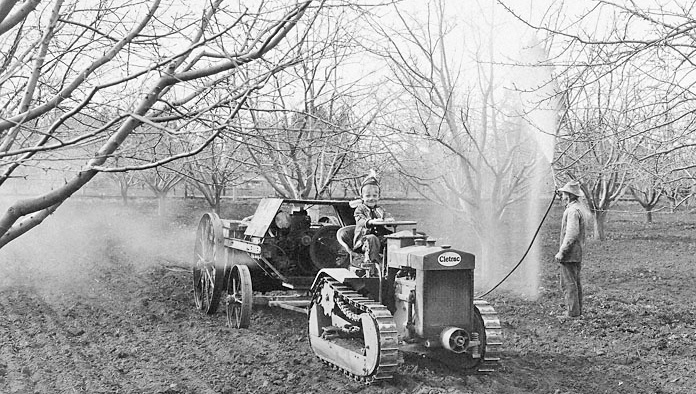
[/media-credit] Spraying orchard in Hood River circa 1930, child riding on tractor. Photo from the Collection of the History Museum of Hood River County.

1: As noted above, legacy pesticides are both bio-accumulative and persistent—they will be around for the foreseeable future. Even though they mostly sit around in the sediment, they get stirred up and/or washed off fields and ditches into streams, and then they begin their climb up the food chain.

2: Even low levels can still be a problem for humans, fish and wildlife and even good insects and invertebrates. Even if they are not fatal outright,  low-level exposures can change feeding and mating behavior patterns, immune responses, and the number of offspring or otherwise affect survivability or reproductive success.

3: Currently the Clean Water Act covers only a subset of the pesticides now in use. A 2015 report by the DEQ listed 11 current-use pesticides that are not even considered in the 303(d) criteria: for example, 2,6-dichlorobenzamide, 2,4-D, deisopropylatrazine, diuron and glyphosate. All were found in Lenz Creek, Neal Creek, and Odell Creek.

In total more than 35 unique chemicals were found in Lenz Creek and Odell Creek, and more than 25 in Indian, Neal, and Threemile Creeks. These included pharmaceuticals, flame retardants, metals, and industrial chemicals. In 2012 the Hood River basin had the second highest number of chemicals detected in the state – and pesticides remain the largest category of chemicals found. But the EPA and DEQ have not even set benchmarks for most of these chemicals. For some, like flame retardants and metals, there is plenty of evidence of adverse health effects under certain circumstances, but for others, there may be little or no research at all. Even when, as is the case with chlorpyrifos, there is abundant evidence of extreme risk.  Yet the chemical remains on the market.  The EPA’s logic in regulating or not regulating chemicals is not always clear.

Is the Problem Getting Worse?

Whether or not the states list pesticides under the 303(d)requirement, the region has an ongoing problem. Is it getting worse? Maybe not. There has been progress in reducing pesticides in Hood River waters. How has that come about?

EPA has proposed listing sections of Hood River and several of its tributaries as ‘impaired’ under Section 303(d) of the Clean Water Act. The consequence of such listing is that state and federal authorities may step in and require pesticide users to change how they use the chemicals that triggered the listing. This would mostly affect one of the area’s main economic drivers: agriculture.

If a water body is 303(d) listed, “Our water quality program will develop a Total Maximum Daily Load (TMDL) for that contamination,” says DEQ toxics coordinator Kevin Masterson, “and that sets the load limit and parses out how much can come from different sources. For agricultural sources, once the TMDL is done, it gets handed to the Department of Agriculture to work with locals in developing an agricultural water quality management plan.”

Luckily for the Gorge region, that admirably bureaucratic language and process has been circumvented, for which all involved are grateful.

[/media-credit] Mixing Corona brand lead-arsenate spray circa 1915. Photo from the Collection of the History Museum of Hood River County.

The Pesticide Stewardship Partnership (PSP)

Vertical Patternator- specialized equipment used to determine vertical distribution of output to match orchard canopy. This and other technology such as sensors, donuts, and specialized nozzles help prevent drift, overspray, and waste. Photo Credit: HRSWCSD

In the Middle Columbia region, there has been a remarkably amicable effort since 2000 among growers, the DEQ, the EPA, the Oregon Department of Agriculture, the Confederated Tribes of Warm Springs, and the Hood River Soil and Water Conservation District to reduce the area’s current-use pesticide burden and to keep from exacerbating the legacy problem. Known as the Pesticide Stewardship Partnership (PSP), this cooperative effort has managed to avoid much of the rancor that often poisons the interface between regulators and businessmen. It has also resulted in an overall decline in certain pesticide levels in area waters.

Many growers voluntarily changed their practices. They’ve moved the locations where they mix and pour pesticides into the sprayers away from creeks and even dry ditches and gullies. They’ve timed their applications more carefully based on close observation of pest behaviors and the weather. They’ve committed to using chemicals more as a last resort than a first option.

Since the PSP began, the DEQ’s testing capacity has increased from 15 chemicals to more than 130. And, says Jordan Kim, manager at the Hood River Soil & Water Conservation District, “They can sample for parts per trillion, so they’re finding things they didn’t find before. It’s not that these things weren’t around before, it’s more that now we can see what’s there.” It’s also possible now to take both ‘grab samples’—one-time snapshots—as well as long-term monitoring of concentrations to see when and where pesticides spike and what their average levels are.

Behind the Curve

States are required to report to the EPA every two years on the status of surface waters, and the EPA is behind schedule. For the current proposed 303(d) listing, the most recent data the EPA is relying on is from 2012-2014. For example, chlorpyrifos was measured in Odell Creek in March 2013 at more than twice the EPA benchmark of 41 nanograms per liter (parts per billion). Malathion was measured in Threemile Creek in June 2014 at 1,250 ng/L, about 12 times the benchmark of 100 ng/L.

Mill Creek in The Dalles, already 303(d) listed for malathion, was measured in June 2014 at 1,570 ng/L — nearly 16 times the benchmark. Yet at the same time, in lower Neal Creek, chlorpyrifos declined from an average of more than double the benchmark in 2000 to undetectable in 2012, according to a DEQ PSP report. And in DEQ samples too recent for the EPA to consider (from 2015) taken from Odell Creek, Lenz Creek, and two Neal Creek sites, there was also no chlorpyrifos found at all.

New Pests, New Poisons

We can’t assume that all these improvements in samples mean that the pesticide trend in the Hood River basin will go downward forever. Pests find ways to work around their poisons. And there will always be new pests. And probably new pesticides with new unintended consequences. For example, until the arrival in 2009 of the spotted-wing drosophila, a type of fruit fly from East Asia, growers were tapering off their use of malathion.

Ken Bailey, of Orchard View Farms, a cherry growing operation near The Dalles, says orchardists in his area assumed their usual tactics for Mediterranean fruit flies would work, but they didn’t. Bailey has participated in the Pesticide Stewardship Partnership since about 2001, and praises the program’s willingness to take growers’ needs and experience into account.

For the new fruit fly, Bailey says, “We’ve still not really learned what a good control program is. We’re doing things that maybe we’d rather not.” Currently Orchard View is using malathion and spinosad pesticides to fight all types of fruit fly. Spinosads are derived from bacterial toxins and are allowed in organic agriculture, although they appear to be highly toxic to honeybees, a European bumblebee, and at least one important native Brazilian pollinator. Thus for growers, regulators and the public, pesticide options are often Hobson’s choices – a situation where you are supposed to make a choice but there is no real alternative – and trends can change direction quickly.

Vocal Locals

Vinyl “donuts” are low cost retrofits to match sprayer output to orchard canopy. Photo Credit: HRSWCD

DEQ’s Masterson, who has been with the Pesticide Stewardship Partnership from the beginning and is considered by other participants to be an unusual government bureaucrat, because he spends a great deal of time visiting the area and listening to locals, is optimistic because he sees a real community committed to cooperative solutions. He says, “[When the growers] see the data they say, ‘Oh, we didn’t know that. Let’s get some training.’ They always tell us, ‘We fish here, we drink the water.’ They have more of a vested interest in keeping the water clean than anybody.

Adds Bailey, “We are monitoring and trying to work out the best practices to make the most effective use of the chemicals. It’s much better than sitting back and waiting for the DEQ to come by and make you cut back.”

During the Trump presidency there is not likely to be any push from the federal government for more stringent pesticide regulation — chlorpyrifos will stay on the market, for example — but with luck the Pesticide Stewardship Partnership will continue to monitor and reduce pesticide levels in the Hood River drainage based on independent state and regional values.


For further information:

ATSDR Toxicological Profile for malathion

ATSDR Toxicological Profile for chlorpyrifos

Basin Summary Reports. Supplement to the Statewide Water Quality Toxics Assessment Report November 2015. Oregon DEQ

Occurrence and Distribution of Pesticides in Surface Waters of the Hood River Basin, Oregon, 1999 – 2009, USGS

Pesticide Stewardship Partnership Program: Protecting Water Quality through Collaboration. PowerPoint.

Soil and Water District: Water quality listing spurs a history lesson, by Jordan Kim. Hood River News, February 24, 2017. 

USEPA: Partial Approval and Partial Disapproval of Oregon 2012 303d List. Cover Letter, Enclosures, and Appendices.  Appendix K: Toxics  Tab 3, DEQ Analysis

USGS National Map Malathion and Chlorpyrifos use by crop 2014.


RELATED POSTS:

By |2019-02-27T14:50:59-08:0010/16/2017|Agriculture, Features, Old Articles|0 Comments

If it smells bad, is it bad?

By Valerie Brown.

People who live in The Dalles are especially familiar with the smell of mothballs. Some may be so familiar with it that they don’t smell it any more. It’s the smell of naphthalene.

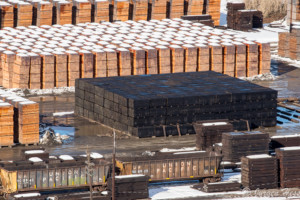
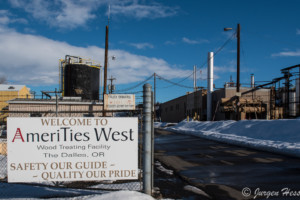
Stacks of treated and untreated railroad ties at the AmeriTies Plant in The Dalles, OR

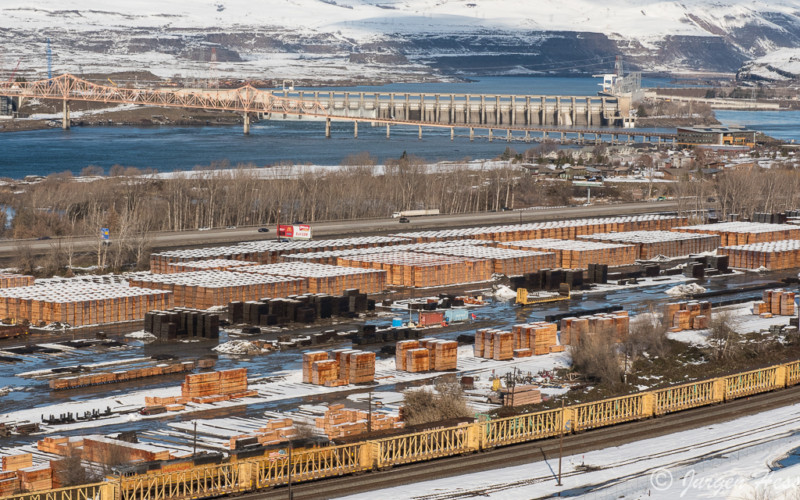
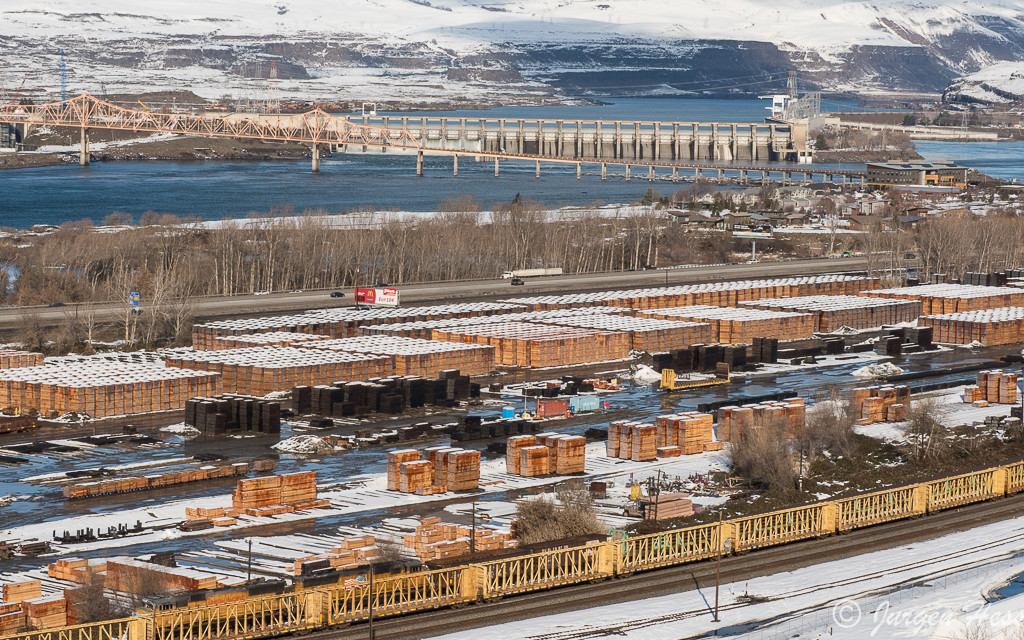
The Dalles has never made any bones about being a functional, burly industrial town. The dam of the same name, the large rail yard, and the cherry processing plant are the face travelers see as they pass by on the freeway. But beyond the industrial strip, the town spreads out into the business district and pleasant residential neighborhoods. Homes that climb up the steep hillsides and perch on the bluff give residents spectacular views of the mighty Columbia and the Washington hills.

Given the city’s history and location, it’s not surprising that The Dalles is home to a company that makes pressure-treated wood for railroad crossties, switch ties, and bridge timbers. In a town of only about 14,000 people, it’s an important employer. Owned since 2005 by AmeriTies West, the plant has been there on Tie Plant Road along the tracks since 1922. The land is still owned by the Union Pacific Railroad.

At the plant, lengths of wood are put into retorts where, under heat and high pressure, they’re exposed to a mix of creosote and oil, which penetrates the wood deeply enough to prevent insects and moisture from disintegrating the wood for decades. After treatment the ties and timbers are stacked outside on drip pads to dry.

Behind railroad cars, dark treated ties are stacked. Light-colored untreated ties await treatment behind them.

Fumes from the drying ties waft out across the city, even reaching the neighborhoods up on the bluff. That’s where Kris Cronkright encountered them in August 2014, not long after she, her husband and their small son moved to The Dalles from Parkdale.

“I’m awoken at six a.m. and my entire house is just rank with creosote. It was very alarming,” she recalls. Cronkright immediately associated the smell with walking railroad tracks in Michigan as a child. “I didn’t know where it was coming from,” she adds. “I shut all my windows and doors and I googled.” That’s how she learned that AmeriTies was the source of the odor, and that she was not the first resident to find the odor overwhelming.

For Cronkright and other residents, it’s not just a bad smell–they suspect emissions from AmeriTies may have more serious health effects. And this is where concerned residents part company with both the Oregon Department of Environmental Quality (DEQ) and the corporation.

Creosote is a coal tar product comprising hundreds of chemicals, most of which are carcinogenic or otherwise bad for human health and the environment. Naphthalene makes up the largest percentage of creosote, and it has the strongest smell of all creosote components.

Since 2014 Cronkright has become an activist, campaigning to get the State of Oregon and the company to take the odor problem seriously as a health issue rather than a ‘nuisance,’ which is how the state currently defines it. As a nuisance, the state says, the odor may cause minor health effects such as headaches and burning eyes and throat, but is not considered a toxic exposure at the levels the public encounters.

“We’ve had complaints for a long time,” says DEQ spokesperson Greg Svelund. When the agency gets more than ten odor complaints in 60 days, Svelund says, it investigates. This happened in 2016. An initial round of air monitoring by DEQ last summer found average levels of naphthalene at a city park on the bluff more than ten times the concentration the Oregon Health Authority (OHA) considers safe to breathe over long periods (0.03 micrograms per cubic meter for more than a year), and more than 100 times that concentration at a Wasco County building closer to the plant.
 
This caused consternation among residents and spurred the state and federal governments to delve further. One more set of air monitoring remains to be completed this year, and the cumulative data will be used in a health consultation by the Agency for Toxic Substances and Disease Registry of the Centers for Disease Control (ATSDR), OHA and DEQ to be released some time in 2017, says Svelund. The DEQ issued an interim report on March 3 and will hold a public meeting on Tuesday, March 21 in the third floor auditorium in Building 2 at Columbia Gorge Community College, 400 E. Scenic Drive in The Dalles.

How much of a health risk is naphthalene?

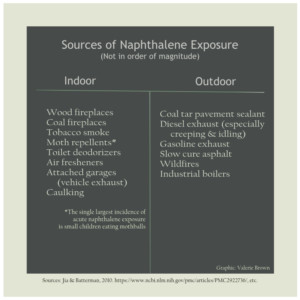
There are many sources of naphthalene in the environment, and for most people exposures are highest indoors. (See table). Even so, for The Dalles residents, the tie plant has to be considered a major source of exposure.

[media-credit name=”Valerie Brown” align=”alignright” width=”400″][/media-credit]

Naphthalene is a polycyclic aromatic hydrocarbon (PAH), a class of chemicals that are almost all very bad actors. The Environmental Protection Agency considers naphthalene a possible human carcinogen. Non-cancer effects of naphthalene exposure can include rashes, irritated eyes, vomiting, and hemolytic anemia, a type of red blood cell disorder. Children and people with a heritable type of enzyme configuration are especially vulnerable to this anemia.

Many of these symptoms occur at higher exposures than the DEQ and OHA believe The Dalles residents are experiencing. But based on research on other PAH compounds, it’s possible that naphthalene can damage health at lower exposures. For example, both pre- and post-natal exposure to PAHs are known to be associated with neurological disorders in children, and emerging science suggests that PAHs can collect on ultrafine particles (or ‘nanoparticles’—less than billionth of a meter in diameter) in the air that can travel along the olfactory nerve in the nose into the brain. PAHs and metals in fuel exhaust that behave this way are implicated in neurodegenerative diseases like Parkinson’s and Alzheimer’s. These events can take place in everyday situations like idling at a stoplight. And it’s also important to realize that everyone is exposed to mixtures of chemicals, whose combined health effects are mostly unknown.

To reduce odors, AmeriTies has substituted copper naphthenate for the chemical it was using on bridge materials and changed its main creosote formula to reduce overall naphthenate by half, according to Michelle Cole of Gallatin Public Affairs, a spokesperson for AmeriTies. The company has also changed its treatment schedule and the way its ties are stacked. But regardless of their smell, the company’s air emissions are well within the limits of the DEQ’s air contaminant discharge permit.

The state and federal agencies will likely use as a model their study of another Oregon creosote tie plant, the J.H. Baxter facility in Eugene. (The AmeriTies site was operated by the J.H. Baxter company from 1959 to 1987.) The DEQ investigated the Eugene site in the 1980s, but it wasn’t until 2003 that the DEQ, OHA and ATSDR looked into resident complaints.

A follow-up report on the Eugene plant in 2007 ‘that included air monitoring data for the first time’ found no emissions higher than acute or chronic limits. The agencies did see an area-wide elevated incidence of lung cancer and of acute myelogeous leukemia (AML) in some years among people in one neighborhood near the J.H. Baxter plant. It could not rule out an environmental cause for the AML, but noted that all of the AML cases smoked, as did all but one lung cancer case. Since smoking is considered a strong contributor to both diseases, the report implied that the J.H. Baxter emissions were not the main factor.

Because the health consultation for The Dalles will be patterned after the Eugene study, it will not be a full-fledged epidemiological, exposure or biomonitoring study, and the only new data will be the final air monitoring results. Thus it’s unlikely to provide a clear answer to residents’ worries about the difference between a nuisance and a health threat.

The completed and installed product – railroad ties.

Cronkright moves

Cronkright was happy her family moved to The Dalles, she says, because she enjoys the sunshine so abundant there. But her son is autistic and she suffers from migraines, and she doesn’t want to add any more health problems to the family’s list—which she feels the naphthalene and creosote fumes might do. The family lasted two months in their home on the bluff and have since moved to the Cherry Heights area west of downtown where the smell is far less intrusive.

She’s planning to keep pressing for better air quality in The Dalles. “I’ve been told on Facebook that if I think something smells I should go wash myself,” she says. “I feel kind of like a pariah. But I don’t care. I tell people I’m not going anywhere. I wish I didn’t have to fight my own community. But I’ll fight for your kid, if you don’t want to.”

Support Our Work!
Support Free Press - Support EnviroGorge! We are an independently funded environmental news magazine. Contribute any amount so we can continue to publish original stories. Use paypal (Visa accepted) or check - ask us about being a business sponsor (send checks to EnviroGorge, P.O. Box 163, Hood River, OR 97031)
Support Our Work!


Paid Advertisement:


Related Articles by EnviroGorge:

By |2019-04-11T10:07:56-07:0003/16/2017|Energy, News, Old Articles, Waste Management|5 Comments

© Copyright 2013-2025 Columbia Insight. All Rights Reserved.

As a 501(c)3 nonprofit organization, all donations to Columbia Insight are tax deductible to the full extent of the law. Our nonprofit federal tax-exempt number is 82-4504894.