Stay Updated Subscribe today for the latest research + reporting about environmental news. Subscribe Now

Stay Updated Subscribe today for the latest research + reporting about environmental news.

Subscribe Now

Susan Hess

Susan Hess

About Valerie Brown

Valerie Brown, lives near Portland, Oregon. She specializes in science and environment writing, particularly environmental health and climate change, including the health effects of chemical and radiation exposures, carbon sequestration, and climate change’s effects on forests and oceans.

Steigerwald Restoration: Reconnecting a floodplain to the Columbia
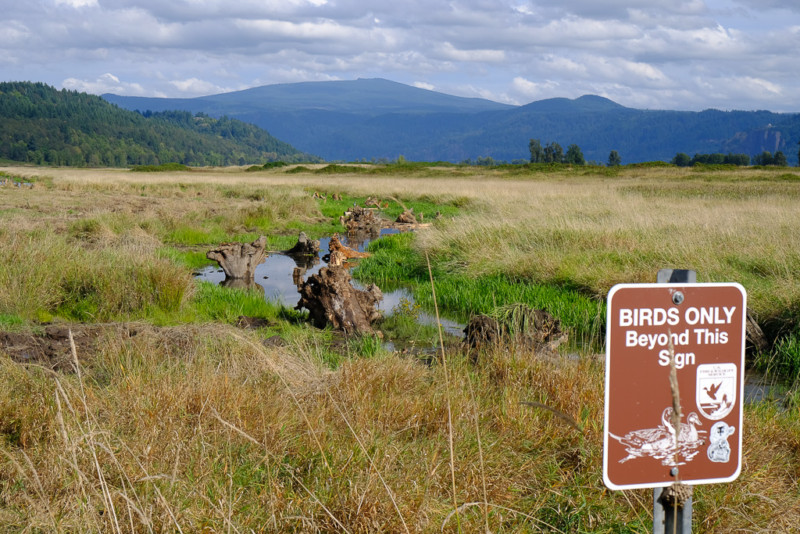
Gibbons Creek, which enters from the Refuge’s west side, provides important habitat for salmon, waterfowl and other native species. Photo by Jurgen Hess

By Valerie Brown. Jan. 9, 2020. Migratory birds heave a sigh of relief when they reach the Columbia River, where they can take the Steigerwald Lake exit from the Pacific Flyway. The lake is the namesake of a small body of water and a floodplain along the Columbia River just east of Camas/Washougal, Washington. Managed as part of the U.S. Fish & Wildlife Service’s Ridgefield National Wildlife Refuge Complex since 1987, the 1,049 acre Steigerwald Lake National Wildlife Refuge sits right at the western boundary of the Columbia River Gorge National Scenic Area. And this year, it will undergo a major transformation: being reconnected to the river.

A wildlife rest stop

Steigerwald’s position is unique. The Columbia River is the first break in the Cascades encountered by migratory birds using the north-south flyway along the west side of the mountains, and the only sea level east-west corridor south of the Fraser River in Canada.

“If you think in terms of highways, where they cross is where we would put a hotel, gas stations, restaurants,” says Steigerwald steward Wilson Cady. Within the Gorge there are few places for either fish or fowl to rest. Which makes Steigerwald a vacation spot, truck stop, and rest area for migratory species, as well as a permanent home for dozens of others. Many birds move back and forth through the Gorge, some intentionally, Cady says, some just taking wrong turns or getting caught up in one of those notorious east winds.

The Columbia corridor is also an important channel for the migration of salmon and lamprey, and the Bonneville Power Administration is legally required to mitigate the destruction of fish habitat caused by dams. Part of the logic behind the Steigerwald project is that restoring shallow freshwater habitat of several kinds will help juvenile salmon prepare for their trip to the sea by offering plenty of food, little to no current, and some protection from predators.

Many ducks in a row

The project entailed lining up a lot of ducks in a row. The Lower Columbia Estuary Partnership (LCEP), formed by the governors of Oregon and Washington and the Environmental Protection Agency in 1995, teamed up with the Bonneville Power Administration, Friends of the Columbia Gorge and others to jump through all the bureaucratic hoops necessary to revitalize Steigerwald. They came up with a plan, funded by the BPA and the Washington Department of Ecology, that will reconnect 965 acres with the river.

Steigerwald was separated from the Columbia 54 years ago for human purposes, including agriculture and industry. Levees were built to keep the river out. Gibbons Creek, which enters the floodplain at the refuge’s west side, was diverted and forced into an aqueduct along the top of the levee protecting the Port of Camas-Washougal Industrial Park, the Washougal Wastewater Treatment Plant and some residences. Not surprisingly, Gibbons Creek has repeatedly flooded the structures the levee was built to protect.

The diversion and channeling of the creek also eliminated the alluvial fan at its entrance to the floodplain. So any migratory fish trying to use Gibbons Creek for spawning have to negotiate the diversion, the levee aqueduct and the fish ladder to reach their goal.
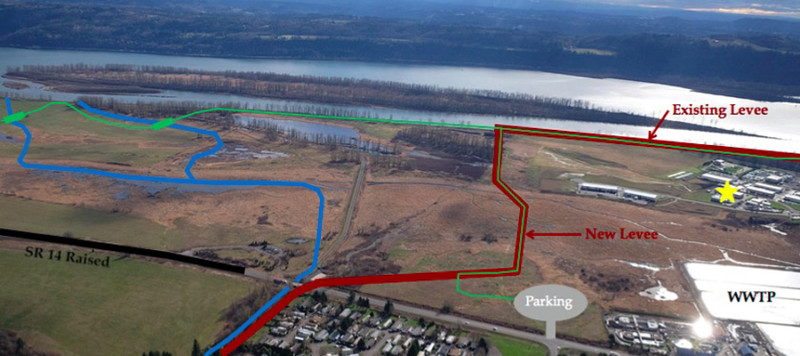
Aerial view of the area to be restored. Photo courtesy of Refuge Stewards

In ecological terms, the Steigerwald project is huge. It’s the largest chunk of land on the lower Columbia available to add freshwater habitat for fish, says Dan Bell, land trust director for Friends of the Columbia Gorge, which purchased 160 acres of private land in the floodplain to add to the refuge. Steigerwald is “one of only a couple of places where you could conceive of a project like this at this scale,” says Bell.

In addition to the positives for wildlife, there will be quite a few benefits for people as well. “It’s rare,” says Debrah Marriott, LCEP’s executive director, to have “a project of this size in that particular geography with the Gorge and the metro area.” She ticks off the benefits: “Reduce flood risk, expand recreational opportunities, fix flooding on the highway, engage kids, and reduce financial impacts on the Port and USFWS for repair and maintenance.”

Long-term commitment

Generations of area residents have enjoyed birding and simply walking the trails, and no one is more familiar with the area than Cady, whose history of the Steigerwald Lake National Wildlife Refuge is replete with colorful anecdotes. He writes that after the levees cut off river access, a variety of human uses were proposed, most based on the idea that the area had no wildlife value. These included a dock and turning basin for barges. But locals, especially birders, knew very well that plenty of wildlife used the area.

The federal refuge was created in 1987 with the support of Oregon senator Mark Hatfield, who did not want sightseers at Crown Point on the Oregon side to look down at an industrial area. That was the same year the Washington legislature changed the Department of Game to the Department of Wildlife, reflecting a major shift in both public opinion and government policy from valuing undeveloped land for industry or hunting to seeing it as wildlife habitat.

Since then, conservation management principles have further evolved in the wake of plummeting salmon and lamprey populations, and resource managers have moved toward more holistic ecological and landscape-scale approaches rather than single-species perspectives.

The details
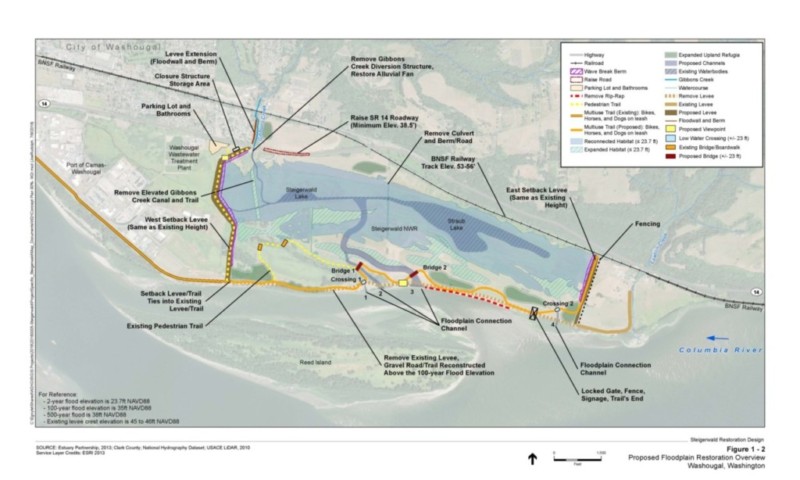
A detailed map shows how the restoration project will move forward. (Ctrl + Click to enlarge) Map courtesy of Lower Columbia Estuary Partnership

The basic restoration plan is relatively simple: undo the features that prevent the river from reaching the floodplain without worsening flood risk for infrastructure. The levee along the river will be breached at several points, while the levee protecting the industrial park and the municipal wastewater treatment plant, along with a residential area, will be rebuilt. Gibbons Creek will be allowed to debouche into the floodplain via its own new alluvial fan. Its diversion structure and fish ladder will be removed. About 1,200 feet of State Road 14 will be raised above the 500-year flood line, and a mile of trail will be added.

Species v. species

There has been some opposition to the Steigerwald project from waterfowl hunters, which illustrates the challenges of protecting species seen as competing for habitat. Albert O’Connor, a spokesman for both the Washington Waterfowl Association and Delta Waterfowl, stated in an email that “trading wildlife habitat including waterfowl for fish habitat will have adverse impacts to waterfowl and other wildlife. The benefits to salmon have not been established.”

The BPA’s final environmental assessment, however, notes that refuge managers intend to continue providing about the same acreage now devoted to grassland for geese that use the area during migration and nesting seasons. Chris Collins, principal restoration ecologist with the LCEP, says the project will create nearly 100 acres of wetland, and he expects the food base for waterfowl to be “more diverse and higher quality. We’ll certainly see greater capacity for those populations.” In any case, he added, the intent of planners is to re-create the environment that the native waterfowl species evolved in an environment they shared with fish. And while the refuge has never been open for hunting, no decision has been made to ban it permanently, says Eric Anderson, the USFWS interim director for the refuge.

There is also evidence that habitat restoration projects for salmon are succeeding elsewhere in the Northwest, although most efforts are so recent that comprehensive results are not available. A 2016 study by the Nisqually Indian Tribe, the US Geological Survey and the USFWS found that since a dike was removed in the Nisqually delta in 2009, both salmon and waterfowl have begun to recolonize the restored habitat. And since the Marmot Dam was removed on the Sandy River in 2006, that river’s coho and steelhead numbers have increased markedly.

Weasels and widgeons and stilts, oh my!

The refuge will be mostly closed to the public until the project is finished in 2022, but after that visitors will have a chance to see a wide variety of animals and plants. Of the 300-plus species of birds found in Clark County, Cady says, 200 of them have been seen at Steigerwald. Local creatures include beaver, nutria, otter, mink, long-tailed weasel, black bear, cougar, bobcat, coyote, raptors and “a host of rodents,” Cady notes, along with many turtles. He adds that east-side birds including burrowing owls, sage thrashers, avocets and black-necked stilts have been seen at Steigerwald. The BPA assessment expects that cackling goose, Canada goose, wood duck, gadwall, American wigeon, cinnamon teal, and bufflehead will continue to visit as well.
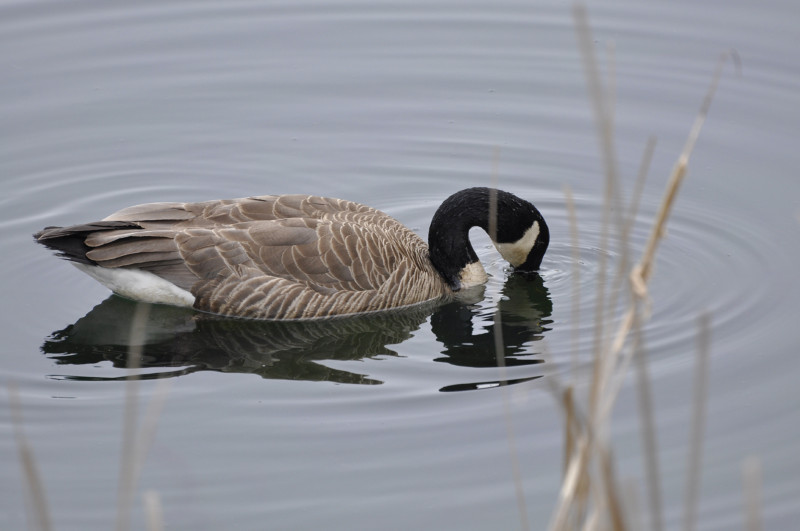
Canada goose. Photo by Jurgen Hess

Anderson knows there’s at least one bittern in residence, and he says there are coho and steelhead in Gibbons Creek as well. He has hopes that “chum might once again show interest in the alluvial fan at Gibbons Creek. That would be a dream come true.”

Ryan Baker, wastewater manager for the Washougal treatment plant, has seen coyotes, deer, ducks, blue herons and a beaver wander in and between his treatment ponds (they don’t stay long), and is happy the project is underway. “Environment comes first. I wouldn’t be in this industry if I wasn’t willing to help the environment,” Baker says.

Among the admirers of Steigerwald, Wilson Cady is the most devoted. The descendant of an Oregon Trail wagonmaster, he is the third generation in his family to stay fiercely connected to wilderness despite the manic pace of human development in the lower Columbia region. Referring to the formation of the Clark County chapter of the Audubon Society in 1975, he says, “We were hoping we could save a remnant of the wetlands out there. This restoration is more than I ever dreamed of.”
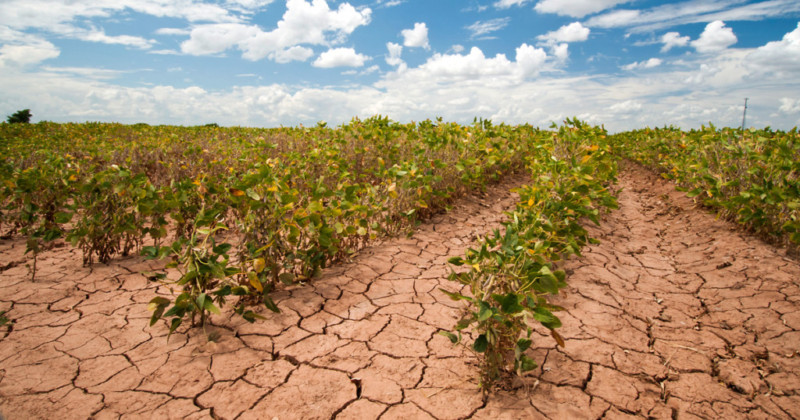
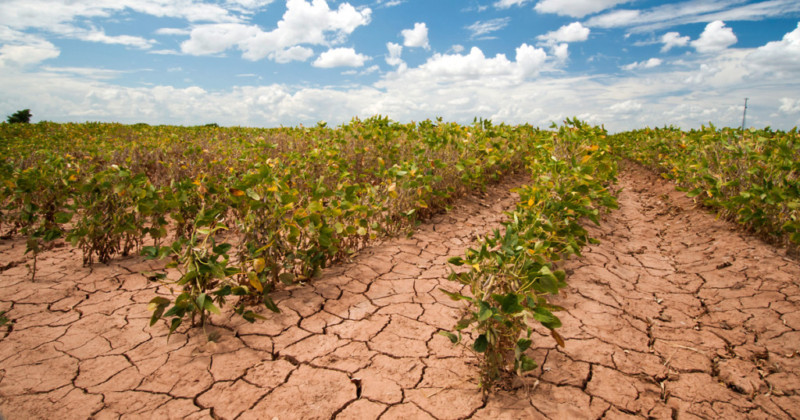
Carbon Farming: Can agriculture help save us from climate change?

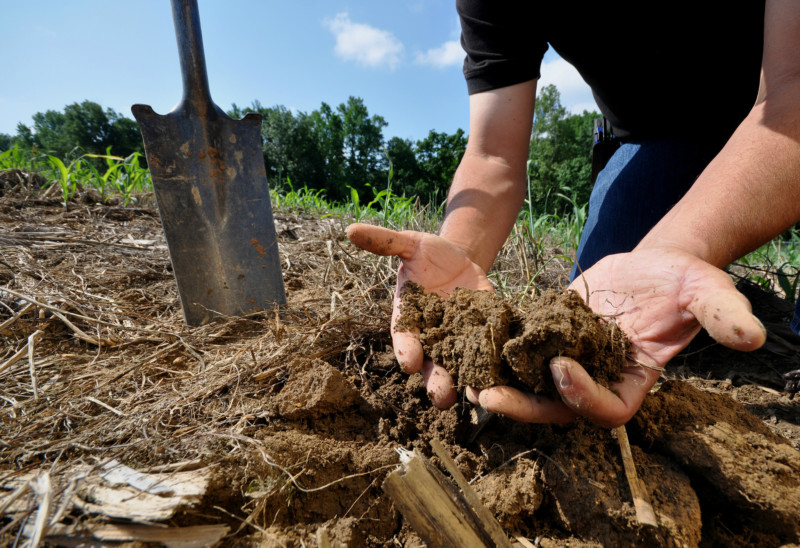
With the effects of droughts and depleted topsoils becoming more apparent, the cracks in our agricultural systems are starting to show. Photo courtesy of USDA

By Valerie Brown. Dec. 12, 2019. Most people have stopped denying anthropogenic climate change and many would like to offset their contributions to atmospheric carbon. An increasingly attractive and practical way to do this is to incentivize regenerative agriculture.

Instead of capturing carbon dioxide before it’s emitted, farmers can take already-emitted carbon out of the air by using agricultural practices that rebuild organic matter and restore degraded soil biodiversity. Some believe that paying farmers for this vital ecosystem service, termed “carbon farming”, will provide the necessary impetus.

In 2020, a Seattle company, Nori, will launch what it claims will be an efficient and transparent digital carbon farming market using the newfangled economics of blockchains and cryptocurrency. In principle, the system will make it easy for consumers to buy captured carbon credits and support farmers committed to regenerative agriculture with a swipe or click.

Nori’s chief executive officer Paul Gambill says he took on this complex problem because “I was sad to discover that most efforts were about making climate change less bad, and I wanted to make the whole problem be solved and go away.”

Nori is unlikely to totally eliminate the problem, but it could take a big bite out of it, provided its market can overcome some technical difficulties in soil science, as well as the flaws in many of the cap-and-trade systems that have been tried previously and have been plagued by corruption.

The science

On the scientific side, carbon farming is very attractive. Globally, estimates of soil’s potential to absorb carbon range widely, but one common figure is three billion tons per year, or about 10 percent of total fossil fuel carbon dioxide emissions. At the field level, according to Nori’s white paper, certain agricultural practices can capture approximately 0.5 to 3.0 tons of carbon dioxide equivalent per acre per year.

Soils naturally exchange carbon with the atmosphere all the time as plants, fungi and microbes respire, but many agricultural practices — especially plowing — have depleted soil carbon and released major amounts of methane and nitrous oxide, two potent greenhouse gases. An existing approach known as regenerative agriculture helps to reverse the gradient. Its practices include no-till planting, using cover crops between growing seasons, reducing inputs like pesticides and fertilizer, adding compost and other measures.

Even without carbon capture, regenerative agriculture has many benefits: fungal and bacterial networks in soil remain active, topsoil stays in place, soil fertility and crops’ nutritional values increase. Costs go down, yields go up, and biodiversity returns. So farmers already working regeneratively are well placed to make the leap to carbon farming.

There are still some technical challenges to carbon farming, however. The soil’s ability to take up carbon depends on many factors: soil type, chemistry and history; regional ecosystem and climatic conditions; and moisture levels, for example. There is also a limit to how long carbon farming can mitigate climate change. Globally, cultivated soils have lost about half their carbon since agriculture began, and the more degraded the soil, the more carbon it will gobble up. But soils aren’t a bottomless cup. They will take carbon until the atmosphere and soil reach an equilibrium and return to a more balanced rate of carbon exchange.

“You can increase the carbon over decades but you’re not going to keep increasing for centuries,” says David Montgomery, a geomorphologist at the University of Washington and author of Growing a Revolution: Bringing Our Soil Back to Life and Dirt: the Erosion of Civilizations.

[perfectpullquote align=”full” bordertop=”false” cite=”” link=”” color=”” class=”” size=””]“Opinions differ over how much carbon you can put in over what time frame.”[/perfectpullquote]

Data entry

In order to create a predictable market, the variables affecting carbon uptake must be quantified. This is already happening to some extent as farmers adopt modern business practices, particularly the use of management software, so tracking the data has become more feasible.

There’s also the hurdle of verification and validation. Just as in certification for organic farming, carbon farmers will have to prove that their practices walk the walk. In addition to management software, there are a few tools that can help farmers make the switch. For example, Nori recommends a free modeling tool called COMET-Farm that was developed at the University of Colorado and supported by the U.S. Department of Agriculture. The tool helps farmers quantify, assess, and improve carbon sequestration, and replaces some of the real-world physical verification by consultants, which is the most expensive phase of the project.

The USDA’s National Resources Conservation Service (NRCS) is already helping farmers estimate the impacts of regenerative agriculture practices on soil carbon levels. Photo courtesy of NRCS

There is also a program underway through conservation districts called “Farmed Smart,” which aims at increasing and certifying sustainability. Ty Meyer, executive director of the Pacific Northwest Direct Seed Association (“direct seed” is the term for sowing a no-till field), works with farmers in Washington’s Palouse region to achieve Farmed Smart certification. The program requires farmers to meet 36 criteria related to conservation of water, soil, and wildlife habitat while increasing efficiency and economic viability. The DSA annual testing protocol will eventually include soil carbon, Meyer says.

So far, so good. Next?

Provided these practices and tools prove effective, farmers should be on solid ground scientifically. That leaves another series of questions about the economic risks of carbon farming. On one hand, farmers tend to be “really risk averse,” says Montgomery. Switching from conventional to regenerative farming can take up to seven years, making the transition “a bit of a challenge,” he adds. So someone just starting that transition might not be able to add carbon farming right away.

The possibility of a new revenue stream could motivate farmers to make the switch, says Carrie Brausieck, a resource planner with the Snohomish Conservation District. Brausieck works mostly with small farmers and believes there’s great interest in regenerative agriculture, and possibly carbon farming, in the community. But with the uncertainties farmers already face — including tariffs, weather, pests and debt — “The incentive [to farm carbon] would have to carry the farmer through that adjustment period,” Brausieck says.

Gambill, though, is confident that farmers will join the project. “There’s massive farmer interest,” he says, including “an incredibly long waitlist to join our market.”

How it plays in the Palouse

Meyer lives in a house built by his great-grandfather on his family’s farm, where his brothers-in-law grow garbanzo beans and wheat using exclusively no-till methods.

“Carbon’s a new game out here in agriculture,” Meyer says.

Asked about potential interest in a program like Nori’s, Meyer says, “Our challenge is measuring how much money can be made. We have to figure out on an annual basis how much carbon is stored in the soil. I’ve heard .5 to 1.5 tons per acre. I think the 1.5 is high for our regions and our soils.”

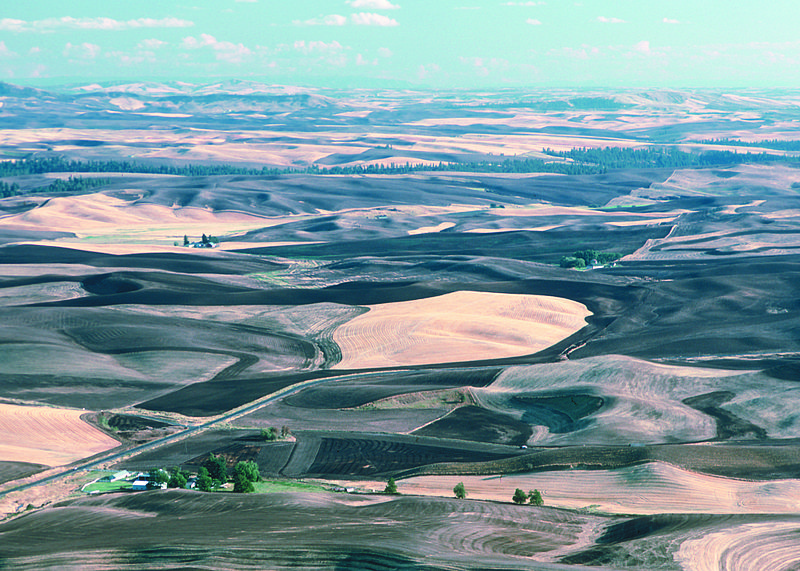
There is huge potential for carbon farming in Eastern Washington’s Palouse region, which is the largest lentil growing region in the United States. Photo courtesy of NRCS

Farmers are exquisitely sensitive to cost-benefit ratios, so the tons-per-acre calculation is crucial to their decision making, as is a reliable estimate of the value. Estimates of potential revenue from carbon farming vary widely, but an article in Modern Farmer cites a scenario in which a regenerative farmer with 250 acres sequestering two tons of carbon per acre might make about $3,000 per year. Not bad compared to the 2017 median net farm income of about $75,000. But the actual return on investment from participation in Nori’s market won’t be known until it’s been up and running for a while. Meyer’s skeptical estimate is at the low end of Nori’s projection, so refining the data will be important.

Digital pie in a digital sky?

The success of an all-digital carbon farming market relies on the purported advantages of blockchain and cryptocurrency.

Environmentally speaking, there is a glaring and ironic problem with cryptocurrencies like bitcoin, which is the most commonly used cryptocurrency in the world. Because of the enormous amount of computation needed, they use an obscene amount of energy. One analysis found that the open-source blockchain platform Ethereum was hoovering up almost as much electricity as the nation of Austria about 73 terawatts in a year. Nori plans to use Ethereum, which claims to be overhauling its software to reduce its energy use to one percent of current levels.

But let’s say this and the other scientific and technical challenges have been overcome. What about the rest of the digital component?

Like other carbon trading setups, Nori will assign one carbon removal credit to each ton of sequestered carbon. These credits change digital hands in the form of tokens, the basic unit of Nori’s own cryptocurrency. (A cryptocurrency is an entirely digital and decentralized form of money.) One ton of carbon would always equal one credit, but the currency itself would “freely float in relation to the dollar” and other currencies, according to Nori’s white paper. This would theoretically attract investors who would make money when the Nori token increased in value.

The trading activity will take place through another digital entity called a blockchain. A blockchain is essentially a ledger showing the history of a series of transactions. Each event in the series is protected by a “block” of encryption, so that in theory nobody is able to change any step in the chain, and fraud can’t be perpetrated via alterations to the evidence. Each buyer and seller has her own private “key” enabling her to participate in the transaction, and each step in the series is visible to all participants.

Enthusiasts claim numerous advantages to blockchains. Primarily, they say, because there’s no central authority managing the market, transaction costs would plummet (Nori would charge a transaction fee). They also claim that nobody can game the system privately because blockchain is simply a piece of software distributed in “the cloud” and is impervious to capture by any one player.

This sounds too good to be true, not least because the digital economy has attracted “a veritable goon squad of charlatans, false prophets and mercenaries,” as the New York Times put it. The most notorious cryptocurrency, bitcoin, has inspired vast bubbles and frauds, and blockchain transactions have been hacked. Last year Wired reported on a crime spree in which numerous accounts were emptied of about $50 million in bitcoins. The thefts occurred in Ethereum.

Gambill counters that these hacks are the equivalent of thefts from “individual people’s bank accounts, but no one has been able to hack the Federal Reserve.” This is cold comfort, however, to those whose individual accounts have been rifled.

Stephen McKeon, associate professor of finance at the University of Oregon, says he is not worried about hackers cracking Ethereum:

“The really important thing in these markets is verification that whatever action is being purchased is validated by somebody,” says McKeon. “[Nori’s proposal] seems very plausible to me.”

High cover charge?

Theoretically, Nori’s program will make farmers’ participation in the market easier than is the case in current carbon trading markets. The latter usually require that for each transaction, the carbon credit buyer and seller must engage in a complex series of steps to ensure trust and to guarantee that carbon is kept out of the air. Aldyen Donnelly, Nori’s director of carbon economics, said on a Future of Agriculture podcast that participants in traditional carbon markets typically pay 40-60 percent of their revenue to accountants, lawyers and registries. In Nori’s system, the farmer’s practices must be validated and verified upfront by an independent third party, eliminating the need for these steps to be completed in each transaction.

There are many “if’s” in Nori’s plan, and as FiveThirtyEight.com says, carbon farming is “still more of a gamble than a clear success story.” But climate change waits for no man. Mitigating it has to happen somehow, and good faith efforts to take advantage of the profit motive might be the way to go.

The farmers Brausieck works with are already experiencing climate change, and much of their interest in regenerative agriculture comes from the hope that their farms can become more resilient to drought, hyper-precipitation, insect invasions, and all the other ills in our future. And they are always looking for more revenue streams. In Brausieck’s view, these stresses make carbon farming worth trying even if it seems dauntingly complex. “We’ve got to get it going,” she says.

Nori’s bedrock premise is that “economic prosperity and stewardship of the earth can work hand in hand.” If Nori’s right, its system will be a major milestone on our path toward addressing the global climate crisis.

By |2019-12-12T09:30:59-08:0012/12/2019|Agriculture, Climate Change, Features|2 Comments

Dando la Bienvenida al Castor

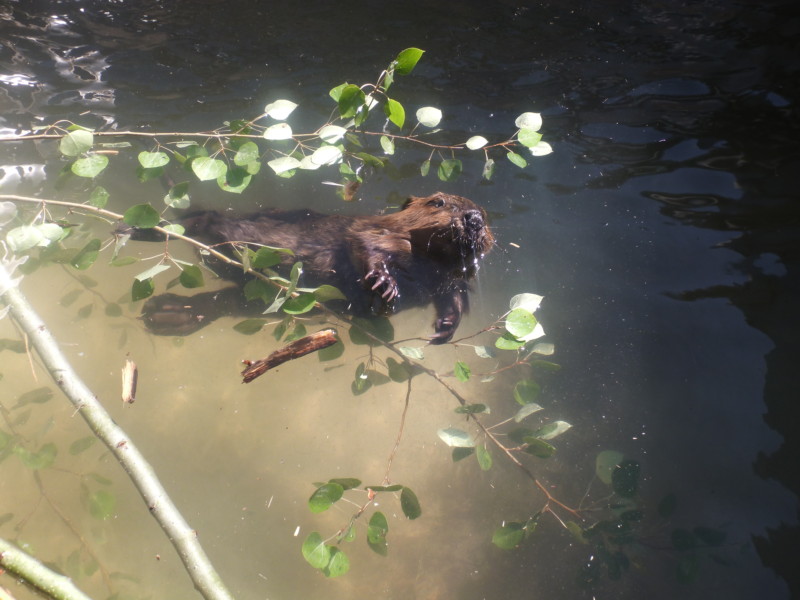
Después de ser casi erradicados de América del Norte durante el siglo XIX, los ecologistas ahora están reconociendo el papel crucial que juegan los roedores en la restauración y preservación de la biodiversidad.

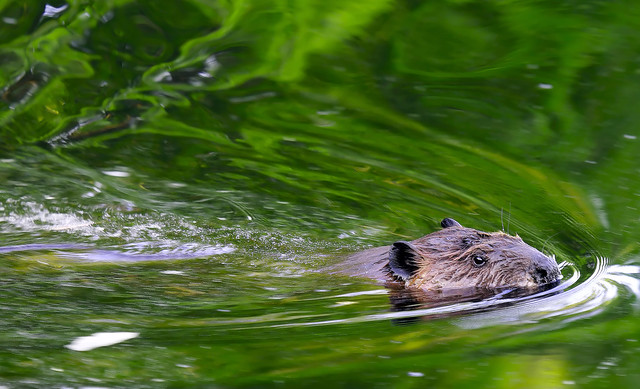
Foto por Mark Giuliucci

Por Valerie Brown. 22 de agosto de 2019. Neatniks atesora las esquinas cuadradas, las líneas rectas, la ausencia de desorden. Un paisaje aprobado por Neatnik tiene ríos limpios y fluidos con márgenes bien definidos, agradables praderas planas que se pueden convertir en campos y lagos limpios libres de escombros.

Ese parece haber sido el modelo utilizado por los primeros europeos que se establecieron en la costa atlántica. Durante los siguientes cuatro siglos, aplicaron el modelo en todo el continente. Desde el período colonial hasta 1990, Estados Unidos perdió más de la mitad de sus humedales, lo que resultó en ríos y arroyos plagados de erosión, niveles freáticos agotados, desertificación y la desaparición de mamíferos, anfibios, peces, reptiles, insectos y plantas.

Así, la ideología neatnik devastó un continente. Finalmente, ahora que la devastación es dolorosamente obvia, la gente está volviendo a los ingenieros originales del paraíso primordial: el castor. Y con el catastrófico cambio climático que se avecina, el segundo roedor más grande del mundo se parece cada vez más a un posible caballero con armadura peluda.

Complejidad: cuanta más vida hay, más vida hay

Beaver ha enseñado a los observadores que lo que parece un caos es realmente complejidad, y la complejidad es solo otra palabra para la biodiversidad. Los castores convierten arroyos simples en humedales complejos. Sus estanques retienen el agua superficial y subterránea y la mantienen fresca. Las aguas poco profundas albergan salamandras, renacuajos, peces jóvenes y larvas de insectos. Alrededor de los castores, las plantas ribereñas son más diversas. Las inundaciones son menos catastróficas. El flujo de corriente persiste durante la estación seca. La turbidez disminuye. En otras palabras, los castores son “lo más importante en el paisaje desde una perspectiva de biodiversidad”, dice Michael Pollock, biólogo de peces y creyente de castores en el Centro de Ciencias de la Pesca de la Administración Nacional Oceánica y Atmosférica.

Ye Olde Near-Extinction

Como señala Ben Goldfarb en su excelente libro, Eager: The Surprising, Secret Life of Beaver and Why They Matter, la población de castores pre-europeos de América del Norte se estima en 60-400 millones. Debido a que su pelaje era un sombrero de copa perfecto para los toffs, los castores fueron cazados hasta casi extinguirse en todo el continente. A pesar de que la carnicería cesó alrededor de 1870, cuando la seda se convirtió en alta costura para los sombreros de copa, en 1900 solo quedaban alrededor de 100,000 castores. Las estimaciones de la población actual de América del Norte oscilan entre 12 y 15 millones.

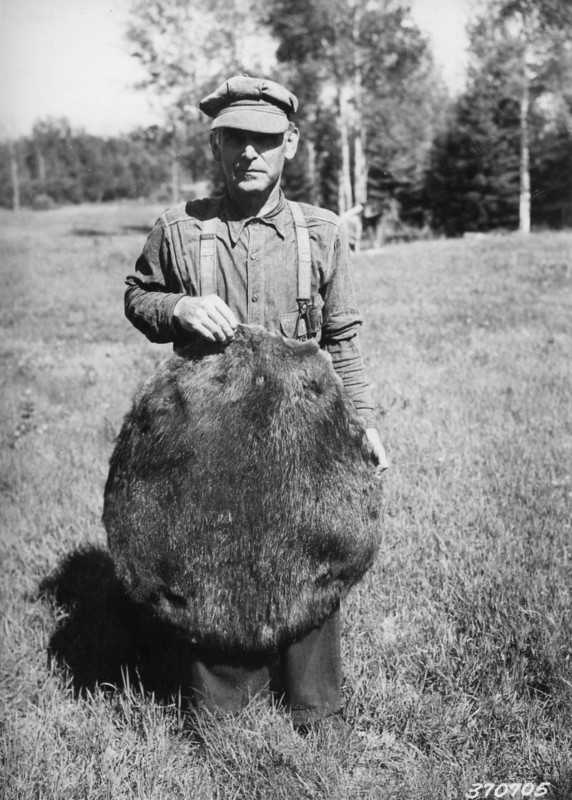
Foto de Wikimedia Commons

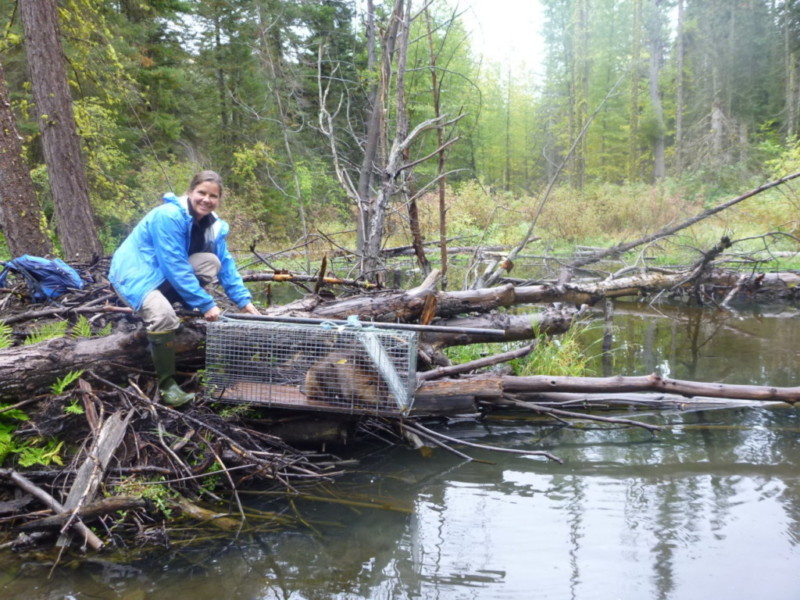
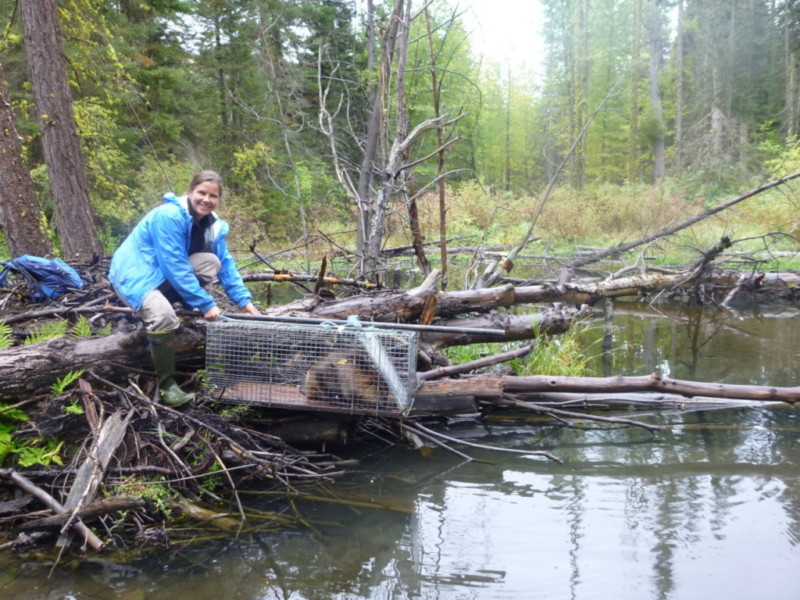
Las actitudes eventualmente cambiaron. Los entusiastas de los castores admiran a Dorothy Richards, quien adoptó una colonia remanente de castores en las montañas Adirondack de Nueva York en la década de 1930. En 1948, el estado de Idaho comenzó a dejar castores desde los aviones en sitios silvestres en cajas de madera. Algunos castores realmente sobrevivieron. En estos días, los reubicadores de castores usan jaulas humanitarias e intentan llevar a toda la familia si es posible. También construyen “análogos de presas de castores” para proporcionar un poco de infraestructura para un mayor desarrollo de castores, y a veces construyen refugios de inicio improvisados para que el castor tenga un lugar donde esconderse de los depredadores. Estas prácticas han aumentado la tasa de éxito de las reubicaciones de castores, y ahora hay numerosos programas en el noroeste para reubicar a los animales en lugar de matarlos. El Mid-Columbia Fisheries Enhancement Group, por ejemplo, se asoció con la Nación Yakama durante cinco años para efectuar 45 reubicaciones de castores en los afluentes del río Yakima, de los cuales 16 resultaron en nuevas colonias que construyeron 26 nuevas represas, 24 estanques y almacenaron 24,6 millones de galones de agua.

Muévete, salmón

Gran parte de la política de conservación en el noroeste gira en torno al salmón. El gobierno federal y los estados tienen tratados con Yakama, Umatilla, Nez Perce, Warm Springs y muchas otras tribus para asegurar cosechas sostenibles de salmón. Las partes interesadas públicas y privadas se han dado cuenta lentamente de que el castor ayuda al salmón, y una investigación reciente sugiere que el salmón coho en peligro de extinción podría no recuperarse sin la ayuda del castor.

Reconocer la asistencia de los castores representa un gran cambio para muchos expertos en peces. Debido a que algunos defensores del salmón se imaginan una gran barrera de concreto cuando escuchan la palabra “presa”, tardaron en reconocer que las represas de castores no son un obstáculo para el salmón, dice Pollock. Los creyentes del castor señalan que si las presas de los castores fueran una barrera, el legendario salmón corre por los ríos Columbia, Snake y Salmon nunca habría existido. El punto clave de una historia de los nativos americanos lo dice todo: “Beaver le enseñó al salmón a saltar”.

El brazo de la justicia

Los estatutos y políticas estatales y federales reflejan el estado histórico del castor, usualmente definiéndolos solo en términos económicos. Por ejemplo, un estatuto de Oregón define al castor como “animales depredadores” y “roedores nocivos”. (Los castores son en su mayoría vegetarianos, y sus víctimas habituales son árboles y arbustos, especialmente sauces …) Otro estatuto los etiqueta como “portadores de pieles protegidos” en tierras públicas, donde pueden ser asesinados por sus pieles. Sin embargo, varias agencias de Oregón también patrocinan y participan en programas de restauración de castores. Lo mismo es cierto para Washington e Idaho.

Foto por Mid-Columbia Fisheries Enhancement Group

Las políticas federales son igualmente inconsistentes. Entre 2010 y 2016, el programa de “Servicios de Vida Silvestre” del Departamento de Agricultura de los Estados Unidos (conocido como APHIS) mató a 772 castores en algunos de los mismos condados costeros de Oregón donde NOAA dice que el salmón coho necesita desesperadamente estanques de castores. Una demanda amenazada en 2018 por el Centro para la Diversidad Biológica y otros defensores del medio ambiente provocó la suspensión del programa del USDA, pero el conflicto no se ha resuelto. (Ni el USDA ni el ODFW respondieron a las solicitudes de comentarios).

Castor urbano

La mayoría de los interesados ??están de acuerdo en que los castores pertenecen al desierto, incluso si no los quieren en tierras privadas. ¿Pero quién quiere una colonia de castores dentro de los límites de la ciudad? Al menos dos ciudades en el oeste han dicho “Sí”. La pequeña ciudad de Martínez, California, adoptó una colonia de castores que se instaló en el centro de la ciudad hace 20 años. En Eugene, Oregón, los castores han colonizado los estanques Delta, que son antiguos sitios de extracción de grava cerca del río Willamette. El área circundante es un humedal, y el ecologista de la ciudad, Lauri Holts, atribuye al castor la creación de hábitat para muchos otros animales, incluidas las garzas verdes y las tortugas de estanque. La mariposa azul del Fender en peligro de extinción, las libélulas rey skimmer, las flores silvestres y las nutrias de río también llaman hogar al área.

Si eres un habitante de la ciudad, es posible que ya estés viviendo con un castor. En Seattle, el experto en castores Benjamin Dittbrenner encontró evidencia de castores en todos los sistemas de corrientes naturales que encuestó. La ciudad ha sido bastante libertaria, dice Dittbrenner, permitiendo que sus parques y espacios verdes “se lleven castillos”. Pero advierte que “si construyes un parque y no identificas las áreas donde el castor puede colonizar, serás para siempre”. Reequiparlos o reubicarlos constantemente. Queremos que los planificadores urbanos piensen en el futuro”.

Qué hacer con un castor molesto

Margaret Neuman, directora ejecutiva del Mid-Columbia Fisheries Enhancement Group, dice: “De vez en cuando recibo una llamada de los propietarios diciendo: ‘Tengo la corriente perfecta, me encantaría tener un castor'”. Esa siempre es una buena noticia para los defensores del castor, pero muchos terratenientes no quieren tolerar la propensión de los castores a matar árboles e inundaciones.

Foto por Mid-Columbia Fisheries Enhancement Group

“Recibo llamadas de propietarios que pierden miles de dólares en árboles”, dice Terry Brant, un cazador de animales molestos con licencia en el área de Eugene. Brant no ha visto ninguna indicación de que los propietarios locales vean al castor como algo más que plagas. “Nadie se ha acercado a mí para comenzar a reubicar a los castores”, dice. “Un propietario no va a pagar la cantidad de dinero que se necesita para hacer eso”. (La eliminación del castor puede costar más de $500 por trabajo).

Un informe de 2011 del Departamento de Pesca y Vida Silvestre de Oregón descubrió que los propietarios que ya habían tratado con castores en su propiedad tenían más probabilidades de verlos como un problema. Hubo un fuerte gradiente de actitud este-oeste, con los agricultores y ganaderos al este de las Cascadas más propensos a matar castores que los dueños de propiedades en la Cordillera de la Costa o áreas urbanas. Un estudio federal del condado Owyhee de Idaho descubrió que la mayoría de los ganaderos que alquilan tierras BLM para el pastoreo querían que el castor regresara al área, pero preferían que permanecieran río arriba de sus operaciones ganaderas.

Hasta que se llene todo el hábitat disponible para castores compatibles con humanos, habrá una oportunidad de convertir a los castores molestos en trabajadores milagrosos. Ahora hay reubicadores profesionales de castores disponibles en la mayor parte del noroeste del Pacífico, muchos de los cuales también trabajan en estrecha colaboración con los propietarios que desean coexistir con los castores. El Consejo de Tierras con sede en Spokane ha tenido mucho éxito en la reubicación de castores problemáticos en bosques privados e incluso en algunos ranchos y granjas, así como en tierras públicas. El director ejecutivo Mike Petersen dice: “La primera prioridad si el castor construye una presa [en tierra privada] es hablar con el propietario para ver si hay algo que podamos mitigar”. La mitigación puede incluir envolver árboles en malla metálica, instalar niveladores de estanques para mantenga el estanque en un tamaño soportable e instale cercas de “engañadores de castores” alrededor de las alcantarillas.

¿Un clima para el cambio?

Otros cambios de corazones y mentes con respecto al castor pueden ocurrir por cortesía del cambio climático. Gran parte del noroeste del Pacífico es desierto, y bajo el cambio climático, las tierras áridas se expandirán y se volverán aún más secas. Las contribuciones ecológicas de los castores podrían desempeñar un papel crucial en la resiliencia del ecosistema. La instalación del castor sería una forma económica y de bajo mantenimiento para retener más agua en las cuencas hidrográficas de la región en comparación con los proyectos de construcción de embalses masivos. ¿Pero el castor puede reemplazar la capa de nieve, que proporciona gran parte del agua municipal y agrícola de los noroccidentales?

“No”, dice Dittbrenner, quien modeló la capacidad de almacenamiento aproximada de los sistemas hidráulicos diseñados por castores. “La magnitud del volumen de nieve en las cascadas no es algo que los castores puedan compensar a cualquier nivel de población”. Pero en los desiertos y pastizales interiores, agregó, “Beaver podría compensar la capa de nieve y aumentar el almacenamiento de verano en un 20% de la población”. volumen existente “.

Así que los pantanos fangosos no son una bala de plata. No hay una única forma de recuperarse de la catástrofe de Neatnik. Pero eso no significa que los humanos no puedan aprender una lección fundamental del castor: la complejidad es la clave para la viabilidad del ecosistema. Las actividades de castor benefician a casi cualquier otra forma de vida, desde mariposas hasta alces.

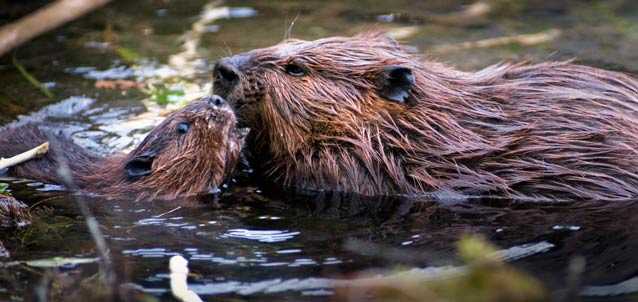
Foto por National Park Service

Y no es solo un beneficio práctico. Como suele ser el caso, muchos de los pueblos indígenas de América del Norte tuvieron la sensatez de apreciar lo que los castores estaban contribuyendo al bienestar humano simplemente por existir. (Aunque para una toma claramente negra, ver “Los dioses del castor son imbéciles – Wishpoosh, terror antediluviano del noroeste del Pacífico”). Incluso un empirista incondicional como Michael Pollock los encuentra “las criaturas más dulces y agradables”.

“Nunca he conocido a un castor que no fuera amigable”, dice. “He visto videos de castores malos pero nunca he conocido uno. Son muy intuitivos”.

River Gravel Gives up Human Secrets

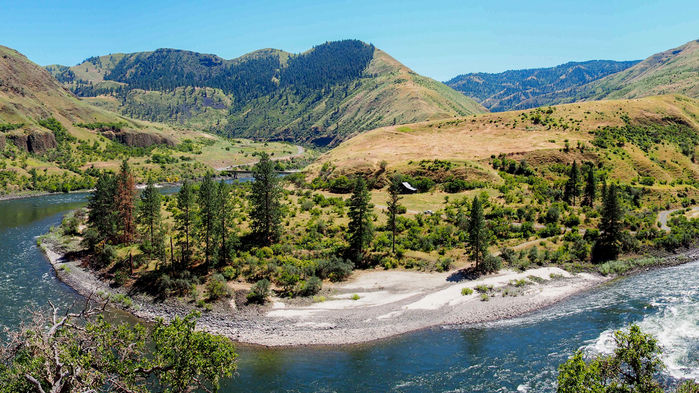
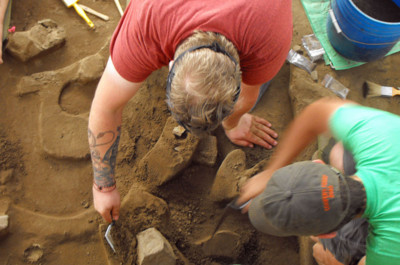
Photo by Loren G. Davis

Archaeologists digging in western Idaho find some of the oldest evidence of human occupation in the Americas.

By Valerie Brown. Oct. 17, 2019. In the Columbia River Basin there are thousands of miles of gravelly banks that line the Big River’s major tributaries — rivers like the Salmon and the Payette, the Deschutes, the Clearwater, the Yakima and the Grande Ronde. These gravel bars form as sediment is carried downstream, and they shrink, shift and expand in response to geologic processes that occur over thousands of years. They also made attractive sites for the earliest humans in the region seeking freshwater, fish, and material to make stone tools with. As such, these layers upon layers of gravel contain all sorts of clues that can help us gain a better understanding of the region’s natural history, as well as the continuously developing narrative of human occupation in the Americas.

However, the Basin’s extreme geology — replete with floods, landslides and volcanic eruptions — has likely destroyed most evidence of ancient occupation, much to the chagrin of archaeologists.

“There’s probably a whole series of encampments or occupation areas from the mouth of the Columbia River all the way up” to the Salmon River that are impossible to locate, says Oregon State University professor Loren G. Davis…

…which makes his team’s excavation of artifacts from a gravel bar in western Idaho that much more remarkable.

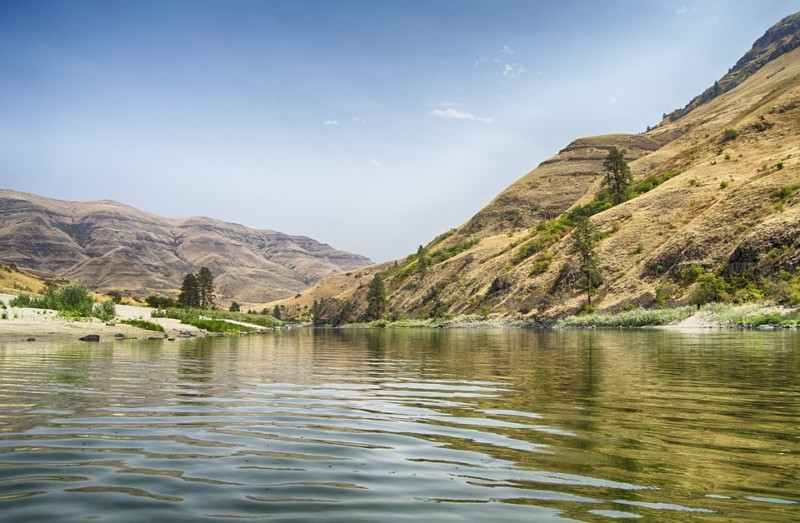
Known as Cooper’s Ferry, the site is located along the Lower Salmon River at its confluence with Rock Creek. Davis first excavated a cache of stone points there in 1997, and a more thorough investigation of the site was launched about ten years ago. In the time since, Davis and his team have uncovered more stone tools (spear points, blades and other bifaces), as well as charcoal and bone fragments from ancient mammals.

Since 1997, students from across the country have participated in Davis’ annual 8-week archaeological field school at the Cooper’s Ferry site. Photo courtesy of Wikimedia Commons

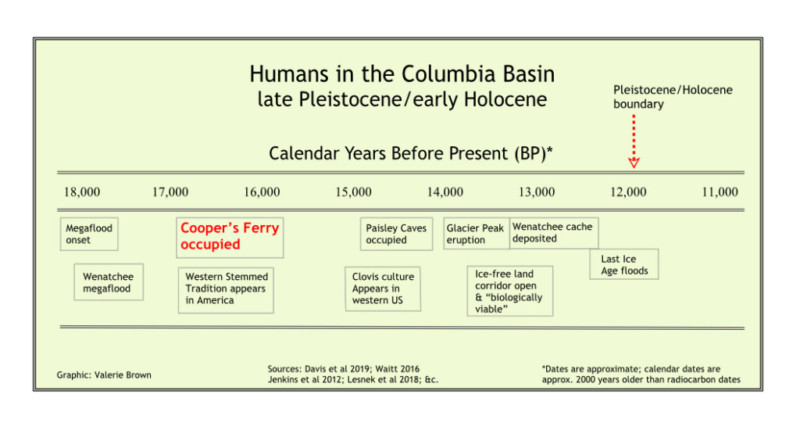
Using these artifacts and radiocarbon dating techniques as proof, Davis and his colleagues published a paper in the August 30 issue of Science showing that people lived in the region much earlier than had been supposed. They dated the earliest human presence to 16,500 years before the present (BP). This puts the first humans in North America at least 2,000 years earlier than previous estimates, and more deeply into the Pleistocene epoch, before the Ice Age ended and the era’s megafauna — mammoths, giant sloths and the like — went extinct*. These changes mark the transition to the current geological period: the Holocene (also known as the Anthropocene) epoch.

[*Note: the theory that humans are responsible for megafaunal extinction has been questioned by recent research, which blames climate change.]

The early date, provocative enough by itself, establishes two more fascinating points.

First, Davis’ team found bone fragments belonging to an extinct species of horse. In the northwestern U.S., the direct association of extinct animals with human artifacts has been exceedingly rare. The best established regional association before the Cooper’s Ferry site was the Paisley Caves in southeastern Oregon. Workers there have dated ancient spearpoints along with bison, horse and mastodon bones to about 14,000 years BP.

The second striking implication of the Cooper’s Ferry date is that it shows people were living in the region during the Ice Age, when massive ice dams occasionally formed and collapsed along river courses, causing around 100 megafloods throughout the Basin. This period occurred from about 17,000 years BP to 11,000 years BP — with the extensively researched and oft-cited Missoula Floods occurring between 15,000 and 13,000 years ago.

And while we don’t know exactly how people got to Idaho, the most obvious route would have been to follow the Columbia River inland. They would have encountered evidence of mega-floods everywhere, including the rumpled chaos at Cascade Locks and eastern Washington’s channeled scablands.


It’s impossible to know whether people at any of the archaeological sites in the Basin witnessed or fell victim to any one of the Ice Age floods, but U.S. Geological Survey geologist Richard Waitt has made a meticulous inventory of the floods by analyzing the great washes of gravel, sand and mud that swept sequentially through the region and formed places like the Pangborn bar in Wenatchee, Wash. A spectacular cache of spear points was found there in 1987. The cache was loosely embedded in post-flood windblown silt on top of flood debris dated to about 5,000 years earlier — close in geological terms, but not a match.

Still, the cache indicates that people did occupy the area during the latest and smallest floods. These people made their tools in the Clovis tradition, which appeared about 14,000 years BP and until recently was considered the oldest human culture in the Americas. The Wenatchee cache dates to about 13,000 years BP.

But the Cooper’s Ferry material pushes the human presence back to the main late Ice Age flood period. Waitt and Davis agree that the backflood from some torrents would have reached up the Salmon River. “You would have seen the river rise…about two miles downstream” from Cooper’s Ferry, Davis says. The water would have risen slowly enough that people could outwalk it, though, he adds.

They would also have had to cope with a climate that fluctuated pretty wildly during the later years of the melt-refreeze-flood cycle. At the Cooper’s Ferry site itself, the Davis team found relatively sparse evidence of the people’s diet, including a freshwater mussel shell and numerous as-yet unidentified mammal bone fragments.

Who’s here first?

How people reached the Americas has been a matter of vigorous dispute among archaeologists. Until recently, the prevailing narrative has been that people from Siberia and/or the Asian peninsulas trekked across Beringia (a land bridge between Russia and Alaska) during the Ice Age while sea levels were much lower, and followed an ice-free land corridor down the middle of the continent. But as research has progressed, this idea has become less plausible. It now appears people reached the Americas at least a thousand years before the ice-free corridor existed.

What looks more likely is a coastal route taken by people in small boats hugging the coastlines all the way around the Pacific. Although much of it is now underwater, there is evidence of human presence down the coasts of Washington, Oregon and California during the relevant period.

Bolstering this oceanic route theory is a connection drawn by the Davis team in their recent paper: that the Cooper’s Ferry tools belong to the Western Stemmed Tradition, which closely resembles the Japanese tool-making tradition of the same time period.

Thanks, but no thanks to “Euro-splaining”

So what do these implications mean for the native peoples of the region?

According to Nez Perce ethnographer Nakia Williamson-Cloud, the people who lived in North America before Europeans arrived tend to discount the idea that their ancestors came from somewhere else. The Nez Perce, whose original territory included the Cooper’s Ferry site, prefer to view the site as a continuously inhabited Nez Perce site, and they do not believe they have an oceangoing past.

“We know our habitation there goes back generations and generations,” Williamson-Cloud says. “The archaeology is there to illustrate how long our people have been on this landscape.” Calling it “paleo-Indian,” he adds, “is a way to disassociate us from a site that we know is a Nez Perce site. It insinuates that it was somebody else than us.”

The tribe feels an even deeper connection to the site, he says, because the discovery of bone fragments from an extinct horse suggests the tribe’s renowned equine skills predate their interaction with horses imported from Europe, and “shows that their relationship with the horse came full circle for the Nez Perce.”

Northwest tribes have also traditionally opposed any invasive physical testing of ancient human remains, and they have re-interred several skeletal remains found in the Northwest, including Kennewick Man and Buhl Woman. Williamson-Cloud says the Nez Perce would take the same position should any human remains be found within traditional Nez Perce territory.

In future discoveries, genetic material could be the best way to determine — from a scientific perspective — whether there is any gap between early humans and modern Native Americans. (Geneticists have extracted usable 50,000-year-old Neanderthal DNA from soil in Belgium, so this technique might be applicable in the future.)

More sites with more clues?

Many archaeologists concur that the geologically young character of the Columbia Basin works against finding more evidence of early human occupation. But on the other hand, the Basin may be the best place to look, since most of it is “sub-glacial” — meaning it was close to, but not under, the ice sheets, and thus the most obvious latitude to search for proof of the region’s earliest human inhabitants.

“I think it’s a fair enough assumption to think if people are at Cooper’s Ferry by 16,000 BP,” Davis says, “there are probably other places in the Columbia River basin” with evidence of earlier human occupation. But given past climate catastrophes, “One the of the hardest parts of archaeology is finding that sweet spot where the dirt is still preserved,” he adds.

Photo courtesy of Shutterstock

Still, the Cooper’s Ferry site shows that there are signs of human occupation at elevations that were higher than where the floods reached. And even though Davis thinks his team has found the earliest level of human evidence at Cooper’s Ferry because their excavation reached the basalt bedrock, he admits that “we have to be careful not to assume we’ve found the oldest there is [just] because we ran out of dirt.”

“There are other parts of the canyons that have even older sediment,” he says. And the team has much more data from the site to analyze than was included in the current study, which focused on precise dating and tool technology.

And although we’ll never hear the trumpeting of mastodons roaming the grasslands, we can still imagine the Columbia Basin much as those ancient inhabitants experienced it: the astringent scent of sagebrush and juniper after a rain, the steppes, hills and mountains windswept and cold in winter, windswept and hot in summer, and heartbreakingly beautiful always.

By |2020-04-07T12:36:30-07:0010/17/2019|Features, Natural Resources|1 Comment

Welcoming the Beaver

Photo by Mark Giuliucci.

After being nearly eradicated from North America during the 19th century, beavers are now being recognized by ecologists for the crucial role that the rodents play in restoring and preserving biodiversity.

By Valerie Brown. Aug. 22, 2019. Neatniks treasure square corners, straight lines, the absence of clutter. A neatnik-approved landscape has tidy, free-flowing rivers with well-defined margins, nice flat meadows that can be turned into fields, and clear lakes free of debris.

That appears to have been the model used by the first Europeans settling on the Atlantic shore. Over the next four centuries, they applied the model continent-wide. From the colonial period to 1990, the United States lost more than half its wetlands, resulting in erosion-plagued rivers and creeks, depleted water tables, desertification, and the disappearance of mammals, amphibians, fish, reptiles, insects and plants.

Thus did neatnik ideology ravage a continent. Finally, now that the devastation is painfully obvious, people are returning to the original engineers of the primordial paradise: beaver. And with catastrophic climate change looming, the world’s second largest rodent is looking more and more like a potential knight in furry armor.

Complexity: The more life there is, the more life there is

Beaver have taught observers that what looks like chaos is really complexity, and complexity is just another word for biodiversity. Beaver turn simple creeks into complex wetlands. Their ponds retain surface and groundwater and keep it cool. The shallows shelter salamanders, tadpoles, young fish and insect larvae. Around beaver, riparian plants are more diverse. Floods are less catastrophic. Streamflow persists through the dry season. Turbidity declines. In other words, beaver are “the most important thing on the landscape from a biodiversity perspective,” says Michael Pollock, a fish biologist and beaver believer at the National Oceanic and Atmospheric Administration’s Fisheries Science Center.

Ye Olde Near-Extinction

As Ben Goldfarb notes in his excellent book, Eager: The Surprising, Secret Life of Beaver and Why They Matter, the pre-European beaver population of North America is estimated at 60-400 million. Because their fur made perfect top hats for toffs, beavers were hunted to near-extinction throughout the continent. Even though the carnage ceased around 1870, when silk became haute couture for top hats, by 1900 there were only about 100,000 beaver left. Estimates of the current North American population range from 12 to 15 million.

Prized by hat makers for their fur, millions of beaver were trapped and killed during the 19th and early 20th centuries. Photo courtesy of Wikimedia Commons.

Attitudes eventually changed. Beaver enthusiasts admire Dorothy Richards, who adopted a remnant colony of beaver in New York’s Adirondack mountains in the 1930s. In 1948 the State of Idaho began to drop beaver from airplanes into wilderness sites in wooden crates. Some beaver actually survived. These days beaver relocators use humane cages and try to bring the entire family along if possible. They also build “beaver dam analogues” to provide a bit of infrastructure for further beaver development, and sometimes they build makeshift startup lodges so the beaver will have a place to hide from predators. These practices have increased the success rate of beaver relocations, and there are now numerous programs in the Northwest to relocate the animals rather than kill them. The Mid-Columbia Fisheries Enhancement Group, for example, partnered with the Yakama Nation over five years to effect 45 beaver relocations in Yakima River tributaries, of which 16 resulted in new colonies that built 26 new dams, 24 ponds, and stored 24.6 million gallons of water.

Move over, salmon

Much conservation policy in the Northwest pivots around salmon. The federal government and the states have treaties with the Yakama, Umatilla, Nez Perce, Warm Springs and numerous other tribes to ensure sustainable salmon harvests. Public and private stakeholders have slowly come to realize that beaver help salmon, and recent research suggests that endangered coho salmon may not be able to recover at all without help from beaver.

Acknowledging beavers’ assistance represents quite a turnaround for many fish experts. Because some salmon advocates picture a large concrete barrier when they hear the word “dam,” they were slow to recognize that beaver dams are no obstacle to salmon, says Pollock. Beaver believers point out that if beaver dams were a barrier, the legendary salmon runs up the Columbia, Snake and Salmon rivers would never have existed. The punchline of a Native American story says it all: “Beaver taught salmon to jump.”

The Long Arm of the Law

State and federal statutes and policies reflect the historical status of beaver, usually defining them only in economic terms. For example, one Oregon statute defines beaver as “predatory animals” and “noxious rodents.” (Beaver are mostly vegetarian, and their usual victims are trees and shrubs, especially willows..) Another statute labels them “protected furbearers” on public land, where they can be killed for their pelts. Yet several Oregon agencies also sponsor and participate in beaver restoration programs. The same is true for Washington and Idaho.

Predatory? Maybe if you’re an alder branch. Photo courtesy of Mid-Columbia Fisheries Enhancement Group.

Federal policies are likewise inconsistent. Between 2010 and 2016, The U.S. Department of Agriculture’s “Wildlife Services” program (known as APHIS) killed 772 beaver in some of the same coastal Oregon counties where NOAA says coho salmon desperately need beaver ponds. A threatened lawsuit in 2018 by the Center for Biological Diversity and other environmental advocates prompted suspension of the USDA program, but the conflict has not been resolved. (Neither the USDA nor ODFW responded to requests for comment.)

Urban beaver

Most stakeholders agree that beaver belong in the wilderness, even if they don’t want them on private land. But who wants a beaver colony inside city limits? At least two cities in the West have said “We do.” The small city of Martinez, California adopted a beaver colony that set up shop in the middle of town 20 years ago. In Eugene, Oregon, beaver have colonized the Delta Ponds, which are former gravel extraction sites near the Willamette River. The surrounding area is wetland, and city ecologist Lauri Holts credits the beaver with making habitat for many other animals, including green herons and pond turtles. The endangered Fender’s blue butterfly, king skimmer dragonflies, wildflowers, and river otters also call the area home.

If you are a city dweller, you may be living with beaver already. In Seattle, beaver expert Benjamin Dittbrenner found evidence of beaver in all the natural stream systems that he surveyed. The city has been fairly libertarian, Dittbrenner says, allowing its parks and greenspaces to “get beavery.” But he cautions that “if you build a park and don’t identify the areas where beaver may colonize, you’re going to be forever retrofitting or constantly relocating them. We want urban land planners to think ahead.”

What to do with a nuisance beaver

Margaret Neuman, executive director of the Mid-Columbia Fisheries Enhancement Group, says, “I occasionally get a call from landowners saying, ‘I have the perfect stream, I’d love to have a beaver.’” That’s always good news for beaver advocates, but many landowners don’t want to tolerate beavers’ propensity to kill trees and flood fields.

Once considered a nuisance, this beaver finds a new home in the upper Yakima River. Photo courtesy of Mid-Columbia Fisheries Enhancement Group.

“I get calls from landowners losing thousands of dollars worth of trees,” says Terry Brant, a licensed nuisance animal trapper in the Eugene area. Brant has seen no indication that local property owners view beaver as anything but pests. “Nobody has ever approached me to start relocating beaver,” he says. “A homeowner is not going to pay the kind of money it takes to do that.” (Beaver removal can cost upwards of $500 per job.)

A 2011 report from the Oregon Department of Fish & Wildlife found that property owners who had had already dealt with beaver on their property were the most likely to see them as a problem. There was a strong east-west attitude gradient, with farmers and ranchers east of the Cascades more likely to kill beaver than were property owners in the Coast Range or urban areas. A federal study of Idaho’s Owyhee County found that most ranchers leasing BLM land for grazing wanted beaver to return to the area but preferred them to stay upstream of their cattle operations.

Until all the available human-compatible beaver habitat is filled, there will be a chance to turn nuisance beaver into miracle workers. There are now professional beaver relocators available in most of the Pacific Northwest, many of whom also work closely with landowners who want to co-exist with beaver. The Spokane-based Lands Council has been very successful at relocating problem beaver in private forests and even some ranches and farms as well as on public lands. Executive director Mike Petersen says, “The first priority if the beaver builds a dam [on private land] is to talk with the landowner to see if there’s something we can mitigate.” Mitigation can include wrapping trees in metal mesh, installing pond levelers to keep the pond at a bearable size, and installing “beaver deceiver” fencing around culverts.

A climate for change?

Further shifts of hearts and minds regarding beaver may occur courtesy of climate change. Much of the Pacific Northwest is desert, and under climate change the arid lands are going to both expand and become even drier. Beavers’ ecological contributions could play a crucial role in ecosystem resilience. Installing beaver would be an economical and low-maintenance way to retain more water in the region’s watersheds compared to massive reservoir construction projects. But can beaver replace snowpack, which provides much of Northwesterners’ municipal and agricultural water?

“No,” says Dittbrenner, who modeled the approximate storage capacity of beaver-designed hydraulic systems. “The sheer magnitude of snow volume in the Cascades is not something beaver could make up for at any population level.” But in the interior deserts and rangelands, he added, “Beaver could potentially offset snowpack and increase summer storage by 20% of the existing volume.”

So the muddy waddlers are no silver bullet. There is no single way to recover from the neatnik catastrophe. But that doesn’t mean humans can’t learn a fundamental lesson from beaver: complexity is the key to ecosystem viability. Beaver activities benefit almost every other life form from butterflies to moose.

Photo courtesy of the National Park Service.

And it’s not just practical benefit. As is often the case, many of North America’s indigenous peoples had the sense to appreciate what beaver were contributing to human well-being just by existing. (Although for a distinctly noir take, see “Beaver Gods Are Jerks – Wishpoosh, Antediluvian Terror of the Pacific Northwest”). Even a hard-core empiricist like Michael Pollock finds them “the sweetest nicest creatures.”

“I’ve never met a beaver that wasn’t friendly,” he says. “I’ve seen videos of mean beaver but I’ve never met one. They’re very intuitive.”

By |2020-04-07T12:39:06-07:0008/22/2019|Features, Natural Resources, Wildlife|1 Comment

Question of the Century: Do We Have a Right to a Livable Climate?

Photo courtesy of Pixabay

The ongoing Youth v. Gov lawsuit could help to determine if U.S. citizens have a Constitutional right to a safe environment.

By Valerie Brown. July 11, 2019. The climate is changing, the changes are human-caused, and most of them will be detrimental to humans and ecosystems – but while public sentiment and plausible policy measures regarding these threats have been maturing in recent years, the law has not kept up.

Today, climate change as a legal matter remains blurry and disconnected from the principles our system of government aspires to follow. The question remains unanswered: Do we — including future generations — have a legal right to a climate in which we can pursue our rights to life, liberty, property and happiness?

This is the question that a case called Juliana, et al. v. United States has thrown like a crowbar into the American legal system. If strong enough leverage is applied by the case and any resulting ruling, the whole edifice of environmental law and its position in constitutional law will undergo a deep shift.

Juliana — better known as Youth v. Gov — was filed in 2015 in the U.S. District Court in Eugene, Oregon, on behalf of 21 young plaintiffs and climate scientist James Hansen, serving in this case as a guardian for future generations. Our Children’s Trust is the Eugene-based nonprofit sponsoring the case. Since it was filed, the defendant (the U.S. government) has made five appeals to higher courts — three to the Ninth Circuit Court of Appeals and two to the U.S. Supreme Court — to throw the case out on various procedural and summary motions.

The plaintiffs have astonished legal experts by persisting through these attempts to prevent the case from coming to trial under District Court Judge Ann Aiken.

“We’re confident we’re right,” says Andrea Rodgers, an Our Children’s Trust staff attorney. “Our hope is that the Ninth Circuit will issue a very narrow decision that will bring us back to trial as soon as humanly possible.”

Aiken has already stated in a November 2016 ruling related to this case that in her “reasoned judgment…a climate system capable of sustaining human life is fundamental to a free and ordered society” — but she also dismissed one of plaintiffs’ claims: that the Ninth Amendment assures just such a right even though it is unenumerated in the Constitution, unlike the guarantees of due process and equal protection made explicit in the Fifth and Fourteenth Amendments.

Climate as Public Trust — Innovative Concept or Wild Speculation?

This has not stopped the plaintiffs, however, because they have also made arguments under those amendments, based mainly on the public trust doctrine. This is the principle that certain resources – those necessary to everyone, such as air and water – must be protected and managed so as to remain available to future generations. It is considered a property right.

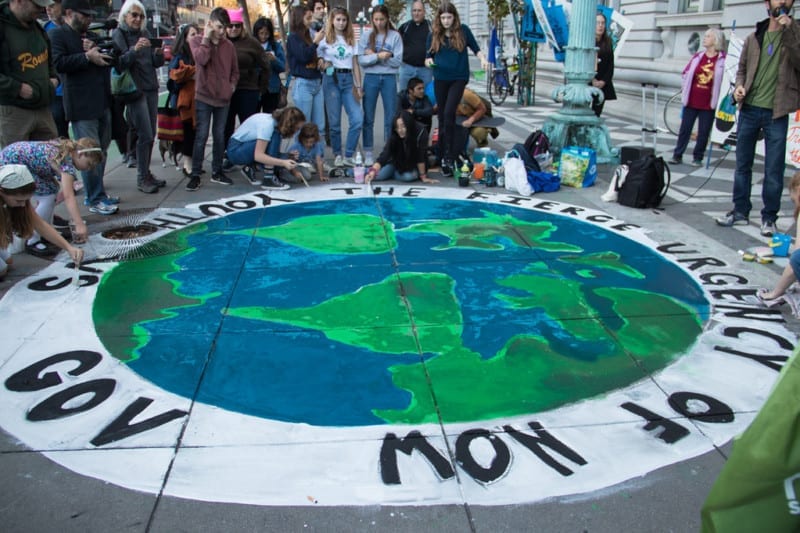
Protesters reference “The Fierce Urgency of Now” at a 2018 rally that took place in front of the Ninth Circuit Court of Appeals in San Francisco. Photo by Peg Hunter

Does that apply to the climate? That’s an argument made over the past two decades by Mary Christina Wood, director of the Oregon School of Law’s Environmental and Natural Resources Law Center, who asserts that the public trust doctrine applies to the climate system, and particularly to the atmosphere. “We would be fools to not recognize such law as the supreme law of the land, or ever to doubt for a moment that the jurisdiction over our very survival falls first to the air, the waters, the food sources, and the climate system,” Wood said last year in a keynote address to the University of Colorado Boulder Law School.

Public trust reasoning has been used at least since the 6th-century Roman emperor Justinian declared that “the air, running water, the sea, and consequently the shores of the sea” belong to everyone. English law interpreted this very narrowly to mean that the public should have access to paths and beaches leading to public waters in order to enjoy benefits like fishing, bathing and boating.

Although Wood and other experts say that the public trust can also apply more broadly to climate, conservative legal scholars, perhaps obviously, disagree. James Huffman, a professor at Lewis & Clark Law School and an affiliate of the conservative Heritage Foundation, says he would like to see American law stick to the “paths and beaches” interpretation.

“It was a very narrow doctrine…and that was the extent of the theory as a legal matter,” Huffman says. “There are no cases that get it away from water.”

However, the Juliana plaintiffs have shown that the federal government considers itself a trustee over several other kinds of natural resources, including forests and wildlife. A win by the Juliana plaintiffs would achieve what American University legal scholar David B. Hunter called for in 1988: “to switch the debate in public trust cases from a discussion of the doctrine’s historical roots to a discussion of the ecological values that should be protected in the public interest.”

Isn’t it Obvious?

To a non-lawyer, a right to a livable climate and an uncontaminated environment may seem blatantly obvious. They are so fundamental that they precede the rights guaranteed by the Constitution, and without them, life, liberty and the pursuit of property and happiness are impossible, or at least severely constrained. That is, they are natural and inalienable rights, endowed by a creator or at least existing in such a pervasive way that no political agreement or government should be able to remove them. The Declaration of Independence and the Constitution recognize both the naturalness and inalienability of fundamental rights, because the framers valued these concepts and intended them to be part of the new American law.

But it’s not always that obvious from a legal standpoint. Bizarrely, the authority for regulating pollution relies on the Constitution’s Commerce Clause, based on the idea that natural resources are commodities that can be commercially exploited.

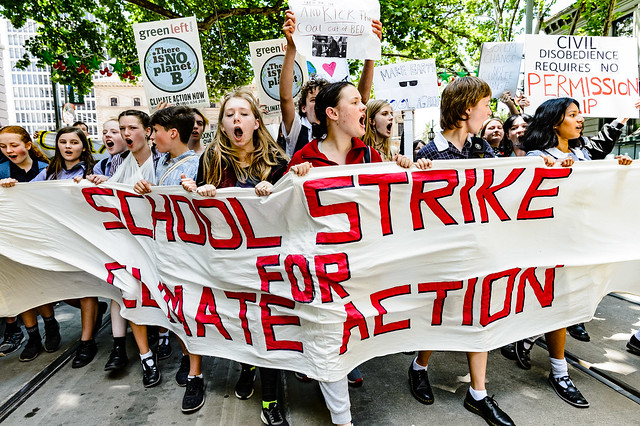
Youth v. Gov has been a source of inspiration for young activists in other parts of the world. Last year, students in Melbourne, Australia organized a strike from school to call attention to the Australian government’s inaction regarding climate change. Photo by julian meehan

Along those lines, the federal government has tried to make Juliana about pollution, citing Guertin v. Michigan, an appeal in the Flint water contamination case, in their recent appeal brief: The “Constitution does not guarantee a right to live in a contaminant-free, healthy environment.” Notably, in a case Guertin relied on, the government minimized a statement that Juliana represents “an arguable exception” in the debate.

But Juliana is not following previous environmental arguments.

“We are not advocating for a right to be free of pollution,” says Rodgers. Rather, they’re advocating for the government to stop harming children by continuing policies that alter the climate. For example, the government has known since 1965 that burning fossil fuels changes the climate by releasing too much carbon dioxide into the atmosphere, and has ignored the advice of its own experts, in favor of granting leases for fossil fuel extraction on public lands.

Staff attorney Andrew Welle adds that the right to a livable climate is entirely in line with already recognized rights to “life, property, personal security, and family autonomy,” as well as the privacy right inherent in autonomy. “Madison and other founders based [the Constitution] on naturalist philosophy and concern for intergenerational equity,” he says, noting that the latter requires equal protection under the Fourteenth Amendment.

Intrusive courts?

Huffman, the conservative legal expert, believes that if Juliana prevails it will result in the judiciary deciding on policy rather than the legislature and will create “a separation of powers problem, a democracy problem and a rule of law problem.” In his view, courts should not prescribe specific steps to the executive branch.

Juliana, however, does not propose imposing detailed policy actions on the executive branch, and according to Welle there is precedent for the type of remedy the case seeks in many complex cases and bankruptcy proceedings.

Oregonians Kelsey Juliana (left) and Kiran Oommen are just two of 21 plaintiffs involved in the case. Photo by Anna Olerud/Natur og Ungdom

“When a court finds a constitutional violation, it doesn’t say this is exactly what you have to do to correct the problem.” Instead, “the court says, ‘You need to come up with a plan of your own devising and bring it back to the court to correct the problem,’ so specific policies are left to other branches.”

Juliana wants the courts to recognize a right to a livable climate based on the same reasoning that led to school integration, reproductive choice and gay marriage – and to get the government to stop doing things that make climate change worse. It’s these actions that foreclose the young plaintiffs’ ability to lead the lives our founding documents promise.

The Right Tool for the Right Job

The law is slower to adapt to changing conditions than the other two branches of government, and looking to the court to impel progress on climate change seems quixotic — except that the legislative and executive branches have failed to halt or mitigate the climate crisis for nearly half a century. And time is of the essence.

Admittedly, the tools plaintiffs are using in their monumental attempt to refurbish our national values and policies in time to apply the brakes to climate change — natural and inalienable rights; explicit rights to life, liberty, happiness, property, education, privacy; equal protection under the law; and the public trust doctrine — may not be up to the task.

It’s not clear yet whether Juliana will be allowed to come to trial and the plaintiffs’ massive trove of factual material and expert opinion be entered into the public record. But if it is, Aiken has already signaled that she intends to modernize environmental jurisprudence, writing in her November 2016 order:

[perfectpullquote align=”full” bordertop=”false” cite=”” link=”” color=”” class=”” size=””]“Federal courts too often have been cautious and overly deferential in the arena of environmental law, and the world has suffered for it.”[/perfectpullquote]

Any trial court judgment will certainly be appealed by the loser. Few observers expect the higher courts — especially the Supreme Court — to sympathize with the plaintiffs’ approach. Securing that sympathy will occur only if the plaintiffs can offer the justices the legal equivalent of stepping stones they can use to cross the stream of conflict and reach the other side in a way that doesn’t violate their reading of the Constitution, settled law, and their political leanings.

It’s a huge gamble, but the stakes are literally life and death for the people alive today and their descendants. Will the courts value tradition over dire present danger? Huffman believes they should. He would rather die with his privacy rights intact, he says, than accept what he sees as Juliana’s goal of government force crushing individual freedom and privacy.

But as Juliana’s complaint states, “Without a stable climate system, both liberty and justice are in peril…. Fundamental to our scheme of ordered liberty, therefore, is the implied right to a stable climate system and an atmosphere and oceans that are free from dangerous levels of anthropogenic CO2. Plaintiffs hold these inherent, inalienable, natural, and fundamental rights.”

In fact, the climate crisis could be viewed as a right-to-life problem. Because without a climate capable of sustaining human life, the public’s right to life at all is destroyed.

By |2020-04-07T12:42:11-07:0007/11/2019|Climate Change, Features|0 Comments

© Copyright 2013-2025 Columbia Insight. All Rights Reserved.

As a 501(c)3 nonprofit organization, all donations to Columbia Insight are tax deductible to the full extent of the law. Our nonprofit federal tax-exempt number is 82-4504894.