Stay Updated Subscribe today for the latest research + reporting about environmental news. Subscribe Now

Stay Updated Subscribe today for the latest research + reporting about environmental news.

Subscribe Now

Susan Hess

Susan Hess

Susan Hess

About Susan Hess

Susan Hess is Columbia Insight's publisher.

Trash Tales: Bra

By: Susan Hess. July 6, 2017. I wish I had saved the bra.

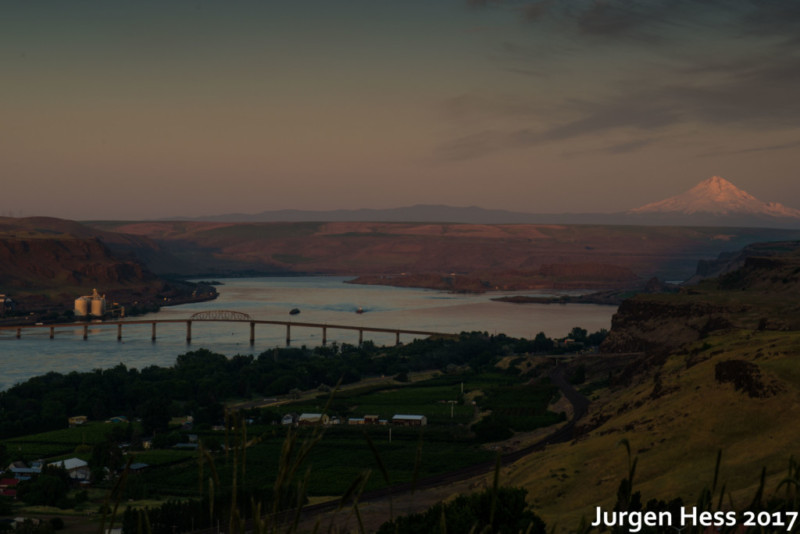
Dalles Mountain Road heads north off Washington Highway 14 just before the south road to She Who Watches. Winter traffic going too fast for the gravel road pounded potholes and left it corrugated. By spring, a car at speed could bounce right off the road. Husband Jurgen and I drove it in March at twenty-five miles per hour, and because the rain, slower on the sharp bends.

We were coming to learn about the one hundred and eighty acres of Columbia Hills State Park being restored to prairie grasses and wildflowers. At 2.9 miles from the highway we parked and waited for citizen scientist Bob Hansen.

At 9:15 a.m. Bob pulled his Prius beside us and rolled down the window.

“Today is not the kind of day,” he said pointing to the gray skies, “that I would want you to see the project.”

“Okay. How about telling us about it over for lunch in The Dalles. Noon?”

By the time we finished lunch, the day had turned sunny. So we headed across the Columbia back to the 2.9 mile-site, and spent several happy hours following Bob and fellow volunteer Stuart up and down the slopes they were helping revitalize.

[media-credit id=21 align=”alignleft” width=”500″][/media-credit]

For the trip home, I readied a plastic bag. We keep a dozen or so in the car, plastic bags I’ve found and cleaned and stocked. Years ago, Jurgen and I decided that every time we went hiking or were out in the hills and mountains on a story like this, we would stop somewhere on the return trip and pick up trash. Hence the bags. Two years ago we stopped along this same road at a spot where a rancher had set up a small corral. Broadcast over the packed earth beside the gate we found dozens of brass bullet casings. Last summer Jurgen climbed over a barbed wire fence to pull out of a hackberry-like tree, a vinyl Happy Birthday balloon.

That’s the thing about roadside litter: it’s spread unevenly, a pop can here, a Styrofoam coffee cup several yards farther, up the slope across the road a plastic juice bottle, down in the ditch a brown beer bottle. And let me say here that the beer cans and bottles littering the Columbia Gorge roadsides are the cheap brews: Keystone, Budweiser, Coors, Pabst Blue Ribbon, Bud Light, Busch, Coors Light, Hamms, Miller High Life, Tecate, Rainier, Corona Extra, Busch Light, Olympia, Keystone Light.

Close by and weather-crushed we find the twelve-pack cardboard cartons. Remember these people are driving.

On this trip a plastic clothes basket lay in the ditch on the east side of the road. Thrown out? Fallen out?  Nearby sprinkled along among the empty cigarette packs and drink cups are plastic water bottles, some half full. Plastic bags shredded by the wind flap on dried weed-stems and barbed wire.

The bra lay in a pullout across the road from the pond created by Bretz floods’ whirling boulders. A flesh-color-almost-new bra. A bra with five narrow straps to circle the chest. Related to the clothes basket? Midnight lovers tryst?

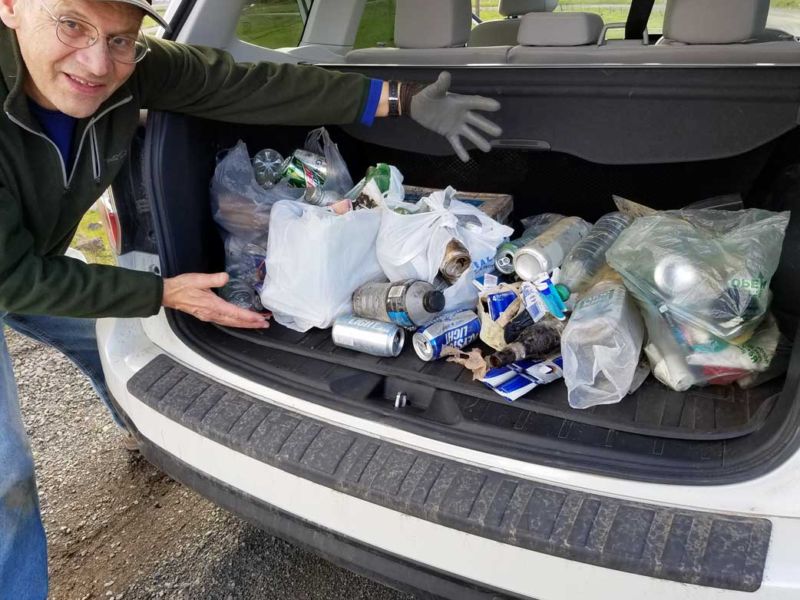
We stopped just before we reached Highway 14 to take a picture of Dalles Mountain Road trash collected in two miles. The bags filled our Forester’s 34.4 cubic feet (I found that in the manual) cargo space. The car atmosphere reeked with the remains in the found-beer cans yesterdays-bar smell.

We earned $5.65 returning the cans and bottles. The ones missing labels or too crushed to straighten out went in the recycle bin. I plan to make a photo album of the odd things we find. Gosh, I wish I’d taken a photograph of that bra.


Thank you to our business sponsors for making our work possible!

Subscribe

Get new stories in your inbox!

You can also find us on Facebook, Instagram, and Twitter.
Subscribe

RELATED POSTS:

From Superfund to Poetry

Kathleen Flenniken and Patricia Hoover will be at the White Salmon Library March 9, 6:30 p.m. A conversation about Hanford. Flenniken reads from her poetry collection, Plume, and between readings Hoover talks about being a downwinder.

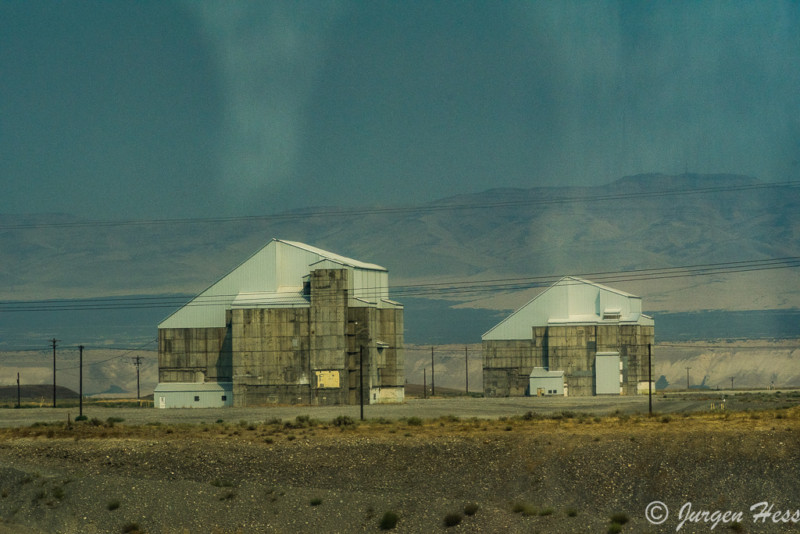
Hanford Nuclear Reservation Reactors

Poet Kathleen Flenniken grew up next to the Hanford Nuclear Reservation. There may be more forbidding places than Hanford. But not many. Chemicals made on the 586 acre site are some of the most toxic on earth.

Ironically, “for a kid, it was an ideal place to grow up,” Flenniken (56) said. “It [Richland, Washington] was a city overrun with children. Almost everyone was middle class, white, of childbearing age. The schools were good.” Children at an early age picked up the culture: nobody talked about work. “It all felt normal until I moved away. Then I started to see there was a kind of tribal mentality, an us-versus-them mentality.”

Her father and all her friends’ fathers were chemists, part of the vast workforce creating plutonium for atomic bombs. That she came from this environment to become a poet, and the Poet Laureate of Washington, seems remarkable.

She grew up surrounded by brilliant scientists, people who were good parents, neighbors, and friends. They were moral, ethical, and doing their best for their country. The familiar world of science and engineering was part of her identity. She says those fields felt safe—a word not many of us would use in the same breath with Hanford. At Washington State University she graduated with a bachelor’s degree in civil engineering and returned home to work for Rockwell Hanford.

While the career fit, Eastern Washington’s desert landscape didn’t. “I never loved that landscape,” she said. “I liked the green on the west side of the state.” Adding to its allure was a boyfriend, and later her husband, in Seattle.

Once there, she plunged deeper into her career. At the University of Washington, Flenniken took a master’s degree in civil engineering, and joined a firm that specialized in the cleanup of superfund sites.

After several years, she found the work less and less satisfying. “I went into it for the wrong reasons,” Flenniken said. “I identified with the scientific people I grew up with; I liked the people, and my dad was great; he supported and encouraged me. I liked the idea of going into a formerly men-only field that in the 1980s was opening to women.”

She left the engineering field when her second child was born to be a full time mom. As anyone who has left a demanding career to stay home with small children knows, you need some outside interests. For Flenniken it was poetry. She took some night classes.

The gap between superfund sites and poetry is immeasurable, but she took poetry seriously as a vocation immediately. “This is what I was meant to do,” she said. “And I was driven to do the work I needed to do to get better.” That was part of the Hanford culture she absorbed growing up. She read poetry, took classes, joined a critique group, and her own poems were selected for publishing in small magazines at first. She started teaching and giving workshops. Washington State Arts Commission selected her for their teaching roster.

Her first collection of poems, Famous, won the 2005 Prairie Schooner Book Prize in Poetry. It was a finalist for the Washington State Book Award and named Notable Book of 2007 by the American Library Association.

In 2012 she was appointed the Poet Laureate of Washington. It’s a two year position. Two years to do what she loved. She took poetry to each of the state’s 39 counties, giving classes at the schools, especially targeting elementary schools. “I try to make poetry less scary.” She gave readings and workshops at the libraries. She developed a poetry website for the state.

Flenniken’s second collection of poems, Plume, won the Washington State Book Award and was a finalist for the Pacific Northwest Book Awards and the William Carlos Williams Award for the Poetry Society of America.

Both the poems and graphics “help tell the story, convey the feeling and history, and stay true to facts.”

She captures in poems childhood friendships, the close family life, the history of the place they referred to only as ‘the area,’ the gradual understanding of the effects those chemicals had on the people she knew and loved, what the atomic bomb did to life on earth.

“Hanford is part of my identity. It was a community built around a destructive force.”

The people, she said, were trying to be the best they could for their families, neighbors, to be good scientists doing the work no one wanted to do.

Yet, she says, “Hanford is the most contaminated waste site in our hemisphere. It’s a continuing struggle for me to make sense of my identity due to a fundamental mismatch.”


Related EnviroGorge Posts:

The Newest National Park: Hanford Reactor B

EnviroGorge Kids Writing Contest Winning Essay: Hanford

Hanford Site: A Photo Essay

By |2020-09-30T19:54:10-07:0003/06/2017|Energy, Essays, More, News, Old Articles|0 Comments

Kindness with Grace

Essay by Susan Hess. Feb. 6, 2017.

Dwight. Tall, thin, a bit frail. I guessed him to be close to 80. My boss, Ginny Post, told me his wife lived in a nursing home on the north side of town. The apartment they shared before she needed care lay several miles south. He must have lived on a limited income for every day he took a bus to see her.

For a town of 35,000, Medford had a bus service like those of much larger cities. The bus routes converged on a side street just off Main Street in front of The Lion’s Tale, Ginny’s store.

The name came because the store started out as a children’s book store. But then over the years, gifts were added and then dishware. Shelves loaded with wine glasses, plates, mugs, bowls filled an entire room.

If you studied the store, you could see it spilled over what had once been three buildings. The biggest room held wall-lined shelves of books surrounding a large open carpeted space. Often in the afternoon the special ed kids lay sprawled across the carpet paging books they pulled off the shelves. The kids took a public bus from school to downtown and transferred to another to reach home. In the half hour wait, they used The Lion’s Tale like a library.

After I’d worked there a few months, I mentioned to Ginny that the kids might accidentally damage the new books and that I thought they got in the way of our customers. I asked if I should say something to them. “No.” Her tone and look were, not stern, but unyielding. “The kids are always welcome here.”

Ginny was a doctor’s wife in a town where that meant something, and many other doctors’ spouses used status to set a distance between themselves and people with less money and influence. But Ginny was Ginny. She cleaned the store’s bathroom, took out the trash. She could have asked any of us who worked there to do it. One evening when I closed up the store, I forgot to take in the expensive windsocks that hung outside the front door. In the night, someone stole them. I called the next day to tell her and offered to pay for them.

“Don’t worry,” she said. “The next time is likely to be me who forgets.”

It’s been many years since I worked there and lived in Medford. But it’s always Dwight I remember when I think of The Lion’s Tale. From the kids’ book room, a couple of steps up took you to a small room, the main entrance to the store and where the store’s counter stood. On past that room was the dishware room. In memory, I see kindly Dwight sitting in the corner on the stool Ginny provided.

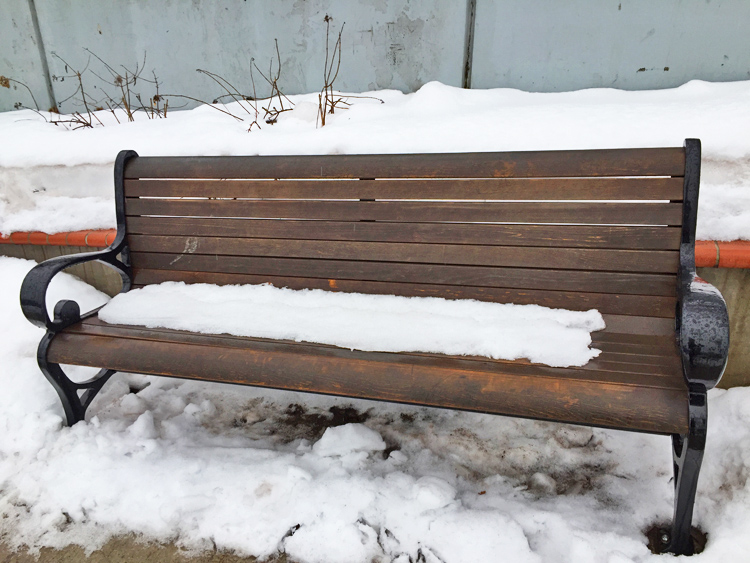
Like the kids, Dwight had a wait to transfer buses. Along the sidewalk, the bus district had installed some nice, but uncovered benches. Passengers waited for their buses in Rogue Valley’s 103 degree weather and on its foggy rainy days.

Dwight must have come into the store one day, maybe to pick up a book for himself or a small gift for his wife, and Ginny learned his story. She was easy to talk to, over time she got to know him. Through the store’s big windows she’d see him as he waited. But one day when the valley launched one of its cold drenching rains, she asked Dwight in. She told him we had been having some shoplifting in the dishware room, and we didn’t have a way to see into all the nooks and behind the shelves. She wondered if, while he waited for the bus, he would mind sitting in there to keep an eye on things.

We noticed that she put a stool for him close to the heater in that room. I didn’t think about it at the time, but he must have known. Two gracious people. Ginny making it seem he was doing us a favor, and Dwight accepting her kindness with grace.

For me, she became a model for a way to treat people. In the years since, I’ve often fallen way short of the mark, but I knew what the goal looked like, and I think I’ve worked my way closer.

It has been a turbulent time these last few months and it promises to bring more. I think it’s worth keeping in mind the Ginnys and Dwights we know and have known. To keep in mind how we want to be.

Subscribe

Get new stories bi-monthly in your inbox!

You can also find us on Facebook, Instagram, and Twitter.
Subscribe

Paid Advertisement:


By |2018-09-30T12:33:41-07:0002/06/2017|News, Old Articles|4 Comments

Women’s March

Hood River stand-in January 21, 2017

Many people in the world, the United States and the Pacific Northwest  participated in the Women’s March January 21, 2017. Despite recent highway closures and inclement weather, some Gorge residents joined the Portland, Oregon Women’s March including women in a bus coordinated by the Columbia Gorge Women’s Action Network. Others joined in smaller marches and “stand-ins” that were closer to their home in Hood River, The Dalles, Parkdale, Trout Lake and other Gorge communities.

Women, men, and children gathered with signs speaking to a wide variety of issues. While most focused on women’s rights, a great number of people carried signs about environmental issues–the focus of EnviroGorge.

People at various marches carried signs reading: Climate Justice is a Women’s Issue, The Climate Still Changes Even if you Delete the Page, There can be no Business Done on a Dead Planet, Keep Public Lands in Public Hands, Science is Real, and those pictured in this article from the Hood River stand-in. Several signs promoted freedom of the press and free speech.
In Hood River, signs were accompanied by chants in call-and-response style, “protect the environment,” “protect free speech,” and “save our mother earth.”

The Unity Principles listed by the organizers of the Women’s March on Washington included environmental justice as one of eight principles of the march:

“We believe that every person and every community in our nation has the right to clean water, clean air, and access to and enjoyment of public lands. We believe that our environment and our climate must be protected, and that our land and natural resources cannot be exploited for corporate gain or greed – especially at the risk of public safety and health.

Subscribe

Get new stories in your inbox!

You can also find us on Facebook, Instagram, and Twitter.
Subscribe
By |2018-10-10T16:21:50-07:0001/23/2017|Climate Change, News, Old Articles|2 Comments

News Notes

News Notes from Columbia River Gorge organizations

Settlement Aims to Slash Toxic Pollution from the Pacific Northwest’s Largest Dam

January 19, 2017 (Portland, Ore.) Columbia Riverkeeper reached a settlement with the U.S. Bureau of Reclamation designed to end uncontrolled toxic oil pollution from Grand Coulee Dam, bringing one of the nation’s biggest dams into compliance with the Clean Water Act. Grand Coulee, Riverkeeper says, has leaked oil into the Columbia for over 70 years: endangering public health and threatening fish and wildlife…Read Columbia Riverkeeper’s article here.

Environmental and Health Groups File to Intervene in Union Pacific Lawsuit

Portland, OR. Friends of the Columbia Gorge (Friends), Oregon Physicians for Social Responsibility, and Columbia Riverkeeper filed a motion Jan. 23, 2017 to intervene in opposition to Union Pacific’s recent lawsuit in federal court seeking to exempt itself from the Columbia River Gorge National Scenic Area Act…Read Friends of the Columbia Gorge’s article here.

Remember to check out the EnviroGorge jobs and events pages for listing of two new environmental job openings, and events such as bald eagle watching opportunities!  If you have information to add, please email us your listings at susanh(at)envirogorge.com


By |2018-09-30T12:49:39-07:0001/22/2017|News, Old Articles|0 Comments

Columbia River Dams and Salmon

Agencies  seek public input on 14 federal projects

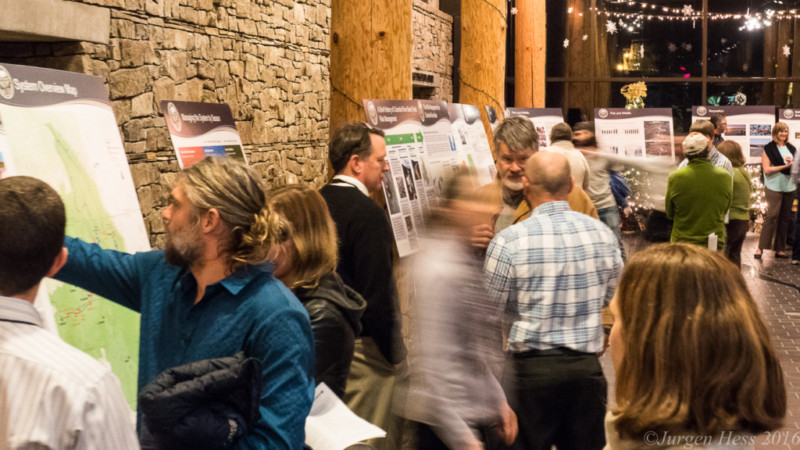
Upstairs in the Columbia Gorge Discovery Center three federal agencies held an open house Dec. 6. Downstairs advocacy groups met to give their views. 

Upstairs

The agencies invited the public to give their opinions on how the Columbia River system of dams should operate. How should the agencies rank: navigation, generating electricity, flood control, irrigation, recreation, supplying water for municipalities and industry?  What weight should be given to cultural resources, to wildlife, to fish?

It is fish and the dams’ impact on them, especially salmon, that triggered the meeting—one of 15 the agencies held throughout the Columbia River Basin. The U.S. Army Corps of Engineers, Bureau of Reclamation, and Bonneville Power Administration each have a role in managing the 14 federal dams on the Columbia River system.

[/media-credit] Ryan Egerdahl, Manager of Long Term Power Planning for BPA

Starting in 1937 with the building of Bonneville Dam, they have provided the region power, irrigation, shipping channels, and safety from flooding.  The system provides 35 percent of the electricity in this region and at some of the lowest rates in the United States. Irrigation means Eastern Washington deserts grow apples, hay, hops, potatoes. Water pulled from the Columbia irrigates cherries grown around The Dalles.

The Columbia and Snake Rivers provide a highway for commercial traffic: barges carry fuel upriver and crops down river. Without the locks on the dams, that would cease. The 1948 Vanport flood on Portland’s north edge tragically showed the need for flood control.

What was unforeseen in building the dams was the destructive impact they would have on salmon, steelhead, lamprey, sturgeon, and bull trout. Despite the many tactics the agencies have tried, none have stopped the drastic decline in these species. Last May, a federal judge once again required the agencies to develop a new plan to protect them. The first step is preparing an environmental impact statement (EIS), and that requires public input.

The agencies chose to hold open meetings rather than hearings, which can become more emotionally charged. At the Discovery Center the agencies lined the massive River Gallery with display boards illustrating each topic the agencies must address. Staff at each section explained how that part of the system worked and answered questions. One section showed how the EIS process works, another how the interconnected system of dams works. One was devoted to what they are doing to prepare for climate change.

For the most part, the beautifully illustrated panels explained only the benefits of the dams, and almost no information about any drawbacks. Since the EIS was triggered by the system’s impact to salmon, it was noticeable that in the Fish and Wildlife section the only reference to that was a heading on one display board: “System Operations Affect Many Fish and Wildlife Species in the Basin.”

[/media-credit] Fish and Wildlife section

The rest of the information was on the things they are doing to mitigate, like: juvenile fish collected in screened bypass systems are transported via barge or truck from the uppermost three dams on the Snake River to below Bonneville Dam. Only the panel on lamprey, white sturgeon, bull trout talked about the precipitous decline of these species.

The combination of the dams and the warming climate create rivers lethal to fish.  2015’s cooler temperatures and the fact that Corps released water to cool the river improved the survival rate of sockeye salmon. But in 2015 NOAA reports, “One percent of the Snake River sockeye salmon detected at Bonneville reached Idaho?s Sawtooth Valley.” Additionally, “Survival over the past five years from Bonneville to the spawning grounds has ranged from 25 percent to 50 percent.”

Downstairs advocacy groups put their positions forward

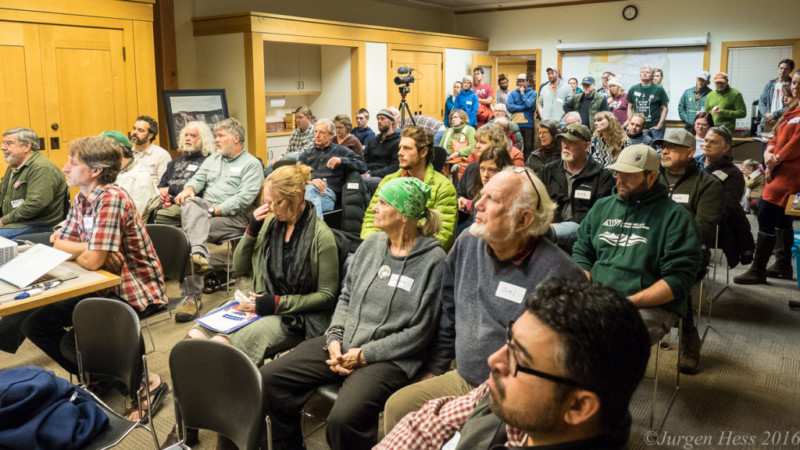
While the agencies held the meeting upstairs, people crowded into a room downstairs to hear advocacy groups talk on their position.

Columbia Riverkeeper, Save Our Wild Salmon, American Whitewater, Sierra Club, Natural Resources Defense Council, and the Association of Northwest Steelheaders presented their opinion on what must be done to ensure the survival of wild salmon.

They were united in their recommendation that removing the four lower Snake River dams is imperative.

“To restore salmon we need a system that is resilient, and manage it with climate change in mind,” said Lori Epstein, Water Quality Director for Columbia Riverkeeper. “The first priority to restore natural resilient systems is to remove the Lower Snake River dams.”

She showed graphs that illustrated the sequential warming of the Lower Snake River. The increasing temperatures create a stair step pattern with each successive dam. Her modeling data showed that even without dams climate change would still cause temperature spikes in the water. But the periods of hot water would not be as prolonged nor cause as much fish death as the dam system does.

The meeting focused on salmon rather than sturgeon and lamprey and other fish, Epstein said, because many view salmon as the “canary in the coal mine,” because salmon are more sensitive to rising temperatures. However, she said that sturgeon, lamprey, and other wild fish are also in trouble and that those species will benefit from restoration projects aimed at helping salmon.

Joseph Bogaard, Executive Director of Save Our Wild Salmon, pointed out that the agencies gave no informational on the decline of orcas, which partly depend on Columbia River salmon. Both orcas and salmon have Endangered Species Act listing.

Orcas winter and forage on Chinook salmon off the Oregon coast, Julia Goode Stefani, Natural Resources Defense Council attorney said. Orcas are currently not getting enough salmon to sustain a healthy population. “The Snake River used to hold 50 percent of the fish,” she said. “Now, it holds 75 percent of the restoration potential.”

The organizations claim that wind and solar energy production have reduced the need for the power the Snake River Dams produce, and that barge traffic on the lower Snake has decreased by 70 percent.

Upstairs the agencies did not address the United States District Court ruling. These organizations listed four issues from the ruling on the agencies’ multi-billion dollar plan for protecting 13 populations of imperiled wild salmon and steelhead in the Snake and Columbia Rivers. The plan:

  • does not reflect that previous measures have done little to improve fish abundance.
  • failed to address the ‘potentially catastrophic impact’ of climate change on salmon and steelhead populations.
  • failed to consider alternatives to current approaches that are failing.
  • relied on uncertain and speculative habitat mitigation measures to make up for harm caused by the dams.

Removing salmon predators—terns, cormorants, sea lions—by culling nests or shooting them has been one of the mitigation tactics the Corps uses. 

Steve Hawley, author of Recovering a Lost River: Removing Dams, Rewilding Salmon, Revitalizing Communities, noted in his presentation that the April 2015 BPA Administration Overview Report states that BPA is $13 to $15 million in debt. He said that rather than offering Google and other corporation low power rates, money should go toward helping restore freshwater aquatic ecosystems.

When asked to comment on power rates for Google, Kurt Conger, Assistant General Manager & Director of Power Resources for Northern Wasco County PUD wrote, “Google and all other NWCPUD customers pay cost-based rates with no subsidies between customers. BPA rates are designed to fully recover the agency’s cost of providing power to wholesale customers including NWCPUD and are the same for each wholesale customer class.”

The public comment period for the Columbia River System Operations Environmental Impact Statement is open until January 17, 2017. To make a comment you can email comment@crso.info or find more information at www.crso.info

© Copyright 2013-2025 Columbia Insight. All Rights Reserved.

As a 501(c)3 nonprofit organization, all donations to Columbia Insight are tax deductible to the full extent of the law. Our nonprofit federal tax-exempt number is 82-4504894.