
Stay Updated Subscribe today for the latest research + reporting about environmental news. Subscribe Now

Stay Updated Subscribe today for the latest research + reporting about environmental news.

Subscribe Now

Susan Hess

Susan Hess

Susan Hess

About Susan Hess

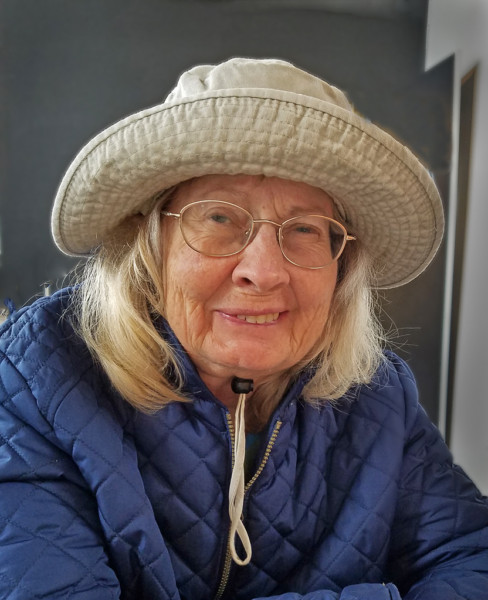
Susan Hess is Columbia Insight's publisher.

You Are Needed

Ten years ago, Susan Hess had a vision of channeling her passion and fervor for protecting the waters, lands, plants and wildlife of our beloved Columbia River Gorge into an initiative that would educate and inspire locals to join her in being the change our Gorge needed. In partnership with her husband Jurgen and a team of like-minded citizens, she invested her private funds, energy and heart into creating what has evolved into EnviroGorge, LLC, the primary resource for in-depth investigative reporting and environmental stories throughout the Gorge and beyond.

Today, more than ever, this initiative is needed to protect this extraordinary region.  People doing high integrity, quality work for EnviroGorge is essential.  While many donate their time, money is also required. Susan and Jurgen will continue to fund and spearhead EnviroGorge, but help is needed to expand our outreach and take us to the next level.

We ask you to join us in supporting EnviroGorge, LLC with a financial gift.  No amount is too small.

We never know when one financial contribution or seemingly modest conscious act might help change the course of history, or engage someone else who will play a key role.  Susan and Jurgen embody this concept of being the change and igniting others to do the same– trusting that people will make more conscious environmental decisions once they have a clearer understanding of the issues.  This core philosophy is what inspires the work we do. 

Please mail your check to: EnviroGorge, LLC, PO Box 163, Hood River, OR  97031 or via Paypal on EnviroGorge

In Sincere Gratitude,

The EnviroGorge Volunteer Advisory Council: Tina Gallion, Eileen Garvin, Heidi Logosz, Buck Parker, Tom Post, Lynda Sacamano, Jessica Walz Schafer and Stu Watson

Potential Funding Levels:

$20-50             Continue our work

$60-120           Youth outreach and engagement

$125-350         Hire skilled freelance writers

$375-$1000     Sponsor our site
 

By |2019-02-27T14:49:45-08:0012/06/2017|More, News, Old Articles, Uncategorized|0 Comments

Cows Help Bring Land Back in Balance

By Susan Hess.

Bob Hansen. A fenceline separates the grazed and ungrazed wheatgrass.

Dalles Mountain Prairie Restoration: from Cows to Wildflowers 

Rancher Pat Bleakney planted 200 of the 6,200 acres in Snake River wheatgrass. That pasture looked, if this were Hawaii, like a pineapple field: neat rows of spiky tufts. He retired in 1993 and sold the ranch to the State of Washington.

The old ranch, five miles north of Washington Highway 14, became the upper section of Columbia Hills State Park. Park staff constructed hiking trails.Wildflower lovers, hikers, photographers flocked to the park?s fields of yellow balsam root, purple lupine, red Indian paintbrush, yarrow, and mats of pink phlox. But the Snake River wheatgrass section sat unchanging and undisturbed for 18 years.

Why then Parks chose in 2007 to restore the 200 acres to native prairie is uncertain, because it would not be easy. The method they chose would cause an eruption of criticism.

A contentious test

Park staff asked Steve Van Vleet, Regional Extension Specialist at Washington State University, to come up with a restoration plan and gave him a five year permit to try it out. Van Vleet works around the world restoring prairies.

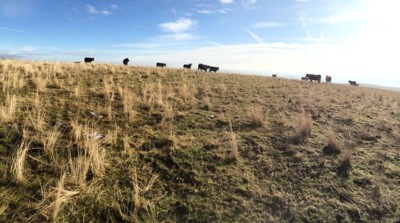
Cows grazing. Photo from The Dalles Mountain Prairie Facebook Page

He proposed that they use cattle to graze down the wheatgrass thatch. State Parks had long wanted to incorporate grazing on the park, so visitors could learn about historic ranching.

Van Vleet started by bringing together people who wanted a say in the outcome: ranchers, park staff, Native Plant Society, birders. The early meetings were angry shouting matches.

“The only way we could do it,” he said, “was with cooperation and collaboration, but it’s tough.”

“When I first heard they were going to graze cattle on a state park,” said restoration volunteer Bob Hansen, “I went ballistic.”

Van Vleet says mildly, “Much opposition!”

It’s easy to see why. Across the arid west, millions of cattle over a century have decimated native vegetation, overgrazed land, damaged soils and streams.  

But Van Vleet stayed calm. He showed them a 50 year study that indicated with careful management, cattle improved this type of grass monoculture. He proposed dividing a 180 acre parcel into fenced pastures. Cattle would graze three to four weeks in the fall. Each year cattle would be rotated to a different pasture. One pasture would be left ungrazed as a control plot.

The grazing plan was good news to nearby ranchers Jim and Nancy Sizemore, who were asked to be part of the experiment. There would be no grazing fee for them nor would they be paid. Sizemore had advocated for grazing from when Parks first bought the property. “We wanted to show that ranchers can manage grazing that can be beneficial. It gives us an opportunity to build trust with the environmental public.”

 Dalles Mountain Prairie Experiment  

Prairies (grasslands) are being wiped out worldwide at a rate scientists liken to the loss of tropical rainforests: converted to roads, mines, subdivisions, and agriculture. A prairie is a thriving ecosystem: hundreds of plant species fill every inch, providing food and habitat for insects, birds, reptiles, rodents and other mammals—grazers and carnivore—in a continuous cycle.

Prairie plants create an extensive root system, often reaching a meter deep for water, preventing erosion. They store vast amounts of carbon dioxide.

“The prairie sings to me in the forenoon and I know in the night I rest easy in the prairie arms, on the prairie heart?”    Prairie by Carl Sandberg

“Prairie birds,” the National Audubon Society writes, “have shown the most sustained population declines of any bird group in North America.” Since 1966 the western meadowlark population, whose melodic songs fill the air along Dalles Mountain Road, declined nationwide 48 percent.

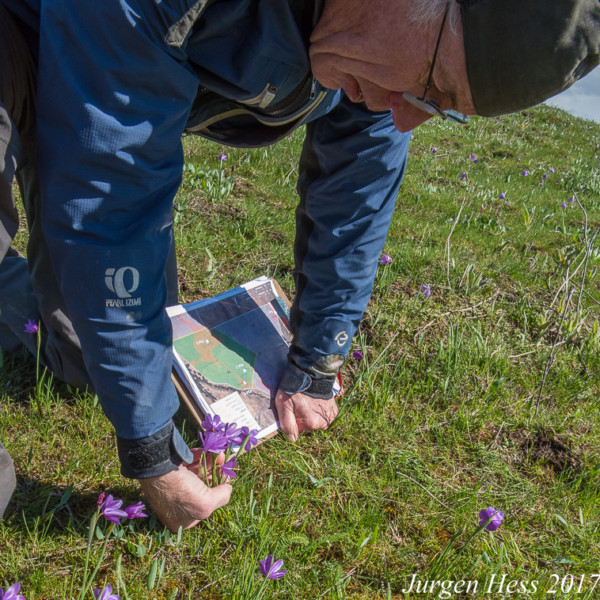
Bob Hansen checks grass widow cluster

The Snake River wheatgrass section was “a kind of biological desert,” said Robert Fimbel, Natural Resources Stewardship staff for Washington State Parks. “There’s not much diversity. There’s not enough wildflowers for bees and butterflies. Rodents used it, but Secar [wheatgrass] doesn’t put out a lot of seed head, so there was never a lot of food even for rodents.”

“The rancher tried to do the right thing,” said Bob Hansen, who became a key person in this experiment – in addition to his numerous volunteer efforts coordinating bird migration and Christmas bird counts for about 20 years in Klickitat County.  

Hansen said the problem was that the rancher tilled the 200 acres, it destroyed the root systems of the native plants. Then he planted a monoculture of grass native to Idaho. The grasses grew tall and for 20 years as old grass blades died, they fell and created a thick thatch where native grasses and wildflower seeds could not sprout.

A show-me start

By 2009, everyone was finally ready to give the plan a try. That November the Sizemores saddled horses, called their dogs, and drove 120 cattle over Dalles Mountain Road from their Centerville ranch and let them graze Pasture 1 for three weeks.

The blueprint

“Different tools are to be used for different places: livestock, herbicides, tillage fire.” Van Vleet picked cows because they feed 70 percent on grass. The benefit of cattle, he says, is that they provide the disturbance that fire might have produced 200 years ago before European settlement.

Cattle graze the smothering grasses opening bare soil, thus giving places for seeds of native plants to sprout.

The restoration plan:

  • Each fall a different pasture is grazed. Fences keep cattle to designated sections.
  • Salt blocks and water for the cows are placed to minimize damage and are rotated to a new location every year.
  • The only plants reintroduced are those growing naturally within a few miles of the site.

It was hoped they could drill seeds in, but the entire project operated on a half-a-shoe string budget. Van Vleet used grant money from related projects. Hansen wrote grants. They each put in their own money. State Parks contribution was letting Van Vleet stay in one of their facilities, providing a crew to collect wild seeds, and erect fencing.

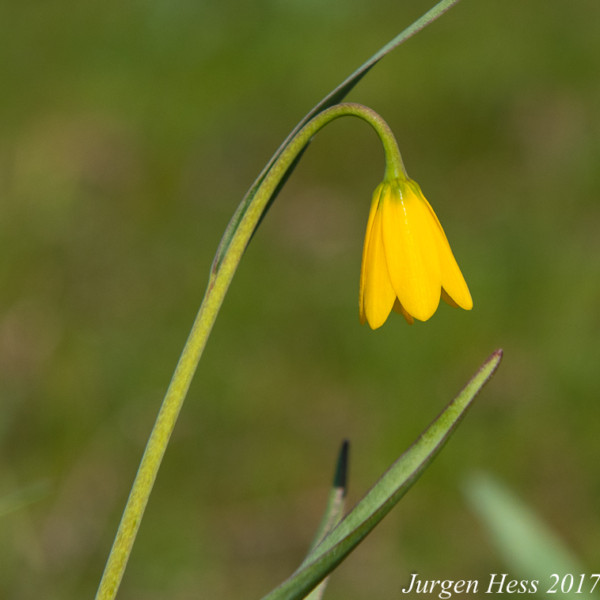
Yellow bell bloom in the restored land.

Volunteers like Hansen have been the main labor force, gathering a mix of wildflower and native grass seeds along the roadsides of Dalles Mountain Road: Oregon sunshine, cut leaf penstemom, grindelia (the bright yellow gumweed), balsam root, yellow bells, lomatium.  

“We’re trying to tip the balance,” Hansen says, “to a natural diversity.”

Lupine and yarrow needed no introduction, the minute bare soil opened up they moved in, set down roots and got busy colonizing. Some seeds had lain dormant under the Snake River thatch and sprouted once it was removed.

The volunteers also planted a hundred native mock orange, grey rabbit brush, and wild rose. Hansen watered them for the first years during the hot summer weeks. Only twenty survived, but are doing well.

The problem with projects that depend upon volunteers is that restoration projects succeed only with attention over time, and most volunteers lose interest in the less glamorous work of monitoring and maintenance. Dalles Mountain prairie lucked out with the people it attracted. Bob Hansen comes every two weeks February through October to monitor, re-seed and record when plants bud, leaf, bloom, reach their peak, and go to seed. He’s frequently accompanied by local birdwatcher Stuart Johnston and native plant expert Barbara Robinson. “If we weren’t doing it,” she said, “it wouldn’t get done.”

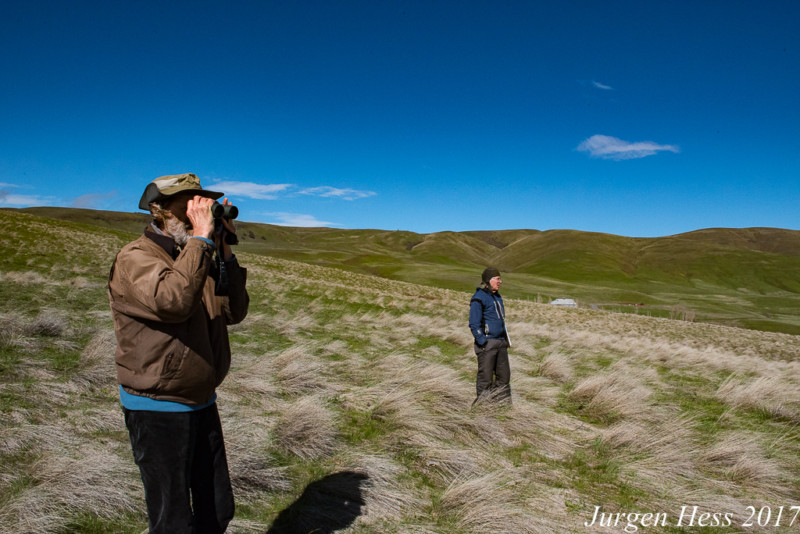
Stuart Johnston scans for birds. Behind Bob Hansen are old ranch buildings.

Eight years in

The experiment is starting its eighth year. “What we have done is absolutely amazing,” Van Vleet says. “We’ve increased species diversity, increasedperennial forbs (wildflowers), and the coverage of those perennial forbs, and reduced the grass impact. We still have grass everywhere, but now it’s healthy grass; it’s not as thick and dead. It’s remarkable.”

The ranchers gained forage acreage. The Sizemores had to supplement feed for their cattle at first, because in the first few years the protein level in the old grasses was low. “The protein of the grass is now forage quality for livestock, deer, birds,” Van Vleet says. “The dead grass had five percent protein. Now, due to grazing, the new growth has 6.5 to 7.8 percent protein. Seven percent protein is the level cattle need in fall so ranchers don’t have to supplement.”

The rancher would like to see increased grazing. “I believe we should—one out of four years or one in five years—graze in spring, a light early spring graze,” Sizemore said. “Varying the time of use would benefit the area. It’s more natural, like the way Mother Nature does.”

Barbara Robinson, native plant expert

Robinson disagrees, “The goal of the project is to increase diversity in this planted grass monoculture by increasing the spring wildflowers. With spring grazing, cattle eat the few wildflowers there are, which is counter to this goal. In fall the cattle eat the grasses, since the wildflowers are dried and dormant.”

Other area ranchers received permission from Parks to expand the project to land across the road. Again Parks did not put up any funding. This concerns Hansen because the results aren’t being monitored.

Van Vleet is moving on to other projects. He’s a person who speaks carefully, but he is passionate about prairie restoration, because he’s seen places where land was abused causing the loss of arable soil and with it disruption of society. He’s confident that the Dalles Mountain Prairie Restoration is in good hands. Klickitat County WSU extension agent Hannah Brause has offered to take over Van Vleet’s role.

Oregon State University’s Institute of Applied Ecology is joining the work thanks to a private donation and a grant from Columbia Gorge Environmental Foundation.

Bob Hansen, Stuart Johnston, and Barbara Robinson are committed to this place. “I take people out so they can see that grazing is not harming the land,” Hansen said. Johnston shows visitors birds that come here to nest and feed: the long billed curlew, horned lark, magpies, grasshopper sparrow, and western meadowlarks.

“This project is a positive model for ranchers, government, and environmentalists on how to work together,” Hansen says. He likes to show it off in spring when the once sterile landscape blooms with grass widows, lomatium, lupine, shooting stars, yellow bells.

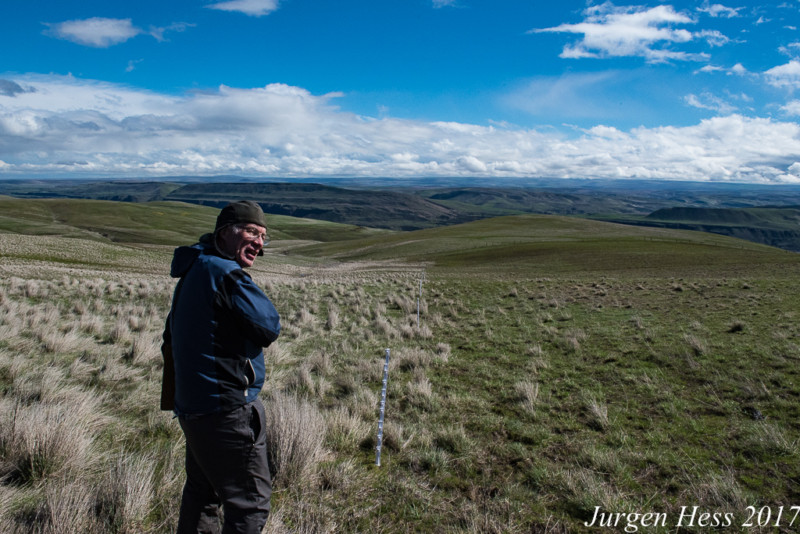
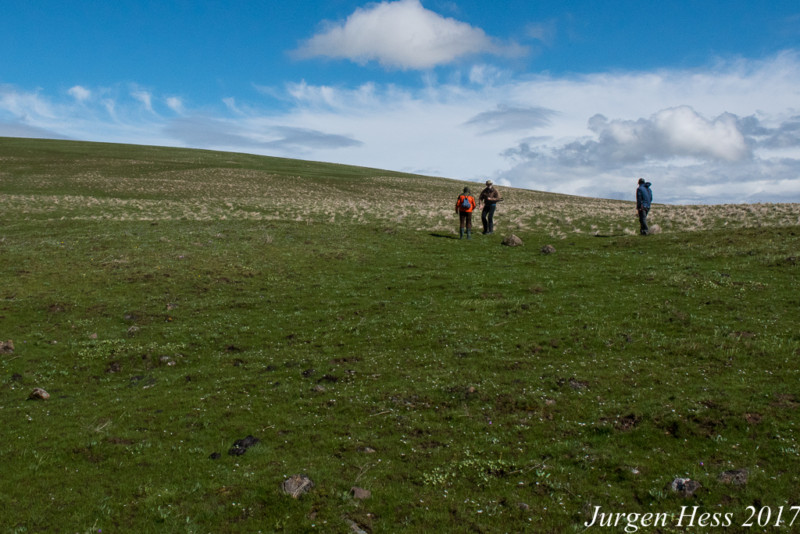
Stuart Johnston (cntr) and Bob Hansen stand at the divide between the Snake River wheatgrass behind them and the flower dotted restored land downslope


Trash Tales: Paikea

Essay by Susan Hess

A tree house needs children. This spring Jurgen and I began planning how best to dismantle ours and move it to the Gorge Rebuild-it Center, where we hoped some family would find it. Before we started taking it down, Matthew Barmann came over to look at our yard’s native plantings. As he and Jurgen walked the backyard path that curves by the tree house, Jurgen told him about our plan?reuse on a giant scale.

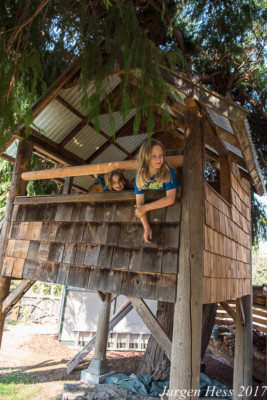
Paikea and Jonah in the treehouse

Without hesitation, Matthew asked if he could have it. “Sure, but it’ll be a while, because we have company coming, and after that, classes to teach.” Then Matthew’s family went on vacation. Then we had to travel to Eastern Oregon. When we got back, we had a garage sale. Summer days grew fewer.

Our doorbell rang one sleepy Sunday afternoon in July. Matthew, wife Nicole, son Jonah, and daughter Paikea stood there. Matthew wanted to show them the tree house. Jonah, 10, and Paikea, 4, flew up the treehouse?s narrow stairs. After inspection, Jonah ran to scale a nearby tree. Paikea ran in and out of the backyard paths: behind trees, around the vegetable garden, on the winding path by the ferns. The treehouse needed them, children full of energy and curiosity.  

The guys plotted how to take it apart. Could they get the roof off in one piece? Could the floor be saved? How best to mark each piece so it goes back together? How much help would they need?

Paikea, Nicole and I left them to their plotting and went in the house. Inside opened a new adventure for Paikea. She ran down the hall, into bedrooms, bathrooms, kitchen, living room, office, utility room, and peered into every closet. When Matthew and Jurgen had a plan for disassemble-day, we gathered on the front steps, all but Paikea.

She came out minutes later holding a stuffed puffin—a stuffed toy she took out of a bag toy birds we planned to use as contest prizes. She looked up me with that look small children get that says: “I know I shouldn’t take this, but unless you stop me, I’m going to take it.” 

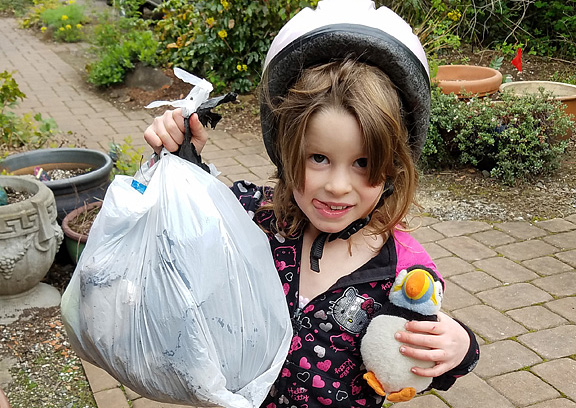
Paikea and the puffin pick up litter.

I bent down. “Paikea, you can’t take it, but you can earn it. If you help your mom and dad, plant some flowers or pick up some trash, you can earn it.”

“Pi, we can go down to that spot at the end of our street,” her mom said. “There’s always trash there, and we haven’t picked it up for a while.”

The next morning Jurgen and I went out to breakfast. Driving back we arrived home just as Matthew and tiny Paikea bicycled into our driveway. Paikea resplendent in tutu and essential bike helmet climbed down clutching the puffin in one arm, and presented me with a plastic bag packed with litter.

A week later, Matthew and carpenter friend Joe arrived early with work clothes, hammers, drills, saws, and an empty trailer. It took the three men all that hot summer day to dismantle the seven-foot square, story-and-a-half-high building. It’s solid, and it’s not a tree house as much as a house among trees. Four eight-inch round timbers hold it aloft.  

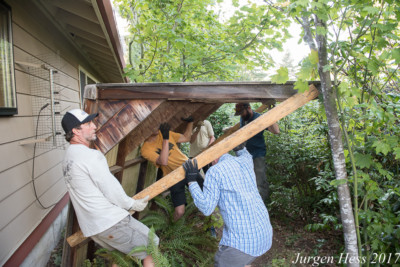
The roof came off in one piece. Window, walls, floor, timbers came down and hoisted into the trailer—everything but the heavy roof. Matthew returned a week later with four men. The roof required all five to lift it, angle it between trees, inch it past the living room window, around the corner to a faithful trailer.

Just blocks down the street, the treehouse now stands regal in its new home, sheltered by cedars, filled with toys and small children creating their own world.

Moving the roof was not so easy.


RELATED POSTS


By |2019-02-27T14:51:53-08:0009/21/2017|Energy, Features, Old Articles, Waste Management|1 Comment

Gorge fires: Monday 9-11-17 Hood River

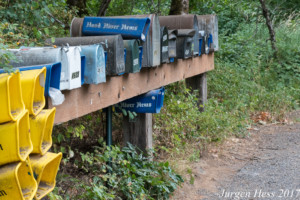
Mailboxes on Riordan Hill Rd.

“I think it’s kind of hurtful when Portland people call it a playground, because it’s our home,” said Nikki McMinn, who works in a Hood River restaurant. She grew up in Hood River. “There needs to be a level of respect when people are losing their homes. I understand why people love the Gorge, but at the end of the day it’s still our home, and it’s not a playground. It’s a place where people live and love living here.”

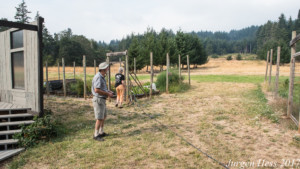
Gary and Irene Fields live on the west outskirts of the City of Hood River. And inside the east end of the Eagle Creek Fire Level 1 evacuation zone. Gary mowed and irrigated the dry grassy expanse around their property, cut brush, and limbed up the conifers. They filled their 12,000 gallon swimming pool, ran sprinklers on their roof, took photos of every room.

Gary and Irene Fields’ place

“We’re as ready as we can be,” Gary said.

“We’re not nervous yet. We don’t have a huge fear of losing everything,” Irene said. “If it happened, we wouldn’t be devastated. If we get a Level 2 notice, we’ll pack up the car with what we really want to save and get out.”

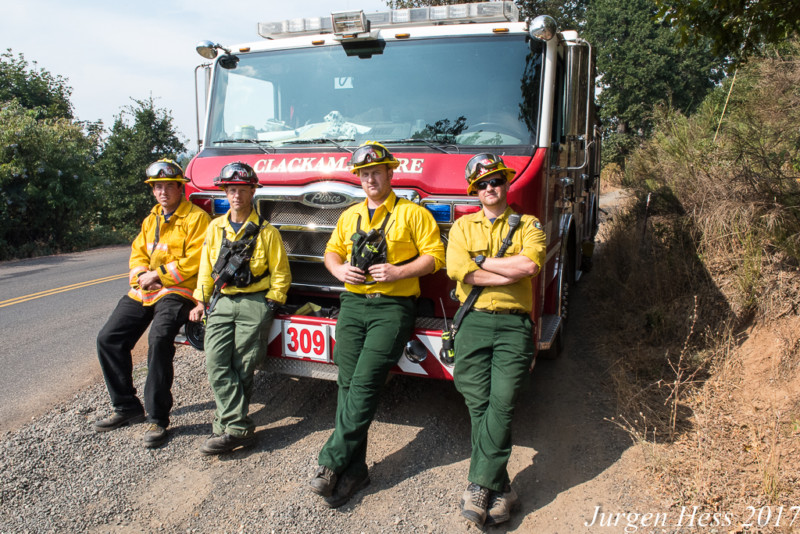
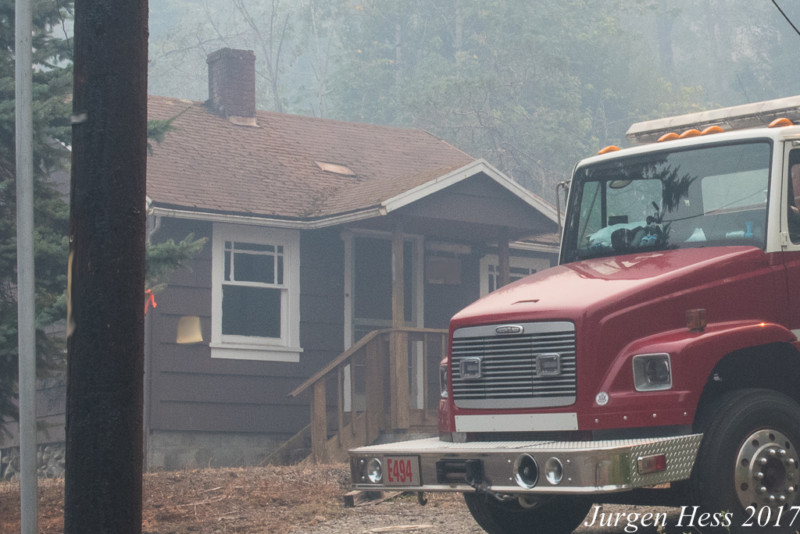
Like an advancing army, firefighters and engines are stationed on roads in the Level 1 zone: Hood River Valley’s line of defense. Roads going into the zone are blocked. All Hood River County lands are closed. Clackamas Fire and EMS firefighters and their engines are stationed on one of those spots, Riordan Hill Road. They said that Incident Command planned to burn out areas west of Hood River towards the fire creating a fire break for the valley, but humidity on Saturday morning was 86 percent, too high for a burn out. One of the crew said, “A burn out is a good thing.”

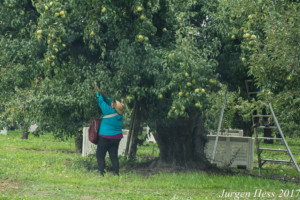
Behind them, another army is advancing through the orchards that cover the valley. It’s harvest time for the valley’s famous pears.

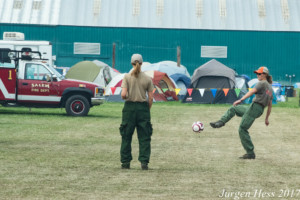
Heidi Logosz arrived at fire command center Saturday afternoon at the fairgrounds in Odell with grocery bags filled with toiletries and snacks. The Cascade 1A fire crew on a short break started a pick-up soccer game on the grass lanes between rows of fires engines. The game had barely begun when they were called to go up to Lost Lake to clear brush. Another precaution.

On Monday morning the air in town is clearer. The fire has slowed. The wind is calmer. The evacuation levels have not been lifted, but have not increased.

[/media-credit] Fire crew staging area in Odell 


Subscribe

Get new stories in your inbox!

You can also find us on Facebook, Instagram, and Twitter.
Subscribe


Thank you to our business sponsors for making our work possible!

By |2018-09-30T06:26:01-07:0009/11/2017|News, Old Articles, Wildfire|3 Comments

Fire insurance information

[media-credit name=”Photo: Jurgen Hess” align=”alignright” width=”300″][/media-credit]

The Oregon Department of Consumer and Business Services provided information to help those effected by wildfires. The information applies to both Oregon and Washington residents.

1. If you (an evacuee) have home owner’s insurance, you do not have to stay in a Red Cross shelter. Under most policies, loss of your home because of a fire or civil authority order evacuation, this triggers “additional living expenses” coverage under most policies. This means that you can stay in a hotel, eat at local restaurants. Keep all receipts, and call your insurance company or agent as soon as it is safe to do so to notify them of your evacuation.

Other tips related to fire damage
2. Keep and maintain a home inventory. Whether it is a detailed spreadsheet with itemized receipts or a walkthrough of your home recorded on a smartphone, it is always helpful to have documentation of your possessions and property in case you do have to file a claim.

3. If you file a fire-loss claim with your insurance company, your insurer may require a damage inspection before you start repairs. Take steps to prevent further damage or theft, and then check with your insurance company before beginning repairs.

4. Most claims adjusters and some agents are authorized to write you a check for the actual cash value of your damaged property. This amount is usually less than the replacement cost. In most cases, this is an initial payment and you will receive additional funds once you start replacing your property.

5. Damage to a vehicle, even when parked in a garage, is not covered under a home policy. You need to have comprehensive auto coverage to pay for damages or total loss to a vehicle.

If you have any questions or complaints about your insurance, contact the Division of Financial Regulation’s consumer advocates at 888-877-4894 (toll-free) or at www.dfr.oregon.gov.

By |2018-01-22T10:52:03-08:0009/08/2017|News, Old Articles, Wildfire|0 Comments

Gorge Fires Sept. 6, 2017

Eagle Creek Fire Complex. Wed. Sept. 6, 2017, 12:30 p.m. See info on railroads at end of this article.

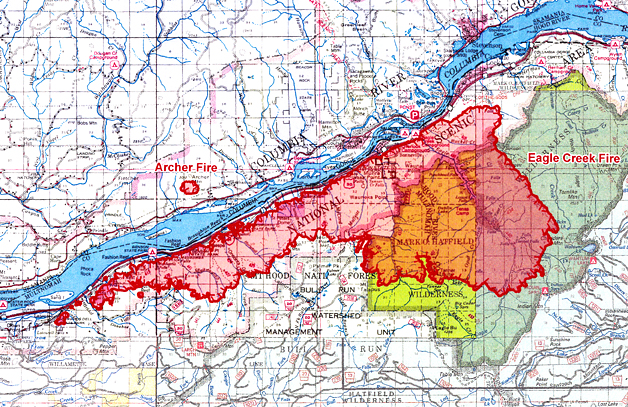
Eagle Creek and Indian Creek fires have grown together. Fire now 30,929 acres. 602 people working on the fire. Five helicopters are dropping water. Today near Cascade Locks, OR fire personnel will be conducting burning operations to remove fuels between the bulldozer lines and the fire edge.

[media-credit name=”Incident Command map” align=”aligncenter” width=”628″][/media-credit]

They have evacuated 1,822 people per the Level 3 evacuation orders (which means ‘leave immediately’). One residential structure and four outbuildings have burned. Multnomah Falls Lodge is being protected. Evacuation centers are at Skamania County Fairgrounds in Stevenson, WA and at Mt. Hood Community College in Gresham, OR.

In WA, Archer Mountain Fire now at 112 acres; it was started by embers from the Eagle Creek Fire. A new fire, calledBear Creek Fire, broke out north of Carson, estimated at 20 to 25 acres. It is burning in Carson’s watershed.

I-84: The Dalles westbound open only to passenger and local commercial vehicles. Westbound and eastbound closed from west Hood River exit to Troutdale. The status could change today.

WA SR14: closed to commercial truck traffic, over 10,000 gross vehicle weight, from Washougal to Dallesport. Due to I-84 closure expect increased traffic. Parking on the shoulders both directions is prohibited except in emergency situations. Use caution and expect delays.

Bob Hamlin, Skamania County Commissioner said, “Unfortunately, we won’t be out of this situation until the rains come. The forests have gotten heavily fueled. Now with climate change, this will only get worse.” He’s concerned about the BPA, phone, rail, and gas lines, and about erosion once rains begin.

Daniel Bardes

Yesterday at the Skamania County Fairgrounds , Red Cross Disaster relief volunteer Vicky Wessling told us there were 20 people inside in a meeting room being used as a dormitory. Outside there are 60 to 70 vehicles, many RVs and people in tents. They have put people’s pets in a special facility at the fairgrounds; local children have volunteered to take care of them. RC has a nurse onsite.

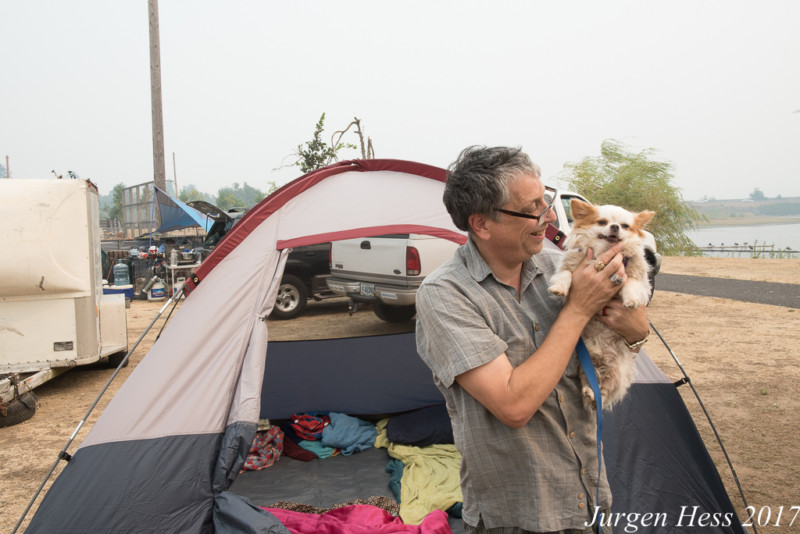
The Bardes family from Cascade Locks is one of the families in tents: Daniel Bardes, his wife, their two children 6 and 7, and their dog. Daniel said, “The kids are saying, ‘We get to go camping.'”  The family took precautions with important papers. He says he’s not too worried about their home, because firefighters’ first priority is to protect structures.
Wed. 9-6-2017. 5:30 p.m. BNSF railroad 

Many Gorge residents are asking why oil and coal trains are running through the Gorge right now. The Eagle Creek Fire sent sparks and embers across the Columbia River and started a fire on Archer Mountain. It a natural question what would happen if some landed on the railroad tracks or in the open coal cars.

“We shut down yesterday morning: holding ten trains,” said Gus Melonas, BNSF spokesman. “Later that day we got the green light; there were no threats, and we restarted.” Since then, BNSF has been running 40 trains (including Amtrak) a day through the Gorge, but for the duration of the fire, BNSF will not hold trains at either the Stevenson or Cook sidings.

Melonas said the railroad has enhanced the inspection process as well having ground crews watching for any threats, and positioned fire trains in the Gorge. The company is in regular contact with relevant fire agencies. He emphasized the investment the company has made upgrading track, ties and equipment.

“The protection of our employees, the passengers riding the trains, the communities we pass through, the commodities we haul, and the environment are our top priorities,” Melonas said. “If any are threatened, we will take steps to ensure their utmost safety.”

To report any issues to BNSF: 800-832-5452.

By |2018-10-10T16:21:45-07:0009/06/2017|Climate Change, News, Old Articles, Wildfire|2 Comments

© Copyright 2013-2025 Columbia Insight. All Rights Reserved.

As a 501(c)3 nonprofit organization, all donations to Columbia Insight are tax deductible to the full extent of the law. Our nonprofit federal tax-exempt number is 82-4504894.