Stay Updated Subscribe today for the latest research + reporting about environmental news. Subscribe Now

Stay Updated Subscribe today for the latest research + reporting about environmental news.

Subscribe Now

Susan Hess

Susan Hess

Susan Hess

About Susan Hess

Susan Hess is Columbia Insight's publisher.

Wild & Scenic Rivers series possible due to sponsors

Wild and Scenic Rivers receive that recognition due to their “spectular outstanding natural, cultural, and recreational values in a free-flowing condition.” Columbia Insight’s series on the Wild and Scenic Deschutes River is a tribute to one of Oregon’s most popular and accesible rivers. In the series, the author reflects on why we frequent such a special place. He also takes a closer look at some of the changes that are ocurring, and introduces a few of the people who are working to safeguard and protect the river for future generations. 

This series was made possible by our sponsors. Thank you!

Solstice Pizza co-founder Aaron Baumhackl grew up kayaking and rafting the South Fork of the American River in California with his father Franz. When not at Solstice, he’s rafting local rivers with his wife Suzanne and sons Jenner Wilder and Rune River, named to ensure a multi-generational stewardship of our beloved and essential rivers. 

Best Western Plus Hood River Inn on the Columbia River shoreline, offers accommodations with river views, water access and a private beach. For over 50 years the Inn set quality standards for hospitality in Hood River, while maintaining a modern mid-century charm. Convenient to Columbia Gorge activities, attractions and recreation and Mt. Hood.

Big Y Fly Company. Our premium discount fly fishing flies are hand-tied in our own facility using the highest quality materials and adhering to the strictest tying standards.  Every fly is twice inspected before reaching you. Although we supply many guides, resorts and fly shops, the nuts and bolts of our business is with the fly fishing public. 

Tum-A-Lum Lumber is a fourth-generation family-owned and operated building material supply company operating in Hood River, The Dalles, and Pendleton, Oregon. We’ve provided contractors and homeowners building materials and services for 112 years. Tum-A-Lum is a Umatilla term meaning spreading waters.
By |2019-02-27T14:35:09-08:0011/01/2018|News, Old Articles, Uncategorized|0 Comments

Fire and Eclipse

By Peter Rysavy. Oct. 4, 2018. We walked to Dave’s driveway as dusk crept in to get a clear view east. We came out early on this late-September evening, because my daughter, Lea, was anxious to see the lunar eclipse. I glanced over at her. “Doesn’t get any better,” I said. “Total eclipse. Blood moon.”

A ghostly image materialized. The outline of the full moon, barely visible, arose above the horizon and shimmered on the edge of perception—the full eclipse.

I noticed next door neighbor Dave at his kitchen. “Dave,” I yelled, hoping my voice would penetrate the window. “We’re looking at the eclipse.”

“Come onto our deck,” he called. “The view should be good from there.” Lea, my wife Gloria, and I joined Dave and his friend, Marina on his deck

“Did you see the smoke?” she said. “I just called 911.”

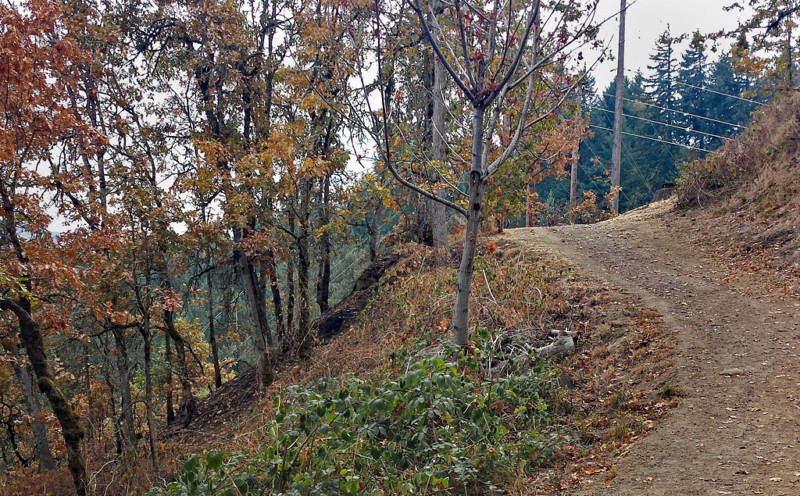
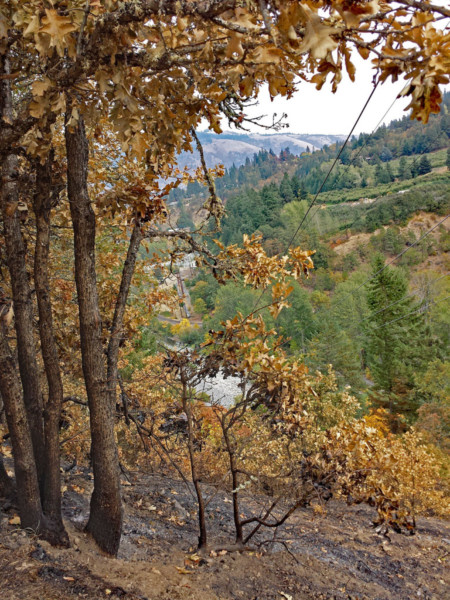
[/media-credit] Fires have burned the steep slopes of Indian Creek many times.

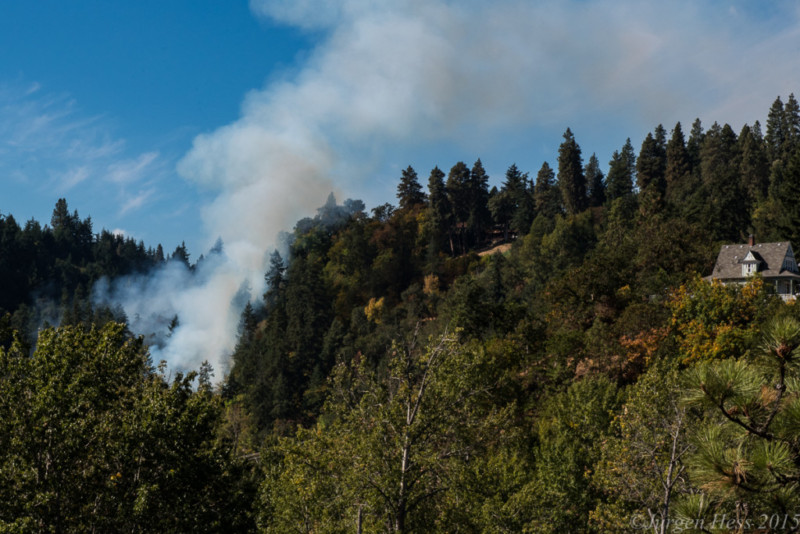
Gloria spun around. “What smoke?” Marina, pointed to a white plume rising from the steep hillside, south of us, barely a couple of hundred yards away. Oaks, maples, brush, and grass covered the hill—all parched from the hot dry summer.

“That’s a fire. It’s burning somewhere above Indian Creek,” I said. “If it gets going, the whole hillside will go.” Dave’s house sat on the edge of the steep canyon, as did the house of our friends and neighbors, Walter and Kelly. A fire roaring up the hill could be catastrophic for them and for other houses along the edge. Our house, not right by the lip, but next to Dave’s, would go next.

 I paced back and forth at the edge of the deck, trying to get a better view and saw the smoke intensify. “I’ll make another call to 911.” The dispatcher told me firefighters were already on the scene.

Gloria texted Kelly and turned to me. “They didn’t know about it.”

“Nothing we can do this moment,” Dave said. “Where is the eclipse?” I pointed to a low point in the sky, between the Hood River mountains and the eastern Washington hills across from the Columbia River, centering the moon like looking down the sights of a gun barrel.

“Oh, there. How bizarre. You can hardly see it, I guess because it’s not dark yet. And in eclipse. Look how large it is.”

We took turns looking at the eclipse with binoculars, but the excitement reserved for the eclipse moved to anxiety over the fire.

A half hour later, Gloria, Lea, and I walked to Walter and Kelly’s house. Their kids and half a dozen people from our block were out on their patio. We all peered down into the canyon. Everybody talked at once. Their wooden house, a commanding historical structure with massive columns over the entryway, looked defenseless to a fire. The patio, at the edge of the canyon’s high point, brought us closer to the rising smoke, now ten times larger in volume than when we first saw the wisps of smoke.

“I can’t see any firemen,” I said.

“I was just at the end of Third Street, a few blocks from here,” neighbor Karen said. “I saw a couple of fire trucks. The fireman I spoke with said a bunch of firemen are on the fire.”

But what could they do? The hillside behind the fire trucks fell 500 feet down at a steep pitch, one that could barely be climbed—as I had discovered in my explorations. Could the firemen run hoses that far?

 I asked, “Do you know what the firemen are doing?”

“They didn’t have any other details,” Karen said, glancing at her house, then back to the hill. Was she judging whether flames could leap that far?

“I think we need to get our sprinklers going,” Walter said. Another neighbor offered to help set things up. “I’ll run our irrigation system as well,” I said, “and connect our hoses to the front of the house.”

Below Walter’s house, the dry vegetation looked ready to explode. Wetting down the environment could not hurt, but the chances of it stopping an out-of-control fire seemed wishful thinking.

Gloria asked Lea to “play with Walter and Kelly’s kids inside their house, so they don’t get in the way.” She and I jogged back to the house and glanced up to see the eclipse spreading an orange glow across the moon’s surface—burning a red ring around the perimeter. The moon felt ominous, as if it somehow had a connection to the fire.

“I think we need to start packing some things,” Gloria said, “for the worst-case scenario.”

“Good idea, but what?”

She rattled off a list, as if she had been rehearsing for such a calamity. “Photos, important papers, clothes for several days, computers, jewelry, and cat carrier.”

What else? I mentally ran through the house. Tennis rackets? Mountain bike? Until our cars are full? Do it now? Pile things up and assume we have fifteen minutes if the blaze gets out of control? All summer we read about fires in the west destroying homes. Now the story was about to engulf us.

We packed suitcases, duffels, and laptop bags, leaving them in a pile in the living room, and headed back to Walter and Kelly’s house to check on the fire. Walter and our neighbors had rigged sprinklers: spraying down the hill, over the lawn, on the driveway, and even sending occasional drops over the dozen people on the patio mesmerized by the fire.

“I can see the glow, but the fire doesn’t look worse,” I said. “No trees on fire,”

At that moment, the glow blossomed into a bright orange color. Yikes and moans erupted.

“Okay. We’re done watching,” Gloria said. “Things are definitely worse. We need to pack the rest of our stuff.” We ran to our house. Threw more things into more bags.

 “I’m sure I’m forgetting something crucial,” I said. “I just remembered my passport. What else? Oh yeah, my external hard drive with all my backups.” I imagined the fire spreading across the entire hill. I looked through the kitchen window at Walter and Kelly’s house, but couldn’t tell if anything had changed. Was I smelling smoke?

We rushed through the house, snatching photos, house purchase papers, and Lea’s favorite stuffed animals. Gloria surveyed the piles. “I think that’s probably all we can fit in the cars.”

We left it there and dashed back to Walter and Kelly’s. “Any developments?”

Karen looked beat. “After the big burst of flames, things settled down. I talked to the firemen again. They said they thought they had it under control. They have hoses on the fire. Nobody needs to evacuate. The worst is over.”

Relief washed over me. “Bummer.” I said. “I packed for a trip and never went anywhere.” Gloria rolled her eyes.

Walter looked up. “Hey, the eclipse is over. How did I miss that?”

We laughed.

[media-credit name=”Peter Rysavy” align=”aligncenter” width=”600″][/media-credit]

Two weeks later I stood on the Indian Creek trail. Charred grass and bushes below covered several acres. The trail cuts across the hill halfway between the waters of Hood River below and the residential area at the top. That morning I had called the captain of the Hood River Fire Department asking if he knew what caused the blaze. But they didn’t know yet. The night of the fire, firemen got to the trail pulling hoses fed from above just as the fire reached the trail.

“Because we were able to get to the trail before the fire jumped over, we were able to defend a clear line and get the fire under control,” he said. “Fifteen minutes later and the fire could have gained the upper hand.”

Maybe Marina was the first to call in the fire. If the eclipse had not lured her out on the deck, maybe her 911 call would have been too late.

“A fire in this canyon is our worst-case fire scenario for Hood River, the interface between town and wilderness,” the captain said. “We train for this exact situation.”

“After this experience,” I said, “fire danger seems so much more real.”


Peter Rysavy has lived in Hood River since 1998.
He is a wireless technology consultant and writes
as a hobby, both fiction and creative non-fiction.

Don’t Miss This Chance!

You can take advantage of this exciting chance to have your generosity matched dollar for dollar! One of our board members has just offered to match your donation … but only until October 31stEvery tax-deductible gift made to this urgent appeal – up to $2,000 – will be matched dollar for dollar. In fact, you’ve already met $600 of the match.
 

Please, donate now and be especially generous.

 
We’ll keep bringing you balanced independent stories about your environment. Coming up, you’ll read articles on:  the Columbia River Treaty; the Deschutes, a Wild & Scenic River;  building the Scenic Highway around Shellrock Mountain.
 
Thank you for helping us meet this $2,000 match!

Today, more than ever, factual, unbiased stories from Columbia Insight are needed to protect our Columbia River basin.

Thanks for your help.
 
Susan Hess
Publisher, Columbia Insight

PS: Columbia Insight is a 501c3 nonprofit. Thank you for your tax-deductible donation.

By |2022-11-15T19:22:21-08:0009/21/2018|News, Old Articles, Uncategorized|0 Comments

Swim Guide: Cool off without getting ill

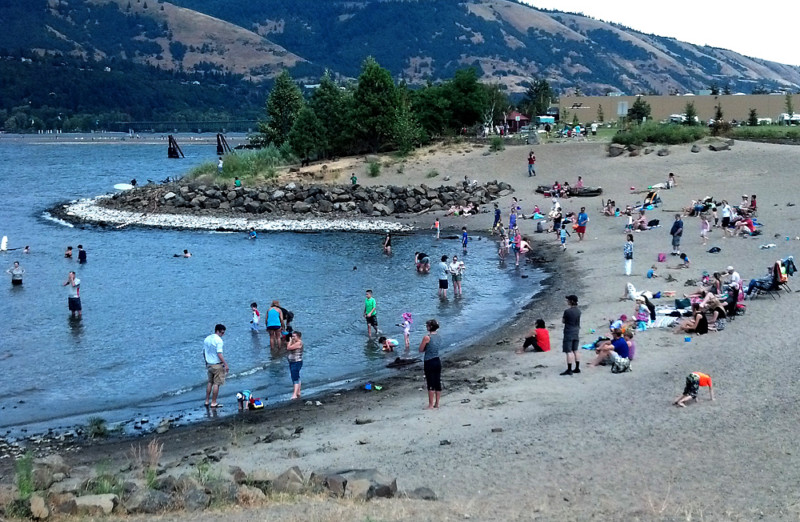
Nothing cools you off better than a quick dip or swim on a hot day. But no one wants to get ill due to unsafe E.coli and bacteria levels in beaches, lakes, rivers, and swimming holes. Thankfully, Columbia Riverkeeper staff and volunteers work diligently to monitor local water quality at popular recreation sites. Samples are collected weekly at the most heavily populated locations (Hood River Waterfront Park Swim Beach, Event Site, Outer Hook and Inner Hook) and twice-monthly or monthly at other Columbia Gorge sites. Data is uploaded to Swim Guide enabling the public to access current water quality conditions throughout the gorge and make informed decisions on safe swimming and fishing locations. While Swim Guide does not consider toxic pollution or other potential environmental concerns, it is a valuable tool that can be used for avoiding beaches with unsafe bacteria levels. https://www.theswimguide.org/

And, speaking of clean water…WA Dept of Ecology just announced their 2017 awards to wastewater treatment plants for outstanding performance. Five Columbia Gorge plants were among the 111 recognized: North Bonneville, Bingen (includes White Salmon), Lyle, and Wishram. The community of Klickitat received a special recognition award for perfect performance for 10 consecutive years. The water that leaves our homes and businesses contains chemicals and pathogens harmful to people, fish and all that depend on clean water. The people who operate these plants maintain exacting standards to protect Washington?s waters.Columbia Insight wrote about one Gorge plant this spring “Behind the scenes at the Bingen-White Salmon Wastewater Treatment Plant.”

Your Trees are Thirsty. Time to Water.

Aug. 9, 2018. During a heat wave trees suffer, too. Landscape Architect Jurgen Hess recommends treating your trees as you would your friends and animals. While trees shade and cool us, they get thirsty, too.

Micro sprinklers keep water low reducing amount loss to evaporation and wind.

“Even though we all want to conserve water, please remember to give our trees and shrubs a little extra water during these hot summer days,” says Ann Frodel, City of Hood River Tree Committee. “I was at Maryhill State Park last week and this beautiful hundred year old tree split during the evening’s 40 mile per hour winds and came within two feet of hitting the picnic shelter. The ranger explained to me that the park’s irrigation system was out all last summer, so now the trees are showing the damage that was done internally to weaken and stress these huge magnificent shade trees.”

The best time to water is early morning before the heat sets in, but water especially when the leaves begin wilting. Set your sprinkler to water the whole area within the drip line of the tree. To ensure deep soil watering, leave the sprinkler on for one to two hours. You can check water saturation depth by easily inserting a long screwdriver into the soil near the base of tree.

Newly planted. It’s especially important to keep your newly planted trees watered in the heat because they are more susceptible to withering than mature trees. Check each day to ensure the soil is still moist.

Trees less than 3 years old should be the first priority. New trees need about 10-15 gallons of water per week. New plants should be regularly watered for three hot weather seasons, whether native trees or not. Because of their young shallow root, they are more susceptible to heat stress than mature trees.

Applying mulch, such as wood chips, is an excellent way to protect your trees. Mulch insulates the soil and keeps the ground temperature from rising too high. Lay a thick, 4-6 inch layer around your tree, beginning an inch away from the trunk. Ideally, this should extend to the edge of the canopy for maximum benefit.

Established Trees. Mature trees are much less likely to experience heat stress due to their more extensive root systems. It’s a good idea to give them a good soaking once a month.

Treat your trees as they are: your best hot-weather friends.

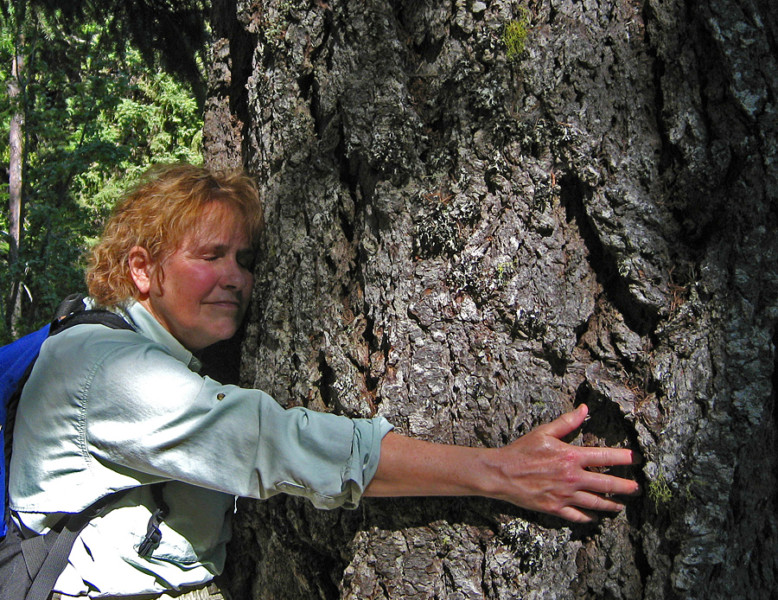
Columbia Insight Publisher Susan Hess loves trees.

By |2019-02-27T14:36:51-08:0008/09/2018|Natural Resources, News, Old Articles, Plants|2 Comments

2018 Oregon DEQ Materials Management Grants Open

By Susan Hess. July 26, 2018. The Oregon Department of Environmental Quality’s Materials Management division is accepting grant applications for programs that promote the prevention, recovery or reuse of solid wastes. This year DEQ will award a total of $500,000.

The DEQ program funds a wide diversity projects throughout the state. 2018 Materials Management Grants are for any project that prevents, reuses, or recovers solid waste through recycling, composting, or anaerobic digestion.

A sample of three of the 20 grants awarded in 2017 show a variety of topics and locations.

  • Lincoln County Solid Waste District/Green Schools: $10, 359 to implement food waste composting and reestablish recycling to elementary and middle schools and also apply for Green School certification.
  • Toolbox Project (in Lane County): $24,500 to expand its lending library of home and garden tools, purchase a delivery tricycle, and hire an operations manager.
  • City of Shaniko: $5,249 to purchase a trailer, fuel and labor for recycling aluminum cans and plastic bottles.
  • Klamath Works: $27,302 to repurpose mattresses not amenable for recycling into premium dog beds.

Grants are open to Oregon local governments and districts, Oregon nonprofit organizations, Tribal governments, public universities, colleges, and schools.

Application deadline is Sept. 28, 2018 at 11:59 p.m. PST. Applicants are encouraged to participate in a conference call from 10 – 11 a.m. on Monday, July 30, 2018. During this call, potential applicants can ask questions about the application forms and process. A meeting for Oregon tribes will be Aug. 3, 2018 from 11 a.m. – 12 p.m. 

Detailed information is on their website page: Department of Environmental Quality/Materials Management/Materials Management Grants Program.   https://www.oregon.gov/deq/mm/Pages/Grants.aspx  


By |2019-02-27T14:37:38-08:0007/26/2018|News, Old Articles, Uncategorized|0 Comments

© Copyright 2013-2025 Columbia Insight. All Rights Reserved.

As a 501(c)3 nonprofit organization, all donations to Columbia Insight are tax deductible to the full extent of the law. Our nonprofit federal tax-exempt number is 82-4504894.