Stay Updated Subscribe today for the latest research + reporting about environmental news. Subscribe Now

Stay Updated Subscribe today for the latest research + reporting about environmental news.

Subscribe Now

Susan Hess

Susan Hess

Susan Hess

About Susan Hess

Susan Hess is Columbia Insight's publisher.

Trees of the Pacific Northwest: A climate journalism collaboration by Columbia Insight and The AP
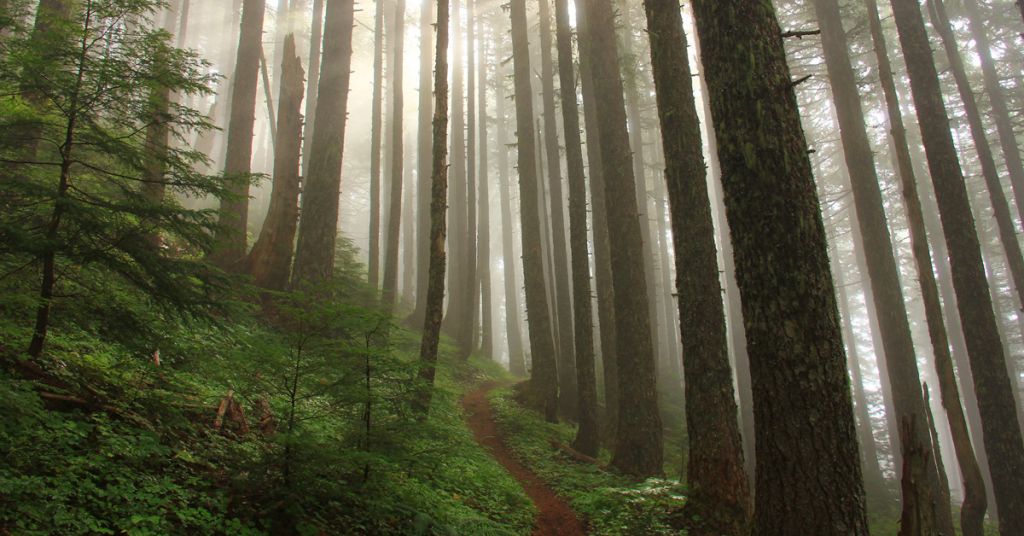
Table Rock Wilderness, Oregon

Table Rock Wilderness, Oregon. Photo: BLM


November 16, 2023. The impact of the climate crisis on trees in the Pacific Northwest is the focus of a collaboration between Columbia Insight, The Associated Press and the Global Climate Desk. Today, the first of three stories was co-published by the collaborating newsrooms delving into issues affecting the trees of the Pacific Northwest due to the changing climate. The stories explore the extent of native tree die-off and its long-term implications on forestry, assisted migration of native trees and the continuing impact of record-high heat on trees.
“This is an exciting series for Columbia Insight as it’s at the core of our coverage area. Collaborating with The AP on other elements of this story, such as video, photos and data really strengthens our approach to covering our region,” said Susan Hess, the publisher of Columbia Insight.
The collaboration, which was developed over a six-month period, is part of The AP Global Climate Desk’s approach to building joint reporting collaborations on climate coverage in the United States and globally. Columbia Insight, an independent newsroom based in Hood River, Ore., covers environmental issues affecting the Columbia River Basin and Pacific Northwest, specifically the connection between environment and people.
“This series once again demonstrates the value of newsroom collaborations in climate journalism. AP Climate continues to build on the strengths of local newsrooms to tell the nuanced story of climate change,” said Lagipoiva Cherelle Jackson, Climate Collaborations Editor for AP.
The series is written by science journalist Nathan Gilles of Columbia Insight, edited by Chuck Thompson of Columbia Insight with AP editing by Tim Reiterman and Peter Prengamann. The collaboration also features video by Manuel Valdez, photo oversight by Alyssa Goodman and data by Caleb Diehl and Camille Fassett of The AP Climate data visualization team. 

By |2023-11-16T09:54:16-08:0011/16/2023|News|0 Comments

It’s an honor! Columbia Insight recognized for excellence

The Society of Professional Journalists awards Columbia Insight series on corporate influence in its annual reporting contest

Confetti

Good news: Columbia Insight covered a lot of ground in 2021. People noticed. Photo: Wikimedia Commons

June 16, 2022. There are many outstanding publications and journalists in the Pacific Northwest. That’s what makes Columbia Insight’s recent mention among the best news organizations in our region such a proud moment for everyone associated with the organization.

On May 19, the Society of Professional Journalists announced its 2021 Northwest Excellence in Journalism contest winners. Columbia Insight received a second place award for its environmental reporting.

The award honored a series of articles we produced last year focusing on accelerating corporate influence over our shared natural resources.

The three stories recognized by the SPJ are:

Cheese in the Desert: Why mega-dairies are piping water onto Oregon’s shrub-steppe,” by Washington journalist Dawn Stover.

As West withers corporations consolidate land and water rights,” by Washington journalist Eli Francovich.

What’s wrong with solar power? More than you know,” by Columbia Insight editor Chuck Thompson in Oregon.

Congratulations to all three writers! Collectively, their work illuminates a trend toward broad, investor-based ownership groups replacing local interests over land, water and other resources.

The award is a milestone for Columbia Insight. And it validates the trust and support that you, as a reader, subscriber or donor, have invested in our reporting.

“The competition is one of the largest of its kind in the nation,” said the SPJ in its award announcement. “It honors journalists across SPJ Region 10, which covers Alaska, Washington, Idaho, Montana and Oregon.”

This is the second year in a row Columbia Insight’s work has been recognized by a respected professional organization. Last year, our story “Wolverines break through … finally!” by wildlife biologist Jocelyn Akins, earned an Honorable Mention in the Society of Environmental Journalists annual Awards for Reporting on the Environment.

When my husband, Jurgen, and I founded Columbia Insight (then called EnviroGorge) in 2016, we did so as a response to the closure of many newspapers in our region and the loss of focused environmental reporting.

Our goal then, as now, was to fill a news gap, help keep the public informed about crucial environmental developments, highlight the positive conservation works of many of our neighbors and make a difference.

We’re proud to publish original stories each week that do just that.

The recognition of peers lets us know we’re on the right path. And motivates us to work even harder.

None of this would be possible without our many wonderful writers, photographers, videographers, artists, board members and, especially, our loyal readers. We’re proud to share this honor with you.

Columbia Insight Publisher Susan Hess

Thank you,

Susan Hess, Publisher

If you’d like to support future work by Columbia Insight, click here. Or subscribe to the weekly newsletter.

By |2023-05-15T14:04:45-07:0006/16/2022|Opinion|1 Comment

When adopting a roadside goes beyond picking up trash

Along a road near Indian Creek in Hood River, unexpected drama led to unexpected progress

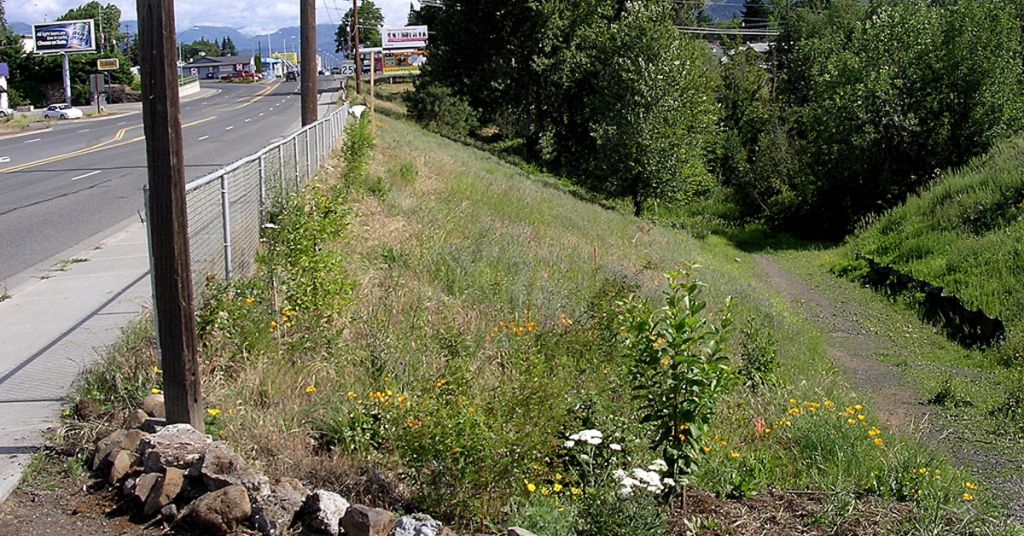
Indian Creek Roadside Hood River, OR Photos by Jurgen Hess

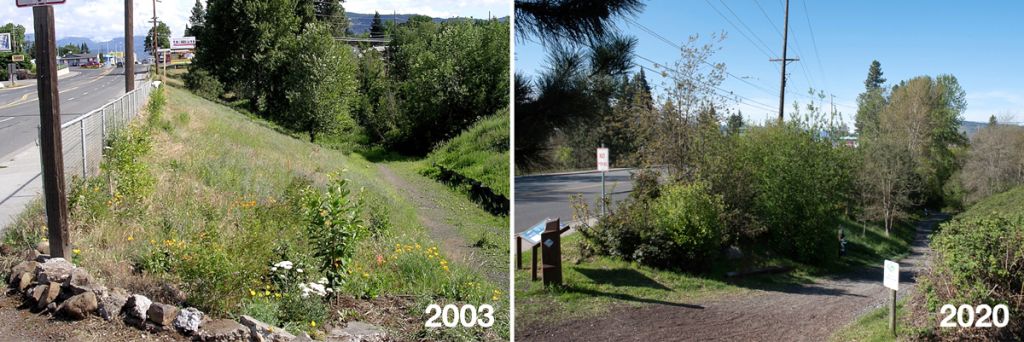
Lane change: Hood River’s Tucker Road, transformed. Photos by Jurgen Hess

By Susan Hess. April 22, 2021. Looking down the slope I saw a yellow excavator on the trail. Not a good sign. What was it doing there?

My husband, Jurgen, and I had “adopted” the 1.5-acre slope a year earlier. Adopted, because the land belonged to the Oregon Department of Transportation (ODOT).

I was already late for a meeting. I called Jurgen and asked if he’d come over and see what was going on.

He called back an hour later: “You’re not going to be happy. I’ve called a bunch of people; we’re meeting here in half an hour.”

Reintroducing native plants

Two years prior, ODOT had widened Hood River’s Tucker Road, leaving a steep, bare site that sloped down to Indian Creek—sidewalk and chain-link fence at the top, Indian Creek Trail at the base. Incensed that the city didn’t require it to be replanted, Jurgen suggested we adopt it. That was 2001.

We applied and received an Adopt-a-Landscape permit from ODOT. Then we had to get permission from Pacific Power—whose electrical lines ran along the road—to work on the site.

To care for a piece of public land is to put a piece of it in your heart.

In November, Jurgen and I spent $500 on native plants and planted them across the quarter-mile-long site. We had a live Christmas tree that year, a pine. Planted it there, too. In summer we watered every plant.

A filling station next to the site let us fill buckets from their hose. I hauled them on a wagon along the sidewalk, lifting buckets over the fence. Jurgen took the lower section, dipping five-gallon buckets out of the creek, hauling water up to each plant. We were strong by the end of that summer.

Twist in the road

It was April the next year when I saw that yellow excavator. I got to the site meeting a few minutes early and walked with dread down the trail.

A sewer pipe dug out of the trail had been thrown up on the site. Dozens of plants lay crushed beneath it. The Christmas pine had been ripped out of the ground and tossed aside.

At the top of the trail, a group gathered to put the pieces of the story together. A hospice director explained that across the trail they were erecting a new building, which the city planner said required a larger storm sewer pipe.

We told the workers about our permit and planting. Everyone felt badly, the excavator operator especially. He vowed to replant the now-wilted pine, and to carefully lift the pipe off the site.

It’s been 20 years since that disheartening April day. Despite the kind effort of the excavator, the pine died. But most of the other plants sprang back.

In the years since, volunteer parties have planted, picked up litter, pulled weeds. A wildfire burned across half the slope. A valuable tree was cut and a new one was gifted. A nearby business found a clever solution to watering. We adopted an adjacent section of land. Oaks that 20 years ago were five inches high are now 25 feet tall.

We’re still there about once a week to pull weeds and pick up litter. Every time, someone walking or biking by stops and says, “Thank you.”

To care for a piece of public land is to put a piece of it in your heart. It’s my happy place.

Susan Hess is the publisher of Columbia Insight.

By |2025-12-24T14:53:39-08:0004/22/2021|Conservation, Public Lands|5 Comments

Celebrating women making a difference through environmental work

On the 100th anniversary of the 19th Amendment, we remember the women who fought for the right to vote and those who have made good on their promise

Dear Readers,

Last October our daughter, Elaine, took Jurgen and I to the old Lorton Prison in Lorton, Virginia. It’s the place where in 1917 suffragists were jailed for picketing the White House demanding women be granted the right to vote.

In the prison (officially called the Occoquan Workhouse), the women went on a hunger strike. Guards, the National Park Service writes, “force-fed them by holding them down and shoving tubes up their noses or down their throats, pumping raw eggs into their bodies.” Some of the women were beaten by guards, who then refused to call for doctors.

The prison closed in the late 1990s. It’s now an art center for the Washington D.C. area; and it’s on the Park Service’s National Register of Historic Places.

But in 1917, when women picketed in the streets for the right to vote, it was a dismal and violent place.

Elaine took us to one of the long, brick prison buildings. One cell is kept as a replica of that time. In it, mannequins show a guard force-feeding a woman tied to a chair.

August 18, 2020, marks the 100th anniversary of the passage of the 19th Amendment guaranteeing and protecting women’s constitutional right to vote. Since our visit to the Lorton Prison, I’ve thought a lot about those women and how grateful I am for their steadfast courage.

This has led me to think about the women dedicated to making our environment better. Over the last several weeks I asked you, our readers, to send me names of women now working or volunteering in the environmental field.

As is true for all such lists, this one represents a small percentage of entries that should or could be on it.

We are grateful for the work of every person on this list, and that of countless other women working to make our world a better place to live, now and for future generations.

                  Susan Hess, Publisher

COLETTE ADKINS
Center for Biological Diversity
Carnivore Conservation Director, Senior Attorney

JOCELYN AKINS
Cascade Carnivore Project, Founder

FRANCES AMBROSE FISHER
Friends of the Columbia Gorge
Lead Trust Associate

JENNIFER ANDERS
Northwest Power and Conservation, Montana

PAT ARNOLD

Friends of the White Salmon River
President

SARAH ARNOLD
Volunteer: Washington Native Plant Society,
University of Washington, Rare Care plant surveys

SUE BAKER
Environmental Education Association of Oregon
Volunteer: Gorge Ecology Outdoors
Reducing garden pesticides

LISA BERANEK
Trout Unlimited
Leadership Development Manager

STEFANIE BERGH
Washington Department of Fish & Wildlife

ERIN BLACK

U.S. Forest Service
Mt. Adams District
District Ranger

KAREN BLACK JENKINS
Mt. Adams Resource Stewards Board
Volunteer: White Salmon Tree City
Master Gardener

EMILE BLIVINS
Xerces Society
Northwest Ecological Research Institute
Endangered Species Conservation Biologist
Freshwater Mussel Lead

CHRISTIE BRADLEY
Columbia Riverkeeper
Volunteer: Master Gardner

KAT BRIGHAM
Umatilla Tribal Council Chair

BECKY BRUN
Sense of Place lectures Co-founder

JEANETTE BURKHARDT
Yakama Nation
Watershed Planner

ARLENE BURNS

City of Mosier, Oregon Mayor
Member: Climate Change Mayors

MARY BUSHMAN
Columbia Land Trust
East Cascades Oak Partnership Coordinator

STEPHANIE CABALLERO
U.S. Forest Service
Mt. Adams District, District Fish Biologist

SARAH CALLAGHAN
U.S. Forest Service
Columbia River Gorge National Scenic Area
Botanist-Invasive Plant Coordinator

JANE CAMERO
Columbia Riverkeeper, Volunteer

YESENIA CASTRO
CultureSeed
Outdoor Leadership Ambassador

KATE CONLEY
Columbia Land Trust, Natural Area Manager

RACHEL COOK
National Council for Air & Stream Improvement
Senior Research Scientist, Large Ungulate Ecology

LINDSEY CORNELIUS

Columbia Land Trust
Natural Area Manager

KRISTIN CURRIN
Humble Root Farm & Nursery, Founder and Co-owner

JEAN CYPHER
Rowena Wildlife Clinic, Founder and Veterinarian

ALIX DANIELSEN
Hood River Soil & Water Conservation District
Restoration and Outreach Project Manager

EMILY JANE DAVIS
Oregon State University
Oregon Collaborative Forest Stewardship

ELLEN DONOGHUE
Columbia Gorge Climate Network, Advisory Board

LORETTA DUKE
U.S. Forest Service
Columbia River Gorge National Scenic Area
Assistant Fire Management Officer

DONNA ENZ
Washington Department of Natural Resources,
Natural Area Preserves (park weed control)
Volunteer: University of Washington Rare Care surveys

LORRI EPSTEIN
Columbia Riverkeeper, Water Quality Director

JANET ESSLEY
Cultural Cartography of Migratory Bird’s Annual Journey 
Artist

CHUTI FIEDLER
U.S. Forest Service
Mt. Hood National Forest
Fisheries & Wildlife Biologist

CAROLINA FISTER
CultureSeed, Executive Director

BETH FLAKE
Volunteer:
Land Steward: Friends of the Columbia Gorge,
Master Gardener, Master Naturalist

CATHY FLICK

Wildlife Biologist
Volunteer: Institute for Bird Populations-MAPS Program
Breeding Bird Survey USGS

SHEILA FORD RICHMOND
Volunteer: Willow Ponds Wildlife Habitat Area, Artist

LAUREN GOLDBERG
Columbia Riverkeeper
Legal and Program Director

ANN GROSS
Underwood Conservation District
Financial/Administrative Manager

KAREN HADLEY
Volunteer: Bat research, wildlife studies

ELAINE HARVEY
Yakama Nation Fisheries, Fisheries Biologist

MARLA HARVEY
Mid-Columbia Economic Development District
Energy Coordinator

HEATHER HENDRIXSON
Hood River Soil & Water Conservation District
District Manager

CATHY HIGGINS
New Buildings Institute, Research Director

AMBER JOHNSON
Washington Department of Fish & Wildlife
Habitat Biologist

CHERIE KEARNEY
Columbia Land Trust
Forest Conservation Director

ALEXIA KELLY
Electric Capital Management
Founder & CEO

SUE KUSCH
Washington Native Plant Society, President

AMANDA LAWRENCE
Sense of Place lectures, Co-founder

CARLY LEMON
Underwood Conservation District
Engineer in training

CALLEY LOVETT
Rowena Wildlife Clinic

JOY MARKGRAF
White Salmon Library
Volunteer: Wild About Nature lecture series

KATE MCBRIDE
City of Hood River, Mayor
Leadership on climate policies

MERRITT MITCHELL-WAJEEH
Mid-Columbia Fisheries Enhancement Group
Lower Yakima River Project Manager

MARGARET NEUMAN
Mid-Columbia Fisheries Enhancement Group
Executive Director

BONNIE NEW

Oregon League of Conservation Voters
Leadership politics and environment, Volunteer

KATIE PIERSON
Wasco County Soil & Water Conservation District
Conservation Liason/Farmbill Biologist

EMILY PLATT

U.S. Forest Service
Regional Office, Region 6

DEZ RAMIREZ
Columbia Land Trust, Engagement Manager
CultureSeed, President

MONICA REID
Kestral Consulting Verifiers, Founder

KALAMA REUTER
Native plant expert

BARBARA ROBINSON
Native plant expert

MARIA ROBLEZ
U.S. Forest Service
Columbia River Gorge National Scenic Area, Wildfire

MICHELINA ROTH
Gorge Sustainable Investing, Co-founder

ANDREA RUCHTY
U.S. Forest Service
Mt. Adams District, Botanist/Lichenologist

MIKO RUHLEN

Wildlife biologist, Bird expert

KATIE SANTINA
U.S. Forest Service
Columbia River Gorge National Scenic Area

SUSAN SAUL
Washington DNR, Natural Area Preserves
Wildlife Biologist 
Volunteer: University of Washington Rare Care surveys
Washington Trail Association

KRIS SCHAEDEL
Hood River Soil & Water Conservation District
Conservation Specialist

SILVAN SHAWE
Thrive Hood River, Community Engagement Director

SHEILA SLETMOE
Horizon Christian School, Teacher: Environmental projects

CINDY SOLIZ
Skamania County, Noxious Weed Control
Partnership Specialist

MARY LOU SOSCIA

U.S. Environmental Protection Agency
Columbia River Coordinator

ELIZABETH STANEK
Suksdorfia Native Plant Society, Columbia Riverkeeper
Artist, teacher, Volunteer: Rare Care surveys

HEATHER STATEN
Thrive Hood River, Executive Director

LINDA STEIDER
Volunteer: Winter Raptor survey
Pika Survey, Burrowing Owl Project, Photographer

EMILY STEVENSON
Skamania County, Noxious Weed Control
Program Coordinator

BETS STOVER
The Nature Conservancy
Volunteer: Habitat restoration

CYNDI STRID
Columbia Gorge Climate Action Network
Artist, Teacher

KRISTA THIE HOYT
Twin Oaks Construction & Metalworks, Founder
Columbia Gorge Climate Action Network
Volunteer: Botanist, trail builder

CINDY THIEMAN

Hood River Soil & Water Conservation District
Watershed Coordinator

JAN THOMAS
Underwood Conservation District
Watershed Resource Technician

TOVA TILLINGHAST
Underwood Conservation District
District Manager

RENEE TKACH
Friends of the Columbia Gorge
Gorge Towns to Trails Project Manager

SUSAN VAN LEUVEN
Washington Department of Fish and Wildlife
Klickitat Wildlife Area Manager

REBECCA WASSELL
Mid-Columbia Fisheries Enhancement Group
Yakima Basin Program Director

CARLY WICKHEM
Washington Department of Fish and Wildlife
Assistant Wildlife Biologist, District 9

SARA WOODS
Friends of the Columbia Gorge
Land Trust Stewardship Coordinator

KRYSTYNA WOLNIAKOWSKI
Columbia River Gorge Commission
Executive Director

CAROLYN WRIGHT
Volunteer: Washington Department of Natural Resources, Natural Area Plants
Master Gardener, University of Washington Rare Care surveys

By |2020-09-03T07:53:30-07:0008/20/2020|Features, Opinion, Uncategorized|0 Comments

Remembering a force of nature: Bobby Begay

Bobby Begay of Yakama Nation

National Geographic photographer Jim Richardson captured Bobby Begay on the Columbia River in 2001. Photo by: Jim Richardson

Susan Hess, May 5, 2020. Bobby Begay died April 24 of COVID-19 complications. He was 51. I met him in 2003 when I was hired to write a newsletter for the U.S. Corps of Engineers as they rebuilt Celilo Village, where he lived.  

The Begay name comes from his Navajo father’s line; his mother was of the River People who have lived along the Columbia River for at least 10,000 years. Bobby, I believe, was enrolled in the Yakama Nation.

During the four years I wrote on the reconstruction, Bobby represented Celilo Village on the Wyam Board that advised the Corps on the rebuilding. Olsen Meanus was chief of the community, but the soft-spoken Olsen was often away and when at the meetings rarely spoke up.

But Bobby was a warrior, self-confident, forceful; his stare carried intensity. He was fierce. And he used that fierceness to speak for the people of the village.  

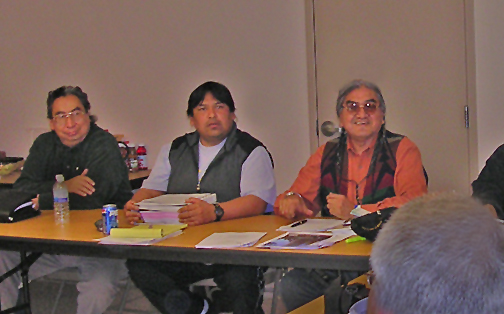
Louie Pitt, Bobby Begay, Antone Minthorn in 2006. Photo: Susan Hess

Of all the photos of him, this one from 2006 is my favorite. At one of the first meetings, Bobby sits between Louie Pitt, Governmental Affairs Director for the Confederated Tribes of the Warm Springs (left), and Antone Minthorn, then chair of the Confederated Tribes of the Umatilla Board of Trustees.

These three men represent for me how the Native American cultures retained their sovereignty. Their intelligence, strength and dedication made the lives of the Native American peoples better.

This spring Celilo Village and the River People lost a champion.

By |2020-12-01T13:30:41-08:0005/05/2020|Indigenous Issues, Uncategorized|0 Comments

A Review of “Ever Wild: A Lifetime on Mount Adams”

In Ever Wild: A Lifetime on Mount Adams, Darryl Lloyd writes about human use of mountain, native plants and the science of this stratovolcano

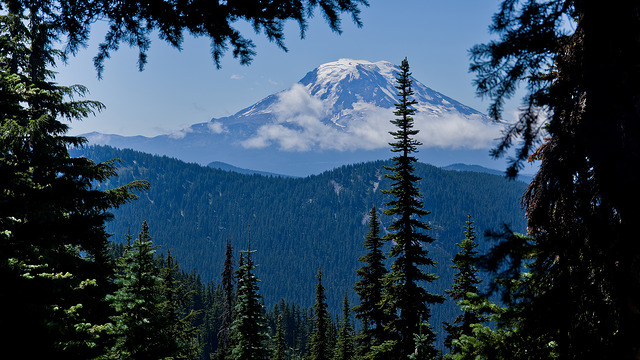
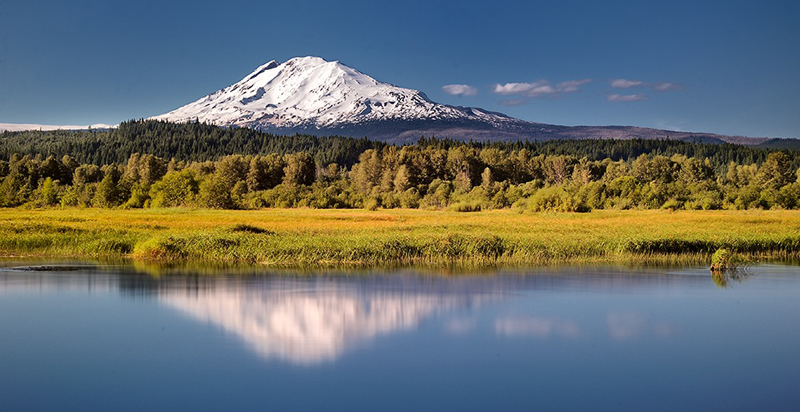
Mt. Adams Klickitat County by Gary Dee/Wikimedia Commons

Mt. Adams. Photo: Gary Dee/Wikimedia Commons

By Susan Hess. Nov. 15, 2018. One hundred fifty thousand sheep grazed Mount Adams’ meadows in the early 1900’s. Every spring, ranchers from Oregon and Washington would bring their herds to the unregulated, lush grasslands. The size of the “grass-eating woolly hordes” had already grown since 1886, when an Oregon sheep rancher first brought in a herd of 5,000.

Word of this free pasture spread quickly, and overgrazing was rampant during the early decades of the 20th century. But fire suppression by the U.S. Forest Service allowed trees to gradually fill in the meadows. Meanwhile, the public’s taste shifted from lamb and mutton to steaks and hamburgers. Gradually, herd sizes diminished. And during the autumn of 1970, the last small herd finally left the mountain.

Darryl Lloyd devotes an entire chapter to the impact of sheep on his beloved mountain in his new book, Ever Wild: A Lifetime on Mount Adams. In this soft-cover book, Lloyd writes about the human use of mountain, its native plants, and the science of this stratovolcano. Interwoven throughout are personal stories. They are reflections of a life spent near the mountain that continually drew him in, always beckoning him to explore further. Color photographs serve as snapshots of these explorations, and they bring readers into the harsh domain of rock and ice.

Lloyd, 75, was two years old when the family bought 80 acres at the base of Mount Adams. It was here that his parents built the Flying L guest ranch. Their curiosity stoked by their adventurous father, Lloyd and his twin brother Darvel were only eleven when they first reached the 12,276 foot summit. After that, they sprung at every opportunity to hike and camp around the mountain.

As adults, both brothers did graduate work in the fields of geology and geography. Their careers took them far from south-central Washington. Lloyd spent his career as a ship master or captain, but he returned often to the Glenwood Valley. He and Darvel founded the Mount Adams Wilderness Institute in 1970. For ten years, they led two-week long intensive courses in wilderness mountaineering and natural history.

Ever Wild begins by depicting the Native Americans’ seven-thousand year presence on the mountain they call Pahto. He skips the era of fur trapping because it left such a small impact on the mountain. But the sheep took a significant toll on the native plants and wildlife, and the effects of overgrazing are still evident today, leading Lloyd to title that chapter: “The Great Sheep Invasions.”

Rather than offering an exhaustive history of human use of the mountain, the author picks a few highlights. In the 1920s, for example, the U.S. Forest Service built a fire lookout atop the summitt. An historic photo shows three men climbing 5,000 feet up the rocky slope shouldering heavy wooden beams for the structure. After the forest service abandoned the lookout twenty years later, a prospecting company began mining sulfur in the volcano’s ancient craters.

A quarter of the book is on mountain science: stratovolcanoes, glaciers, avalanches and lahars. Readers who aren’t geologically inclined may want to skim these technical sections, but they give the reader a more thorough understanding of what makes this mountain unique.

Throughout the book, Lloyd writes about his wilderness heroes, people like C.E. Rusk, Supreme Court Justice William O. Douglas and David Brower. Their writings and talks shaped the wild mountain advocate he became.

In 2004, an 11,000 acre resort—complete with a ski area, an 18-hole golf course, 2,500 housing units and a casino—was proposed on the Yakama Nation region of the mountain. It would spread over pristine areas of the mountain such as Bird Creek Meadows, Hellroaring Valley and the Ridge of Wonders. Lloyd formed Friends of Mount Adams (FOMA) to mobilize people into protecting the mountain from development. In the end, the Yakama Nation Tribal Council rejected the resort proposal.

Today, FOMA continues to educate and advocate for the mountain, and the group faces a new set of problems. Cattle grazing is allowed on the lower slopes, but ineffective fencing has allowed cattle to damage the fragile alpine meadows. Snowmobilers ignore signs prohibiting them in the wilderness and on Yakama Nation land. The noisy machines stress and displace wildlife. Logging and wildfires over the past 150 years have reduced old growth forests to a few scattered stands.

A witness to the retreat of some of the mountain’s grandest glaciers, Lloyd details the impacts of a warming climate on the volcano, and on the plants, animals and people who live around it.

An entire follow-up book could focus on human activity alone, as the author skims over some of the more detrimental actions—logging, recreation, road building—that continue to affect what Lloyd calls the “colossus of southern Washington.” Likewise, wildlife is only briefly touched on.

A wealth of information, Ever Wild is about a mountain that is often overlooked in the Pacific Northwest. That makes it a reference work, but the author’s passion for place gives the book color and warmth. Lloyd, who is a well-known photographer, took many of the photographs that accompany his stories.

“The advice I give now:” he writes, “Discover Mount Adams on your own, but be careful of your impact. Future generations will want to make their own discoveries of an undisturbed mountain wonderland.”

[/fusion_text][/fusion_builder_column][/fusion_builder_row][/fusion_builder_container]

By |2023-07-18T17:10:44-07:0011/15/2018|Old Articles|2 Comments

© Copyright 2013-2025 Columbia Insight. All Rights Reserved.

As a 501(c)3 nonprofit organization, all donations to Columbia Insight are tax deductible to the full extent of the law. Our nonprofit federal tax-exempt number is 82-4504894.