Stay Updated Subscribe today for the latest research + reporting about environmental news. Subscribe Now

Stay Updated Subscribe today for the latest research + reporting about environmental news.

Subscribe Now

Miko Ruhlen

Miko Ruhlen

About Miko Ruhlen

Miko Ruhlen, Associate Editor. Miko graduated from U.C. Berkeley and worked in California and the Columbia Gorge for well over a decade as an avian field biologist with non-profits, government agencies, and private consulting firms. She and her husband live in Hood River, Oregon. They own Hood River Hobbies and volunteer for local citizen science bird surveys and lead bird walks in their spare time.

Hummingbird Whispering

[media-credit name=”Photo by Max Peterson” align=”alignleft” width=”250″]resized largeAnna's Hummingbird[/media-credit]

Essay by Miko Ruhlen

Sometimes we seek inspiration; other times it hits us on the nose and falls in our lap. That is what happened to my family a few summers ago in our Hood River, Oregon backyard.

My son was lounging in the yard, swaying on the porch swing when something small dropped onto his nose, then onto his lap. He stopped swinging and called me over and we squinted in the sun to see what had fallen. I saw that it was a male Anna’s Hummingbird. He collided with the grape arbor above the swing.

The bird lay motionless, but breathing, I picked up this tiny shiny bird and cupped it in my hands with one hand on top to give it some darkness and protection from the wind. After letting the bird recover for a few minutes, we hand fed him sugar water. After a while longer, he perked up and was able to perch on and drink from a feeder I held. He tried to fly away, but was still stunned and weak. He landed with his tiny Cinderella toes on my hand that held the feeder. My arm grew weary trying to hold still. I hold my breath. After a rest, then more nectar, the hummingbird zoomed off to a nearby dogwood branch.

Both of my kids were in awe of this fairy-like creature. While they had noticed hummingbirds at the feeder before, they had never really looked into the eyes of a bird this small, or examined the iridescent feathers up close. For the first time, they wondered at this birds agility and fragility. My kids were proud that we ‘saved’ this bird. Afterwards we observed the hummingbirds in our yard more closely to see if that one was the one we rescued.

That winter at least one male Anna’s Hummingbird used our feeder consistently. When the sugar solution started to freeze, I took the feeders in at night to defrost and brought them back out at 6:30 every morning (we are early risers).

By January, a male Anna’s Hummingbird in the back yard started to perch on the feeder to drink before I even could hang it up. The kids speculated that this was the same bird that we ‘saved,’ so he trusted us. We named this bird, Icy. In the morning, we took turns holding the feeder for the little bird –‘hummingbird whispering,’ we joked.

Video of “Icy” by Miko Ruhlen

When I first moved to the Gorge over a decade ago, I recall being amazed that my friend Cathy had an Anna’s Hummingbird at her feeder in a snow storm in White Salmon. This was a rare sighting to shout about. The range of the Anna’s Hummingbird has expanded northward from California over the last twenty or thirty years. This species can now be found as far north as British Columbia. Its range has expanded due for a number of reasons. Gardeners have planted a greater variety of nectar producing plants that bloom both earlier and later than native plants, and the now ubiquitous feeders also allowed them to expand northward.

Anna’s Hummingbirds survive the cold nights by going into a state of hibernation called torpor. Additionally, a large proportion of their diet consists of insects and arachnids which also helps. These days it is not unusual to see Anna’s Hummingbirds over-winter at lower elevations in the Gorge; although it is still amazing to me that these little creatures can survive our ice storms.

Every winter for the past several years we’ve continued our ‘hummingbird whispering.’ If we run late, Icy gets our attention by coming up to the sliding glass door, hovering, chirping, and peering inside, anxious for breakfast. I look forward to feeling the rush of wind from their fast wings that sound like a small helicopter; seeing the look of recognition in the eyes of a tiny being.

[media-credit name=”Photo by Max Peterson” align=”alignright” width=”300″]resized large2015Sep15_1761 copy[/media-credit]

In March when temperatures warm up, I no longer need to take the feeders inside. By the time I get up and out, the hummingbirds have already eaten breakfast, although Icy occasionally comes up and hovers expectantly in front of me as I am leaving for work.

Once flowers start blooming and the Rufous Hummingbirds begin coming by our yard, we enjoy watching hummingbirds chase each other, seeing how how they fly from flower to flower pollinating them. We especially appreciate them checking spider webs for tasty spiders.

Did ‘saving’ and feeding one hummingbird better the survival of the species as a whole or solve habitat loss and climate change? Of course not, but sometimes the thought of global warming and mass extinctions is overwhelming. I hold my breath, stand still, wait for the whirring of wings, and connect with just one individual bird; remembering that our lives are interconnected. We rely on each other for survival on this planet. I realize that I am not really whispering anything to the hummingbird; rather in the quiet moment I am listening, hoping a little bird will tell me his secrets.

Video of Author’s son whispering in “slow-mo”

Gorge Meatless Mondays

16

[/media-credit] Chinese cabbage stir fry at the Farmer’s Market

Meatless Monday is a global movement with a simple message: once a week, cut the meat.

Now, with increasing concern about the contribution of?animal agriculture to global climate change, Meatless Monday is gaining in popularity around the world, and here in the Columbia River Gorge where a new local campaign has started. EnviroGorge interviewed Lindsay Miller, campaign coordinator for Gorge Meatless Monday to learn about it.

Meatless Monday originated as a Federal government initiative during World Wars I and II, to encourage citizens to consider the impact of their food choices during times of constrained resources.

The campaign, led by the John Hopkins Bloomberg School of Public Health, was reintroduced as a public health awareness campaign in 2003, addressing the prevalence of preventable chronic illnesses like cancer, heart disease, and, diabetes that are associated with excessive meat consumption.

The Meatless Monday literature maintains that if the world reducedDidyouknowMeatlessMonday meat consumption by just 15% (by doing Meatless Monday, for example), it would have the same impact on greenhouse gas emissions as taking 240 millions cars off the road each year. Demand for global water resources would decrease as well, given that it takes 1,850 gallons of water to grow one pound of beef, but just 39 gallons to grow a pound of vegetables.

The Food and Agriculture Organization of the United Nations found that global green house gas emissions from livestock come from a variety of sources including feed production (including land use change), enteric fermentation from ruminants (a digestive process producing methane), manure storage, processing, and transportation of animal products.

Ms. Miller explains, “Climate change is a massive and complex problem, and I think we all struggle with figuring out ways that we can actually make a difference. Surprisingly, the choices that we make about the food we eat–right here, everyday–may be one of the most powerful ways that we can help change the future of our environment.”

What about the other 6 days a week for non-vegetarians?

The Gorge Meatless Monday campaign is not asking everyone in the Gorge to stop eating meat altogether, “the thing that I love about this campaign is that it’s not an all or nothing kind of deal–you don’t have to become a strict vegetarian or vegan to make a difference. You can start with just one day a week,” says Ms. Miller.

Cattle raised for beef and milk are the species most responsible for greenhouse gas emissions according to the Food and Agriculture Organization of the United Nations. Oregon State University Small Farms Program suggests that buying meat from local small farms not only reduces the impact from transportation, but the type of farming practices matters. A recent modeling study by National Trust found evidence that traditional grass-based beef production and finishing has environmental benefits due to the carbon sequestration contribution of well-managed grass pasture on less intensive systems, particularly those that had converted to organic status.

EnviroGorge has previously explored ways that farmers are dealing with cow manure to keep methane out of the atmosphere, create fertilizer to grow crops and generate electricity in places like Threemile Canyon in Boardman Oregon. Installing an anerobic digester requires a large financial investment, making it feasible primarily for dairy farms, additionally current energy prices make it difficult for farmers to get a return on that investment. Therefore, fewer than 250 livestock farms in the U.S. that have operational biogas recovery systems.

These systems are complicated and choices about how we can reduce our carbon footprint is daunting for most of us. That is one reason why Gorge Meatless Mondays suggests starting simply by reducing meat intake by one day a week. There are other benefits to eating less meat including financial ones according to Ms. Miller, “When I have the chance to make one decision that is, at the same time, better for me and my family, better for the environment, and better for my bank account, I get really excited. That doesn’t happen very often.”

[media-credit id=21 align=”alignleft” width=”225″]peas smaller rotatedIMG_5991[/media-credit]

“We’re talking with local hospitals, restaurants, businesses, and cities around the Gorge and hoping to gain their support in getting this message out. To help promote participation in the local campaign, Tofurky will be donating $5 to Gorge Grown’s Veggie RX program for every individual who signs the Gorge Meatless Monday pledge, up to $2,500,” says Ms. Miller. The Veggie RX program provides $20 vouchers for locally-grown produce to people experiencing food insecurity.

“This is a great way to connect the dots between making sustainable food choices and broader issues like food insecurity, which many people deal with right here in our community,” says Rachel Perman, Tofurky’s Director of Charitable Giving.

EnviroGorge Kids Summer Writing Contest


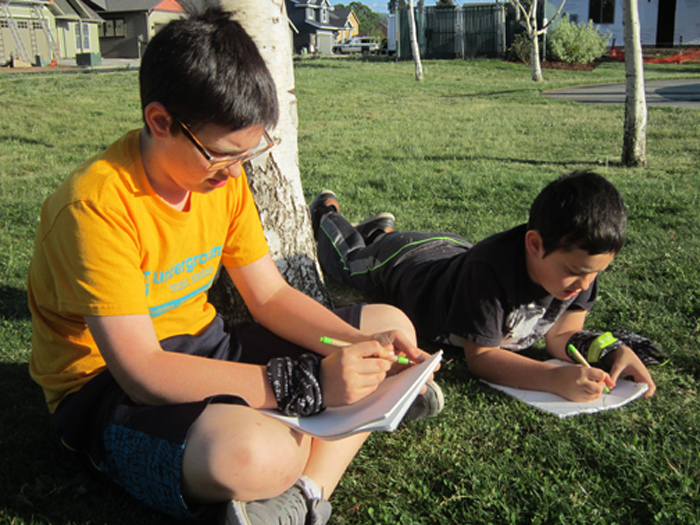
We love to hear and share what kids have to say about the environment! In this video, kids told us about things they do to help the environment. Since we want to hear more and encourage kids to get outside and write about their experiences, EnviroGorge has created a Kids Summer Writing Contest.

EnviroGorge invites kids (grades 3-12) to write an essay related to the Gorge environment – and win prizes! The deadline is August 30, 2016 and the entry form can be found below.

[media-credit id=21 align=”alignright” width=”300″][/media-credit]

Below are some topics to choose from (or you can think of your own):

  • All entries must be non-fiction essays pertaining to both the environment and the Gorge
  • One thing I do to help the Gorge environment is…..
  • My environmental hero in the Gorge is……
  • My biggest environment concern in the Gorge is…..
  • The wildlife (or other critters or native plants) in my (Gorge) neighborhood….
  • Advanced writers may submit a news article (complete with quotes from interviews and references).

Awards – Thank you to our sponsors who have donated great prizes!!! The first 50 entries receive a goodie bag donated by BPA. One winner will be chosen by EnviroGorge from each grade category to receive one of the prizes below.

  • Hood River Hobbies – a $100 Gift Certificate for one 1st place winner
  • Underground Music Station 1 month of private beginner lessons on loaned bass, drums, or guitar $100 value for 1 first place winner
  • Northwest Taekwondo – 1 month of free lessons in The Dalles or Hood River $100 value (includes uniform loan) for 1 first place winner
  • Publication on Envirogorge.com (and associated social media) for all first place winners and some runners up
  • Prizes will not be mailed but must be picked up at designated locations. Winners notified via email/ phone.

Entry is free — EnviroGorge sponsors the materials and staff time. If you would like to help us continue our work, consider a small sponsorhip.

For further submission details, download the (required) entry form below:

Writing contest entry form final


By |2019-04-11T11:00:41-07:0005/11/2016|Kids, More, Old Articles|0 Comments

City Workers Respond Quickly to Sewage Spill

[/media-credit] City workers spread lime over the spill area

April 28, 2016. Hood River. Over the past year, unsavory smells have been plaguing Tim Snyder, manager of Underground Music Station, located in the Union Building on Industrial Way. This building is downwind of the sewage treatment plant and below Full Sail and Tofurky, so interesting smells are not unusual. The more recent smell, however, has become intolerable at times.

On Wednesday April 27 as Mr. Snyder was leaving the building, he was hailed by a railroad employee down near the train tracks. According to Mr. Snyder, the worker said, “The building owner should report the broken sewer pipe.” He pointed to where the issue was: directly across the train tracks from Underground Music Station. The railroad worker also mentioned that he thought there was another break a little up the line.

[media-credit id=21 align=”alignright” width=”188″]City truck (Small)[/media-credit]

Mr. Snyder worried that this might be a health hazard to his students. Upon viewing the area, he found a pipe partly covered by blackberry bushes with “brown smelly water” draining out of it. It looked to him like it should be attached to the larger pipe instead of draining straight into the ditch, which was “two feet deep with brown water and a couple hundred yards long.” He called the Hood River Public Works after-hours emergency line. Within 15 minutes, city workers showed up on the scene.

[media-credit id=21 align=”alignleft” width=”257″]repairs cropped[/media-credit]

Mark Lago, Hood River Public Works Director, confirmed in an interview with Envirogorge, that there was a leak in the sewage pipe, although it was not clear how the sewage pipe was damaged or for how long it had been leaking. Lago stated that their crew responded promptly, repaired the leak, and applied lime to the spill area. Mr. Lago contacted the Oregon Department of Environmental Quality (DEQ) and is working with them to monitor this spill and see if any additional work is needed.

Mr. Lago explained that because there is no access road to this elevated sewer line (which runs between the train tracks and highway 84) there is no way to remove the spill. Public Works staff covered the sewage with lime, and it will either eventually evaporate or go into the ground. Lago stated that next Wednesday he is proposing a budget to the city including development of an access road along this elevated sewer line for maintenance purposes.

[/media-credit] Pipe area after repairs

By |2019-04-11T11:01:02-07:0004/29/2016|Energy, News, Old Articles, Waste Management|0 Comments

Tree of Questions – Videos with Answers!

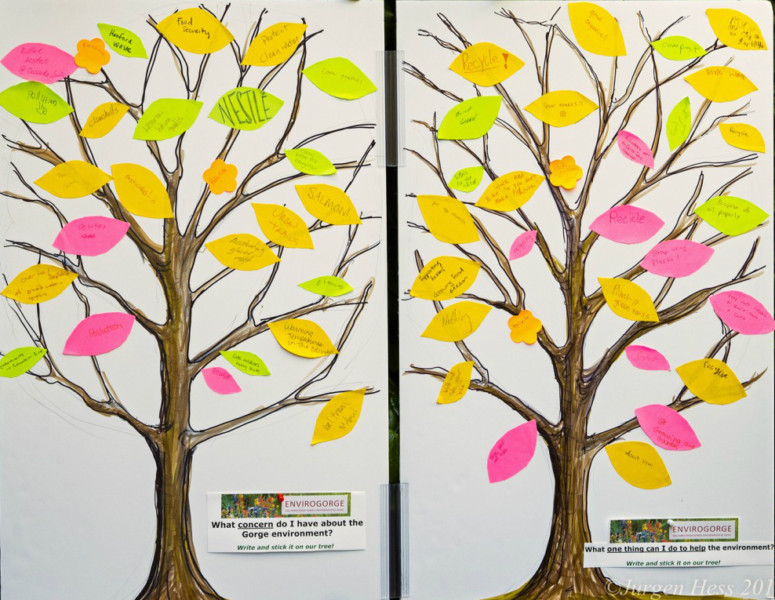
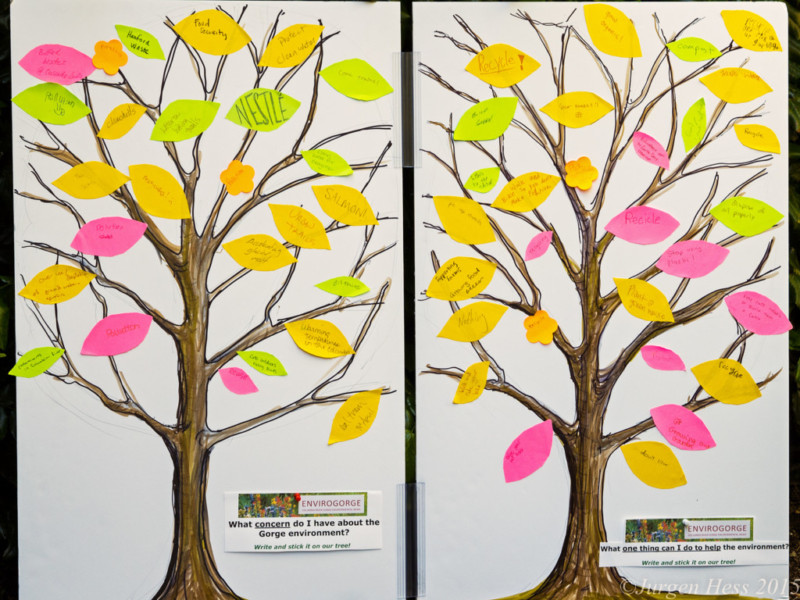
By Miko Ruhlen. April 25, 2016. The Envirogorge team created a Tree of Questions for the Gorge Earth Day Celebration on April 20, 2016 in Hood River, Oregon. We asked adults and children at the event to write on leaves and stick them to the tree. Below are answers to the question on the left side of the Tree of Questions: What Concern do I have about the Gorge environment?

Contaminants in the Columbia River Hanford Pollution Coal Trains PesticidesSalmon Warming temperatures in the Columbia 90º April Accelerating glacier melt  Urban trails Litter on hiking trails  Clean water for everyone Nestle  Bottled water Over use/depletion of ground water Cats outdoors eating birds Dams Clam shells Food security Population

For inspiration, we asked people to answer the question: What one thing can I do to help the environment? We also interviewed people at the event and video-taped their answers; here is part one of the video.

We enjoy reading the the leaves attached to the right side of the Tree of Questions answering, What one thing can I do to help the environment ?

Reuse Recycle Don’t litter  Pick up trash Pack out others’ litter Drive your car less Walk and bike so you don’t make pollution Grow a garden Grow organic  Compost Keep cats indoors or build a “catio” Stop using plastic Volunteer at an Earth Day clean up Do good work Letters to the editor Build green Solar panels Supporting farms Growing food access Protest

The ideas don’t stop there, see what these Gorge residents have to say about what they do to help the environment.

Kids had a lot to say too! This video is a favorite, especially the ending.

We would love to hear from you in the comments section or on Facebook about what things concern you about the Gorge Environment, and what things you do to help the Gorge environment!

dited

By |2019-04-11T11:01:14-07:0004/25/2016|More, Old Articles, Quizzes|0 Comments

The Great Balloon Harvest Contest

[media-credit name=”Murray Brown” align=”alignleft” width=”328″]Balloon challenge1797604_10205280636764831_3318146663534870967_n_edited-1[/media-credit]

Now that Envirogorge’s Native Plant Challenge is complete, the Envirogorge staff is busily working on a new bird quiz coming later this spring. Those who love a challenge and want to embark on a new contest right away will be excited to hear about The Great Balloon Harvest Contest.

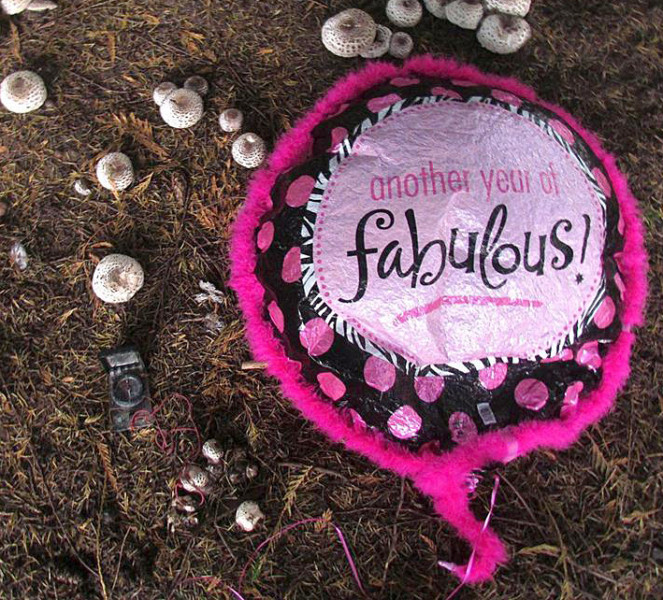
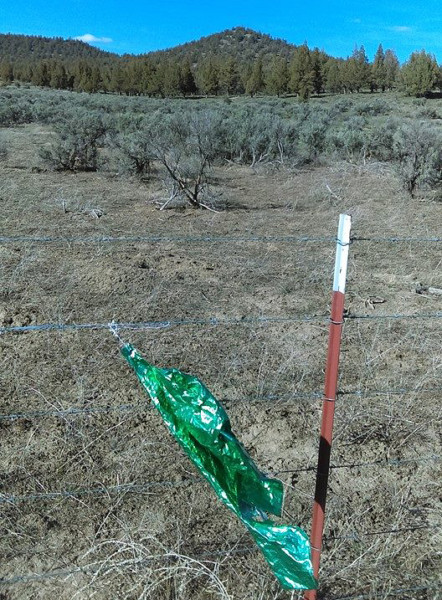
Murray Brown of Carson, Washington created this balloon harvesting contest a year ago just for fun on his Facebook page. The challenge is simple, between April 7th and September 30, 2016, find fallen balloons that litter the forests, take photos, and remove or ‘harvest’ them. Last year there were about 20 entries. Brown is sponsoring prizes for 10 winners this year, including one for preventing a balloon release. To enter for prizes, join the public Facebook group “The Great Balloon Harvest Contest” and submit photos of the balloons found.Balloon green_edited-1

Wildlife can accidentally eat released balloons that fall into rivers, oceans, and forests. Birds, turtles, and other wildlife can also get tangled in the strings. Latex balloons take up to 4 years to decompose; mylar balloons are made from plasticized polyester and are not bio-degradable.

Many states have passed legislation restricting balloon releases that are not for scientific purposes. Alternatives to releasing balloons for celebration include blowing bubbles, waving flags, or flying kites. Choosing alternatives to releasing balloons, disposing of balloons properly, and picking up those found are all ways to contribute to cleaning up the environment. The good news is that The Great Balloon Harvest Contest will be awarding prizes to people who participate in these simple actions and it is free to enter!


By |2019-08-06T11:53:59-07:0004/21/2016|Energy, News, Old Articles, Waste Management|0 Comments

© Copyright 2013-2025 Columbia Insight. All Rights Reserved.

As a 501(c)3 nonprofit organization, all donations to Columbia Insight are tax deductible to the full extent of the law. Our nonprofit federal tax-exempt number is 82-4504894.