Stay Updated Subscribe today for the latest research + reporting about environmental news. Subscribe Now

Stay Updated Subscribe today for the latest research + reporting about environmental news.

Subscribe Now

Miko Ruhlen

Miko Ruhlen

About Miko Ruhlen

Miko Ruhlen, Associate Editor. Miko graduated from U.C. Berkeley and worked in California and the Columbia Gorge for well over a decade as an avian field biologist with non-profits, government agencies, and private consulting firms. She and her husband live in Hood River, Oregon. They own Hood River Hobbies and volunteer for local citizen science bird surveys and lead bird walks in their spare time.

Hood River County’s Energy Future

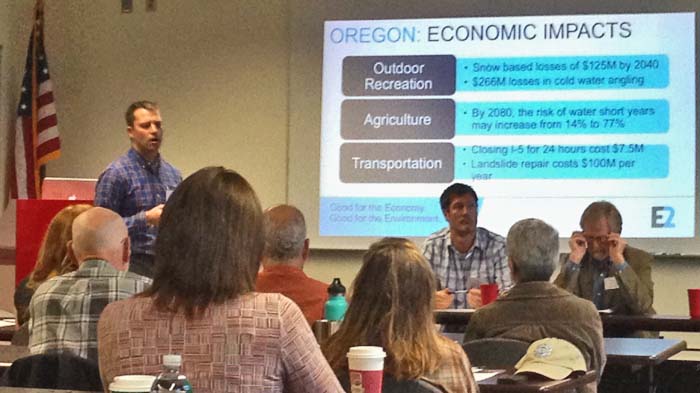
Chris Dennett of E2 Environmental Entrepeneurs

Chris Dennett of E2 Environmental Entrepreneurs.

A standing room only crowd convened in the Hood River Fire Station meeting room on Wednesday November 2, 2016 to discuss and learn about Hood River County’s Energy future. Two panel discussions covered an array of topics including climate smart business, water and energy efficiency, LEED certification, clean tech investments, solar projects, waste water treatment, efficient lighting, and future energy plans. Hood River County hosted the event with support from Gorge Owned, E2 Environmental Entrepreneurs, and the Energy Trust of Oregon.
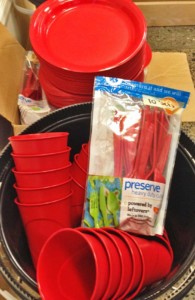
cupsThe morning started off with coffee, but instead of the typical disposable cups, we drank from red reusable plastic cups with matching plates and cutlery made from yogurt containers. This set of reusable cutlery is available on loan for free from Tri-County Hazardous Waste for small to mid-sized events to avoid more disposable cups and plates entering the waste stream (contact David Skakel to arrange a loan).

Several speakers, including Niklas Christensen from Watershed Professionals Network, discussed irrigation efficiency — a topic recently delved into by EnviroGorge writer Sunnie Brown (see ‘Irrigating Our Future in the Midst of Climate Change.’) Christensen says Hood River County’s temperatures are predicted to rise at least 1.4 degree Celsius by 2040, which will lead to more rain and less snow pack; therefore, leaving “half as a much water to use for irrigation as now.”

Just a few degrees can make a difference in irrigation needs when planting vineyards that will have a 20-40 year lifespan, James Mantone of Syncline Wine Cellars told the audience. “Rethinking our soil for farming crops is necessary, because disease is a manifestation of soil imbalance. We need to encourage fungal colonies and increase water efficiency.” He explained the benefits of intensive mapping and soil testing when developing a new vineyard, and designing irrigation according to natural soil transitions.

James Mantone of Syncline Wine Cellars

James Mantone, Syncline Wine Cellars

Irrigation needs can be decreased dramatically over the lifetime of the vineyard by delivering precise water, which also leads to better fruit quality. This is important in the areas with low annual precipitation and poor soil, like the areas he farms near Catherine Creek in Washington. He said Willamette Valley wineries are interested in moving to the Gorge due to warming the climate. Temperatures in the Gorge are becoming more suitable for their grapes. Mantone hopes that wineries and farmers will share information about ‘responsible use ag,’ and thus decreasing irrigation and spraying by proper planning and improved soil fertility.

“The Gorge is sort of a ground zero for these conversations to start,” said Chris Dennett of E2 in his introduction about clean tech solutions.

The LED revolution was discussed by Jonathan Lewis of Hire Electric. He also talked about the limited solar incentives in Washington. Lewis predicted that in five years there may be no more incandescent or fluorescent lighting due the exceptional efficient quality and prices of LED lights. However, there are concerns that the low cost could lead to increased outdoor lighting. Without building codes in place, it could lead to “the end of the night sky” in rural areas.

Mark Lago from the City of Hood River noted that Hood River street lights will be switching to LEDs. He also discussed the status of a waste water treatment plant biogas converter program and plans to install solar panels on the Hood River Public Works building.

Amanda Lawrence of Gorge Owned (GO!) announced that they will be continuing their Go! Solar Program for a third year. This year the focus will be on businesses installing solar panels in Hood River County. In previous years, GO! Solar spanned several counties, but currently, the incentives are more readily available in Hood River County. Although many solar incentives previously available in Klickitat and other counties are not available this year, people living or owning businesses in Washington or Wasco County are still encouraged to contact Go! Solar for more information or to get connected with a contractor.

Dan Orzech of Oregon Clean Power Cooperative talked about plans to enable people (via the co-op) to invest money in local projects such as putting solar panels on city buildings in their home town.

The Hood River County Energy Action Plan Steering Committee, comprised of 7-15 community leaders, met after the panel discussion. This committee will convene monthly to help determine the county’s energy goals, identify project priorities, and pinpoint funding sources for implementation. If you would like more information on these or other topics discussed at the Hood River County’s Energy Future meeting, or are interested in serving on this committee, please contact Marla Harvey at marla.harvey@co.hood-river.or.us.

Support Our Work!

Support our Work!

Help EnviroGorge continue to deliver free independent environmental news about the Columbia River Gorge. Click the support our work button and donate any amount - even the equivalent of the cost of a shade-grown fair-trade organic coffee in a reusable cup!
Support Our Work!


A Bird’s Eye View

By Miko Ruhlen.

Video: “A Bird’s Eye View of Morrison Park.”

Morrison Park sits on a 5.33 acre parcel owned by the City of Hood River. For over a decade it has been a public park that contains a popular disc golf course. On October 17, 2016 the Hood River Planning Commission will review an application by the City of Hood River to rezone it in order to? build an affordable housing complex. Land use is always a complicated issue with a variety of stakeholders and public needs.

[media-credit id=21 align=”alignright” width=”325″]spto[/media-credit]

We visited Morrison Park this October and decided to make this video to bring awareness of the plants and wildlife residing there now. Wildlife and beneficial insects are drawn by native plants like the Oregon white oaks (Quercus garryana), important for wildlife, and increasingly scarce. A small stream provides water year-round for wildlife, enabling birds to nest there and feed their young as well as survive the harsh winter and the heat of summer. This space offers people too a natural setting within a city.


A-Train: “Ambassador” of the Beach

By Miko Ruhlen

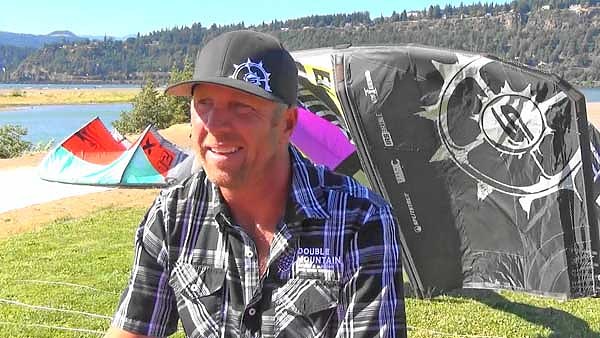
Local kiteboarder Adrian Braeunig, “A-Train,” helps make the Hood River Spit and Marina more welcoming and the environment cleaner. Do you know any local litter heroes? Do you pick up trash while you are out – even if it is not yours? Tell us about it by posting a comment below!

EnviroGorge Readers Help Conserve Birds

By Miko Ruhlen

One of our local readers, Cathy Flick, had some enthusiastic young
visitors learning about birds at her volunteer-run MAPS bird banding station.

Why Birds?
Birds appeal to us. They seem at once delicate and tenacious. Their feats of migration astound us – remind us that Earth?s creatures interconnect across national borders. Birds contribute to our well-being by pollinating plants, dispersing seeds, controlling rodent and insect populations, or scavenging carcasses. They’re sensitive indicators of environmental health, and their population trends signal the impacts of climate and habitat changes. Because they are ubiquitous and easily observed, almost everyone gets to enjoy them. Their beauty has inspired citizen scientists to record information on birds and their habitats for over 100 years, such as the Christmas Bird Count providing scientists with invaluable long-term data.

Jena Hager edited

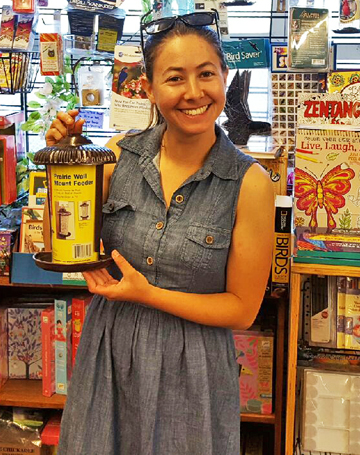
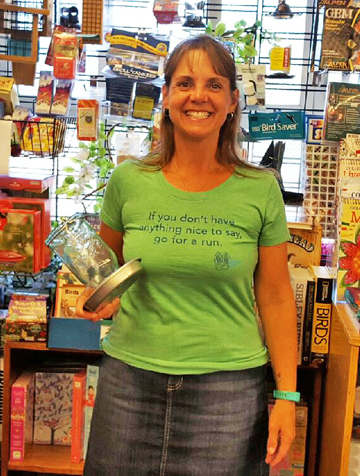
Jena Hager won a prize for participating in the Bird ID Quiz

Conservation Actions Needed
According to the State of North America’s Birds 2016 Report, a third of all North American bird species need urgent conservation action to avoid extinction. An estimated billion birds have already disappeared from North America since 1970, and the trend continues downward for most species. Birds of ocean and tropical forest habitats are the most in crisis, although species in all habitats need conservation efforts to maintain healthy populations. Some groups of birds are faring better, waterfowl for example, due to measures the North American Wetlands Conservation Act enabled to protect habitat.

Even some Columbia River Gorge species we consider common are showing declines including the American Kestrel which has dropped in population by about 50% nationally since 1966 and local data are showing similar declines. Western populations of Yellow-rumped Warbler have also shown a steady decline since 1970.

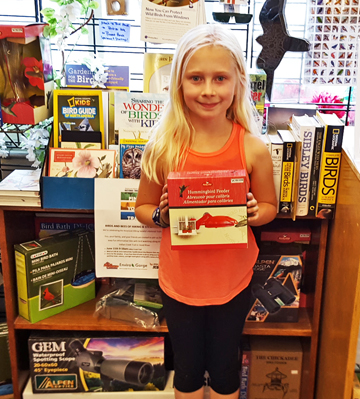
Sarah LangeEdited

Sarah Lange won a prize from Hood River Hobbies!

Like the rest of the country, resident birds of the Gorge are the subject of controversy pitting those working to protect wildlife against the pressures of development. Examples abound: the Double-crested Cormorants culled at East Sand Island , conflicts between logging and Spotted Owls, seasonal closures of popular trails (i.e. Cape Horn) due to nesting Peregrine Falcons, raptors killed at Gorge wind farms, and the effects on bird populations by feral cats.

HeidiCardozaresixed

Heidi Cardoza won a prize along with (not pictured) Anne Marie Wood, Tova Tillinghast, and Sarah Richards

Habitat is critical. While some habitats are disappearing, a variety of local efforts restore native habitat–wetlands, oak woodland, sagebrush, grassland –benefiting birds and other Gorge wildlife. Columbia River Gorge populations of Bald Eagle, Peregrine Falcon, and Osprey are recovering due to conservation efforts and the ban of DDT. Other species may require further habitat conservation to increase or maintain populations, especially grassland or aridland nesting species such as grasshopper sparrow, long-billed curlew, and ferruginous hawk.

What can I do to conserve birds? Bird Quiz readers are doing a lot!
Many of our actions affect bird conservation. Some are daily choices about what coffee to buy or what to plant in our backyard; others actions may involve larger investments of time or money. Over 100 people completed the EnviroGorge Bird Identification quiz: absolute beginners to advanced bird watchers. We asked participants to tell us what they do to help birds and we were inspired by the responses. Here’s a sampling and photos of the winners of prizes donated by Hood River Hobbies.

If you missed the quiz, you can still take it just for fun (no prizes available) here.

Our readers answer: What do you do to conserve birds? (click on the boxes)


Citizen Science and Volunteering

• Volunteer Bird Treatment Ctr, Portland Audubon.
• I compile data for the CBC & do a breeding bird survey route.
• Volunteer for winter raptor, sagebrush songbird, & breeding bird surveys.
• Submit my sightings eBird.
• I work as a bird conservationist.

Feed and House the Birds

• Provide a variety of feeding stations & water.
• Provide fresh water bird bath
• I provide habitat, food, and water.
• Build birdhouses for swallows & bluebirds.
• We keep our hummingbirds warm and fed during the winter.
• I scatter cracked corn on the ground for the quail.

Native Plantings

• Naturescaping the yard.
• Planting native trees, shrubs, & flowers for nesting habitat.
• Brush piles that Juncos like.
• Working to restore 30 acres in the gorge to enhance wildlife habitat
• Our staff at Columbia Land Trust conserves land and water to protect habitat.

Create a Safe Environment

• My cats are indoor-only.
• Window decals (to prevent strikes), water, bird friendly plants, bird houses.
• Never use pesticides or chemical fertilizers.
• Pesticide free, no round-up.
• Create bird friendly habitat providing shelter & protection from domestic cats.
• I support birds by supporting organic agriculture.

Sharing with Others

• Teach children to respect birds & habitat.
• Build bird houses and introduce children & adults to the joy of birding.
• Educating friends & family about birds-getting them excited about birds.
• Educate about landscaping for wildlife.
• American Bird Conservancy is in my will.

EnviroTour for Kids: Waterfront Park

Waterfront parkBy Miko Ruhlen

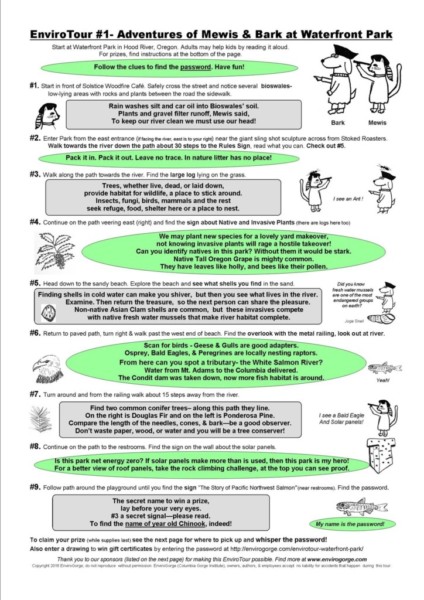
Enjoy our first EnviroTour – an environmental education walking tour for kids in the Columbia River Gorge featuring Mewis and Bark. If you visit, head down to Hood River’s Waterfront Park and take this EnviroTour.

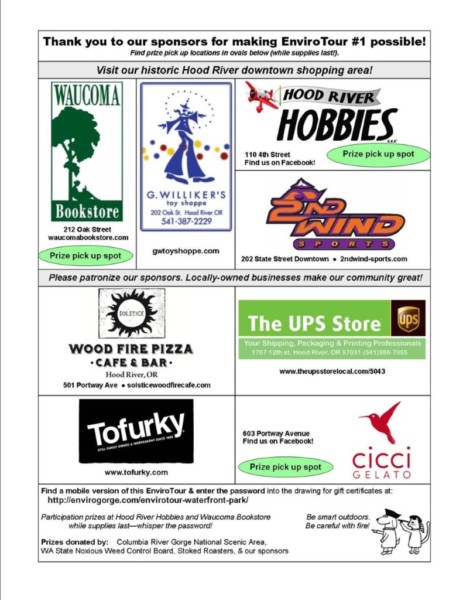
You can view this EnviroTour from a mobile phone or ask one of our sponsors for a free printed copy. There are participation prizes (while supplies last).

Enter our monthly prize drawing once you’ve completed the tour: ENTER THE PASSWORD HERE

EnviroTour 1 final FINAL version resized


EnviroTour 1 FINAL version page 2 sponsors resized

By |2020-10-20T23:23:22-07:0007/08/2016|News, Old Articles, Recreation|0 Comments

Bird ID Challenge

[mlw_quizmaster quiz=5]

EnviroGorge created a fun bird identification quiz for all ages and levels to help you learn about birds that share the Gorge with us. Those who correctly answer the most questions for their skill level will be entered into a random drawing to win prizes (a variety of bird feeders and books). The bird identification quiz will run for 6 weeks from May 19 – June 30, 2016 and 6 winners will be picked. Children are encouraged to participate with permission from their parent or guardian.

Prizes for this quiz were donated by Hood River Hobbies, a locally owned hobby shop in the Gorge .... Read more and take the quiz!


By |2019-04-11T10:59:36-07:0005/19/2016|More, Old Articles, Quizzes|0 Comments

© Copyright 2013-2025 Columbia Insight. All Rights Reserved.

As a 501(c)3 nonprofit organization, all donations to Columbia Insight are tax deductible to the full extent of the law. Our nonprofit federal tax-exempt number is 82-4504894.