Stay Updated Subscribe today for the latest research + reporting about environmental news. Subscribe Now

Stay Updated Subscribe today for the latest research + reporting about environmental news.

Subscribe Now

Kendra Chamberlin

Kendra Chamberlin

Kendra Chamberlain

About Kendra Chamberlain

Columbia Insight contributing editor Kendra Chamberlain is a freelance journalist based in Eugene, Oregon, covering environment, energy and climate change. Her work has appeared in DeSmog Blog, High Country News, InvestigateWest and Ensia.

Quagga fail: 90% of life killed in parts of Snake River section of copper treatment

Idaho’s effort to eradicate the dreaded mussel invader appears to have backfired, at a cost of $3 million
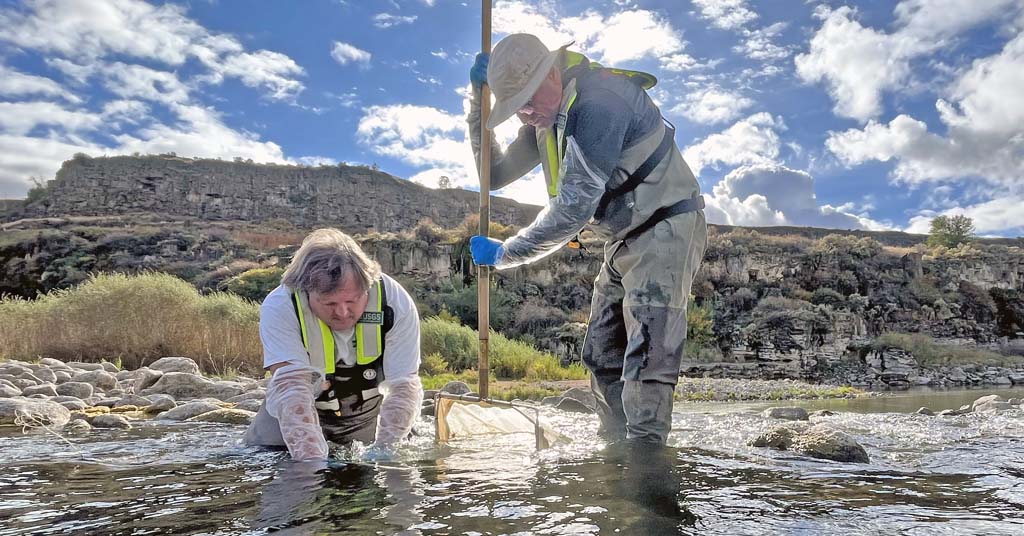
Two scientists check Quagga response Snake River in 2024

Bad medicine: USGS hydrologist Kenneth Skinner (left) and biologist Christopher Mebane collect macrophyte samples as part of a study examining the health of Snake River before and after the application of a copper treatment to eradicate invasive quagga mussels. Photo: Idaho Water Science Center

This story was updated on Sept. 12, 2025.

By Kendra Chamberlain. September 2, 2025. The Idaho State Department of Agriculture took a huge gamble in 2023. After detecting the first instance of invasive quagga mussels in the Columbia River Basin, state officials scrambled to implement a first-in-the-nation treatment plan, unleashing 40,000 pounds of a copper-based toxin into three stretches of the Snake River around Twin Falls.

The idea was to poison a relative few quagga mussels in order to prevent a full-blown infestation.

The treatment, however, has killed off nearly everything else in some stretches of the river.

A new report by the United States Geological Survey found that macroinvertebrate abundance decreased along the first three of six sites, from 54–94%. Sites tested beyond these locations found less to no impact on the macroinvertebrate communities from the treatment. [An earlier version of this story inaccurately reported that up to 90% of invertebrates in the entire area died as a result of the poisoning. —Editor]

The treatment, on which the state spent a reported $3 million, didn’t even work as intended.

In 2024, quagga mussels were again found in Snake River, this time upstream from the initial treatment area. The state responded with a new round of copper treatment, just as aggressive as the first response.

On Sept. 12, the Idaho State Department of Agriculture announced “a 51% reduction in the quagga mussel impacted area of the Snake River near Twin Falls. … The results show significant progress and demonstrate the effectiveness of ISDA’s ongoing treatment strategy. No quagga mussels have been detected upriver or downriver of the 2024 treatment zone.” [This information was added to this story on Sept. 21, 2025. —Editor]

The results of the treatments have been heartbreaking, according to the Idaho Statesmen.

Forty-eight of 49 local white sturgeon were killed, along with most of the yellow perch and largescale suckers in that stretch of the river.

Some fish species seem less affected by the copper treatment.

Roughly 7,000 pounds of copper solidified and settled into the riverbed along a roughly 10-mile stretch of the river, where it may impact invertebrates well into the future.

Officials expect impacts from the treatments to ripple through the fish food web for years to come. The long-term impacts of the two successive treatments are unknown but are being studied.

It’s a no-win situation for the Snake River.

Idaho officials say allowing the invasive species to gain a foothold in the river would have been disastrous. Quagga mussels wreak havoc on riparian ecosystems as well as infrastructure related to hydropower generation and agricultural irrigation.

“We understood the terrible gravity of what we had to undertake, but we also know ultimately what’s at stake,” Chanel Tewalt, Idaho State Department of Agriculture director, told the Idaho Statesman. “So we can’t shy away from making these hard decisions just because there’s difficult collateral. There is collateral either way.”


By |2025-12-19T13:00:29-08:0009/02/2025|Rivers|6 Comments

Proposal denied for dam near Oregon’s Silver Falls State Park

A court decision has upheld existing instream water rights held by the state on Drift Creek, a tributary of the Pudding River

Drift Creek, Oregon

Moving on: The denial of a permit to build a dam and reservoir on Drift Creek, which meets the Pudding River near Silver Falls State Park, could end a years-long fight. Photo: Water Watch of Oregon

By Kendra Chamberlain. August 27, 2025. A decision by the Oregon Supreme Court is being lauded as a win for fish but could throw a wrench into future water rights development plans.

The ruling is part of the court’s August 7 decision to send an application denial for a proposed new dam on Drift Creek back to the Oregon Water Resources Commission for reconsideration.

The case revolves around an existing instream water right held by the state on Drift Creek, a tributary of the Pudding River that runs from Silver Falls State Park to its mouth south of Silverton, Ore.

Instream water rights are used to ensure that some water remains in a river or stream for the benefit of both the public and wildlife that depend on the water.

Water rights typically ensure a specific amount of water be available to the rights holder at a specific point on a river or stream.

But the Oregon Supreme Court has affirmed that the purpose of the right—in this case, keeping water in the creek so that the cutthroat trout and other fish species can continue to use the river—is also protected within the right.

The East Valley Water District, representing a group of farmers located near Mount Angel, about 50 miles south of Portland, applied in 2013 to build a 70-foot-tall dam and a 12,000-acre-foot reservoir on Drift Creek to store water that the district’s members would use for irrigation in summer.

The Oregon Water Resources Commission initially approved the application. That decision was challenged by WaterWatch of Oregon.

The advocacy group argued that the dam would threaten an existing senior instream water right on Drift Creek established in 1996 to protect cutthroat trout and other fish that use the creek for spawning and rearing. Coho and chinook salmon, Pacific lamprey and winter steelhead also use the creek.

Brian Posewitz

Brian Posewitz. Photo: NASHCO

The Oregon Water Resources Commission eventually agreed with WaterWatch of Oregon, and denied the application.

The water district appealed the decision, but the state’s Court of Appeals agreed that the dam and reservoir would threaten the existing instream water right. So the district took the matter to the Oregon Supreme Court.

The East Valley Water District argued to the court that the instream water right was protected as long as the specific water quantity was present at the mouth of Drift Creek. In other words, the dam and reservoir would not interfere with the senior instream water right as long as the same amount of water made it to the bottom of the creek.

Columbia Insight has been unable to contact the East Valley Water District.

WaterWatch of Oregon contended that the instream water right protects water flows throughout the 11-mile stretch of creek, not just where it flows into Pudding River.

“The purpose of the flow—which is cutthroat trout—needs to be protected throughout the 11-mile reach,” Brian Posewitz, staff attorney at WaterWatch of Oregon, told Columbia Insight. “And the Supreme Court agreed with us and the Court of Appeals that if you put a big dam and a reservoir in the middle of that protected reach, you’re not protecting the beneficial use of the instream water right, which is for cutthroat trout spawning and rearing and migrating and so forth.”

That piece of the decision could prove significant for future water rights applications on waterways that have instream water rights. The ruling has some organizations worried.

The Oregon Association of Nurseries, whose members frequently apply for new water rights for nursery and farm operations, filed an amicus brief in the case in 2024, arguing that the Commission’s decision, upheld by the Court of Appeals, threatens to end new appropriations “in any basin where an in-stream water right is present.”

OAN said it was participating in the case “out of concern that the decision could ultimately be expanded to accord in-stream rights a sort of ‘super-protected status’ in water right transfers and water right regulation matters.”

Oregon passed its Instream Water Right Act in 1987. WaterWatch of Oregon helped craft the legislation. The law allows regulators to protect the state’s waterways by applying for instream water rights for the benefit of wildlife and the public.

“There are lots of instream water rights throughout the state that protect stream flow for the benefit of fish and wildlife and recreation,” said Posewitz. “What the Supreme Court said is that these instream water rights are entitled to robust protection, not just a specific quantity of water in a specific place, but they’re entitled to protection of the use of what that water is for.”

By |2025-12-19T15:24:16-08:0008/27/2025|Dams, Water|1 Comment

Game managers look for bighorn sheep spreading deadly disease

Herds are dwindling as a bacterial pneumonia ravages sheep populations east of the Cascades

Bighorn pneumonia in Hells Canyon

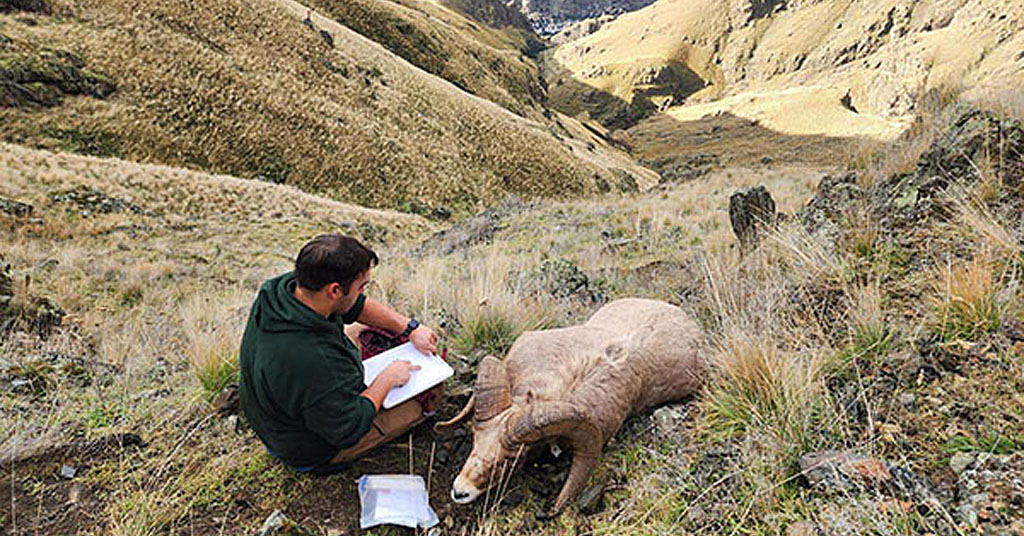
Steep decline: A pneumonia outbreak was detected in bighorn sheep in northern Hells Canyon in mid-December. State game managers from Idaho, Washington and Oregon are working to find infected sheep. Photo: Idaho Department of Fish and Game

By Kendra Chamberlain. August 20, 2025. In the Burnt River Canyon of eastern Oregon, a small herd of bighorn sheep are struggling for survival. The herd hasn’t seen any lambs make it to adulthood since 2020, when the population suffered an outbreak of bacterial pneumonia.

Roughly half of the small herd died as the bacteria moved through the group. There are only about 40 bighorn sheep left.

The nearby Lookout Mountain Unit herd, a much larger herd located just on the other side of I-84 in Baker County, Ore., suffered the same outbreak at the same time.

Five years later, lambs from both herds struggle to survive.

The sheep were infected with Mycoplasma ovipneumoniae, commonly referred to as M. ovi.

The bacteria causes a deadly pneumonia that has plagued bighorn herds across the West for decades. It’s considered one of the biggest obstacles to bighorn populations rebounding across the region.

It’s the same bacteria behind the more recent die-off of the Hells Canyon herd of bighorn sheep along the Snake River on the Oregon-Idaho border.

But the specific strain of M. ovi present in the Baker County herds is unique and has never before been detected in Oregon, as reported in the Baker City Herald.

It’s unclear if the new strain was brought into the area from a traveling bighorn sheep, or if a domestic sheep introduced the strain to the herds. M. ovi is considered ubiquitous in domestic sheep flocks.

Tracking the infected

The two herds’ adult bighorn sheep don’t seem to be dying from the infections anymore, indicating they’ve developed a form of immunity.

But the herd’s vulnerable lambs continue to die year after year. That means some members of the herd are still carrying and spreading the bacteria, according to Oregon Department of Fish and Wildlife’s Brian Ratliff, district wildlife biologist for the department’s Baker City office.

Without intervention, these two herds are at risk of dying out all together.

ODFW has been working over the past five years to stamp out the infection.

The department is using a “test and remove” strategy: capture a sheep, test for infection, then kill animals that test positive.

The culprits are likely ewes that have developed a chronic infection from the bacteria and are spreading it to their young. Ratliff said the department is successfully removing infected sheep when they find them.

But the illness persists.

“We have individuals in the population that clearly are maintaining the Mycoplasma ovipneumoniae in the population,” he told Columbia Insight.

The department has shifted its strategy in hopes of being more effective at removing infected animals that are spreading illness to the lambs.

“We started targeting specifically the subgroups that don’t have any lambs left,” said Ratliff.

Game managers are also targeting ewes that don’t have any lambs with them during summer capture events, which Ratliff said is a sign the ewe is spreading the bacteria herself or has had contact with a sheep that is shedding the bacteria.

If enough of the animals that are actively spreading the bacteria can be removed, the herds may be able to rebound as more lambs survive each year.

It’s also possible the bacteria could continue to circulate within the herds for years to come.

Tracking and catching the infected sheep is easier said than done.

“It’s catching wild animals out on the landscape,” said Ratliff. “The sheep tend to scatter when you jump out of the helicopter. They don’t line up.”

By |2025-12-19T15:30:54-08:0008/20/2025|Wildlife|0 Comments

Really good news from spotted owl country

A pair of rare northern spotted owl fledglings have been sighted in Washington’s Okanogan-Wenatchee National Forest

Baby spotted owl

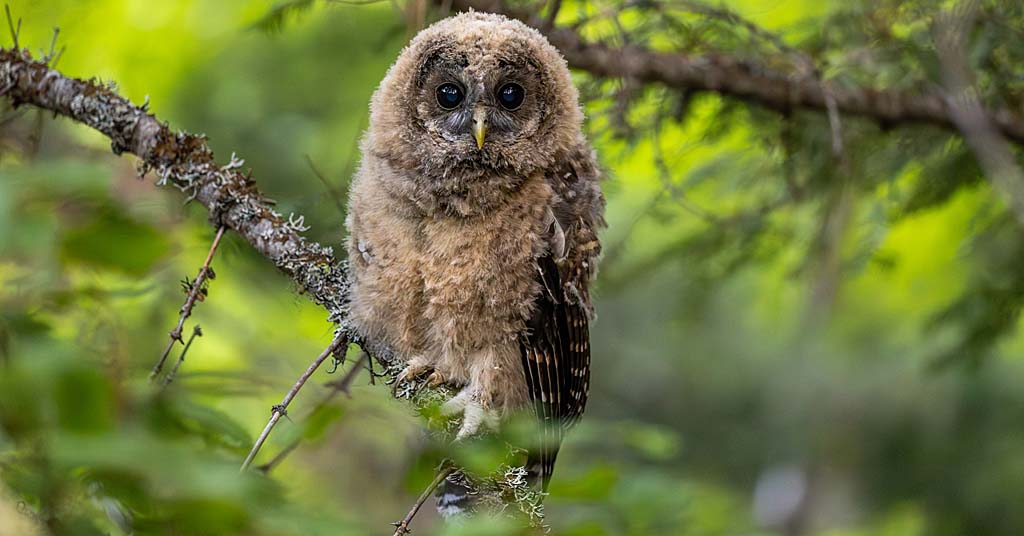
Baby, baby: One of two young northern spotted owls seen last month in north-central Washington. Photo: Anour Esa/WDFW

By Kendra Chamberlain. August 13, 2025. Anour Esa, biodiversity communications specialist at the Washington Department of Fish and Wildlife (WDFW), caught glimpse of something extraordinary last month in the Okanogan-Wenatchee National Forest.

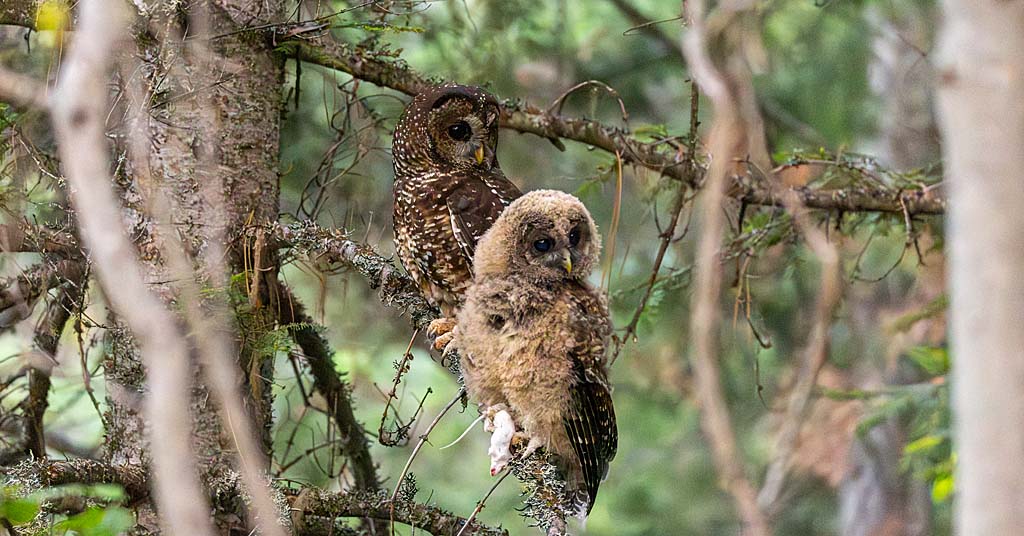
It was a family of northern spotted owls, including two fledglings, a sight so rare that it brought tears to the eyes of the biologist that he was with.

Northern spotted owls have been listed as endangered in Washington since 1988 and have been federally listed as endangered since 1990. There has been no meaningful progress made in recovering the species, and researchers believe the species has only a decade or so left before they’re gone for good.

“It was my first time seeing a spotted owl ever, and it was something I never thought I’d be able to experience in my lifetime because they’re going extinct in Washington,” Esa told Columbia Insight.

On July 17, Esa tagged along with a team of state and federal biologists looking for northern spotted owls in north-central Washington’s Okanogan-Wenatchee National Forest, hoping to photograph at least one of the few remaining owls in the area.

After a day that began at 3:30 a.m., Esa had his one and only sighting at about 6:30 p.m.

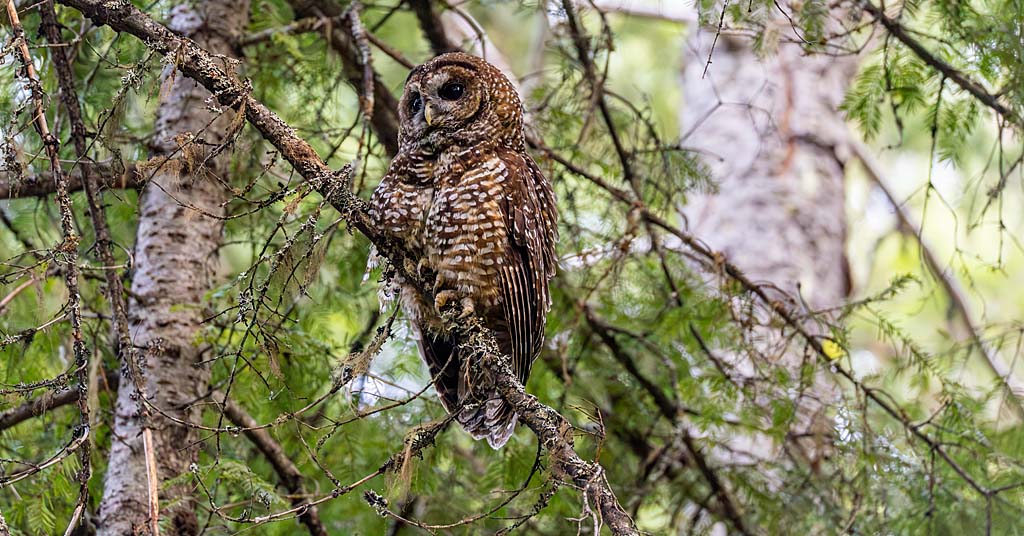
“The male fluttered into view, sat on a branch about 30 feet in the air, and just looked down at us,” said Esa. “I get a little emotional when I think about it, because it was one of the most peaceful and serene encounters I’ve ever had with wildlife—and with a species that is rapidly disappearing everywhere.”

Northern spotted owl in Washington’s Okanogan-Wenatchee National Forest

Productive: The male half of a northern spotted owl pair that has produced 10 offspring. Photo: Anour Esa/WDFW

Esa was able to photograph one of the babies, which he described as a “big ball of fluff,” and the team could hear a second juvenile nearby. They eventually caught sight of the female, too.

“We had a really wonderful experience with them just sitting there. And after about 45 minutes, we packed up and headed back down the hill,” he said.

The mating pair is one of the last known pairs of northern spotted owls in Washington.

The two are well known because they’re such an anomaly. The duo has been together since 2015 and has produced 10 chicks over the last decade, against the odds. Their marriage has lasted longer than many in the United States, Esa quipped.

Long odds for survival

But this isn’t a rainbow and butterflies story.

“These two fledgling spotted owls have a really, really steep uphill battle to come just to survive the next six months,” said Esa.

Spotted owl fledglings have only a 25% survival rate.

“There’s a really good chance that these fluffy, cute owls are going to be dead by January,” he said.

Northern spotted owl duo

Two more: It’s rare to see a single spotted owl, much less the family of four that Washington state wildlife staff found in July. Photo: Anour Esa/WDFW

Being a baby spotted owl in Washington is tough enough, thanks to things like harsh winters and loss of habitat. But their future is made even more perilous with the arrival of the infamous barred owls, invaders that pillage and plunder forests that northern spotted owls call home.

Researchers believe barred owls are one of the chief drivers of northern spotted owl declines.

When barred owls move into spotted owl territory, they eat all the food and take over habitat. They bully adult northern spotted owls out of their territories and sometimes even eat the fledglings.

The barred owls are so aggressive that spotted owls will stop calling for mates when barred owls are around. Their presence is pushing spotted owl populations to the brink of extinction.

WDFW doesn’t know exactly how many spotted owls are left in the state. The numbers are so low that the state has paused its monitoring program.

“It’s getting harder and harder to find owls in the first place, and it’s taking longer and longer to find nesting pairs, to find juveniles,” said Esa.

Federal and state wildlife departments across the Pacific Northwest are tackling the barred owl invasion head on. The proposed solution: kill as many barred owls as possible in spotted owl territories.

It sounds harsh, but the science is clear. When barred owls are removed from spotted owl habitat, the spotted owl populations rebound quickly.

“It’s a hard choice, but we have to make it,” said Esa. “If we don’t take action now, we know that it’s very likely that northern spotted owls will go extinct in Washington within 10 years. That is the humbling, sad truth.”

By |2025-12-19T15:58:43-08:0008/13/2025|Birds|1 Comment

When will this massive hazard on the Chehalis River be neutralized?

A defunct Washington pulp mill is threatening nearby waterways with hundreds of thousands of gallons of toxins

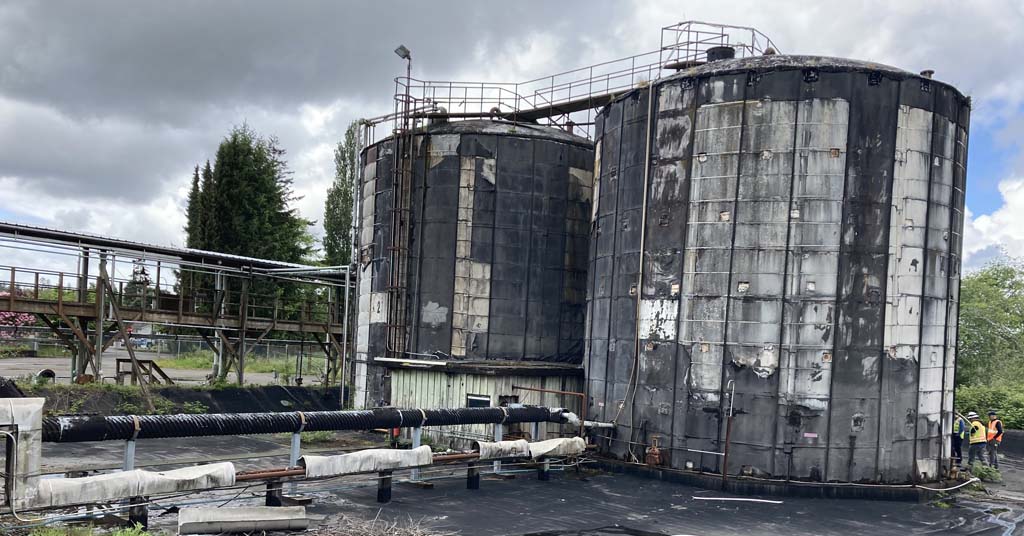
Storage tanks at the former Cosmo Specialty Fibers pulp mill

Dirty deal: Storage tanks at the former Cosmo Specialty Fibers pulp mill on the banks of the Chehalis River house are in poor condition, posing a risk for chemical spills. Photo: DOE

By Kendra Chamberlain. July 29, 2025. A ticking ecological time bomb is sitting just off First Street in the sleepy town of Cosmopolis, Wash. (pop. 1,666) just southeast of Aberdeen.

The site is home to Cosmo Specialty Fibers, a nonoperational pulp mill located along the banks of the Chehalis River, where storage tanks and treatment systems hold 800,000 gallons of corrosive chemicals and waste that threaten to leak into the nearby environment.

The facility has been closed since 2022, but the containers on the site remain—and they’re deteriorating.

State and federal environmental officials worry it’s only a matter of time before those tanks fail, potentially releasing hundreds of thousands of gallons of chemicals into nearby waterways, including the Chehalis River and Grays Harbor, south of Olympic National Park.

Both the Environmental Protection Agency and Washington Department of Ecology have tried to alert the mill’s owner of the problem. But the chemicals are still on-site, and the tanks continue to deteriorate.

In April 2024, the EPA ordered the company to maintain its power and water services, as well as fire suppression systems and 24-hour security, in order to “detect and respond to spills or releases of contaminants at or from the site.” A few months later, the EPA announced it had deployed emergency response staff to help secure the chemicals.

The Washington Department of Ecology has had enough. The Department announced on July 22 that it had fined Cosmo Specialty Fibers $2.3 million in violations and issued an order requiring the mill to clean up contamination on the property.

“We gave the owner time and many opportunities to make corrections and achieve his vision for the facility,” Bobbak Talebi, Washington Department of Ecology’s Southwest Region director, said in a press release. “Whether the mill is operating or not, by law, they must protect the people and environment around this facility.

“We need the owner to take this situation seriously and immediately address the threats stemming from a lack of maintenance and oversight. These urgent safety issues cannot wait. It’s too dangerous and there’s too much at risk.”

The pulp mill was originally operated as a specialty cellulose mill for Weyerhaeuser. It was later acquired by The Gores Group and reopened as Cosmo Speciality Fibers, which produced high-quality dissolving wood pulp.

The facility closed in 2022 and was acquired by Pennsylvania-based Charlestown Investments, which had hoped to reopen the mill in a matter of months. But the facility has sat idle ever since.

Charlestown Investments has 30 days to appeal the fines to the state’s Pollution Control Hearings Board or cough up the fine. And it will finally have to clean up those hazardous chemicals.

By |2025-12-23T10:08:05-08:0007/28/2025|Industry|0 Comments

Pacific Seafood sued over aquaculture permit violations in Columbia River

The company is fighting back, saying the plaintiffs’ claims are based on “inaccurate and grossly incomplete information”

Net pen aquaculture

Pen state: Aquaculture operations on the Columbia River have drawn criticism from environmentalists and lawmakers. Photo: Wild Fish Conservancy

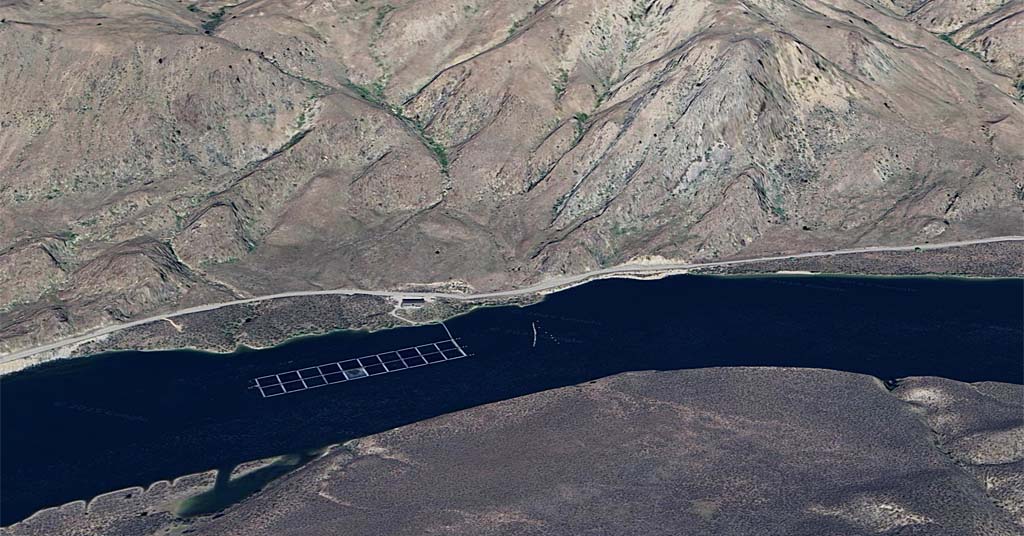
By Kendra Chamberlain. July 17, 2025. Wild Fish Conservancy and the Center for Food Safety have filed a lawsuit against Clackamas, Ore.-based Pacific Seafood over alleged Clean Water Act permit violations at its net pen aquaculture facilities located along the Columbia River in Nespelem, Wash. in the north-central part of the state.

Pacific Seafood raises steelhead trout at its facilities in partnership with the Confederated Tribes of the Colville Reservation. The fish farm received Best Aquaculture Practices (BAP) certification in 2013, which emphasizes environmental responsibility and sustainability in fish farming.

“It’s an incredibly risky practice,” Emma Helverson, executive director of Wild Fish Conservancy, told Columbia Insight, referring in general to net pen aquaculture.

Her organization and the Center for Food Safety argue that Pacific Seafood’s fish farms have exceeded federal pollution discharge limits and have failed to properly monitor and report those violations, citing documents the groups obtained through the Freedom of Information Act (FOIA).

The groups claim the facilities have been in “continuous violation” of their National Pollutant Discharge Elimination System (NPDES) permits since April 2020.

Pacific Seafood denies the allegations.

“We’ve made clear to the plaintiffs that their claims are based on inaccurate and grossly incomplete information, but they decided to file it anyway. We plan to fight these claims,” a spokesperson from the company told Columbia Insight in an email.

Pacific Seafood seemed to dismiss the alleged permit violations as “minor issues” in a separate statement made to the industry publication Aquaculture North America.

“At Pacific Seafood, we are deeply committed to environmental stewardship, supporting local jobs, and driving economic benefits in the communities where we operate,” the statement said. “This type of lawsuit is unfortunately used by a variety of environmental groups and their lawyers to extract attorney fees and excessive penalties over minor issues experienced by companies working tirelessly to comply with stringent and complex federal permits.”

Net pen use in fish farming has drawn ire from environmentalists and state regulators alike.

Critics say the practice is problematic for a number of reasons. Net pen farms are vulnerable to disease outbreaks that can reach native fish populations; fish often escape, impacting local fish populations; and the waste generated at the farms cannot be contained within the nets and is carried downstream.

The State of Washington banned the practice outright in marine waters it manages after an incident in Puget Sound in 2017 that resulted in the release of 250,000 non-native Atlantic salmon in to Puget Sound and the Salish Sea.

This year, Oregon lawmakers introduced but did not pass legislation that would similarly ban net pen aquaculture in state waters.

Helverson said billions of dollars have been spent to restore water quality on the Columbia River and for salmon recovery efforts—and that net pen fish farming often has negative ecological impacts.

“There’s no other industry in Washington that I am aware of that’s allowed to discharge untreated waste directly into public water sources as a point source,” said Helverson. “I would argue we shouldn’t be discharging any untreated waste into public water sources.

“Asking the industry to comply with common sense laws to prevent too much pollution from being discharged into one of our most important waterways is, in my opinion, not a high ask.”

By |2026-01-08T13:18:11-08:0007/17/2025|Fish, News|Comments Off on Pacific Seafood sued over aquaculture permit violations in Columbia River

© Copyright 2013-2025 Columbia Insight. All Rights Reserved.

As a 501(c)3 nonprofit organization, all donations to Columbia Insight are tax deductible to the full extent of the law. Our nonprofit federal tax-exempt number is 82-4504894.