Stay Updated Subscribe today for the latest research + reporting about environmental news. Subscribe Now

Stay Updated Subscribe today for the latest research + reporting about environmental news.

Subscribe Now

Kendra Chamberlin

Kendra Chamberlin

Kendra Chamberlain

About Kendra Chamberlain

Columbia Insight contributing editor Kendra Chamberlain is a freelance journalist based in Eugene, Oregon, covering environment, energy and climate change. Her work has appeared in DeSmog Blog, High Country News, InvestigateWest and Ensia.

Why this government proclamation actually matters to the Columbia River

A “first of its kind” federal commitment to salmon recovery has presidential bite behind it. Now let’s see the money

President Joe Biden

About time: Big talk about restoring the Columbia River Basin is coming out of Washington D.C. Photo: Gage Skidmore/Wikimedia Commons

By Kendra Chamberlain. October 24, 2023. If you’ve grown weary of politicians making grand proclamations about “taking steps” or “making progress” or “funding studies” toward environmental recovery, get in the back of a very long line.

But, also, pay attention to the Sept. 27 announcement from the White House titled “Memorandum on Restoring Healthy and Abundant Salmon, Steelhead, and Other Native Fish Populations in the Columbia River Basin.”

“It is time for a sustained national effort to restore healthy and abundant native fish populations in the [Columbia River] Basin,” reads the memorandum signed by President Joe Biden.

The White House making Columbia River Basin salmon recovery a national priority has far-reaching consequences.

Under the declaration, federal agencies, including the Bonneville Power Administration, Army Corps of Engineers, National Marine Fisheries Service and Department of Interior, will have 120 days to assess how they can better support fish restoration.

These departments are also directed to identify federal programs that could help fish recovery in the Columbia River Basin and resources those programs would need.

“Within 220 days of the date of this memorandum, all agencies … shall provide the Director of the Office of Management and Budget (Director) an assessment of the agency’s programs that can advance the policy [and] shall prioritize these activities to the extent feasible in their program and budget planning.”

Tribal rights formally recognized

Importantly, the memorandum pointedly recognizes the U.S. government’s treaty obligations to indigenous peoples of the Pacific Northwest and stretching into Canada.

“In 1855, the United States and four of the Tribal Nations of the Basin entered into treaties specifying that these Tribal Nations reserved the right to harvest fish on their reservations and at all usual and accustomed places,” it states, adding that “at that time, an estimated 7.5 to 16 million adult salmon and steelhead returned to the Basin each year.”

The treaty tribes include the Confederated Tribes of the Umatilla Indian Reservation, the Confederated Tribes of the Warm Springs Reservation of Oregon, the Confederated Tribes and Bands of the Yakama Nation and the Nez Perce Tribe.

Bobby Begay of Yakama Nation

Rights on: Celilo Village leader, Yakama tribal member and CRITFC lead fish technician Bobby Begay on the Columbia River in 2001. Photo by: Jim Richardson/National Geographic/CRITFC

Fish populations in the Basin have declined sharply over the last century. A NOAA Fisheries report from last year found endangered salmon and steelhead species have declined by 48% in the Basin in the last five years.

Yakama Nation Fisheries has estimated that fish runs today are typically less than 2 million.

The memorandum also suggests federal government culpability for the demise of salmon runs.

“Actions since 1855, including the Federal Government’s construction and operation of dams in the Basin, have severely depleted fish populations … causing substantial harm to Tribal Nations and other communities reliant on salmon and steelhead,” it states.

If anyone is justified in greeting lavish government decrees with a big ol’ eye roll, it’s Indigenous people. But, for now at least, Tribes are applauding Biden’s “historic” commitment to salmon recovery.

“He has sent a clear message throughout the federal government that business as usual is no longer acceptable,” said Columbia River Inter-Tribal Fish Commission Chair Corinne Sams. “Never before has the federal government issued a Presidential Memorandum on salmon. This is historic.”

The Columbia River Inter-Tribal Fish Commission (CRITFC) is composed of the four treaty Tribes in the Basin.

“We are optimistic that this first of its kind Presidential Memorandum on the Columbia Basin will chart a new course for the federal government that will lead to true restoration of our fisheries,” Warm Springs Tribal Council Chairman Jonathan W. Smith, Sr. said in a press release. “There is no time to waste, and the Warm Springs Tribe is committed to working with the federal agencies, our fisheries co-managers and Columbia Basin stakeholders to make sustainable, healthy and abundant fish returns a reality.”

By |2026-02-20T11:33:42-08:0010/24/2023|Salmon|1 Comment

Oregon wolves headed for Rocky Mountains

A Colorado wolf reintroduction program aims to put “paws on the ground” by the end of the year

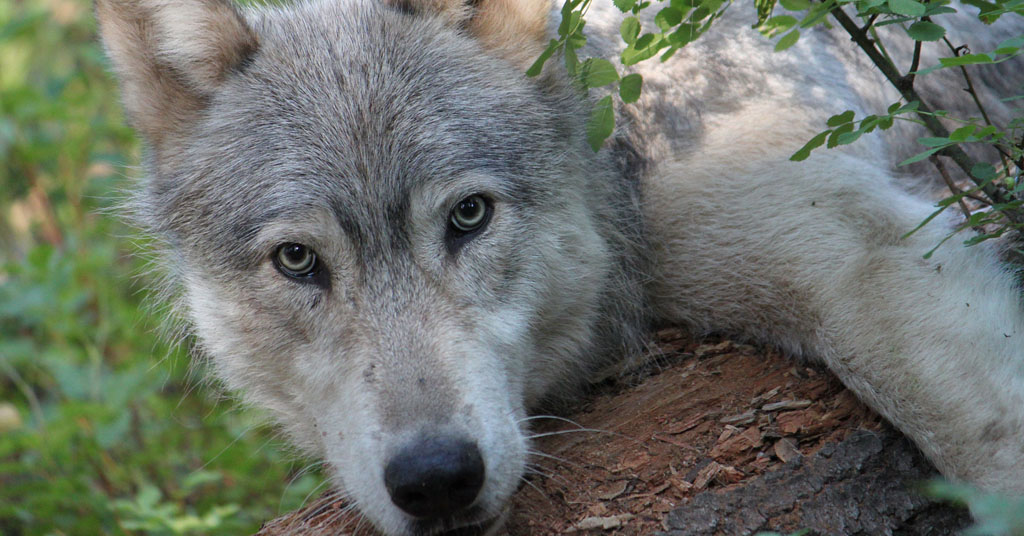
Male gray wolf in Oregon

Wanted: Authorities are on the lookout for wolves like this one from the Wenaha pack in northeastern Oregon. Photo: ODFW/File Photo

Update: As reported by the AP on Dec. 18, 2023, the first group of five wolves (each captured in Oregon) were released into the wild in Colorado. —Editor

By Kendra Chamberlain. October 19, 2023. A group of Oregon wolves could be moving south this winter to take up residency in Colorado.

The Oregon Department of Fish and Wildlife (ODFW) has agreed to give Colorado up to 10 gray wolves as part of a program to reestablish the species in the state.

Colorado Parks and Wildlife (CPW) announced earlier this month it has reached a one-year agreement with Oregon to relocate the wolves.

CPW will begin trapping and transporting the wolves in December—though officials aren’t sure how many they’ll be able to catch, or how long it will take to trap them.

“CPW plans to capture wolves through March of 2024, if necessary, to acquire 10 wolves,” CPW spokesperson Travis Duncan told Columbia Insight in an email. “That does not mean we will secure all 10 at first release or even this year.”

The wolves will be trapped in northeast Oregon and will make a more than 1,000-mile journey to Colorado’s western slope.

It’s a trip that the animals wouldn’t make on their own.

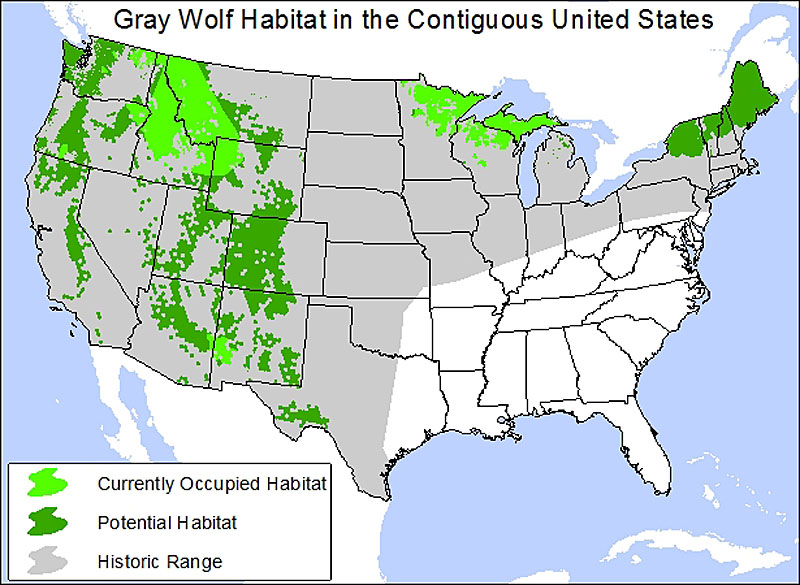
Gray wolves historically lived across most of North America, and can thrive in a wide range of climates. But individual wolves typically don’t travel more than a hundred miles from their birthplace.

“It would be extremely unusual and unlikely for a wolf to traverse the distance between Oregon and Colorado,” Duncan said, but added that wolves are “habitat generalists,” meaning they can adapt to a wide range of climates.

And there’s no guarantee the wolves will stay in Colorado’s western slope.

“Regardless of release location, wolves will move to where they find sufficient habitat and prey,” he said. “As long as prey is available, wolves can use a variety of areas.”

Oregon gives and takes

In 2020, Colorado voters approved the program to relocate up to 15 wolves to the state, but CPW has had difficulties in sourcing wolves.

“Officials in states including Wyoming, Montana and Idaho—where ranching and hunting interests have fueled a conservative backlash to wolf reintroduction programs begun in the 1990s—have pointedly declined to assist Colorado’s efforts,” according to Colorado NewsLine.

Duncan said CPW is pursuing agreements with other states and tribes to source more wolves. Washington, which has had success with its wolf recovery program, may offer some of its stock to Colorado.

Gray Wolf Habitat Lower 48 map

Map: Curt Bradley/Center For Biological Diversity

A Washington Department of Fish Wildlife spokesperson told Columbia Insight the state’s wildlife commission is currently considering participating in the program but hasn’t made a decision yet.

It’s not uncommon for states to share species stock with one another in conservation programs, and it’s not the first time Oregon is involved in such a program.

“Oregon has a long history of helping other states meet their conservation goals by providing animals for translocation efforts,” said Oregon Department of Fish and Wildlife Director Curt Melcher in a press release. “Some of our wildlife populations were also restored thanks to other states doing the same for us, including Rocky Mountain elk, bighorn sheep and Rocky Mountain goat.”

The relocation isn’t expected to impact Oregon’s own wolf recovery goals.

By |2026-02-20T11:35:23-08:0010/19/2023|Wolves|0 Comments

No good options: Eradicating invasive mussels means dumping toxins in Snake River

Idaho’s “unprecedented” plan to treat portions of the river for quagga mussels will also cause significant fish mortality

Quagga mussels caught in a bottom trawl in the Great Lakes

Snake invaders: Quagga mussels caught in a bottom trawl in the Great Lakes. Photo: Andrea Miehls/USGS

By Kendra Chamberlain. October 10, 2023. The state of Idaho is implementing an aggressive molluscicide treatment program in hopes of halting the spread of a small but dangerous population of invasive freshwater quagga mussels detected last month in Snake River near Twin Falls.

Idaho State Department of Agriculture (ISDA) is treating three sections of the river with the chelated copper product Natrix over a 12-day period.

The treatment is also expected to kill most of the aquatic life, plants and fish along the six-mile stretch of water and could result in more fatalities downstream and in the coming weeks.

ISDA Director Chanel Tewalt said during a town hall meeting on Oct. 1 that the state has undertaken probably the most aggressive approach that’s ever been tried in the United States” to eradicate the infestation.

The state’s Department of Fish and Game is bracing for significant fish mortality as a result.

Quagga mussels are native to Ukraine’s Dnieper River drainage, but have colonized water bodies across Europe and North America.

In the United States, the mussels were first detected in the Great Lakes in the 1980s, covering nearly every surface available to them and forever altering those aquatic ecosystems.

Cousins to the Dreissenid Zebra mussels, quagga mussels are tiny mollusks that can colonize freshwater substrates in dense concentrations of up to 7,790 mussels per square meter.

The mussels can live out of water for three-to-five days before dying. They spread across waterways on recreational boats that aren’t properly cleaned and dried.

Quagga mussels outcompete native freshwater mussels for food, and even attach to native mussel shells, killing them.

ISDA detected a plume of mussels larvae, called veligers, in September, as part of the routine monitoring the state conducts.

After more investigation, a diver working for the department was able to locate a single adult mussel, smaller than a fingernail, located about 16 feet underwater. Female quagga mussels can release up to 500,000 eggs per year, which float freely and can easily spread throughout waterways.

ISDA told Columbia Insight the department doesn’t know how the species reached the Snake River, or how long the species was present in river before detection.

Treatment plan: Collateral damage

Environmental group Idaho Conservation League (ICL) is worried the treatment plan may set a dangerous precedent for how the state deals with future quagga mussel infestations.

“ICL is concerned about this creating an expectation that anywhere and everywhere that quagga mussels show up, that this treatment is our approach—which isn’t a realistic approach for all places in Idaho, especially thinking about places where bull trout, salmon and other endangered or sensitive species are,” an ICL spokesperson told Columbia Insight.

The department’s Plants Division section manager Jeremey Varley said during the town hall meeting the department plans to utilize a second molluscicide called niclosamide as “a spot treatment” following the copper treatment.

Varley said the state may also use the biopesticide pseudomonas targeting the quagga mussels in the spring if needed.

The possible use of niclosamide is also worrisome to the ICL. The pesticide isn’t currently approved for use in the United States.

“They would have to get special approval to use niclosamide,” the spokesperson said. “ICL is seeking more information on its use and has not yet had our questions answered.”

Dewalt said the copper treatment, which will affect less than 1% of the Snake River, is expected to impact aquatic life and fish populations, but not drinking water supplies.

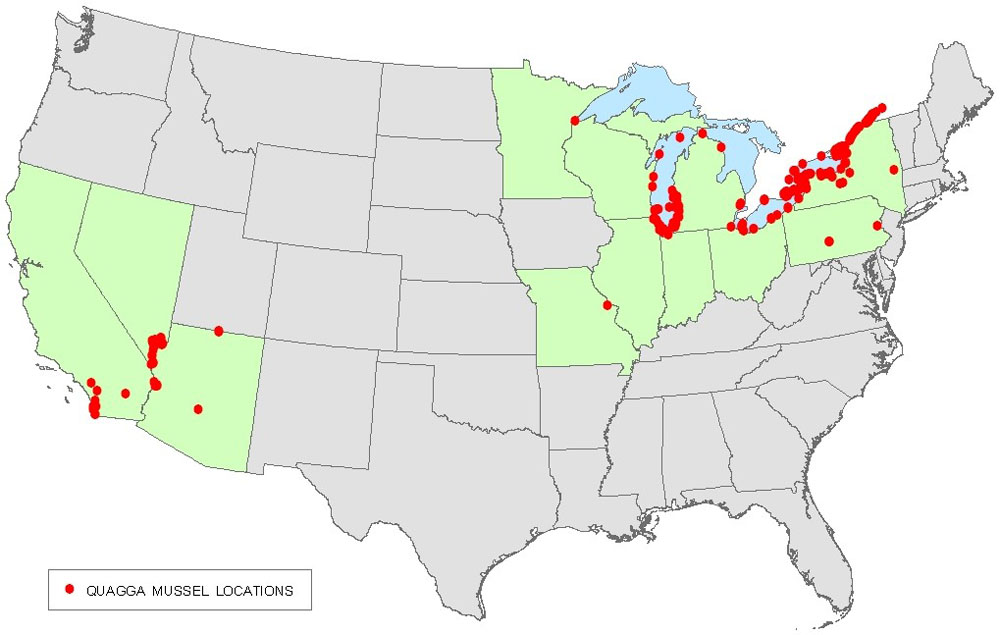
Map showing distribution of quagga mussels in United States

Map: Wikimedia Commons

Idaho Department of Game and Fish conducted a fish population survey last week to help them respond to inevitable fish kills as a result of the treatment. The department may also translocate adult fish after the treatment and stock hatcheries if needed.

“Biologists will be monitoring the effects of this unprecedented treatment and working to determine the best course of action afterward,” the department said in a press release

Meanwhile, Idaho’s neighboring states are now on high alert.

Oregon Department of Fish and Wildlife’s Rick Boatner told Columbia Insight the department has increased sampling in certain water bodies and is increasing inspections of watercraft coming from the Twin Falls area.

Washington’s Department of Fish and Wildlife said in a blogpost the agency is redirecting staff and increasing watercraft inspections along its portion of Snake River.

Wyoming has also upped its watercraft inspections.

By |2026-02-20T11:36:49-08:0010/10/2023|Rivers|1 Comment

Historic change: Facing drought, legislators impose water limits on livestock

Under a new law, dairy and confined cattle operations in Oregon will no longer have unlimited access to water

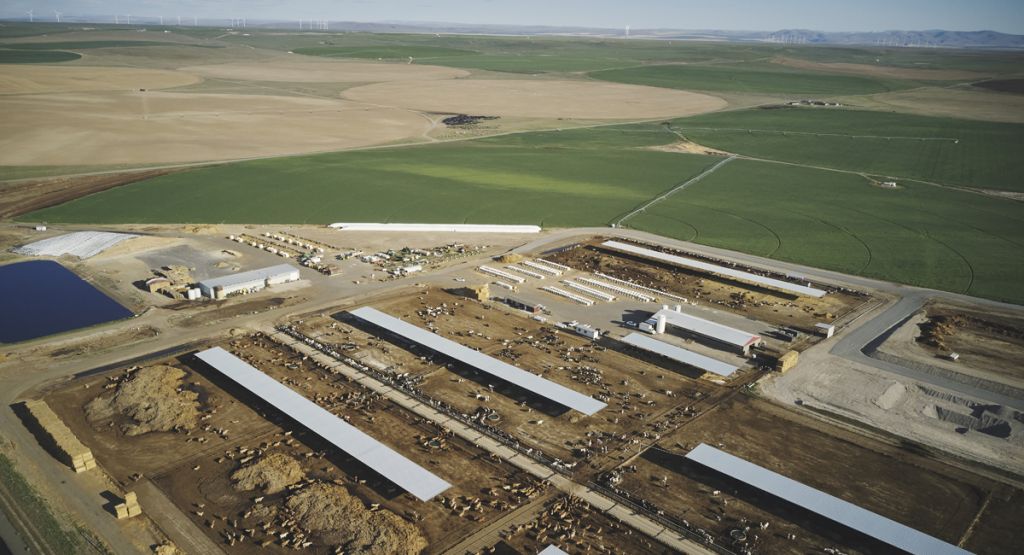
Meenderinck Dairy

Running dry: Despite being home to four of Oregon’s seven Critical Groundwater Areas, the Lower Umatilla Basin has become a magnet for mega-dairies, such as Meenderinck Dairy (pictured). Oregon is changing the rules on how much water large livestock operations are entitled to use. Photo: NASHCO

By Kendra Chamberlain. July 13, 2023. Large livestock operations will face stricter water rules in Oregon under a bill passed by state lawmakers earlier this year, in the wake of controversies surrounding the now shuttered mega-dairy Lost Valley Farms

Oregon Senate Bill 85 aims to impose tighter water regulations for new Confined Animal Feeding Operations (CAFOs), a term that’s usually applied to meat, dairy and egg farms.

Under the bill, new and expanding CAFOs will no longer have unlimited access to water to support their livestock operations and will need to submit detailed water supply plans to regulators as part of their permit applications.

New CAFOs will also need to secure appropriate water rights to support their operations.

The bill is currently awaiting the signature of Gov. Tina Kotek. She is expected to sign the bill into law.

State Sen. Jeff Golden (D-Ashland) said drought was one of the primary drivers of the bill. 

“It’s bad. It’s very likely gonna get worse,” Golden told lawmakers during a Senate Rules Committee meeting in April. “Farmers in many of our districts are losing their yearly crops and, in some cases, their farming business altogether. We have wells going dry, we have more and more ag operators getting cut off by their irrigation districts.

“When a farmer dealing with that learns that Oregon has a sector of very large livestock operators that get to pump literally unlimited amounts of groundwater, and asks me why—I don’t quite know what to answer.”

Under the current law, CAFOs are able to use unlimited amounts of water to give to livestock as part of a “stockwater exemption.” 

That’s a privilege no other agriculture sector is afforded in the state, said state Sen. Michael Dembrow (D-Portland) during the April Senate Rules Committee meeting. 

“Those requirements really were generated at an earlier time when we weren’t as concerned about the state of our groundwater,” said Dembrow. 

Legacy of Lost Valley Farms debacle

Under the new law, the stockwater exemption will be capped at 12,000 gallons of water per day for new or expanding CAFOs. Those entities will be required to outline to state regulators where they plan to source the rest of the water needed to run their operations.

Existing CAFOs will be grandfathered in under the stockwater exemption but will need to file water supply plans over the next year when renewing their existing permits. 

The stockwater exemption rules are set to sunset in September 2027.

“We know that there are going to be a lot of conversations going on around water over the next few years,” Golden said, referencing the sunset. “So it makes sense to both leave space for that conversation, but also bring some exigency [to that conversation].”

“We have wells going dry, we have ag operators getting cut off by irrigation districts.” —Sen. Jeff Golden

The bill also requires new and expanding CAFOs to follow stricter rules around how they dispose of wastewater. 

“It’s really designed from the lessons that we learned after the Lost Valley [Farms] experience in 2017-2018,” Dembrow told lawmakers during the Senate Rules Committee meeting.

Lost Valley Farms was a 30,000-cow dairy operation that opened in 2017. In just a year and a half, the operation faced nearly $200,000 in penalties from the Oregon Department of Agriculture for violations related to waste mismanagement.

“They started operating before they had secured adequate water rights. The infrastructure that they built was inadequate to prevent contamination to the aquifer,” said Dembrow. 

Jersey cows

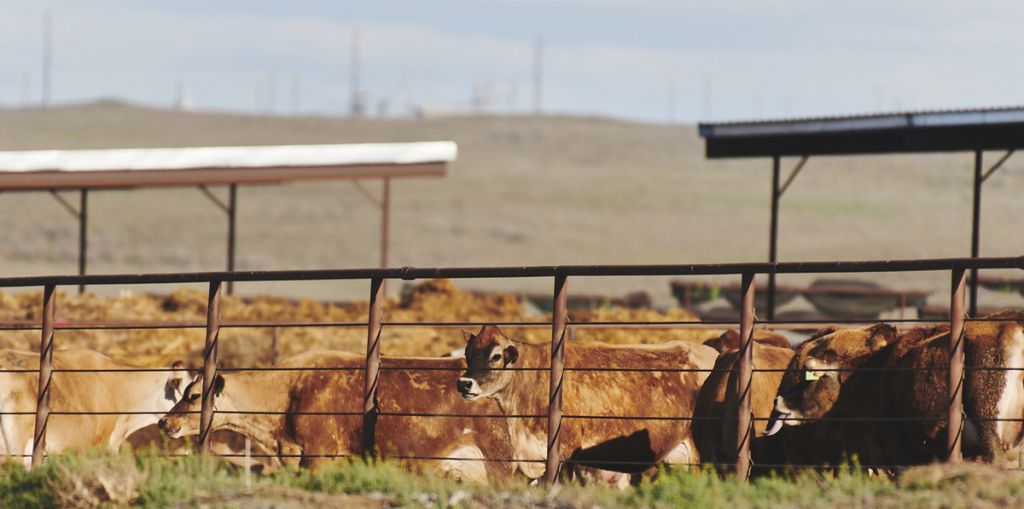
Drinking problem: As aquifers dry up, Oregon lawmakers are imposing unprecedented water limits on “confined animal feeding operations.” Photo: NASHCO

Under the new law, state regulators will no longer issue certain water quality permits to new CAFOs in groundwater management areas, nor will regulators issue permits to new CAFOs located within half a mile of fish-bearing streams.

The bill’s trajectory through the state legislature reflects steep opposition voiced from the agriculture sector.

SB 85 is the evolution of earlier legislative attempts to place a moratorium on new CAFOs in the state.

After three days of public hearings held on proposed moratoriums earlier in the legislative session, lawmakers worked with the agriculture sector on SB 85 as a compromise. 

“I’ve had more meetings than I think I can count with key stakeholders and our regulatory agencies … and the governor’s office to decide what the most constructive path through this challenge would be,” Golden told lawmakers in April. “We decided that a moratorium was not that path. This is a tough issue to solve now, and there’s no good reason to think it’d be much easier after a moratorium.”

Given current trends, those meetings and decisions are only going to get tougher. SB 85 could well represent just the first step in a complete reassessment of water allocation policies across the state and Columbia River Basin.

By |2024-10-04T13:03:09-07:0007/13/2023|Water|0 Comments

Are environmental impacts of new Portland Water Bureau filtration plant being overlooked?

The Bull Run Filtration Project near Oxbow Park has passed compliance milestones, but locals are questioning the legitimacy of the city’s environmental assessment

Bull Run Water Filtration plant artist rendering

New neighbor? The Portland Water Bureau has rendered images of its Bull Run Water Filtration Project. Locals see a less friendly picture. Image: City of Portland

By Kendra Chamberlain. June 22, 2023. A group of residents are raising alarm bells about a proposed water filtration plant that they say could damage local watersheds, disrupt wildlife and possibly hurt endangered species populations. 

Portland Water Bureau (PWB) has plans to build a 135-million-gallon-per-day water filtration plant on a piece of farmland outside Portland, along the Multnomah-Clackamas county line.

The plant will treat water piped from the Bull Run Lake for Cryptosporidium and other contaminants before being delivered to customers in the Portland metro area.

The nearly $1.5 billion project has received a $727 million loan from the EPA’s Water Infrastructure Finance and Innovation Act (WIFIA) program.

Lauren Courter and her husband, Ian, both scientists and co-founders of the consultancy firm Mount Hood Environmental, fear PWB has downplayed the environmental impacts of the project to local and state government officials and the EPA in hopes of seeing the plant built. The duo are part of a coalition of local residents, community organizations and local commercial associations that oppose the project. 

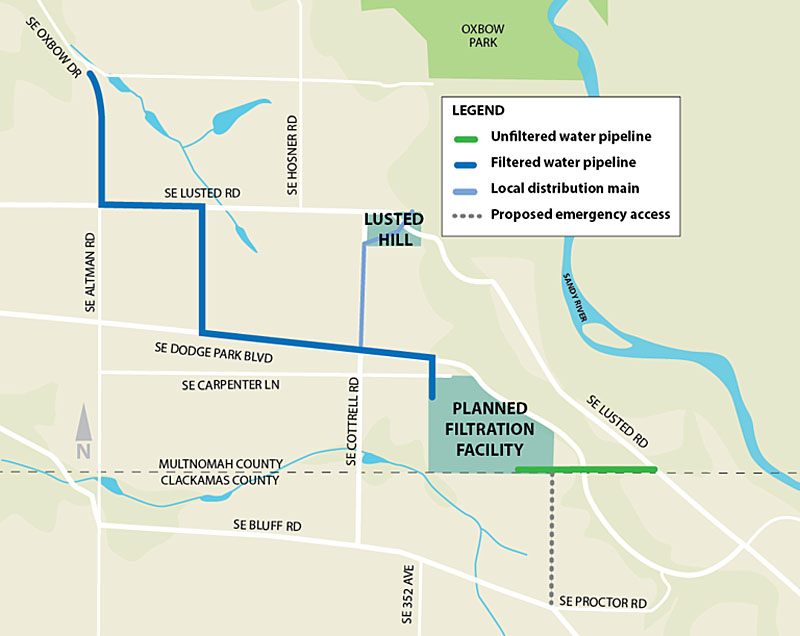
Project map showing the location of the planned water filtration facility and pipelines.

Project map showing the location of the planned water filtration facility and pipelines. Map: City of Portland

The water filtration plant, which is awaiting approval from Multnomah County, would be built on a parcel of land that butts up against the Courter’s home. The site, which PWB has owned since the 1970s, is surrounded by nurseries and was previously leased to a tree nursery. 

Christopher Bowker, PWB’s Treatment Projects Compliance and Environmental Coordinator, told Columbia Insight the bureau considered a variety of site options, “knowing that this is going to be a difficult conversation.” 

PWB ultimately decided on the location based on factors such as proximity to existing infrastructure, lot size and elevation.

Bowker said the elevation consideration was key to the project, to ensure that PWB can rely on gravity flow to help deliver the water down to Portland. 

“The site that we ended up at ranked really well on all these different criteria,” Bowker said. 

Cost, controversy

The proposal has been controversial from the get-go.

Critics have pointed out that the current proposal was one of the most expensive options that PWB considered.

And the price of the plant has steadily climbed over the past five years. The cost for the plant in 2017 was projected to be $500 million, but the estimate was steeply revised the following year when it was discovered that the initial estimate did not include the piping infrastructure needed to get the water to and from the proposed site.

The project is currently estimated to cost $1.5 billion, 200% more than the initial estimate. 

Location of planned Bull Run Water Filtration plant

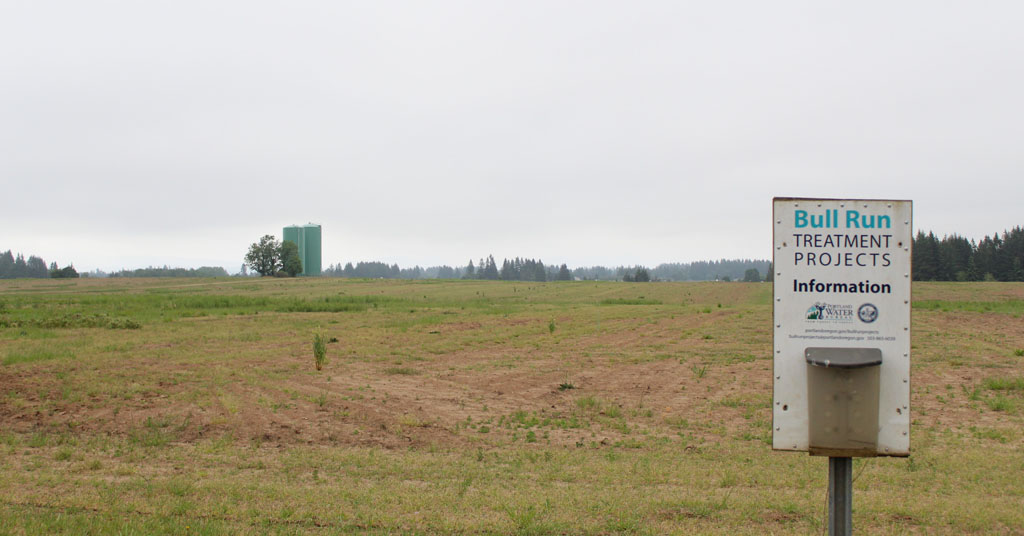
Land use questions: Where’s the line between shrinking habitat and increasing industrial development? Photo: Kendra Chamberlain

Local residents are concerned that the project and its construction, which will involve hundreds of thousands of heavy truck trips down narrow county roads, could pose safety risks to the neighboring communities and the nearby school.

Earlier this year, the Gresham-Barlow District School Board adopted a resolution opposing the project’s location.

The local Multnomah County Fire District #10 compiled its own report outlining its concerns with the project, and ultimately adopted a resolution recommending denial of the proposed plant. 

Determining environmental impact

The proposed site is situated alongside the headwaters of the Johnson Creek and is in proximity to the Sandy River, a designated Wild and Scenic River. The Sandy River is also designated as a state scenic waterway and critical habitat for federal Endangered Species Act listed species.

The entire area is designated habitat and water resources of Significant Environmental Concern for Multnomah County.  

Lauren and Ian Courter said they believe the environmental impacts of the project were downplayed in the City’s applications to both the county and the EPA.

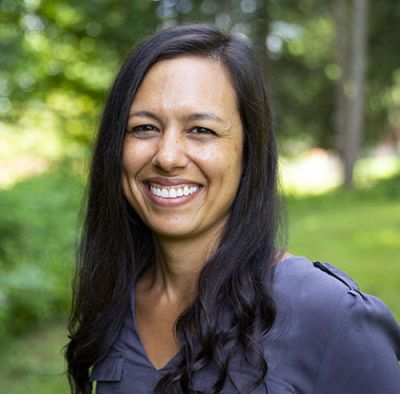
Lauren Courter is a founding scientist with Mount Hood Environmental.

Lauren Courter is a founding scientist with Mount Hood Environmental. Photo: MHP

PWB completed a Programmatic Environmental Assessment (PEA) questionnaire for its EPA WIFIA application. The WIFIA PEA is a National Environmental Policy Act-compliant assessment tool that enables an entity to complete a project without going through the lengthy NEPA Environmental Impact Statement process, which often takes a couple years and rounds of public input to complete—if the PEA determines the project will have no significant environmental impact

The PEA questionnaire asks the applicant whether the project will have significant impacts on environmental issues such as jeopardizing the continued existence of any threatened or endangered species; or modifying, fragmenting or degrading critical habitat or biologically sensitive areas.

PWB’s application determined the project would have no significant impact across those environmental parameters.  

The Cottrell Community Planning Organization (CPO) compiled a rebuttal document to the City’s PEA questionnaire. The rebuttal document pulls in state maps of endangered species ranges and habitat, as well as game habitat and water resources that could be impacted by the plant and the pipelines running to and from it. 

Lauren Courter, who also serves as secretary to the Cottrell CPO, said she doesn’t think the assessment was thorough enough. 

“They hired a consultant to come out and for a couple hours, they walked around a property and they’re like, you don’t see anything, and so no significant impact,” Courter said. “You know there’s more to that story.

“It’s mind blowing. You’re going to put in a 100-acre facility here—in an area where there’s the headwaters of the Johnson Creek, the Wild and Scenic Sandy—and you’re not going to do an impact analysis of any kind? You’re just gonna leave it up to the applicant to show that there is no significant impact?”

Columbia Insight asked PWB how the PEA was completed. Bowker said the EPA “led the process,” which included reviewing the PEA questionnaire responses and the supporting documentation. 

“Those are pretty robust reviews that are performed. It was about a 10-month review period, so quite in depth,” Bowker said. “During that time, they have staff who are going through [and] reviewing the documentation that we’ve submitted; they’re asking followup questions if they didn’t receive what they needed to see. They’re really reviewing the environmental impacts.” 

An EPA spokesperson confirmed to Columbia Insight the 10-month review period for this project involved “financial, technical and environmental reviews of the project,” which included a NEPA review and a review of the appropriate consultations with U.S. Fish and Wildlife Service under the Endangered Species Act. 

The spokesperson also said that the WIFIA PEA does not require any additional public notice or a public comment period. 

Contradictions about ESA-listed species

Ian Courter, who is a fish biologist, is particularly concerned about the project’s treatment of ESA-listed fish species that are present in the Johnson Creek. 

“The WIFIA folks had no idea that there are coho salmon [and] steelhead that use this creek right here,” he said, referring to Johnson Creek. “Their species analysis didn’t include the most prominent keystone species for the region. How do you miss that? You’d think that would be number one. Instead, it’s not even on their list.”

A 2020 report on the project, produced by Brown and Caldwell and Associated Firms, on behalf of the City, notes that “In its lower reaches, Johnson Creek supports coastal cutthroat trout and winter-run adult steelhead among other sensitive and listed species,” but adds that “current conceptual site plans for the filtration facility show no development near these waterways.” 


The land use application also notes PWB and its design team “have made significant efforts to avoid or mitigate any potential risks to Johnson Creek water quality and habitat.” 

Ian Courter said that Johnson Creek also supports coho and chinook salmon and rainbow trout, which were not mentioned in the 2020 report. 

“We have repeatedly seen these types of vague and often flawed explanations from PWB and their contractors,” Ian Courter wrote in an email to Columbia Insight. “They never confirmed [the] presence [or] absence of these fish species in the headwater areas of Johnson Creek adjacent to their proposed construction site. They’re also ignoring impacts to fish downstream due to water quality.

“This project will result in siltation of the stream, particularly during construction, and increased risk of chemical contamination as long as the facility is in operation. These acute risks are not acceptable because federally protected salmon and trout are already struggling to persist in Johnson Creek.”

Ian Courter is a founding scientist with Mount Hood Environmental

Ian Courter has led anadromous fish studies throughout the Pac NW. Photo: Mount Hood Environmental

Columbia Insight reached out to U.S Fish and Wildlife Service with questions about the 

PEA process and how it was completed for this project. A spokesperson for USFWS said PWB used FWS’s Information for Planning and Consultation (IPaC) website “to input their project location and get an autogenerated list of species that could potentially occur in the project location.” The list included eight species, none of which are fish. 

The FWS spokesperson said the biologist who worked on the project had since retired, but said the service used aerial maps, knowledge of what constitutes suitable habitat, species location information from FWS files, surveys conducted by PWB’s consultants “and our own staff reconnaissance as necessary” to determine that no ESA-listed species were present at the site.

USFWS also determined that the project would not alter the hydrology of the nearby water resources in a way that would impact any ESA-listed fish species. 

PWB is awaiting final approval for the project from Multnomah County. That hearing will begin June 30.

Lauren Courter said that if the project is approved by the county, the Cottrell CPO plans to appeal the decision to the state Land Use Board of Appeals. 

By |2023-07-12T13:58:05-07:0006/22/2023|Land Use, Public Lands|2 Comments

Amid Deschutes drought, farmers and frogs struggle to share water

In Central Oregon “there just isn’t enough water to go around.” Managers, users and enviros must hash out tough compromises

North Unit Irrigation District, Central Oregon

Intractable? In Jefferson County, the North Unit Irrigation District is a part of a consortium of eight irrigation districts and municipalities that collaborate on critical issues facing Central Oregon water users. Photo: NUID

By Kendra Chamberlain. March 30, 2023. Farmers in Central Oregon are looking at another bad water year.

The Deschutes river basin is entering its fourth year of drought and as snowpacks have failed to materialize over the last few winters, both farmers and wildlife are struggling to survive. 

“I’ve seen—since 2019—this downward trend in our water supply,” says Mike Britton, executive manager of the North Unit Irrigation District in Madras. “The last four or five years are what we consider dry years. Historically, we’ve seen, you know five, 10 years of good water years and then a few years of dry years—it’s cyclical like that. But in this case, that cycle hasn’t broken. Something is changing.”

The drought has forced water managers to strike a delicate balance between diverting water to irrigators for crops and pastureland, and keeping enough water in the river to preserve what’s left of the riparian and wetland ecosystems that line the Deschutes.  

There are currently four aquatic species in the Deschutes basin that are being threatened by the drought, habitat degradation and the river’s managed flows—and there are hundreds of farms that depend on water diversions for their livelihood.

The question is whether there will be enough water over the next 30 years in the basin to support both. 

Demise of Oregon spotted frog

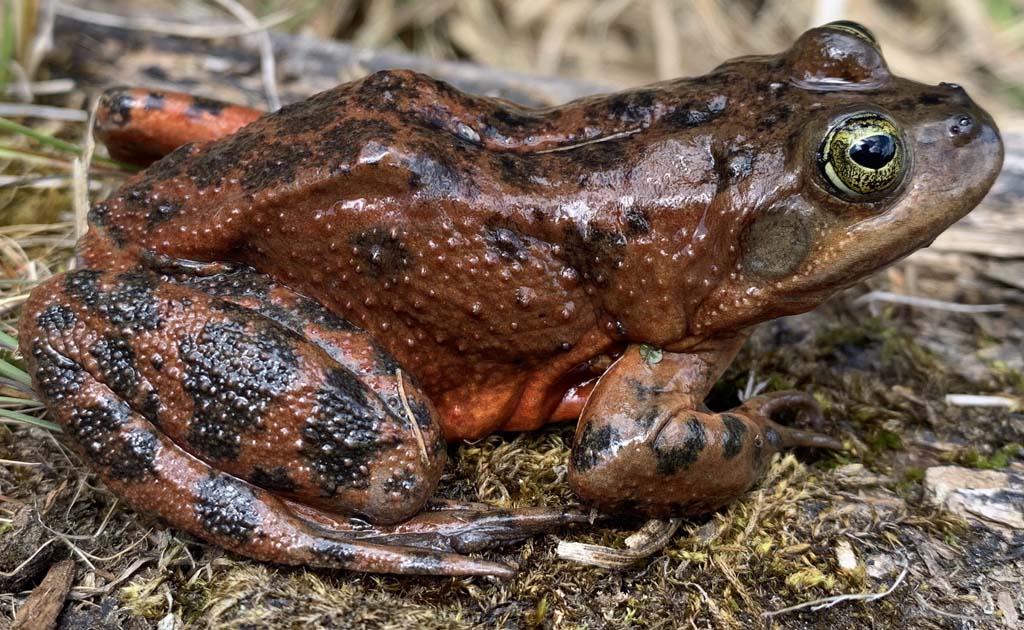
The Oregon spotted frog, named for the black spots that dot the frog’s back, was once prolific in wetlands and riparian habitats from British Columbia down to parts of California.

But the species has seen 90% of its habitat destroyed, most of that in the last 50 years, according to Meg Townsend, senior attorney at the Arizona-based Center for Biological Diversity.  

“I live in Portland, and I’m well aware that a century ago you could have seen the Oregon spotted frog everywhere around here, including in the Willamette Valley—where it’s now completely gone,” says Townsend.

Oregon Spotted Frog

Tough going: Oregon spotted frog. Photo: USGS

The species was the first ever to be emergency listed as endangered in Canada in 1999.

In the United States, the frog was identified as a candidate for listing in 1991, but it wasn’t until litigation brought on by the Center for Biological Diversity that the species was listed as threatened in 2014.

“The Upper Deschutes is really considered one of the frogs’ last strongholds,” says Townsend. 

The Oregon spotted frog is an aquatic frog, meaning it completely relies on river and wetlands to survive. After a hundred years of human manipulation of flows in the Deschutes, the frogs are struggling.

“Certain populations of Oregon spotted frog below the Wickiup Reservoir have been identified as important to protect—not just to make sure that the frog doesn’t go extinct, but to make sure it can recover and then be taken off the endangered species list altogether,” says Townsend. “If we don’t restore the habitat for the populations of frogs that live between Wickiup Dam and Bend, the frog may not have a chance of survival at all.”

Problems with irrigating an arid basin

Central Oregon’s geology makes the soils surrounding the Upper Deschutes ideal for farming, despite the arid conditions.

In the early 20th century, the uniform and constant flow of the Deschutes River gave settlers a reliable water source to support extensive irrigation.

As in most of the West, water rights in the area were doled out to settlers first come first serve, and were later adjudicated in a lengthy legal process.

The areas around Bend and Redmond, which were settled first, received the senior water rights in what’s now the Central Oregon Irrigation District (COID)—and at the time those communities were largely rural and agrarian, says Kyle Gorman, region manager at the Oregon Water Resources Department.

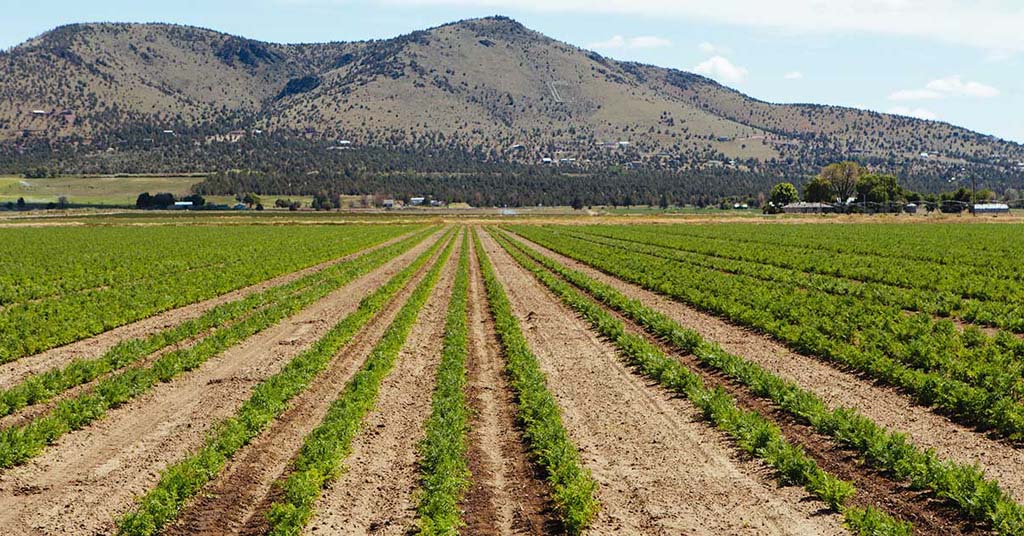
Carrot Farm in Culver, Oregon

Field and stream: Carrot farm in Culver, Oregon. Photo: NUID/Marissa Hossick

The North Unit Irrigation District (NUID), however, which today is economically dependent on its agricultural production, wasn’t formed until after that adjudication process, which means farmers in the area around Madras have the most junior water rights on the Deschutes, and consequently receive the least amount of water in dry years.

That mismatch of rights status is “one of the great ironies of the basin,” says Gorman. 

“The folks that are trying to make a living growing food and material for sustaining all kinds of industry have the most junior priority date and the least secure water supply,” he says. 

Today, the Deschutes supports some 120,000 acres of farmland, ranches and residences.

Together, COID and NUID account for more than 80% of the water diverted from the river.

Under normal water conditions, COID diverts roughly 300,000 acre-feet to irrigate 45,000 acres of land, according to a 2017 report from the nonprofit Headwater Economics. But NUID diverts just 188,000 acre-feet of water to irrigate nearly 60,000 acres.

But the geology of the area has also led to incredibly inefficient diversions. The open-air ditches and porous ground conditions lead to huge transmission losses when moving water from the river to the irrigation districts. NUID can lose up to 60% of its water in diversions in low water years like last year.

“For example, we diverted 110,000 acre-feet at Bend and we delivered 36,000 acre-feet to irrigators,” says Britton. “That’s a lot of loss. The bottom falls out with the less amount of water you can deliver. It hurts and hurts in different ways.”

Water management over the last century has dramatically transformed the river’s shape and flows. Diversions on the river peaked in the 1950s, says Gorman, when the area experienced a series of unusually wet years. 

“Virtually all the water that flowed from the Upper Deschutes was diverted at Bend,” says Gorman. “At times, the flow of the river [past Bend] was close to zero.”

At that time, there was no legal standing for keeping water in the river for the river’s sake. On the contrary, says Gorman, there was incentive to remove as much water from the river as possible. 

“There was what we call a gentleman’s agreement to allow not more than 30 cubic feet per second to pass over North Canal Dam,” he says.

Those changes to the river’s natural flow have triggered a cascade of other issues over the years: the wetlands become disconnected from the river during low periods, and high flows in summer have widened the channel, scouring the banks of its vegetation. Invasive animals and plants have moved in, while some of the river’s native species—including the Oregon spotted frog—are struggling to survive amid degraded habitat and new predators. 

“This really is the crux of the issue—how the Upper Deschutes has been managed really is the complete opposite of how a river should flow,” says Townsend. “It’s really been turned upside down.” 

Keeping water in the river

Prior to colonization, the Deschutes Basin was home to the peoples that now make up the Confederated Tribes of Warm Springs (CTWS).

In the Treaty of 1855 with the U.S. government, the Tribes ceded the land where the cities of Bend, Redmond, Madras, Tumalo, Sisters and Prineville were later built.

But the tribes still hold enforceable rights for the majority of the Deschutes Basin. The CTWS’s water rights were further settled in 1997, and include instream flows in the Deschutes River for the benefit of the riparian ecosystem and its wildlife within the CTWS reservation.

Robert Brunoe, Branch of Natural Resources general manager at the CTWS, spoke about the CTWS’s water rights in a February 2023 seminar held by the Deschutes River Conservancy. 

“Creator gave us gifts in order,” Brunoe told the audience. “And the first thing he gave us—or she gave us—was water. We’re supposed to take care of that water, protect that water and make sure it’s there for future generations.”

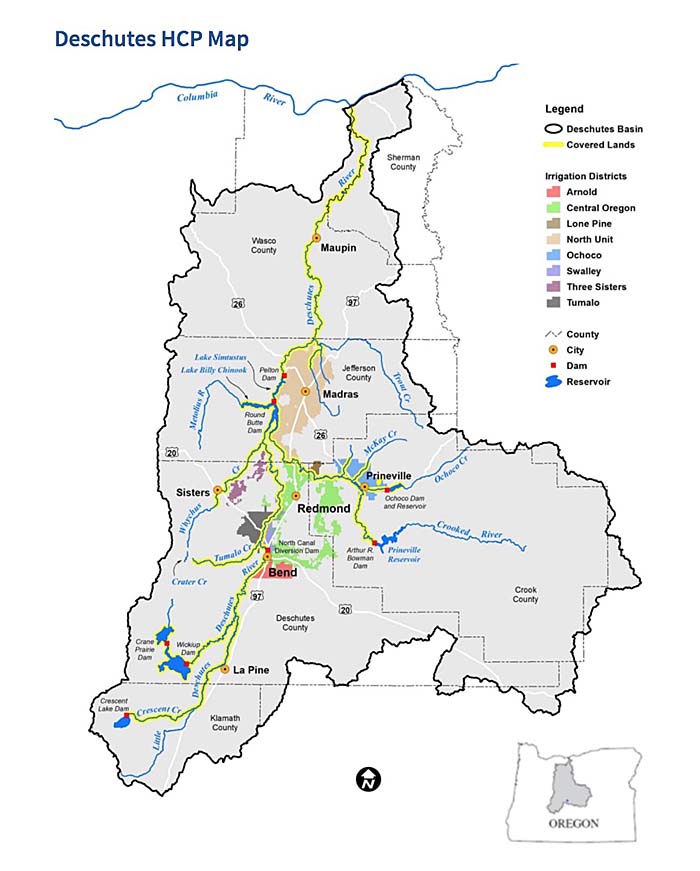
In 2008, the eight irrigation districts and the city of Prineville, along with the Confederated Tribes of Warm Springs and other stakeholders, developed a habitat conservation plan (HCP) to address the damage being done to the river’s ecology and the species that rely on it. In 2020, the plan was approved by the U.S. Fish and Wildlife Service. It outlines a series of adjustments in water management that aim to mitigate some of the damage done to the river’s ecosystems, including increasing the winter flows, which could help the Oregon spotted frog’s chance at survival. 

Deschutes Habitat Conservation Plan Map, central Oregon

Deschutes Habitat Conservation Plan Map: USFWS

The plan would see North Unit increase winter flows from the current 100 cubic feet per second (cfs) to 300 cfs in the first 10 years of implementation, and aims to reach 400 to 500 cfs at the end of a 30-year period.

The HCP also outlines further water management adjustments among other irrigation districts and the city of Prineville to help the threatened fish species. 

The plan is far from perfect. The CTWS expressed concerns that increased winter flows in the Upper Deschutes might negatively impact other fish species that are endangered in the river, such as the bull trout and the Middle Columbia River (MCR) steelhead.

In a 2019 filing to the U.S. Fish and Wildlife Service, the CTWS stated the HCP and related environmental impact statement “prioritize the needs of the Oregon spotted frog at the expense of other covered species, specifically the covered fish species—including Chinook salmon, the bull trout and MCR steelhead—and other tribal trust resources.”

“By failing to consider the Deschutes Basin from a holistic perspective, the [draft environmental impact statement] and HCP run afoul of the 1855 Treaty, the federal-tribal trust relationship, the ESA, the National Environmental Policy Act and applicable secretarial orders and agency policies,” the filing said. 

CTWS did not respond to a request for comment on this story. 

Townsend said the promised increased winter flows may not even be enough to ensure the frog’s survival. The Center for Biological Diversity released a notice of intent to sue the U.S. Fish and Wildlife Service earlier this year for approving the plan, which the organization argues doesn’t go far enough to support the remaining frog populations—and, in fact, runs counter to some of Fish and Wildlife Service’s own science regarding the frog’s recovery.

Townsend points out that the 400-500 cfs winter flow target promised in the HCP falls short of the 600 cfs minimum winter flows that USFWS had determined in 2017 were required for the frog’s recovery. 

So far, NUID hasn’t been able to make much progress in bringing those flows up.  

“We’re three years into the HCP and they’re only getting five cfs above where we were in 2020,” says Townsend. “It’s really difficult to see how this plan will ever get to 300 cfs.”

Re-thinking water policy

All told, the HCP, the drought and the district’s most junior water rights have left NUID in a difficult position.

But Britton says the district is taking strides in water conservation efforts in order to meet the HCP requirements and also deliver more water to its irrigators.

The district is working on an infrastructure modernization project to pipe its irrigation ditches, which will reduce the district’s transmission losses.

The district is also part of a pilot water bank program, now in its second year, that would help redistribute some of the water from other districts to North Unit. 

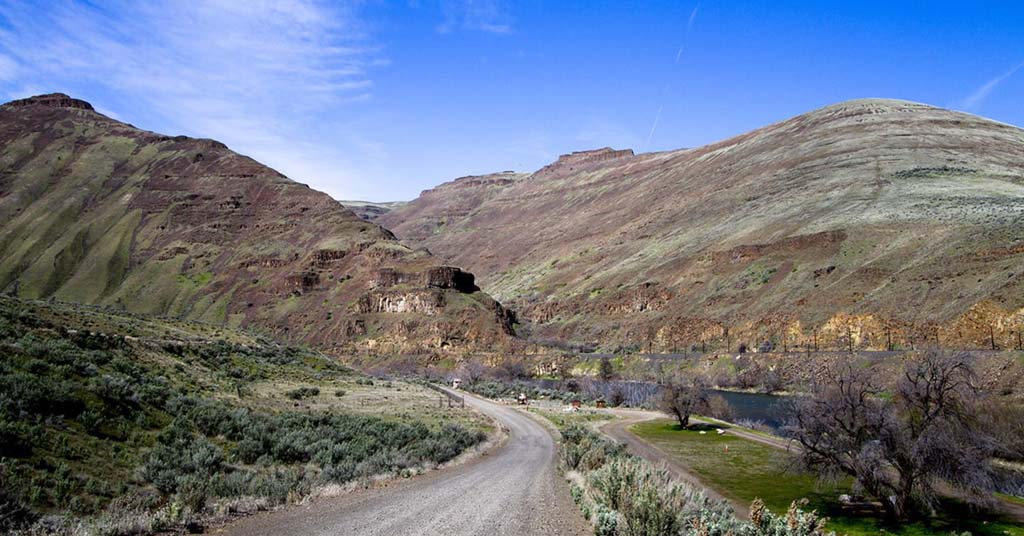
Lower Deschutes River Back Country Byway, Central Oregon

Paddle pusher: The Lower Deschutes River Back Country Byway provides access to the scenic and recreational wonders of the area. Photo: BLM

Britton says NUID is also part of an effort to tweak the state’s water law in order to accommodate water transfers between farms. 

“The conservation projects we are pursuing, in-district and with outside partners, will conserve enough water [to] meet minimum flow requirements,” Britton said in an email. “We remain optimistic we’ll meet those goals.”

In the meantime, the Center for Biological Diversity is hoping to get more specific answers on how the irrigation districts will deliver on the promises made in the HCP. 

“The reality is there just isn’t enough water under the current scheme to go around,” says Townsend. “Everybody needs to come together and to re-think how water is managed in Central Oregon.”


By |2023-09-28T08:19:49-07:0003/30/2023|Agriculture, Rivers, Water|0 Comments

© Copyright 2013-2025 Columbia Insight. All Rights Reserved.

As a 501(c)3 nonprofit organization, all donations to Columbia Insight are tax deductible to the full extent of the law. Our nonprofit federal tax-exempt number is 82-4504894.