Stay Updated Subscribe today for the latest research + reporting about environmental news. Subscribe Now

Stay Updated Subscribe today for the latest research + reporting about environmental news.

Subscribe Now

Jurgen Hess

Jurgen Hess

Jurgen Hess

About Jurgen Hess

Jurgen Hess is a photojournalist specializing in wildfire photography. He is a member of the Columbia Insight Board of Directors.

Hanford Site cleanup effort hits milestone

Progress is slow, but successful tests at the most polluted site in the Western Hemisphere are encouraging
hanford Site

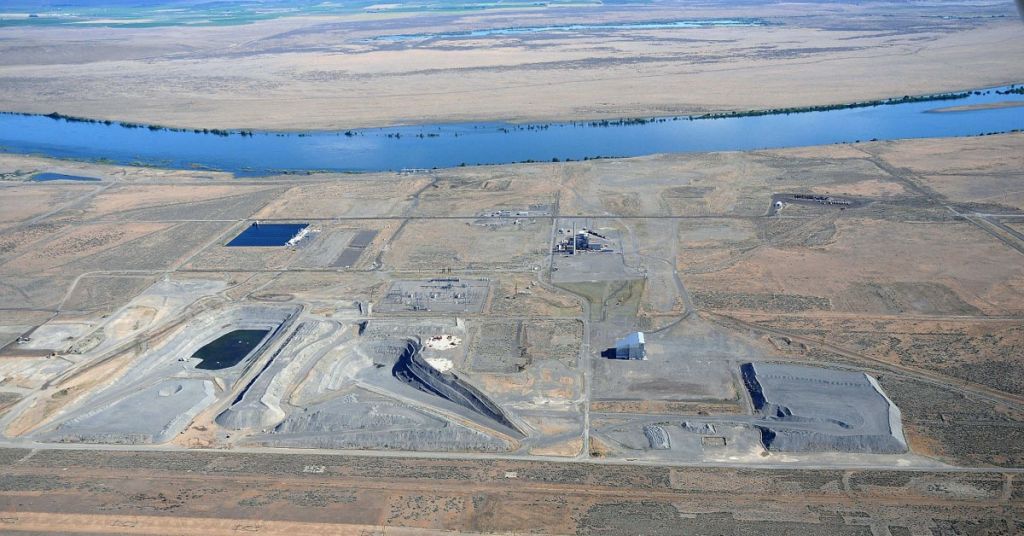
The Hanford Site’s 568 square miles include this hexavalent chromium dig site undertaken to protect groundwater and the Columbia River. Photo U.S. Department of Energy

By Jurgen Hess. September 23, 2021. From the outside, the long and convoluted process of cleaning up the decommissioned Hanford nuclear site in southeastern Washington can seem endless almost to the point of hopelessness.

But a pair of milestones achieved this past summer in the ongoing cleanup saga at Hanford Site is worth knowing about.

In May, the U.S. Department of Energy (DOE) announced the site’s Vitrified Low-Activity Waste Facility, known on-site as the Vit Plant, had successfully completed an “effluent management facility” test.

In June, the agency announced a major, remote-controlled crane that handles nuclear-waste canisters had also passed an operating test.

Hanford low activity waste crane

Used to move low-activity-waste canisters, this remote-controlled crane is now in operational order. Photo DOE

Together, the achievements mark important steps toward the goal of creating vitrified nuclear waste at Hanford by 2023.

Conducted remotely by technicians in a control room, the vitrification process at Hanford mixes radioactive waste with sand and other materials. Over a two-month period, the mixture is heated to 2,100 degrees Fahrenheit, a process that melts the sand.

Hanford low acitivity waste canister

Liquified waste will flow from massive melters into these storage canisters. Photo DOE

The radioactive liquid is then poured into 7-foot-tall, 4-foot-diameter stainless steel canisters that when filled weigh more than seven tons.

As the liquid cools the mixture forms a solid and stable radioactive glass material.

Once online, a pair of 30-ton melters at the Vit Plant are expected to fill 1,100 canisters a year. The canisters will be stored at the Hanford site forever.

Testing is carried out to ensure equipment and systems are functional and in safe working order.

All of this is welcome news at a site with a checkered history.

Toxic legacy

Plutonium production began at Hanford in 1943. Initially, the plutonium was used to build the atomic bomb dropped by the United States on Nagasaki, Japan, on Aug. 9, 1945, effectively bringing an end to World War II.

After World War II, Hanford shifted to a Cold War footing, eventually occupying 586 square miles. At its peak, nine reactors were creating most of the plutonium used in the U.S. military’s nuclear arsenal.

The last of Hanford’s reactors ceased operation in 1987, ultimately claiming a key role in the Cold War victory, but leaving behind an unprecedented legacy of environmental pollution.
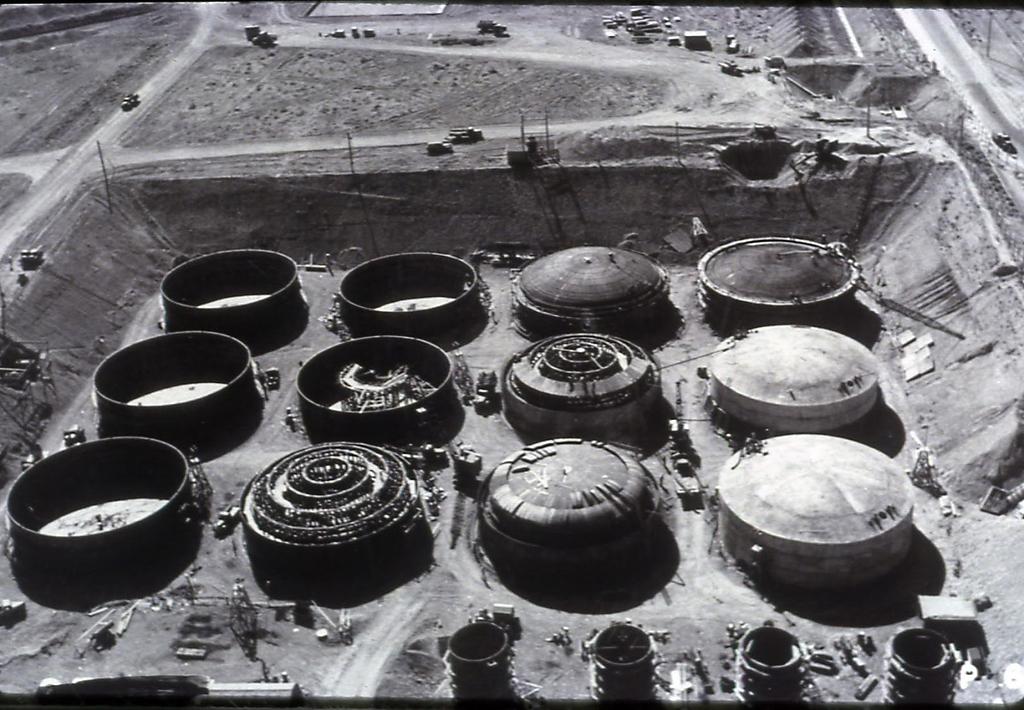
Hanford nuclear waste tanks-WWII

Constructed during WWII, B Tank Farm was covered with soil to contain radioactivity. The tanks are now leaking. Photo DOE

During Hanford’s four-decade-long heyday, 450 billion gallons of radioactive waste were dumped on the site’s arid shrub-steppe adjacent to the Columbia River. That’s an amount equal to the volume of 682,000 Olympic-sized swimming pools.

With 56 million gallons of radioactive waste stored in 177 leaking underground tanks, Hanford is now regarded as the most toxic site in the Western Hemisphere.

Some liquids have been pumped from single-wall to double-wall tanks, which more effectively contain waste, but a mess of radioactive sludge remains in leaking tanks.

Hanford nuclear waste plume entering Columbia River

Chart indicates strontium-90 radioactive waste plume entering Columbia River at Hanford 100-N site. Photo by Jurgenhessphotograph.com

Plumes of tritium, chromium, strontium-90 and uranium have reached the Columbia River.

In 1977, the DOE took over administration of what is now officially called the Hanford Site. The 1989 Tri-Party Agreement between the DOE, U.S. Environmental Protection Agency and Washington State Department of Ecology governs cleanup of the site, defining roles and responsibilities.

In a 2019 study, the DOE predicted total cleanup costs at Hanford Site would range from $323.2 billion to $677 billion, with DOE continuing an active role until 2095.

The agency has spent about $2.5 billion per year on cleanup. Total personnel involved with the cleanup ranges between 8,000 and 12,000 workers.

Slow going

Waste from leaking tanks is treated by Hanford’s $548.4 billion Waste Treatment Plant (WTP). The WTP has four main facilities: High-Level Waste Vitrification Facility, Radioactive Waste Pretreatment Facility, Analytical Laboratory and Low-Activity Waste Facility (Vit Plant).

The Vit Plant is intended to treat 90% of the 56 million gallons of waste stored in the underground tanks.

Its startup is both symbolic of progress being made and a major step in cleaning up Hanford. But it’s nothing close to an immediate fix.

“While it’s great that startup is close, it will likely take more like 40 years to treat all the low-activity waste,” says Jeff Burright, an Oregon Department of Energy radioactive waste remediation specialist.

Former Oregon DOE Administrator Ken Niles says the cleanup has “never felt closer, yet the end is farther away.”

Dan Serres, conservation director and Hanford Site technical expert with Columbia Riverkeeper, has complained that the DOE’s cleanup schedule is too slow to protect soil and groundwater from tank leaks.

Faster fix?

Even as startup of the Vit Plant appears on the horizon, the DOE is studying a cheaper method of stabilizing low-activity waste by using a cementitious grout mixture.

The grout method could potentially save money and stabilize waste faster, but it requires further study. Although the National Academy of Sciences has analyzed the method, the Oregon DOE wants more information about the concept before getting on board.
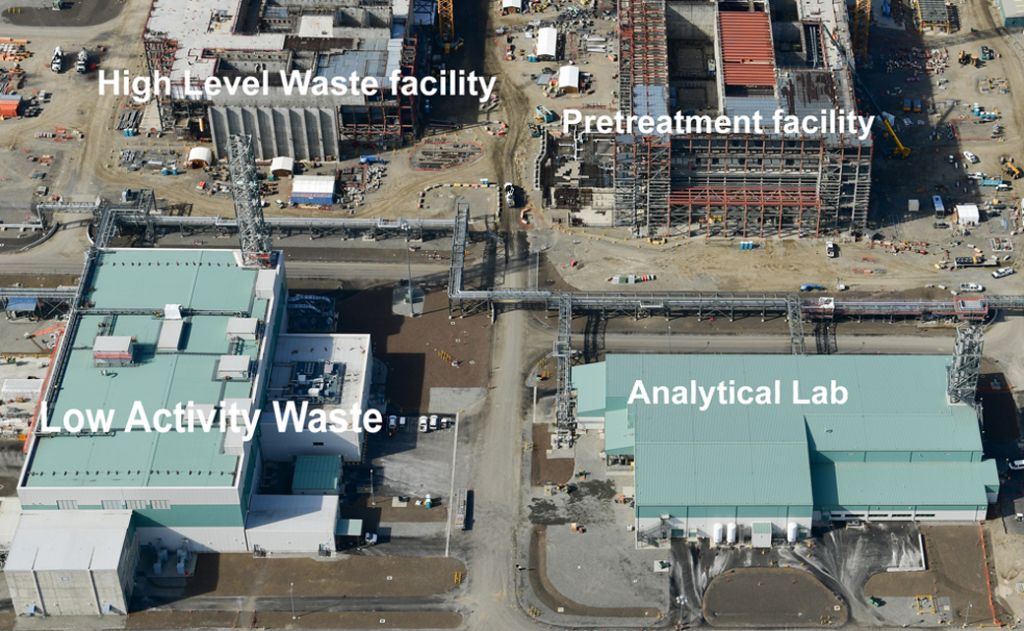
Hanford waste treatment plant aerial view

The Hanford Site Waste Treatment Plant complex. The Low-Activity Waste Facility is expected to begin creating vitrified nuclear waste in 2023. Photo DOE

Hanford tank B109, a single-shell tank, contains 13,000 gallons of liquid radioactive waste currently leaking into adjacent soil at a rate of 1,200-1,500 gallons per year.

Heart of America Northwest, a Hanford environmental watchdog group, is promoting the use of grout to get waste from the tank treated sooner.

The group says low-activity waste can be treated 50 times cheaper and faster with grout than vitrification.

“Federal and state hazardous waste laws say leaking tanks have to be emptied immediately. But USDOE refuses to plan to empty the waste,” wrote Gerry Pollet, Heart of America Northwest director, in an email. “I urge USDOE prioritize funds to remove drainable liquid waste from leaking tank B-109.”

Serres of Columbia Riverkeeper says the grout process likely would be performed at a Perma-Fix Northwest treatment facility close to nearby Richland, Washington. He’s concerned about problems created by moving radioactive waste off-site from Hanford to a remote facility.

Hanford low activity waste melters

Liquified waste will be heated to 2,100 degrees Fahrenheit in these 30-ton melters, then transferred into storage canisters. Courtesy DOE

Serres says he’d rather the DOE construct more double-shell tanks, which are less prone to leaking than single-shell tanks.

DOE’s Burright says the decision whether or not to use grout for dealing with leaked waste from tank B109 will ultimately come from the DOE and Washington Department of Ecology.

No matter what fixes are ultimately implemented, however, this summer’s successful tests at the Vit Plant indicate progress is happening in Hanford Site cleanup … however slowly.

Jurgen Hess is on the Board of Columbia Insight and a member of the Oregon Hanford Cleanup Board. His views are his own and do not reflect positions of either Columbia Insight or the Oregon Hanford Cleanup Board.
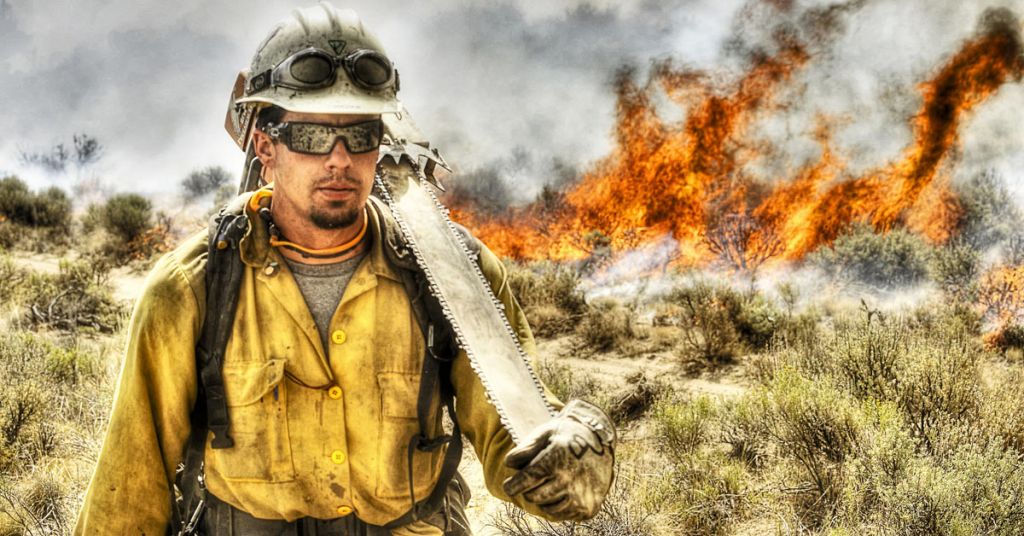
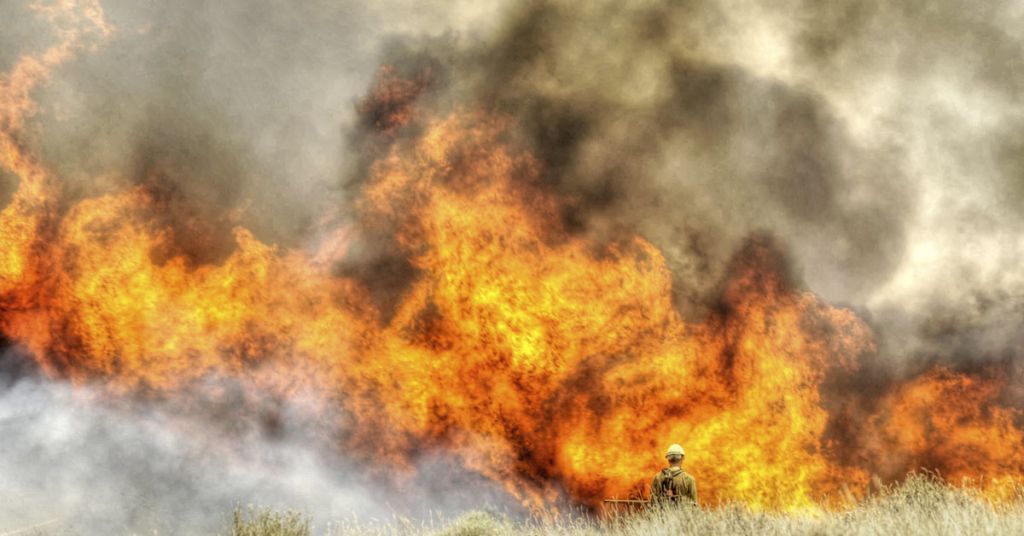
Appreciate this story? To support environmental journalism on Columbia Insight click here

By |2022-11-15T19:04:24-08:0009/23/2021|Opinion|2 Comments

Smokescreen: Wildfire researcher offers answers to our most burning question

A new book says we can stop the cycle of devastating summer wildfires, but how realistic is the solution it offers?

Oregon's Long Draw Fire

Man, summer! BLM firefighters have become all too familiar with the Columbia River Basin. Photo by Kevin Abel/BLM

Summer is traditionally the time for picnics, vacations, obligatory visits to relatives and griping about the inevitable return to work, school and rain jackets. In recent years it’s also become a time to worry about wildfires.

With triple-digit temperatures forecast across much of the Columbia River Basin in the coming week, we thought it was a good time to ask our resident wildfire expert for his thoughts on a new book—Smokescreen: Debunking Wildfire Myths to Save Our Forests and Our Climate—that’s making the rounds among wildfire experts.

MORE: Smoke is alive says new wildfire study

The book’s author, Chad T. Hanson, is a research ecologist and director of the John Muir Project at the San Francisco-based Earth Island Institute. He’s coeditor of The Ecological Importance of Mixed-Severity Fires: Nature’s Phoenix and his work has been featured in the International Journal of Wildland Fire, Ecosphere and BioScience.

Columbia Insight board member Jurgen Hess spent 34 years with the U.S. Forest Service. As acting forest supervisor, he made the decision in the mid-1980s to allow fires to burn in the Sky Lakes Wilderness in southwest Oregon. He’s been a guest lecturer on public forest policy at Portland State University, a wildfire educator, photographer and consultant for landowners on making their homes fire safe. He’s written editorials objecting to salvage logging of the 2017 Eagle Creek Fire in the Columbia River Gorge and is on the board of Friends of Mt. Adams. —Editor

Long Draw Fire

Bigger, stronger, faster: The Long Draw Fire burned 557,648 acres in southeastern Oregon in 2012. The wildfire problem has only gotten worse. Photo by Kevin Abel/BLM

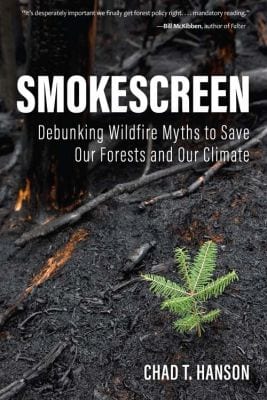
By Jurgen Hess. June 24, 2021. The title of Chad Hanson’s new book—Smokescreen: Debunking Wildfire Myths to Save Our Forests and Our Climate—appears to clearly state the work’s purpose.

For me, however, the author’s real objective doesn’t become clear until near the book’s end.

A research ecologist and activist, Hanson describes his frustrations working with federal and state agencies on forest fire issues.

Hanson SMOKESCREEN cover

These issues include fire suppression, post-fire salvage logging and the issue of whether wildland fires should just be allowed to burn rather than be put out.

He examines the effectiveness of agency polices protecting communities from fire. He offers solutions as to how wildfires and forests should be managed.

I’ve organized my reactions to Smokescreen into four parts: what I agree with, what I disagree with, the overall persuasiveness of Hanson’s argument and a final comment about what I feel is a misleading approach to the book’s title.

What I agree with

There’s much in the pages of Smokescreen with which to agree.

For example, Hanson lambasts President Donald Trump and the Forest Service’s rollback of environmental policies under his administration.

I agree with Hanson that small trees are the most flammable—which is why clear cuts restocked with dense young trees need to be thinned.

Hanson criticizes post-fire salvage logging. Salvage logging compacts soils, destroys natural regeneration and removes large trees needed as snag habitat.

MORE: Sage grouse, pygmy rabbits among wildlife hardest hit by fires

Widely respected University of Washington forest ecology professor Dr. Jerry Franklin agrees with the assessment that post-fire logging tends to be harmful to reestablishing a new forest—as do I. A certain percentage of a forest’s ecosystem always should be in a recently burned condition.

Burned forests provide habitat for, among other species, the three-toed black-backed woodpecker. During a 2018 review of the Blackburn Fire, a Mt. Hood National Forest wildlife biologist told me a large forested area should always have 6-8% in burned condition for woodpecker habitat.

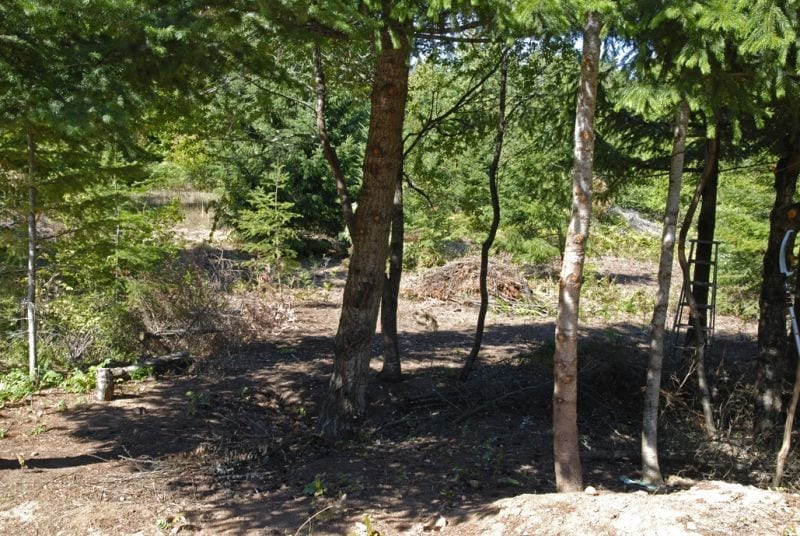
Landscape adjacent to home showing limbed up trees and small tree removal to decrease fire hazard around the home. Jurgen Hess consultant and photographer.

Thin to win: Landscape adjacent to a home shows limbed-up trees and small tree removal to decrease fire hazard around the home. Photo by Jurgen Hess 

Hanson criticizes private timberland management. Private timberlands have a much shorter tree rotation/harvest age (35-45 years) than do federal forests.

In addition, private companies generally use clear-cutting as a harvest method. Clear-cutting impacts wildlife habitat, aesthetics and water quality. New forests after clear-cutting bear little semblance of a forest ecosystem with habitat for all species.

Most house fires that burn as a result of wildfires are started by embers blowing far ahead of the wildfire flames. Hanson sensibly recommends all construction in the wildland urban interface (WUI) use fire-retardant materials and be built to Firewise standards.

What I disagree with

While Hanson makes many valid points, he often veers into unnecessary polemic.

For instance, he demonizes the U.S. Forest Service and organizations such as The Nature Conservancy. Virtually every federal agency and many environmental organizations are swept up in his continual criticisms.

Hanson proposes that new house construction should transition from using wood to using different materials, essentially concrete and steel.

Urban Wildland Interface

Tree, house: Wildland Urban Interface along the Sandy River in Oregon. Photo by NASHCO

But production of both materials results in a much higher carbon footprint than wood. When forests are managed on a sustainable basis, wood products are a viable building material.

Hanson believes fires should be left to burn, with little to no attempt to put them out.

This might work in a pristine ecosystem. The problem is that for 100 years federal agencies have made an effort to put out all fires. For better or worse, this policy has resulted in an abnormally high fuel loading in most of our forests.

[perfectpullquote align=”full” bordertop=”false” cite=”” link=”” color=”” class=”” size=””]Too often people living in wild areas expect agencies to save their homes from fires. They enjoy a lifestyle subsidized by firefighting agencies.[/perfectpullquote]

High fuel-load fires burn hotter and turn into high-intensity conflagrations. High-intensity fires tend to burn up all trees, including large tree habitat used by spotted owls and other species.

While I support letting some fires burn, until fuel loading is decreased to natural levels—accomplished by tree thinning and prescribed burns—agencies must fight fires aggressively, putting most out quickly.

Hanson criticizes collaborative teams, which have become popular forest management tools. If you’re unfamiliar with forest collaborative groups, the Cascade Forest Conservancy has a good definition: “In forest collaborative groups, diverse stakeholders including environmental organizations, timber companies, recreational organizations and other interested members of the community come together to discuss timber sales and other proposed projects with Forest Service staff.”

I’ve been involved with forest collaborative teams for many years, including the South Gifford Pinchot Forest Collaborative for 10 years. The first years of that collaborative were full of conflict and dissent. But the team has evolved and now works well together with diverse membership. Hanson should have stuck it out with his collaboratives and built relationships with team members.

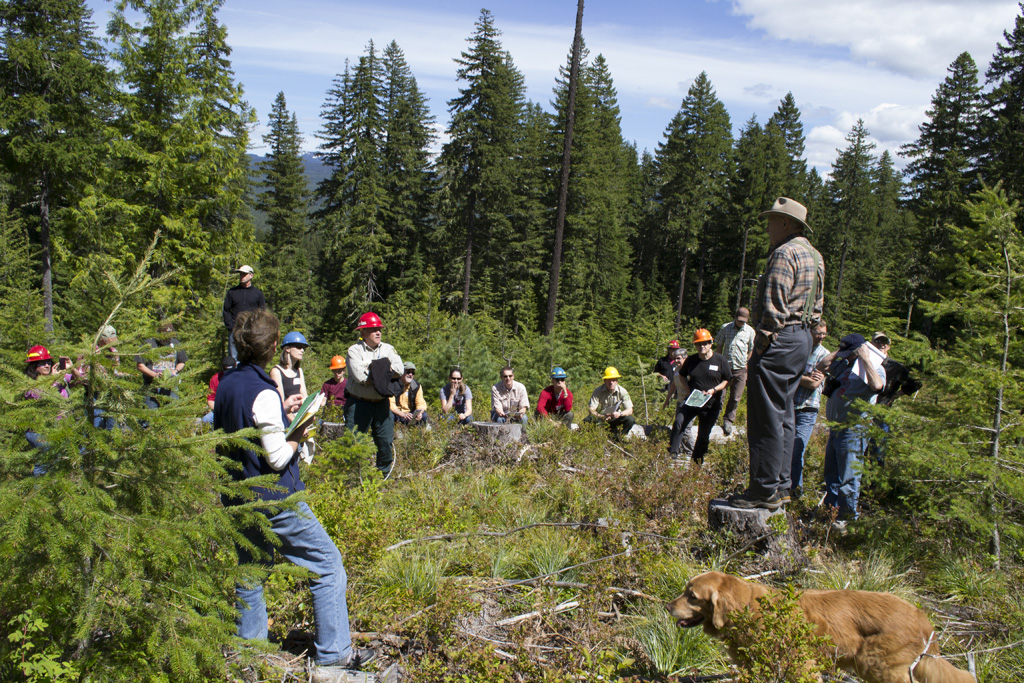
Jerry Franklin

Stump speech: Dr. Jerry Franklin addresses the South Gifford Pinchot Forest Collaborative. Photo by Jurgen Hess

Most of the studies referenced in the book come from research that lines up with Hanson’s conclusions. But authorities, such as Franklin, feel Hanson’s science is slanted. His book should also include studies that disagree with his findings. That’s good, rigorous methodology.

Hanson believes thinning forests is bad and shouldn’t be undertaken by federal agencies. But the devil is in the details. Success or failure depends on how thinning is done.

MORE: Hidden threat: How non-native plants fuel wildfires, degrade ecosystems

Thinning should remove small trees and protect large trees, which are the most fire-resistant. A canopy of shade should be left to cool soils. If done properly, thinnings reduce fuel loadings and accelerate the growth of young trees that will become future old growth.

The Ashland, Oregon, watershed is being thinned in a collaborative project by The Nature Conservancy, Forest Service and others. Lots of research shows thinning is an effective way to reduce fire hazards.

Persuasive or not?

Hanson’s book suffers from low-quality photos. And it can be difficult to understand the point of photo captions.

This might seem like a nitpick, but the 1993 book Clearcut: The Tragedy of Industrial Forestry (edited by Bill Devall) changed public opinion with its excellent photography and explanations.

Smokescreen would be more effective if Hanson had more professional diversity. His experience is primarily in California and the Sierra Nevada area.

Prescribed fire, Oregon

Preemptive strike: Prescribed burns like this one in eastern Oregon help reduce wildfire risk. Photo by BLM

Offhand comments betray an age prejudice. When he wants to stick a point he describes people with whom he disagrees as “elderly” and “older.” He denigrates researchers of age if he disagrees with their findings. If he’s fortunate, someday he’ll be elderly.

The issue of land-use planning and fires is barely discussed. Society must use planning tools to prevent people from building homes in high fire-hazard areas.

All too often people living in these areas expect agencies to save their homes when fires come. They enjoy a lifestyle subsidized by firefighting agencies.

Silver City Hot Shots

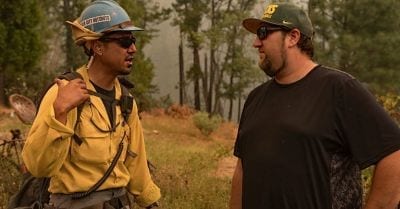
Protect and enable: Silver City Hotshots superintendent Justin Romero talks with homeowner Jesse Tree during a fire in Oregon’s Rogue-Siskiyou National Forest in 2018. Photo by Kari Greer/USFS

Missing is any discussion of the 1950-1990 era, when the Forest Service was cutting forests at an unsustainable rate, liquidating old growth and violating the Endangered Species Act.

While terrible, this was a defining era for the Forest Service, ending in an upheaval of its mission. As Franklin has noted: “The Forest Service was turning the national forests into timber farms. It went to the dark side.”

New leadership, notably Chief Jack Ward Thomas in the mid-1990s, brought change. The Forest Service is no longer the “water boy for the timber industry,” to quote Kathy Durbin’s Bridging a Great Divide: The Battle for the Columbia River.

Smokescreen makes no mention of Stephen Pyne’s seminal America’s Fires: A Historical Context for Policy and Practice, which was published in 2010. That book helped change attitudes and agency policies about fire.

The real smokescreen

Not until the book’s final chapters does its true message come through loud and clear.

Smokescreen author Chad Hanson in the Snag Forest

Wood preserver: Author Hanson. Univ. Kentucky Press

Hanson simply wants to stop timber harvesting on public land, including in national forests and Bureau of Land Management land. As Franklin has pointed out about Hanson, “he doesn’t want any trees cut on federal land, (he’d) rather have the forests burn up.”

If that’s your position that’s fine. But I personally found it disingenuous to couch that message in a book that comes wrapped as wildfire scholarship.

MORE: Wildfires pose dire threat to toxic Superfund site in Montana

I can’t recommend Smokescreen.

As an alternate, I recommend The West is Burning, a powerful video featuring Dr. Jerry Franklin and others in wildfire leadership describing the fire situation and what can be done about it. 

The views expressed in this article belong solely to its author and do not reflect the opinions of anyone else associated with Columbia Insight.

By |2023-02-06T12:42:17-08:0006/24/2021|Forestry, Wildfire|2 Comments

Keeping a lid on Gorge garbage in 2021

Public lands took some abuse in 2020. These groups are taking on the challenge of keeping the Columbia River Gorge looking more like itself this year

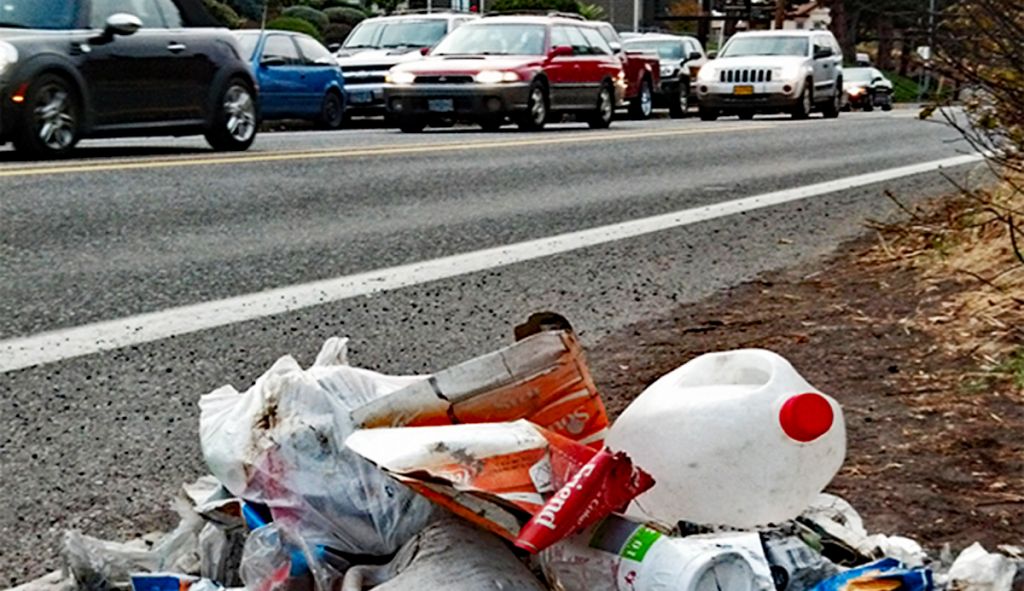
Roadside litter on Cascade Avenue in Hood River, Oregon photo by Jurgen Hess

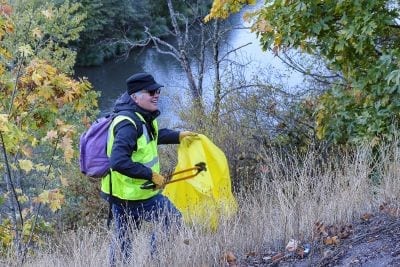
Trash hour: Litter collects on roadways throughout the Columbia Gorge National Scenic Area. Some people notice more than others. Photo by Jurgen Hess

By Lori Russell. January 14, 2021. With restrictions in Oregon and Washington in place due to the COVID-19, it could be a long winter for many residents. Come spring, wildflowers in the Columbia River Gorge will be popping, waterfalls will be gushing and people who have been cooped up at home will be heading to the region’s parks, trails and rivers.

If 2020 is a predictor of future behavior, many visitors will memorialize their visits with discarded cans, bottles and other trash. Despite executive orders closing lands and water access due to the pandemic, thousands of people converged in the Gorge last year. In April, federal, state and local agencies came together asking visitors to respect the closures and follow directives to stay home.

Sadly, perhaps predictably, reports of garbage cans overflowing at trailheads and trash dumped in campground toilets soon followed the re-opening of many public areas.

MORE: Ugh! Trash in Gorge at ‘crisis level’

Yet not all sites were equally affected. With popular trails such as Dog Mountain, Catherine Creek and Coyote Wall closed at the height of spring, litter in some parts of the Gorge was actually less than anticipated.

“At Multnomah Falls, even when we opened it under the permit system, we were bracing for the worst case and it never really happened,” says Stan Hinatsu, U.S. Forest Service recreation staff officer for the Columbia River Gorge National Scenic Area. “Forests in Oregon and Washington really got hammered, but we didn’t see that in the Gorge. Instead, city and county parks as well as the Gifford Pinchot and Mt. Hood National Forests saw increased use.”

While health and safety concerns will impact recreation in the Gorge in 2021, several volunteer organizations committed to preserving the beauty of the area are preparing to help when the garbage hits the ground. 

Thrive Hood River

Thrive Hood River, a land-use advocacy group in Hood River, Oregon, has maintained three sections of Oregon Department of Transportation Adopt-A-Highway roads in Hood River County since 2009. It hosts trash pickups in the spring and fall.

Steep task: Thrive president Peter Cornelison regularly works a stretch of steep embankment along Oregon Route 35. Photo by Jurgen Hess

“The volume of traffic and the amount of trash has been increasing through the years,” says Thrive president Peter Cornelison, who coordinates volunteer events and works directly cleaning up litter along a three-mile stretch of Oregon Route 35.

Cornelison and other volunteers often scramble 20 feet down a steep bank along Hood River to retrieve fast food cups, sheets of Styrofoam and items that fly off passing vehicles. There’s unintentional trash, too.

“We’ve found a Leatherman knife, dollar bills and all sorts of little treasures,” he says.

A Thrive crew typically collects 10-18 large bags of garbage on their busy stretch of roadway on a Sunday morning. The organization’s two other Adopt-A-Highway sections—on Route 35 and Oregon Route 281—are on flatter ground and have less trash.

“You feel great camaraderie with the people you work with and you do high fives at the end of the pickup,” says Cornelison. “I bike up Highway 35 and I can see we’ve done a good job. The trash isn’t there. As it gets further away from when we picked, you can see it accumulate again. You think of it as your little patch.”

More information on Thrive events can be found at thrivehoodriver.org.

The Dalles Beautification Committee

The Dalles Beautification Committee and Columbia Gorge Toyota Honda partnered last fall to coordinate monthly cleanup events in The Dalles, Oregon. Area residents removed litter from roadways paralleling the interstate, at the cruise ship dock along the Columbia River and downtown.

This year, local groups and businesses are being encouraged to co-host one of the cleanups in an effort to boost civic pride and engagement.

Beautification Committee member Connie Krummrich has been picking up what others leave behind on trails, in parks and around her community since she was a child. “My mom always said, ‘Leave a place cleaner than you found it,’” she says.

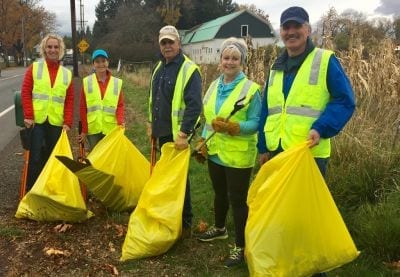
Group effort: Organizations like the Hood River Saddle Club organize volunteer cleanups throughout the year. Photo by Jurgen Hess

Over the years, Krummrich has informally “adopted” a local park and a few stretches of roadway in town where she picks up litter. The repetitive stooping and bending can be hard work.

“I like to think of it as a certain type of yoga,” she says.

Community participation amplifies the impact one person can make.

“If you have one person who works for an hour you have one hour of labor,” says Krummrich. “But if you have 16 people, you have 16 hours of labor and you can get a lot done.

“When people see other people picking up litter, they are more likely to influence some people to do it themselves. Every time we go out and do this, hopefully we are building that ethic.”

Volunteers can join cleanup efforts beginning in March on the second Saturday of the month at 10 a.m. at Thompson Park in The Dalles. Organizations interested in co-hosting a monthly cleanup should contact Rachel Carter at Columbia Gorge Toyota Honda (541-296-2271).

SOLVE

Portland-based SOLVE, an environmental stewardship group founded in 1969, brings together volunteers around Oregon to restore and preserve public lands across the state. Despite the pandemic, the organization expanded its annual Beach & Riverside Cleanup from one weekend to three in 2020.

Last year, more than 1,600 volunteers participated in 63 projects, removing an estimated 11,500 pounds of trash and marine debris from the Oregon’s beaches and watersheds.

SOLVE’s Spring Cleanup on April 17, 2021, offers volunteer opportunities throughout Oregon. The Oregon Spring Cleanup is a combination of the Spring Oregon Beach Cleanup and SOLVE IT for Earth Day. The organization also supports those who want to lead a garbage cleanup any time of year by providing volunteer outreach, event planning support and free supplies.

Details and a calendar of events can be found at solveoregon.org.

PODCAST: Overcrowding in the Columbia River Gorge 

Lori Russell lives in The Dalles, Oregon.    

By |2021-01-14T05:55:09-08:0001/14/2021|Natural Resources|0 Comments

Elk hoof disease continues to afflict elk populations

The mysterious disease is being studied, but experts remain unsure about its causes or how to eradicate it

Hard yards: For animals with elk hoof disease keeping up is an issue. The limping elk on the left (note rear leg) at Conboy National Wildlife Refuge in Washington displays signs of elk hoof disease. Photo by Nancy Harbert

By Jurgen Hess. December 17, 2020. Elk hunters and biologists agree elk numbers are down in Southwest Washington over the past several years, perhaps as much as 30%. Whatever the exact number, it’s certain fewer animals are being sighted.

What’s behind the decrease?

“Too many hunters!” says Tom Linde, a hunter from Carson, Washington, who didn’t shoot an elk this year.

That’s one answer, and it’s not entirely wrong. The number of elk on Zumwalt Prairie in eastern Oregon was reduced from about 4,500 in 2015 to about 3,500 in 2020 as a result of planned population management that’s included hunting.

But there’s a relatively recent phenomenon that’s also been affecting the health of the animals—elk hoof disease.

First noted by the Washington Department of Fish and Wildlife (WDFW) in 2008, elk hoof disease is a grisly condition producing deformed hooves that often overgrow until they resemble claws, or sometimes curl upward like elf slippers. Once overgrown, hooves can snap and break, resulting in bloody stumps, infected abscesses and rotting flesh. The condition is horribly painful for the elk, and frequently proves fatal.

The deformed hoofs impede walking and running resulting in affected elk becoming lame. They limp and struggle to keep up with the herd.

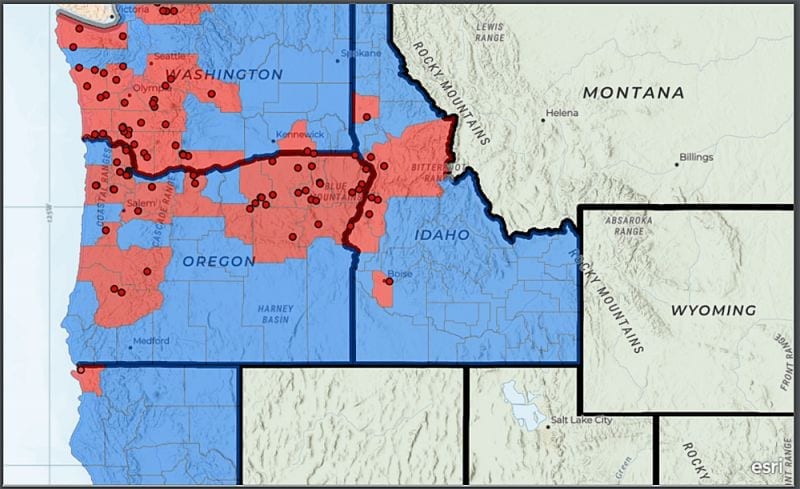
Initially based on reports from hunters, the disease was first confirmed in animals in the pumice plains west of Mount St. Helens and in Southwest Washington’s Willapa Hills private timberlands. It’s since been confirmed in elk populations in Oregon, Idaho and northern California.

Spreading out: Estimates of elk hoof disease distribution (in red) are based on hunter and other public reports confirmed by Washington State University. Courtesy of WSU

Elk are gregarious. They’re social and hang out in herds of 20 to 50 animals. That can be an effective deterrent to predators, but not to communicable disease. Elk bed down as herds, spreading the disease, which has now been detected in all Washington counties that have elk.

Harold Cole, a former Conboy National Wildlife Refuge (NWR) manager/biologist and current Klickitat County range/timber deputy, has spotted the disease in herds around Glenwood and Trout Lake, Washington.

“It’s sad, so sad to see them hurting getting around. It may be nature’s way, but it’s cruel,” says photographer Nancy Harbert, who has observed elk in the Conboy NWR southwest of Glenwood. Southwest Washington hunter Joel Basch recently saw a herd crossing the Glenwood-Trout Lake Highway. Out of approximately 50 elk, he counted six limping and struggling to keep up with the herd.

Researching causes

Dr. Margaret Wild, a professor at the Washington State University Department of Veterinary Microbiology & Pathology, has studied the causes of elk hoof disease and concluded that bacterium called treponeme are responsible. The bacterium thrive in damp soils, in places such as wet meadows.

“Conditions fostering the infection include the pathogen’s prevalence, animal robustness and the environment,” says Wild. “The bacteria organism has to be there and there need to be conditions of anaerobic wet soils in areas where animals tend to congregate.”

Closer inspection: A $1.5 million state grant helps researchers, including Dr. Margaret Wild, examine elk in a pen enclosure. Courtesy of WSU

Has the pathogen historically been present in such environments? Or is it a relatively recent development?

“Like white-nose syndrome in bats, elk hoof disease may have historically been there, but for some reason the prevalence of the disease is dramatically increasing,” says Wild. Climate change may be a factor, though she says it’s too soon to be sure.

In 2019 Columbia Insight reported on concerns that timber industry chemical sprays were the root cause of the disease. Wild doesn’t rule that out as a possibility.

“It’s way too early to take anything off the table as to causes,” she says.

With $1.5 million in funding from a state grant, Wild’s WSU team has been studying elk hoof disease since 2019. The grant paid for construction of a four-acre enclosure in Pullman, Washington, that allows the team to study elk in a controlled environment.

One conclusion so far—the treponeme bacterium is not infectious to humans.

Elk meat and elk hoof disease

Kyle Garrison, a WDFW ungulate specialist and elk hoof disease program manager, says the incidence of elk hoof disease in Washington is decreasing though just slightly. The highest prevalence noted by WDFW came between 2010 and 2013. Sightings of diseased elk reported by hunters—WDFW bases its analysis on reports of limping animals—decreased in 2018 and 2019.

One question most hunters want answered—is meat from affected elk safe to eat?

Experts from both WSU and WDFW say treponeme bacterium haven’t been found in the any of the meat of affected elk—only in the hoofs. But they’re hedging bets. In a February 2019 statement, WDFW said the meat is “probably safe to eat.”

The Oregon Department of Fish and Wildlife has also stated meat from elk with elk hoof disease is safe to consume.

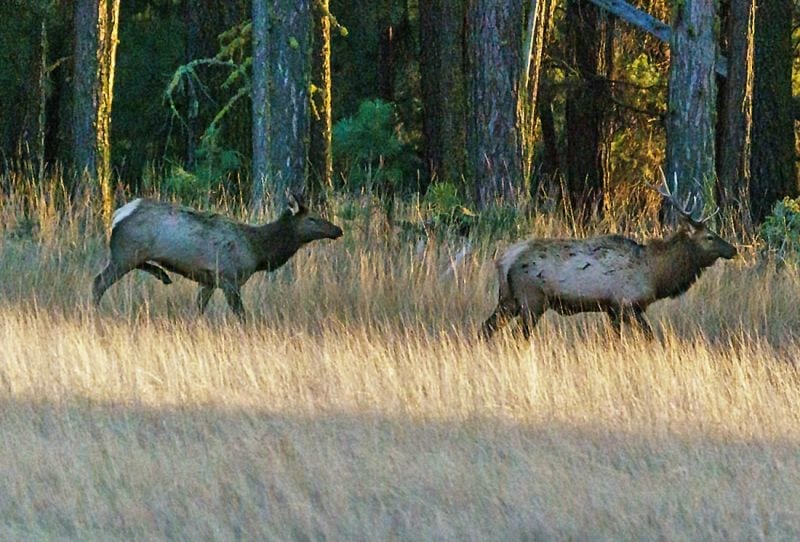
Social dilemma: Elk enjoy each other’s company. That enables the spread of elk hoof disease. Photo by Jurgen Hess

“We feed our families for the whole year from elk we hunt,” says Yakama Nation member Dave Blodgett III. “Elk are essential to sustain us.”

When Blodgett shot an elk in 2020 in the eastern Klickitat portion of the Yakama Indian Reservation, he found no elk hoof disease on the animal. He says while they remain vigilant, tribal hunters have seen little of the disease, though they tend to only hunt on the dry side of their Yakama Nation lands.

“The tribe has seen deer drastically decline from disease brought in by domestic livestock,” he says. “With deer decreasing, we rely primarily on elk now (for meat). All our families do. We don’t want the hoof disease in our area.”

Blodgett believes the higher prevalence of the disease in the Trout Lake and Glenwood areas is due to higher rainfall there.

No clear solution

Opinions regarding remedies for elk hoof disease can be grouped into three categories: disease management, habitat and elk prevalence, and animal density.

In terms of disease management Dr. Wild feels it’s too soon to recommend treatments. She says more study is needed before an effective management strategy can be conceived, much less implemented.

Moving in: “Habitat is decreasing with new homes and fences in areas historically used by elk,” says WDFW’s Carly Wickhem. Photo by Jurgen Hess

Inoculating elk against the disease is a possibility. But compared with domestic livestock, it’s extremely difficult to treat diseases in wild animals with inoculations.

“We need to know more about the disease before we can make recommendations about what to do,” says Wild.

Both Wild and WDFW’s Garrison believe removal of affected animals, or “culling,” could be attempted.

According to WDFW biologist Carly Wickhem, however, WDFW tried that approach in 2018 on the Trout Lake elk herd. The effort wasn’t successful—elk took cover in trees and were difficult to spot. While the goal of that plan was to reduce herd density by killing 15 to 20 animals, Wickhem says “only a few were killed.”

While the experts and hunters interviewed for this article say elk numbers are down and believe elk hoof disease is at least partly responsible, none advanced a novel solution.

Hunter Tom Linde offered a simple idea: “Close the (elk hunting) season, don’t allow hunting. This would build up the herds again. WDFW hasn’t been managing the elk.”

But this solution doesn’t directly address the disease. And given WDFW’s pro-hunting culture, curtailing elk hunting is unlikely.

Wild says determining the sustainable density of elk per a given area is critical. Fewer elk would have less competition for food and would potentially be healthier—that leads back to a consideration of culling herds.

“It’s a complex issue, but we have to have hope or there is no reason to do the work we are doing,” says Wild. “Infectious diseases operate by the same rules as human diseases, like COVID.”

“We have to be realistic, wild animals get sick, disease happens in the natural world—part of nature,” says Wickhem. “It will take time to figure this out. I’m asking the public to be patient.”

Photojournalist Jurgen Hess is treasurer/secretary of Columbia Insight. He spent 34 years as a U.S. Forest Service manager.

By |2021-01-21T10:08:33-08:0012/17/2020|Wildlife|3 Comments

Big Hollow Fire: Assessing the destruction

Employing a “life and property first” policy, firefighters saved cabins with a mile-long fireline, but scars remain

Why we fight: Protecting lives and property are the first priorities of fire fighters. But saving ancient beauties like these was also important for fire fighters working last summer’s Big Hollow Fire in Washington’s Trapper Creek Wilderness. Photo by Jurgen Hess

By Jurgen Hess. November 26, 2020. As I drive slowly past the site of a September 9 roadblock, a time when wildfires are ravaging the Columbia River Basin, I’m pumped with anticipation. I’m heading into a prohibited zone, but I’m not breaking any rules.

I’m on the way to a meeting with two U.S. Forest Service firefighters who have agreed to take me into the fire zone to see a burnout line established as a part of firefighting actions on the Big Hollow Fire. The fire is in the Trapper Creek Wilderness, part of Washington’s Gifford Pinchot National Forest.

Moving through the woods, my senses are alert to the damage fires wreak on the landscape, but also to the damage caused by human efforts to contain it.

I wonder if somewhere up ahead I’ll find a massive clear cut leading into the Trapper Creek Wilderness. On previous fires I’ve seen catlines (firebreaks created by bulldozers or other tracked vehicles with a blade mounted on the front) that ended up creating as much long-term impact on the land as the fires themselves.

MORE: Trapper Creek Wilderness threatened by fire

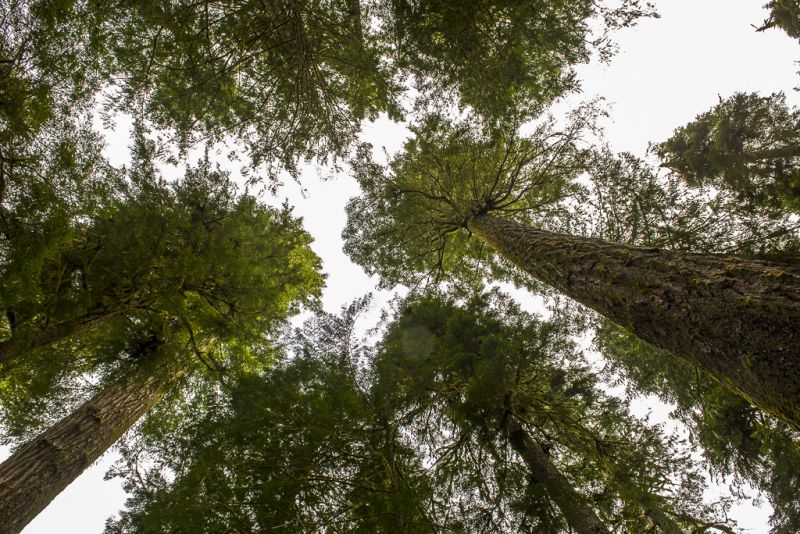
Anyone who visits the Trapper Creek Wilderness can’t help but feel awestruck. Trees tower as high as 150 feet, as tall as 15-story buildings. 

But perhaps more than others might, I enter these woods with a special feeling. In 2014, to commemorate the 50th anniversary of the Wilderness Act, I’d spent 12 months photographing the Trapper Creek Wilderness. I’d hiked in every month—in snowshoes across drifts as deep as three feet, in pouring rain, packing 30 or more pounds of photo gear.

I’d gotten to know and love every nook, cranny and creature of these woods, even the giant banana slugs that thrive in a rainforest that receives over 100 inches of rainfall each year. I’d watched streams that were almost completely dry in August morph into roaring currents three-feet deep in December. The Trapper Creek Wilderness became my “private” piece of heaven, a place to slow down, absorb nature at its own pace, let the slugs be my teachers. 

This past summer the Big Hollow Fire roared into the Trapper Creek Wilderness—Dante’s Inferno. Almost immediately I began worrying that some of the 400-year-old Douglas firs I’d photographed six years before—survivors of the 1902 Yacolt Fire—might have already been cut down by fire fighters attempting to create a burnout line.

Fire man

I’m a fire chaser. In previous years, like 2017’s Eagle Creek Fire, I’d put on my fire clothes, get vetted by fire managers and get out to the front lines to photograph and report on the action. I give educational talks on fire. 

That changed with COVID-19. Only firefighters are allowed in fire zones now; no media.

To compensate, last summer I joined Inciweb Zoom sessions conducted by the Big Hollow Fire incident command team. Inciweb is an interagency all-risk incident web information system run by the USFS. It’s an invaluable source of information for anyone wanting updates on fires and other emergencies.

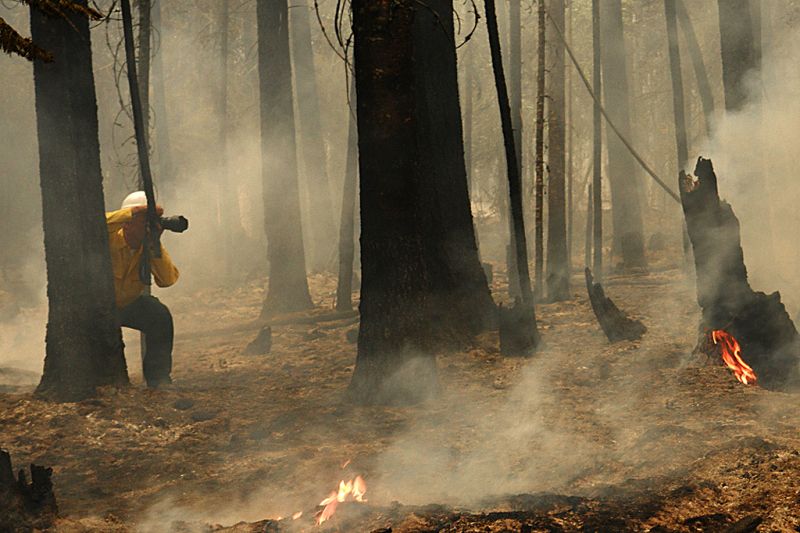
Hot shoot: The author documents the mop-up stage of the 2013 Blackburn Fire east of The Dalles, Oregon. Photo by Chris Friend/ODF

On the Zoom sessions I paid attention, took notes, then relayed my unofficial reports to concerned friends and colleagues.

I’d felt compelled to do this, but it wasn’t the same as being on the ground with the smoke, flames, adrenalin and wet armpits.

I was determined to see for myself the damage firefighting had brought to the Trapper Creek Wilderness and adjacent area. So I started making calls to USFS officials. Eventually, persistence paid off, and I was able to arrange a visit.

Property is priority

The area of the Big Hollow Fire remains closed to the public. Intimidating signs are posted at trailheads and road entries, warning people away.

I meet my guides for the day. Pete Nelson and Christian Buettner are with the Mt. Adams Ranger District, Gifford Pinchot National Forest, so this is their home turf. Buettner was a fire boss for the crews clearing the trail fuel break. Nelson is the Mt. Adams District assistant fire management officer.

End of the line: Forest Service guides Christian Buettner (left) and Pete Nelson inspect the western end of the burnout line at the Trapper Creek Wilderness boundary. Photo by Jurgen Hess

After saying our hellos, we zip up rain pants and waterproofs and start walking. Starting at the trailhead outside the Trapper Creek Wilderness, we walk west for a mile to the wilderness boundary, stopping often to observe and talk about the clearing work done by fire crews. 

The burnout line was meant to stop the fire’s advance by robbing it of fuel. When the line was put in the fire was burning on a hillside, but had entered the Trapper Creek Wilderness. 

The objective was to protect 44 cabins at a place called Government Mineral Springs. Sited on land leased from the Forest Service, the private cabins sit about 200 feet downhill from the burnout line. In addition to the burnout line, sprinklers were set up around the cabins. A lot of expense and work went into saving the cabins.

The small- to medium-size cabins were constructed in the 1950s, and have either been replaced, updated or altered over the years. It’s hard to call them historic.

“Life and property first. Trees grow back. It’s the right thing to do,” says Buettner.

Nelson nods. “Life and property first” is the guiding policy for all wildland firefighting agencies.

“It would have looked bad if we didn’t (put in the line),” Nelson adds.

How Firewise are we?

As we inspect the burnout line I look downhill to the cabins. Giant trees and native brush surround and overhang the structures. Some cabins are hard to see through the foliage. Could owners have done some vegetation removal to lower their fire risk?

“We have to get Forest Service approval to cut anything,” says Jerry Franklin, a cabin owner, University of Washington forest ecology professor and Pacific Northwest old growth guru.

Brush with danger: Trees and growth next to cabins contributes to fire-safety issues at Government Mineral Springs. Photo by Jurgen Hess

“We want to keep the area looking as natural as possible,” says David Wickwire, Mt. Adams Ranger District recreation program manager. “Owners like their privacy.”

This may be true, but it doesn’t make it fire safe.

“That naturalness certainly doesn’t meet national fire safety policy, called Firewise, for clearing around houses,” says Susan Saul, conservationist and one of the founders of the Trapper Creek Wilderness. “They preach Firewise gospel here, but they don’t practice what they preach.”

The Big Hollow Fire affected about 30% of the Trapper Creek Wilderness, which covers 5,970 acres. The fire is currently classified as 70% contained.

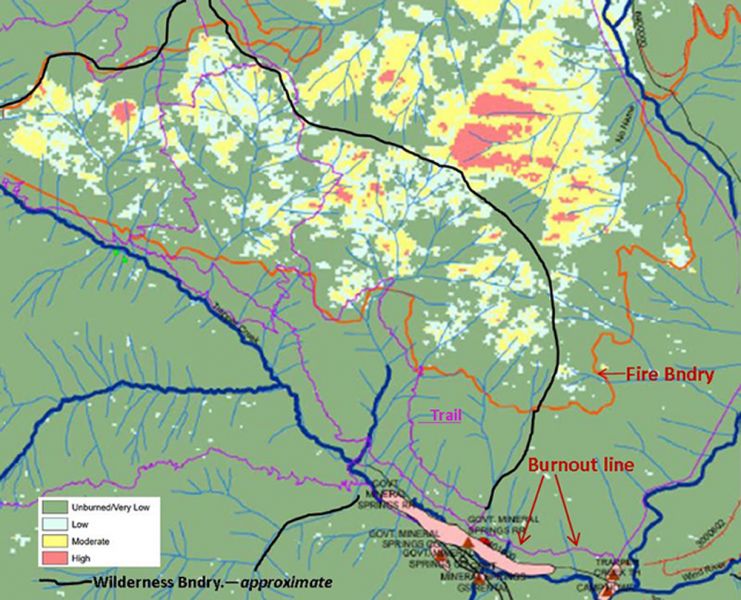
As it turned out, the fire stayed far away from the cabins. None were damaged by the Big Hollow Fire. The blaze stayed high on a ridge (see map below). Rain put out the fire. The burnout line was never used. 

Although the area is closed to most of the public, the cabins and immediate area are open to cabin owners. It’s a little strange within the fire zone to see cars parked next to many of them, smoke wafting from the chimneys.

Because USFS recreation managers are concerned that burned trees could fall and harm hikers, the Trapper Creek Wilderness remains closed. It will likely reopen in Spring 2021.

Visible scars

The damage isn’t as bad as it could have been.

“It was a low-intensity fire, mainly staying low and on the ground,” says District Ranger Erin Black. “The (burnout line) is like a heavy trail maintenance, fairly light on the land. It cleaned up lots of brush and small trees. But see what you think.”

So what do I think? My critical eye is honed by having been a Forest Service manager for 34 years. I’ve seen many mistakes in the rush to put out fires. But nothing major sticks out at me here.

Big Hollow Fire severity map. The Government Mineral Springs cabins are located in the pink area. The burnout line on Trail 192 is indicated outside the wilderness area. Map by Inciweb

The burnout line was constructed on Trail 192—that’s the main access trail into the wilderness area. It attracts lots of hikers. The burnout line starts at the trailhead and runs a mile west to the wilderness boundary. No clearing was done in the wilderness area itself.

Mainly low shrubs and brush were cut and thrown on the green side of the burnout line. Dead and dying trees on the black side (the burned side of the break) were cut and thrown over to the green side or dropped in place.

Only hand tools were used. Much of the trail corridor was left as-is, with no cutting at all.

There are scars. Hikers will notice cut branches with dead leaves for several years, as well as stumps from cut trees. But Black is right—the damage does look like a heavy trail maintenance effort.

The brush and tree clearing on the trail was light on the land and will leave little lasting impact. I’d call it a good job.

What hikers and other users will think of it remains to be seen.

Photojournalist Jurgen Hess is treasurer/secretary of Columbia Insight. He spent 34 years as a U.S. Forest Service manager.

By |2020-11-26T10:21:51-08:0011/26/2020|Opinion, Wildfire|0 Comments

Two dozen fires in Washington and Oregon, Trapper Creek Wilderness threatened

Resources in short supply as fires burn across the Columbia River Basin, skies turn gloomy and high winds continue in many areas

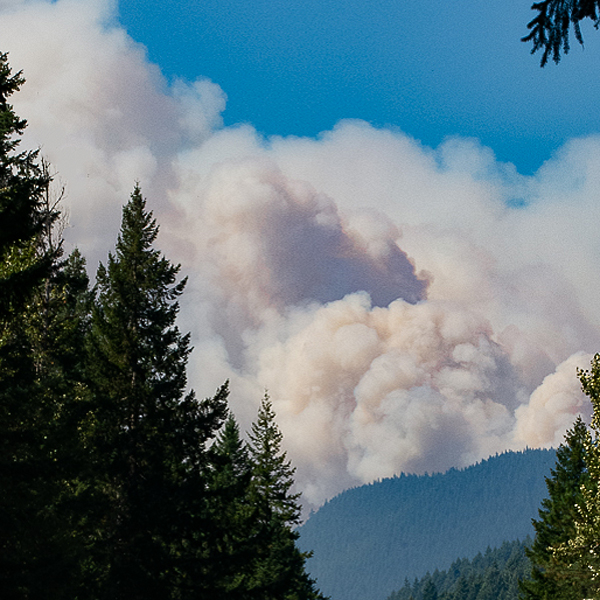
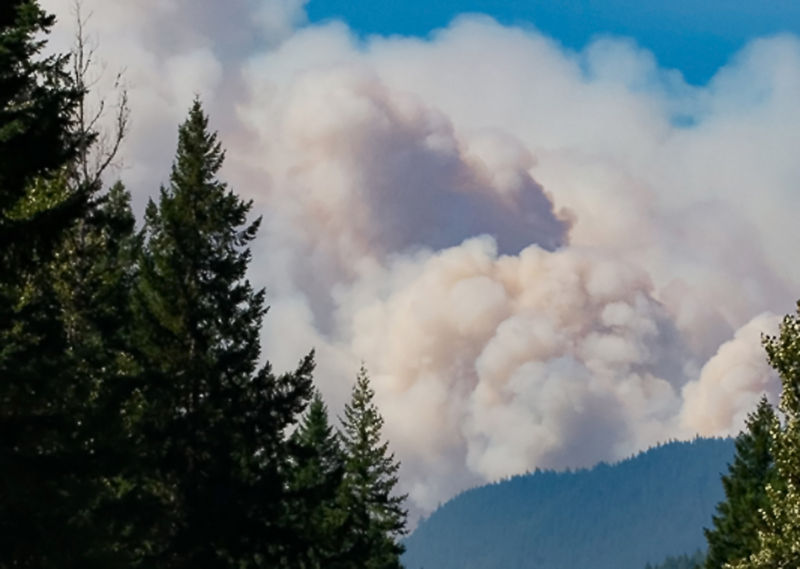
Boiling up: Big Hollow Fire smoke plume from Washington’s Wind River Highway on Wednesday at 2:30 p.m. Photo by Jurgen Hess

Jurgen Hess, September 9, 2020. At least twelve fires are currently raging across Washington. Fourteen more are scorching Oregon. Current fires have burned 919,641 acres in the two states, an area 150,000 acres bigger than the state of Rhode Island. 

North of Carson, Washington, the Big Hollow Fire has burned 6,000 acres in the Gifford Pinchot National Forest and moved south into the Trapper Creek Wilderness.

On Wednesday afternoon, Chris Harper, U.S. Forest Service incident commander, told Columbia Insight the fire is 0% contained with only 40 firefighters working the blaze.

That means the fire is doing its own thing, going where it wants to go. Harper said he’s hoping to get air support to fight the blaze, but because so many fires are burning simultaneously, aircraft are in high demand.

Help is on the way. A Type II team with many firefighters and equipment will take over managing the fire tonight.

Harper said fire conditions are extreme with strong east winds continuing to blow.

For ongoing information about all the fires burning in western states, visit the interagency Incident Information System.

UPDATE: At 9 a.m. on September 10, the Incident Information System (Inciweb) reported the Big Hollow Fire had grown to 22,000 acres and was moving west, with little spread into the Trapper Creek Wilderness.

By |2020-09-10T09:42:47-07:0009/09/2020|News, Wildfire|1 Comment

© Copyright 2013-2025 Columbia Insight. All Rights Reserved.

As a 501(c)3 nonprofit organization, all donations to Columbia Insight are tax deductible to the full extent of the law. Our nonprofit federal tax-exempt number is 82-4504894.