Town of Lyle forced to evacuate due to fire in National Scenic Area
The Burdoin Fire forced residents to flee. Despite the furious efforts of firefighters, the inferno continues to roar
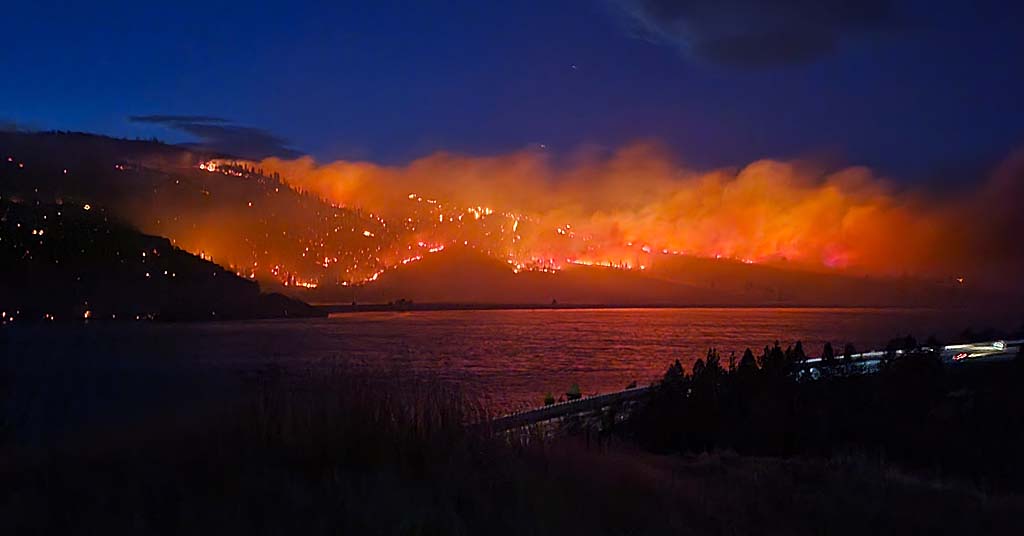
Red glare: The Burdoin Fire, seen across the Columbia River from the Historic Columbia River Highway east of Mosier, Ore., continues to burn. Photo: Jurgen Hess
By Jurgen Hess. July 21, 2025. The Burdoin Fire erupted on July 18 at 2:29 p.m., about two-and-a-half miles east of White Salmon, Wash., not far from Burdoin Mountain.
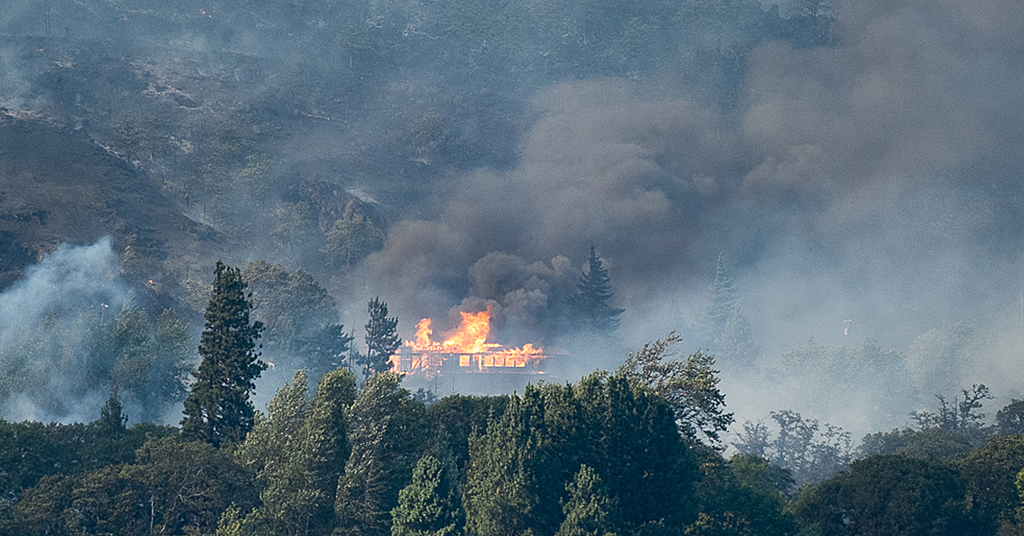
As of this afternoon, the fire, which is burning on both sides of Washington State Route 14 within the Columbia River Gorge National Scenic Area, has burned over 10,500 acres and destroyed 14 homes.
The highway remains closed from mile marker 66 east of Bingen to mile marker 76 west of Lyle.
Roland Rose, the U.S. Forest Service, Columbia River Gorge National Scenic Area’s fuels manager, told Columbia Insight the fire started close to the junction of State Route 14 and Courtney Road in Klickitat County.
The cause of the blaze has not yet been determined.
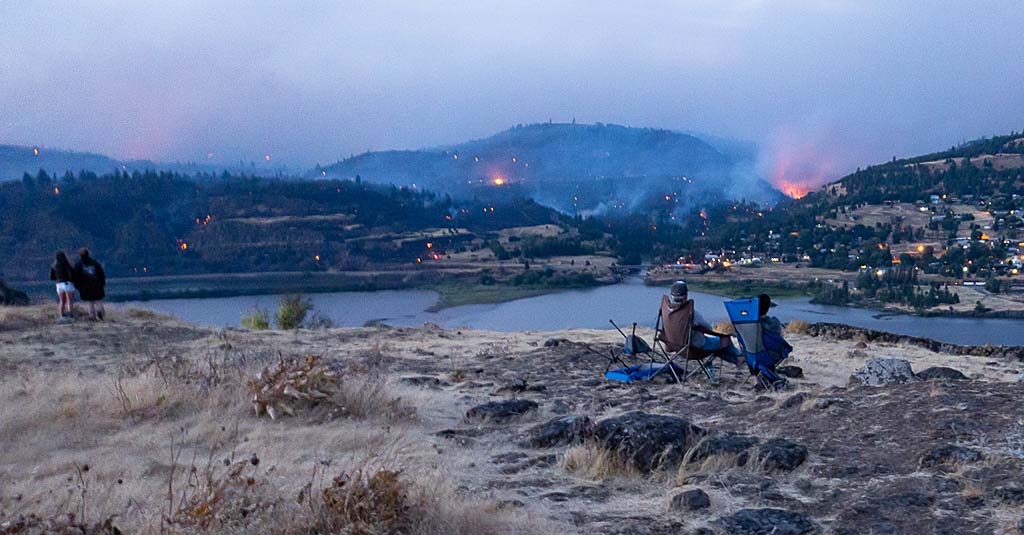
Spectacle: Onlookers watched the Burdoin Fire from Rowena Crest Overlook in Oregon on July 19. Photo: Jurgen Hess
Complex Incident Management Team Northwest 13 assumed command of the fire from the Washington Department of Natural Resources this morning.
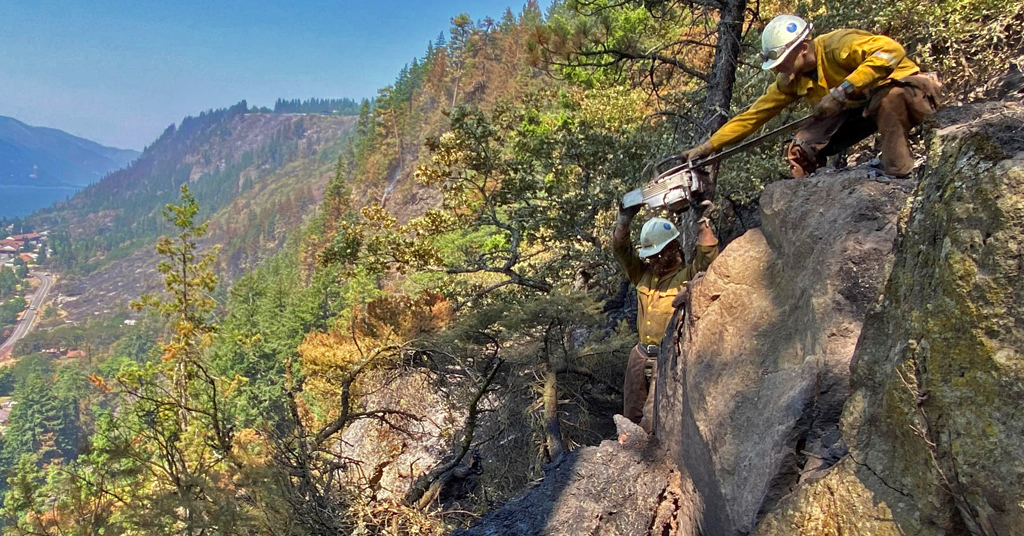
Firefighting work has been supported by the USFS, Washington State Fire Mobilization, West Klickitat Regional Fire Authority and Klickitat County Fire District 4-Lyle.
According to InciWeb (an interagency all-risk incident information management system), the Burdoin Fire “is being managed as a full suppression incident. Primary objectives are to minimize impacts to communities and community infrastructure in Bingen, Lyle and High Prairie, Yakama Nation lands and natural resources.”
“Go now!”
On Saturday, the Klickitat County Sheriff’s Office declared the town of Lyle (pop. 321) at Evacuation Level 3 (“Go now!”), compelling residents to leave the area immediately.
“At 11:30 a.m., Saturday, police sirens went off all over town,” botanist, Columbia Gorge activist and Lyle resident Barbara Robinson told Columbia Insight. “I was delighted with the police notification response. They did a good job.”
Asked what items she took from her home, Robinson said, “I might never see this house again. If a fire started (here), I don’t think the town would be saved. I took my computer, photos, my Reed College yearbook, underwear and a toothbrush. And my bag of balsamroot seeds.”
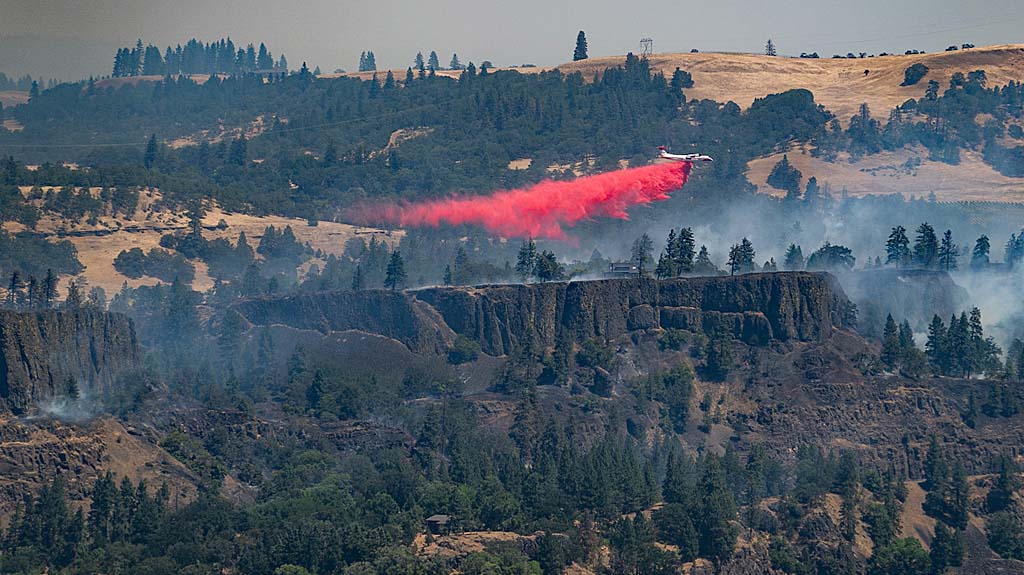
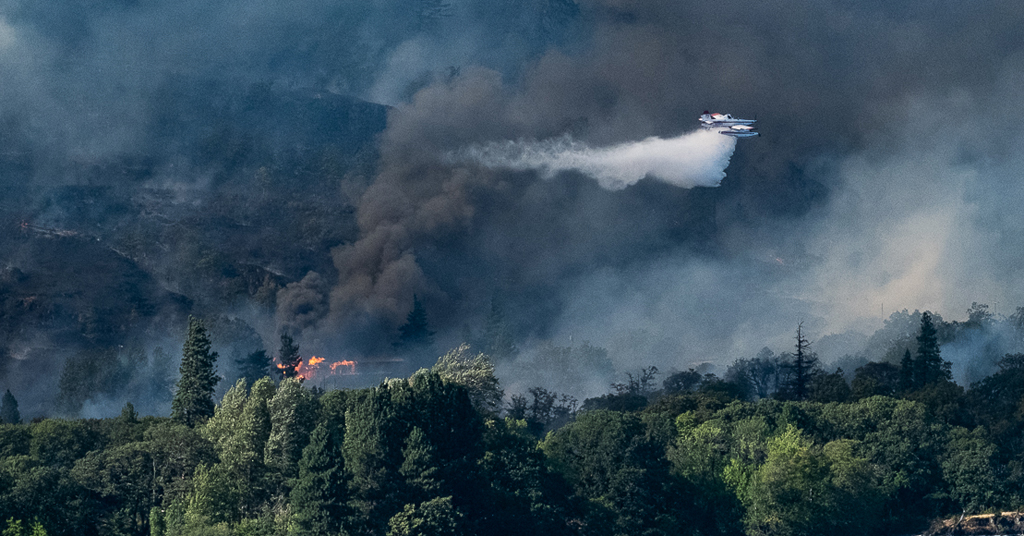
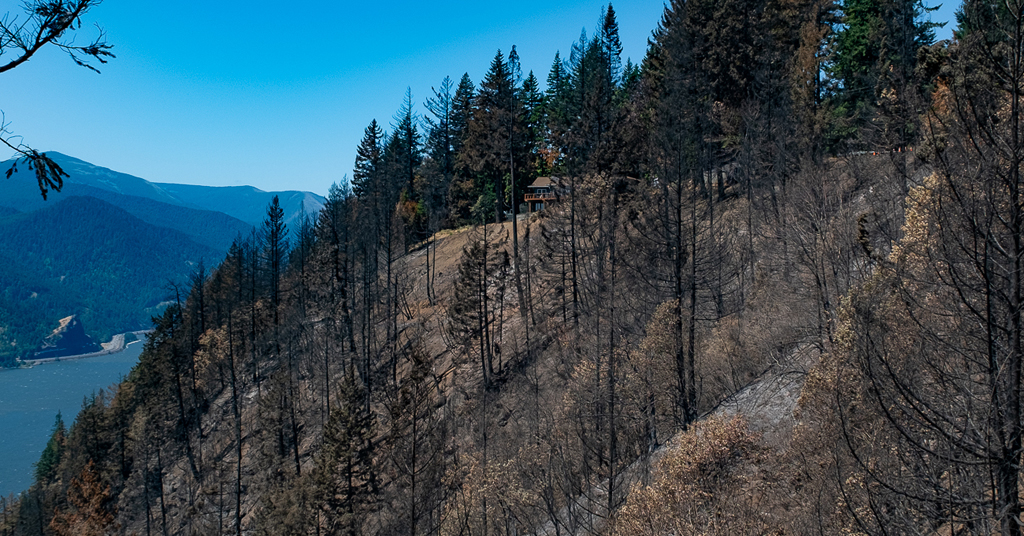
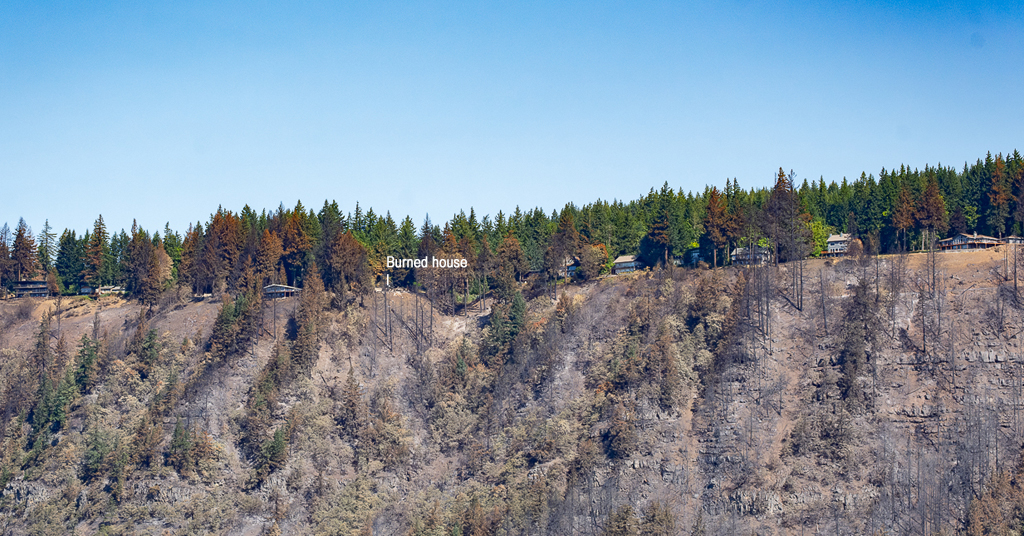
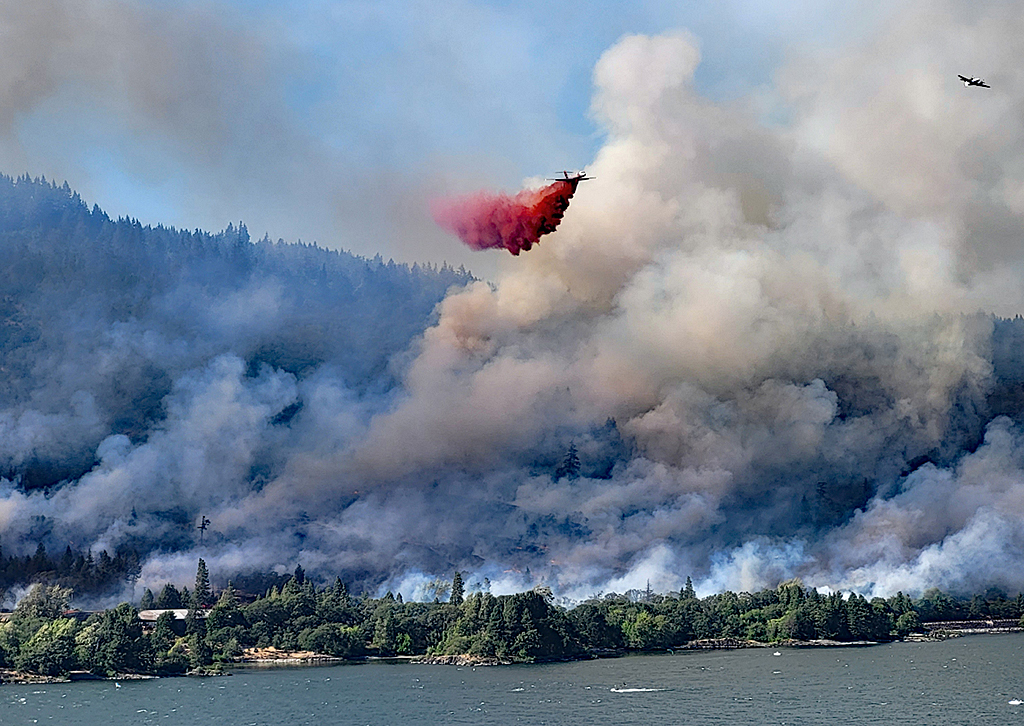
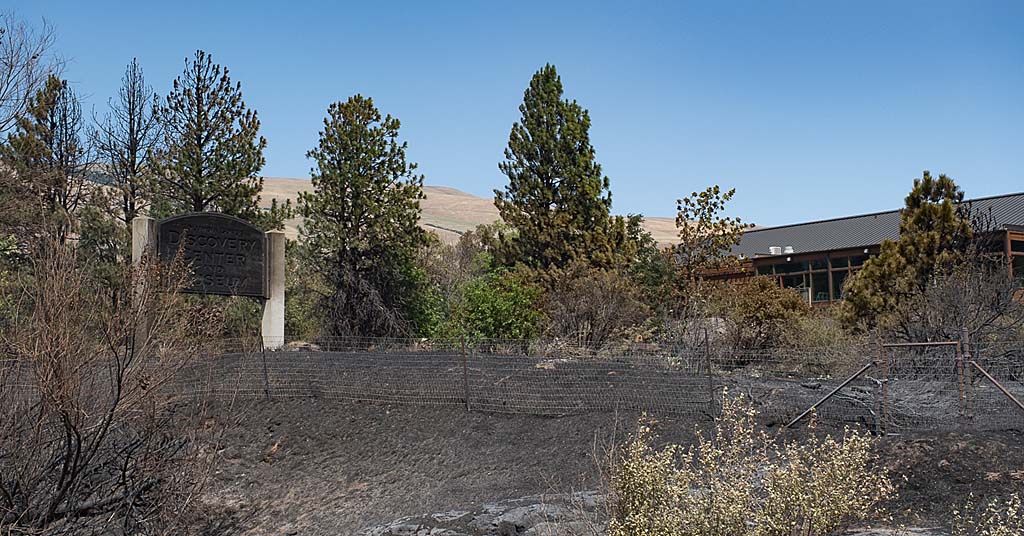
Drop zone: Airplanes unloaded fire retardant on the blaze. This drop helped save a house that remains standing. Photo: Jurgen Hess
Short grass, brush and timber are fueling the Burdoin blaze.
“The next time a fire comes, it will be like Paradise,” said Robinson, referring to the California town that burned in the 2018 Camp Fire that lasted 18 days, killed 85 people and destroyed more than 18,000 structures. “It’s set to burn.”
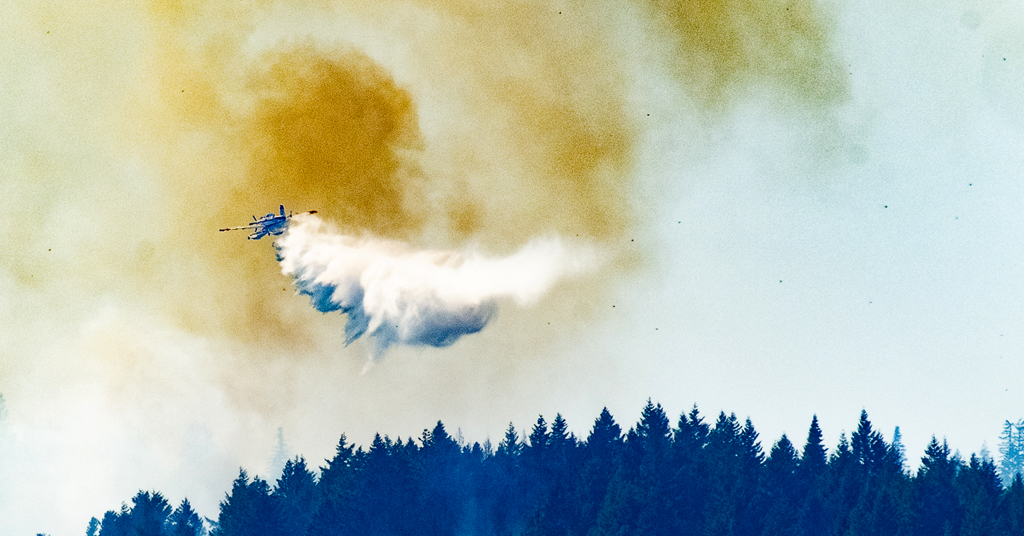
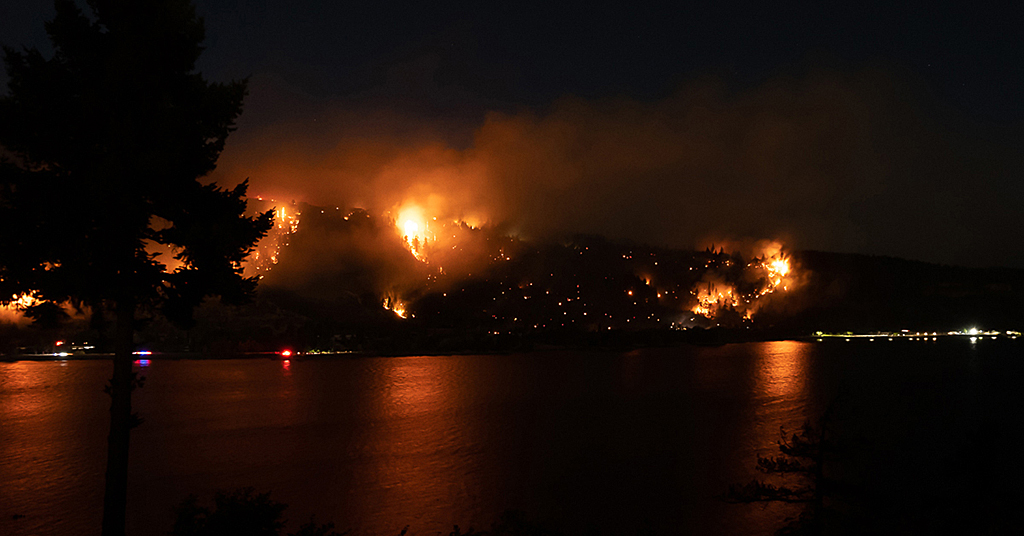
The westerly movement of the fire appeared to have been slowed with an air attack on the night of July 18, with airplanes and helicopters scooping water from the Columbia River and dropping it on the blaze.
Air attack planes making numerous fire-retardant drops included twin-engine water scoopers operating out of Redmond, Ore., and single-engine Fire Boss aircraft.
Rose told Columbia Insight that in some areas treated in recent years by the USFS to reduce fire-prone fuels, the blaze had been slowed or even turned back.
By July 20, however, the fire had crossed the Klickitat River and was burning across the Centerville Highway, just north of State Route 14.
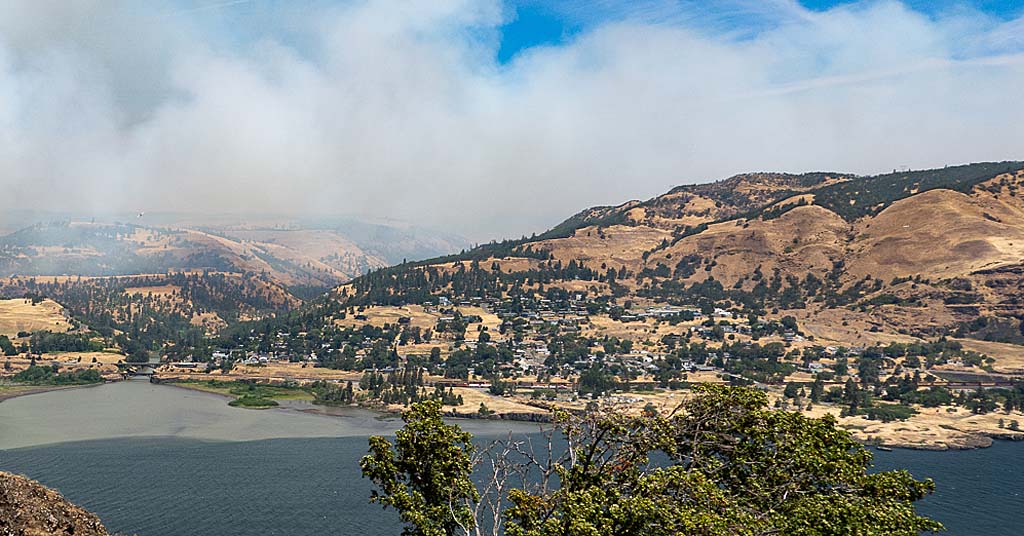
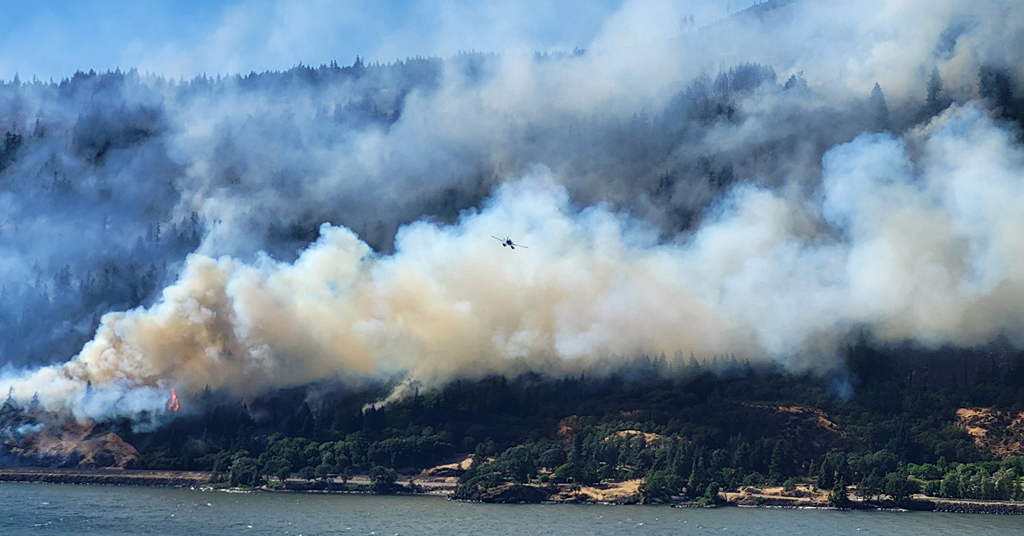
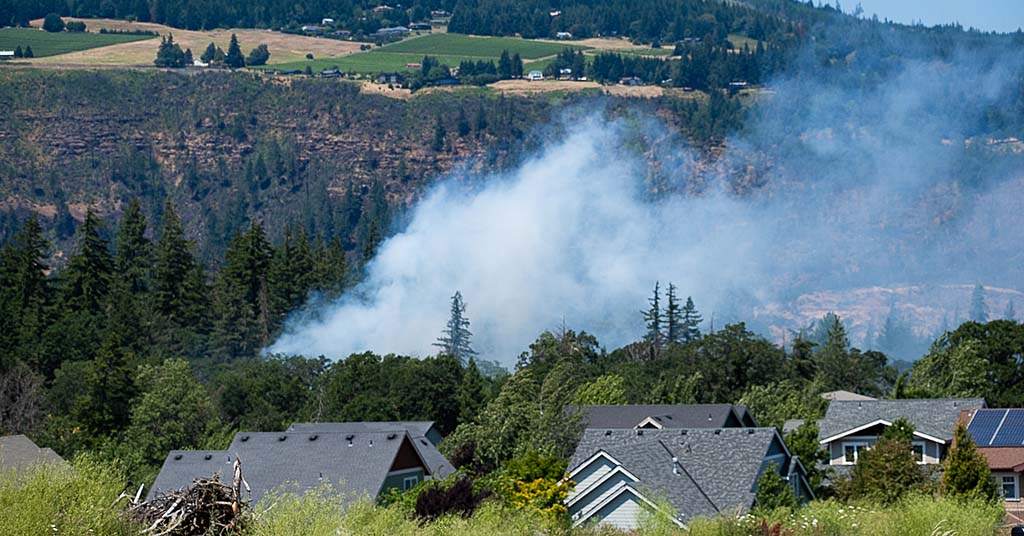
Smoke screen: Residents of Lyle, Wash., remain evacuated but firefighters have been able to prevent the blaze from reaching the town. Photo: Jurgen Hess
The fire is primarily moving to the north and northeast in steep terrain.
Thanks to the work of aircrews dropping water, the fire hasn’t moved into Lyle.
But there’s no end in sight. Officials say the fire is 0% contained.


 Columbia Insight’s reporting on environmental issues in Oregon’s Hood River Valley is supported by the Jubitz Family Foundation.