Stay Updated Subscribe today for the latest research + reporting about environmental news. Subscribe Now

Stay Updated Subscribe today for the latest research + reporting about environmental news.

Subscribe Now

Guest Author

Guest Author

About Guest Author

This author has not yet filled in any details.
So far Guest Author has created 149 blog entries.

In Idaho, wildlife ‘rehabbers’ volunteer against long odds

After finding an injured crow the author wasn’t sure what to do. Then she connected with a network of volunteer wildlife “rehabbers”
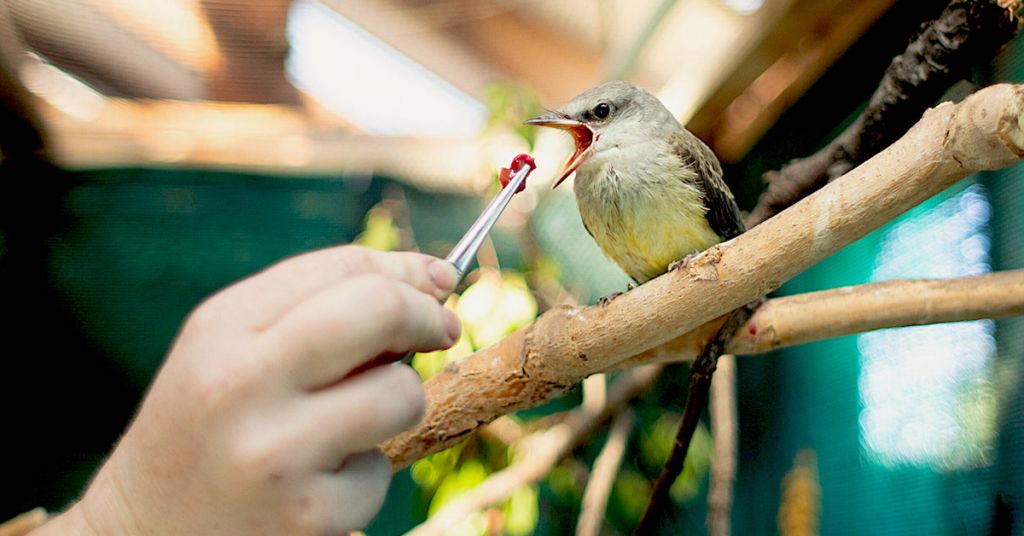
 

Flycatcher

Big job: Volunteers with the Animals In Distress Association in Boise might care for a flycatcher (pictured) one day and a bear cub the next. Photo: AIDA

By Grace Hansen, Mongabay. July 26, 2022. Driving down a quiet street in Idaho Falls in the spring of 2021, I hadn’t yet noticed the wide gap between wildlife’s various needs and the slim ranks of wildlife rehabilitators.

Then I saw a crow, hobbling and off balance, on the side of the road. I pulled over and approached slowly, hoping that when I got near, the bird would fly away.

When it didn’t, I eased closer.

The glossy black feathers on its right side were disheveled, and its wing hung at an awkward angle. Its left leg dragged as it tried to hop away from me.

Without much of a plan, I put on a pair of work gloves, caught the bird, and placed it in a box in my car.

Although I didn’t know it at the time, only two licensed wildlife rehabilitators work in all of eastern Idaho. The only option I knew of was the Idaho Fish and Game Department (IDFG), so I called, and although sympathetic, they didn’t have the resources to help.

After conducting a follow-up phone interview in 2022, it’s easier to understand why.

“They [wildlife rehabilitators] are important,” said James Brower, IDFG’s regional communications manager. “At Fish and Game we manage [wildlife] populations on a populations scale, not individuals. We’re animal lovers ourselves, so when it’s possible and feasible to take wild animals to a rehab center, we will do that.”

But in the case of the crow, it wasn’t.

Nationwide network

Although the permitting process to become a wildlife rehabilitator varies from state to state, the National Wildlife Rehabilitators Association (NWRA), based in Minnesota, exists to unify and promote the occupation as a whole.

“What we do is provide support and education for those professionals doing wildlife rehabilitation,” said NWRA executive director Molly Gezella-Baranczyk. “Working with federal and state agencies to liaise between what wildlife rehabilitators are experiencing and what the regulators need, [we] make sure both sides understand each other and can work together.”

The NWRA writes its own standards, then works with regulators to ensure each party’s needs are being met.
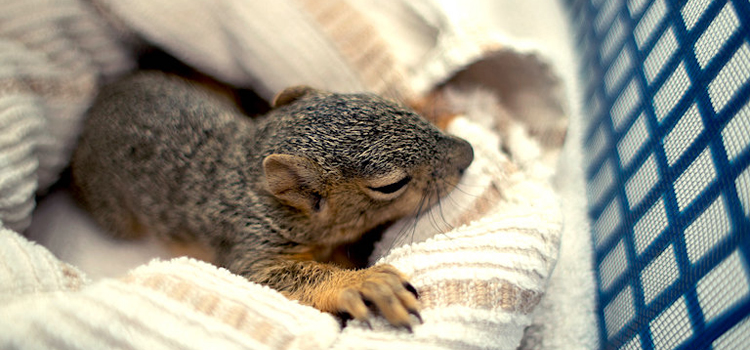
Baby squirrel

On the mend: Baby squirrel in the care of Animals In Distress Association in Boise. Photo: AIDA

Thanks to associations like the NWRA, the availability and uniformity of wildlife rehabilitators is increasing.

About 1,610 U.S. organizations or individuals are registered members.

“There’s so many layers of this profession,” Gezella-Baranczyk said. “They have people who work directly at centers, they have people who do animal care, they have people who do public education about animals, they have veterinary professionals who layer in there as well … you can get really involved in your picture of what’s happening, but a lot of these animals move beyond their own city, county and state lines. So, there’s a lot of ways that this community has a lot of different working parts that you can get involved with.”

For me, with an injured bird in the back of my car, those working parts weren’t immediately visible.

After several fruitless phone calls, I discovered the closest available help was at the Wildlife Rehabilitation Center of Northern Utah in Ogden, Utah—two and a half hours away from where I sat parked and slightly panicked about the sudden sense of duty I felt to the unlucky crow.

When I called and explained my situation, though, I realized immediately the trip would be worth it.

Staff at the center offered to wait until I arrived, even though it would be well past their usual business hours. They reassured me they’d handled similar situations before.

They were prepared.

Idaho efforts

In the dusty foothills of the Boise Mountains, the Animals in Distress Association (AIDA), also known as the Ruth Melichar Bird Center, looks more like a barn than a clinic, with wide, red siding and white-trimmed windows.

Among the many crates, enclosures and paddocks spread across the property, dozens of volunteers work toward a single goal: rescuing injured or abandoned baby animals.
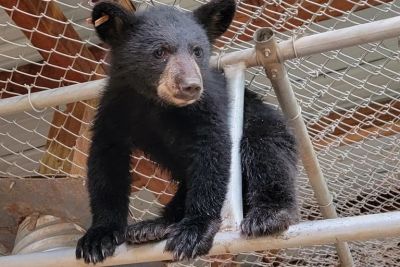
Bear cub

Orphaned: Black bear cub rescued by Idaho Black Bear Rehab. Photo: IBBR

AIDA is one of only 25 rehabilitation programs in a state with more than 300 animal species.

Although it’s difficult to determine exactly how many animals get injured each year, according to the U.S. Federal Highway Administration, the average number of animal-related vehicle accidents each year sits at around 300,000. This doesn’t include accidents in which the animal died or was injured but the car wasn’t impacted badly enough to justify an insurance filing.

Since it opened in 1987, AIDA has been rescuing and rehabilitating an average of 3,000 animals each year.

Each animal saved takes concentrated effort and many hours of work.

A volunteer named Montgomery, working with wildlife rehabilitator Brenda Sherburn LaBelle, realized just how much work when they rescued two baby hummingbirds.

“When you first see them, they hatch out of eggs the size of navy beans, and they’re only the size of bumblebees … they just looked like little bubbles of need,” Montgomery said on a Mongabay podcast. “To allow them to live we had to do what seemed to be this horrible thing.

“We had a syringe, and we had to stick the syringe down their gaping throats. The syringe looked like it was the size of the Empire State Building. It was so scary putting those down the throats of these tiny little infants.”

The story of the baby hummingbirds was added to a long list.

AIDA Director Jennifer Rockwell recently got a call about baby screech owls trapped in a couple’s home. Michelle Rice, a squirrel specialist, discovered three baby squirrels that had fallen out of a tree. A nest of baby woodpeckers was delivered to the center when their tree got cut down. When a mother western kingbird died after flying into a window, her five hatchlings were raised by the center.

The stories go on and on: some end with releases back to the wild, others animals end up in sanctuaries or zoos, while some wildlife are unable to be saved and must be euthanized.

Crow rescue

When I dropped the crow off at the Wildlife Rehabilitation Center of northern Utah, the staff informed me the situation was dire. Not only did the crow have a broken wing, it had a fractured leg. The bird would need surgery, and then, if it survived, months of recovery time.

I was told me to call in 72 hours for an update.

I hoped as I drove home that the crow would pull through.

The sense of connection I felt with a bird whose life I happened into for an afternoon startled me. I didn’t understand it then, but the more I learn about wildlife rehabilitation, the more I begin to.

As Montgomery explained, when she recalled finally being able to release her baby hummingbirds into the wild, “To be able to let someone loose like that, someone with this glittering beauty to take on these herculean tasks, someone you met in their most vulnerable state, that is such a magnificent achievement to have even a tiny hand in that. And that makes you feel like you too are a piece of the sky.”

I called Ogden three days later, and then every week after that for months.

The crow lived.

Maybe someday he’ll even be able to return to the skies.

And if he does, whatever part of me that he captured that day will be up there with him.

If you find an injured animal, the Humane Society of the United States advises calling a wildlife rehabilitator before you interact with the animal. Its website provides a state-by-state breakdown of organizations available to help.

Columbia Insight is publishing this story with permission from its partners at Mongabay. You can find the full version of this story here.
By |2023-01-28T16:34:43-08:0007/26/2022|Conservation, Wildlife|0 Comments

Coming attraction: Kingsley Reservoir and campground set to reopen

After a near half-decade closure, a popular Oregon recreation area will welcome visitors this summer. But the date remains vague

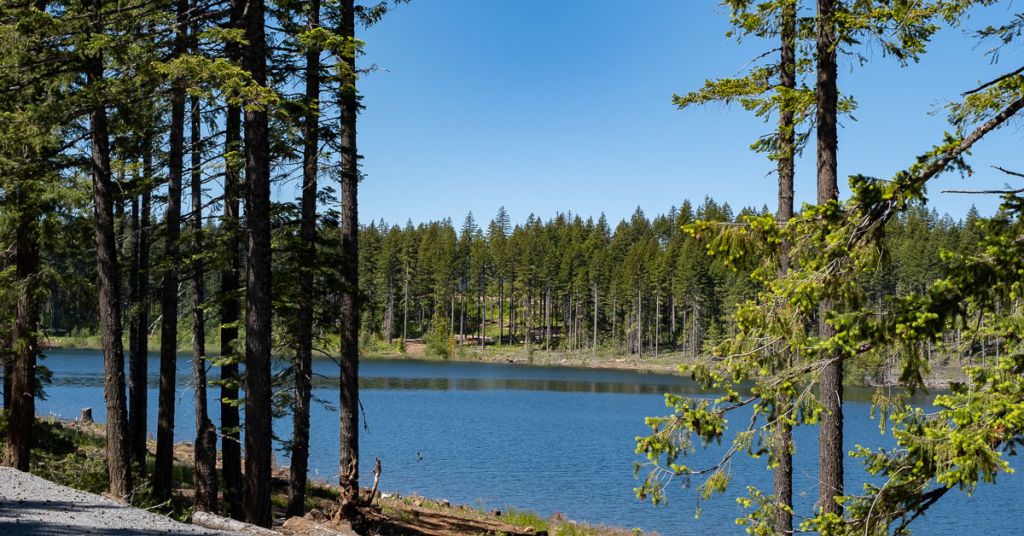
Kingsley Reservoir, Oregon

Ready or not? Out of public view, work continues at Kingsley Reservoir. An opening date remains elusive. Photo: Jurgenhessphotography.com

By Ben Mitchell, June 28, 2022. Anxious about summer heat? If you’re near the Columbia River Gorge, relief may be near.

The question is when.

Kingsley Reservoir, also known as the Green Point Upper Reservoir, has been shuttered since September 2017 due to a Farmers Irrigation District (FID) project to upgrade and expand infrastructure at the reservoir.

The reservoir is a key source of residential and agricultural irrigation water for the district that serves 1,722 users and 5,800 acres on the west side of Hood River County, Ore.

The project, which includes raising the height of the dam 11 feet to increase the volume of the reservoir, was originally slated for completion in May 2019. Due to unexpected delays, the timeline was pushed back to summer 2021, and now to summer 2022.

Along with upgrading the dam, FID replaced an aging outlet pipe and valve. It also created a new wetland after an existing wetland on site was impacted by project work.

In addition to being an important water source, Kingsley, located about 70 miles east of Portland and 30 minutes from downtown Hood River, is a popular recreation area, particularly among locals, who visit the reservoir for swimming, paddling, fishing, picnicking, hiking, biking, camping and ATV/dirt bike riding.

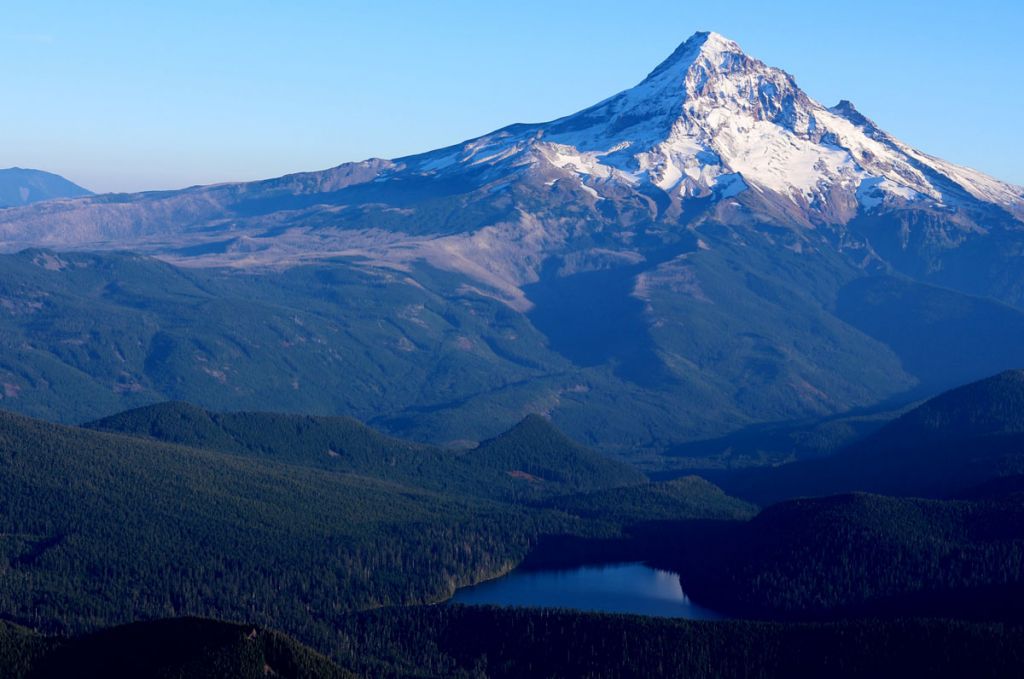
Kingsley Reservoir and Mt. Hood

Kingsley Reservoir and Mt. Hood: Water levels in a trio of lakes were raised by dams built in the early 1900s. Flumes carried logs from the lakes to a lumber mill at Green Point, now Kingsley. Photo: pdx.rollingthunder/CC

At a time when recreational use is increasing in the nearby Columbia River Gorge, having Kingsley Reservoir closed to the public has meant one fewer option to alleviate user strain. Particularly in summer.

Exacerbating this is the fact that another popular reservoir in Hood River County, Laurance Lake, has been closed since last summer due to dam work and a road washout.

Doug Thiesies, county forest manager for the Hood River County Forestry Department, which manages Kingsley and several other recreation areas, says an exceptionally wet spring has added more delays to the project, pushing back the opening of Kingsley, now likely to the beginning of August or later.

“The weather has thrown a curveball,” Thiesies says. “It’s just too wet. It’s like playing in the mud.”

Reservoir level good

FID embarked on the Kingsley project nearly five years ago to improve storage at the reservoir, which has been significantly impacted by climate change.

Les Perkins, general/district manager at FID, tells Columbia Insight that dwindling snowpacks and stream flows have made it so that the reservoir is “pushing into the last drop, pretty much every year.”

FID originally received $4.2 million in funding for the project via a combination of an Oregon Water Resources Department grant and a Clean Water State Revolving Fund (CWSRF) loan. The district also received an additional $2.7 million CWSRF loan. Perkins says FID will use “as little of this capacity as possible to finish the project.”

Kingsley Reservoir and campground

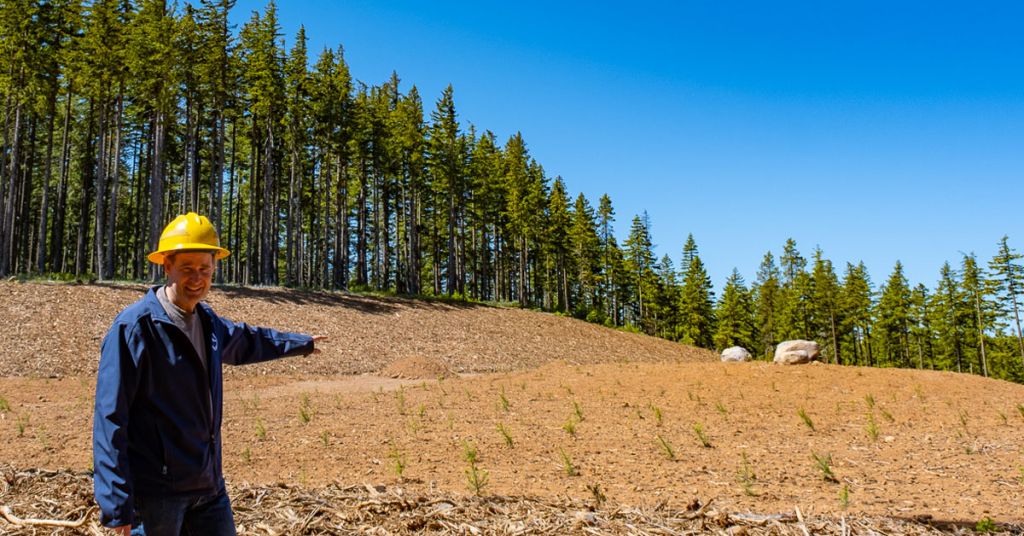
Coming up: Doug Thiesies indicates seedlings planted last fall. The trees will eventually provide screening for campers at Kingsley Reservoir. Photo: Jurgenhessphotography.com

The project encountered early delays due to permitting and staffing issues at federal agencies, as reported by Columbia Insight in 2019.

Since then, FID and its contractor, Crestline Construction, has dealt with everything from wildfire danger/air-quality issues, inclement and unseasonable weather, pandemic shutdowns and COVID sickouts, and supply chain issues. Each have caused the estimated date of completion to be pushed out time and again.

The silver lining about an abnormally wet spring? Perkins says FID is heading into irrigation season with a reservoir that’s in good shape.

More good news: Perkins says there’s “not much work left to do” on the project.

FID will be installing fire rings and picnic tables at the new campground it developed on the southwest side of the reservoir opposite the old campground on the northeast shore. The irrigation district was required to replace campsites inundated by the increase in the height of the updated reservoir’s water level.

[perfectpullquote align=”full” bordertop=”false” cite=”” link=”” color=”” class=”” size=””]“I think people are going to be really pleased with what they see.” —Les Perkins, Farmers Irrigation District[/perfectpullquote]

Perkins says the new campground, which consists of about 30 primitive sites and three vault toilets, is located in mature timber and has good access to the reservoir.

Thiesies says the county is utilizing grant funding to eventually create two more campground loops, including one not far from the site of the original campground, consisting of about 40 campsites with additional vault toilets. He estimates completion of that project as five to seven years away.

The county’s website was updated on June 27 with a new estimate for completion of work that “might be as early as the first part of August 2022.”

MORE: Massive expansion of Mt. Hood recreation areas could be coming

The reservoir will start filling to its new water level by summer 2023.

Although the reservoir won’t be at its new level this summer, Perkins says the campground experience won’t be impacted much. The old boat ramp in the day-use area can still be accessed when water levels are low. It’s located next to a new ramp boaters will access when water levels are higher and the reservoir is filled.

In order to protect water quality, only electric trolling motors will be allowed.

New feature: Permit system

“Honestly, I’m excited to see it reopen,” Perkins says. “Kingsley has been used for generations by residents, so there’s been a lot of dismay by having it closed for a long period of time.

“I think people are going to be really pleased with what they see.”

Another change since the last time the reservoir was open—the public now has to pay to park.

Daily permits for Kingsley parking cost $5; annual permits go for $30.

Kingsley Reservoir in Oregon

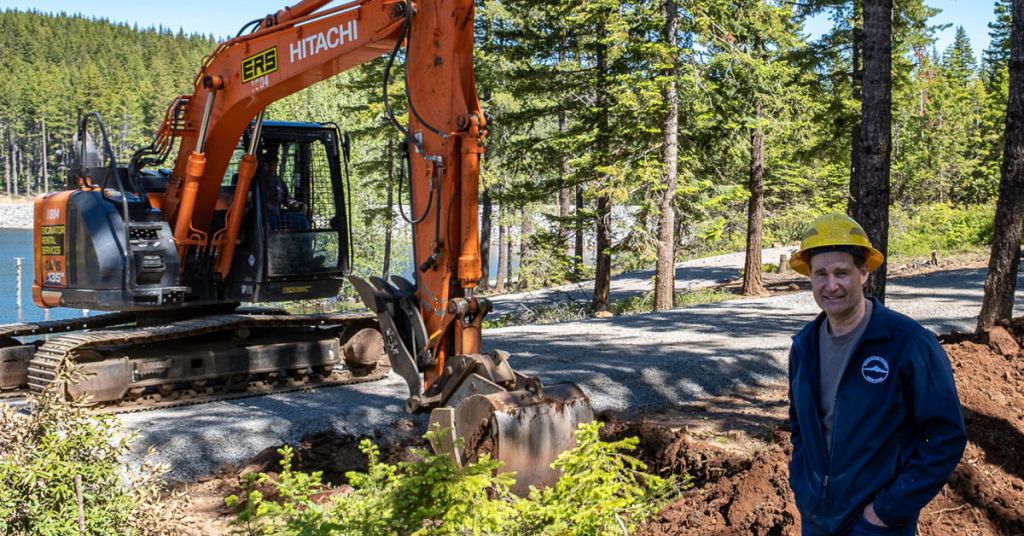
Making Kingsley whole: Thiesies at the site where a new gate will be installed at the refurbished Kingsley Reservoir. Photo: Jurgenhessphotography

Revenue from permit sales will be used to “maintain, develop and manage County Forest recreation and trails” according to the county website.

Permits can be purchased online or on mobile devices at staging areas. The county says permits will eventually be available at select local vendors.

Updates on the project can be found on FID’s website and on the Hood River County website (select “Trail Status” from the “Recreation Trails” section located at the bottom of the page).

Ben Mitchell is an award-winning freelance journalist and videographer based in Hood River. His work has previously appeared in many local publications and outlets, including the Columbia Insight.

If you’d like to support future work by Columbia Insight, click here. Or subscribe to the weekly newsletter.

By |2023-03-28T08:51:49-07:0006/30/2022|Recreation|0 Comments

Are these the world’s most eco-friendly dogs?

Fewer than one in 1,000 qualify for a program that trains dogs to sniff out invasive, non-native plants

Dogs sniff non-native plant species

Heaven sent: Working Dogs for Conservation sends the world’s most dynamic snouts in search of invasive plants. Photo: K. Burns/WD4C.org

By Jordan Rane, October 21, 2021. Guiding, herding, retrieving, rescuing, therapy’ing, sniffing out contraband, fetching slippers—dogs can be pretty impressive workers.

Now an elite pack of conservation-oriented canines is directing its snouts toward rooting out invasive wild plant species that threaten vulnerable Western ecosystems.

Along Wyoming’s Snake River, Working Dogs for Conservation (aka WD4C) works with a team of highly trained, weed-sniffing canines.

“We’re currently in the eradication phase with both pepperweed and saltcedar in our targeted areas,” says Pete Coppolillo, the nonprofit’s executive director. “It’s not hyperbole—a dog’s nose is the most extraordinary chemical sensor the world has ever known. Not just because it’s super-sensitive, but because it’s mounted on this highly mobile, motivated, intelligent, trainable animal.”

MORE: 3 ways to restore ecosystems with native plants

Pepperweed, a wispy, white-flowered Eurasian soil disrupter, has been on the verge of becoming dominant along stretches of the Snake River. Saltcedar (aka tamarisk) creates large salt deposits that have significantly leached soil nutrients and lowered water tables on portions of the Snake and other vital Western waterways, notably the Green River, a principal tributary of the Colorado River.

Amazingly, WD4C dogs can sniff out these plants before they even emerge from the ground.

One in 1,000 make cut

Based in Missoula, Mont., WD4C’s invasive plant-tracking program may be the most novel and challenging scent-and-destroy mission yet for a highly trained canine.

It’s the latest chapter for the organization, which calls itself the “world’s leading conservation detection dog organization.”

That’s not just a cute calling card begging for a future Pixar film. For 25 years, the organization has been engaged in a variety of scent-hunting conservation jobs. They’ve worked across the United States and as far afield as Tanzania, Costa Rica and the Falkland Islands.

Dog sniffs out invasive plant species

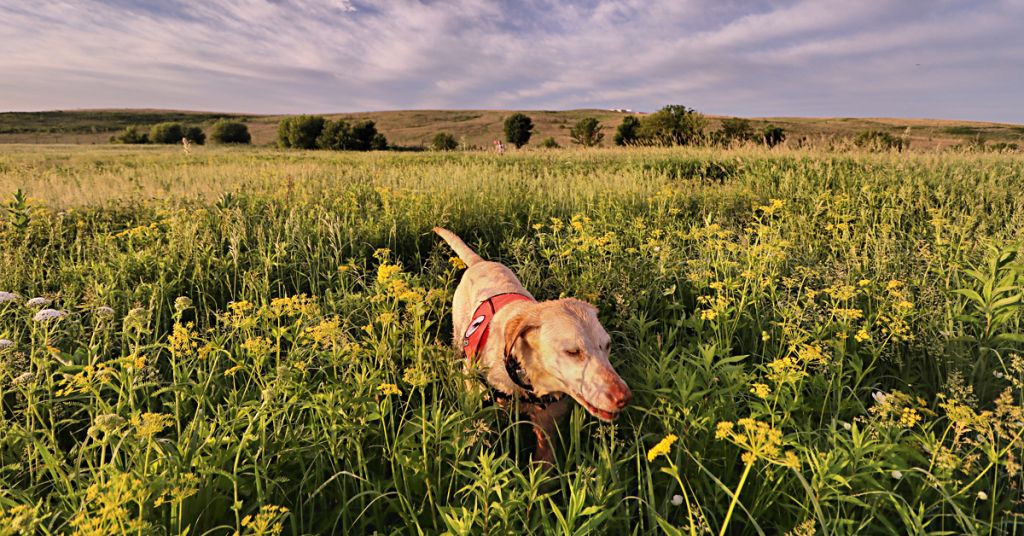
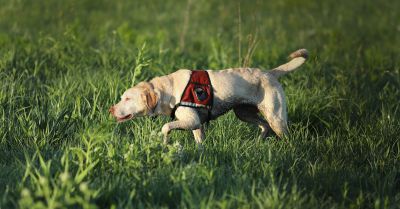
Hey, seed! Here on a gig in Iowa, yellow lab Lily is now retired from WD4C duty. Photo: K. Burns/WD4C.org

Redirecting a working dog’s talents toward wild plants doesn’t make for an easy gig for a working canine. Joining the WD4C plant-sniffing squad—comprised entirely of rescue dogs, and largely mutts—sounds as tough as Delta Force application odds.

“Less than one in a thousand dogs screened for the program will ultimately make the cut this sort of work,” says Coppolillo.

The organization’s earliest canine conservation missions date to the late 1990s, when dogs were used to track grizzlies in British Columbia’s Okanagan Valley.

“Dogs naturally read signals from other carnivores, so tracking down bear scat or wolf scat makes far more sense to them than plants,” says Coppolillo. “While you can train a dog on a new scent in an afternoon, it takes a much higher level of specialized training to get them to actually care about a plant. Often at least five to six weeks with the right dog.”

Woad win

In addition to current success managing saltcedar and pepperweed along the Snake River in Wyoming, WD4C dogs have been highly effective detecting a variety of invasive flora.

Cultivated by early Western settlers as a natural dye source, dyer’s woad, an aggressive intermountain weed, is another ongoing target.  

Dogs sniff out non-native plant species

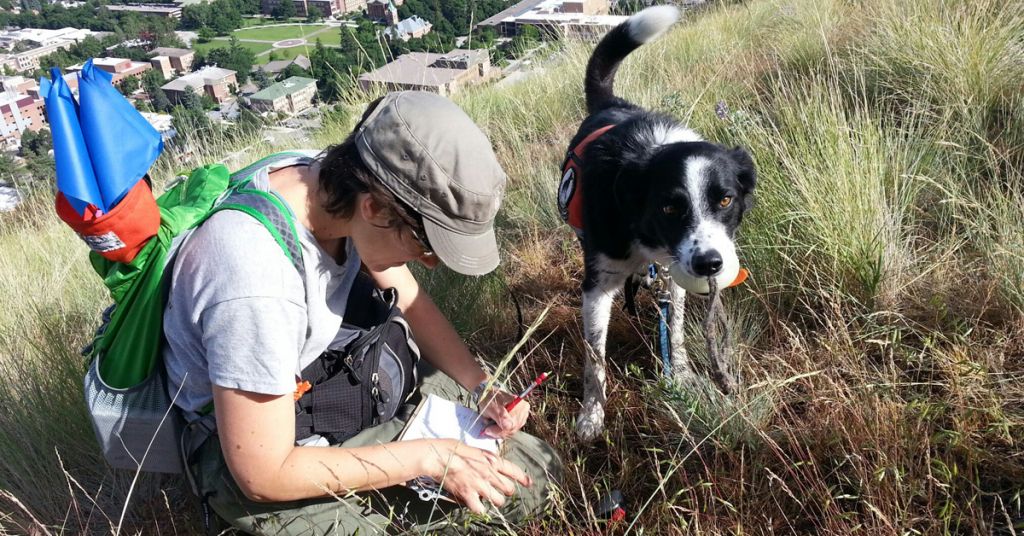
Woad trip: WD4C pooch Orbee and handler Dalit Guisco locate dyer’s woad on Mount Sentinel in Missoula. Photo: WD4C.org

“Dyer’s woad is super-invasive—it just takes over. Northern Utah is covered with the stuff,” says Coppolillo, whose dogs have effectively weeded it out of infested areas in and around Missoula. “Early on, we were doing numerous human weed-pull days and just not getting ahead of it.”

Then they brought in the dogs.

“Our dogs found hundreds of dyer’s woad plants for the first few years,” says Coppolillo. “Now they’ll find maybe a dozen of them. We’re waiting for the last few viable seeds to come out and then we’ll declare victory.”

Big need, few resources

In addition to invasive species, WD4C has pioneered methods of training canines to detect invasive animals, fish and insects, as well as illegal snares, poisons, guns and ammunition in Africa to curb wildlife trafficking.

Dogs sniff out invasive plant species

Sniff test: WD4C dogs travel the world. Photo: K. Burns/WD4C.org

They’ve also used their dogs to protect certain plant species—such as Kincaid’s lupine, a prairie wildflower in Oregon’s Willamette Valley that’s a vital nesting place for the endangered Fender’s blue butterfly. In that case, dogs identified plants to be located and safeguarded.

“We do similar work with monarch butterfly habitat in another part of the world,” says Coppolillo.

MORE: Invasive plant species are decimating Oregon’s rangeland

Subsisting on individual donations, government and foundation grants, and some fee-for-service work, WD4C’s clients have included the National Park Service, The Nature Conservancy and a number of state agencies and universities.

Which problem plants will the dogs descend upon next?

“There’s so many people who want us to work on invasive plants—and, strangely, so little money for it,” says Coppolillo. “I don’t understand why that is, especially when you consider how huge the economic implications of invasive species can be.

“I’m not a botanist, but I believe there are a ton of such cases in the Columbia River Basin we’d love to help out with.”

Columbia Insight contributing editor Jordan Rane is an award-winning journalist whose work has appeared in CNN.com, Outside, Men’s Journal and the Los Angeles Times.

Appreciate this story? To support environmental journalism on Columbia Insight click here

HAB is becoming the acronym of the summer. Now it’s Idaho’s turn

Beware of the water—Idaho DEQ says popular panhandle lakes have high levels of harmful algal blooms

HAB credit Tacoma-Pierce County Health Department

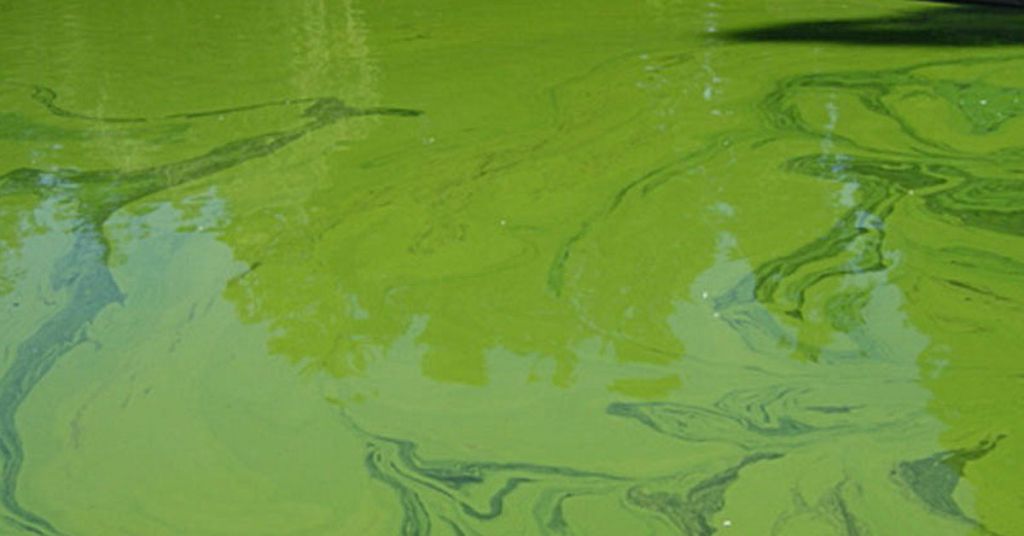
Bloom burgs: Harmful algae blooms are proliferating across the Columbia River Basin. Courtesy of Tacoma-Pierce County Health Department

By Jordan Rane. September 6, 2021. Wanna know how record heat, drought and a few seemingly harmless extra degrees of water temperature can impact otherwise lovely lakes? Check out the creepy blue-green swirl of foam accumulating on the shores of some of northern Idaho’s prettiest bodies of water.

And read the accompanying public health advisories.

After sampling the water at three popular swimming and recreation areas in northern Idaho in July and August the state’s Panhandle Health District issued warnings.

Fernan Lake, Hayden Lake and a portion of Lake Pend Oreille (where it meets the mouth of its namesake river) have been affected by dangerously proliferating cyanotoxins, better known by this summer’s increasingly eruptive water-borne acronym—HAB

HAB, or harmful algal blooms, technically refers to bacteria and not algae (an important component of a healthy aquatic ecosystem).

While algal blooms photosynthesize like plants in warm, calm, nutrient-rich waters, with spiking temperatures they can rapidly rise to toxic levels often marked by a green-ish or brown foamy mat that doesn’t just look nasty to swimmers, waders and anglers—it plays nasty, too.

Human exposure to HAB-inhabited water can cause a range of reactions, from skin and eye irritations, allergic responses, headaches and nausea to muscle cramping and liver and kidney damage.

Pets are particularly at risk.

MORE: As salmon cook in rivers, pressure on Biden mounts

“Animals exposed to HAB may die within tens of minutes or hours,” warns the Idaho Department of Health and Welfare in a sobering online brochure about harmful algal blooms that’s likely receiving record hits this summer.

In California, the presence of HAB’s in the Merced River fueled speculation about their possible role in the mysterious and as yet unsolved August death of a family of hikers and their dog in one of the year’s most bizarre stories.

Scum and foam

Increasing temperatures in popular Idaho panhandle lakes are likely the prime cause, if not the only cause, for algal blooms, according to the Idaho Statesman, in a report that begins with one of the more arresting leads we’ve read in a while: “Come on in, the water’s warm, scummy and full of dangerous bacteria.”

Water temperature trends in freshwater lakes aren’t tracked by state agencies in northern Idaho or eastern Washington, which has also experienced HAB issues. But some have been pushing 80 degrees this summer, far above expected levels in the low- to mid-70s.

[perfectpullquote align=”full” bordertop=”false” cite=”” link=”” color=”” class=”” size=””]“Pets exposed to HAB may die within tens of minutes or hours.” —Idaho Department of Health and Welfare[/perfectpullquote]

Experts believe temperature levels and proportional HAB growth is steadily rising in lakes across the Columbia River Basin.

“You can’t deny that temperature helps fuel algae blooms,” Colleen Keltz, water quality spokeswoman for the Washington Department of Ecology, told the Statesman.

How to report HABs in Idaho

“One of the more common visual HAB indicators is a blue-green water color with a surface scum or foam,” says Brian Reese, a water quality standards analyst at the Idaho Department of Environmental Quality.

The bloomWatch app allows people to report HAB sightings and upload images.

“HAB can also look like someone spilled paint, or grass clippings floating through the water,” says Reese.

MORE: Another victim of extreme heat: Cherries

Health and Welfare recommends avoiding water with any suspected algal bloom—which can be reported to the DEQ through the bloomWatch app or by emailing algae@deq.idaho.gov with a description of the potential bloom, the name and location of the water body and photos.

Columbia Insight contributing editor Jordan Rane is an award-winning journalist whose work has appeared in CNN.com, Outside, Men’s Journal and the Los Angeles Times.

By |2022-01-19T11:50:49-08:0009/07/2021|Climate Change, Water|0 Comments

The fraud that inspired the settling of the Pacific Northwest

Why is Marcus Whitman’s statue being removed from the U.S. Capitol? In Murder at the Mission, Blaine Harden explains the Whitman Massacre and upends one of the Columbia River Basin’s most enduring legends

Covered wagon

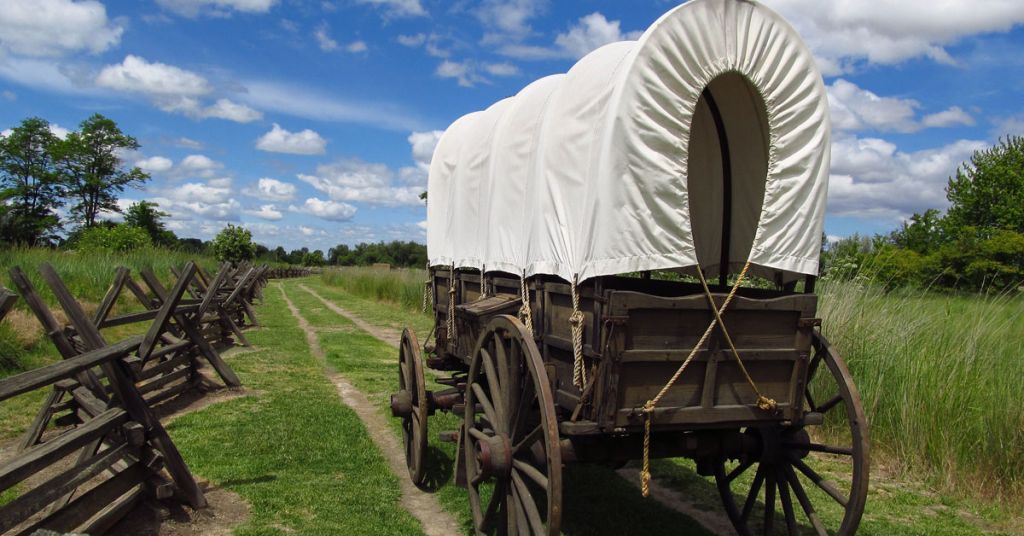
Pioneer daze: A new book says migration on the Oregon Trail was predicated in large part on intentional falsehoods. Photo by Jasperdo/Creative Commons

By Chuck Thompson. July 15, 2021. In 1847, the missionary Dr. Marcus Whitman, his wife, and 11 others were killed by members of the Cayuse tribe near present-day Walla Walla, Washington. What became known as the Whitman Massacre was a turning point in the history of the Pacific Northwest.

Printed accounts of the event turned into a rallying cry against local indigenous populations and prompted Congress to turn the Oregon Country into an official U.S. territory. An inexorable stampede of settlers quickly followed.

Located just west of Walla Walla, the Whitman Mission National Historic Site memorializes the event and its significance. Just one problem.

Blaine Harden

Regional champion: Blaine Harden. Courtesy Viking Random House

“The story is completely a pack of lies,” Washington native and author Blaine Harden tells Columbia Insight. Harden’s impressively researched and eminently readable new book, Murder at the Mission: A Frontier Killing, Its Legacy of Lies, and the Taking of the American West, exposes the falsehoods that led to the veneration of a little known missionary and more than a century of persecution of the Cayuse.

“The story became the official history of the United States. It was published in virtually every history book read by every student in every high school in the United States,” says Harden, who also wrote A River Lost: The Life and Death of the Columbia.

While focusing on the tale that grew around the killings (which did in fact take place) Harden’s book explains how the fallout from deliberate prevarication surrounding its mythology propelled bogus claims on treaty-protected Native rights. These include theft of senior water rights, deleterious effects on the Umatilla River and illegal acquisition of tribal lands by white settlers that led to the economically disadvantageous “checkerboard” pattern of land ownership on reservations that prevails to this day.

It’s not all grim news.

“What’s interesting about the Cayuse is they had 120 years of torment but in the past 30 years they’ve done really well,” says Harden. “They’ve educated members of the tribes from the Umatilla Reservation. Good lawyers. Good land-use planning. Good biologists. Good management of money. They have better housing, better water, better schools, better medical care, longer lives, less smoking, less obesity. They really have done a remarkable job reinventing themselves.”

In 1953 a heroic statue of Whitman was placed in National Statuary Hall in Washington, D.C., as one of two representing Washington state. In light of emerging facts that contribute to an unflattering rewrite of the Whitman story, in April of this year the Washington Legislature voted to remove his statue from the Capitol and replace it with a statue of late tribal rights activist Billy Frank Jr. The statue swap is expected to be completed later this year.

Murder at the Mission is available for purchase from Penguin Random House.

Following is an abridged version of the introductory chapter of Murder at the Mission, by Blaine Harden.

Introduction: The Good Doctor

My descent into the looking-glass legend of Dr. Marcus Whitman began in elementary school when I performed in a class play about the good doctor. It was the early 1960s and I lived in the tumbleweed outback of the Pacific Northwest, where Whitman had been killed by members of the Cayuse tribe in 1847 and where he lived on as a much-in-demand martyred ghost.

Besides school plays, he had appeared in an opera, poems, hymns, children’s books, radio plays, movies, and the stained-glass windows of churches from Spokane to Seattle. His name was on high schools, middle schools, highways, hospitals, banks, churches, nursing homes, a national forest, a county in Washington State, and a glacier on Mount Rainier.

Whitman Massacre depiction

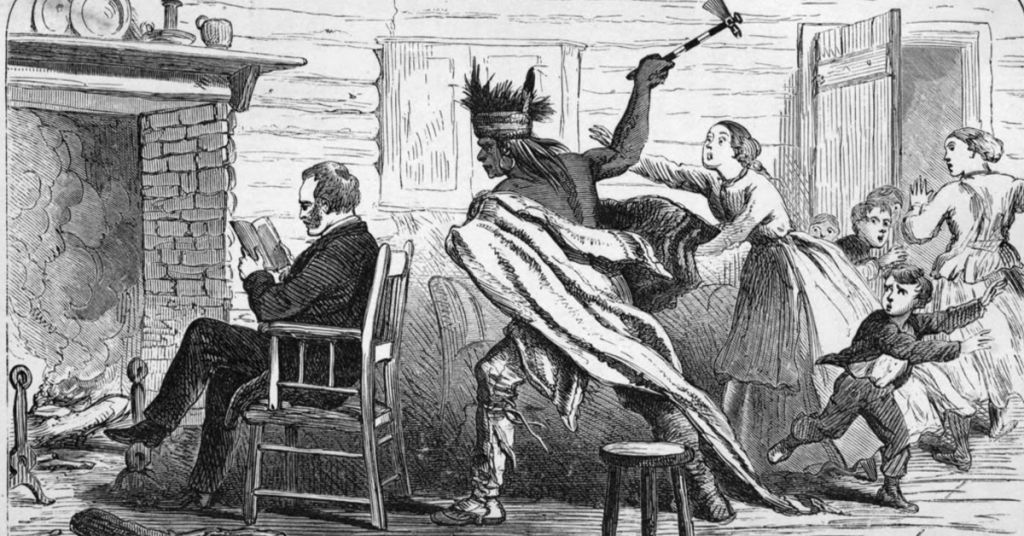
Manifestly false: Marcus Whitman wasn’t the unwitting victim depictions of his murder, like this one from an 1881 book, made him out to be. Wikimedia Commons

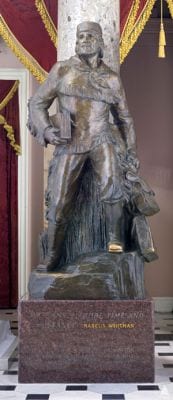
Near the Walla Walla River, where his mutilated body had been buried in a mass grave, the National Park Service presided over the Whitman Mission National Historic Site. The tallest building in nearby Walla Walla was a 12-story luxury hotel called the Marcus Whitman. It looked down upon the campus of Whitman College, an excellent liberal arts college. Boosters in Washington State raised money in 1953 to send a bronze statue of Whitman—clad in buckskin, carrying a Bible, and bearing a slogan that read “My plans require time and distance”—to Washington, D.C., for display in the Capitol’s National Statuary Hall.

The statue received a welcoming speech from Supreme Court Justice William O. Douglas, the most prominent graduate of Whitman College—with the possible exception of Adam West, the actor who played Batman on television in the sixties. Douglas condemned the “treachery” of the Indians who killed Whitman and said that the doctor’s example should “fill the hearts of our people with pride and teach them that courage and devotion can overcome even the impossible.”

**

Whitman and his wife, Narcissa, were Presbyterian missionaries from upstate New York. They traveled west—into what Narcissa called “the thick darkness of heathenism”—during a peak season of godliness in the United States. Called the Second Great Awakening, it transformed millions of unchurched Americans into ardent, evangelical, conversion-focused Protestants. Before the revival took off, around 1800, just one in 10 Americans attended church; by 1836, when the Whitmans headed west, nearly eight in 10 did.

As Protestant evangelism surged, it locked arms with nationalism. The result was Manifest Destiny, an imperialist theology of God-ordained exceptionalism and continental expansion that seized the popular imagination just as the federal government was figuring out how to exploit one and a quarter million square miles of newly acquired land that stretched from Texas to California and up to what is now the Canadian border. Manifest Destiny justified almost anything Americans wanted to do in this vast new landscape. It was God’s will, after all, for these chosen people “to overspread and to possess.”

The Whitmans were at the missionary vanguard of the land grab. Their quest, as they described it, was to convert the “benighted Indians” to Christianity and civilize them so that they might survive a looming stampede of westbound white people.

The Whitmans focused their salvific attentions on the Cayuses, a small tribe of expert horsemen and aggressive traders on the Columbia Plateau. When the missionaries arrived in Cayuse country—straddling what would become the state line of southeastern Washington State and northeastern Oregon—tribal elders were intrigued. They hoped that a few white people and their white God might be helpful, augmenting the spiritual power of their own religion. For 11 years, albeit with mounting disappointment and bitterness, the Indians allowed the Whitmans to preach, teach, farm, and build on their land.

Cayuse Warriors

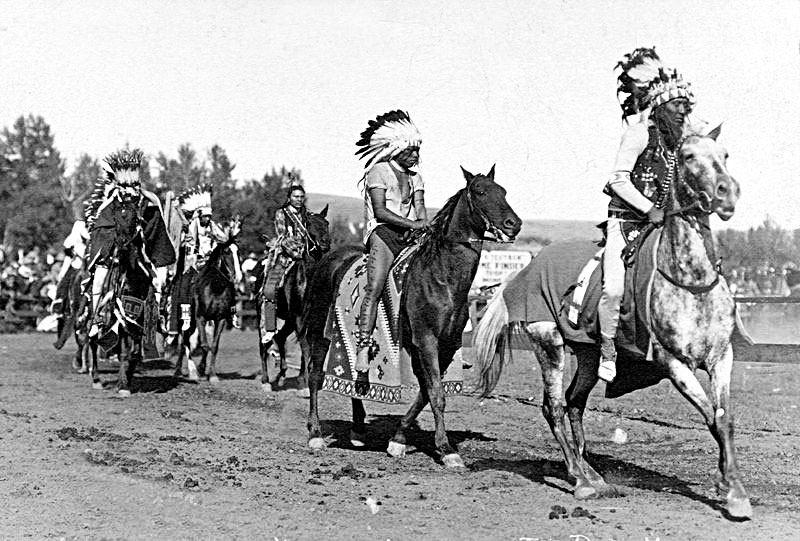
Expert horsemen: Cayuse warriors and their horses, photographed here in 1910, were renowned across the West for their martial skill, tactics and courage. Photo by Walter S. Bowman/Wikimedia Commons

On November 29, 1847, a handful of Cayuses ended the experiment. They killed the Whitmans, tomahawking, shooting, knifing, whipping, and stomping them into the mud outside their mission house. Their fury was such that they used one of Dr. Whitman’s surgical saws to cleave open his skull and the skull of his wife. Eleven other white men were also killed. Remains of all the victims were buried in shallow graves, where scavenging animals got to them.

As word of the atrocity spread east, it became a tipping point in the history of the West. Within a year, Congress made the Oregon Country—which had been shared for decades with Great Britain under a treaty of joint occupation—an official territory of the United States. The killings also horrified East Coast Protestants, whose Sunday offerings financed missionaries. The mass murder became infamous as the Whitman Massacre.

**

My grade school’s play about Marcus Whitman did not reenact his violent death, which adults viewed as too grisly for grade schoolers. (The massacre, though, was often acted out in high school and college productions.) The stage productions celebrated Whitman as a patriot, a Christian role model, and a frontier hero who, like Lewis and Clark, possessed undaunted courage. He was depicted preaching on Sundays, curing illnesses, teaching the Cayuses to read, and showing them how to grow wheat, grind flour, and make bread.

Thrillingly, as many of the productions depicted it, Whitman also stopped a British attempt to steal the Pacific Northwest away from the American people. Five years before his murder, Whitman grabbed a Bible, jumped on a horse, and rode alone through terrible winter snows across the continent to Washington, D.C. There, he warned President John Tyler of British scheming and begged him to build a road for wagons rolling west. The dialogue went like this:

TYLER:

You have some farsighted ideas, Dr. Whitman.

WHITMAN (ENTHUSIASTICALLY):

What I want to see is the American flag wave from ocean to ocean. Put that road through, build the supply depots and the settlers will come in such vast numbers that we’ll forever route the British lion from Oregon Territory! We’ll win that country for the United States!

Whitman Mission National Historic Site

Clouded memory: The Whitman Mission National Historic Site is located along the Oregon Trail near Walla Walla. Photo by Jasperdo/Creative Commons

After securing presidential support, Whitman raced back west. He stopped off in St. Louis, Missouri, from where, in 1843, he led what was then the largest-ever wagon train bound for Oregon.

In the years that followed, thousands upon thousands of American settlers rolled west over the Oregon Trail. An unstoppable force, they elbowed the British into Canada, forced Indians off their land, and opened up the Oregon Country for white Protestants, who would eventually include my mom and dad, my two sisters, my brother, and me.

Whitman’s story was a real-life Old West passion play—or so it seemed. Violent death at the hands of tomahawk-slinging hostiles gave the story a stirring shiver of last-stand martyrdom. It linked Whitman to General George Armstrong Custer at Little Bighorn, to Davy Crockett at the Alamo, even to Christ at Calvary.

What no one told me at the time was that the Whitman story was largely a pack of lies.

[perfectpullquote align=”full” bordertop=”false” cite=”” link=”” color=”” class=”” size=””]”The West was mythologized—that is, lied about—at the same time it was being settled.”[/perfectpullquote]

Protestant clergymen had cooked up most of it decades after the Whitmans were murdered. Its principal author was the Reverend Henry Harmon Spalding, a New York–born Presbyterian missionary who himself just barely managed not to be killed by the Cayuses.

Spalding was fiery-eyed, scraggly-bearded, and endlessly aggrieved. He had a poisonously strange relationship with Marcus and Narcissa Whitman. When they were alive, he tormented them. When they were dead, he—with the help of his ordained collaborators—made up the great patriotic whopper that transformed them into legends.

Prone to self-pity and despondency, Spalding was an inventive self-promoter who churned out blood-chilling pulp fiction, which he persuaded newspaper editors to print as eyewitness frontier history from a truth-telling man of God.

He was president of the Oregon chapter of a secret nativist society that demonized Catholics and immigrants. He was most productive—and far less irritable—while living among Indians.

His fellow missionaries wrote countless letters about his erratic, spiteful, and annoying behavior. One said Spalding “seems unable to control himself and . . . has a disease in the head which may result in derangement.” Yet a peevish personality and periodic bouts of irrationality did not stop him from collaborating for decades with ministers, writers, and politicians from all across the United States in creating and popularizing the Whitman lie.

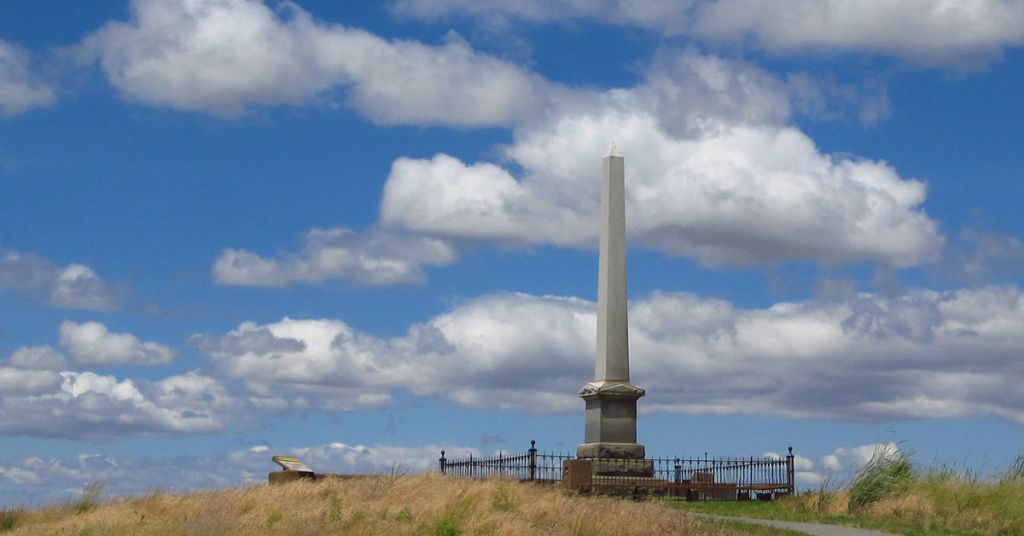
Legal grounds: Laws and treaties provided no protection against settlers’ demands for choice tribal lands around what’s now the Wallowa Whitman National Forest. Photo USFS

Nor did a life of lying wreck his posthumous reputation. In 1936, a century after Spalding arrived in Oregon, President Franklin D. Roosevelt recognized his achievements as a missionary and pioneer. A small unincorporated community is now named after him in northern Idaho, where the U.S. National Park Service honors his memory and where his grave dominates Spalding Cemetery, a tribally owned burial ground that serves the Nez Perce people.

Spalding’s big break—credibility-wise—came 24 years after the Whitman killings. On a visit to Washington, he persuaded the U.S. Senate to print his version of Whitman’s heroics in an official pamphlet. It quickly spread—as authentic, government-approved western history—to the pages of the Encyclopaedia Britannica, The New York Times, The Ladies’ Home Journal, and most of the American history textbooks in public and private schools across the country.

On a Sunday morning in Chicago half a century after Whitman’s death, more than 40 Protestant ministers sermonized simultaneously about his “heroic patriotic Christian work.” The story was taught in Sunday schools and published in bestselling books. The Detroit News described Whitman’s journey on horseback to Washington as “the most famous ride in American history!” While it was less well known than Paul Revere’s ride, many columnists and editorial writers claimed it was more patriotically magnificent.

**

Not long after my grade school performed the Whitman play, the history of the American West was given a thorough rewrite. Revisionist scholars—many of them young, non-male, non-white, non-Protestant—shredded the triumphalist view that the frontier had been “tamed.” Settlement of the West, they wrote in the 1970s and ’80s, had not been an edifying exercise in Jeffersonian democracy or an uplifting application of Christian values. Rather, it was “conquest”—a forced taking of territory that was often brutal, greed-driven, racist, ecologically disastrous, even genocidal.

Marcus Whitman statue in National Statuary Hall in the U.S. Capitol

He’s history: Marcus Whitman’s likeness will be removed from National Statuary Hall later this year. Photo Architect of the Capitol

American Indians were the frontline victims, losing their lands, their cultures, their languages, and often their lives. They were decimated by diseases, defeated in wars, deported from their homelands, and corralled on reservations, and several generations of Indian children were taken away to government-run schools, which tried to turn them into little white boys and girls, sometimes with devastating results. Over time, Indian Country became the poorest part of the West. The Cayuse tribe—branded for generations as the irredeemable demons who murdered the Whitmans—was nearly exterminated.

The legacy of conquest, as revisionist historian Patricia Limerick has written, is as fundamental to understanding the West as the legacy of slavery is to understanding the South. Both “have tested the ideals of the United States,” and both demand “sober national reflection.”

Yet Americans did not see it that way. “The legacy of slavery was serious business, while the legacy of conquest was not,” Limerick wrote. She said the unsightly and undemocratic realities of the West had “dissolved into stereotypes of noble savages and noble pioneers struggling quaintly in the wilderness.”

[perfectpullquote align=”full” bordertop=”false” cite=”” link=”” color=”” class=”” size=””]”The Whitman lie is a timeless reminder that in America a good story has an insidious way of trumping a true one.”[/perfectpullquote]

To correct these perceptions, Limerick and legions of other revisionist historians took an ax to the story of how the West was won. Their efforts were influential in academia and popular culture, stripping feel-good nonsense out of books, paintings, movies, and television shows. Consider Clint Eastwood’s 1992 film Unforgiven. It cut false sentiment from every aspect of life in the 19th-century West, especially the supposed romance of gunfighting. Eastwood played a destitute pig farmer and washed-up gunfighter who was no longer a sure shot. He went to work for vengeful “whores” who wanted their abusers dead. At close range, so he did not miss, he coldly murdered for money.

In the same somber spirit, filmmakers Ken Burns and Stephen Ives rounded up a sizable herd of revisionist historians in the mid-1990s. Using eight episodes of prime-time public television, they told an unvarnished and uncomfortable story of the West. Compared with what had been on television in the four previous decades (Bonanza, Gunsmoke, Little House on the Prairie), the series was “more frank about our failures and more clear-eyed about the cost of even our greatest successes.”

One episode focused on Marcus and Narcissa Whitman, explaining that cultural misunderstandings caused their deaths. The documentary, though, did not bother to debunk the story of Whitman riding a horse to the White House to save Oregon. Echoing the no-more-hokum consensus that typified the work of revisionist historians, the filmmakers simply omitted the Whitman lie—never mind that millions of Americans learned about it in Sunday school, in the pages of their schoolbooks, and in The New York Times—and believed it for decades.

**

Leaving out lies does not get at the truth, especially in the West, where lies have been essential tools for getting rich, going broke, and glorifying the grim business of conquest. Had railroads and banks and newspapers not lied to sodbusters, far fewer of them would have rushed to the arid West to suffer, fail, and plow up land unsuited for row crops.

Murder at the Mission by Blaine Harden

The West was mythologized—that is, lied about—at the same time it was being settled. Indian chiefs and Indian fighters ranged back and forth between flesh and fantasy, between the real West and its dime-novel doppelgänger. Sitting Bull, leader of the Sioux, used the break between the Battle of Little Bighorn, in 1876, and the Massacre at Wounded Knee, in 1890, to tour Europe and the United States while performing for pay in Buffalo Bill’s Wild West Show. Kit Carson, an actual Indian fighter, failed in 1848 to save a white woman from Apaches. But near her arrow-riddled corpse he discovered a dime novel about the fictional Kit Carson, who never failed to save a good white woman from Indian peril. Having stumbled upon his better, more marketable mythical self, the real Kit Carson decided to cash in on it, writing (or rather dictating, since he couldn’t read) an autobiography.

The “Whitman Saved Oregon” story was a similarly surreal western confabulation. Two decades after running for his life from the Cayuses who killed the Whitmans, the middle-aged Henry Spalding massaged his fading frontier memories, spiced them with hysterical resentments, and colluded with other Protestant ministers to fabricate an utterly original American icon. Pious, fearless, and handy with a horse, he was Marcus Whitman, the martyred missionary doctor who galloped across America, sweet-talked the president of the United States, and added three stars to the red, white, and blue.

Warren G. Harding, a forgettable American president but a wily American demagogue, explained it best. After delivering a speech in 1923 that celebrated the Whitman lie in all its horse-riding, flag-waving, God-fearing glory, Harding observed, “If it isn’t true, it ought to be.”

This book tracks the long and unlikely arc of a great American lie. An unemployed and embittered Presbyterian minister created it as catnip for churchy countrymen who like their politics—and their history—to be simple, action-packed, hero-driven, patriotic, self- congratulatory, and ordained by Almighty God. Spalding’s fraud helped him get a job. It sanctified and encouraged conquest of the West. It transformed a mediocre missionary doctor into a martyred American hero. And it all but exterminated an Indian tribe.

Spalding’s story was so “thrilling”—an adjective invariably used in handbills promoting church lectures about Whitman’s ride—that even after it was shown to be a deliberate falsehood and self-contradicting nonsense, many white Americans, particularly in the Pacific Northwest, refused to let it go. They couldn’t help but retell the story—in Sunday sermons, outdoor summer spectacles, and public-school plays.

The Whitman lie is a timeless reminder that in America a good story has an insidious way of trumping a true one, especially if that story confirms our virtue, congratulates our pluck, and enshrines our status as God’s chosen people.

From MURDER AT THE MISSION by Blaine Harden, published by Viking, an imprint of Penguin Publishing Group, a division of Penguin Random House, LLC. Copyright © 2021 by Blaine Harden.

READ MORE INDIGENOUS ISSUES STORIES.

The Collins Foundation logo

The Collins Foundation is a supporter of Columbia Insight’s Indigenous Issues series.

By |2023-11-09T09:34:39-08:0007/15/2021|Books, Indigenous Issues|7 Comments

3 ways to restore ecosystems with native plants

The Homegrown National Park movement calls on individuals to restore native habitats one yard at a time

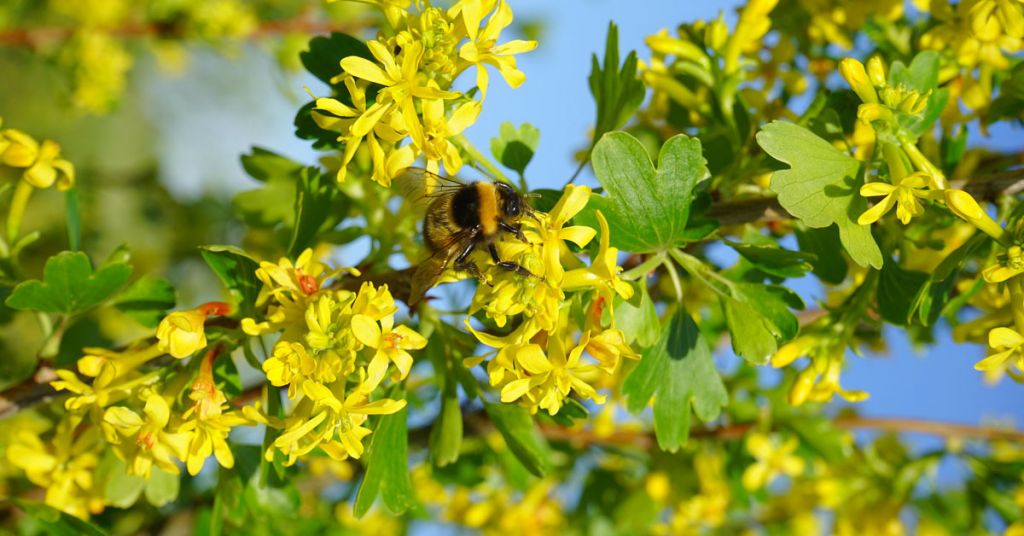
Golden currant

Bloom burg: Native plants in your garden can keep native species flourishing. Photo by Hans Braxmeier/Pixabay

By Sue Kusch. July 1, 2021. In 1987, E.O. Wilson called for the conservation of “the little things that run the earth.”

The famed ecologist and author reminded us that while we need invertebrates, they don’t need us. If they were to disappear from the planet, the human species would have only months left on the earth.

More than three decades later, daily reports of environmental degradation, ecosystem destruction and disappearance of “the little things that run the earth” have become overwhelming and can cause a deep sense of helplessness.

What can one individual possibly do?

Plenty, according to Dr. Doug Tallamy, a University of Delaware professor of entomology and wildlife ecology. And you don’t even have to leave your home to contribute.

[perfectpullquote align=”full” bordertop=”false” cite=”” link=”” color=”” class=”” size=””]Native plants require no pesticides or fertilizers and need little watering once established.[/perfectpullquote]

We can start by joining a collective movement called the Homegrown National Park, which focuses on restoring biodiversity by introducing native plants to home gardens.

The term “native” is typically applied to plants that have developed within an ecosystem or region for hundreds or thousands of years—in North America that means prior to European colonization.

MORE: How non-native plants fuel wildfires, degrade ecosystems

But Tallamy offers a more specific and now critically important use of the term: in the context of the modern crisis “native” describes a plant’s function and role within an ecological system. How many specialized relationships with other species does it have? How has it adapted over the years to climate, soil, diseases and predators?

The Homegrown National Park call-to-action starts with three strategies to create landscapes that support native fauna. 

1. Rip out the lawn

Across the United States, turf grass has replaced 40 million acres of diverse native plant communities.

And we’re adding 500 square miles each year.

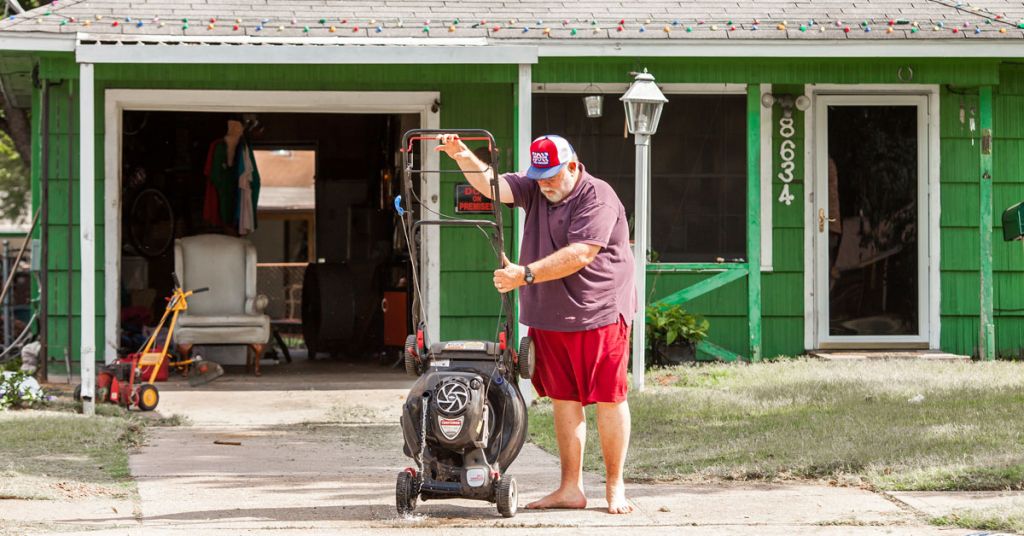
Mower man by Thomas Hawk CC

Big waste: Lawn care is increasingly seen as a pointless exercise. Photo by Thomas Hawk/CC

Tallamy describes the American lawn as an ecological wasteland, offering little food and shelter for insects, birds and butterflies.

The impacts of our lawn obsession are staggering.

  • Irrigation for U.S. landscapes, which consists of mostly non-native turf grass and ornamental plants, consumes 8 billion gallons of water daily.
  • U.S. homeowners use the same amount of fertilizer on their lawns as the nation’s industrial agriculture operations.
  • Almost half the chemicals promoted by the American lawn-care industry are banned in other countries because they’re rated as carcinogens.
  • Pesticides and fertilizers can seep into private and public wells.
  • The production of synthetic pesticides and fertilizers and use of gasoline-powered lawn-care equipment produces a large amount of greenhouse gases.

2. Stop using pesticides and herbicides

While the collapse of honeybees and rapid decline of Monarch butterfly populations make headlines, they represent only two of many species struggling with toxic landscapes throughout North America.

Goldenrod

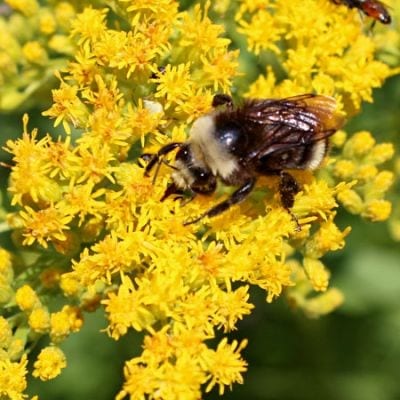
Hot rod: A late-season bloomer, goldenrod provides nectar for bees, butterflies and attracts beneficial insects. Photo by Sue Kusch

Pesticides aren’t selective—in addition to killing pests, they can be toxic to insect pollinators, reptiles, amphibians, birds and aquatic organisms.

Recent research indicates species exposed to synthetic pesticides are experiencing significant population declines.

Humans are also affected by pesticides. Thirty common pesticides used on landscapes are linked to a variety of cancers, organ damage, birth defects, reproductive effects, neurotoxicity and endocrine disruption.

In 2020, researchers concluded 44% of farmers, farmworkers and pesticide applicators experience at least one acute pesticide poisoning each year and 11,000 die annually from accidental poisoning.

MORE: Monarchs are disappearing. A native plant holds the key to their recovery

Scott Hoffman Black, executive director of the Portland-based Xerces Society for Invertebrate Conservation, is blunt about the fact that more must be done to restore native habitat.

“Pesticides—especially insecticides—have to be addressed if we are going to solve this problem,” he says. “We use more pesticides now than ever on this planet and they are found almost everywhere. Some USGS research shows more pesticide residue in towns and cities than in agricultural areas.”

3. Restore native ecosystems by planting native plants

Though 14% of U.S. land is protected, our national effort to preserve native landscapes through parks and wilderness designations isn’t enough to support native wildlife. Over 80% of U.S. land is in private ownership, much of it in industrial agriculture and home landscapes.

Beebalm

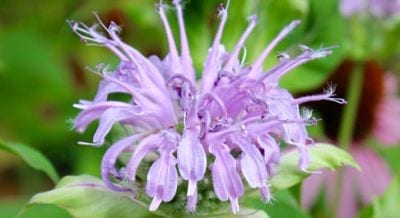
Native wisdom: As suggested by its name, beebalm attracts native bees, butterflies and hummingbirds. Photo by Sue Kusch

Tallamy believes that by creating native ecosystems in our yards we can build diverse biological corridors that support native wildlife.

Most of our home landscape plants come from other continents. Native insects, butterflies, moths and birds overwhelmingly prefer native plants.

Plant choices matter to wildlife because not all food is equal.

[perfectpullquote align=”full” bordertop=”false” cite=”” link=”” color=”” class=”” size=””]Many native plants that provide resources for all the life in your garden.[/perfectpullquote]

Research on the nutrition of berries—a critical food source for adult birds—of both native and non-native shrubs shows native North American shrubs produce summer berries high in sugars and autumn berries high in fats. Most of the introduced Eurasian plants produce fall berries containing little fat.

Food choice for newly hatched birds is even more important. Caterpillars, the larvae of moths and butterflies, are the preferred baby bird food—soft, packed with protein and fats, and easy to digest, caterpillars are easy to transport and feed to nestlings.

Adding native plants to our yards is key to increasing biodiversity. The good news is gardeners don’t have to go 100% native—mixing native and non-native plants serves the same goal.

For home gardeners, there are several advantages to growing native plants: they require no pesticides and fertilizers, need little watering once established and, when the right plant is planted in the right place, require minimal pruning.

Golden currant by Dan Mullen 2010 photo

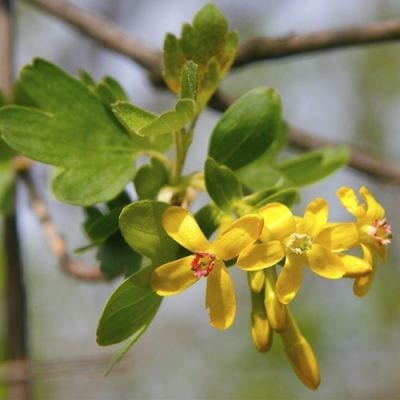
Bee keeper: Golden currant. Photo by Dan Mullen/CC

Drew Merritt, co-owner of Humble Roots Nursery in Mosier, Oregon, describes how one native species supports wildlife in a garden.

“Gold currant (Ribes aureum) flowers in spring, typically in the beginning of April, providing a source of nectar and pollen for newly emerging queen bumblebees and other insects,” he says. Gold currant is also a favorite of hummingbirds.

MORE: Invasive plant species are decimating Oregon’s rangeland

When ripe in July, the berries are delicious—if you can get to them before the birds do.

“Cedar Waxwings and Grosbeaks are usually the first to find them,” Merritt says. “The dense branching habit provides exceptional cover for birds.”

Golden currant is a hardy, drought tolerant mid-sized shrub that loves hot, sunny places. It’s one of the many native plants that provide resources for all the life in your garden.

Half measure OK

“I would rate (preserving biodiversity) right up there with climate change,” says Tallamy. “An intolerably hot and erratic climate will destroy the species that run the ecosystems we depend on, but so will the wanton destruction of those ecosystems and their species by humans who think that healthy natural systems are optional.”

E.O. Wilson has created the Half-Earth Project to conserve half the planet’s land and sea to safeguard the bulk of biodiversity—including humanity.

Why half? Wilson explains here.

“Unless humanity learns a great deal more about global biodiversity and moves quickly to protect it,” Wilson warns, “we will soon lose most of the species composing life on Earth.”

Sue Kusch is a freelance writer, grower of vegetables, fruits, herbs and native plants. She currently serves as Chair of the Suksdorfia Chapter of the Washington Native Plant Society.

Appreciate this story? To support environmental journalism on Columbia Insight click here

By |2022-11-15T19:11:49-08:0007/01/2021|Plants|8 Comments

© Copyright 2013-2025 Columbia Insight. All Rights Reserved.

As a 501(c)3 nonprofit organization, all donations to Columbia Insight are tax deductible to the full extent of the law. Our nonprofit federal tax-exempt number is 82-4504894.