Stay Updated Subscribe today for the latest research + reporting about environmental news. Subscribe Now

Stay Updated Subscribe today for the latest research + reporting about environmental news.

Subscribe Now

Eli Francovich

Eli Francovich

Eli Francovich

About Eli Francovich

Frequent CI contributor Eli Francovich covers the environment, conservation and outdoor recreation in Washington. His first book, about the return of wolves to Washington and the West was published in April 2023. He lives in Spokane.

As Washington’s wolf population grows, attacks on livestock decline

New stats suggest healthy wolf population and successful management, but rural residents remain apprehensive of wild carnivores
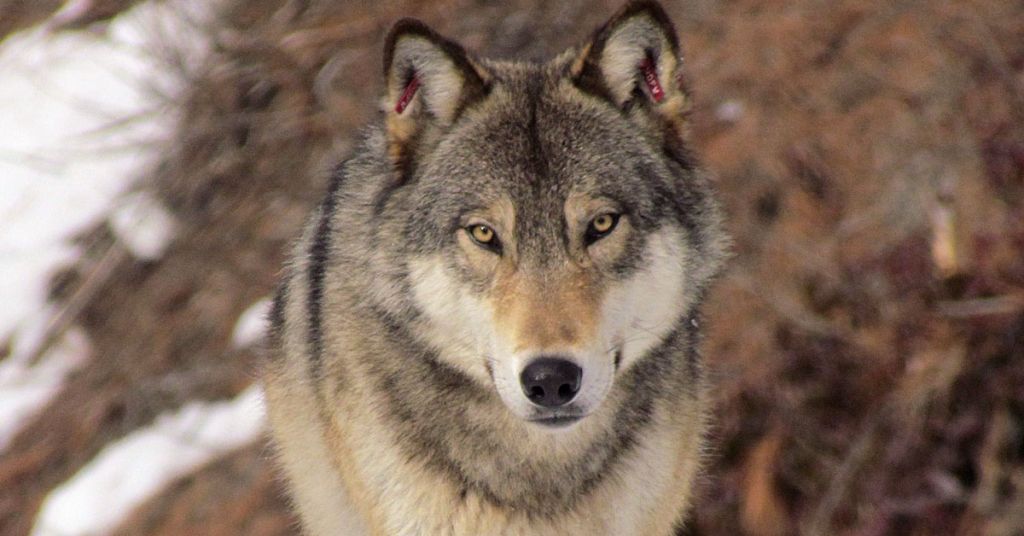
Wolf populations in crease in Washington.

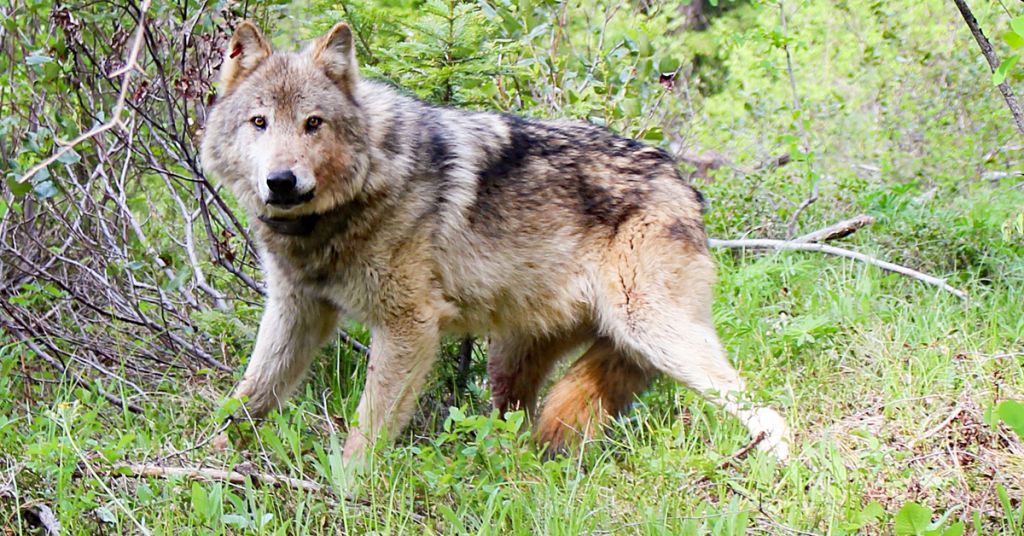
Mo’ better blues: Wolves like this young female wolf (tagged by wildlife biologists in Washington’s Teanaway Valley) are thriving. Not everyone is happy. Photo: Craig Monette

By Eli Francovich, April 18, 2022. Washington’s wolf population grew for the 13th consecutive year in 2021, despite the confirmed death of 30 wolves.

That’s good news for wolves as some nearby states—notably Idaho and Montana—have ramped up wolf hunting and trapping with the stated goal of reducing wolf populations.

In Washington, state and tribal biologists documented a minimum of 206 wolves in 33 packs throughout in 2021, according to a report released by the Washington Department of Fish and Wildlife on April 9.

The state documented the lowest number of wolf attacks on livestock since 2017, said Julia Smith, Washington’s wolf policy lead. The state killed two wolves in response to those attacks, the lowest number since 2015, she said.

“I’m thrilled to witness continued growth and expansion of Washington’s wolf population,” she said.

In addition to the two wolves killed by the state, 22 wolves were legally killed by tribal hunters, four were hit and killed by vehicles and two deaths are still being investigated.

Significance of borders

Most of Washington’s packs live in the eastern-third of the state, which, per the state’s recovery goals, means that wolves won’t be delisted at the state level.

To be delisted by the state, breeding pairs of wolves must be present in four distinct geographic areas of the state.

Not delisting wolves has frustrated some in rural Washington who feel they’re bearing all the burden of living alongside wild carnivores.

MORE: Has this Washington man figured out the key to wolf management?

Meanwhile, wolf activists warn that, while Washington’s population is growing, larger populations in Idaho and Montana, which bolster Washington’s population via natural dispersion, are under attack.

“Thankfully Washington isn’t making the lethal mistakes that we’re seeing in the Northern Rockies,” said Sophia Resssler, an attorney at the Center for Biological Diversity in a statement. “With the unbridled wolf slaughter occurring just east of us, the need for strong rules that work to lessen conflict is more vital now than ever.”

Wolves in the western two-thirds of Washington are on the federal endangered species list. Wolves in the eastern-third of the state are not federally protected.

Idaho has about 1,500 wolves while Oregon counted about 170 wolves in 2020.
Appreciate this story? Columbia Insight is a nonprofit environmental news organization. Your support helps fund the contributors who research, write, edit and fact check the stories we publish. Please click here to support our mission.

By |2023-06-05T17:27:47-07:0004/18/2022|Wildlife|0 Comments

Salmon are no longer kings of the Columbia. That has biologists worried

A recent report shows an explosion of growth of a non-native species in the Columbia River. What does that mean for salmon and the cultures built on them?

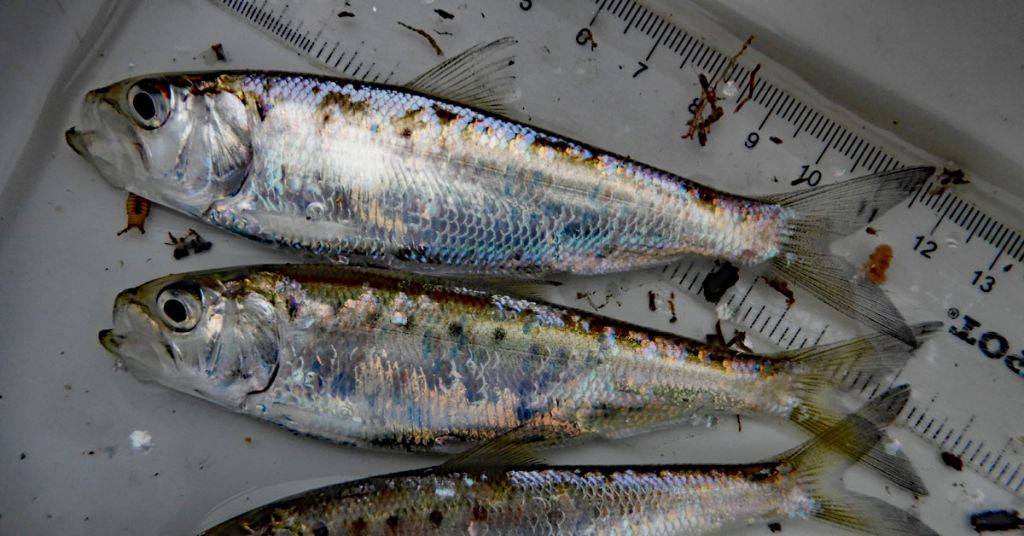
Shad in Columbia

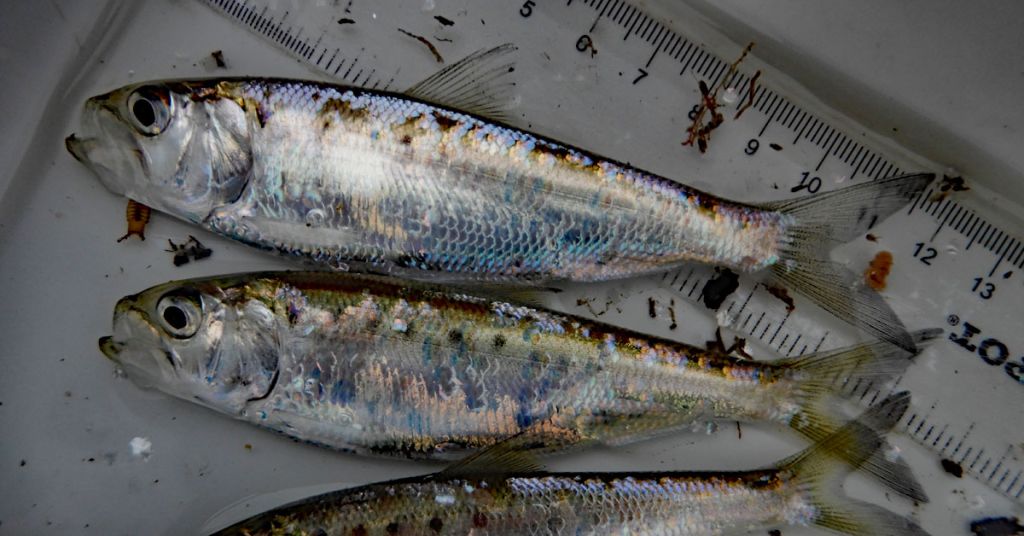
Growing issue: Juvenile shad are becoming more common in the Columbia River Basin. Photo: James Ervin

By Eli Francovich. January 27, 2022. In 1957, the steel gates of the Dalles Dam closed and—13 miles upstream on the Columbia River—one of North America’s largest waterfalls was inundated with water.

With that, an important Indigenous cultural gathering place was flooded and an unforeseen ecological cascade triggered.

Now, 77 years later, often the most common fish found flopping up Bonneville Dam’s fish ladders are nonnative shad, a silvery member of the herring family and the unlikely beneficiary of the flooding of Celilo Falls.

“The shad are, even though they run out to the ocean and come back, they are not great swimmers like salmon are,” says John Epifanio, lead author of a newly published report examining the proliferation of shad in the Columbia River system.

Some years shad, which were introduced to the West Coast in the 1880s, make up more than 90% of recorded upstream migrants, according to an Independent Scientific Advisory Board report to the Northwest Power and Conservation Council published in November.

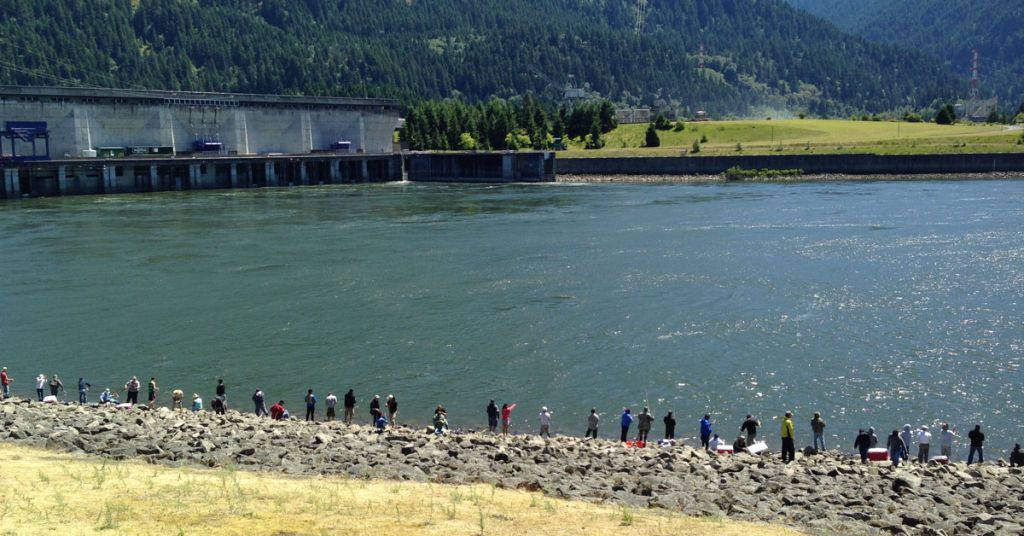
Fishing for shad

Not-so-secret spot: In June and July anglers line up below Bonneville Dam to catch some of the millions of shad migrating upstream. Photo: Rob Phillips

What impact these fish are having on native ocean-going species like salmon and steelhead still isn’t clear.

While the report doesn’t offer any definitive answers, it does show how ecological disruptions, whether from hydroelectric development or climate change, can hurt one species while benefiting another.

The horseshoe-shaped Celilo Falls is a prime example.

The falls once dropped 40 feet. Migrating steelhead and salmon battled up and over the falls during their yearly migration.

But, for the nonnative shad the falls proved to be an unnavigable obstacle.

Now that the falls are submerged that’s no longer the case.

‘We’re salmon people, not shad people’

Prior to 1960, there were fewer than 20,000 adult shad per year at Bonneville Dam, which is downstream of Celilo Falls.

After the Dalles Dam was built that number rose to 1 million a year, and shad numbers have increased on average 5 percent each year.

That means the shad population is nearly doubling every decade, says Epifanio.

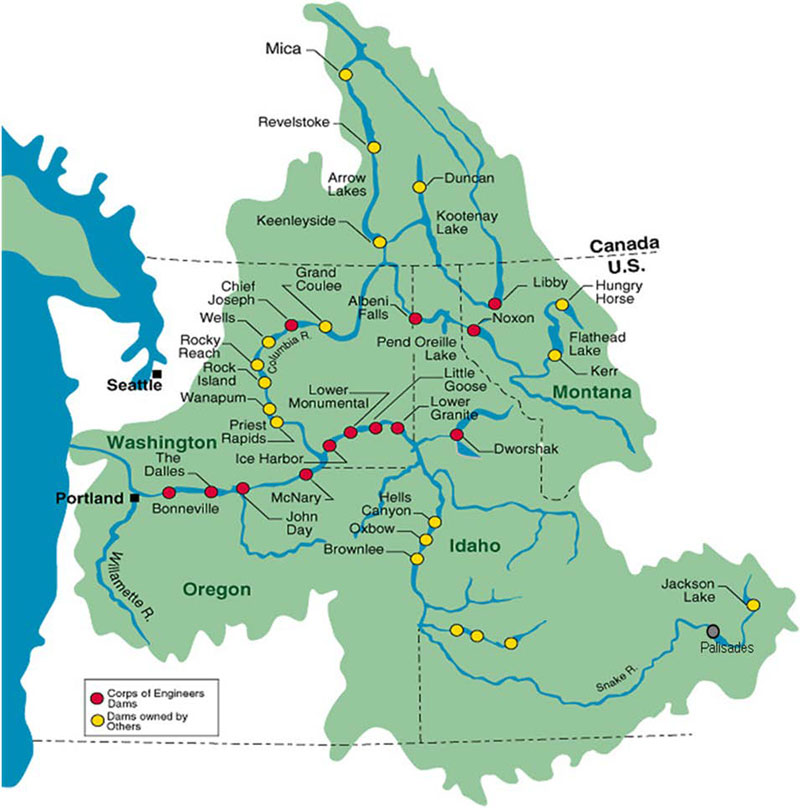
Columbia Basin dams map

Dams of the Columbia River Basin. Map: USACE

In addition to the removal of the physical barrier, the hydroelectric system has also slowed the downstream flow of water, which has raised overall water temperature. It’s possible shad, which can survive a wider range of temperatures than salmon, have capitalized on that fact, too.

“There have been a lot of changes. It just seems to have favored these guys and they’ve taken advantage,” says Epifanio.

MORE: Thermal hopscotch: How Columbia River salmon are adapting to climate change

Regardless of the cause, shad numbers have increased.

What’s more, they’re making it farther upstream and into the Snake River above Lower Granite Dam, says Jay Hesse, director of biological services for the Nez Perce Tribe’s Department of Fisheries Resources Management. The tribe was not involved in the study.

“Their abundance is increasing to really notable levels,” he says. “And their distribution at those higher levels is also expanding.”

That’s concerned Nez Perce biologists who worry shad may hurt their already struggling steelhead and salmon populations.

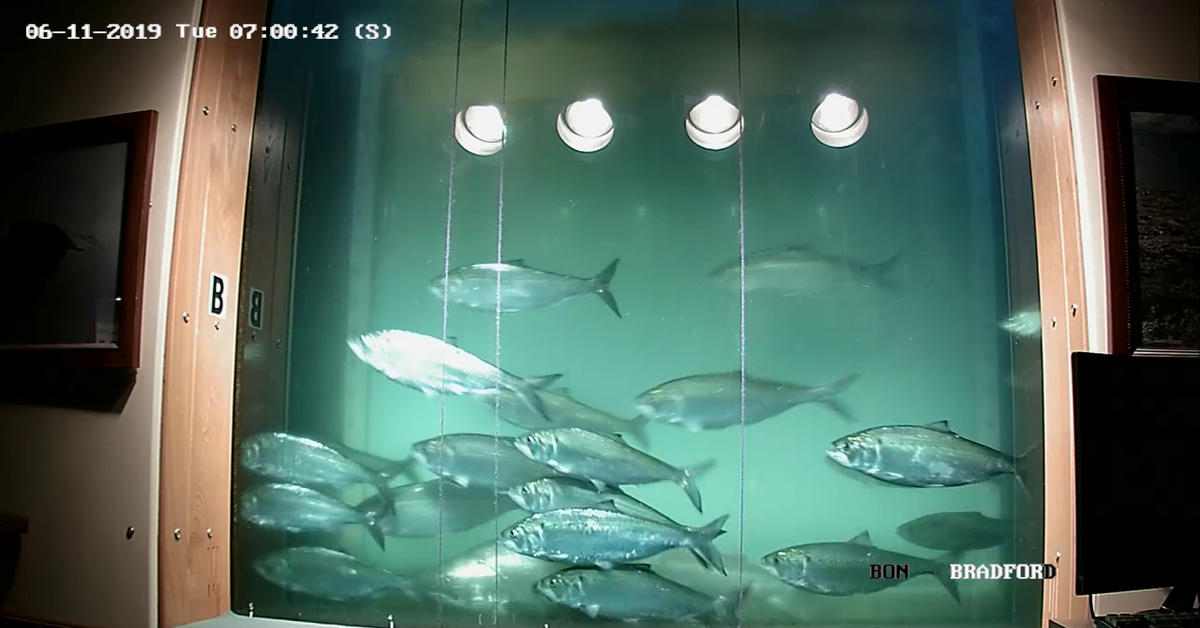
Shad in window

Overwhelming: Amid lots of shad, one chinook salmon (bottom, center) passes through the Bradford Island Fish Ladder & Count Station at Bonneville Dam. Photo: USACE

The report doesn’t establish any direct link between the shad increase and the salmon and steelhead decrease, however it does offer a few theories on how shad may negatively impact salmon.

For example, higher-than-normal shad numbers may be supporting a larger avian predator population and shad may be competing for food sources and nursery habitat.

Learn more about your environment: Subscriptions to Columbia Insight are free.

Such a large-scale change in the Columbia Basin’s migratory fish population is alarming ecologically.

And for people and cultures that venerate salmon, steelhead and lamprey, it also highlights the loss of a way of life, says Anthony Capetillo, aquatic invasive species biologist for the Nez Perce tribe.

“We’re a salmon people, not a shad people,” he says.

What’s the problem?

It couldn’t be more different on the East Coast where shad are a valuable and sought-after sport and commercial fish.

Although bonier and oilier than salmon, shad are tasty. Ironically, shad populations on the East Coast are in decline.

Developing a commercial and recreational fishery in the West may be one way managers can control the proliferation of shad, says Stuart Ellis, harvest management biologist for the Columbia River Inter-Tribal Fish Commission.

While still not a popular species for anglers, shad fishing has grown in popularity in recent years.

https://youtu.be/GzNLgZJydDE


“It’s a huge amount of protein. Perfectly good protein,” Ellis says. “There is no reason not to catch these fish—we don’t need them in the system.”

The Wild Fish Conservancy is also examining experimental trapping methods that could trap shad while not accidentally trapping salmon, steelhead or other unintended species.

Epifanio and other researchers involved in the study hope their report prompts further investigation, particularly into how, or if, shad are hurting native species.

Shad test

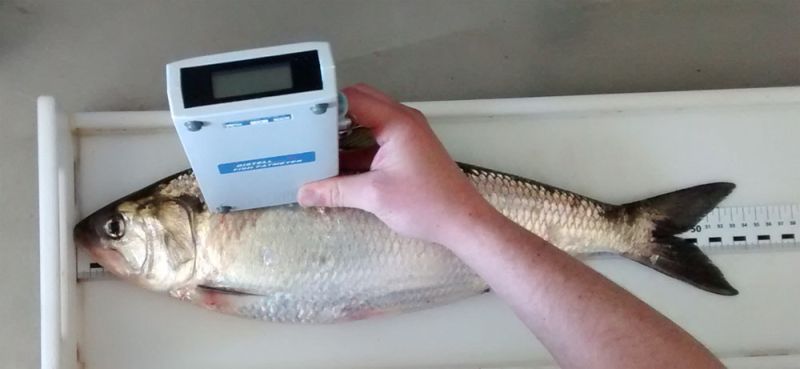
Study subject: Fat content of American shad being measured using a “fatmeter.” Photo: USGS

“At the very least, we just need to continue to monitor what these populations are doing in the basin,” he says. “We hope that we don’t just monitor. We want to have some solutions.”

READ MORE INDIGENOUS ISSUES STORIES.

The Collins Foundation logo

The Collins Foundation is a supporter of Columbia Insight’s Indigenous Issues series.

By |2023-05-02T15:01:39-07:0001/27/2022|Indigenous Issues, Salmon, Wildlife|5 Comments

As West withers corporations consolidate land and water rights

With farms, ranches and rural communities facing historic drought, a worrying trend leads to a critical question: Who owns the water? 

nicolewilkinson@me.com

Story by Eli Francovich. Photo illustrations by Nicole Wilkinson. December 6, 2021. Ghost cattle—200,000 made-up heifers. A massive fraud rocking eastern Washington’s arid ranching communities, leading to criminal charges and bankruptcy. The Church of Jesus Christ of Latter-day Saints and a Bill Gates-owned company duking it out at the auction block, each willing to spend more than $200 million to buy 22,500 acres of ranch land and its associated water rights.

These were just some of the headlines from this past summer when Cody Easterday of Mesa, Wash., plead guilty to defrauding Tyson Foods and another unnamed company of more than $244 million. He did so, according to court documents, by billing for the care of those imaginary animals.

After he pleaded guilty, the bidding war on his land started. In June, the Church’s agricultural holding company beat out Gates’ 100C LLC, cementing the Latter-day Saints as one of the largest commercial agricultural landowners in the western United States.

That’s raised troubling questions about land consolidation, a decades-long trend fueled by the demise of the family farm. But there’s a more complicated, and potentially troubling consequence to that purchase.

The water.

MORE TAPPED OUT: Where is the water going? Small farmers struggle as ag titans wheel water for profit

As western lands are consolidated, so too are the rights to use the water that flows under and over those lands. As the Pacific Northwest gets warmer and drier, water is becoming a hot commodity that’s attracting investors—whether it’s the Latter-day Saints, large agricultural interests or New York investors.

And while state laws across the region regulate how, when and why water rights are sold, some worry it won’t be enough to hold back the tide.

“I think we are ripe for the picking in terms of speculation and people coming in and trying to get their hands on these water rights,” says Rachael Osborn, a longtime water lawyer in Washington State and cofounder of the Washington Water Trust. “A lot of people are now thinking they are sitting on pots of gold, and they have every intention of trying to sell their water rights when they no longer need them. It’s really unfortunate that we’ve gotten to this point, where people think they can make a lot of money off water.”

Fewer owners

While dramatic, the Easterday land consolidation—and its possible impact on water rights ownership in the rural West—is hardly an isolated example.

Just this year a Wall Street-affiliated company attempted to acquire private water rights throughout the Columbia River watershed in Washington.

The broad proposal would have allowed the company to bank and then sell or lease that water.

Crown Columbia Water Resources LLC, which is connected to a Wall Street-backed investment firm, filed the application with the Washington State Department of Ecology.

After substantial public blowback that effort was suspended earlier this year.

In 2019, that same company was in the news for purchasing water rights throughout the state and attempting to sell and lease them, prompting an ongoing legislative review of water marketing.

MORE: NYC investment group wants control of Columbia River Basin water in Washington

A 2018 deal showed the tremendous speculative value of land/water deals in the Columbia River Basin. That’s when Gates’ 100C paid $171 million for 14,500 acres of land (10,500 acres of it irrigated farmland) from the Boston-based John Hancock Life Insurance Company, which had paid $75 million for the parcel in 2010.

It’s not only land acquisitions. Northwest Natural Holding Company—formed in 2018 as the parent company of longtime Portland-based NW Natural Gas Company—has recently expanded into public water utility ownership.

In 2021, the gas company’s NW Natural Water concern announced it had added to its portfolio by acquiring five water companies in Washington, Idaho and Texas, cumulatively investing more than $110 million in the water sector.

Elsewhere in the West, Harvard University has snapped up California vineyards and a Canadian teachers pension plan bought more than 6,000 acres of Washington orchards and its attendant water.

‘World of scarcity’

The summer 2021 drought that strangled parts of the Pacific Northwest has inserted the issue of water rights into nearly every environmental discussion in the region and has raised concerns about speculation and price gouging.

If climate change forecasts prove accurate, the summer of 2021 was a dress rehearsal for the future.

This summer in Oregon the federal government shut off access to water in the Klamath River due to a historic drought, prompting some farmers and activists to threaten to take the water by force. 

MORE TAPPED OUT: How a federal drought relief program left southern Oregon parched—and contributed to the ongoing groundwater crisis

In Washington, wheat production hit all-time lows reflecting drought-depressed yields.

“You look back to this drought, that was the worst drought we had in 100 years, and it put a fine point on who got water first,” says Jamie Short, a water resources program manager for the Washington State Department of Ecology.

Concerns about water speculation and scarcity aren’t new. And while climate change and drought reinvigorate those worries, experts such as Short caution against oversimplification.

Because if water law is anything, it’s complex.

“Consolidation and water rights, (it) isn’t one plus two equals three. It’s really case dependent,” she says. “I don’t think climate change is going to make anything any easier for us. But in a way, it’s a world we already know. A world of scarcity.”

Following the opportunity

According to water laws across western states, water can’t be owned, although the right to use that water can be sold, bought and transferred.

In Washington—and elsewhere—there are rules governing the sale of water. For example, water rights must be used, or they are relinquished. Water must be used for a “beneficial” purpose and a water transaction can’t harm senior water right holders.

Yakima River Canyon by BLM

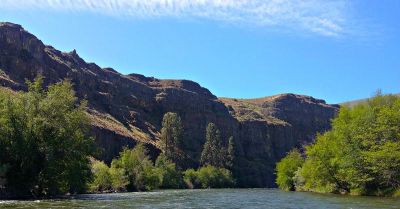
Washington’s first water banks were created to offset the impact of new residential developments on in-stream flows in the Yakima River. Photo: BLM

The regulation requiring that water be used would seem to discourage speculative behavior.

However, Washington and other states have programs that allow users to bank their rights with the state and not relinquish ownership. This has allowed water right holders the ability to effectively sell, trade and buy water.

This is known as water banking.

MORE: As water becomes scarce, water banks take control

Banking serves several purposes. Farmers use water banks to sell water rights they no longer need to other farmers. Conservation groups use them to increase in-stream flows to help native fish. Developers use them to secure water for housing and commercial projects.

But this system also gives speculators a place to park their assets and wait until the price has risen, says Osborn.

Osborn, who is semi-retired, teaches water law at the University of Washington. The water-banking program has been particularly helpful for stream and river conservation projects, she says. But as developers and investors shell out more money for water, conservation groups are struggling to compete, as the Seattle Times has reported, “because everybody wants to get their hands on water.”

Shrinking farms

The desire to acquire water has helped fuel the ongoing consolidation of western lands.

Consider that in 1987 more than half of all U.S. cropland was operated by midsize farms that had between 100 and 999 acres of cropland, while 15% was operated by large farms with at least 2,000 acres, according to a U.S. Department of Agriculture 2018 report

Over the next 25 years, those numbers shifted dramatically. By 2012, farms with 100-999 acres held 36% of cropland, the same share as that held by large farms.

MORE: Less snow is the new norm. That’s trouble for farmers

It’s a similar story in the Columbia River Basin.

The number of farms in Washington decreased by 7% between 2010 and 2019, according to a 2020 USDA report. At the same time the average size of farms increased from 382 to 410 acres.

Many of those properties come with valuable water rights, rights that are increasingly controlled by fewer and fewer people.

Some experts affiliated both with the state and private water-consulting firms, caution that the ways land consolidation will impact water or rights isn’t yet clear.

“To a pretty large extent land consolidation means water consolidation,” says Jonathan Yoder, director of the State of Washington Water Research Center and a professor of economics at Washington State University. “But it’s not at all clear if that is good or bad, or the ways in which that is good or bad.”

Is paranoia justified?

One indication that it may be a bad thing, or at least an issue of concern, came on Nov. 17 when Washington’s Ecology department announced a pilot grant program aimed at funding local water banks, helping upstream communities compete with wealthier downstream agricultural interests.

“The pilot grants are intended to furnish rural communities in headwater basins throughout the state with funds to compete with deep-pocketed water investors,” states a news release announcing the grant.

Graphic design by Nicole Wilkinson


The grant program is the latest in a series of efforts Ecology has taken to try and understand how, and if, speculation is impacting Washington water.

In 2019, following concern about out-of-state investors, the state Legislature asked the department to examine whether water banking is leading to speculative or monopolistic behavior, says Dave Christensen, the policy and program manager for the Department of Ecology Water Resources Program.

“The Legislature has been concerned and Ecology has been concerned because we’ve been hearing it from our stakeholders,” he says.

On Nov. 19, Christensen updated the Legislature with the department’s findings.

In short? So far there’s little evidence of water speculation in Washington, he says. Between 1997 and 2019, there were 54 out-of-basin transfers in Washington State, representing less than 0.3% of the total volume of water used, according to a University of Washington study commissioned by the Department of Ecology and published in 2021.

“The 54 transfers represent 1.5% of the total records that indicate a change of place of use in the Ecology database, implying that the majority of water right transfers in Washington State occur within-basin,” states the study.

The Department of Ecology will continue to examine the issue and present the Legislature with a final report, and policy recommendations, in 2022.

MORE TAPPED OUT: Utah’s water dilemma

Other experts interviewed for this story also downplayed the risk of consolidation and speculation, noting that water is a difficult substance to transport and pointing to regulations in the West and Washington State in particular.

Daniel Haller, a water resource engineer with Aspect Consulting, which has offices around the Pacific Northwest, says that roughly 90% of all water rights in Washington are held by public entities—whether that’s municipalities, the state or the federal government.

“I think the window for concern is small,” Haller says. “Just because the number of rights is small. There is a subset of water rights that someone could try to speculate on. I just haven’t seen it yet. I think the risk in the future is pretty small.”

Political drivers

However, that optimism isn’t universally held and Osborn, the longtime water lawyer, is skeptical of Ecology’s review process.

“Ecology convened this group to assess water banking and make recommendations to the Legislature and their recommendations to the Legislature has nothing to do with controlling price or making sure the benefit comes back to the public,” she says. “Remember these people got these water rights for nothing. Maybe a $10 application fee.”

Osborn believes the state should take 10% or more of the water bought or sold as a sort of “transaction fee.”

MORE: Drought stirs fears of Dust Bowl in Central Oregon

While private speculation and out-of-basin transfers are a concern, there are also worries about cities and towns holding onto water rights, says John DeVoe the executive director of the Oregon-based WaterWatch.

In Oregon, some cities and towns hold onto water rights, not because they need the water but because they hope to sell it to other municipalities.

“A lot of these cities are not using this water for municipal purposes. they are selling it,” he says. “That’s kind of the hallmark of speculation.”

As for state oversight, DeVoe isn’t confident in western states’ regulatory muscle.

“I think state oversight is politically driven,” he says. “And those with the money get to determine how the rules are drawn up and whether they are enforced or not.”

Logo with no bleedThis piece is part of a collaboration that includes the Institute for Nonprofit News (INN), California Health Report, Center for Collaborative Investigative Journalism, Circle of Blue, Colorado Public Radio, Columbia Insight, The Counter, High Country News, New Mexico In Depth and SJV Water. The project was made possible by a grant from the Water Foundation with additional support from INN. For earlier stories in the Tapped Out series, click here
By |2023-07-12T13:59:07-07:0012/06/2021|Agriculture, Land Use, Water|2 Comments

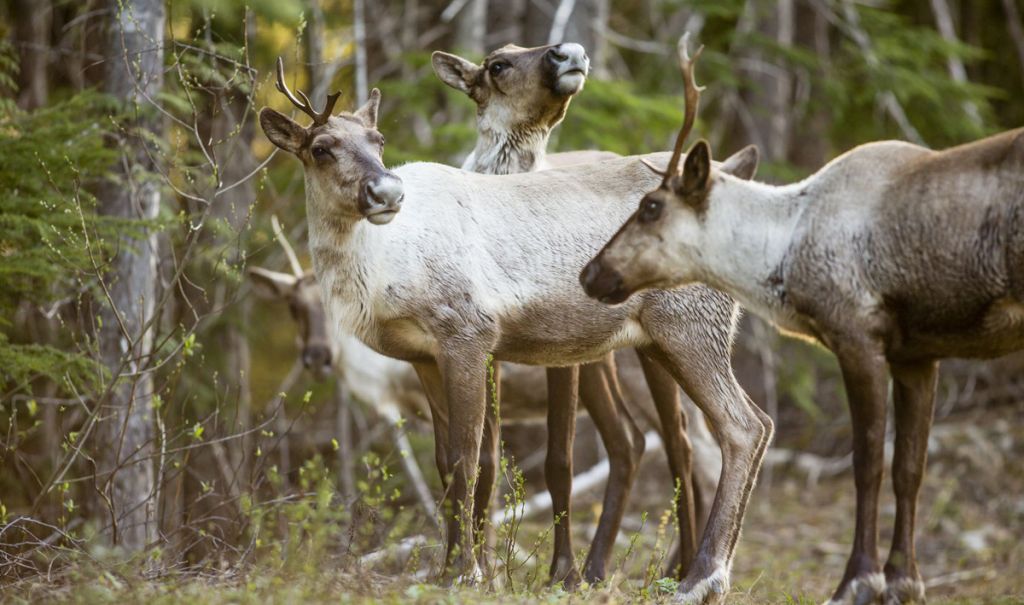
Caribou comeback? Canada, Kalispel Tribe keep slim hopes alive

Mountain caribou once roamed the Lower 48. Unhappy with U.S. agency inaction, caribou advocates now depend on Canadian efforts at repopulation

caribou female

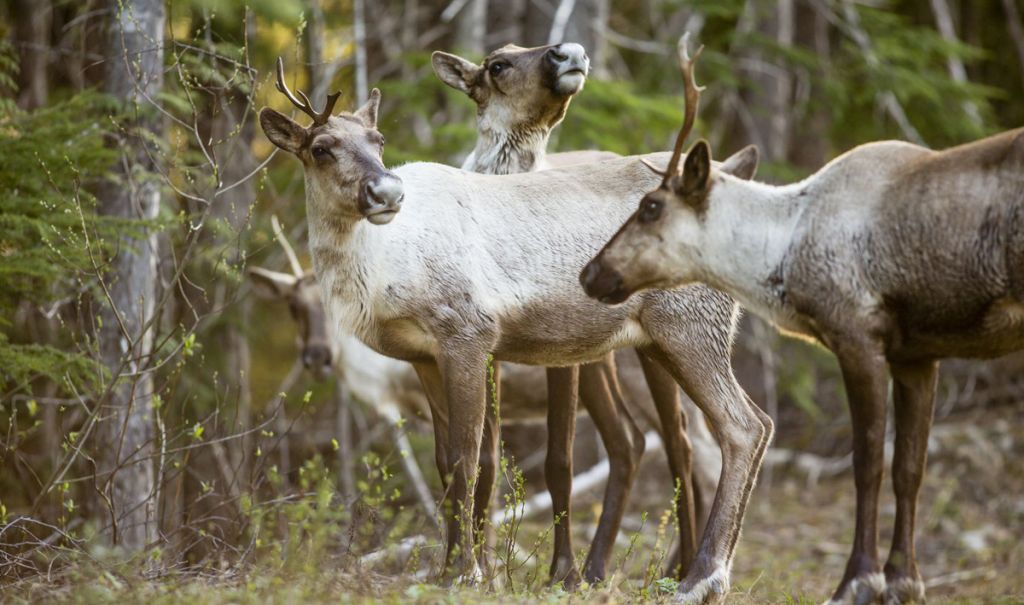
Uncertain air: Female caribou from the North Columbia herd in Revelstoke, B.C. Photo by David Moskowitz/davidmoskowitz.net

By Eli Francovich. October 14, 2021. Early in 2019, with deep snow blanketing British Columbia’s southern Selkirk Mountains, Canadian biologists fired nets from a hovering helicopter and trapped the three remaining mountain caribou that still occasionally roamed into the Lower 48.

Despite decades of effort from U.S., Canadian and tribal officials, that capture marked the extinction of a species (dubbed by some the “Gray Ghosts”) from the Lower 48.

Now, three years later Canadian biologists and tribal leaders are trying to nurse the two remaining Canadian herds back to health despite the triple threat of habitat loss, climate change and predation from wolves and the occasional cougar.

MORE: Elk hoof disease continues to afflict elk populations

Meanwhile, U.S. tribes and federal and state agencies are waiting, and hoping, that they might get a second chance at caribou conservation.

“If we get the numbers back up and we have the habitat down here we might be able to relocate the caribou back down here,” says Kevin Robinette, a Washington Department of Fish and Wildlife program manager.

On the U.S. side of the border the bulk of that work is being spearheaded by the Kalispel Tribe of Indians in northeast Washington.

“The only hope we have in the U.S. is through Canada,” says tribal biologist Bart George. “We have to build from a source of strength in Canada. Hopefully we can be strong enough partners that when the time comes they will be so inclined to help us restore the population.”

Canadian herds struggling

The Kalispel Tribe is supporting the Canadian-based Arrow Lakes Caribou Society with its maternal penning project, which is constructed and ready to house pregnant cows from the Central Selkirk herd, says George.

But the central herd is also struggling, dropping from 90 animals to 30 in the past seven years according to Canadian biologists. Of documented deaths, 40% have been attributed to wolf predation.

Caribou on camera trap

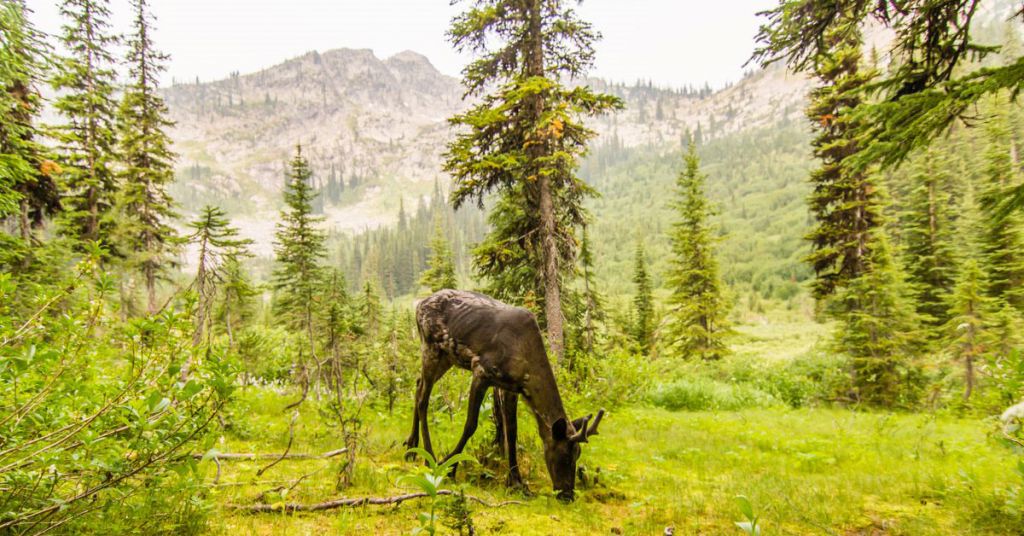
Slim pickings: A member of the Southern Selkirk herd on the Nature Conservancy of Canada’s Darkwoods preserve. Photo by David Moskowitz/davidmoskowitz.net

“Since the removal of the last few animals from the South Selkirk herd, the Central Selkirk’s are the nearest population,” George said in an email. “That group [Arrow Lakes Caribou Society] has been active with the penning project and partnering with the outdoor recreation industry there [primarily heli-skiing] to protect the herd from disruption.

“Meanwhile, the province has been working on cougar and wolf removal in the caribou habitat. The herd has shown a slight increase in population for the last two years. Hopefully, increasing neonatal survival will help move it in the right direction.”

“We’re working hard to secure more habitat but securing more habitat affects industries, especially the forest industry but also the oil and gas industry,” says Leo DeGroot, a wildlife biologist in British Columbia who has worked with caribou for nearly 20 years. “There is huge resistance to protecting more habitat.”

Caribou in Idaho

According to estimates, fewer than 1,400 mountain caribou are left in North America.

The remaining 14 or so herds are all in Canada.

The South Selkirk caribou have ranged throughout the high country along the crest of the Selkirk Mountains near the international border.

MORE: Selkirk grizzly makes history—by showing up

At one point, scientists believe caribou roamed as far south as the Salmon River in Idaho.

In the 1980s their numbers started to decline, as logging in the United States destroyed old-growth habitat.

At the same time, the logging attracted predators. In the aftermath of logging, smaller and younger plants flourish. This attracts deer and elk, which in turn attracts wolves and cougars.

Killing wolves, saving caribou

Mountain caribou, unlike tundra caribou, use their wide feet to walk on top of deep snowpack. This allows them to reach lichen growing high on old-growth trees.

Their primary defense against predators has been avoidance. Those wide feet allow them to traverse snow that’s too deep for predators like wolves to move through.

Miley Cyrus

Miley Cyrus: Oh, why not? Photo Sony Music

But roads built to facilitate logging changed that dynamic. Suddenly wolves were able to access high, mountainous areas previously unreachable, leading to more wolf predation.

In response, Canada started killing wolves in 2014. The backlash was swift. Celebrities, including Miley Cyrus, condemned the killings and drummed up outrage.

But DeGroot says predator control is working.

Each year, government shooters kill between 250 and 400 gray wolves throughout British Columbia. In those areas caribou herds seem to be doing better.

MORE: Politics, science collide as Idaho wolf law takes effect

“Where we’re seeing increases is where we’re taking wolves out,” says DeGroot. “But we see that as only a short-term solution. It’s not very palatable to many people and it’s not a way to go for long-term recovery.”

Still, “short term” could mean up to 30 years, he says, which would give some of the habitat a chance to grow back.

Border crossing

Whether Canada would ever translocate caribou from the central or northern herds back to the southern herd’s historic range is an open question.

“We’re concentrating on where we still have caribou,” says DeGroot. “Whether we try and bring back the South Selkirk herd some time in the future hasn’t really been discussed yet.”

British Columbia wildlife officials are also considering breeding caribou in captivity with the goal of releasing them into the wild as adults. However, these sorts of efforts, known as captive breeding or conservation breeding, are expensive. 

Subscribe to Columbia Insight. It’s free.

Joe Scott, international program director for Washington-based Conservation Northwest, isn’t hopeful.

“If the U.S. government, federal and states, were appropriately concerned about caribou then they would actively engage in B.C.’s recovery efforts,” he says.

Most obviously that would mean providing financial assistance to the Canadian government. Instead, he says U.S. agencies are “long on platitudes and short on action.”

“You can’t get a more charismatic mega-fauna,” says Scott. “You can’t get a more significant, globally unique ecosystem than the inland temperate rainforest. And so, if we can’t protect and conserve those things it doesn’t bode well. It’s very discouraging.”

By |2023-10-18T11:12:25-07:0010/14/2021|Wildlife|1 Comment

It’s a trap! Politics, science collide as Idaho wolf law takes effect

Wildlife commissioners and legislators wrangle over a controversial new law aimed at reducing Idaho’s wolf population. Are the right people making decisions?

Justin Webb with trapped wolf in Idaho

Still life: Justin Webb poses with one of more than 30 wolves he’s trapped in Idaho. Executive director of the Foundation for Wildlife Management, Webb says his nonprofit helps the Idaho Department of Fish and Game meet wolf management objectives “by providing an expense reimbursement program for sportsmen who target wolves in areas negatively impacted by wolf predation.” More than 1,100 wolves have been killed through foundation efforts since 2012. Photo courtesy F4WM

By Eli Francovich. July 8, 2021. In a large conference room flanked by the mounted heads of deer, elk, bears and at least one stuffed cougar, the tension between biology and politics was on full display in mid-June.

That’s when the Idaho Department of Fish and Game Commission amended wolf hunting and trapping seasons in the Gem State in response to a newly passed—and highly publicized—law aimed at drastically reducing the wolf population in Idaho.

During the hour-long conference call the seven commissioners, who are appointed by the Idaho governor and approved by the state senate, expressed discomfort with the task at hand.

Namely, making biological decisions via legislative fiat.

MORE: 16 and counting … Inside a Washington community’s war on cougars

“I think this could have been handled so much better,” said commissioner Don Ebert during the teleconference. “I would wish the Legislature would be partners with us.”

The critique was notable because Ebert broadly supports the liberalized wolf-hunting seasons.

Senate Bill 1211 established a year-round trapping season for wolves on private property, allowed for unlimited purchase of wolf tags and for any method used for taking any wild canine in Idaho (foxes, coyotes) to also be used on wolves.

The bill has garnered national and international attention, particularly one provision, which calls for a 90% reduction in Idaho’s wolf population, currently estimated to be about 1,500. The law went into effect July 1.

[perfectpullquote align=”full” bordertop=”false” cite=”” link=”” color=”” class=”” size=””]“There’s a reason there’s a distance between elected officials and wildlife agencies. The legislature completely closed that gap.” — Dave Ausband, University of Idaho[/perfectpullquote]

Some commissioners described their mandate as a needle-threading exercise as the commission attempted to amend current hunting rules and regulations so that they would align with the new legislation.

Commissioner Brad Corkill, who was the chairman when the Idaho Legislature voted on the law, said he was notified less than 24 hours before it went to vote.

“I find that a tad bit disrespectful and insulting on part of the Legislature,” he said during the June call. “They dumped this in our lap … giving us very little options as to how to handle this situation. Disrespectful is the kindest word I can come up with on this.”

Supercharging a debate

Numerous conservation and environmental groups have decried Idaho’s new wolf law.

David Ausband, Ph.D., University of Idaho

Wolf man: Dave Ausband. Photo Univ. of Idaho

On May 26, the Center for Biological Diversity, Humane Society of the United States and Sierra Club jointly filed an emergency petition asking the federal government to relist wolves in the Northern Rockies as an endangered or threatened species. The U.S. Fish and Wildlife Service must respond to the relisting petition by Aug. 24 and could potentially take over management of Idaho’s wolves.

MORE: Gray wolves removed from endangered species list

However, as these things tend to be, the story is a bit more complicated. Wildlife managers for the Idaho Department of Fish and Game are skeptical that the law will have much impact on the overall wolf population.

“At the end of the day wolves are part of the landscape and I don’t think you’re going to see that change,” says Chip Corsi, Idaho Fish and Game’s regional manager in Coeur d’Alene. “We’ve managed them pretty aggressively basically out of the gate. I think the guys who are hardcore wolf trappers will tell you it’s not easy to trap wolves.”

Instead, the problem, some argue is using politics to make biological and ecological decisions.

Wolves and politics go together like sports and beer—each tends to supercharge the other. The long-legged canines serve as lightning rods for rural fears about government overreach and urban nightmares of wildlife massacred at the hands of red-necked hunters.

In the United States the first documented wolf bounty was approved by Massachusetts Bay officials in 1630.

More recently, in 1995 the U.S. Fish and Wildlife Service reintroduced wolves to Yellowstone National Park via a Congressional budget rider, says Dave Ausband a professor at the University of Idaho who studies wolves.

That infuriated many locals, who have since blamed diminished elk and deer populations on the presence of wolves, even though the science paints a more complicated picture.

DON’T MISS OUT! Subscribe to Columbia Insight. It’s free.

Since 1995, wolves naturally spread from Yellowstone to surrounding states, including Washington and Oregon. Then in 2011, wolves were delisted in the Northern Rockies, which include the Idaho and eastern Washington wolf populations.

More recently, a ballot initiative in Colorado narrowly approved the reintroduction of wolves into that state, despite wildlife officials’ advice not to. And now Idaho, Montana and Wyoming have introduced and passed a number of laws specifically targeting wolves.

“These kinds of legislative means can cut both ways depending on who is in power,” says Ausband.

‘Crazy pendulum’

Whether or not the legislation—and subsequent hunting rule changes—have a meaningful impact on the state’s wolf population “remains to be seen,” says Ausband.

“Even if you mailed every Idaho citizen a wolf tag it doesn’t mean 1.7 million people are going to be out there hunting wolves,” he says.

More troubling to him is the mixing of politics and biology.

Wolf by Idaho Fish and Game

Pop. science: Wolves breed in late winter and give birth to an average of four to five pups in April. Photo by Idaho Dept. Fish and Game

The North American Model of Wildlife Conservation (the set of principles that guides wildlife management and conservation in the United States and Canada) largely relies on fishing and hunting license sales to fund state wildlife agencies, intentionally separating politics and biology. That model grew out of the excesses of market hunting and other practices which nearly led to the extinction of now-common species like elk and deer.

Under the model, state fish and wildlife agencies receive the majority of their funding from hunters and anglers, giving them some separation from the machinations of politicians.

MORE: Has Daniel Curry figured out the key to wolf management?

“There is a reason there is a distance between elected officials and state wildlife agencies,” Ausband says. “The (Idaho) legislature … completely closed that distance. That gap. To me that’s problematic. That’s not our tradition. That’s not our legacy.

“If you don’t like wolves right now you might support that decision. But what if your guy or gal isn’t in control anymore and it’s the opposite? Is that really the way you want to do things? This crazy pendulum that rockets back and forth?”

Appreciate this story? To support environmental journalism on Columbia Insight click here

By |2023-04-07T17:26:59-07:0007/08/2021|Wildlife, Wolves|3 Comments

Has Daniel Curry figured out the key to wolf management?

In eastern Washington a modern-day ‘range rider’ is bridging the gap between traditional adversaries: ranchers and wolves

Teanaway pack gray wolf 1 photo by WDFW

Thriving: According to a 2019 population survey, the Teanaway wolf pack in central Washington had a minimum count of six wolves and was considered a successful breeding pair. Photo by WDFW

By Eli Francovich, April 22, 2021. Slopping through cow dung and snow, on his way back to his truck, Daniel Curry stops to talk. It’s January, warm and wet and Curry has already spent several hours checking game cameras and searching for wolf tracks in northeast Washington, within spitting distance of the Canadian border.

On the best of days this is not glamorous work.

And this is not the best of days. His back hurts. Although not yet 40, he’s spent much of his life working outside. Just this morning, in an effort to counteract some of the wear and tear of manual labor, he did yoga.

Unfortunately, he pulled something. It’s hard to walk.

But the man he’s working for today is out feeding his livestock and while much of Curry’s work is about keeping wolves from killing cattle, it’s also about building relationships with ranchers.

[perfectpullquote align=”full” bordertop=”false” cite=”” link=”” color=”” class=”” size=””]“All the people who don’t want wolves have them in their backyard. All the people who want wolves don’t have wolves.”[/perfectpullquote]

So, they chat. About the weather, about individual calves, the fences. Who left the gate open onto the right pasture last week? What animals—wolves, coyotes, cougars, deer, bear—the rancher (who asked to remain anonymous) has seen in the past month.

It’s a short, but telling, interaction between the two men.

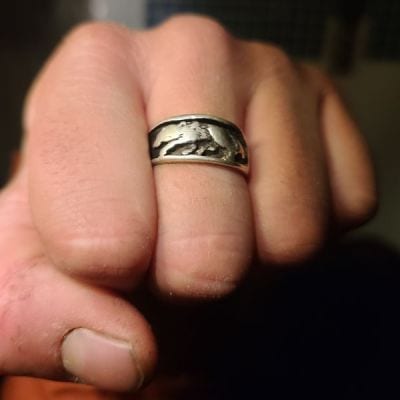
Telling because Daniel Curry loves wolves. He wears a ring with the silhouette of a wolf on his left hand and spent a decade working at a wolf sanctuary on the west side of Washington. He moved into the heart of Washington’s wolf country in 2012 hoping, as he said, to force a glitch in the system and show ranchers and environmentalists that cows and wolves can live together.

Now, he’s a range rider. He spends his days and nights trying to keep wolves from cattle and cattle out of the jaws of wolves.

Success story

Since the natural return of gray wolves to Washington State in 2008, Curry and others have worked to try to bridge the cultural and social divide between those who cheer the return of Canis lupus and those who fear it.

The effort hasn’t always been successful.

Environmentalists and wolf lovers have protested and filed lawsuits, noting that cows are a nonnative species and ranchers are grazing their cattle on public land for a nominal fee.

Range Rider Daniel Curry's wolf ring

Handy reminder: Curry’s wolf ring. Courtesy of Daniel Curry

Activists and ranchers have been threatened.

In 2019, wolf meetings were canceled due to threats of violence. Wolves have been poached. Pelts have been shipped to Canada, a bloody FedEx package the fateful clue. A state lawmaker suggested sending an environmental activist a severed wolf tail and testicles.

But for each high-profile failure, there are stories of cooperation and success. Some hope these examples may provide a road map for other states and regions as gray wolves return to the western United States.

“I think really Washington is very much a success story,” says Kim Thorburn, a WDFW commissioner from Spokane. “It was natural repopulation. And the population has continued to grow since wolves were first seen in this population. Recovery. That seems to me to be a success.”

State biologists documented a minimum of 108 wolves in 21 packs and 10 breeding pairs in 2019. The state’s annual wolf survey is published in late April.

Since 2011, wolves in eastern Washington have been under state management and protected under state endangered species rules, while wolves in western Washington were governed by federal endangered species rules. In 2021, however, wolves nationwide were delisted by the federal government.

Nonetheless, per the state’s own recovery plan, wolves can be delisted at the state level only after 15 successful breeding pairs are documented for three consecutive years or after officials document 18 breeding pairs in one year.

Under either scenario, the pairs have to be distributed evenly throughout the state’s three wolf management areas.

And this is where problems still arise.

Washington unique in conservation world

The vast majority of Washington’s wolves live in the northeast corner of the state, adjacent to larger populations of wolves in Canada and Idaho. This is rural Washington, far removed from rain-soaked, tech-employed, latte-drinking Seattle for which most know the Evergreen State.

It’s good wolf habitat—mountainous and relatively empty of people and full of prey. Whitetail and mule deer, mostly.

But also cattle.

In many ways Washington is unique in the conservation world. The second largest western state by population, the Evergreen State is the smallest geographically and has the least public land.

And yet, Washington is home to nearly a full suite of native carnivores. Black bears. Cougars. Lynx. And, since 2008, gray wolves.

Daniel Curry range rider in Washington

Weather or not: Daniel Curry spends much of his time scouting remote trouble spots between cattle and wolves. Photo by Eli Francovich

Meanwhile, more than 7 million people live and work in the state.

And, Washington, like many coastal states, is a house sundered along largely geographic lines. West of the Cascade Range it’s humid, urban, liberal and increasingly wealthy. East of the divide, it’s dry, rural and increasingly poor.

“All the people who don’t want wolves have them in their backyard affecting their culture,” Curry said. “All the people who want wolves don’t have wolves.”

MORE: QAnon finds its way to the Snake River dams

That cultural and political divide is most obvious when considering the impact wolves have had on ranching.

Although not a large industry, ranching is still a way of life for some in northeast Washington and wolves pose a very real threat, says Jay Shepherd, a co-founder of the Northeast Washington Wolf-Cattle Collaborative and the wolf program lead for Conservation Northwest.

Wolves killed 14 cattle and injured 11 more in 2019, according to WDFW.

In response, WDFW employees shot and killed nine wolves. These small numbers have an outsized impact. Each death represents the larger political and cultural tension.

Shepherd has worked on the wolf issue, in one way or another, since 2008. He calls the early years the “Wild West.” After all, Washington was pioneering, in many ways, modern wolf coexistence.

“We weren’t as educated as we are now,” he says.

People problems

In an effort to bridge ideological divides, Washington established the Wolf Advisory Group. Members of this 18-member group represent the concerns of environmentalists, hunters and livestock ranchers and advise WDFW on wolf management. They provide advice to the agency and developed the Wolf-Livestock Interaction Protocol.

“The real challenges are on the people side,” says Donny Martorello, the wolf policy lead for WDFW. “What does it mean for ranching communities or rural communities? I think we went into it thinking that we were prepared. And we weren’t.”

Gray wolf in snow by USFWS

Still embattled: In January, the U.S. Fish and Wildlife Service formally removed gray wolves in the Lower 48 states from the Endangered Species List. Photo by Tracy Brooks/Mission Wolf/USFWS

The state has learned and adapted, Martorello says. Now, WDFW puts a greater emphasis on collaboration and consensus building. He points to efforts, like range riding, as proof of this success.

“It’s not perfect but it’s a lot better than it used to be,” he says.

Amaroq Weiss doesn’t fully agree. Weiss is the Center for Biological Diversity’s West Coast wolf advocate. Her name, Amaroq, means “wolf” in some Inuit languages.

Of the western states, she says, Washington has been “the most problematic” when it comes to wolf recovery. The state’s wolf advisory group doesn’t accurately represent the will of Washingtonians, she says, instead skewing toward agricultural and ranching interests.

Additionally, the group has no real authority, offering only recommendations to WDFW. That’s in stark contrast to Oregon, for instance, which has codified rules governing wolf management and distinct geographic recovery zones.

She believes if Washington had clearer rules, it would ease the concerns of both wolf advocates and ranchers.

“In Oregon just having rules in place brought the political temperature down so much,” she says. “Because everybody knew what to expect.”

MORE: Toxic ammo: How to wean hunters from lead shot

Which brings us back to Daniel Curry chatting with a rancher on a wet January day. Politics and ideology aside, this rancher trusts Curry. Trusts him to close the gates and take care of his cattle.

It’s a small success. But one Curry hopes will make a difference.

“I do believe if you teach by example that’s the best way to be the leader on a subject,” Curry says. “I moved up here, and I started raising sheep. So, when I lose sheep, I’d be like, ‘Ah, that’s what it’s like.’”

Appreciate this story? Columbia Insight is a nonprofit environmental news organization. Your support helps fund the contributors who research, write, edit and fact check the stories we publish. Please click here to support our mission.

By |2023-04-07T17:27:46-07:0004/22/2021|Wildlife, Wolves|0 Comments

© Copyright 2013-2025 Columbia Insight. All Rights Reserved.

As a 501(c)3 nonprofit organization, all donations to Columbia Insight are tax deductible to the full extent of the law. Our nonprofit federal tax-exempt number is 82-4504894.