Stay Updated Subscribe today for the latest research + reporting about environmental news. Subscribe Now

Stay Updated Subscribe today for the latest research + reporting about environmental news.

Subscribe Now

Eli Francovich

Eli Francovich

Eli Francovich

About Eli Francovich

Frequent CI contributor Eli Francovich covers the environment, conservation and outdoor recreation in Washington. His first book, about the return of wolves to Washington and the West was published in April 2023. He lives in Spokane.

Walla Walla wants to know: Does forest ‘thinning’ work?

About 12,000 acres near the town’s water supply will be logged in the name of safety. Critics say that’s just an excuse to cut down trees
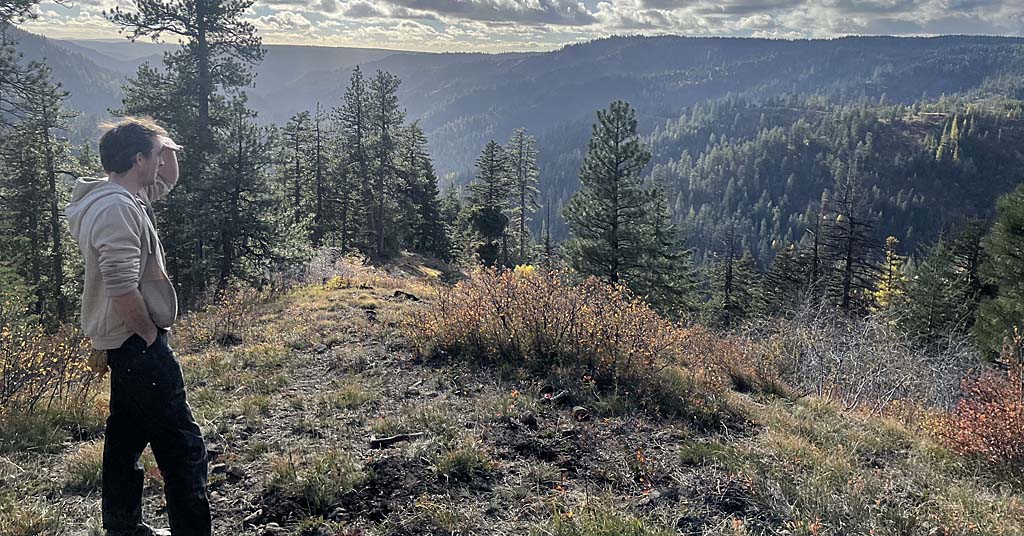
Mill Creek watershed where Tiger-Mill timber sale will thin trees

Logging on: Walla Walla, Wash., resident Paul Lynn has questions about a planned timber cut in the Mill Creek Watershed that supplies water to the town. Photo: Eli Francovich

By Eli Francovich. December 11, 2025. East of Walla Walla, Wash., a gate protects 36 square miles of steep country; country that funnels rain and snowmelt into Mill Creek, which in turn serves as the primary water supply for nearly 34,000 people. Closed to the public since 1918 the land is patrolled and trespassers face stiff fines and jail time.

Yet there may be a threat to the watershed that doesn’t respect gates, imprisonment, fines or any other human legislation: wildfire.

If a crown-scorching, soil-eviscerating fire—the kind that has become more common as the West heats upripped through these slopes it could flood Mill Creek with ash, clog it with burned trees and saturate the water with mud. This would devastate a town that doesn’t filter its drinking water, relying instead on the watershed’s purity and some UV and chlorine treatment.

At least that’s what the U.S. Forest Service and town managers say. And the best possible fix according to them? A timber sale.

“When we’re in July or August and a thunderstorm roles in, I don’t sleep well,” says Ki Bealey, director of Walla Walla’s Department of Public Works. “It’s worrisome. It’s very worrisome.”

And so the U.S. Forest Service, with the support of city administrators and the Walla Walla fire chief, is moving forward with a “thinning” project.

The Tiger-Mill Project timber sale is slated to thin or log nearly 12,000 acres of forest, much of it within the Mill Creek watershed; a watershed that is a designated roadless area and hasn’t been logged for 100 years or more.

The rational, Bealey says, is to reduce lighter and flashier fuels so the catastrophic fire of his serotinal nightmares can’t occur. Or, as the Forest Service states on its website, the project will “protect the Mill Creek Municipal Watershed and restore ecosystem processes and functions that foster landscape diversity and achieve desired vegetation conditions.”

All of which is little more than greenwashed commercial logging, says Paul Lynn, a Walla Walla resident who has vociferously fought the project.

“Commercial thinning is kind of a euphemism for heavy logging,” Lynn says while driving alongside Mill Creek on brilliant October day.

In the past seven months Lynn has organized resistance to the project. The project is moving forward and an environmental assessment finding no significant impact was issued in Feb. 2025. process included a public comment period.

Lynn says the Forest Service and the town of Walla Walla did not adequately inform the public of the project and that the environmental review was inadequate.

And while he has numerous detailed critiques and concerns—ranging from faulty survey techniques to worries about potential flooding downstream following the logging—he questions the larger argument that logging helps forests. Instead, it’s just a rebrand, he says.

“Meet the new logging, same as the old logging. This country was built on timber, and I have no illusions about ending logging and I have certainly bought my fair share of sawn logs,” Lynn says in a 45-minute video laying out his concerns with the Tiger-Mill timber sale. But let’s call an axe an axe, if we’re dead set on cutting down trees lets at least not pretend that its good for the forest.”

Feeding the beast

Even before the Forest Service started using wildfire prevention as a reason to sell more timber, as reported earlier this year by Columbia Insight, the idea that selective logging, or thinning, could improve forest health was an established theory, one that makes intuitive sense.

The idea goes like this: Starting in the early 1900s the Forest Service put out every wildfire it could, as quickly as it could. This policy developed in response to a series of mammoth 1910 fires that burned 3 million acres and annihilated towns throughout the Northern Rockies. However, like any overcorrection there were unintended consequences.
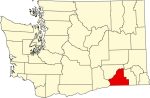
Walla Walla County map

Walla Walla County in red. Map: Wikipedia

“By trying to stop all major wildfires, the Forest Service had only fed the beast. The woods were full of dry, dying, aging timber and underbrush—fuel. Big swaths were unhealthy, in need of a cleansing burn. Even with their armies, their aerial support, their billions in taxpayer money to hold back the flames, rangers became increasingly helpless,” wrote author Timothy Egan in his book The Big Burn, which chronicles the 1910 fires and birth of the modern Forest Service.

In the following decades, commercial logging in the United States decreased due to increased costs, industry consolidation, globalization and social and political pressure. Previously logged forests, which often were replaced with stands of homogenous trees, grew thick with underbrush and immature trees, neither logged nor burned.

While hotter and drier summers certainly contributed to this, ecologists and managers began blaming forest management practices, namely suppression.

The best ways to counter this? Fuels reduction an umbrella term that encompasses thinning (the removal of small trees), controlled burning and the removal of larger trees, more closely resembling classic logging.

This has become accepted practice with support from many ecologists, scientists and managers.

However, there remain dissenters, voices that question the motivations, methods and science of fuel reduction.

“Thinning doesn’t stop fires,” says Chad Hanson, the co-founder the John Muir Project and a vocal critic of thinning. “It doesn’t prevent fires and it doesn’t prevent high-intensity fires.”

Against the grain

The Tiger-Mill Project is a perfect example of how the Forest Service uses the fear of wildfire as a cudgel to push timber sales through the court of public opinion, says Hanson.

In reality, projects like this harm forest health, do nothing to reduce fire severity and give homeowners a false sense of security, he says.

“The Tiger-Mill Project will put communities at greater risk,” he says. “While at the same time wasting an enormous amount of money.”
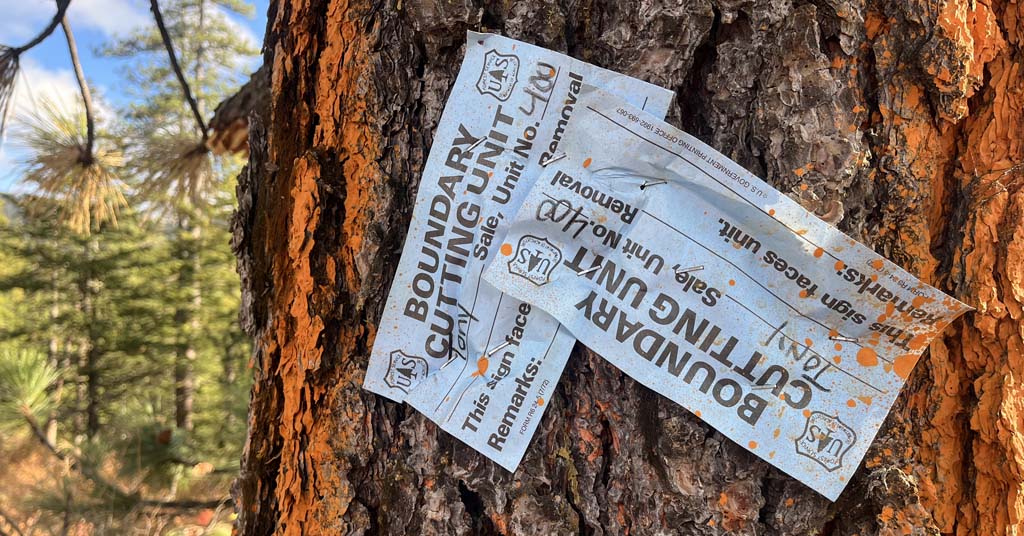
Tiger-Mill Project signage by Eli Francovich, Columbia Insight

Cut and dried: Paint and paper guide loggers to trees included in the Tiger-Mill Project. Photo: Eli Francovich

Hanson is a prominent critic of forest thinning practices. He’s written op-eds in the New York Times and co-authored numerous research papers critiquing thinning.

In 2021 he wrote the book Smokescreen: Debunking Wildfire Myths to Save Our Forests and Our Climate.

He’s been characterized as one of the few dissenting voices, as evident in a 2023 High Country News article defending thinning. And his methods have been critiqued.

A 2019 article in the journal Frontiers in Ecology and the Environment attacked Hanson’s methods and motivations, accusing him of selectively using data and “pressuring scientists and graduate students with different research findings to retract their papers.”

Other studies, including a 2021 review of research, support thinning practices, sharply contradicting Hanson’s argument.

Hanson refutes these claims by citing a slurry of studies, many of them conducted by Forest Service ecologists and scientists.

“It’s really important to keep in mind that most of the research I’m relying on is not my own. In fact, a lot of it has been published by Forest Service scientists,” he says. “Thinning, as a so-called fire-management approach, is profoundly controversial even within the Forest Service.”

Thin argument

Hanson argues that the severity of any given wildfire depends primarily on the weather and environmental conditions.

Wet forests don’t burn easily. Dry ones do.

The removal of trees and underbrush allows more sunlight to hit the forest floor, drying the soil and the fuels that remain. At the same time, the reduction in trees allows winds to blow with less restriction, further fueling the flames.

The 2018 California Camp Fire is an example. The forest had been heavily ‘thinned’ and yet that fire killed 85 people and burned more than 150,000 acres.
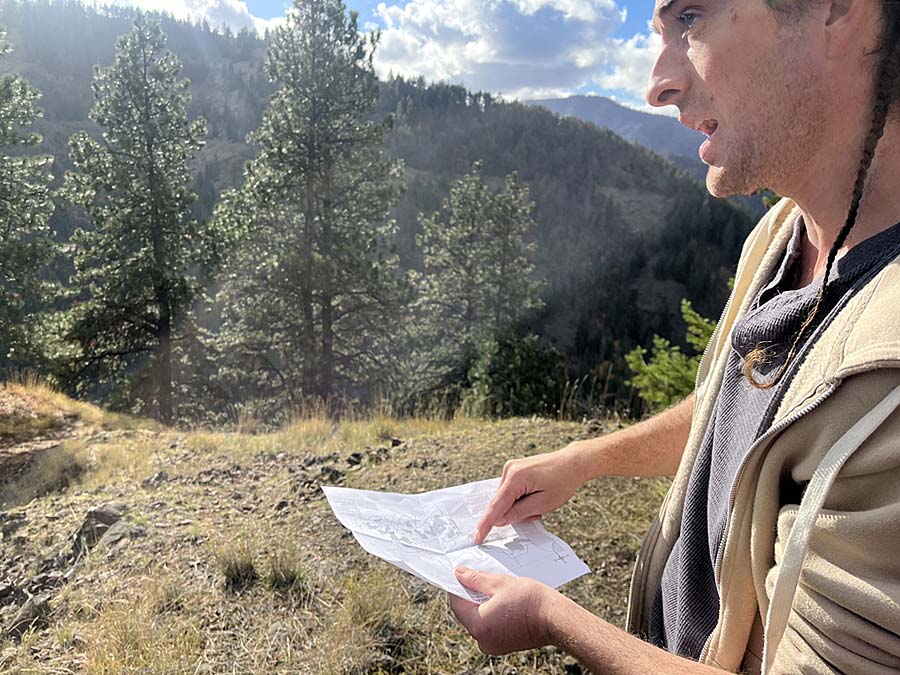
Mill Creek watershed, Walla Walla, Washington

Deep cut: Paul Lynn examines a map showing areas that will be thinned as part of the Tiger-Mill Project. The Walla Walla resident organized opposition to the plan. Photo: Eli Francovich

A 2023 research paper co-authored by the Forest Service points to the importance of creating defensible space around homes in wildfire terrain and other ‘home-hardening’ techniques and finds that thinning far from homes has no impact. Similar studies, including a 2000 Forest Service study, reinforce this claim.

“(Thinning) gives communities a dangerous false sense of security,” he says.

Not to mention what commercial thinning entails.

While the word itself may invoke images of chaps-wearing hand crews walking through the woods selectively felling sickly trees, the reality is mechanized.

According to Hanson’s research a normal “so-called thinning project” kills between 70 and 80% of the trees in a given stand. Between 60 and 80% of all grand firs and Douglas fir between 10 and 20 inches could be removed according to the Tiger-Mill silverculture report.

“The term thinning has become a political term. Not a scientific term. It’s a wildly misleading term,” says Hanson.

Risk management

Proponents of the Tiger-Mill sale acknowledge that the project isn’t a perfect solution. But as they see it, it’s better than doing nothing.

And there’s at least one example where a wildfire torched a Colorado town’s drinking supply, forcing the purchase of a costly filtration system.

On Nov. 5, the Walla Walla City Council voted 4-3 to not send a letter to the Forest Service requesting a monitoring plan and a pause on work until that requested plan was approved.

“This is risk management, that’s really what it is,” says Bealey, the town planner, adding that even the Tiger-Mill Project doesn’t guarantee the town’s water supply won’t be destroyed by a fire.

“Is there a perfect option here?” he asks. “We’re doing our best to be prepared for the risks and manage the risks to the best of our ability.”

And while the outcome isn’t what Lynn fought for, the public interest is a win.

“The real outcome of this to me, regardless of the city council decision, is that local leadership is keenly aware of the fact the public is paying close attention to this project,” says Lynn. “And that we will be holding them accountable.”
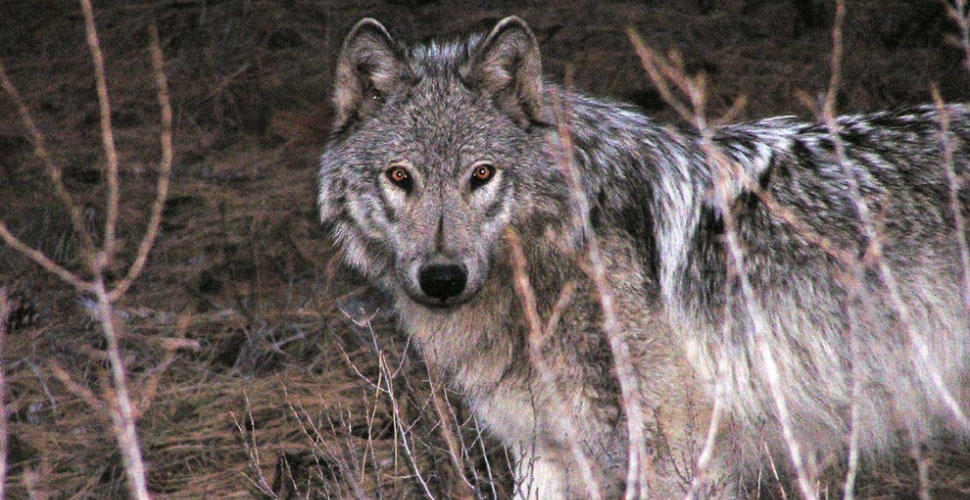
By |2025-12-18T13:54:08-08:0012/11/2025|Forestry|8 Comments

The Return of Wolves: A shockingly reasonable perspective

A new book by Eli Francovich brings overdue calm to one of the West’s most emotional debates. It’s time to listen

Wolf by Idaho Fish and Game

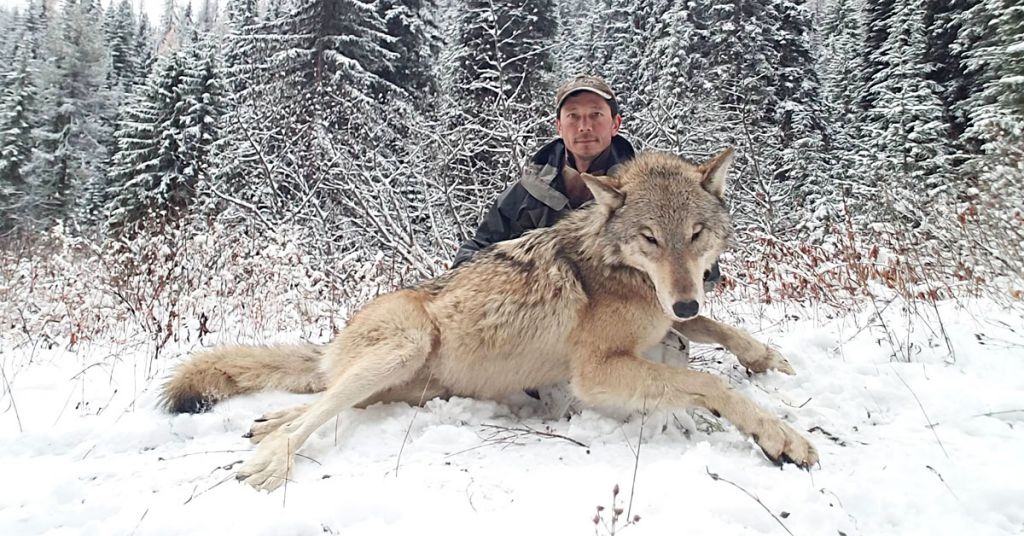
What do you see? Perhaps no animal stirs as many primal emotions, and points of view, as the wolf: Photo: Idaho Fish and Game

June 8, 2023. Below is an abridged excerpt from The Return of Wolves: An Iconic Predator’s Struggle to Survive in the American West, a new book by journalist and Columbia Insight contributor Eli Francovich. The book is earning well-deserved praise and generating discussion for its evenhanded examination of one of the Columbia River Basin’s most hotly argued environmental issues. The Return of Wolves is available for purchase from Timber Press and wherever books are sold. —Editor

In September 2019, I met Daniel Curry on a hot and dusty day high in Washington’s Kettle Range, hemmed in by thick walls of young pines and wandering cattle. I was touring wolf country with a rancher, a politician, and a biologist all stuffed into a beat-up truck.

I’d been covering wolf news for two years for the regional paper. It was one of the many issues I was expected to keep tabs on, but unlike other beats, I never felt I had a handle on the topic. Instead, I felt I was mindlessly repeating talking points from both sides of the debate.

When caught in the middle of two opposing viewpoints, the normal recourse for a reporter is to find the perspective that most closely represents the middle ground. For issues of wildlife and ecology, this often means speaking with professional biologists and wildlife managers. The prevailing wisdom is that this kind of reporting helps balance out the extreme views.

So I’d attempted to do just that. And yet, I still felt like I had an inadequate understanding of the debate. My reporting had been charged with being anti-wolf. It had also been maligned as being pro-wolf.

“Why don’t you do your research?” angry readers screamed at me, saying that I was misrepresenting the current science of wolf ecology.

The politician I was now riding with had called me late one Friday, spitting mad, alleging that a recent story I’d published had been utterly divorced from the reality on the ground.

All of this disturbed me. Not the anger or criticism, because for a reporter those are as natural and expected as layoffs and pay cuts, but rather the sneaking suspicion that I was missing some bigger, more interesting and important story. While I dutifully recounted the facts, I couldn’t help but wonder if there was a more nuanced, compelling, and challenging tale lurking beneath the surface.

The Return of Wolves book cover

The Return of Wolves is published by Timber Press.

I didn’t know it then, but I was experiencing the natural limits of rational and reductive thinking. Facts and the scientific process are invaluable tools, but when it comes to looking at the issues where people, animals, and culture intersect, they often fall short.

This is not unique to the Wolf Wars of northeastern Washington. It is present in any discussion that, intentionally or otherwise, pits questions of science against questions of belief. We see it in the politicization of the coronavirus. Likewise with climate change. Both are issues of fact that have become terribly divisive, largely along lines of belief. And it seemed to me that there was perhaps no better metaphor for this fundamental tension in contemporary American behavior than the story of wolves returning to Washington.

So I decided to line up a tour of wolf country with three folks I hoped could help me shake off some of my confusion about this particular story. A rancher who had lost cattle to wolves. A politician who represented ranchers but also played in the halls of power. And a biologist who worked on the ground and seemed to know wolves and people well.

After three hours with them, it felt like little had changed. Over coffee, each of my companions had reiterated points and perspectives I’d heard before. They all came across as sincere and honest people, but each of them was also clearly entrenched in their way of thinking.

Then we set off in the truck, taking a series of Forest Service roads winding up into the hills. The rancher recounted times he’d stared down wolves, hand on gun. The biologist talked about the biological complexity of the canids. The politician decried the decisions that urban liberals make, how little they understand rural reality. We stopped occasionally to take photos, or to look at some cows standing by the road, their tails languidly whipping back and forth.

And then, at the tail end of the day, eyes heavy from the heat and the early start, we passed a horse trailer parked in a dusty turnout. Two tents were pitched in the dirt under the blazing sun. Behind them, a banked hill led up to thick trees. A large tarp had been stretched between the thickest pines, and two horses occupied the only shade it provided.

We stopped and jumped out of the truck. A lanky man with shortly cropped hair, faded cowboy boots, filthy pants, and one gleaming pistol on each hip approached us.

He wanted to know what we were doing. Who we were. Why we were there. This is how I met Daniel Curry.

Later I would learn that Curry is a range rider, a job that requires him to spend most of the year in the woods trying to keep wolves from killing cattle and cattle from wandering into the mouths of wolves. He works for the biologist with whom I was traveling. His days roll with the seasons.

He works in rugged country, country choked with pines after decades of fire suppression and clear-cutting. Here, he patrols sections of the 1.1 million-acre Colville National Forest on behalf of ranchers who release their cattle onto the land every spring and demand their safe return in the fall.

He spends weeks at a time in isolation, his only company a menagerie of animals (three dogs and three to four horses), working odd hours, heading into the hills at 9 p.m. on some days and 3 a.m. on others. Typically on horseback (but sometimes on an ATV), he searches for cows and looks for wolves and tries to disrupt the natural outcome of such meetings. He talks about wolves with evident affection, even wearing a ring embossed with the silhouette of a wolf.

Despite that, his most consistent point of human contact is with the ranchers whose cattle he guards. These are men and women who don’t wax poetic about the howls of wolves. Politically and socially conservative for the most part, ranchers generally see the natural world as a God-given resource to be used for the betterment of humans. A worldview anathema to Curry, who speaks fondly of individual animals as “beings” worthy of respect and care, regardless of their utility to Homo sapiens. His best friend, I would find out, is his horse Griph.

Justin Webb with trapped wolf in Idaho

Larger than life: Francovich has written about wolves several times for Columbia Insight, including a 2021 story that examined a controversial Idaho law aimed at reducing the state’s wolf population. Photo courtesy F4WM

I didn’t know any of this that dusty afternoon, but I sensed in Curry a good story—the coveted fuel of any journalism—and a level of honesty and an air of open-mindedness that I found refreshing after spending the day listening to the usual talking points. He was guarded, but friendly.

“I’m busy now,” he said, “but why don’t you come back tonight? We can chat more.”

And so that evening I drove back into the woods.

Amidst the dirge of ecological decline, the return of wolves to the lower forty-eight has been a major chord in a chorus of minors. Their return from near-extinction after decades of focused assault is a remarkable conservation and cultural success story.

In 1995 and 1996, biologists released thirty-one wolves into Yellowstone National Park. The canids, which had been relocated from Canada, multiplied and spread. Bolstered by similar releases in Idaho and Wyoming, the population grew. Over the following decades, wolves made their way throughout the West, inhabiting territory and habitat that hadn’t seen the apex predator since their local eradication one hundred years earlier.

News of their resurgence provoked a whole spectrum of reactions. For scientists, wolves represented a singular opportunity to observe, in real time, the consequences when a long absent predator returns to an ecosystem. For activists, the return of wolves was a clarion call for conservation. For some ranchers, hunters, and farmers, wolves became a prime example of government overreach and an attack on their values and way of life. For journalists and artists, here was simply a good story that tapped into primal fears and ancient iconography.

Most of the attention was focused on the wolves living in one of the largest remaining tracts of undeveloped land in the contiguous United States: the Greater Yellowstone Ecosystem. Anchored by the eponymous national park, it encompasses parts of Montana, Idaho, and Wyoming. By landmass—between 20,000 and 35,000 square miles depending on where you draw the lines—the ecosystem is larger than eighty-six countries. What’s more, the states bordering this wilderness are lightly populated and politically homogenous, with a combined population of approximately 3.5 million people.

In 2008, when the long-legged lopers reached Washington State, they encountered a landscape sundered largely along geographic lines. West of the Cascade Mountains, the Evergreen State is humid, urban, liberal, and increasingly wealthy. East of the divide, it’s dry, rural, and increasingly poor. The political beliefs of nearly eight million Washingtonians can roughly be predicted by where in the state they happen to call home.

The wolves arrived from the east and the north—migrating from Idaho and Canada—and their population remains concentrated in the eastern half of the state. And so, every summer for the past decade and a half, when cattle head out to graze the public lands located primarily in Washington’s rural, politically conservative, and poorer counties, wolves will kill some of them.

Ranchers cry out, saying their livelihood and culture are under attack. In response, state wildlife managers will take to the air in helicopters and kill wolves.

Environmentalists and wolf advocates protest and file lawsuits, arguing that cows are a nonnative species and ranchers are grazing their cattle on public land for a nominal fee. The threats fly in both directions. Wolf meetings are canceled due to threats of violence. The FBI gets called. Wolves poached. Pelts smuggled to Canada, a bloody FedEx package the fateful clue. A state lawmaker suggests sending an environmental activist a severed wolf tail and testicles. In short, wolves incite the kind of passions usually reserved for war and infidelity—passions that highlight deep political and social divides.

Wolf in Klickitat County, Wash.

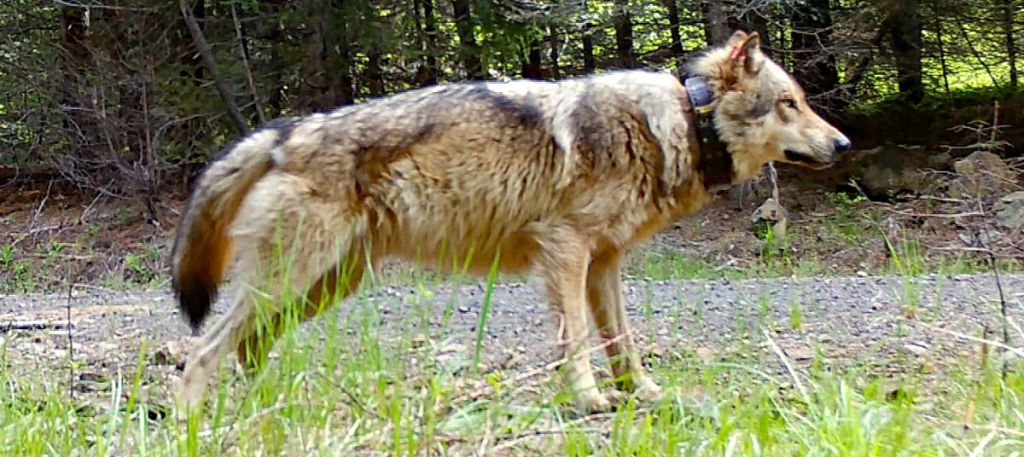
Newcomer: This photo of a collared gray wolf dubbed WA109M was taken by a trail camera earlier this year in Klickitat County, documenting the return of wolves to southwest Washington. Photo: WDFW

That passion for wolves—both negative and positive—means that wolves get all sorts of media attention and money. Environmental groups milk outrage over the killings of wolves to assist their fundraising efforts. Cattle producers’ associations do the same, buying up billboards in eastern Washington featuring the image of a snarling wolf and a tagline urging folks to call the sheriff. State agencies employ multiple biologists focused on Canis lupus, even while more endangered species—sage grouse, for instance—are lucky to have a single fulltime employee studying them. Some of that focus comes from ignorance. And some of it comes from misplaced passion, or pure and simple greed.

But I believe that the primary tension underlying the Wolf Wars is one that’s common to all human-nonhuman relationships: the problem of coexistence. Do we have the will and wisdom to coexist with nonhuman animals? That question is particularly pressing in a state like Washington, one that jams humans and animals together. And while Washington may be unique in the United States now—with its dense human population surrounded by wild animals—it likely won’t stay that way.

Consider other less populous Western states like Montana and Idaho. Their populations are booming, with people moving into lands once roamed by bears, grizzlies, bobcats, coyotes, wolverines, fishers, and, yes, wolves.

At the same time, larger, more populous (read: more liberal) states that long ago killed their native predators have been clamoring for a touch of wilderness. Colorado has drawn up plans to reintroduce wolves. Meanwhile, California’s ongoing rewilding efforts have led to a healthy and surprisingly urban cougar population, and a pack of gray wolves recently arrived in Plumas County along the Nevada border.

The story is similar abroad. In 2015, wolves returned to the Netherlands for the first time in more than a century. Rewilding efforts across Europe are bringing long-absent species back onto a continent that has been manhandled by humans for thousands of years.

In all of these cases, wild animals are coming into contact with highly altered landscapes that demand adaptation and resilience on their part.

And yet, the true burden of coexistence will fall upon humanity’s collective shoulders. One hundred, two hundred, or four hundred years ago, the answer would have been simpler: move or kill the wild animals. That is no longer a viable approach, as there is no longer an “elsewhere” to which to move these animals.

Daniel Curry range rider in Washington

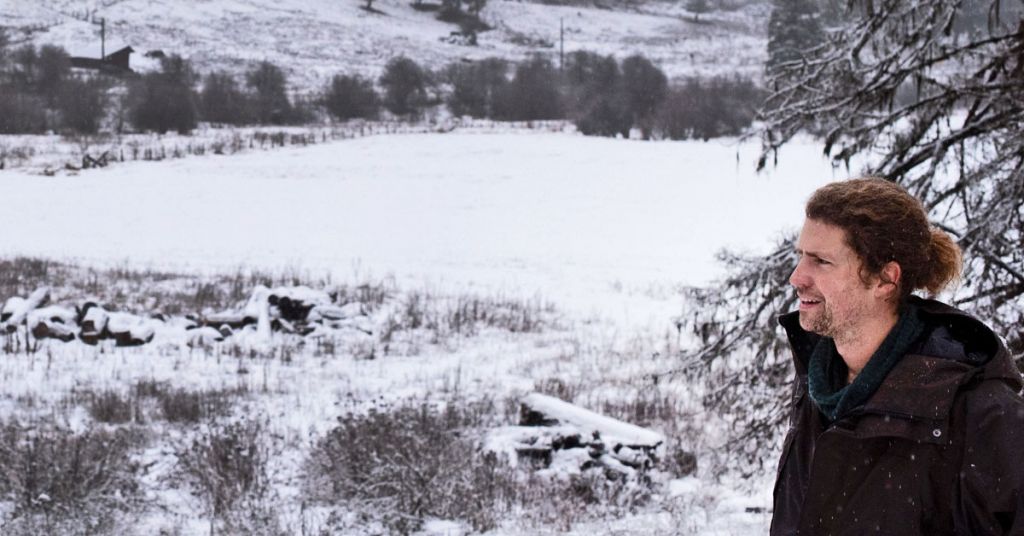
At home on the range: Daniel Curry in January 2021. Photo: Eli Francovich

Ironically, and perhaps tragically, as humans move farther from the world of rain, snow, and wind, our desire for a return to the wild—powered I believe by a deep genetic nostalgia— is renewed. And yet, most of us don’t have the faintest idea what that kind of life requires.

From Republic, Washington, a charming albeit decidedly weathered former gold rush town, Curry’s camp was an hour drive away. Belying stereotypes about rural life, Republic collects an astonishing array of people: old hippies clinging to the ghost; young back-to nature types driving banged-up Subarus through washed-out roads; conservative-minded ranchers, loggers, and miners who have seen their ways of life dry up as natural resource extraction has ended in much of the United States; at least one family of immigrants from India.

After fueling up I drove back into the hills to meet up with Curry. We talked late into the evening, drinking by the fire.

The rancher with whom I’d been riding earlier joined us. Whiskey loosened his tongue and I learned that he’d shot and killed a wolf days before in self-defense. Curry flinched at this revelation but said nothing. This rancher, after all, had agreed to try and live with wolves, a minor miracle in eastern Washington. After several hours of drinking and talking, he went on to confess that he kind of liked hearing wolves in the hills.

Beneath the nearly full moon, someone pulled out a steel drum, and we howled into the night, hoping for a response. None came and in the morning, I returned to Spokane, the second largest city in Washington, where I live and write for the newspaper. I published a story about Daniel Curry and range riding.

Life rolled on, but something stuck with me about Curry’s quixotic mission. Perhaps it was the doomed romanticism of all those years spent alone in the woods, away from people, defending an animal that most will never see. I was struck by the immediacy of that work. Of the challenge of trying to balance human interests and need with nonhuman interests and the difficulty of bridging the rural and urban divide. After all, Curry believes that the wolf wars are simply a symptom of a bigger problem: the widening political and cultural divide in the United States. Striking a balance in wolf land would go a long way toward kneading the “dough of society” back together, he told me.

“This place has the chance to work out,” he says. “It could be a good example. Or it could all fall apart.”

By |2023-06-08T09:36:11-07:0006/08/2023|Wildlife|1 Comment

Is this new law a climate game changer? Or just another way to keep lawyers busy?

Washington’s Climate Commitment Act aims to reduce carbon emissions 95% by 2050. But passing a law and enforcing it are different things

Carbon emissions at an unnamed port.

Making allowances? Many Washington businesses must start adapting to new carbon emissions regulations. Some get a pass. Photo: Chris Leboutillier/Unsplash

By Eli Francovich. February 9, 2023. Prior to moving to Washington for a job with the Department of Ecology, Claire Boyte-White was a freelance writer focused on entrepreneurship, finance and investment. In this capacity, she explained the complexities of the financial world for a general audience.

In December 2021, however, she changed careers and started at a job that a year prior hadn’t existed.

Her title? Communications Specialist for the Climate Commitment Act, Washington’s newest legislation aimed at slowing climate change.

And while on its face the act has nothing to do with high finance there are parallels.

The Climate Commitment Act is a carbon cap-and-invest program under which the amount of carbon some Washington industries may produce per year is capped.

The law, which was passed in 2021, went into effect on Jan. 1.

Its carbon-emissions limit is slowly lowered over time, with a goal of reducing the state’s emissions 95% below 1990 levels by 2050.

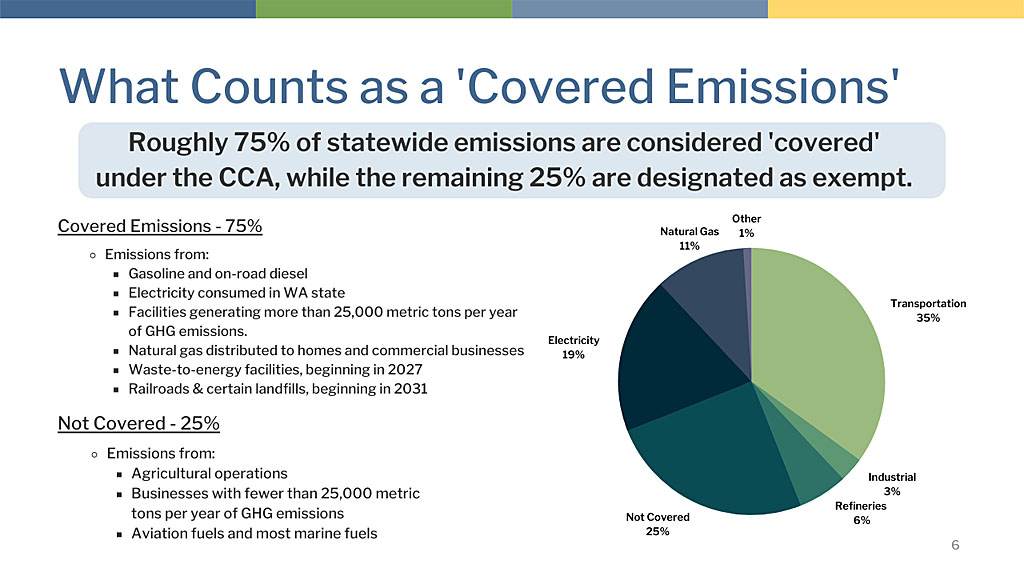
The law applies only to industries that produce more than 25,000 metric tons of carbon per year. Certain industries have been exempted, although the state says 75% of statewide emissions will be covered under the program.

Qualifying industries, however, must meet the emissions limit set by ecology each year or buy allowances to burn carbon in excess of the cap.

Those allowances will be auctioned off quarterly with each allowance allowing the owner to emit one metric ton of CO2.

While the state has set the maximum and minimum prices of those allowances (for 2023 it’s $22 and $81), the exact price will be dictated by the market.

As the overall cap lowers, the price per allowance will increase, thus incentivizing companies to decarbonize.

Money from those allowances, projected to be more than $1 billion per year, will go toward climate adaptation and decarbonization efforts, as well as clean air initiatives.

What could go wrong?

The CCA model has been heralded elsewhere as an effective tactic in the fight against climate change, one that—unlike taxes or direct mandates—gives companies monetary incentives to reduce their carbon footprint.

Theoretically, it’s an effective partnership between the long arm of government and the power of supply and demand.

“They are financially incentivized to decarbonize, but they are empowered to make all of their operational decisions,” Boyte-White says.

Former Washington State Sen. Reuven Carlyle.

Cap wrangler: Sen. Reuven Carlyle, then chair of the Washington Senate’s Environment, Energy & Technology Committee, co-sponsored the Climate Commitment Act in 2021. Photo: Washington State Democrats

However, cap-and-trade programs have been exploited, abused and unfairly applied elsewhere.

And while it’s certainly too soon to judge Washington’s program, understanding how it could go wrong is useful.

For an example look south to California, where a similar (although not exactly the same) cap-and-trade program has existed since 2013, one of the first in the world. 

While California’s program was lauded for early successes, a 2019 ProPublica analysis found that since the implementation of the program “carbon emissions from California’s oil and gas industry actually rose 3.5% since cap and trade began.” 

That investigation found, among other things, that economic and political lobbying often defanged key parts of the program and allowed the largest and richest companies to pollute more.

Strategic exceptions

Who is allowed, or not allowed, to burn carbon and/or at what price is already a concern for some in Washington.

Per the Washington law, some industries are completely excluded from the cap-and-trade program and others are given allowances for free (think of it like a free token to play an arcade game).

Notable exemptions include emissions from aviation fuel and emissions from watercraft fuel supplied in Washington but burned elsewhere. 

Infographic on covered emissions provisions in Climate Commitment Act.

Infographic: Washington Department of Ecology

Then there are industries given “no-cost allowances”—an allowance allows the company to burn one metric ton of carbon above the cap set by Ecology.

These industries include electric and natural gas utilities and businesses that are “emission intensive, trade exposed” industries, such as manufacturing. 

The goal of that provision is to keep those industries from leaving Washington, says Boyte-White.

“They’re big companies,” she says. “Big industries can’t pivot on a dime. Give them some time to invest and decarbonization early on. And prevent leakage.”

Who could object?

But at least one company is arguing that CCA allowance provisions aren’t fair.

In December, The Grays Harbor Energy Center filed a federal lawsuit alleging the program is unconstitutional.

At issue is the fact that the Grays Harbor plant, which is owned by Chicago-based Invenergy, isn’t utility-owned and thus won’t receive a no-cost allowance.

Claire Boyte-White, Washington Department of Ecology

Commitment communicator: Claire Boyte-White. Photo: Washington Dept. of Ecology

According to the lawsuit the act’s “allocation of no-cost allowances uniquely harms Invenergy. Unlike local utilities who may use their no-cost allowances to reduce, if not eliminate, their costs to comply with the CCA, it must bear the costs of ensuring Grays Harbor has sufficient allowances to cover its emissions during the CCA’s first compliance period.”

Boyte-White wouldn’t comment on the case specifically although she said broadly what is or isn’t covered by the program was decided by the Legislature.

“Any changes about program coverage would be Legislative in nature,” she says.

The Association of Washington Business also raised concerns about the program’s impact on the 7,000 businesses they represent arguing in a 2021 letter to the Legislature that the program erodes “the competitive advantage” Washington’s cheap power has traditionally provided.

“This pressure makes it difficult for existing small businesses to continue and much more difficult for entrepreneurs to start one,” the letter states. 

Just application

One way that Washington’s program is notably different than California’s cap-and-trade effort is in its commitment to cleaner air, in conjunction with lower emissions.

Surprisingly, after California’s law was passed a study found that air quality deteriorated in Black and Latino communities, raising serious questions about environmental justice. 

To offset that, Washington has created an initiative in conjunction with the cap-and-trade program to improve air quality in “overburdened” communities.

An environmental justice council will have input on how money raised by the CCA is spent.

Additionally, 35% of funds raised by the program must be invested in projects that benefit at-risk communities and a minimum of 10% must go to projects with tribal support. 

By |2023-02-10T11:30:12-08:0002/09/2023|Climate Change|5 Comments

Get lost: How wildlife responds to hikers

New study suggests hikers should stay on one crowded trail rather than disperse across multiple, lesser-used ones

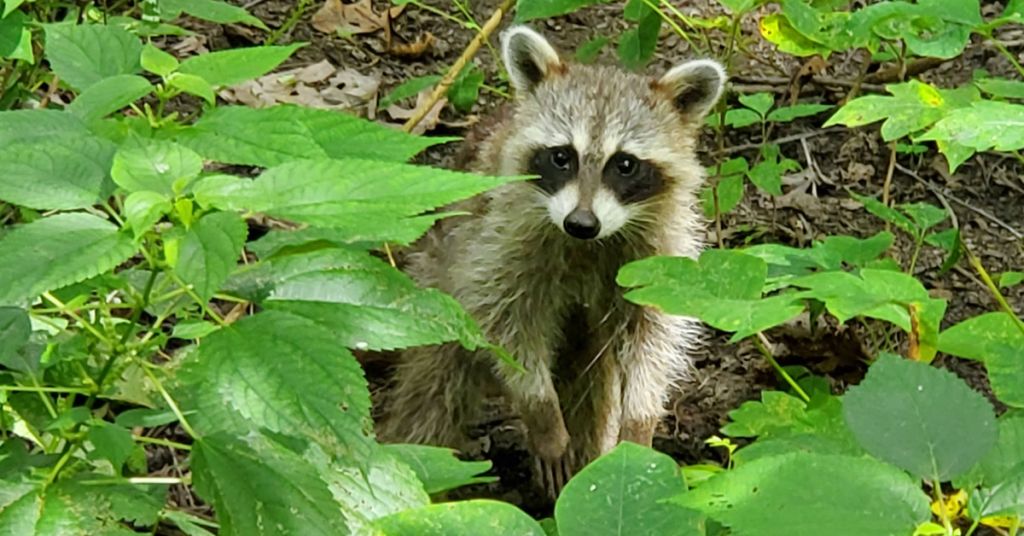
Raccoon

Unrequited love: Wild animals don’t care about humans as much as humans care about them. Photo: Taaja R Tucker-Silva/USGS

By Eli Francovich. November 10, 2022. While it’s not in her job title, striking a balance between the wants of humans and the needs of animals is a huge component of Juliette Fernandez’s day-to-day work.

As the project leader for Ridgefield National Wildlife Refuge Complex in southwest Washington, she’s tasked with managing four wildlife refuges: Ridgefield, Steigerwald, Franz Lake and Pierce refuges.

These refuges are near some of the more densely populated areas of the Columbia River Basin, putting a sharp point on the pressures of human need.

While Ridgefield and Steigerwald are close to Portland’s urban base and are popular recreation destinations, Franz Lake and Pierce refuges, both in the Columbia River Gorge, are completely closed to the public, dedicated instead solely to wildlife habitat.

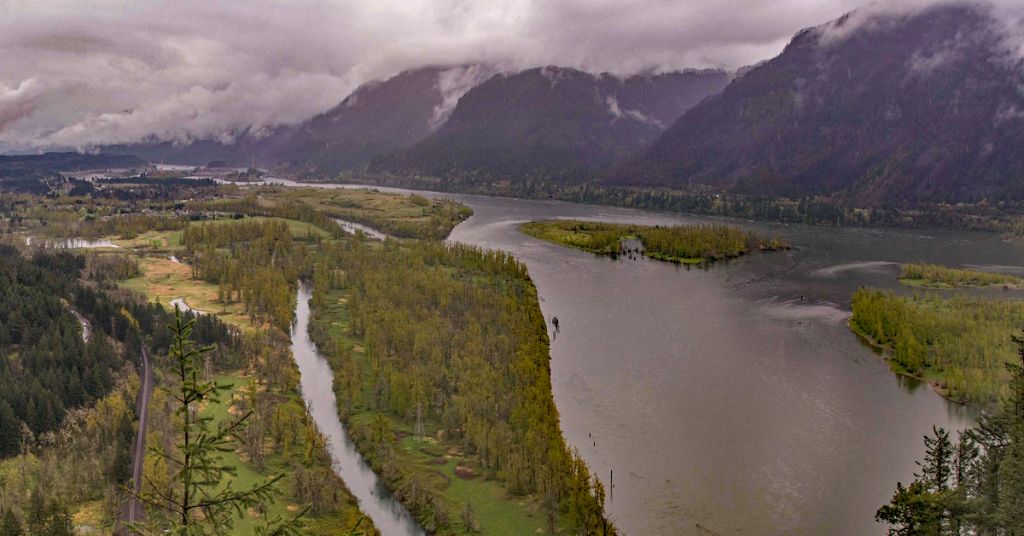
Columbia River Gorge

No humans allowed: Pierce National Wildlife Refuge encompasses 329 acres of wetlands in the Columbia River Gorge. Photo: Wayne Hsieh/CC

That fact is a legacy of the National Wildlife Refuge System. Established in 1903 the refuge system, which is managed by the U.S. Fish and Wildlife Service, is focused first and foremost on the “conservation, management and, where appropriate, restoration of the fish, wildlife and plant resources and their habitats within the United States for the benefit of present and future generations of Americans.” 

Recreation and all other uses come second.

“The purpose was very specific,” Fernandez says of the refuge system’s birth. “It was to preserve these lands and habitats. In order to do that, we don’t allow public use there.”

The tactic of preserving some space solely for animals looks particularly farsighted after a recent University of Washington study looking at just how few humans it takes to disturb animals.

Stick to those crowded trails

The research was published Oct. 13 in the journal People and Nature.

Over the course of two summers UW professor Laura Prugh collected images from 40 motion-activated cameras across 10 sites in Alaska’s Glacier Bay. She focused on wolves, black bears, brown bears and moose.

Prugh and her co-authors found if humans were present, the cameras detected fewer than five animals per week across all four species studied.

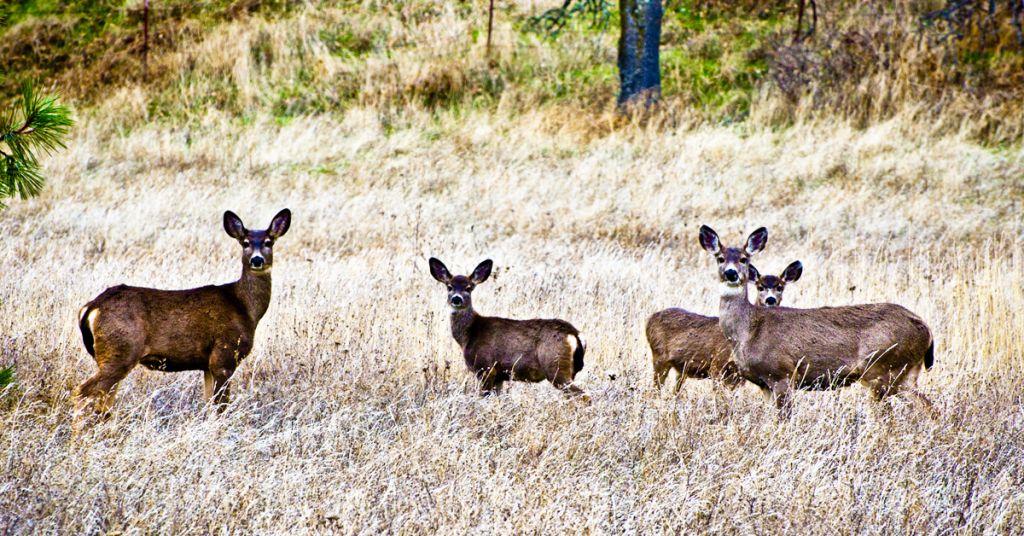
Deer near Mosier

What are you doing here? Mule deer along Oregon’s highway 30 in the Columbia River Gorge National Scenic Area. Photo: USFS

More dramatically, in backcountry areas, wildlife detections dropped to zero each week once outdoor recreation levels reached the equivalent of about 40 visitors per week.

The researchers note that in some places where animals are more habituated to humans the reaction to human presence will be less.

“Our study indicates that if people want to recreate and minimize their impact on wildlife, it would actually be better to go hiking on busier trails because those sites are disturbing wildlife anyway,” Prugh says. “I think, unfortunately, there is a trade-off with the human’s experience and the impact on wildlife.”

Snowmobiles over skiers?

Prugh’s study adds to a growing field of research into the ecological impacts of recreation.

According to Joel Berger, a professor at Colorado State University, the research is the first of its kind to look at the minimum amount of human presence animals will tolerate. Berger doesn’t know Prugh personally and wasn’t involved in the study.

He pointed out that the study shows variation among different species. Prugh’s study found that moose became more active when people were around, suggesting that the large ungulates were using humans as a shield against other predators.

Other recreation ecology research has found that animals are greatly impacted by human presence; some become more nocturnal. Others, such as wolverines and bighorn sheep in Montana, avoid areas where humans are.

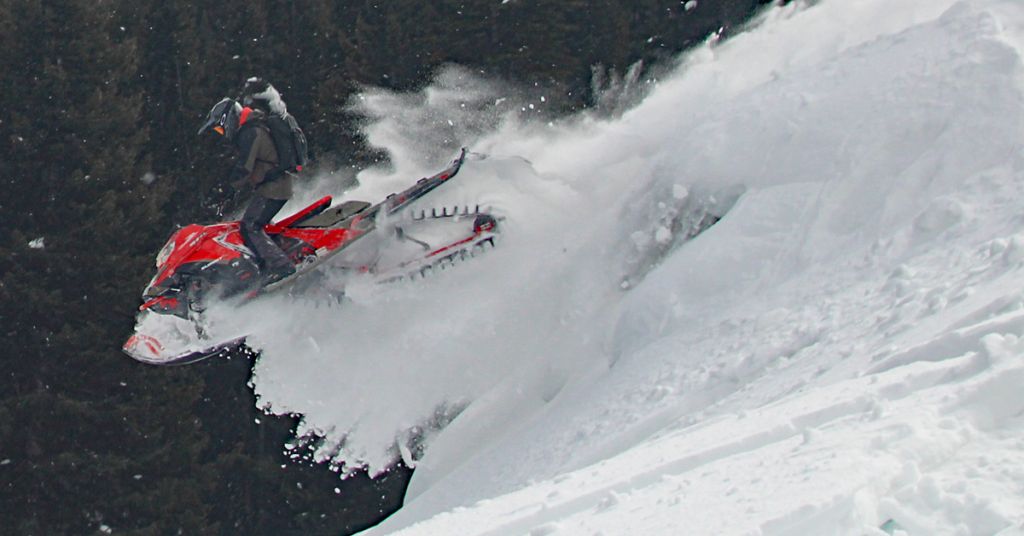
Snowmobile

The sound and the hurry: Believe it or not, some animals flee further from skiers than from these. Photo: Chuck Thompson

In a particularly surprising study from Norway, wild reindeers fled farther and longer from backcountry skiers than from snowmobiles.

Questions about the impact of human recreation on animals will continue to be hashed out by academics and land managers.

Meanwhile, Fernandez says her work remains the same—striking a balance between humans and wildlife.

“I think it’s so important to have both types of locations,” she says.

Eli Francovich is a journalist covering conservation and recreation. Based in eastern Washington he’s writing a book about the return of wolves to the western United States.

Appreciate this story? Columbia Insight is a nonprofit environmental news organization. Your support helps fund the contributors who research, write, edit and fact check the stories we publish. Please click here to support our mission.

RELATED: Climate change now impacting wildlife migration

RELATED: What does ‘quasi-extinction’ actually mean?

By |2023-01-28T11:05:34-08:0011/10/2022|Wildlife|1 Comment

Should dams be used as giant batteries?

A new Energy Vision reexamines the role Columbia River Basin resources play in our energy future

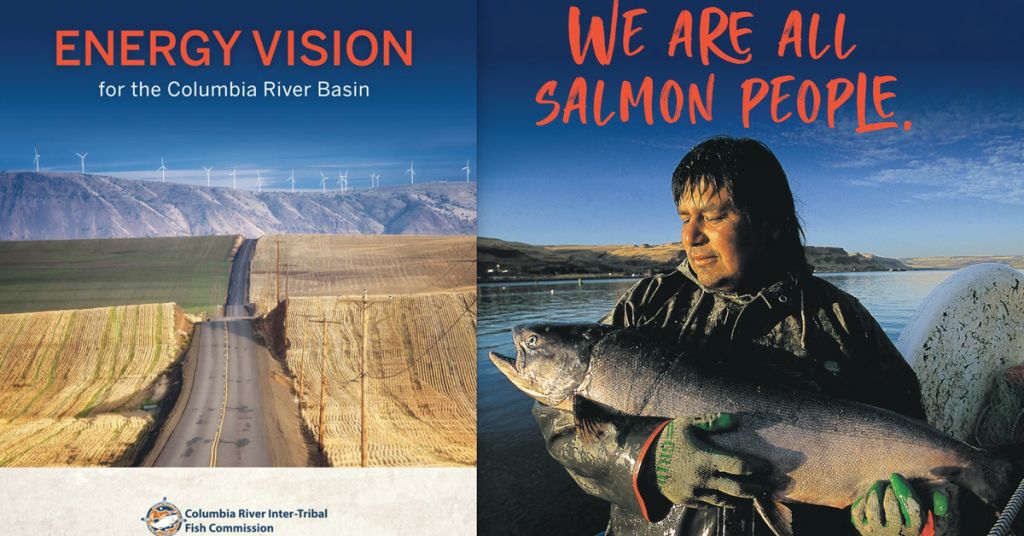
CRITFC Energy Vision

Clear path: Renewable energy and salmon are at the heart of the newly released Energy Vision. Image: CRITFC

By Eli Francovich, September 29, 2022. The early 2000s weren’t good years to be a fish—or a ratepayer—in the Columbia River Basin.

That’s because in 2001, the Columbia River’s famed spring runoff sputtered, sending tremors through the ecosystems and infrastructures that depend upon it rolling on.

A predicted 68% decrease in spring runoff throughout the Basin sent rates skyrocketing, a particularly disturbing development for a region of the United States that’s traditionally enjoyed low power rates thanks to an extensive network of hydroelectric projects and government subsidies.

Federal and state officials scrambled to deal with the crisis, which was caused in part by the near-record low runoff and in part by a decade-long slowdown of non-hydro power construction.

To address the squeeze, at least in the short term, dam managers decided to sacrifice the quietest, least vocal constituents: salmon.

Salmon-saving measures were paused, and reservoirs were emptied in hopes of avoiding rolling blackouts throughout the Northwest.

While environmentalists and other salmon-lovers protested, none were more concerned than regional Tribes.

“Salmon did not create the current crisis, and the river cannot continue to be run on their backs,” said Antone Minthorn chairman of the Confederated Tribes of the Umatilla Reservation at a 2001 energy conference in Portland.

The salmon, and ratepayers, weathered the crisis.

But Tribes didn’t forget. In 2003, the Columbia River Inter-Tribal Fish Commission released its first “Energy Vision for the Columbia Basin.”

The document provided recommendations to utilities, politicians and federal hydropower managers in hopes of preventing the river from running on the backs of salmon again.

Report sees ‘writing on the wall’

After a soft launch this summer, CRITFC has now released a new Energy Vision for the Columbia River Basin that includes 43 recommendations, which were reviewed by 30 subject matter experts.

It’s a timely document considering the global push toward more renewable power sources, as well as an ongoing drought in the western United States and decreasing snowpack due to climate change.

These factors imperil the hydroelectric system and, by extension, salmon, says CRITFC spokesperson Jeremy FiveCrows, who is a Nez Perce tribal member. (FiveCrows is also a Columbia Insight board member.)

CRITFC was formed in 1977 and includes the four Tribes with treaty fishing rights on the Columbia River: the Nez Perce Tribe, Confederated Tribes of the Umatilla Reservation, Confederated Tribes of the Warm Springs Reservation and Confederated Tribes and Bands of the Yakama Indian Nation.

Oregon power and agriculture

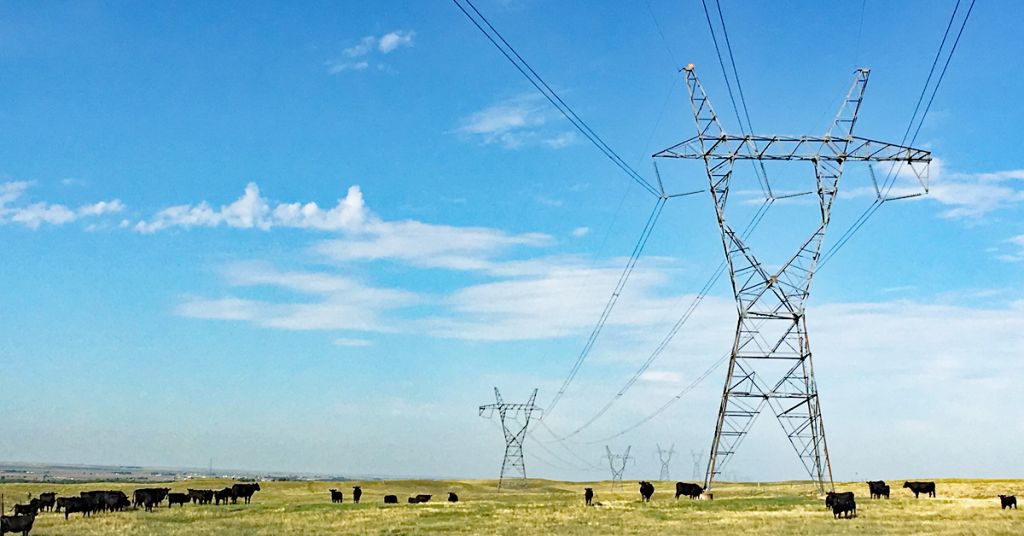
Long view: The new Energy Vision addresses a broad range of energy concerns. Photo: Chuck Thompson

“This one (report) was precipitated by seeing the writing on the wall,” says FiveCrows. “Of seeing the energy transition and what that’s doing to the whole energy market.”

In particular, the Tribes worry that as more renewable energy sources like wind and solar come online the existing hydropower system will be used as energy storage.

Solar and wind power only work when the wind blows or the sun shines. By closing dam gates, power managers can essentially store energy. In power parlance this is known as capacity.

A lack of capacity is one of the problems with renewable energy sources, a fact illustrated by California’s ongoing power woes.

As of yet there’s no reliable and cheap way to store power created by the wind or sun. As terrible as dams and reservoirs are for fish and riparian areas, they’re excellent at storing energy.

“With all this solar and wind coming online the hydro system is being looked at as a battery,” says Christine Golightly, a policy analyst at CRITFC who worked on the Energy Vision document. “Physically it can be used as a battery. It would be a great resource to store energy when solar is running … but all of this is to the detriment of the fish.

“We need a larger strategy that doesn’t rely on the hydro system as the battery.”

Key recommendations

The report’s 43 recommendations fall into nine major categories. The recommendations are expansive, covering more obscure concerns—a request that utilities deny service for crypto-mining operations—to better publicized and more hot-topic issues. Large items include:

River restoration and changes to dam operation: The Tribes recommend the region prepare to breach the four lower Snake River dams. Additionally, they recommend increasing spillover run of river dams during the spring to help salmon and lamprey migration, improving existing fish passage structures and more.

Lower_Monumental_Dam credit USACE_

Northwest passage: Lower Monumental Dam is one of four dams along the Snake River salmon advocates want breached. Photo: USACE

Amend the Columbia River Treaty: The United States and Canada should include the 15 tribal sovereigns in the U.S. portion of the Columbia River Basin in negotiations to modernize the Columbia River Treaty.

The treaty should aim to restore and maintain healthy and harvestable treaty-protected resources while attempting to reduce carbon emissions and improve renewable resource integration.

Flood-risk study: The U.S. Army Corps of Engineers should conduct a comprehensive study of flood risk in the Columbia River Basin and consider the need to balance flood-risk mitigation with effects on fish, wildlife and ecosystems.

Maximize energy efficiency: The tribes recommend the Northwest Power Council, BPA and utilities study and consider how much power capacity is conserved by implementing energy efficiency efforts, particularly during peak power times. These include better insulation, longer-lasting light bulbs and more.

Address climate change: Reduce greenhouse gas pollution and continue to increase energy efficiency to try to avoid the devastating effects we are facing.

Read all recommendations and the entire Energy Vision for the Columbia River Basin here.

Toward consensus

Golightly says the recommendations are a framework to help guide policy and practice over the coming years.

Now that its Energy Vision is published, CRITFC will be reaching out to politicians, utilities and others. At the same time, the Tribes have received a federal assistance grant to begin studying how the recommendations can be implemented.

CRITFC’s goal is to look at the energy system—and the Columbia River—holistically.

A key part of that is working with groups or individuals who may have differing opinions.

That’s why including a recommendation to breach the four lower Snake River dams was tricky—however the Tribes feel strongly about the importance of that issue.

Still, Golightly emphasizes that it’s an “energy document, not a breaching document.”

Kurt Miller

Kurt Miller. Photo: RiverPartners

One group that doesn’t agree with breaching—but is broadly supportive of the Energy Vision—is Northwest RiverPartners, a hydroelectric power advocacy group based in Vancouver, Wash.

“Northwest RiverPartners provided input into CRITFC’s Tribal Energy Vision,” said Kurt Miller, executive director of RiverPartners, in an email. “While we disagree with the suggestion to breach the lower Snake River dams, we agree it is important for policymakers to be thinking about how all of the pieces fit together.

“We are heartened by the fact that Senator Murray and Governor Inslee’s formal recommendations recognize the critical need for the lower Snake River dams, given existing technologies and decarbonization laws.”

Either way, the Tribes hope their document will help create economically, and ecologically, sound policy in the coming decades.

“We are in unprecedented times in terms of the climate,” says FiveCrows. “It will require constant fine tuning.”

RELATED: 140 Miles: Snake River stranglehold

RELATED: One big detail could derail Northwest’s clean-energy goals

RELATED: A ‘small’ fix for renewable energy’s ‘big’ problem

READ MORE INDIGENOUS ISSUES STORIES.

The Collins Foundation logo

The Collins Foundation is a supporter of Columbia Insight’s Indigenous Issues series.

The Fred W. Fields Fund of Oregon Community Foundation supported this story.

OCF logo

By |2023-01-21T20:05:01-08:0009/29/2022|Energy, Indigenous Issues|0 Comments

Helping orchardists with Integrated Pest Management

In the Columbia River Gorge, alternatives to chemical insecticides are being used in the battle against pests

Fruit fly

Alt control: A new program is testing wasps and moths to combat pests like this fruit fly laying an egg on a sweet cherry. Photo: Christophe Adams

By Eli Francovich, September 1, 2022. Each week for the past three months Christopher Adams, a professor at Oregon State University, has released upward of 4,000 codling moths into the Columbia Gorge’s fertile orchards.

The drab, half-inch nonnative insects don’t look like much, but when they lay their larvae inside apples, pears, walnuts or other crops, they wreak havoc.

According to one 2018 analysis they cost Washington apple growers more than half-a-billion dollars in damages.

And that’s exactly why Adams has released the moths.

Each moth he’s let into the wild has been sterilized.

“These sterilized male and females fly around and mate with any wild (moths),” Adams says. “Because they are sterilized you don’t get any offspring.”

Adams is an assistant professor of tree fruit bugology at Oregon State University’s Hood River extension.

His summer release of sterilized moths is just one of several ongoing research projects he’s directing, all under the broad umbrella of an agricultural technique known as Integrated Pest Management.

Hood River orchardists “way ahead”

More a strategy than specific tool, Integrated Pest Management (IPM) focuses on a stable of techniques, in addition to pesticides, to control pest populations. These include the introduction of natural predators, habitat modification and genetic tinkering.

Orchardists and farmers in the Hood River area are “way ahead of most other regions” when it comes to these sorts of interventions, Adams says.

The sterilized moth release from this summer is modeled after a long-standing project in British Columbia.

Wasps used by Christopger Adams for pest control

Fruit cops: Shown on a penny, Trissolcus japonicus (left) is an egg parasitoid of the brown marmorated stinkbug. Ganaspis brasiliensis (right) attacks the larvae of spotted wing drosophila (fruit fly), a major pest of soft-skinned berries such as cherries, blueberries, strawberries and raspberries. Photo: Christopher Adams

The Okanagan-Kootenay Sterile Insect Release Program has sterilized and released codling moths into the Okanogan Valley area since 1992. That’s led to a 94% reduction in the moth population, which in turn has reduced the quantity of pesticides deployed by 96%.

The Okanagan-Kootenay rearing facility is the only one in the world, Adams says.

His rather modest introductions this summer aim to prove that a similar program could work in the Columbia Gorge area.

And while early, Adams hopes to build a Columbia Gorge rearing facility in the future, one that instead of using radioactive cobalt would use X-rays to sterilize moths.

While the original goal of the B.C. project was eradication, Adams says that it proved untenable.

“Eradication is a difficult thing with insects,” he says. “They are so good at surviving. If you have an apple tree in your backyard, that’s enough. You can be harboring the last remaining population.”

“Playing God” with nature

Other projects Adams has worked on this summer include the introduction of a tiny wasp, Trissolcus japonicas or “samurai wasp,” which lays its eggs in the brown marmorated stinkbug’s eggs.

The stinkbug is a nonnative species from Asia that, like the Codling moth, can destroy crops.

While the stinkbug has no predators in North America, the samurai wasp is native to the stinkbug’s home. The wasp is already present in the United States, and Oregon.

wasp attacks eggs

Scrambled eggs: This samurai wasp will lay her eggs in the invasive stinkbug’s eggs. Wasps will hatch instead of stinkbugs. Photo: Christopher Adams

This year Adams released nearly 20,000 of the 1- to 2-millimeter-long wasps.

“In their native range they provide 80-90% control of this stinkbug,” he says.

Most orchardists, he says, are happy to use non-pesticidal controls, particularly because all insects eventually become resistant to pesticides.

Playing God with natural systems can be a risky game, and there have been high-profile and devastating examples of experimental pest management going awry. None more so than the introduction of Cane toads into Australia in 1935.

The toads, native to South America, were brought to control the Cane beetle population. However, the voracious and poisonous amphibians mostly ignored the beetles, instead decimating other native species while reproducing like rabbits.

Currently there are an estimated 200 million Cane toads in Australia.

That epic failure is burned into researchers’ and managers’ minds, Adams says, and now any ecological tinkering goes through multiple levels of scientific and political review.

“I don’t think we’re at that cavalier stage,” he says. “If I could equate it to being an 18-year-old and thinking we’re 10 feet tall and bulletproof, as a scientific community we’re beyond that. There is a huge process in place for making decisions. No one person decides if it’s OK to release anything.”

Appreciate this story? To support environmental journalism on Columbia Insight click here

By |2023-01-28T16:20:50-08:0009/01/2022|Agriculture|0 Comments

© Copyright 2013-2025 Columbia Insight. All Rights Reserved.

As a 501(c)3 nonprofit organization, all donations to Columbia Insight are tax deductible to the full extent of the law. Our nonprofit federal tax-exempt number is 82-4504894.