Stay Updated Subscribe today for the latest research + reporting about environmental news. Subscribe Now

Stay Updated Subscribe today for the latest research + reporting about environmental news.

Subscribe Now

Deborah Bloom

Deborah Bloom

Deborah Bloom

About Deborah Bloom

Oregon native and former CNN International broadcast news producer is a freelance journalist whose work appears in CNN International, Agence-France Presse, Voice of America, NBC, BBC and others.

Under pressure: The Oregon community desperate for water

For more than five years residents of the Warm Springs reservation have gone without reliable access to safe drinking water. Why?


By Chuck Thompson. February 18, 2021. When we set out to investigate the lack of safe drinking water that’s plagued Oregon’s Warm Springs Indian Reservation for over five years, we knew we wanted to move beyond grim statistics. It’s one thing to read that 60 percent of the population has low water pressure. It’s another to ride in a truck alongside residents who must drive miles from their homes just to fill water bottles from a trickling outdoor pipe.

When we dispatched video producer Deborah Bloom to Warm Springs for an update on the situation there, we knew she’d come back with moving footage. A veteran producer whose work has appeared on CNN, BBC, NBC, AFP and others, she’s one of the most talented producers in our part of the country. She proved that for Columbia Insight in November when covering 13-year-old whale warrior London Fletcher.

But we were astonished by her footage, which takes us intimately inside the lives of residents who have been contending with the outrageous environmental injustice at Warm Springs for over half a decade.

The water crisis at Warm Springs has been covered thoroughly and expertly in a variety of media. We’re proud to contribute our own piece of reporting with the hope it might push one step closer to the federal funding so badly needed to restore safe, clean, running water at Warm Springs.

In the meantime, donations to the Chúush Fund: Water for Warm Springs, which has raised over $730,000 to date and is operated by the MRG Foundation, is the best way to lend support.

The original version of this video inaccurately stated the federal government has provided no funding for water assistance to Warm Springs and the State of Oregon has provided $7 million. The accurate figures—the federal government has provided more than $1 million since FY2018 and the State of Oregon allocated $3.58 million in 2020—are reflected in the updated video below. Columbia Insight apologizes for the errors. —Editor

Appreciate this story? To support environmental journalism on Columbia Insight click here.

READ MORE INDIGENOUS ISSUES STORIES.

The Collins Foundation logo

By |2025-08-06T13:07:05-07:0002/18/2021|Water|8 Comments

Video: This 13-year-old environmentalist will amaze you

Washington middle schooler London Fletcher is on a mission to save Southern Resident orcas. A few hundred thousand square feet of concrete stand in her way


This story is part of Columbia Insight‘s Snake River Stranglehold series examining the environmental impact of four dams on the lower Snake River.

November 12, 2020. We first met London Fletcher in Dammed to Extinction, the documentary that ties the demise of Southern Resident orcas in the Salish Sea to the presence of four dams on the Snake River. The dams—each located in southeastern Washington—block river-to-sea passage of chinook salmon the killer whales depend on for survival.

Among the film’s stories and subjects, the 12-year-old Fletcher stood out not just as a precocious authority on marine life, but as the evident future of environmental activism in the Pacific Northwest and likely beyond.

Now 13, Fletcher remains an undaunted spokesperson not just for the movement to breach the Snake River dams, but actions to address the wider marine environment emergency.

It’s tempting to call the Puget Sound middle school student the Pacific Northwest’s Greta Thunberg. The comparison works on a superficial level. But its clickbait-y implications conceal the deeper significance of Fletcher’s message. And appeal.

Though driven by similar motives, and beyond her years poise and wisdom, Fletcher is a uniquely spirited, and American, defender of the natural world.

Emerging into the re-awakened fray over breaching the Snake River dams, hers is a voice we’re certain to be hearing a lot more as the fight to save orcas, salmon and other endangered species and wild lands grows ever more critical.

Video by Deborah Bloom. Based in the Pacific Northwest, Bloom is a text and video journalist specializing in breaking news and human interest features. Her writing and videos have appeared in CNN, The Washington Post, The Guardian, BBC.com and others.

Columbia Insight‘s series focusing on the Lower Snake River dams is supported by a grant from the Society of Environmental Journalists.

By |2025-12-03T15:01:17-08:0011/12/2020|Opinion, Salmon|0 Comments

Fish and Wildlife seeks ‘historic’ hunting expansion

More than a dozen wildlife refuges and hatcheries in the Columbia River Basin are included in massive new plan

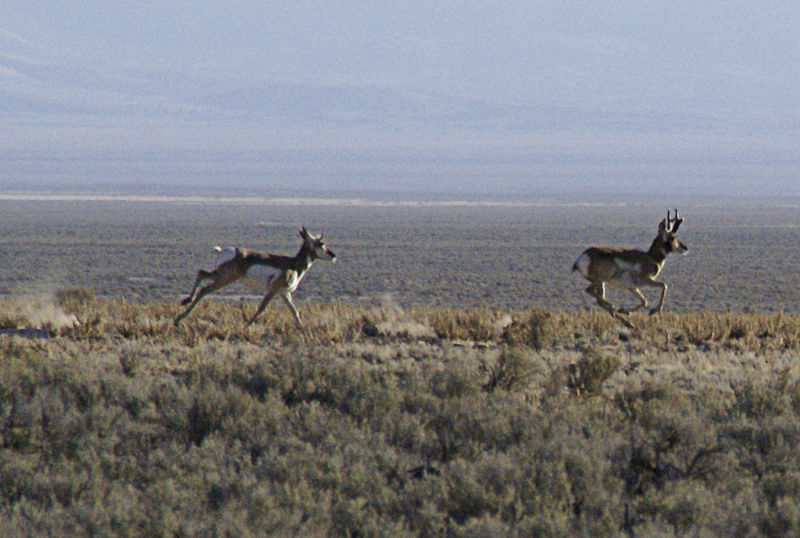
Antelope at Hart Mountain National Wildlife Refuge, one of the listed refuges under the proposed rule. Photo by Jurgen Hess

Deborah Bloom, May 21, 2020. When is a wildlife refuge not really a refuge? How about when the wildlife inhabiting it cannot be considered safe from hunting?

If the U.S. Fish and Wildlife Service (USFWS) gets its way, that’ll soon to be the situation at an expanded list of national wildlife refuges and fish hatcheries around the country.

Announced on April 8 by Interior Secretary David Bernhardt as “historic” and “the single largest expansion of hunting and fishing opportunities” in the nation’s history, the USFWS’s massive proposal creates or expands hunting and fishing at 97 wildlife refuges and nine fish hatcheries—including 13 locations in Idaho, Oregon and Washington, and two more in northwestern Montana.

The expanded land would take in a cumulative area larger than the entire state of Delaware.

See the full list of affected sites here.

The proposed rule would create nearly 900 distinct new hunting and fishing “opportunities,” defined as one species on one field station in one state, according to the USFWS.

The USFWS is taking public comments on the proposal until June 8 at this pageOnce on the landing page, users should search for “FWS-HQ-NWRS-2020-0013” then click “Comment.”

Of the more than 2,000 public comments reviewed at the time of publication, an unofficial assessment suggests opponents of the proposal far outweigh supporters.

“I am appalled at this misguided and unethical proposal,” reads one publicly posted comment typical of naysayers. “In a time of shrinking habitat and increasing stress on wildlife, this proposal is simply wrong.”

Significant impact on Columbia River Basin

“I think to the average person, when they hear ‘wildlife refuge,’ they take it literally that this is a refuge for wildlife, not a place where you go kill them,” Michael Lang, conservation director for Friends of the Columbia River Gorge, told Columbia Insight. “It’s a common misunderstanding, but there’s already a lot of hunting allowed in wildlife refuges.” 

Near Portland, however, the Wapato Lake National Wildlife Refuge would be opened for hunting of migratory birds for the first time.

Hart Mountain National Wildlife Refuge in Oregon would also see open migratory bird hunting for the first time, along with expansion of existing upland game hunting to new acres already open to other hunting.

[perfectpullquote align=”full” bordertop=”false” cite=”” link=”” color=”” class=”” size=””]“This proposal seems to have had very little, if any, conservation science given to it.”—Steve Pedery, Oregon Wild[/perfectpullquote]

Around the Columbia River Gorge, three Washington fish hatcheries would be open for sport fishing and game hunting. Under the new proposal, the areas around Little White Salmon and Spring Creek National Fish Hatcheries could see the hunting of game including bobcat, deer, elk and bear.

Five miles north, at the Willard National Fish Hatchery, recreational fishing would become officially permitted. The USFWS noted in its environmental assessment, the public already enjoys unofficial access to the site.

Just east of Flathead Lake in Montana, the Swan River National Wildlife Refuge would become open to black bear hunting on acres already open to other hunting.

Little data behind decision

“Although this involves millions of acres nationally, the Department of Interior didn’t require an environmental impact statement. Only an environmental assessment, which is a cursory review,” said Lang. “Are there any threatened or endangered species that are on those lands? Those are the kind of questions we need answered.”

After Bernhardt’s announcement, Friends of the Columbia River Gorge sent a letter to the USFWS urging the agency to create environmental impact statements for the proposed sites. The letter also pointed to the hatcheries’ close proximity to one another.

The “hunting plans propose hunting on small acreages near residences, farms and major roads,” the letter reads. “This poses an unnecessary risk to public health and safety.”

At Little White Salmon and Spring Creek National Fish Hatcheries, where small game animals such as porcupine and bobcat could be made available to hunters, the USFWS admits to having no numbers on small game populations.

“There are no formal population surveys for small game mammals, furbearers or unclassified wildlife,” reads a draft of the environmental assessment for Spring Creek National Fish Hatchery. At Willard National Fish Hatchery, the Service says: “There has been no formal assessment of wildlife on the hatchery property.” 

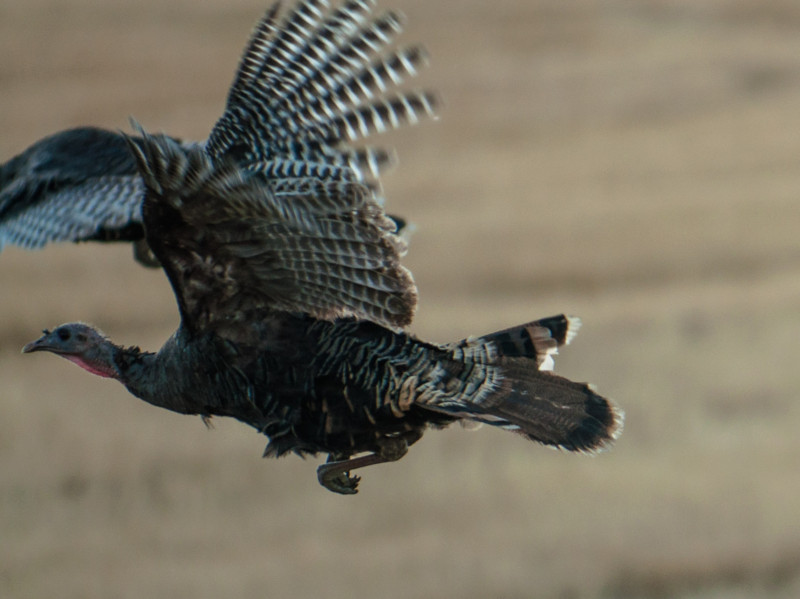
Wild turkey, one of the species that could potentially be affected by the proposal. Photo by Jurgen Hess

Despite an apparent lack of rigorous study, the USFWS says the unprecedented expansion won’t cause “significant adverse cumulative impacts” to the environment. The Service also states in each of its environmental assessments that big game hunting would have a “minor effect” on game animal populations and result in little consequence to the statewide population.

“The challenge with this proposal is that it seems to have had very little, if any, conservation science given to it,” said Steve Pedery, conservation director for Oregon Wild. “It seems more like something that’s designed to generate a positive news cycle from the Trump administration, rather than something that meaningfully expands hunting and fishing access.”

The USFWS did not respond to multiple requests for comment from Columbia Insight for this story.

Tension between federal and state regulators

Official Trump administration environmental policies have rolled back many of the Obama-era policies meant to address climate change and pollution. Administration officials have characterized such regulations as burdensome.

In January, President Trump proposed doing away with the very law that requires his administration to produce environmental impact statements.

“From day one, my administration has made fixing this regulatory nightmare a top priority,” Trump said at a press conference. “And we want to build new roads, bridges, tunnels, highways, bigger, better, faster and we want to build them at less cost.”

USFWS director Aurelia Skipwith incongruously lauded the proposal as cause for a post-pandemic celebration.

“Once the Trump administration’s effort to eliminate the threat of COVID-19 has been successful, there will be no better way to celebrate than to get out and enjoy increased access for hunting and fishing on our public lands,” said Skipwith.

A former oil and gas lobbyist, Interior Secretary Bernhardt has been involved in numerous scandals including an official investigation into ethics violations. The rollout of his plan seems likely to widen the gulf between Trump administration edicts and state and local conservation policies.

In April, Washington Department of Ecology director Laura Watson issued a statement concerning a recent decision by the Environmental Protection Agency and Army Corps of Engineers to exempt thousands of wetlands and streams from federal oversight. That federal rule would take effect June 22.

“As the White House continues its relentless attack on the environment, the Washington Department of Ecology stands firm in our commitment to protect wetlands, ponds and streams that migratory birds and salmon depend on,” said Watson. “This is another tragic abdication of federal responsibility to protect the environment.”

Public comments on the proposed expansion of hunting and fishing in national wildlife refuges and fish hatcheries can be made until June 8 at this page. Once on the landing page, users should search for “FWS-HQ-NWRS-2020-0013” then click “Comment.”

By |2023-01-28T14:20:54-08:0005/21/2020|Conservation|1 Comment

© Copyright 2013-2025 Columbia Insight. All Rights Reserved.

As a 501(c)3 nonprofit organization, all donations to Columbia Insight are tax deductible to the full extent of the law. Our nonprofit federal tax-exempt number is 82-4504894.