Stay Updated Subscribe today for the latest research + reporting about environmental news. Subscribe Now

Stay Updated Subscribe today for the latest research + reporting about environmental news.

Subscribe Now

Dac Collins

Dac Collins

Dac Collins

About Dac Collins

This author has not yet filled in any details.
So far Dac Collins has created 71 blog entries.

Escultura comemorativa develada en la Capital de Oregón

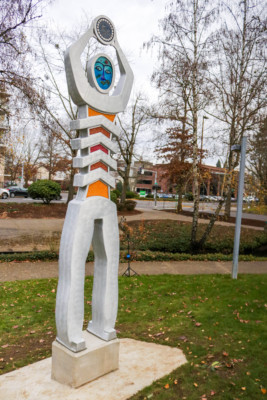
Por Pat Case. Dic. 20, 2018. El alcalde de Salem Chuck Bennett recientemente dio inicio a la inauguración de una nueva escultura pública, llamada “Good Cents”, Buenos centavos. La cual conmemora la histórica legislación ambiental de Oregón, comúnmente referida como la Propuesta de Ley de Botella de Oregón (Oregon Bottle Bill).
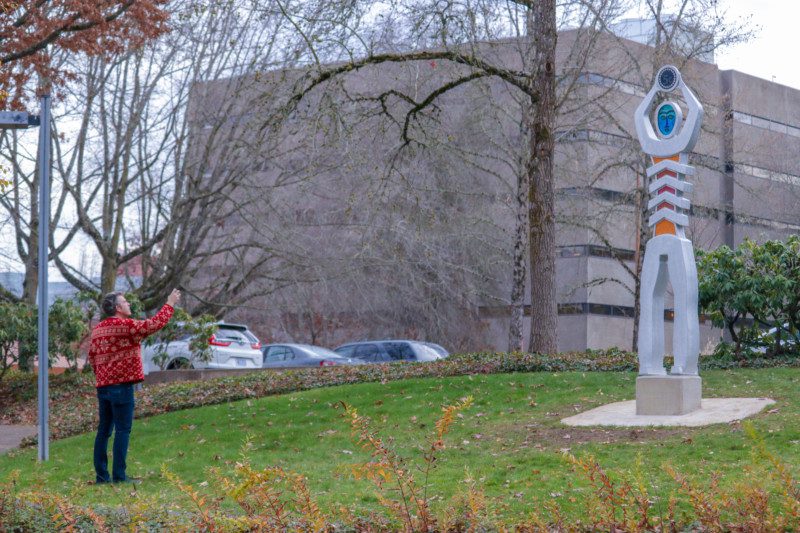
Un transeúnte toma una foto de la más reciente instalación de arte público de Salem. Foto por el Consejo del Medio Ambiente de Oregón.

La Propuesta de Ley de Botella, implementada en 1971, fue la primera en su tipo en la nación. Fue introducida con el fin de limitar el problema creciente de basura a lo largo del estado, la cual incluía la tendencia de que aun personas responsables tiraran sus botellas usadas en las playas, parques, caminos y otros lugares públicos. La propuesta de ley, la cual da incentivos por reciclar, requiriendo un depósito en un rango de botellas compradas, ha tenido varios cambios significantes en el curso de sus 48 años de historia. Permanece, después de todos estos años, como un ejemplo emblemático del compromiso de Oregón hacia su responsabilidad ambiental.

Lillian Pitt, fotografiada aquí en su estudio.

La escultura, encargada por el Consejo del Medio Ambiente de Oregón (Oregon Environmental Council), fue una colaboración entre tres artistas: la aclamada artista Nativa Americana Lillian Pitt, Mikkel Hilde y Saralyn Hilde.

Pitt dijo estar honrada de haber sido escogida para el trabajo: “La mayoría de los nativos americanos sienten como si ellos fueran representantes de la tierra. Yo misma fui enseñada desde que era una niña pequeña, sobre mis ancestros y nuestro compromiso con la tierra.”

Pitt agregó que todo su arte refleja lo que sus ancestros tuvieron que decir, y que la realización de esta escultura fue como darles otra voz.

“Esperamos que cuando la gente vea la escultura, pensarán acerca de los problemas que enfrentamos, ” ella dice. “Y esperamos que la gente pueda desarrollar un mayor entendimiento entre la necesidad de proteger nuestro medio ambiente y la supervivencia. ”

Good Cents, localizada en el parque cerca de la intersección de las calles Church y Trade, en el centro de Salem, es la segunda de cuatro instalaciones de arte público de la serie “El Arte de Amar Oregón”, del Consejo del Medio Ambiente de Oregón, lo cual celebra el legado de Oregón, de la protección ambiental.

Doris Penwell, un miembro de la mesa directiva del Consejo del Medio Ambiente de Oregón, señaló en sus comentarios, a aquellos reunidos, que la Propuesta de Ley de la Botella fue uno de los primeros logros con que el Consejo ha estado asociado. Ella dijo entonces que estamos viviendo en una “sociedad de tirar”, y que pasar la propuesta de ley representaba el primero de muchos pasos desde que se tomó el trayecto de Oregón hacia la sustentabilidad. Agradeció a la Ciudad de Salem por hacer equipo en la colocación e inauguración de la escultura conmemorativa.

Joel Schoening, portavoz de la Cooperativa de Reciclaje de Bebidas en Oregón, agregó que antes de la implementación de la Propuesta de Ley de Botella, no hubo tantas botellas en circulación. Compañías no estaban vendiendo agua embotellada y no hubo tantas marcas de cerveza y otras bebidas en los estantes.

Imagine como sería nuestro problema hoy, si los visionarios allá a finales de 1960s y principios de los ‘70s no hubieran tenido la firme decisión de hacer que la propuesta de ley se aprobara.
Aprenda más

Aprenda más sobre Lillian Pitt y su arte visitando su sitio en la red.

Visite el sitio blog Consejo del Medio Ambiente de Oregon, para ver fotos del evento conmemorativo y video del ensayo presentando a los artistas Lillian Pitt y Sarah y Mikkel Hilde.

Aprenda más sobre los monumentos de propuestas de ley del ambiente que el Consejo del Medio Ambiente de Oregón ayudó a producirse visitando el sitio en la red del Consejo del Medio Ambiente de Oregón, el Arte de Amar Oregón.
Congress authorizes Initial Development Phase of the Yakima Basin Integrated Plan

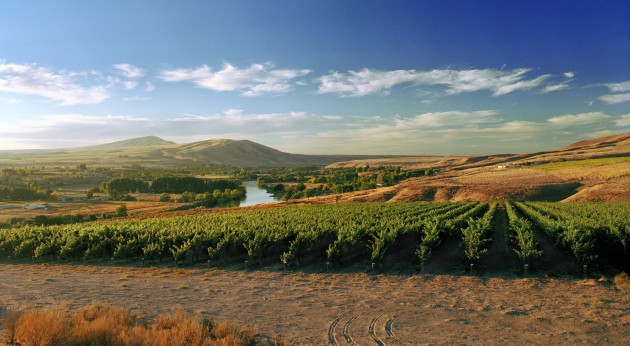
By Dac Collins. Feb. 21, 2019. Recognizing the need for drought relief, climate adaptation and ecosystem restoration within the Yakima Basin, the U.S. House of Representatives and the U.S. Senate are working together to move the Yakima Basin Integrated Plan forward.

On Feb. 7, Washington Reps. Dan Newhouse and Kim Schrier introduced H.R. 1048, authorizing the Plan’s Initial Development Phase. And on Feb. 12, the Senate passed the the Natural Resources Management Act (S. 47) by a vote of 92-8, which supports the implementation of the Integrated Plan and its comprehensive water supply, fishery restoration and lands management agenda.

The Yakima Basin Integrated Plan is a collaborative effort between the City of Yakima, the Confederated Tribes and Bands of the Yakama Nation, State and Federal agencies, irrigation districts, and environmental groups such as the Mid-Columbia Fisheries Enhancement Group. The 30-year plan incorporates a number of restoration and conservation projects aimed at benefitting fish and farmers within the Yakima Basin. It focuses on seven key elements: water conservation, irrigation infrastructure, fish passage, fish habitat, surface water storage, ground water storage, and the implementation of market-based water reallocation strategies (also known as water banks).

“Salmon, steelhead and bull trout in the Yakima Basin were nearly wiped out due to the way we historically managed water,” says Wendy McDermott of American Rivers. “But with the Yakima Basin Integrated Plan, there is a real future for these iconic fish in the Yakima.”

And Scott Revell, manager of Roza Irrigation District, says the Plan “provides a path for our irrigation districts to make it through drought and low snowpack years.”

One of the big-ticket items included in the Initial Development Phase is a major water storage project on Lake Kachess.

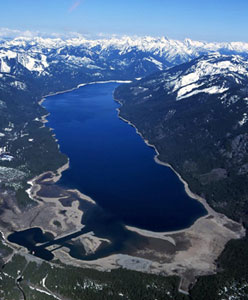
The project involves the construction of the Kachess Drought Relief Pumping Plant, which would provide an additional 200,000 acre feet of water to irrigators in the Yakima Valley when they need it most. The Plant would only operate during a state-declared drought, at which time it would pump water from the lake into the Yakima River. The project would also include the installation of a four-mile tunnel that would move water between Lake Keechelus and Lake Kachess.

Lake Kachess. Photo courtesy of U.S. Bureau of Reclamation

Opponents to the project — some of whom own land on Lake Kachess — say it is one-sided and favors irrigators at the expense of those living in upper Kittitas County.

“There’s zero benefit to Upper County,” Bill Campbell told the Yakima Herald last May. Campbell has been living on the lake for over a decade.

“Every cost, every damage, every negative impact occurs in Upper County,” he continued. “Every benefit occurs in Roza.”

Those downstream beneficiaries, however, argue that they deserve some level of drought protection, especially as the effects of climate change have become more apparent in recent years.

The 2015 drought, for example, forced the Roza Irrigation District to shut off water for two weeks in May, devastating crop yields. Apple growers within the district reported average economic losses of over $3 thousand an acre, while cherry growers reported losses closer to $1,300 an acre. And from a statewide perspective, a report from the Washington Department of Agriculture estimated that Washington farmers suffered between $633 and $773 million in economic losses that summer.

Rep. NewhouseSenator Cantwell and other proponents of the Plan see it as a way to protect the Yakima Valley’s $3.5 billion agricultural industry from future droughts and the detrimental effects of climate change.

“The [initial development] phase of the Yakima Basin Integrated Plan is critical for the current needs and future growth of one of the richest agricultural regions in the West,” says the Congressman from Sunnyside, Wash.

By |2019-02-27T14:30:15-08:0002/21/2019|Natural Resources, News, Water|0 Comments

The Legacy of Lost Valley Farms

One mega-dairy’s mess could permanently alter Oregon’s dairy industry

By Dac Collins. Feb. 21, 2019. The 2019 legislative session is now underway in Salem, and the Oregon State Legislature is considering a number of environmentally focused bills, including two measures that would have sweeping effects on the state’s billion dollar dairy industry. Legislative Concepts 2718 and 2706 would tighten regulations on dairies with more than 2,500 cows (or more than 700 if they don’t have access to pasture) and would put a moratorium on these large, commercial dairies statewide.

Both concepts are a direct response to the environmental damage that was wrought by Lost Valley Farms during its short, 18-month stint in Morrow County.

The dairy began operating on what was formerly the Boardman Tree Farm in April of 2017. Permitted for up to 30,000 cows, Lost Valley Farms had a contract supplying the Tillamook cheesemaking facility nearby. And while the mega-dairy was producing more than enough milk to build a bridge made of extra sharp cheddar over the Columbia, it was also making a colossal mess — the kind that only tens of thousands of mooing, crapping cattle can create.

Inspectors from the Oregon Department of Agriculture found that the operation was unable to manage the waste it was generating, and was contaminating nearby groundwater on a regular basis. (Picture open lagoons overflowing with liquid manure and wastewater.)

According to Wym Matthews, who manages the Oregon Department of Agriculture’s CAFO (Concentrated Animal Feeding Operation) program, Lost Valley Farms racked up nearly $198,000 in Civil Penalties related to non-compliance between October, 2017 and August the following year. “This is the largest amount ODA has ever issued to any CAFO in any one year,” Matthews explains.

The ODA eventually took the dairy to court in February of 2018, in what Matthews calls a “rare” move to seek injunctive relief. The state reached a settlement with Lost Valley Farms after its owner, Greg te Velde, agreed to remove over 20 million gallons of manure from the property by June 1. But te Velde failed to hold up his end of the bargain and filed bankruptcy instead.

This led to the resignation of dairy manager Travis Love, and it prompted Tillamook Creamery to cancel its contract with the dairy, leaving te Velde without a buyer for his milk or a manager for his cows.

So, last October, the dairy announced plans to shut down its operation, and it was put up for auction earlier this year.

A prospective buyer, Canyon Farm LLC, has already offered $66.9 million, but the CAFO permit is not included in the purchase agreement. Both the ODA and the state Department of Environmental Quality have objected to the sale, and the ODA says that it will not issue a CAFO permit to the buyer until clean-up operations are complete.

Randy Sugarman, the farm’s trustee, is now responsible for the clean-up, which includes decommissioning equipment, removing solid and liquid waste, and relocating the animals.

A number of agricultural, environmental, and human health groups, including the Center for Food Safety, Friends of the Columbia Gorge, Columbia Riverkeeper and Friends of Family Farmers, are now calling on the ODA to hold back the CAFO permit. Ivan Maluski, Policy Director for Friends of Family Farms, says they also support the idea of tightening regulations on larger, commercial dairies statewide and putting a moratorium on these operations.

“This whole debacle has revealed serious failures in Oregon’s CAFO program as it relates to these industrial-sized operations,” Maluski told OPB back in December.

Opponents to the proposed legislation contend that it’s the management, and not the size, of the dairy that dictates whether or not the operation can comply with environmental regulations. They point to Threemile Canyon Farms, which is also located near Boardman, as one example.

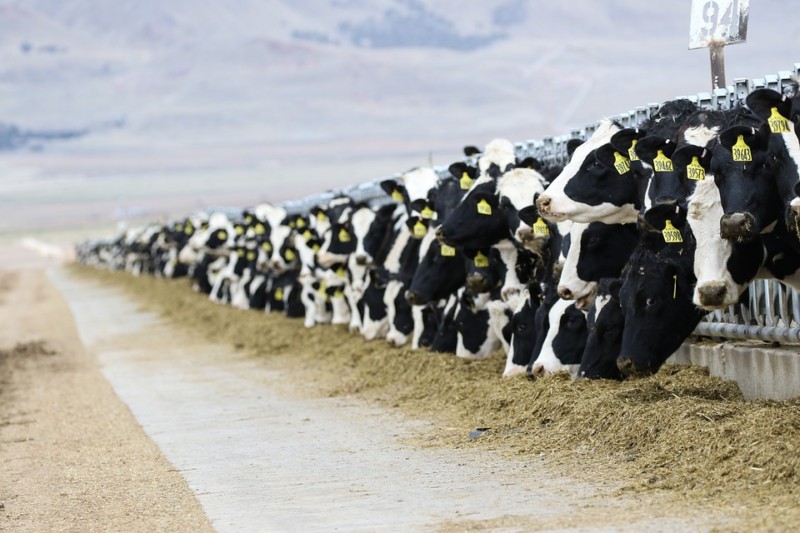
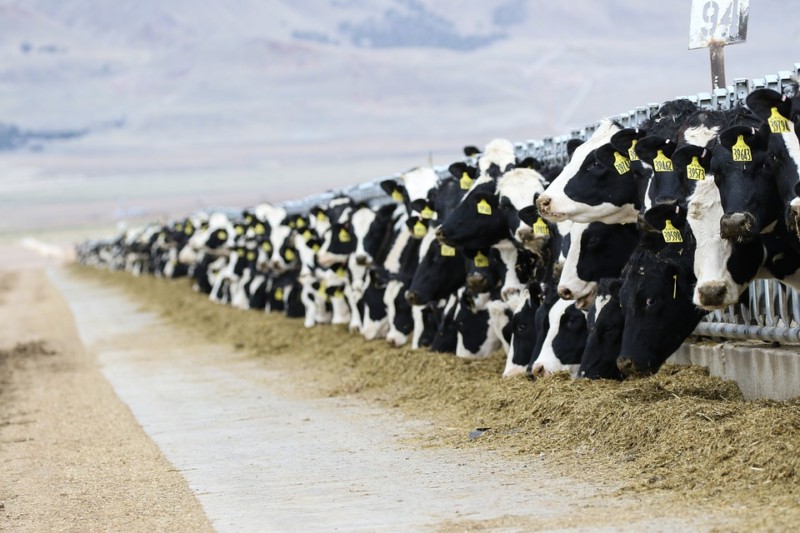
With a herd of approximately 70,000 cows, Threemile Canyon Farms is far and away the biggest dairy in Oregon. It is also home to the largest methane digester in the western United States, and over the years its managers have developed a synergistic, closed loop system of farming. Because of these practices, many view the operation as a model for sustainable agriculture.

But, innovations aside, supporters of Concepts 2718 and 2706 argue that the only way to truly protect Oregon’s air and water is to force these larger dairies to comply with the Clean Air Act and other environmental regulations — which is not currently the case under Oregon’s “right-to-farm” laws.

These legislative concepts would do that and more, effectively making Oregon’s dairy regulations the strictest in the nation.

Other environmental legislation to follow during Oregon’s 2019 session:

Cap and Trade: Oregon is poised to become the second state in the country to put a price on carbon emissions. With strong support from Governor Kate Brown and a democratic majority in the legislature, it seems likely that HB 2020 will pass. The 98-page Clean Energy Bill that was released to the public on Jan. 31 is fairly complex. It offers a number of exemptions for energy utilities and other companies, including semiconductor manufacturers and steel mills.

In a nutshell, the law would set a cap on greenhouse gas emissions starting in 2021. The state would then sell “allowances” to polluters — specifically those emitting more than 25,000 tons of greenhouse gas emissions per year — and recipients could then trade these allowances amongst one another. The revenue generated by these sales would fund clean energy initiatives and other strategies for adapting to climate change.

The legislation would also set a goal to reduce carbon missions to 45 percent below 1990 levels by 2035.

Oil Spill Prevention: A number of public safety and environmental advocacy groups such as Friends of the Columbia Gorge are supporting HB 2209, which would help protect rail-line communities from crude oil train derailments and oil spills.

On Feb. 7, The House Committee on Veterans and Emergency Preparedness held a hearing on the bill. Friends Conservation Director Michael Lang testified in support of HB 2209 and offered amendments to strengthen the bill.

Lang pointed to the Mosier train derailment of 2016 as proof that increased protections are needed. He brought up the fact that Oregon is way behind Washington State in terms of oil-by-rail regulations and emergency response, and that “Friends of the Columbia Gorge does not want Oregon to be the weak spot on the West Coast for oil trains.”

“Please support amendments to HB 2209,” Lang continued, “and help protect our communities, waterways and the Columbia River Gorge National Scenic Area from another oil train derailment and spill.”

By |2023-07-12T12:16:05-07:0002/21/2019|Agriculture|3 Comments

The H.W. Hill Renewable Gas Project: Using the mountains of things we throw away

By Dac Collins. Jan. 24, 2019. As a species, we create an exorbitant amount of garbage. To call our love of packaging “excessive” would be understating the problem. Obsessive might be a better word for it, since nearly everything we consume is either boxed, bottled or wrapped in plastic.

The figures are staggering, really.

Consider that every American generates, on average, 4.4 pounds of trash daily. This means that your typical American male throws away his weight in garbage every 45 days or so. And if those numbers aren’t enough to make you dizzy, just multiply 4.4 pounds per day by our population of 325.7 million (as of 2017). That’s almost 1.5 trillion pounds of trash entering our nation’s landfills. Every. Day.

In John Steinbeck’s Travels with Charley, published in 1962, the author is driving through the bustling cities of New England where he observes:

“American cities are like badger holes, ringed with trash—all of them—surrounded by piles of wrecked and rusting automobiles, and almost smothered with rubbish. The mountains of things we throw away are much greater than the things we use.”

And this passage was written years before the ubiquitous plastic water bottle, that icon of wastefulness, was invented.

But there is hope. For although we generate a tremendous amount of rubbish, Steinbeck would be impressed if he could see some of the ingenious ways we’ve found to use it.

The Renewable Gas Project

The H.W. Hill Renewable Gas Project is located in Roosevelt, Washington on the fourth largest landfill in the nation. Permitted to accept 120 million tons of garbage over its 40-year lifespan, the Roosevelt Regional Landfill is owned and operated by Republic Services, and it represents one of the biggest piles of garbage that most people have never heard of.

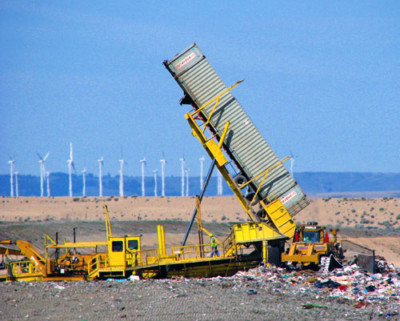
Solid waste arrives at the regional landfill by truck after being offloaded from the nearest railroad. Photo courtesy of Klickitat PUD.

That’s partly because 99 percent of the trash arrives by train from far away: namely the heavily populated I-5 corridor on the opposite side of the Cascades. Diapers from Everett and bar napkins from Bellingham, Mount Vernon’s food scraps and Vancouver’s toothpaste tubes—these are just a few of the things that end up here. Not that you’d go looking…but if you did, you would also find incinerator ash from Spokane, fast food wrappers from Idaho, plastic bags from Southeast Alaska and dirty socks from British Columbia. Even chewing gum from Guam finds its way here somehow or another.

In this, the Roosevelt site is no different than the thousands of other landfills currently in operation around the country. Every year, they take in tons and tons of garbage and bury it underground in lined pits, where it rots and eventually atrophies. It is up to the landfill operator to essentially sit on this garbage while this process occurs.

The operator’s main concern then becomes the methane that is naturally released during the rotting process and is 25 times more potent than carbon dioxide as a heat-trapping (or “greenhouse”) gas. The lined pits trap this gas as it builds, but it has to escape eventually. So to limit the harmful effects of methane on our environment, most operators have traditionally used an open candle flare to simply burn the gas, thereby converting it to carbon dioxide before it is released into the atmosphere.

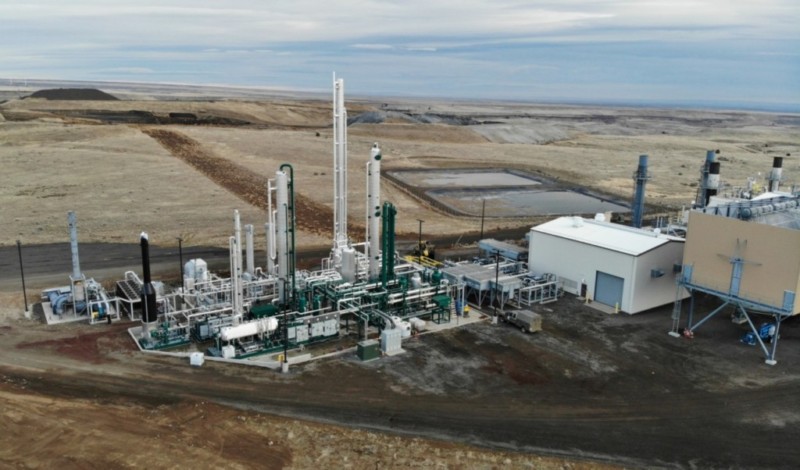
Republic Services uses a different strategy at the Roosevelt site. Working with Klickitat County Public Utility District, they have found an innovative and practical use for the methane. By harvesting the trapped gas using a system of underground blowers and vacuums, then piping it to a state-of-the-art facility where it is cleaned and converted to compressed natural gas (CNG), the Public Utility District has found a way to turn the waste associated with garbage into a viable fuel source.

[ngg src=”galleries” ids=”29″ display=”basic_slideshow” gallery_width=”600″ gallery_height=”400″ arrows=”1″ thumbnail_link_text=” “]What is Renewable Natural Gas?

Before going any further, it is important to distinguish the renewable natural gas (RNG) created at the H.W. Hill facility from the other, fossilized form of natural gas on the market today. Although they are both made up primarily of methane, conventional (fossilized) natural gas is extracted from wells deep within the earth, and this is frequently done using a method known as hydraulic fracturing or “fracking” that studies have linked to contaminated groundwater (not to mention earthquakes). Renewable natural gas, by contrast, is not a fossil fuel.

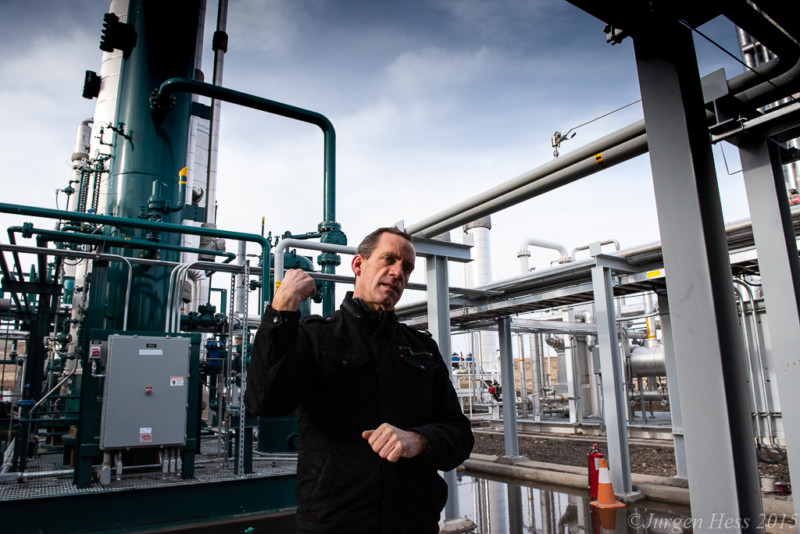
Kevin Ricks* is the Renewable Energy Assets Manager for Klickitat Public Utility District. He has spent the last five years researching, designing and implementing the H.W. Hill project with help from his team at the PUD.

“The idea is that you’re not digging up something from the deep earth and adding it to the environment,” he says. “You’re using organic material that’s already in a CO2 life cycle, and you’re harnessing energy that would otherwise be wasted.”

Harnessing this energy is really a matter of cleaning it. Ricks explains that the gas coming from the landfill is only about 53% methane. The remaining 47% is made up of carbon dioxide, water, nitrogen, oxygen, sulfur and other volatile organic compounds (VOCs).

After the carbon dioxide, water, oxygen and sulfur are taken out, and the VOCs are destroyed in a thermal oxidizer, “the nitrogen is the last of the impurities to be removed,” Ricks explains. This is done using a Cryogenic Nitrogen Removal System, which is “a first of it’s kind on a landfill,” he says, “and is advantageous over other types of nitrogen separation because it requires less horsepower and therefore has a lower carbon intensity to produce.”

Ricks points at the CO2 removal system. Other impurities such as O2 and VOCs are also destroyed in the system prior to release to the environment. Photo by Jurgen Hess.

The gas that comes out as a result of this cleaning process is 98% pure methane. Classified as a highly sustainable, D3 fuel by the Environmental Protection Agency in 2014, this renewable natural gas is then injected straight into the Williams Northwest Interstate Pipeline to be used as transportation fuel.

Envisioning a future where garbage trucks run on garbage

It might sound too good to be true, but by converting the methane released from garbage to compressed natural gas, the H.W. Hill Renewable Gas Project in Klickitat County represents an important step in that direction. The facility sold its first batch of CNG on Nov. 2 of 2018.

“The facility is designed to produce 5,701 MMBTUs per day,” Ricks says. To put that in perspective, a gallon of diesel fuel has an energy content of around 139,000 BTUs. So the 5,062 MMBTUs that were produced at the H.W. Hill facility on Jan. 2, for example, are equivalent to roughly 36,482 gallons of diesel.

Because the Klickitat PUD has a 15-year contract with an Obligated Party (a petroleum producer or importerBP for examplewho is required by law under the Federal Renewable Fuel Standard to produce or purchase certain volumes of renewable fuels based on their sales), Ricks says that most of the gas will likely be sold to California.

Off to California. Daniel Waineo, a Senior Project Manager with Montrose Environmental, helped engineer the landfill gas project. Photo by Jurgen Hess.

“It would have been really nice to keep the fuel in state,” he explains. “But California is a little further down the road with their renewable fuel standards and infrastructure. So, for right now, that’s where the fuel ends up going.”

The contract dictates that approximately two-thirds of the renewable natural gas produced is sold directly to BP at a fixed rate. The remaining third goes into the market, where it is sold to companies such as Clean Energy Fuels, a company based in southern California that operates a network of over 550 natural gas filling stations across North America. The company offers both CNG and LNG (liquid natural gas) in 43 states and throughout Canada, and they work hand-in-hand with transportation companies and large fleets to help them make the transition from diesel.

For many of these companies, making the switch is a no-brainer.

Vice President of Clean Energy Chad Lindholm explains that a diesel gallon equivalent (DGE) of natural gas is generally a dollar cheaper than a gallon of diesel fuel. And the environmental benefits of switching to natural gas are even more compelling.

In the case of heavy duty diesel engines, Lindholm says, “the natural gas engine is certified as the cleanest engine commercially available today.”

“When you factor in both the criteria pollutants and the emissions reductions associated with greenhouse gases,” he continues, “that’s where renewable natural gas plays a very exciting role. Your greenhouse gas emissions reductions with renewable natural gas are typically upwards of 100% when compared to your diesel footprint.”

Lindholm, who describes renewable natural gas as a “game changer”, says that every bit of natural gas that Clean Energy supplies within the state of California is renewable. As more facilities such as dairies and wastewater treatment plants learn how to harness their methane output and convert it to RNG, and as more states embrace low-carbon fuel standards, he sees the demand for this fuel increasing considerably. In 2017, he says, Clean Energy delivered approximately 79 million GGE’s (gasoline gallons equivalent) of renewable natural gas, and he anticipates that their reports from 2018 will show approximately 110 million GGE’s delivered.

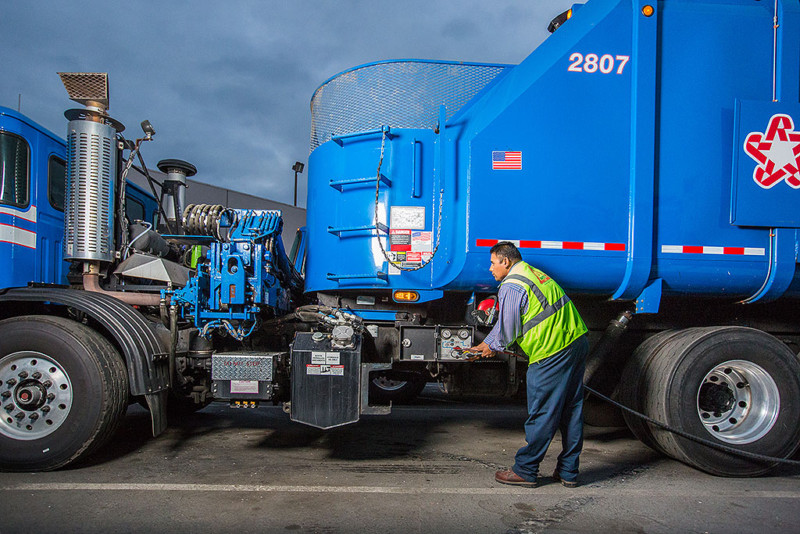
As for who is buying the fuel, Lindholm says the primary users of RNG include ground transportation vehicles at airports, public transit buses, Over-the-Road trucks and ready mix trucks. But Clean Energy’s biggest market at this point is solid waste companies. That’s right…garbage trucks.

A refuse truck owned by Republic Services fills up with renewable natural gas at a Clean Energy filling station. Photo Courtesy of Clean Energy Fuels.

“We work with over 120 solid waste companies across the country,” Lindholm says, “many of which are already invested in landfill gas projects on landfills they own. To be able to inject it into the pipeline, and then ultimately go full circle and put it back into their trucks…it’s nirvana for these folks.”

Art Mains works for Republic Services as Washington State’s environmental manager. He says that, aside from developing additional RNG projects at some of their bigger landfills across the country, the company is constantly looking for other ways to utilize the methane.

“Basically all of our larger facilities have beneficial use associated with them,” Mains explains, “whether its renewable natural gas, electrical generation or some of the newer medium-BTU projects. We have a group within our company dedicated solely to the development of landfill gas projects.”

And referring to the H.W. Hill facility in Roosevelt, where Mains offices, he says, “This project is very exciting. It’s a great example of a successful public-private partnership between Republic Services, Klickitat County and the Klickitat PUD.”

Ricks is just as excited about the possibilities of renewable natural gas, and he has already begun to share his ideas with other landfill operators and RNG vendors. He says the PUD hopes to have an official dedication ceremony sometime in early June.

“As people like us figure out how to make something like this work,” he says, “and after going through the pains of a start-up, and finding out what works and what doesn’t work…by all means, we’re interested in helping other people.”

Of course there is still some finding out left to do. Ricks says he is well aware that this project is only two months into a 15-year contract, and that the facility is, in some ways, the first of its kind. But when we spoke on Wednesday, Jan. 9, he shared some figures to take pride in.

“So far, since Saturday, we’ve been operating at full load for five days straight. That’s 90% of design capacity and 100% of the landfill capacity. That’s a streak for us. Now we have to turn five days into five weeks into five months.”

That’s certainly a goal worth shooting for, and one that other major landfills around the country could look to when deciding how to use the methane produced by the mountains of things we throw away.

https://www.youtube.com/watch?v=hGV1MkbrBfw

*In order to maintain transparency with our readers, we want to clarify that Kevin Ricks is on Columbia Insight’s Board of Directors.

By |2019-10-19T14:04:12-07:0001/24/2019|Energy, Features, Waste Management|2 Comments

Oregon and Washington reject federal government’s proposal to reclassify radioactive waste at Hanford

By Dac Collins. Jan. 24, 2019. Last year, the U.S. Dept. of Energy (DOE) announced a proposal to reclassify some of the high-level radioactive waste at the Hanford Nuclear Reservation as lower-level waste. Backlash was immediate, and the 60-day public comment period that was announced by the Dept. on Oct. 10 opened up a veritable floodgate of negative responses, forcing the DOE to extend this comment period until January 9.

During that time, the DOE received a flurry of objections from the state governments of Oregon and Washington, and from thousands of private citizens and a number of non-governmental organizations such as the Natural Resource Defense Council, Columbia Riverkeeper and Hanford Challenge.    

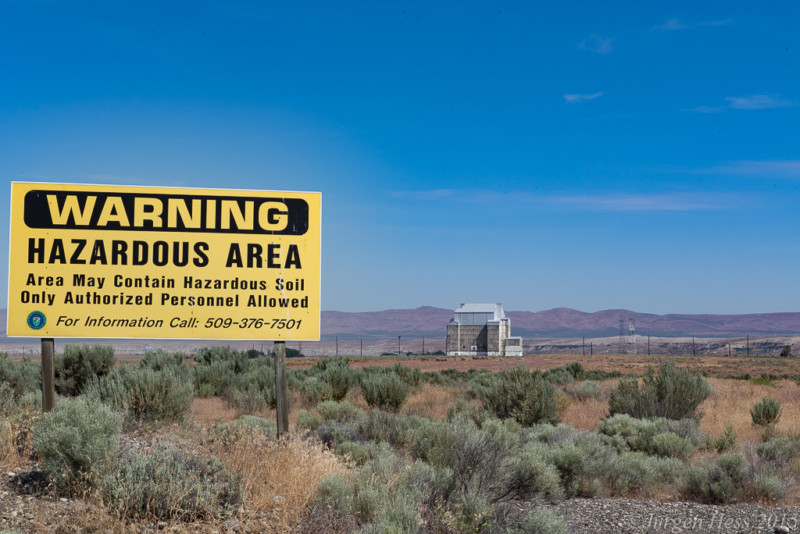
An unsightly and hazardous reminder of our nuclear legacy, the Hanford site currently holds 60% of the nation’s most dangerous nuclear waste and is known as one of the most contaminated sites in North America. 56 million gallons of the long-lived, radioactive sludge is currently being stored at the site’s C Farm in 177 underground storage tanks—aging tanks that tend to leak from time to time, contaminating groundwater and the nearby Columbia River with Technetium-99, Iodine-129 and other radionuclides. 

Lawmakers and local watchdogs are worried that the federal government’s proposal could allow the DOE to fill these tanks with grout and bury the waste there indefinitely. (Technetium-99, by the way, has a half-life of 210,000 years, while Iodine-129 has a half-life of 15.7 million years.) This would be a serious departure from the current plan, which involves binding up the radioactive waste in glass and transferring it to a a permanent disposal site far away from the river.   

Since cleanup efforts began in 1989, approximately 45 billion dollars have been spent in the process. And while the DOE claims that “considerable progress has been made at Hanford” over the past 30 years, the Department also admits that “nowhere in the DOE Complex is cleanup more challenging than at the Hanford Site in southeastern Washington.” So why would a federal agency that fully understands both the complexity and the hazards associated with the cleanup try to downplay it?

According to some critics of the DOE’s proposal, the short answer is: to save money.

“It is incredibly expensive, and it is doing nothing but getting more expensive,” says Ken Niles, Assistant Director of Nuclear Safety for the Oregon Department of Energy (ODOE). “Plans that have been pursued for years in terms of tank waste treatment are not going well, and the costs continue to increase. So I think the main impetus for the U.S. Dept. of Energy in doing this is to try and reduce the cost.”

The ODOE is concerned that by reclassifying the waste at Hanford as lower-level, the federal government would effectively give itself unilateral authority to decide what is high-level waste and what isn’t.

“It takes away existing requirements, for example, to remove key radionuclides,” Niles says. “It takes away oversight from the NRC (Nuclear Regulatory Commission) and from the State. And it leaves it up almost entirely up to the DOE and its own discretion to make those decisions.”

Washington State Governor Jay Inslee echoes these concerns in a letter that he co-wrote with State Attorney General Bob Ferguson. “We write in strong opposition to the U.S. Department of Energy’s proposal to change the interpretation of ‘high level waste’,” the letter begins.

“DOE has a responsibility to Washington communities and tribes to cleanup their nuclear site in the safest way possible,” it continues. “We have strong concerns with any proposal that will allow DOE  to unilaterally reclassify high level waste to low level waste without input or consent from those most impacted.”

Washington Dept. of Ecology spokesman Randy Bradbury says the most disturbing aspect of the proposal is the lack of transparency between federal and state governments.

“One of our concerns with the whole process,” Bradbury explains, “is that they haven’t said, ‘here’s the reason why want to do this’.”

Maia Bellon, Director of the Washington Dept. of Ecology, agrees, stating in her letter that it is “disturbing” that the DOE has “thus far declined in meaningful dialogue on how its new interpretation would apply at any given site.”

“DOE’s new interpretation could amount to DOE putting grout on the most dangerous waste in the country and walking away,” Bellon writes. “Washington is unwilling to allow future generations to bear this risk simply because DOE has concerns with costs.” 

The U.S. Dept. of Energy did not respond to requests for comment.

So for now, governments (and residents) of Oregon and Washington simply have to wait for the DOE to issue a decision regarding how it will move forward. And unless the federal government drops its proposal altogether, it seems pretty clear that factions on both sides of the river will remain committed to putting the health of our environment and of future generations above any financial concerns.

By |2019-02-27T14:31:22-08:0001/24/2019|Energy, News, Waste Management|2 Comments

The Dalles Dam: A (leaky) year in review

By Dac Collins. Jan. 4, 2019. On Dec. 20 of last year, during the manic, consumer-driven lead-up to the Christmas holiday, the U.S. Army Corps of Engineers initiated spill prevention protocol at the Dalles Dam. This response came after 192 gallons of hydraulic oil were released from one of the dam’s turbines into the Columbia River due to a leaky blade seal. The Corps responded quickly to the discharge and followed procedure by notifying the the National Response Center, Oregon and Washington emergency management offices, Columbia Riverkeeper and the Columbia River Intertribal Fish Commission.

On its own, the incident did not seem particularly devastating or sensational. The federal agency sent out a press release announcing it had removed Main Unit 12 from service, isolated it from the river and deployed absorbent pads below the Lock and Dam. “The Corps will be investigating the cause,” the release read, “and will continue to monitor the waters downstream and prepare to clean up any sheens.”

And then we carried on with our day-to-day lives, making travel plans and hitting the clearance aisles, most of us overlooking the fact that this was not just an isolated incident, but rather one sequence in a pattern of events that occurred over the course of a year (and actually stretches back even further.)

So to put things in perspective, let’s take a quick look at the other two instances where oil spilled from the Dalles Dam in 2018.

Constructed in 1957, the Dalles Dam sprang three oil leaks over the past twelve months: once in March, and again in May and December. Photo courtesy of Shutterstock.

The first, and worst, leak of the year was announced by the Corps on March 28. This announcement came after approximately 474 gallons of oil had already escaped from one of the power generating units (or turbines) at the dam. Workers in the control room were first notified of the problem on March 18, and Main Unit 5 was subsequently removed from service on March 22. 

And while the Corps stated in a press release that “there is no evidence the oil went into the Columbia River,” this assertion brings up an important question: Where else would the oil have gone?

Sharon Gavin, a spokeswoman for the Corps of Engineers, says that it still “hasn’t been fully determined if oil made it into the Columbia River or what the exact amount lost was,” and that, “we’re continuing our investigation by looking into other areas within the unit where oil could be trapped.”

The second incident occurred a few months later, when 53 gallons of oil spilled from one of the dam’s turbines toward the end of May. The Corps initiated spill prevention protocol on May 31 and, after confirming the loss of oil on June 14, the unit was dewatered and isolated from the river.

Now this might seem like a fairly negligible amount of oil when compared to the 474 gallons that spilled back in March, but here’s the rub: the oil that was discharged during the two incidents, all 527 gallons of it, came from the same generating unit, also known as Main Unit 5.

Lauren Goldberg is the Legal and Program Director with Columbia Riverkeeper, and one of her primary roles is enforcing the Clean Water Act and holding polluters accountable. She has been directly involved in lawsuits against the federal government that aim to curb oil pollution from the Dalles Dam and the other hydroelectric projects along the Columbia and Snake Rivers.

Goldberg explains that these high profile spills go back much further than 12 months and, referring to the spill that occurred just a couple weeks ago, she says, “this is not an anomaly.”

“Many of the dams on the Columbia date back to the New Deal,” she continues, “and as the dams get older, we are concerned that we’re gonna see more of these types of spills.”

Which is precisely the reason why Riverkeeper filed a lawsuit against the Corps of Engineers back in 2014 and reached a settlement requiring them to apply for water pollution discharge permits with the U.S. Environmental Protection Agency. “We expect the EPA will issue those water pollution permits sometime in 2019,” Goldberg says.

The settlement also requires the Corps to monitor how much oil its dams discharge, and to set goals to reduce that amount of pollution going forward.

Of course the type of pollutant matters just as much, if not more, than the quantity, and Goldberg explains that another key piece of the 2014 settlement focuses on rethinking the types of oils that the Corps uses.

Gavin says the Corps of Engineers is fully aware of this requirement, and she points out that “environmentally acceptable lubricant greases have been and will be implemented on various in-water equipment.” She adds that, although the agency has not yet found an adequate replacement for the oil used in turbines, the Corps will continue to research non-toxic (or less toxic) alternatives over the course of 2019.

The bottom line is that both the Corps of Engineers and Columbia Riverkeeper are optimistic about the positive changes that can be made this year when it comes to operating these dams in a way that produces affordable, renewable energy but also protects the health of the Columbia River Basin.

“These dams have been spilling oil for years and the government hasn’t been doing anything about it,” Goldberg says. “But 2019 will be the year that really changes.”

By |2019-02-27T14:31:50-08:0001/04/2019|Energy, News, Renewable Energy|0 Comments

© Copyright 2013-2025 Columbia Insight. All Rights Reserved.

As a 501(c)3 nonprofit organization, all donations to Columbia Insight are tax deductible to the full extent of the law. Our nonprofit federal tax-exempt number is 82-4504894.