Stay Updated Subscribe today for the latest research + reporting about environmental news. Subscribe Now

Stay Updated Subscribe today for the latest research + reporting about environmental news.

Subscribe Now

Cole Sinanian

Cole Sinanian

Cole Sinanian

About Cole Sinanian

Originally from Albuquerque, journalist Cole Sinanian has written for the Christian Science Monitor, Oregon Capital Chronicle, Eugene Weekly and The Oregon Daily Emerald, among others.

Hatched to be wild: Why Tribes are pursuing a controversial salmon recovery strategy

Fish hatcheries are under criticism. But without the devil’s bargain they offer, some Columbia River Basin Tribes see a threat to their own cultures
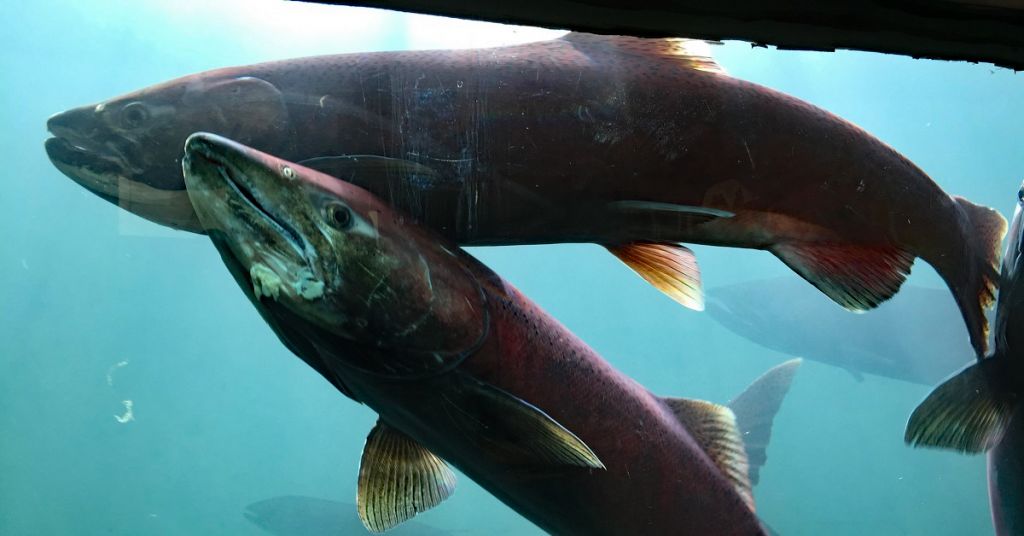
Chinook salmon in Canada

Point of no return? Wild and hatchery-born salmon get chummy in spawning streams. The differences aren’t always easy to spot. Photo: Government of Yukon

By Cole Sinanian. August 11, 2022. Rick Zollman stands at the edge of a rectangular, concrete pool, peering into the water below. Tens of thousands of juvenile chinook salmon rush toward him, their speckled backs and silver bellies glistening in the afternoon sun.

Zollman waves and smiles at the fish as they leap from the water to greet him, conditioned to expect food when they sense the presence of their loyal caretaker. 

Each of the 18 pools—or raceways—at northeast Oregon’s Lookingglass Hatchery holds roughly 65,000 juvenile chinooks, totaling nearly 1.5 million fish.

The fish were hatched here in January from parents collected in one of five of the region’s rivers, then transferred to the raceways in spring. They’ll remain here for a year, growing and maturing until ready for release into the wild. 

Shaded by towering lodgepole and ponderosa pines, Lookingglass Hatchery sits along Lookingglass Creek, not far from the Idaho border in the historic homeland of the Nez Perce Tribe.

The Nez Perce and Confederated Tribes of the Umatilla Indian Reservation share fishing rights to Lookingglass Creek, and share the tribal harvest allocation. For centuries, tribal families have gathered here to harvest salmon returning from the Pacific. [A previous version of this story incorrectly stated the Nez Perce own exclusive fishing rights to Lookingglass Creek. —Editor]

The Tribe uses the hatchery to restore the area’s natural population of wild chinook, in the hopes that they may one day reach levels that support consistent harvest.

The hatchery dilemma

In a controversial practice known as “supplementation,” Lookingglass managers take mature wild fish from the area’s streams and spawn them at the hatchery.

The goal is to ensure that the fish released from the hatchery are from the same genetic lineage as the wild stock, so they can return to spawn naturally, effectively making their offspring a part of the wild population.
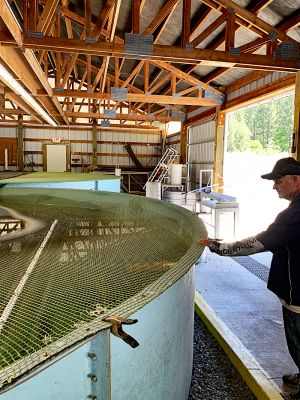
Hatchery

Salmon-sitting: Rick Zollman checks in on a pen full of broodstock at Lookingglass Hatchery. Photo: Cole Sinanian

Many scientists and conservationists have pointed to hatcheries as a contributing factor to the demise of wild salmon stocks in the Pacific Northwest. Releasing hundreds of millions of domesticated hatchery fish into the watershed each year allows for the rationalization of overfishing and habitat destruction, they say, and adds pressure on the comparatively few remaining wild fish by reducing their genetic fitness and increasing competition for resources. 

But for tribes like the Nez Perce, whose culture is inextricably bound to salmon, hatcheries may be all that’s preventing their traditional way of life from disappearing entirely.

To supply fishing grounds while minimizing the effects of hatcheries on endangered wild salmon, tribal-operated hatcheries are employing innovative but experimental methods like supplementation to restore wild fish populations in the rivers where they were lost. 

“With hatcheries, they’re not a solution, they’re a tool,” says Zollman, who works for Nez Perce fisheries but is not a tribal member himself. “The idea is that we still have fish spawning so our grandkids can go watch them, and still be able to catch fish and have them on the table.”

At Lookingglass, the spring chinook conservation program operates for rivers in the Grande Ronde and Imnaha river systems.

Lookingglass is one of five hatcheries among the 33 operated by the Oregon Department of Fish and Wildlife that has a conservation program. Like Lookingglass, the others—Cascade, Irrigon, Umatilla and Wallowa hatcheries—each have tribal co-management.

How supplementation works

The Lookingglass program uses supplementation—essentially removing wild fish from rivers and integrating them into hatchery broodstock—to produce the next generation of salmon.

Chinook spawned at the hatchery eventually return to their natal streams as adults to spawn naturally, producing offspring that are both genetically and behaviorally indistinguishable from wild-origin fish. 

The National Oceanic and Atmospheric Administration regulates hatcheries that take endangered salmon populations—such as Columbia River spring chinook—for broodstock.
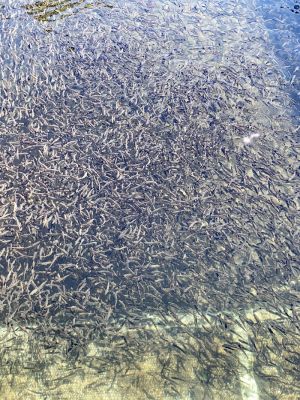
Fish hatchery

See for yourself: Lookingglass Hatchery in Elgin, Ore., is open daily for public visits. Photo: Cole Sinanian

“For a conservation hatchery, typically we have objectives or goals that are solely to restore the wild spawning populations,” says Lance Kruzic, a NOAA fisheries biologist. “It’s a very defined program, with the intention being conservation or recovery.” 

To prevent an overabundance of hatchery-reared fish on the spawning grounds, which generally have greater return numbers than wild-origin fish, Lookingglass managers employ an elaborate system of weirs (fish traps) to maintain a healthy ecosystem balance.

In what’s referred to as the “sliding scale” method, Lookingglass managers use the weirs to select how many of each type of fish — hatchery-reared or wild — reach the spawning grounds. The number of a given year’s wild returns determines the number of hatchery fish allowed to reach the spawning grounds. 

Lookingglass managers also use the weirs to adjust the number of wild-origin fish taken for broodstock based on that year’s wild returns. During years when wild returns are low, more hatchery-origin fish—which are marked by the removal of a portion of their adipose fin—are collected for broodstock, so as to not interrupt the wild chinook population’s recovery.   

“The weirs allow everything to be controlled,” says Zollman. “We don’t inundate the natural fish, but we don’t leave the spawning grounds empty.” 

Once collected, broodstock are spawned at the hatchery and their offspring are incubated, then transferred to massive early-rearing tanks.

Once the young fish reach a few centimeters in length, they’re segregated based on the rivers their parents originated from—this prevents biological connections from being compromised.

After about a year of maturing in the raceways, the fish are trucked to acclimation sites (small pens near the spawning grounds in their home rivers) where they spend their final four to six weeks before release.

It’s here that fish internalize the rivers’ unique chemical and magnetic cues that will one day guide them home.

They also lose their domestic tendencies. By this point young fish no longer swim toward humans expecting to be fed.

In total, the fish spend 18 months at the hatchery before release.

Low numbers, long game

When Lookingglass began its conservation program in 1997, each of the area’s watersheds had only a few dozen fish returning to spawn. 

At Lookingglass Creek, those numbers were in the single digits.

Now, hundreds of fish return to Lookingglass Creek each year—enough to support limited sport and tribal fisheries.

While year-to-year numbers fluctuate wildly, average annual returns in the nearby Lostine River now top more than 1,000, according to data provided by Zollman.
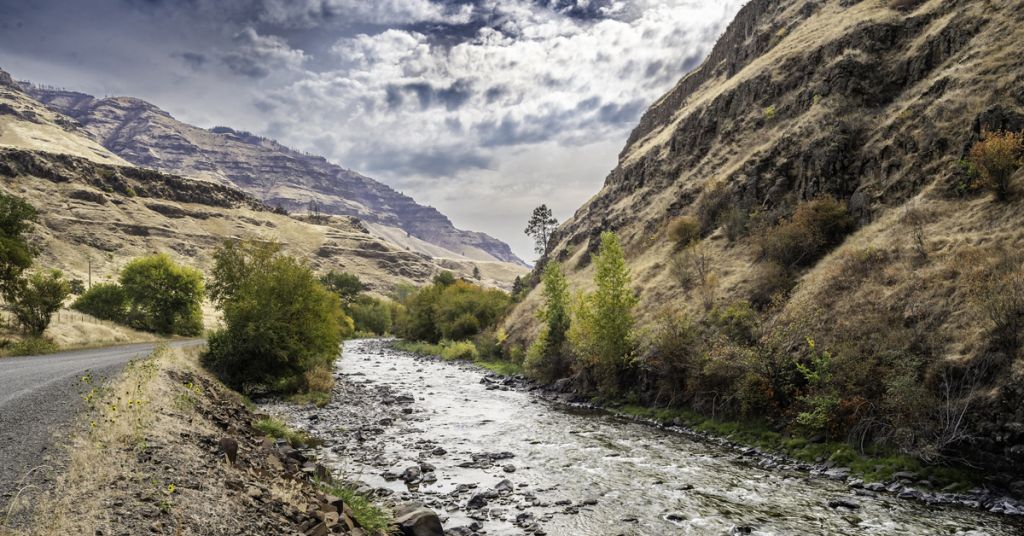
Imnaha River, Oregon

Running program: Built in 1982, Lookingglass Hatchery is used to rear spring chinook for the Grande Ronde and Imnaha rivers (pictured) as part of Lower Snake River Compensation Program. Photo: Max Rae/CC

Salmon had a particularly prosperous year in 2010, when returns to the Lostine were close to 5,000. Half of 2022’s returns to the Lostine—which have yet to be fully counted—were wild-origin fish. 

Factors that affect annual fish returns beyond what the hatcheries are doing include ocean conditions, commercial fisheries and habitat accessibility.

“The success of a hatchery program depends on good habitat and good survival conditions for the fish, just like in the wild,” Kruzic says. “It may take decades to get those increases from a conservation hatchery program.” 

The trouble with supplementation

Supplementation represents a shift in hatchery management that began around the turn of the century.

But some scientists say these programs are risky. Studies have shown that deliberately interbreeding hatchery fish with natural-origin fish can negatively affect wild populations. 

Salmon are biologically linked to the rivers they come from. Raising juvenile fish in an artificial habitat can make those fish less suited to natural environments, decreasing the chances that they return home to spawn.

This lack of biological fitness carries on to the hatchery fishes’ offspring, which can genetically weaken the local wild populations when the two interbreed, according to a recent report by the Washington Department of Fish and Wildlife. 

“Hatchery fish are domesticated, and that difference is actually programmed into the genetics of the fish themselves,” says Jamie Glasgow, director of science and research at the Wild Fish Conservancy, a Washington-based nonprofit conservation organization. “If wild fish interact and spawn with hatchery fish, the next generation of offspring from that hatchery and wild pairing is much less likely to survive in the wild.” 

[perfectpullquote align=”full” bordertop=”false” cite=”” link=”” color=”” class=”” size=””]“If you took hatcheries out of the mix, you’d get pockets of wild fish. You’d have museum-piece fisheries.” —Mike Matylewich, Columbia River Inter-Tribal Fish Commission[/perfectpullquote]

Beyond genetic risks, some scientists and conservationists see using hatcheries for conservation as a backward approach to wild fish recovery. Excessive hatchery production is often cited as one of many contributing factors to the rapid decline of Pacific Northwest wild salmon over the past century. 

Since the region’s first hatcheries were built in the late 1800s, the majority of hatchery programs have operated under an agricultural model of fish production.

This approach relies on the sheer volume of fish produced to sustain runs and support fisheries without consideration for habitat restoration or the fishes’ genetic fitness, says Jack Stanford, a retired professor and fisheries ecologist at the University of Montana. 

“There’s this mantra out there that you can replace lost catch because of the demise of wild fish with hatcheries,” he says. “And it does not work.”

The net result is the entire Pacific Northwest salmon fishery being reliant on a system that may be contributing to the decline of the very fish it’s intended to save.

“It’s like we’re trying to save this patient, but we’re standing on their throat while we’re doing it,” says Glasgow. 

‘Museum-piece fisheries’

While hatcheries may have historically used an ecologically irresponsible management approach, some members of the Columbia River Plateau Tribes view them as essential to keeping ancient traditions alive.

They see supplementation as necessary to not only saving the fish from extinction, but to keeping salmon in the rivers and streams in tribal homelands that once served as sacred fishing grounds. 

The lives of the indigenous people who inhabit the plateaus and valleys of the Columbia River Basin once completely revolved around salmon. The seasonal returns of salmon to natal streams are integral to their cultures.

“We’re a salmon people,” says Joe Oatman, a member of the Nez Perce Tribe and director of the Harvest Division of its fisheries program. “Our whole identity and our whole view of the world revolve around salmon. And to be salmon people, we need to have salmon in the rivers.”
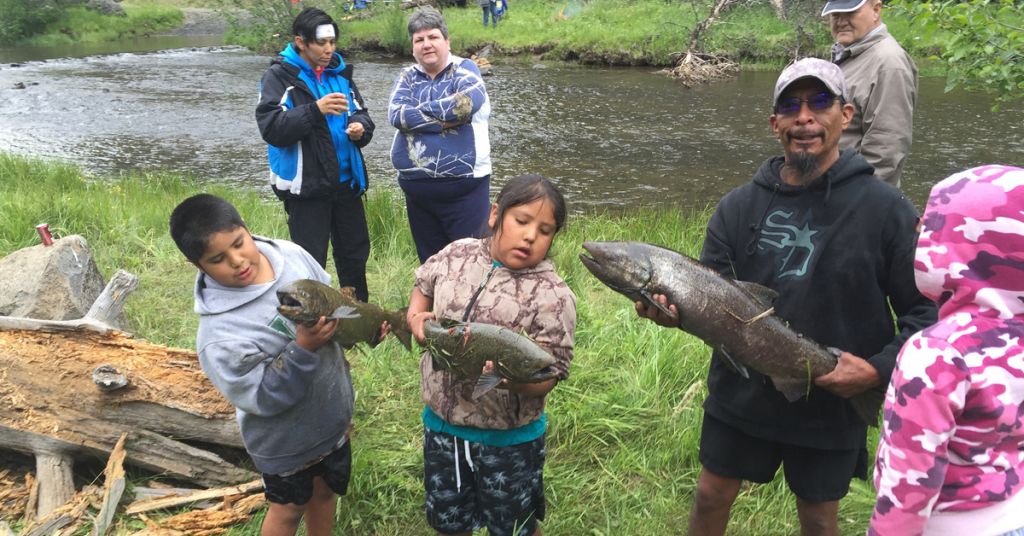
Burns Paiute salmon

Salmon, people: Members of the Burns Paiute Tribe release hatchery-raised chinook salmon into the Masher River in Oregon, then harvest the salmon using traditional fishing methods such as spears, nets or baskets. Photo: USFWS

Construction of hydroelectric dams throughout the 20th century brought the elimination of more than 40% of historic salmon habitat and the destruction of culturally and economically significant tribal fishing places. 

This was devastating to the Nez Perce, who historically consumed more than 300 pounds of salmon per person per year, according to Oatman. Now a tribal member might be fortunate to catch two or three fish a year.

With historic fishing places either inaccessible or lacking fish, many Nez Perce families now must travel long distances to harvest their yearly catch. The resulting economic burden forces many to make difficult decisions about whether to prioritize finances over cultural preservation.

“These days, it’s a really tough choice for many tribal families to decide where they want to go harvest fish to try and meet their needs throughout the year,” says Oatman. 

This is why hatcheries are essential, despite their questionable history, says Mike Matylewich, fisheries and management director for the Columbia River Inter-Tribal Fish Commission, which coordinates fishery management policies for the Nez Perce, Umatilla, Warm Springs and Yakama tribes.

Closing hatcheries altogether would leave huge portions of the Columbia River Basin salmon-free, and greatly reduce tribes’ ability to harvest on their historic fishing grounds.

“If you took hatcheries out of the mix, you’d get pockets of wild fish,” says Matylewich. “You’d have museum-piece fisheries.” 

Fighting chance

Lookingglass is considered to be among Oregon’s more successful conservation hatchery programs.

While numbers are nowhere near enough to sustain a fishery robust enough to supply the Nez Perce year-round, the program has prevented the region’s spring chinook salmon population from disappearing entirely.

Zollman says that for the foreseeable future it’s unlikely numbers will reach a point where the hatchery program is no longer needed, given the many factors contributing to the fishes’ mortality that are beyond his control.

But in terms of giving salmon a fighting chance at survival, Zollman is confident the program is working. 

For Oatman, the fact that there are still fish in these rivers at all is a sign of a successful supplementation program.

The region’s Nez Perce may not be able to harvest enough salmon to sustain their total dietary needs as they once could. But they can still fish in the traditional places used by their families for generations.

“It’s more than just catching a few fish to bring home,” says Oatman. “It’s about finding a place where we can pass on these traditions that have been there for countless generations.”

The Collins Foundation logo

The Collins Foundation is a supporter of Columbia Insight’s Indigenous Issues series.
By |2023-10-17T10:38:13-07:0008/11/2022|Indigenous Issues, Salmon|0 Comments

Drones are coming to Oregon state parks. Should they?

Oregon Parks and Recreation is considering input from drone advocates and critics before signing off on a controversial rule change

Drone in flight

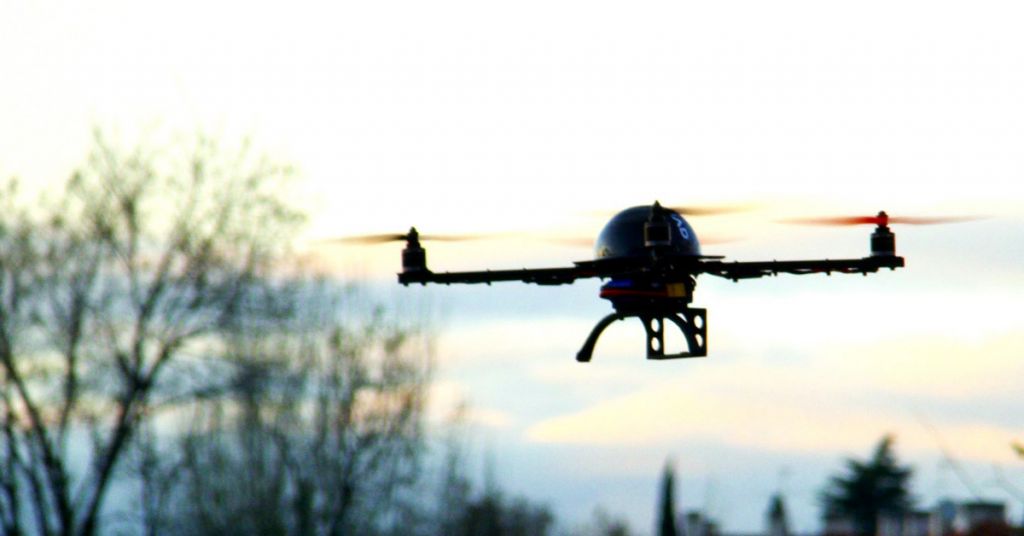
Up, up or away?: Drone photography produces great pictures. And bothers birds. Photo: David Rodriguez Martin/CC

By Cole Sinanian. June 23, 2022. It may soon be legal to launch and land recreational and commercial drones in Oregon state parks.

After issuing a draft proposal earlier this year, the Oregon Parks and Recreation Department (OPRD) is convening a work group to decide where flying drones should be prohibited, where it should be allowed and where it would require a permit. Parks officials hope to have a draft proposal ready by next spring.

Currently, there are no standardized rules governing drone use in Oregon’s state park system outside of FAA guidelines. Park managers can implement restrictions for specific circumstances on a case-by-case basis. [The original version of this story incorrectly stated that it is currently illegal for drone users to take off and land within all Oregon state parks. —Ed]

OPRD received approval from state legislature to regulate drone use in 2021 through Senate Bill 109, after which it convened a rule advisory committee that began meeting late last year.

The committee—which largely consisted of state parks officials and lacked representation from external wildlife biologists—ultimately settled on a proposal that would allow drones to take off anywhere unless otherwise specified.

The proposal was panned by conservation groups like the Portland Audubon Society and the Oregon Ocean Policy Advisory Council, who criticized its failure to consider sensitive coastal habitats, and generated hundreds of conflicting public comments.

“It was meant to be a transition point from where we are now,” says associate director of Oregon Parks and Recreation Department Chris Havel. “But it’s clear that we need more time to figure out the drone issue. The rules need to be specific enough for everyone to feel comfortable.”

After the backlash, state parks paused the rulemaking process in April, and is in the process of convening another work group with broader representation. By next spring, park officials hope to draft a proposal that uses scientific input to designate specific areas where drones can fly.

Aerial disturbance

Much of Oregon’s coastal habitat is regulated by the state park system, so conservationists are concerned that allowing drones to fly within its limits could disrupt the coast’s 1.3 million nesting seabirds.

Drone interactions with seabirds are well documented.

Drone signage

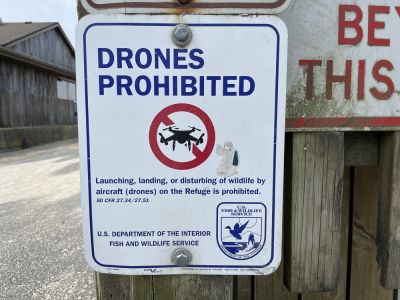
No-fly zone: Haystack Rock Marine Garden at Cannon Beach, Ore., is a National Wildlife Refuge. Photo: Kelli Ennis

In May 2021, a drone crash in the Bolsa Chica Ecological Reserve in Huntington Beach, Calif., caused an entire flock of elegant terns to abandon their nests, leaving behind as many as 2,000 eggs, the Orange County Register reported.

The birds never returned, meaning an entire season’s worth of the near-threatened tern was lost.

According to Portland Audubon staff scientist Joe Liebezeit, seabirds on the Oregon Coast are highly territorial when nesting, and will chase moving objects they perceive as living.

Drones—typically small, lightweight, multi-propellered craft equipped with high-resolution cameras— appear as predators to birds, prompting them to either fight the aircraft or flee. Repeated disturbances can leave nests vulnerable to predators and the elements, affecting the cohort’s long-term survival, Liebezeit says.

“If the birds are flushed from the nest repeatedly over time, they’re not able to incubate their eggs or take care of their young,” he says. “Then there’s an entire cohort of young, not able to be born and raised, and the adults lose a year of breeding.”

[perfectpullquote align=”full” bordertop=”false” cite=”” link=”” color=”” class=”” size=””]Allowing drones in state parks would not only benefit recreators, but businesses as well, says advocate.[/perfectpullquote]

Portland Audubon monitors coastal populations of the black oystercatcher—a soot-colored bird with a bright orange beak that nests on rocky coastlines and is known to be highly territorial.

Trained volunteers go out in shifts at monitoring stations along the Oregon coast, where they count the eggs and watch the nests from a distance, documenting disturbances from humans and predators.

According to Liebezeit, recent data shows that volunteers record an average of three drone disturbances a week.

“And that’s only a small sampling of the entire lifetime of the nest,” Liebezeit says. “At a minimum,” he continues, “we’d want to have a seasonal closure.”

Parks for all

The role of state parks among Oregon’s public lands makes drone regulation a particularly contentious issue, Havel says.

Unlike national parks and wildlife refuges—which prohibit drones entirely—state parks must balance conflicting interests and attempt to accommodate all forms of recreation, so long as they aren’t detrimental to the park’s longevity.

State parks are not meant to be wilderness areas, Havel says, so all types of recreation are welcome in Oregon state parks.

Activities are banned only once they’ve been shown to infringe on other park visitors’ right to recreate or cause significant damage to natural resources that negatively affects the park’s longevity.

MORE: When adopting a roadside goes beyond picking up trash

“Every form of recreation is consumptive,” Havel says. “Every human presence wears and tears at the park a little and requires management. The concern is whether drones are going to add something new to the disruption people always cause.”

In the coming months, the work group will develop maps for all 259 of Oregon’s state parks, detailing specific areas where drones can take off and land. Some parks may be completely off limits to drones, while others—like those on the coast—may restrict entire sections of beach during nesting seasons.

“It’s not about sacrificing natural resources versus limiting recreation,” Havel says. “There’s a lot of space in between.”

Drones club

Because drones are governed by the Federal Aviation Administration while in the air, the state can only regulate them on the ground.

Havel says that regardless of park rules, pilots can still launch their drones from outside park limits and fly them inside, so directing them to areas where they can fly is likely to be more effective than telling them where they can’t.

“If you simply say no drones at all, people are going to give you the finger,” says recreational drone flyer and policy advocate Kenji Sugahara. “But if you point them in the right direction, you’re going to get a much higher level of compliance.”

MORE: Birds, trash, poison: Plans to disperse nuisance birds spark controversy

Havel invited Sugahara—an attorney who sits on the FAA’s drone advisory committee and the Oregon Department of Aviation board—to sit on the state parks’ initial rule advisory committee in 2021.

Sugahara is the president of the Drone Service Providers Alliance, an advocacy group for commercial drone users.

He also works as freelance commercial drone pilot, shooting footage for car companies like Cadillac and Nissan up and down the Oregon Coast. He says that allowing drones in state parks would not only benefit recreators, but businesses as well.

“There’s a lot of economic value that’s created for Oregon coastal communities in drones,” he says. “Drones have become integral to the production of commercials and movies and such. So if production companies are unable to access those areas, they’ll simply go somewhere else.”

To address the conflict with nesting seabirds, Sugahara proposes a three-tiered permitting system, with different sections of the park requiring a different drone-flying permit.

More ecologically sensitive areas would require a more restrictive permit with more training, while permits for other areas would be relatively easy to get. Nesting grounds should remain off limits, Sugahara says.

Buzz cut?

Education is key to preventing drones from disturbing nesting seabirds, says Kelli Ennis, director of the Haystack Rock Awareness Program, a conservation and education organization working to protect the sensitive marine ecosystem at Cannon Beach, which has one of the largest puffin populations in the country.

The beach itself is under the jurisdiction of the OPRD, while the offshore rocks and intertidal zone is part of the Oregon Islands National Wildlife Refuge, where drones are prohibited. Federal law also prohibits direct harassment or disturbance to seabirds under the Migratory Bird Treaty Act.

Calm before the swarm: Haystack Rock, Cannon Beach, Ore. Photo: Cole Sinanian

Ennis and her team walk the beach daily, scanning for drone pilots so they can inform them of the sensitive habitat and prevent disturbances before they occur.

Though rare, she says some drone pilots email her before they fly, inquiring about how to steer clear of nesting birds during their flight.

Most drone pilots Ennis encounters want to avoid harming wildlife, and those who do cause disturbances are usually apologetic, or totally unaware that they were disturbing protected wildlife.

“We’re not a regulatory group,” Ennis says, “so my job is education. You as a recreational drone operator—in order to have a better experience—don’t want to unintentionally get fined by disturbing seabirds.”

Beyond a permitting process, Ennis says improving signage at the beach or posting notices for drone users in the town’s vacation rentals could help reduce drone-bird conflicts.

“I don’t think anyone wants to cause snowy plovers or puffins to abandon their nests,” says Sugahara. “Most people aren’t jerks.”

Appreciate this story? Support environmental journalism. Click here

By |2023-02-10T16:06:42-08:0006/23/2022|News, Public Lands|1 Comment

Amid spike in thrill kills, wolf poisonings, Oregon strengthens anti-poaching efforts

An aggressive campaign includes the state’s first dedicated prosecutor tasked with bringing poachers to justice. Will it work?

Poached bull elk

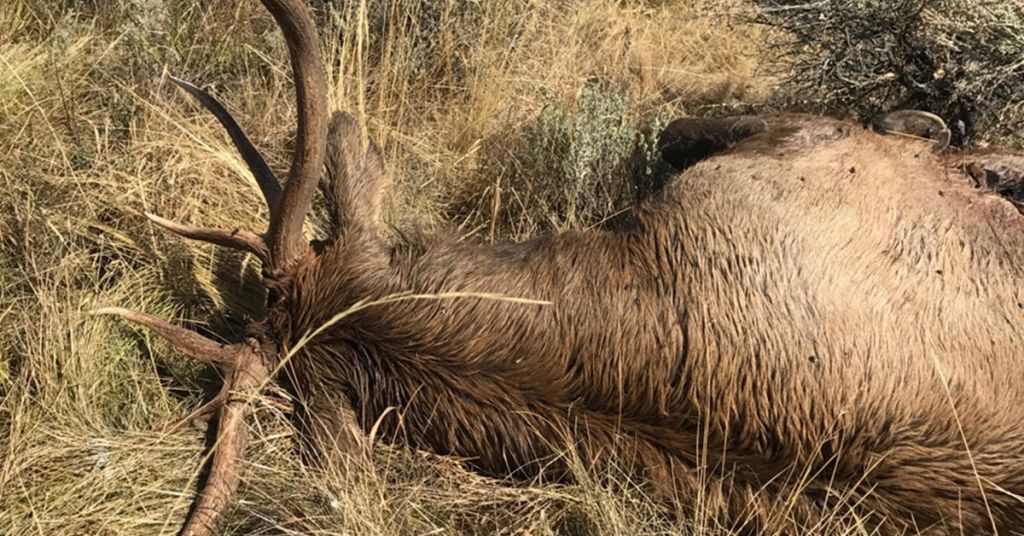
Senseless slaughter: This dead bull elk in Oregon’s Harney County appeared to have been shot with a high-powered rifle and left to waste by poachers. Photo: Oregon State Police

By Cole Sinanian. May 12, 2022. “We’re not messing around anymore with poachers,” says Oregon Representative Ken Helm. “From now on, there’s going to be people watching.”

Helm, a Democrat from Beaverton, co-chairs the Oregon House of Representatives Wildlife Caucus.

He’s among a cohort of bipartisan lawmakers leading the state’s legislative charge against wildlife crime, which ramped up in 2020 with the formation of the Stop Poaching Campaign—a multi-pronged, state-funded effort to increase poaching prosecution rates and raise public awareness.

Supported by several conservation groups and nonprofits, the Stop Poaching Campaign is a response to a worrying trend, with high-profile poaching busts, slaughtered wolves and so-called “thrill kills” on the rise.

Covid delayed the program’s official rollout, but with the recent hiring of a new special poaching prosecutor, four additional state troopers and an aggressive public awareness campaign, Helm says Oregonians should expect more poaching arrests and a boost in wildlife populations in the coming years.

“In the end, these efforts should increase the abundance of both game and non-game species, so you should be seeing more deer and wildlife out there,” says Helm.

Poaching prosecutor arrives

Because poaching often occurs in remote areas, wildlife crimes can be exceptionally difficult to detect.

Most often, poachers are caught only when someone they’ve bragged to reports them to authorities. A recent report from Montana-based hunting and conservation organization Boone and Crockett Club estimated that no more than 3% of poaching incidents are detected by law enforcement.

“Serious, professional poachers are rarely caught,” says Steve Hagan, vice president of the Oregon Hunter’s Association. “They don’t ever talk about what they did, they don’t post pictures on social media. They know how to shut up.”

With Democratic Representative Brad Witt and former Republican representative Wayne Krieger, Helm worked to get poaching on the legislative agenda, culminating in a House bill passed in 2019 (HB 3035).

Jay Hall Oregon Dept Justice

Chasing change: Jay Hall. Photo: Oregon Dept. of Justice

The legislation set aside funding for the Stop Poaching Campaign and increased poaching penalties.

The Stop Poaching Campaign uses a three-prong approach, Shaw says. She was hired in 2019 as part of the campaign’s public awareness prong, along with four additional state troopers and one sergeant to increase detection.

Funding for the campaign was halted in 2020 due to the pandemic, but fully restored this year, allowing the state to hire a new special prosecutor to specifically tackle wildlife crimes.

MORE: Group says state wildlife agency values hunters over conservation, aims for reforms

The prosecutor, Jay Hall, started in February, and will work statewide to help local judges short on time and resources to prosecute poachers.

Hall’s position is meant to ensure that poachers are prosecuted to the fullest extent of the law—an important win, given that in the past limited resources often meant poaching cases were low priority for local judges.

Hall’s office responded to an interview request by telling Columbia Insight he’s occupied with settling details of his new position and unable to comment because all of his initial cases remain active.

Are fines enough?

One challenge Hall may face concerns fines, which in the past have often been lightly assessed.

Fines for poaching in Oregon went up in 2017. But convicted poachers often end up paying less than the maximum allowable amount due to legal technicalities and lenient judgements.

In 2021, a poacher in Wheeler County who used a semi-automatic rifle to shoot a buck deer multiple times from the road, then left the animal mortally wounded, was sentenced to a one-year hunting suspension, forfeiture of his firearm, $1,000 in fines and a letter of apology to a private landowner.

MORE: Grizzlies in the Cascades? Lawsuit seeks to reverse shutdown of bear recovery program

State officials and conservationists are enthusiastic about Hall’s appointment. Now that there’s a roaming poaching prosecutor, the expectation is that convicted poachers will be punished to the fullest extent of the law.

But will fines be stiff enough to deter poaching?

In Oregon, poaching a black bear carries a $7,500 fine and suspension of hunting privileges.

However, fines now top $50,000 for some species (moose, mountain goat, sheep with horns) and can lead to suspension of hunting licenses and weapons seizure.

Wildlife crimes on the rise

When Helm entered office in 2015, he quickly became troubled by Oregon’s high rates of wildlife crime.

Commonly reported incidents included black bear poaching (animals prized for their gallbladders, which are used in traditional Chinese medicine), trophy kills targeting deer for their antlers and poached sturgeon, killed for their caviar.

KenHelm, Democrat Representative

Salem light: Rep. Ken Helm. Photo: Andie Petkus Photography

According to Steve Hagan of the Oregon Hunter’s Association, the past five years have also seen an increase in “thrill kills,” a form of poaching in which the only motive is an itchy trigger finger.

“To shoot something in a field and just let it lie there and rot, it’s not something I can relate to,” says Hagan. “I get the impression that some of it is people getting bored with video games and wanting real life targets.”

Sturgeon populations, which are especially vulnerable to poaching due to their long life cycles and slow regeneration time, have been nearly pushed to the brink. They’re highly lucrative, with sturgeon caviar selling for up to $200 an ounce on the black market.

“These instances of poaching we’re seeing, specifically with sturgeon populations, are definitely impacting the abundance of the overall population,” says Stop Poaching Campaign coordinator Yvonne Shaw.

In March, Oregon State Police (OSP) troopers seized five sturgeons—one over seven feet long, indicating it was likely more than 50 years old—from poachers in Scappoose Bay near St. Helens. The poachers could now face felony charges.

According to statistics from OSP, troopers recover around 60 poached sturgeon each year. In 2019, OSP reported 324 illegally harvested big game, increasing to 447 in 2020. There were 234 big game animals poached in 2021.

Rewards for tipsters

Through the Oregon Department of Fish and Wildlife (ODFW), the Oregon Hunters Association funds the Turn In Poachers (TIP) rewards system, providing cash rewards to people who offer information to authorities leading to the arrest or citation of a poacher.

In 2020, ODFW reported that 61 TIP checks were paid out, totaling $20,599.

But while the TIP rewards system has proven successful in incentivizing the reporting of poachers, the rewards are applied only to animals listed as game species—animals that can legally be hunted in Oregon. This excludes protected and endangered nongame species such as certain raptors, reptiles, fish and amphibians.

[perfectpullquote align=”full” bordertop=”false” cite=”” link=”” color=”” class=”” size=””]“I get the impression some of it is people getting bored with video games and wanting real life targets.” —Steve Hagan, Oregon Hunter’s Association[/perfectpullquote]

Gray wolves, of which there are only 175 in Oregon, technically have game status, although they cannot legally be hunted.

“There’s been a lot of focus on addressing only the species we hunt and fish, but there’s lots of other animals out there being killed,” says Danielle Moser, wildlife program coordinator for conservation group Oregon Wild.

Oregon Wild is part of the Oregon Wildlife Coalition, a coalition made up of nine wildlife conservation groups working closely with the Stop Poaching Campaign and the Oregon Legislature to support anti-poaching efforts.

In March, the group began funding Oregon’s first standardized cash rewards program for nongame species. The program offers $500 for information regarding raptors and mammals like cougars, bobcats and beaver, and $1,000 for information regarding federal or state listed endangered species like wolves, wolverine, lynx and otter.

“The list of species covered under the Oregon Hunters Association program is narrow,” says Moser. “One or two instances of poaching could set back an entire recovery for threatened or endangered species.”

Wolves a target

Wolves have faced the brunt of Oregon’s poaching problem in recent years. Gray wolves, which were driven to the brink of extinction in the mid-20th century, have been making a slow recovery since the introduction of the state’s wolf management plan in 2005.

But poachers have been unrelenting, raising concerns about the future of Oregon’s wolf population.

Poached wolf

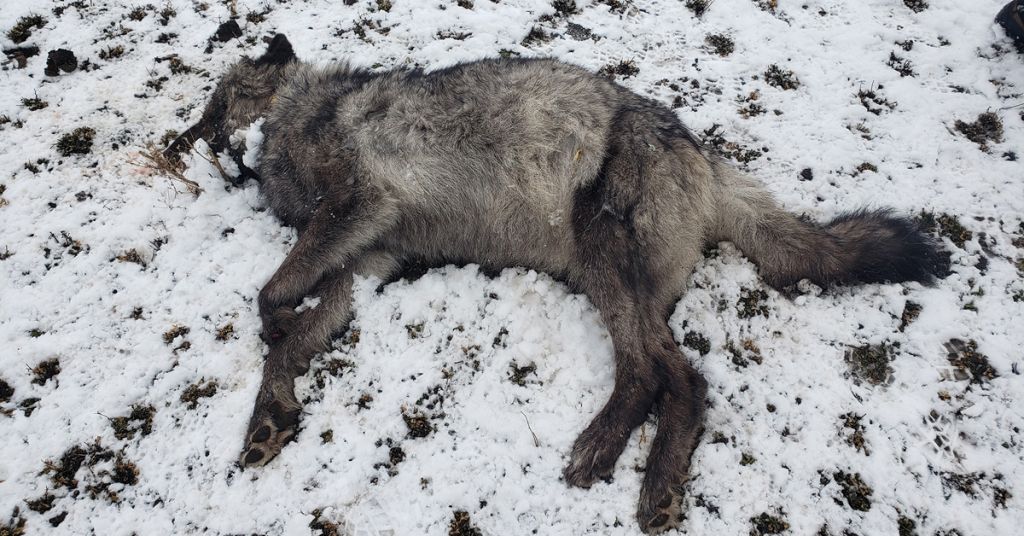
Illegal kill: This female wolf was killed in Union County in February 2022. Photo: ODFW

In February 2021, an entire pack of eight wolves was found dead by state troopers in Eastern Oregon, having been poisoned. Moser says the incident helped make 2021 one of the deadliest on record for wolves in Oregon.

So far in 2022, there have been three reported wolf poachings, at a rate that may end up topping 2021’s.

Animals ‘belong’ to everyone

Since the program began, the OWC has paid $1,000 in rewards—two $500 payouts for the poaching of two Cooper’s Hawks. Both hawks died after being shot with BB guns, Moser says.

Poached elk bull, Oregon

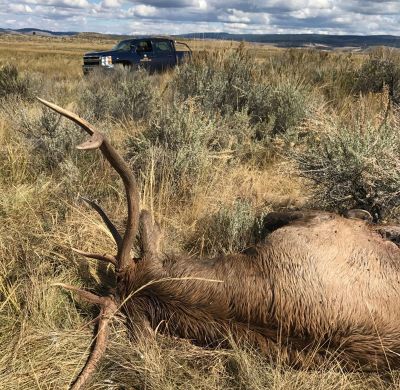
Big picture: Oregon lawmakers are finally taking a broader view of poaching. Photo: Oregon State Police

The state of Oregon views poaching as a form of theft, legally classifying the state’s diverse wildlife as one of its most valuable natural resources.

“When a poacher takes an animal, they take it away from everyone forever,” says Shaw. “That means it can’t be harvested or encountered by a hiker or kayaker. It can’t be photographed. It’s just gone from the landscape.”

MORE: What does ‘quasi-extinction’ actually mean?

When combined with the worsening effects of climate change and the habitat destruction caused by rapid urbanization, the poaching of already stressed wildlife populations can tip the scale dangerously close to ecological collapse.

But beyond that, Helm says there’s a deeper moral imperative to ensure that Oregon’s fauna is treated with dignity.

“They deserve our respect,” he says. “Our fish and wildlife deserve to be protected from human interference. They don’t deserve to be wantonly killed.”

To report a case of wildlife poaching in Oregon contact the Turn In Poachers (TIP) line: 800-452-7888 or TIP@osp.oregon.gov.

By |2023-02-10T16:08:04-08:0005/12/2022|Wildlife|0 Comments

On Union Pacific land, garbage flows into Willamette River

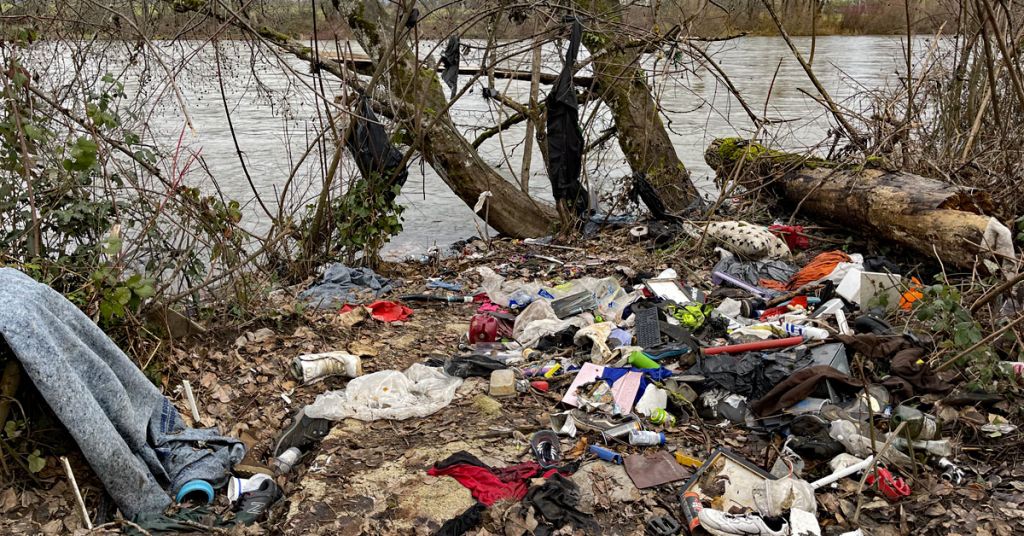
Around a homeless encampment, hypodermic needles, plastics, propane tanks, flat-screen TVs. human feces among items cleanup crews buried rather than remove

Homeless encampment garbage

Water hazard: Near the University of Oregon, the Willamette River isn’t always as pristine as promoted. Photo: Michelle Emmons (January 2022)

By Cole Sinanian. April 21, 2022. In Eugene, Oregon—a city with one of the nation’s highest rates of homelessness per capita—years of illegal tent camping have turned a large swath of riparian zone on the banks of the Willamette River into a virtual landfill, local conservationists say.

Owned by Union Pacific railroads, the property sits behind a student apartment complex near the University of Oregon campus.

Michelle Emmons, who works for local conservation group Willamette Riverkeeper, has spent dozens of hours clearing trash from the area and monitored its condition for years. She says blatant neglect on the part of Union Pacific and the City of Eugene’s failure to address the problem has created an ecological disaster, putting everyone who lives downstream from the site at risk.

“This was all preventable,” says Emmons. “It’s now a do-or-die situation. There’s a garbage dump that has been buried underneath the floodplain there.”

MORE: Slobs force campground closures

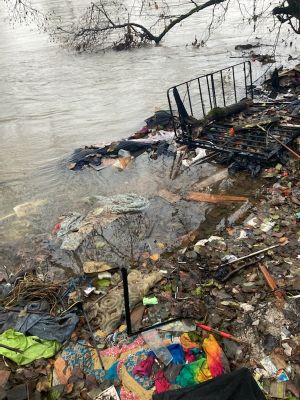
Drawn to its relative safety from law enforcement compared to other parts of the city, people living at the site often move in with personal belongings, which can become scattered around the floodplain over time. During heavy rains and other high-water events, the river surges, putting campers at risk and carrying their belongings and waste downstream, where it can harm wildlife or people recreating on the river.

“Riparian zones are no place to live,” says Emmons. “They’re not safe for the people who camp there, and the impact of people camping there is not safe for the broader community.”

Emmons has found metal chicken wire, hypodermic needles, polypropylene plastics, flat-screen TVs, propane tanks and human feces on the property.

Three-plus years of contamination

Locals began submitting complaints about the site to the city in late 2018, says Rachelle Nicholas, inspection services manager for Eugene’s Building and Permit Services.

River garbage, Willamette River, Eugene, Oregon

Current events: Locals are sick of scenes like this. Photo: Michelle Emmons (January 2022)

The hazardous state of the site is a violation of the city’s property code requirements, which require landowners to maintain property in a safe manner.

The city issued a Notice to Correct to Union Pacific in November 2018, then a second in 2019 and a third in April 2021.

Notices to Correct direct property owners to address violations or risk facing fines.

MORE: When adopting a roadside goes beyond picking up trash

Union Pacific addressed the first two notices but has yet to reach compliance on the third—even after hiring contractors to clean up the site in November.

“Union Pacific understands and shares the frustration that the city and others have with garbage deposited illegally on this site in Eugene,” Union Pacific communication manager Robynn Tysver told Columbia Insight in an email. “Union Pacific has spent considerable time and resources over the years repeatedly removing homeless encampments and large amounts of garbage in the area.”

According to Nicholas, the city plans to start issuing fines to Union Pacific in the coming weeks, which she says will most likely be daily penalties.

“They’re a big company and they’re tapped out for resources,” Nicholas says. “There’s a lot of coordination that goes into doing a clean-up. But this one has gone on longer than usual.”

Burying trash rather than removing it

In November 2021, local conservationists watched contractors drive Bobcats and heavy machinery onto the riverbank in an apparent attempt to clean up the site—an attempt they say was inadequate and made the situation far worse.

Shannon Wilson, a former U.S. Forest Service employee and Eugene resident, first noticed the trash buildup in July. In November, he says he saw Bobcat excavators using the access roads to drive down to the bank.

He examined the area in December after the supposed cleanup and found piles of trash inches from the water. Fearing it would soon wash into the river, Wilson spent several days during the week between Christmas and New Year hauling the trash uphill.

“It’s all below the high-water mark,” he says, “so every time it rains, it all gets carried downstream.”

Items Wilson removed from the bank include a half-submerged motorcycle battery, a flat-screen TV and an entire bed frame.

Eugene, Oregon activist

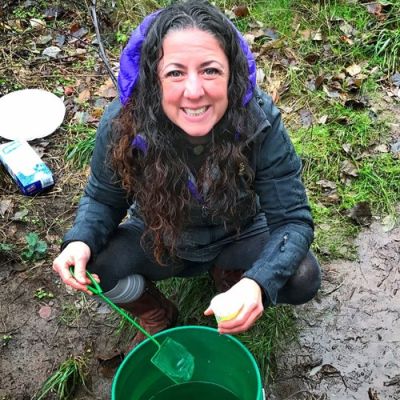
Michelle Emmons: “This was preventable.” Photo: Willamette Riverkeeper

A few weeks later, Wilson and Emmons walked through the property to take pictures.

They examined the riverbank where Wilson had seen the machinery and discovered bits of trash poking out of the ground. The dirt on the floodplain had clearly been displaced, which they say indicates that Union Pacific’s contractors had dug into the riverbank during the November cleanup, effectively burying the trash that was already there.

“Union Pacific did NOT clean up the site,” Emmons wrote in an email to DEQ Materials Management. “The overall issue has risen far beyond homeless campers. They are treating the area like a landfill instead of actually cleaning up and removing the waste.”

Around this time, Wilson contacted friend and environmental attorney for the Oregon Clean Water Action Project Doug Quirke, who filed a complaint with the Oregon Department of Environmental Quality.

Quirke had filed numerous complaints in the past but says this time the agency seemed to be in no hurry to address this issue.

“I can’t recall a previous complaint where the DEQ has taken so much time and been so bad at communicating what’s going on,” Quirke tells Columbia Insight. “I’ve found the DEQ’s response pretty disappointing.”

Whose fault? Whose responsibility?

The DEQ has limited enforcement ability in the area, says DEQ Public Affairs Specialist Dylan Darling, adding that nonpoint source pollution—pollution that doesn’t directly come from a pipe—is usually the responsibility of local jurisdictions

DEQ regulates water pollution on state-owned lands, which varies by area. On the Union Pacific property, the river itself is owned by the state while the surrounding banks are not.

Darling says DEQ plans to work with the City of Eugene to address Quirke’s complaint and the trash issue.

“The Oregon Department of Environmental quality has a relatively narrow regulatory role regarding nonpoint source pollution,” Darling wrote to Columbia Insight in an email. “We are trying to get more information from Union Pacific before we consider additional actions.”

Union Pacific communication manager Robynn Tysver says the company attributes the trash buildup to illegal campers.

“These encampments are the main source of the trash problem,” she wrote in an email. “The challenge is that as quickly as Union Pacific removes the camps, they return, along with the trash.

“We will continue to work with the city and local nonprofits to try to keep the site clean and free of illegal encampments.”

But Quirke isn’t convinced that will be enough.

“When the city is clearing these locations and the people ask them where they’re supposed to go, the city has no answer for them,” he says. “If the city were doing a comprehensive effort to deal with the un-housed population, you wouldn’t have the issue of people camping along the river and polluting it.”

Subscribe to Columbia Insight. It’s free!

By |2023-02-10T16:09:05-08:0004/21/2022|Conservation|1 Comment

© Copyright 2013-2025 Columbia Insight. All Rights Reserved.

As a 501(c)3 nonprofit organization, all donations to Columbia Insight are tax deductible to the full extent of the law. Our nonprofit federal tax-exempt number is 82-4504894.