Stay Updated Subscribe today for the latest research + reporting about environmental news. Subscribe Now

Stay Updated Subscribe today for the latest research + reporting about environmental news.

Subscribe Now

Chuck Thompson

Chuck Thompson

Chuck Thompson

About Chuck Thompson

Chuck Thompson is editor of Columbia Insight.

250,000 juvenile steelhead gone after hatchery failure

Washington officials blame equipment malfunction for loss of the bulk of Lyons Ferry Fish Hatchery’s Wallowa stock summer steelhead
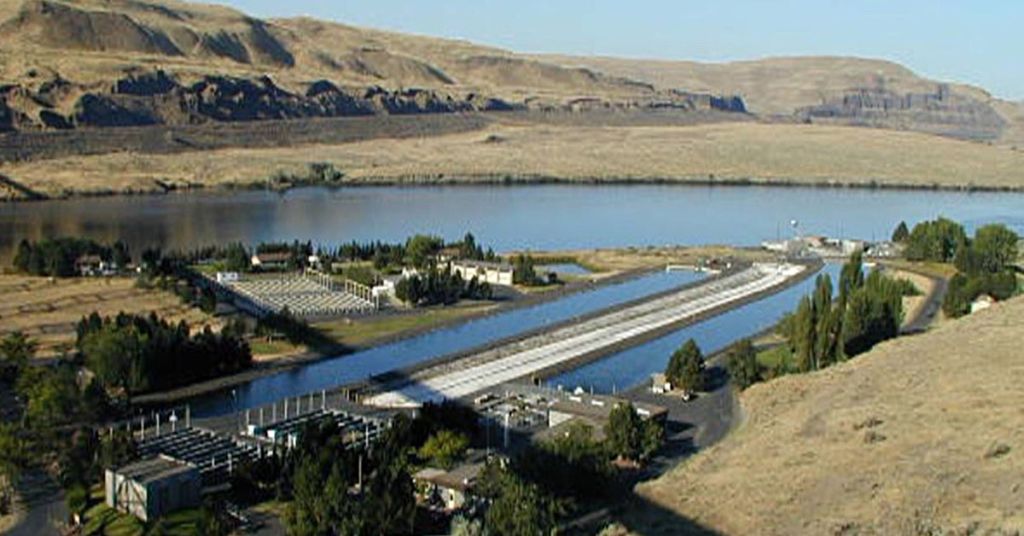
Lyons Ferry Fish Hatchery credit WDFW

Out of there: Lyons Ferry Fish Hatchery was built in 1982 by the U.S. Army Corps of Engineers. Photo: WDFW

By Eli Francovich. February 7, 2022. Nearly 250,000 steelhead smolts escaped from a rearing pond on the Snake River in Washington after an equipment failure last week. 

The juvenile steelhead, which were slated for release later this spring, were being held at the Lyons Ferry Fish Hatchery on the Snake River, south of Palouse Falls in Washington.

On Jan. 31, Washington Department of Fish and Wildlife staff discovered that a rubber gasket sealing a screened rotating drum had disintegrated leaving an inch-and-half gap leading to the Snake River.

The loss accounts for about 64% of Lyons Ferry Hatchery’s Wallowa stock summer steelhead set for release in 2022 and 8% of the overall hatchery steelhead production in the Snake River basin, according to WDFW.

“We’ve never had this happen, staff do an annual check when those ponds are drawn down,” said Chris Donley, WDFW’s eastern region fishery manager.

Donley doesn’t believe the failure was a staff mistake, categorizing it as an equipment failure.

Possibly eaten by predators

The 249,770 smolts may have survived, but only if they escaped recently. If so, anglers may see a higher-than-normal number of steelhead returning to Lyons Ferry in 2023.

If they escaped earlier in the year they likely were eaten by predators.

The smolts were destined for Washington’s lower Grand Ronde River.

MORE: Tribes in the Upper Columbia River Basin are reintroducing salmon to local rivers

A smolt is a juvenile salmon or steelhead fish, between 12 and 15 months old. WDFW and other state wildlife agencies rear smolts and transport and release them to various areas in the state. 

On its own Donley says the loss is manageable. However, combined with poor ocean conditions, slowed river flows due to dams and warm summertime water Donley characterized the escape as “one more death by a thousand cuts” to recreational steelhead fishing.

Both wild and hatchery-reared steelhead and salmon struggled to survive on the Snake in 2021. In response managers in Idaho and Washington limited and in some cases closed steelhead fishing, with some managers calling it the “worst ever.”

Get weekly updates from Columbia Insight

Advocates for wild fish and a dam-free Snake River say the incident highlights why natural systems are preferable.

“Every time we see hatchery failure it reminds us of the importance of restoring habitat and wild fish,” said Gregory Fitz, communications manager for the Wild Steelhead Coalition. “We want to see natural systems work because they are more resilient.”

Eli Francovich is a journalist covering conservation and recreation. Based in eastern Washington he’s writing a book about the return of wolves to the western United States.
By |2022-02-07T09:43:55-08:0002/07/2022|Natural Resources, Salmon|0 Comments

Serial DEQ violator shutting down for good

Citing rising costs and dwindling profits, a wood treatment plant that’s been on the same Oregon site since the 1940s says it’s going out of business

Eugene, Oregon

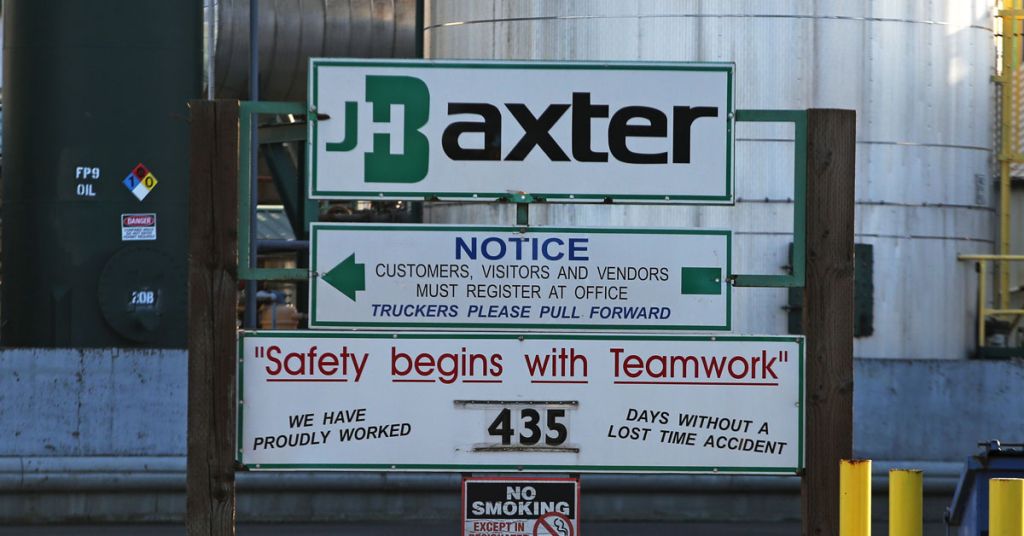
Re-signing: In March 2021, Oregon DEQ fined J.H. Baxter & Co. $223,440 for violations including illegal treatment of 1.7 million gallons of hazardous waste between 2015-19. Photo: Chris Pietsch/The (Eugene) Register-Guard

By Adam Duvernay, The (Eugene) Register-Guard, February 1, 2022. The president of the company that owns a Eugene, Oregon, wood treatment plant, which was accused of regular environmental regulation violations, has informed state regulators in writing it will end its primary industrial operations there.

J.H. Baxter & Co. will end industrial activities at its Roosevelt Boulevard facility on Jan. 31, according to a company letter sent to the Oregon Department of Environmental Quality. The company has chemically treated wood products at the 42-acre site since the 1940s.

DEQ and the Lane Regional Air Protection Agency, which issue and enforce permits for the Baxter plant, said a company attorney told them operations were ending.

DEQ and LRAPA received that written notification Jan. 28.

“As you know, J.H. Baxter & Co. is mothballing its Eugene wood preserving facility effective January 31, 2022. This decision was made for a number of reasons, including rising costs associated with operating the facility and dwindling sales margins due to shifts in the market,” says the letter to DEQ signed by Georgia Baxter, the company’s president.

Big fines, high levels of dioxins

The Baxter plant has a long record of environmental regulation violations, and neighbors have blamed it for noxious smells and health issues. DEQ revealed earlier this month an investigation into certain toxic chemicals at the plant discovered them in nearby yards.

On Jan. 13, DEQ announced soil samples from seven nearby residences showed high levels of dioxins, a class of carcinogenic compound that can be created by industrial processes. Six of the seven yards need soil replacement, three of them by early summer.

The investigation began after dioxins were discovered at and around the Baxter plant. DEQ believes operations at the Baxter plant contaminated neighboring homes’ yards.

MORE: Farmers not quitting fight against Port Westward expansion plans

DEQ spokesman Dylan Darling has said the agency was working out the details of soil replacement with J.H. Baxter, which would be responsible for paying for the work.

J.H. Baxter is also in settlement talks with DEQ concerning a slew of hefty fines it received last year, the steepest of which concerned the use of wood treatment tools called retorts to boil off process waste. An appeal hearing on those violations is scheduled for mid-May.

Problems remain

Regulators said they were waiting to learn more details about the plans for the plant so they can better understand the company’s future responsibility for those issues.

LRAPA spokesman Travis Knudsen said staff will visit the Baxter plant Monday to learn more about the company’s plans.

The company’s environmental control permits are still active.

Get Columbia Insight delivered every week—it’s free!

“Although our treating operations will be suspended, our intention is to comply with all regulatory requirements including storm water, groundwater and process water treatment. Daily inspections will also be done to ensure environmental safety and compliance,” the letter to DEQ reads.

The letter says a small crew will remain on-site to assure water systems are working and in compliance with environmental and safety regulations. The company also plans to use one of its retorts to reclaim wood preservative oil from its process water, according to the letter.

MORE: Waste Land: Where the aluminum bodies are buried in the Columbia Gorge

“Treated process water will be evaporated in accordance with our current permit. Hazardous waste generated will continue to be managed under current profiles and stored in our 90-day hazardous waste shed,” the letter reads.

Contact reporter Adam Duvernay at aduvernay@registerguard.com Follow on Twitter @DuvernayOR.

Columbia Insight is publishing this story as part of the AP StoryShare program, which allows newsrooms and publishing partners to republish each other’s stories and photos.

By |2022-02-01T12:44:41-08:0002/01/2022|Natural Resources|0 Comments

How do you rehabilitate the largest body of freshwater west of the Rockies?

In southern Oregon, water quality in Upper Klamath Lake is in a state of crisis. No one knows quite what to do about it

Upper Klamath Lake by Michael (a.k.a. moik) McCullough

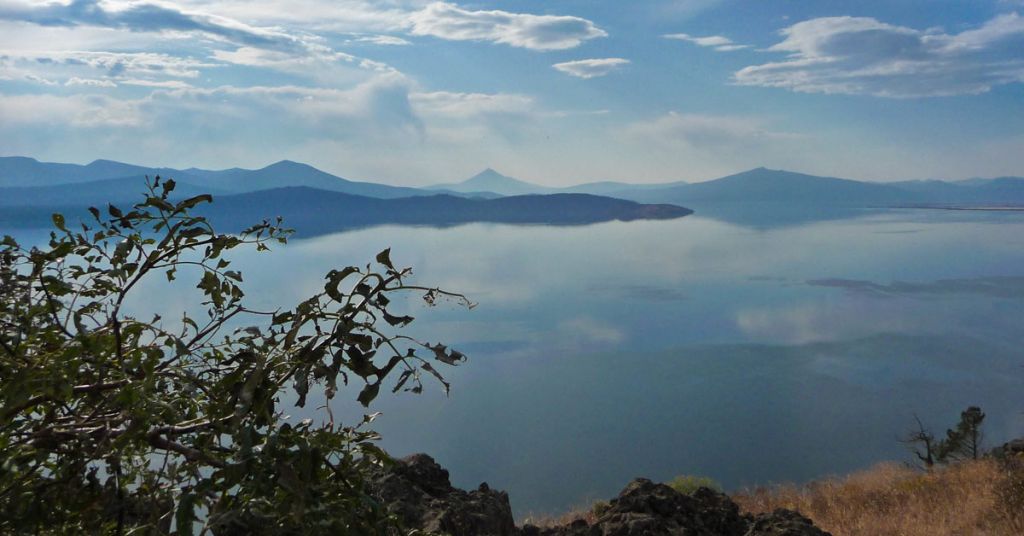
All clear from here: Upper Klamath Lake as seen from Chiloquin Ridge above Hagelstein Park near Klamath Falls, Oregon. Photo: Michael (a.k.a. moik) McCullough/CC

By Alex Schwartz (Klamath Falls) Herald and News, January 19, 2022. It’s obvious to anyone who’s smelled its algal stench in the summer: Upper Klamath Lake needs a good clean-up.

Not only do widespread cyanobacteria blooms turn the shallow lake into unsightly pea soup, they also tank water quality and contribute to mass die-offs of baby C’waam and Koptu (Lost River and shortnose suckers), hurtling the once-resilient species toward extinction.

The lake’s severe state, along with the decline of its endemic fish, limits how much water the Bureau of Reclamation can send down the Klamath River to satisfy flow requirements for threatened Coho salmon, or divert to farms and wildlife refuges in the Klamath Project.

If landowners, scientists and government agencies can improve the water quality in Upper Klamath Lake (and, consequently, life for endangered suckers), it could take a great deal of pressure off water management in the Klamath Basin.

But how do you rehabilitate the largest body of freshwater west of the Rocky Mountains?

Dredging proposed

At 96 square miles, it’s difficult to implement any fix at the scale and swiftness needed to make measurable water quality improvements in Upper Klamath Lake before its suckers go extinct.

Because hundreds of millions of federal funding dollars were recently earmarked for environmental restoration activities in the basin, some people have asked, “Why not dredge it?”

[perfectpullquote align=”full” bordertop=”false” cite=”” link=”” color=”” class=”” size=””]The problem is too many nutrients entering the lake from logging, grazing, stream channeling and irrigation practices.[/perfectpullquote]

Dredging water bodies has been used for decades around the world to achieve a variety of objectives, from deepening lakes to removing polluted sediment. Theoretically, it could do both of those things in Upper Klamath Lake, increasing available storage for irrigation diversions and river flows, while also removing some of the nutrient-rich sediment that fuels its algae blooms.

However, sucking up sediment from a lakebed is extremely expensive ($460 million is the current ballpark figure) and can result in unwanted environmental side effects.

Get Columbia Insight delivered every week—it’s free!

The latest scientific literature does suggest dredging can be successful, but mainly in lakes that are small and don’t experience consistent pollution from external sources.

“Upper Klamath Lake meets neither of these criteria,” said Megan Skinner, water quality specialist for the U.S. Fish and Wildlife Service office in Klamath Falls.

Industrial runoff

Prior to colonization, it’s likely that Upper Klamath Lake was no Tahoe. The lake is naturally eutrophic, or high in nutrients like nitrogen and phosphorus.

This environment may not yield the clearest water, but it provides the foundation for a robust aquatic food chain. Nutrients grow aquatic plants and microorganisms, which would fuel invertebrates and fish.

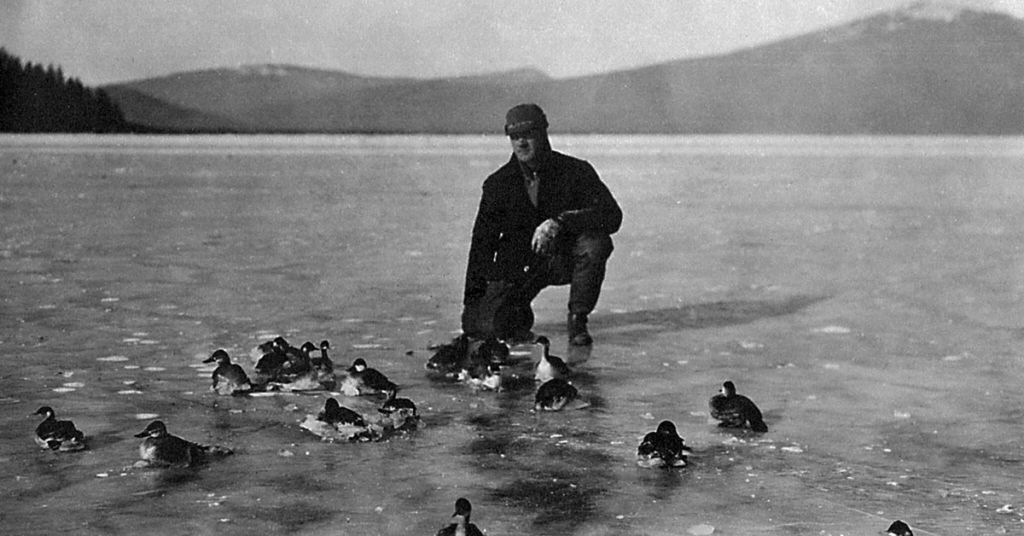
Upper Klamath Lake ducks 1932 by Klamath Museum

Historic take: This image of ducks caught in ice on Upper Klamath Lake was likely taken during a cold spell in December 1932. Volunteers rescued about 1,800 birds form the frozen water. Photo: Klamath Museum/CC

The problem now is that there’s too many nutrients entering the lake from its tributaries, released into the watershed by logging, grazing, stream channeling and irrigation practices.

Rivers erode more sediment than they used to, sending excessive amounts of phosphorus directly into Upper Klamath Lake and fueling the domination of toxic cyanobacteria in the water. Thanks to this external loading, researchers now consider Upper Klamath Lake “hypereutrophic.”

‘Techy’ fixes 

The Oregon Department of Environmental Quality evaluated where this excess phosphorus was coming from in the early 2000s.

Approximately 60% in a given year comes from the lake’s own sediments, while 40% enters it from its watershed, including tributaries and lands adjacent to the lake.

ODEQ found human activities responsible for 40% of that external load, mostly through land use changes along the tributaries.

ODEQ set total maximum daily load (TMDL) requirements for Upper Klamath Lake in the early 2000s, requiring a reduction of 40% in external phosphorus.

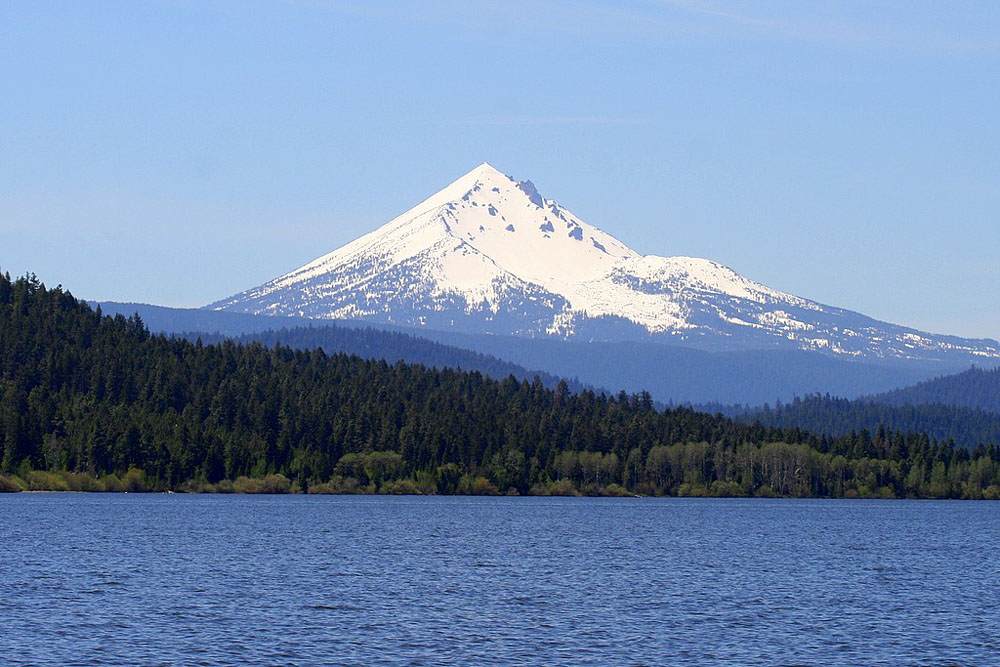
Mount McLoughlin

Looming presence: Mount McLoughlin towers over the western shore of Upper Klamath Lake. Beneath the surface things are less pristine. Photo: Erin/CC

Skinner has been fielding ideas to improve water quality in Upper Klamath Lake for several years. They range from long-term restoration—such as de-channelization, riparian planting and fencing and spring reconnection—which counteracts the underlying issues of sediment loading.

Skinner said other ideas amount to what she calls “techy quick fixes,” which attempt to alleviate symptoms in the short-term.

The latter category might buy the C’waam and Koptu some time but, at worst, could suck away precious resources that may be better spent on tackling the core of the problem.

“One issue I often run into with these types of projects is scale. What works and is cost effective in a 2-acre lake may cost hundreds of millions of dollars and require monumental effort in a lake as big as Upper Klamath Lake,” Skinner said.

MORE: City of Sandy considers dumping treated wastewater into Sandy River

Dredging is one of those “techy quick fixes” that sounds better than it actually is, at least in this watershed.

It may improve things from a water storage standpoint, but it would easily be counteracted by the continuous loading of excess phosphorus from outside the lake. Plus, it would be prohibitively expensive.

“It may not be the quick fix people would hope,” said Jacob Kann, an aquatic ecologist with Aquatic Ecosystem Sciences LLC. “In a shallow, large lake like Klamath, it’s very difficult to actually treat symptoms.”

Hydraulic pipe dream

Upper Klamath Lake has been dredged before, mainly for boating and logging operations and to build dikes in the early 20th century. But none of those operations occurred at the scale necessary to positively influence lake depth or water quality.

Dredging for those purposes has been brought up since at least the 1970s, when the Army Corps of Engineers evaluated ways to fix the lake’s declining health.

“Lake deepening may feasibly alter lake morphometric characteristics in a manner that will reduce algal productivity. Whether the reduction would be sufficient to justify project implementation on the basis of water quality benefits alone is highly questionable,” the Corps wrote in a 1982 report.

[perfectpullquote align=”full” bordertop=”false” cite=”” link=”” color=”” class=”” size=””]The more than $160 million appropriated by Congress over the next five years isn’t enough to accomplish any one thing.[/perfectpullquote]

After 40 years, the scientific consensus around dredging hasn’t changed much.

Kann said dredging has been part of the conversation since before he began working in the Klamath Basin. The main issue is the influence of external phosphorus on water quality dynamics in the lake. If that isn’t taken care of, the benefits of dredging would only be temporary before becoming eclipsed by an onslaught of new sediment.

But why not dredge to buy the fish some time while we fix the watershed, if removing some phosphorus contained in the lake’s sediment might dampen the severity of the algae blooms?

MORE: Why harmful algal blooms are proliferating throughout the Columbia River Basin

Kann said he hasn’t ruled that out entirely, especially if a project were to focus on smaller phosphorus “hotspots” in the lake, whose sediments contain especially high nutrient concentrations.

Could removing the years of sediments that have already accumulated in the lakebed give us a head start while we restore its tributaries? Kann said his recent research on sediment loading in Upper Klamath Lake suggests that the lake’s “internal loading” may actually be highly influenced by external loading.

Therefore, directly removing sediment from the lake may be more of a Sisyphean task than previously thought.

Other ideas

Stakeholders have to be careful with how they spend limited funding on restoration in the Klamath Basin.

The more than $160 million appropriated by Congress over the next five years isn’t enough to accomplish any one thing, whether it’s dredging Upper Klamath Lake or restoring every mile of the Sprague River. Especially given how close C’waam and Koptu are to becoming functionally extinct in the wild, people have to balance long-term fixes with short-term relief—or choose between them.

Still, there may be measures less disruptive or expensive than dredging that could help make life easier for suckers as partners work to clean up the watershed.

Skinner said she’s already crossed quite a few off her list, but she’s still evaluating activities like killing cyanobacteria cells directly with ultrasound waves or UV radiation, or using oxygen or a compound called Phoslock, which bounds to phosphorus atoms and renders them useless to algae.

“I am always looking for new ideas and therefore encourage readers to reach out if they have any ideas for me to explore,” Skinner said. “I will consider anything and everything.”

MORE: How your laundry pollutes rivers. What you can do about it

Singer agreed that the basin won’t get anywhere without fixing the underlying problems in the Upper Klamath Lake watershed, but the discussions about dredging or any quick fix underscore just how dire the situation is for suckers. Without some way to keep the species alive in the interim, would water quality improvements from tributary restoration arrive in time?

“I think it’s important to focus externally, but I still wonder if there’s a way to just, you know, get some oxygen to the poor fish,” she said.

Columbia Insight is publishing this story as part of the AP StoryShare program, which allows newsrooms and publishing partners to republish each other’s stories and photos.

By |2022-01-25T11:23:55-08:0001/19/2022|Natural Resources, Water|7 Comments

How your laundry pollutes rivers. What you can do about it

Plastic garbage isn’t just an ocean problem. Microplastics from clothes and other domestic sources are proliferating in the Columbia and Snake Rivers

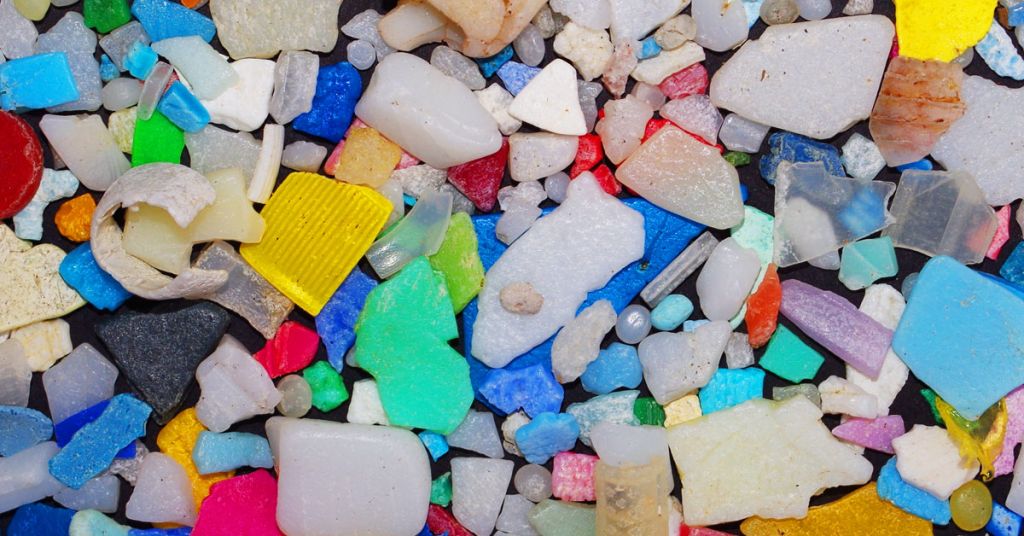
Plastic on beach

A river runs to it: Plastic fragments collected on along 75 feet of Oregon Coast at Cape Perpetua. Photo: Wolfram Burner/CC

By Charles Coxe. January 6, 2022. The relentless buildup of plastic waste in our oceans is a well known crisis. Viable solutions for small and large collections of oceangoing plastics, such as the Great Pacific Garbage Patch, remain elusive.

But the primary source of these huge gyres is relatively un-studied, and just as insidious: microplastics in our rivers.

New research is showing that while microplastics in rivers inevitably dump into oceans, they cause a lot of freshwater problems along the way.

In a December webinar presented by Columbia Riverkeeper, Kirsten Kapp, professor of biological sciences and math at Central Wyoming College, walked through her pioneering research on microplastic pollution in freshwater ecosystems.

“Most of us think microplastics are an ocean problem,” said Kapp. “That’s simply not the case.”

Microplastics in Snake and Columbia

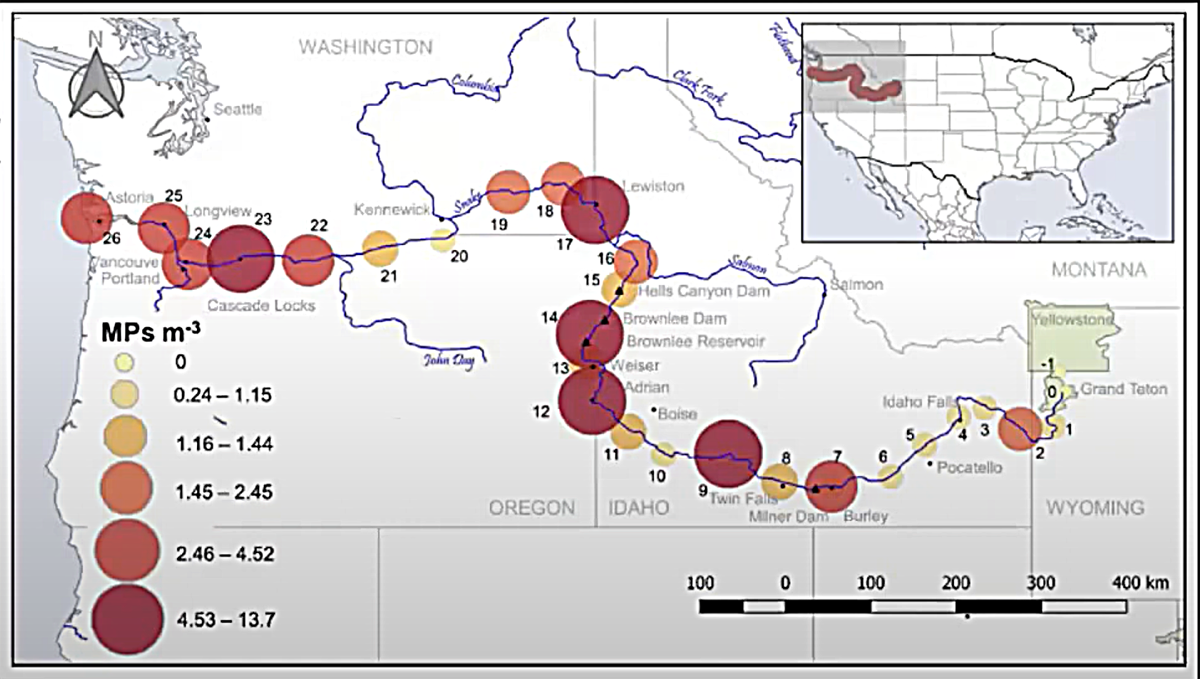
In her study, Professor Kapp and her team took water samples every 50 miles down the Snake River then Columbia River, starting from the Snake’s headwaters in Yellowstone National Park all the way to the Pacific Ocean.

What they found was alarming. A whopping 93% of their samples (collected with mesh nets to catch any debris larger than 100 microns) contained plastic. Using another method, collecting water in jars and then studying the contents, they found plastic in 75% of samples taken.

Microplastics in rivers

Concentrations of microplastics (MP) in Snake and Columbia rivers in 2018. Graphic by Kapp/Yeatman/Environmental Pollution

Although the amount of plastic contamination increased the further they moved downstream, the overall levels in the Snake and Columbia were similar—and comparable to levels researchers have measured in New York’s notoriously polluted Hudson River.

Surprisingly, Kapp’s team found some of the largest plastic deposits in areas with little human population. This is likely because these were taken downstream from population centers, as well as in reservoirs where dams collect plastic debris.

What are ‘microplastics’?

Typically, a microplastic is defined as any plastic particle smaller than 5mm—that’s smaller than a grain of rice.

Kirsten Kapp of Central Wyoming College

Fiber fighter: Kristen Kapp. Photo: Central Wyoming College

Even at this size, however, microplastics come in many different shapes and sizes.

Most are classified as beads, granules or spheres (as in broken-up polystyrene foam), film (such as plastic bag fragments) and microfibers. 

One soda bottle, if not recycled, can eventually create an estimated 39,000 microplastic fragments; a single shopping bag can become 426,000 pieces of microplastic film.

By far the most common type of plastic found, microfibers include fishing line or netting, but also thinner plastic fibers from clothing.

Blame your laundry

There are many ways microplastics find their way into rivers. The most obvious are industrial spills and littering or mismanaged waste. (Only 9% of plastics are being recycled, according to Science magazine.)

Microplastics also spread through runoff from roadways, where bits of tires, which contain plastics, constantly slough off from surface friction.

Agricultural operations are another source. Biosludge from settlement ponds and reservoirs used as fertilizer contains high concentrations of plastic.

MORE: Are you eating your clothes? Microplastics in Columbia River Basin need more study

The most common microplastic culprit, however, is what individuals pour down our drains every day, from body scrubs and makeup with “microbeads,” to household laundry.

“Wastewater treatment facilities actually are quite good at cleaning the water and remove about 90% of the microplastics,” explained Kapp. “But there’s just so much left in that remaining 10%.”

Our laundry, new research has found, appears to be the biggest offender—studies estimate roughly 700,000 plastic microfibers are shed during a single wash cycle, mostly from synthetic fabrics.

Dryer sends out microfibers

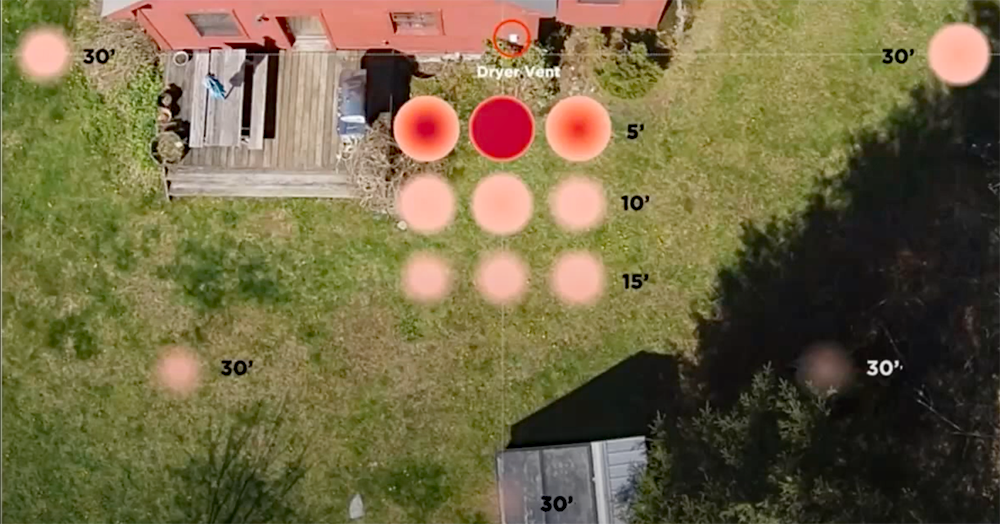
Fly away: Electric clothes dryers are an underestimated source of microfiber pollution. This augmented image shows typical microfiber dispersal from a residential dryer. Image: Kapp/Miller/Plos one

Those same synthetic fabrics can do double damage in the dryer, where they contribute more microfibers through so-called “city dust” or atmospheric deposition, which is blamed for microplastics found in locations as presumably pristine as Arctic ice.

Kapp’s recent experiments on clothes dryers have found microfibers from fleece are dispersed widely through outside dryer vents, even when using lint filters—pointing to dryers as a newly discovered major contributor to microplastic pollution.

Fish ingest plastics

Although microplastics may not be as visibly obvious a pollutant as larger debris, their impact can be more destructive.

To date, more than 200 different animal species are known to have ingested microplastics, including carp, bass, shrimp, albatross, sea turtles, oysters, chickens—even mayflies.

Snake River

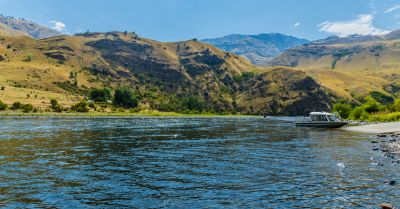
Unseen hazards: Snake River at Hell’s Canyon. Photo: LDELD/CC

Research into the environmental damage caused by microplastics is still in the early stages, but studies have shown they have a range of negative effects on animals, from increased mortality rates, malnutrition and stunted growth to reproductive and behavioral problems.

Pollutants go beyond the plastic itself—microplastics often contain or bond with other harmful chemical pollutants such as polychlorinated biphenyls (PCBs), polycyclic aromatic hydrocarbons (PAHs), fire retardants, pesticides and even pathogens and other disease vectors.

According to Kapp, we don’t yet know how higher levels of microplastics are affecting adjacent issues such as water temperatures, soil pH, soil water retention or root stabilization.

Minimizing your impact

Apart from cutting out all plastics, how can we best address this issue?

“Plastics aren’t going away—we need plastic,” Kapp said. “Plastics are very important in the hospital setting, for one, as we’ve learned during this pandemic. But it’s not necessarily important to eat your meals with plastic.”

MORE: Clamshells begone! Washington takes lead in reducing plastic, boosting recycling

As with many environmental crises, Kapp said, we can’t let a lack of a complete solution be an obstacle to trying to make a positive impact.

“It’s like going into the bathroom and discovering the bathtub is overflowing,” she said. “The first thing you’re going to do is turn off the tap before you start bailing the water.”

Among personal steps she advises to turn off that microplastic tap:

  • Push elected officials to institute bans on bags and other single-use plastic items.
  • Rethink your choices as a consumer—instead of taking a plastic stirrer for your coffee, use a metal spoon or even a piece of pasta.
  • Reuse inherently disposable materials like wrapping paper, which often has a plastic lining, and can easily be replaced with reused fabric.
  • Consider adding devices like an aftermarket filter or a Cora Ball, a microfiber-catching laundry ball that can help remove microfibers from wash water before it’s flushed down the drain. Disclosure: Cora Ball was a co-sponsor of the microplastics webinar. [Correction: An earlier version of this story inaccurately identified Dropps as the maker of Cora Ball. —Editor]
  • Keep your dryer’s lint filter clean to help collect up to 90% of microfiber pollution.
  • Take a hard look at your desire for fast fashion—buy less, wash less, mend more and try to avoid synthetic clothing that sheds microfibers.

Sadly, that last item means thinking critically about the negative impacts even of items we typically think of as helping the environment, such as recycled fleece.

“That’s a really difficult one to answer,” admitted Kapp. “Realistically, fleece is a good product, but it has microfibers that can enter the environment, and we don’t yet know if recycled fleece has a higher shed rate.

It’s the little things: Microplastics are frequently consumed by fish like this rainbow runner from the North Pacific. Photo: 5 Gyres Institute

“But don’t throw out your fleece! One action you can take is to wash your clothes less, wash them on cold cycles and then air dry them.”

That may seem like a minor effort, but the seemingly insurmountable fight against microplastics must start with a lot of single steps.

Charles Coxe has written about environmental issues ranging from ice road trucking in northern Canada to BASE jumping in the Snake River Canyon for publications including Rolling Stone, Life and Popular Science.

Appreciate this story? To support environmental journalism on Columbia Insight click here

By |2022-11-15T18:51:57-08:0001/06/2022|Conservation, Natural Resources, Water|3 Comments

10 biggest environmental stories of 2021

Too much fire, too little rain and political wrangling over wildlife marked a year of increasing upheaval. Somehow, the planet survived

By Chuck Thompson. December 23, 2021. In July, wildlife biologists in the Selkirk Mountains collared the first female grizzly confirmed in Washington in 40 years.

That same month, tribal leaders met at a “salmon and orca summit” organized by the Nez Perce Tribe and the Affiliated Tribes of Northwest Indians in one of many displays of resolve focused on saving a species—salmon—that unites indigenous and other peoples throughout the Columbia River Basin.

In October, The Dalles, Oregon, sued The Oregonian newspaper in an effort to keep crucial details the city’s $28.5 million water deal with Google hidden from the public.

These events didn’t make our annual list of biggest environmental stories of the year. But 10 others did.

MORE: 10 biggest environmental stories of 2020

Alan Schmierer/CC

In what The Seattle Times called a “surprise attack” and the “Trump team’s parting shot at the Northwest,” outgoing President Donald Trump eliminated protections on more than 3 million acres of northern spotted owl habitat in the final days of his administration. The ruling called for opening large areas of owl habitat in Washington, Oregon and California to logging. After proposing then delaying overturning the order, in November the Biden administration formally withdrew the Trump dig, restoring (for now) habitat protections for the long-embattled birds.

MORE: Spotted owl habitat hatchet job reversed

Cole Burston

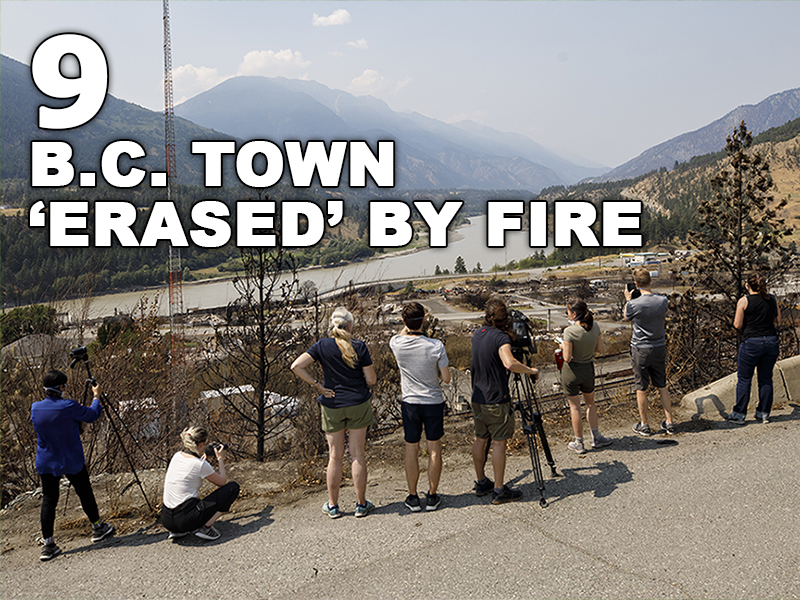
After local temperatures hit 121 degrees in late June and more than 29,000 lightning strikes flashed across the province in a 24-hour period, wildfires consumed Lytton, British Columbia, burning almost every structure in the small town. International media descended (above). Lytton had only about 250 inhabitants, but more than 1,000 people lived in surrounding Indigenous reserves. As reported by CNN, every structure in one settlement largely made up of Nlaka’pamux people was completely wiped out, save for one fireproof home.

MORE: Smoke is alive says new wildfire study

Tim Otten/Oregon State University

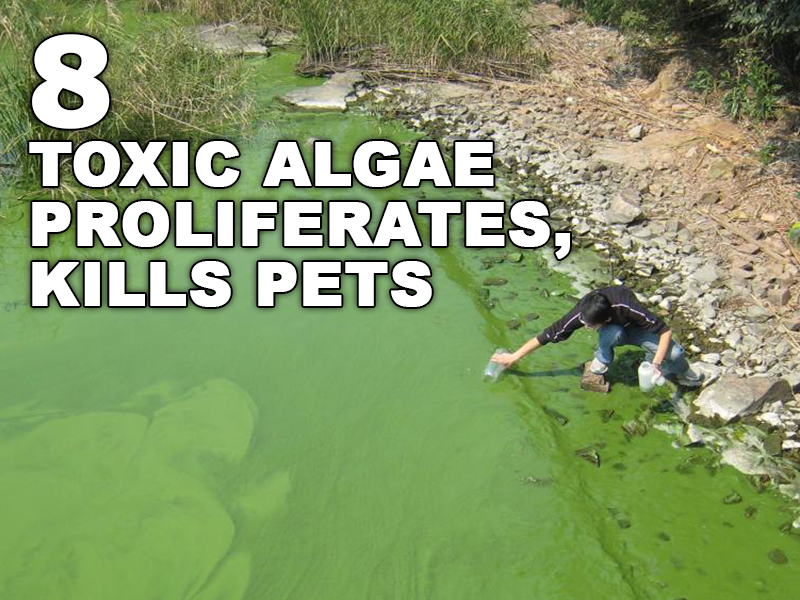
Three dogs died after playing in the Columbia River. Four others died after swimming in a lake in eastern Washington. Idaho closed popular recreation areas. In one of the year’s most bizarre stories, a family and their dog mysteriously died while on a day hike around California’s Merced River. In each case, toxic algae, or HAB (harmful algal blooms), was the suspected culprit. With spiking temperatures, algal blooms can rapidly rise to toxic levels often marked by a green-ish or brown foam. Human exposure to HAB-inhabited water can cause a range of reactions, from allergic responses to liver and kidney damage. Pets are at more severe risk. Though not a new phenomenon, experts believe temperature levels and proportional HAB growth are steadily rising in lakes across the Columbia River Basin.

MORE: HAB is becoming the acronym of the summer. Now it’s Idaho’s turn

U.S. Department of the Interior

In November, the U.S. Senate unanimously (so they can agree on some things) confirmed Chuck F. Sams III as the first Native American director of the National Park Service. A member of the Cayuse and Walla Walla tribes, which are part of the Confederated Tribes of the Umatilla Indian Reservation, Sams was selected for his distinguished career in state and tribal land and resource management and sworn in on Dec. 16 by Pueblo of Laguna tribal member and Secretary of the Interior Deb Haaland. As Walla Walla’s Union-Bulletin reported: “In Indian Country, Chuck Sams’ nomination to the National Park Service director position represents more than a symbolic victory: it’s a chance to substantively change the way the park service works with American Indian tribes.”

MORE: Umatilla Tribes lead the way in reacquisition of treaty lands

KSAT-TV screen grab

Summer came before summer officially began, with May temperatures in the 90s and consecutive days of triple-digit temps stretching across the Pacific Northwest by mid-June. Record high temperatures were shattered when an unusual weather pattern called a “heat dome” descended over the region, making weather news in such traditional summer hot boxes as Texas (above, San Antonio’s KSAT-TV). The heat was blamed for more than 500 deaths in British Columbia, Oregon and Washington. Crops fried on the vine, livestock and poultry perished, recreation areas were closed. On June 29, Portland recorded its all-time high of 116 degrees, its third day in a row setting a new record. Explained National Geographic amid the crisis: “A heat dome is effectively what it sounds like—an area of high pressure that parks over a region like a lid on a pot, trapping heat.”

MORE: Another extreme heat victim: Cherries

Courtesy of F4WM

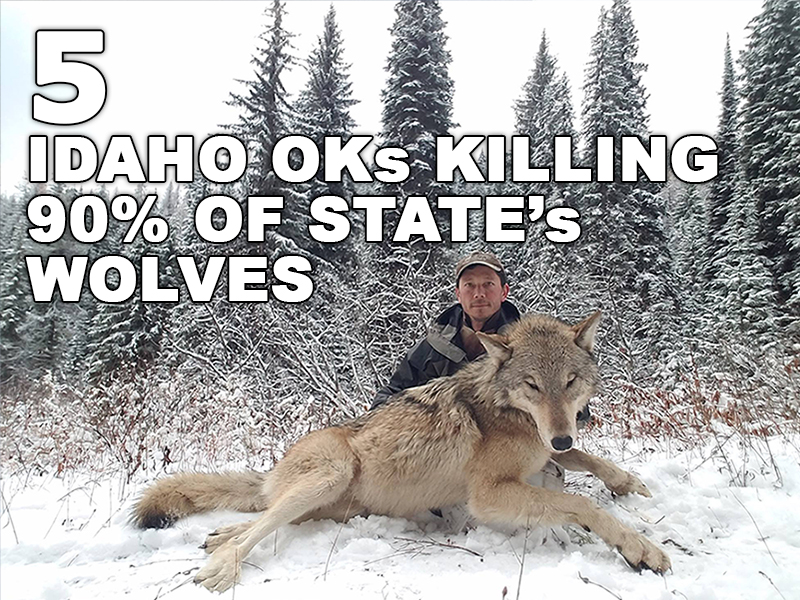
National controversy erupted in May when Idaho Gov. Brad Little signed a law permitting the state to hire contractors to kill up to 90% of Idaho’s wolves. The purpose of the new law is to protect cattle and other agricultural assets. “These wolves, there’s too many in the state of Idaho,” said Republican State Senator Mark Harris. The killing of wolves continued across the Columbia River Basin in the wake of the anti-wolf rhetoric. In December, Oregon’s Department of Fish and Wildlife announced a reward of nearly $50,000 for information leading to an arrest related to the poisoning of all five members of Oregon’s Catherine wolf pack and at least three other wolves earlier in the year.

MORE: It’s a trap! Politics, science collide as Idaho wolf law takes effect

W. Tipton/Flickr

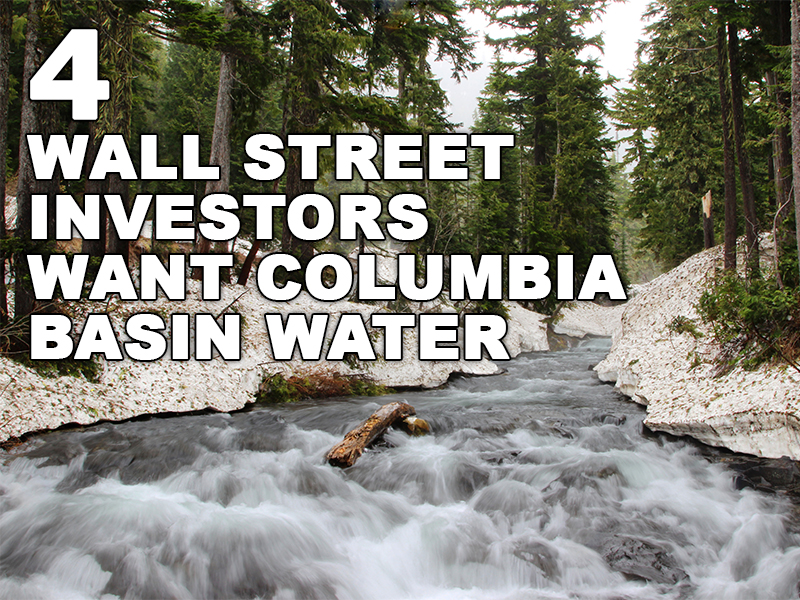
March brought news of an audacious proposal by a Wall Street-affiliated company seeking to acquire private water rights throughout the Columbia River watershed in Washington. “The application from Crown Columbia is being considered by (the state’s) Ecology’s Office of Columbia River (OCR) as a way to ‘streamline access to water supply in the Columbia River Basin’ under a single water rights permit,” reported the Methow Valley News. After substantial public blowback, Ecology suspended the proposal. The brazen attempt to grab water rights nevertheless stoked fears across the region about the ongoing gobbling of land and water rights by deep-pocketed private investors, including Bill Gates and the Church of Latter-day Saints.

MORE: As West withers corporations consolidate land and water rights

Courtesy of Mike Simpson’s office

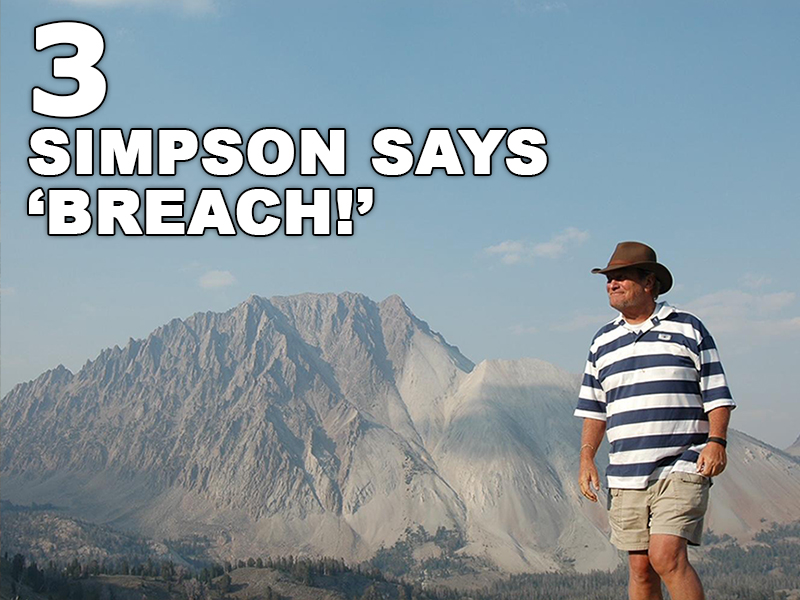
The decades-long fight by environmentalists to breach four dams on the Lower Snake River in order to restore salmon runs got a rocket boost in February when Idaho Republican Congressman Mike Simpson called for breaching the dams as part of his proposed $33 billion Energy & Salmon Concept. Giddy conservationists and liberal politicians including Ore. Gov. Kate Brown lined up in support of the plan. Others, including Wash. Gov. Jay Inslee, rejected it. In May, The Oregonian reported a feud had broken out among GOP lawmakers over the dams. In October, attorney Bryan Smith of Idaho Falls said he’d use the dams to unseat Simpson in their 2022 Republican primary. “I believe that this issue will be the dividing issue that will help me win this race,” Smith told the Idaho Statesman.

MORE: ‘The stars are aligned’: Rep. Mike Simpson breaks down plan to breach Snake River dams

InciWeb

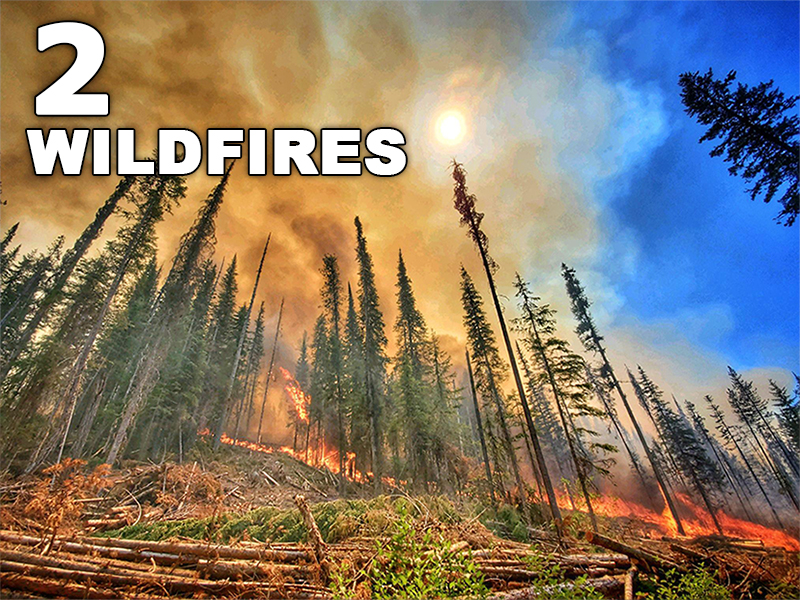
Oregon had the Bootleg Fire. The Red Apple Fire scorched parts of Washington. The Deer Fire burned just east of Boise. It felt odd being on first-name basis with so many fires. But even when you couldn’t remember all the names—nearly 300 burned simultaneously in British Columbia in August—2021 reaffirmed fire season as a 21st-century rite of summer. For a while the Washington town of Winthrop had the poorest air quality in the United States; recreation areas across the region were closed; and evacuations were ordered somewhere in every state (as well as B.C.) in the Columbia River Basin. By mid-August, Northwest Interagency Coordination Center statistics showed the 2021 fire season outpacing even the massive toll exacted by 2020 fires, with Washington and Oregon already having over 20 times more land burned by wildfires than the same time the year before. Final statistics aren’t yet available but no matter what the year’s damage tally wildfires once again made their permanent mark on the region.

MORE: Done fighting: Inside the ‘great exodus’ of wildland firefighters

AP Photo/Nathan Howard

At least 16 Washington counties recorded the driest water year in their history between March and August. “Spring and summer precipitation in Oregon neared the lowest ever level recorded in 127 years of data,” reported Oregon Public Broadcasting. “Meanwhile, high temperatures fueled more evaporation of surface water supplies.” Farmers were hardest hit as reservoirs and irrigation channels ran dry. Faced with record drought in parts of the state, Washington’s winter wheat harvest came in 47% lower than 2020’s yield, and was the worst in at least 30 years, according to the USDA. Idaho’s Magic Valley endured its shortest growing season in seven decades. One of the most severe droughts in the Columbia River Basin’s history is already expected to diminish 2022 harvests. Between June and August, Portland went 51 days without measureable rain. That wasn’t a record but it was a rarity and a spooky indication that even on the “rainy” side of the Cascades water is becoming an ever more precious commodity.

MORE: How a federal program contributed to southern Oregon’s groundwater crisis

With your support Columbia Insight will continue reporting on the most critical environmental issues affecting the Columbia River Basin in 2022.

Chuck Thompson is editor of Columbia Insight.

Appreciate this story? To support environmental journalism on Columbia Insight click here

By |2023-12-22T12:17:48-08:0012/23/2021|News|1 Comment

‘Phenomenal memory’ guides elk to winter sites right on time

In Oregon, a program started in the 1970s to stop elk from ravaging ranchers’ haystacks has turned into a winter tradition—for elk and people who love to see them

Elkhorn Wildlife Area. Image: Baker City Herald

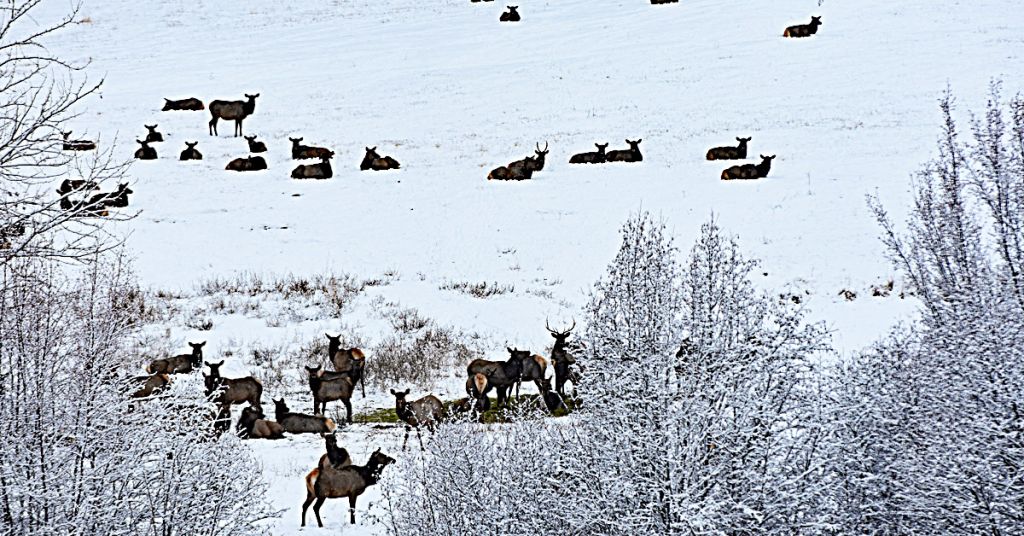
Cold call: Each winter, alfalfa hay draws elk to the Elkhorn Wildlife Area in northeastern Oregon. Image: Baker City Herald

By Jayson Jacoby/Baker City Herald. December 22, 2021. Elk don’t need calendars. Dan Marvin is convinced of that.

He can’t vouch for the animals’ ability to recognize, say, Christmas, Independence Day or any other holiday observed by humans.

But elk certainly know when December arrives.

Some elk, anyway.

Marvin can attest only to the chronological acumen of the elk that congregate each year at the Elkhorn Wildlife Area.

That’s the series of 10 elk-feeding stations in northeastern Oregon, ranging from Old Auburn Lane in the south to Shaw Mountain in Union County, operated by the Oregon Department of Fish and Wildlife (ODFW).

Marvin is starting his fourth winter as the Elkhorn Wildlife Area manager.

The publicly owned portions of the Wildlife Area (some stations are on private land for which ODFW has leases) are closed to public entry on Dec. 1, and remain closed through April 10.

MORE: Elk hoof disease continues to afflict elk populations

Marvin says elk start to show up at some of the feed sites—most notably the meadow along Anthony Creek, west of North Powder—on Dec. 1.

The animals stroll into the meadow even in years, such as the current one, when the fall has been mild, snow is scarce and the elk have no particular need for handouts of alfalfa hay.

“These elk, they know where that feed is,” says Marvin. “They have a phenomenal memory of where they’ve wintered in the past, and they can migrate for many miles overnight to be here at the feed site the next morning.”

Winter meals

Marvin and his crew distribute several hundred tons of alfalfa to elk each winter not because the animals wouldn’t survive without the supplemental feed.

Elk are tough and hardy, capable of digging through deep snow to get at the meager winter forage.

Even a nasty winter, the sort that can kill hundreds of mule deer across northeastern Oregon, typically takes only a minor toll on elk.

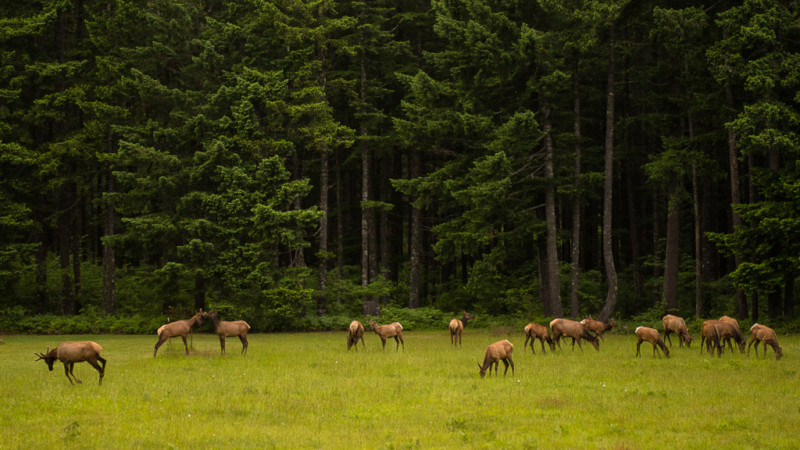
Group decision: Elk are highly sociable, preferring to congregate in herds. Photo: Jurgenhessphotography.com

ODFW started the Elkhorn Wildlife Area in 1971 for a very different purpose—to stop elk from marauding cattle ranchers’ haystacks in the Baker, North Powder and Bowen valleys.

The idea, which has proven largely effective over the past half century, is to set up feeding stations where daily distributions of alfalfa will, in effect, intercept the elk, satisfying their hunger and discouraging them from migrating into the valleys.

During the ensuing decades, Marvin says, the elk have become habituated to these seasonal offerings, their instincts so keen that their arrival, as the calendar turns from November to December, is reliable.

“The cows every year bring their calves here, and they learn, and then they bring their calves,” says Marvin.

1,000 elk

ODFW doesn’t start bucking hay bales here before Dec. 1, early snow or no.

The reason is that the Elkhorn Wildlife Area remains open to the public, including hunters, through Nov. 30. ODFW doesn’t want to, in effect, set up bait stations where elk would congregate.

MORE: Caribou comeback? Canada, Kalispel Tribe keep slim hopes alive

This year, about 150 to 170 elk arrived at the Anthony Creek feeding site Dec. 1, and they’ve been showing up daily since.

Elk numbers have been lower at the other sites.

That’s typical, according to Marvin, even though the Wildlife Area crew set out hay at each of the sites on Dec. 1.

“Peak numbers are usually in January when it’s the coldest and the snow tends to get the deepest,” he says.

During mid-winter, the Wildlife Area crew feeds more than 1,000 elk, including about 500 at the Old Auburn Lane site and 250 or so at Anthony Creek.

Where to see elk

The Auburn and Anthony Creek sites are the two publicly accessible properties with maintained roads where people can park and watch the big herds of elk, which usually include multiple mature, branch-antlered bulls.

To get to the Auburn site, drive south of Baker City on Highway 7 for about seven miles, and turn right on Old Auburn Lane. Follow this gravel road (maintained in winter) for about 3.5 miles where a sign marks the Wildlife Area. The elk are fed on a knoll south of the road.

To reach the Anthony Creek site, from North Powder drive west on River Lane for about 8.5 miles. The elk are fed in a meadow south of the road. You can also reach River Lane via Haines and the Anthony Lakes Highway.

Columbia Insight is publishing this story as part of the AP StoryShare program, which allows newsrooms and publishing partners to republish each other’s stories and photos.

By |2022-01-10T19:02:26-08:0012/22/2021|Uncategorized, Wildlife|0 Comments

© Copyright 2013-2025 Columbia Insight. All Rights Reserved.

As a 501(c)3 nonprofit organization, all donations to Columbia Insight are tax deductible to the full extent of the law. Our nonprofit federal tax-exempt number is 82-4504894.