Stay Updated Subscribe today for the latest research + reporting about environmental news. Subscribe Now

Stay Updated Subscribe today for the latest research + reporting about environmental news.

Subscribe Now

Chuck Thompson

Chuck Thompson

Chuck Thompson

About Chuck Thompson

Chuck Thompson is editor of Columbia Insight.

The hatchery crutch: How we got here

From their beginnings in the late 19th century, salmon hatcheries have gone from cure to Band-Aid to crutch. Now, we can't live without manufactured fish
Use with Hakai reprint only

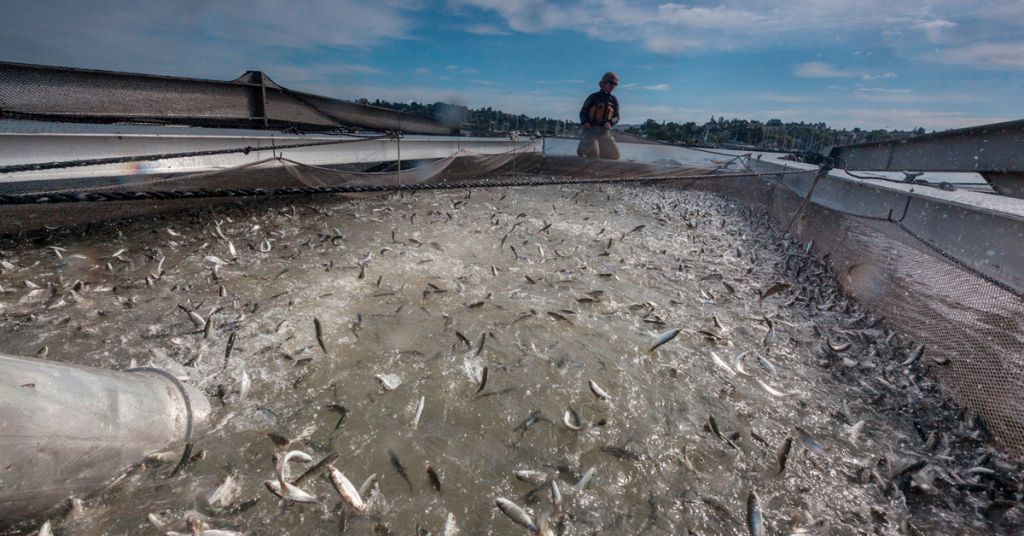
Hatchery chinook salmon smolts released into a net. Photo: Cavan Images/Alamy Stock Photo

This story was originally published in Hakai Magazine and is reprinted here with permission. Visit their website to read three other stories in the series, "The Paradox of Salmon Hatcheries."

By Jude Isabella, June 9, 2022. Writer and fly fisher Roderick Haig-Brown dreamed of a time when the North Pacific Ocean would grow a lot more salmon.

Haig-Brown was probably the most famous and influential fly fisher in North America during his lifetime.

The author wrote from his home on the banks of Campbell River on Vancouver Island, British Columbia. He sat at a desk with a view of the river, far from where the arbiters of great writing resided at the time. The New Yorker regularly reviewed his books (always favorably) and in 1976, the New York Times reported on his death.

From the 1930s to the 1970s, Haig-Brown led readers into the realm of Pacific salmon: chinook, sockeye, coho, chum and pink.

In his 1941 book, Return to the River, a lyrical story about one fish that moved a critic to call the author an immortal in the field of nature writing, Haig-Brown dug into the soul of a fish. He created a world from a wild chinook salmon's point of view, allowing the reader to tag along on the cyclical path of a fish named Spring, from birth to death in an Oregon stream.

Her life story is both wondrous and harrowing. Spring's journey reflected all that Haig-Brown fretted about over 80 years ago: logging that decimated streams, dams that blocked rivers and development that buried creeks.

MORE: 140 miles: The Snake River dams stranglehold

He fretted about hatchery fish, too.

Haig-Brown clearly understood salmon and what they needed to thrive. They needed habitat, not hatcheries. And yet Haig-Brown, like many in the Pacific Northwest, also wished for more fish.

Sometimes we get what we wish for, but we don't get what we want or need.

Today, wild salmon populations are struggling in the Pacific Northwest of North America. And yet, there are more salmon in the North Pacific Ocean than there were a century ago—more than when Haig-Brown wrote in his 1964 book Fisherman's Fall that he was "optimistic enough to believe that the North Pacific Ocean can grow a lot more salmon than are using it right now; and I hope I shall live long enough to see its capacity become a question of immediate moment."

The capacity of the ocean is a question of immediate concern.

There are at least 243 hatcheries strung along salmon habitat from California to Alaska and more feeding fish into the North Pacific via hatcheries in Russia, Japan and South Korea. Cannery operators in Oregon built the first salmon hatchery on the West Coast to supplement their catches in the late 19th century.

Annually, since 1988, the five salmon-producing countries release over 5 billion hatchery salmon.

Most hatcheries are industrial affairs. Eggs and sperm come together in white plastic buckets and fry are released after some months of growth. With streams so degraded—more like tenements than habitat, crowded with juvenile wild and hatchery fish, living fin to fin, competing for food and ripe for diseases and parasites—some hatcheries avoid problem environments by trucking their juvenile salmon to better release sites.

Hatchery fish also diminish the genetic robustness of wild salmon when, later in their lives, they enter spawning grounds and interbreed.

And, like boats, hatchery fish are money pits. How much a hatchery salmon costs varies per hatchery, but 20 years ago, a researcher calculated that to keep salmon swimming in the Columbia and Snake River basins in Oregon, Washington and Idaho, the price tag was $400 per fish.

By the time Haig-Brown published his first book in 1931, the science had already aligned against fish hatcheries.

In his writings, Haig-Brown shared a vision for restoring and protecting salmon habitat, instead of relying on hatchery fish—how did we get so far from his ideals? At first, it was mainly politics and blind faith in technology.

Today, the reliance on hatcheries is a combination of politics, law and desperation.

Playing God with fish

Almost a century ago, a Canadian scientist revealed that hatcheries were at best failed experiments, and at worst monuments to delusional thinking.

In the early 1920s, fisheries biologist Russell Earl Foerster arrived at Cultus Lake, which drains into the lower Fraser River in British Columbia, to run a salmon hatchery built by the province 10 years earlier. He floated the idea of establishing a research station as well.

Foerster had a few questions, including whether raising fish in hatcheries worked: were the wild runs of salmon at Cultus less or more productive compared with the hatchery fish raised at a creek downstream of the lake?

Without any evidence that playing God with fish was a good idea, hatcheries had proliferated across the Pacific Northwest after the U.S. government built the first national hatchery in 1872 in California. Canada built its first West Coast hatchery in 1884.

Salmon runs were already diminishing, but there was no political will to protect or restore habitat: fisheries managers declared artificial spawning the price of progress, an economic journey measured in dollars, mostly benefiting the few who ran timber companies, mining operations and canneries.

When the University of Washington (UW) launched a fisheries department in 1919, students studied canning technology and fishing methods. It took 10 years for the focus to switch to biology and conservation.
Hakai magazine reprint only

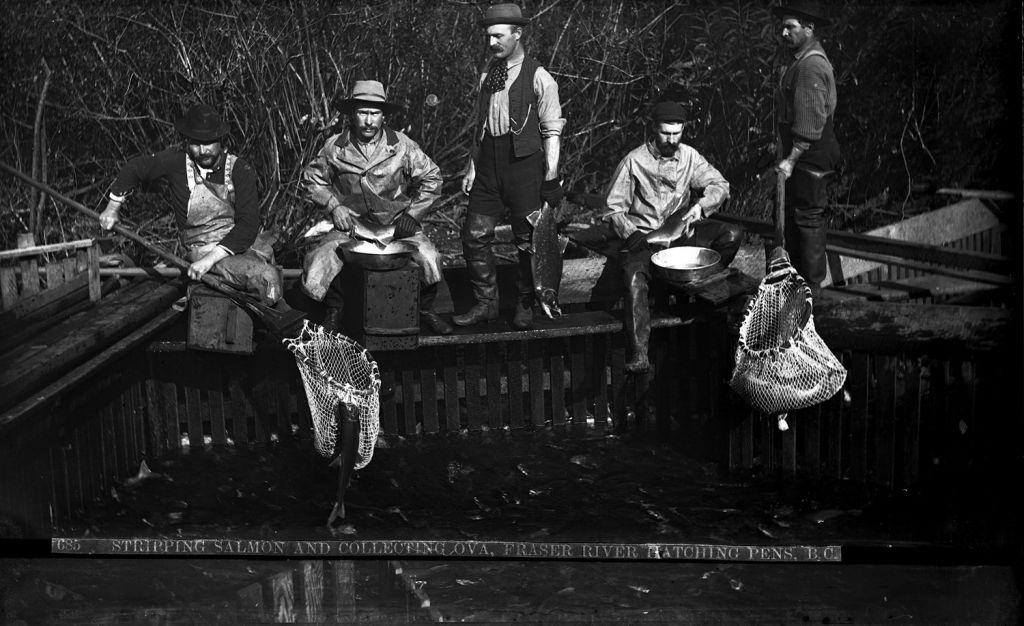
An early hatchery on the Fraser River in British Columbia sent out workers to strip salmon of eggs and sperm without thought to how salmon populations evolved in particular streams. Photo: Bailey Bros. Photography/Vancouver Public Library 19960

Spring, the chinook at the center of Return to the River, ran a gauntlet of development for almost 500 kilometers that her ancestors had not, Haig-Brown wrote: "There were poisons in it and obstructions across it and false ways leading from it." She is terrified when a spillway tosses her to the base of a dam. As she swims past Vancouver, Wash., and Portland, the Columbia River is a nasty stew containing the foulest of ingredients—sewage and industrial waste—but the strongest fish make it: "Overburdened with death and decay there was still in it enough life to support their brief passage," Haig-Brown wrote.

Salmon Nation, the Pacific Northwest region that Indigenous communities had successfully managed for thousands of years by understanding what salmon, and in turn humans, need to thrive—a home—became a giant experimental lab. Playing around with salmon ruled the day.

At Cultus Lake, researchers tested hybridization between salmon species, they transplanted eggs far from natal streams and they experimented with fish feed for hatchery fry. When beef liver became too expensive as feed, researchers compared salmon offal, canned salmon and halibut meal. Nothing was nearly as good as beef liver, and halibut meal produced the smallest fish, if it didn't outright kill them.

MORE: Thermal hopscotch: How Columbia River salmon are adapting to climate change

Foerster's 12-year experiment comparing hatchery sockeye and wild runs became a classic in the field of salmon research. He showed for the first time—in a published scientific paper, the language of newcomers to the land—that in the early stages of salmon development, most fish die.

As eggs hidden beneath gravel, salmon are vulnerable to the fish, raccoons and ducks that find them. As alevin with yolk sacs still attached to their bodies, flies and other small creatures eat them. As fry, salmon can escape some predators, but they're still food for great blue herons, bigger fish and other hungry animals.

Foerster also found that artificially fertilized eggs hatched at higher rates than naturally fertilized eggs. And he determined that when hatchery managers incubate and release fry, juvenile salmon flood a stream. More fish!

There was, however, a very big but: hatchery-raised fish were no better at returning from the ocean. Over the years, we've come to know hatchery salmon often lack the skills to navigate life the way Spring does, learning life lessons like what to eat—not all tiny things in the water are edible—and that a dark head against a light sky could be a killer.

The early advantage for hatchery fish, Foerster showed, failed to hold. What, then, was the point of spending money on artificially raising and feeding salmon?

[perfectpullquote align="full" bordertop="false" cite="" link="" color="" class="" size=""]Salmon hatcheries are the sum of poor choices made over 150 years by fisheries managers, often having no idea what they didn't know about salmon, habitat and the ocean.[/perfectpullquote]

When Haig-Brown was writing Return to the River at his desk in longhand, the hatcheries he worried about were in the United States. During Spring's return journey, when she and her cohort are so close to their home stream they can smell it, a wooden rack strung across the river blocks the salmon—fisheries managers plan to strip them of eggs and sperm for a new hatchery.

The fish are restless: "Once more, for the twentieth time or the fiftieth time, Spring came up to the rack. She worked along with less patience now, turning away from it, turning sharply back, rolling heavily in the strong current so that her back showed and went down before the quickening movement of her tail."

By 1934, understanding that running a hatchery was about the same as tossing cash directly into the ocean, the bureaucratic precursor to Fisheries and Oceans Canada (DFO) decided against them. In 1937, Canada's federally run hatcheries closed. Fisheries scientists in Alaska confirmed Foerster's findings and Alaska hatcheries closed, too.

In the book Making Salmon, historian Joseph Taylor points out that closing the hatcheries was a victory for fiscal restraint that masqueraded as a triumph for science.

Foerster presented his work at a 1929 fisheries conference in Seattle. As the Depression deepened and government budgets shrank, so did enthusiasm for hatcheries, but it was a lot easier to close them where spawning habitat remained relatively intact, in British Columbia and Alaska.
Hakai Magazine reprint use ONLY

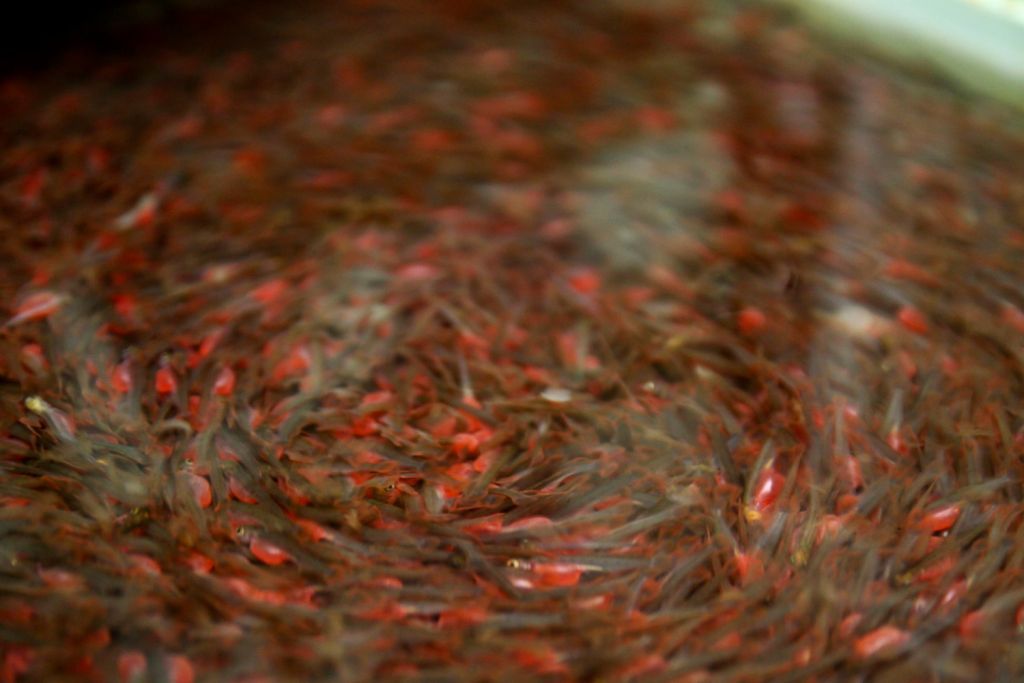
Salmon fry emerging from their eggs. Photo: Stock Connection Blue/Alamy Stock Photo

Farther south, a mishmash of jurisdictions, a cozy relationship with industry and a larger population clamoring for more development and more hydroelectric power cemented hatcheries as the fisheries policy of choice.

It's not that British Columbia has no dams, but there are fewer than in the U.S. Northwest.

In the 1950s, Haig-Brown led a commission that studied the environmental effects of building a dam just over 300 kilometers from the mouth of the Fraser River in British Columbia. To build a dam, he wrote, "was a betrayal of salmon and their meaning," that the fish's value was far more than economic, and preserving the salmon was "an act of faith in the future." The dam project died.

Taylor, a fisherman turned academic, teaches history at Simon Fraser University in British Columbia. Early on, he says, hatcheries were simply a political panacea.

"Fish culture emerged as a default solution to a problem around the politics of land use," Taylor says. "That's really the story."

But by the 1960s, hatcheries had stuck around long enough for managers to be lulled into thinking technological improvements—new drugs to control disease, better feed—would make the next wave of hatcheries the best thing in fisheries since the invention of the boat engine. But really, it's more like a stubborn belief that salvation lies in technology, and that trumped good old-fashioned conservation.

The hatchery gamble

Haig-Brown always insisted that streams needed protection, but he also felt the siren call of technology and its promise of problem-solving.

In Return to the River, the main human character, the Senator, believes the fisheries biologists he meets: "these white-coated young men were the symbol of America's salvation."

By the time Haig-Brown updated an edition of Fisherman's Fall in 1975, the annual catch in most salmon-fishing countries was dropping again.

"I am convinced that the only thing that can restore the sport to its former splendor is more fish, and I am equally convinced that it is perfectly possible to have more fish," he wrote. If better technology could produce more fish, he was in.

In 1974, Peter Larkin, the first provincial fisheries biologist in British Columbia, wrote an influential essay, "Play It Again, Sam—An Essay on Salmon Enhancement," that's equal parts enthusiastic and skeptical. Larkin spells out the foibles humans might bring to hatcheries and other means of boosting fish populations: the lack of continuity in research, the lack of true experimentation and muddy goals.

But, as Larkin noted, "Politically, salmon enhancement is a 'natural.'" The other option was to cut the fishery.

Larkin called salmon enhancement a gamble, but one worth taking.

MORE: Salmon are no longer kings of the Columbia. That has biologists worried

Canada reversed its earlier decision and gambled that technology could restore populations and double the annual commercial catch by 2005, launching the Salmonid Enhancement Program (SEP) in 1977. They funded hatcheries and spawning channels and fertilized lakes and streams to promote the growth of fish food.

In the early 1980s, the University of British Columbia hired Ray Hilborn, today a well-known fisheries scientist at UW, with funding provided by the SEP.

"It was a total failure," Hilborn says of the program. The catch went down. "It did nothing to improve Canadian fisheries," he says, though he adds that it's tough to say what would have happened without the program.

Still, by 2005, the commercial catch had almost halved from 1970s levels, at 31,811 tons, or 54.6% of the average. By 2019, the catch was 3,423 tons, or about 5% of the catch 42 years before.
Salmon hatchery

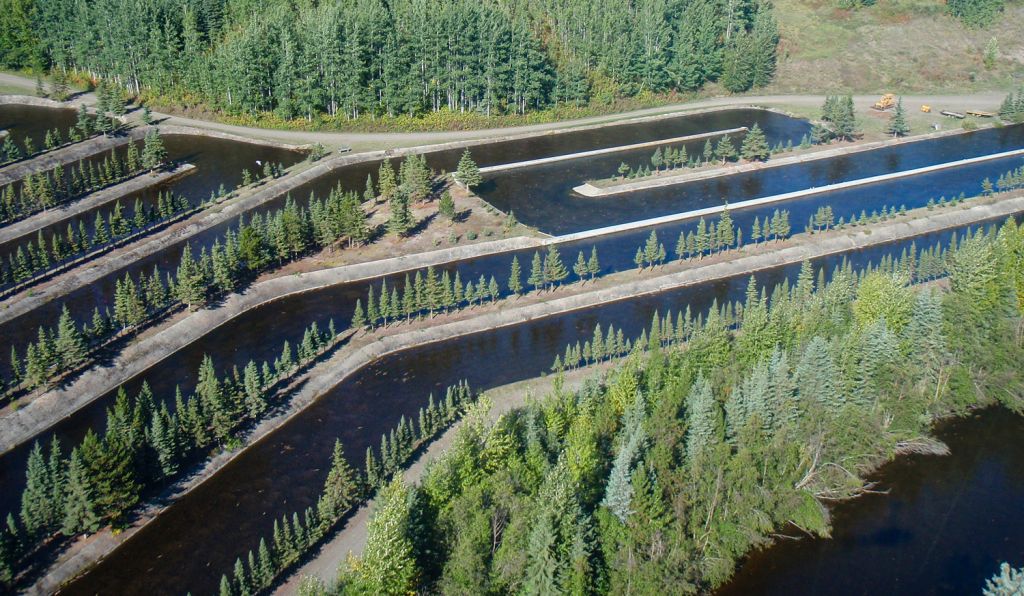
With artificial spawning channels—a form of salmon enhancement—water flow and depth can be controlled to create ideal spawning conditions and boost juvenile survival. But by inflating a single population over others, artificial spawning channels can lead to lower salmon diversity in a watershed. Photo: Donna MacIntyre/Lake Babine Nation

Alaska, like British Columbia, revisited its hatchery policy in the 1970s amid salmon declines, and officials there also decided the time had come to invest in salmon enhancement.

In Washington, already dotted with hatcheries, a year after the SEP launched, the state began its own program to double the salmon harvest through hatcheries. Runs were on the decline, and again, reducing fishing pressure is never popular even if it's the right thing to do.

Plus, a series of court rulings that gave Indigenous communities back their rights to fish apparently panicked fisheries managers: the state poured $30 million into tribal programs over more than 10 years. Tribes built their own hatcheries to guarantee access—enshrined in treaties and through the law courts—to salmon. These hatcheries keep alive Indigenous cultural practices.

Larkin wisely surmised that the rush to build hatcheries and other enhancements was swept in on a prevailing mood of optimism that this time things would be different.

"In one blow, two problems could be solved," Larkin wrote in 1979, "how to find enough fish to occupy the fleet, and how to compensate for the loss of salmon habitat."

Larkin's advice, to avoid past mistakes, was often disregarded. As Hilborn notes today, and in many papers in the past, ideas around monitoring outcomes and specifying clear, measurable goals fail to stick when it comes to many hatcheries and other salmon enhancements.

By 1994, an economist concluded that the economic costs of the SEP would exceed the benefits by CAN $600 million.

As Haig-Brown hoped, more fish swim the ocean, but they're not evenly distributed geographically.

Overall, salmon catches increased between the 1970s and 2010s—Russia's total catch increased by 4.9 times, and the U.S. catch, mostly in Alaska, went up 2.6 times. In Japan and British Columbia, catches decreased, whether fishers were harvesting wild or hatchery salmon—in fact, Japan's catch is almost entirely hatchery chum salmon.

The Canadian catch from 2019 to 2021 looks to be only 6.1% of the 1970s average.

Nor is the wealth of fish evenly distributed across species. In a 2018 study, fisheries scientist Greg Ruggerone and DFO scientist Jim Irvine shocked those who pay attention to salmon with the fact that the North Pacific hosted more salmon in 2015 than in 1925, when Foerster was at Cultus Lake.

"But the problem was, nearly 70% of those fish were pink salmon," Ruggerone says. In 2018 and 2019, more pinks returned to spawn than any year the scientists studied. "It was just phenomenal," he says.

And troublesome for other salmon species.

Over a 15-year time frame, Ruggerone and his colleagues found that hatchery chinook from the Salish Sea in Washington saw a 60% reduction in survival in the years they compete for food with the odd-year pinks.

"It's quite dramatic," he says.

Manufactured pinks are duking it out in the ocean with wild fish—and competing with other hatchery fish that may have a better reason for being there.

Conservation hatcheries sometimes offer the last hope for particular runs of fish: for instance, Russian River coho in Northern California, Snake River fall chinook in Idaho and Okanagan River sockeye in British Columbia. Those conservation efforts—paying attention to genetics, using locally adapted broodstock, raising juveniles in enriched environments, among others—are paying off, though barely for Russian River coho.

A whiff of desperation haunts hatcheries.

International cooperation missing

A strong whiff of nostalgia haunts Return to the River.

In 1941, Haig-Brown knew he was witnessing a fundamental change to the environment and the fishery. The Senator is, like the author, a fly fisherman and an adept naturalist who watches salmon probably more often than he catches them.

But like so many, the Senator acquiesced to "progress."

"For one more year they would spawn as they were meant to spawn, and fry and fingerlings would grow from their spawning as they were meant to grow, from the natural abundance of the river," Haig-Brown wrote. "And the rack might go out again or they might decide against using it another year. He played with his hopes, but he felt in his heart he was seeing the end of it, the last natural spawning of the chinooks that belonged to his river."

Here we are today, 80 years later, with an upended environment and with a grim duty to look around, take our bearings and say, "Well, where do we go from here?"

As Larkin wrote, clear goals are important. More fish, however, proved a simplistic, problematic and greedy goal.

Hatcheries are not cures for what ails Salmon Nation—they are interventions that, if used judiciously, may offer life support to a few patients. Sunsetting hatcheries because wild fish are thriving would be the ultimate success story.

Subscribe to newsletter.

To restore salmon populations requires a thoughtful, long-term vision. Habitat restoration is key, and in some instances a conservation hatchery that keeps distinct salmon populations alive during the long process of undoing extensive damage to watersheds.

Also, across the board, policies that separate hatchery fish and wild fish could give the fish more breathing room in their habitats.

"It's feasible," Hilborn says. "You can move the run timing of a hatchery stock quite readily; it doesn't take much selection to get them to come earlier or make them come later."

To cleave apart wild from hatchery fish, and the different populations, would mean a fundamental shift in the style of commercial fishing, moving toward terminal fisheries, in which weirs or traps, rather than hooks and nets, catch fish in the river on their way home to spawn.

Once standard practice from Alaska to Northern California and in Japan and Russia, weirs allow for more targeted fishing. On the lower Klamath River in Oregon and California, for instance, Indigenous managers erected a weir for 10 days during peak chinook migration, leaving it open at night to allow migration upriver to spawning grounds and to other communities.

With weirs, fishers can aim for hatchery fish, identifiable by a clipped adipose fin. An experimental fish trap near the mouth of the Columbia River in Oregon is a new take on the old technology, guiding fish into a trap where they can swim freely, and fishers can select which fish to harvest.
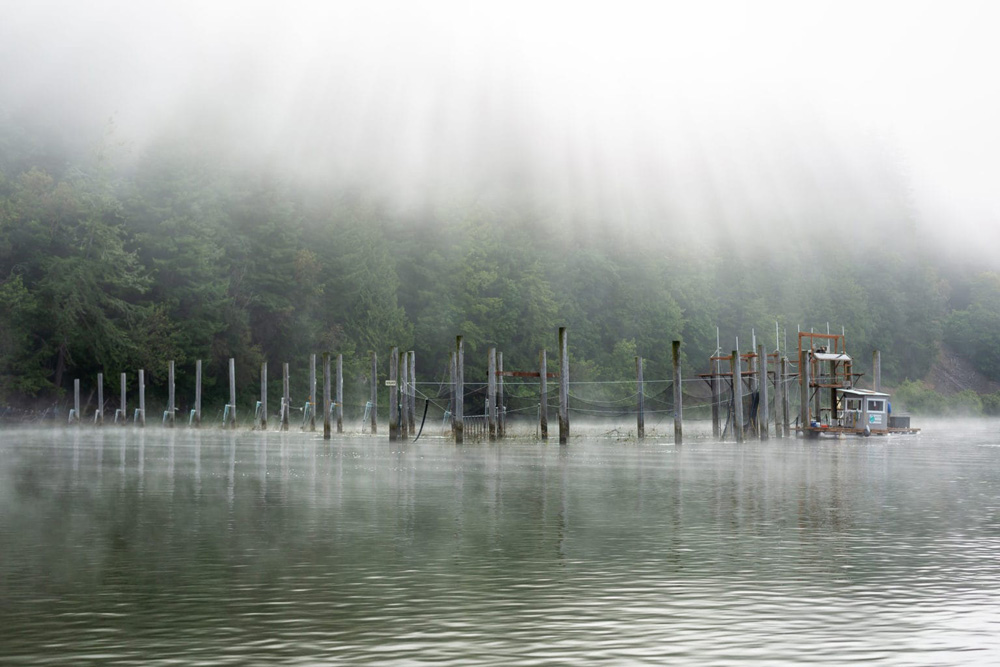
Image from Hakai

Salmon weirs and traps allow for more selective fishing, giving fishers the opportunity to separate wild fish from hatchery fish. Photo: Aaron Jorgenson/Wild Fish Conservancy

A weir could also help separate vulnerable wild salmon populations from the healthy ones, once a genetic baseline is established.

"You could do real-time DNA testing, that technology is available," says Michael Price, who studies salmon on the Skeena River on British Columbia's north coast. "I know this is a difficult thing to say, because you don't ever want to necessarily trade one livelihood for another, but if you move more of that fishery into the river, you still have commercial fisheries but they're more selective."

The Lax Kw'alaams Band has proposed fitting a fish trap on the Skeena River, where an abundance of hatcheries and artificial spawning channels has led to lower salmon diversity. Roughly 70% of the sockeye heading home come from one of those enhancements.

As Hilborn points out: none of those solutions addresses the disease or competition issues. Nor can anyone control the ocean.

But managers can control hatchery fish.

Right now, there is no shared vision across the five countries on the role of hatchery fish. Randall Peterman, a fisheries scientist and professor emeritus at Simon Fraser University, has called for international cooperation since the early 1980s.

Almost 40 years ago, Peterman and his colleagues had already noted the competition between salmon populations in the ocean. BC sockeye came back smaller and less abundant in years when the Bristol Bay, Alaska, sockeye were abundant. Any efforts at enhancing sockeye populations were a classic case of the law of diminishing returns—the effort and money sunk into enhancement did not translate into consistently more fish.

"And there have been numerous papers documenting that international linkage since then," Peterman says. "So this is not a country-specific problem. It's an international problem."

Only in the past couple of decades has salmon research focused on the ocean, now more unpredictable with climate change. Salmon are definitely responding to warming waters: pinks are having their day in the sun, while chinook and coho populations sputter along.

"The fundamental problem with chinook and coho is ocean survival," Hilborn says. "You won't solve that through stream restoration."
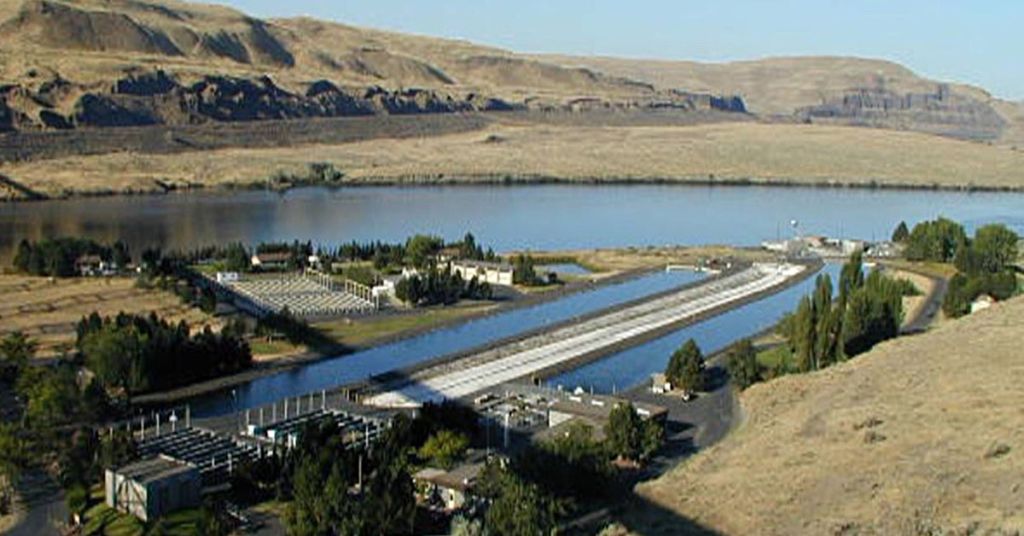
Lyons Ferry Fish Hatchery credit WDFW

Lyons Ferry Fish Hatchery in Washington was built in 1982 by the U.S. Army Corps of Engineers. Salmon hatcheries across the Pacific Rim release billions of pink salmon into the ocean ecosystem every year. Photo: WDFW

It seems logical that easing the burden on wild fish would interest all salmon nations.

"We need to be thinking in those terms," Peterman says. "You can't continue to pump out fish into a common pasture, the ocean, and expect continuous commensurate benefits."

Back in 1984, Peterman proposed a way to keep track of hatchery fish: create an international body to monitor and coordinate salmon enhancement, funded by a tax on each juvenile salmon released. Countries pumping out the most fish would bear most of the cost.

Today, Peterman muses about a cap and trade system, similar to the one used by British Columbia to control carbon emissions.

All five countries belong to the North Pacific Anadromous Fish Commission (NPAFC). That organization, however, has no authority to regulate hatcheries, says president Doug Mecum.

The NPAFC enforces a drift-net ban and shares information on production and survival trends of salmon among members. Fundamentally, each country is responsible for and has authority over their own programs, Mecum says.

"Ideally the different parties would come together in a forum on some sort of ongoing basis and say, 'Well, how are things going for your program and … for your program?'" he says. "'And have you thought about this, and have you thought about that, and can we have a conversation around that?' It sounds great, but I don't know how you would do it."

Plus, some scientists remain skeptical that ocean capacity is a problem.

Salmon hatcheries are the sum of poor choices made over 150 years by fisheries managers, often having no idea what they didn't know about salmon, habitat and the ocean. Magical thinking is no substitute for humility.

Even Larkin, when making a case for salmon enhancement, wrote: "but natural systems being what they are, there is always a good chance that our best efforts will turn out to do more harm than good."

The number of hatchery fish outmuscling wild in the North Pacific is not catastrophic. Not yet. The proportion of pink hatchery salmon, for example, is only 15% of the total pinks in the North Pacific, but what if that percentage grows?

Fisheries managers have faced political pressures and economic pressures countless times in the past.

"Managers don't act soon enough, the crisis is upon them. And then finally they act, but it's often too late," Peterman says. "Here's a case where we can get in sooner than usual. We just need to get ahead of this one."

If history is a guidebook, getting ahead of a crisis seems damn near impossible.

In his beloved classic from 1946, A River Never Sleeps, Haig-Brown wrote, "The salmon runs, more surely and easily than almost any other resource, can be made to last and serve indefinitely, can even be grown back to, or beyond, their full glory."

Will we let them?

This story was originally published in Hakai Magazine and is reprinted here with permission. Visit their website to read three other stories in the series, "The Paradox of Salmon Hatcheries."

Hakai magazine logo June 2022

By |2023-04-19T11:05:35-07:0006/09/2022|Salmon|1 Comment

FAA indicates ban coming on leaded gas for small planes

Piston-engine aircraft are the largest sources of leaded airborne emissions. Government agencies may finally be ready to address a growing health hazard

Flying through a loophole: Unlike automobiles, small aircraft still rely on leaded fuel. Photo: Jurgenhessphotography

By Farron Brougher, May 26, 2022. Earlier this year, the Environmental Protection Agency issued a statement that many felt was long overdue.

In January, the federal agency announced it would “evaluate whether emissions from piston-engine aircraft operating on leaded fuel contribute to air pollution that endangers public health and welfare.”

The EPA said it would issue a proposed “endangerment finding” for piston-engine aircraft that run on leaded fuel. The public review and comment process will take place in 2022 and final action will be taken in 2023.

The decision was more than a decade in the making.

In 2012, Friends of the Earth and Earthjustice filed a lawsuit against the EPA, challenging the agency’s failure to respond to a 2006 petition from Friends of the Earth asking for the regulation of lead emissions from general aviation aircraft under the Clean Air Act. In 2014, the same groups, along with Oregon Aviation Watch, a public advocacy group based in Hillsboro, petitioned the EPA to make an immediate endangerment finding.

The agency denied the petition.

While levels of airborne lead in the United States have declined 99% since 1980, according to the EPA, small, piston-engine aircraft that still operate on leaded fuel are the largest remaining source of lead emissions into the air.

“Protecting children’s health and reducing lead exposure are interlocking priorities at the core of EPA’s agenda,” said EPA Administrator Michael S. Regan in the January statement. “EPA has been investigating the air quality impact of lead emissions from piston-engine aircraft near airports for years, and now we’re going to apply that information to determine whether this pollution endangers human health and welfare.”

The agency finally appears ready to do something about leaded aviation fuel, or “avgas.”

Questions remain. What does a realistic solution look like? And when will it come?

Small planes loophole

Lead as a toxic byproduct of burning gasoline in engines isn’t news.

In 1970, the EPA worked with the U.S. Congress to pass the Clean Air Act, which initiated a phase out of leaded gasoline for automobiles that concluded in 1995.

But piston-engine airplanes (along with some farm machinery and heavy equipment) have been exempt from lead restrictions since 1996.

Small plane

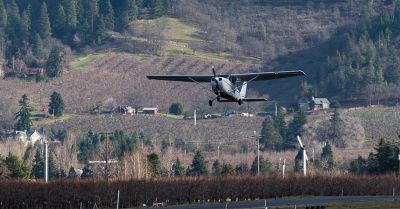
Public health issue: The EPA has been studying the environmental impact of small planes, like this one taking off in Hood River, Ore. Photo: Jurgenhessphotography

The primary reason is safety.

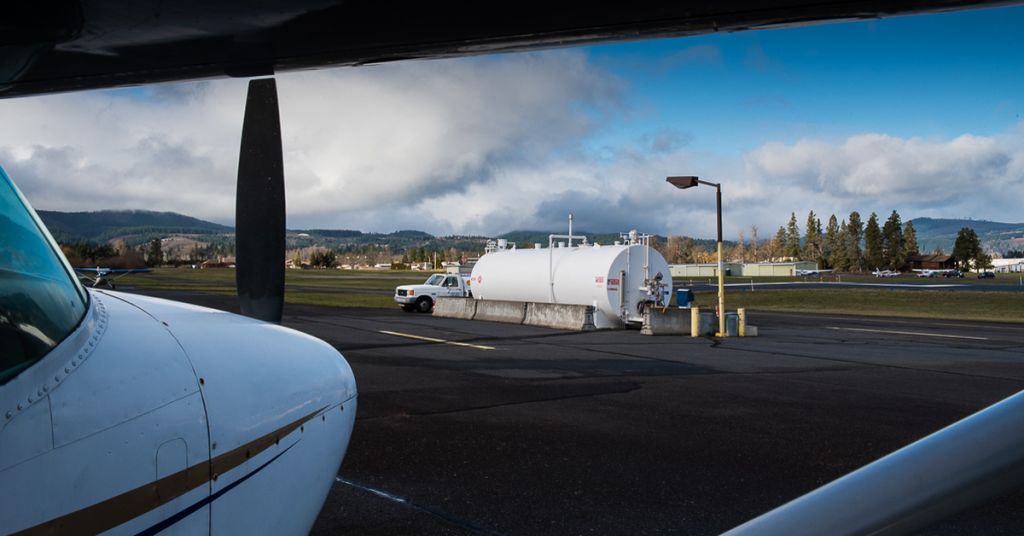
Tetraethyl lead is a heavy metal compound that’s added to avgas to prevent premature detonation or knocking. Aircraft engines must avoid knocking or risk sudden, catastrophic failure. Unlike car drivers, pilots can’t pull onto the shoulder and call for help when their engines fail.

There are about 170,000 piston-engine, general aviation (civilian) aircraft in the United States. (Among states, Washington and Oregon rank 4th and 14th, respectively in the number of registered general aviation aircraft.) Most of these burn 100-octane low lead gasoline, commonly known as 100LL.

In February, the Federal Aviation Administration announced its new EAGLE (Eliminate Aviation Gasoline Lead Emissions) initiative, a plan that details the elimination of leaded aviation fuel by the end of 2030.

Getting unleaded avgas to market

Oklahoma-based General Aviation Modifications, Inc. (GAMI) is currently the only commercially viable producer of 100-octane unleaded avgas, which it plans to distribute under the name G100UL.

In a telephone interview with Columbia Insight, Timothy Roehl, GAMI president and patent holder on G100UL, outlined the difficulties in bringing unleaded avgas to the market by 2030.

The company must first obtain a “Supplemental Type Certificate” approval from the FAA. The certificate grants permission to an applicant to modify an aeronautical product from its original design.

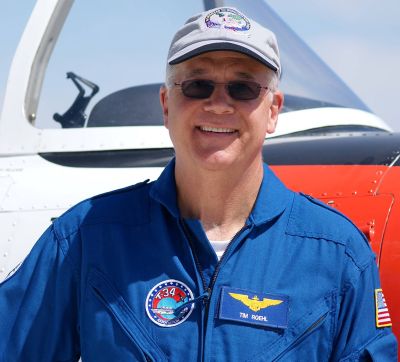
Timothy Roehl

Getting the lead out: Timothy Roehl. Photo: GAMI

Roehl hopes general aviation aircraft in the United States will be certified to burn G100UL before the end of 2022.

Cost, however, is another obstacle.

“GAMI and its licensed producers’ cost to make G100LL will be 50 to 60 cents higher per gallon than 100 low lead fuel,” he said. “But that’s offset by longer times between engine overhauls and also longer intervals between oil changes.”

More time between engine maintenance is a byproduct of burning lead-free avgas.

This sounds promising, but GAMI has already experienced lengthy and unexplained delays in obtaining government approvals for its products. Why?

“Politics. Follow the money,” said Roehl, referencing to the lobbying power of major refiners of leded avgas.

He’s not the only one wary of a political derailment.

“One of the concerns we have is how can we finalize [a ban on leaded avgas] under the Biden administration. What’s to stop a new administration from once again postponing and delaying on these issues?” says Miki Barnes, founder and president of Oregon Aviation Watch. “Even once it’s finalized there are groups that can delay this, and that includes the aviation industry organizations that want to continue using leaded fuel.

“Big lobbyists pump a lot of money into the pockets of political people. Oregon (Congress members) Peter DeFazio, Ron Wyden, Jeff Merkley, Suzanne Bonamici, Kurt Shrader, all of these people are recipients of money from general aviation lobbyist organizations. All of those members are on the Congressional General Aviation Caucus. Not one has spoken out about eliminating leaded aviation fuel.”

How bad is the problem?

As previously reported by Columbia Insight, while general aviation is a small part of overall aviation, it’s a significant source of local lead exposure.

A 2011 study reported that about 16 million Americans lived within 1 kilometer of a general aviation airport, and 3 million children attended school within that perimeter.

The closer the residence to the airport, the higher the blood lead levels in the children living there. Airport lead levels have been measured at more than four times the concentrations found in the general environment.

Exposure to high levels of lead may cause anemia, weakness and kidney and brain damage. Very high lead exposure can cause death. Generally, lead affects children more than it does adults.

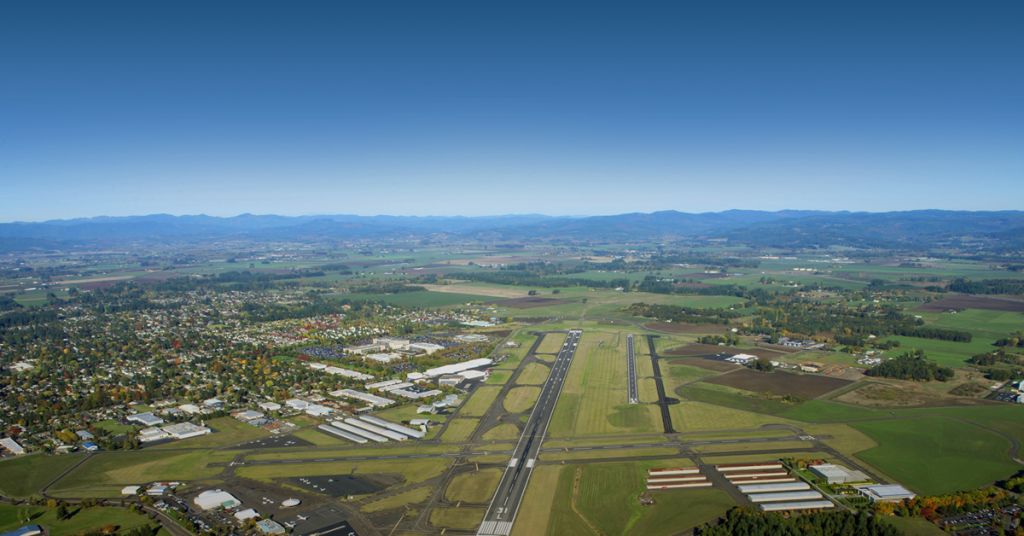
Hillsboro Airport is Oregon's largest emitter of airborne lead.

Top emitter: Home to 25 businesses, including aircraft operation facilities for Intel and Nike, Hillsboro Airport is Oregon’s second busiest airport. Photo: Port of Portland

The most significant sources of airborne lead in Oregon and Washington are airports. According to Oregon Aviation Watch, Hillsboro Airport is Oregon’s top emitter of airborne lead—in 2016 it released nearly twice the emissions measured at Portland International Airport.

According to Barnes, the Hillsboro Aero Academy training program, which trains pilots from more than 75 countries, is a major contributor to airborne lead.

VIDEO: Airplane raised from the Columbia River

In March, the attorneys general of 18 states, including Oregon, sent a letter to the EPA “Concerning EPA’s Draft Strategy to Reduce Lead Exposures and Disparities in U.S. Communities.”

“The most recent emissions data from EPA show that these planes [piston-engine aircraft] released more than 930,000 pounds of lead into the atmosphere in 2017, and emissions from the general aviation sector are expected to increase in the coming years,” read the letter. “The Federal Aviation Administration predicts sector emissions will reach 1.5 million pounds per year by 2025—a 66% increase in emissions from 2017.”

Though the EPA seems committed to action, it remains unclear what percentage of those future emissions will come from leaded avgas.

Keep up with the issues that impact us all. Subscribe to CI. It’s free!

By |2022-06-01T13:27:27-07:0005/26/2022|Energy|4 Comments

Oregon Rep. on drought: ‘We’re trying to figure out how to survive.’

In eastern Oregon, lawmakers call for “real, hard conversations” about water policies and say urbanites need to be educated about issues

Oregon farm

Scarce resource: The water situation for farmers and ranchers east of the Cascades is increasingly dire. Photo: CAJC: in the PNW/CC

By Leslie Thompson, Argus Observer. May 6, 2022. Even during historic drought cycles there’s plenty of water to go around for the entire state of Oregon—it’s just a matter of figuring out how to capture, store and distribute it to areas in need.

That was one message coming from eastern Oregon lawmakers during a virtual talk on April 27. Water—or lack thereof—was a hot topic.

More than 100 people attended the talk, which was hosted by Sen. Lynn Findley, R-Vale, Rep. Mark Owens, R-Crane and Rep. Daniel Bonham, R-The Dalles.

The GOP lawmakers said the way to change the shape of how the overall situation is perceived by people living in urban areas and by the majority Democratic Party in Salem is to invite urbanites to rural areas to take tours and to take part in the election process to restore balance to the Legislature. Currently in Oregon, the Democratic Party controls the executive branch and both chambers of the legislative branch, the Senate and the House.

MORE: How do you rehabilitate the largest body of freshwater west of the Rockies?

Owens said drought is an ongoing issue for farmers and ranchers. He said some people have sold cattle because they can’t afford hay, and many will allow their land to go fallow, which means they won’t produce crops this year.

All of this has a trickle-down impact at the grocery store, and the hope is to educate people in urban areas about that.

The lawmakers say that funding allocated toward the drought through the state’s Emergency Board is only a temporary fix for a larger problem. More relief is expected to come through that channel in June, but the trio said the state needs to seriously study its water supply.

Findley said in January the Legislature passed its $99.1 million “Drought 1” package, and is currently looking at “Drought 2” for June.

“The packages are just Band-Aids, as we’re trying to figure out how to keep alive and survive,” he said.

Use less, distribute smarter

Some residents in Lake County are looking to the state to see if there’s a way to save its dwindling Lake Abert, a large, shallow, alkali lake that’s currently drying up.

However, after having taken a tour near the Paisley area and learning about how that watershed works, Owens said it was clear that even if all the runoff is piped into the lake, it would still be dry at the end of the summer.

“We are amid a 1,200-year drought. Things are changing,” Owens said. “If we start pulling one string there, it’s going to unravel. There are a lot of things that don’t have water in a 1,200-year drought.”

Owens said his biggest concern is how to work through Oregon’s situation in the long-term.

“We need to have real, hard conversations in Oregon and we need a plan of how to use less water and evenly distribute it,” he said.

This will include “empowering communities” to understand what their own water capacities look like. Owens said until we get there, the state will continue to be in a reactive mode, noting the situation is bankrupting farmers.

“I believe in most parts of the state, if we manage resources, we can do it, but it needs help,” he said.

MORE: As West withers corporations consolidate land and water rights

Bonham said the state is “dumping more [water] in the Pacific Ocean than it should be.”

He said without capturing and storing more water, the state could face having to desalinize ocean water, like Israel does, to pipe to the eastern side of the state.

At some point, Oregon is going to have to face these questions.

Bonham said that 65% of farmland in Jefferson County will be fallow this season, with growers looking for creative solutions to water rights.

Columbia Insight is publishing this story as part of the AP StoryShare program, which allows newsrooms and publishing partners to republish each other’s stories and photos.

Supporting environmental journalism is critical. Click here to contribute

By |2022-11-15T18:29:14-08:0005/06/2022|Agriculture, Climate Change|0 Comments

Columbia River ‘at tipping point’ warns longtime conservation leader

On the eve of his surprise exit announcement, outgoing Columbia Riverkeeper executive director sees major threats ahead

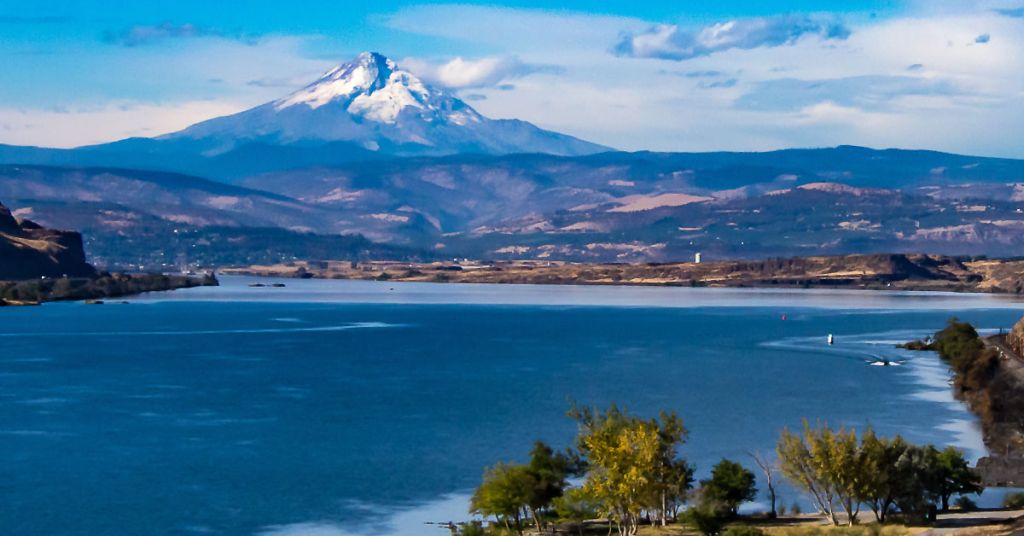
Mt. Hood

Worth fighting for: The Columbia Gorge often presents an idealized image of a river dominated by industry. Photo: Jurgenhessphotography

By Chuck Thompson. May 5, 2022. “There’s such a need for a watchdog group on the Columbia. If there’s any place that deserves a strong presence and watershed-based approach it’s the Columbia River.”

So says Brett VandenHeuvel, executive director of Columbia Riverkeeper.

Check that.

The 48-year-old VandenHeuvel is the soon-to-be-former executive director of the Hood River, Ore.-based organization, which uses legal advocacy and community organizing in numerous conservation efforts.

On May 4, Columbia Riverkeeper announced the influential VandenHeuvel’s unexpected departure.

At the same time it named Legal and Program Director Lauren Goldberg the organization’s new executive director starting Aug. 1.

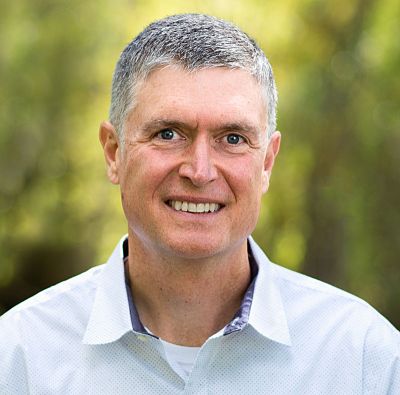
Brett VandenHeuvel by Columbia Riverkeeper

Ready for more: Columbia Riverkeeper Executive Director Brett VandenHuevel. Photo: Columbia Riverkeeper

VandenHeuvel, who will join Columbia Riverkeeper’s board of directors, assumed leadership of the organization in 2009. Over the last two decades the $3.5 million organization says it has grown tenfold. It’s certainly built a reputation as a tenacious fighter along the river in defeating over a dozen new fossil fuel terminal proposals, reducing toxic pollution and protecting salmon along the river.

“I’m going to stay closely involved, I care deeply about it,” says VandenHeuvel.

Via Zoom, Columbia Insight spoke with VandenHeuvel about his tenure as executive director and future plans.

Columbia Insight: Columbia Riverkeeper has been on an upward trajectory ever since you took over in 2009. Why leave now?

Brett VandenHeuvel: The organization has never been stronger. That’s part of the reason why it feels like a good time for some change. We have great leadership at Riverkeeper that’s going to take over. I’m personally ready for some change and new challenges.

CI: Such as?

BV: I’m starting a consulting practice to continue to do similar work, to focus on climate and clean water. And to do it nationally where I’ll work with nonprofits and tribal nations and foundations. There are a lot of lessons we’ve learned over the years. For example, the fossil fuel fights that we’ve been so successful on. Those are definitely heating up in other parts of the country, in the Gulf Coast, etc. I think we can share a lot of these hard-earned experiences.

CI: Where will you be based?

BV: I’m staying in Hood River. No major life changes.

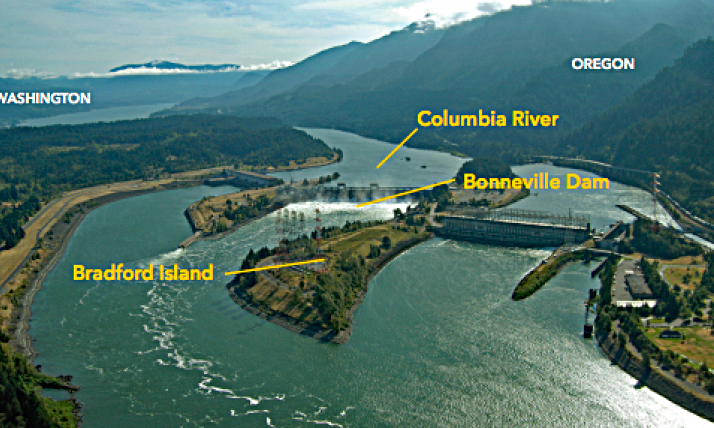
Bradford Island

Critical designation: Bradford Island was declared a Superfund site in March 2022. For decades, the U.S. Army Corps of Engineers used the island as a toxic waste dump. Screenshot: Columbia Riverkeeper

CI: What big issues will occupy incoming executive director Lauren Goldberg and the Riverkeeper staff in the near term?

BV: We’ve had tremendous success fighting fossil fuel projects. That is still a major focus. There are new pipeline expansions. There are new proposals for infrastructure in the estuary.

Bradford Island near the Bonneville Dam was really successful, working with the Yakama Nation to list that as a Superfund site. That’s a huge victory but we need to make sure the cleanup happens and is successful.

Another major focus, and an extremely challenging one, is how hot the Columbia River is becoming due to the dams and increase by climate change. If we’re going to prevent salmon from going extinct we can’t allow the river to warm up any more. And part of that is the Snake River dams. Snake River dam removal will continue to be a major campaign for Riverkeeper, I suspect.

Lauren Goldberg by Col Riverkeeper

New leadership: Lauren Goldberg. Photo: Columbia Riverkeeper

CI: When Idaho Representative Mike Simpson came out in 2021 with his plan to breach the dams there was a lot of excitement. Then Washington Governor Jay Inslee came out against it along with pretty much every Republican in the region. How realistic is breaching the Snake River dams?

BV: I think we’re in a better spot in the process right now. Governor Inslee and (Washington) Senator (Patty) Murray said they were going to spend a year to evaluate dam removal on the Snake. They’re doing that right now. And they’re going to come out with a recommendation that we’re hopeful recommends dam removal. … From there, we will need to convince Congress to act, but I think we’re in a much stronger position if its being led by Washington electeds as opposed to others.

CI: Will Inslee change his mind?

BV: I don’t think it’s changing his mind. I think they came out and opposed the overall Simpson plan. …The science is so clear. There’s been more and more political support for dam removal. Tribal nations throughout the Pacific Northwest have strongly supported dam removal. So I think things are lining up for the governor to become a champion for dam removal.

CI: In your outgoing statement you say: “Columbia Riverkeeper has never been stronger—and the stakes have never been higher.” What does that mean exactly, “the stakes have never been higher?”

BV: We’re right on the edge of an environment where salmon aren’t going to be able to survive in a polluted, overly hot river. We need to take some action soon. Addressing the temperature crisis on the Columbia is a major part of that. It’s also a time where it seems like more and more people are caring about the Columbia. It’s getting a lot more attention at the national level.

I do feel like we’re at a tipping point where it can go a couple ways. We can really invest in restoring the Columbia and have salmon runs thrive (along with) the cultures that depend on them. Or we can continue the status quo, which looks pretty dire in the years ahead.

MORE: As salmon cook in rivers, pressure on Biden mounts

CI: When you took over as executive director, Riverkeeper was in the news for the previous staff’s doctoring of evidence in the Ryan’s Juice controversy. What did you do as a new ED with that issue on a lot of peoples’ mind?

BV: That’s not quite what happened with the Ryan’s Juice stuff, but I understand the question. I had been staff attorney for a few years and when I became director we were going in a good direction.

I learned early on that we wanted to stay aggressive. That was one of the tenets I tried to keep throughout. These are serious issues; we have real consequences. And to be effective, our niche was to be aggressive. To not be afraid to file lawsuits against big corporations. To stand up for communities that were being steamrolled. To take on state and federal agencies that weren’t doing their jobs. To go after illegal pollution from companies that weren’t following the law. So that was a path that I wanted to establish and I feel like we’ve been able to do that.

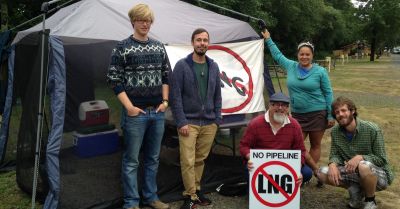
LNG Protest

Small steps, big gains: Local organization has been integral in Riverkeeper fights against fossil fuel infrastructure. Photo: Columbia Riverkeeper

CI: Was helping get the planned Oregon LNG facility on the Oregon Coast kiboshed in 2016 a pinnacle of your tenure? 

BV: Yeah, the LNG victories in the estuary were hugely important regionally and for me personally. I kind of cut my teeth as a young lawyer working on those and built amazing relationships with communities in the estuary. And that really got us on the path to fighting a dozen other fossil fuel terminals and becoming a real leader in that space.

We were pretty early adopters of saying we can’t trade coal for gas and we need to try to move to clean energy entirely and not transition to fracked gas as this bridge fuel. That paid off when we jumped in early on the Kalama methanol refinery (opposition).

CI: Is the Columbia still a possible location for new fossil fuel infrastructure development?

BV: Yes, we are. They all look a little bit different now. … The big fossil fuel projects have lost enough where they’ve learned to put a green spin on some of them. Or describe things as maintenance projects when they would really double the capacity of the pipeline.

For example, the project called GTN [Gas Transmission Northwest] Pipeline—instead of building a new pipeline they’re building new compressor stations, which can add more gas to the system by compressing it more. It’s a huge amount of gas, but it’s not getting the attention it deserves. So we’re taking this very detailed position that we don’t want any new fossil fuel infrastructure for our climate. So it’s still a major threat.

CI: How do you assess the job the organization has done with Hanford during your tenure?

BV: We’ve had success at Hanford. For example, preventing it from being the nation’s nuclear waste repository. There have been proposals over time to send all the nuclear waste to Hanford. Or to make it the nation’s repository for other toxic pollution, like mercury, that we’ve been able to work with partners to fight off.

We’ve had a very strong presence during the cleanup planning process and have made those (plans) stronger. Hanford is an extremely frustrating place to work because of its slow pace and massive, entrenched bureaucracies. I think our biggest impact lately has been we’ve shifted our focus to really strongly partner with the Yakama Nation on Hanford cleanup.

MORE: Environmental justice at Hanford: Reconnecting Indigenous people to their land

CI: Is part of the problem that the scope of the situation at Hanford is really intimidating to understand?

BV: (One) issue is that Hanford was a very hot public issue in the ‘80s and ‘90s and it’s become less so as fewer and fewer people even know what it is. And that’s a problem because despite the glacial pace of the cleanup we need continued funding and we need to get it cleaned up or else it’s going to get a lot worse. And if people don’t care Congress isn’t going to care about it and that’s a problem.

CI: What outreach efforts during your tenure have been most successful?

BV: The most successful outreach is tied to specific actions. … Finding something that people can do where they can have success and ideally the more local the better. It’s not satisfying to write an email to a congressperson in Washington, D.C., who’s going to send you a form letter back. But it is satisfying to show up at a city council meeting and convince your city council by showing up over and over and over and it might only take 20 people to take some action.

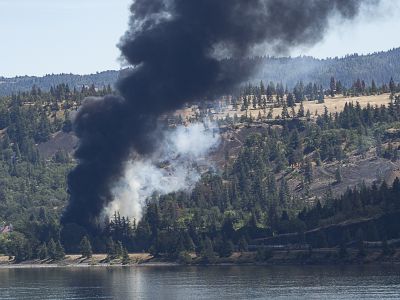
Mosier fire. Photo by jurgenhessphotography

Flammable issue: In June 2016, a Union Pacific train carrying crude oil to a refinery in Tacoma, Wash., derailed in the town of Mosier, Ore., along the Columbia River. Photo: Jurgenhessphotography

CI: Where are we are with coal and oil trains? Despite your work and that of others, and 2016’s fiery wreck in Mosier, Oregon, the trains continue along the river. What gains have been made, if any?

BV: There are still trains that are going to refineries in Puget Sound. There are some going to California. Yeah, but for example if the coal terminal at Longview, Washington, had gone in there would have been eight full coal trains and eight empty coal trains a day.

So we prevented a massive expansion of new coal and oil trains through the region. But, yeah, it’s still a transportation corridor. And we’re working with allies to try to stop some of those other refineries that continue to take trains. But I think the big victory was preventing those expansions.

CI: Have you got a favorite spot on the Columbia River?

BV: Lots of them! I love the estuary where the river meets the ocean. It gets wild down there. Skamokawa, Washington, is one of my favorite spots. There’s a county campground down there [Vista Park] where you can see the big ships go by and see the tides change. You can feel the energy of the estuary. It was built as a steamboat town facing the river so the roads feel like an afterthought. 

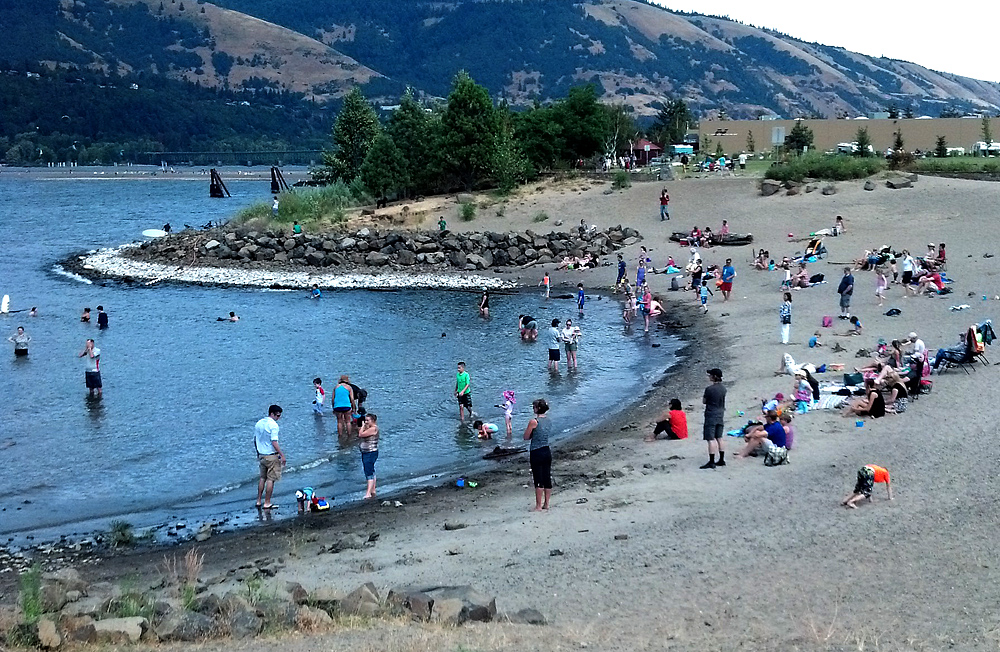
The Hood River waterfront with my kids in the summer swimming as the sun’s going down is one of my favorite places on earth.

The Hanford Reach is amazing, paddling along and seeing the nuclear reactors but also seeing this really clear, free-flowing river. It’s amazing to see a river that big flow when we’re so used to stagnant reservoirs.

Hood River waterfront

Sweet spot: Hood River waterfront. Photo: Jurgenhessphotography

CI: Amid all of the rancor and unseen grunt work, I feel like one thing that often gets lost is that people like you do the work you do because you genuinely love this place.

BV: That’s one of the great things about the Columbia. It’s not just something in the background. If it’s just scenery then we don’t care if it’s polluted, we don’t care what happens to it.

But we’re using it, right? I’m swimming there with my kids. We’re fishing, we’re eating the fish. People are recreating in it all the time. So it matters, you know, keeping it clean. Keeping it healthy matters not only for fish and wildlife, but for our communities.

Chuck Thompson is editor of Columbia Insight

Appreciate this story? Your support funds research, writing, editing and fact checking the stories we publish. Click here to support our mission.

By |2025-12-03T14:52:57-08:0005/05/2022|Opinion|0 Comments

Many glaciers in Olympic Mountains gone by 2070, study says

A Portland State University professor delivers the grim news, which has implications for future water supply

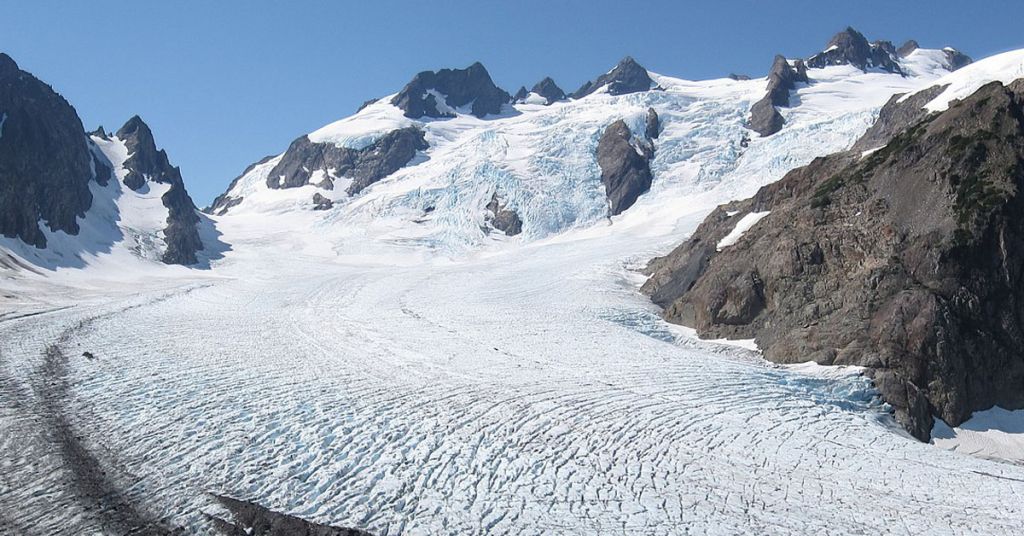
Blue Glacier

Chilling: Like other glaciers in Washington’s Olympic Mountains, Blue Glacier on Mount Olympus is shrinking. Photo: Aaron Linville/Wikimedia Commons

By Joe Raineri, KGW News. April 25, 2022. Here’s something that’ll catch your attention—in the next 50 years, many of the glaciers in Washington’s Olympic Peninsula will disappear.

That’s according to Andrew Fountain, a professor at Portland State University who’s behind a new study published in the Journal of Geophysical Research: Earth Surface. There are two things behind the glacial melt: a warming climate and the location of the Olympic Mountains.

Fountain teaches geology and geography at Portland State University. He says that by 2070, the glaciers that are so critical to our ecosystem will be gone.

A 2018 study warned that lower-elevation basins in the Pacific Northwest will suffer as smaller snowpack and the shrinkage of glaciers will result in continued reductions in summer streamflow. 

Unexpected findings

Even Fountain was taken aback at how quickly the glaciers are fading away.

“That surprised me—I knew they would be shrinking, but I didn’t think they would be disappearing like that,” said Fountain.

He said there’s a reason his team of researchers are expecting to see the glaciers melt away so quickly.

“Those glaciers on the Olympics are the most vulnerable because they are low in elevation and closest to the ocean. So if anyone is going to go quickly, it’s those guys,” Fountain said.

The Olympic Mountains stand 5,000 to 6,000 feet tall, much lower then the high peaks in the Cascades that can stretch to more than 14,000 feet.

MORE: So long, skiing? Cascades could have no snowpack in 50 years

According to researchers, it’s not just warming temperatures that play a role—shorter winters are a big part too. Fountain said winters have been arriving later in recent years and disappearing sooner, leaving thinner snow packs. Thinner snow packs aren’t good for glaciers.

There are about 250 glaciers in the Olympics. According to Fountain, if we make changes now there could be some hope.

“If we back off a little bit the glaciers will last a little longer, maybe to 2100, but we really need to reduce carbon dioxide and other greenhouse gases,” said Fountain.

Columbia Insight is publishing this story as part of the AP StoryShare program, which allows newsrooms and publishing partners to republish each other’s stories and photos.

Supporting environmental journalism is critical. Click here to help

By |2022-11-15T18:32:56-08:0004/25/2022|Climate Change|0 Comments

Can the Pacific Northwest’s largest waterfall be re-opened to the public?

Oregon’s Willamette Falls is virtually inaccessible. A gargantuan, inter-governmental effort is underway to change that, but obstacles remain

By Eli Francovich, April 14, 2022. If you want to get near one of the largest waterfalls in the United States, get ready to hop a fence.

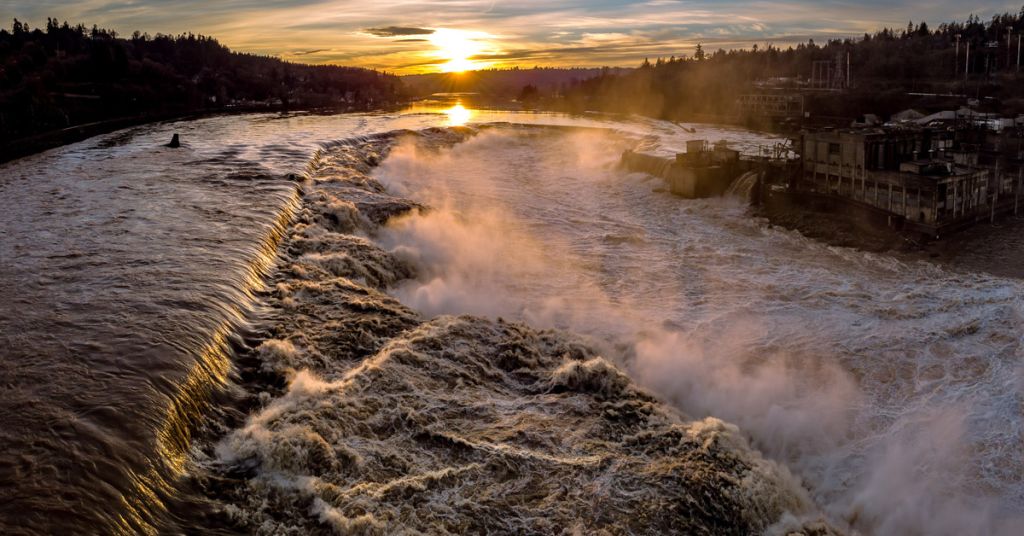
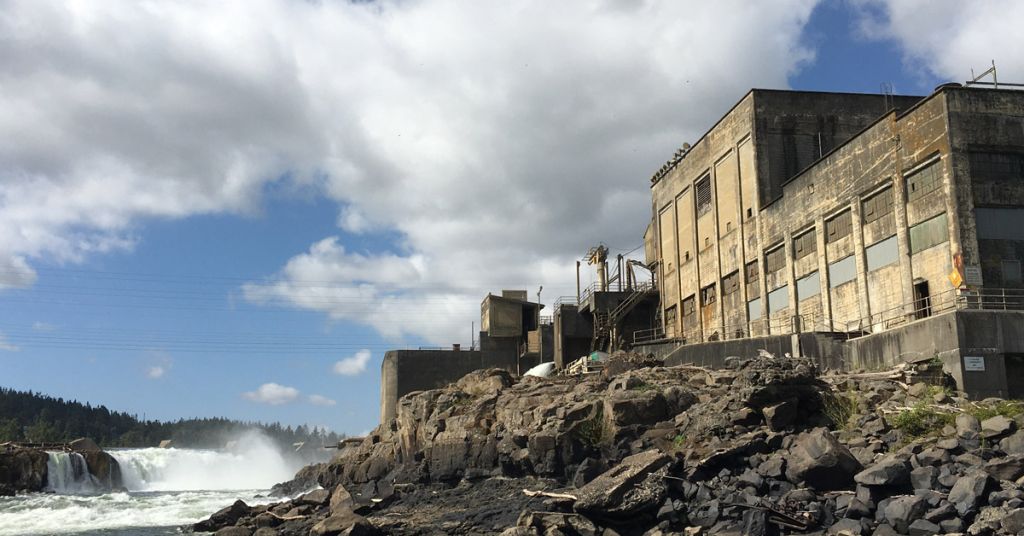
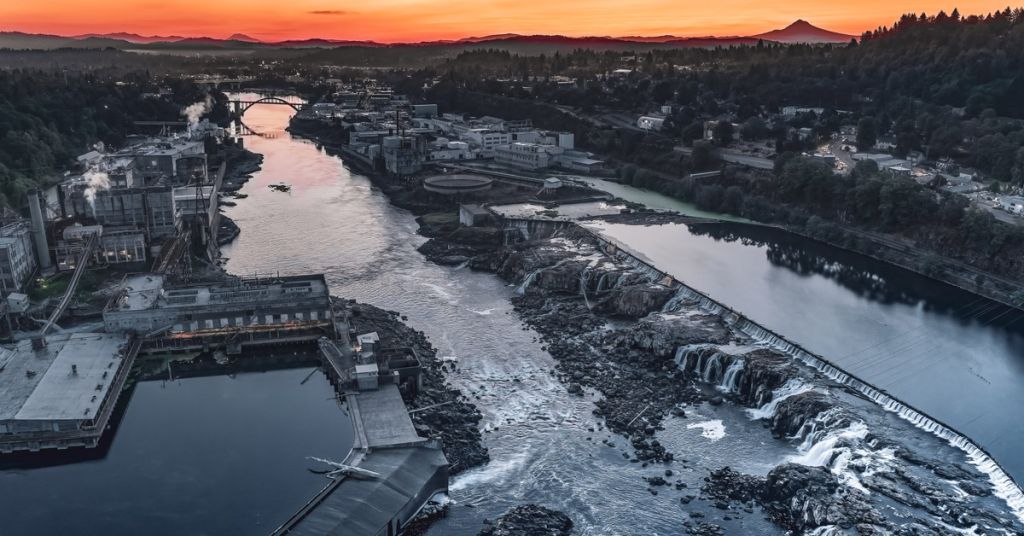
Oregon’s Willamette Falls is surrounded by abandoned factories, the remnants of the region’s industrial glory days. It’s nearly inaccessible to the public and the regional Native American tribes that fished and gathered at the falls for thousands of years.

That may be changing.

The Willamette Falls Trust is working to open access to the falls and has grand plans for a riverwalk, the construction of which would clean up some of the environmental damage while also providing recreational and cultural access.

The trust consists of four federally recognized tribes.

Willamette Falls

Site unseen: A riverwalk is planned aside mighty Willamette Falls. Photo: George Shubin

“To see Willamette Falls from the ground you have to go through four locked chain link fences,” says Andrew Mason, executive director of the Willamette Falls Trust. “That is how we are displaying the second largest waterfall in North America. I think that’s a disgrace.”

A riverwalk that would connect historic downtown Oregon City to Willamette Falls was first identified in a community visioning process, which began in 2013.

The Willamette Falls Legacy Project has a simple mission: make the falls accessible.

Turbulent history

After removal of Native American villages in the mid-1800s, industrial interests flocked to the horseshoe-shaped waterfalls, located near Oregon City, the standard ending point for settlers on the Oregon Trail.

“The falls are surrounded by these derelict sites that have been paved over time and time again,” says Gerard Rodriguez, a director of tribal affairs for the Falls Trust.

The reclamation project is complicated and there have been setbacks.

Willamette Falls

Historic vision: The Blue Heron Paper Mill closed in 2011. Photo: Chuck Thompson

In 2021, the Confederated Tribes of the Grand Ronde Community of Oregon withdrew from the Trust, alleging the Trust had undermined tribal sovereignty and citing various micro-aggressions.

On March 17, 2022, the Grand Ronde issued a letter to the Willamette Falls Legacy Partners effectively withdrawing from the partnership and riverwalk project.

In response, Willamette Falls Trust Board Chair and Confederated Tribes of the Siletz Indians Tribal Councilman Robert Kentta issued a response that said in part: “Willamette Falls Trust is committed to an inclusive and equitable restoration and preservation process that respects Indigenous people and their lifeways, cultures and shared Tribal histories that date back millennia. … The inclusion of all Tribes with deep spiritual, historical, cultural and legal connections to Falls is an important step for this project and should be a common practice at this place. The four member Tribes of the Trust continue their support for projects in the Willamette Falls region that uphold this practice.”

MORE: How the biggest river protection act in Oregon history was created

The Willamette Falls Trust Tribal Leadership Committee comprises representatives from The Confederated Tribes and Bands of the Yakama Nation, the Confederated Tribes of Siletz Indians, the Confederated Tribes of the Umatilla Indian Reservation and the Confederated Tribes of Warm Springs.

The associated Willamette Falls Legacy Project is a partnership between Oregon City, Clackamas County, Metro (Portland) and the State of Oregon.

The Grand Ronde Tribe is working on its own reclamation project.

In late 2021, the Tribe began tearing down some of more than 50 buildings located on the former Blue Heron Paper Mill site after purchasing the 23-acre site in 2019.

“We’ve always historically been the caretakers of the falls,” says Stacia Hernandez, chief of staff for the Grand Ronde Tribe.

This position has been disputed by some other tribal entities.

Plans interrupted

The falls are 1,500 feet wide and drop 40 feet, sending a fantastic amount of water tumbling each second and making Willamette Falls the second-largest waterfall in the United States by volume. (Niagara Falls on the U.S.-Canada border is by far the largest by volume.)

Wool and paper mills harnessed that energy. That development cut off public access, destroyed salmon and lamprey habitat and polluted the Willamette River.

Industrial interests have withered, however and the last operating mill—the Blue Heron Paper Mill—closed in 2011. All of which has created an opening to reclaim the falls.

Willamette Falls

Prime spot: On the Willamette River, the falls are located between Oregon City and West Linn. Photo: George Shubin

The Trust’s plans themselves remain, largely, conceptual.

Regardless, Rodriguez who is a Yaqui Indian from the Southwest and grew up in Oregon, hopes the projects can serve as an example for revitalization efforts on other American rivers once choked by industry.

“For us it’s about healing at the end of the day,” Hernandez says.

This story was originally published on February 24, 2022. It was updated and republished on April 14, 2022.

Eli Francovich is a journalist covering conservation and recreation. Based in eastern Washington he’s writing a book about the return of wolves to the western United States.

READ MORE INDIGENOUS ISSUES STORIES.

The Collins Foundation logo

The Collins Foundation is a supporter of Columbia Insight’s Indigenous Issues series.

© Copyright 2013-2025 Columbia Insight. All Rights Reserved.

As a 501(c)3 nonprofit organization, all donations to Columbia Insight are tax deductible to the full extent of the law. Our nonprofit federal tax-exempt number is 82-4504894.