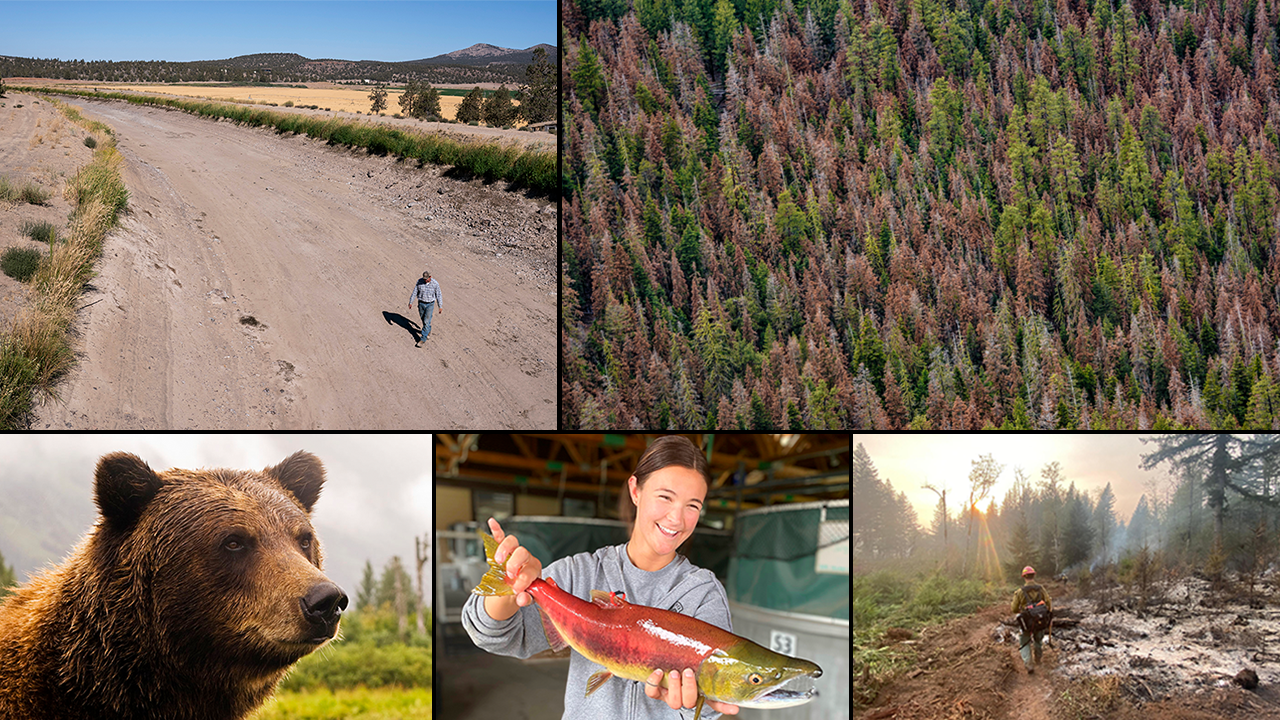
Stay Updated Subscribe today for the latest research + reporting about environmental news. Subscribe Now

Stay Updated Subscribe today for the latest research + reporting about environmental news.

Subscribe Now

Chuck Thompson

Chuck Thompson

Chuck Thompson

About Chuck Thompson

Chuck Thompson is editor of Columbia Insight.

Study: Efforts to save wild salmon are a giant waste of money

An OSU prof says $9 billion spent on recovery of wild salmon and steelhead has had no measurable impact. So just give up then?
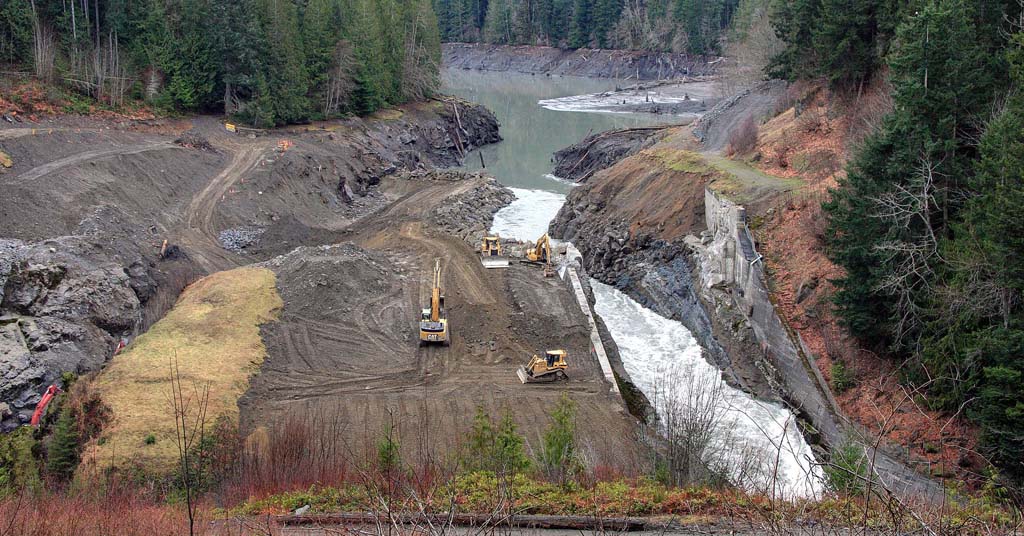
Elwha Dam removal 2011-12

Money pit: The Elwha Dam removal and total Elwha River restoration in Washington’s Olympic Mountains cost $351 million in 2011-12. “Salmon have returned, swimming up past the old Elwha Dam site,” reported American Rivers in 2014. Photo: NOAA

By Chuck Thompson. August 2, 2023. Over the past four decades the public has invested more than $9 billion in inflation-adjusted tax dollars in an effort to conserve and improve salmon and steelhead populations in the Columbia River Basin.

Has all that money, and the endless hours of human effort associated with it, been a complete waste?

That seems to be the implication of a new study from the Oregon State University College of Agricultural Sciences titled, “Return(s) on investment: Restoration spending in the Columbia River Basin and increased abundance of salmon and steelhead.”

The study was published last week in the scientific journal PLOS ONE.

Led by William Jaeger, a professor of applied economics, the study is based on an analysis of 50 years of data “suggesting that while hatchery-reared salmon numbers have increased, there is no evidence of a net increase in wild, naturally spawning salmon and steelhead.”

An estimated 16 million salmon and steelhead once returned from the Pacific to the portions of the basin above Bonneville Dam, according to Jaeger, but by the 1970s there were fewer than 1 million fish, prompting the federal government to intervene.

OSU professor of applied economics William Jaeger

There’s something you should know: William Jaeger. Photo: OSU

“The Northwest Power Act of 1980 required fish and wildlife goals to be considered in addition to power generation and other objectives. The act created the Northwest Power and Conservation Council to set up conservation programs financed by Bonneville Power Administration revenues,” according to an OSU press release. “The cost and scale of restoration efforts grew considerably in the 1990s … following the listing of 12 Columbia River runs of salmon and steelhead as threatened or endangered under the Endangered Species Act.”

The public’s $9 billion-plus tab for the collective conservation effort doesn’t take into account monies spent by local governments and non-governmental agencies.

“A key question has persisted, and its answer is critical for sound policy and legal decisions: Is there any evidence of an overall boost in wild fish abundance that can be linked to the totality of the recovery efforts?” asks Jaeger. “Based on a half-century of fish return data at Bonneville Dam, the single entry point to the basin above the dam, the evidence does not support a yes answer.”

So … no?

“We found no evidence in the data that the restoration spending is associated with a net increase in wild fish abundance,” says Jaeger.

The study also focused on fish hatchery expenditures and results.

“The role of hatcheries in recovery plans is controversial for many reasons, but results do indicate that hatchery production combined with restoration spending is associated with increases in returning adult fish,” says Jaeger. “However, we found that adult returns attributable to spending and hatchery releases combined do not exceed what we can attribute to hatcheries alone. We looked at ocean conditions and other environmental variables, hatchery releases, survival rates for hatchery released fish and conservation spending, and we saw no indication of a positive net effect for wild fish.”

Even expenditures on “durable” habitat improvements designed to cumulatively benefit naturally spawning wild salmon and steelhead over many years did not lead to evidence of a return on these investments, he added.

So what now then?

While the study says spending on fish conservation efforts haven’t amounted to much, it neither addresses the implications of its dramatic conclusions nor offers suggestions for future conservation spending strategies.

If conservation efforts haven’t produced measurable positive results, does this mean conservation efforts aimed at wild fish should be abandoned?

Should conservationists pivot to radically new strategies?

Can we assume that even if conservation efforts haven’t recovered wild stocks, they’ve at least forestalled an even larger species collapse, suggesting that conservationists stay the course (and expenditures) in the hopes that long-term impacts will begin to appear?

“The actual impact of all of these efforts has always been poorly understood,” says Jaeger. “Lots of people have long been concerned about a lack of evidence of salmon and steelhead recovery. One of the issues is that most studies evaluating restoration efforts have examined individual projects for specific species, life stages or geographic areas, which limits the ability to make broad inferences at the basin level.”

Jaeger’s study takes a broader perspective. Whether his study finds a broad audience—and what that audience will do with its conclusions—may require further research. And, of course, funding.

By |2023-08-02T13:37:40-07:0008/02/2023|Salmon|0 Comments

A big win for trees. And Columbia Insight

Writer Nathan Gilles and Columbia Insight bag a prestigious award for journalistic excellence

Assisted migration story

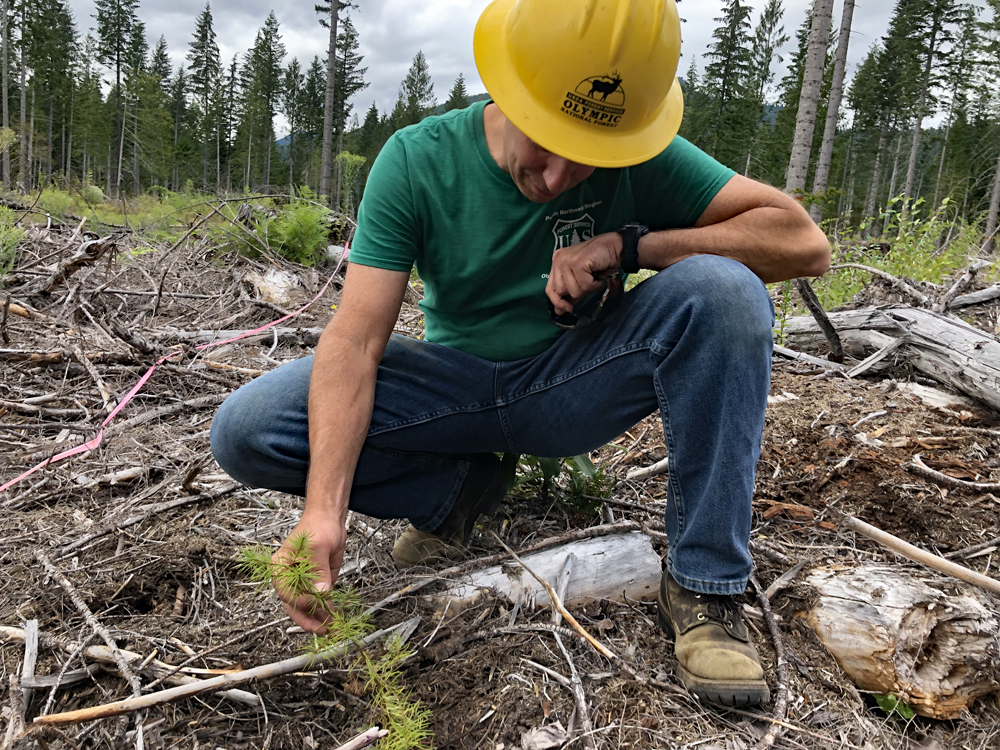
Original source: Forester Andrew Bower, relocating a Douglas-fir seedling, was a subject included in Nathan Gilles’ story about assisted migration of tree species in the Pacific Northwest. Photo: Nathan Gilles

By Chuck Thompson. June 20, 2023. When Columbia Insight began publishing science writer Nathan Gilles’ series on the unprecedented threats Pacific Northwest forests are facing as a result of climate change, we knew it was a big deal.

After all, the series, which kicked off in August 2022 with a piece examining challenges to the survival of western redcedars, quickly attracted readers not just from around the region but across the country, Canada and beyond.

Gilles’ story on “Firmageddon,” which broke news of a U.S. Forest Service study documenting the largest-ever “mortality event” of fir trees (“firmageddon” was a description coined by the study’s authors) was republished or cited by media organizations including NBC News, The Guardian, Mother Jones, Esquire and many others.

Science writer Nathan Gilles

Nathan Gilles

Now the series has been awarded first place in the Society of Professional Journalists Region 10 Excellence in Journalism Awards.

“The next time someone shrugs off extreme heat as the ‘new normal,’ have them read this important news series,” wrote the judges.

The competition is one of the largest of its kind in the nation, honoring journalists across SPJ Region 10, which covers Alaska, Washington, Idaho, Montana and Oregon.

The win is just recognition for Gilles’ superb work and Columbia Insight’s ongoing commitment to investigating and publishing environmental news and feature stories no one else is covering. Or uncovering.

It’s also tribute and testament to the backing of our readers, subscribers and donors whose generous support makes these kinds of achievements possible.

Columbia Insight congratulates Nathan Gilles on this well-deserved recognition and thanks you for your continuing to support.

By |2023-06-20T08:40:53-07:0006/20/2023|News|1 Comment

Baby comeback: Wolverine triplets born in Cascades

It’s the fourth consecutive year for newborns in and around Mount Rainier National Park

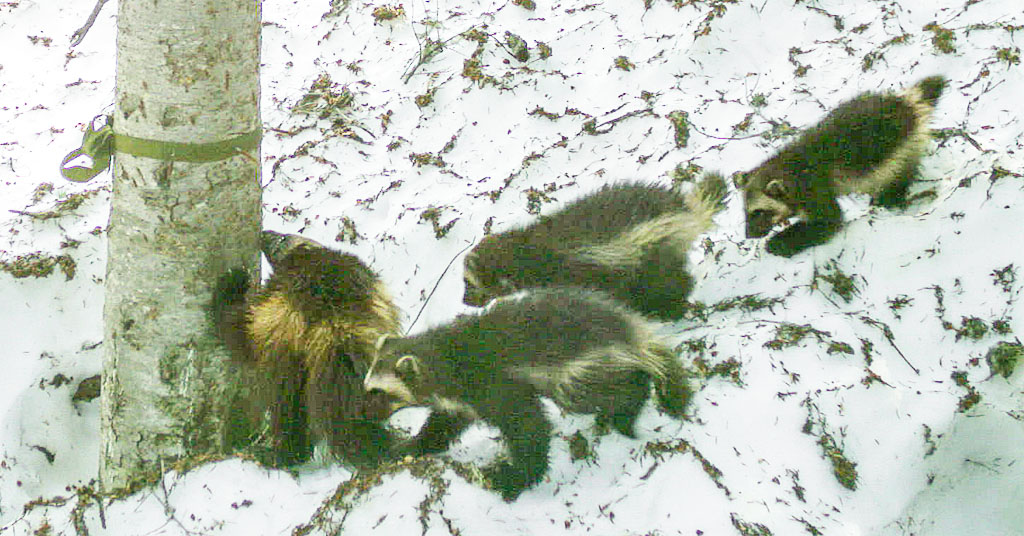
Mother and three wolverine kits in South Cascades

Discovery: “Joni” and her three new kits face a daily challenge—finding enough to eat. Photo: Cascades Carnivore Project

By Chuck Thompson. June 12, 2023. More good news for wolverine fans. On June 3, Cascades Carnivore Project announced the discovery of three new baby wolverines (called kits or cubs) in the South Cascades in Washington.

The mother is “Joni,” a wolverine that has now given birth for the past four years.

“Heather Rolph, Cascades Carnivore Project field crew lead, made this rare discovery when checking one of our wolverine integrated monitoring stations that has been running just outside [Mount Rainier National Park] all winter long,” said Jocelyn Akins, the organization’s conservation director, in an email.

Joni was first discovered in 2019 near Paradise at the park and named after Joni Mitchell.

During spring 2020, as landslides and then the global pandemic closed access to the park, Joni—and her mate—more or less had the park to themselves. That same spring, CCC discovered Joni had a litter of kits, marking the return of a wolverine population after a century.

The father of the new triplets is likely a wolverine named “Van.”

“Joni’s territory is within (Van’s) territory and they are often photographed at our stations together,” Akins told Columbia Insight. “We first discovered him near Bumping Lake on the William O. Douglas Wilderness (in the Okanogan-Wenatchee National Forest) in 2017. He is a big, old wolverine. His home range extends from the headwaters of the Little Naches River, almost to Snoqualmie Pass, across the Norse Peak Wilderness, across the entire Mount Rainier National Park and down toward White Pass.”

Despite the ongoing births, wolverines still have it tough. For Joni, finding find food for herself and her kits is a daily challenge, according to Akins. 

“We continue to monitor the small and growing South Cascades wolverine population in the hopes of new individuals arriving, possibly from the north, as we work to understand what is needed for the wolverine to regain its foothold in Washington’s Cascades,” said Akins.

By |2023-06-12T10:43:35-07:0006/12/2023|Wildlife|4 Comments

How the Gorge was won

An act of nature created it. An act of Congress protected it. Three new books tell the story of the Columbia River Gorge National Scenic Area

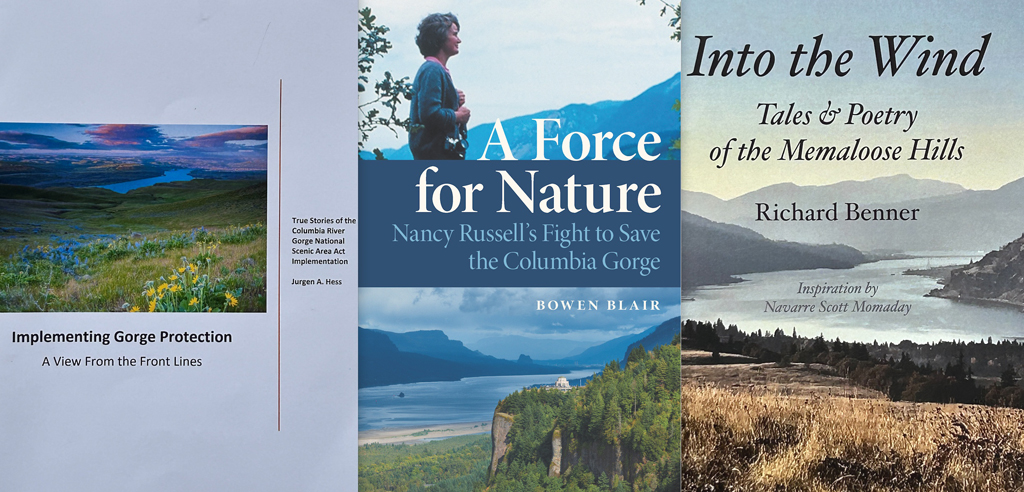
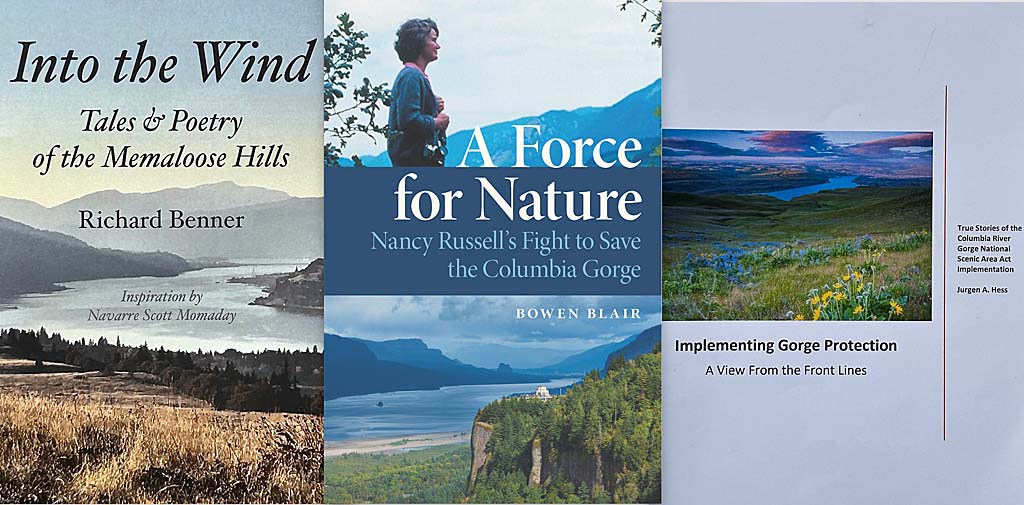
Covers for three books about the Columbia River Gorge.

Writing the storm out: Many of us take the Columbia Gorge for granted. A trio of authors remind us that we shouldn’t.

By Chuck Thompson. April 4, 2023. It’s likely you’ve never hiked through the Columbia River Gorge, gazed over the riparian, mountain and meadow landscape and taken the opportunity to reflect upon President Ronald Reagan’s Strategic Defense Initiative.

But perhaps on your next outing you might.

The connection between the Gorge and Reagan’s 1980s “Star Wars” dreams is just one of the endless fascinating insights into the creation of the Columbia River Gorge National Scenic Area (CRGNSA) summoned by Bowen Blair in his recent book, A Force for Nature: Nancy Russell’s Fight to Save the Columbia Gorge, published late last year by Oregon State University Press.

The Gorge is, of course, an ever-present landmark of the Pacific Northwest. But these days, perhaps because threats to the area’s unique biodiversity are mounting amid climate change, calls for development and a fading collective memory of the process by which the area was protected in the 1980s, the Gorge seems to be much on the mind of the generation that legally enshrined it.

A handful of recent books, each capturing different views of the Gorge, have been published over the past half-year or so. Three in particular are worthy of a place on the nightstand. Or, more appropriately, in the pocket of a daypack.

A Force for Nature: Nancy Russell’s Fight to Save the Columbia Gorge, by Bowen Blair

Force for Nature book cover. Published by Oregon State University Press (2022)If any one person can take credit for the establishment of the Columbia River Gorge National Scenic Area, it’s legendary Portlander Nancy Russell, who died in 2008.
As Jonathan Nichols wrote in The Oregonian upon Russell’s passing: “Without Nancy Russell, the Columbia River Gorge would not be a Scenic Area. It would be a strip mall.”

Deploying cockeyed optimism, brute will and savvy political maneuvering, Russell devoted the second half of her remarkable life to carrying on the century-long effort to protect the Gorge from the dozers of development … and triumphed.

The Columbia River Gorge National Scenic Area Act was signed into law in 1986.

In chronicling the battle to get it passed, author Bowen Blair, an environmental attorney who aided Russell’s mission and was later appointed by two Oregon governors to chair the Gorge Commission, peppers the broad strokes of the Gorge story with irresistible, behind-the-scenes insight. (Blair is also on the Columbia Insight board of directors.)

Amid accounts of wrangling at the city, county, state and federal levels, Blair explains why the CRGNSA Act might never have passed the “series of crevices, hurdles and banana peels” that stood in its way had it not been for deft political horse-trading by Russell and the muscle she lobbied.

For just one example, had pro-scenic-area Oregon Republican Senator Mark Hatfield not let anti-scenic-area Ronald Reagan know that unless the president signed the act into law he might as well forget about Senate support for his Strategic Defense Initiative (nicknamed “Star Wars”), the Gorge as we know it today might be vastly different.

The day after Hatfield’s thinly veiled warning, the president famously “signed the bill with one hand and held his nose with the other,” according to Hatfield.

Though Russell’s larger-than-life effort to protect the Gorge is its centerpiece, A Force for Nature stands as a masterful and deeply researched explanation of human impact on the Gorge, from the Tribes that fished and cultivated it to U.S. Army Corps of Engineers that tamed it to the government act that protected it to the multifarious interests that haggle over it to this day.

For anyone who loves the Gorge—or just considers it an easy escape from the city—this is essential reading.

A Force for Nature is available from Oregon State University Press, Powell’s and other booksellers.

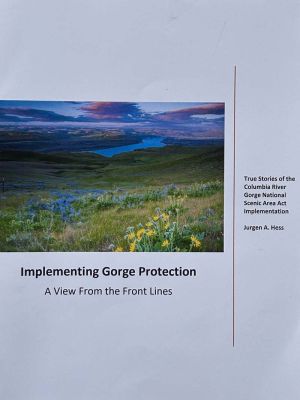
Implementing Gorge Protection: A View from the Front Lines, True Stories of the Columbia River Gorge National Scenic Area Act Implementation, by Jurgen Hess

Implementing Gorge Protection book coverCreating the National Scenic Area on paper was one thing. Making it a reality on the ground was quite another.

Now a retired U.S. Forest Service NSA area manager and land use coordinator, as well as a former member of the Gorge Commission and current Columbia Insight board member, Jurgen Hess picks up the story of the Gorge with the signing of the legislation that created the national scenic area in 1986.

Then a young, idealistic Forest Service employee, part of Hess’s job was to ensure the implementation of rules that many in rural Gorge communities had vehemently opposed, and sometimes obstructed once they’d been signed into law.

Drawn from his own contemporaneous notes and official day planner entries and other records, Hess’s book is largely a collection of vignettes recounting the fraught early days of CRGNSA. Its winning, on-the-ground perspective is by turns humorous, insightful and harrowing.

“Front lines” is little exaggeration. Hess faced bomb threats and other intimidation tactics as he made the rounds explaining how, like them or not, the government’s new protections of the Gorge were going to be enforced.

“There were many early disputes as to where the official boundaries were or where they ‘should have been,’” writes Hess.

Though by no means vanquished, many of those disputes have now been largely settled. Hess closes his 55-page book with a quote about the creation of the CRGNSA from Skamania (Washington) County Assessor Glenda Kimmel: “If we knew then (1986) what we know now, we might not have been so frightened of it—the county hasn’t done too badly.”

Implementing Gorge Protection is available at Waucoma Bookstore (Hood River) and Klindt’s Booksellers (The Dalles).

Into the Wind: Tales & Poetry of the Memaloose Hills, by Richard Benner

Into the Wind book coverNot a tale of conflict, former Gorge Commission Executive Director (1987-91) Richard Benner’s book stands as a reminder of why those early battles for Gorge preservation were fought in the first place. The beauty and majesty of the area drives his elegant volume of reflections and photos.


You might think a guy who spent a good part of his working years helping to author statewide land use planning programs would produce prose as dry as tinder. You’d be wrong.

From the opening chapter (“Romancing a Landscape”) explaining his decision to purchase a home in the Gorge, Benner effortlessly connects with the silent, spiritual power of the area’s unique landscape and biodiversity, both plant and animal.

His ruminations on birds in the middle Gorge is pitch perfect.

A passage on getting ready for a hike strikes a universal chord among all who have ever planned an outing in the Gorge:

As we prepare for our morning stroll in the hills, we first check our apps. Mine says it is not raining; Lavinia’s says it began raining fifteen minutes ago. Doubt arises. Next we check the north patio. It is damp, but not soaked, and there are no visible drops splashing on the pavers. Still, inconclusive. I dress for dry. She dons her rain jacket, and we head for the hills.

Benner understands the Gorge’s appeal, and unpredictability, as well as anyone who has had a hand in preserving it. As with Blair and Hess, we’re all the better off for his willingness to share that wisdom, especially as widespread knowledge of it seems to be dwindling just when we need it most.

Into the Wind is available at Waucoma Bookstore (Hood River), Brenna’s Mosier Market (Mosier), Klindt’s Booksellers (The Dalles) and Broadway Books (Portland).

Columbia Insight’s reporting on biodiversity in the Columbia River Gorge is supported by the Autzen Foundation and Pacific Power Foundation. 


By |2023-04-04T09:22:34-07:0004/04/2023|Books, Conservation|2 Comments

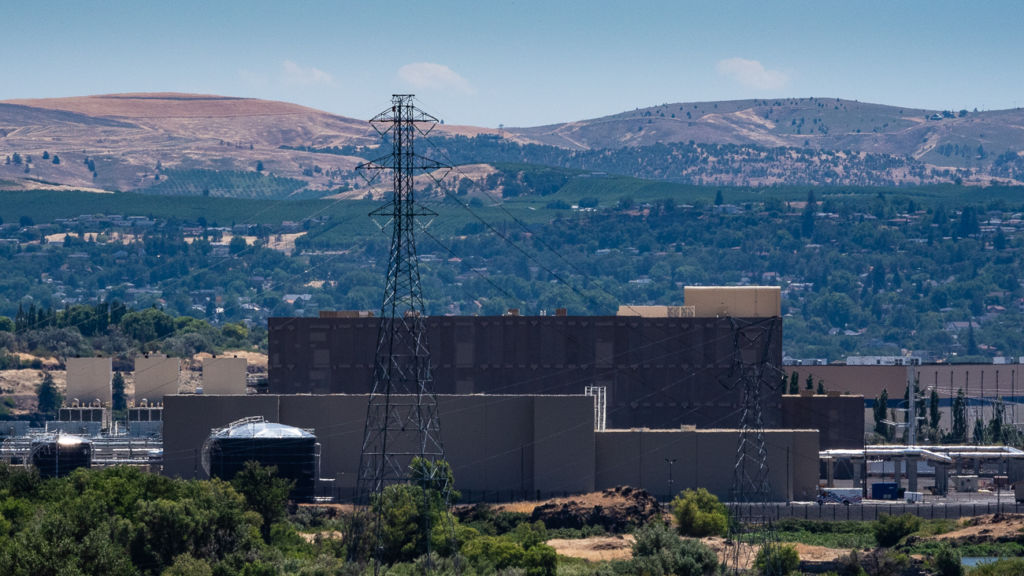
Good day for journalism: The Dalles, Google abdicate in water fight with Oregonian

The tech giant’s bankrolling of the city’s legal fees continues to blur the line between public and private interests

Water world: Google data center in The Dalles. Photo: Jurgenhessphotography

By Chuck Thompson. January 3, 2023. In a time when newspapers often seem on the ropes—attacked by government officials, abandoned by readers—chalk up a big win for journalism.

And take a moment to thank The Oregonian and its dogged reporter Mike Rogoway.

Ending a 13-month legal battle with the newspaper, the City of The Dalles agreed to make records of Google’s water consumption at data centers in the city available to the public.

Some quick background:

In November 2021, The Dalles City Council voted unanimously to approve a $28.5 million deal with Google to provide water for the tech company to cool two new data centers there.

Google and The Dalles refused to disclose, however, just how much water the company’s three existing data centers use and how much more it wanted for the two new ones.

The Oregonian filed a public records request to get that information.

In response, the city sued the paper to prevent the information’s release, claiming Google’s use of water amounted to a “trade secret.”

In the settlement, announced by The Oregonian on Dec. 14, The Dalles agreed to provide public access to 10 years of data on Google’s water use and to honor future records requests.

The Dalles’ Mayor Richard Mays said Google ultimately changed its position and agreed to release the records.

“That’s why we backed off,” Mays told The Oregonian.

Turns out, a lot of water

Google may have had good reason to want to keep locals in the dark in the drought-stricken Dalles, where Tribes, farmers, ranchers, environmentalists and others are increasingly nervous about future water supplies.

According to records released in December, the company’s water usage in The Dalles more than tripled over a decade.

In 2010, Google used 104.3 million gallons in The Dalles.

In 2020, it used 355.1 million gallons, or 29% of the city’s total water consumption. 

Google’s water consumption is only expected to climb. The company reportedly plans to construct two more data centers along the Columbia River.

“If the data center water use doubles or triples over the next decade, it’s going to have serious effects on fish and wildlife on source water streams, and it’s potentially going to have serious effects for other water users in the area of The Dalles,” John DeVoe, executive director of the nonprofit WaterWatch, told The Oregonian.

Google cuts the checks

According to The Dalles, Google will pay all of the city’s legal fees associated with the case, which have risen to more than $150,000.

Beyond water usage, Google footing the city’s legal bill is a concern.

“That arrangement raises questions about governments’ willingness to defer to large companies on matters of transparency, in addition to the underlying issue of how public utilities manage their water,” wrote The Oregonian.

“The private money funding public litigation distorts the entire public process and harms the public interest,” said Tim Gleason, former dean of the University of Oregon’s School of Journalism and Communication, now a professor emeritus at the university.

Gleason is right.

Google’s continuing influence over local affairs—and voracious consumption of a precious public resource—makes it all the more worth applauding The Oregonian’s refusal to back down from an intimidating legal challenge.

Chuck Thompson is editor of Columbia Insight.

The views expressed in this article belong solely to its author and do not reflect the opinions of anyone else associated with Columbia Insight.

RELATED: Google’s secret operation unwrapped

RELATED: Amid drought, secrecy shrouds The Dalles’ $28.5 million water deal with Google

By |2025-12-03T14:48:05-08:0001/03/2023|Natural Resources, Opinion, Water|1 Comment

10 biggest environmental stories of 2022

Drought persists, firs fade and history repeats. Climate news is becoming more predictable. That’s not great

By Chuck Thompson. December 23, 2022. In December, Mount Rainier National Park announced the first-ever recorded moose sighting in the park.

In June, the Washington Department of Ecology confirmed the removal of more than 35,000 drums of industrial waste from the Pasco Landfill Superfund site.

And, oh yeah, in May, the Society of Professional Journalists honored Columbia Insight with an award for environmental reporting in its 2021 Northwest Excellence in Journalism awards.

Important events, for sure, but each was nudged out by 10 others on our annual list of biggest environmental stories of the year.

MORE: 10 biggest environmental stories of 2021

MORE: 10 biggest environmental stories of 2020

Columbia Riverkeeper/USACE

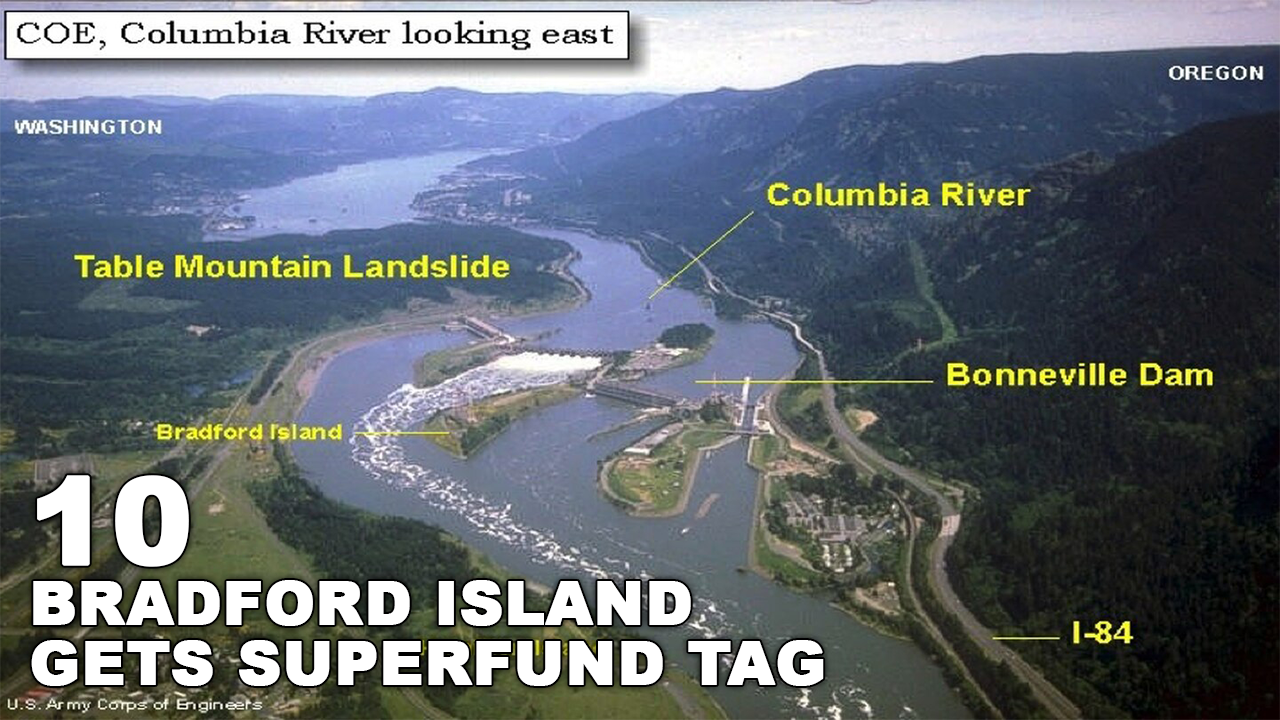
Back in 2019, Columbia Insight reported on demands from Yakama Nation Fisheries and Columbia Riverkeeper for the federal government to clean up contamination around Bradford Island in the Columbia River; for decades the U.S. Army Corps of Engineers used the island near Cascade Locks as a dumpsite for toxic waste from the Bonneville Dam Complex. On March 17, the EPA listed Bradford Island as a Superfund site. The designation allows the EPA to clean up the site and force the parties responsible for the contamination to either perform cleanups or reimburse the government for the work. Riverkeeper and environmental groups around the Pacific Northwest hailed the listing as a “huge victory.”

MORE: Waste Land: Where the aluminum bodies are buried in the Columbia Gorge

Princess Lodges

In January, Columbia Insight was only place reporting on the status of a canceled federal government study looking at reintroducing grizzly bears into the North Cascade Range. In November, the idea got extensive national attention when the U.S. Fish and Wildlife Service and National Park Service resurrected the plan. How many more years of wrangling will it take to decide whether or not grizzlies will make it back to Washington? “Best case scenario, we’re looking at about a year before there are any decisions about grizzly bears in the North Cascades,” Andrea Zaccardi, carnivore conservation legal director at the Center for Biological Diversity, told Columbia Insight.

MORE: Government to consider transplanting grizzlies to Cascades

Chuck Thompson/Columbia Insight

Speaking of stories available only in Columbia Insight, in July the Hood River County (Oregon) Board of Commissioners heard a presentation from a mysterious company called GeoX to construct what would be one of the largest geothermal plants in the state, on the northern slopes of Mount Hood. Perhaps because the idea is in its early stages, or because so little information is available about GeoX, the story attracted little attention outside the local area. If the plan moves forward, however, the environmental repercussions will be massive.

MORE: New plan would make Mount Hood site of massive geothermal plant

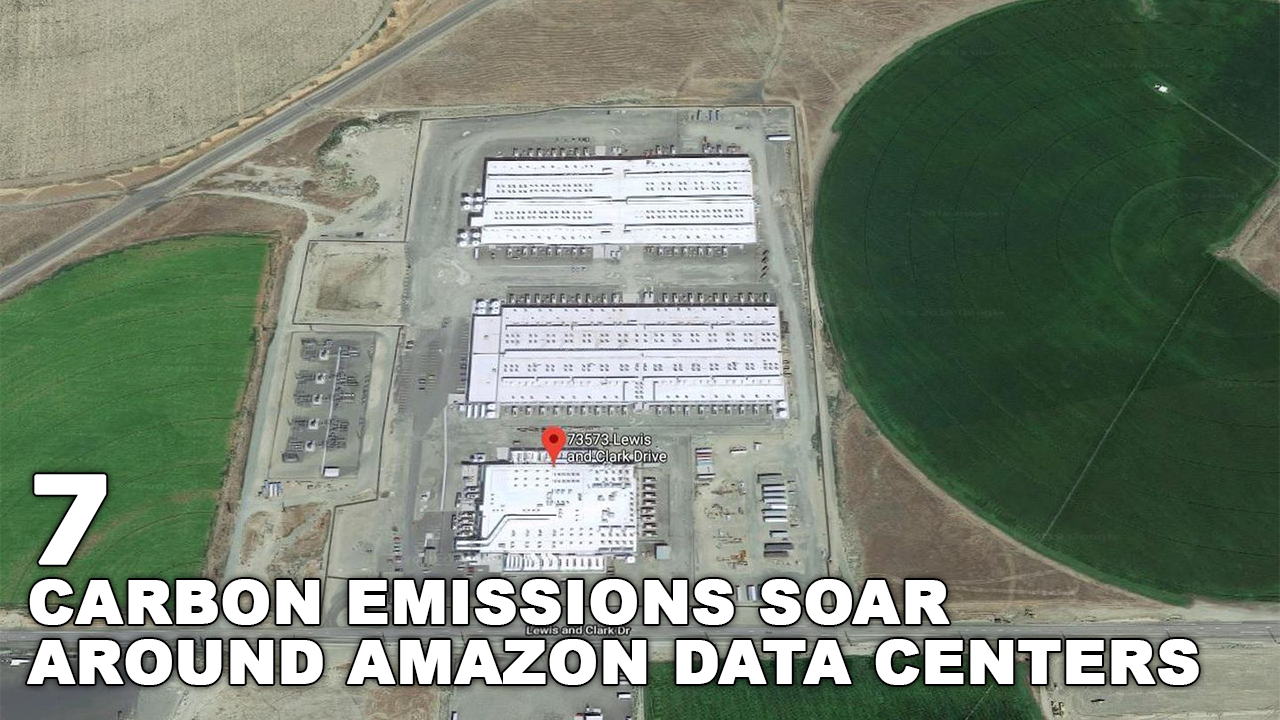
Amazon data centers near Boardman, Oregon (Google Earth)

State of Oregon data showed carbon emissions in Morrow and Umatilla counties have skyrocketed (more than 500% in Umatilla) with the construction of massive Amazon data centers over the last decade. “The electrical utility serving Morrow County once had some of the cleanest power in the state,” reported The Oregonian. “While Amazon isn’t solely responsible for the increase, the additional power use matches the annual household power consumption of 200,000 homes.” The tech giant has received tax breaks worth more than $160 million in Oregon, which offers some biggest tax breaks for data centers in the country.

MORE: Cheap power has lured massive cryptocurrency mining operations to central Washington. At a crazy price

Eagle Fish Hatchery, Idaho (Travis Brown/IDFG/AP Photo)

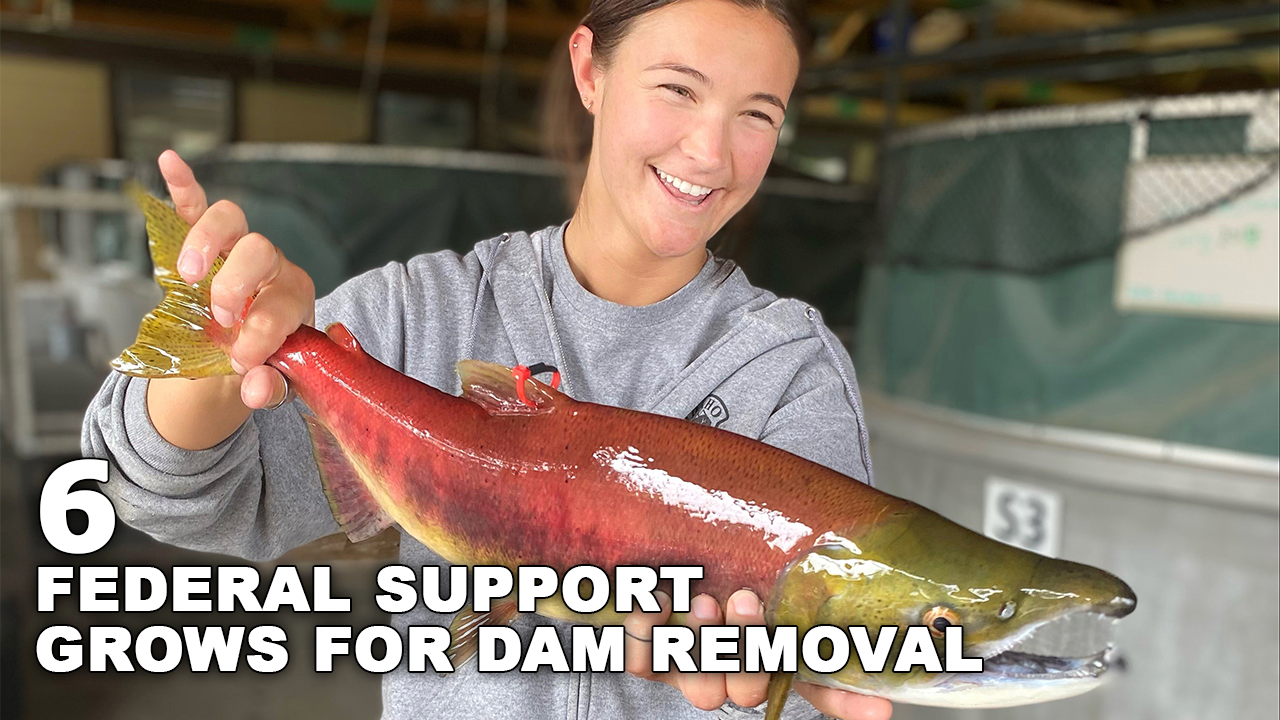
Although stopping short of endorsing Idaho Rep. Mike Simpson’s proposal to breach four dams on the Snake River, a pair of Biden administration reports released in July called removing the dams “essential” to salmon recovery in the Columbia River Basin. In November, the Federal Energy Regulatory Commission gave its approval to remove four dams on the Klamath River in California and Oregon, in what will be the largest dam demolition in U.S. history. In December, the Federal Reserve System announced Washington state could receive as much as $40 million in federal funds for dam removal projects, and studies to remove barriers to fish passage in the Olympic Peninsula, Puget Sound, Columbia River watershed and Yakima Basin. Dam opponents may finally be feeling they’re swimming with the prevailing current.

MORE: ‘The stars are aligned’: Rep. Mike Simpson breaks down plan to breach Snake River dams

Oregon State Police

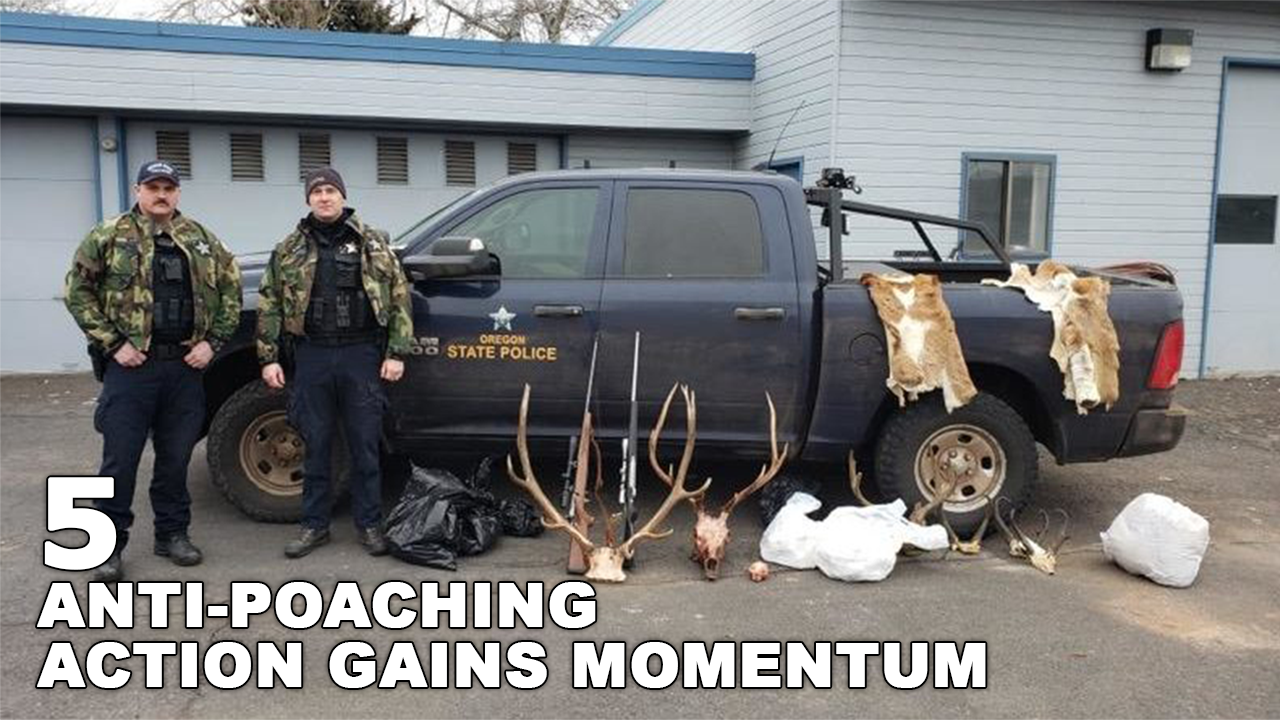
In 2021 Oregon’s wolf population showed “anemic growth” as poaching incidents increased—but 2022 brought new force to efforts to find and punish the illegal killing of animals. Oregon funded a new Stop Poaching Campaign, increased poaching penalties, added four state troopers and a sergeant to increase poaching detection and, most importantly, hired a new special prosecutor, Jay Hall, to tackle wildlife crimes. In March, the Oregon Wildlife Coalition began funding the state’s first standardized cash rewards program for reporting poaching of nongame species, such as bobcats, beaver, lynx and otter. In December, the U.S. Fish & Wildlife Service offered a $5,000 reward for information leading to the arrest of those responsible for illegally killing a collared gray wolf in southern Oregon. To report a case of wildlife poaching in Oregon contact the Turn In Poachers line (800-452-7888) or TIP@osp.oregon.gov.

MORE: Amid spike in thrill kills, wolf poisonings, Oregon strengthens anti-poaching efforts

Nakia Creek Fire, Washington (InciWeb)

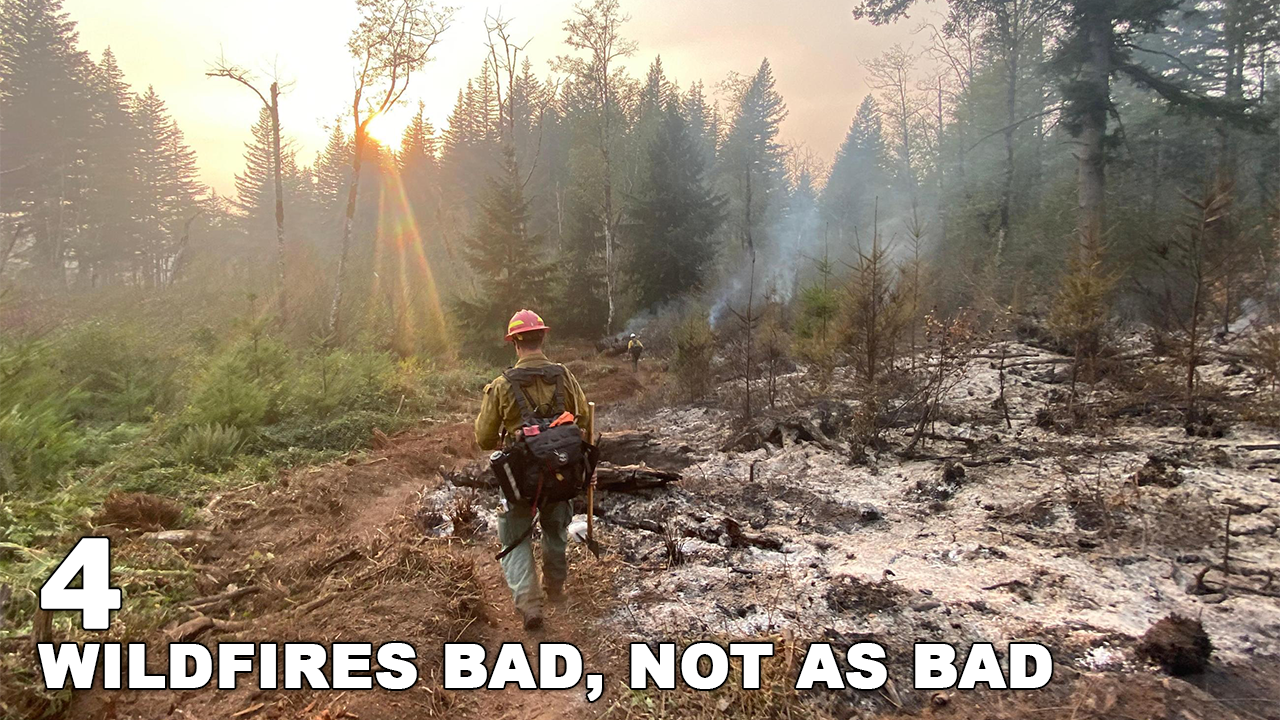
A wet spring delayed the summer onslaught. But August 1 brought a lightning storm that started almost 30 fires in Oregon’s Willamette National Forest; eventually called the Cedar Creek Fire, it burned more than 127,000 acres. By October, a string of blazes across the region—including Washington’s Bolt Creek Fire—had created toxic air across much of Washington and led to international coverage of Seattle and Portland having the worst air quality on the world. Our air quality “was worse than in places like Beijing, New Delhi and Lahore, Pakistan” reported NBC News. There was tempered “good” news. In late October, the Northwest Interagency Coordination Center estimated wildfires had burned “only” 536,693 acres in Oregon in 2022, compared with 828,777 acres in 2021. In Idaho, 414,997 acres burned in 2022 compared with 431,129 acres in 2021. Such stats surely came as cold comfort to the thousands of people evacuated from their homes in 2022 due to fires, including the entire town of Lind, Wash. (pop. 500).

MORE: Behind the line: The inside story of wildland firefighters

City of Oregon City

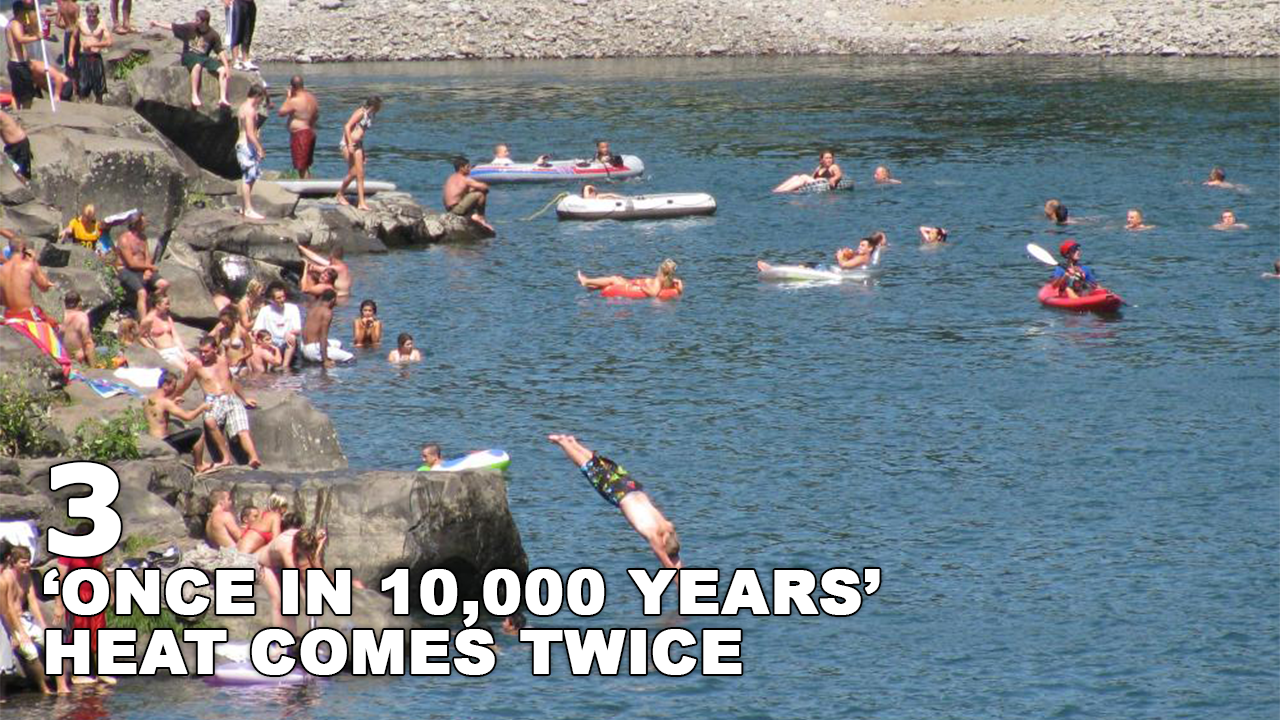
A study released in September 2022 in the journal Geophysical Research Letters compared the Pacific Northwest’s record 2021 heat wave to a once-in-10,000-year event. Apparently, its authors were writing from an air-conditioned basement. Record heat once more pummeled the region in 2022. In July, Seattle set a new record with six straight days of temps above 90. In early August, heat alerts were in place across the Pacific Northwest, with 11 million people under excessive heat warnings and another 12 million under heat advisories. By the first week of September, Boise had topped 100 degrees 26 times, blowing past the record of 20 days set in 2003. In late September, Karen McKinnon, lead researcher on that Geophysical Research Letters, study told UCLA College: “The good news is that we don’t find evidence that events this extreme should start happening regularly. The bad news is the summer of 2022 brought record-breaking heat waves … if 10,000-year events keep happening, that suggests there may be something missing in the climate model we used.”

MORE: Scientists engineer a better air conditioner for hotter Northwest summers

Irrigation Canal, Madras, Oregon (AP Photo/Nathan Howard)

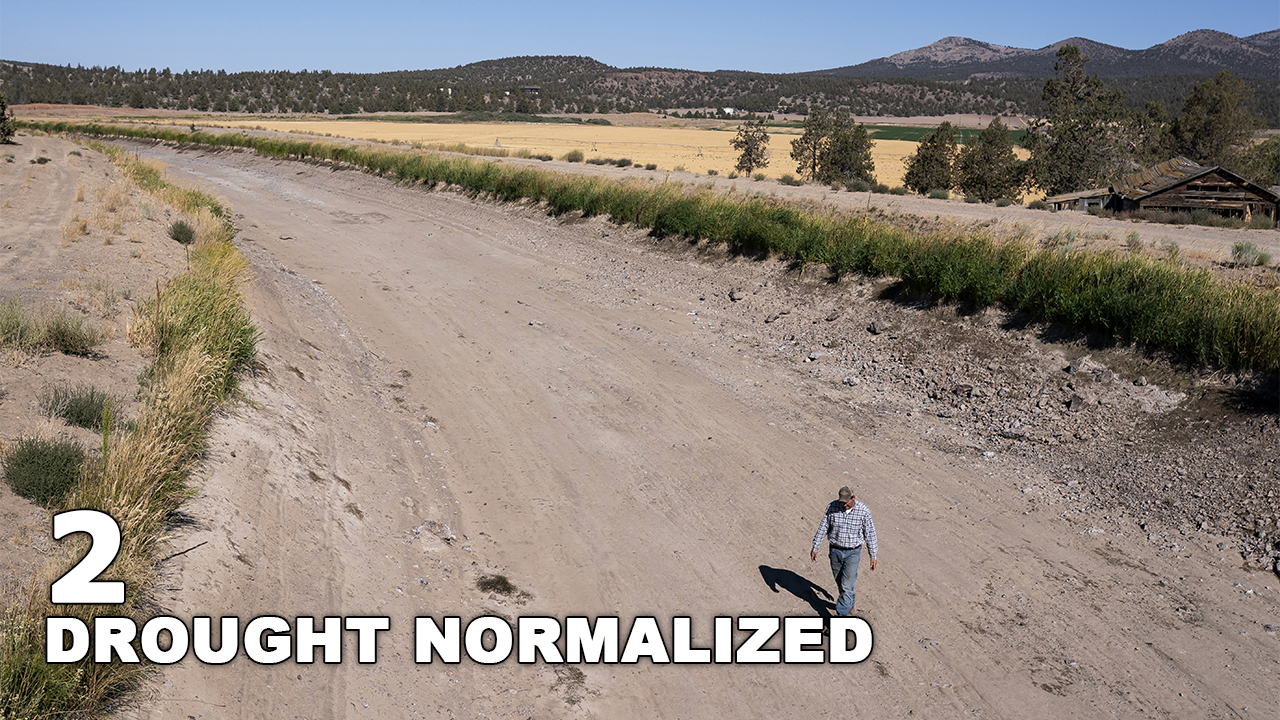
Summer hadn’t even started when on May 31 the U.S. Drought Monitor declared 57.79% of the Pacific Northwest was in drought. The following months brought little change. “We’re just trying to figure out how to survive,” Oregon State Sen. Lynn Findley of Vale told his eastern Oregon constituents during a virtual talk. In the same event, State Rep, Mark Owens said drought is a life-changing issue for farmers and ranchers—some people had sold their cattle because they couldn’t afford hay, and many had allowed land to go fallow, which means they won’t produce crops this year. In January, a report from the Department of Commerce said Idaho, Oregon and Washington had collectively lost at least $3 billion in 2021 due to weather disasters. It remains to be seen how 2022 stacks up statistically, but after an unseasonably dry autumn, the ledger likely won’t be in the green.

MORE: Oregon Rep. on drought: ‘We’re trying to figure out how to survive.’

USFS

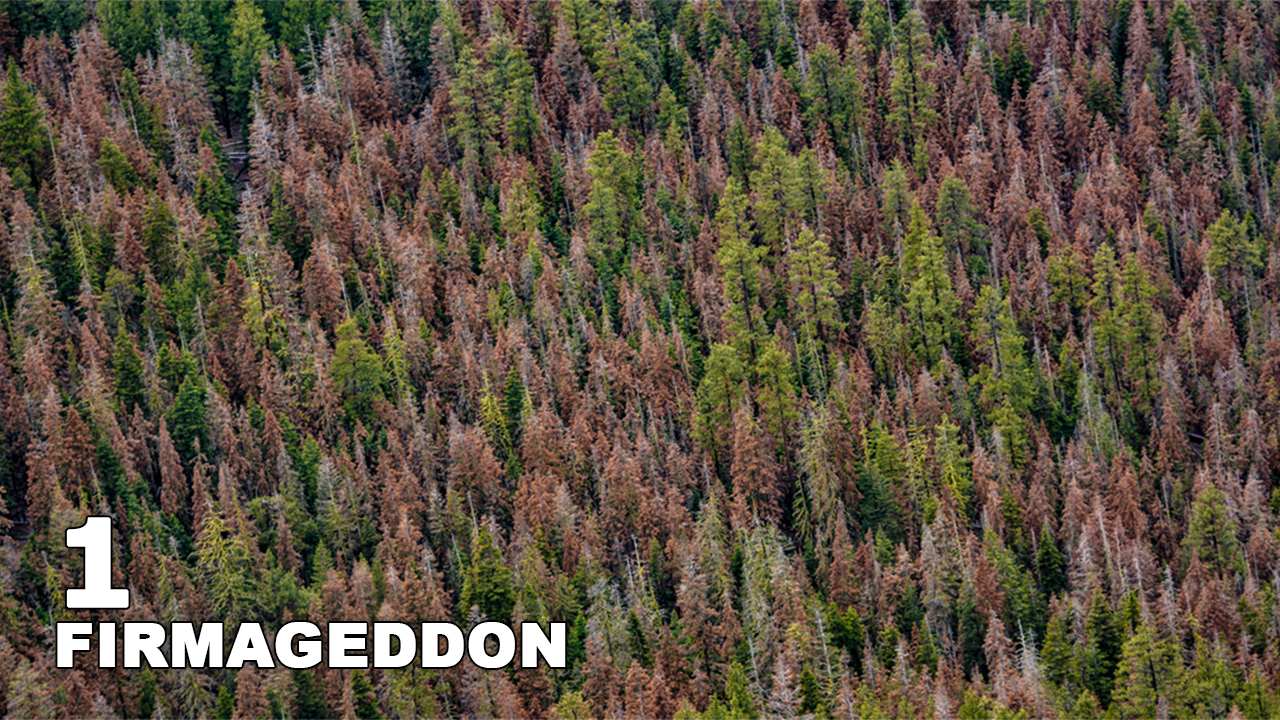
Fir trees in Oregon and Washington died in record-breaking numbers in 2022, according to research conducted by the U.S. Forest Service. Called “Firmageddon” by researchers, the “significant and disturbing” mortality event was the largest die-off ever recorded for fir trees in the two states. Driven by drought, the Forest Service observed fir die-offs occurring on more than 1.23 million acres (over 1,900 square miles) in Oregon and Washington. “It is unprecedented, the number of acres we have seen impacted,” said Daniel DePinte, who led the survey. First reported by science writer Nathan Gilles for Columbia Insight, the story spread across national and international media, from Mother Jones to Esquire to The Guardian, becoming the biggest—and perhaps most portentous—environmental story to come out of the Pacific Northwest in 2022.

MORE: Massive die-off hits fir trees across Pacific Northwest

With your support Columbia Insight will continue reporting on the most critical environmental issues affecting the Columbia River Basin in 2023.

Chuck Thompson is editor of Columbia Insight.

Appreciate this story? To support environmental journalism on Columbia Insight click here

By |2025-04-28T12:49:45-07:0012/19/2022|News|1 Comment

© Copyright 2013-2025 Columbia Insight. All Rights Reserved.

As a 501(c)3 nonprofit organization, all donations to Columbia Insight are tax deductible to the full extent of the law. Our nonprofit federal tax-exempt number is 82-4504894.