Stay Updated Subscribe today for the latest research + reporting about environmental news. Subscribe Now

Stay Updated Subscribe today for the latest research + reporting about environmental news.

Subscribe Now

Chuck Thompson

Chuck Thompson

Chuck Thompson

About Chuck Thompson

Chuck Thompson is editor of Columbia Insight.

Remembering John Harrison: Energy authority

For more than three decades, the Washington writer kept the public informed about the driving environmental issue of the times

John Harrison

For Columbia Insight and others, John Harrison was the voice of power. Courtesy photo

By Chuck Thompson. February 10, 2025. If you wanted to know about energy in the Pacific Northwest, John Harrison was your man.

Hydroelectric. Solar. Wind. Transmission lines. Right of ways. Legal issues. Old projects. New plans. Harrison knew as much about electrifying the Columbia River Basin as just about anyone.

True to his easygoing, generous nature, he was always happy to share his knowledge.

That made him particularly valuable to Columbia Insight over the past few years.

After retiring in 2022, following a 31-year career as information officer at the Northwest Power and Conservation Council, John picked up where he’d started his career—as a reporter and copy editor at several Pacific Northwest newspapers—by joining Columbia Insight as our go-to journalist for all things energy-related.

For any environmental news organization, “Energy” is as important a beat as there is. This is especially true in the Pacific Northwest, where the Columbia River plays such an outsized role in everything from power to agriculture to recreation to salmon recovery.

John died last week of lymphoma. He was 71 years old.

A Vancouver, Wash., resident, John was a graduate of Washington State University (Pullman, Communications) and the University of Oregon (MA Journalism).

His excellence as a journalist reflected his personality. Although his commitment to environmental causes and to renewable energy was clear, he was objective in his analysis and reporting, never soft-pedaling the obstacles. By nature a kind person, with a gentle wit and sense of irony, he was not without sympathy for those who opposed positions he personally held—he understood that people with very different viewpoints could be acting in good faith. But facts were facts.

For almost a decade, he’d been an active member of the board of Friends of the Columbia Gorge, where he was known for his thoughtful contributions to board discussions.

“He was thrilled when we asked him to join the board nine years ago and his reporter objectivity helped me navigate challenging times,” said Kevin Gorman, executive director of Friends of the Columbia Gorge. “I will always appreciate his counsel and wisdom.”

With John’s passing, the region has lost perhaps its most knowledgeable energy and environmental reporter, and an irreplaceable font of institutional knowledge of Northwest power issues.
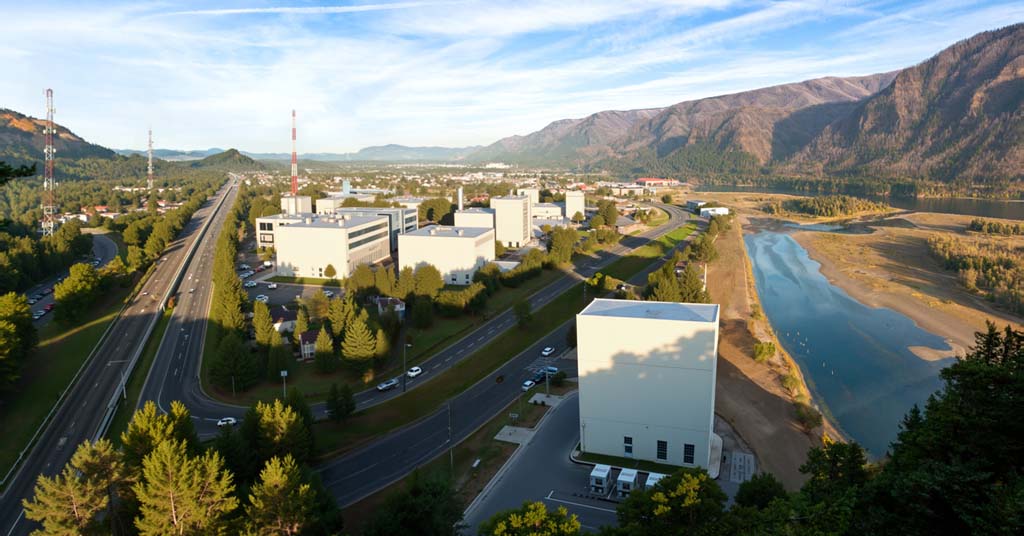
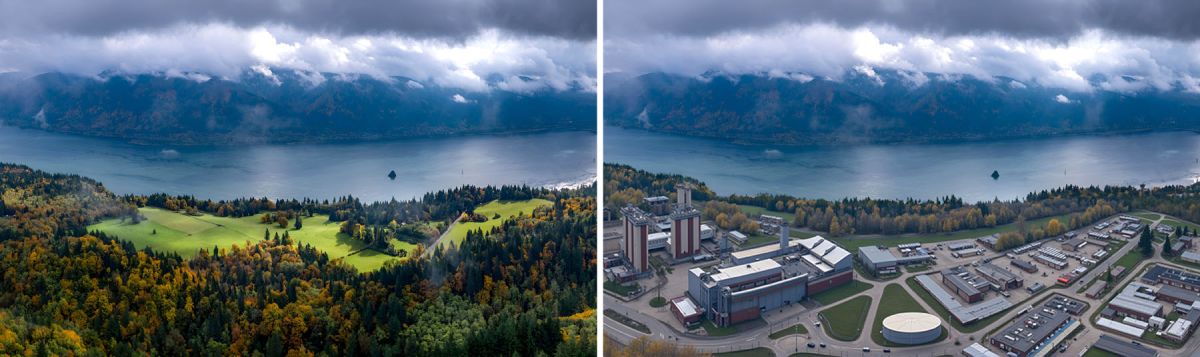
What if the Columbia Gorge were opened to development?

A new AI art project illustrates the “unseen impact” of decades of effort to preserve the national scenic wonder

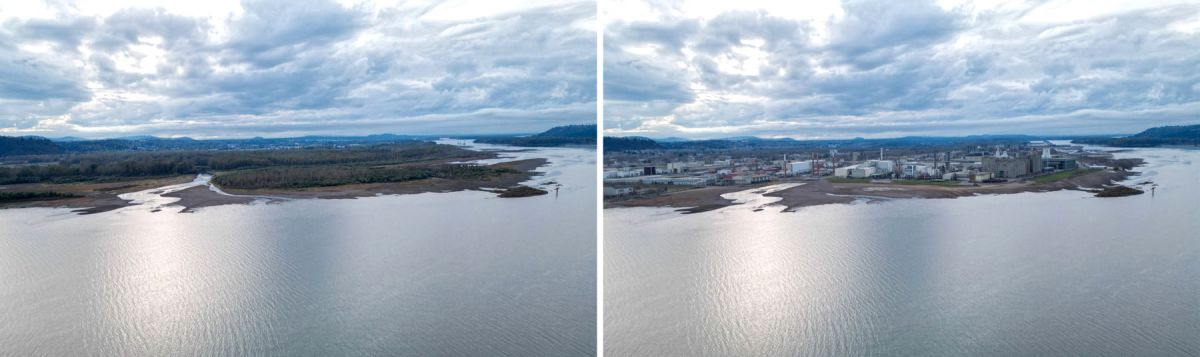
AI rendering of view from Beacon Rock on Washington had development occurred.

Beacon Rock: The area near the famed Gorge landmark was the site of a proposed subdivision in the early 1980s and was primed for further development. This AI photo imagines the impact of commercialization that never happened. Image: Friends of the Columbia Gorge

By Chuck Thompson. January 9, 2025. Imagine your next drive through the Columbia River Gorge.

Just east of I-5 along Washington State Route 14, passing Steigerwald Lake National Wildlife Refuge, you gaze not at the existing, wide-open bird habitat along the Pacific Flyway (a migratory bird path extending from Alaska to Patagonia), but upon the rusting silos and stark warehouses of an industrial park.

Further east, you stop to climb Beacon Rock. Instead of the majestic view of the Columbia River you’re accustomed to, however, a cluster of multistory office buildings dominates the vista from the top.

Crossing into Oregon via the Bridge of the Gods at Cascade Locks, you double back west to take in the glorious scene looking toward Washington from Crown Point. You get out of the car and look across the Columbia River at … a sprawling subdivision. In that L.A.-to-San Diego way, houses, strip malls, chain stores and commercial development have obliterated any distinction between communities from Vancouver to Camus to Washougal.

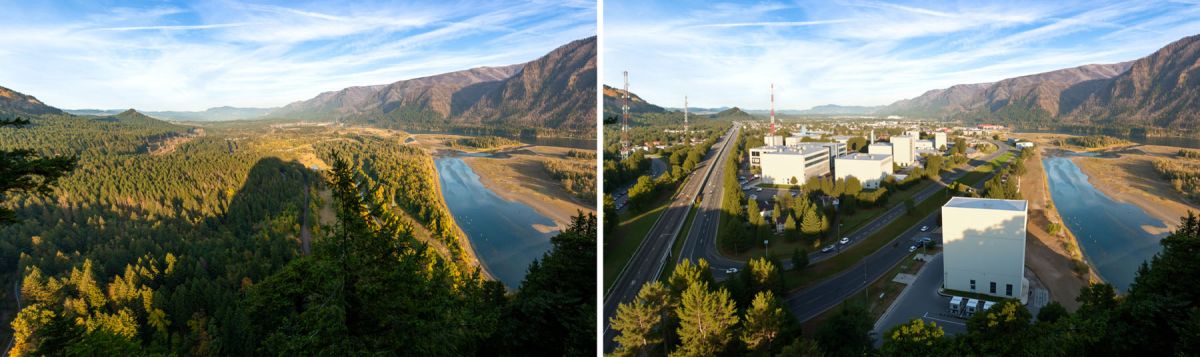
AI rendering of view from Cape Horn with and without development

Cape Horn Overlook: The farmlands below Cape Horn (today, left) on the Washington side of the Columbia River Gorge are located 30 minutes from the Portland-Vancouver area and, but for federal protection, would have been susceptible to commercial pressure, including industrial development (imagined, right). Image: Friends of the Columbia Gorge

These views aren’t real, of course.

But they might be, had the Columbia River Gorge National Scenic Area Act not been passed by Congress and signed into law by President Ronald Reagan in 1986.

The act drew boundaries for a 292,500-acre patchwork of public and private lands and charged the U.S. Forest Service with implementing a management plan in partnership with the newly established bi-state Columbia River Gorge Commission.

At the time highly controversial, that piece of federal legislation saved the Gorge from runaway development, safeguarding its royal views and environmental health.

This is the message that a new AI art project released by Friends of the Columbia Gorge in December hopes to convey.

Created with AI technology, realistic “crystal ball” images show what the Gorge might well look like had the Scenic Area Act not been passed.

“The Columbia Gorge would be a very different place without the protections of the National Scenic Area,” Friends of the Columbia Gorge Executive Director Kevin Gorman said in an email to the organization’s followers. “Unchecked residential, commercial and industrial development would have consumed parts of it, transforming cliffs, forests, meadows and desertlands into crowded commercial and residential expanses stripped of scenic beauty and ecological integrity.”

Sandy River Delta AI rendering with and without development

Sandy River Delta: In Troutdale, Ore., this riverfront land was once zoned for industrial use. Today (left), the 1,500-acre natural area is used for horseback riding, hiking, biking, wading, fishing, bird-watching and other activities. Image: Friends of the Columbia Gorge

Titled “What if the National Scenic Area never existed?” the project was inspired by conversations within the organization about how to convey to the public the impact of the conservation work done over the years by Friends of the Columbia Gorge and other individuals, private organizations and government agencies.

“It’s simple to show what does exist—forests, streams, cliffs, wildlife, rural communities, etc.—but the true impact lies in what isn’t there,” Tim Dobyns, communications and engagement director for Friends of the Columbia Gorge, told Columbia Insight.

“The area we now know as Steigerwald Lake National Wildlife Refuge was being considered for a nuclear power plant,” said Gorman. “The large, undeveloped Steigerwald and Sandy River Delta lands were zoned for industrial use.”

Friends of the Columbia Gorge engaged an AI designer in Madison, Wisc., to create its somewhat dystopian views of what might have been.

Getting to a finished product required lots of trial and error.

“The process combined Photoshop’s generative fill feature for basic shapes—houses, roads, buildings, wind turbines, mines, etc.—with a program called Stable Diffusion to refine those elements into realistic visuals,” according to Dobyns. “This two-step approach helped us reach (a) level of detail and realism.”

AI rendering of Beacon Rock view

Clear not crowded: The view today (left) from the Washington side of the Gorge at Beacon Rock might be quite different but for massive preservation efforts. Image: Friends of the Columbia Gorge

Without protections, the Gorge would likely be a lot “smaller,” at least in the public’s imagination.

“Today, we think of the Gorge as stretching 85 east-to-west miles from the Sandy River to the Deschutes River,” said Gorman. “Without the National Scenic Area, most people’s perception of what the Gorge is would be the 15-mile waterfall corridor between Latourell Falls and Eagle Creek.

“Without the land-use laws the National Scenic Area created, what would have become of the outlying areas? One only has to look at what lies at the base of the Smoky Mountains in Tennessee where the once-small communities of Gatlinburg and Pigeon Forge have gone into tourism overdrive to capitalize on the draw of the nearby Great Smoky Mountains National Park.”

The full project and all of its dramatic images can be viewed at the Friends of the Columbia Gorge website.

By |2026-01-13T11:22:27-08:0001/09/2025|Conservation|5 Comments

Jimmy Carter and the night we lost the war on climate change

In 1977, the nation turned its back on Carter’s call for environmental responsibility. It’s never looked back

Jimmy Carter

Sweater speak: Carter tried to cajole the nation into energy conservation. Screen shot: Miller Center of Public Affairs

By Chuck Thompson. December 29, 2024. Jimmy Carter loved sweaters. Famously.

As president, he wore them so often The Washington Post wrote “President Carter is doing for sweaters today what Lana Turner did for them in the 1940s.”

The paper dubbed him “The Sweater Man.” It got Ralph Lauren and Calvin Klein to offer commentary.

Carter liked the informal look but he also wore sweaters to make a point.

The most famous example is the Feb. 2, 1977, televised speech he delivered to the nation addressing the ongoing energy crisis.

Sitting next to a crackling fire, wearing a beige “grandfather” cardigan, Carter delivered some plainspoken, Depression-era wisdom.

The real problem, he told America about its unrestrained fuel consumption, was “our failure to plan for the future, or to take energy conservation seriously.”

Carter outlined steps toward a national energy policy that would “emphasize conservation” as well as “research on solar energy and other renewable energy sources.”

A few weeks earlier Carter had asked citizens to do their part by lowering their thermostats to 65 degrees at night. (During the Arab oil embargo in 1973, President Nixon had suggested dropping thermostats from 72 to 68 degrees to decrease dependence on foreign oil.)

Before that, Carter had broken with tradition by becoming the first president to walk to the White House with his wife following his inauguration, rather than ride in a motorcade.

Carter’s vice president, Walter Mondale, once recalled the results of his boss’s summertime parsimony.

“He turned off the air conditioners, and it was so hot in the White House, people would come in there … It was unbelievable. It would be a hundred above in there,” said Mondale while laughing.

Carter had 32 solar panels installed on the roof of the White House West Wing as a symbol of his faith in “the power of the sun.”

Jimmy Carter

You are my sunshine: President Carter at the dedication of the solar-thermal panels at the White House, June 20, 1979. Photo: Jimmy Carter Presidential Library

“Some of these efforts will also require dedication, perhaps even some sacrifice from you,” Carter told Americans in February 1977 about efficient use of resources. He stressed “cooperation and mutual effort.”

The speech was officially titled “President Jimmy Carter’s Report to the American People on Energy.” It became known as “the sweater speech.”

Given the contemporary political climate—to say nothing of the actual climate—watching Carter’s gentle attempt to prod the nation into environmental responsibility feels borderline absurd.

Our burn-baby-burn nation feels as removed from Carter’s homespun counsel—Cold? Put on a sweater, dummy!—as it does from water beds, rotary phones and popcorn ceilings.

It also feels sad.

Carter never managed to get a handle on the hangover of the ‘60s, the condition that defined his late-‘70s administration.

And it turned out Americans were in no mood to be scolded over their belief in a providential right to urban pickup trucks, 30-yard-long refrigerated supermarket aisles filled with plastic bottles of colored sugar-water and keeping the furnace and/or A/C running even when you’re not home.

Sacrifice? What’s that?

Maybe Carter was just the wrong guy to deliver the right message.

Journalist Hendrik Hertzberg got off a good one.

“Jimmy Carter is a Low Church Protestant, where it’s a sin not to have a hard wooden bench to sit on in church,” he said. “And he brought that simplicity to the White House.”

Sorry, we can’t have it all

Throughout its existence, Columbia Insight has reported on noble efforts by well-intentioned government agencies, nonprofit groups, private companies and individuals around the Columbia River Basin to mitigate the damage caused by our voracious resource consumption.

Fish ladders. Recycling drives. Cloud seeding. Plastic bag bans. Carbon sequestering. Public transit initiatives. Clean-up weekends. Habitat restoration. Dam removal. No-till farming. Pumped storage. Anti-lawn campaigns. Native-plant nurseries. Water quality commissions. Restoration working groups. Wildlife repopulation. Sustainable tourism. Sustainable beer. Sustainable laundry soap. Sustainable whatever.

None of these are bad ideas. None of the intelligent people promoting them are wrong to do so.

In recent months we’ve reported on a grassroots effort to bring large-scale composting to rural Washington to reduce carbon emissions from landfills, the amazing reclamation of Baldwin Creek salmon habitat in Hood River, Ore., and the Boise Airport converting to 100% solar power. Why wouldn’t we? Thank God someone is tackling these jobs.

Thermostat

Comfortably numb: Most thermostats are advertised with a common suggested temperature. Photo: Honeywell

But in counting up all the good ways people address climate change and habitat destruction, it’s curious how the math on success always falls on the negative side of the ledger.

I think part of the problem is leaders who refuse to face up to the truth. Politicians seem to honestly believe we can have it both ways. Increased consumption and environmental conservation.

Former Ore. Gov. Kate Brown repeated a refrain common to both political parties when she signed the Private Forest Accord package into law a couple years ago.

“The package of bills I signed today is built on the understanding that, through science-based forest management, we can strike the right balance between protecting the health of our forests and creating jobs and economic growth in our rural communities at the same time,” she said.

But as we keep finding out year after dire year, that’s nonsense. We’re not even close to striking a balance between economic growth and conservation.

Put a carpenter’s level on the environment and the little bubble that’s supposed to float to the middle wouldn’t even be visible through the glass.

I’m not sure when this mindless “not only can we have it all, we deserve it all” philosophy crept into the national mythology.

Some time in the 1980s, near as I can tell.

When Oliver Stone put the words “Greed is good!” into Gordon Gekko’s mouth in Wall Street in 1987 he meant it as a warning.

America took it as a call to arms.

Truth bombs … as usual

I was around though not old enough to vote when Jimmy Carter was trying to talk Americans into the idea of personal responsibility.

I remember most of the adults around me not caring for him, and the pummeling he took from Ronald Reagan in the 1980 election.

Then Reagan very publicly having Carter’s solar panels removed from the White House. Cold? Burn more oil, dummy!

Pop aisle

Depression begone! Throwaway convenience is a now way of life. Photo: Mike Mozart/Flickr

The broad consensus is that a poor economy and the 444-day Iran Hostage Crisis did in Carter at the polls.

His frank talk about conservation couldn’t have helped.

What’s the old saying? He who speaks the truth should keep one foot in the stirrup.

“Carter tackled the energy issue first, a costly mistake,” wrote historian Gregory L. Schneider. “He called the energy crisis ‘the moral equivalent of war,’ but energy was not a top priority for the electorate.”

It still isn’t, of course. Post-World War II Americans loathe one thing more than all others—self-sacrifice.

Truth has never been real popular either.

“I realize that many of you have not believed that we really have an energy problem,” Carter said in that February 1977 speech, a line that might as well have been delivered tomorrow, not 45 years ago.

Would we be living in a different world today had everyone heeded Carter’s advice and turned their thermostats to 65 in winter and kept the A/C to a minimum in summer?

I think so, actually. A lot of energy would have been saved; a lot of less carbon would have been released into the atmosphere.

Would climate change have been arrested? I have no idea. Probably not.

But I know we’d be in a better place if as a country we started thinking about ways to be more environmentally self-sufficient rather than reliant on a relative handful of do-gooders to keep putting fingers in dykes.

Hipsters and thrift store buyers still rock the occasional cardigan, but sweaters aren’t really in fashion these days.

Maybe a president addressing the nation in a hoodie might someday get things turned around.

Chuck Thompson is editor of Columbia Insight.

The views expressed in this article belong solely to its author and do not reflect the opinions of anyone else associated with Columbia Insight.

What’s Columbia Insight about? Check out our video.

By |2026-01-13T11:27:40-08:0012/29/2024|News, Opinion, Sustainable Development|4 Comments

10 biggest environmental stories of 2024

Heat, wildfire, invasive species, power-hungry corporations. The Pac NW kept getting more of everything

By Chuck Thompson. December 19, 2024. In April, the Federal Energy Regulatory Commission denied petitions and opposition from environmentalists, the governors of Oregon and Washington and the states’ U.S. senators and attorneys general and green lit plans by Canadian company TC Energy to expand a 1,400-mile gas pipeline through Idaho, Washington, Oregon and northern California.

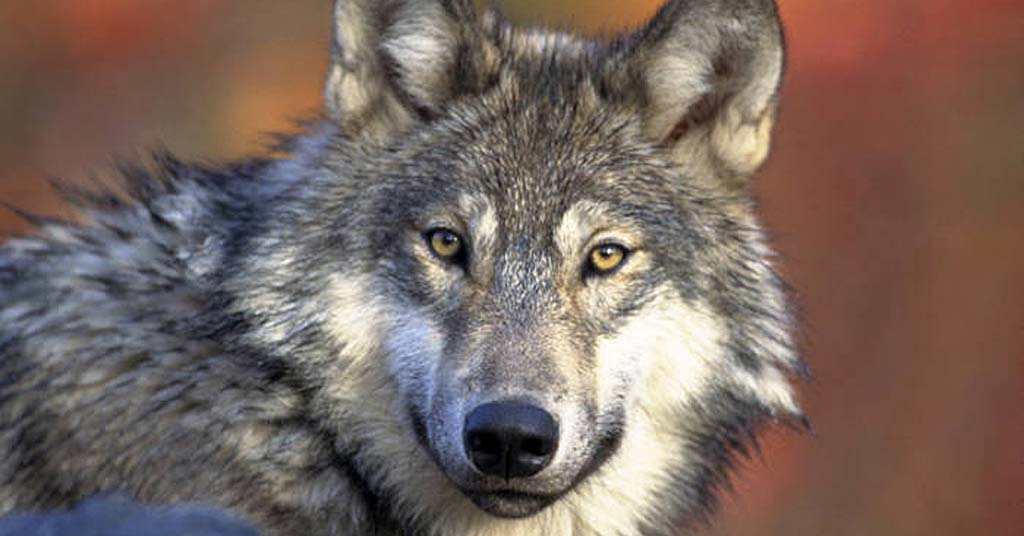
In October, federal and state officials announced they were seeking information connected to the illegal killing of two endangered gray wolves in Washington.

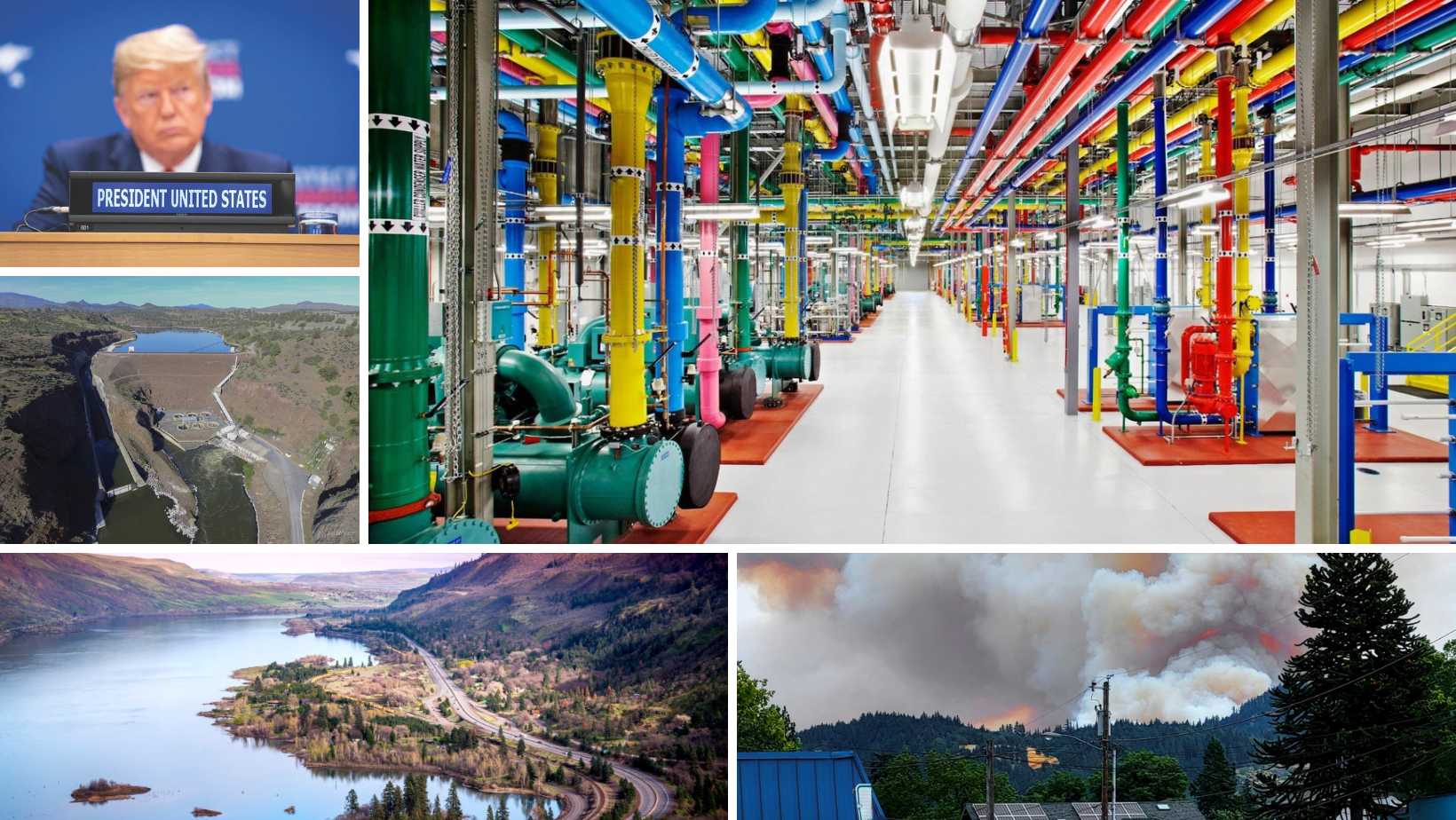
In July, Columbia Insight published a lengthy investigation into complaints that the Pelton Round Butte Hydroelectric complex near Madras, Ore., operated by PGE, is degrading water quality and fisheries in the river. In December, the fledgling Oregon Journalism Project launched its operation with the same story.

Important events, no doubt, but each was edged out by 10 others on our annual list of the year’s biggest environmental stories.

Photo: Ania Tusel Photography/Flickr

In March, the U.S. Fish and Wildlife Service and National Park Service proposed relocating three to seven bears to the northern Cascade Range annually until an initial population of 25 grizzly bears is established. The long-term goal is to have 200 bears living in a 9,800-square-mile grizzly bear recovery zone in the next 60 to 100 years. The proposal doesn’t amount to a final decision, but, after three decades of study and public debate, advocates and opponents seemed to take the announcement as indication of a done deal.


Photo: AP Photo/Jenny Kane

Portland endured its hottest July on record—factoring both daily highs and lows the average monthly temperature at Portland International Airport was 74.4 degrees. Even low temps stayed high, more often than not remaining in the 60s overnight. The July heat wave was cited as a factor in at least 17 deaths statewide.


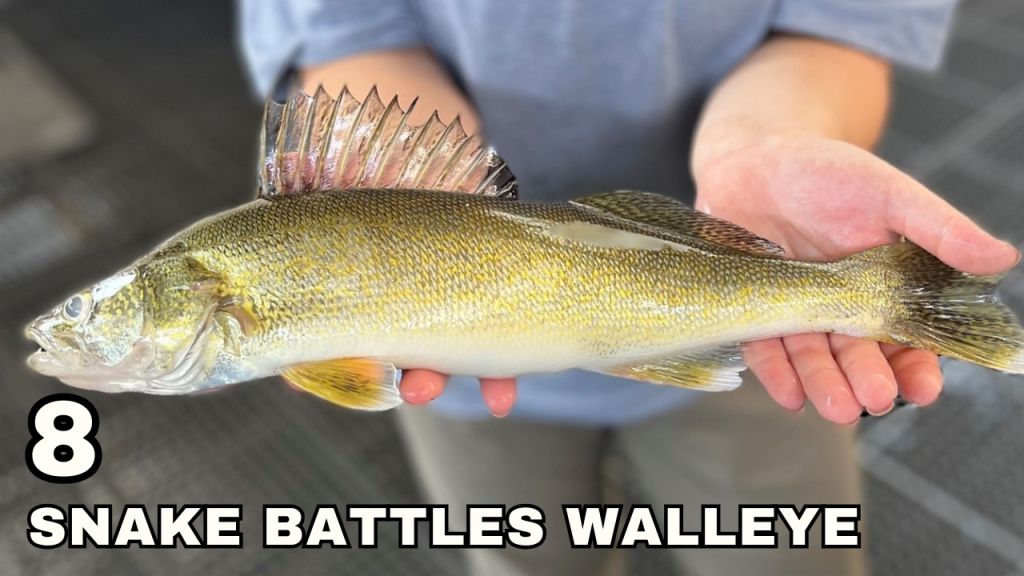
Photo: IDFW

In April, in the midst of their ongoing battle against invasive quagga mussels, fish managers and tribal biologists across Idaho, Washington, Oregon joined federal agencies to fight the invasion of nonnative walleye. The beloved game fish of the Midwest, walleye have been in the Columbia River system since the 1940s and reached Snake in the 1990s. Now the fish are moving into upstream anadromous rearing habitat. “That’s when it starts getting really concerning,” said Marika Dobos of the Idaho Department of Fish and Game. Fish biologists are worried the walleye could undo decades of progress made on rebuilding salmon and steelhead populations in the Snake River.


Photo: U.S. Dept. of State

After six years and 19 rounds of largely closed-door negotiations, the United States and Canada announced in July that an agreement to update the 60-year-old Columbia River Treaty had finally been struck. The update will see a 50% reduction in power the United States sends to Canada by 2033. The United States will have access to “reservoir storage space” behind Canadian treaty dams for flood management, but will fork over roughly $37 million over the next 20 years. Critics called the updates “business as usual.” The treaty does not reflect tribal interests, nor the needs of the river or its fish, said the Columbia River Inter-Tribal Fish Commission. Stakeholders are concerned the U.S. Senate and incoming Trump administration won’t ratify the treaty. 


Photo: NOAA

The Fish Passage Center at Bonneville Dam on the Columbia River recorded 755,909 sockeye over the dam in 2024, obliterating the 10-year average return of 329,570. Experts credited careful dam management and improved ocean conditions. “Implementation of a fish water management tool since 2014 has been key in turning this run of salmon around from near extinction in 1994 to one of the strongest in the Columbia Basin—despite crossing nine dams,” reported The Seattle Times.

In November, fish biologists recorded the highest number of adult steelhead trout to return to Oregon’s Deschutes River since the 1960s. After a spate of poor press, Portland General Electric and the Confederated Tribes of Warm Springs (partners in the maligned Pelton Round Butte Hydroelectric Project on the river) celebrated a count of more than 250 adult steelhead swimming through the Deschutes.


Photo: Washington DOE

In March, the EPA added the Upper Columbia River Site in northeast Washington to the list of hazardous waste sites in the United States eligible for cleanup under the federal Superfund Program. “The agency has determined that soils contaminated with lead and arsenic pose unacceptable risk to residents at affected properties, particularly to children,” said the EPA. Canadian mining company Teck Cominco Metals dumped almost 10 million tons of toxic slag into the Columbia River over a period of 90 years, contaminating portions 150 miles upstream of Grand Coulee Dam, including the Lake Roosevelt National Recreation Area.


Photo: Jurgen Hess

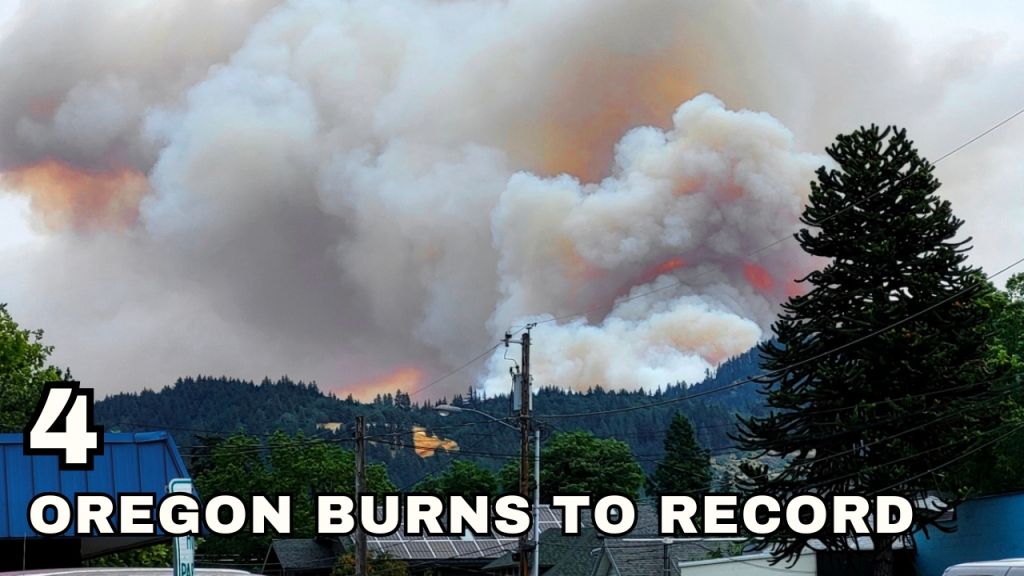
Wildfires once again devastated landscapes, forced evacuations, closed highways and led to fatalities across the Pacific Northwest. No state was harder hit in 2024 than Oregon, which endured a record-breaking fire year, with more than 1.9 million acres burned statewide. The most acres burned before 2024 was in 2012, when 1.2 million acres were scorched. On average, 620,000 acres have burned each year this decade. “It started early, and it’s kept a steady pace since then,” Oregon Department of Forestry spokesperson Jessica Neujahr said in September.


Photo: Michael-Wier/Klamath River Renewal/Cal Trout

In October, the last lower Klamath hydroelectric dam was fully removed, opening 420 miles of the Klamath River and its tributaries in Oregon and California. A tribal-led movement, the largest dam-removal project in history destroyed four dams built between 1918 and 1964 to provide electricity but that had disastrous effects on tribal communities and salmon populations.


Photo: National Archives

From ratification of the new Columbia River Treaty to EV rebates to fish habitat protections, the future of endless conservation issues in the Pacific Northwest and around the country were cast into doubt in November when Donald Trump became President-elect Trump and Republicans gained control of the U.S. House of Representatives and Senate. Local and statewide conservation ballot measures were approved by voters in the Pacific Northwest, but for conservationists, Trump’s history of favoring industry, commercialization and development over conservation, and his statements calling climate change “a hoax,” cast an ominous shadow over the future of environmental preservation.


Photo: Google

Operated by large tech firms, such as Amazon, Apple, Google and Meta, data centers are on the march throughout the Pacific Northwest and consuming electricity at astounding rates. A Seattle Times/ProPublica series reported “the data center industry’s demand for electricity is growing so much that it could threaten Washington’s efforts to transition to a carbon-free power grid.”

The voracious appetite of data centers could push the region’s power grid to its limits leading to rolling blackouts, according to a July forecast from the Northwest Power and Conservation Council. “The Pacific Northwest has seen its data center market grow rapidly in recent years as more hyperscale facilities are built to meet soaring demand. The region’s relatively cool climate and large amounts of available hydropower, make it a popular location for operators,” reported London-based Data Centre Dynamics.

In November, as reported by Columbia Insight, Amazon announced an agreement with Energy Northwest, a consortium of 29 utilities in Washington, to build four small nuclear reactors at the Columbia Generating Station in Richland, Wash., to power data centers in eastern Oregon.

In December, The Oregonian reported the tech sector “will take all the electricity it can get its hands on” and warned of “severe consequences if the region doesn’t respond in time,” adding that data center demand is “soaring because of artificial intelligence, which uses massive amounts of electricity for advanced computation.”

According to data center researcher Baxtel, The Pacific Northwest Data Center Market has 237 data centers, operated by 74 providers. More are on the way.

The Pacific Northwest’s only nonprofit, non-advertiser-driven news source devoted to environmental issues affecting the Columbia River Basin, Columbia Insight depends on support from readers like you. You can help us continue investigating critical stories by donating here.

By |2026-01-13T11:34:20-08:0012/19/2024|News|1 Comment

Two endangered gray wolves killed in Washington. $10,000 reward offered

Locals wonder whether a male wolf killed in Klickitat County could mean the end of the Big Muddy Pack

Gray wolf photo by Gary Kramer, USFWS

As of the end of 2023, Washington had 260 wolves in 42 packs. File photo: Gary Kramer/USFWS

By Chuck Thompson. October 30, 2024. The U.S. Fish and Wildlife Service and the Washington Department of Fish and Wildlife announced this week that the agencies are seeking information connected to the illegal killing of two federally listed endangered gray wolves.

According to the USFWS, an adult male wolf was killed on Oct. 6 east of the Klickitat River near Highway 142 and Goldendale in Klickitat County.

An adult female wolf was found dead near Twisp in Okanogan County two weeks later.

The USFWS and WDFW are conducting joint investigations into each case.

As reported by Columbia Insight, in April 2023, Southwest Washington acquired its first gray wolf pack in a century when the two-member Big Muddy Pack formed in Klickitat County.

In November 2023, Klickitat County Sheriff Bob Songer stoked anti-wolf sentiment and said it would be unconstitutional to arrest someone for killing a wolf that’s attacking livestock or pets. “I don’t think they need to be protected,” Songer told Columbia Insight at the time.

By February 2024, the female member of the pack had mysteriously vanished, despite WDFW monitoring efforts. Some locals wondered at the time whether the wolf had been intentionally killed.

The USFWS did not say whether the wolf killed on Oct. 6 in Klickitat County was collared or not.

“The Service is offering up to a $10,000 reward for any information that leads to an arrest, a criminal conviction or civil penalty assessment per each case,” said the USFWS in a press release.

Anyone with information about either case can call the U.S. Fish and Wildlife Service using the FWS TIPs line at 1-844-FWS-TIPS (1-844-397-8477), or https://www.fws.gov/wildlife-crime-tips, or call WDFW at 877-933-9847 or send an email to reportpoaching@dfw.wa.gov. Callers may remain anonymous.

By |2026-02-09T10:34:35-08:0010/30/2024|Wolves|5 Comments

Squirrels are out of control in Portland, right?

The tree-dwelling rodents seem to have invaded backyards en masse, but no one knows for sure how many there are

Squirrel in a tree

You looking at me? Portlanders have gotten used to unnerving stare-downs. Photo: Matt McGee/Flickr

By Chuck Thompson. August 22, 2024. I know I’m supposed to like them. Supposed to think they’re cute.

But over the past decade squirrels have nested in my attic, chewed holes in the roof of a wooden structure in my backyard and eaten through electrical wiring in my truck.

All of this has led to thousands of dollars in repairs.

What’s more they’ve become aggressive, brazen and hissy. They stare at me through windows, screech like wounded banshees at anything that comes into “their” territory, antagonize Sadie the Cat (be nice if she’d grow a backbone but that ship’s sailed) and stage sunrise track meets atop my roof.

And they keep coming.

Over the past couple of decades, squirrels have proliferated at an alarming rate in my densely populated Southeast Portland neighborhood.

Relatives and friends all over town—particularly on the east side of the Willamette River—report the same thing: squirrels in Portland are out of control.

They’ve coalesced into an army. They’re destructive. They’re getting worse.

Like many people I know, this is the stance on squirrels I’ve grown into over the past decade or so. (Interestingly, these are essentially the same problems our fellow citizens in rural areas have with cougars, wolves and elk—wildlife destroying property and causing financial distress.)

But is it accurate?

Though real and aggravating, my experiences with squirrels are anecdotal. So are those of friends and neighbors.

Have squirrels really become as big a problem in Portland as it seems to me they have?

Before my squirrel animus ascended to Rick and Morty levels, I decided to find out.

Who’s counting?

Since squirrels are rodents, and closely related to rats and mice, I assumed Multnomah County Vector Control was keeping an eye on the situation.

After all, this is the public office that “protects health and enhances livability through control of the rat and mosquito populations, and serves as a resource for addressing public health vector problems.”

The answer to my first question—“Is the squirrel population in Portland increasing?”—surprised me.

“The County’s Vector Control division does not manage squirrels, skunks, raccoons, coyotes or most wildlife,” a communications coordinator emailed me.

Huh. So no one at the county was keeping track of squirrels.

I sent an email blast to five local companies that advertise squirrel removal services. Got some squirrels you want disappeared? These are your guys.

I wanted to know if business was booming.

Eastern gray squirrel at Portland State University

On the march: Eastern gray squirrel on the Portland State University campus. Photo: Corey Seeman/Flickr

Only one replied: Keith Chaloux, owner of Pest & Pollinator in Southeast Portland.

“Invasive squirrel management, like rodent control, is basically externalized onto the landowners that experience damage. They often hire Wildlife Control Operators (WCOs) like me, who are licensed through the Oregon Department of Fish and Wildlife,” wrote Chaloux. “I have been a WCO working with squirrels since about 2016, and it has always been a major pest by volume of calls.”

It turned out Chaloux had also been wondering about Portland’s squirrel population. He’d recently gone so far as to make a public records request to ODFW for squirrel data.

“But for the opposite reason—I suspected their numbers are declining, and was interested to learn that, yes, the number of Eastern gray squirrels captured by WCOs in Multnomah County actually has declined over the past few years,” he told me.

The stats Chaloux got from ODFW covering Eastern gray squirrel captures in the county reported by WCOs surprised me.

2023: 392

2022: 402

2021: 471

Those numbers seemed to disprove my suspicion about the squirrel uprising.

But given that they focus on just one species, and don’t involve reports from homeowners, they were of limited value.

“Unfortunately, I didn’t end up requesting a larger sample. Squirrel populations are dynamic, in part because of the concept of ‘mast years,’” Chaloux wrote, referring to years in which trees produce an unusually large number of fruits, seeds or nuts, creating a bumper crop that results in population booms among small mammals, like squirrels and mice.

Squirrel species

I began learning more about squirrels in the Pacific Northwest.

The most important information involved the types of squirrels in my backyard.

Oregon has four native tree squirrel species: Western gray, Douglas, American red and northern flying squirrels.

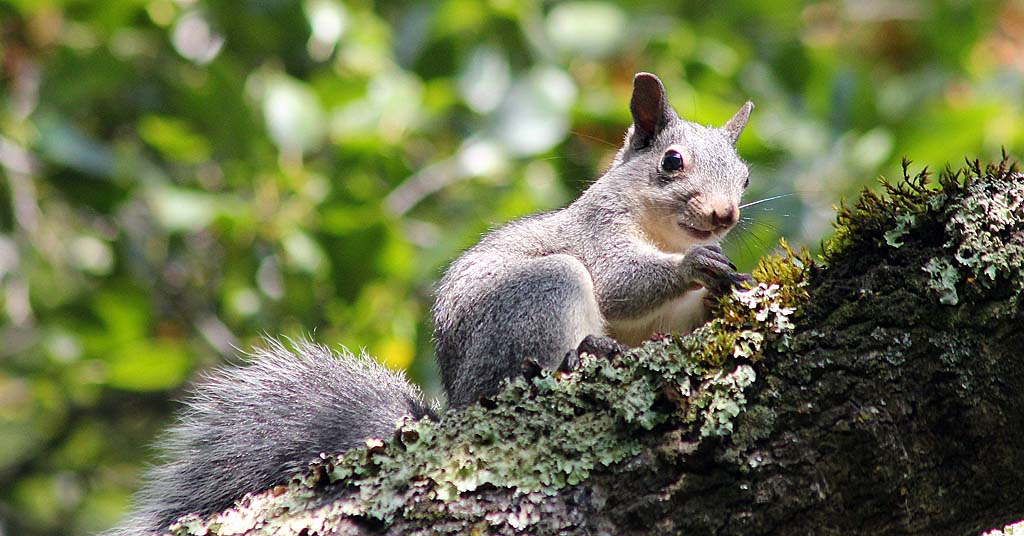
The Western gray squirrel is the largest of these four and the only one you’re likely to encounter in an urban setting. It has a creamy white belly and silvery gray fur, and ranges in length from 19 to 24 inches including the tail which is a bushy gray with black hairs.

Western gray squirrel

Pushed out: In Washington, the three remaining populations of the Western gray squirrels (pictured) are isolated and face a number of threats Photo: David Hofmann/Flickr

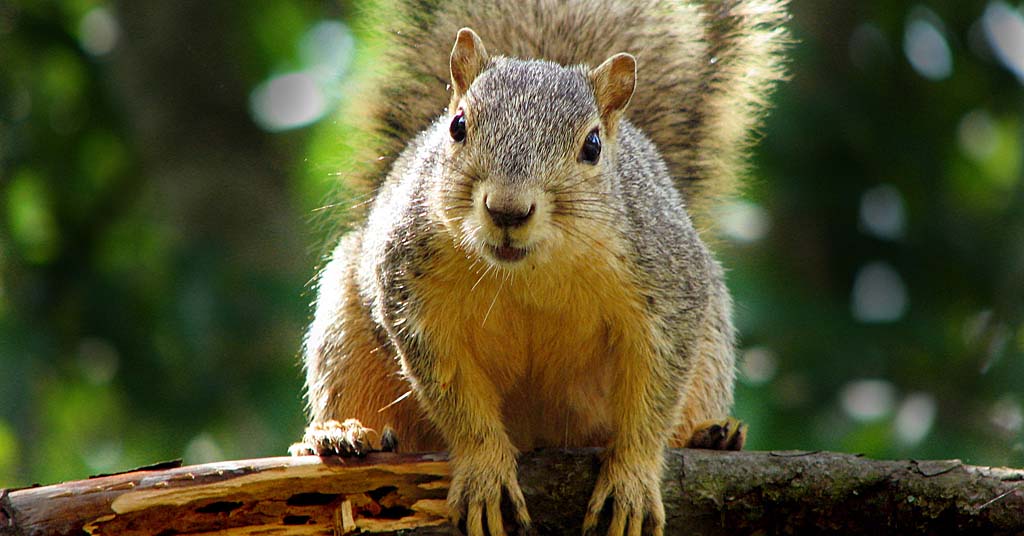
The big troublemakers among the squirrel set are Eastern gray squirrels and Eastern fox squirrels. Both are nonnative, invasive species.

A threat to native squirrels, these intruders aggressively compete for food and nesting resources, spread disease to native squirrels, reproduce at a high rate and possess a high tolerance of human activity, which allows them to expand their range. They also consume baby birds and bird eggs and thereby adversely affect native bird populations.

If you’re in a city in the Pacific Northwest and you’ve got a squirrel problem, it’s almost certain the Eastern gray squirrel or Eastern fox squirrel is your adversary.

Squirrel authority

Since ODFW licenses wildlife control operators like Chaloux, and since no one else seems to be paying attention to what the squirrels are getting up to, I fired off a message to state authorities.

This eventually led me to the man who probably knows more about squirrels in Portland than anyone.

Based in Clackamas, Dave Keiter is a district wildlife biologist with ODFW’s North Willamette Watershed District–Cascade Unit.

I peppered him with questions, starting with the biggie: Is the squirrel population in Multnomah County growing?

“It is difficult to know whether the squirrel population is expanding or not,” said Keiter. “Squirrel populations in certain areas of the city might be increasing as a result of favorable conditions—planting of mast species, feeding, reduction in free-roaming pet numbers—while decreasing in other places due to unfavorable conditions. … Squirrels, like many rodents, also undergo boom and bust population cycles in which populations can fluctuate over relatively short periods of time.”

Removal of invasive squirrels is likely to be a short-term solution due to rapid recolonization.

Keiter told me ODFW doesn’t have estimates of squirrel population sizes in Multnomah County, including for invasive species. The agency conducts limited monitoring of squirrels and what work it does is focused on conservation of native species.

“From staff observations and public data, very few Western gray squirrels are observed within the metro area and the vast majority of squirrels present are invasive Eastern gray squirrels or fox squirrels,” he said.

I asked about the numbers from Chaloux that suggest a decline in the squirrel population, but Keiter agreed this wasn’t a definitive measure.

“The relationship between the number of Eastern gray squirrels captured by WCOs and the actual number of squirrels on the landscape is unknown,” he said. “WCOs respond to reports of conflict. The amount of conflict can vary due to environmental conditions.”

Fighting squirrels

I griped about the vandalism to my backyard structure and chewed-up wires in my truck but detected little sympathy.

Had ODFW no worries whatsoever about Portland’s squirrel invasion?

Keiter more or less echoed an Oregon State University site I’d found about dealing with problem squirrels: “Learn to live with them.”

“Generally speaking we have relatively few concerns regarding squirrel populations in the Portland metro area,” said Keiter. “We strongly encourage residents not to feed wildlife, as feeding wildlife, including squirrels, often results in negative outcomes.”

As for remedies, on private land squirrels are managed as “predatory species” under Oregon Department of Agriculture rules, meaning they can be killed by landowners by appropriate and legal means without license or permitting requirements.

But sitting on the back porch plunking squirrels with a BB gun isn’t really me.

Squirrel trap

Temporary housing. Photo: Wildlifehelp.org

During my decade-long squirrel saga I’ve acquired some traps and confiscated a number of squirrels, but found this has no long-term impact.

“Removal of invasive squirrels is likely to be a short-term solution to squirrel issues due to relatively rapid recolonization and high birth rates,” said Keiter, confirming my suspicion that short of biological weapons or a robust falconing program squirrels are practically impossible to eliminate once they’ve moved into an area.

Anyway, you’re not allowed to just trap squirrels and dump them out in the woods.

“Relocation of wild animals without a permit is illegal in the state of Oregon,” said Keiter. “Relocation of invasive squirrel species from urban to rural areas poses one of the greatest potential threats to Oregon’s native squirrel species by facilitating their expansion into areas they otherwise might not colonize.”

ODFW has some tips for reducing conflicts with squirrels in urban areas:

  • Never feed squirrels.
  • Remove attractants, such as excessive brush, birdfeeders and pet food.
  • Proactively seal off potential means wildlife can use to enter human buildings.

Fine, but for me that was Squirrel Duel 101.

I’ve been through all those steps and it hasn’t stopped the onslaught.

I know I’m supposed to like them.

Supposed to think they’re cute.

But they’re not making it easy. In fact, they’re making it tougher.

I’m not crazy, it’s not just me, right?

By |2026-01-13T15:29:13-08:0008/22/2024|Opinion, Wildlife|14 Comments

© Copyright 2013-2025 Columbia Insight. All Rights Reserved.

As a 501(c)3 nonprofit organization, all donations to Columbia Insight are tax deductible to the full extent of the law. Our nonprofit federal tax-exempt number is 82-4504894.