Stay Updated Subscribe today for the latest research + reporting about environmental news. Subscribe Now

Stay Updated Subscribe today for the latest research + reporting about environmental news.

Subscribe Now

Chuck Thompson

Chuck Thompson

Chuck Thompson

About Chuck Thompson

Chuck Thompson is editor of Columbia Insight.

Developers back off controversial fracked gas power plant in Oregon

As environmentalists celebrate a victory against Wind Chaser proposal, industry ponders possible ‘shift toward a cleaner energy landscape’
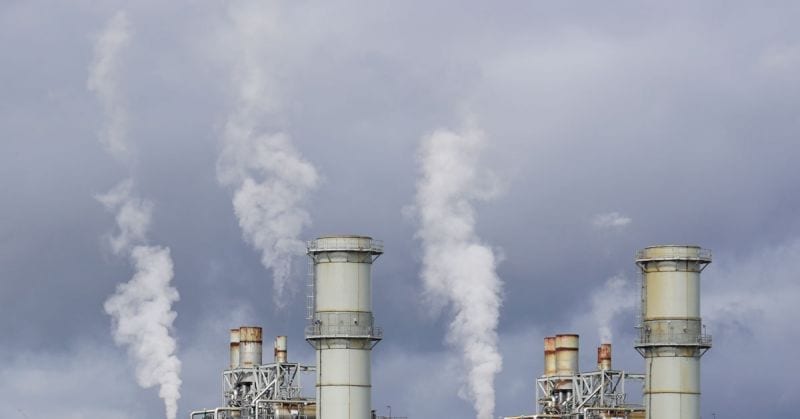
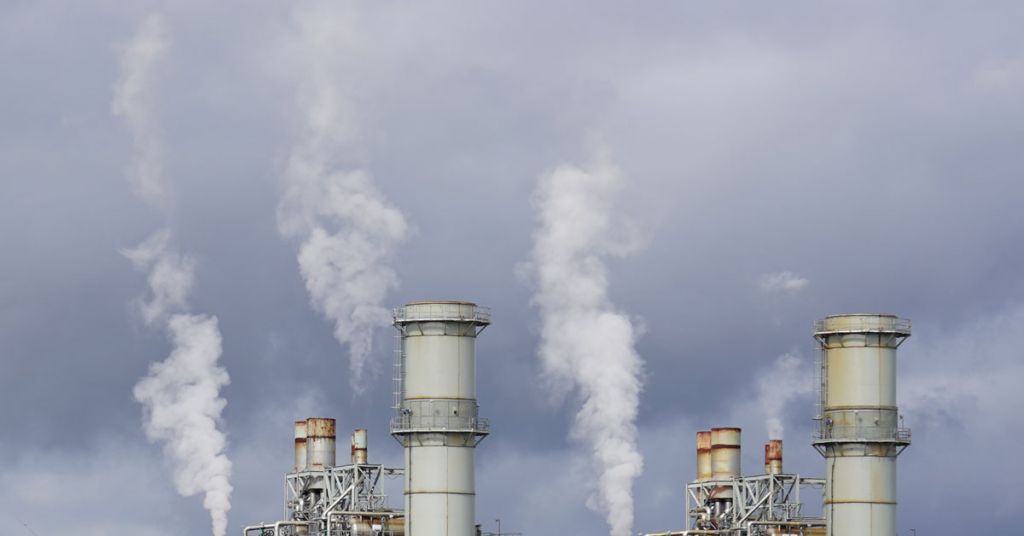
The Chehalis Generation Facility is a natural gas-fired combined-cycle electric generation facility

Future clears up: Following a decision this week, scenes like this from the natural gas-fired Chehalis Generation Facility in Washington won’t be coming to Hermiston any time soon. Photo by Steven Baltakatei Sandoval/WikiMedia Commons

By Ilana Cohen, April 14, 2021. On April 5, New York-based Perennial-WindChaser conceded its fight to build a fracked gas-fired power plant near Hermiston in Umatilla County, Oregon. If constructed, the plant would have become one of the state’s largest stationary sources of greenhouse gas emissions.

Legal counsel for Perennial-WindChaser LLC informed the Multnomah County Circuit Court of Perennial’s decision to terminate the Wind Chaser Station only a day before the court was set to hear oral arguments from Perennial and environmental advocacy organizations Columbia Riverkeeper and Friends of the Columbia Gorge.

In November 2020, the two organizations filed a Petition for Judicial Review against Perennial, a subsidiary of a subsidiary of the Japanese industrial conglomerate Sumitomo Corporation, and the Oregon Department of Energy, alleging ODOE violated state law in determining Perennial lawfully began construction on the plant in question.

MORE: Oregon allows controversial fracked gas power plant to begin construction

Now, state environmentalists are celebrating what they consider a momentous victory in their broader campaign to make Oregon fossil fuel-free. Staff attorneys with Columbia Riverkeeper and Friends of the Columbia Gorge attribute Perennial’s decision in no small part to their groups’ legal action and are hopeful Perennial’s withdrawal from the project will set a powerful precedent.

“This is a huge win for us [and] for the climate,” said Erin Saylor, a staff attorney with Columbia Riverkeeper.

Bellwether for natural gas infrastructure?

The termination of Wind Chaser’s construction follows the shutdown of several gas-fired and other fossil fuel power plants in the state, most recently including the closure of Oregon’s last coal-fired power plant in Boardman.

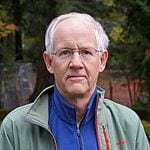
Nathan Baker

Perennial chaser: Attorney Nathan Baker. Courtesy Friends of the Columbia Gorge

With the elimination of Wind Chaser, no proposals for new gas-fired power plants remain pending before Oregon’s Energy Facility Siting Council.

Nathan Baker, a staff attorney for Friends of the Columbia Gorge, says these developments are telling of the greener direction in which the state’s energy market and power system is shifting. Whether that transition will include much room for natural gas, often considered a “bridge fuel” to a decarbonized energy system and which accounted for one-third of Oregon’s net electricity generation as of 2019, is unclear.

But if environmental advocates are right, the death of Wind Chaser may well be a bellwether of the future for natural gas infrastructure in the state.

“Wind Chaser was really the last of a dying breed,” said Baker. “We view new fossil fuel plants as relics of a bygone era and certainly not part of Oregon’s future.”

Perennial did not respond to requests for comment. Company spokesperson J.J. Jamieson told Columbia Insight a statement on Wind Chaser’s termination is forthcoming.

Costs mounted

After seven years of failing to secure a purchaser for the Wind Chaser Station’s power output since Perennial first proposed its project in 2014, the mounting legal costs of defending it in court seem likely to have been the tipping point in Perennial’s decision to terminate it.

“I think they realized that their chances were not good, and [they] would continue to be tied up in litigation for quite a while,” said Baker, noting the timing of Perennial’s decision to back off of Wind Chaser amid legal proceedings. “It just literally did not make sense [for Perennial] to keep throwing money in a project that had really no prospect of ever panning out.”

[perfectpullquote align=”full” bordertop=”false” cite=”” link=”” color=”” class=”” size=””]“This could very well reflect a shift toward Oregon’s cleaner energy landscape.” —Jennifer Kalez, ODOE[/perfectpullquote]

Perennial’s legal counsel may have shared that sentiment. Karl Anuta, an attorney representing Friends of the Columbia Gorge and Columbia Riverkeeper, recounted a phone conversation he had with Richard Allan, legal counsel for Perennial, the day before oral arguments were scheduled. According to Anuta, Allan suggested that he believed new natural gas power plants have no future in Oregon.

Anuta said Allan also suggested in their conversation that advancements in battery storage technology could further disincentivize developers from pursuing such projects.
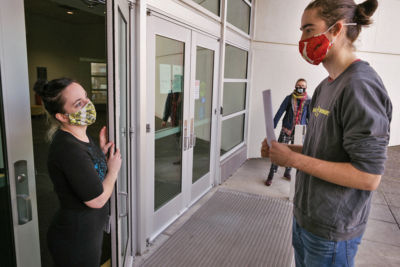
Efforts rewarded: Activists delivered letters to state government offices in October demanding the termination of Perennial’s site certification. Photo by Allyson Woodward

The Wind Chaser Station was originally intended as a “peaker” power plant, providing additional power to the grid as a backup for intermittent renewable energy sources like wind and solar during peak power demand—a function also served, though with far fewer emissions, by battery storage.

Richard Allan did not respond to requests for comment from Columbia Insight.

Hal Nelson, an associate professor in the Department of Public Administration at Portland State University, is skeptical battery storage can provide a viable pathway to solving the problem of intermittent renewable energy sources in the state.

“Batteries are not a silver bullet for the Northwest capacity shortage,” he said.

Nelson sees more potential in efforts to decentralize the state’s energy system and alleviate pressure from the grid overall through the development of grid-interactive buildings and micro-grids.

“That I think is where the future for players like Sumitomo is,” he said.

MORE: What’s wrong with solar power? More than you know

In any case, between environmentalist opposition and the expense of building and maintaining fossil fuel infrastructure in a region with an increasing focus on renewables, Nelson said he didn’t expect to see many more projects like Wind Chaser.

“I’m not optimistic that we’re going to be citing natural gas generation plants in Oregon or Washington anytime soon,” he said.

Shift toward cleaner energy

Earlier this year, state lawmakers introduced a bill that would prohibit the Energy Facility Siting Council from issuing site certificates to any new generating facility that produces electric power from fossil fuels, including natural gas.

That effort comes at a time when Oregon more broadly is bolstering its commitments to clean energy and climate action, including with an executive order signed by Gov. Kate Brown in March 2020 directing state agencies to take action to support reducing Oregon’s greenhouse gas emissions by at least 45% below 1990 emissions levels by 2035 and at least 80% below 1990 levels by 2050.
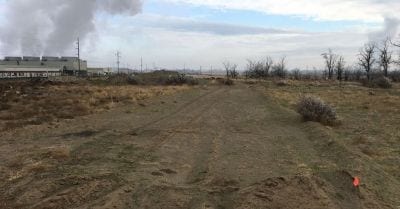
Wind Chaser site near Hermiston, Oregon. Courtesy of Columbia Riverkeeper

Dead end: Absent a buyer for the power it planned to produce, construction at the Wind Chaser site never really got off the ground. Courtesy of Columbia Riverkeeper

Absent legislative action, however, new natural gas infrastructure remains permissible and possible—even if unlikely, due to economic or political circumstances—in the state.

“The process and the standards [for energy facility siting] are implemented regardless of the type of energy facility, so it is possible another natural gas-powered plant could be proposed and/or approved in the future,” said ODOE spokesperson Jennifer Kalez in an email.

Kalez also noted, however, that most of the other energy projects pending approval from the state’s Energy Facility Siting Council are solar.

“This could very well reflect a shift toward Oregon’s cleaner energy landscape,” she said.

For now, Oregon environmental groups are awaiting an official public statement from Perennial about the termination of Wind Chaser. They’re looking to see how it plans to “retire” the Wind Chaser site per its requirement under state law, including whether it will deconstruct the access road and bridge Perennial built as part of “Phase 1” construction.

They’re also already identifying new targets in the fight for a fossil fuel-free future.

Columbia Riverkeeper, for instance, has turned its focus to fighting against TC Energy-owned pipeline system Gas Transmission Northwest LLC’s proposed construction of a new compressor station in Morrow County.

“We still have a lot of concerns about what’s happening at the state level and the regulatory level,” said Saylor. “We’re going to turn our sights to other projects that are pending out there and make sure that these companies really understand that Oregon is not a place for new fossil fuel infrastructure.”

Ilana Cohen is a Climate Tracker media fellow and a student at Harvard University, where she organizes with the Fossil Fuel Divest Harvard campaign. She has contributed to Inside Climate News, The NationThe GuardianTeen Vogue and other publications.

Appreciate this story? To support environmental journalism on Columbia Insight click here

By |2022-11-15T19:16:48-08:0004/15/2021|Energy, News|0 Comments

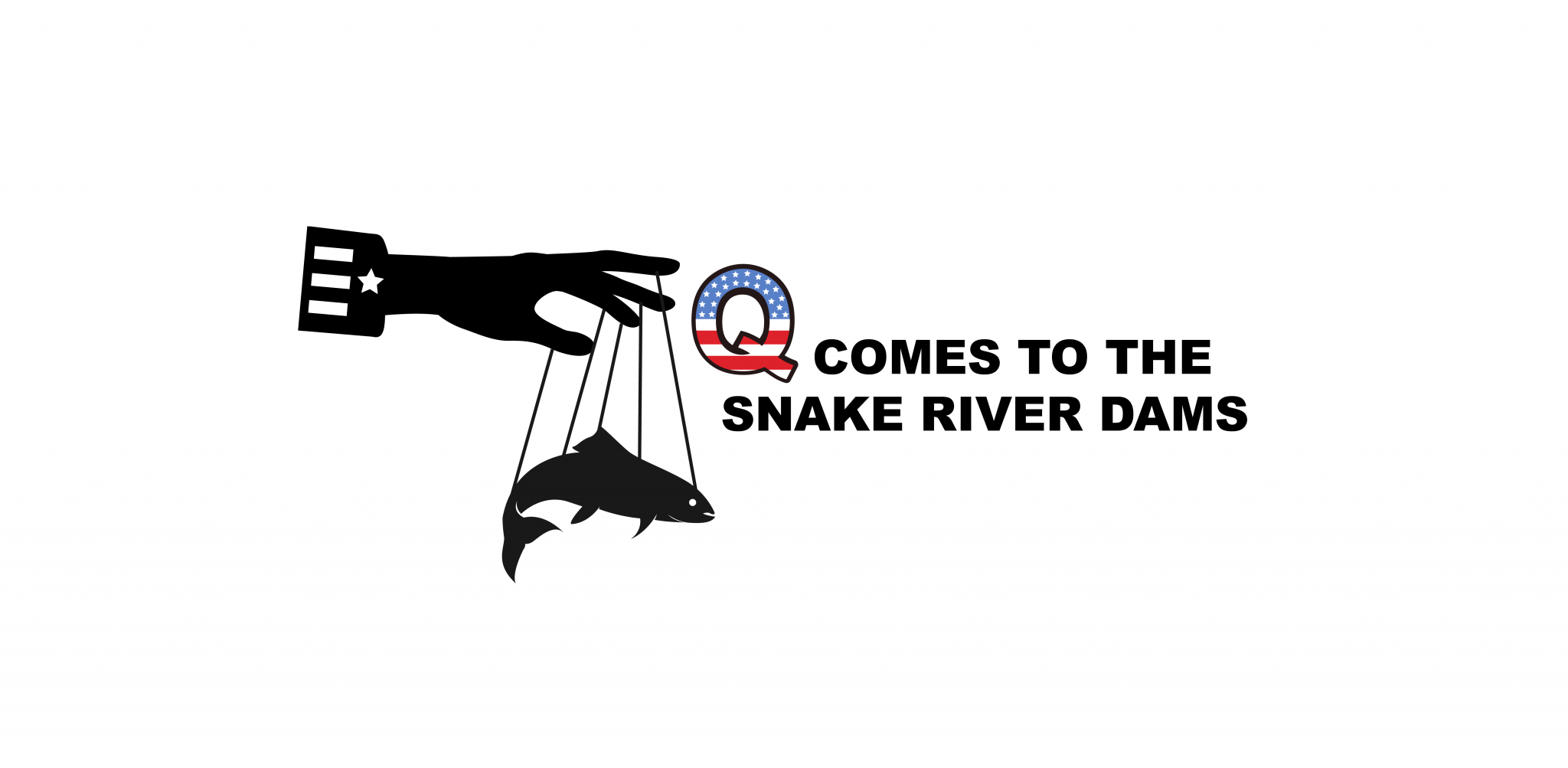
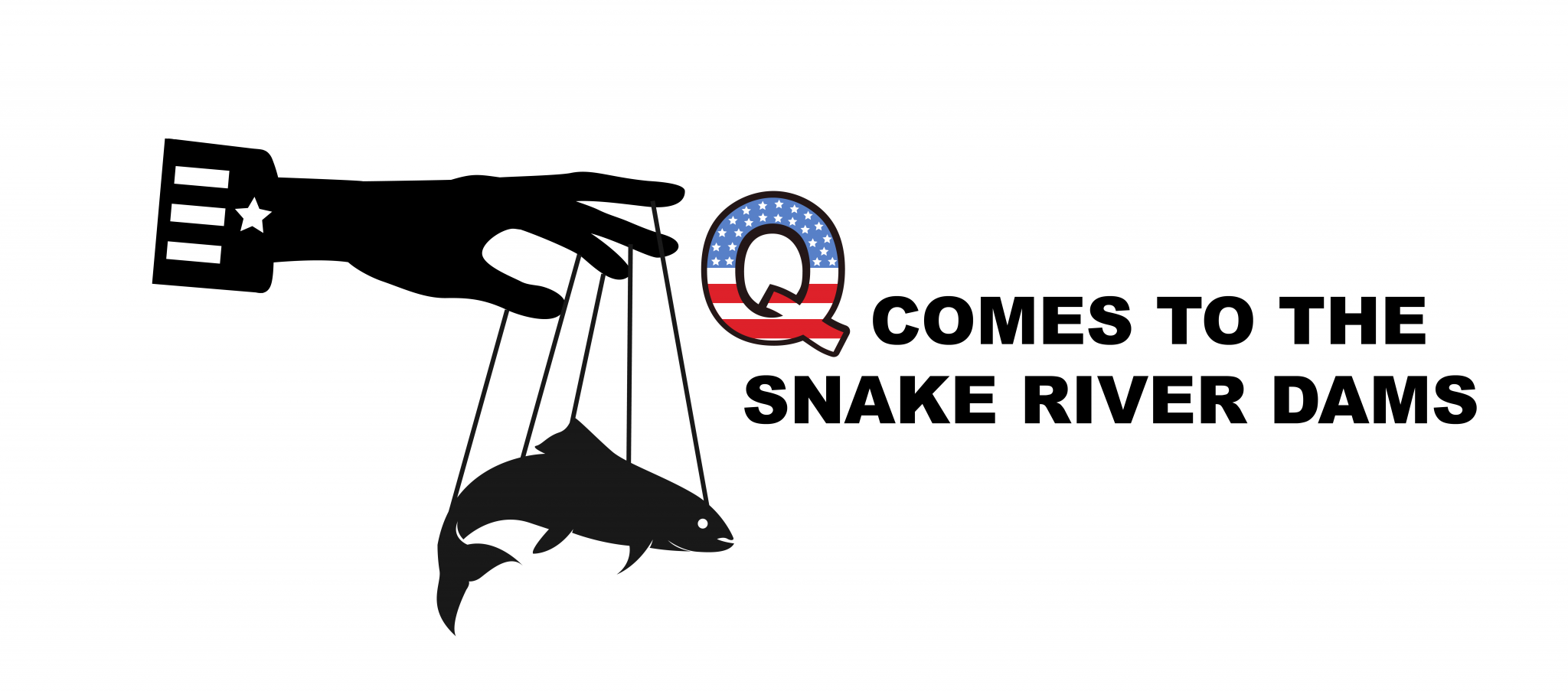
Opinion: QAnon finds its way to the Snake River

The biggest obstacle to breaching the dams isn’t salmon or hydropower. It’s our reflexive cultural division

By Chuck Thompson. April 8, 2021. A bizarre email arrived in my inbox last week. Its subject was those four infamous dams along the Lower Snake River in Washington.

Crazy as it was the email nevertheless impressed me for raising a long-neglected issue in the fight over the dams, one that’s been ignored by the army of politicians, business leaders, interest groups, media and bric-a-brac experts that’s devoted millions of hours to analyzing, explaining and debating the dams in recent decades.

The argument over whether or not to breach the dams may be the most contentious environmental issue facing the Pacific Northwest this decade, climate change included. If you’re opposed to their existence, the dams are salmon-killing machines. If you’re in favor of keeping them intact they’re vital pieces of the region’s hydroelectric and shipping infrastructure. Or so goes conventional wisdom.

Idaho U.S. Rep. Mike Simpson

Rep. Mike Simpson. Courtesy of Office of Rep. Mike Simpson

Since last year, Columbia Insight has covered the debate in a series called 140 Miles: Snake River Stranglehold. We’re hardly trail blazers. Tribes, fishermen, conservationists and other groups have protested the dams in court and in the streets since even before the U.S. Army Corps of Engineers built them in the 1960s and ’70s. Lots of good reporting has tracked the ensuing controversy.

A lot of the serious recent thought has revolved around a 2019 economic impact study on breaching the dams commissioned by the late Paul Allen. YaleEnvironment360 followed that study with, from a crowded field, one of the better short summaries of the argument to breach. The Bonneville Power Administration, which markets the power generated by them, countered with its own missives explaining the benefits of the dams. A pair of Oregon filmmakers followed with a powerful documentary titled Dammed to Extinction that examines the dams’ disastrous impact on Salish Sea orcas.

In February of this year U.S. Representative Mike Simpson rolled out what may turn out to be a game-changing plan to settle the matter once and for all. Because Simpson is a Republican from the conservative bastion of Idaho his Energy & Salmon Concept, which calls for breaching all four dams to the federally funded tune of $33 billion, arrived as a thunderbolt to dam opponents (generally politically liberal), supporters (generally politically conservative) and any forsaken souls in between.

[perfectpullquote align=”full” bordertop=”false” cite=”” link=”” color=”” class=”” size=””]The dams war is a quagmire because at its heart it’s a philosophical struggle, not an economic or environmental one.[/perfectpullquote]

I’ve burned a decent chunk of my retinas over the past year keeping up with developments. Plowing through news summaries, white papers, dueling press releases, legal briefs and other media (I’ve watched Dammed to Extinction three times), I eventually landed on an unsettling epiphany: although efforts to explain the dams tend to be well researched and clearly presented, none ever gets around to addressing the central conflict that animates the entire argument.

Cue bananas email. Its subject line read: URGENT: REPORT CONCERNING THE TRUTH ABOUT IDAHO’S SALMON VS DAM BREACHING.

The email and attached “report” was sent by a self-described “honest hard working grandma who loves Idaho.” It ran nine pages. Single-spaced. With liberal (small “l”) use of exclamation points providing ballast amid a sea of all-caps shouting.

“The Northwest deserves to know the TRUTH and that we’ve all been LIED TO.”

“IT’S NOT THE DAM’S FAULT! America, please! Aren’t there any HEROES left out there who can save our Northwestern ROYALTY fish from their TYRANNICAL EXTINCTION FATE while being denied their right to reproduce?”

“Pray that I’m not assassinated. I’m hitting FEDERAL corruption with their DIRTY SECRETS below the belt.”

“WHITE LIVES DON’T MATTER to Simpson?”

“I know a hundred heavy-equipment operators who will fight for the honor to do the volunteer work needed to FREE Idaho’s suffering fish from these FEDERAL AUSCHWITZ-BIRKENAU DEATH TRAPS.”

MORE: “The stars are aligned”: Rep. Mike Simpson breaks down plan to breach Snake River dams

It took time to select a handful of representative lines from Idaho Grandma’s splenetic rant, which pounds home the point that dams and salmon can thrive together if only we could stop the secret salmon holocaust being perpetrated by the federal government.

The reasons for this government plot aren’t precisely articulated but they definitely involve an elite cabal lining its pockets with billions of dollars in salmon-carcass bounties.

In fact the quotes are interchangeable. I could have closed my eyes and pointed at any sentence in Idaho Grandma’s freeform screed—“If you hear that I committed suicide, don’t believe it and know that it’s a lie”—and they’d more or less read the same.

To those of us still living in Normalland, her cult-like homily comes across as a now all-too-common example of the alarming weltanschauung that’s taken hold of people living in an inexplicable self-exile of conspiratorial delusion untethered to reality.

Kathy's Rusty Relics in Glenoma, Washington

Kathy’s Rusty Relics. Photo by Chuck Thompson

Its primary argument may reside far from the end of the ten-foot pole that until recently rational society wouldn’t bother touching it with.

To its credit, however, the email is the first committed reflection I’ve come across that confronts the real reason the dams debate is so intractable.

For all the hot oratory it attracts, the primary impediment to solving the Lower Snake River riddle isn’t really about finding a compromise between fish and electricity needs, or mollifying farmers who need to move product downriver. Most everyone knows dams are bad for salmon, redundant hydropower projects are money losers and, in the absence of barges, that there are more than enough trucks and trains around to move grain from Idaho to Portland.

The dams war is a quagmire because at its heart it’s a philosophical struggle, not an economic or environmental one. Writ large it represents simply another piece of the culture war that’s divided the nation into polarized factions. Regionally, it’s a reflection of the cultural maw and football mentality that’s developed between communities on the east and west sides of the Cascade Range. What one side wants, the other is honor-bound to oppose.

Although its QAnon-style rhetoric introduces a somewhat stronger flavor, the give-me-dams-or-give-me-death email from Idaho Grandma sums up a certain workaday attitude toward the western neighbors that’s become entrenched on the east side of the Cascades.

It’s been a quarter century since the publication of Blaine Harden’s A River Lost: The Life and Death of the Columbia. At a brisk 245 pages, Harden’s book stands as the seminal explanation of how the raging and occasionally terrifying waters of the Columbia River Basin—the Snake River is its largest tributary—were transformed into a placid network of more than 250 slackwater reservoirs created by hydroelectric projects, 27 on the Snake alone.
When Lewis and Clark arrived at the confluence of the Snake and Columbia Rivers in October 1805, it was spawning season. The party counted salmon in the hundreds of thousands, 10,000 drying on racks in one Native village alone. Drop the old frontiersmen in the area today—indeed anywhere along the Columbia—and they’d have no idea what they were looking at.

Re-reading A River Lost last year I was impressed not only with its retelling of the river’s remarkable history but by how prescient Harden seemed to have been about 21st-century attitudes toward the dams—until I realized he wasn’t prescient at all. In his travels through the Basin Harden was simply describing a culture war already in full throat.

Author Blaine Harden. Courtesy of Penguin Random House

Blaine Harden. Penguin Random House

Aligned against a growing army of environmentalists and “fish people” from west of the Cascades, Harden found barge crews who “did not pretend to care about endangered species,” federal planners who believed “that the present salmon run must, if necessary, be sacrificed” and Limbaugh-loving farmers who felt “betrayed by our own country” for revisions to New Deal irrigation programs the region had plainly outgrown.

After finishing the book I called Harden at his home in Seattle to ask if he saw any way out of the gridlock.

“Seattle and Portland have become even more of what they were 25 years ago,” he told me. With the emergence of Microsoft, Amazon, Nike and other companies, he went on, the Northwest’s dominant population centers have accumulated even more overwhelming economic and political clout than they had in the 1990s when he’d written his book.

The consolidation of commercial power and electoral influence on the rainy side of the mountains has been met in equal measure by cultural resistance on its dry side. This feels like a predictable if not natural reaction, to me, even if its most outward expressions are often repellant.

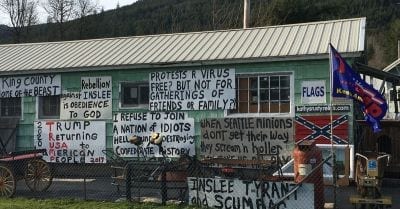
Drive along U.S. Route 12 in Washington and in the small community of Glenoma (technically on the west side of the mountains, spiritually somewhere between MAGA and Boise) and you’ll pass a little antique shop called Kathy’s Rusty Relics. It’s festooned with Confederate flags and signs proclaiming things like “Inslee T-Yrant and scumbag” and “King County—Home of the Beast.”

MORE: The Other Oregon: Book reveals rarely seen side of Eastern Oregon

This past fall I spent a couple days in Joseph in eastern Oregon, where I was accosted not once but twice by strangers who didn’t just sneer at my face mask, they explicitly instructed me to remove it.

“We don’t wear those here,” the guy pumping my gas told me with righteous contempt. “You take that off when you’re here.”

I gave as casual a shrug as I could manage and said I was just following the rules. “Those rules don’t apply here,” he told me.

There was a weird standoff. When the gas pump eventually clicked off it sounded like someone de-cocking a pistol. I’m sure he missed my company as much as I missed his.

Just as A River Lost is the best explanation of how the mighty Columbia became a hydroelectric warhorse that helped win World War II and make the world safe for Pumpkin Spice Lattes, Kurt Anderson’s 2017 bestseller Fantasyland: How America Went Haywire, is the seminal account of how the United States has devolved into a society in which one side lives in reality and the other in a world dominated by what Anderson calls “magical thinking.”

The ennobling of “alternate facts” has propelled the paranoid, angry and conspiracy-minded from the fringes of society into the mainstream. January 6 proved not just that they must no longer be ignored, but taken seriously.

MORE: Electric cars and dams: An uncomfortable connection

“By my reckoning, the more or less solidly reality-based are a minority, maybe a third of us, but almost certainly fewer than half,” Anderson writes in his introduction, setting up what turns out to be a pretty thorough and convincing case supporting his depressing thesis.

I finished Fantastyland the same week HBO premiered Q: Into the Storm. The documentary series investigates the malign foundation of the QAnon movement, which has morphed from dada propaganda prank to ongoing experiment into how credulous (gullible, if you like) people pre-disposed to rhetorical apoplexy and tribal warfare can be.

Fantasyland book cover


Then the email from Idaho Grandma arrived. I printed out the attachment and read it with yellow Hi-Liter in hand: “Hang your head low DC FEDS before the public decides to hang your heads high. … The whole decrepit Salmon-Killing Empire NEEDS BURNED TO THE GROUND. … Consider this as your ammo.”

The author provided her name and a headshot of herself along with permission to publish both with the entire manifesto. Prudence prevailed.

Although I’d like to believe things really aren’t as bad as the MSNBC/CNN/FOX/OAN machine makes them out to be, the gulf between those who believe in honest debate and compromise and those that hew to magical thinking and obstructionism often feels insurmountable.

As that relates to the Lower Snake River, I’ve come to the conclusion the key part of the argument no longer revolves around salmon, hydropower, irrigation, grain farmers, barge jobs or any of the other arguments we keep wasting our breath on.

If people really want to get rid of those dams, they’re going to have to ford a current so powerful and a breach so wide it’d make Lewis and Clark wonder how the hell they were going to make it across.

Chuck Thompson is editor of Columbia InsightIllustrations by Mackenzie Miller.

The views expressed in this article belong solely to its author and do not reflect the opinions of anyone else associated with Columbia Insight.

Columbia Insight‘s series focusing on the Lower Snake River dams is supported by a grant from the Society of Environmental Journalists.

READ MORE SNAKE RIVER STRANGLEHOLD STORIES

Appreciate this story? To support environmental journalism on Columbia Insight click here

By |2025-12-03T14:58:01-08:0004/08/2021|Opinion, Snake River Dams|3 Comments

Dumps, dross and dust: Tracking aluminum waste in the Gorge

The mid-Columbia aluminum industry may be gone but area landfills still store their legacy—at what risk?

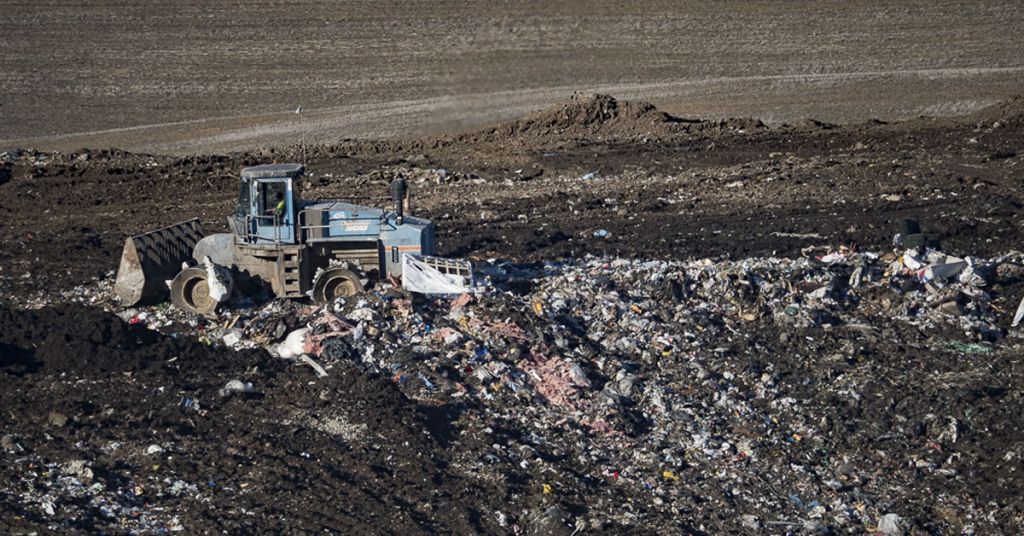
Wasco County Landfill photo by Jurgen Hess

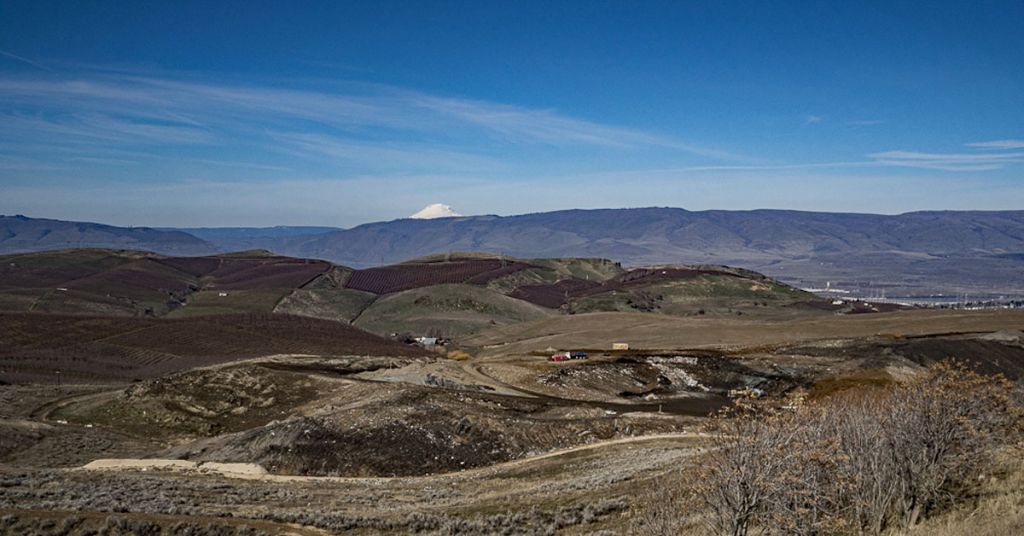
Out of the way: With Mt. Adams visible in the distance, the Wasco County Landfill near The Dalles, Oregon, stores some aluminum waste. Photo by Jurgen Hess

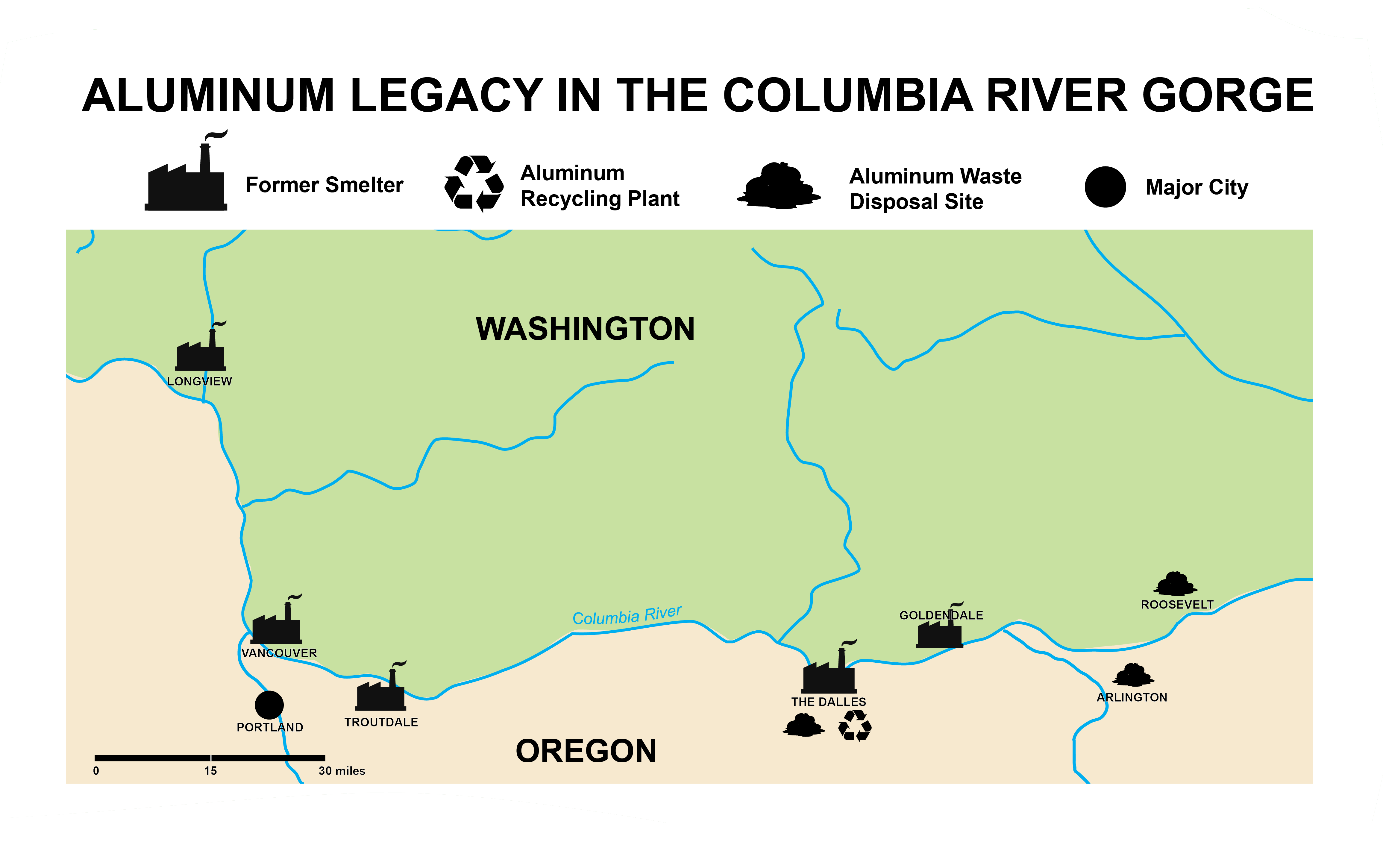
By Valerie Brown. March 25, 2021. During the heyday of aluminum production in the Columbia River Basin, which crashed to a halt circa 2000, there were nearly a dozen smelters operating, with two in the mid-Columbia region in Goldendale, Washington, and The Dalles, Oregon. There was also a smelter waste reprocessor at Dallesport Industrial Park on the Washington side of the Columbia River across from The Dalles.

Currently there is one aluminum recycler—Hydro Extrusions—in The Dalles. It’s located on the former smelter property it shares with a Google data center.


Aluminum processing, including recycling, produces waste that can put humans and the environment at risk. For much of the industry’s history, that waste was stored on-site at the smelters.

After the industry collapsed—in part due to spikes in energy costs related to the Enron scandal of 2001-02—most closed smelters were re-labeled as Superfund sites and remediated to keep the worst of their toxic legacies from spreading beyond their boundaries. These sites, including the Goldendale and The Dalles smelters, now must be monitored for the foreseeable future.

Remediation included moving tons of waste. Where it went hasn’t been much of a concern to the public. Surely it was trucked to sites properly designed and licensed to receive such toxic materials, right? Not so much.

Much of the waste was actually taken to municipal solid waste (MSW) landfills within a few miles of The Dalles and Goldendale.

MSWs are regulated under the Resource Conservation and Recovery Act (RCRA) Subtitle D—where household garbage, furniture, plastics and the like go. MSW landfills are not supposed to accept “hazardous” waste—materials that are ignitable, corrosive, reactive and/or toxic—which theoretically go to Subtitle C landfills. These specially designated facilities are subject to more stringent recordkeeping and reporting requirements, permitting and technical standards, and storage, disposal location, construction and operating guidelines.

But regulators have flexibility in how they apply the rules and aluminum waste’s regulatory status is ambiguous. It’s not precisely illegal to store it in MSW landfills, but it still poses fire, explosion and groundwater contamination hazards that have prompted increasing concern from the U.S. Environmental Protection Agency as the aluminum recycling industry expands.

There are two RCRA Subtitle D MSW landfills in the mid-Columbia that store aluminum waste: the Wasco County Landfill (WCL) about four miles southeast of The Dalles and the Roosevelt Regional Landfill 60 miles east on the Washington side of the river.

After the industry collapsed, it took at least another 15 years to complete smelter cleanups and settle legal liability. During this period both the Washington Department of Ecology and the Oregon Department of Environmental Quality worked out ways for these MSW landfills to accept thousands of tons of aluminum waste whose hazards were ambiguous.

Only a relatively small, undeniably hazardous proportion was taken to Chemical Waste Management near Arlington, Oregon, which is an RCRA Subtitle C landfill.

Information scarce

Regulations regarding disposal of aluminum waste are confusing. The federal government and the Oregon DEQ use the term “hazardous,” while Washington uses “dangerous.” Concerns about waste change depending on whether it’s in situ and un-remediated or removed and sequestered from the general environment.

The main concern regarding aluminum waste while it was at the Dallesport facility was the risk it posed to surface and groundwater from cyanide, chromium, nitrates and salts.

But landfills present more complex hazards. Aluminum waste may undergo unanticipated chemical reactions with the myriad trash it encounters in municipal solid waste. Managers are required to monitor not only the leachate—fluids that trickle through the waste and collect at the bottom above the liners of containers—but also the numerous gases that are generated as the waste decomposes both with the help of microorganisms and through inorganic processes.

Currently there is only one aluminum operation in the mid-Columbia region: Hydro Extrusions, the aluminum recycling company in The Dalles. It also produces waste in the form of dross.

Hydro’s waste is trucked from The Dalles to Real Alloy Recycling in Post Falls, Idaho. Details about the disposal of this waste are unavailable. Neither Hydro Extrusions nor Real Alloy Recycling responded to requests for information or comment for this story.

Failure to control the dust from dross being loaded onto trucks for transfer to Real Alloy was one of the violations that triggered the historic $1.3 million fine levied against Hydro Extrusions in 2019 by the Oregon DEQ. The Hydro case remains in litigation with the DEQ.

MORE: Pollution from aluminum still an issue in The Dalles

The total amount of aluminum waste remaining in landfills and on closed smelter sites in the Columbia River Basin is unknown. According to Ecology, by the time remediation actions were complete, about 135,000 tons of material had been removed. Approximately 49,000 tons of that waste is in the WCL.

Per review of available information, in 2009 the WCL accepted about 5,300 tons of waste from the Goldendale smelter as that facility was being demolished. Documents reviewed for this story don’t mention the amount, composition and disposition of the tons of waste sent to the WCL between 1989 and 1991 by the reprocessor Recycled Aluminum Metals Company (RAMCO), which operated at the Dallesport Industrial Park.

What risk?

Everybody is exposed to aluminum—it’s the third most abundant element in the earth’s crust. Sources of aluminum exposure include drinking water, antiperspirants, tea, tobacco smoke and cosmetics.

For most people aluminum comes and goes fairly rapidly, but some of it accumulates in bones and the brain.

Over time, people who work in aluminum processing and residents of neighborhoods near processing sites are likely to be more exposed than the general public to both larger amounts of aluminum and other chemicals used in the industry.

Numerous studies have found cognitive decline among workers exposed to aluminum, including from welding and smelter occupations. Although research is inconclusive, aluminum has also been suggested as a factor in autism spectrum disorder, Parkinson’s disease, multiple sclerosis and amyotrophic lateral sclerosis.

Little information exists regarding the amounts and types of exposure to Hydro’s pollutants experienced by local residents or whether they are suffering from health problems associated with aluminum recycling materials. The relatively small size of The Dalles’ population would make it difficult to obtain statistically significant data for specific neighborhoods. Most available epidemiological data from the Oregon Health Authority does not include data at the city level.

The legacy of aluminum processing in the Columbia River Basin nevertheless extends far beyond the factories themselves and will last lifetimes. Aluminum companies and landfills have not always followed regulations or taken actions protective of human safety and health and ecosystem integrity.

MORE: Aluminum’s legacy continues to hang over the Gorge

State and federal regulatory agencies have often treated waste disposal rules as flexible suggestions, allowing the waste to go to MSW landfills where there is low confidence in its stability—perhaps because it was not actually illegal and was the best available option given logistic and budget limitations.

So far, there have been no major disasters at MSW landfills related to aluminum waste. But the waste still poses hazards ranging from groundwater contamination to landfill fires and explosions.

Based on the historical record, it appears that the relative calm is as much due to luck as it is to wise decision-making and safe handling.

Valerie Brown has covered environmental health for more than two decades, publishing in Environmental Health Perspectives, Scientific American, High Country News and elsewhere.

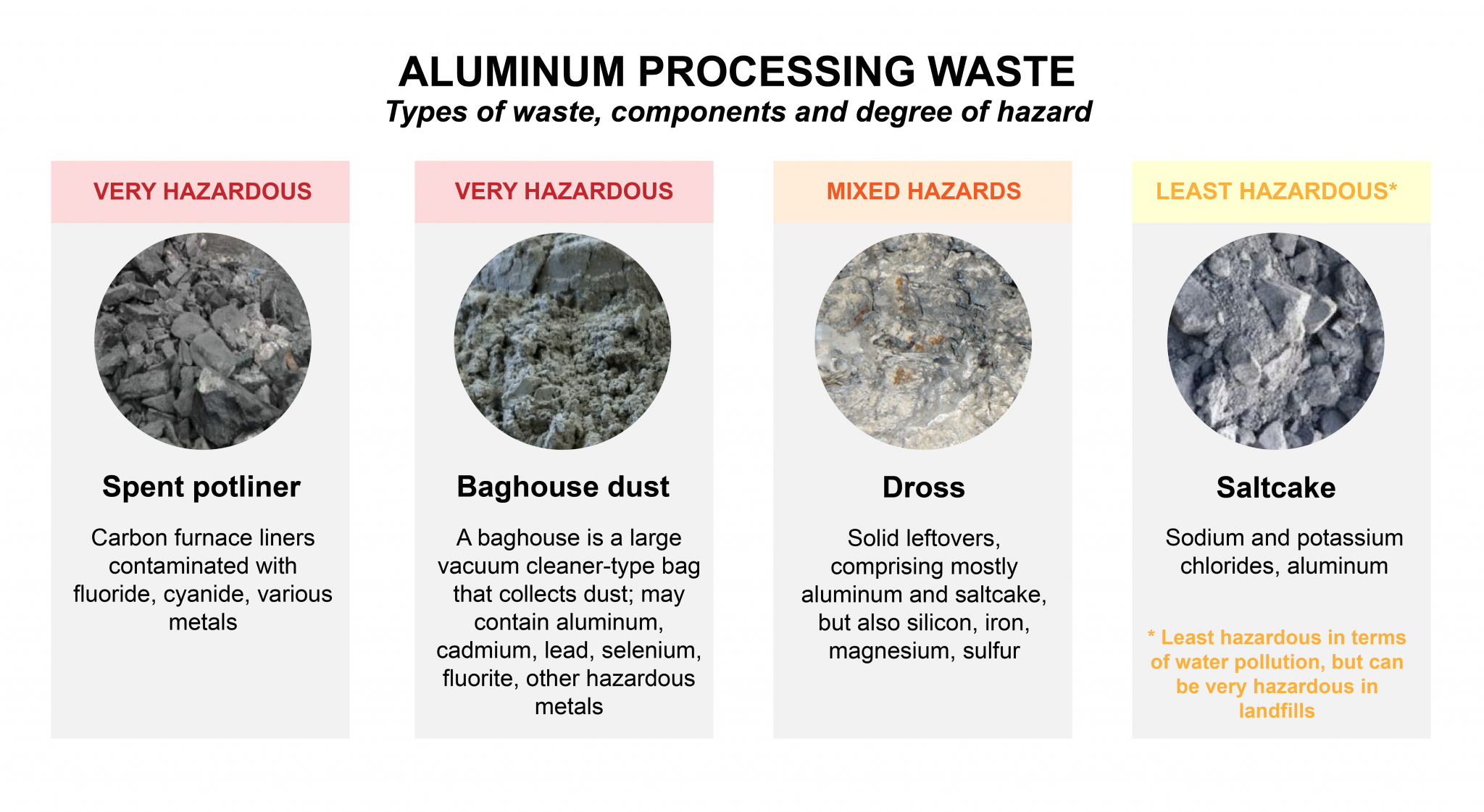
Infographics by Mackenzie Miller. 

SEJ logo with urlColumbia Insight‘s series focusing on the aluminum industry in the Columbia River Gorge is supported by a grant from the Society of Environmental Journalists.

By |2021-06-16T10:33:18-07:0003/25/2021|Aluminum|1 Comment

NYC investment group wants control of Columbia River Basin water in Washington

Communities across state fear ‘water grab’ by Wall Street-backed corporation would usurp local control of water supply

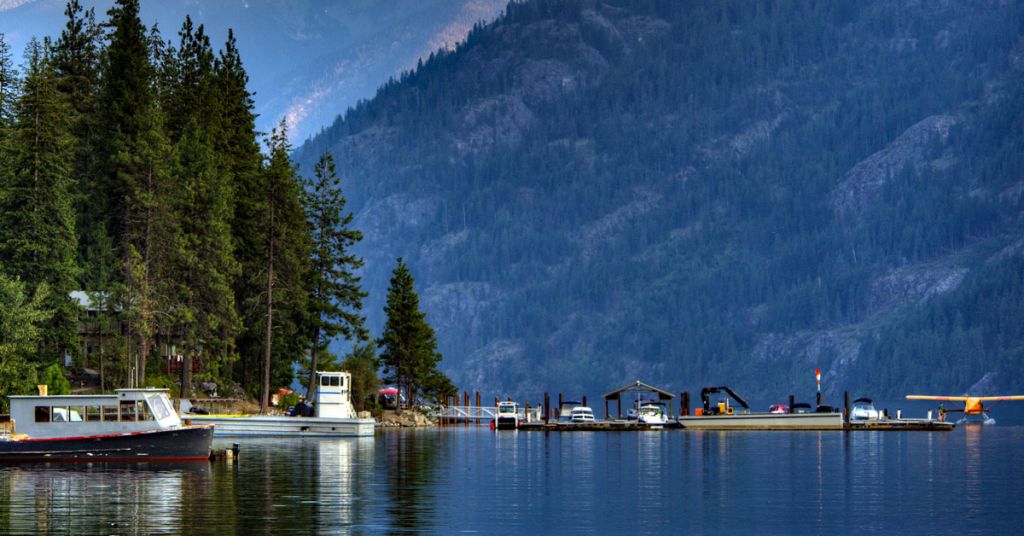
GPA Photo Archive, Stehekin at Lake Chelan, North Cascades National Park

Liquid asset: Lake Chelan in the North Cascades is included in a water banking plan being pursued by Crown Columbia Water Resources LLC. Photo by National Park Service

By Ann McCreary, Methow Valley News. March 19, 2021. A novel concept proposed by a private investment company would create a new water bank that would allow the company to acquire water rights anywhere within the vast Columbia River Basin in Washington state.

Crown Columbia Water Resources LLC has applied for an “area-wide water permit,” that “would make water available for long-term loans and leases throughout the Columbia River Basin,” according to the Washington Department of Ecology, which must approve creation of the new water bank.

Ecology recently sent a letter requesting input on the proposal to hundreds of local, state and federal officials, tribal leaders and other stakeholders in the Columbia River Basin in Washington, which occupies the entire south-central portion of the state from the Okanogan Highlands to the Pacific Ocean on the Oregon border.

“This is a new approach … a much larger scope,” said Joye Redfield-Wilder, a spokesperson for Ecology.

The untested concept has prompted concerns about potential speculation in a scarce public resource by a Wall Street-backed company.

MORE: As water becomes scarce, water banks take control

The application from Crown Columbia is being considered by Ecology’s Office of Columbia River (OCR) as a way to “streamline access to water supply in the Columbia River Basin” under a single water rights permit, according to a fact sheet from OCR.

Crown is asking “to appropriate public waters from all surface water and groundwater in hydraulic continuity with surface water, within the mainstream or tributary of the Columbia River within Washington State at the instantaneous rate of 49.9 cubic feet per second (cfs) for the purposes of irrigation, domestic and municipal water supply,” Ecology said in its letter to public officials and stakeholders.

The 49.9 cfs, or 36,126 acre-feet per year, “is the maximum quantity Crown is seeking to divert at any one time,” according to Ecology. The amount is just below the threshold—50 cfs—that would require an analysis of environmental impacts under the State Environmental Policy Act.

[perfectpullquote align=”full” bordertop=”false” cite=”” link=”” color=”” class=”” size=””]About half of the investment capital has come from retired partners of Goldman, Sachs & Co.[/perfectpullquote]

Under the area-wide permit, Crown Columbia would place water rights it has acquired into the new water bank, with the rights deeded to Ecology under the state’s Trust Water Program to be used for instream flow and to provide mitigation for new uses anywhere in the Columbia River Basin.

Crown Columbia could then lease or sell mitigation credits for water rights for new uses, such as irrigating dryland farms that are offset by the water held in the bank.

“Crown is requesting a place of use of the entire basin as a means of contemplating future water right acquisition into the proposed water bank,” according to Ecology.

‘Grab any and all water rights’

The sweeping proposal has raised questions and concerns around the state, including the Methow Valley in the North Cascades. A formal objection from Methow Valley Citizens Council said Crown Columbia’s application, filed in October 2020, is incomplete and should not have been accepted by Ecology.

Twisp, WA Mayor Soo Ing-Moody

Water warrior: Mayor Soo Ing-Moody is a veteran of fights to replace lost water rights in Twisp. Photo courtesy Town of Twisp

Okanogan County Commissioner Andy Hover is among the hundreds of elected officials and agency representatives in 24 counties invited by Ecology to consult on the application.

“My position, and the other (Okanogan County) commissioners’ position, is that we’re opposed to a big corporation coming in and applying for water rights,” Hover said on March 1. “They’re not actually making the application correctly. They’re not giving Ecology a point of withdrawal or place of use.

“They want a water right to then put in trust, but you have to … establish a use, and then put it into trust. If you are asking for a groundwater right you have to inform Ecology where you’re going to be pulling the water from.

“They are trying to grab any and all water rights to put into their portfolio in order to sell it downstream. How can they ask for water out of our basin when we already have junior users whose water rights get curtailed?”

The concept of an area-wide water right “is so novel we don’t know how it will be implemented,” said Twisp Mayor Soo Ing-Moody, who guided the town through fallout from wildfires and a years-long struggle to replace lost water rights. “It’s my hope Ecology doesn’t act too hastily, since it is such an unprecedented request.

“Our community is aware of the potential implications. Once this happens, there may not be any control locally about how it’s used, or where it’s going to be used.”

“Privatization of water, a public resource, is not something we in the Methow support at all,” said Mary McCrea, a retired water attorney and former chairman of the Methow Watershed Foundation. “Crown is a for-profit manager of a public resource. They are speculating using the public’s water.”

New York investors back bank

Mark Peterson, a Wenatchee attorney representing Crown Columbia, has described the company as a “water banking operation” that holds a portfolio of water rights to use for mitigation for future uses.

Crown Columbia Water Resources is affiliated with a larger corporation called Petrus Partners Ltd., based in New York City, which invests in real estate and farmland. Through its affiliate, Crown West Farm Group, Petrus owns 8,000 acres of farmland, according to the Petrus website.

In 2015 Petrus formed Crown Columbia Water Resources LLC, a water banking company with an address in Spokane. Crown Columbia controls 50,000 acre-feet of water in the Columbia-Snake River Basin, according to the website. About half of Petrus’ investment capital has come from retired partners of Goldman, Sachs & Co., the website states.

MORE: Water gate investigation underway on Oregon Coast

Crown Columbia was previously involved in water rights transactions in the Methow Valley, when the company attempted to purchase water rights in 2018 from a Winthrop rancher who owned surface water rights from the Chewuch River.

The application received more than 80 comments from individuals and government agencies opposed to the transfer. Many worried that water rights used locally for irrigation would be transferred downstream and lost for use in the Methow Valley.

Attorneys for Crown Columbia withdrew the application in 2019.

Strenuous objection

In its letter of objection to Crown Columbia’s area-wide water permit application, Methow Valley Citizens Council (MVCC) said the application fails to provide specific information required by statute to be included when the application is filed, and instead refers to a Trust Water Agreement with Ecology to respond to questions on the application.

That agreement was amended in October 2020 and includes language stating that “Crown intends to apply for one or more new mitigated area-wide permit(s) appurtenant to extensive lands adjacent to the Columbia River.”

MVCC was joined in its objection by Okanogan Highlands Alliance and the Center for Environmental Law & Policy. “Crown’s application is insufficient on its face” and should be returned to Crown for the required information, the groups assert. “This must be done to allow the public and interested parties to understand the application.”

Methow River Along Highway 153 - just north of the town of Methow, Washington.

Keeping current: The Methow Valley Citizens Council and others want to retain local control over resources such as the Methow River. Photo by Jasperdo/Creative Commons

According to Office of Columbia River, the area-wide permit sought by Crown “will reduce much of the individual administrative costs associated with processing water rights, adding efficiency and flexibility to their use.”

“OCR has been tasked by the Legislature to aggressively pursue … creative ways to make water available,” said Ecology spokesperson Redfield-Wilder. The area-wide permit “is another tool to respond to water shortages and to protect streamflows and future uses.”

“The development of a water bank may provide a defined, quantifiable and available source of water for future irrigation and land use,” said Holly Myers of OCR. “Changing and retiming individual water rights can be costly and difficult to maneuver for individuals, making the banking mechanism a simpler process.”

New uses under the area-wide permit “would have to be permitted and those uses tracked,” Redfield-Wilder said. The permitting process for new uses would include applications, verification of proposed mitigating rights to offset new uses, reports of examination and development of permit provisions such as telemetered data to track water use. Crown will also be required to submit quarterly reports to ensure compliance with provisions of the area-wide permit, Ecology said.

Department of Ecology consulting with stakeholders

According to information from Ecology, Crown Columbia proposes to “seed the (water) bank and provide mitigation for the area-wide permit” with three water rights in its portfolio totaling 1,377 acre-feet per year.

The process of deeding those rights to Ecology is not complete, and they must be confirmed to be available and valid, said Myers. The locations of the mitigation water rights are the Wenatchee River, Lake Chelan from Stehekin and Walla Walla, on the tributaries and from the confluence of each with the Columbia River to the mouth, according to Ecology.

The area-wide proposal “builds in a mechanism to add water rights over time and space—the mainstream and upstream tributaries, for instance. This makes the area-wide approach unique,” Myers said. “Each new trust water right placed in the bank will go through the standard public notice process, and at that time Washingtonians will have additional opportunities for protest or comment.”

MORE: 7 best Basin B Corps

Crown Columbia will be required to show that new mitigated permits, when offset by the mitigating rights held in trust, will not impact other existing water rights and instream flows. Crown will also agree to “manage its portfolio of water rights to facilitate the preservation of water rights to the county” where the rights originated, Ecology said.

The Crown Columbia bank will offer counties an opportunity to acquire up to 25% of the water it owns in each particular county at the same cost incurred by Crown for its acquisition, according to OCR’s fact sheet. The Trust Water Agreement provides that Crown will prioritize its water marketing to counties where the water rights originate “in order to meet local demands.”

Public comment on the proposal is closed. Notice of the water right application was published in newspapers of record in 22 of the 24 affected counties in December and January, and notification was the responsibility of the applicant, Redfield-Wilder said.

Ecology is in a consultation period with specific stakeholders and is investigating the Crown Columbia application prior to preparing a Report of Examination. The report will be made available for public review and may be appealed to the Pollution Control Hearing Board.

Columbia Insight is publishing this story with permission from Methow Valley News, where it was originally published.

By |2021-05-27T09:18:46-07:0003/19/2021|Natural Resources, Water|7 Comments

Biden administration rescinds grazing permit for Hammond Ranches

Decision comes a day after environmental advocacy groups file lawsuit to block “rushed” Trump administration deal involving pardoned ranchers

Hammond ranch

More legal action: Dwight and Steven Hammond, ranchers freed from federal prison after a pardon by President Trump, land by private jet at the Burns Municipal Airport on July 11, 2018. Photo by Beth Nakamura/The Oregonian

By Maxine Bernstein, The Oregonian/OregonLive. March 2, 2021. A senior adviser in the U.S. Department of Interior on Friday rescinded the January decision by former Interior Secretary David Bernhardt to grant Hammond Ranches Inc. of southeastern Oregon’s Harney County a 10-year grazing permit and directed the Bureau of Land Management to further consider the matter.

The maneuver came as Congress was moving to confirm President Joe Biden’s pick of Deb Haaland as the new Interior secretary and followed a day after four environmental advocacy groups filed a federal lawsuit to block the grazing permit for the Hammonds.

It also came just days before the cattle were expected to be turned out on the more than 26,000 acres of public lands neighboring Malheur National Wildlife Refuge about 45 to 70 miles south of Burns.

MORE: Environmental groups sue to overturn grazing permit to Hammond Ranches

The action marked the latest twist in a years-long saga surrounding the grazing rights of Dwight Hammond Jr. and son Steven Hammond after they were convicted of setting fire to public lands and served prison time.

The new memo from the Interior secretary’s office found that the Trump administration hadn’t allowed for sufficient time to receive and consider public challenges to the permit.

A proposal to grant the permit was dated Dec. 31 but the public wasn’t immediately alerted to it until days later “resulting in confusion” about how the department would calculate an authorized 15-day protest period, according to the memo from the Interior secretary’s office.

Friday’s memo was signed by Laura Daniel-Davis, a senior adviser to the secretary exercising delegated authority of the assistant secretary of land and minerals management.

“Because the protest period had not properly concluded” before the final Jan. 19 decision was issued, “I am rescinding the January 19 Decision and remanding the matter to the BLM to allow for full consideration of the timely protests received by the BLM,” the memo said.

She directed the Bureau of Land Management to pursue additional opportunities for public involvement and “a careful and considered review” of any challenges. She also instructed the Bureau of Land Management to post notice of the rescission online and mail copies to all applicants and other interested stakeholders.

Alan Schroeder, the attorney representing Hammond Ranches Inc., declined comment on Friday’s development.

Farm Bureau objects

Four environmental advocacy groups on Thursday sued the Interior secretary and Bureau of Land Management, alleging last month’s permit approval on the final day of the Trump administration was “tainted by political influence” and that a “rushed and truncated public process” cut out opportunities for public participation required by law.

The suit further accused the federal government of granting the permit to the Hammonds over other applicants who were qualified and bypassing an administrative appeal process.

“We’re grateful that the new administration saw right away that Bernhardt’s decision to grant the grazing permit without the proper public participation could not stand,” said Greta Anderson, deputy director of Western Watersheds Project, one of the four groups that filed the suit. “We believe when they reconsider the proposed action, they’ll realize there were major substantive problems as well.”

[perfectpullquote align=”full” bordertop=”false” cite=”” link=”” color=”” class=”” size=””]”The Hammond family should be allowed to move forward with their lives in peace.’’ —Oregon Farm Bureau[/perfectpullquote]

Yet the Oregon Farm Bureau argued that the Hammonds’ grazing permit should be restored and not issued or taken away based on “ever-changing regulatory whims,” according to farm bureau spokeswoman Anne Marie Moss.

“The Hammond family are long-standing pillars of the Harney County community who have been subjected to continued government overreach while sustainably managing their ranch for the benefit of the local community, local ecosystems and generations of their family,” the Oregon Farm Bureau’s statement said. “The decision to issue their grazing permit should be a criteria-based process, and one that BLM approaches objectively.

“The Hammonds have demonstrated several times that all applicable factors favor them being restored their permit, including the family’s record of stewardship, their ownership of intermingled private land and several range improvements and their contributions to the local economy. It is fundamentally unfair to continually subject this family to ever-changing regulatory whims, and in the process, jeopardize their livelihood, proper rangeland management and ability to fully utilize their private lands. The Hammond’s permit should be restored, and the family should be allowed to move forward with their lives in peace.’’

The grazing permit covers four land allotments called Hammond, Mud Creek, Hardie Summer and Hammond Fenced Federal Range and allows cattle grazing on more than 26,000 acres of public lands neighboring Malheur National Wildlife Refuge near the town of Frenchglen.

MORE: Mystery bacteria is killing bighorn sheep in Eastern Oregon

In February 2014, the Bureau of Land Management rejected the Hammonds’ renewal application, citing the Hammonds’ criminal convictions.

In early 2019, former Interior Secretary Ryan Zinke issued a renewal of their grazing permit on his last day in office.

The renewal followed six months after Trump’s pardon of the Hammonds in July 2018. Dwight Hammond Jr. and Steven Hammond had been convicted of arson and were serving out five-year mandatory minimum sentences for setting fire to public land where they had grazing rights. Both were convicted of setting a fire in 2001, and the son was convicted of setting a second fire in 2006.

In December 2019, U.S. District Judge Michael H. Simon of Portland revoked the grazing permit finding Zinke’s renewal was an “abuse of discretion.”

Columbia Insight is publishing this story as part of the AP StoryShare program, which allows newsrooms and publishing partners to republish each other’s stories and photos.

‘The stars are aligned’: Rep. Mike Simpson breaks down plan to breach Snake River dams

In an exclusive interview with Columbia Insight the Idaho Republican talks dams, Dems, the BPA, Salmon Wars and re-election

Idaho U.S. Representative Mike Simpson courtesy of Office of Representative Mike Simpson

Snake charmer? Idaho Rep. Mike Simpson unveiled a controversial plan to breach four dams along the Lower Snake River. The goal is to end what he calls “the Salmon Wars.” Courtesy of Office of Rep. Mike Simpson

By Charles Coxe. February 25, 2021. When Idaho Congressman Mike Simpson publicly called for breaching four Lower Snake River dams on February 7 as part of his Energy & Salmon Concept, public reaction, it’s fair to say, was shock. And although Simpson certainly heard the swift criticism of his plan, voices as wide-ranging as tribes, environmental groups, energy interests and farmers were quick to praise his proposal for its collaborative spirit and attempt to find compromise solutions—something not heard much out of Washington nowadays.

As soon as the plan was released, Columbia Insight wanted to hear more from the 12-term Republican representative about why the Snake River dams issue is so important to him, and what his plan’s chances for passage into law really are.

Columbia Insight: It’s been about two weeks since you released your Energy & Salmon Plan. How do you feel about the response so far? 

Mike Simpson: I have to say it’s about what we expected. We knew there would be people who would say “Hell no!” to start with, other people who would be excited about the concept and a lot of others who for now are really sitting back and want to look through the proposal and think more about it.

CI: What’s surprised you about the reaction?

MS: What’s really been interesting is seeing that the people who are opposed to this proposal tend to focus on only one aspect of the plan: dam removal. That’s all they hear, and then they shut down.

My staff and I, we’ve been working on this plan over three years and have had more than 300 different meetings about it, so we’ve heard a lot of different points of view. And we’ve had a lot of discussions and collaborative groups on these issues in the region over the past 25 to 30 years. Every collaborative group over that time has come up with nice ideas that everybody can agree on: increasing the numbers of salmon, clean renewable energy, better efficiency, improving habitats, etc. But when it comes down to breaching the dams themselves, the groups break apart and they just can’t go any further. Fundamentally, the people who are opposed to breaching the dams are used to doing things a certain way, and just don’t want to change what they’re doing.

Dams on lower Columbia Snake River system

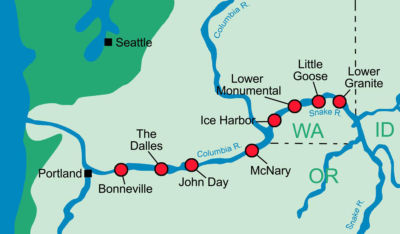
Hardened positions: Simpson’s plan would breach the four Snake River dams starting with Ice Harbor dam and moving east (red dots indicate dams). Courtesy of U.S. Army Corps of Engineers

“OK then,” I said, “if you don’t like breaching the dams and still want to save the salmon, then tell me what your plan is?” And then there’s nothing—because everything else we’ve tried for the past 25 to 30 years simply doesn’t work. We’ve already spent $17 billion on fish recovery and salmon and steelhead numbers here have only gotten worse, to the point where they’re on a clear path to extinction. Are we going to spend $20 billion more over the next 30 years just to have them go extinct anyway? 

CI: Some environmental groups have been supportive of your plan—American Rivers in particular released a statement calling it “bold,” “groundbreaking” and “potentially transformational” for the Pacific Northwest. Others have been more cautious, surprised to hear an environmental issue supported by a conservative Republican. Is that unfair?

MS: Well, most people live in Idaho because we love our environment—and that’s really true all across the Pacific Northwest. Yes, I’m conservative, and I also value conservation. 

The salmon are going extinct. There’s just no way around that. We have to do something about it. To me, this proposal isn’t about the impact that it has on us today. It’s what do we want the Pacific Northwest to look like in the next 30, 40, 50 years? The decisions we make today will have an enormous impact on the entire region 50 years from now. 

I don’t want our grandchildren someday to say, “Why do you call it the Salmon River? There are no salmon here.”

MORE: Thermal hopscotch: How Columbia River salmon are adapting to climate change

CI: Where do you anticipate the greatest opposition coming from?

MS: Oh, there’s plenty of opposition to the concept. There are a lot of organizations that will have to change the way they’re doing things. But this is really the first time that a plan acknowledges the important fact that these dams do have considerable value to a wide range of stakeholders—that’s why the plan will cost an estimated $35 to $40 billion. We have to acknowledge the dams’ value, acknowledge everything that they provide for different groups, and consider that for all of the different stakeholders.

What’s it going to cost to make those stakeholders whole? The states? The BPA? The tribes? The farmers? What’s it going to cost to help those grain farmers get their grain down to Portland cheaply, as they can do now by barge without being beholden to trucking or rail? What’s it going to cost to get that clean energy supply replaced before the dams are breached? And it has to be firm power, not just vague plans of future wind turbines. Each of those is a challenge we have to consider.

Idaho Rep. Mike Simpson Boulder-White Clouds Wilderness

Mountains man: In 2015, President Barack Obama signed into law legislation created by Simpson designating Idaho’s Boulder-White Clouds Wilderness (pictured) for protection. The same act created the state’s Jim McClure-Jerry Peak Wilderness. Courtesy of Office of Rep. Mike Simpson

CI: Speaking of the Bonneville Power Administration, how have they reacted to your plan?

MS: We’ve discussed the concept with them along the way. Really, this proposal started from talking with them. The BPA was having financial difficulties and they still are—the problem is they are not the cheapest power in the Pacific Northwest anymore. Rural electrics will be looking outside of the BPA to buy their power to be able to get it more cheaply. So how can we make them more secure in the future, make them whole—and do something to save salmon at the same time?

The BPA gets sued every other day by different interests in the Salmon Wars, as I call them. Now the BPA obviously can’t just come out and support the removal of their dams—but we can help to make them whole, to make dam removal make sense by replacing that power. The plan calls for $10 billion in funding for clean energy projects like battery storage, pump storage, hydrogen storage, small modular reactors, increased transmission capacity, increased energy efficiency, new wind and solar power or other new technologies determined by the BPA and the Northwest Power and Conservation Council. We have to look at all of the options and likely use lots of them.

The other thing we’ve done with this proposal that many people have overlooked is that we’ll automatically relicense all FERC-licensed dams in the Columbia River Basin greater than 5 megawatts for 35 to 50 years. This is to prevent the “slippery slope” argument that if we remove these four dams, then they’ll just go after the other ones. We have to keep those other dams and their energy secure—and put a stop to the fish-related, not safety, litigation around them—so they can continue to be reliable sources of energy going forward.

MORE: The return of Clearwater River coho

CI: Why is this concept so important to act on now?

MS: I really don’t think we have long to save the salmon before they go extinct. We’ve been managing a steady decline in salmon runs for decades. I hear some people say, “To heck with the salmon—just let them go extinct.” But I don’t. We have to act now.

Lower_Monumental_Dam credit USACE_

Headed for extinction? Lower Monumental Dam is one of four dams along the Snake River environmentalists have called “fish-killing machines.” Photo by U.S. Army Corps of Engineers

And the stars are actually aligned for us to do something about this. The Pacific Northwest delegation in Congress is in a stronger position now than they have been in years. And President Biden has discussed prioritizing a big infrastructure and clean energy stimulus push that could be in the $2-to-3-trillion-dollar range. We have a real opportunity here, all of the different stakeholders, to roll up our sleeves and come together to find a solution to this problem on our own terms, rather than letting someone else decide our fate.

CI: Right now this plan is still a concept, as you call it. What are the next steps to get this hammered into actual legislation that can be put before committees and eventually onto the floor for a vote?

MS: Well, now that a lot of different people are looking at the concept and thinking about it, the next step is that we have to listen to their different perspectives. We have to talk with them about what the plan does and doesn’t do, answer their questions and take their concerns into consideration before drafting legislation. But that needs to happen now. We don’t have a lot of time. I’d like to see actual legislation happen later this year.

CI: Oregon Senator Ron Wyden just released his own sweeping River Democracy Act (with fellow Oregon Senator Jeff Merkley). Are you working with him on this?

MS: I’ve talked with Senator Wyden about it, and we have briefed his staff on this proposal a few times—in fact, we’ve briefed the staffs of all the Northwest delegation throughout this process. Wyden is Chair of the (U.S. Senate) Finance Committee, so obviously he would be very important to work with on this. We are talking about a lot of money, $35-$40 billion. But that’s only about 1.75% of the anticipated infrastructure bill to be used for the Pacific Northwest and saving the salmon. I don’t think that’s too much to ask.

MORE: Why this 13-year-old wants the Lower Snake River dams breached

CI: What about the House Budget Committee?

MS: I don’t know that the Budget Committee will have much involvement in this bill because it will likely be an emergency appropriation.

CI: Based on the sweeping nature of your proposal, sorry, but we have to ask: are you planning to run again in 2022? 

MS: Come on, man—we just finished an election! [Laughs] Yes, my current plan is to run for reelection in 2022. Does this proposal affect my chances? Sure it does. I’ve already heard of people planning to run against me because of it. That’s fine. That’s how this works. 

Charles Coxe has written about environmental issues ranging from ice road trucking in northern Canada to BASE jumping in the Snake River Canyon for publications including Rolling Stone, Life and Popular Science.

Columbia Insight‘s series focusing on the Lower Snake River dams is supported by a grant from the Society of Environmental Journalists.
READ MORE SNAKE RIVER STRANGLEHOLD STORIES

Appreciate this story? To support environmental journalism on Columbia Insight click here

© Copyright 2013-2025 Columbia Insight. All Rights Reserved.

As a 501(c)3 nonprofit organization, all donations to Columbia Insight are tax deductible to the full extent of the law. Our nonprofit federal tax-exempt number is 82-4504894.