Stay Updated Subscribe today for the latest research + reporting about environmental news. Subscribe Now

Stay Updated Subscribe today for the latest research + reporting about environmental news.

Subscribe Now

Chuck Thompson

Chuck Thompson

Chuck Thompson

About Chuck Thompson

Chuck Thompson is editor of Columbia Insight.

Oregon’s double-agent agency, OFRI, close to facing its full fate in the House

Taxpayers funded it for 30 years as a forestry public education service. House Bill 2357 fells the Oregon Forest Resources Institute as a timber industry lobbyist hiding in plain sight
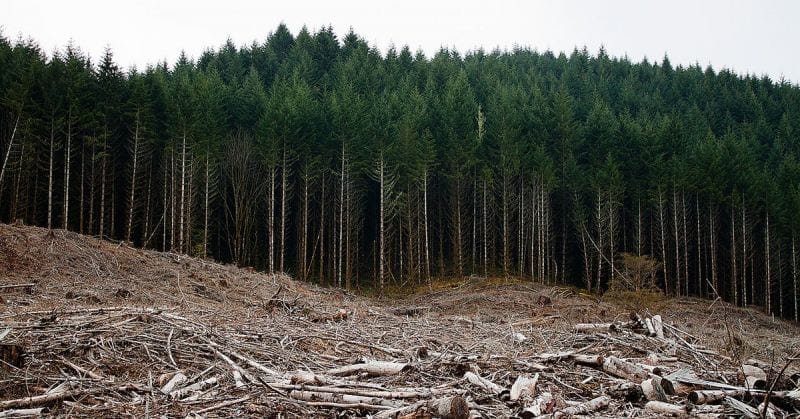
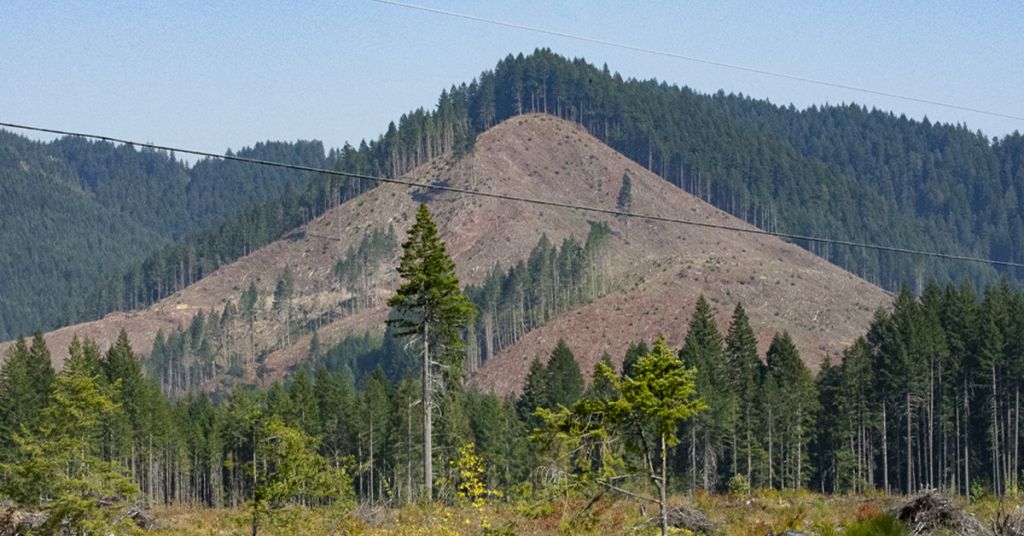
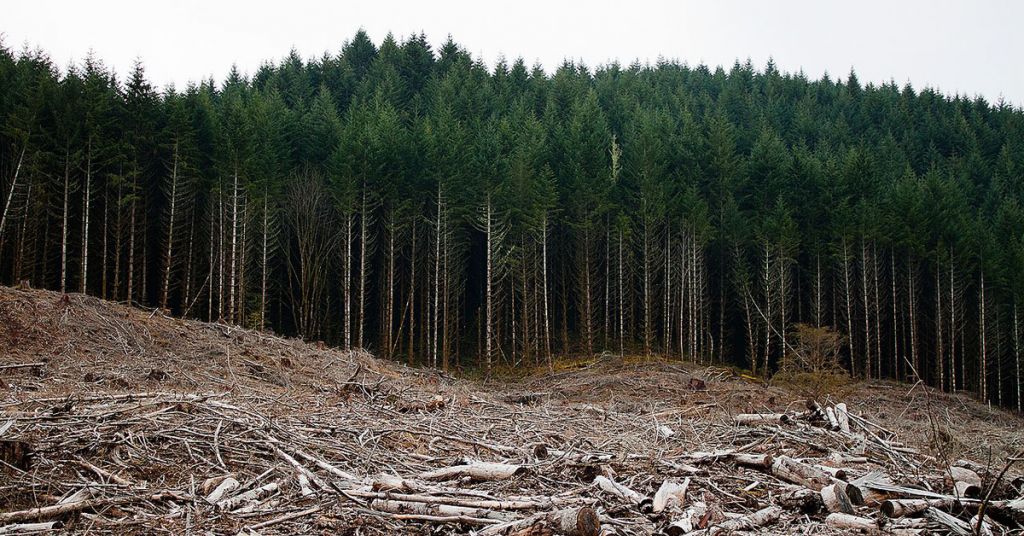
Clear-cut forests near Eugene, Oregon.

Clear cut: The Oregon Legislature is on the verge of slashing the Oregon Forest Resources Institute. Photo by Calibas/Wikicommons

By Jordan Rane. May 26, 2021. Calling out a state government agency for being less than effective is hardly breaking news. A far bigger deal: putting one on the legislative stand for being extremely effective—at performing the opposite of its taxpayer-funded purpose.

“Like many Oregonians, I read last year’s OPB and ProPublica investigative reporting on the Oregon Forest Resources Institute, and honestly I was outraged,” posted Rep. Andrea Salinas (D-Lake Oswego) on a Facebook forum. “We know enough about OFRI’s inappropriate and unethical behavior to take action now.”

Earlier this year, Salinas drafted HB 2357, a bill aiming to eliminate the Oregon Forest Resources Institute (OFRI) entirely.

MORE: SDS Lumber sale: While locals fret, companies evade questions

The longstanding outreach agency launched by the Oregon Legislature in 1991 was created to “advance public understanding of forests, forest management and forest products, and encourage sustainable forestry through landowner education,” according to OFRI’s own mission statement.

Recent independent investigations into OFRI—including a damning 2020 report from The Oregonian and OPB entitled “What happened when a public institute became a de facto lobbying arm of the timber industry”—have exposed years of illegal lobbying by the ostensibly educational agency, as well as fueling misleading advertising and political attack ads, and muffling legitimate scientific research.

Representative Andrea Salinas Democrat - District 38 - Lake Oswego

Forest thump: Rep. Andrea Salinas. Photo by Gia Goodrich

“While OFRI has used tax dollars to debunk science and mislead the public, the Oregon Department of Forestry has been short-staffed on basic monitoring and climate change positions,” notes Salinas, whose amended bill now aims to reform and restructure the agency, and deflate it with a giant budget slash—redirecting those cut funds to support conservation efforts under the Oregon Department of Forestry.

The bill originated in the House Agriculture and Natural Resources Committee. One committee vote and several public hearings later, it’s scheduled for another vote in the House Revenue Committee, likely happening on Thursday (May 27).

MORE: The secret power of old growth

The next stop is the House for a full floor vote. Then on to the Senate.

“It would reflect very poorly on the ability of the Oregon Legislature to respond to damning evidence of malfeasance at a state agency if they failed to hold OFRI accountable this session,” says Sean Stevens, executive director of Oregon Wild, a nonprofit dedicated to protecting and restoring the state’s wildlands, waters and wildlife.

An audit of OFRI requested by Gov. Kate Brown following investigations into the agency’s misconduct is being handled by the Oregon Secretary of State’s office and will likely remain undetermined until after all congressional voting is done on the “OFRI bill.”

The bill faces an uncertain future, but a hopeful and growing one according to proponents.

“I have heard a united voice that the state of Oregon in its funding should not be in the business of timber industry public relations,” said the bill’s co-sponsor, State Sen. Jeff Golden (D-Ashland) to ProPublica. “People want a change in that. That’s really struck a chord.”

Jordan Rane is an award-winning journalist whose work has appeared in CNN.com, OutsideMen’s Journal and the Los Angeles Times.
Appreciate this story? To support environmental journalism on Columbia Insight click here

By |2022-11-15T19:14:35-08:0005/26/2021|Natural Resources|2 Comments

SDS Lumber sale: While locals fret, companies evade questions

Lack of information leads to increasing unease as a New York investment firm moves in to handle the sale of a Columbia Gorge logging fixture  

Project Steelhead brochure cover

Big pitched: New York-based Perella Weinberg Partners has prepared this brochure to aid its sale of SDS Lumber Company holdings. 

By Jim Drake and Chuck Thompson. May 20, 2021. For 75 years, the SDS Lumber Company headquartered in Bingen, Washington, has been managing 100,000 acres of prime Pacific Northwest forest resources, as well as local lumber mill operations in the heart of the Columbia River Gorge. In September 2020, a press release from SDS announced the company’s shareholders had decided to explore the sale of its timberland holdings and mill properties.

At the time, SDS President Jeff Webber said the company might be sold in its entirety or sold piecemeal to multiple buyers. Its various holdings include trucking, marine and commercial real estate operations.

SDS was founded in Bingen in 1946 by Wally Stevenson, Frank Daubenspeck and Bruce Stevenson. Its mill operations currently employ about 350 people.

News of the potential change of ownership set off alarm bells across the region. Concerns surrounding the sale have largely focused on what the operational character of its new owners might look like. SDS is broadly thought to have been a fair steward not only of the land it logs but of the communities within its scope of operations.

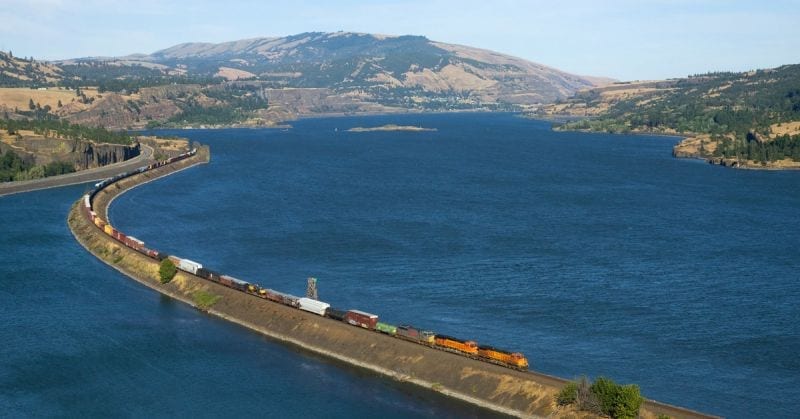
Columbia River between Lyle and Bingen WA Photo by David Gubler

Road and track: This freight train traveling between Lyle and Bingen, Washington, is a reminder that commerce competes with conservation in the Columbia River Gorge. Photo by David Gubler/Creative Commons

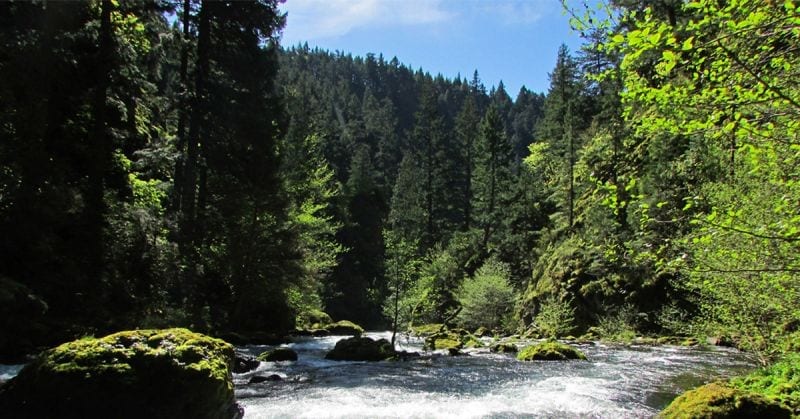
For just one example, among many large parcels it owns, SDS holds land adjacent to the White Salmon River, which has been granted Wild and Scenic status and has undergone significant changes due to dam removal in the last decade. Increased logging in the area by a new owner could reverse decades of work by environmentalists to protect the river corridor.

“That press release was just stunning, because you just didn’t expect a company that’s so deeply rooted here to do that and it was like something exploding in our faces,” says Pat Arnold, who leads Friends of the White Salmon River, a group based in White Salmon, Washington, that’s been championing watershed resource protection since 1976.

MORE: The secret power of old growth

Arnold says SDS timber management practices exceed those adhered to by other companies.

“I think SDS is pretty unique in this regard. There’s an average timber rotation in the state of Washington of 35 years, but SDS seems to work on a much longer term,” she says. “The vertical integration they have with their mill and the land is unique.”

‘Project Steelhead’

Concerns over the sale have turned to outright paranoia in some circles in recent weeks with the announcement that SDS has engaged New York-based investment banker Perella Weinberg Partners (PWP) to broker its sale.

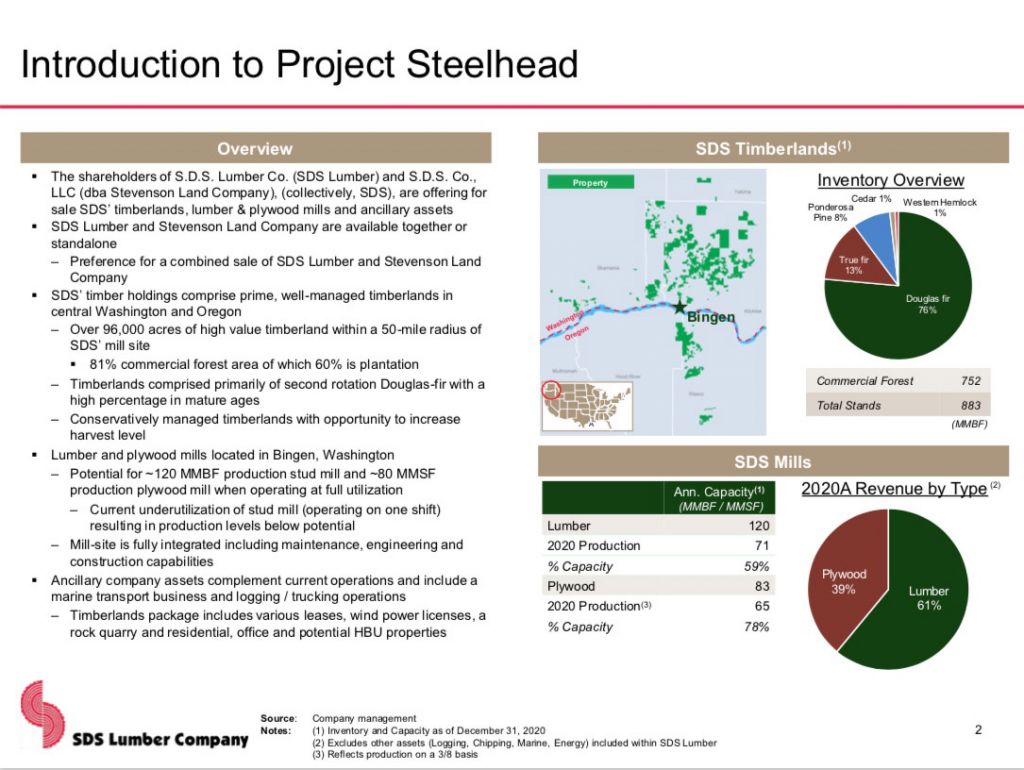
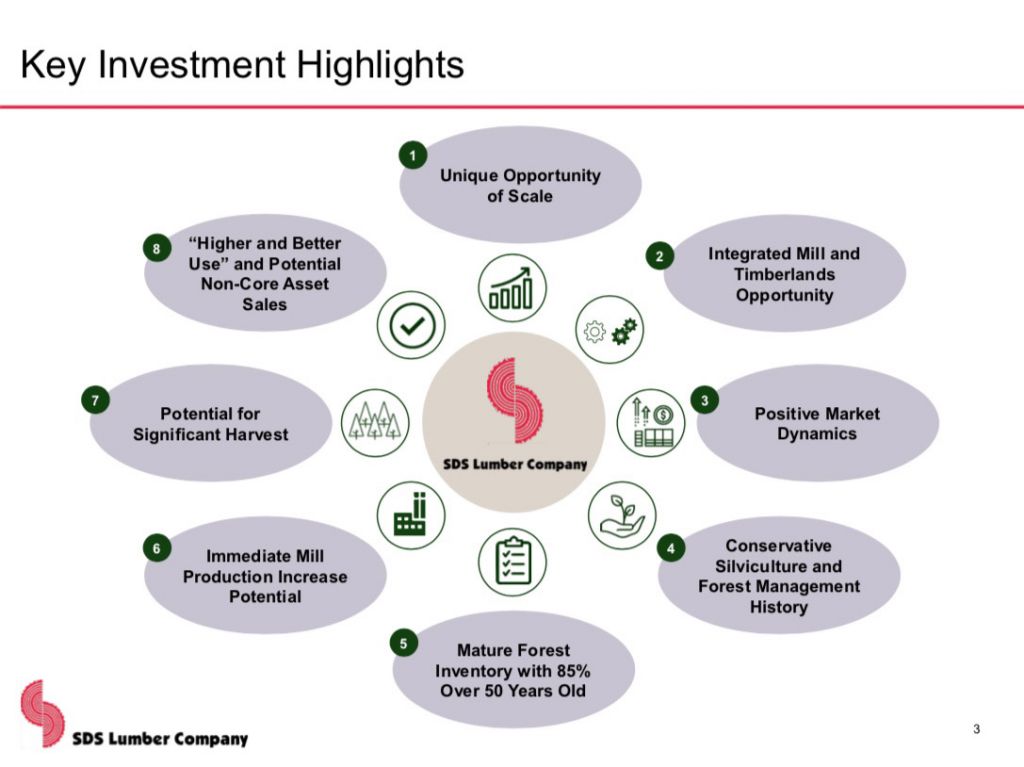
PWP is calling its campaign to offload SDS assets “Project Steelhead” (unclear if that name is intentionally ironic or simply an East Coast investment firm’s tone-deaf attempt to associate itself with a Columbia Basin icon) and is now floating a brochure to potential investors touting “key investment highlights.” These include a “mature forest inventory with 85% over 50 years old” and “potential for significant harvest” with “immediate mill production increase potential.” Translation: ability to cut down lots of old trees, fast.

Project Steelhead brochure Page 2

Project Steelhead brochure Page 3

Project Steelhead brochure produced by Perella Weinberg Partners.

“The current 60-year harvest rotation, which translates to 1,700 acres per year, could accelerate to a more frequent 45-year harvest rotation, producing 2,200 acres of harvest per year, an increase of nearly 30%,” wrote The Goldendale Sentinel earlier this month.

“‘Project Steelhead’ indeed,” reads a Friends of the White Salmon River press release that followed circulation of the PWP brochure. “The sales brochure makes it absolutely clear that the outcome will be maximum profits for SDS and for investors, at whatever price the rest of us will pay. Weep with us.”

Short- or long-term profits?

The financial burden of a new company likely taking on debt to acquire SDS is another concern. Arnold believes whoever buys the land will probably have to use a business model that reaches for short-term profits, in order to satisfy shareholders.

“Chances are that somebody’s gonna come in and take the timber to another mill, and shut this one down,” speculates Arnold. “You can’t hardly imagine anybody at all stepping in and continuing what SDS is doing. It’s just probably not even feasible.”

Pat Arnold of Friends of the White Salmon River

Woods product: Pat Arnold of Friends of the White Salmon River. Photo by Jim Drake

Absent the kind of commitment to long-term timber harvest rotation SDS has operated with, logging practices could have serious negative impacts on wildlife habitat and neighboring lands, and create public roads access issues due to improper tree removal and water-quality degradation in fish-bearing streams due to inadequate buffer zones. 

A worst-case scenario, says Arnold, could involve new owners rezoning existing forest parcels into residential lots, something she says would be financially attractive to a company looking to make quick profits.

MORE: Forest Service seeks to eliminate protection on large trees

There is, however, another possibility, raised by The Goldendale Sentinel.

“Unlike prior efforts to sell SDS to major Northwest timber operations, the Perella Weinberg appointment points more toward the creation of a timber investment management operation that will be owned by ‘investor-owners’ who can afford the long-term investment horizons ideal for the timber industry,” wrote the newspaper. Goldendale is the seat of Klickitat County, where Bingen is located.

Film looks at SDS practices

In an effort to inform the public on the sale and SDS’s connection with the communities it serves, Friends of the White Salmon River partnered with Joel Roth, a local high school student whose family is involved with the Friends group. His interest in filmmaking led to discussions about creating an informational video.

That effort resulted in Uprooted, a nine-minute film that explores SDS forest management practices and the potential environmental and economic impacts of its sale.  

Featuring interviews with former Washington State Department of Natural Resources employees, as well as an archeologist who worked for the Yakama Nation, the video discusses SDS’s forest management practices, wildlife habitat issues and experiences with saving Native American cultural resources on land scheduled for logging.

Clear cut in White Salmon River drainage

Clear and present: Recent clear-cuts, like this one in the White Salmon River drainage, are a part of the scenery around the Columbia River Gorge. Photo by Jurgen Hess

According to the video, today’s landowners are operating more as a financial company than a company focused on long-term environmental stability.

“The SDS press release indicates that there’s a lot of new people on the board of directors, most of which are probably unrelated to Klickitat County, not having any ties to our local area,” says Arnold. “One of them is a business rescue specialist out of Portland.”

According to an October 2020 article published by Forest Economic Advisor, a wood markets news website, those new board members (announced in September) include Sandy McDade, a 34-year Weyerhaeuser executive with extensive experience in international timber markets, and Clyde Hamstreet, “a Portland-based corporate turnaround specialist.”

Many questions, no answers

If Arnold and others are wary of the pending sale, the companies involved aren’t going out of their ways to keep local communities informed of developments.

New York-based Julian Garratt, executive director, Perella Weinberg Partners

Wall Street vision: Julian Garratt leads the team handling the SDS sale. Photo Perella Weinberg Partners

Columbia Insight has made multiple attempts to contact SDS, PWP and their affiliated media relations firms to request information or interviews regarding the SDS sale.

In the case of PWP, when a person in the company’s New York business office was eventually reached by phone, she did not identify herself and responded to a request to be put in touch with a PWP spokesperson or media representative by saying, “We can’t give our company information.” She then transferred the call to a non-functioning voicemail box.

Phone calls to PWP offices in Los Angeles and San Francisco (and, sometimes, New York) ring through to Agility, a $10 billion CIO outsourcing unit within PWP that specializes in investment strategies for outside firms such as pension funds and hedge funds.

MORE: In Columbia River Basin, a push to use forestry to fight climate change

On May 19, in response to an email sent to PWP partner Jonathan Prather and Executive Director Julian Garratt (both are listed as contacts on the Project Steelhead sales brochure) inquiring broadly about the SDS sale and Agility’s role in it, Columbia Insight received an email response from Kara Findlay, PWP’s managing director.

Salutations aside, Findlay’s email reads in its entirety: “Thank you for your email. We decline to comment.”

SDS spokesperson Liz Fuller of Portland-based Gard Communications, who handles media inquiries for SDS Lumber, did respond to inquiries from Columbia Insight, though declined to provide updates or substantive information about the sale process.

“The doors are wide open for a completely different kind of timber management,” says Arnold, summing up an increasingly common worry around Columbia River Gorge communities. It’s an enormously complex issue and we are trying our very very best not to turn this into a thing where people are on one side or another.

Spirit Falls Trail on Little White Salmon River in WA photo by Jeff Hollett

Counting on corridors: Locals worry an out-of-state buyer won’t share their regard for tree-lined scenes like this one along the Spirit Falls Trail on the Little White Salmon River. Photo by Jeff Hollett/Creative Commons

“The only thing I think people should take a position on is to ask SDS to share more information. SDS said in their press release that they care about the community. They said that, so let’s see it. How can this move in the direction that’s good for all the parties concerned?”

Jim Drake is a freelance writer and media consultant living in Hood River, Oregon. Chuck Thompson is editor of Columbia Insight.

Appreciate this story? To support environmental journalism on Columbia Insight click here

By |2023-04-07T17:51:50-07:0005/20/2021|Natural Resources|6 Comments

Clamshells begone! Washington takes lead in reducing plastic, boosting recycling

Broad support for a new law signed by Gov. Jay Inslee adopts the nation’s most comprehensive plastics ban and recycling revamp

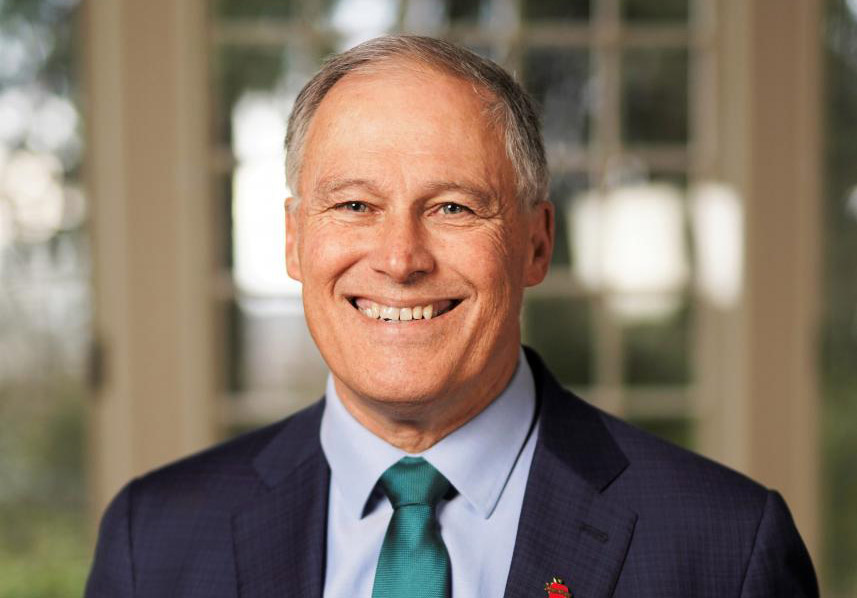
Gov. Jay Inslee Headshot

No ketchup packets, please: The law signed by Washington Gov. Jay Inslee requires requesting that array of condiments usually included in your takeout bag. Photo courtesy of Office of Governor Jay Inslee

By Jordan Rane, May 18, 2021. A sweeping plastics and recycling bill signed into law in Washington this week aims to put stray bottles, styrofoam packing peanuts and other forms of environmental kryptonite on the endangered list.

Signed on May 17 by Gov. Jay Inslee with wide bipartisan support, the law (SB 5022) leads off with the country’s toughest ban on expanded polystyrene products. It’s been praised by environmental organizations and industry trade groups, and championed by the bill’s primary sponsor, Sen. Mona Das (D-Kent) as “the most advanced in the nation.”

Becoming the sixth state to adopt restrictions on polystyrene, Washington now becomes the first state to outright ban foam coolers, foam packing peanuts and food service products such as hinged clamshells, plates and cups.

Single-use foodware, such as plastic utensils, straws and cup lids, as well as that automatic confetti of condiments included in your takeout bag, are also on the hit list with the nation’s first and only comprehensive opt-in requirement for such items. In other words, don’t blame the Door Dash guy about a missing spoon or ketchup packet if you didn’t specifically request them. The usual toss-ins are no longer there just for good wasteful measure.

Washington also becomes the second state with recycled-content requirement laws for plastic beverage containers and trash bags—enforcing more stringent recycling standards than its predecessor, California.

Supported by a disparate range of nonprofits and business organizations—from Oceana and the Surfrider Foundation to the Washington Beverage Association—the new law has drawn widespread praise as a means of reducing waste while improving markets for recycled material in an apparent across-the-aisle win-win as welcome as it is rare.  

Jordan Rane is an award-winning journalist whose work has appeared in CNN.com, OutsideMen’s Journal and the Los Angeles Times.
By |2021-05-26T09:07:22-07:0005/18/2021|Climate Change, Conservation, News|1 Comment

How the biggest river protection act in Oregon history was created

Getting the River Democracy Act to Congress took hundreds of meetings, but also comfortable pants and more than a few pieces of blueberry pie

Click above to listen to an expanded version of this story on that latest edition of the Columbia Insight podcast. Host Isabelle Tavares shares the story behind the creation of the River Democracy Act. She speaks with the legislation’s co-sponsor, Oregon Sen. Ron Wyden, and others involved in the effort to protect thousands of miles of Oregon rivers and streams from development. Rogue River photo by Zach Krahmer
 

By Isabelle Tavares, May 13, 2021. In the early 1970s on the University of Oregon campus, a fatigued student closed his textbook, descended the stairs of the Oregon College of Law building and beelined toward a group of friends who beckoned from a car waiting outside.

He sandwiched into the backseat. As campus demands faded he began to relax and appreciate in the scenery. Pavement turned to dirt and highways turned to waterways. By the time the group arrived at their destination along the McKenzie River he was re-energized. The car doors couldn’t open fast enough.

Oregon Senator Ron Wyden

Cloudy with a chance of groundbreaking legislation: Oregon Senator Ron Wyden. Photo by Office of Ron Wyden

The young man carried with him that day three things he appreciated about as much as anything—his friends, a fresh blueberry pie and a love for Oregon’s rivers.

Nearly half a century later that student would go on to craft a groundbreaking piece of federal legislation aimed at preserving the kind of experiences he’d enjoyed on his many river excursions as a young student.

MORE: New pressures threaten White Salmon River corridor

Now known across the state as Senator Ron Wyden, that former law student’s River Democracy Act (RDA)—introduced in the U.S. Senate in February by Wyden and co-sponsor Sen. Jeff Merkley, Oregon’s other Democratic senator—promises to protect and preserve 4,700 miles of Oregon rivers under the national Wild and Scenic Rivers system.

The proposed legislation shields rivers and streams from damming and development, while preserving clean drinking water and healthy habitat for fish and wildlife, and supporting a robust recreation economy.

Wyden’s earliest ideas for the act were inspired by afternoons spent with a fork in a blueberry pie and his feet in the McKenzie River.

“I just felt this was the right thing to do,” Wyden told Columbia Insight about the RDA. “We love our rivers, they’re so important for so many reasons, and (I thought) ‘I can try something that’s never been done before.’”

‘Very fun job’

For those familiar with Wyden’s long record of environmental protection, it wasn’t a question of if he wanted to preserve rivers, but which ones he’d want to include in his legislation. Wyden himself wasn’t sure.

To help make the decision, he put out a call to Oregonians asking for input. Over 2,500 responded.

Jamie Dawson

Riding the current: Oregon Wild’s Jamie Dawson was part of the wave of support for the River Democracy Act. Photo courtesy of Oregon Wild

“When I started asking people about the idea of river democracy … all the papers said ‘Can’t be done, he’ll never do that,’” says Wyden.

An unprecedented public nomination process lasted from October 2019 to February 2020. Wyden appeared before packed halls from Astoria to Pendleton. With responses from elementary students to retirees, 15,000 suggestions for favorite rivers and streams flooded nomination boxes.

Over 970 town hall meetings later, Wyden says those conversations gave him “the spark.” It did the same for others.

“In environmental organizations, we can spend 10 years bugging senators (for help),” says Jamie Dawson, public lands campaigner at Oregon Wild (OW), a Portland-based environmental nonprofit. “But this, I swear, was a miracle when he came to us and said ‘Let’s do a river bill.’”

Dawson got the “very fun job” of promoting the measure during the five-month public nomination period. For her, numerous events stand out, including a film screening in Bend where people gathered Chaco-to-Chaco while OW distributed nomination cards.

“There was so much interest we were almost breaking fire code,” says Dawson.

Ditching ‘uncomfortable clothing’

So what exactly does the “democracy” part of the River Democracy Act refer to?

Community events, like all those town hall meetings, bring autonomy to constituents at a time when public lands legislation can feel inaccessible, explains Wyden.

MORE: Idaho Rep. Mike Simpson breaks down his plan to breach Snake River dams

“Environmental policy usually involves a bunch of people debating in Washington, D.C., sitting around in uncomfortable clothing,” he says, adding that the traditional avenue of protecting rivers has been “turned on its head” with this legislation.

The RDA includes numerous ideas that came out of those public meetings.

[perfectpullquote align=”full” bordertop=”false” cite=”” link=”” color=”” class=”” size=””]“There was so much interest we were almost breaking fire code.” —Oregon Wild’s Jamie Dawson[/perfectpullquote]

Existing Wild and Scenic Rivers provisions typically impose a quarter-mile corridor limiting development around protected rivers. The RDA expands this corridor to a half-mile on all protected rivers in the state in order to minimize wildfire risk. (Some Oregon rivers are already protected with a half-mile corridor.)

The bill also allows federal land managers, for the first time in many instances, to enter into cooperative agreements with local tribes, landowners and governments to co-manage river segments.

The Burns Paiute Tribe, for example, worked with Wyden to ensure native fish restoration could continue on Wild and Scenic River sections.

Gems in arid places

Signed in January to address the “profound climate crisis,” President Joe Biden’s “30 by 30” executive order seeks to protect 30% of U.S. land and 30% of U.S oceans by 2030.

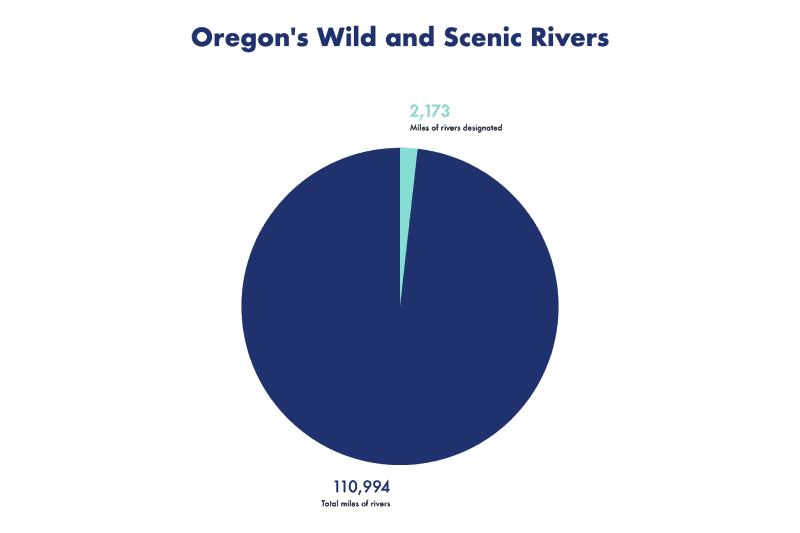
Wyden and others see the RDA as compatible with those goals. While 14% of Idaho’s land and a little less than 10% of Washington’s land is protected as wilderness, only 4% of Oregon’s wilderness is protected. Oregon currently has 2,173 miles designated in the Wild and Scenic Rivers system, but that total remains only a small fraction of the state’s 110,994 miles of rivers and streams.

River Democracy Act pie chart

In terms of protected wilderness, Oregon is at the “bottom of the barrel” according to Julie Weikel, a retired veterinarian in eastern Oregon. A longtime activist for animal welfare and environmental protection, Weikel was recruited to review a list of eastern Oregon waterways that had a shot at making Wyden’s final list.

Most people think of Oregon as a lush green landscape, and the state’s identity is linked to forests, Weikel says. But in the arid region east of the Cascades, where sagebrush spans the landscape, clear-running rivers and streams are the difference between “making it and not making it.”

“My grandmother raised her seven kids out of her three-acre garden watered by a mountain stream,” says Weikel. “That’s made me appreciate those precious little water gems out in the desert.”

Next steps

Introduced into Congress on February 3, the RDA is now in the early stages of what will likely be a lengthy legislative journey.

If passed by the Senate Energy and Natural Resources committee, where it currently resides, the bill will be sent to the House and Senate for debate, amendments and votes. Neither Wyden nor anyone else associated with the bill will venture a guess on when that might happen.

MORE: Climate change will exacerbate flooding in Columbia River Basin, OSU study finds

Wyden is patient. The RDA has been a long time in the making and, like his memories of more carefree days on the McKenzie, the state’s rivers aren’t going anywhere.

Time shapes generations in the way rivers shape landscapes. Many Oregonians have been shaped by the state’s rivers. Wyden knows that as well as anyone and his River Democracy Act aims to keep it that way.

Columbia Insight intern Isabelle Tavares is a journalism master’s student at the S.I. Newhouse School of Public Communications at Syracuse University.

To see a map of proposed rivers that would be protected by the RDA click here.


By |2021-05-18T09:40:30-07:0005/12/2021|Natural Resources, Water|2 Comments

Navajo-Gallup water delay spurs problem-solving in arid New Mexico 

INN Tapped Out logo reversed


This story is part of Tapped Out, a series of stories about power, justice and water in the West. You can access the entire series at the Institute for Nonprofit News.

In an increasingly dry Southwest, cities need to find creative solutions as historic water sources dry out

Gallup water station

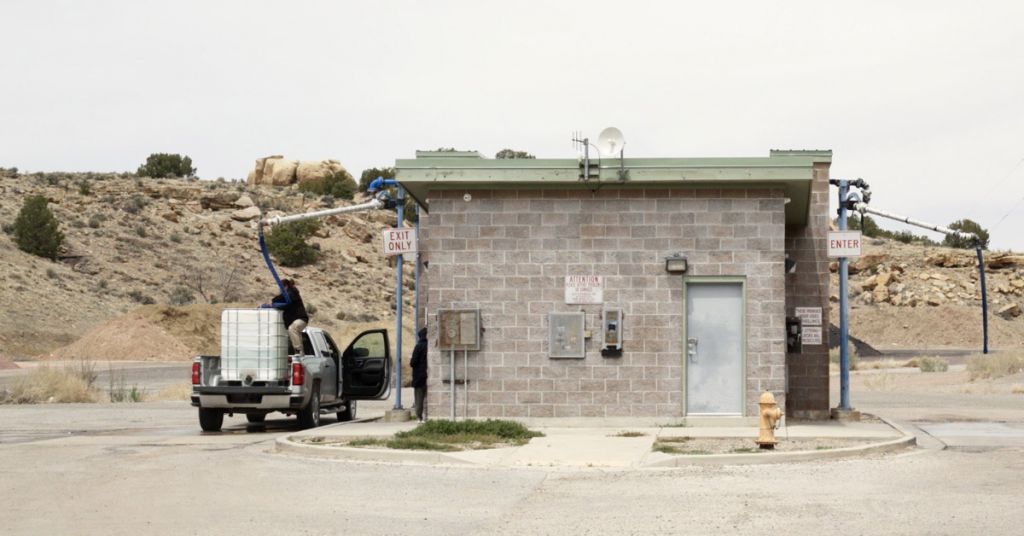
Resident from throughout the region come into Gallup, New Mexico, to haul water from the town’s water-loading station. In July and August, about 2 million gallons are dispensed through the system. Photo by Marjorie Childress

By Elizabeth Miller, New Mexico In Depth. May 7, 2021. Early this year, five of Gallup, New Mexico’s 16 water wells stopped producing water, including two of its biggest. After a few days of maintenance, two worked. The other three were out of commission for more than a month.

Had it happened in summer, the city might have asked residents to dramatically reduce use.
 
“I’m not in crisis mode,” said Dennis Romero, Water and Sanitation Director for the City of Gallup, but “it could go to crisis mode very quickly.”

The shortage wasn’t wholly surprising—20 years ago, the city decided it could limp along on aging groundwater wells with dropping water levels until a new water project began delivering San Juan River water in late 2024. The project is also connecting nearby Navajo communities, where many residents lack running water, an issue the Navajo Nation says is long past due and in need of a fix.

But now a potential four-year delay could force a growing number of people to rely on these strained groundwater sources. A plan to keep taps from running dry will come with a price tag.

The situation highlights how precarious water has become for this city of almost 22,000 in  western New Mexico and offers a peek inside the complicated mix of relationships, creativity and familiarity with multiple government agencies that’s required to manage water in the 21st century. 

No running water at home

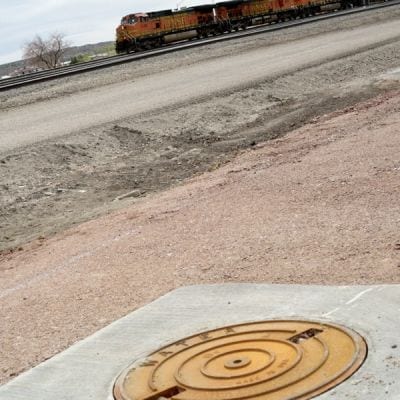
Gallup sits in the high desert along the red sandstone mesas of the Colorado Plateau. For much of its history, it has functioned as an industrial town and a bustling commercial center. Named in 1881 after railroad paymaster David L. Gallup, freight trains and Amtrak still rumble through, in addition to a steady flow of semi-truck traffic around the exits for Interstate-40.

Surrounded by the Navajo Nation, on the first weekend of the month the town swells by 100,000 as people stream in for supplies. Those with no running water at home fill water containers. People do laundry, wash cars, go out to eat. 

Gallup water tank

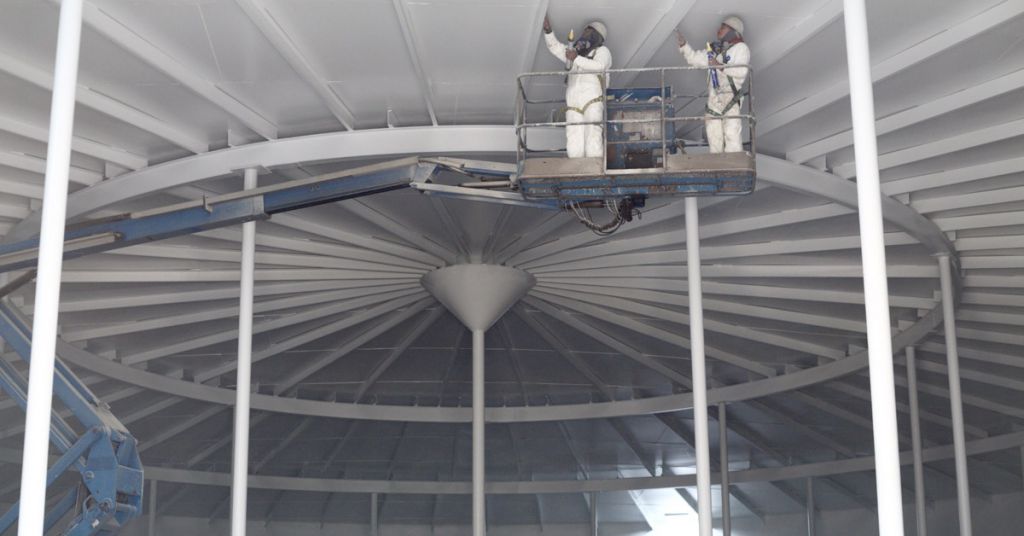
Workers repair cracks in a holding tank for 2 million gallons of water that will be piped to Navajo Red Rock and Chi Chil Tah chapters in New Mexico. Chapters are the most local unit of government on the Navajo Nation. Photo by Marjorie Childress

For decades, the Navajo Nation border town has relied on groundwater stored in sandstone layers deep underground. With no nearby rivers, wells tapping that water have been the city’s only option. But because annual rain and snowfall don’t replenish the water, levels have dropped over recent decades. In the 1990s, the city projected shortages by as early as 2010. 

“Not only was Gallup running out of water, everybody was running out,” said Marc DePauli, owner of DePauli Engineering and Surveying, which the city has hired to work on the water systems.

About 20 smaller surrounding water systems had “straws in the same bucket,” all leaning on dwindling reserves.

[perfectpullquote align=”full” bordertop=”false” cite=”” link=”” color=”” class=”” size=””]The amount of water in the Colorado River has decreased and climate change will exacerbate the decline.[/perfectpullquote]

Help is coming in the form of the Navajo-Gallup Water Supply Project, the result of a historic agreement that settled Navajo Nation claims to water in this arid region of the Southwest after decades of discussions. 

Consisting of two major pipelines that run through Navajo communities in western New Mexico, the project will bring water from the San Juan River to within reach of some of the one-in-three homes without it on the Navajo Nation.

One of the pipelines, the Cutter Lateral that branches to northwest New Mexico, is complete. The other, the San Juan Lateral, will move 37,700 acre-feet of water each year for 200 miles along the western edge of the state, up to 7,500 acre-feet of which will come as far south as Gallup. In the future, the city will rely largely on water from the San Juan.

Gallup is also set to become a hub for a regional system of water tanks and pipelines that will transport water to nearby Navajo communities, including Church Rock, Yah-ta-hey, Gamerco and Williams Acres. The city will supply those people with water even before San Juan water arrives.

“We’re seeing an increase in water demand without an increase in population simply
because these communities and water districts that have done water hauling, that have done small well co-ops, they really want a reliable water supply and they’re looking to us to give it to them—and we want to help them, we’re neighbors,” Romero said.
 
The water was supposed to flow by 2024, but a new design proposed by the Bureau of Reclamation will now likely push that date back by three to four years, putting Gallup in a tight spot, monetarily and water-wise. The construction delay coupled with the city shouldering more demand will require new wells to supply everyone until water from the San Juan arrives.

New resources, cooperation offer possible fixes

A shift in the design for where and how river water joins the system has caused the potential wait. The Public Service Company of New Mexico, the state’s largest utility, is closing the San Juan Generating Station as early as next year and has offered to sell the power plant’s reservoir, which draws from the San Juan, as an alternative staging ground for water for the Navajo-Gallup Water Supply Project. 

The benefit to Gallup is negligible, Romero said. But the Bureau of Reclamation believes the change would result in beneficial long-term cost-savings for this massive, over-budget federal project. 

Gallup railroad well

Gallup uses wells originally drilled in the 1800s for railroad steam engines. The city recently rehabbed this well, sinking a new pump and motor. Photo by Marjorie Childress

Pooling water in a reservoir would enable mud from spring runoff and monsoon storms to settle, saving on costs to make the water safe for human consumption.

Using the existing facility could cut $50 million from construction expenses, according to a 2019 letter from the U.S. Bureau of Reclamation to the city. 

It also offers a protected reservoir, should the river see another spill like the one in 2015 that flooded the San Juan River with 3 million gallons of orange, mine waste-filled water. That’s a priority for tribal members, said Jason John, director of the Navajo Nation Department of Water Resources. Without a reservoir, the Navajo Nation would be forced to turn off water to dozens of communities if a similar spill happened.

“We’re trying to make sure we have a project at the end of the day that’s going to be able to provide the water that was promised and to provide that water in a reliable fashion and one that makes sense in terms of operations and maintenance costs as well,” John said.

PNM’s offer came late in the planning process.

“The timing wasn’t the greatest,” said Pat Page, manager of the U.S. Bureau of Reclamation’s Four Corners office, which is overseeing the project. But after an initial look at the facilities, “We felt like we couldn’t walk away from that, even as bad as the timing was.”
 
A more detailed analysis is still wrapping up, Page said, and everything points toward this new option.

Complicated rights

The problem is, Gallup developed its current water-use plan assuming surface water would arrive by December 31, 2024. Leaning longer on already over-tapped wells puts the city and all its customers, including Navajo communities that have begun buying water from it, at risk. 

“A four-year delay is going to be expensive. It’s going to take money and more wells,” said DePauli, the engineer. 

The city is already in for $75 million for the new water system. Now comes an added expense of drilling new wells, at a price of about $3.5 million each.

When the work is done on the pipeline, operations and maintenance transfer to the Navajo Tribal Utility Authority, and Gallup will contribute to ongoing costs. The Bureau of Reclamation has proposed to reassess Gallup’s share of future utility costs in return for supporting the new water intake system. 

The city has recently added to its water rights, positioning it to weather this delay and provide for nearby communities in need, said George Kozeliski, a former city attorney who has worked on water rights for Gallup.

The Office of the State Engineer recently approved Gallup’s use of other well fields, with water opening up now that the Escalante Generating Station, just east on Interstate-40 in Prewitt, and Marathon Petroleum’s refinery have shut down. That well field reaches into an aquifer Gallup hadn’t yet tapped, and the city now has rights to more water than its average annual use. 

Gallup water plans

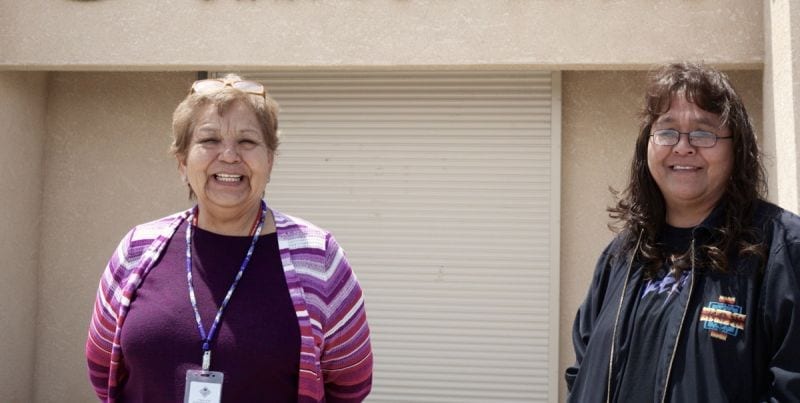
Roselyn John (left), community services coordinator, and Melita Martinez, accountant, are part of a team planning a water system that will connect Navajo homes in Chi Chil Tah, a Navajo chapter, to a community well. Lack of water was one of the reasons the community was hard hit by the COVID-19 pandemic. Photo by Marjorie Childress

“That aquifer has got a lot of water in it, and these others, if they do fall — and they are falling — then that one can take care of Gallup,” Kozeliski said. “Everybody was worried about the same thing, and I don’t want to say we did a shotgun approach, but everything just kind of came together now.”

But, Romero said, it’s only a right on paper Kozeliski is talking about: the city still needs money to drill wells to access that water.

Gallup began pursuing more groundwater in 1983, but the Navajo Nation and Bureau of Indian Affairs challenged the application to increase the town’s groundwater rights.

Last year, after COVID-19 made the need for water even more urgent, both challenges were dropped as Gallup agreed to use some of that water to supply additional Navajo communities. 

“A lot of Navajos feel like the water in a lot of this region belongs to the Navajo Nation, but we’ve been able to try to set aside some of those long-standing disputes about groundwater,” John said. “We’ve fought very hard to make sure that the city, if it’s going to continue to use water, that some of the use of that water should go to the benefit of Navajo families adjacent to the city of Gallup.”

Tackling long-term concerns and immediate needs

Gallup’s problems are not unique in an increasingly arid Southwest, where cities are facing the need to get creative and think large-scale for solutions as historic water sources dry out.

Infrastructure to move water from one place to another based on changing supplies and demand, and solve these problems regionally, not city-by-city, will be key for resilient water supplies in the future, said Kathryn Sorensen, former director of the City of Phoenix Water Resources, now with the Kyl Center for Water at Arizona State University.

Take Phoenix. For 40 years after the Central Arizona Project began delivering Colorado River water to Phoenix, the city invested hundreds of millions in surface water treatment plants and avoided pumping its aquifer. But it also stopped investing in its well field. Now, the amount of water in the Colorado River has decreased and climate change will exacerbate the decline.
 
“The city of Phoenix found itself in a place where, if shortages got steep enough, it was facing the possibility that it would not be able to get wet water to customers in north Phoenix,” Sorensen said. “That was not acceptable.”
 
Even rehabbing the old well field in Phoenix didn’t look like a solution. So the city partnered with Tucson, piping some of its Colorado River water to be stored in the aquifer under that city.

“The idea is that when there’s a shortage on Colorado River water, they can call that water back,” Sorensen said.

[perfectpullquote align=”full” bordertop=”false” cite=”” link=”” color=”” class=”” size=””]What communities do until the water supply issue is fixed is still a problem. [/perfectpullquote]

Gallup is essentially at the spot Phoenix was 40 years ago, but has no plans to give up its well field. In the long run, the city and communities linked to its supplies may enjoy the position of using river water when available and well water as needed.

It’s the wait until then that’s tough. 
 
Already, Gallup is a go-to source in the region among communities that don’t yet have water piped in and which rely on hauling.

At the height of the summer, almost two million gallons of water are pulled from the town’s water loading station each month. When Gallup shut down for two weeks in May 2020 to slow the rampant spread of COVID-19, people contacted Romero concerned that the barricaded roads would cut people off from that water station. The Albuquerque-Bernalillo County Water Authority sent out three 10,000-gallon tankers, he said, creating two watering points just outside city limits.
  
Now, that role is expanding, as construction work around the city reaches nearby Navajo communities, some of which still have a high percentage of residents living without reliable water sources at home. As soon as those pipes are finished, they’re immediately “wet” from the city’s groundwater wells, Romero said, which puts more and more people leaning on a decreasing source. A few are online, and more are coming or interested to link in.
 
“Realistically speaking, we have these communities that are starting to knock on the door and saying, ‘We’re going to be ready for water in a year or two,’” Romero said.
 
The Navajo Nation and the city are collaborating on that effort. But what communities do until then is still a problem. 

“The water line from north of Gallup, the plan was that it wouldn’t reach us until like 2026 or something like that,” said Roselyn John, community services coordinator for Chi Chil Tah, a Navajo chapter south of Gallup.” “It was way into the future, and we couldn’t wait that long, so we started doing a different approach.” 

In Chi Chil Tah, 137 homes, each with between three and nine residents, are without running water. Some chapter residents who bought mobile homes as recently as five years ago have ripped out the bathrooms to make other use of the space, John said. 

Residents often drive 27 miles to Gallup on roads they may have to shovel snow off, fill a 250-gallon water container, and drive back, a trip that takes about two hours. For others, a watering station at the chapterhouse is closer. 
 
Water piped from a storage tank miles north flows to a small pump and into a garden hose at the chapterhouse. Filling a 250-gallon container takes 15 to 20 minutes, and as people stack up, the line stretches down the road for a mile.

The absence of running water at home to wash their hands, which forced them to go to a water station to replenish, counted among the factors that let COVID-19 spread, hitting the community hard.

“There are plans to get water through the Navajo-Gallup project to them, it’s just a matter of timing and their current need for water,” said John. Given how long it will be before water could arrive from the Navajo-Gallup Project, he said, “We’ve made plans for the possibility of having to supply them with groundwater until the Navajo-Gallup project comes online.”

Chi Chil Tah has secured money from the state of New Mexico for groundwater wells, the first of which could be drilled as soon as this summer. That’s when they’ll find out how much water a well can produce, and whether it’s good to drink.

The well for the Family Dollar, one of the few nearby businesses, produces poor quality water, so the hope is these new wells access better water, and more of it.
 
“We’ve waited all our lives. I can go back seven generations that never had water. We could go another seven generations with no water in our homes,” Roselyn John said. “It’s a long time for something that should have been done sooner.”

Elizabeth Miller is an independent journalist based in Santa Fe, New Mexico, who writes about energy and the environment, the outdoors and range of public policy issues.

Tapped Out logo


This piece is part of a collaboration that includes the Institute for Nonprofit News, California Health Report, Center for Collaborative Investigative Journalism, Circle of Blue, Columbia Insight, Ensia, High Country News, New Mexico In Depth and SJV Water. It was made possible by a grant from The Water Desk, with support from Ensia and INN’s Amplify News Project.

By |2021-05-18T08:47:03-07:0005/07/2021|Uncategorized|0 Comments

New law would ban bias offenders from public wilderness

A bill in the Oregon legislature aims to put teeth—and punishment—behind environmental equity rhetoric

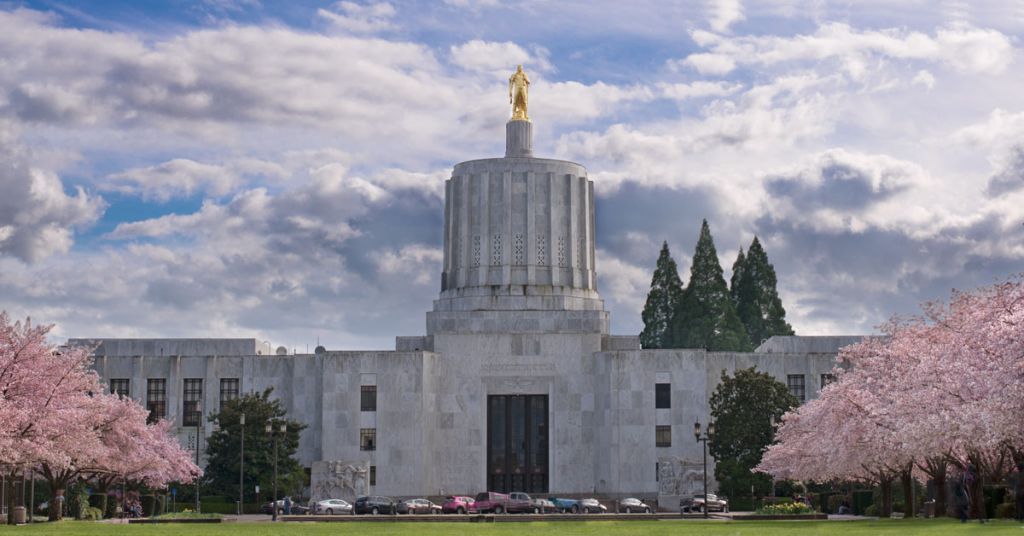
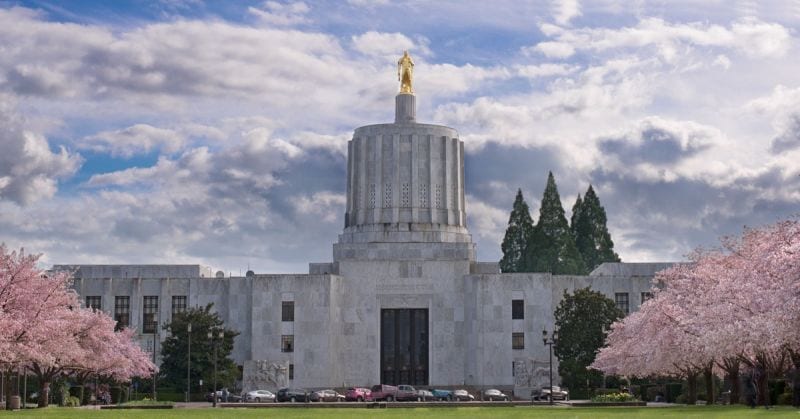
Oregon State Capitol Building and Spring blossoms in Salem, Oregon. Photo by Jim Coate/Flickr

Capitol concern: A bill approved by an Oregon Senate committee gives new meaning to “environmental protection.” Photo by Jim Coate/Flickr

By Isabelle Tavares, April 19, 2021. When Chad Brown, Navy veteran and fly fisherman, parked his car before setting out to a river, he never expected he’d return to find his brake lines cut. But they had been.

His apparent offense? Being a Black man fishing in Oregon.

Brown—who recounted his experience with backwoods bias for Columbia Insight in 2020—was one of more than 20 Oregon residents who testified before an Oregon Senate committee on bias they’ve experienced in outdoor spaces.

On April 8, Oregon’s Senate Energy and Environment Committee approved legislation that safeguards the public from bias and hate crimes committed on public lands. People convicted of a bias crime on public lands or waters will not be allowed in those areas for up to five years.

Their permits, licenses and tags would be revoked for the same period for crimes committed while angling, taking shellfish, hunting or trapping.

MORE: Racial injustice pervades our wilderness. A change of heart is needed

“There are people in my district who are afraid to go to a state park, to get on a river in a boat,” Sen. Lew Frederick, D-Portland, told Salem’s Statesman Journal. “They believe if someone decides to harass them because of their race, their ethnicity, nothing will happen.”

The Oregon State Police, Oregon Department of Fish and Wildlife and Oregon State Marine Board have expressed support for the bill.

“The conservation community cannot be silent on issues of justice, equality and access to the outdoors,” said Kevin Gorman, executive director of Friends of the Columbia Gorge, in a press release. “At a time when hate and bias crimes are increasing around the country, including here in the Pacific Northwest, we can and must do better.”

Outdoor recreation ‘a risky endeavor’

A bias crime, or hate crime, is propelled by bias against someone based on their race, color, religion, gender identity, sexual orientation, disability or national origin. People convicted of a first- or second-degree crime fall under the new bill.

The legislation comes at a time when hate crimes have spiked to their highest levels in more than a decade, according to a 2020 FBI report, and when public attention, in particular, has been focused on hate crimes against members of Asian communities.

In Oregon, reported bias crimes between January and April 2020 rose 366%, according to Oregon Public Broadcasting.

[perfectpullquote align=”full” bordertop=”false” cite=”” link=”” color=”” class=”” size=””]The bill allows courts to sentence violators to community service, including habitat restoration and maintenance of recreation facilities.[/perfectpullquote]

Robin Morris Collin, professor at Willamette University College of Law, testified that public harassment can not only be harmful to those experiencing the behavior, but to those witnessing it.

“These actions may exclude Black, indigenous and people of color and others including LGBTQI persons, and these effects ripple outward to others who observe and avoid these behaviors,” Morris Collin said. “The combined effect makes public outdoor recreation a risky endeavor for those who do not want to confront these behaviors or the contexts in which they may become vulnerable.”

Next steps

If passed into law, it’s unclear how the bill would be enforced.

But violators can’t roam too far. Oregon is one of 48 states that participate in the Wildlife Violators Compact, according to Shannon Hurn, deputy director of Oregon Department of Fish and Wildlife.

Unbowed: Despite facing bias in the wilderness, Chad Brown has remained an lifelong outdoorsman. Photo courtesy of Chad Brown

“This Compact allows for the revocation of a license(s) to occur across all of the participating states,” said Hurn during public testimony. “This prevents individuals from just applying outside the state where the criminal act occurred, and continuing to participate and harvest wildlife in other states.”

The bill allows courts to sentence violators to community service, including habitat restoration, maintenance of outdoor recreation facilities and anti-bias training.

It’s not known when the bill will be scheduled for a full vote of the Legislature.

Isabelle Tavares is a journalism master’s student at the S.I. Newhouse School of Public Communications at Syracuse University. 

By |2021-04-19T09:42:43-07:0004/19/2021|Natural Resources, News, Public Lands|2 Comments

© Copyright 2013-2025 Columbia Insight. All Rights Reserved.

As a 501(c)3 nonprofit organization, all donations to Columbia Insight are tax deductible to the full extent of the law. Our nonprofit federal tax-exempt number is 82-4504894.