Stay Updated Subscribe today for the latest research + reporting about environmental news. Subscribe Now

Stay Updated Subscribe today for the latest research + reporting about environmental news.

Subscribe Now

Chuck Thompson

Chuck Thompson

Chuck Thompson

About Chuck Thompson

Chuck Thompson is editor of Columbia Insight.

Another extreme heat victim: Cherries

‘Cull, cull, cull.’ An Oregon cherry grower surveys the withering damage to his crop following the June heat dome
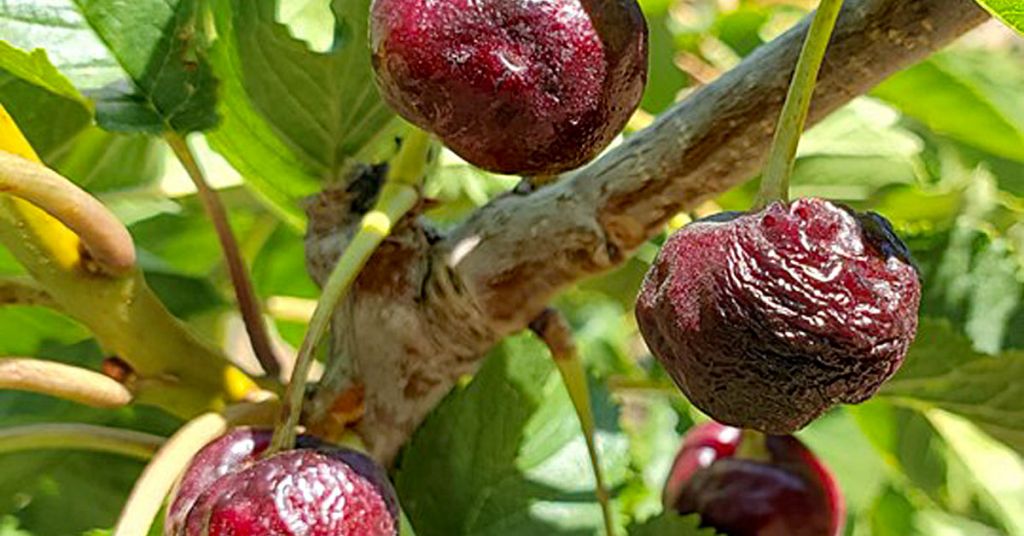
Cherries damaged by June 2021 heat wave in Oregon

Cruel summer: Cherries cooked on the tree. Image by KGW News

By Pat Dooris, KGW News. July 12, 2021. The scorching heat wave in the Northwest at the end of June destroyed an unknown amount of cherries nearing harvest in the Columbia Gorge.

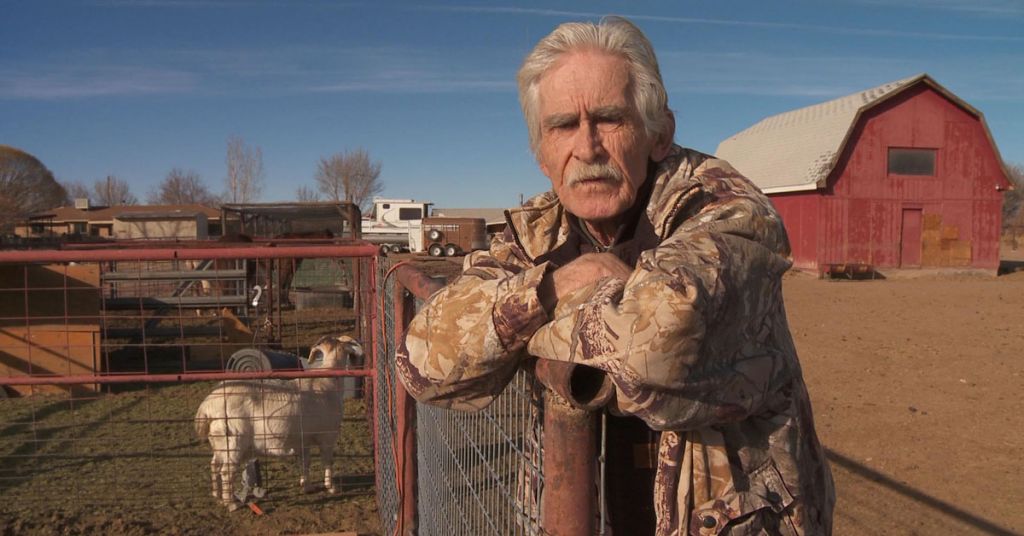
Over the last 24 years, Jim Woods and his 30-acre cherry orchard near Dufur, Oregon, have weathered good and bad years, but he’s never experienced anything like the extreme heat that cooked much of his cherry crop. 

“They were real cherries and they were growing,” says Woods. “And now they look like Craisins.”

Woods says the heat proved more than his fruit could handle. He says it was 115 degrees two days in a row, then got even hotter. 

“It topped out here at 117,” he says.

MORE: Invasive plant species are decimating Oregon’s rangeland

All across his orchard, withered cherries hang on stems across the outside of the trees. But the heat also penetrated deep into the tree, reaching even shaded berries. It stunted their growth, and Woods says if picked, many would be thrown away because they are damaged or too small. Another term for that is “culled.”

“So if I look at this, cull, cull, cull, cull, cull, cull. A hundred percent,” says Woods as he tosses cherries to the ground.

The intense heat reduced a crop that Woods expected to bring in as much as $150,000 to zero.

“It would just be foolishness to try to pick ’em,” says Woods.

Damage widespread

Across five states in the Pacific Northwest, 2,000 orchards are harvesting an estimated 22 million boxes of cherries. It’s unclear how many the heat destroyed.
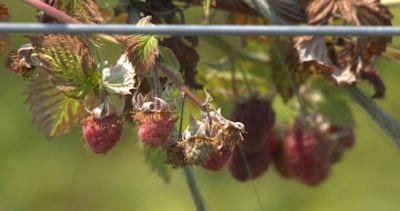
NOTE: use judiciously, CI did not obtain permission to pub this image from CTV News.

Burn victims: Across the Columbia River Basin crops were damaged by the heat, like these raspberries destroyed in British Columbia. Image by CTV News

“We certainly lost fruit. And along the river there in Oregon is no exception,” says James Michael, VP of marketing for Northwest Cherry Growers, a state agency in Washington funded by growers that supports growers and promotes cherries.

DON’T MISS OUT! Subscribe to Columbia Insight. It’s free.

Michael says there are plenty of cherries untouched by the heat in stores now, and some far enough from harvest that they were not damaged by the temperatures.

But it’s also clear that many others were hurt.

“We see heat stretching from British Columbia all the way down to California. I don’t think there was a cherry grower out there that was spared on the Pacific Coast in one form or another,” says Michael.

Columbia Insight is publishing this story as part of the AP StoryShare program, which allows newsrooms and publishing partners to republish each other’s stories and photos.


By |2021-07-12T13:15:05-07:0007/12/2021|Agriculture, Climate Change, Plants|2 Comments

Study says heat wave ‘almost impossible’ without global warming

“We have seen temperature jumps in other heat waves, but never this big.” Extreme temperatures have triggered concerns about a climate tipping point

Pacific Northwest Heatwave map

Hot zone: This map shows land surface temperatures on June 29. The hottest temperatures were recorded in Washington (visible in deep red) where maximum land surface temperatures hit around 156 degrees. Image by European Space Agency

By Bob Berwyn, Inside Climate News. July 8, 2021. The high temperatures in late June that killed hundreds of people in Oregon, Washington and Canada were so unusual that they couldn’t have happened without a boost from human-caused global warming, researchers said Wednesday when they released a rapid climate attribution study of the heat wave in the Pacific Northwest.

The temperatures were so far off the charts that the scientists suggested that global warming may be triggering a “non-linear” climate response, possibly involving drought magnifying the warming, to brew up extreme heat storms that exceed climate projections. 

Climate change, caused by greenhouse gas emissions, made the Pacific Northwest heatwave at least 150 times more likely, and increased its peak temperatures by about 3.6 degrees Fahrenheit, the study by World Weather Attribution concluded. 

“I think it’s by far the largest jump in the record that I have ever seen,” said Fredi Otto, a University of Oxford climate researcher and co-author of the study. “We have seen temperature jumps in other heat waves, like in Europe, but never this big.”

MORE: In Montana, a push to use forestry to fight climate change

The extreme temperature spike shook up some fundamental assumptions about heat waves, said co-author Geert Jan van Oldenborgh, of the Royal Dutch Meteorological Institute. 

“It was way above the upper bounds,” he said. “It was surprising and I’m shaken that our theoretical understanding of how heat waves behave was so roughly broken. We’ve dialed down our certainty.”

If global warming has pushed the climate past a heat wave tipping point, he added, “we are worried about these things happening everywhere.”

Crossing a threshold

The Pacific Northwest heat wave should be a big warning, said co-author Dim Coumou, with the Institute for Environmental Studies at VU Amsterdam and the Royal Netherlands Meteorological Institute. It shows climate scientists don’t understand the mechanisms driving such exceptionally high temperatures, suggesting that “we may have crossed a threshold in the climate system where a small amount of additional global warming causes a faster rise in extreme temperatures.”

Salmon Street Springs (fountain) in Portland, Oregon

Heat treatment: Temporary relief at Portland’s Salmon Street Springs. Photo by Aaron Audio/CC

In an unrelated study published July 6, European Union researchers studying climate tipping points found additional evidence that human-caused warming could be “abrupt and irreversible,” partly because the current warming is so fast that the climate system can’t adjust.

Even the “safe operating space of 1.5 or 2.0 degrees above present generally assumed by the IPCC might not be all that safe,” said co-author Michael Ghil, with the University of Copenhagen.

About 800 people died across the Pacific Northwest during the heat wave, a number that will probably still go up as officials examine medical records and statistics in the coming weeks and months. The peak temperature was 121.3 degrees Fahrenheit on June 29 in Lytton, British Columbia. After setting heat records for Canada on three consecutive days, the town was mostly destroyed by a wildfire driven by hot winds in the dried out forests nearby.

In addition to contributing to several major wildfires in the region that are still burning, the heat cooked growing fruit and scalded foliage on trees and other vegetation

The European Union’s Copernicus Climate Change Service said Wednesday that the average June temperature was the highest on record for North America and the fourth-highest on record globally. In early July, extreme heat boiled over in northern Scandinavia, with parts of Finland reporting record-breaking temperatures. Persistent heat across northeastern Russia is fueling fires there that are emitting record levels of carbon dioxide for this time of year. And in the West, yet another spasm of dangerous heat is building, potentially peaking this weekend in central and eastern California.

Loading the dice for weather extremes

The new study bolsters previous warnings about the need to prepare for more extreme heat waves in a rapidly warming climate, said Otto, one of scientists working on the attribution study. The findings should be considered in the context of what societies are resilient to, and what they can adapt to, she said.

“This is not something you would plan for, or expect to happen,” she said. “The models of today are not a good indicator of what to expect at 1.5 degrees (Celsius) of warming. Most societies are sensitive to small changes, and this is not a small change, it’s a big change. We should definitely not expect heat waves to behave in the same way they have in the past.” 

DON’T MISS OUT! Subscribe to Columbia Insight. It’s free.

Global warming has jacked up the odds for rare events, like 100-year floods, to happen every few years, said Carl-Friedrich Schleussner.

“We haven’t seen what a once in a 50 year event looks like now, in a climate altered by humans,” he said. “People are relating to those extreme events as really exceptional, and they are not. We are on the way to leaving the climate window of the holocene, of the last 8,000 years where we’ve been enjoying a stable climate.”

Already, the world has warmed about 1.2 degrees from the pre-industrial average, he said, enough to fuel exceptional and dangerous heat extremes.

“It’s not really comprehended or understood what a climate change of 1.2 degrees is,” he said.

MORE: Climate change will exacerbate flooding in Columbia River Basin, OSU study finds

He warned that change is non-linear with global warming, meaning that a small rise of the average global temperature can spur a proportionately bigger increase in dangerous heat. Studies show that extremes like the 2003 European heat wave that killed about 70,000 people would have been nearly impossible without human caused warming and, with just another 1 degree Fahrenheit of warming, are likely to happen every other year by the 2040s.

“Our climate experience doesn’t prepare us to understand the scale of what’s going on,” he said. “People talk about loading the dice and throwing sixes. Global warming is loading the dice so we’re throwing sevens now, something impossible previously.”

Columbia Insight is publishing this story in collaboration with InsideClimate News, a nonprofit, independent news organization that covers climate, energy and the environment. You can subscribe to the ICN newsletter here.

Appreciate this story? To support environmental journalism on Columbia Insight click here

By |2021-07-08T10:52:22-07:0007/08/2021|Climate Change|2 Comments

As wild horses proliferate, a controversial adoption program continues

Overpopulation of mustangs is a problem across the Columbia River Basin. A federal program addresses the issue by incentivizing adoptions

2020 South Steens Wild Horse Gather

2020 South Steens Wild Horse Gather: The objective of the 2020 gather was to remove 200 wild horses from a herd management area in southeastern Oregon. The number of horses the range can sustainably support is 159 to 304 horses. The herd population in 2020 was 979 adults and 200 foals. Photo by BLM

By Bill Bradshaw, Wallowa County Chieftain. June 29, 2021. It’s not the average horse that you’ll find at Dawn and Eddy Medley’s ranch in eastern Oregon’s Imnaha Canyon. In fact, it wasn’t so long ago many of the horses were running wild as mustangs throughout the West.

“I love doing this because they (the mustangs) have no choice,” says Dawn Medley, co-owner of Medley’s Mustangs. “They lost their families, and that’s what these horses are all about—family. I want to be able to connect them to a ‘family’ and to love them for as long as they live.”

Medley’s Mustangs is an operation just downriver from Imnaha (population about 160) that helps train and adopt out mustangs gathered from the overpopulated herds descended from once-domesticated horses brought to the New World by the Spanish. They’ve since reverted from their domesticated state to become feral animals—and their numbers are growing like crazy.

[perfectpullquote align=”full” bordertop=”false” cite=”” link=”” color=”” class=”” size=””]“This is a living symbol of the pioneer spirit of the West. But you also really have to look at it as overpopulation.” —Dawn Medley[/perfectpullquote]

“The herds can double in four to five years if not managed properly,” Medley says. “You could have 1,000-1,200 horses where they say you could only manage 150-250 horses. Horses eat (available forage) straight down to the ground, unlike cows, where they’ll leave some of the grass. Horses are pretty hard on the ground.”

Roaming largely on land managed by the federal Bureau of Land Management, regular attempts are made to cull the herds and find owners and trainers to take them under the BLM’s Wild Horse and Burro Program. The Medleys’ nearly 18-acre operation is one of those where they currently have a half-dozen or so horses.

“We originally started in September 2018,” Medley says. “I became a TIP (Trainer Incentive Program) trainer and we got our first (mustang) in October, so through the Bureau of Land Management, I’m basically a self-contractor. The BLM partners up with the Mustang Heritage Foundation and they help fund the program throughout the United States.”

Overpopulation, slaughter

It’s the rapid growth of the herds that makes for an issue involving the government, horse lovers and a number of watchdog groups.

Taming mustangs in Oregon

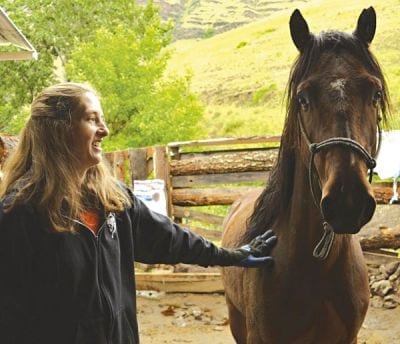
Easy touch: Medley and Mouse, a gelding mustang at Medley’s Mustangs in the Imnaha Canyon. Photo by Bill Bradshaw/Wallowa County Chieftain

Medley says at the Beatys Butte Herd Management Area near Lakeview, Oregon, the last gather was in 2015. The BLM gathered 100 horses, removed 50 and returned 25 mares using fertility control. Medley adopted one in 2015.

In another herd, 1,500 were gathered in 2015 and returned only 100—60 studs and 40 mares—to the range.

“Now, six years later, they’re gathering them again,” Medley says, though she’s unsure of the herd’s current numbers.

MORE: The Other Oregon: Book reveals Eastern Oregon as you’ve rarely seen it

“There are a lot of horse advocates out there for the wild mustangs, too, who say, ‘Hey, this is an American heritage, a living symbol of the historic and pioneer spirit of the West.’ But you really have to look at it as overpopulation,” she says. “It’s just like with people. You have to manage it somehow or it’s just going to get out of control. I don’t want to say I believe in slaughter, but …”

Medley says she’s aware of three horse slaughterhouses in Canada and five in Mexico. The last three in the United States closed in 2007 under pressure from animal-rights groups.

But some wonder if that was the best solution.

“Even the loving horses that you’ve raised from birth, people will take quarter horses … and unfortunately, there’s a bad rap going on for the (BLM’s Adoption Incentive Program) right now,” says Medley.

Sounds good. Is it?

That “bad rap” Medley mentions stems from a wave of negative coverage from animal rights groups to major media, including a scathing New York Times report earlier this year that alleged the government pays $1,000 a horse to adopters, who turn around and sell “adoptees” to slaughterhouse brokers known as “kill buyers.”

“This is the government laundering horses,” the Times quoted Brieanah Schwartz, a lawyer for the advocacy group American Wild Horse Campaign. “They call it adoptions, knowing the horses are going to slaughter. But this way the BLM won’t get its fingerprints on it.”

The BLM denies the allegations.

Imnaha, Oregon downtown by Chuck Thompson

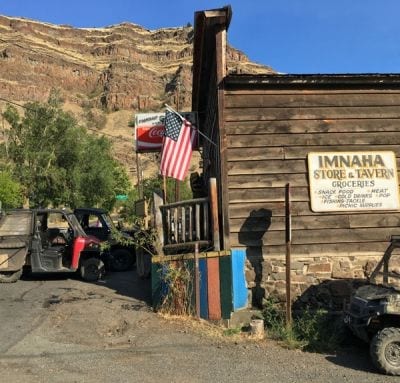
Hot spot: Imnaha Store & Tavern is a hub of local activity. Photo by Chuck Thompson

In past decades the BLM has used helicopters to round up mustangs. But the agency has never been able to find enough people willing to adopt the untamed broncos it removes. “There are now more than 51,000 animals in holding, eating up so much of the program’s budget—about $60 million a year—that the bureau has little left to manage mustangs in the wild,” reported the Times.

Medley finds herself divided on the issue of slaughterhouses.

“I can’t say ‘yea’ and I can’t say ‘nay’ because of where my heartstrings are,” she says. “I have my Palomino here. He’s 20. What if he goes lame and gets hurt? Do I want to send him out to pasture? Can I keep him financially?

MORE: Cheese in the desert: Why mega-dairies are piping water onto Oregon’s shrub-steppe

“I mean, seriously, I’ve got another guy out here I took from the county, in Joseph, he’s a pasture pet. He came to me crippled after I did my evaluation and he’s a domestic-born Paint and, unfortunately, the person before me messed him up. I can’t do anything with him so he just eats my pasture and just looks pretty. Do I have money and time for that? No. But am I going to send him to an auction house? No, I can’t. That would probably, most likely for him mean slaughter, and it’s not fair to him, so my heartstrings say, no.

“Now, what other people do in their own time, that is not my concern. Everybody has a choice and if they choose to do that, then it’s their choice.”

Preparing for adoption

Under the BLM’s Adoption Incentive Program, the horses remain government property and an adopter signs a one-year contract to ensure they properly care for the horse. Adopters must show they have sufficient feed, water, pasture, a trailer and can pay veterinarian expenses.

Under the program, an adopter pays $25 for the recently captured mustang and in about two months receives $500 from the government to help cover costs of training. Medley says about two months prior to the conclusion of the contract the government gives another $500.

Dawn Medley with mustang in Imnaha Canyon, Oregon

Holding the line: Dawn Medley reins in “Girlfriend,” just a couple of weeks out of the wild when this photo was taken. Photo by Bill Bradshaw/Wallowa County Chieftain

“It’s an incentive to get more people to adopt more mustangs that are completely wild,” she says. “The government would really like you to take that $500 and send that horse to a trainer rather than just spend it—put it toward the animal instead of toward your personal gain.”

She charges $125 for a horse that goes to an adopter.

“It may be the most expensive $125 you spend, but I’ve got three and I will never go back to domestic,” she says.

What about burros?

The Medleys stick with horses, they say, since true to their reputation, burros can be stubborn.

“I don’t really like them. I did one,” Medley says.

“You’re on ‘donkey time,’” says her husband Eddy says. “You do it when they want to do it.”

MORE: Invasive plant species are decimating Oregon’s rangeland

The Medley’s ranch is about five miles downriver from Imnaha and the 18 acres have hardly a flat spot among them.

In the three years they’ve been training and taming mustangs, the Medleys seem to have found their calling.

“We have a motto: To get as many wild-to-mild mustangs out of the corrals and find loving adoptable homes,” says Medley.

She also finds it fulfilling “to watch something so majestic and ‘wild’ become your partner and become one with them.”

Columbia Insight is publishing this story as part of the AP StoryShare program, which allows newsrooms and publishing partners to republish each other’s stories and photos. Additional reporting by Chuck Thompson of Columbia Insight.

By |2021-06-30T10:14:07-07:0006/29/2021|Wildlife|5 Comments

New PBS documentary says Agent Orange alive and hell in Pacific Northwest

The People vs. Agent Orange tracks ongoing activism against the aerial spraying of mutagenic herbicides over Oregon forests

Still from The People vs. Agent Orange documentary

In a new documentary, Dr. James Clary acknowledges in the first and only filmed interview he’s ever given that as a USAF officer and scientist in Vietnam “we knew” Agent Orange was toxic to humans. Film still by Dyanna Taylor

By Chuck Thompson. June 21, 2021. The toxic herbicide known as Agent Orange is most notoriously associated with the Vietnam War. Between 1962 and 1971, as part of Operation Ranch Hand, the U.S. Air Force sprayed as much as 20 million gallons over Vietnam and neighboring countries in an effort at mass deforestation and enemy food denial.

But the deadly, mutagenic poison “dioxin,” central to Agent Orange’s gruesome effectiveness, is still in wide use today, most indiscriminately by logging concerns as part of weed-killing herbicides sprayed over forests in Oregon, Washington and Idaho.

Meanwhile, chemical manufacturers such as Dow and Monsanto continue to evade criminal liability for the disease, birth defects and deaths their products spread.

This is the grim message of a powerful new documentary, The People vs. Agent Orange, which premiers June 28 (Monday) as part of PBS’ Independent Lens series.


“It’s a myth that the Agent Orange catastrophe is history,” say filmmakers Alan Adelson and Kate Tevarna. “Toxic herbicides are a pressing human health, environmental and civic challenge facing our society today.”

The film received the Organization of American Historians 2021 Erik Barnouw Award for outstanding programming.

Goliath still winning

The 90-minute documentary interweaves the story of two women central to citizen-led legal fights against chemical manufacturers of herbicides.

As a young woman during the Vietnam War, Tran To Nga was doused with Agent Orange; she’s suffered multiple horrific effects, including cancer and children with birth defects.

Still from The People vs. Agent Orange documentary

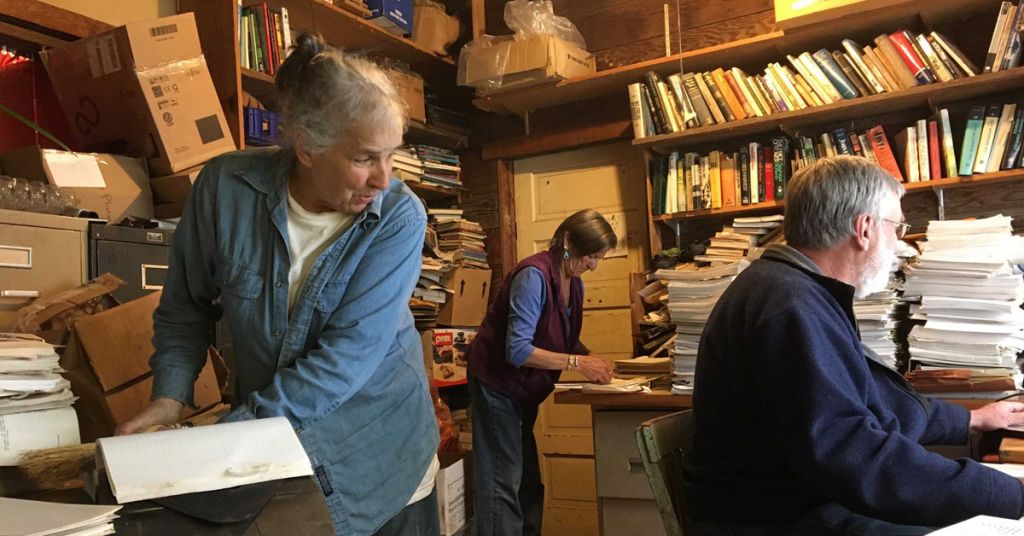
Oregon resident Carol Van Strum (left) and team scan thousands of chemical company documents collected over decades. They’re available on The Poison Papers and Toxic Docs websites. Photo by Risa F. Scott

Since the forests around her home in Lincoln County, Oregon, were continually sprayed with versions of the deadly toxin in the 1970s, Carol Van Strum has devoted her life to stopping the use of more than 750 herbicides the film says continue to spread the deadly legacy of Agent Orange around the Pacific Northwest and world.

Those who’ve been around Oregon long enough may be familiar with Van Strum’s story. She gained prominence in the 1970s and ‘80s as a founder of Citizens Against Toxic Spraying (C.A.T.S.), becoming the face of a legal battle that resulted in a dramatic but ultimately insufficient court victory over the U.S. government in a David and Goliath war Goliath continues to dominate.

“We have the right to protect all of our communities from being poisoned,” says Van Strum in a blunt summation of her work.

Both women have suffered unspeakable personal tragedies as a result of exposure to herbicides known as 2,4,5-T and 2,4-D, which when mixed form Agent Orange, so named for orange-colored markings on the barrels originally shipped to U.S. troops in Vietnam. The documentary lays out their stories in heartbreaking and sometimes graphic detail.

Yes, they’re still spraying

The People vs. Agent Orange is haunting. It’s impossible not to flinch from footage of severely deformed children in hospital wards.

Still from The People vs. Agent Orange documentary

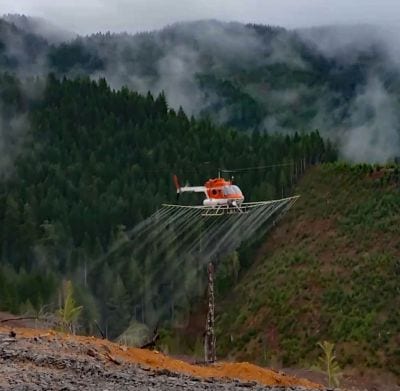
This clandestine footage shot by a helicopter technician documents herbicide spraying on a rainy day in Oregon. The rain washes chemicals into nearby streams and a reservoir. Film still by Darryl Ivy

Undercover video of workers in 2015 spraying Oregon forests and watersheds with toxic herbicides is upsetting in a different way.

Timber companies employ helicopter pilots to spray herbicides on plantation forests to kill weeds, shrubs and other plants that compete with Douglas fir and other trees harvested by the industry.

At least according to court renderings, it’s been difficult for victims of herbicide spraying to establish a causal link between their maladies and the chemicals to which they were exposed against their will.

MORE: A believable solution to climate change? This film may have it

Chemical makers have steadfastly denied culpability.

More maddening to litigants, institutions including the U.S. Environmental Protection Agency, U.S. Forest Service, Bureau of Land Management and even Oregon Sate University professors have consistently lined up with the corporations to testify that Agent Orange and its chemical spawn are “about as toxic as aspirin,” as one chemical industry flack smirkingly contends in the film.

It’d be nice to call The People vs. Agent Orange compelling history.

It’s partly that.

But as the opening scene of a group of contemporary picnickers at Douglas County, Oregon’s Swiftwater Park shows, the tragedy it documents is of a public that continues to be unwitting bystanders in a campaign of mass destruction that’s never actually ended.

The People vs. Agent Orange, June 28, PBS, Independent Lens

Chuck Thompson is editor of Columbia Insight.

Appreciate this story? To support environmental journalism on Columbia Insight click here

By |2023-02-06T11:55:05-08:0006/21/2021|Forestry|16 Comments

Invasive plant species are decimating Oregon’s rangeland

From shrubland to grassland, a new series of maps reflects major shrinkage of vegetative ecosystems, threats to wildlife since 1980s

Cheatgrass

End of the road? Rangeland ecosystems are disappearing. Courtesy of Sage Grouse Initiative

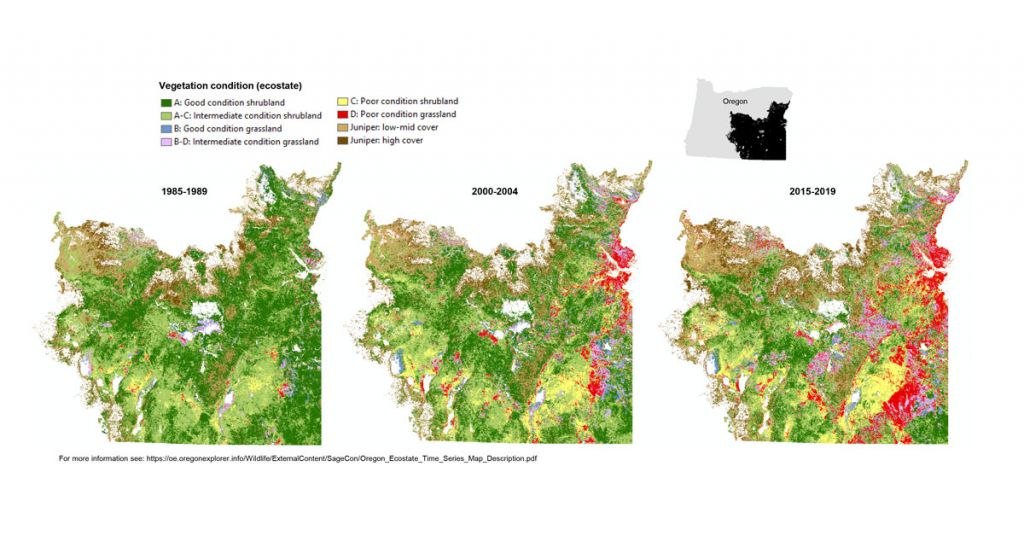
By Leslie Thompson, Argus Observer. June 14, 2021. According to information released by the Oregon SageCon Partnership in late May, the trend of shrinking rangeland across southeastern Oregon is widespread. Maps that show five-year time slices from 1985 to the present indicate massive ecological changes.

At the start of the map series in the mid-1980s in southeastern Oregon, including Malheur County, researchers characterized most of the area as “good condition shrubland.”

The map is now dotted with large areas marked as “poor condition grassland,” as well as “poor condition shrubland.”

Cheatgrass photo June 2014

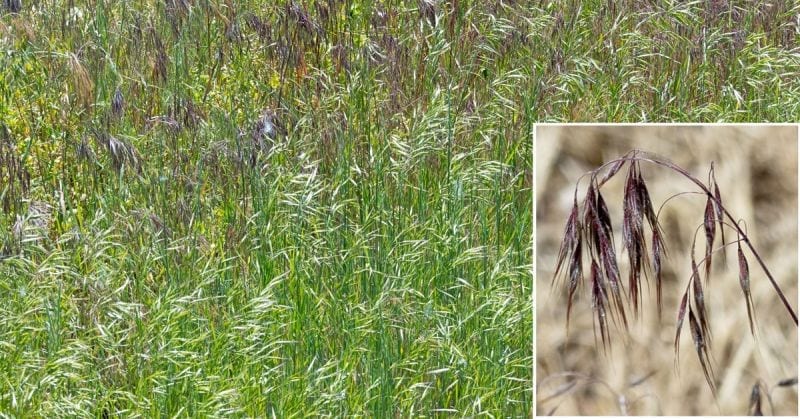
Invaders: Along with livestock, fire and agriculture, the introduction of exotic plant species such as cheatgrass (pictured) have altered vegetative ecosystems across the Columbia River Basin. Photo by Jim Kennedy/CC

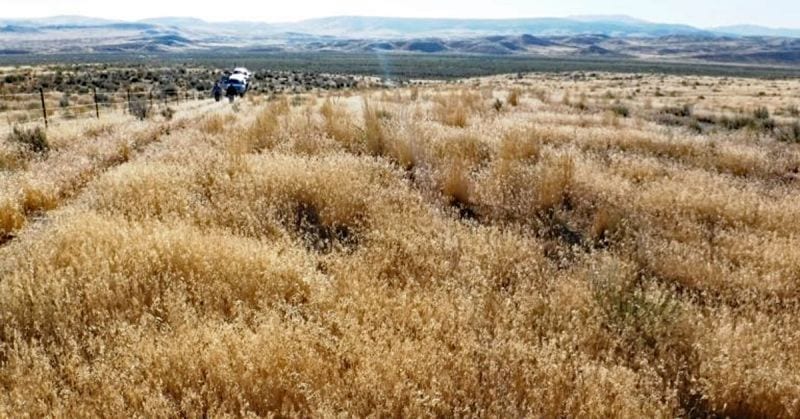
According to a 2020 Rangeland Condition Report, high quality sagebrush lands are being taken over by invasive annual grasses, such as cheatgrass, as well as juniper encroachment. In addition to displacing native bunchgrass, cheatgrass is a primary fuel for rangeland wildfires. The Rangeland Condition Report will be updated this summer.

The SageCon Partnership is a combined effort of more than two dozen government, NGO and nonprofit stakeholders. The entities are using threat-based models as a framework to identify and address primary threats to rangeland ecosystems in southeastern Oregon, which provide habitat for the greater sage grouse.

The conservation status of sage grouse is “near threatened.”

sage grouse Oregon photo by BLM

Sage grouse: Many birds and mammals depend on sagebrush ecosystems. Photo by BLM

Its population is shrinking almost as quickly as its habitat.

The grouse was considered for an “endangered” listing in 2010 and again in 2015.

Analyzing rangeland

The problem ahead of the partnership is determining primary threats to rangeland ecosystems in southeastern Oregon. One way the agencies are going about this is by using threat-based models.

One recently developed model is the Ecostate Time Series Map, which covers upland sagebrush ecosystems across eastern Oregon.

The map utilizes digital photos to assign pixels into an ecostate based on the percentage of cover from annual or perennial forbs and grasses, shrubs and trees, according to SageCon.

Ecostate Time Series map image pdf

The maps, which are based on the Rangeland Analysis Platform, break down data regarding vegetation conditions into eight ecostates, expressed in letters that rate shrubland and grassland as good, intermediate or poor, and track the extent of juniper coverage. The maps also show core habitat for sage grouse.

The maps “provide a helpful big-picture view but should always be complemented with other data sources,” according to information released by SageCon.

Columbia Insight is publishing this story as part of the AP StoryShare program, which allows newsrooms and publishing partners to republish each other’s stories and photos.
Cheap power has lured massive cryptocurrency mining operations to Central Washington. At a crazy price

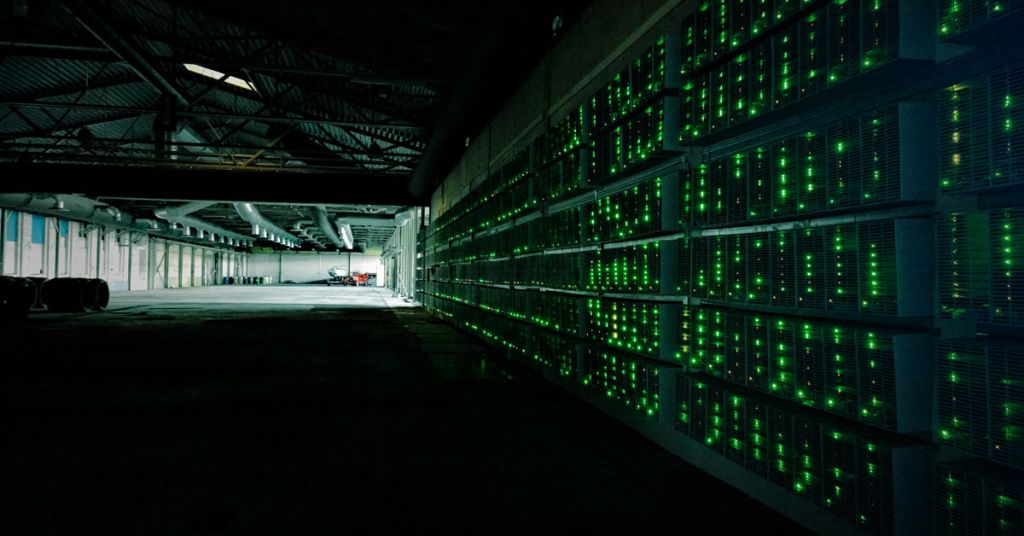
Cryptocurrency mining opening image

Digging deep: Cryptocurrency “mining” is reshaping energy consumption in the Mid-Columbia Region. Image by Marco Verch Professional Photographer

By Jordan Rane. June 3, 2021. “It was a real Wild West-type situation here for awhile,” says Ron Cridlebaugh, Chelan Douglas Regional Port Authority’s director of economic and business development. “A lot of people thought, ‘Wow, here’s an easy place to make a buck with all of this cheap, renewable energy.’ And many of them came flocking in without any real business plan or clue.”

Cridlebaugh is based in East Wenatchee in Central Washington, home to the first U.S. highway bridge built over the Columbia River and enough area hydroelectric dams to garner an old regional nickname: The Buckle of the Power Belt. Back in the day, Cridlebaugh would receive what he calls “mining boom fever” inquiries from all over the world.

“Someone would call up and say, ‘I need 150 megawatts.’ And we’d say, well you can’t have it because our dams don’t even produce that much power beyond what we need for our community. Then,” he laughs, “they’d ask—‘Can we buy the dam?’”

MORE: Developers back off controversial fracked gas power plant in Oregon

Like most booms, an inevitable bust period followed and the crowd of frenzied prospectors gradually dispersed.

“Nowadays there’s really just a few major players in Douglas and Chelan counties who draw more megawatts than, say, what an apple processing facility here would use at full tilt,” says Cridlebaugh. “I’d say the mining industry in the mid-Columbia has entered what appears to be a more mature phase.”

Wait a sec. Exactly which mining industry and which “boom” are we talking about here?

Bitcoin boom

First, a quick clarification of “mining.”

When Cridlebaugh refers to the “Wild West” days of prospecting, he’s talking about the cryptocurrency mining boom that kicked off in Central Washington a little less than five years ago.

It wasn’t about burrowing for gold nuggets. It was a pitched battle for blockchain in the virtual field of cryptocurrency mining.

Bitcoin mining

Taking it to the banks: Bitcoin mining operation, location undisclosed. Photo by Marko Ahtisaari/Creative Commons

The computer-driven method of processing alternative money transactions of Bitcoin and other digital cryptocurrencies has become one of the biggest industries this area has seen since apple seeds were planted and Alcoa aluminum plants were shuttered.

It’s an industry that didn’t exist in any shape or form before 2009 when the first batch of 50 Bitcoins (aka the Genesis Block) was “mined” on a personal computer by a mysterious person or group of people named Satoshi Nakamoto.

The fringe economic maneuver would lay the foundation of blockchain, a digital public ledger of encrypted, borderless alt-financial holdings. From this creation grew a symbiotic industry of cryptocurrency “miners” competing to computationally solve complex problems in order to validate crypto-transactions in exchange for commissions on transactions of Bitcoins and other cryptocurrencies.

[perfectpullquote align=”full” bordertop=”false” cite=”” link=”” color=”” class=”” size=””]“Bitcoin’s bull run is putting public utility districts in Central Washington on high alert.” —Bitcoin.com[/perfectpullquote]

The whole brain-bending business, you’ve likely heard, has managed to inspire global cryptomania.

According to the latest Investopia tally, there are now over 4,000 cryptocurrencies. The value of a single Bitcoin, the benchmark, which is now accepted by several major corporations, indecipherably soared to nearly $65,000 in April (10 years ago it was valued at a dollar) before plummeting to half that value in May. At publication time, it had yo-yo’d back up to $38,548.

For all of Bitcoin’s volatile market mystique, Warren Buffett rates its intrinsic value—or that of any other cryptocurrency—at a steady zero.

Massive suck

Is this all starting to make perfect cryptic sense? If not, don’t worry. You’re not the only one who doesn’t grasp the concept.

Bill Gates

Gates: Malaria meds over Bitcoin. Photo Moritz Hager/World Economic Forum

“I’ve read articles about cryptocurrency, I’ve had it explained to me and I still don’t get it, and neither do you or does anyone else,” quipped HBO’s Real Time host Bill Maher in a recent crypto rant. Maher’s screed is head-nodding funny—until he gets to the real point, which is the environmental elephant in the room: cryptomining’s massive energy drain and its associated contribution to climate change.

MORE: Opinion: Storage is a critical piece of our clean energy future

Making Bitcoin from cryptocurrency mining—or, as Maher puts it, “guessing numbers to win imaginary prizes”—requires inconceivable quantities of round-the-clock, sky-high computing power. According to Bill Gates, mining for cryptocurrencies “uses more energy per transaction than any other method known to mankind.” He’s said he’d rather invest in malaria and measles vaccines than Bitcoin.

Reminiscent of an old Ripley’s Believe It or Not! nugget, the University of Cambridge estimates that in its entirety Bitcoin now accounts for 0.54% of all global electricity consumption. [An earlier version of this story incorrectly stated this figure to be “roughly half” of the world’s electricity consumption. —Editor]

According to a recent study published in the journal Nature Climate Change, Bitcoin alone may produce enough carbon dioxide emissions from its growing global energy demands and fossil fuel usage to raise the planet’s temperature 2°C by 2033.

Central Washington: Megawatt magnet

Back in Central Washington’s Mid-Columbia Basin—a region famous for apple orchards, beautiful state parks and hydroelectric production—cryptocurrency miners remain attached to plentiful power and some of the lowest energy rates in the country, as well as cool air (giant banks of crypto-computers produce a ton of heat) and commercial rents that are a fraction of those 150 miles west.

Ron Cridlebaugh, Chelan Douglas Regional Port Authority’s director of economic and business development.

Utility player: Ron Cridlebaugh. Courtesy Chelan Douglas Regional Port Authority

Due to marginally higher utility rates than Washington, the cryptocurrency mining boom has largely bypassed Oregon. In Idaho—which has been identified by at least one consumer group as the second-cheapest state for cryptocurrency mining—investment groups are actively promoting the state to prospective miners.

But Central Washington remains the center of Pacific Northwest activity and the industry’s rapid rise has sparked reaction in the region’s comparatively small communities.

“My perception is that the community at large probably doesn’t really understand crypto and especially blockchain technology, so I don’t think they necessarily have a favorable opinion of these mining operations,” says Cridlebaugh. “Part of that is likely shaped by those early days when people were coming in and they were so desperate to get into this business that they would rent a house—not even live in it—and stick in as many monitors as they could with the window open.

“In residential communities, it was forcing the PUD (Public Utility District) to have to deal with this and start cracking down on illegal mining operations. So those early times, I think, really tainted these communities’ views of mining and the ongoing potential value of blockchain and cryptocurrencies as an international exchange.”

Public utility issues

Local utility concerns about cryptominers flared earlier this year with the unexpected surge in cryptocurrency values.

“Bitcoin’s bull run is putting the public utility districts in Central Washington on high alert, monitoring for suspiciously high power bills,” wrote Bitcoin.com, summarizing a January Seattle Times report. “PUD officials claim cryptominers from China have come to the region to take advantage of its low hydroelectricity prices.”

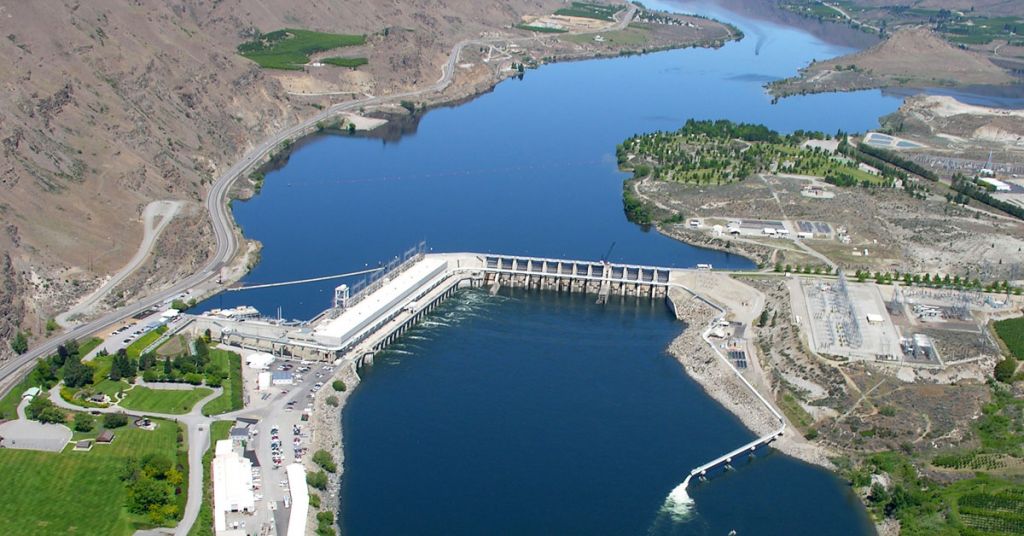
Rocky Reach Dam photo by Chelan County Public Utility District

Money machine: Cryptocurrency miners don’t need to be told Rocky Reach Dam near Wenatchee has a generator nameplate capacity of 1,300 megawatts. Photo courtesy Chelan County Public Utility District

Dealing with crypto-houses, soaring energy demands and the risks of the industry’s inherent transiency, Chelan, Douglas and Grant County PUDs have instituted adjusted rate schedules for local cryptomining businesses. While those prices still remain relatively low by national standards, energy consumption levels appear to have stabilized accordingly.

“County-wide energy use from cryptomining customers is now about 2-4 average megawatts—well below our 5% threshold—and we credit Rate Schedule 17 (Grant County’s adjusted rate schedule) for keeping demand from these evolving industries in check,” says Grant County PUD spokesperson Christine Pratt. She remembers when the volume of new hook-up requests received from cryptocurrency businesses during the last big spike in 2017 totaled approximately 2,000 megawatts of power—or more than three times what the utility needed to power the entire county. 

[perfectpullquote align=”full” bordertop=”false” cite=”” link=”” color=”” class=”” size=””]Global Bitcoin operations consume more power than the Netherlands or Philippines. —University of Cambridge estimate[/perfectpullquote]

“Cryptocurrency is an exciting and growing field and one that industry watchers say can be applied to a variety of applications, but its design and competitive nature requires an ever-increasing amount of electricity for each calculation cycle,” says Pratt. “Unbridled growth of cryptomining isn’t sustainable under current conditions at this utility. If nothing else, this region’s low-cost electricity has really forced us to learn more about it.”

Andy Wendell, Chelan County’s PUD director of customer service recalls similar eye-rubbing applications a few years back from new cryptomining businesses.

“Some of them were requesting over 200 megawatts of power,” Wendell says. “To put that in perspective, our entire service territory with all our customers of about 50,000 residential, commercial and industrial customers combined uses an annual average of right around that.”

Public shaft?

How at odds is cryptocurrency mining with energy conservation and other environmental concerns in the Columbia River Basin and beyond? And why should large public supplies of hydroelectric power be used to support the likes of Bitcoin, Ethereum, Ripple, Dogecoin and other speculative currencies, which exist primarily to avoid government controls?

Old Wenatchee Bridge (Wenatchee, Washington) Photo by cmh2315fl/Creative Commons

Community asset: The 1908 Old Wenatchee Bridge connecting Wenatchee and East Wenatchee was the first U.S. highway bridge to span the Columbia River. Photo by cmh2315fl/Creative Commons

These are touchy questions for PUDs, which operate with a legal mandate to supply energy neutrally and equitably to all of its customers.

“We’re allowed to set our own rates based on cost of service and various risks presented by markets, operations and customer groups, but the law is the law,” says Grant County PUD’s Pratt. “Our own value judgements can’t factor into it.”

MORE: Electric cars and dams: An uncomfortable connection

“It’s a good question and one that I’ve personally grappled with ever since I was introduced to cryptocurrency mining,” says Chelan County PUD’s Wendell. “We value energy conservation here and invest heavily in it. And while a lot of our industrial, commercial and residential customers are also investing in partnerships with utilities in conservation management, that does not appear to be a priority with the cryptomining industry.

“The environmental attributes that hydroelectric power offers compared to using fossil fuels is likely a better strategic move politically for cryptocurrency miners who have targeted the Columbia River Basin. But we do have concerns as a utility of the long-term sustainability of cryptocurrency mining and blockchain technology as it relates to conservation.

“It’s a large consumption of energy,” concludes Wendell. “And while things have settled down here from those early days, they’re still using what they can.”

Columbia Insight contributing editor Jordan Rane is an award-winning journalist whose work has appeared in CNN.com, OutsideMen’s Journal and the Los Angeles Times.

Appreciate this story? To support environmental journalism on Columbia Insight click here

By |2022-11-15T19:14:21-08:0006/03/2021|Energy|4 Comments

© Copyright 2013-2025 Columbia Insight. All Rights Reserved.

As a 501(c)3 nonprofit organization, all donations to Columbia Insight are tax deductible to the full extent of the law. Our nonprofit federal tax-exempt number is 82-4504894.