Stay Updated Subscribe today for the latest research + reporting about environmental news. Subscribe Now

Stay Updated Subscribe today for the latest research + reporting about environmental news.

Subscribe Now

Chuck Thompson

Chuck Thompson

Chuck Thompson

About Chuck Thompson

Chuck Thompson is editor of Columbia Insight.

Is the anti-lawn movement really a movement?

Despite a lot of advice, people are still ignoring drought and embracing lawns. When it comes to yards, green isn’t always green
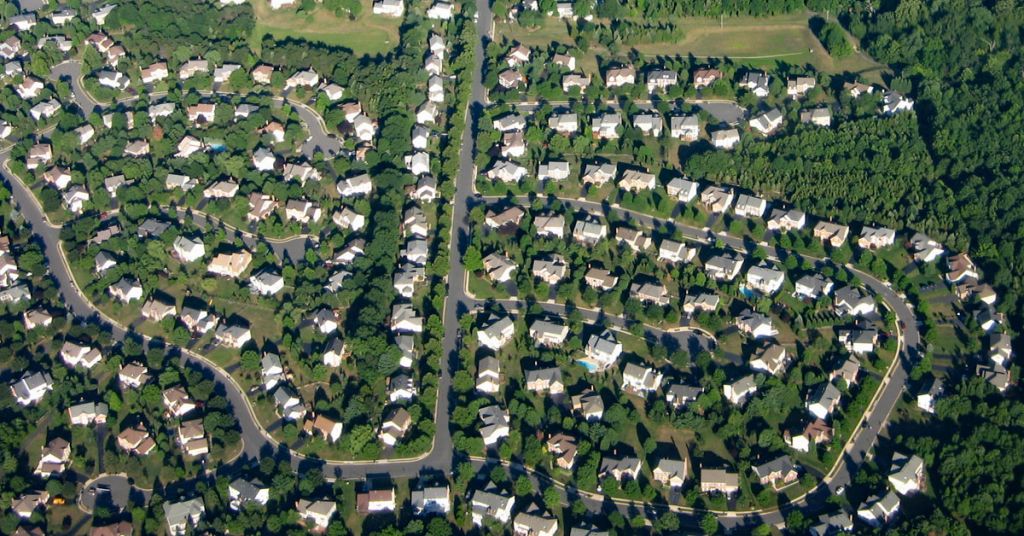
Lawns

Lawn way to go: Americans don’t appear ready to ditch their lawns in large numbers. Will that change? Photo by Pierre Metivier/CC

By Chuck Thompson. August 19, 2021. Crazy story from the Idaho Statesman a couple weeks ago. A pair of Boise homeowners—Ken Fox and Florian Penalva—ran afoul of their neighborhood homeowner’s association after each replaced his lawn with artificial turf.

The two neighbors ditched their grass to reduce their use of water and chemicals. The cost to replace each lawn ran between $8,500 and $10,000 but the guys had no buyer’s remorse.

“It’s a win-win for us and the environment,” Penalva told the Statesman. “That’s what really motivated me to do it.”

In the midst of an historic drought taking out the lawns made sense.

Unless you happened to be part of the East Valley Community Association, which quickly demanded the guys remove the artificial turf, saying it violated neighborhood covenants.

MORE: 3 ways to restore ecosystems with native plants

The two men say they’ve since spent nearly $10,000 in legal fees resisting the order and vow to continue the fight.

“What the homeowner’s association is trying to force us to do is use tap water for watering lawns in the midst of this drought,” Fox said. “The whole thing strikes me as really kind of dumb.”

“I don’t like to get pushed around,” he added.

Who does?

“Rumors of my lawn’s demise …”

It’s rare to see a green lawn in summer in my neighborhood. (The big Mormon church down the street excepted—fabulous turf!)

Most homeowners around me let their grass go dormant in summer. It turns a crackly, brownish-yellow and isn’t much fun to picnic on but it’s easy to maintain.

Yet almost no one on my street has actually removed their lawn.

white house lawn

Status symbol: The south lawn of the White House is often used as a stage to project American values. U.S. Navy Photo by MUC Stephen Hassay

A short walk away in the “nicer” neighborhoods (journalists don’t tend to share fences with investment bankers or driveways with Teslas) there are still plenty of lawns that could stand in for a Major League outfield.

I spent last weekend in Camp Sherman in central Oregon. On the Metolius River, Camp Sherman is largely a vacation community where people keep second homes.

It’s really dry, especially this summer. Yet nearly every one of the gorgeous rustic-style homes in the subdivision I visited were fronted by thick, deep green lawns. Lots of watering and mowing going on out there.

What drought?

Anti-grass roots

We all know by now lawns aren’t environmentally friendly. We know this because many people have gone out of their ways to educate the public about the perils of these postwar suburban status symbols.

According to the New York-based Natural Resources Defense Council, each year across the United States lawns consume nearly 3 trillion gallons of water, 200 million gallons of gas (all that mowing) and 70 million pounds of pesticides. Turf grass provides virtually no habitat for pollinators, animals and plants that contribute to a healthy ecosystem. Rainwater runoff from lawns can carry pesticides and fertilizers into streams, rivers, lakes and oceans via sewer systems, poisoning fish and aquatic animals.

Grass, it turns out, is America’s biggest irrigated crop.

The implications are clear—lawns are needless, environmentally disastrous relics of another time and should be eradicated from the modern landscape.
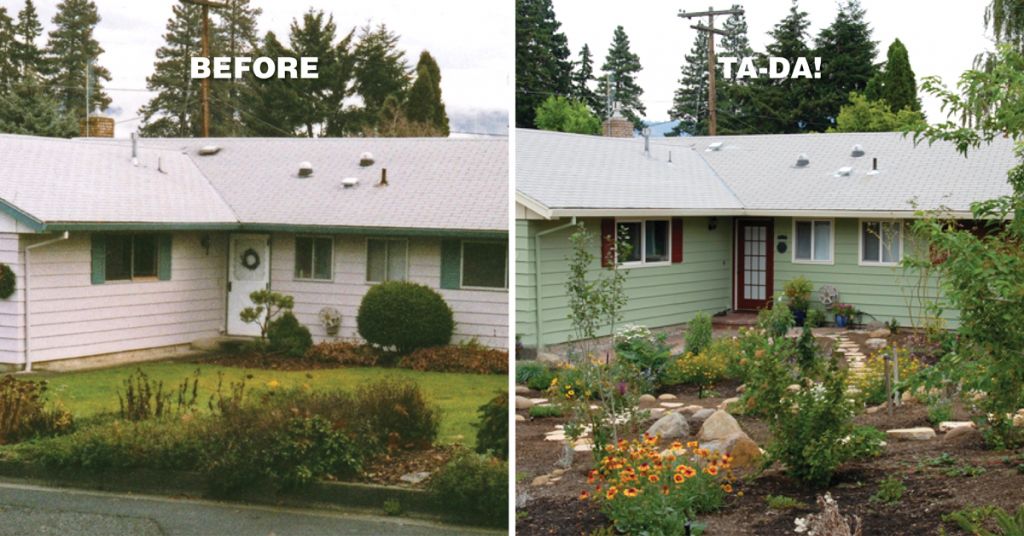
Lawn removal

Kicking the habit: This Hood River, Oregon, home got a new look with its lawn removed and installation of drought-tolerant native plants. Photo by Jurgen Hess

It’s tough to say exactly when the realization began to take hold, but efforts to push an “anti-lawn” agenda go back a ways. Some trace its roots to Rachel Carson’s 1962 environmental totem Silent Spring. In 2008, The New Yorker reported “the anti-lawn movement has been around now for several decades.”

In terms of mass media, the issue got a national bump in 1995 with a New York Times story headlined “Bidding Goodbye to the Great American Lawn” and then again—as though no one took notice the first time—in a 2001 Times story called, “Goodbye, green carpet—anti-lawn sentiment is spreading.”

Victory march?

Though lacking large, centralized leadership, the down-with-lawns effort has gained enough ground in the last decade to have attracted critics—anti- anti-lawners, if you will.

In 2013, a website called Revolutionary Gardens was so peeved by all the home beautiful criticism that it delivered a bit of subversive—if quaintly polite—pushback titled, “Why the anti-lawn movement bugs me a little.” (Gardeners are great. Even in anger they can’t help being just a little more relaxed than the rest of us.)

The anti-lawn media brushed off this calumny like a stray weed. In 2015, The Atlantic gave us “The American Lawn: A Eulogy.” In 2018, someone with the name Starre Vartan (now there’s a byline!) explained on Treehugger.com “Why I’ll Never Have a Lawn Again.” In 2020, Sierra Club forecast “Gen Z’s Next Victim: The Lawn.”

[perfectpullquote align=”full” bordertop=”false” cite=”” link=”” color=”” class=”” size=””]Most people are concerned about the condition of their own yards, but what really sets them off is the condition of yours.[/perfectpullquote]

Judging by all the press, the American lawn would appear headed in the direction of those offensive statuary jockeys that once presided over many of them.

But what’s really changed? Lawns are still everywhere. Drought, wildfires and depleted reservoirs don’t seem to have had much impact on their popularity.

“Despite at least one recent survey suggesting lawn alternatives are on trend, there’s little indication that an anti-lawn movement is taking root—even amid increasing concern about water shortages, pollinator conservation and greenhouse gas emissions,” wrote Scienceline in 2019.

MORE: How non-native plants fuel wildfires and degrade ecosystems

In what it called a “nationwide trend” that reflected “changing tastes,” CNN reported last year that a Washington, D.C.-based nonprofit called Green America had launched a Climate Victory Gardens program, inspired by the home “victory gardens” that produced fruits and vegetables during World War I and II.

Last year the new Climate Victory Gardens accounted for about 3,600 acres. American residential lawns eat up 49,000 square miles, an area CNN compared to the size of Greece.

Some trend.

Tricky transition

For a Columbia River Basin perspective on lawn reduction, I reached out to Gail Langellotto, statewide coordinator for the Oregon State University Extension Master Gardener program.

Bend, Oregon

Going native: Native plants installed after lawn removal at this Oregon home include serviceberry, red-osier, rabbitbrush, sagebrush, woods rose and Idaho fescue grass. Photo by Jurgen Hess

“People talk about transitioning away from lawns, but I don’t know that I would call it a movement … at least not yet,” she said. “Lawns are relatively easy compared to other front yard alternatives. You can mostly maintain them with occasional mowing. More and more people are letting their lawns go dormant in the summer.”

Langellotto noted that lawn alternatives take more time, or cost more to plant and maintain.

“(Lawns) are also familiar to most people, and don’t tend to attract the ire of neighbors,” she added.

Don’t miss out! Subscribe to Columbia Insight.

“The movement is there, just hard to find sometimes,” said Gwen Bartonek, a restorative agriculturalist and edible landscape designer in Oregon. “One of the most important things we can do as a community is insist all new housing developments have very specific planting guidelines either against lawns, limiting the kind and size of lawn planted and requiring a certain square-footage of trees and pollinator plants, trees, shrubs.”

She might be right. But from what I can tell not a ton of people have been persuaded by environmental arguments or peer pressure to tear out their lawns.

Someday they’ll have to dim the lights and turn off the fountains in Las Vegas. Until that happens it seems the guys who sell riding mowers aren’t going to be losing much sleep.

Hard yards

None of this is meant to suggest the anti-lawn community isn’t passionate about its purpose. Or slowly growing.

Dan Richardson is the climate and community resilience coordinator (“nifty job title,” he says) with the Underwood Conservation District in White Salmon, Washington.

Richardson works with the UCD’s Yard by Yard program. Launched in 2021, it’s a voluntary, self-guided effort for people who want to have their yard certified as “conservation-friendly.”

[perfectpullquote align=”full” bordertop=”false” cite=”” link=”” color=”” class=”” size=””] Society isn’t changing as fast as the climate but at some point it’s going to have to catch up.   [/perfectpullquote]

Getting certified doesn’t require yanking out your lawn. It does mean your backyard shouldn’t look like a putting green.

“We are attempting to encourage people to practice conservation close to their own homes by taking care of the basic resources of soil, water, native plants … and taking care to avoid setting up conditions for negative wildlife interaction,” Richardson says. “You might say conservation ‘Yard By Yard’ is about keeping lawns within reason, being thoughtful about them, rather than a monoculture lawn as the default landscaping around a house.”

Richardson couldn’t provide stats, tell me exactly how large the anti-lawn movement is or how fast it’s growing. But his eminently reasonable approach to the mission suggests he understands it’s an uphill battle. He’s no lawn Nazi.

“Maybe the story is not a pro-and-con one, not Us-vs.-Them, but really just more of stories from people who are trying new landscaping,” he says.

Outliers and oracles

Although advocates will tell you transitioning away from grass is simple, one reason progress is slow is that it actually takes a lot of effort.

I’d rather spend Saturday and Sunday watching football than getting shovel blisters. This isn’t an uncommon position.
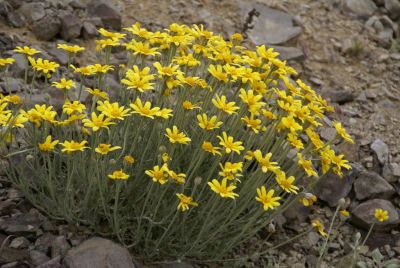
Native plants

Native sun: Oregon Sunshine grows 12-18 inches tall, is drought tolerant and reseeds itself. Photo by Jurgen Hess

“In my own yard, we’re interested in transitioning to a meadow lawn,” says OSU’s Langellotto. “We haven’t yet taken the plunge because site prep requires total removal of the turf grasses so they don’t compete with wildflower seeds. I’m trying to figure out the best way to do that, so that I can minimize the physical labor and/or herbicides needed to transition from traditional lawn to meadow lawn.” (If you want to know about meadow lawns, here you go.)

Neighbors are another obstacle. Most people are concerned about the condition of their own yards, but what really sets them off is the condition of yours.

“Earlier this spring, I was playing around with letting our lawn grasses grow out. But even though we liked the look of the grasses blowing in the spring breezes our neighbors didn’t,” says Langellotto. “We were reported to the City for violating the ordnance on grass height in lawns no more than 10 inches. Luckily, the code enforcement officer was very receptive to learning about what we were trying to do—move toward a meadow lawn—and invited us to work with our city councilors to get the lawn code rewritten.”

MORE: Monarchs are disappearing. A native plant holds the key to their recovery

Where all this leads is anyone’s guess. Society isn’t changing as fast as the climate but at some point it’s going to have to catch up.

If, contrary to all those breathless media reports, there isn’t yet quite a “movement” coalescing around opposition to lawns, there’s definitely movement.

In Boise, Ken Fox and Florian Penalva are outliers now. But they could also be oracles.

It’ll be interesting to see how green my neighbors’ yards stay once things really start heating up.
By |2023-04-27T09:45:37-07:0008/19/2021|Opinion|7 Comments

Two dams to be removed from eastern Oregon waterway

A partnership headed by Trout Unlimited will also install wood structures that replicate original habitat

Dam on Indian Creek in eastern Oregon

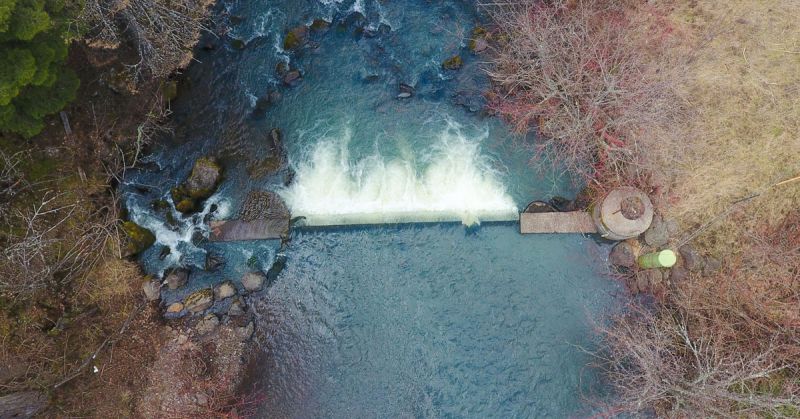
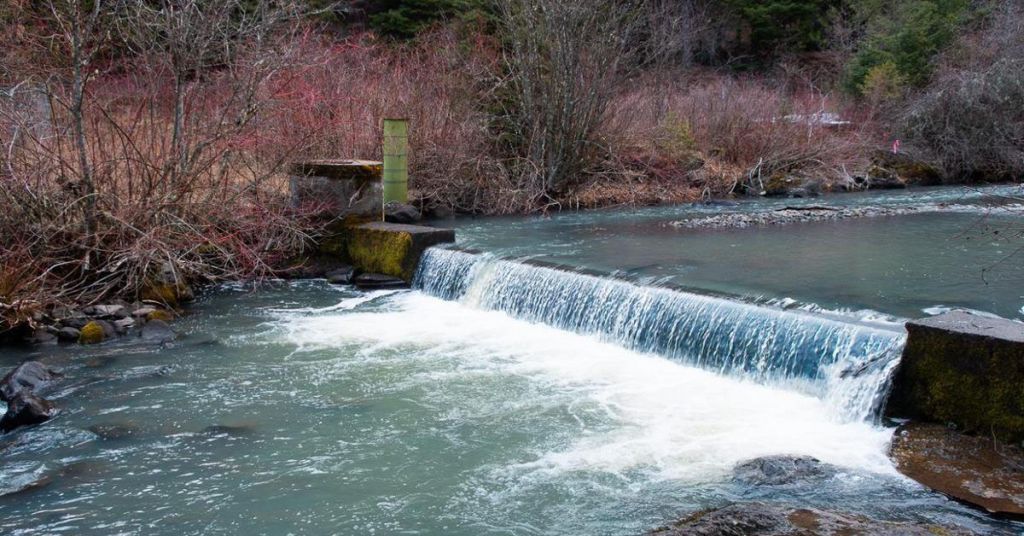
Obsolete: Seen here at high water, the dam slated for removal is between four and five feet high. In eastern Oregon, Indian Creek flows into the Grande Ronde River. Photo by Levi Old

By Alex Wittwer. The Observer, August 16, 2021.

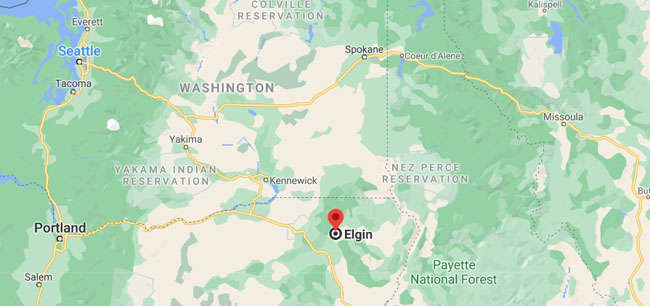
A project to remove two dams along Indian Creek near Elgin, Oregon, is underway.

Led by Trout Unlimited, a coalition of groups will remove the two, small outdated diversion dams on the creek, along with removing an old roadbed and its culvert in an effort to restore spawning habitat and rearing grounds for juvenile fish, including lower Snake River steelhead, chinook salmon, bull trout and redband trout.

Some of the fish species this project will help are endangered, including steelhead.

Each dams is about four or five feet high.

MORE: Thermal hopscotch: How Columbia River salmon are adapting to climate change

“It is really helpful to have a return back to the state it was supposed to look like, and that allows for more resilience in the ecosystems,” said Emery Hansell, river communications specialist with Trout Unlimited.

The groups plan to break ground on the project this week. Officials expect the project will run approximately three to four weeks in total, and open up nearly 10 miles of connected habitat in the area.

The project is a collaboration between Trout Unlimited, Hancock Natural Resource Group, Hanging Rock Excavation & Construction, the Grande Ronde Model Watershed, National Fish and Wildlife Foundation and Bonneville Power Administration.

Creeks need wood

Removing the obstructions will allow for the easier passage and rearing of juvenile fish as they travel through the Grande Ronde River. But that’s only one benefit that will come with the removal of the dams.

Elgin

Critical habitat: Both dams occupy spawning grounds that are both scenic and important. Google Maps

“There is more than just the passage going on,” said Levi Old, northeast Oregon project manager for Trout Unlimited. “You will, a lot of times, have a constricted floodplain so you’re moving water more efficiently through an area near the dam, which affects the local geomorphology. By removing these two dams, we’re going to open up about 1.5 acres of historic floodplain habitat that had been cut off.”

The project also will add 22 large wood structures to the creek in order to create habitat for fish that would protect them from predators, help with sediments sorting and offer shade from the sun. The introduction of these wood structures will help restore the creek to something near its original state.

“Streams have evolved with heavy woodloads in them, and historically humans have taken them out, but these fish have evolved to use the shade and cover,” Old said. “A creek like Indian Creek is especially important for spawning and rearing of ocean-going fish and resident trout species.

“And as we’re starting to feel the effects of a changing climate, there is still cold water in places like Indian Creek.”

MORE: As salmon cook in rivers, pressure on Biden mounts

While removing debris from a creek improves the efficiency of water flow it damages the waterway’s natural state, with far-reaching consequences.

“If you take out all the wood, you turn a creek into a ditch. All the fine sediments and small gravels which salmon and trout use to spawn are going to be swept out of them. You’re left with big boulders and cobbles,” Old said. “A functioning stream has a bunch of wood in it, and it catches sediments, builds pools and changes the geomorphology of the stream.”

470 small dams

Restoration work will also include planting native riparian species along the creek.

According to the Oregon Department of Fish and Wildlife, there are more than 470 small dams in northeastern Oregon similar to the ones being removed in Elgin.

Dam near Elgin, Oregon, from drone

Down the block: Small dam, big impact. Photo by Connar Stone

“Anytime we can open up more habitat for spawning and rearing resident and ocean-going fish it’s a big win,” said Old.

Columbia Insight is publishing this story as part of the AP StoryShare program, which allows newsrooms and publishing partners to republish each other’s stories and photos.

By |2021-08-17T11:13:08-07:0008/16/2021|Natural Resources, Salmon, Water|6 Comments

More than 250 trees felled before order halts reservoir project

Only 12 of 263 trees slated for cutting remain standing after board of appeals recognizes calls from locals in Eugene to stop the action

Tree removal Eugene

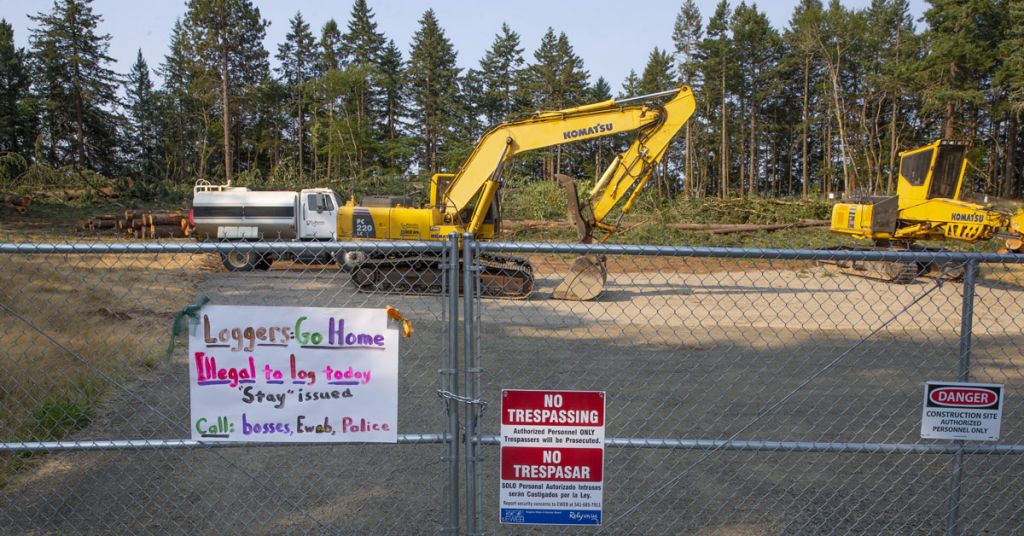
Clear-cut decision: Local protestors notched a victory, but it came at a price. Photo by Chris Pietsch/The Register-Guard

By Adam Duvernay, The Register-Guard. August 6, 2021. Tree-cutting at a controversial Eugene Water & Electric Board drinking water reservoir construction site in Eugene, Oregon, was temporarily halted late in the afternoon Monday, the day it began.

Work crews at an EWEB-owned forest in the South Hills, where EWEB intends to build its reservoirs, cut down hundreds of trees Monday before the utility’s attorney was informed of an Oregon Land Use Board of Appeals stay on the project, according to EWEB spokesman Joe Harwood.

The clearing from the forested 11 acres is part of a $25 million project to install two new 7.5 million-gallon reservoirs.

MORE: The secret power of old growth

People living nearby have opposed the project, citing environmental and quality-of-life concerns.

EWEB says constructing the two reservoirs is essential for Eugene’s drinking water. The utility has owned the site since the 1950s with the intention of building new reservoirs.

Damage done … mostly

The project requires the removal of at least 265 of more than 1,150 trees in the area. EWEB crews finished tree-cutting activities around 11:30 a.m. Monday after felling about 253 of the 265 trees it planned to cut, Harwood said. He said EWEB attorneys were notified of the order of stay around 3:30 p.m. Monday.

Tree cutting at the site has halted in response to the order, he said.

LUBA’s stay on the tree-cutting portion of the EWEB project was issued Monday, the same day LUBA received a notice of intent to appeal from local residents, including the loosely organized group Save EWEB Forest. The notice of intent to appeal, or NITA, “challenges an erosion prevention permit” issued by the city of Eugene.

MORE: In Montana, a push to use forestry to fight climate change

In its Aug. 2 order of a stay, LUBA said: “Petitioners filed with the NITA a motion to stay the city’s decision, asserting that the erosion prevention permit authorizes immediate logging of a mature conifer forest and requests that LUBA issue an interim stay of the challenged decision, until the responses to the motion can be filed and the motion for stay can be considered on the merits.”

Columbia Insight is publishing this story as part of the AP StoryShare program, which allows newsrooms and publishing partners to republish each other’s stories and photos.

By |2021-08-06T12:48:34-07:0008/06/2021|Natural Resources, Plants|0 Comments

As salmon cook in rivers, pressure on Biden mounts

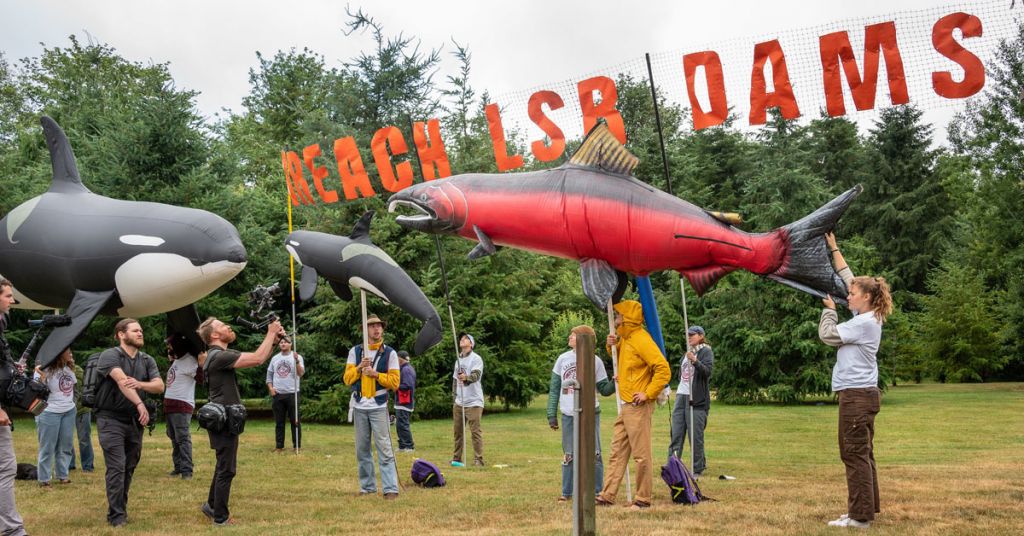
A historic gathering of tribes from across Pac NW calls on the president to breach lower Snake River dams. House of Tears totem pole arrives in DC today

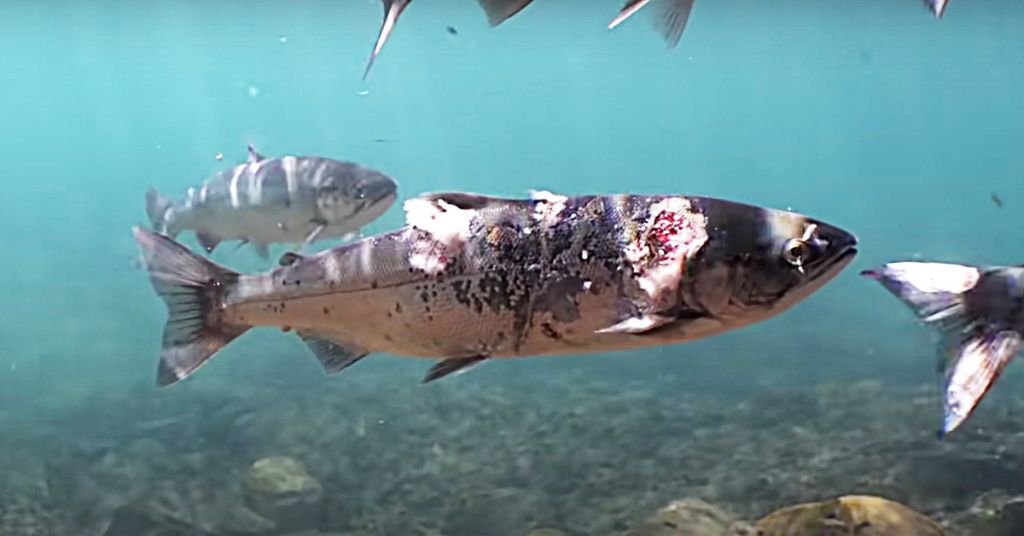
Footage released by Columbia Riverkeeper shows heat-stressed sockeye salmon dying because the Columbia River is too hot. The sockeye exhibit dramatic lesions and fungus. The Columbia River currently exceeds 71 degrees F, much hotter than the safe limit of 68 degrees F.

By Eli Francovich, July 29, 2021. In a conference room on the Squaxin Island Reservation in Mason County near the southern edge of the Puget Sound, a dozen tribes came together this month in a show of resolve focused on saving a species—salmon—that unites indigenous peoples throughout the Columbia River Basin.

Tribal leaders met at a “salmon and orca summit” organized by the Nez Perce Tribe and the Affiliated Tribes of Northwest Indians on July 7. The summit rallied support for Idaho congressman Mike Simpson’s proposal to breach four dams on the lower Snake River by 2030 and replace the benefits they provide with billions in federal money from President Joe Biden’s nascent infrastructure bill.

MORE: Breach on! Idaho Rep. Simpson calls for removal of Snake River dams

That proposal, which has made headlines since it was unveiled in February, provides a “glimmer of hope” in the long-simmering salmon wars, said Shannon Wheeler, vice chairman for the Nez Perce tribe.

“We as human beings have the ability to change,” Wheeler said during the two-day summit. “Salmon don’t have that luxury. They don’t have that luxury to change.”

Another totemic statement

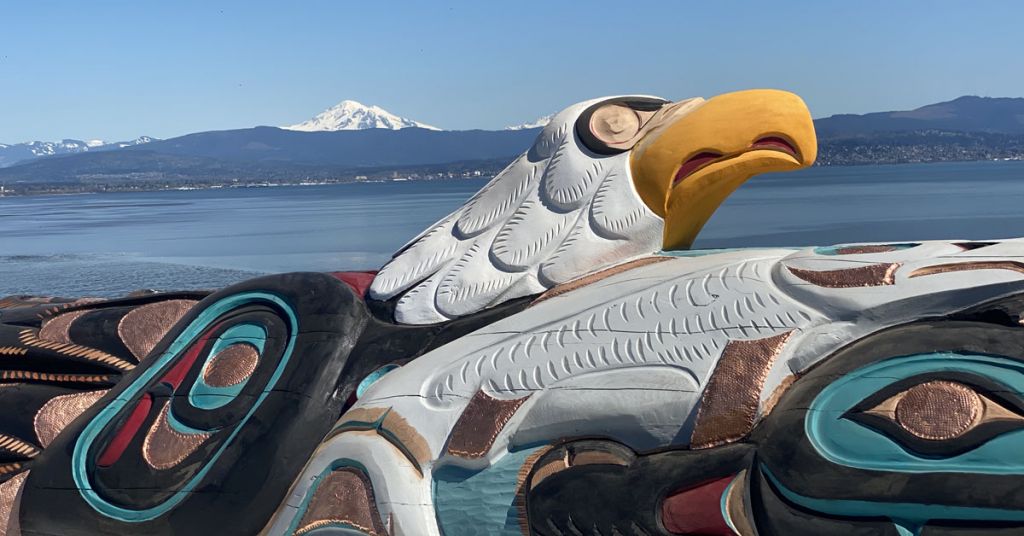
Meanwhile, in a cross-country trek that began on July 14, the Lummi Nation House of Tears Carvers have traveled 20,000 miles with a newly carved totem pole, conducting over 100 blessing ceremonies on their #RedRoadtoDC Totem Pole Journey.

The trip began on Lummi Nation lands on Puget Sound in Washington state and has included stops to display the pole at sites considered sacred to local tribes and Indigenous peoples, and which are current or potential targets for dams, mining, drilling or oil pipelines.

Lummi Nation totem pole

House of Tears Carvers: The new totem pole began its journey to Washington, D.C. in Puget Sound. The Lummi Nation inhabit Washington’s northernmost coast and southern British Columbia. Photo #RedRoadtoDC

The trip’s first stop was at the Snake River within Nez Perce traditional lands on July 15. Subsequent stops have included Bears Ears National Monument in Utah; Chaco Canyon, Navajo Reservation in New Mexico; Black Hills in South Dakota; and others along the Missouri River, including Standing Rock Reservation, North Dakota.

Along with tens of thousands of signatures and stories, the totem pole is being presented to the Biden-Harris administration on July 29 at a ceremony on the National Mall headed by Secretary of the Interior Deb Haaland.

The totem pole will be displayed in the Smithsonian National Museum of the American Indian.

‘More than a treaty right’

Simpson’s proposal to breach the lower Snake River dams has received bipartisan resistance from farmers, Democrats, Republicans and some environmental groups and faces an uncertain future. Meanwhile it’s been embraced by Northwest tribes for whom salmon are culturally and spiritually irreplaceable.

Leonard Forsman 300 x 300

Chairman of the Suquamish Tribe Leonard Forsman. Photo The Suquamish Foundation

“Salmon is the major unifying factor between the tribes of the Northwest,” said Leonard Forsman, chairman of the Suquamish Tribe and president of the Affiliated Tribes of Northwest Indians.

That tribal support broadened in June when the National Congress of American Indians, the nation’s largest association of tribal governments, passed a resolution supporting breaching of the four lower Snake River Dams.

“It should be clear to the Administration and Northwest delegation that Tribal Nations across America stand united on the need to remove these obstacles that are choking our rivers and causing the extinction of salmon and orca,” said NCAI President Fawn Sharp in a statement.

MORE: ‘The stars are aligned’: Rep. Mike Simpson breaks down plan to breach Snake River dams

For many tribes farther up the Columbia River Basin system naturally returning salmon are a memory held in trust by a few elders, said Hemene James, a member of the Coeur d’Alene Tribal Council.

“You look at historical pictures of Indians standing in line to get their rations. That is what our people are relegated to,” he said. “We have to look at this issue not as civil rights, not as human rights, not as treaty rights. We have to look at this as natural rights. The right to exist.”

He warned those tribes that still do have salmon that action needs to be taken now.

“Without the salmon, let me tell you it’s a pretty lonely world,” he said.

Simpson speaks

Throughout the summit leaders implored federal lawmakers to act. Simpson, the only federal lawmaker present, listened intently before taking the stage.

Once there he thanked the tribes for their support and acknowledged that his proposal faces an uncertain future. Still, he urged continued action saying, “we will get this done. One way or another.”

MORE: Subscribe to Columbia Insight. It’s free.

And he asked the tribes to keep the pressure on lawmakers, noting that tribal motivations for saving salmon run deep.

“The key to this whole thing is you all,” he said. “You’re trying to preserve a history. A culture and a religion. Those are powerful motivating factors.”

Little time left

The dire future for salmon—and the need for action—was driven home at the July summit when David Johnson, director of the Nez Perce Tribal Department of Fisheries Management, presented a tribal study published in May painting a bleak picture.

“These fish don’t have much time left,” he said. “Good ocean. Bad ocean. Now is the time we have to do something big.”

Salmon & Orca Summit at SQUAXIN ISLAND RESERVATION, Mason County, WA.

A Solidarity Vigil was part of the salmon and orca summit. Photo by Jeff Dunnicliff courtesy of Backbone Campaign

Wild spring and summer chinook populations are declining by 19% per year, according to the study. By 2025, 77% of the Snake River basin spring and summer chinook populations will be perilously close to extinction if trends continue. The picture is slightly less grim for steelhead populations.

A heat wave that’s stifled the Pacific Northwest has made the situation even worse. In June, water temperatures reached the low 70s in some areas between Portland and Lewiston, Idaho. Temperatures higher than 68 degrees are bad for salmon.

In an odd way, Johnson said, the heat wave might “put pressure on to get this done.”

Unchanged equation: fish or dams

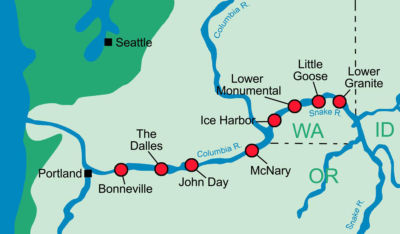
The fight over the four Snake River dams is a multi-decade battle, one that started before the first dam, Ice Harbor on the confluence of the Snake and Columbia rivers, was built in 1962.

At that time fish advocates “fought Ice Harbor so hard because once it was built, they knew it would be impossible to stop the other three dams,” wrote Idaho historian Keith Petersen in his 1995 book, River of Life, Channel of Death.

Dams on lower Columbia Snake River system

Ice Harbor is the first of four controversial dams on the lower Snake River. Courtesy of U.S. Army Corps of Engineers

They were right. Three other dams were built—Monumental Dam in 1969, Little Goose Dam in 1970 and Lower Granite in 1975. Once constructed they flooded 14,400 acres, washed away Native American gathering sites, burial grounds, fishing areas and towns.

Salmon populations plummeted with the dams, which cut off 55% of the Columbia River Basin’s fish habitat. In 1991, Snake River sockeye salmon were protected under the federal Endangered Species Act. Now there are more than 400 barriers up and down the Columbia River Basin.

MORE: Thermal hopscotch: How Columbia River salmon are adapting to climate change

But, for the Nez Perce—or the Nimiipúu—fish, particularly chinook salmon, have played a keystone spiritual, cultural and economic role for more than 16,000 years.

Prior to European colonization the Nez Perce lived throughout central Idaho, parts of southeast Washington and northeast Oregon. They hunted bison in Montana and fished for salmon on the main stem of the Columbia River.

“There is an ancient covenant there that is between the salmon, the animals and us, as humans,” Wheeler said during an interview in June.

In 2019, archaeologists carbon-dated charcoal and bone left at Cooper’s Ferry on the Salmon River. Those artifacts are more than 16,000 years old, according to the research published in Science.

All of which provides essential context, Wheeler said, when considering the tribe’s commitment to salmon.

“What if Congressman Simpson’s proposal doesn’t go through? Well then what?” asked Wheeler during the conference. “Well, we are going to continue to fight. This fight has been going on for a long time and we are not going to go away.”

Eli Francovich is a journalist covering conservation and recreation. Based in eastern Washington he’s writing a book about the return of wolves to the western United States.

READ MORE INDIGENOUS ISSUES STORIES.

The Collins Foundation logo

The Collins Foundation is a supporter of Columbia Insight’s Indigenous Issues series.

Spotted owl habitat hatchet job reversed

New ruling by Biden administration blocks Trump-era proposal to cut 3.4 million-acres of protected birdland

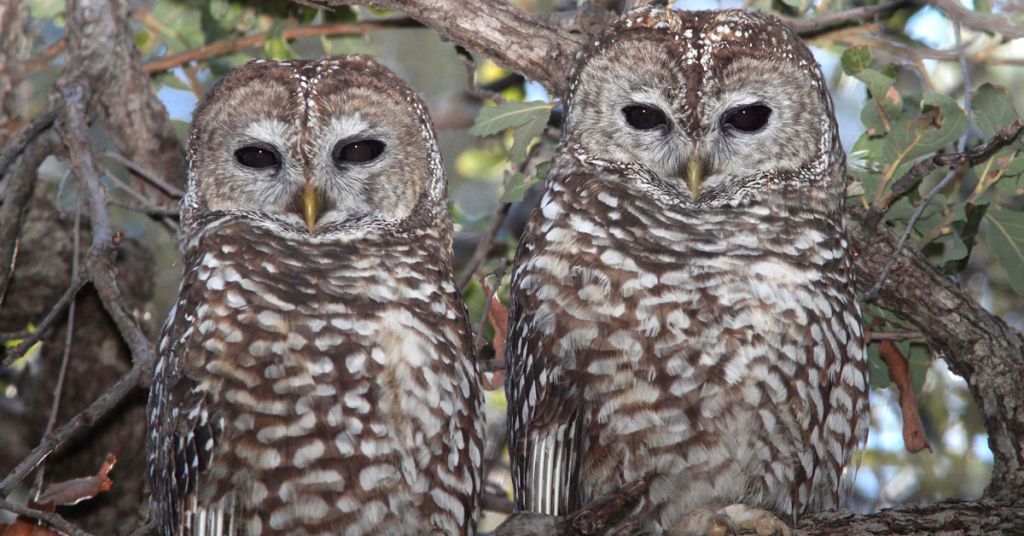
Spotted owl

Looking good: Spotted owls got a reprieve this week. Photo by Alan Schmierer/CC

By Jordan Rane, July 28, 2021. If there’s such a thing as symbolically flipping the bird to a symbolic bird, the outgoing Trump administration perfected that gesture in January.

Five days before leaving office the administration called for stripping nearly 3.5 million acres of critical habitat protection for the northern spotted owl. That’s roughly more than a third of the vanishing raptor’s critical nesting grounds, spread across 45 counties-worth of federal timberlands and coastal ranges in Washington, Oregon and California.

Conservationists called the last-minute decree—suddenly upped from about 200,000 acres that had been on the table—“indefensible,” “ridiculous,” “biologically invalid” and, more optimistically, “just one of a bunch of regulatory land mines that would never hold up but will take time for the Biden administration to clear up.”

MORE: Critical wildlife habitat in Washington saved in landmark deal

Last week, the Biden administration got around to the matter, proposing the reversal of the decision and restoration of over 3 million acres of habitat protections for the iconic spotted owl.

The bird has been an emblem of habitat and old growth forest protection across the Pacific Northwest since receiving vast protections during the Clinton administration.

Good, not great

The U.S. Fish and Wildlife Service recently estimated the spotted owl has already lost about 70% of its natural habitat and could go extinct.

Spotted owl head shot

Good, Joe. Photo by Larry Jordan/Flickr

In December 2020, it determined the bird should be upgraded from “threatened” to “endangered” under the Endangered Species Act, while holding off on making the change due to what it called staffing and resource constraints.

MORE: The secret power of old growth

In a 57-page Federal Register notice last week, and in a rare self-rebuke, the USFWS proposed to withdraw its January 15 ruling, concluding there was “insufficient rationale and justification” for January’s removal of the owl’s habitat protections. The notice also stated that the agency’s own decision in the matter had “defects and shortcomings” and was “premised on inaccurate assumptions.”

Environmental groups are relieved if not entirely ebullient about the reversal, which still leaves an original agency proposal from last year in effect to cut back protections on 204,797 acres of spotted owl habitat in Oregon.

“It’s like worrying that your bank account was overdrawn by $3.4 million, then being happy it is only $200,000,” Steve Pedery of Oregon Wild told The Hill. “If the administration is going to meet its climate goals, and protect rare species like the owl, it needs to go much further in protecting ancient forests on public lands.”

Columbia Insight contributing editor Jordan Rane is an award-winning journalist whose work has appeared in CNN.com, OutsideMen’s Journal and the Los Angeles Times.

Appreciate this story? To support environmental journalism on Columbia Insight click here

By |2022-11-15T19:09:30-08:0007/28/2021|Forestry, Wildlife|0 Comments

Farmers not quitting fight against Port Westward expansion plans

Conservation groups and growers equally appalled by Columbia County decision to cede 830 acres of prime Oregon farmland and estuary to industrial growth

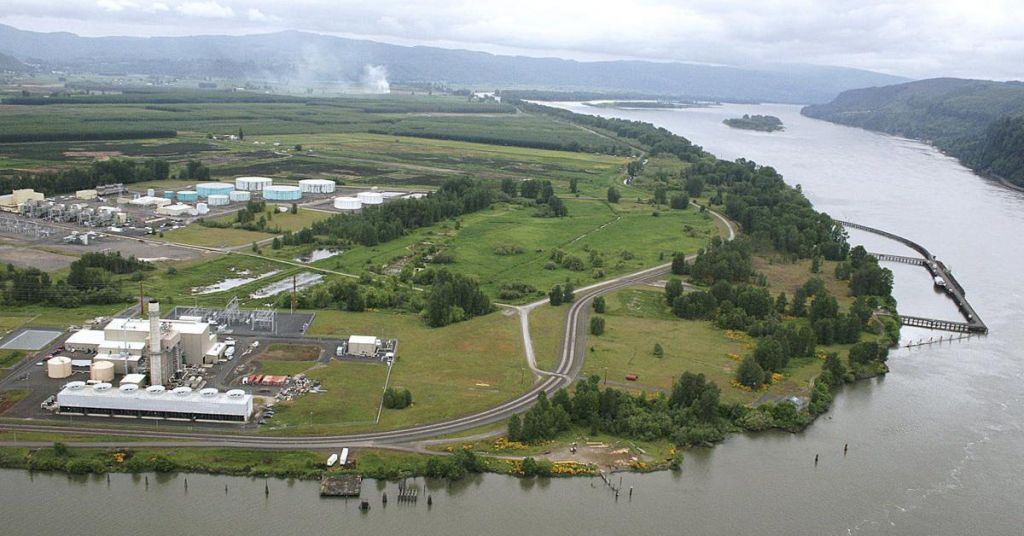
Port Westward Industrial Park in Columbia County, Oregon

Growing problem: Port Westward Industrial Park on the Columbia River is testing its boundaries. Photo by Columbia Riverkeeper

By Jordan Rane. July 20, 2021. As disagreements over land use go, it’s hard to imagine more diametrically opposed forces than the ones lined up against each other 60 or so miles north of Portland in Columbia County.

Here, along the lower Columbia River, broad tracts of prime Oregon farmland, wetlands and estuary border Port Westward Industrial Park, a 1,700-acre marine property occupied by a pair of Portland General Electric gas-fired power plants and a turnstile of other fossil fuel production players.

That disagreement intensified last week after a unanimous 3-0 vote by the Columbia County Board of Commissioners approved the rezoning of over 830 acres of fertile floodplain for industrial use—specifically for the addition of what would be one of the largest fracked-gas-to-methanol refineries on the planet.

Blueberries, salmon and methanol

Farmers, conservationists and at least a thousand citizens submitted testimony urging the board to reject the Port’s enlargement proposal in an area where farmland and salmon nurseries already tenuously coexist with power plants, oil-by-rail works, coal exporters and future methanol makers.

Port Westward

The Port Westward Industrial Park is a little more than an hour north of Portland. Google Maps

What’s the argument against expansion? For starters, threatened water quality and ecological risks to farmers.

“If you’re trying to sell high-value mint and blueberries or protect sensitive habitat for salmon, having a methanol refinery next door is going to be an issue,” Columbia Riverkeeper Conservation Director Dan Serres told Columbia Insight. “It’s an odd fixation the Port has had with this rezone area.

DON’T MISS THE NEXT STORY! Subscribe to Columbia Insight. It’s free.

“The farmland, water resources and salmon habitat here are so important for the community. We feel those values are much more consistent with the health of the county and its long-term economic health than adding a flash-in-the-pan fossil fuel terminal and attempting to rescale Port Westward Industrial Park from its already impactful size to that of the Port of Vancouver.”

“Removing zoning protections for over 800 acres of primarily high-value farmland is no way to thank farmers for their ongoing contributions to our state or to help new farmers gain access to farmland,” said Jasmine Zimmer-Stuck of 1000 Friends of Oregon in a recent press release. “The soils, sensitive water resources and valuable farmland at Port Westward are remarkable.”

MORE: Less snow is the new norm. That’s trouble for farmers

The latest board vote follows previous expansion bids from Port Westward, which were challenged by two appeals. A third appeal with Oregon’s Land Use Board of Appeals (LUBA) is now in the works.

“We’ll be back in front of LUBA—essentially arguing ‘how can a port credibly claim that this huge industrial footprint will have no impact on adjacent farmers?’” says Serres. “There’s been a long-standing tension about whether that spot of the Columbia River makes sense for fossil fuel development.

“Over and over, the community has pushed back and said, ‘No, it makes a lot more sense for salmon, for farms and resources consistent with Columbia County than it does to liquify gas.’”

Columbia Insight contributing editor Jordan Rane is an award-winning journalist whose work has appeared in CNN.com, Outside, Men’s Journal and the Los Angeles Times.

Appreciate this story? To support environmental journalism on Columbia Insight click here

By |2022-11-15T19:09:44-08:0007/20/2021|Agriculture|5 Comments

© Copyright 2013-2025 Columbia Insight. All Rights Reserved.

As a 501(c)3 nonprofit organization, all donations to Columbia Insight are tax deductible to the full extent of the law. Our nonprofit federal tax-exempt number is 82-4504894.