Stay Updated Subscribe today for the latest research + reporting about environmental news. Subscribe Now

Stay Updated Subscribe today for the latest research + reporting about environmental news.

Subscribe Now

Chuck Thompson

Chuck Thompson

Chuck Thompson

About Chuck Thompson

Chuck Thompson is editor of Columbia Insight.

Air Force training could disrupt Owyhee’s ‘Big Quiet’

A proposal to step up supersonic training missions over the Owyhee Desert has triggered a booming reaction

F-15E Strike Eagles

Low bid: The Air Force wants permission for F-15E Strike Eagles to perform more low-level training missions, like this one over the Sawtooth Range. Photo by USAF/Tech. Sgt. Debbie Hernandez

By Jordan Rane. October 20, 2021. One of the country’s most sparsely populated and persistently defended high desert wild lands may soon be subject to frequent sonic booms and shrieking fighter jets.

The Mountain Home Air Force Base in southwestern Idaho is proposing expanded military training allowances across large portions of the Owyhee Desert—a 9-million-acre landscape of shrub steppe and remote canyons spanning three states cherished by Tribes, ranchers, sportsmen, paddlers, hikers, conservationists, scientists and stargazers.

The air base’s Proposal for Airspace Optimization for Readiness would increase both the frequency and low-flight intensity of jet fighter exercises across giant sections of southwestern Idaho, northern Nevada and southeastern Oregon.

MORE: Invasive plant species are decimating Oregon’s rangeland

Current airspace restrictions in the latter two states within the established USAF training range are set above at least 10,000 feet—or 30,000 feet when breaking the sound barrier.

“In many cases that’s barely noticeable—you might see those planes before you hear them—but it’s nothing like what’s being proposed in the current plan,” says Mark Salvo, conservation director at Oregon Natural Desert Association (ONDA). “We’re deeply concerned about fighter jet noise and disturbance to wild lands, wild waters, sensitive wildlife and local communities, the risk of wildfire from the increased use of flammable flares—and the fact that the Air Force hasn’t explained why it needs to conduct more and more intense training across this huge tri-state area.”

‘Gunfighters’ legacy

Mountain Home Air Force Base is home to the 366th Fighter Wing (nicknamed the “Gunfighters”) and the F-15E Strike Eagle, a dual-role fighter designed to perform air-to-air and air-to-ground missions. An array of avionics and electronics systems gives the F-15E the capability to fight at low altitude, day or night, in all weather.

The 366th Fighter Wing’s primary mission is to provide combat airpower and support, as well as quick response to the military’s worldwide contingency operations.

The base is also used for training by the Singapore Air Force, which has a detachment of F-15SG fighters on long-term assignment there.

Jets from 366th Fighter Wing, Mountain Home AFB

Friendly skies? The Air Force wants fewer restrictions for its 366th Fighter Wing. Photo by USAF

This isn’t the first time the USAF has proposed expanding training in the Owyhee Desert from its Mountain Home Air Force Base.

Seeking live bombing, missile shooting and low-flying exercises in the area in 1989, the Air Force expected minimal opposition in one of the country’s most remote and lightly populated areas.

This turned out to be a miscalculation.

Opposition from Idaho-based groups led to nearly a decade of litigation and a compromise that ultimately allowed restricted low-altitude jet fighter training in Idaho’s Owyhee County.

Public comment deadline Oct. 25

In Oregon, the USAF’s proposal could increase the frequency of sonic boom-producing training flights to nearly 19 per day—shattering the area’s famed Canyonlands, nicknamed “The Big Quiet,” and distressing indigenous wildlife.

ONDA has launched a new online story map of the area.

Oregon Senators Ron Wyden and Jeff Merkley have proposed protecting more than a million acres of wilderness in the Owyhee Canyonlands, and designating 33 miles of Wild and Scenic Rivers precisely where the military has proposed more intensive training.

The military’s plan would also impact more than 500,000 combined acres of Wilderness Study Areas and Bureau of Land Management lands, according to ONDA.

Much of the Oywhee Desert’s sprawling shrub steppe and canyons are on public land.
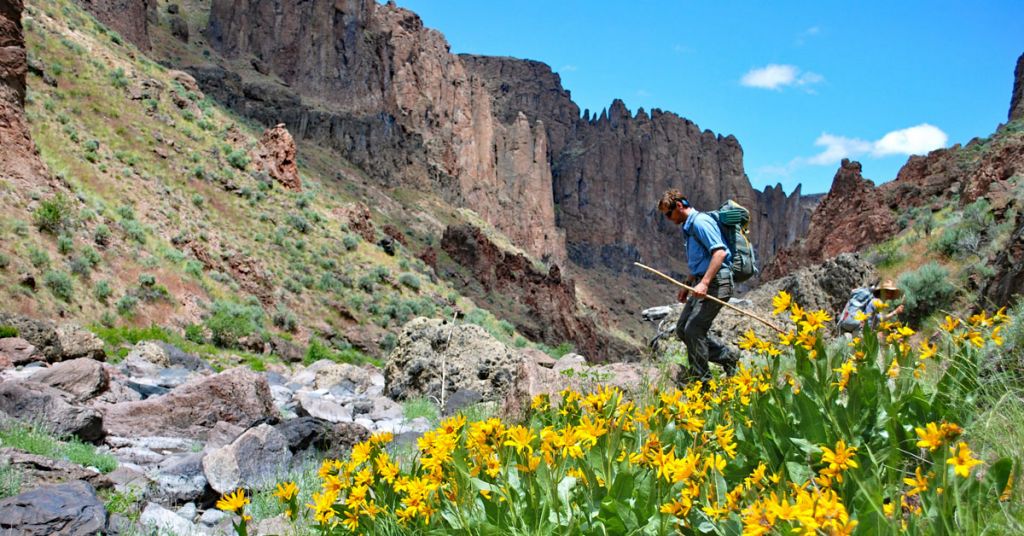
West Little Owyhee Ricer Canyon

A quiet place: Groups fear more Air Force training would spoil places like the West Little Owyhee River Canyon. Photo by Tim Neville

“The Air Force needs to hear that there is strong, broad support for conservation in the Owyhee Canyonlands and southeastern Oregon, and that their proposal threatens to undermine the qualities that make this region so exceptional,” according to an ONDA web posting.

The deadline for public comment on the Air Force’s proposal has been extended to October 25. The Air Force is required to provide a final environmental impact statement by a date that remains pending. A draft version of the EIS can be found here.

You can submit a comment directly to the USAF here or copy an ONDA letter and submit a comment here.

“Given the breadth and depth of public comment provided on the draft plan, we suspect it will take many months just to incorporate that (public) input,” says Salvo.

Columbia Insight contributing editor Jordan Rane is an award-winning journalist whose work has appeared in CNN.com, Outside, Men’s Journal and the Los Angeles Times.

Appreciate this story? To support environmental journalism on Columbia Insight click here.

By |2022-11-15T19:00:39-08:0010/19/2021|Natural Resources, Public Lands|3 Comments

Solar power vs. sage grouse

In Washington’s Douglas County a proposed 6,000-acre solar facility is drawing criticism from residents and environmentalists

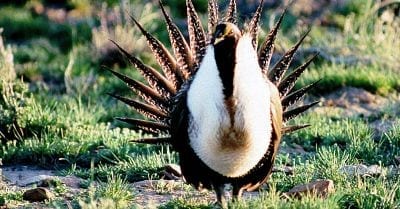
Solar panels and sage grouse

Pick ’em? Most people support solar energy and sage grouse. Can they co-exist in rural Washington? Photos: Vera Kratochvil (panels); Bob Wick/BLM (grouse)

By Jordan Rane, October 12, 2021. Who wants a 6,000-acre solar factory in their backyard? Apparently, not residents of Badger Mountain in Douglas County, Wash.

Locals there expressed displeasure after being approached last spring by representatives of Spain-based energy developer EDP Renewables with property lease offers in hand—and reportedly few details about what exactly they were for.

As more light has been shed on the company’s proposal for a massive solar panel project in Badger Mountain’s surrounding shrub-steppe—home to state-endangered sage grouse and other hard hit species—Douglas County environmentalists have begun voicing objections.  

[perfectpullquote align=”full” bordertop=”false” cite=”” link=”” color=”” class=”” size=””]“If I have to chain myself to a dozer I will.” —Douglas County resident[/perfectpullquote]

“Conservation Northwest stands with the landowners on Badger Mountain in Douglas County who do not want to see a solar farm development where they live,” wrote Jay Kehne, lead of the nonprofit’s Sagelands Heritage Program, in an open letter to Washington Gov. Jay Inslee’s office last week. “While we understand the need for solar development as a renewable energy resource, we cannot have industrial-sized solar farms replace shrub-steppe habitat critical for wildlife and Native American traditional food gathering lands.”

Putting a 6,000-acre solar farm near Badger Mountain “would wipe out one of the last habitat and breeding areas [sage grouse] have left in all of Washington,” the letter states. “There are plenty of other suitable locations for solar development considering all the hard-surfaced areas within our state.”

Not that there’s anything wrong with it

Most environmentalists, if not most people, support solar power and sage grouse. That’s what makes the collision of interests in Douglas County so thorny.

It’s a conflict that’s playing out more and more in the Columbia River Basin as the drawbacks of industrial-scale solar power—encroachment on wildlife habit being just one complaint—are brought into relief with the proliferation of mega-projects.

MORE: What’s wrong with solar power? More than you know

Homeowners aren’t fond of staring out their back windows at several football fields-worth of solar panels.

For wildlife it can be a matter of survival.

Central and eastern Washington’s shrub-steppe is home to numerous species of threatened wildlife. One of the most critically hit, the greater sage grouse depends upon large landscapes of sagebrush (which they consume) to survive.

That vital habitat continues to be fragmented, degraded and lost.

According to a Seattle Times report, last year’s Pearl Hill Fire in Douglas County may have decimated over half the area’s population of sage grouse, a keystone species in the region.

Rural communities bear urban burdens

Dropping 6,000 acres of solar panels in prime bird habitat won’t help sage grouse recovery.

sage grouse Oregon photo by BLM

Birdland: Many birds and mammals depend on sagebrush ecosystems for survival. Photo by BLM

But the state needs power, and renewable energy has massive political support.

The Badger Mountain proposal is currently one of three area solar projects in early stages of possible development, according to The Wenatchee World. These include plans for a 200-megawatt, 5,000-acre site near East Wenatchee that would include upward of 700,000 neatly rowed solar panels; and another 2,500-acre plot near Trinidad in neighboring Grant County.

In July, Douglas County commissioners instituted new regulations for the approval of large alternative-energy projects, including requiring sites to “be located at least seven miles from habitat associated with sensitive, threatened or endangered plants or wildlife as identified on state and federal lists.”

Facilities must also be situated no less than seven miles from an urban growth area boundary.

These county siting restrictions speak to another red-hot issue festering around solar plants—the placement of unsightly installations that largely benefit city dwellers in the heart of rural landscapes.

MORE: Oregon rural solar project faces local opposition

How all this shakes out between energy developers, Badger Mountain locals and county officials remains as uncertain as the future of the area’s emblematic bird.

“If I have to chain myself to a dozer I will,” one resident told The Wenatchee World. “We’re not happy at all.”

Columbia Insight contributing editor Jordan Rane is an award-winning journalist whose work has appeared in CNN.com, Outside, Men’s Journal and the Los Angeles Times.
Appreciate this story? To support environmental journalism on Columbia Insight click here.

By |2022-11-15T19:03:02-08:0010/12/2021|Energy, Renewable Energy, Wildlife|0 Comments

Idaho pol: Snake River dams will decide election

And a new poll says a majority of voters in Washington want the dams removed … Republicans included

Lower Granite Dam, Washington

Voting bloc: Lower Granite Dam is one of four dams on the Snake River that loom large in 2022 elections. Photo CC/NikonFDSLR

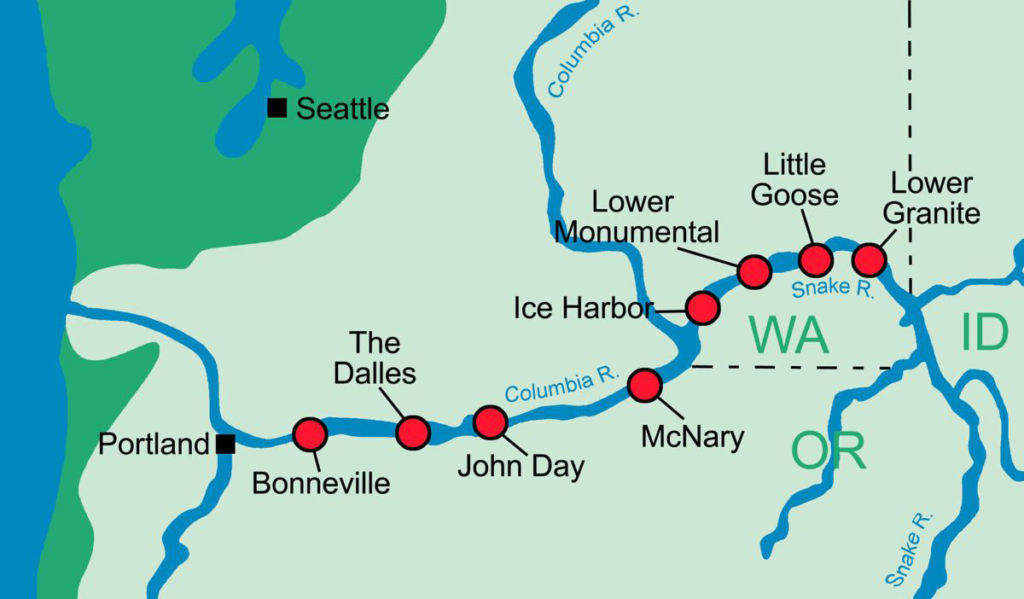
By Chuck Thompson. October 11, 2021. Earlier this year, Idaho Rep. Mike Simpson (R) made news when he unveiled a $33 billion federal infrastructure plan to breach four controversial dams on the Lower Snake River. The plan would help restore salmon habitat and spur economic development.

“In the end we realize there is no viable plan that can allow us to keep the dams in place,” said Simpson of his idea in February. “We can create a Northwest solution that ends the salmon wars and puts the Northwest and our energy systems on a certain, secure and viable path for decades and restores Idaho’s salmon.”

Now one of Simpson’s longtime political rivals, attorney Bryan Smith of Idaho Falls, says he’ll use the issue to unseat the veteran member of Congress in their 2022 Republican primary.

“I believe that this issue will be the dividing issue that will help me win this race,” Smith told the Idaho Statesman in a story published Oct. 10.

MORE: 140 Miles: Snake River stranglehold explained

Smith predicted Simpson’s “anti-Trump” voting record would contribute to his undoing in Idaho. He also said the dams proposal proves Simpson “has now joined with these radical environmentalists, and he wants to breach these four dams on the Lower Snake River.”

Simpson was first elected to the U.S. House in 1998. Running to the right of incumbent, fellow Republican Smith lost a primary challenge to Simpson in 2014.

Dams hot potato in Washington, too

Meanwhile, a new poll out of Washington, the state in which the four dams are actually located, says 59% of voters support removing the dams.

“This plan garners majority support among Democrats (71%) and independents (55%), with support even outstripping opposition among Republicans (44% favor to 42% oppose),” according to the poll summary. “There is significant support for dam removal to protect salmon across the state, with 63% in the Seattle market and 47% in Eastern Washington favoring the plan.”

Dams on lower Columbia Snake River system

Hot buttons: Red dots indicate dams. Ice Harbor is the first of four just past the confluence of the Columbia and Snake rivers that would be breached if Simpson’s plan is enacted. Courtesy USACE 

The poll of 800 registered voters in Washington was conducted in July by the Washington, D.C.-based Mellman Group and paid for by the California-based Water Foundation.

Whether or not it actually swings elections in either state, aside from climate change, breaching the Snake River dams is certain to be the hottest regional environmental issue in elections across the Columbia River Basin in 2022.

Chuck Thompson is editor of Columbia Insight.

Climate change is imperiling the future of U-pick farms. Here’s what to expect

As extreme heat becomes a summer norm, orchardists and experts are pondering the viability of a rite of passage in the Pacific Northwest

Sauvie island U-pick

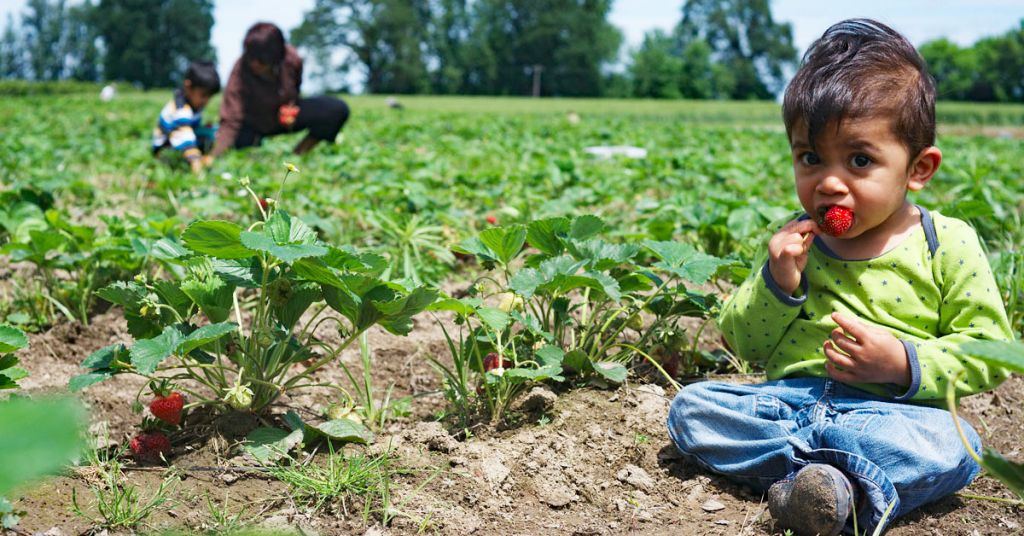
Picked over? Strawberries off the plant are a summer tradition on Oregon’s Sauvie Island (pictured) and around the Columbia River Basin. Photo by gcmenezes/CC

By Sheraz Sadiq. October 4, 2021. For most of us, the heat dome that engulfed the Columbia River Basin in late June, shattering temperature records and claiming nearly 200 lives in Oregon and Washington, is a fading memory.

But for U-pick farmers in the Columbia River Gorge the effects of the punishing heat wave still reverberate. The reality of a new climate is threatening their livelihoods, as well as a rite of passage for visitors and locals who trek to family-run orchards at the start of each summer to pick their fill of the region’s beloved produce.

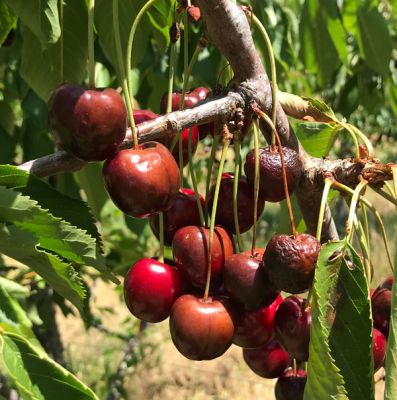
One of those orchards is Hilda’s Organic U-Pick in Hood River, Ore., a 10-acre farm that Janet Parker opens to visitors in late June, when her highbush blueberries and Bing, Rainer and Lambert cherries come into harvest.

Inspecting blueberries

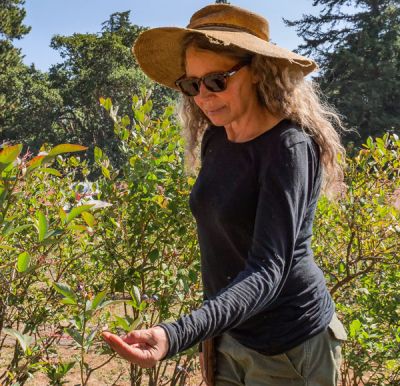
Heat beat: Extreme temps took a toll Janet Parker’s  Oregon U-pick farm. Photo by Sheraz Sadiq

This year, Parker pushed back the opening of the U-pick season for nearly a week because of consecutive days of triple-digit heat, peaking at 111 degrees on June 29. Parker says the extreme heat cost her a fifth of the income she typically collects from blueberries, which she sold this season for $3.75 a pound.

“The blueberries that were ripe got fried and most of those that were soon to be ripe got fried,” Parker says. “The heat made the plants sickly and burnt most of the new growth and you need that for your blueberry plants.”

Fortunately for Parker, she derives most of her income from cherries, which were mostly spared because they ripened in early July this year.

“If the heat wave was later, I think I would have been devastated,” she says. “The cherries would have turned to raisins.”

MORE: Why the entire world now depends on the Columbia River

Shade cloth helped protect cherry and heirloom tomatoes Parker grows in a greenhouse and also sells to U-pickers.

But at a cost of thousands of dollars per acre, by her own estimate, this “Band-Aid” is too cost-prohibitive and impractical a remedy for the rest of her crops.

For Brian McCormick, a farmer and winemaker at Idiot’s Grace in Mosier, Ore., triple-digit June temperatures further devastated this year’s harvest of organic Bing, Van and Royal Ann cherries. In June, he announced the cancelation of the U-pick cherry season at Idiot’s Grace due to “an unprecedented crop failure” brought on by freezing temperatures in the spring.

“And then the heat finally came and … for intact fruit, they just turned brown. It was horrifying. I have never seen that,” says McCormick. “They looked like they had been dipped in milk chocolate, and they turned soft. In the commercial world, the quality of cherries is defined by their firmness.”

[perfectpullquote align=”full” bordertop=”false” cite=”” link=”” color=”” class=”” size=””]“I’m concerned about having just a couple of farms left who can afford to change their practices.” — Ashley Thompson, Oregon State University[/perfectpullquote]

As autumn darkens the leaves, Parker worries about the future of farming and food supply in a landscape transformed by climate change with hotter summers, declining rainfall and greater uncertainty at harvest time.

“I saw more devastation (this year) than I have ever seen,” she says. “How can you grow things if you continue to have heat waves such as that?”

50% cherry crop loss

Ashley Thompson, an assistant professor of horticulture at Oregon State University, says extreme heat can cause cherries and other fruits to “literally cook on the tree.” In addition, plants experiencing heat stress will produce a terminal bud and stop growing when temperatures start approaching 100 degrees and beyond.

Burned cherries

Sick burn: Hot weather caused Idiot’s Grace farm to cancel its U-pick cherry season. Courtesy Brian McCormick

Apples and cherries can also get sunburned with prolonged heat stress, developing brown spots that Thompson likens to a blowtorch heating up the surface of the fruit, blemishing not only its appearance and texture but its commercial value.

After the June heat wave, Thompson sent a survey to orchard owners in Oregon’s Wasco County to gauge the extent of heat-related damage to their crops. Sixty percent of respondents said they’d lost at least half their cherry harvest this year.

James Michael of the Northwest Cherry Growers and Washington State Fruit Commission estimates a 20% loss in the cherry crop this year, although he says a final tally of the economic damage will likely not be available for several months.

Some cherry orchardists in The Dalles, Ore., where the temperature broke 118 degrees this summer, lost 50% of their crop this year, according to Thompson.

It’s difficult to measure the broader impact climate change may have on U-pick operations around the Columbia River Basin.

According to a Travel Oregon marketing report, “the research related to spending associated with agritourism is scant, mostly old, and uses different methodologies.” Because agritourism activities are so broad—from an hour picking raspberries at a U-pick farm to visiting a winery to embarking on a week-long farm-based culinary course—“there is no typical spending amount.”

Agritourism is defined by Travel Oregon as “any activity that generates supplemental income for working farms and ranches by connecting their resources and products with visitors.”

Fall fruit, too

Climate change isn’t just resulting in hotter days but also hotter nights.

In the future, this could alter the types of fruits historically grown in the Gorge.

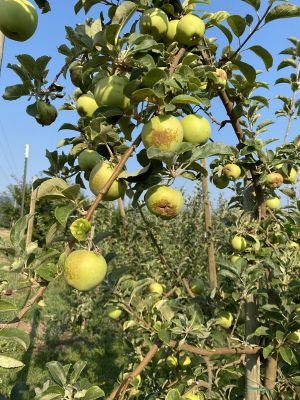
Apples on tree

Apple crisp: Sunburned honeycrisps. Courtesy Randy Kiyokawa

“Apples need cool nights to color, so without those cool nights, we might not get nice red apples, especially things like honeycrisps,” says Thompson. “It also means the trees don’t get a break from this heat stress and they may not be recovering as quickly or easily because they’re still losing water.”

Even higher elevations may no longer be enough to shield crops from consecutive days of triple-digit heat. Just ask Randy Kiyokawa, who has been farming apples, pears and other fruits for more than three decades at his family farm about 2,000 feet above sea level in Parkdale, Ore.

“The intensity of the heat and the number of days of 100 degrees-plus, I’ve never experienced that in my time of farming,” says Kiyokawa.

Although the U-pick season doesn’t start at Kiyokawa Family Orchards until the second week of July, the heat wave in late June scorched about 10% of this year’s harvest of honeycrisp apples, according to Kiyokawa, who was able to salvage the sunburned fruit by pressing it into cider for purchase.

Kiyokawa thinks climate change has accelerated when his crops ripen for harvest.

“It seems like the harvest date has moved up five to seven days, if not more, in certain years,” he says.

Inventing ‘sunscreen’ for trees

It’s not possible to say when the next heat wave or extreme weather event will strike, decimating a harvest in its wake. Some remain optimistic about coming weather patterns. Others see a dire future.

“People are billing this as a once in a lifetime event. I don’t think that’s true. I think this will happen again and I think we need to be prepared for it,” says Thompson.

Blueberries U-pick

Summertime blues: Highbush blueberries at Hilda’s Organic U-Pick. Photo by Sheraz Sadiq

Thompson and her OSU colleagues are researching various cherry rootstocks for resilience, growing orientations and irrigation management strategies that could help minimize heat stress on plants.

She’s also studying how substances like fatty acids, calcium carbonate and kaolin clay could be applied as a kind of sunscreen, providing a layer of heat and sun protection on apple and pear trees.

But some farmers think the future of farming in the Gorge will rely less on new technologies and more on hard choices about what kinds of crops are grown, especially with more than 90% of the Pacific Northwest currently experiencing drought, according to the National Integrated Drought Information System.

“Our interest is in farming ever drier,” says McCormick. “We grow grapes because they are very tolerant of drought … so I’d go in that direction rather than planting more cherries.”

MORE: Less snow is the new norm. That’s trouble for farmers

In the short term, U-pick farms and fruit stands will continue to play a vital role in Columbia River Basin agritourism. But the experience of picking your own fruit could very well shift for both growers and pickers alike in coming years.

“We need to think about how we grow our crops and what we are growing here and how that may change,” says Thompson. “And I’m concerned about us having just a couple of farms left who can afford to change their practices in the ways we might have to.”

Sheraz Sadiq is an award-winning journalist and producer based in Hood River, Oregon. He’s produced videos and reported on topics including climate change, self-driving cars, criminal justice and edible insects.

Appreciate this story? To support environmental journalism on Columbia Insight click here

By |2022-11-15T19:03:25-08:0010/07/2021|Agriculture, Climate Change|0 Comments

Why the entire world now depends on the Columbia River

On the 25th anniversary of his seminal book, A River Lost, Blaine Harden is still explaining life on the Columbia

Columbia River Gorge by Jurgen Hess

Looking back: The Columbia River Gorge has been beautiful, powerful and the setting of great books. Photo by Jurgen Hess

By Chuck Thompson. September 30, 2021. It’s been two and a half decades since the publication of Blaine Harden’s A River Lost: The Life and Death of the Columbia. Since that time Seattle has lost its NBA team, the White Salmon River has lost the Condit Dam and Oregon seems ready to lose half its territory to Idaho.

That last one may be an exaggeration. But it’s not unrealistic to say Harden’s 1996 book has stood the test of time as the must-read contemporary explanation of how one of the world’s mightiest rivers was transformed into a series of slack water reservoirs created by hydroelectric dams. (Published in 1995, Richard White’s more esoteric The Organic Machine: The Remaking of the Columbia River is a compelling peer to Harden’s classic.)

MORE: As salmon cook in rivers, pressure on Biden mounts

To mark its anniversary, Columbia Insight recently met with Harden—via Zoom, which the author would use to make a surprising point—to get his recollections of writing A River Lost and his thoughts about changes that have taken place along the river in the years since he did.

Columbia Insight: Is the book you ended up writing the book you set out to write?

Blaine Harden: No. As I say in the book I didn’t understand why it was even possible to live where I lived when I grew up in Moses Lake, Washington. I knew there was irrigation but I didn’t know who paid for it. I didn’t know why it was there.

And I didn’t know that the people who benefitted from it would end up hating the federal government who gave them this enormous present. I didn’t really understand what the book was going to say until I finished the reporting.

Author Blaine Harden. Courtesy of Penguin Random House

Author Blaine Harden. Courtesy of Penguin Random House

CI: What explains that distrust of a government that’s done so much to increase prosperity in places that benefit directly from the dams?

BH: There’s this deep populist resentment toward the federal government that’s still in the east side of Oregon and Washington. It exists in spite of overwhelming evidence that life itself there is not really possible as they know it without massive gifts of other peoples’ money redistributed through the federal government.

And then Hanford is this place that basically made the triggers for death for the entire planet and did it in a very, very messy, secretive and deceptive way, and then stopped doing that. And then has spent hundreds of billions of dollars cleaning up the mess. All of which has made for a terrific economy for the Tri-Cities [Washington], which continues to elect members of Congress who hate the federal government.

CI: Once you finished the book did you have a sense of what an enduring benchmark it was going to be?

BH: No, I didn’t know that. I’m delighted you think that’s true.

CI: You aren’t aware of the reverence in which a lot of people hold this book?

BH: I guess so. I don’t know for sure. The thing is this story, my father, his family and his life was completely saved by federal money spent on the Columbia River. As for my extended family on the Harden side, we went from being failed farmers to being middle class people with kids who go to college. It was all because of a massive federal investment in the Columbia River Basin.

The dams, the Grand Coulee being the biggest one, but my father also worked at Wanapum Dam, which was a Grant County PUD dam. But he also worked at Hanford for many years, which was pure federal money. During those years he was a welder with the Plumbers and Steamfitters Union, and he was making the equivalent of what a lawyer makes. We had a late-model car in the garage and we weren’t at risk of going broke and moving on, which was the history of my family.

CI: Would you agree the east-west political divide across the Cascades has gotten more ferocious in the 25 years since you wrote the book?

BH: I don’t think it’s gotten more ferocious. When this book came out I went back to Moses Lake and gave a talk at Immanuel Lutheran Church, which was our family’s church. … While I was giving the talk farmers, irrigators, who were angry about what the book said about irrigation policy, had driven up in front of the church in a tractor with a big sign in a trailer that said, “Don’t buy books by liars!”

MORE: QAnon finds its way to the Snake River

CI: What was their objection to your book?

BH: There was terrific anger then at the idea that federal money had been spent in huge quantities to distribute a lot of wealth to a relatively few number of mostly white, upper-middle class irrigators. And that was, in fact, the truth.

Over the years those irrigators had very smartly figured out how to make the federal government pay for more and more of the cost of their electricity and water to farm. It was a really good story of government intentions being twisted by very smart and focused farmers. And they hated to see that story made public.

CI: As part of your research you traveled down the river on barges. Have you got fond memories of those experiences?

BH: It was really exciting and fun and there was an adventure element to it. I had taken a riverboat on the Congo River when I was in Africa, and it was the most important part of my first book. So I knew the power of a river story to engage and hold the reader’s attention. The plot of the book is a trip down the river.

A River Lost

CI: Did you hear from any of those barge guys after the book came out?

BH: I didn’t hear from them. But I was scrupulously honest. I had incredibly detailed notes on every word that is in that book. So I did not misrepresent them in any way.

CI: It’s kind of startling now to read several guys effectively say, “Let the salmon go extinct. What’s the big deal about a bunch of fish?”

BH: That was a prevailing sentiment among many of the people I talked to in eastern Washington. Because they didn’t eat salmon. It’s a little bit too expensive. They didn’t catch them. And so they just saw them as a hindrance to the God-given right to have a machine river, which gave them a livelihood, gave them cheap electricity, gave them cheap water.

CI: Has all the messaging about the importance of salmon changed minds?

BH: I think it has. Things have changed somewhat. There’s a society-wide understanding of the price that the tribes in the Columbia Basin paid for this whole business. Racism toward tribal people is much less tolerated. But it was deep and pervasive when I did that book.

CI: What’s been the biggest change on the Columbia River since you wrote the book?

BH: The biggest change is that real power over management of the river has shifted from the power boys, the people like the Bonneville Power Administration and utilities and members of Congress who reported to them, people like Larry Craig of Idaho in the old days. It’s shifted to a coalition of tribes, fish biologists and businesses that are interested in power from the big dams, but that are also interested in lots of other things.

CI: Those interests being …

BH: I’m talking about the trillion-dollar companies in Seattle now. There are two of them, two of the biggest corporations in the history of mankind—Microsoft and Amazon—and their influence and interest in a carbon-neural future for their own business purposes really has changed where political power lies in a seismic way.

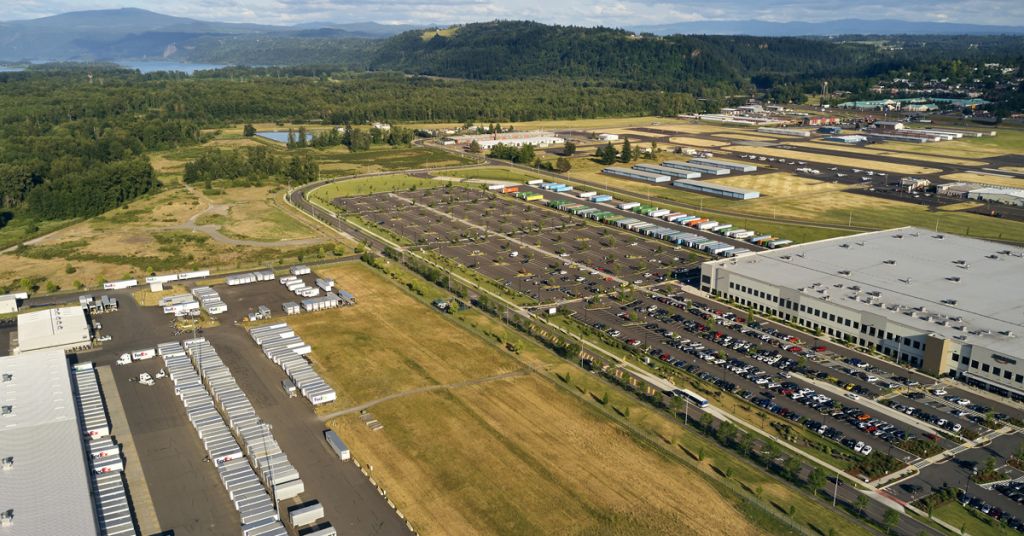
Site of the former Reynolds/Alcoa Superfund site in Troutdale, OR

Power shifters: In Troutdale, Oregon, FedEx (left) and an Amazon Fulfillment Center (right) sit on the banks of the Columbia just downriver from nearby dams. Photo by NASHCO

CI: How does that shift in power impact daily life along the river?

BH: Those big companies, including Google and other big server farmers, they have a big interest in extracting cheap electricity from the Columbia River because they have server farms up and down the river.

The services they provide to their global consumer base makes everyone having a conversation like we’re having on Zoom a stakeholder in the damming of the Columbia River. It quite literally is probably powering this conversation. In that way the enormous power that comes from the Columbia River has insinuated itself into almost everyone’s life in the United States and around the world.

MORE: Unwrapping Google’s mysterious Data Center in The Dalles

CI: Were you surprised when a Republican congressman, Mike Simpson from Idaho, came out in favor of breaching the Snake River dams?

BH: I wasn’t surprised because I think that not all Republicans are stupid. And if you look at what really matters to the future of Idaho those dams don’t contribute all that much. A cold, dollars-and-cents analysis would suggest there’s money to be made and fish to be saved and constituents to be served by removing those dams. If you represent the state of Idaho it’s logical, so I was very pleased to hear it.

CI: Why aren’t those dollars-and-cents arguments about dams more persuasive?

BH: The politics of red and blue, particularly in eastern Washington and eastern Oregon, make people irrational in the way they talk about those dams. As though there’s something patriotic about those hunks of concrete and removing them would be a socialist scheme. That’s the way it’s perceived.

Don’t miss out: subscribe to Columbia Insight. It’s free!

CI: Environmentally speaking, have things gotten worse or better on the Columbia River since you wrote A River Lost?

BH: I think things have gotten a lot better. Particularly for the people who were the most victimized, the tribes. They have real power now. They have real power under the law. Down in the depths of the bureaucracy the tribes help make decisions and they have benefitted from that. A lot of them made a comeback in terms of wealth and social indicators, the quality of life.

CI: Of the six books you’ve written what makes A River Lost special?

BH: I say in the introduction this book is really the story of my family. But it’s a lament, too, for the things that have gone wrong. It’s that personal aspect that makes it meaningful to me.

CI: Is it fair to say people around the region are becoming more intellectually and spiritually disconnected from the Columbia River than ever before?

BH: I agree with that. Part of it is a failure of public school education in the Pacific Northwest where you really don’t know why you’re here. Or how it was possible for this incredible economy to come here and flower like it did. And the river has a lot to do with it. I don’t think it’s taught very well. And it should be.

Chuck Thompson is the editor of Columbia Insight.

Appreciate this story? To support environmental journalism on Columbia Insight click here

By |2023-04-03T13:08:25-07:0009/30/2021|Books, Salmon|10 Comments

State plans to kill most wolves in Lookout Mountain Pack

ODFW employees have already killed the breeding male from eastern Oregon pack preying on cattle in Baker County

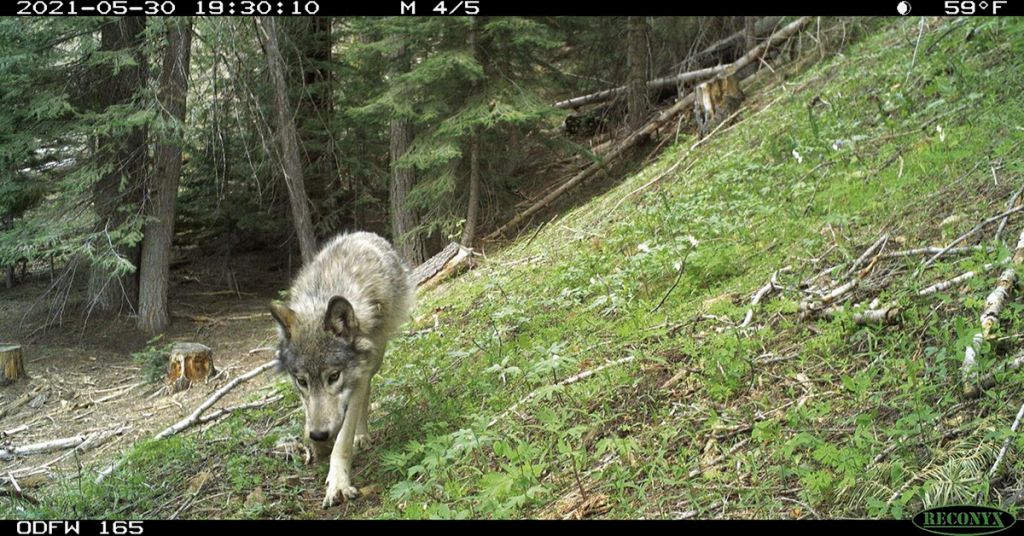
Wolves

Spring exploration: In May 2021, a trail camera captured one of two yearling wolves in the Lookout Mountain Pack. Photo ODFW

By Jayson Jacoby, Baker City Herald. September 21, 2021. The Oregon Department of Fish and Wildlife has authorized killing most wolves from eastern Oregon’s Lookout Mountain Pack, including its breeding male.

But the agency does not plan to target the breeding female from the pack in eastern Baker County, which has killed six head of cattle since mid-July and injured two others, including a six-month-old calf killed earlier this month.

The permit allows ranchers to kill up to two wolves, not including the breeding pair, before Oct. 31. The permit applies to four ranchers who have lost cattle to wolves, and allows any of them to kill wolves on land they either own or legally use for grazing.

In addition, ODFW officials intend to kill four other wolves from the pack, including the pack’s breeding male, according to a press release from the agency Thursday evening, Sept. 16.

UPDATE: On Sept. 17, ODFW announced its employees had killed three wolves from the Lookout Mountain Pack, including the pack’s breeding male.

Helicopters and rifles

The pack numbers up to nine wolves, according to ODFW. Both the breeding pair and five juveniles, born this spring and now weighing about 50 pounds, have been seen by ODFW employees as recently as Sept. 8.

One or two yearling wolves, born in the spring of 2020, are likely still in the area, although ODFW workers haven’t seen either yearling since Sept. 1, according to the Sept. 16 press release.

The breeding female had a litter of at least seven pups this spring.

[perfectpullquote align=”full” bordertop=”false” cite=”” link=”” color=”” class=”” size=””]By targeting the breeding male, ODFW hopes to allow the breeding female to raise any remaining juveniles.[/perfectpullquote]

ODFW workers, firing rifles from a helicopter, killed two of those pups on Aug. 1, the day after ODFW Director Curt Melcher issued a lethal take permit for up to four subadult wolves from the pack.

Baker County Commissioner Mark Bennett had sent a letter to Melcher earlier that week asking the director to authorize the killing of some wolves.

There were no confirmed wolf attacks on cattle for more than two weeks after the two pups were killed. But since Aug. 19, Lookout Mountain wolves have killed four more calves, according to ODFW reports.

In response to the repeated attacks, Baker County Sheriff Travis Ash sent a letter to Melcher on Sept. 13 asking the state to kill the entire Lookout Mountain Pack.

Pack shifts feeding behavior

In a press release, Roblyn Brown, ODFW’s state wolf coordinator, said the agency’s initial strategy of killing subadult wolves, in an attempt to reduce the amount of food the pack needs, didn’t alter the pack’s behavior and preference for livestock as prey rather than deer and elk, which are common in the Lookout Mountain area.

“This pack has made a shift in their behavior,” Brown said. “Instead of the occasional opportunistic killing of a vulnerable calf, now they are targeting livestock despite the high numbers of elk and deer in the area where the depredations have occurred and extensive human presence to haze wolves.

“Previously we avoided removing an adult to keep the pack intact and give the breeding adults a chance to raise the remaining juveniles and to change their depredation behavior,” Brown said. “We know it’s hard for some to accept any killing of wolves let alone the juveniles, but we structured it this way to try to keep the pack intact. Unfortunately, this did not have the desired effect and we are now out of options for this pack to stop depredating on livestock.”

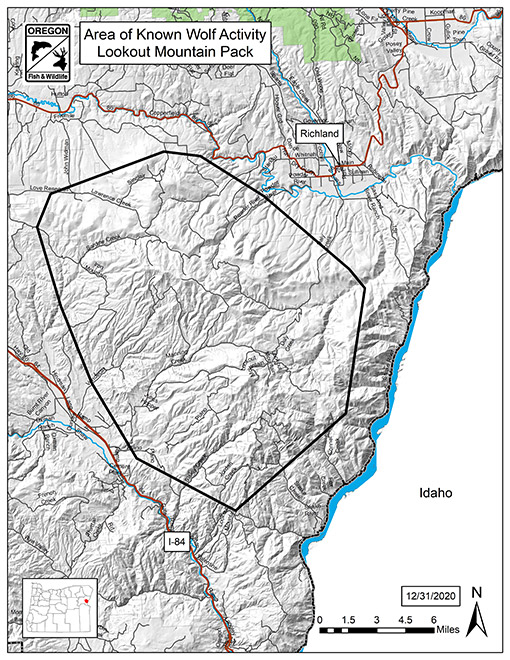
Lookout Mountain Pack active area

The Lookout Mountain wolf pack’s active area in eastern Oregon. Courtesy ODFW

By targeting the breeding male, ODFW hopes to allow the breeding female to raise any remaining juveniles. Reducing the number of juveniles she will need to feed increases the likelihood that some will survive, according to the agency.

There is evidence that the Lookout Mountain Pack is focused on livestock even though deer and elk are common and often seen in the same areas where depredations are occurring, according to ODFW. Wolves’ preferred prey, elk, are abundant in this unit and currently well over the population management objective set by ODFW.

‘Significant risk to livestock’

ODFW has struggled to reduce elk numbers through hunting, in part because a significant percentage of elk in the Lookout Mountain unit congregate on private land, some of which is not open to most hunters. The unit is 62% private land, a higher percentage than any of the three other units in Baker County.

According to ODFW, the Lookout Mountain Pack “presents a significant risk to livestock in the area—a risk that will continue as livestock will be present all winter. September and October also tend to have higher depredation rates historically on cattle in large rangeland pastures.”

Wolves were in the area for two years with little direct conflict with livestock, according to ODFW. The situation changed in February 2021 when wolves started visiting livestock calving pastures.

MORE: It’s a trap! Politics, science collide as Idaho wolf law takes effect

Ranchers increased night checks, installed fladry (a type of fencing designed to deter wolves) and hazed wolves from near their calving and winter pastures, but depredations began in mid-July and have continued.

Ranchers have repeatedly shot at wolves chasing their livestock, which is allowed under Oregon’s “caught in the act” statute, but missed, according to ODFW.

ODFW staff have spent over 120 hours on the ground in the Lookout Mountain area since July 30 to try to remove the yearlings and supplement human presence efforts to move wolves away from livestock. Livestock producers have spent hundreds more hours, according to ODFW.

There is no evidence that the wolves are being attracted to pastures or other areas with livestock due to bone piles, carcasses or other circumstances, according to ODFW. Agency workers have not identified any conditions that attract wolves and fosters conflict during its repeated investigations of depredation incidents.

MORE: Has this range rider figured out the key to wolf management?

Brown thanked ranchers for their efforts to try to deter wolves.

“While nine depredations in relationship to the large number of cattle raised in Oregon might seem like not that big of a deal, this situation has had a huge impact on the individual producers affected,” Brown said. “Local producers have worked so hard to protect their calves for months now, going above and beyond what they were required to do under Oregon’s Wolf Plan at great personal cost in time, energy, fuel and other expenses.”

Columbia Insight is publishing this story as part of the AP StoryShare program, which allows newsrooms and publishing partners to republish each other’s stories and photos.

By |2021-09-21T12:38:53-07:0009/21/2021|Wildlife|0 Comments

© Copyright 2013-2025 Columbia Insight. All Rights Reserved.

As a 501(c)3 nonprofit organization, all donations to Columbia Insight are tax deductible to the full extent of the law. Our nonprofit federal tax-exempt number is 82-4504894.