Stay Updated Subscribe today for the latest research + reporting about environmental news. Subscribe Now

Stay Updated Subscribe today for the latest research + reporting about environmental news.

Subscribe Now

Chuck Thompson

Chuck Thompson

Chuck Thompson

About Chuck Thompson

Chuck Thompson is editor of Columbia Insight.

City of Sandy considers dumping treated wastewater into Sandy River

Influx of millions of gallons could increase temperature of namesake river. Critics worry about city’s history of water violations
Sandy River Jonsrud Viewpoint

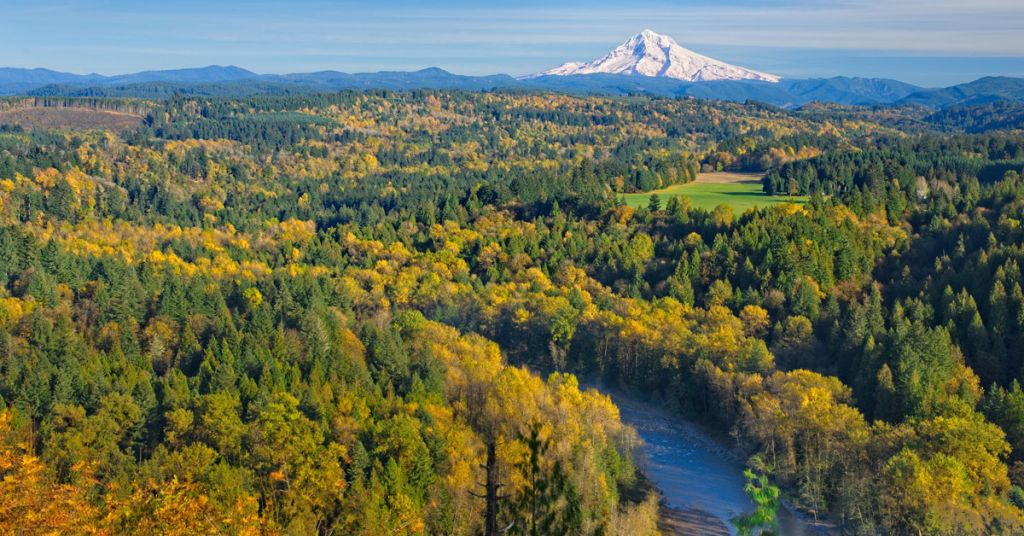
Prime fish habitat: The Sandy River originates high on Mount Hood about 50 miles east of Portland. Photo: Jim Choate/CC

By Sheraz Sadiq. November 18, 2021. Jordan Wheeler is the city manager of Sandy, Oregon, a city of more than 12,000 roughly 30 miles southeast of Portland. These days he spends much of his time thinking about sewage—how to treat it and dispose of it safely for a community that grew by a third in just a decade, according to 2020 census data.

That growth is a key reason city officials are embarking on the biggest public works project in Sandy’s history, a $94 million overhaul of its wastewater system.

The overhaul includes upgrades to its aging collection system and existing treatment plant, along with the construction of a new facility to better handle current and future wastewater treatment and disposal needs.

“The tough choice here is to find a way to treat the water and discharge it so that [the fix] can last for generations to come,” Wheeler says.

But a key proposal the city is considering to fix its wastewater woes is proving controversial—dumping its treated wastewater into the Sandy River, which runs just east and north of town.

Sandy currently operates under a permit issued by the Oregon Department of Environmental Quality (DEQ) to discharge its treated wastewater, or effluent, into Tickle Creek, a tributary of the Clackamas River that runs just west and south of town.

The permit limits not only the volumes of those discharges but also when they can occur—only between November and April. During the summer, Sandy’s treated wastewater is sent to a nearby nursery for irrigation use.
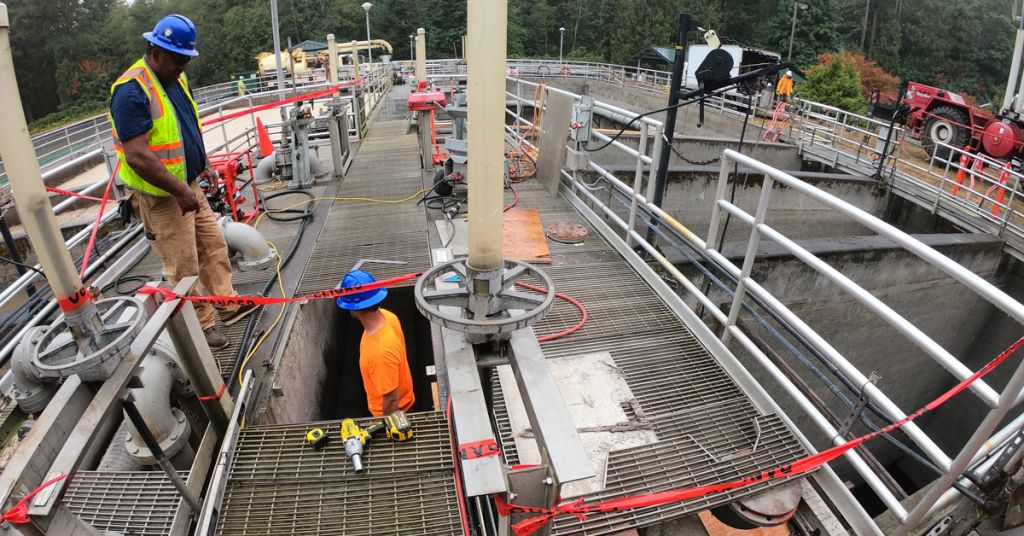
Sandy, Oregon wastewater treatment facility

Essential upgrades: Sandy’s existing wastewater treatment plant was built in 1971. The city has gotten a little bigger since then. Photo: Sandy Department of Public Works

An Oregon state rule prohibits Sandy from dumping more effluent into Tickle Creek because it’s part of a river basin providing drinking water for 300,000 people.

So the city is exploring pumping millions of gallons of treated wastewater from its new treatment facility year-round into the Sandy River, which is much bigger than Tickle Creek but also home to federally protected and endangered populations of wild steelhead, coho and chinook salmon.

“When we talk about discharging water into the Sandy, it makes everybody uncomfortable because salmon runs, it’s such a beautiful feature, nobody wants to change that,” says Don Hokanson, a Sandy City Council member who serves on the wastewater oversight committee.

Hokanson says city officials are considering discharge alternatives, including diverting treated wastewater during summer and fall into 30 to 60 acres of wetlands the city would need to construct at a cost of several million dollars.

Rising river temps

Opposition to the plan has mounted in recent months. Local conservation groups and residents worry that discharged, treated wastewater could raise the temperature of the Sandy River, which flows for 56 miles from the glaciers of Mount Hood to Troutdale, where it merges with the Columbia River.

Troutdale is one of two places, along with the community of Hoodland, that is currently permitted to discharge its effluent into the Sandy River, according to the DEQ.

“The optimal (water) temperature for most salmonids is between 50 and 60 degrees,” says Liz Perkin, a river ecologist with the Native Fish Society.

MORE: Behind the scenes at the Bingen-White Salmon Wastewater Treatment Plant

In July, the organization wrote a letter to Wheeler, the Sandy city manager, to advocate against discharging treated wastewater into the Sandy River, especially in summer and fall.

“If you have water that’s coming in at 75 degrees … (that) starts to get into a lethal temperature for most salmonids,” says Perkin. “Their metabolism increases, their respiration increases and the amount of dissolved oxygen in the water decreases when the water temperature increases.

“I’m also a realist and I understand the city of Sandy is growing. We just want to make sure they’re doing as much as they possibly can to reduce their impacts.”

Limited options

In October, the Clackamas River chapter of the national conservation nonprofit Trout Unlimited also wrote a letter to Wheeler expressing opposition to discharging effluent into the Sandy River, which it claims could worsen the impact of climate change on rising stream temperatures.

The author of the letter, chapter president Ruth Ann Tsukuda, also implored the city to not “waste this valuable commodity” and instead use the treated wastewater to expand its recycled water program.

But according to Wheeler, Sandy has already looked into that possibility. An engineering firm hired by the city prepared a report in October 2020 to review the market for recycled water customers, such as farms and nurseries in the region.

“The biggest constraint is year-round. Container nurseries don’t need large amounts of water during the winter months … and we have constraints on where to put that water during those months,” says Wheeler.
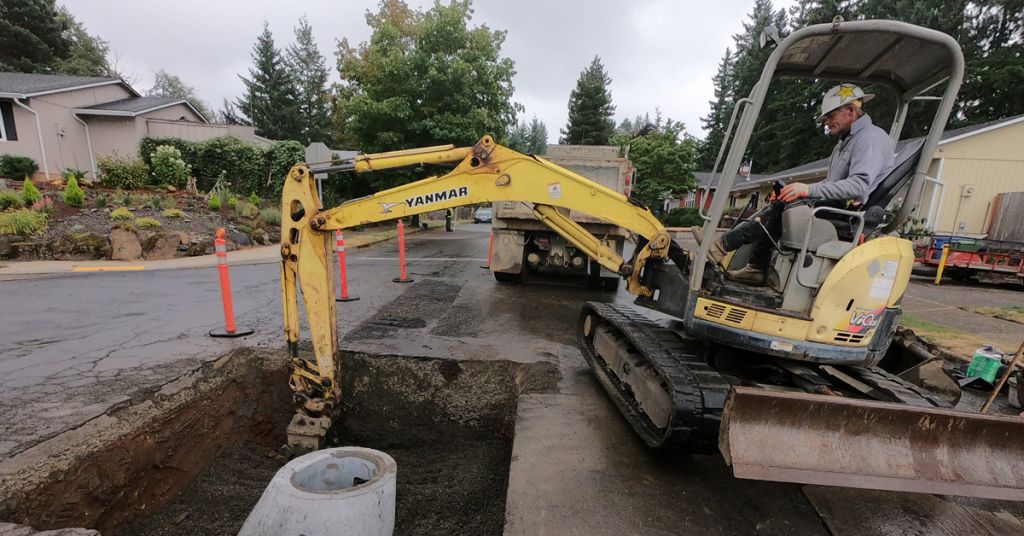
sandy sewer

Waste away: The City of Sandy has been replacing thousands of feet of aging, leaking sewer pipes. Photo: Sandy Department of Public Works

In December, Sandy expects to release a study it commissioned evaluating different strategies to mitigate temperature impacts on the Sandy River.

The State of Oregon considers temperature to be a pollutant, subject to monitoring and threshold limits to protect migrating and spawning salmon and steelhead in its waterways.

“The regulatory agencies are going to be very careful about what the city is going to need to do to make sure that water entering the Sandy River is going to be highly treated and safe,” says Wheeler.

History of violations

Environmental watchdogs have reason to be vigilant given Sandy’s alarming system failures and repeated violations of Oregon water quality standards and state pollution limits.

In 2018, Sandy signed a Mutual Agreement and Order with the Oregon DEQ that requires the city to develop a new wastewater facilities plan and timeline to make the necessary improvements to better comply with the terms and conditions of its permit.

“That really was a wakeup call for the city council, some of these permit violations, that hey, this isn’t just a finger in the dyke fix,” says Hokanson. “You can’t continue to not comply with the regulations and the permits, which is why we are in a place where we have to make these improvements.”

MORE: The tortured history of the Sandy River Delta

A public records request filed by Columbia Insight with the Oregon DEQ revealed dozens of incidents of violations associated with Sandy’s wastewater operations stretching back to 2013.

In 2017, the DEQ fined Sandy nearly $37,000 for exceeding pollution limits under its discharge permit and for a chlorine leak that killed fish in Tickle Creek. (The fine was later reduced to $7,000.) State regulators found that the chlorine leak was 2,500 times the limit toxic to aquatic life.

A month later, a Sandy sewage plant operator notified the DEQ that 2,000 pounds of raw sewage had spilled into a tributary of Tickle Creek. The sewer collection system at the time of the failure had been supervised without a certified operator for nearly six months, according to the DEQ, triggering another permit violation.

In October 2019, the Sandy City Council adopted its new Wastewater System Facilities plan as a kind of blueprint to achieve compliance with state environmental laws.

But violations continued. Monthly discharge monitoring reports from October 2019 to April 2020 show that Sandy violated limits on pollutants such as E. coli, ammonia and un-dissolved solids in discharged wastewater more than 70 times.

Enforcement and compliance

“It’s the state’s position that the existing wastewater treatment plant is undersized and not capable of meeting the existing flow that it gets to achieve compliance,” says Kieran O’Donnell, the DEQ compliance and enforcement manager.

In February 2021, O’Donnell wrote a letter to the U.S. Environmental Protection Agency to request enforcement action under the Clean Water Act for Sandy’s “chronic and substantial violations (which) present an ongoing risk to water quality and the environment.”

In a statement, EPA spokesman Bill Dunbar confirmed that the federal environmental watchdog will now be “the lead agency on this enforcement matter” and that it “has been getting up to speed on the history of the violations, as well as the city’s plans for a new wastewater treatment system.”

Describing the recent intervention by the EPA, Sandy City Manager Wheeler says the current enforcement action is based on past violations at the sewage treatment plant. He acknowledges “we have a problem with our wastewater system.”

MORE: As cities grow, wildlands are being eaten up

Parts of the existing sewage treatment facility date to 1971. Updates will “automate some of the systems” and “get the most life out of it,” says Hokanson.

Other improvements include installing new equipment to enhance the treatment of wastewater and boosting its capacity to handle peak flows during the rainy season.

Originally slated for completion in November 2021, supply chain disruptions blamed on the pandemic have pushed that back to summer 2022, according to a project update report.

The city envisions also building a new membrane bioreactor treatment plant, although that won’t be completed for another five years. The facility would be located three miles upstream from the existing plant but would handle only liquid waste, using a combination of biological processes and advanced filtration technology to treat wastewater to “almost drinking water standard,” according to Wheeler.

Broken trust

For Janet Davis, a board member of the Sandy River Watershed Council who lives with her husband and two dogs along the banks of the Sandy River, the city’s past violations loom large, eclipsing assurances about improved safety and vigilant oversight.  

“The city just doesn’t have capacity to oversee contractors very well,” she says. “So it’s hard for people in the area to trust that they know what they’re doing and that they will monitor it carefully.”
Sandy River

Pristine retreat: Sandy River Watershed Council board member Janet Davis recreates along the river. Photo: Mark Rogers

“The problem with trust is once you lose it, it’s really hard to regain it,” says Hokanson. “It comes down to building better relationships, especially with those people who are stewards over these various areas and interests.”

Sandy city officials appear to be listening to concerns of community members and groups like the Clackamas River Basin Council. They’ve organized tours at the sewage treatment plant with engineering consultants on hand to answer questions, held public meetings and responded to letters urging the city to focus more resources on shoring up its existing infrastructure.

In May, construction crews began punching through concrete streets to replace 55,000 feet of leaky sewer pipes, some of which were built when John F. Kennedy was president.

Wheeler says the effort should reduce the volume of rain and groundwater that can seep in through cracks and mix with wastewater heading to the treatment plant.  

This month, the Sandy Public Works department is expected to complete an application to the EPA for a $63 million, low-interest loan that would pay for roughly two-thirds of the city’s wastewater fixes.

Additional funding for the project comes from the State of Oregon and rate hikes, which went into effect in January 2020 and doubled the average wastewater customer’s monthly bill.

Sense of urgency

Sandy must still win approval from the state DEQ to discharge treated wastewater into the Sandy River. Wheeler hopes to submit a permit by late next year.

As the city grows, its elected leaders not only feel urgency to “right the ship,” as Hokanson says, but also sense an opportunity for public messaging around the simple act of flushing a toilet or running the garbage disposal.

“One of the messages I hope to share with our city residents is to make a connection with their actions,” says Hokanson. “My actions, our actions can have a positive or negative impact not only on the new and old wastewater plant but also the rivers around us.”

Sheraz Sadiq is an award-winning journalist and producer based in Hood River, Oregon. He’s produced videos and reported on topics including climate change, self-driving cars, criminal justice and edible insects.
Appreciate this story? To support environmental journalism on Columbia Insight click here

By |2022-11-15T18:55:41-08:0011/18/2021|Energy, Waste Management|1 Comment

So long, skiing? Study says Cascades could have no snowpack in 50 years

New research projects there will be so little snow in the Cascades that winter recreation—among other things—will be dramatically altered


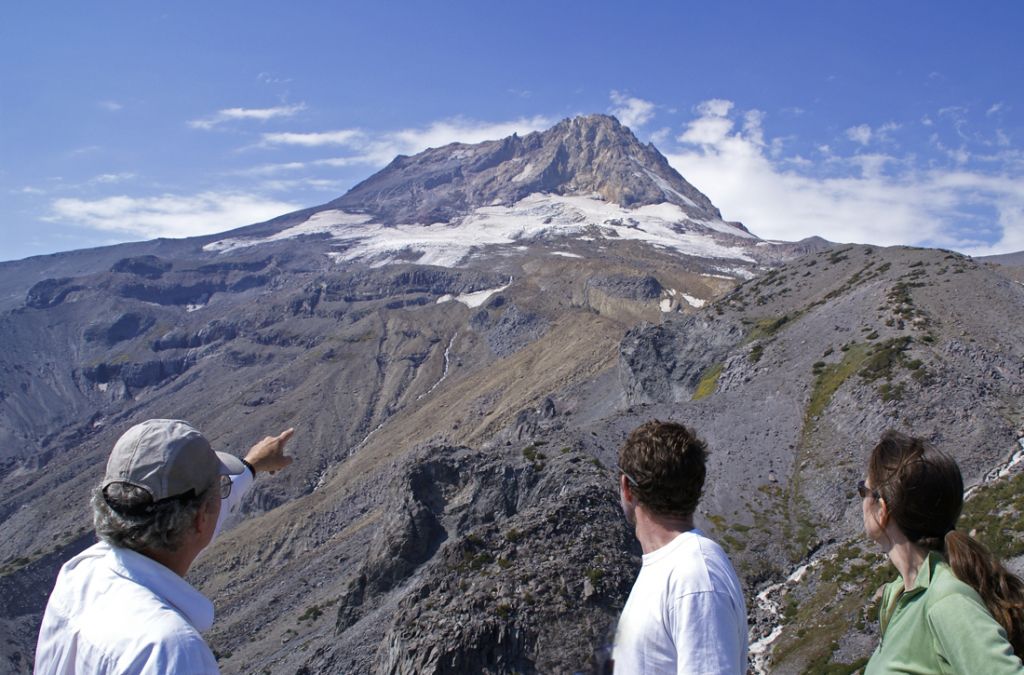
Wintertime blues? This photo of USFS geologist Tim DeRoo (left) on Mt. Hood was taken in summer. Researchers believe someday the Cascades might not look so different in winter. Photo: Jurgenhessphotography.com

 
By Keely Chalmers, KGW News. November 9, 2021. Excited for the ski season? Savor it while you can.
 
A new study led by researchers at Lawrence Berkeley National Laboratory suggests there might not be enough snow to ski on Mt. Hood in 50 years. In fact, the Cascades might have no snowpack at all by 2070.
 
“Coastal mountain ranges such as the Cascades may face more amplified losses,” said Dr. Alan Rhoades, a researcher who was part of the study. 
 
After analyzing snowpack data and projected temperature rise, he found peak annual snowpack in the Cascades could decrease by about 25% in the next 30 years.
 
And by the end of the century?
 
“We found that low to no snow might occur in the next 35 to 60 years,” Rhoades said. “Low to no snow implies that there’s going to be dramatic impacts for our water supply.”
 
 
The snow simply can’t compete with rising temperatures.
 

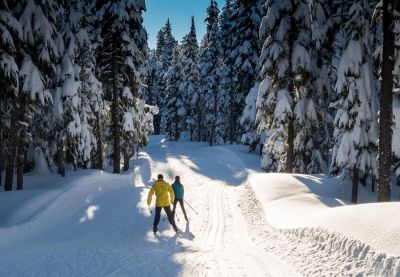
Tracking snowpack: Mt. Hood Meadows Nordic Ski Area. Photo: Jurgenhessphotography.com

“It’s just the freezing point of water is non-negotiable … as we continue to warm more and more, we can’t have below-freezing conditions be maintained for long periods of time,” Rhoades said. 
 
In the decades to come, ski seasons will become increasingly shorter. Resorts will have to rely more on artificial snow, which is energy intensive and costly.
 
“Then eventually if it gets warm enough, it’s just virtually impossible to keep, you know, producing artificial snow to meet to meet skier needs … so yeah, in some regions, at maybe lower elevations, those ski resorts would likely be pretty dramatically impacted.”
 
Rhoades hopes his research will shine the spotlight on snowpack as an impact of climate change is that just as important a sea-level rise, wildfires and extreme weather events.
 
His goal is to help identify ways managers might be able to overcome snow loss, find ways to mitigate it and prepare for a warmer, less snowy future.
 
Columbia Insight is publishing this story as part of the AP StoryShare program, which allows newsrooms and publishing partners to republish each other’s stories and photos.
By |2021-11-09T07:39:27-08:0011/09/2021|Climate Change|0 Comments

New national monument in Oregon a step closer to reality

Central Oregon’s Sutton Mountain appears set to become the Columbia River Basin’s ‘newest’ scenic attraction

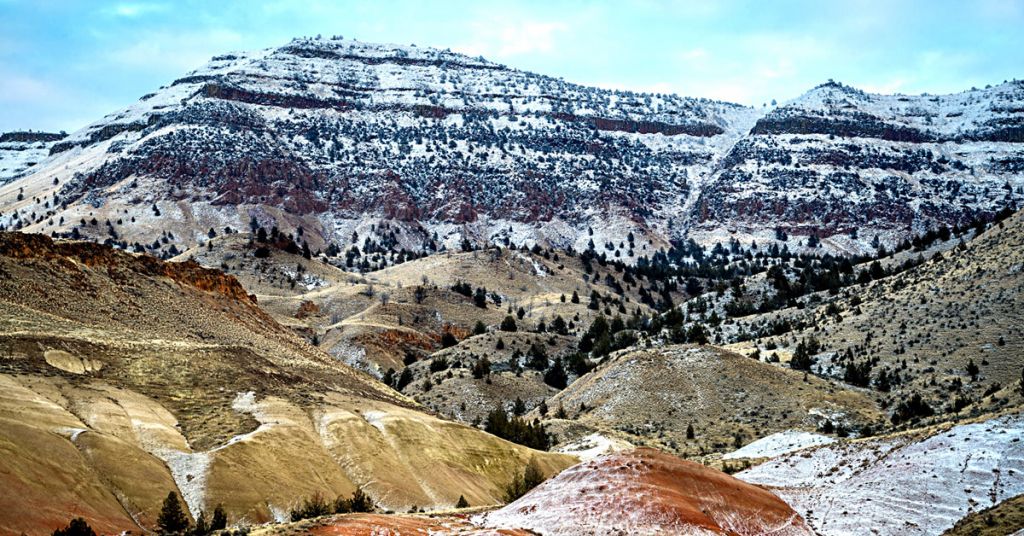
Sutton Mountain in winter by Jim Davis

Monumental: Sutton Mountain could join its more famous neighbors on central Oregon’s site-seeing circuit. Photo: Jim Davis

By Jordan Rane. November 8, 2021. Until last week, Sutton Mountain was an easy nominee for the most widely overlooked—and under-protected—natural wonder in Oregon.

Towering above the state’s high desert in Wheeler County, the 4,700-foot peak—a wonder of canyons, gorges and flowery meadows occupied by bighorn sheep, elk and golden eagles—has been overshadowed by its far more popular neighbors, the dazzling Painted Hills and rugged John Day Fossil Beds National Monument.

On Nov. 3, Oregon Sens. Jeff Merkley and Ron Wyden shifted the spotlight a notch by introducing legislation for the Sutton Mountain and Painted Hills Area Wildfire Resiliency Preservation and Economic Enhancement Act.

Mouthful title aside, the bill proposes the establishment of Sutton Mountain National Monument—a new, 66,000-acre preserve.

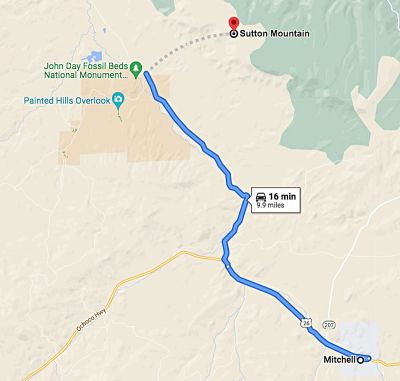
Sutton Mountain location

High and dry: Sutton Mountain is located in central Oregon. Google Maps

Administered by the Bureau of Land Management, the new monument would connect the peak and its adjacent foothills and desert creeks to the John Day Wild and Scenic River. It would provide the area with protection and management sought by conservation groups and local communities ever since Sutton Mountain came into public ownership nearly 30 years ago.

“With this legislation, we’ll make sure the public will be able to experience some of Oregon’s most incredible landmarks for generations to come, while also creating jobs and opportunities in the county right now,” stated Merkley in a press release.

“Our state’s natural treasures inspire awe from Oregonians and visitors alike,” echoed Wyden. “I look forward to getting this legislation across the finish line.”

Steelhead stronghold

Hiding in plain view, Sutton Mountain is called an “underrated gem” by the Oregon National Desert Association.

Cherished for its majestic summit vistas, the peak is nationally known for its geologic and paleontological resources.

Its riverine sections feeding the John Day River Valley provide critical habitat for Middle Columbia River steelhead.

MORE: How the biggest river protection act in Oregon history was created

“The John Day River is a stronghold for wild salmon and steelhead resilience and strength in the Columbia Basin,” stated David Moskowitz, executive director of Conservation Angler, one of several organizations supporting the proposal. “Sutton Mountain and Bridge Creek are one of the natural engines producing wild steelhead abundance in this amazing watershed.”

In addition to the creation of a new national monument, the bill aims to convey 1,300 acres to the nearby city of Mitchell for public recreation, shield all land within the monument from new mining claims and develop a comprehensive wildfire mitigation program for the area.

Columbia Insight contributing editor Jordan Rane is an award-winning journalist whose work has appeared in CNN.com, OutsideMen’s Journal and the Los Angeles Times.

Will Washington approve spring bear hunt?

State wildlife commissioners and managers are wrestling with the ethics of hunting bears fresh out of the den

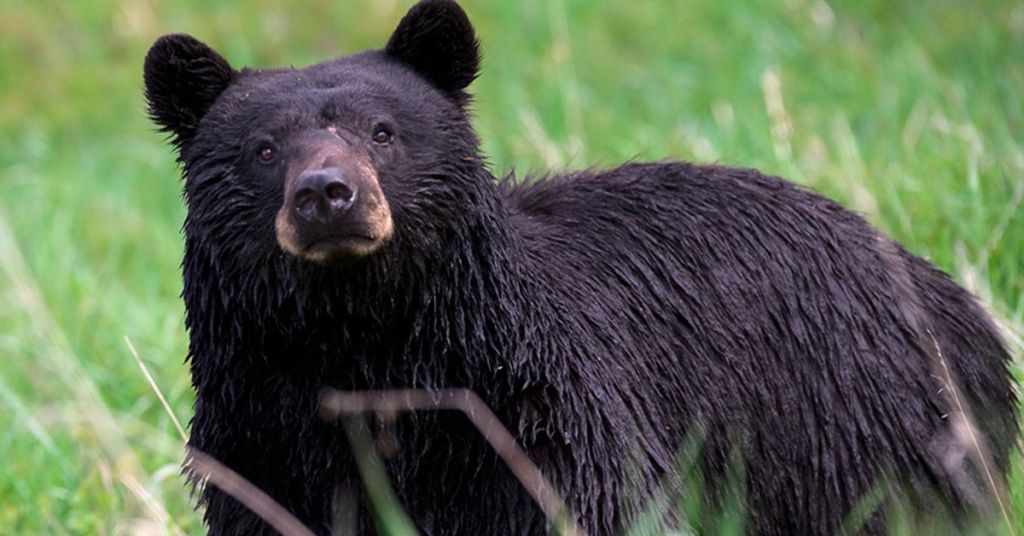
Black bear

Controversial target: Black bears foraging in spring are more lethargic than later in the year. Photo: WDFW

By Eli Francovich, November 1, 2021. Would you shoot a woozy, malnourished and lethargic bear? Maybe even a new mother with cubs?

Although most Americans oppose hunting bear at all, even many of those who do approve of bear hunting flinch at such descriptions. But scenarios such as this are being debated once more around the Columbia River Basin.

In Washington, wildlife managers are grappling with the ethics of spring bear hunting, a contentious issue revolving as much around morality as it does biology.

On Oct. 22, state wildlife biologists briefed the Washington Department of Fish and Wildlife Commission on a proposed spring bear hunt and listened to several hours of public testimony.

Some of that testimony was impassioned. Speakers decried the hunt, which targets groggy and hungry black bears recently emerged from winter dens.

MORE: Bear habitat is disappearing as urban boundaries expand

In contrast to that impassioned testimony, WDFW biologists encouraged the commission, a nine-member citizen group appointed by Gov. Jay Inslee, to approve a 2022 spring black bear hunt, as they’ve done in one form or another since 1999.

Per the proposed rule, WDFW would provide roughly 664 spring bear permits.

Washington is one of eight western states that have a spring black bear season. The Oregon Fish and Wildlife Commission, which approved the sale of bear hunting tags for the 2022 spring season, advises hunters that “spring bear is the first big game hunt of the year and a chance to dust off the boots and spend a spring day in the woods.”

WDFW estimates hunters will kill 145 black bears in spring 2022.

‘Robust’ bear population

At the Oct. 22 WDFW meeting, the commission said it may vote on the spring bear season during its November meeting. The public comment period ended on Nov. 1.

For those opposed to the hunt it’s a question of ethics.

“The way we manage wildlife is changing,” said Sophia Ressler, a staff attorney at the Center for Biological Diversity. “In Washington (there is) a large majority of the people who don’t hunt and public opinion shows that the non-hunting public is tolerant of some regulated hunting. The spring bear hunt is one of those behaviors that the non-hunting public finds inappropriate.”

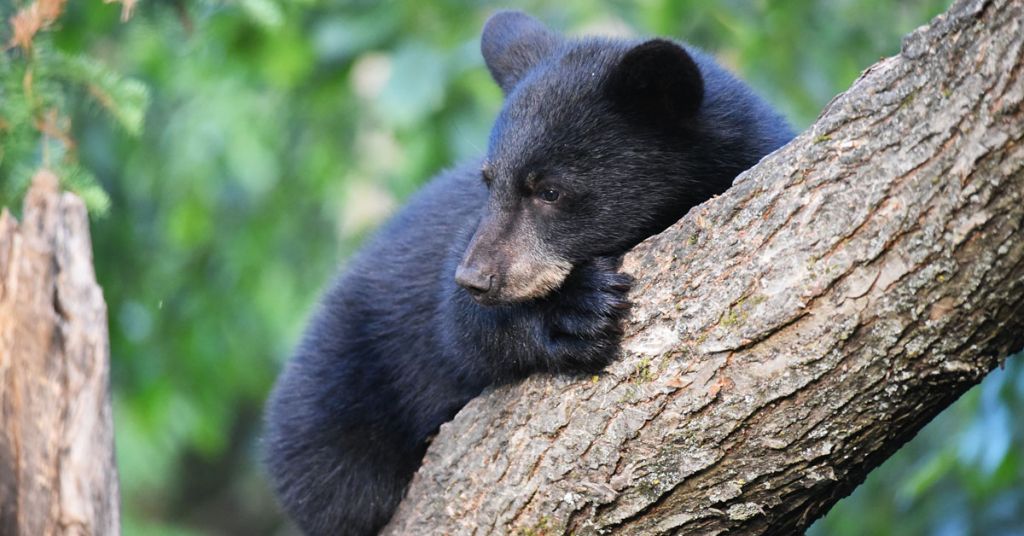
Black bear cub Photo by Courtney Celley USFWS

Up a tree: Motherless cubs are a just one concern surrounding spring bear hunts. Photo: Courtney Celley/USFWS

The agency has used the targeted hunt to deal with human-bear conflict and to try and improve fawn deer and elk survival, said Stephanie Simek, the carnivore section manager for WDFW. Black bears, particularly in the spring, kill and eat fawns.

The hunt is also used to reduce bear numbers in areas where timber is being damaged.

Additionally, Simek and others noted that part of the agencies’ mission is to provide sustainable hunting and fishing opportunity.

MORE: Did Creswell bear need to be killed?

As for concerns about the hunt impacting the overall bear population, Simek said in an interview that Washington’s bear population is healthy.

“Right now, in Washington, we have a fairly robust and stable population statewide,” she said. “We are working on improving our population monitoring process. But at this point, we don’t have any concerns.”

Orphaned cubs

Some advocates, and commissioners, wonder how accurate that rosy assessment from state officials really is, noting that WDFW biologists use hunter-harvest reports to estimate the black bear population.

There’s also concern that bear cubs could be orphaned. Although some research out of Canada indicates this rarely happens, others see it as a broader problem.

“Even if hunters tried to avoid killing mother bears with nursing cubs, it still happens far too frequently, since a mother bear often keeps her cubs in a tree while venturing off to forage for food,” according to the Humane Society of the United States. “And trophy hunters are notoriously bad at identifying the sex of a bear before the killing.”

Biologists are working to hone and refine their population estimates, Simek said. As part of that effort, starting in 2021 biologists collected teeth from harvested bears. By analyzing those teeth, they were able to determine the age and sex of the bears.

Simek presented those findings to the commission.

This year, hunters killed 124 black bears, 45 of which were female. One of those females was lactating, indicating that she had cubs. It’s not illegal to kill a female bear with cubs in Washington.

Marie Neumiller

Hunting advocate: Marie Neumiller. Photo: Inland Northwest Wildlife Council

Even within the hunting community “spring bear seasons are very controversial,” said Marie Neumiller, executive director of the Spokane-based Inland Northwest Wildlife Council.

Neumiller, and the council, support the spring hunt.

She also emphasized that generally hunters have no desire to orphan cubs and are careful to avoid sow bears.

“The biggest fear around spring bear season is the orphaning of cubs, that’s a very emotional argument,” she said. “Even as a hunter, my worse fear would be to take a sow. Especially in a spring season.”

Because bears are moving more slowly in the spring, Neumiller said it’s easier to identify whether a sow has cubs or not.

The council supports the bear season, although some of the Spokane-based organization’s members would prefer to see an over-the-counter tag instead of a permit system.

“I personally like the permit because it gives them more control over population numbers,” Neumiller said. “It’s a more fine-tuned tool.

Ethical quandary

Others questioned whether it’s the place of WDFW to defend timberland and noted that nonlethal deterrents are effective when dealing with human-bear conflict.

At the end of the day, however, the argument boils down to a question of ethics.

“This is an ethical discussion for our state,” said Dan Paul the Washington state director for the Humane Society of the United States.

In 2020, a lawsuit attempted to block the 2021 season alleging that WDFW didn’t “properly notify the public that it was considering approval of the spring bear hunt.” In April, a judge denied the petition to block the 2021 season, although commissioners said they would “continue discussion of the broader topic in the future.”

MORE: Toxic ammo: How to wean hunters from lead shot

Simek, the agency biologist, welcomed the public input and said it’s her job to present the science and “be in the middle.”

“It’s good that there are people on both sides,” she said, adding later, “We are managing the population for everyone. We are trying to preserve and perpetuate these populations.”

Eli Francovich is a journalist covering conservation and recreation. Based in eastern Washington he’s writing a book about the return of wolves to the western United States.

Appreciate this story? To support environmental journalism on Columbia Insight click here. 

By |2022-11-15T18:58:31-08:0011/04/2021|Wildlife|3 Comments

Climate change stalks another victim: Bigleaf maples

Study says the massive trees are dwindling as a result of increasingly hotter, dryer conditions

Photo by John Rusk from Berkeley, CA, Oct. 2016

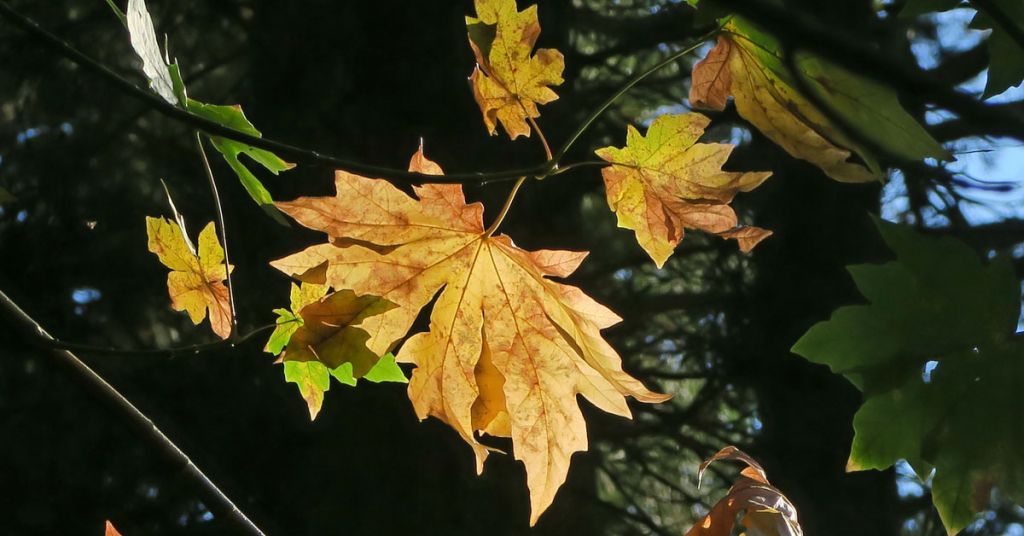
Fade away: An iconic species isn’t faring well. Photo: John Rusk/CC

By Jordan Rane, November 2, 2021. Bigleaf maple trees are sick, and they have been for years.

Washington’s largest broadleaf trees—they can grow to 100 feet with foot-wide leaves—are becoming growth-stunted and dying in increasing numbers. The damage runs from British Columbia to California.

The issue was detected a decade ago by Washington state foresters who first noticed a proliferation of unhealthy foliage, or none it all, amid a widening swell of sickly or dying bigleafs.

For years, scientists were stumped as to why this was happening.

[perfectpullquote align=”full” bordertop=”false” cite=”” link=”” color=”” class=”” size=””]Healthy bigleafs support the growth of mosses and low-lying flora like licorice ferns.[/perfectpullquote]

A long, arduous study has since ruled out all the usual threats that target specific tree species—bugs, fungus, pathogens, various diseases.

The cause in this case, scientists now believe, is purely climate stress.

“The overarching thing is probably just the changing climate—with hotter, dryer conditions and more frequent droughts in the summertime,” U.S. Forest Service researcher Jacob Betzen told the Idaho Statesman. “Some of these trees next to freeways had been doing fine for the last 50 years, but now they’re starting to die.”

An ecological world

Betzen began his fieldwork as a University of Washington graduate student of Environmental and Forest Sciences, teaming up with Patrick Tobin, an entomology professor in the field of disturbance ecology. The two lead researchers studied urban and forest bigleaf maple trees statewide to search for hidden ailments.

“Years of reduced growth were highly correlated with drought conditions and also heat conditions,” Tobin told the Idaho Statesman, adding that these increasingly long and intense weather patterns, along with urbanization and forest reduction, aren’t just stunting normal growth of bigleaf maples but leading to tree sickness, death and overall decline.

MORE: 3 ways to restore ecosystems with native plants

Aside from their natural beauty, healthy bigleafs comprise an ecological world unto themselves, supporting the growth of mosses and low-lying flora like licorice ferns.

Numerous animal species rely on the giant trees for homes, food and shade.

Columbia Insight contributing editor Jordan Rane is an award-winning journalist whose work has appeared in CNN.com, OutsideMen’s Journal and the Los Angeles Times.

By |2021-11-02T20:46:07-07:0011/02/2021|Climate Change|0 Comments

Breach broached: Snake River salmon get attention from heavy hitters

Federal and state announcements to restore Snake River salmon include a deadline—and the word “breach”

Salmom

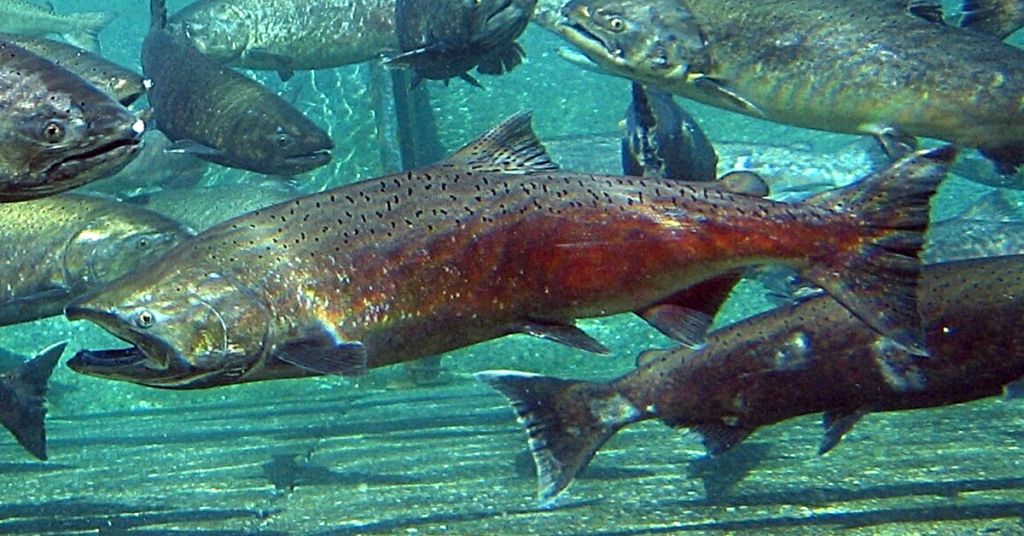
Big fish: Columbia River Basin salmon are set to become major factors in 2022 political campaigns. Photo: Pacific Northwest National Laboratory

By Jordan Rane. October 26, 2021. Salmon recovery on the Lower Snake River got a major push last week from top state and federal legislators, one of which set a resolution deadline while broaching the most hot-button word (sounds like “broach”) in the decades-long controversy.

“Saving our salmon is absolutely essential to Washington state’s economy and cultural heritage—it is an urgent undertaking that we are fully committed to,” said Washington Gov. Jay Inslee (D) and Sen. Patty Murray (D) in a joint statement on Oct. 22.

MORE: 140 miles: Snake River dams controversy in detail

The co-statement says state and federal governments should jointly determine “whether there are reasonable means for replacing the benefits provided by the Lower Snake River dams, sufficient to support breach as part of a salmon recovery strategy for the Snake River and the Pacific Northwest.”

This determination will be approached “with open minds and without a predetermined decision,” added Inslee and Murray. “We recognize the urgency of tackling this longstanding challenge as salmon runs continue to decline. Our recommendations will be completed by no later than July 31, 2022.”

Those recommendations will include a plan for replacing the services of four Lower Snake River dams if breached to avert salmon extinction.

Biden administration weighs in

A day earlier, in a U.S. Department of the Interior press release, the Biden-Harris administration announced plans to chart a comprehensive path to address the same issue—specifically “regarding the operation of 14 federal dams and their impacts on the region’s salmon and steelhead.”

“Today’s filing represents an important opportunity to prioritize the resolution of more than 20 years of litigation and identify creative solutions that improve conditions for salmon for years to come,” said Secretary of the Interior Deb Haaland. “While it is important to balance the region’s economy and power generation, it is also time to improve conditions for Tribes that have relied on these important species since time immemorial.”

MORE: Idaho pol: Snake River dams will decide election

Lots of political rhetoric? For sure.

But the dual announcements signal the most serious top-level considerations yet for breaching four dams on the Lower Snake River by 2030, while restoring billions in lost benefits as part of Biden’s infrastructure bill—a plan originally proposed by Idaho Rep. Mike Simpson (R) earlier this year.

Simpson’s proposal has received Tribal, public and bipartisan support as well as heated opposition.

MORE: Breach on! Idaho Rep. Simpson calls for removal of Snake River dams

According to recent studies, Snake River spring and summer chinook salmon populations threatened by managed water—with its rising temperatures, stagnancy and habitat obstruction—could reach extinction levels by 2025 if annual population decline percentages (currently 19%) continue.

Columbia Insight contributing editor Jordan Rane is an award-winning journalist whose work has appeared in CNN.com, Outside, Men’s Journal and the Los Angeles Times.

© Copyright 2013-2025 Columbia Insight. All Rights Reserved.

As a 501(c)3 nonprofit organization, all donations to Columbia Insight are tax deductible to the full extent of the law. Our nonprofit federal tax-exempt number is 82-4504894.