Stay Updated Subscribe today for the latest research + reporting about environmental news. Subscribe Now

Stay Updated Subscribe today for the latest research + reporting about environmental news.

Subscribe Now

Chuck Thompson

Chuck Thompson

Chuck Thompson

About Chuck Thompson

Chuck Thompson is editor of Columbia Insight.

Gorge commissioner sounds alarm about Scenic Area’s future, resigns

Longtime Gorge advocate Robert Liberty warns “attacks from development interests and ideologues” could degrade the area forever
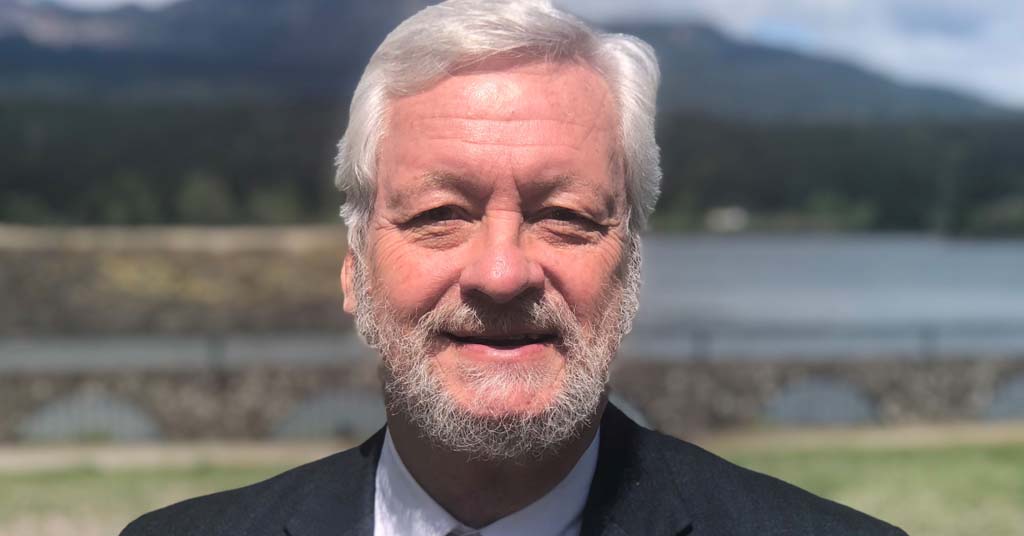
Former Columbia Gorge Commissioner Robert Liberty, headshot

Veteran protector: Robert Liberty represented Multnomah County on the Columbia River Gorge Commission for more than a decade. Photo: Columbia River Gorge Commission

By Chuck Thompson. January 13, 2026. In an unexpected move, Robert Liberty, the Multnomah County Appointee to the Columbia River Gorge National Scenic Area, has resigned his position on the Columbia River Gorge Commission.

Since becoming a commissioner in 2015, Liberty has served as both chair and vice chair of the organization. In 2023, the Multnomah County Board of Commissioners re-appointed him to another four-year term.

In a written statement on Jan. 8, Liberty, 72, submitted his resignation, effective immediately, to the Multnomah County Board of Commissioners.

Established in 1987 by the states of Oregon and Washington, the Columbia River Gorge Commission implements and enforces policies and programs that protect and enhance the Columbia River Gorge National Scenic Area.

Among the most respected and veteran protectors of the Gorge’s environmental integrity, Liberty’s resignation has struck a note of anxiety about the future of the National Scenic Area, which he wrote is under attack.

“In recent years, I have observed many growing threats to the Gorge,” Liberty wrote in his resignation letter, obtained by Columbia Insight. “These include the gentrification of working lands with luxury homesites for the wealthy, the conversion of working agricultural lands into backdrops for events venues and restaurants and rapidly accelerating fires resulting from climate change.

“In the last year, I have noticed resistance to addressing the concerns of our Tribal Treaty partners, even though our Chair, Vice Chair and another Commissioner are members of those tribes.”

“Robert Liberty is one of the most respected land use professionals in the country,” said Bowen Blair, an attorney who helped pass the Columbia River Gorge National Scenic Area Act in 1986 as executive director of Friends of the Columbia Gorge, and a current Columbia Insight board member. “His resignation from the Gorge Commission is the political equivalent of a five-alarm fire. Forty years after the National Scenic Area Act was passed, we—once again—need the Oregon and Washington Governors to start paying attention to the Columbia Gorge.”

Gorge Commission “not addressing threats”

Liberty’s letter referenced last year’s effort by the Washington State House of Representatives to defund the National Scenic Area. After a month of debate, the Washington State House and Senate reduced Gorge Commission funding by 27%.

“The Commission is also under increasing and unceasing attacks from development interests and ideologues who are opposed to government restrictions and perhaps any government at all,” wrote Liberty.

Liberty said he’s resigning because “the Commission’s work plan for the remaining fourteen months of my term will not address these threats. If it did, I would stay on the Commission.”

“Liberty’s resignation is the political equivalent of a five-alarm fire.”

Most alarming, to some observers, are the notes of pessimism in the typically upbeat Liberty’s letter.

“Meanwhile, I observe the erosion of Oregon’s remarkable and unique system of land planning and regulation,” he wrote. “No other state has a system that combines stopping sprawl with increased equity in housing and transportation, rural land conservation and prudence in the use of taxpayer dollars.

“But it is being undermined by the hostility of Governor Kotek and growing corruption in the form of pay-to-play politics, particularly evident in Washington County.

“As if all of that was not enough, the foundations of our Republic are under attack from the deeply corrupt, authoritarian, oligarchic and chaotically incompetent Trump regime and its supporters.”

A vibrant and steadfast defender of conservation goals, Liberty was the founder and former director of the Urban Sustainability Accelerator and Institute for Sustainable Solutions at Portland State University; a two-term councilor at Metro Regional Government; senior counsel to Oregon Congressman Earl Blumenauer; and executive director of 1000 Friends of Oregon, the organization founded by Henry Richmond and Governor Tom McCall in 1974 to champion the state’s unique land use planning system.

Liberty is a graduate of the University of Oregon, Harvard Law School and Oxford University.

His resignation brings the loss of one of the most erudite and committed defenders of environmental protections in the Columbia River Gorge, and raises serious questions about the future of the National Scenic Area, “a beautiful and unique combination of ecological, geological, scenic and cultural wonders,” as he wrote, that attracts more than 2 million visitors from around the United States and the world each year.
By |2026-01-13T10:55:07-08:0001/13/2026|News|13 Comments

10 biggest environmental stories of 2025

The federal government launched its War on Nature. Nature soldiered on

By Chuck Thompson. December 24, 2025. In February, Columbia Insight reported on ways the Forest Service is manipulating the threat of wildfires to meet logging targets.

In July, the USDA announced a plan to move the Forest Service’s Pacific Northwest Region Headquarters from Portland to Fort Collins, Colo.

July brought confirmation of a mating pair of spotted owls in the Okanogan-Wenatchee National Forest.

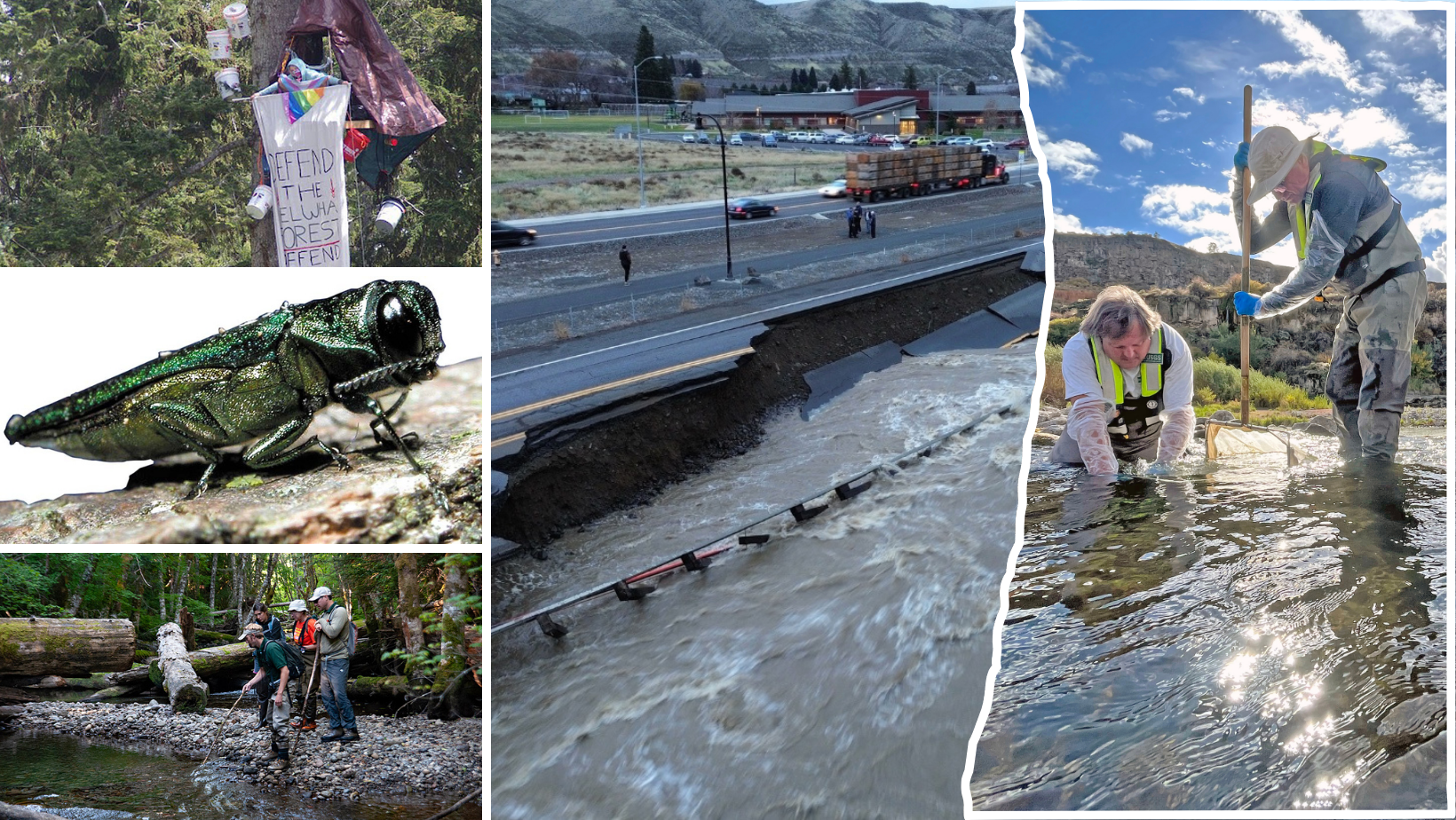
Big news, no doubt, but each item was edged out by 10 others on our annual list of the year’s top environmental stories.

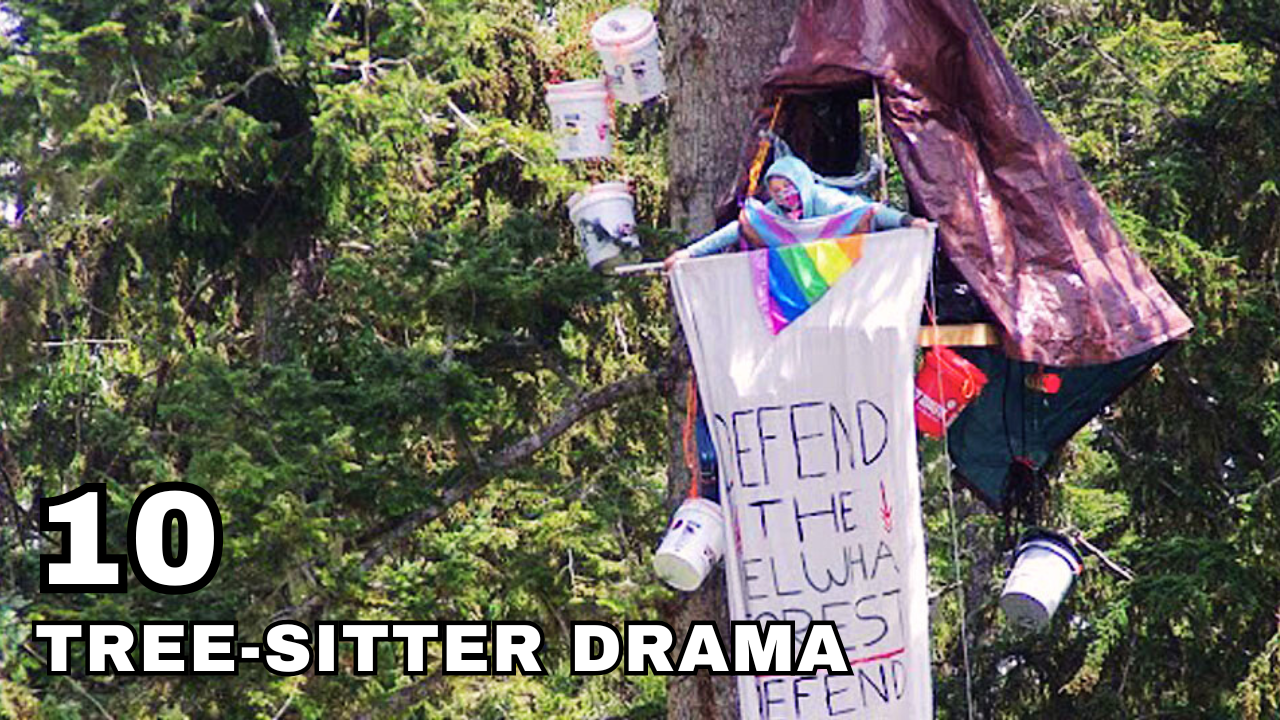
Photo: Anri Orihara

In May, a group calling itself Olympic Forest Defenders put an activist in a tree to block a logging operation on the Olympic Peninsula. After 40 days in a makeshift shelter 80 feet up a grand fir, the tree-sitter was shaken by the arrival of counter-protestors in a black Jeep and a nighttime confrontation that, as The Washington Post reported, “involved death threats, shots fired in the air and the destruction of the blockade.” Activists abandoned their protest. “They were really scared,” a protestor said of the tree sitter. “They weren’t prepared for that type of confrontation.”

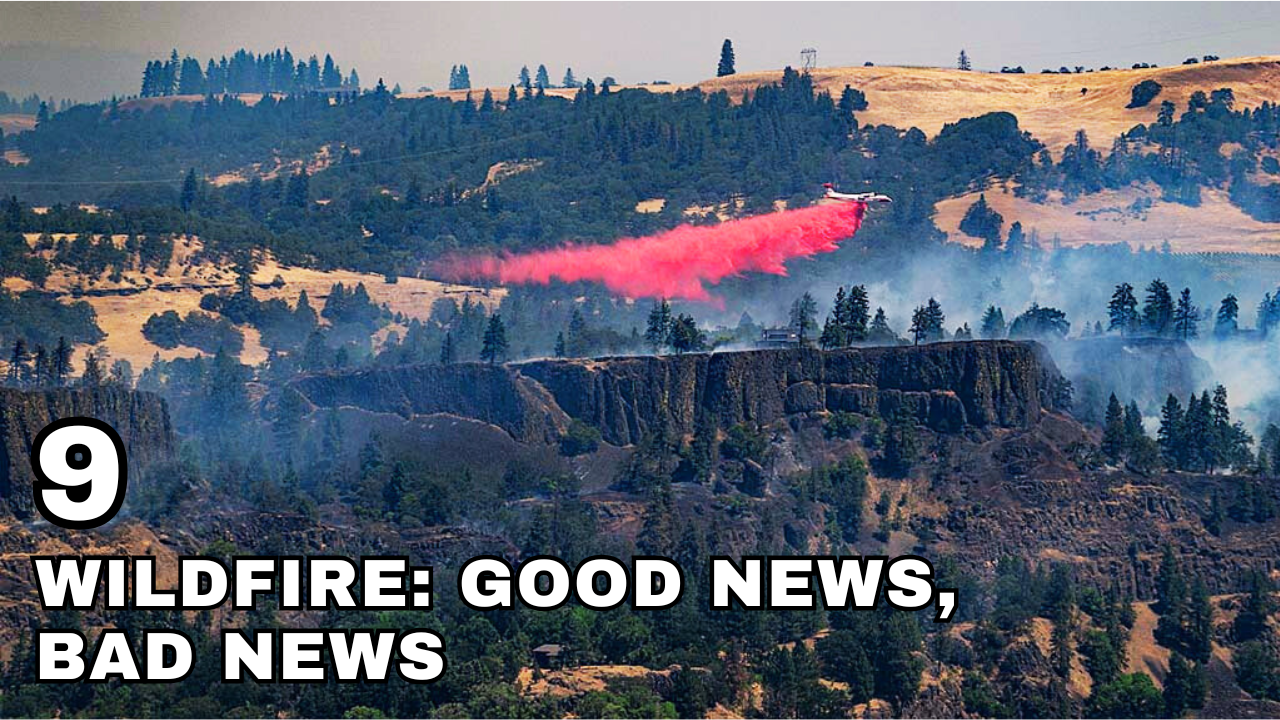
Burdoin Fire, Columbia River Gorge, July 2025. Photo: Jurgen Hess

In the Pacific Northwest, fewer acres burned in 2025 as a result of wildfire than in 2024. In Oregon, less than 400,000 acres burned this year, compared with 2 million acres in 2024. As of Oct. 10, 251,840 acres had burned in Washington, below the 2024 total of 274,593 acres. But while fewer acres burned, the total number of fires increased. The cause was people. In Oregon, humans have started 70% of wildfires on state land over the past decade. Washington’s 1,851 fire ignitions in 2025 were higher than last year’s total of 1,806 and the five-year average of 1,629. “We need a lot more help from [people] to not start fires from their activities and our infrastructure,” said Kyle Williams, deputy director of fire operations at the Oregon Department of Forestry.

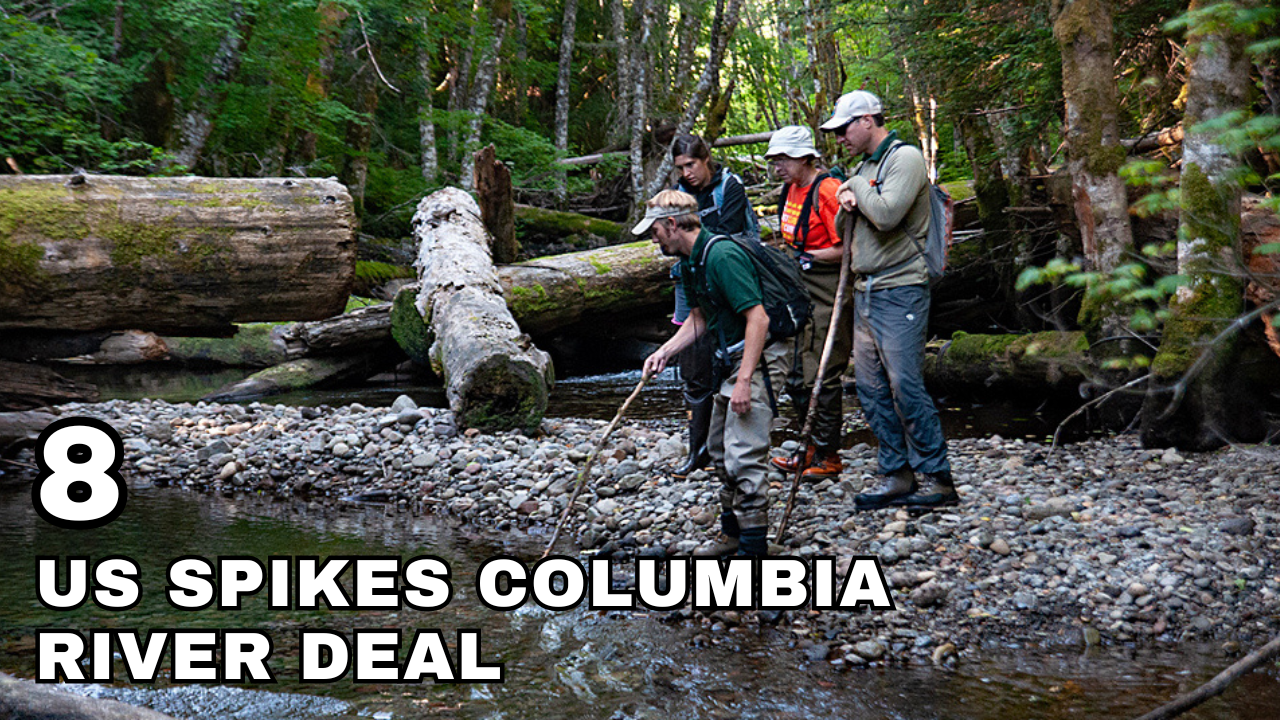
Salmon restoration work in a Columbia River tributary. Photo: Jurgen Hess

In June, President Trump signed a memorandum pulling the federal government out of a 2023 agreement with four Tribes, Northwest states and environmental groups to help restore salmon, steelhead and other native fish in the Columbia River Basin. The memorandum referred to the deal commitments as “onerous” and “misguided.” The 2023 agreement was reached after decades of legal battles. Groups behind the suits said they’d continue fighting in court.

Emerald ash borer. Photo: National Park Service

In September, the Oregon Department of Forestry confirmed that emerald ash borers, an invasive beetle from Asia responsible for the death and decline of tens of millions of ash trees in North America, had been found just west of Portland. Research models show the destructive insects could cross the Columbia River into Washington in as little as two years and spread across all of western Oregon in 15 years.

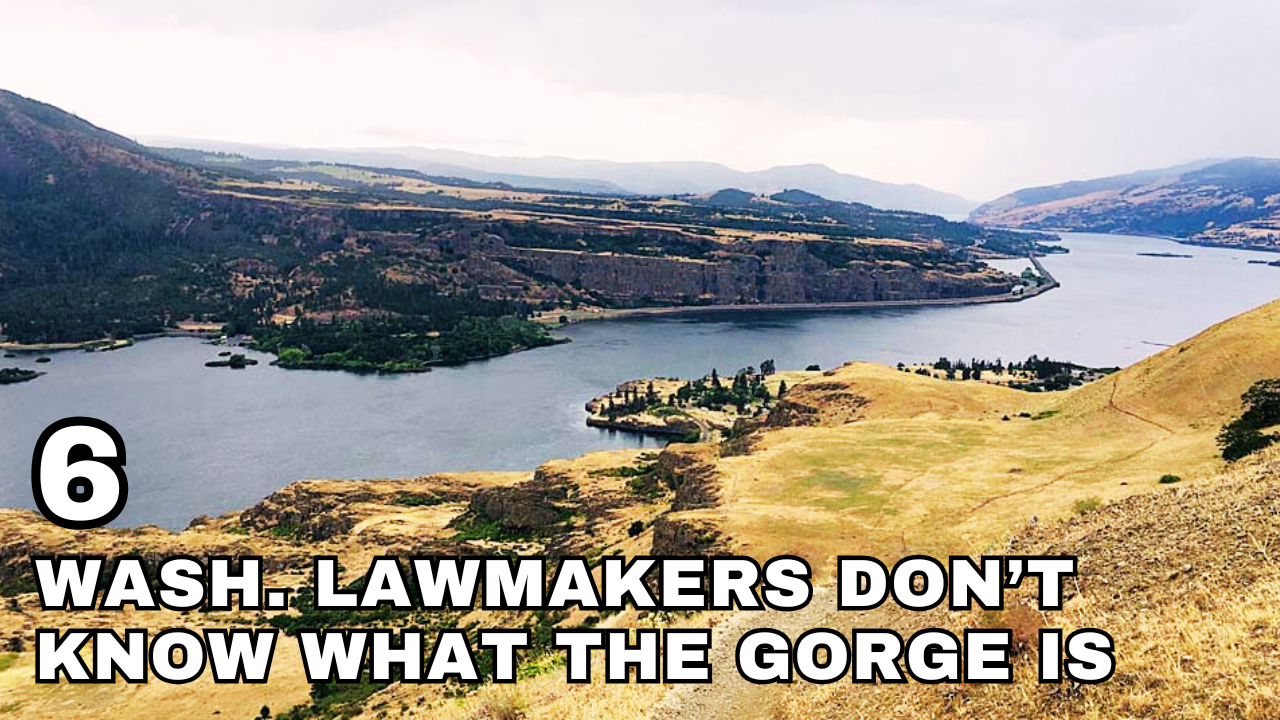
Columbia River Gorge. Photo: Chuck Thompson

On April Fools’ Day, the Washington State House of Representatives passed an amendment to eliminate funding for the bi-state commission that regulates land development inside the Columbia River Gorge National Scenic Area. Rep. Kevin Waters, who represents Gorge communities, said many lawmakers confused the National Scenic Area with a Washington music venue with a similar name. “I had four or five members come up to me and say, ‘why the hell do we have a commission for a concert venue?’ And I said, ‘we don’t. It’s a totally different gorge,’” said Waters. After a month-long freakout in Washington and Oregon, the Washington State House and Senate agreed to reduce Gorge Commission funding by 27% for the 2025–27 biennium.

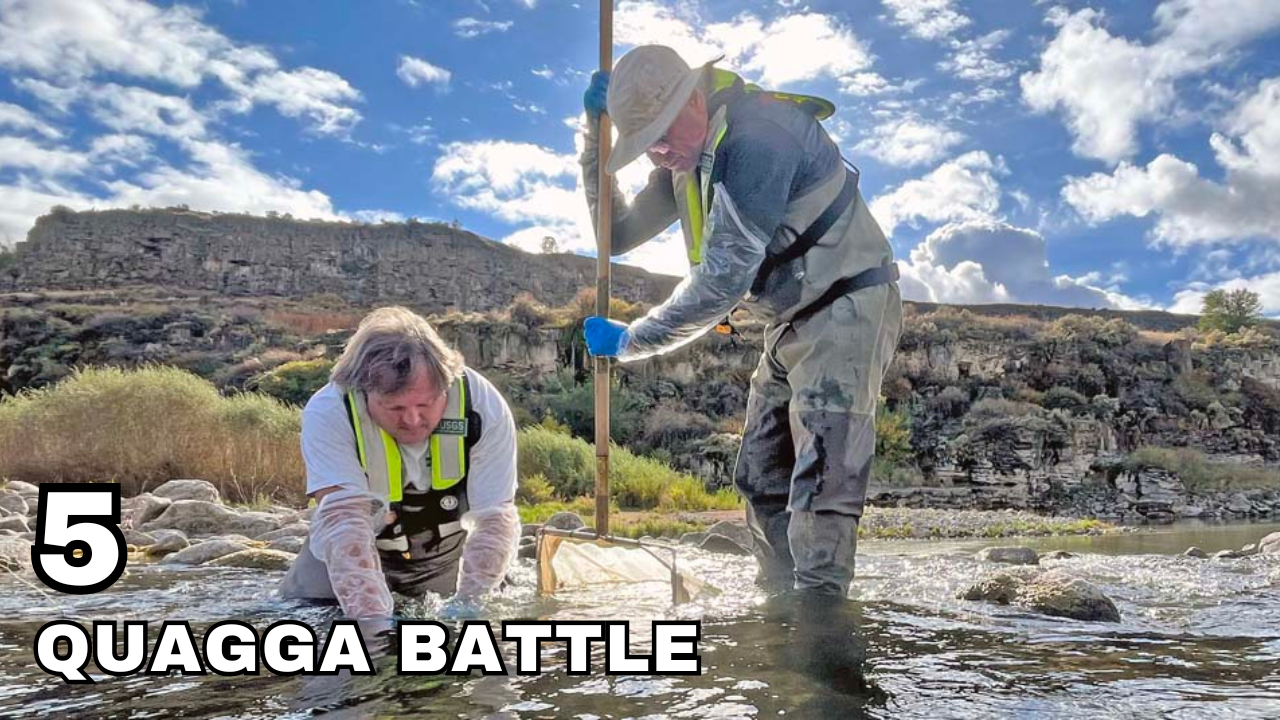
Snake River. Photo: Idaho Water Science Center

After detecting quagga mussels in the Snake River in 2023, the Idaho State Department of Agriculture dumped 40,000 pounds of a copper-based toxin into three stretches of the river around Twin Falls. The idea was to poison a relative few quagga mussels in order to prevent a full-blown infestation. But the treatment killed nearly everything else in some stretches of the river. In August, the Idaho Statesman reported that a study “detailed that the copper destroyed up to 90% of the invertebrates living in the area.” Over 7,000 pounds of copper have settled into the riverbed. In November, Idaho officials said they haven’t found any viable quagga mussels since the state administered another treatment in the fall. Experts say impacts from the treatments will ripple through the fish food web for years.

Illustration: Mackenzie Miller

Columbia Insight’s first story of the year turned out to be one of our most well read. It detailed a UW report that raised the possibility of doing away with state’s “dysfunctional” Fish and Wildlife Commission. Divisions between environmentalists and hunters were at the heart of the issue. In May, the Ohio-based Sportsmen’s Alliance petitioned Gov. Bob Ferguson to remove four commissioners, claiming they “demonstrated incompetence, misconduct, and malfeasance in office.” In August, Washington Wildlife First called for the removal of WDFW Director Kelly Susewind, who, it said, “prioritizes the interests of trophy hunters above his responsibility to protect Washington’s wildlife.” Then Ferguson authorized an investigation into the conduct of WDFW commissioners. As of now, the WDFW Commission remains functional.

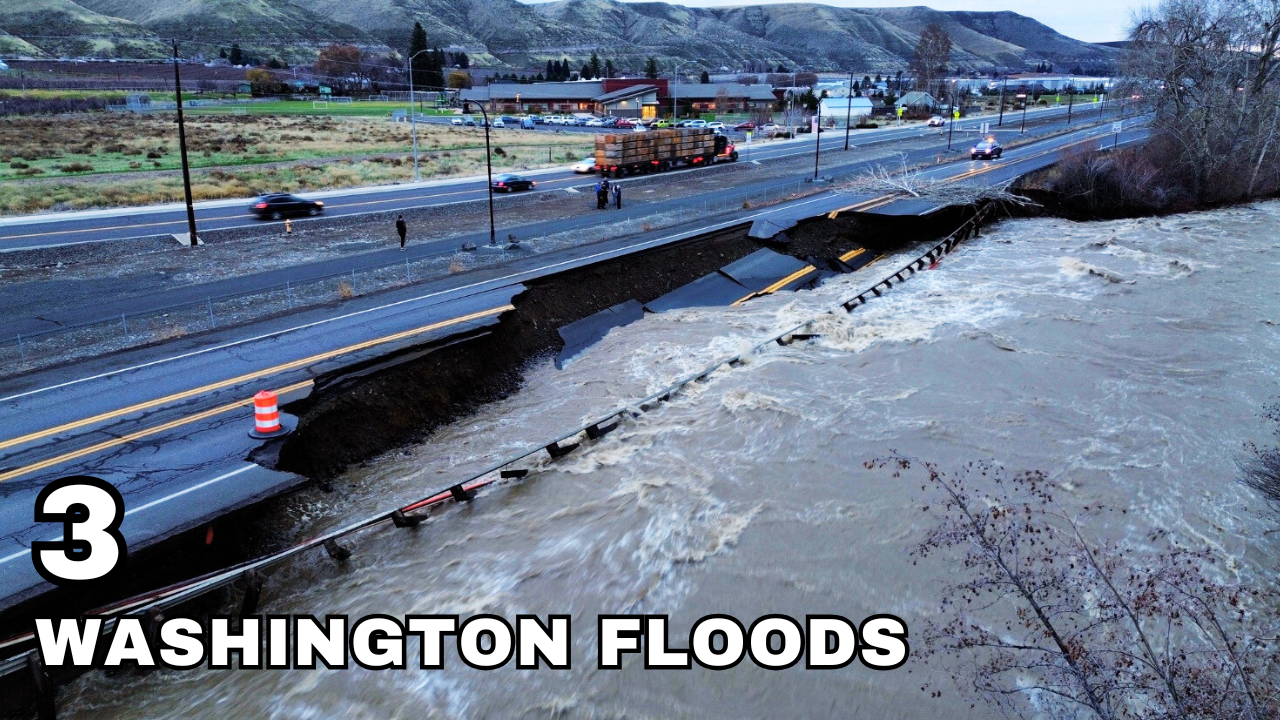
U.S. Route 12 in Yakima County, Washington. Photo: Naches Fire Department

In December, torrential rains washed out bridges, damaged roads and led to evacuations and at least 1,200 rescues in more than 10 Washington counties. The Snohomish and Skagit rivers surged past high-level records. More than 60 roads were closed and several major routes will need to be almost entirely rebuilt. “This natural disaster is undoubtedly one of the most devastating in our state’s history,” said Washington Gov. Bob Ferguson. “If you get an evacuation order … for god’s sake, follow it.”

Data center. Photo: Washington Consolidated Technology Services

You couldn’t doom scroll, attend a community meeting, or do a Google search for “bad ideas” this year without being confronted with warnings about the environmental implications of data centers, which use astronomical quantities of water to cool the machines powering the race for AI supremacy. Virginia leads the nation with 665 data centers but the problem is acute in the Pacific Northwest where decades-long drought conditions are worsening and tech overlords hold sway over cash-strapped counties. Between April and July, Oregon experienced its fourth driest period since record keeping began in 1895. In October, Washington’s Yakima River Basin ran out of water, prompting the state to impose an unprecedented halt to surface water use. In December the Washington Standard reported that “lack of snowpack going into the winter is putting more drought pressure on Oregon, Idaho, Washington and western Montana.” Meanwhile, plans are afoot to add data centers to the 271 already snarfing publicly owned water in Oregon and Washington (and 10 others in Idaho).

EPA head Lee Zeldin sworn into office by Justice Brett Kavanaugh, January 2025. Photo: EPA

One man has taken the blame for the federal budget cuts, firings and attacks on environmental protections that commenced with the first week of the year. But it takes an army of yes men, enablers, executives and threatened government workers to dismantle more than half-a-century of conservation advances. In March, U.S. Environmental Protection Agency Administrator Lee Zeldin announced 31 provisions in the “biggest deregulatory action in U.S. history.” In the not-so-silent spring that followed, officials announced the government’s intention to rescind roadless rule protections and open millions of acres of Pacific Northwest national forests to industrial development. Workers who help fight wildfires were canned. Funds for EV charging stations were put on hold. Tens of millions of dollars were cut from a Columbia Basin salmon-restoration program. Scheduled for a shut down and transition to natural gas, Washington’s last remaining coal-fired power plant was ordered to keep spewing soot into the air. On it went. Any mechanism that protects the land 15 million Pacific Northwesterners call home is either under attack or soon could be.

By |2025-12-24T08:43:22-08:0012/24/2025|News|1 Comment

CI founder Susan Hess to step down. New exec director named

Matthew Latterell will lead the organization that Hess piloted into a regional leader in environmental news

Columbia Insight founder Susan Hess

Outgoing: As the founder of Columbia Insight, Susan Hess has been facing environmental challenges head-on, and with a smile, for more than a decade. Photo: Jurgen Hess

By Chuck Thompson. July 31, 2025. Most people care about the environment—you’re reading Columbia Insight, you’re one of us—but those who actually do something about it are rare.

Among the doers, Susan Hess stands out.

She’s chaired Columbia Area Transit, which provides public transportation in Hood River County, Ore. Worked with the EPA’s Columbia River Toxics Reduction Working Group. Assisted the U.S. Army Corps of Engineers on the rebuilding on the Native American village at Celilo Falls. Regularly pitched in to dig up invasive plants from native landscapes. Served as an early board member and show host for the Columbia River Gorge’s Hispanic community-oriented Radio Tierra. Spent countless hours picking up trash from trails, parks and public spaces—Susan is probably most recognizable hiking with a garbage bag in hand.

Eyeing the sofa with suspicion and getting things done has always been her way.

“I remember Susan spending long hours planting and restoring the habitat area by Indian Creek Trail in Hood River,” former Columbia Insight editor Miko Ruhlen said this week. “She was always walking by there picking up trash and talking to people about the habitat.

“These are small areas of habitat forgotten and taken for granted by most, even those dwelling next to or near them. But they are important for the wild creatures and native plants. Susan does so many quiet, generous gestures that most people don’t notice.”

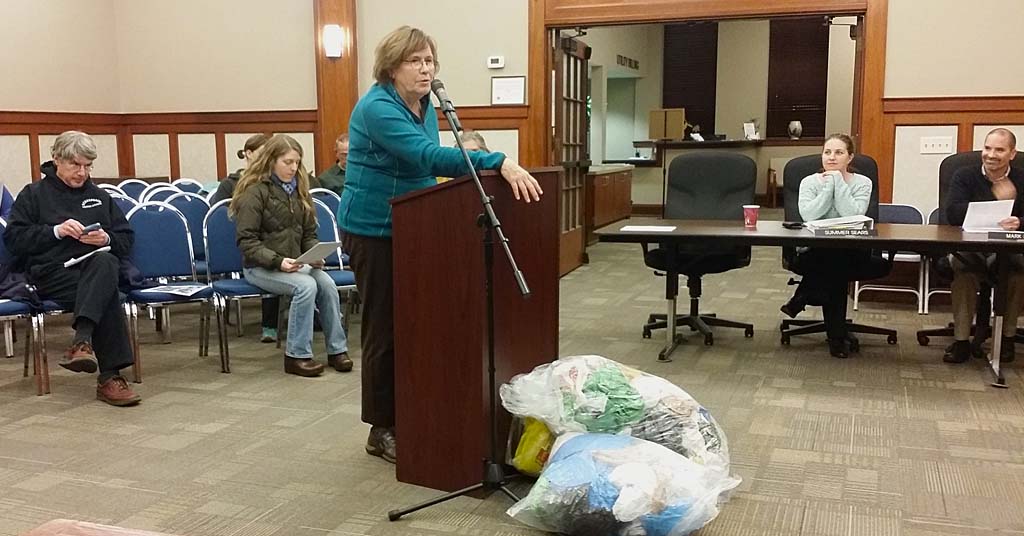
Susan Hess at Hood River City Council meeting.

Waste not: Susan provided testimony—and firsthand knowledge—to the Hood River City Council when successfully campaigning for a ban on single-use plastic bags. Photo: Jurgen Hess

In 2013, alarmed by the closing of newspapers and the decline of unbiased environmental reporting—in particular the departure of stalwart natural resources journalist Michael Milstein from The Oregonian—Susan and her husband, Jurgen, used a significant chunk of their retirement savings to launch Columbia Insight, a coffee-table website initially called EnviroGorge that focused on environmental issues in the Columbia River Gorge.

“It was a really exciting to get it started. We attracted a bunch of people to the board who were really interested,” recalled Jurgen. “We sat them all down around the kitchen table and the momentum started to build right away.”

Public interest was immediate. The site’s purview grew to cover the entire Columbia River Basin, then the Pacific Northwest.

A board of heavyweight environmental experts was assembled and a milestone was reached in 2018 when Columbia Insight transitioned into 501(c)(3) status.

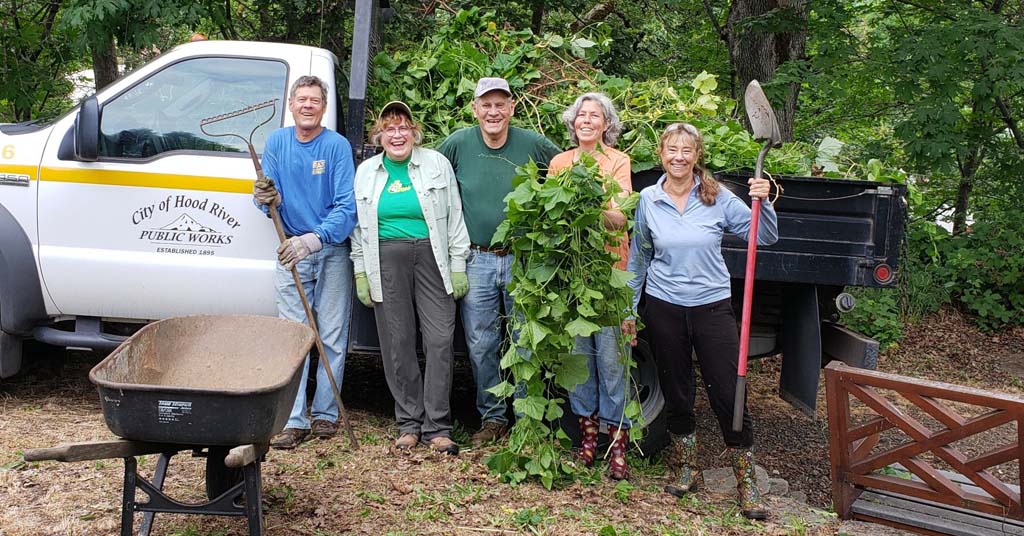
Waucoma Park restoration

Digging in: Susan and Jurgen (second and third from left) headed the effort to restore and preserve Waucoma Park in Hood River, Ore. Courtesy photo.

Now a regional leader in environmental journalism, Columbia Insight has earned awards for reporting excellence from organizations such as the Society of Professional Journalists and the Society of Environmental Journalists. It’s partnered with national news organizations including The Associated Press, Institute for Nonprofit News and Inside Climate News.

Its stories are routinely republished by large and, no less important, small outlets around the Pacific Northwest. Its global subscriber list is filled with the email addresses of politicians in state capitals, as well as Washington, D.C., employees of government agencies and nonprofit groups and other decision-makers and doers in the environmental world. Funding through grants and private donations sets the annual budget at approximately $250,000.

As one of the originals around that kitchen table and still serving CI board member Buck Parker likes to say, “Columbia Insight punches above its weight.”

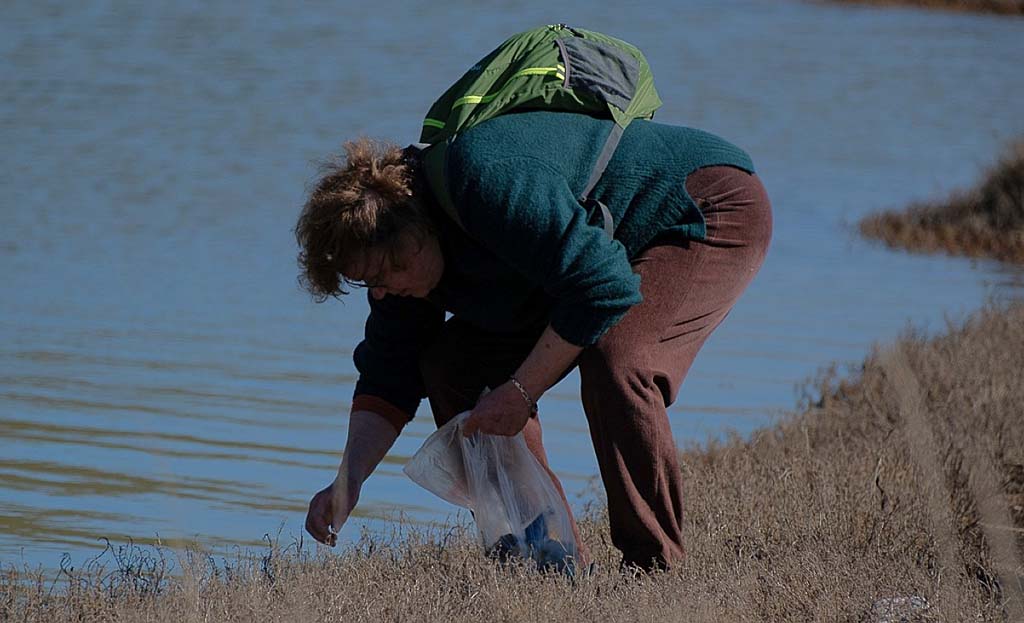
Susan picking up garbage

Striking the pose: Doing what she does best. Photo: Jurgen Hess

This week, after nearly 13 years, Susan will step down as publisher and executive director of Columbia Insight.

“The articles you read now on Columbia Insight come from the dedicated work of our journalists, editor and board of directors. The quality of writing and the importance of the topics is what I hoped for when I started Columbia Insight 13 years ago,” said Hess. “Not many people get to have a chance that I’ve had to start an organization on a subject they care passionately about and bring on and get to work with the team of people that make up Columbia Insight.”

Susan may be stepping down—she’ll remain with the organization as publisher emeritus—but neither she nor Columbia Insight will stop punching.

This week opens a new phase in Columbia Insight’s development, as Matthew Latterell takes over as executive director.

Matthew Latterell

Matthew Latterell

“I’m honored to join Columbia Insight as executive director and help lead an organization that brings fact-based reporting and environmental insight to the Pacific Northwest,” said Latterell. “At a time when our region’s stories matter more than ever, I’m excited to help amplify voices, deepen impact and strengthen independent journalism.”

Latterell joins Columbia Insight after serving as an executive director for 10 years, working in higher education and nonprofits directing IT services for many years, co-owning and running restaurants for 12 years (including the Portland restaurant group Teote) and volunteering and serving on the boards of numerous environmental and community-based organizations, including supporting environmental, placed-based education at Sunnyside Environmental School, a public K-8 school in Portland. He earned a master’s degree in environmental studies from the University of Oregon.

Latterell will become just the second executive director in the organization’s history.

“We are very excited to start this new chapter with the leadership of Matthew Latterell, and to continue to grow the organization Susan founded,” said Columbia Insight Board Chair Shara Alexander. “Susan’s infectious enthusiasm and warmth drew me and many others to the mission of this organization. She laid the groundwork that makes it possible for us to continue the important work of telling stories about the natural and built world of the Columbia River Basin for many years to come.”

“Susan has been a mentor to so many people, including myself,” said Ruhlen. “I always told her ‘I want to be you when I grow up.’ She changed my view of what I want to do in my work life and retirement to be more about giving back and creating something of lasting value to the planet rather than taking a back seat on life.”

That’s Susan’s legacy. And a benchmark Columbia Insight will continue striving to live up to.

Susan Hess, Columbia River

Taking it all in: For almost 13 years Susan, here surveying the scene at Columbia Hills Historic State Park in Washington, has overseen news from the Columbia River Basin. Photo: Jurgen Hess

By |2025-12-19T16:09:11-08:0007/31/2025|News|20 Comments

Orphaned bobcats on the mend in central Oregon

After being found at a roadside rest stop, the siblings are being cared for by the Think Wild wildlife hospital

Bobcat kitten at Think Wild

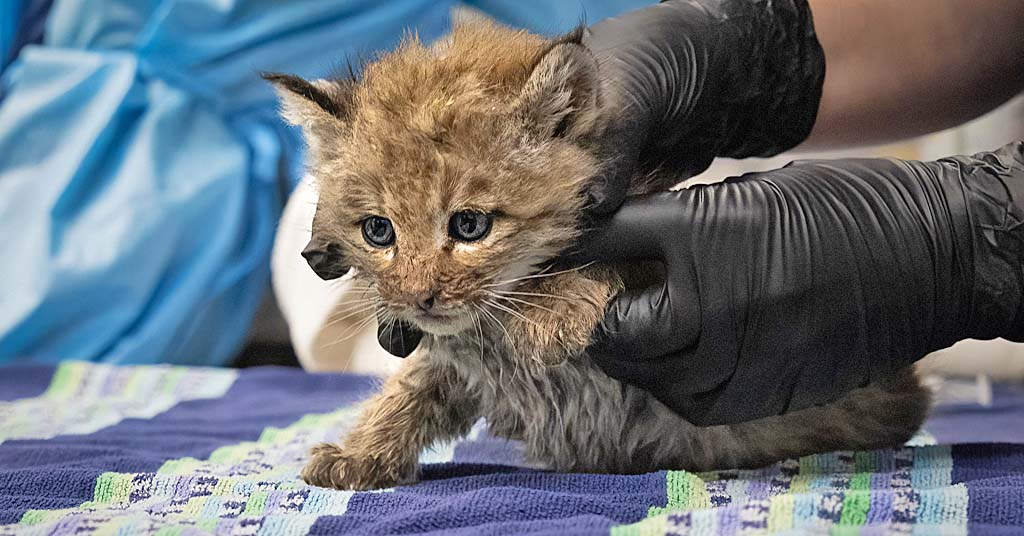
Baby blues: One of two bobcat kittens being cared for at Think Wild in Bend, Ore. Photo: Think Wild

By Chuck Thompson. June 2, 2025. Few experiences are more tragic or terrifying for children than losing a parent. That goes for wildlife as much as it does for people.

On May 18, two orphaned bobcat kittens were found alone at a rest stop near Tygh Valley in Wasco County, Ore., with no sign of their mother, who is suspected to have been killed by a vehicle.

After a night in the care of the Oregon Department of Fish and Wildlife, the kittens were transferred to Think Wild, a Bend-based nonprofit hospital and conservation center committed to the care and protection of native wildlife through rescue, rehabilitation, conservation and community outreach.

“At intake, both kittens were estimated to be approximately four weeks old, underweight, hypothermic and had diarrhea and external parasites,” according to a Think Wild statement. “They had also been fed an inappropriate diet prior to arrival. Since then, they have received around-the-clock care, including antiparasitic treatments, supportive fluids, proper nutrition, a bath and their first round of vaccines.”

The kittens are showing signs of recovery, including gaining weight and exhibiting normal bobcat behaviors such as hiding, hissing and avoiding human presence.

A bobcat kitten receives anti-parasitic medications via syringe at the Think Wild hospital and conservation center in Bend, Ore. Video: Think Wild

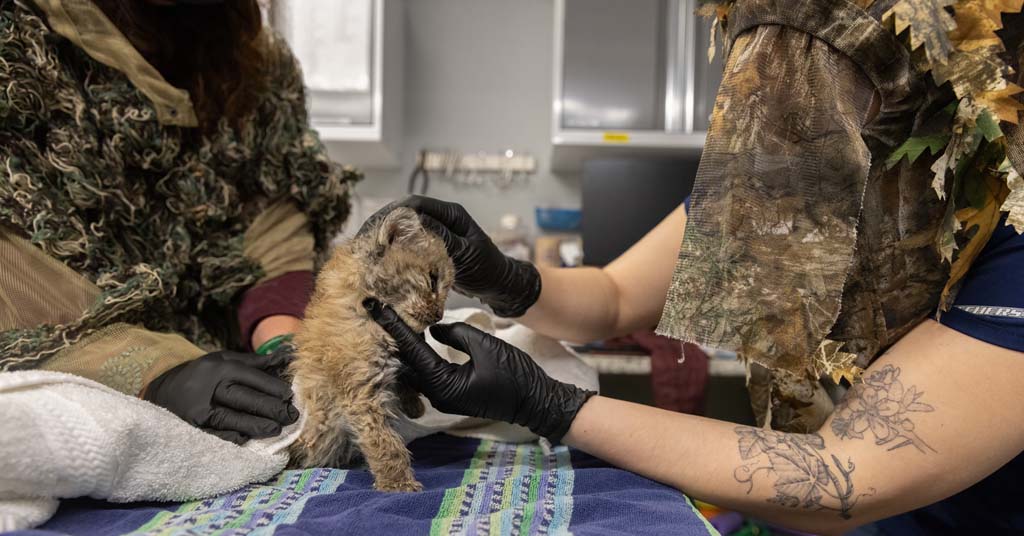
To minimize the risk of habituation, the kittens are receiving limited human interaction. Humans who do interact with the animals use camouflage gear and grooming techniques that simulate maternal care.

“We wear head-to-toe camouflage—ghillie suits—as well as rubber boots, rain pants and face shields to mask both our appearance and scent when interacting with young patients,” Think Wild spokesperson Molly Honea told Columbia Insight. “All rehabilitators who intend to release wildlife back to the wild use this strategy to avoid habituation of their patients to humans.”

Think Wild is consulting with other rehab facilities to determine the best timing and release criteria for the bobcats.

“It will likely be next spring, once the most severe winter weather has ended,” said Honea. “This is when bobcats naturally disperse from their mothers.”

Bobcat kitten at Think Wild

Work clothes: Humans disguise their look and scent when caring for abandoned animals. Photo: Think Wild

Bobcats are elusive native predators found throughout Oregon. They prey on small mammals, birds and reptiles.

Young bobcats typically remain with their mothers for nine to 12 months to learn hunting and survival skills.

By |2026-01-09T09:15:54-08:0006/02/2025|Wildlife|Comments Off on Orphaned bobcats on the mend in central Oregon

How to clean up a pond: Remove 3 trucks

A Camaro, F-150 and Dodge diesel pickup are part of an unexpected haul near the Umatilla River

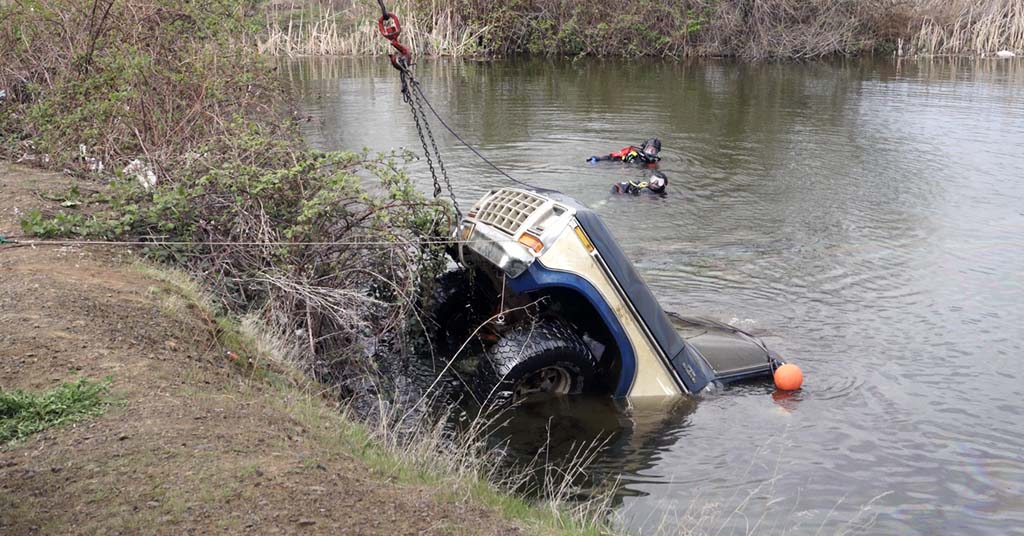
Johnley Pond mid-2000s Dodge Cummins diesel pickup

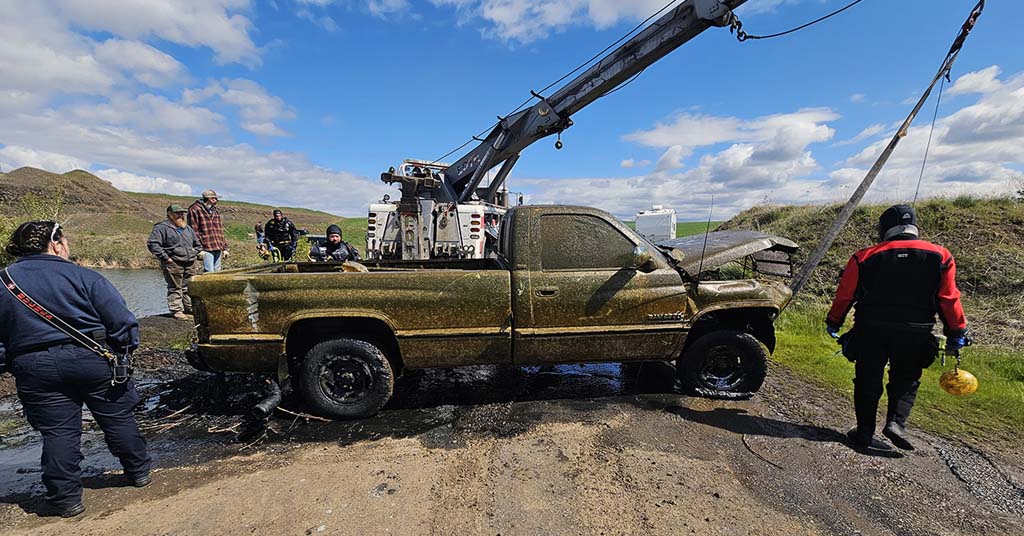
Green party: This mid-2000s Dodge Cummins diesel truck was one of three vehicles extracted from Johnley Pond near the Cayuse community on the Umatilla Indian Reservation. Photo: CTUIR Planning Department

By Chuck Thompson. April 23, 2025. Keep on truckin’ isn’t a phrase you hear much these days, but it’s one that applies to the April 12 efforts of Confederated Tribes of the Umatilla Indian Reservation (CTUIR) Planning Department employees, volunteer divers and others who pulled three vehicles from Johnley Pond near the Cayuse community.

The cleanup team had expected to recover just one vehicle in the 30-foot-deep pond located north of the Umatilla River in northeastern Oregon.

CTUIR Environmental Health & Safety Specialist Brian Fullen said he knew of a 1979 Ford F-150 truck in the pond and had scheduled the dive to remove it, according to a CTUIR press release.

Johnley Pond truck liftoff

Fish out of water: Volunteer divers from Oregon Dive and Rescue look on as Eastern Oregon Towing pulls a 1979 Ford F-150 out of Johnley Pond. Photo: Lee Gavin/CTUIR

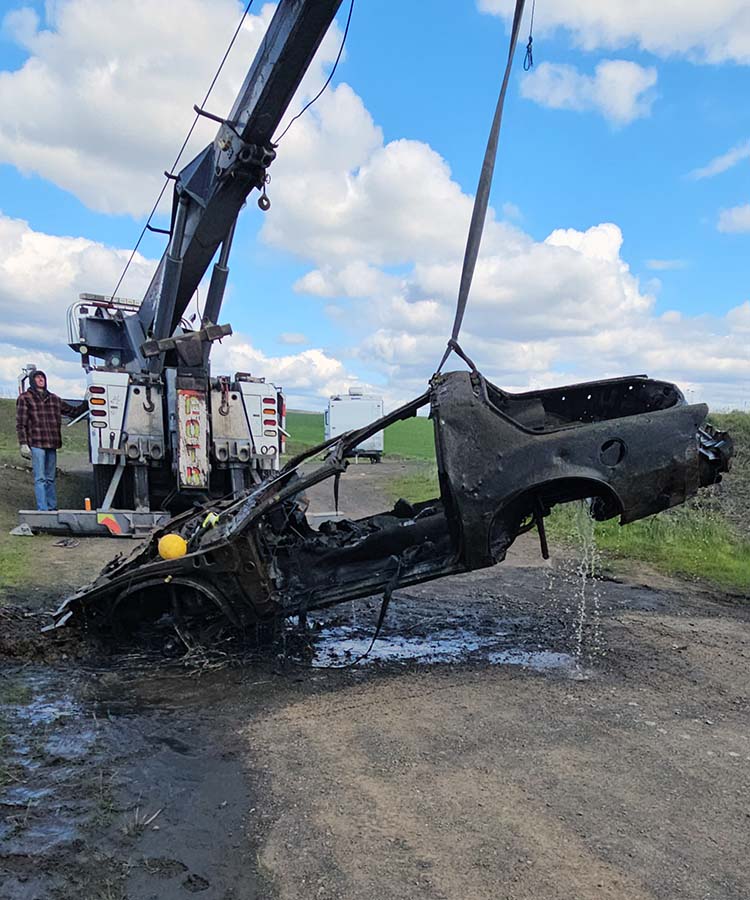
However, once divers got in the water they found a mid-2000s Dodge Cummins diesel truck and 1984 Camaro Iroc, which were also extracted.

“They were in the water two minutes and found another vehicle that we weren’t even planning on. There’s been lots of rumors of vehicles in the bottom of [the pond],” said Fullen.

The pond is a former rock quarry that over the years has become an illegal dump, shooting range and party spot.

Camaro being pulled out of pond

Not so fast: A 1984 Camaro Iroc was a surprise salvage from Johnley Pond on April 12. Photo: CTUIR Planning Department

Fullen said the Environmental Protection Agency will visit the site in coming weeks.

Johnley Pond is populated with perch, bass, bullfrogs and, now, three fewer invasive species.

By |2026-02-09T10:13:18-08:0004/23/2025|Conservation, News|0 Comments

What’s the point of environmental journalism?

The news is relentless. Most of it feels bad. Lots of people are avoiding it. Here’s why we won’t

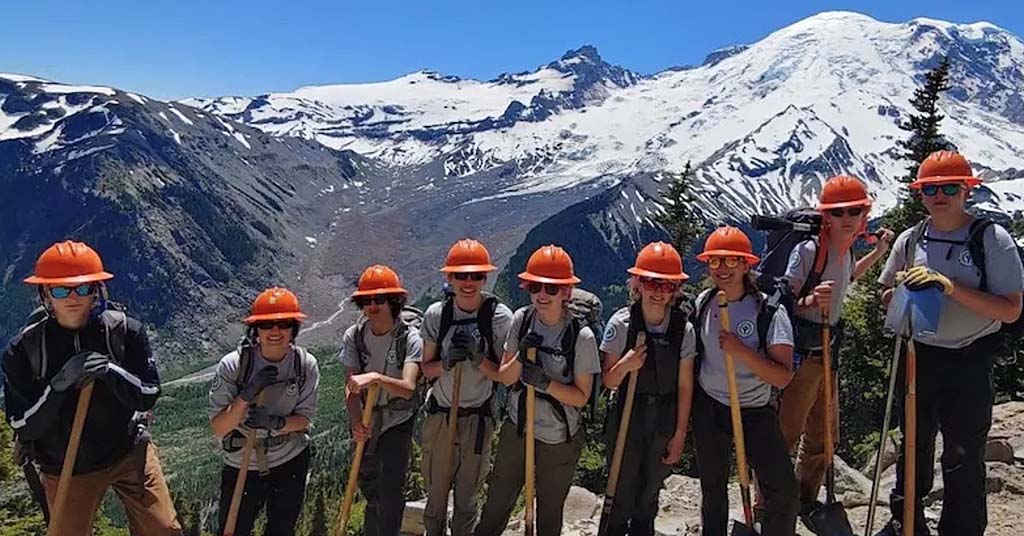
Group of YCC workers at Mount Rainier National Park

Core values: Youth Conservation Corps at Mount Rainier National Park. Photo: NPS

By Chuck Thompson. April 10, 2025. Last week, while doing research for a story Columbia Insight published on the environmental impacts of the recent federal government layoffs, I came across the photo at the top of this story.

Looking at those Youth Conservation Corps eager beavers in Mount Rainier National Park, I wondered if their summer jobs, too, had been axed.

It’s tough saying, “You’re fired!” to a bunch of work-minded teenagers, but if ever a guy was born for the job it’s the one occupying the White House.

I called the park’s administrative office to ask about this summer’s YCC program, but nobody answered the phone, and the automated system led me to full mailboxes. I left a voice-mail that went neglected. I tried contacting the park by email, but this query, too, went unanswered.

I dialed the National Park Service headquarters in Washington, D.C., and eventually got an email forwarded to the acting public information officer. But I didn’t get a reply.

I Googled around various National Park Service and federal government web pages looking for the answer to what seemed like a pretty basic question—“Will YCC programs be going ahead as planned at Mount Rainier and other national parks around the Pacific Northwest this summer?”—but found no updated information.

A few government pages that looked promising (based on the Google summaries) had been taken offline. Given that past YCC program announcements have encouraged non-white kids to get involved with environmental stewardship, I assumed the pages had been sent down the memory hole in the name of the DEI hysteria that’s become a cornerstone of the regime’s guiding philosophy.

More calls and emails to Park Service HQ went unreturned.

The term “ghosting” has passed into common parlance. It refers to the practice of ignoring someone’s attempt to contact you. Being “ghosted” has been added to the growing list of indignities of life in 21st-century America.

For members of the news media, of course, ghosting is nothing new. Journalists having requests for information ignored or denied goes back at least a few of centuries.

One of the requirements of being in the news business is a thick skin. You can’t get angry or hold it against people who make you grovel for information, especially when sometimes that’s the only way to get it. Anyway, people stonewall, delay or don’t call back for all sorts of reasons, not all of them nefarious.

But something about the government silence over a program so positive as the YCC struck me as odd.

This felt different.

Two interpretations

For going on a year now, I’ve been thinking about the question posed by the headline of this story.

Beneath that headline on a website such as this one, most readers would likely expect an impassioned defense of environmental journalism, a rally-the-troops homily imbued with Rockne-esque, “To the ramparts!” bravado.

The opposite way of reading the question, of course, is with an understanding that lurking beneath it is a heavy dose of Charlie Brown despair.

In a time of epic official dishonesty, environmental truths aren’t for everyone.

For all the good people and programs out there addressing our infinite environmental crises—fish, climate, water, wildfire, drought, habitat loss, microplastics, you name it—it’s deeply discouraging to note that no matter how many stories we write, nothing seems to make a difference.

The environmental news keeps getting worse. So does the sense of resignation surrounding it.

This is probably what for almost a year has kept me from writing nothing more than the headline of this story.

Who wants Charlie Brown delivering the news?

Navigation error

Beyond the federal government, of course, there are lots of sources for environmental information.

Yet I’ve been struck lately at how low a priority the great existential threat of our time has become, not just for everyday people, but for major news organizations.

The navigation bar on any website—that horizontal line across the top of the page that provides handy links to topic pages—is the place to get a sense of the values and priorities of a given organization.

The “nav bar” for Bass Pro Shops, for example, provides shortcuts to pages devoted to Fishing, Boating, Shooting, Hunting and Camping. Makes sense.

Now take a look at the nav bars on the websites of the biggest media outlets in the Pacific Northwest—major metropolitan newspapers, public media, network TV affiliates, mid-market dailies. This is where you’ll find the priorities of the media in our region. Business. Politics. Entertainment. Sports. Life. Culture. Homes.

The topic you won’t find in most of those nav bars is “Environment.” Go ahead look. It’s not there.

This isn’t to say that many or all of our important news outlets never report on the environment. They do, and often with excellent results.

It’s just not their focus.

Columbia Insight, of course, is concerned only with the environment in the Columbia River Basin and beyond. Look at the categories in the nav bar at the top of our page and you’ll see what’s on our minds every day of the year.

Even if sometimes we wish it wasn’t.

Who cares?

The photo of the YCC kids and the non-response to my queries about the program shook loose an idea in my head.

We’ve grown accustomed in this country to looking at just about everything through an all-or-nothing lens. In this context, the environment has come to feel like something we will either win or lose. Do or die.

I think that’s why so many people have become disengaged from environmental issues. It already feels like game over.

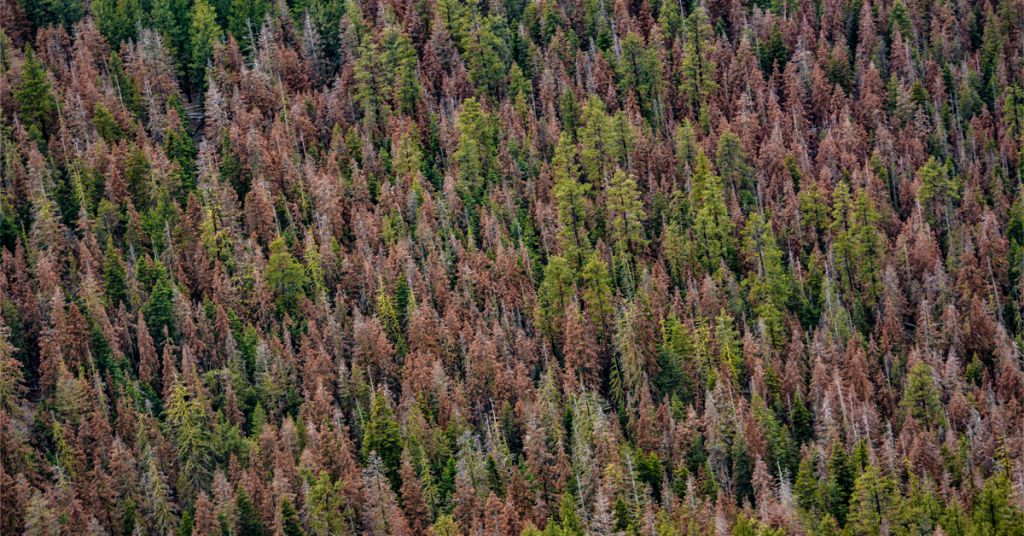
Fir forest

Daily dose: Dead trees in the Fremont-Winema National Forest. File photo: Daniel DePinte/USFS

But that’s not how the environment works. Death and destruction are always part of the deal, but nature is about evolution, variety, adjustment and equilibrium more than it is about absolutism. How else to explain the flower growing out of granite?

Of the nine kids in that YCC photo, it’s a fair bet that along with a few blisters and worn-out boots, most of them will take away little more than nice memories that’ll fade as they pursue lives as artists, attorneys, builders, plumbers and parents. Soon enough they’ll be too distracted by day-to-day obligations to pay attention to salmon counts and snow packs.

Who can be blamed for avoiding lost causes, especially when there’s social media, sports and stock markets to keep en eye on?

But it’s also a fair bet that for one, maybe two of them, their summer experiences working on Mount Rainier will become the foundation of a life of environmental commitment.

Even if the cohort that consumes it is small relative to other topics—One in 10, one in 100?—it’s important that environmental news is available. And that someone is making the calls and doing the work to present it.

They might not be at “critical mass” levels, but that’s the group we’re here for.

Especially in a time of epic official dishonesty, environmental truths aren’t for everyone.

It’s draining to think about the state of the environment all the time.

But it’s not all bad. Nature tends to take its time and it tends to self-correct.

Just when I was about to put this story to bed, I got an unexpected email from Terry Wildly, chief of interpretation, education and volunteers at Mount Rainier National Park.

Wildly wrote: “Thank you for reaching out to Mount Rainier National Park. The YCC program at Mount Rainier National Park is set to continue this year and remains the same as in prior years.”

Sometimes you gotta keep on digging. Sometimes you gotta wait things out.

At Columbia Insight, we’ll keep doing both for as long as we can.

The views expressed in this article belong solely to its author and do not necessarily reflect the opinions of anyone else associated with Columbia Insight.

By |2026-01-09T10:45:01-08:0004/10/2025|Opinion|4 Comments

© Copyright 2013-2025 Columbia Insight. All Rights Reserved.

As a 501(c)3 nonprofit organization, all donations to Columbia Insight are tax deductible to the full extent of the law. Our nonprofit federal tax-exempt number is 82-4504894.