Stay Updated Subscribe today for the latest research + reporting about environmental news. Subscribe Now

Stay Updated Subscribe today for the latest research + reporting about environmental news.

Subscribe Now

AP StoryShare

AP StoryShare

AP StoryShare

About AP StoryShare

Columbia Insight is publishing this story as part of the AP StoryShare program, which allows newsrooms and publishing partners to republish each other’s stories and photos.

Amid drought, secrecy shrouds The Dalles’ $28.5 million water deal with Google

In lockstep with corporate orders, city councilors won’t reveal amount of water they’ve agreed to let digital behemoth take from local watershed
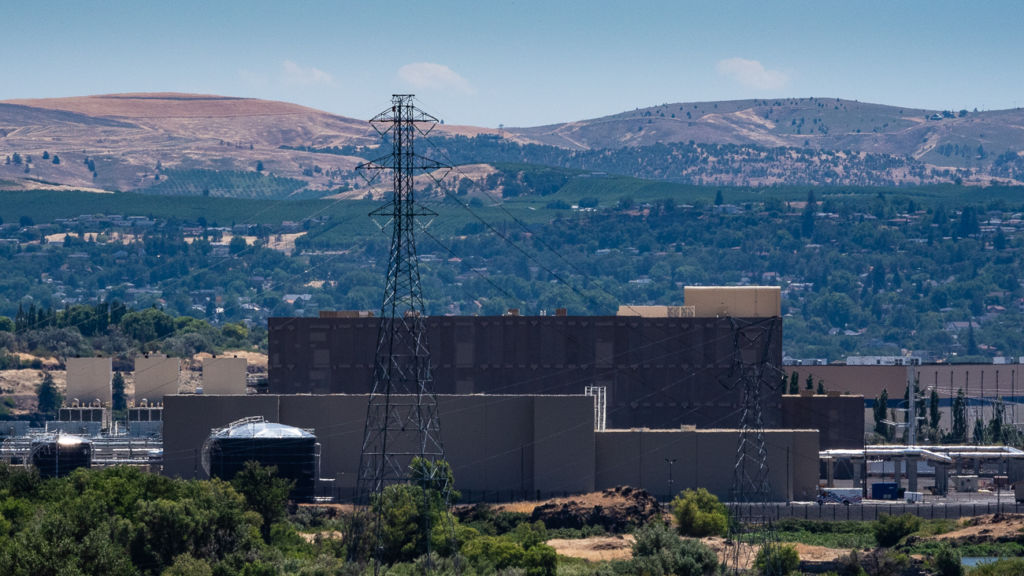
Black box: Google already operates secretive data centers in The Dalles. Now it’s demanding more compliance. And getting it. Photo: Jurgenhessphotography.com

By Mike Rogoway, The Oregonian/OregonLive. November 10, 2021. The City Council in The Dalles, Ore., voted unanimously Monday night, 5-0, to approve a $28.5 million deal with Google to provide more water for the tech company to cool two new data centers there.

The issue has trained national attention on the small city, which sits along the Columbia River about 80 miles east of Portland, and the broader question of water rights in the drought-stricken West.

Google and The Dalles have refused to say just how much water the company’s three existing data centers use and would not say how much more it wants for the two new ones, though the city asserts it would be less than the new water capacity created by Monday’s deal.

[perfectpullquote align=”full” bordertop=”false” cite=”” link=”” color=”” class=”” size=””]”The people that do need to know (the details) do know them.” —City councilor Dan Richardson[/perfectpullquote]

While Google’s water demands sparked heated denunciation on social media pages in The Dalles, and some councilors reported receiving angry and profane phone calls and emails, no organized opposition emerged and the council lined up behind the deal.

“There’s a net benefit to the city in proceeding with these improvements,” said Dave Anderson, the city’s public works director. Under any conceivable scenario, he said, The Dalles will have more water available through the deal with Google than it would have otherwise.

MORE: Google’s secret operation unwrapped

Monday’s vote was the third of three key approvals Google said it needed before expanding.

Last month, the city and Wasco County each voted to approve a package of tax breaks for Google.

The new tax deal, while far less generous than two prior agreements with the tech company, would still save Google tens or hundreds of millions of dollars if it builds both of the new data centers.

Google’s new tax deal

Duration: 15-year tax exemption for each new data center.

Savings: Half off the property taxes associated with the first new data center, and 40% off a second. However, Google would also pay $3 million, up-front, when it begins construction of each new project. On a $600 million data center, The Dalles expects Google would by $3.3 million annually.

By comparison: Google’s first three deals had up-front payments of $280,000, $1.2 million and $1.7 million, respectively. It also paid $800,000 annually afterward in the first two deals, and at least $1 million annually in the third deal.

Additionally: Google would transfer 35 acres of property to Wasco County and give The Dalles and the county an option to buy the new data centers’ land from the company if it ceases operations.

Google did not say Monday whether it will definitely proceed with its expansion. It issued a statement immediately after the vote saying it is “proud to expand our commitment to the region.”

Monday’s deal obliges the city to provide an undisclosed volume of water for Google’s expansion.

In exchange, the tech company will provide some of the water rights associated with its industrial land, donate 35 acres to Wasco County and pay nearly the entire cost of the $28.5 million water system upgrade.

Google bankrolls Dalles’ legal fight against public transparency

Residents in The Dalles and the surrounding rural and agricultural areas have raised repeated questions about how climate change will affect water supply in the region and whether Google’s agreement could reduce the water available to them.

“There’s a lack of information about projections should the rainfall and snowfall fail to come and the aquifer not be recharged in the wetter winter months,” testified Dawn Rasmussen, who lives in a rural area outside the city limits. Rasmussen, who led efforts to rally opposition to Google’s deal, said her own well water has been in steady decline and she fears the changing climate will permanently erode the water available to the region.

“What happens if we are in an overall pattern where rainfall is decreasing, decreasing, decreasing?” Rasmussen asked at Monday’s online meeting. “Who’s going to win that water war?”

MORE: Less snow is the new norm. That’s trouble for farmers

City officials insisted that their studies show that even if the overall water supply declines, the city will have more available under its deal with Google than if it made no deal and the company kept all its water rights.

“Residents will not be without water as a result of this proposed agreement,” said Anderson, the public works director.

The Dalles City Councilor Dan Richardson

What’s the story? Ex-newspaper man and current city councilor Dan Richardson isn’t saying much. Photo: City of The Dalles

Monday’s deal includes a provision that keeps Google’s future water use confidential. The city said that conforms to prior agreements, which assert Google’s water needs constitute a “trade secret” that would put the company at a competitive disadvantage if released publicly.

Last month, The Dalles sued The Oregonian/OregonLive to prevent the release of Google’s water use after the Wasco County district attorney ruled in favor of the news organization’s request for the information under the state’s public records law.

The Dalles’ attorney, Jonathan Kara, said Monday night the city believes it was obliged to sue under a prior agreement with Google, which commits The Dalles to working with the company to fight public records requests. Kara said that deal makes Google “contractually obligated” to pick up the costs of the litigation.

MORE: How cryptocurrency mining operations in Washington wreak environmental havoc

Dalles city councilor Dan Richardson acknowledged Monday that it “would put a lot of our residents’ minds at ease” if Google voluntarily disclosed its water use and said how much more water it wants. But he said members of the City Council are the ones charged with voting on the deal, and he said they know the details.

“The people that do need to know them do know them,” Richardson said, “and feel pretty good about them.”

Columbia Insight is publishing this story as part of the AP StoryShare program, which allows newsrooms and publishing partners to republish each other’s stories and photos.
By |2025-05-13T09:04:49-07:0011/10/2021|News, Water|1 Comment

‘Nearly worthless’ timber from Grizzly Bear Fire finds a buyer

A maker of firewood, fenceposts and poles will log an area in northeastern Oregon thought to be beyond salvage. The practice of ‘salvage logging’ remains controversial

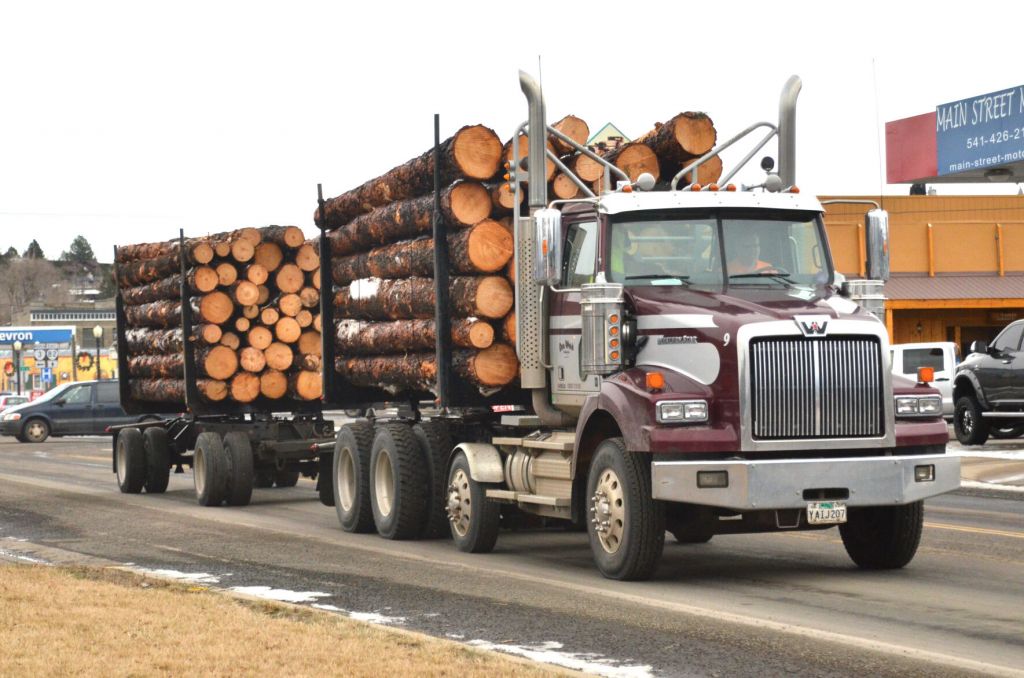
Carrying on: Although logging has ceased for the season, trucks are still hauling timber from the site of the 2015 Grizzly Bear Fire to the Integrated Biomass Resources mill in Wallowa, Oregon. Photo by 

By Bill Bradshaw, Wallowa County Chieftain. January 13, 2021. A combined effort of public agencies and private timber companies is in the process of cleaning up the remains of the 2015 Grizzly Bear Complex Fire that burned more than 74,000 acres west of Troy in northeastern Oregon near the Washington border.

Wallowa County commissioners Todd Nash and John Hillock were instrumental in prodding the U.S. Forest Service to sell what it initially considered nearly worthless timber, said David Schmidt of buyer Integrated Biomass Resources (IBR) in Wallowa.

“Commissioners Nash and Hillock invited the Forest Service to see what needs to be done,” Schmidt said. “It’s a good example of everyone working together to make it happen.”

IBR produces firewood, fenceposts and poles at its mill in Wallowa, employing 25 people full time.

“It’s a really positive contributor to keeping 25 full-time jobs going,” Schmidt said.

He also spoke highly of the project as beneficial for the forest environment in northern Wallowa County.

“This is a really cool timber sale in that it was dead wood that was going to be burned,” he said.

Salvage business

The timber sold for $11,264.28, according to Darcy Weseman, public affairs officer for the Umatilla National Forest in Pendleton. She estimated 2.532 million board feet of forest products would come from the sale on the 181 acres designated for treatment.

Schmidt said the dollar amount of the sale was just the stumpage fee paid to the Forest Service, but the full cost of the effort would be between $400,000 and $500,000 by the time the trees were logged, hauled to the mill and processed, and road maintenance costs were incurred.

Weseman said the actual logging is taking place in the Hoodoo Ridge/Cross Canyon area, just west of the Long Meadows Guard Station. An intricate maze of Forest Service roads lead to the area.

Jim Zacharias, of JayZee Lumber Inc., in Joseph, said Pro Thinning, a logging operation run by his sons, Tom and Seth, was contracted to do the actual logging. The company employs a five-man crew in the woods and contracts with six log truckers.

“The trickle-down effect is the jobs created at IBR,” said Zacharias, who also serves on the board of Wallowa Resources, another agency involved in the effort. “It’s great that the Forest Service is being proactive with these things.”

Zacharias said actual logging has halted for the season, but timber is still being hauled to the mill.

Weseman said the job won’t be done overnight. The contract termination date is March 31, 2024, although work may be finished before that date. The timber sale contract allows for additional time if circumstances warrant an extension.

Salvage controversy

The practice of “salvage logging” remains controversial. 

“The problem with salvage logging is that its ecological impact is uncertain,” according to a 2015 report in the University of Washington’s Conservation magazine. “The literature is full of contradictory conclusions, and that’s in part because there are so many variables at play, and no landscape is quite the same as another. In addition, it’s hard to disentangle the effects of the post-fire salvage logging from the effects of the fire itself.

“In general, it’s thought that post-fire salvage logging can lead to increased runoff and increased erosion.”

Some proponents claim salvage logging may be beneficial, as it disturbs the soil surface, increasing the soil’s ability to soak up water.

“On the other hand, the heavy machinery itself has a tendency to even further compact the soil,” says Conservation.

By |2023-10-18T11:11:10-07:0001/13/2021|Forestry, Natural Resources|0 Comments

Rural solar project faces local opposition, wildlife concerns

A solar energy facility may be coming to Oregon’s Langell Valley, but some of its potential neighbors are raising concerns about water usage and decreased property values

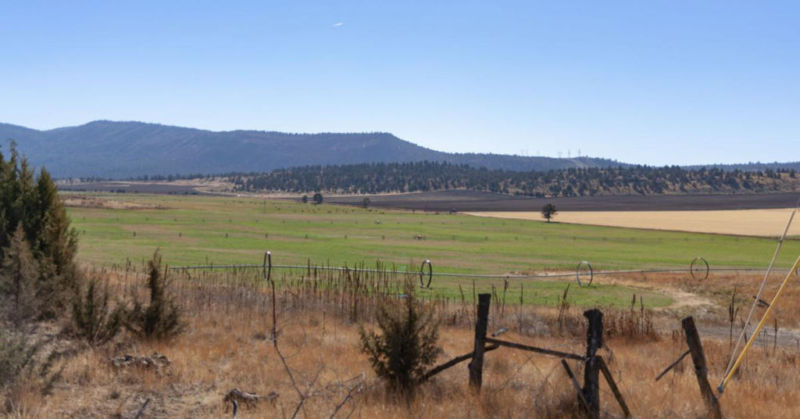
This field would be covered in rows of solar panels if the proposed Bonanza Energy Facility comes to fruition. Neighbors are concerned that the facility will negatively impact life in Langell Valley. Photo by Alex Schwartz/Herald and News

Bad energy? This field would be covered in rows of solar panels if the proposed Bonanza Energy Facility comes to fruition. Photo by Alex Schwatrz/Herald and News

By Alex Schwartz, (Klamath Falls) Herald and New. November 16, 2020. Hecate Energy LLC hopes to take advantage of the Klamath Basin’s 300-plus days of sun per year by constructing the Bonanza Energy Facility. Rows of photovoltaic panels spanning up to 1,851 acres would convert sunlight into electrical energy, which would be sent via transmission line to the Captain Jack Substation north of Malin, Oregon. From there it would enter the California-Oregon Intertie, an electricity superhighway that transports power between California and the Pacific Northwest.

Utilities like Pacific Power and Portland General Electric would have the ability to purchase the electricity through energy markets.

The facility would generate between 150 and 300 megawatts of carbon-free power. An accompanying battery system housed in 11 separate buildings could store up to 1,100 megawatts of energy to make up for Klamath County’s rare cloudy days.

Hecate submitted a Notice of Intent to Apply for a site certificate to the Oregon Energy Facility Siting Council in August, the first step in a long state approval process for the facility. The notice isn’t a formal application and therefore doesn’t include many specifics about the project’s construction or operations, but some Bonanza residents aren’t enthused about what they’re seeing so far.

The proposed site is currently a ranch in the heart of Langell Valley, bordering the Lost River to the northeast and surrounding Dead Indian Hill. The 2,733-acre property is currently zoned for exclusive farm use. Farmers and ranchers have called the area home for more than 100 years, enjoying picturesque views, wildlife and a rural lifestyle.

Neighbors surround the sprawling ranch, which is also home to wetland areas and migrating deer habitat.

The site has changed owners several times over the past couple decades, but another company had successfully acquired a permit there to construct the California Oregon Border Energy Facility, a gas-fired power plant. That was in 2006 before California’s energy prices tanked the region’s gas market.

[perfectpullquote align=”full” bordertop=”false” cite=”” link=”” color=”” class=”” size=””]“The view is going to be atrocious. Instead of seeing cattle grazing they’re going to see an eight-foot chain-link fence and solar panels.”[/perfectpullquote]

The site’s potential new life as a solar farm is indicative of the West Coast’s economic and political shift from fossil fuels to renewables.

Paul Turner, senior vice president of business development for Hecate Energy LLC, said the fact that another energy project had been able to receive a permit for that site was the reason Hecate chose it for the Bonanza Energy Facility. He added that the company has not considered other sites in the area for the solar facility.

Hecate has not yet purchased the property from its current landowner but has negotiated an exclusive long-term option to do so later in the permitting process.

“It’s still a great location for access to wholesale electricity markets along the West Coast,” Turner said.

Views, wildlife affected

When Maureen Thomas looked out beyond the border of the property she’s lived on with her husband for 25 years, she imagined solar panels covering the fields to the west. She didn’t like the prospect.

“I don’t understand how they can take productive agricultural land and turn it into an industrial park,” Thomas said.

Thomas and her neighbors said being bordered by a vast field of solar panels could devalue their properties.

“The view is going to be atrocious,” said Liz Hubbard, who lives down the road. “Instead of seeing cattle grazing on pasture, wetlands and deer, they’re going to see an eight-foot chain-link fence and solar panels.”

Sandhill crane at Reifel bird sanctuary (Delta, British Columbia)

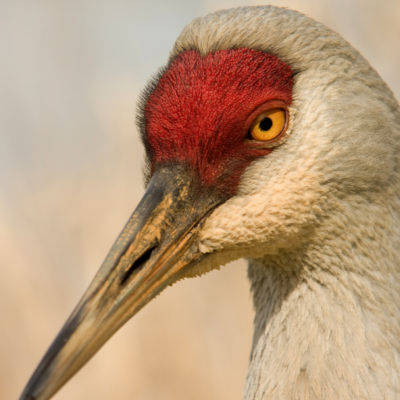
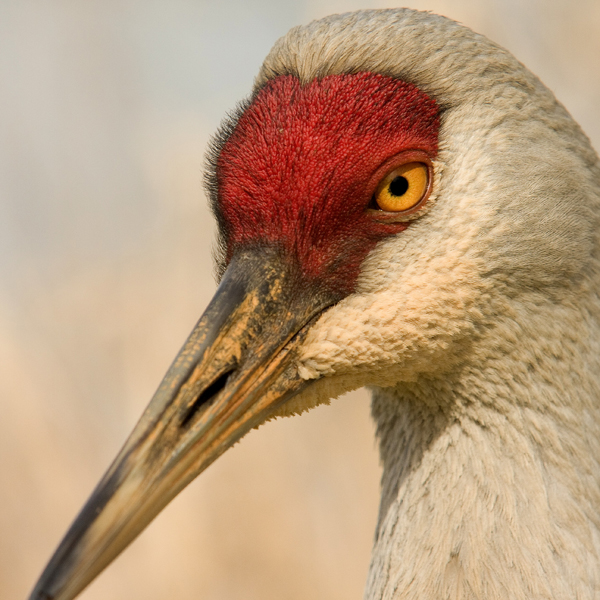
Resident concern: The proposed site for the facility is near an important area for sandhill cranes. Photo by Mikul/Wikimedia Commons

Residents said the area surrounding Dead Indian Hill is also a popular spot for migrating and fawning deer in the fall and spring. Previous solar projects in Klamath County built in spots similarly significant to wildlife have reduced their numbers. Hubbard’s property includes some of the wetlands encompassed by the proposed site, which are important to sandhill cranes and western pond turtles.

It’s unclear at this point the impact the facility would have on them, but a biological assessment completed this summer and included with the NOI acknowledged those habitats and the wildlife that depend on them. However, Hubbard said it didn’t take into account the importance of those ecosystems during fall and spring migration because of the time of year it was completed.

“It looks to me, as far as I could tell, that they just came in for a week in June and a week in July, and that doesn’t give you the big picture,” Hubbard said.

Turner said it’s likely that the EFSC process will require further biological evaluation of the site.

Solar power requires water

Thomas said she’s concerned that, beyond impacting local wildlife, the facility could put the area at a greater risk of fire damage, depending on the type of batteries used for energy storage. With scarce firefighting resources in Bonanza, she said that could spell serious problems for its residents.

There’s also the question of water: the proposed site includes a well that’s connected to the Langell Valley aquifer—the same one Bonanza residents use for their own domestic wells. The solar facility would use up to 11.5 million gallons for dust control and concrete production during construction and up to 1.65 million gallons to wash the panels annually.

It’s unclear whether all or any of that will come from the onsite well, but residents said their water supply would be negatively affected if it does.

Residents also said there are better places to put a solar array than on productive farmland. Tonya Pinckney, who lives near Hubbard and Thomas, said there are public lands further to the west near the proposed transmission line that would be more suitable for the project.

“A facility of this size does not belong on ag land,” Hubbard said. “There’s so many other options besides taking it out of rural America’s agriculture.”

Lengthy approval process

Hecate representatives couldn’t provide more specifics to address resident concerns beyond what was stated in the NOI, but they said the permitting process would allow both the company and local stakeholders to evaluate them in the future.

“The process is very complicated, long and intensive for a reason. There are lots of opportunities along the way for community input,” Chris Edmonds, spokesman for the Bonanza Energy Facility. “We’re committed to minimizing any impacts with this project and incorporating that stakeholder feedback along the way.”

Currently, interested parties have until November 30 to submit public comments on the NOI. After that, the Oregon Department of Energy will issue a Project Order to list the laws and ordinances the project will have to comply with. Hecate will then submit an official Application for a Site Certificate, which will incorporate how it intends to comply with those rules.

ODOE will hold a public information meeting following that submission to explain it to the public. Then the agency will issue a Draft Proposed Order, in which it evaluates the application.

A public hearing on the draft order (likely to occur in 2021) will allow members of the public to voice their concerns or questions about the project and ODOE’s evaluation of it.

That’s the last chance local residents have to bring up anything new to regulators. After that, the agency will review the draft Proposed Order and issue the next version.

Commentors who raised relevant issues at the public hearing will then participate in a contested case hearing, which ODOE will incorporate into the Final Order either approving or denying the Site Certificate Application.

Multiple Bonanza residents have testified at the last few Klamath County Commissioner meetings, urging county leaders to voice opposition to the project during EFSC proceedings. At an October 27 meeting, Commissioner Donnie Boyd responded to those public comments in agreement.

“I’m adamantly opposed to removing agricultural ground across the Basin,” he said. “I’m getting sick and tired of the state dictating to Klamath County and making us their asshole. We have stopped solar projects in the past. I don’t know if we can, but I’m wholly committed to helping you.”

By |2023-02-06T12:38:20-08:0011/16/2020|Energy, Renewable Energy|0 Comments

Despite a pandemic, activity on the Deschutes River was still high

Little change in the number of people who came to recreate on the Deschutes River this year compared to last summer, according to report 

Deschutes River Floaters

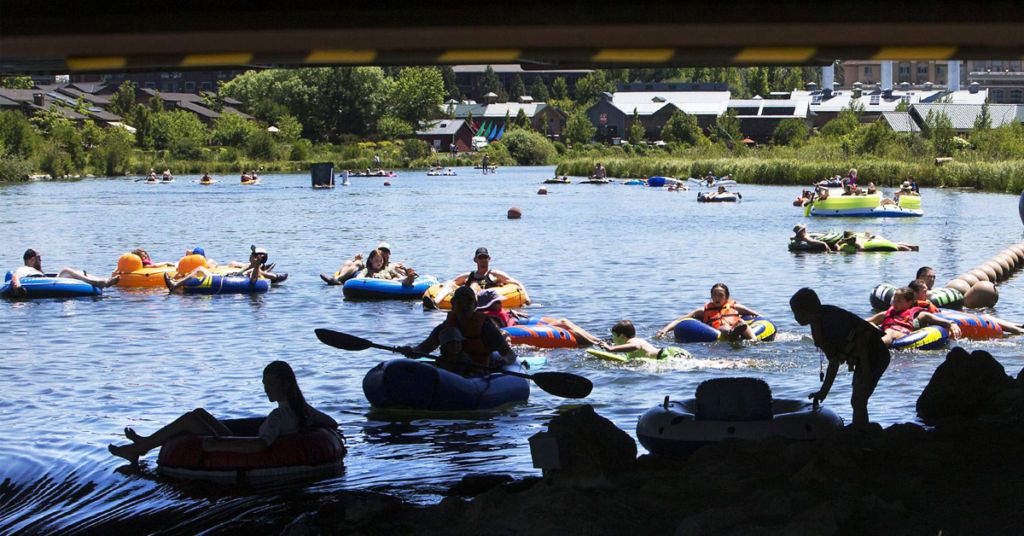
Dampened enthusiasm? More than 2,000 people used the Deschutes on an average weekend day this past summer. Photo by the Bulletin 

By Brenna Visser, The Bulletin. October 16, 2020. Despite the COVID-19 pandemic, there was little change in the number of people who came to recreate on the Deschutes River this year compared to last summer, according to a recently released report from the Bend Park & Recreation District.

“Although the pandemic brought about many changes to operations and opportunities related to river recreation, the looming health crisis and community marketing efforts to discourage tourism did not result in a significant decrease in park or river use,” the report states. “In fact, it is likely that more residents and visitors than ever took advantage of the outdoor recreation options available.”

The report, which is released every fall, shows that 205,360 people were counted floating, kayaking, stand-up paddleboarding or otherwise recreating on the Deschutes River in Bend between Memorial Day and Labor Day weekend.

The estimate for the same period last year was 240,420, though Brown said that number is believed to be too high. The report warns against comparing the two numbers because there were “data inaccuracies” in 2019, and the trail counters were moved this year to make counting more accurate.

Roughly 2,290 people used the river on an average weekend day this summer, with the highest use of the summer peaking on July 11 with 6,221 visitors, according to the report.

Roughly 45% of the people who rented kayaks and paddleboards from Tumalo Creek Kayak & Canoe were from Oregon, according to the report. About a quarter were from California and 16% were from Washington.

“In a summer when many individuals and families deferred out-of-the-area travel or sought nearby destinations, Bend was busy,” Julie Brown, the public information officer for the district, said in an email. “And the river provided opportunities to be outdoors with distancing if people participated earlier in the day or later into the evening. Distancing was challenging on busy afternoons, but many river users made adjustments, wore masks getting in and out of the river and enjoyed themselves.”

The Bulletin reported this summer that mask wearing was inconsistent with most people using the river.

The large number of visitors is particularly notable considering the district didn’t do what it usually does to promote the river. This year, there were no marketing efforts and no floating tube rentals on-site. And the shuttle that carries tubers from Riverbend Park to Drake Park didn’t operate.

While the district plans to resume these efforts once the pandemic is over, some changes are here to stay, Brown said. The district is keeping a rule it implemented to avoid crowding at the whitewater park. The rule limits the number of people using the standing surf wave to eight people at one time for one hour.

“The limited number of surfers and the one-hour time limit has allowed river users to get more opportunities to ride the wave than in the past,” Brown said in an email.

But the pandemic also exacerbated issues such as vandalism and more accumulated trash, according to the report. In particular, parks saw more popped float tubes and pool toys clogging up trashcans.

“This is likely due in part to the absence of on-site opportunities to rent more durable equipment and users bringing their own inexpensive floatation items not intended for river use,” the report stated.

Brown said the district has had to educate about these issues before and will continue to do so into the future.

By |2024-07-08T08:56:34-07:0010/16/2020|News, Public Lands, Recreation|0 Comments

Sunriver’s dark skies gain international recognition

In an Oregon first, stargazing east of the Cascades draws special designation from the International Dark-Sky Association. What took so long?

Starry night in eastern Oregon's Alvord Desert

Easy to recognize: Night skies east of the Cascades are about as good as they get. Now it’s official. Photo by Chris Stewart 

By Zack Demars of The Bulletin, August 7, 2020. If you had to recognize one place in Oregon for its dark nights, you wouldn’t think to start with a town named after the sun.

On Monday, the International Dark-Sky Association announced its designation of Sunriver as a Dark Sky Friendly Development of Distinction, one of over 130 across the world and the first in Oregon.

The group’s distinction doesn’t have a legal effect, but it means Sunriver has the right rules and regulations in place to prevent street and house lights from polluting the night sky with light.

“Sunriver has been able to protect the night sky and still have lights,” said Bob Grossfeld, the observatory director at the Sunriver Nature Center & Oregon Observatory, who spearheaded the effort to get the town listed by the association.

Polite light

Based in Tucson, Arizona, the International Dark-Sky Association works to reduce light pollution—that’s the glow from artificial light sources that renders nighttime stars invisible and can disrupt nocturnal ecosystems—through education and advocacy.

It encourages communities to adopt policies that keep unnecessary light out of the sky. Sunriver, for example, prohibits house or building lights from facing up or out and requires that all exterior lighting be shielded to eliminate glare.

“The key is that Sunriver, in the early stages of development, they kind of got it,” said Grossfeld. “They understood how to protect nature; they understood how to protect the night sky.”

MORE ON CI: EVs in Eastern Oregon?

According to Bill Kowalik, board chair of the Oregon chapter of the International Dark-Sky Association, the designation recognizes the planning that Sunriver has put into protecting the night sky.

He encourages people interested in reducing their light pollution to check out the “Good Light Neighbor” self-assessment, which includes making sure that lights are pointed down and light doesn’t “trespass” onto neighboring property. He also recommends using motion sensors instead of keeping lights on all the time.

“Perhaps people will think twice before going overboard with lights,” said Kowalik.

In 2018, a volunteer group lobbied the city of Bend for more restrictive light ordinances so that Bend could be designated by the International Dark-Sky Association.

City law already requires every outdoor lighting fixture installed since 2004 to direct light downward. It also bans advertising searchlights, requires sports stadiums and performance areas to extinguish outdoor lights within an hour of the final event of a night ends and prohibits most neon lighting.

To become recognized for its darkness, Bend would also have to restrict the total amount of unshielded lighting, establish curfews or adaptive controls for public outdoor lights and cap lighting density.

By |2024-05-14T12:19:05-07:0008/07/2020|News, Uncategorized|0 Comments

Elk numbers decline in Zumwalt Prairie

The population reduction is part of a concentrated effort by landowners, ranchers, hunters, Oregon Department of Fish and Wildlife and others

Elk in Oregon

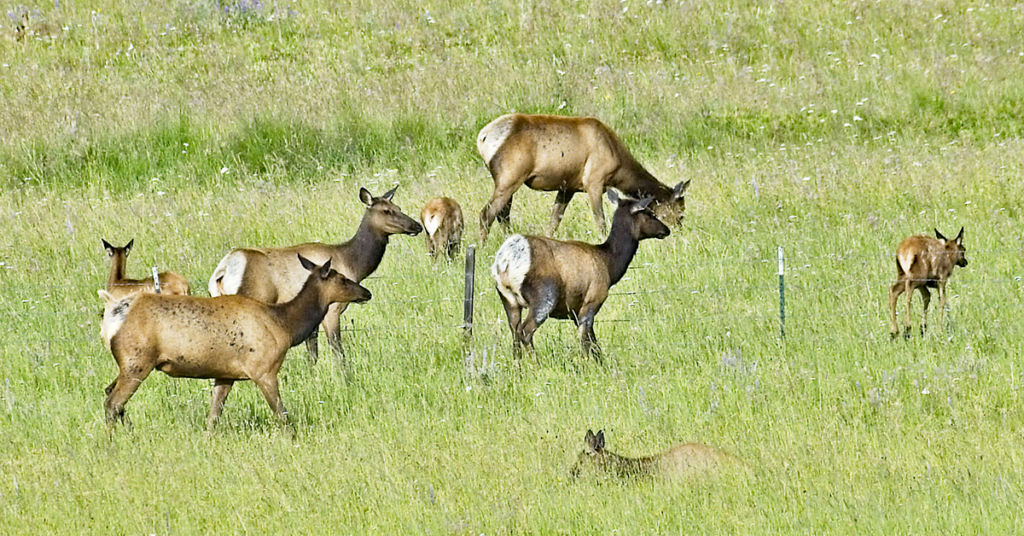
Hunts focused on elk cows, like these crossing a fence on The Nature Conservancy’s Zumwalt Prairie Reserve, have contributed to an overall drop in the elk population in Wallowa County. Photo by Ellen Morris Bishop/Wallowa County Chieftain

By Ellen Morris Bishop, Wallowa County Chieftain. July 22, 2020. Rocky Mountain elk have often been a controversial animal in Wallowa County, but one long-standing issue—the number of elk on Zumwalt Prairie’s private lands—is being brought under control.

The consequence? Ranchers are happier, but elk tags on the Zumwalt and in the Chesnimnus hunting unit have been reduced for the 2020 season.

Elk numbers have seesawed from abundance to near extinction and back to abundance. On Zumwalt Prairie’s mostly private land, the 2020 population estimate for elk in the Oregon Department of Fish and Wildlife’s Chesnimnus unit, which includes the prairie, is 3,500 elk.

But as recently as 2015, the number of elk on the unit approached 4,500, according to ODFW data.

“There were herds of 400 to 500 animals,” said Jim Akenson, senior conservation director of the Oregon Hunters Association. “It looked just like Africa’s Serengeti except instead of wildebeests you had elk.”

The elk generally spend the late summer on U.S. Forest Service land and fall and winter in the canyons and breaks. But in spring and early summer, they feast on tender, nutritious prairie grasses that ranchers intend to graze with livestock.

And the elk were tending to remain on prairie grassland for most of the year. Stronger, but not as agile as mule deer, elk tend to run through fences rather than jumping over them. The result is damaged fences and stray cattle.

“With the increase in elk numbers in the Chesnimnus unit, an increasing number of elk were utilizing the private prairie ground year-round,” said Shane Talley, an ODFW assistant wildlife biologist. “The elk had found a safe area with good habitat where they were not being pressured by public land users and public land hunters. This caused an increase in the amount of damage experienced by the landowners on the prairie.”

Hunting as message

In recent years a number of stakeholders—landowners, ranchers, conservationists, hunters, the Oregon Department of Fish and Wildlife, the Oregon Hunters Association, the Nez Perce Tribe and the U.S. Forest Service—have worked together to manage the elk population. The community effort has been coordinated by the ODFW’s Pat Mathews, rancher Tom Birkmaier and OSU Extension Agent John Williams.

Attempts at simply hazing the elk off the land were unsuccessful.

Calves born on the grassland were more likely to consider the open prairie landscape home, and return there as adults according to The Nature Conservancy’s biologist Chad Dotson. And the long-distance views afforded by grassland kept the animals and their young offspring safer from predation by cougars, bears, coyotes and wolves.

“If a calf is born in the grasslands, chances are that’s what it considers home, that’s where it wants to live when it grows up,” Akenson said.

[perfectpullquote align=”full” bordertop=”false” cite=”” link=”” color=”” class=”” size=””]“Hunting is maybe 50% of the cause. The other part is that we’ve had two hard, polar-vortex winters.” —Rancher Tom Birkmaier[/perfectpullquote]

The tool used to change the elks’ mindset has been seven years of Zumwalt hunts that focused mainly on cow elk.

“Elk began to get the message that they are not welcome,” Akenson said. “And so they more readily moved into canyon breaks of heavier timber. Ultimately, they began to learn that their real security is the canyon breaks and canyon country.”

Elk also began to more toward the Nez Perce’s Precious Lands area in northern Joseph Creek, a place they are welcome.

In addition, USFS hazardous fuels reduction practices, such as timber removal, thinning and prescribed burning done on federal and private lands have helped increase elk habitat in the unit.

The presence of fresh-sprouting spring forage on prescribed burns at the northern end of Zumwalt Prairie, for example, has helped entice elk off the grassland and back into the woods, according to Talley.

This is doubly helpful because some of the older fires that opened forest habitat up to more grazing and browsing, including the 1988 Tepee Butte Fire, had since closed in.

More than 40% population reduction

Reducing cow elk numbers also reduces the reproduction capacity of the population.

“By removing cow elk we can reduce the population growth rate and eventually the total population,” Talley said.

And so the ODFW opened multiple antlerless elk seasons beginning in August and ending in January. Many private landowners on the prairie also opened their land to tag holders.

The reduction in elk on private lands has been significant.

Rancher Tom Birkmaier said that before efforts began to move elk from private to public lands, “80% of the elk in the Chesnimnus unit resided on private lands on the Zumwalt Prairie that amounted to only about 15% of the total unit area. That’s an amazing statistic that even the ranchers found hard to believe,” he said.

He estimated that elk populations have dropped from about 4,500 animals to about 2,600 today.

But Birkmaier sees factors beyond hunting as contributing to the decline.

“Hunting is maybe 50% of the cause,” he said. “The other part is that we’ve had two hard, polar-vortex winters, with snow on the ground into March and April.”

That made it hard for calves and yearlings to survive, reducing elk populations on the prairie.

But Birkmaier harbors concern that the bounteous crop of elk calves this spring might reverse the downward population trend.

“There are just a lot of calves out there,” he said. “Lots and lots of calves.”

Slowing the decline

Other Zumwalt ranchers agree elk numbers are down, and elk damage has been reduced.

“In the past couple of years, the number of elk that have been on our land has been down some,” said Lew Bloodsworth, a long-time Zumwalt Prairie rancher whose land is adjacent to The Nature Conservancy. “Not as many get onto our land in spring and eat up all the best forage before the cattle get onto the range.”

In fact, elk numbers on the Zumwalt Prairie and the Chesnimnus unit are now below the target number.

“We observed a more rapid decline in the population than we expected over the last three years,” Talley said. “This resulted in an emergency tag reduction for the 2020 Zumwalt hunts and changes to the tag numbers and season structure for 2021.”

The tag reduction for the 2020 season is down to 61 tags from 110 tags in each of the seven Zumwalt archery and rifle seasons. So, 343 fewer antlerless (cow) tags, or a 40% reduction overall in cow tags.

“This is a little less than 18% reduction in total elk tags for the entire unit,” Talley said.

The ODFW aims to slow the rate of population decline with the goal of a stable and healthy elk population at manageable levels for hunters, the public and private landowners.

“Both sides—the ranchers and the hunters—think elk are important,” TNC biologist Chad Dotson said. “No one wants to see the numbers too high or too low.”

Columbia Insight is publishing this story as part of the AP StoryShare program, which allows newsrooms and publishing partners to republish each other’s stories and photos.
By |2024-05-02T11:38:16-07:0007/22/2020|Agriculture, Uncategorized, Wildlife|3 Comments

© Copyright 2013-2025 Columbia Insight. All Rights Reserved.

As a 501(c)3 nonprofit organization, all donations to Columbia Insight are tax deductible to the full extent of the law. Our nonprofit federal tax-exempt number is 82-4504894.