Canadian company AltaGas squared off with environmental groups at a recent high-stakes, public hearing
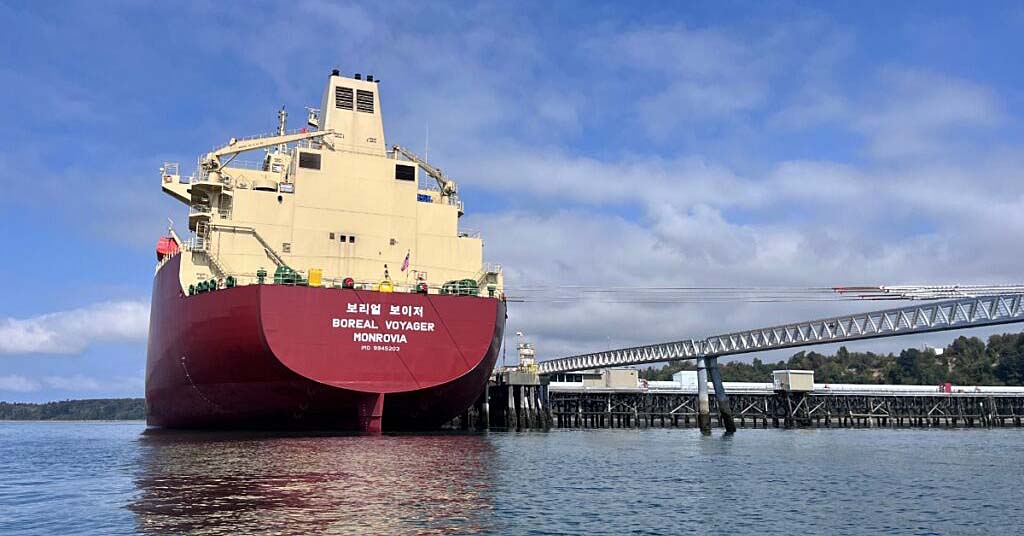
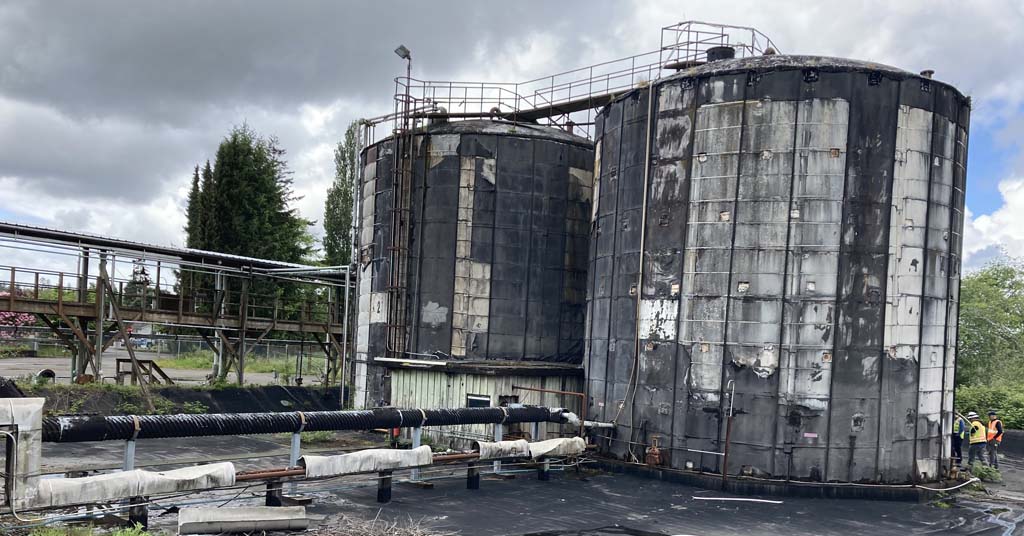
How big: The export capacity of the AltaGas Ferndale Terminal at Cherry Point, Wash., has come under scrutiny. Photo: David Stalheim
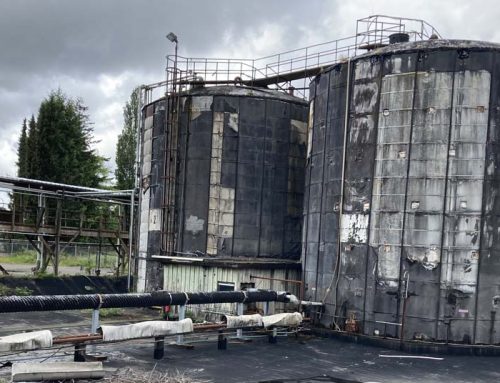
By Nick Engelfried. February 5, 2026. On Northwest Washington’s Cherry Point, near the town of Ferndale and adjacent to a Phillips 66 oil refinery, lies a strip of land owned by ALA Energy, a subsidiary of Canadian company AltaGas. It houses two massive storage tanks that hold butane and propane fuel.
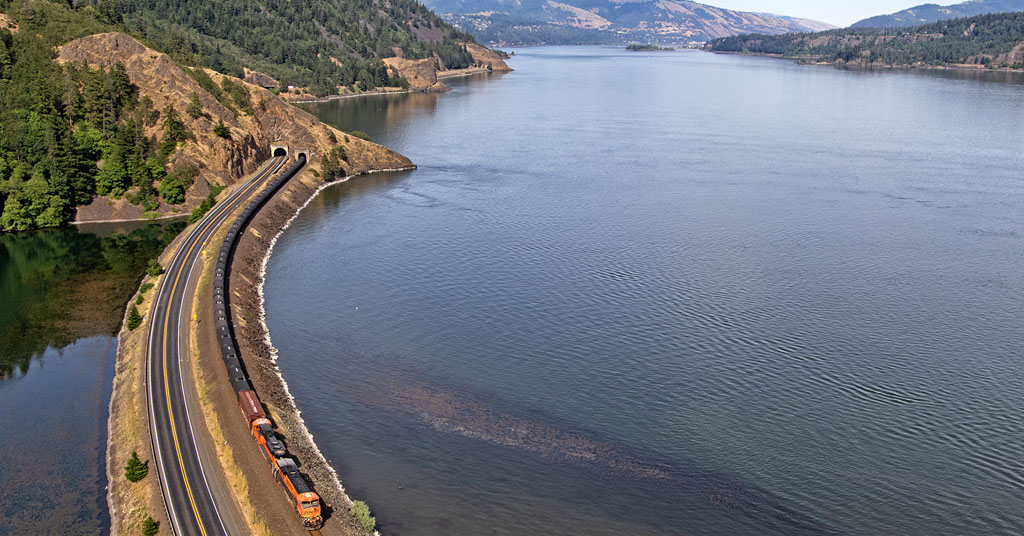
Pipelines connect the tanks to a station where trains carrying combustible fossil fuels unload, and to nearby oil refineries that generate surplus propane and butane.
Another set of pipes pumps fuel out of the tanks to a shipping terminal where ocean-going vessels dock to load up.
Ships leaving the terminal transport propane and butane to Japan and other overseas markets.
That’s about the extent of what all parties could agree on at a contentious multiday hearing about the facility that kicked off in a Bellingham courtroom on Jan 28.
Between 2016 and 2021, ALA Energy and its predecessor Petrogas, which was later acquired by AltaGas, completed over 30 construction projects on the Cherry Point property, about 110 miles north of Seattle.
According to AltaGas, these were small improvements with minimal environmental impact that didn’t increase the capacity of its fossil fuel export business.
“No terminal expansion has occurred,” a member of the AltaGas media relations team told Columbia Insight in an email. “All projects are entirely within our existing Ferndale Terminal footprint with no expansion proposed.”
Vessel collisions are infrequent but for a population as small as the Southern Resident orcas, any mortality is cause for concern.
A coalition of environmental groups including Friends of the San Juans, Whatcom Environmental Council and Washington Conservation Action disagree. They say AltaGas dramatically increased its ability to send explosive fossil fuels overseas, expanding the carbon footprint of the facility and threatening marine life.
Environmental law group Earthjustice represents the organizations in a legal case in which they are arguing changes at the AltaGas terminal should have been subjected to the thorough review required under an Environmental Impact Statement (EIS).
Whatcom County Planning and Development staff recommended the county grant AltaGas a retroactive permit after a review that’s less extensive than one conducted under an EIS.
On Jan. 28, all parties in the debate met in a hearing before Whatcom County Hearing Examiner Rajeev Majumdar, to argue their point of view. Which side prevails will determine whether AltaGas has to go back and complete a full EIS.
A decision is expected after closing arguments conclude on March 6.
“Without an EIS, the environmental analysis done wasn’t thorough enough to fully evaluate the impacts of these projects and how they might be mitigated,” says Lovel Pratt, marine protection and policy director for Friends of the San Juans. “That would happen during the EIS process.”
How much fuel?
If AltaGas expanded its capacity to export more propane and butane between 2016 and 2021, it would seemingly have been in violation of a moratorium on new fossil fuel export infrastructure imposed by the Whatcom County Council during that time.
The moratorium was lifted in 2021, when it was replaced by permanent changes to the county code that severely restrict new fossil fuel exports at Cherry Point.
Calculating export capacity isn’t as simple as it sounds, however. AltaGas and environmental groups have conducted competing analyses that use different methods and reach very different conclusions.

Lovel Pratt. Courtesy photo
AltaGas says the total amount of fuel it can store at its terminal at one time hasn’t changed since 2016. Projects completed since then mean the company can now store more propane, but this is offset by reduced capacity for butane.
The company claims other improvements for which it did not originally seek permits haven’t enabled it to ship more fuel from its terminal than already allowed under state and local statutes.
“All in all, these unpermitted prior projects improved the facility without increasing its capacity or use,” AltaGas stated in its opening brief for the hearing.
In 2021, Washington state regulators informed Whatcom County Planning and Development staff that unpermitted construction activity appeared to have occurred at AltaGas’s facility. The county later confirmed this, and determined AltaGas should have sought permits for projects completed during the fossil fuels moratorium.
The company, whose executives say they hadn’t realized the permits were required, agreed to seek them retroactively.
In the end, county staff agreed with AltaGas that its changes were relatively insignificant, and recommended a permit approval. Planning and Development Director Mark Personius justified this decision.
“I’m comfortable we’ve reviewed and analyzed the potential impacts,” Personius told the hearing examiner on Jan. 28.
Environmental groups say even if the amount of fuel AltaGas can store is the same as before 2016, projects at the terminal have drastically increased how much propane and butane the company can export. For example, pump improvements and streamlining of rail bottlenecks make it possible to load and unload more fuel in less time than before.
One of the few things all sides agree on is that prior to recent construction, the capacity of AltaGas’ facility was about 30,000 barrels of fuel per day, or slightly less. Lawyers for Earthjustice and their clients claim this has increased to approximately 76,000 barrels per day.
“Our analysis shows their capacity has basically tripled,” says Jan Hasselman, the lead Earthjustice attorney on the case.
Orca concerns
The potential climate footprint of exporting more fossil fuels overseas has environmental groups worried. However, it’s far from their only concern about the AltaGas facility.
The organizations say increasing the proportion of propane, which is more explosive than butane, exported from the terminal presents safety and environmental risks.
They’ve also cited possible impacts of vessel traffic on herring in the Cherry Point Aquatic Reserve.
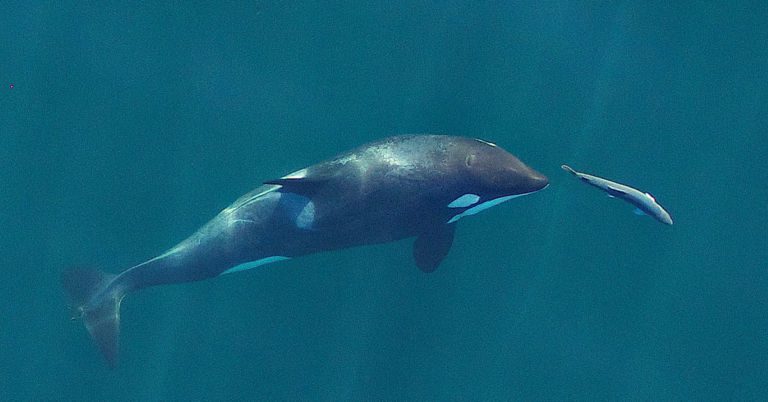
However, the most iconic animals featured in the groups’ legal case are the Salish Sea’s endangered Southern Resident orcas. Only 74 of these rare whales survive.
“Out of those 74, only one-third of them are reproductive females,” Dr. Joseph Gaydos, a wildlife veterinarian, said in expert witness testimony on day two of the AltaGas hearing. “Even preventing a death every one or two years can make the difference between this population going extinct, or this population recovering.”
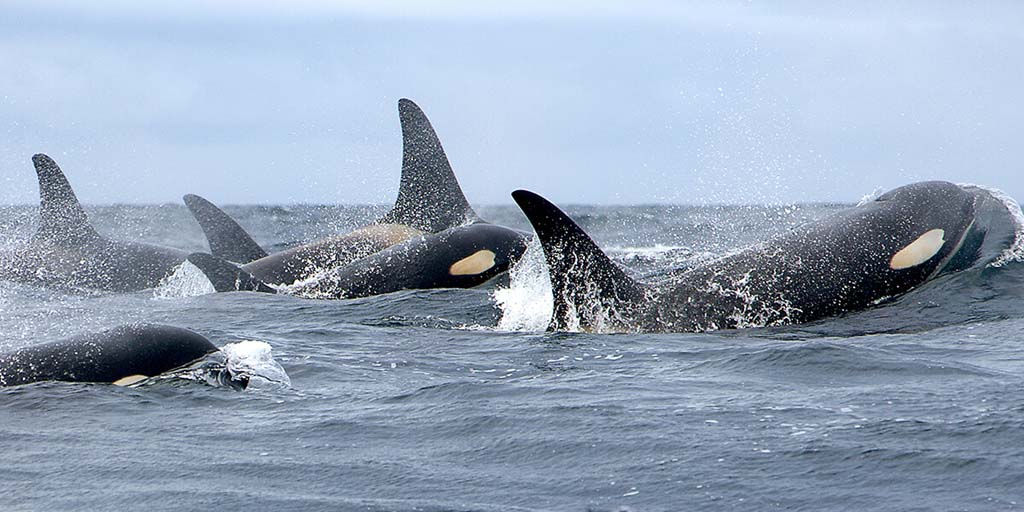
Salmon dependent: Southern Resident orcas feed on chinook salmon year-round. In fall and winter, they disperse widely and add other salmon species to their diet. Photo: Holly Fearnbach/NOAA
Environmental groups say any increase in vessel traffic servicing the terminal would add to noise pollution that interferes with orcas hunting.
“Underwater noise levels really impact the ability of orcas to communicate, hunt and find scarce prey,” said Pratt. “This is very well documented.”
Gaydos agreed.
“These are acoustic animals,” he said in his testimony. “They don’t go through the world seeing like we do. They go through it hearing.”
AltaGas representatives say noise from their vessels has minimal impact on orcas because they follow voluntary speed limits. They also claim any noise increase would be small compared to existing noise pollution.
In a brief, the company argues that an analysis shows any recent increase in noise at its terminal “is immaterial in the context of the background noise resulting from the general vessel traffic in the area.”
Another concern is the possibility of orca-vessel collisions, which can be fatal to the animals. AltaGas argues such accidents are rare, with only two records of Southern Resident deaths definitively attributed to vessels.
Gaydos said he doesn’t dispute collisions are infrequent, but that for a population as small as the Southern Residents, any mortality is cause for concern.
“It’s a rare occurrence, but the consequences are significant,” he said.
Good neighbors?
The controversy over the AltaGas facility unfolds against a backdrop of concern about the Salish Sea ecosystem, which is both an important wildlife sanctuary and an increasingly industrialized marine corridor.
Friends of the San Juans estimates over 11,000 large vessels pass through the waterway every year, many carrying fossil fuel shipments from Washington and British Columbia.
“You have to look at the cumulative impacts from a project like this in the context of what else is happening in the region, not just the isolated impact of that single project,” says Pratt.
AltaGas representatives say any detrimental impacts of their terminal on the climate and wildlife are minimal, and a continuation of activity that has been taking place at the site for decades.
“This is not a case about a new facility,” said Dale Johnson, an attorney representing AltaGas and subsidiary ALA Energy, in an opening statement at the Jan. 28 hearing. “That facility has been in place since the 1970s.”
He went on to say AltaGas’ business benefits the surrounding region.
“The company, ALA Energy, is a good corporate neighbor and citizen,” said Johnson.
It remains to be seen if the residents and government of Whatcom County agree.