
The federal government launched its War on Nature. Nature soldiered on
By Chuck Thompson. December 24, 2025. In February, Columbia Insight reported on ways the Forest Service is manipulating the threat of wildfires to meet logging targets.
In July, the USDA announced a plan to move the Forest Service’s Pacific Northwest Region Headquarters from Portland to Fort Collins, Colo.
July brought confirmation of a mating pair of spotted owls in the Okanogan-Wenatchee National Forest.
Big news, no doubt, but each item was edged out by 10 others on our annual list of the year’s top environmental stories.
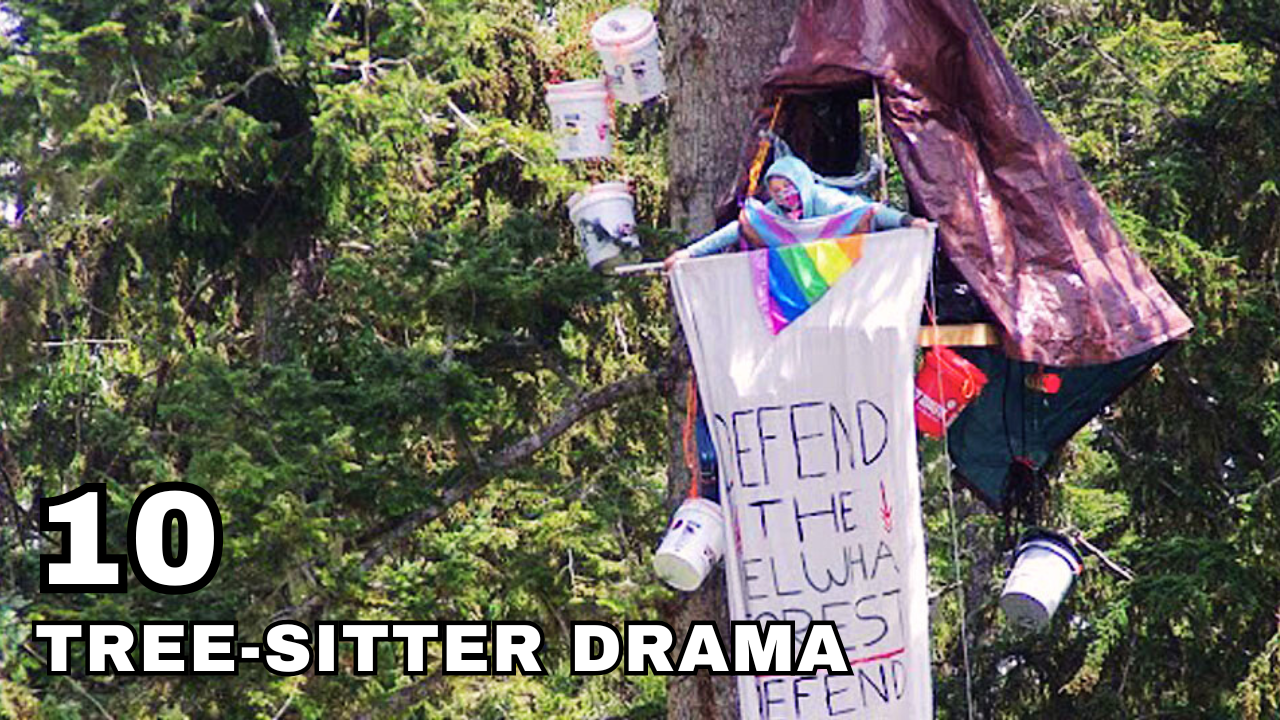
Photo: Anri Orihara
In May, a group calling itself Olympic Forest Defenders put an activist in a tree to block a logging operation on the Olympic Peninsula. After 40 days in a makeshift shelter 80 feet up a grand fir, the tree-sitter was shaken by the arrival of counter-protestors in a black Jeep and a nighttime confrontation that, as The Washington Post reported, “involved death threats, shots fired in the air and the destruction of the blockade.” Activists abandoned their protest. “They were really scared,” a protestor said of the tree sitter. “They weren’t prepared for that type of confrontation.”
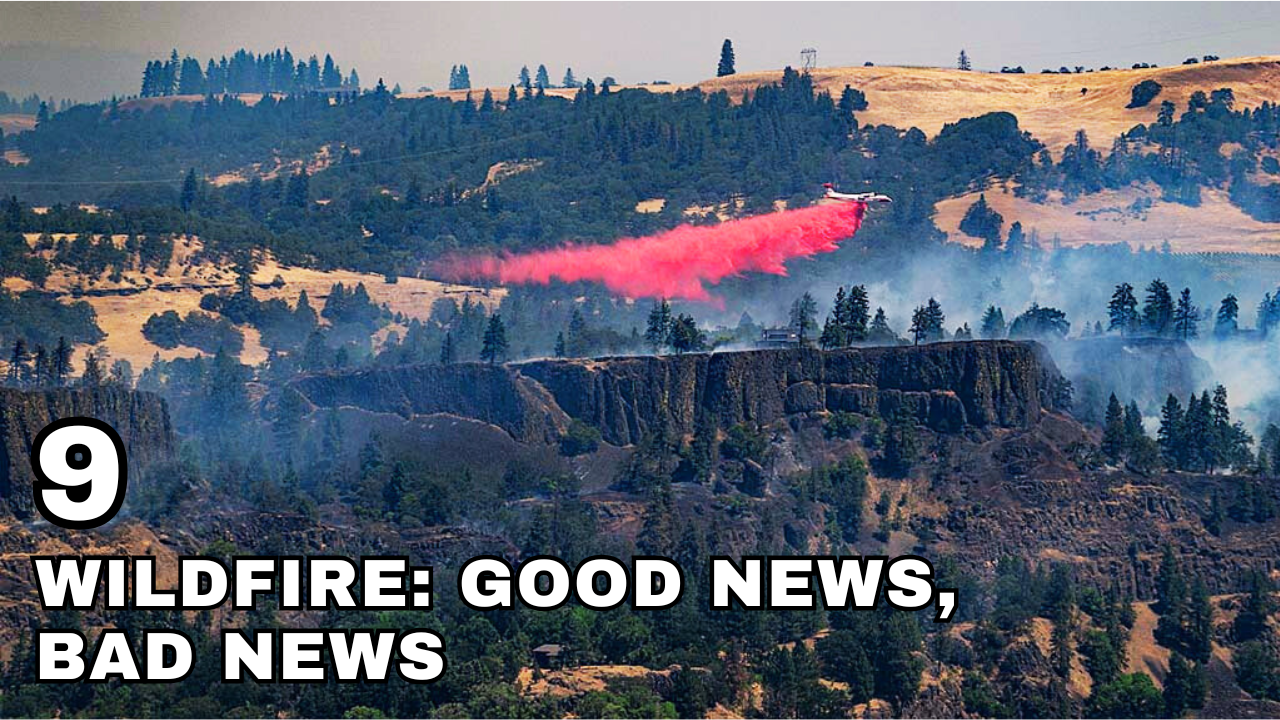
Burdoin Fire, Columbia River Gorge, July 2025. Photo: Jurgen Hess
In the Pacific Northwest, fewer acres burned in 2025 as a result of wildfire than in 2024. In Oregon, less than 400,000 acres burned this year, compared with 2 million acres in 2024. As of Oct. 10, 251,840 acres had burned in Washington, below the 2024 total of 274,593 acres. But while fewer acres burned, the total number of fires increased. The cause was people. In Oregon, humans have started 70% of wildfires on state land over the past decade. Washington’s 1,851 fire ignitions in 2025 were higher than last year’s total of 1,806 and the five-year average of 1,629. “We need a lot more help from [people] to not start fires from their activities and our infrastructure,” said Kyle Williams, deputy director of fire operations at the Oregon Department of Forestry.
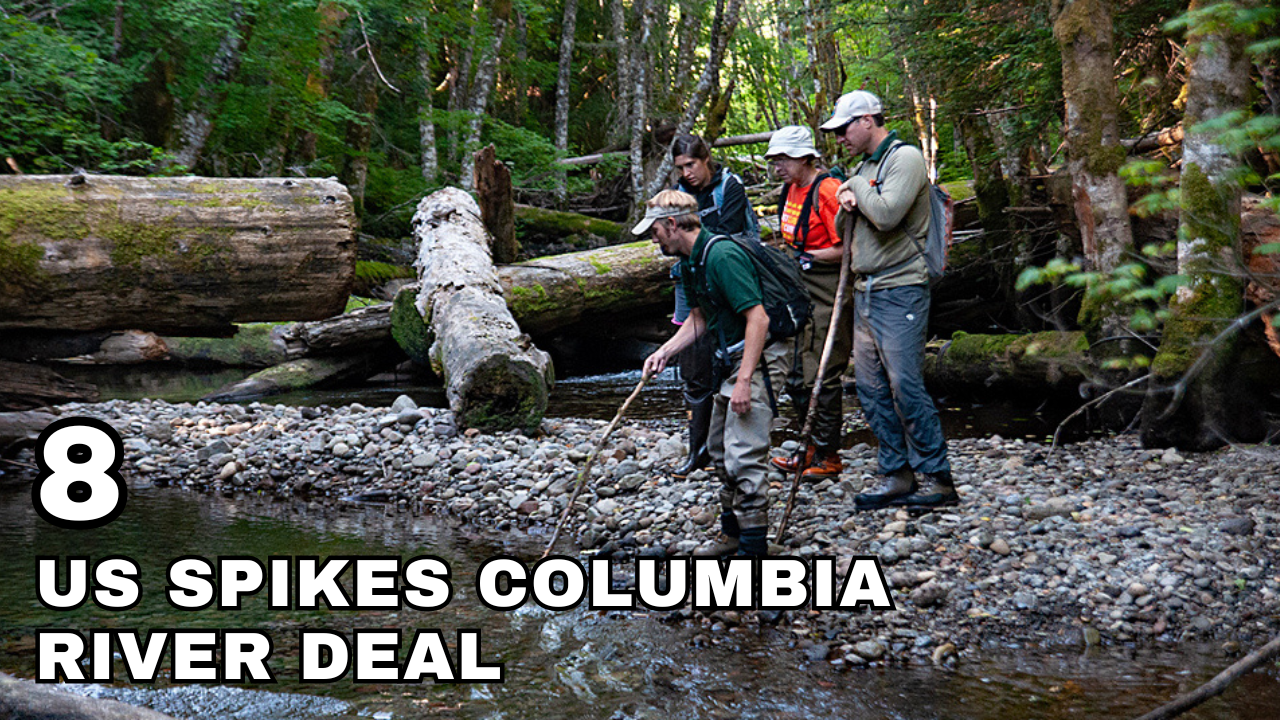
Salmon restoration work in a Columbia River tributary. Photo: Jurgen Hess
In June, President Trump signed a memorandum pulling the federal government out of a 2023 agreement with four Tribes, Northwest states and environmental groups to help restore salmon, steelhead and other native fish in the Columbia River Basin. The memorandum referred to the deal commitments as “onerous” and “misguided.” The 2023 agreement was reached after decades of legal battles. Groups behind the suits said they’d continue fighting in court.
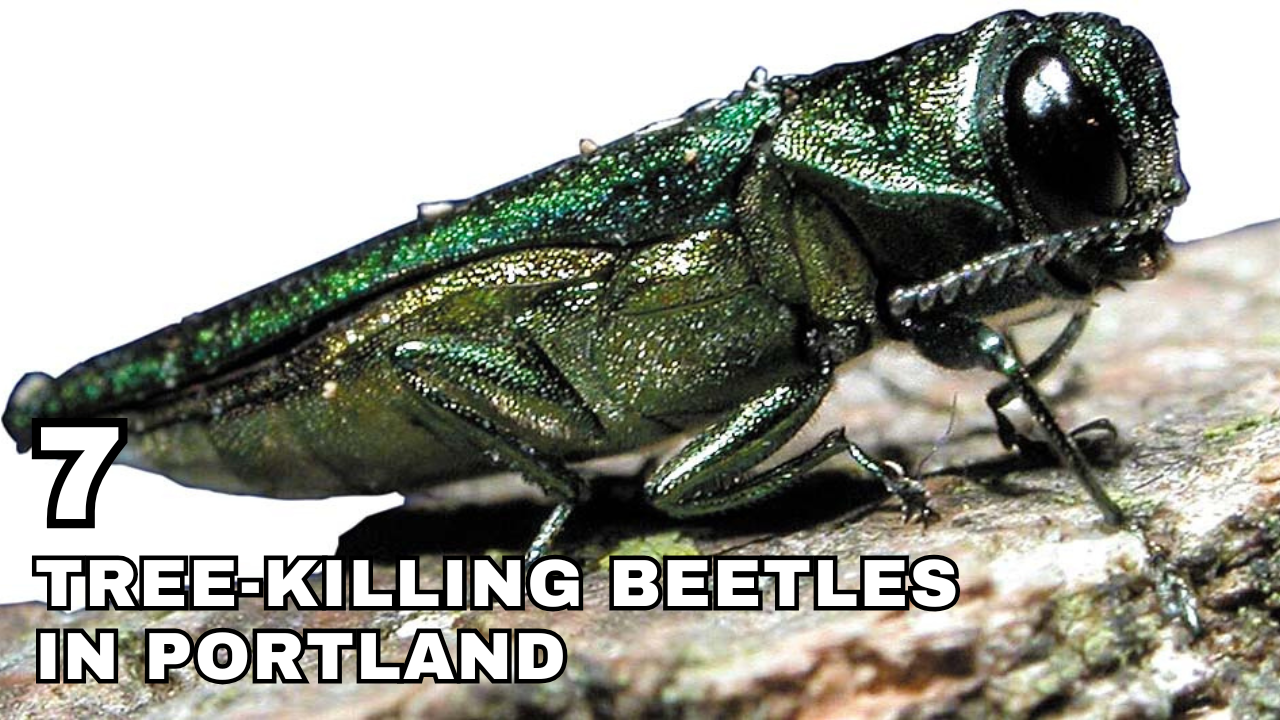
Emerald ash borer. Photo: National Park Service
In September, the Oregon Department of Forestry confirmed that emerald ash borers, an invasive beetle from Asia responsible for the death and decline of tens of millions of ash trees in North America, had been found just west of Portland. Research models show the destructive insects could cross the Columbia River into Washington in as little as two years and spread across all of western Oregon in 15 years.
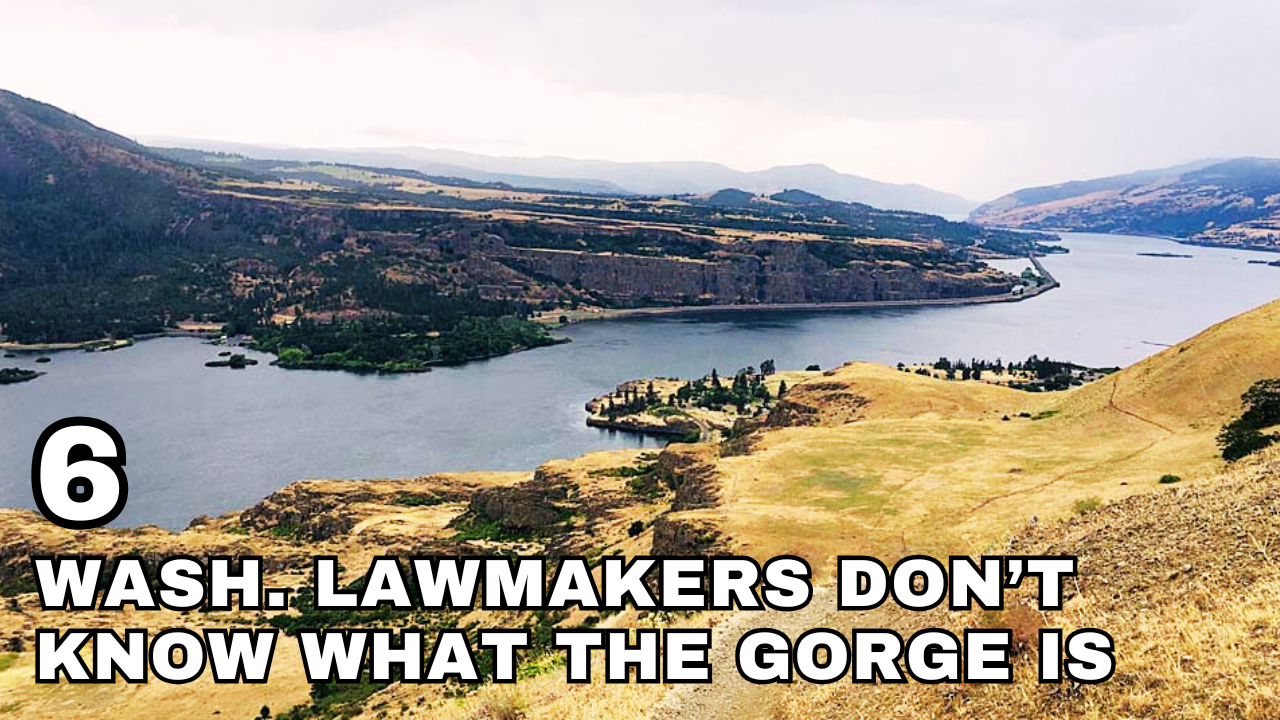
Columbia River Gorge. Photo: Chuck Thompson
On April Fools’ Day, the Washington State House of Representatives passed an amendment to eliminate funding for the bi-state commission that regulates land development inside the Columbia River Gorge National Scenic Area. Rep. Kevin Waters, who represents Gorge communities, said many lawmakers confused the National Scenic Area with a Washington music venue with a similar name. “I had four or five members come up to me and say, ‘why the hell do we have a commission for a concert venue?’ And I said, ‘we don’t. It’s a totally different gorge,’” said Waters. After a month-long freakout in Washington and Oregon, the Washington State House and Senate agreed to reduce Gorge Commission funding by 27% for the 2025–27 biennium.
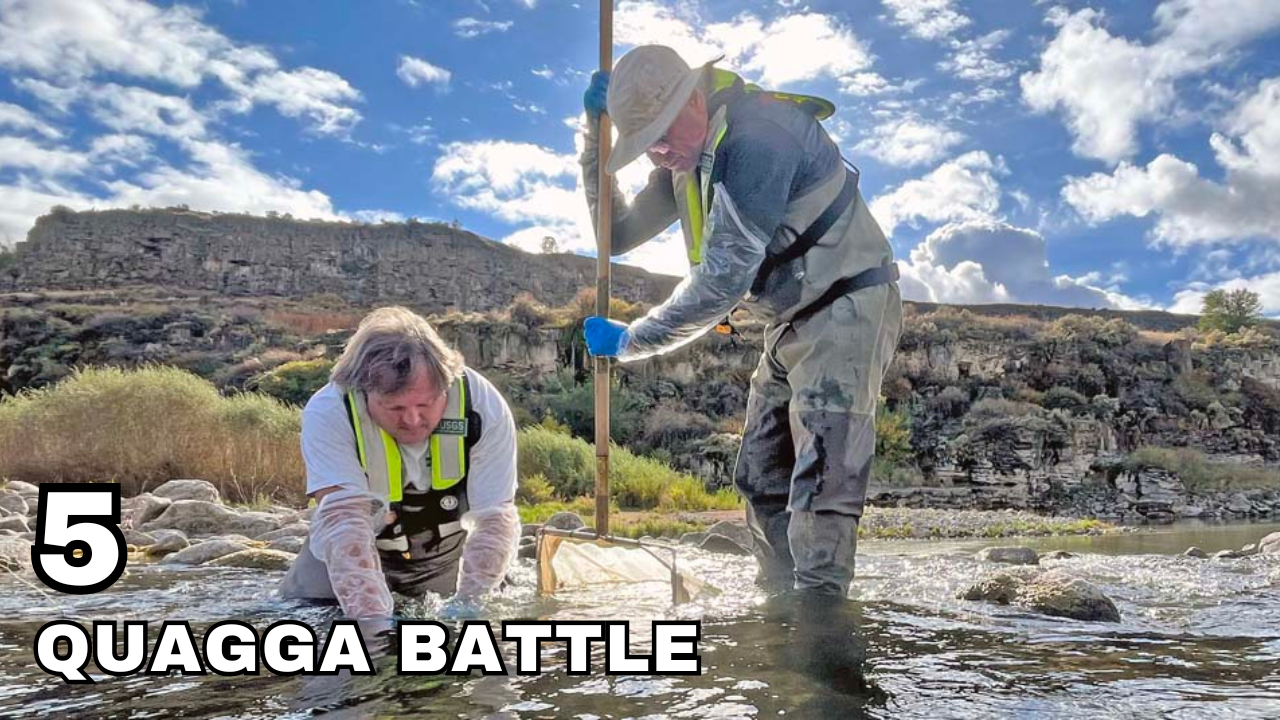
Snake River. Photo: Idaho Water Science Center
After detecting quagga mussels in the Snake River in 2023, the Idaho State Department of Agriculture dumped 40,000 pounds of a copper-based toxin into three stretches of the river around Twin Falls. The idea was to poison a relative few quagga mussels in order to prevent a full-blown infestation. But the treatment killed nearly everything else in some stretches of the river. In August, the Idaho Statesman reported that a study “detailed that the copper destroyed up to 90% of the invertebrates living in the area.” Over 7,000 pounds of copper have settled into the riverbed. In November, Idaho officials said they haven’t found any viable quagga mussels since the state administered another treatment in the fall. Experts say impacts from the treatments will ripple through the fish food web for years.

Illustration: Mackenzie Miller
Columbia Insight’s first story of the year turned out to be one of our most well read. It detailed a UW report that raised the possibility of doing away with state’s “dysfunctional” Fish and Wildlife Commission. Divisions between environmentalists and hunters were at the heart of the issue. In May, the Ohio-based Sportsmen’s Alliance petitioned Gov. Bob Ferguson to remove four commissioners, claiming they “demonstrated incompetence, misconduct, and malfeasance in office.” In August, Washington Wildlife First called for the removal of WDFW Director Kelly Susewind, who, it said, “prioritizes the interests of trophy hunters above his responsibility to protect Washington’s wildlife.” Then Ferguson authorized an investigation into the conduct of WDFW commissioners. As of now, the WDFW Commission remains functional.
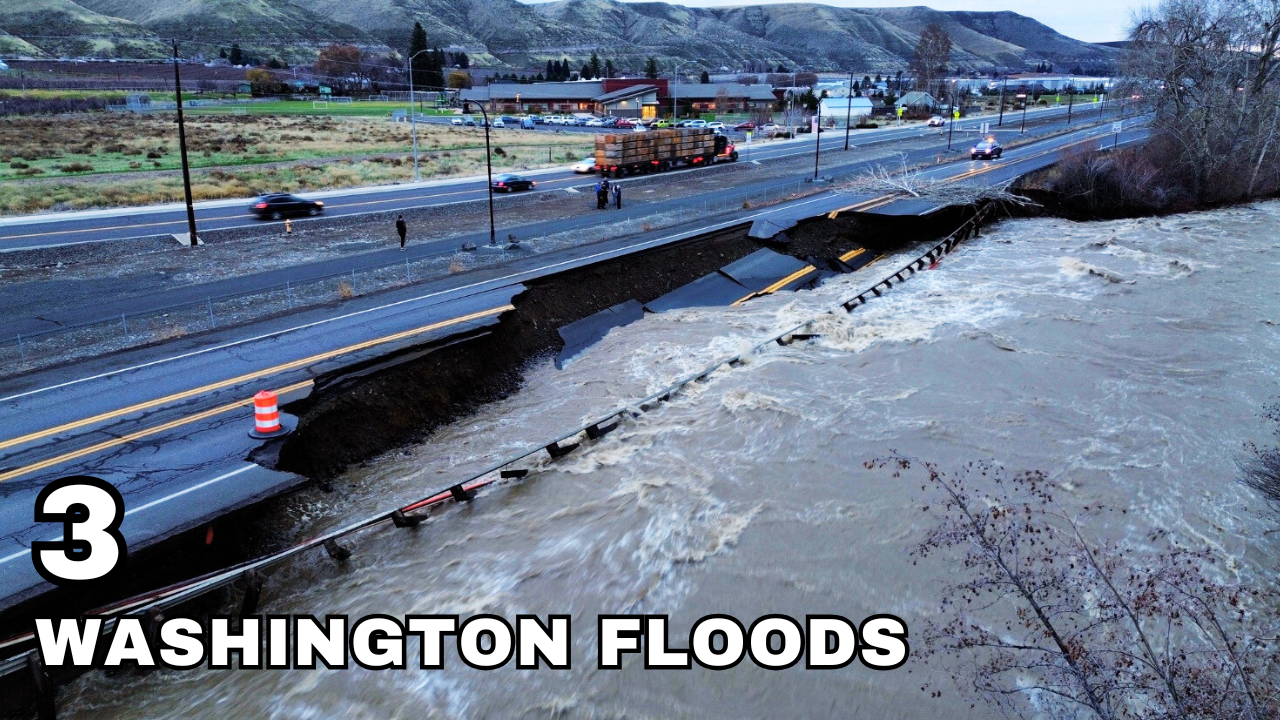
U.S. Route 12 in Yakima County, Washington. Photo: Naches Fire Department
In December, torrential rains washed out bridges, damaged roads and led to evacuations and at least 1,200 rescues in more than 10 Washington counties. The Snohomish and Skagit rivers surged past high-level records. More than 60 roads were closed and several major routes will need to be almost entirely rebuilt. “This natural disaster is undoubtedly one of the most devastating in our state’s history,” said Washington Gov. Bob Ferguson. “If you get an evacuation order … for god’s sake, follow it.”

Data center. Photo: Washington Consolidated Technology Services
You couldn’t doom scroll, attend a community meeting, or do a Google search for “bad ideas” this year without being confronted with warnings about the environmental implications of data centers, which use astronomical quantities of water to cool the machines powering the race for AI supremacy. Virginia leads the nation with 665 data centers but the problem is acute in the Pacific Northwest where decades-long drought conditions are worsening and tech overlords hold sway over cash-strapped counties. Between April and July, Oregon experienced its fourth driest period since record keeping began in 1895. In October, Washington’s Yakima River Basin ran out of water, prompting the state to impose an unprecedented halt to surface water use. In December the Washington Standard reported that “lack of snowpack going into the winter is putting more drought pressure on Oregon, Idaho, Washington and western Montana.” Meanwhile, plans are afoot to add data centers to the 271 already snarfing publicly owned water in Oregon and Washington (and 10 others in Idaho).

EPA head Lee Zeldin sworn into office by Justice Brett Kavanaugh, January 2025. Photo: EPA
One man has taken the blame for the federal budget cuts, firings and attacks on environmental protections that commenced with the first week of the year. But it takes an army of yes men, enablers, executives and threatened government workers to dismantle more than half-a-century of conservation advances. In March, U.S. Environmental Protection Agency Administrator Lee Zeldin announced 31 provisions in the “biggest deregulatory action in U.S. history.” In the not-so-silent spring that followed, officials announced the government’s intention to rescind roadless rule protections and open millions of acres of Pacific Northwest national forests to industrial development. Workers who help fight wildfires were canned. Funds for EV charging stations were put on hold. Tens of millions of dollars were cut from a Columbia Basin salmon-restoration program. Scheduled for a shut down and transition to natural gas, Washington’s last remaining coal-fired power plant was ordered to keep spewing soot into the air. On it went. Any mechanism that protects the land 15 million Pacific Northwesterners call home is either under attack or soon could be.









EXCELLENT summary. Many thanks for this work!